World

Indonesia probes elite officers as stadium disaster death toll rises

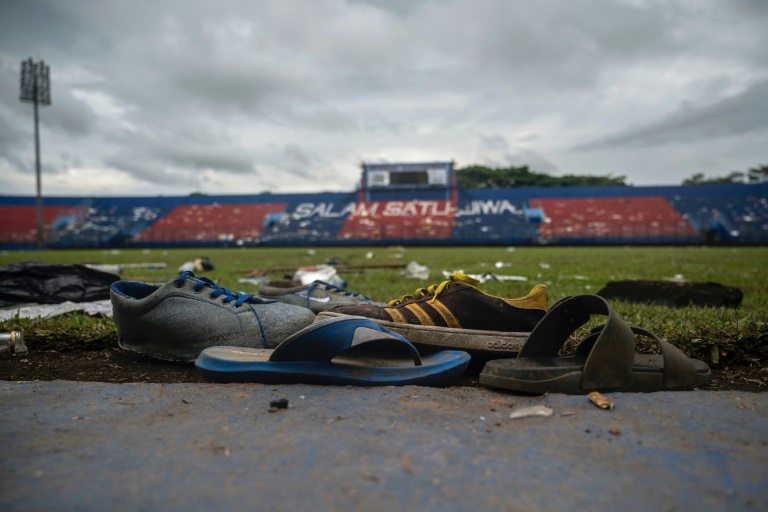
Elite Indonesian police officers were under investigation Tuesday over a stadium stampede that killed 131 people including dozens of children in one of the deadliest disasters in football history.

As public anger grew, police moved to punish those responsible for the crush in the city of Malang that witnesses say started when officers fired tear gas into packed stands to quell a pitch invasion.

“As the regional police chief, I am concerned, saddened and at the same time I am sorry for the shortcomings in the security process,” East Java police chief Nico Afinta told a press conference Tuesday.

The terraces of the Kanjuruhan stadium were packed Saturday evening with 42,000 “Aremania”, or Arema FC fans, for a match against fierce rivals Persebaya Surabaya.

But after a 3-2 defeat, the first home loss for more than two decades to their adversaries, fans streamed down to the pitch to confront players and management.

Police described the incident as a riot and said two officers were killed, but survivors accused them of overreacting.

Officers responded to the pitch invasion with force, kicking and hitting fans with batons, according to witnesses and video footage, pushing fans back into the stands where many would be trampled or suffocate to death after the tear gas was fired.

“If there was a riot, (tear gas) should be fired to the pitch, not in the stand,” Danny Agung Prasetyo, coordinator of supporter group Arema DC, told AFP.

The death toll jumped again on Tuesday with local health official Wiyanto Wijoyo telling AFP six more victims had succumbed to their injuries.

Police said the investigation was focusing on six gates at the stadium using CCTV footage from cameras placed outside them. It said the exits were open but too small for the crowds attempting to pass through them.

“Those six gates were not closed but they were very narrow. Their capacity is for two people but the people coming out were hundreds,” national police spokesman Dedi Prasetyo said.

But witnesses said some of the stadium’s doors were shut, leaving those who could not scale large fences at the mercy of the crush as tear gas rained down.

“The doors were closed, that’s why people were pushing. Some lay down in the corner” by a closed gate to try to escape the crush, a 16-year-old survivor of the chaos told AFP.

The Malang police chief was replaced Monday, nine officers were suspended and 19 others were put under investigation over the disaster in the stadium, which was filled with only hometown Arema FC fans, Prasetyo said.

He said those suspended were members of the Mobile Brigade Corps, or Brimob, a paramilitary unit for the Indonesian police force notorious for its aggressive crowd control tactics.

Indonesia’s football association also moved Tuesday to sanction Arema FC, banning its organising committee chairman and a security officer from football for life and fining the club 250 million rupiah ($16,000).

– ‘Our friends died here’ –

Arema FC fans set up an outdoor stall in Malang Monday to receive legal complaints.

They said they would file a lawsuit against officers for causing scores of deaths by indiscriminately targeting spectators in confined terraces.

The Indonesian government suspended the country’s national football league and announced a task force to investigate the tragedy. It said the probe would take two to three weeks.

Calls for an independent investigation have grown since details of the stampede started to emerge over the weekend.

“There is no instruction to fire tear gas,” Albertus Wahyurudhanto, a commissioner of the National Commission of Human Rights (Komnas HAM), told a press conference Tuesday.

Fan anger was displayed outside the stadium where a police truck was torched and the walls were daubed with graffiti that read “Tear gas vs mother’s tears” and “Our friends died here”.

– ‘Lot of dangers’ –

More vigils were planned in Malang on Tuesday after fans and Arema FC players gathered outside the stadium a day before to lay flowers at the scene and pray for the victims.

Among the dead were 32 children, a women’s empowerment and child protection ministry official told AFP, adding that the youngest was aged three or four.

FIFA’s safety guidelines prohibit the use of crowd control gas by police or stewards at pitchside.

Gianni Infantino, president of football’s global governing body, called the tragedy a “dark day” for football, while UEFA said a minute’s silence would be observed at this week’s European matches.

Brazilian superstar Pele expressed his condolences and said “violence and sports do not mix”.

Football fan violence is an enduring problem in Indonesia, and Persebaya Surabaya supporters had been barred from the game because of it. 

But fans said they were not to blame.

Everything that could go wrong at a football match appeared to do so on Saturday night, culminating in a disaster never seen before in an Indonesian stadium.

“You could see and sense that something bad could potentially happen,” Indonesian football pundit Pangeran Siahaan told AFP.

“There’s a lot of dangers every time you go into a football stadium in Indonesia.”
Biden warns Iran to face 'costs' for crackdown on Amini protests

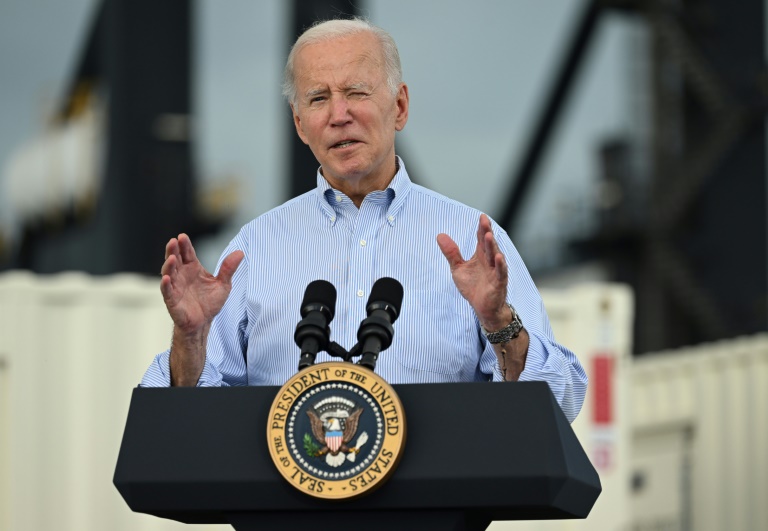
The United States will impose “further costs” on Iran for its lethal crackdown on protests sparked by the death of Mahsa Amini, President Joe Biden announced, drawing accusations of “hypocrisy” from Iran on Tuesday.

Amini, 22, was pronounced dead on September 16, days after the notorious morality police detained the Kurdish Iranian for allegedly breaching rules requiring women to wear hijab headscarves and modest clothes.

Anger over her death has sparked the biggest wave of protests to rock Iran in almost three years and a state crackdown that has seen scores of protesters killed and more than 1,000 arrested.

“This week, the United States will be imposing further costs on perpetrators of violence against peaceful protesters,” Biden said in a statement. “We will continue holding Iranian officials accountable and supporting the rights of Iranians to protest freely.”

Biden said he was “gravely concerned” about reports of the intensifying repression of protesters and said Washington stood with “all the citizens of Iran who are inspiring the world with their bravery”.

Rights groups voiced deep concern after Iranian riot police used tear gas and paintball guns against hundreds of students at Tehran’s Sharif University of Technology on Sunday night, with video footage showing detainees being taken away with fabric hoods over their heads.

Protests also spread to schools, with video footage shared by Kurdish rights group Hengaw showing schoolgirls demonstrating in two cities in Amini’s native Kurdistan province.

“Women, Life, Freedom,” the young female protesters chanted as they marched down the central strip of a busy highway in Marivan in footage that AFP has not independently verified.

The US president gave no indication of what measures he was considering against Iran, which is already under crippling US economic sanctions largely related to its controversial nuclear programme.

Iran accused the US leader of “hypocrisy” in invoking human rights to impose fresh punitive measures.

– Nuclear talks –

“It would have been better for Mr Joe Biden to think a little about the human rights record of his own country before making humanitarian gestures, although hypocrisy does not need to be thought through,” foreign ministry spokesman Nasser Kanani said in an Instagram post, reported by Iranian media.

“The US president should be concerned about the numerous sanctions… against the Iranian nation, the sanctions whose imposition against any nation is a clear example of a crime against humanity,” he added.

Iran’s supreme leader Ayatollah Ali Khamenei had Monday accused arch foes the United States and Israel of fomenting the protests.

The riots “were engineered by America and the occupying, false Zionist regime, as well as their paid agents, with the help of some traitorous Iranians abroad”, Khameni said.

The unrest has overshadowed diplomatic efforts to revive a 2015 nuclear deal between Iran and major powers which had come close to a breakthrough in recent months before stalling again.

But White House Press Secretary Karine Jean-Pierre stressed that the “problems with Iran’s behaviour” are separate from efforts to revive the nuclear deal, which Washington will pursue “as long as we believe” it is in US national security interests.

– ‘Not about hijab’ –

In his first public comments on Amini’s death, 83-year-old Khamenei stressed on Monday that Iranian police must “stand up to criminals”.

Khamenei said “some people, without proof or an investigation, have made the streets dangerous, burned the Koran, removed hijabs from veiled women and set fire to mosques and cars”.

He added that “this is not about hijab in Iran”, and that “many Iranian women who don’t observe the hijab perfectly are among the steadfast supporters of the Islamic republic”.

Iran has repeatedly accused outside forces of stoking the protests and last week said nine foreign nationals — including from France, Germany, Italy, the Netherlands and Poland — had been arrested.

At least 92 protesters have been killed so far in the Mahsa Amini rallies, said Oslo-based group Iran Human Rights, which has been working to assess the death toll despite internet outages and blocks on WhatsApp, Instagram and other online services. 

Amnesty International said earlier it had confirmed 53 deaths, after Iran’s semi-official Fars news agency said last week that “around 60” people had died.

At least 12 members of the security forces have been reported killed since September 16.

bur/kir/fz

UK's embattled govt stares at new U-turn on economy

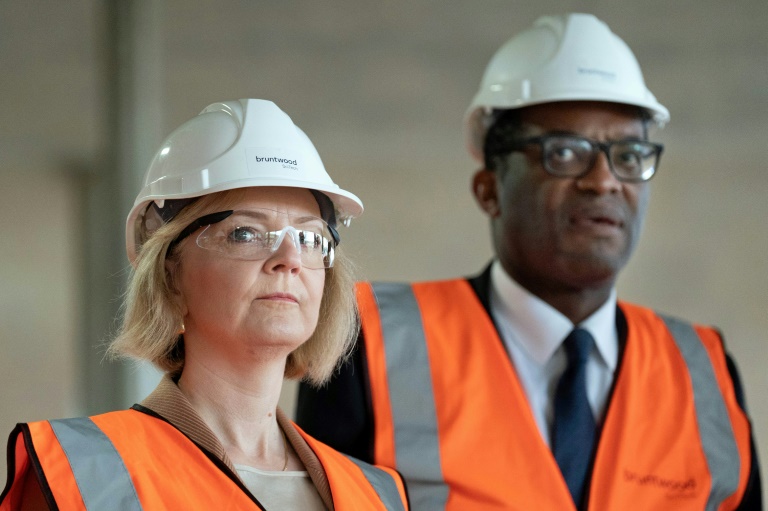
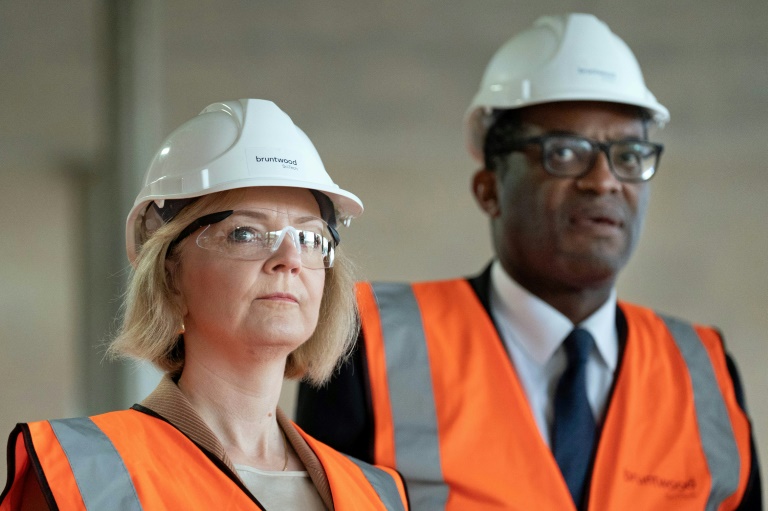
Britain’s Prime Minister Liz Truss defended her contentious plan to kick-start economic growth through tax cuts, despite expectations Tuesday of a second damaging U-turn.

Fresh from a humiliating climbdown on cutting income tax for the richest, Truss and Chancellor of the Exchequer Kwasi Kwarteng were set to bring forward a major debt reduction plan, the Financial Times and others reported.

Its unveiling will come later this month rather than on November 23, and will be accompanied by independent forecasts from the Office for Budget Responsibility (OBR) in a bid to calm febrile financial markets, the reports said.

The government declined to confirm the reports, as Truss and Kwarteng endured another difficult day at the ruling Conservatives’ annual conference in Birmingham, central England.

But Mel Stride, the Tory chairman of the powerful Treasury committee in the House of Commons, said: “I have pressed the chancellor very hard on this and to his credit he has listened.”

Acting in advance of the Bank of England’s next rate-setting meeting on November 3 could “reduce the upward pressure on interest rates to the benefit of millions of people up and down the country”, he added.

Asked if any more U-turns were coming, Truss was evasive in an interview with LBC radio broadcast Tuesday but recorded on Monday.

“I’m determined to carry on with this growth package,” she said, stressing another component of the plan to cap soaring energy bills. 

“That’s what’s important, but it’s also important that we do listen to people and we bring the country with us.” 

– ‘Get a grip!’ –

Truss refused to rule out cuts to benefits as poorer Britons struggle with the worst cost-of-living crisis in generations.

“I’m very committed to supporting the most vulnerable,” Truss told BBC radio in another pre-recorded interview aired Tuesday.

But she added: “We have to look at these issues in the round. We have to be fiscally responsible.”

Potential cuts to the welfare budget are shaping up as the next battle with dissident Tory MPs after the aborted tax cut, part of a package that relies on billions more in new borrowing.

Splits have also emerged in the cabinet.

Senior minister Penny Mordaunt, one of the candidates Truss beat in the Tory leadership race, said it “makes sense” that welfare should still rise in line with soaring rates of inflation.

“That’s what I voted for before, and so have a lot of my colleagues,” she told Times Radio. 

Media coverage of Monday’s volte-face was damning, with many commentators arguing Truss’s credibility was already in tatters less than a month since she succeeded Boris Johnson.

The Daily Mail newspaper, normally a trenchant voice in support of the new leader’s right-wing agenda, headlined its main story: “Get a grip!”

– Kwarteng’s quips –

Coverage of Kwarteng’s lacklustre speech to the Tory conference on Monday, which had to be rapidly rewritten after the tax plan was ditched, was also damning.

There was particular criticism of the finance minister’s jocular tone, which he reinforced at an evening reception with the Policy Exchange think-tank.

Market reactions that saw the pound slump to an all-time low against the dollar last week had been “hullabaloo”, he said.

Policy Exchange, he also told his laughing hosts, was “twice as old as the OBR — that gives you huge authority”.

Dissident ringleader Michael Gove kept up criticism of Truss on Tuesday, stressing all Conservative MPs had been elected on Johnson’s manifesto of 2019. 

It included a pledge to end arbitrary evictions of tenants by private landlords, he noted at a conference fringe event held by the housing charity Shelter. 

“We’ve got to keep faith with what Boris wanted, we’ve got to make sure that manifesto commitment is honoured,” Gove said, after Truss reneged on a Johnson commitment to ban fracking. 

But asked by reporters if Truss would survive past the end of the year, the former minister said: “Yes.”

Shelter presented poll findings that suggested private renters who voted Tory in 2019 are deserting the party in droves for Labour and other opposition parties. 

Conservative seats at risk in the MRP poll included Johnson’s own constituency in west London. 

Wider opinion polls in recent days have shown Labour breaching 50 percent as the Tories slump under Truss, raising the stakes as she prepares to close the Birmingham conference on Wednesday.

UK's embattled govt stares at new U-turn on economy

Britain’s Prime Minister Liz Truss defended her contentious plan to kick-start economic growth through tax cuts, despite expectations Tuesday of a second damaging U-turn.

Fresh from a humiliating climbdown on cutting income tax for the richest, Truss and Chancellor of the Exchequer Kwasi Kwarteng were set to bring forward a major debt reduction plan, the Financial Times and others reported.

Its unveiling will come later this month rather than on November 23, and will be accompanied by independent forecasts from the Office for Budget Responsibility (OBR) in a bid to calm febrile financial markets, the reports said.

The government declined to confirm the reports, as Truss and Kwarteng endured another difficult day at the ruling Conservatives’ annual conference in Birmingham, central England.

But Mel Stride, the Tory chairman of the powerful Treasury committee in the House of Commons, said: “I have pressed the chancellor very hard on this and to his credit he has listened.”

Acting in advance of the Bank of England’s next rate-setting meeting on November 3 could “reduce the upward pressure on interest rates to the benefit of millions of people up and down the country”, he added.

Asked if any more U-turns were coming, Truss was evasive in an interview with LBC radio broadcast Tuesday but recorded on Monday.

“I’m determined to carry on with this growth package,” she said, stressing another component of the plan to cap soaring energy bills. 

“That’s what’s important, but it’s also important that we do listen to people and we bring the country with us.” 

– ‘Get a grip!’ –

Truss refused to rule out cuts to benefits as poorer Britons struggle with the worst cost-of-living crisis in generations.

“I’m very committed to supporting the most vulnerable,” Truss told BBC radio in another pre-recorded interview aired Tuesday.

But she added: “We have to look at these issues in the round. We have to be fiscally responsible.”

Potential cuts to the welfare budget are shaping up as the next battle with dissident Tory MPs after the aborted tax cut, part of a package that relies on billions more in new borrowing.

Splits have also emerged in the cabinet.

Senior minister Penny Mordaunt, one of the candidates Truss beat in the Tory leadership race, said it “makes sense” that welfare should still rise in line with soaring rates of inflation.

“That’s what I voted for before, and so have a lot of my colleagues,” she told Times Radio. 

Media coverage of Monday’s volte-face was damning, with many commentators arguing Truss’s credibility was already in tatters less than a month since she succeeded Boris Johnson.

The Daily Mail newspaper, normally a trenchant voice in support of the new leader’s right-wing agenda, headlined its main story: “Get a grip!”

– Kwarteng’s quips –

Coverage of Kwarteng’s lacklustre speech to the Tory conference on Monday, which had to be rapidly rewritten after the tax plan was ditched, was also damning.

There was particular criticism of the finance minister’s jocular tone, which he reinforced at an evening reception with the Policy Exchange think-tank.

Market reactions that saw the pound slump to an all-time low against the dollar last week had been “hullabaloo”, he said.

Policy Exchange, he also told his laughing hosts, was “twice as old as the OBR — that gives you huge authority”.

Dissident ringleader Michael Gove kept up criticism of Truss on Tuesday, stressing all Conservative MPs had been elected on Johnson’s manifesto of 2019. 

It included a pledge to end arbitrary evictions of tenants by private landlords, he noted at a conference fringe event held by the housing charity Shelter. 

“We’ve got to keep faith with what Boris wanted, we’ve got to make sure that manifesto commitment is honoured,” Gove said, after Truss reneged on a Johnson commitment to ban fracking. 

But asked by reporters if Truss would survive past the end of the year, the former minister said: “Yes.”

Shelter presented poll findings that suggested private renters who voted Tory in 2019 are deserting the party in droves for Labour and other opposition parties. 

Conservative seats at risk in the MRP poll included Johnson’s own constituency in west London. 

Wider opinion polls in recent days have shown Labour breaching 50 percent as the Tories slump under Truss, raising the stakes as she prepares to close the Birmingham conference on Wednesday.

Markets surge on interest rate hopes

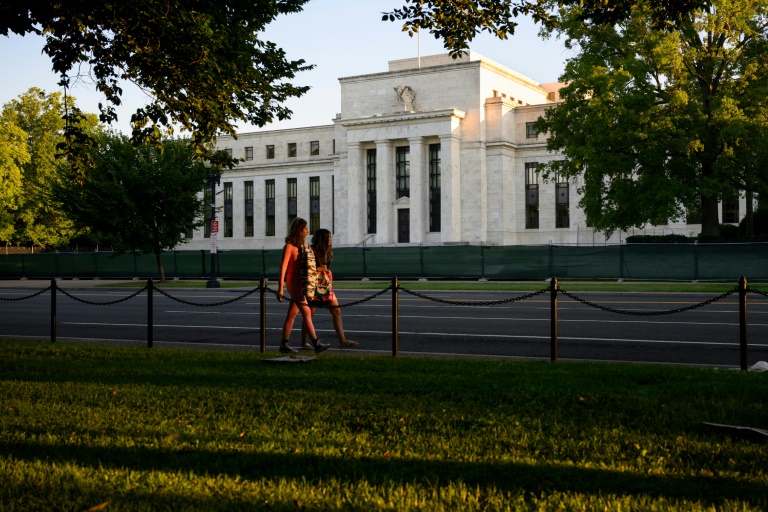
Asian and European stocks rallied Tuesday and the dollar dipped as weak US data sparked hopes the Federal Reserve could ease its interest-rate hiking plans.

Frankfurt and Paris equities soared more than three percent in value after similar stellar gains in Tokyo, while London won two percent.

“Weaker-than-expected manufacturing data from the US was taken as a signal that rising interest rates may be having some effect on cooling demand for goods,” said Interactive Investor analyst Richard Hunter.

“This in turn led to hopes of a Federal Reserve pivot, even though the spectre of inflation remains firmly at the top of their stated to-do list.”

The Fed and other central banks across the world have raised interest rates in efforts to tame runaway inflation, but the monetary tightening has raised fears that it could plunge countries into recession.

Wall Street had enjoyed a bumper start to the fourth quarter on Monday after data showed US manufacturing growth slowed more than expected in September to its weakest in more than two years.

The Institute for Supply Management said its manufacturing index dropped 1.9 points to 50.9 percent, just barely above the 50-percent threshold indicating expansion, as the prices index fell to the lowest in more than two years.

Eurozone manufacturing survey data out Monday showed a contraction on the back of the region’s ongoing energy crisis.

“The turnaround in risk appetite appears to have been driven by another deterioration in PMI surveys as traders speculate that such weakness could be a precursor to slower monetary tightening,” noted OANDA market analyst Craig Erlam.

Asian markets built on the Wall Street surge. Tokyo and Seoul were among the leaders, despite news that North Korea had fired a missile over Japan for the first time since 2017.

Sydney soared 3.8 percent after the Reserve Bank of Australia lifted interest rates by less than expected.

Hong Kong and Shanghai were closed for holidays.

Investors will focus later this week on Friday’s all-important US jobs figures for the latest reading on the health of the world’s biggest economy.

– Sterling extends gains –

Oil also continued to rise on expectations OPEC and other major producers will slash output this week, having become spooked by a plunge in the commodity on recession fears.

The 13 members of the Organization of the Petroleum Exporting Countries (OPEC), led by Riyadh, and their 10 allies headed by Moscow will hold Wednesday their first in-person meeting at the group’s headquarters in Vienna since March 2020.

The rally in equities came as the dollar weakened owing to lower expectations for US monetary tightening, with the pound also supported by the UK government’s decision to scrap a planned cut in the top rate of income tax.

Finance minister Kwasi Kwarteng has dropped the proposal, which was part of a big-borrowing mini-budget that sent shudders through markets.

The pound extended gains after breaking back above $1.13, having last Monday tanked to a record low $1.0350.

– Key figures around 1030 GMT –

Paris – CAC 40: UP 3.5 percent at 5,995.86 points

Frankfurt – DAX: UP 3.1 percent at 12,590.86

London – FTSE 100: UP 2.0 percent at 7,046.02

EURO STOXX 50: UP 3.3 percent at 3,452.98

Tokyo – Nikkei 225: UP 3.0 percent at 26,992.21 (close)

Hong Kong – Hang Seng Index: Closed for a holiday

Shanghai – Composite: Closed for a holiday

New York – Dow: UP 2.7 percent at 29,490.89 (close)

Pound/dollar: UP at $1.1362 from $1.1323 on Monday

Euro/dollar: UP at $0.9898 from $0.9826

Euro/pound: UP at 87.13 pence from 86.77 pence

Dollar/yen: UP at 144.65 yen from 144.55 yen

Brent North Sea crude: UP 1.1 percent at $89.82 per barrel

West Texas Intermediate: UP 0.9 percent at $84.40 per barrel

burs/rfj/lth

EU lawmakers impose single charger for all smartphones

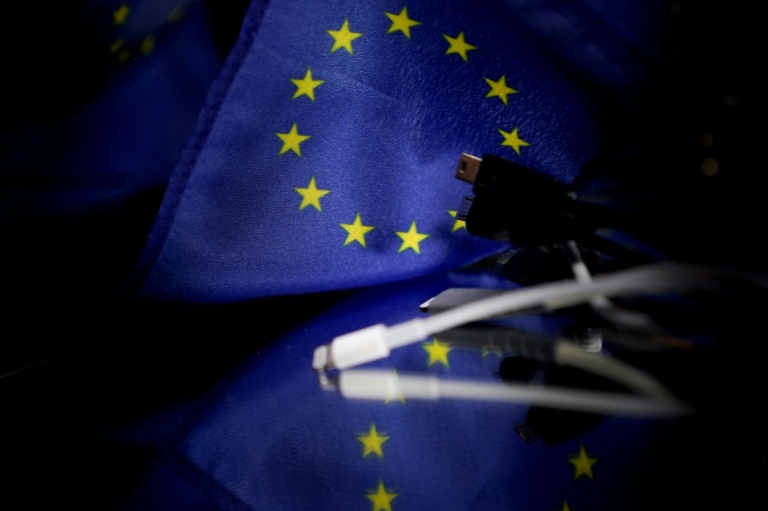
The EU parliament on Tuesday passed a new law requiring USB-C to be the single charger standard for all new smartphones, tablets and cameras from late 2024.

The measure, which EU lawmakers adopted with a vote 602 in favour, 13 against, will — in Europe at least — push Apple to drop its outdated Lightning port on its iPhones for the USB-C one already used by many of its competitors.

Makers of laptops will have extra time, from early 2026, to also follow suit.

EU policymakers say the single charger rule will simplify the life of Europeans, reduce the mountain of obsolete chargers and reduce costs for consumers. 

It is expected to save at least 200 million euros ($195 million) per year and cut more than a thousand tonnes of EU electronic waste every year, the bloc’s competition chief Margrethe Vestager said.

The EU move is expected to ripple around the world.

The European Union’s 27 countries are home to 450 million people who count among the world’s wealthiest consumers. Regulatory changes in the bloc often set global industry norms in what is known as the Brussels Effect.

“Today is a great day for consumers, a great day  for our environment,” Maltese MEP Alex Agius Saliba, the European Parliament’s pointman on the issue, said.

“After more than a decade; the single charger for multiple electronic devices will finally become a reality for Europe and hopefully we can also inspire the rest of the world,” he said.

– Faster data speed –

Apple, the world’s second-biggest seller of smartphones after Samsung, already uses USB-C charging ports on its iPads and laptops. 

But it resisted EU legislation to force a change away from its Lightning ports on its iPhones, saying that was disproportionate and would stifle innovation.

However some users of its latest flagship iPhone models — which can capture extremely high-resolution photos and videos in massive data files — complain that the Lightning cable transfers data at only a bare fraction of the speed USB-C does.

The EU law will in two years’ time apply to all handheld mobile phones, tablets, digital cameras, headphones, headsets, portable speakers, handheld videogame consoles, e-readers, earbuds, keyboards, mice and portable navigation systems.

People buying a device will have the choice of getting one with or without a USB-C charger, to take advantage of the fact they might already have at least one cable at home.

Makers of electronic consumer items in Europe agreed a single charging norm from dozens on the market a decade ago under a voluntary agreement with the European Commission.

But Apple refused to abide by it, and other manufacturers kept their alternative cables going, meaning there are still some six types knocking around.

They include old-style USB-A, mini-USB and USB-micro, creating a jumble of cables for consumers.

USB-C ports can charge at up to 100 Watts, transfer data up to 40 gigabits per second, and can serve to hook up to external displays.

Apple also offers wireless charging for its latest iPhones — and there is speculation it might do away with charging ports for cables entirely in future models. But currently the wireless charging option offers lower power and data transfer speeds than USB-C.

EU lawmakers impose single charger for all smartphones

The EU parliament on Tuesday passed a new law requiring USB-C to be the single charger standard for all new smartphones, tablets and cameras from late 2024.

The measure, which EU lawmakers adopted with a vote 602 in favour, 13 against, will — in Europe at least — push Apple to drop its outdated Lightning port on its iPhones for the USB-C one already used by many of its competitors.

Makers of laptops will have extra time, from early 2026, to also follow suit.

EU policymakers say the single charger rule will simplify the life of Europeans, reduce the mountain of obsolete chargers and reduce costs for consumers. 

It is expected to save at least 200 million euros ($195 million) per year and cut more than a thousand tonnes of EU electronic waste every year, the bloc’s competition chief Margrethe Vestager said.

The EU move is expected to ripple around the world.

The European Union’s 27 countries are home to 450 million people who count among the world’s wealthiest consumers. Regulatory changes in the bloc often set global industry norms in what is known as the Brussels Effect.

“Today is a great day for consumers, a great day  for our environment,” Maltese MEP Alex Agius Saliba, the European Parliament’s pointman on the issue, said.

“After more than a decade; the single charger for multiple electronic devices will finally become a reality for Europe and hopefully we can also inspire the rest of the world,” he said.

– Faster data speed –

Apple, the world’s second-biggest seller of smartphones after Samsung, already uses USB-C charging ports on its iPads and laptops. 

But it resisted EU legislation to force a change away from its Lightning ports on its iPhones, saying that was disproportionate and would stifle innovation.

However some users of its latest flagship iPhone models — which can capture extremely high-resolution photos and videos in massive data files — complain that the Lightning cable transfers data at only a bare fraction of the speed USB-C does.

The EU law will in two years’ time apply to all handheld mobile phones, tablets, digital cameras, headphones, headsets, portable speakers, handheld videogame consoles, e-readers, earbuds, keyboards, mice and portable navigation systems.

People buying a device will have the choice of getting one with or without a USB-C charger, to take advantage of the fact they might already have at least one cable at home.

Makers of electronic consumer items in Europe agreed a single charging norm from dozens on the market a decade ago under a voluntary agreement with the European Commission.

But Apple refused to abide by it, and other manufacturers kept their alternative cables going, meaning there are still some six types knocking around.

They include old-style USB-A, mini-USB and USB-micro, creating a jumble of cables for consumers.

USB-C ports can charge at up to 100 Watts, transfer data up to 40 gigabits per second, and can serve to hook up to external displays.

Apple also offers wireless charging for its latest iPhones — and there is speculation it might do away with charging ports for cables entirely in future models. But currently the wireless charging option offers lower power and data transfer speeds than USB-C.

Indonesia probes elite officers as stadium disaster death toll rises

Elite Indonesian police officers were under investigation Tuesday over a stadium stampede that killed 131 people including dozens of children in one of the deadliest disasters in football history.

As public anger grew, police moved to punish those responsible for the crush in the city of Malang that witnesses say started when officers fired tear gas into packed stands to quell a pitch invasion.

“As the regional police chief, I am concerned, saddened and at the same time I am sorry for the shortcomings in the security process,” East Java police chief Nico Afinta told a press conference Tuesday.

The terraces of the Kanjuruhan stadium were packed Saturday evening with 42,000 “Aremania”, or Arema FC fans, for a match against fierce rivals Persebaya Surabaya.

But after a 3-2 defeat, the first home loss for more than two decades to their adversaries, fans streamed down to the pitch to confront players and management.

Police described the incident as a riot and said two officers were killed, but survivors accused them of overreacting.

Officers responded to the pitch invasion with force, kicking and hitting fans with batons, according to witnesses and video footage, prompting more fans to enter the pitch.

“If there was a riot, (tear gas) should be fired to the pitch, not in the stand,” Danny Agung Prasetyo, coordinator of supporter group Arema DC, told AFP.

The death toll jumped again on Tuesday with local health official Wiyanto Wijoyo telling AFP six more victims had succumbed to their injuries.

Indonesian officials said 4,000 more tickets had been allocated for the match than should have been, while some of the stadium’s doors appeared to have been shut, according to witnesses.

That left physically stronger supporters to scale large fences to escape the mayhem, while the most vulnerable were at the mercy of the crush as tear gas rained down.

“The doors were closed, that’s why people were pushing. Some lay down in the corner” by a closed gate to try to escape the crush, a 16-year-old survivor of the chaos told AFP.

The Malang police chief was replaced Monday, nine officers were suspended and 19 others were put under investigation over the disaster in the stadium, which was filled with only hometown Arema FC fans, national police spokesman Dedi Prasetyo said.

He said those suspended were members of the Mobile Brigade Corps, or Brimob, a unit that acts as the special-operations paramilitary unit for the Indonesian police force and is notorious for its aggressive crowd control tactics.

Indonesia’s football association also moved Tuesday to sanction Arema FC, banning its organising committee chairman and a security officer from football for life and fining the club 250 million rupiah ($16,000) over the tragedy.

– ‘Our friends died here’ –

Arema FC fans set up an outdoor stall in Malang Monday to receive legal complaints.

They said they would file a lawsuit against officers for causing what they said were scores of deaths by indiscriminately targeting spectators in confined terraces.

The Indonesian government suspended the country’s national football league and announced a task force to investigate the tragedy.

It said the probe would take two to three weeks.

Calls for an independent investigation have grown since details of the stampede started to emerge over the weekend.

“There is no instruction to fire tear gas and there is no instruction to lock the door,” Albertus Wahyurudhanto, a commissioner of the National Commission of Human Rights (Komnas HAM), told a press conference Tuesday.

Fan anger was displayed outside the stadium where a police truck was torched and the walls were daubed with graffiti that read “Tear gas vs mother’s tears” and “Our friends died here”.

– ‘Lot of dangers’ –

More vigils were planned in Malang on Tuesday after fans and Arema FC players gathered outside the stadium a day before to lay flowers at the scene and pray for the victims.

Among the dead were 32 children, an official at the women’s empowerment and child protection ministry told AFP, adding that the youngest was aged three or four.

Fifa’s safety guidelines prohibit the use of crowd control gas by police or stewards at pitchside.

Gianni Infantino, president of football’s global governing body, called the tragedy a “dark day” for football, while Brazilian superstar Pele expressed his condolences and said “violence and sports do not mix”.

The Olympic Council of Asia held a minute’s silence at its executive board meeting in Cambodia on Tuesday.

Football fan violence is an enduring problem in Indonesia, and Persebaya Surabaya supporters had been barred from the game because of it. 

But fans said they were not to blame.

Everything that could go wrong at a football match appeared to do so on Saturday night, culminating in a disaster never seen before in an Indonesian stadium.

“You could see and sense that something bad could potentially happen. That’s the kind of fear you usually get when you travel to a game here,” Indonesian football pundit Pangeran Siahaan told AFP.

“There’s a lot of dangers every time you go into a football stadium in Indonesia.”
mrc-jfx/leg

North Korea fires ballistic missile over Japan

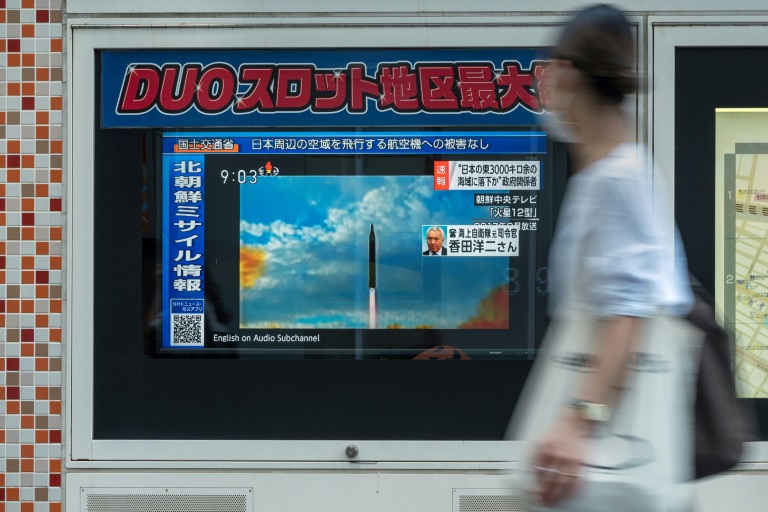
North Korea fired a ballistic missile over Japan for the first time in five years Tuesday, prompting Tokyo to activate its missile alert system and issue a rare warning for people to take shelter.

The latest launch — which the United States branded “reckless and dangerous” — comes in a record year of sanctions-busting weapons tests by North Korea, which recently revised its laws to declare itself an “irreversible” nuclear power.

The last time Pyongyang fired a missile over Japan was in 2017, at the height of a period of “fire and fury” when North Korean leader Kim Jong Un traded insults with US president Donald Trump.

South Korea said the intermediate-range ballistic missile (IRBM) flew some 4,500 kilometres (2,800 miles) — possibly a new distance record for North Korean tests, which are usually conducted on a lofted trajectory to avoid flying over neighbouring countries.

South Korean President Yoon Suk-yeol called the launch a “provocation” that violated UN regulations and vowed a “stern response” in a statement issued by his office.

Later Tuesday, South Korean and US fighter jets carried out a “precision bombing drill” in response, Seoul’s military said, with South Korean F-15Ks dropping joint direct attack munitions (JDAMs) at a target in the Yellow Sea.

The drills aimed to demonstrate the allies’ “capabilities to conduct a precision strike at the origin of provocations,” South Korea’s Joint Chiefs of Staff said in a statement.

Japanese Prime Minister Fumio Kishida described Pyongyang’s latest test as “an act of violence”, while European Union head Charles Michel called it “an unjustified aggression”.

The US State Department said the “reckless and dangerous launch” posed “an unacceptable threat to the Japanese public”.

Japanese Defence Minister Yasukazu Hamada said the missile could have been a Hwasong-12.

Pyongyang used Hwasong-12s the last two times it fired missiles over Japan — in August and September 2017 — tweeted Chad O’Carroll of specialist site NK News.

Japan activated its missile warning system and urged people in two northern regions of the country to take shelter early Tuesday.

– Nuclear message –

The Tuesday test is Pyongyang’s fifth missile launch in 10 days and sends a clear message to the United States, Park Won-gon, professor of North Korean Studies at Ewha University, told AFP.

The missiles “put South Korea, Japan, and Guam within range”, and show that Pyongyang could hit US bases with nukes if war broke out on the Korean peninsula, he said.

“As these are missiles that can carry nuclear warheads, the launch also has a political goal of once again declaring North Korea a defacto nuclear power and showing its complete denuclearisation is impossible,” Park added.

Seoul, Tokyo and Washington have been ramping up joint military drills to counter Pyongyang’s growing threats, staging the first trilateral anti-submarine drills in five years Friday.

That came just days after the US and South Korean navies conducted large-scale exercises.

Such drills infuriate North Korea, which sees them as rehearsals for an invasion.

US Vice President Kamala Harris visited Seoul last week and toured the heavily fortified Demilitarized Zone that divides the Korean peninsula on a trip to underscore her country’s “ironclad” commitment to South Korea’s defence.

About 28,500 US troops are stationed in South Korea to help protect it from the North.

– Significant escalation –

Firing a missile over Japan represented a “significant escalation” by North Korea, said Leif-Eric Easley, a professor at Ewha University in Seoul.

“Pyongyang is still in the middle of a provocation and testing cycle,” he added.

South Korean and US officials have been warning for months that Kim is preparing to conduct another nuclear test, saying last week that this could happen soon after Pyongyang’s key ally China holds a Communist Party congress from October 16.

Pyongyang has tested nuclear weapons six times since 2006, most recently in 2017.

“North Korea always starts with a low-level provocation and gradually raises the level to attract media attention from all over the world,” said Go Myong-hyun, a researcher at the Asan Institute for Policy Studies.

“Their final provocation will probably be a nuclear test,” he said, adding that North Korea had taken the unusual and “very aggressive” step of overflying Japan to attract more attention.

“By launching the missile over Japan, they are showing that their nuclear threat is not just targeting South Korea.”

Biden warns Iran to face 'costs' for crackdown on Amini protests

The United States will impose “further costs” on Iran for its lethal crackdown on protests sparked by the death of Mahsa Amini, President Joe Biden announced, drawing accusations of “hypocrisy” from Iran on Tuesday.

Amini, 22, was pronounced dead on September 16, days after the notorious morality police detained the Kurdish Iranian for allegedly breaching rules requiring women to wear hijab headscarves and modest clothes.

Anger over her death has sparked the biggest wave of protests to rock Iran in almost three years and a state crackdown that has seen scores of protesters killed and more than 1,000 arrested.

“This week, the United States will be imposing further costs on perpetrators of violence against peaceful protesters,” Biden said in a statement. “We will continue holding Iranian officials accountable and supporting the rights of Iranians to protest freely.”

Biden said he was “gravely concerned” about reports of the intensifying repression of protesters and said Washington stood with “all the citizens of Iran who are inspiring the world with their bravery”.

Rights group voiced deep concern after Iranian riot police used tear gas and paintball guns against hundreds of students shouting “woman, life, liberty” at Tehran’s Sharif University of Technology on Sunday night, with video footage showing detainees being taken away with fabric hoods over their heads.

The US president gave no indication of what measures he was considering against Iran, which is already under crippling US economic sanctions largely related to its controversial nuclear programme.

Iran accused the US leader of “hypocrisy” in invoking human rights to impose fresh punitive measures.

– Nuclear talks –

“It would have been better for Mr Joe Biden to think a little about the human rights record of his own country before making humanitarian gestures, although hypocrisy does not need to be thought through,” foreign ministry spokesman Nasser Kanani said in an Instagram post, reported by Iranian media.

“The US president should be concerned about the numerous sanctions… against the Iranian nation, the sanctions whose imposition against any nation is a clear example of a crime against humanity,” he added.

Iran’s supreme leader Ayatollah Ali Khamenei had Monday accused arch foes the United States and Israel of fomenting the protests.

The riots “were engineered by America and the occupying, false Zionist regime, as well as their paid agents, with the help of some traitorous Iranians abroad”, Khameni said.

The unrest has overshadowed diplomatic efforts to revive a 2015 nuclear deal between Iran and major powers which had come close to a breakthrough in recent months before stalling again.

But White House Press Secretary Karine Jean-Pierre stressed that the “problems with Iran’s behaviour” are separate from efforts to revive the nuclear deal, which Washington will pursue “as long as we believe” it is in US national security interests.

– ‘Not about hijab’ –

In his first public comments on Amini’s death, 83-year-old Khamenei stressed on Monday that Iranian police must “stand up to criminals”.

Khamenei said “some people, without proof or an investigation, have made the streets dangerous, burned the Koran, removed hijabs from veiled women and set fire to mosques and cars”.

He added that “this is not about hijab in Iran”, and that “many Iranian women who don’t observe the hijab perfectly are among the steadfast supporters of the Islamic republic”.

Iran has repeatedly accused outside forces of stoking the protests and last week said nine foreign nationals — including from France, Germany, Italy, the Netherlands and Poland — had been arrested.

At least 92 protesters have been killed so far in the Mahsa Amini rallies, said Oslo-based group Iran Human Rights, which has been working to assess the death toll despite internet outages and blocks on WhatsApp, Instagram and other online services. 

Amnesty International said earlier it had confirmed 53 deaths, after Iran’s semi-official Fars news agency said last week that “around 60” people had died.

At least 12 members of the security forces have been reported killed since September 16.

bur/kir/fz

Close Bitnami banner
Bitnami