World

UK's embattled govt stares at new U-turn on economy

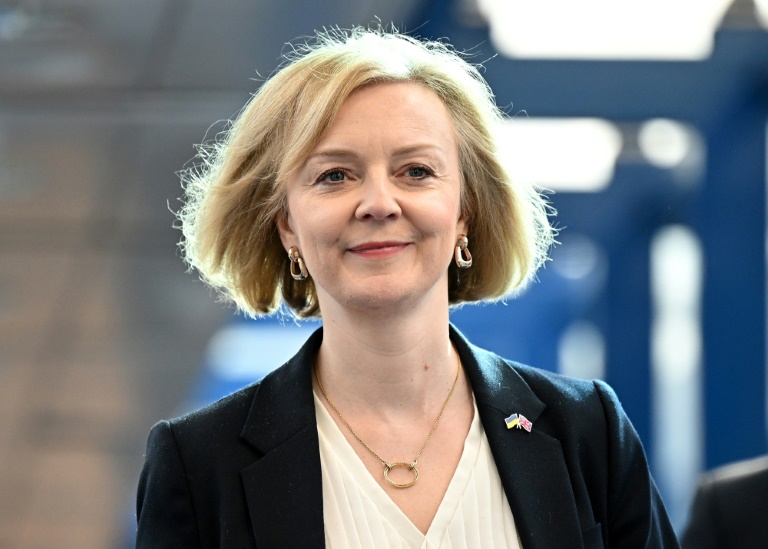
Britain’s Prime Minister Liz Truss defended her contentious plan to kick-start economic growth through tax cuts, despite expectations Tuesday of a second damaging U-turn.

Fresh from a humiliating climbdown on cutting income tax for the richest, Truss and Chancellor of the Exchequer Kwasi Kwarteng were set to bring forward a major debt reduction plan, the Financial Times and others reported.

Its unveiling will come later this month rather than on November 23, and will be accompanied by independent forecasts from the Office for Budget Responsibility (OBR) in a bid to calm febrile financial markets, the reports said.

There was no immediate comment from the government, as Truss and Kwarteng prepared for another difficult day at the ruling Conservatives’ annual conference in Birmingham, central England.

But Mel Stride, the Tory chairman of the powerful Treasury committee in the House of Commons, said: “I have pressed the chancellor very hard on this and to his credit he has listened.”

Acting in advance of the Bank of England’s next rate-setting meeting on November 3 could “reduce the upward pressure on interest rates to the benefit of millions of people up and down the country”, he added.

Asked if any more U-turns were coming, Truss was evasive in an interview with LBC radio broadcast Tuesday but recorded on Monday.

“I’m determined to carry on with this growth package,” she said, stressing another component of the plan to cap soaring energy bills. 

“That’s what’s important, but it’s also important that we do listen to people and we bring the country with us.” 

However, Truss also refused to rule out cuts to benefits as poorer Britons struggle with the worst cost-of-living crisis in generations.

“I’m very committed to supporting the most vulnerable,” Truss told BBC radio in another pre-recorded interview aired Tuesday.

But she added: “We have to look at these issues in the round. We have to be fiscally responsible.”

– ‘Get a grip!’ –

Potential cuts to the welfare budget are shaping up as the next battle with dissident Tory MPs after the aborted tax cut, part of a package that relies on billions more in new borrowing.

Splits have also emerged in the cabinet.

Senior minister Penny Mordaunt, one of the candidates Truss beat in the Tory leadership race, said it “makes sense” that welfare should still rise in line with soaring rates of inflation.

“I have always supported –- whether it’s pensions, whether it’s our welfare system –- keeping pace with inflation,” she told Times Radio. 

“That’s what I voted for before, and so have a lot of my colleagues.” 

Media coverage of Monday’s volte-face was damning, with many commentators arguing Truss’s credibility was already in tatters less than a month since she succeeded Boris Johnson.

The Daily Mail newspaper, normally a trenchant voice in support of the new leader’s right-wing agenda, headlined its main story: “Get a grip!”

Coverage of Kwarteng’s lacklustre speech to the Tory conference on Monday, which had to be rapidly rewritten after the tax plan was ditched, was also damning.

There was particular criticism of the finance minister’s jocular tone, which he reinforced at an evening reception with the Policy Exchange think-tank.

Market reactions that saw the pound slump to an all-time low against the dollar last week had been “hullabaloo”, he said.

Policy Exchange, he also told his laughing hosts, was “twice as old as the OBR — that gives you huge authority”.

Elsewhere at the Birmingham conference, Foreign Secretary James Cleverly was Tuesday to declare that Britain has the “strategic endurance” to see Ukraine “through to victory” over Russia.

And Home Secretary Suella Braverman was readying new measures to tackle migrants crossing the Channel from France on rickety boats, as Truss’s government seeks to shore up its right-wing credentials.
UK's embattled govt stares at new U-turn on economy

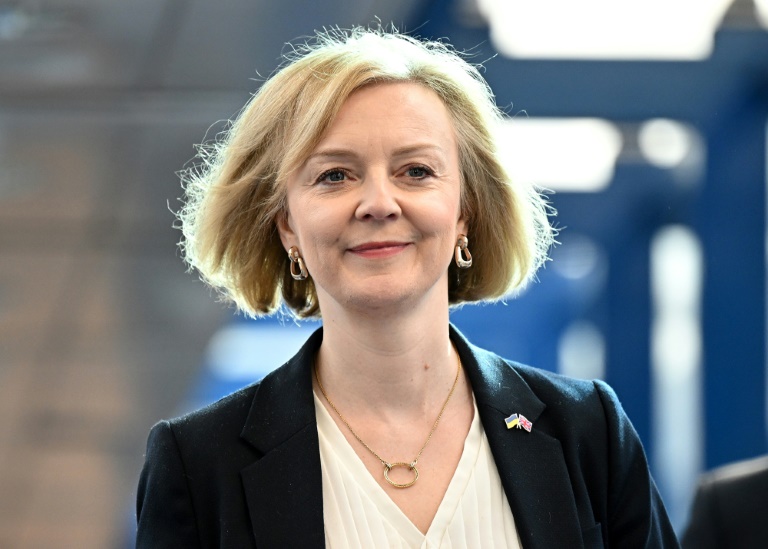
Britain’s Prime Minister Liz Truss defended her contentious plan to kick-start economic growth through tax cuts, despite expectations Tuesday of a second damaging U-turn.

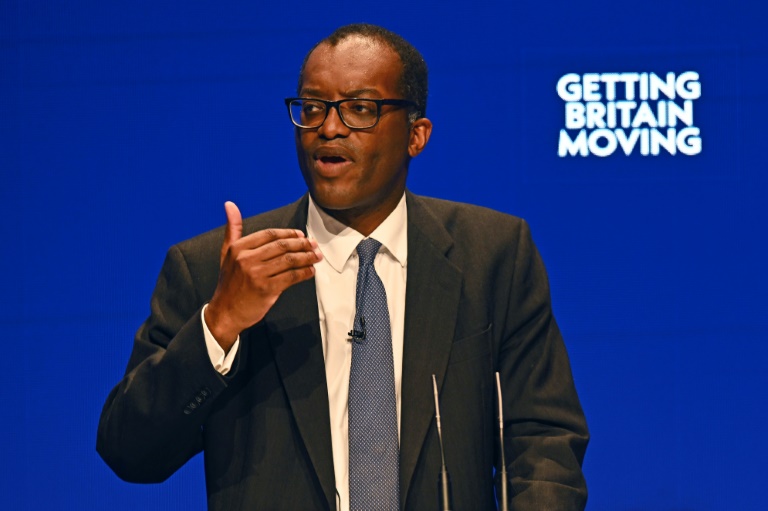
Fresh from a humiliating climbdown on cutting income tax for the richest, Truss and Chancellor of the Exchequer Kwasi Kwarteng were set to bring forward a major debt reduction plan, the Financial Times and others reported.

Its unveiling will come later this month rather than on November 23, and will be accompanied by independent forecasts from the Office for Budget Responsibility (OBR) in a bid to calm febrile financial markets, the reports said.

There was no immediate comment from the government, as Truss and Kwarteng prepared for another difficult day at the ruling Conservatives’ annual conference in Birmingham, central England.

But Mel Stride, the Tory chairman of the powerful Treasury committee in the House of Commons, said: “I have pressed the chancellor very hard on this and to his credit he has listened.”

Acting in advance of the Bank of England’s next rate-setting meeting on November 3 could “reduce the upward pressure on interest rates to the benefit of millions of people up and down the country”, he added.

Asked if any more U-turns were coming, Truss was evasive in an interview with LBC radio broadcast Tuesday but recorded on Monday.

“I’m determined to carry on with this growth package,” she said, stressing another component of the plan to cap soaring energy bills. 

“That’s what’s important, but it’s also important that we do listen to people and we bring the country with us.” 

However, Truss also refused to rule out cuts to benefits as poorer Britons struggle with the worst cost-of-living crisis in generations.

“I’m very committed to supporting the most vulnerable,” Truss told BBC radio in another pre-recorded interview aired Tuesday.

But she added: “We have to look at these issues in the round. We have to be fiscally responsible.”

– ‘Get a grip!’ –

Potential cuts to the welfare budget are shaping up as the next battle with dissident Tory MPs after the aborted tax cut, part of a package that relies on billions more in new borrowing.

Splits have also emerged in the cabinet.

Senior minister Penny Mordaunt, one of the candidates Truss beat in the Tory leadership race, said it “makes sense” that welfare should still rise in line with soaring rates of inflation.

“I have always supported –- whether it’s pensions, whether it’s our welfare system –- keeping pace with inflation,” she told Times Radio. 

“That’s what I voted for before, and so have a lot of my colleagues.” 

Media coverage of Monday’s volte-face was damning, with many commentators arguing Truss’s credibility was already in tatters less than a month since she succeeded Boris Johnson.

The Daily Mail newspaper, normally a trenchant voice in support of the new leader’s right-wing agenda, headlined its main story: “Get a grip!”

Coverage of Kwarteng’s lacklustre speech to the Tory conference on Monday, which had to be rapidly rewritten after the tax plan was ditched, was also damning.

There was particular criticism of the finance minister’s jocular tone, which he reinforced at an evening reception with the Policy Exchange think-tank.

Market reactions that saw the pound slump to an all-time low against the dollar last week had been “hullabaloo”, he said.

Policy Exchange, he also told his laughing hosts, was “twice as old as the OBR — that gives you huge authority”.

Elsewhere at the Birmingham conference, Foreign Secretary James Cleverly was Tuesday to declare that Britain has the “strategic endurance” to see Ukraine “through to victory” over Russia.

And Home Secretary Suella Braverman was readying new measures to tackle migrants crossing the Channel from France on rickety boats, as Truss’s government seeks to shore up its right-wing credentials.
Markets rally, dollar dips as US data tempers rate fears

Asian markets rallied Tuesday and the dollar eased after weak US factory data sparked optimism that a series of big interest rate hikes were taking their toll, allowing the Federal Reserve to ease its foot off the pedal.

Oil also continued to rise on expectations OPEC and other major producers will slash output this week, having become spooked by a plunge in the commodity on recession fears.

All three main indexes in New York enjoyed a bumper start to the quarter after data showed US manufacturing growth slowed more than expected in September to its weakest in more than two years.

SPI Asset Management’s Stephen Innes said: “The positive aspect in the data is prices paid dropped to 51.7, the lowest print since June 2020, triggering a mini-risk revival in stocks and a sell-off on the US dollar as US yields continued to slide.

“In this hawkishly priced risk environment, bad data is considered good news, as it raises the possibility of a doveish pivot by the Federal Reserve.”

But he added that there was a lot more data to come this week, topped by Friday’s US jobs figures, that could alter investors’ views, while several Fed officials remained wedded to their rate hike plan to tame inflation.

Nicole Webb, at Wealth Enhancement Group, told Bloomberg Television that while the Fed will at some point stop hiking, “how long they hold us or suspend us there is still in question”.

Still, Asian markets built on the Wall Street surge.

Tokyo and Seoul were among the leaders, despite news that North Korea had fired a missile over Japan for the first time since 2017.

Sydney surged 3.8 percent after the Reserve Bank of Australia lifted interest rates by less than expected.

Singapore, Mumbai, Bangkok, Taipei, Manila, Jakarta and Wellington were also sharply higher. Hong Kong and Shanghai are closed for holidays.

London, Paris and Frankfurt were also well up soon after opening.

– Sterling extends gains –

The rally in equities came as the dollar weakened owing to lower expectations for US monetary tightening, with the pound also supported by the UK government’s decision to scrap a planned cut in the top rate of income tax.

Ahead of a speech to a conference of the ruling Conservatives, finance minister Kwasi Kwarteng dropped the proposal, which was part of a big-borrowing mini-budget that sent shudders through markets.

The pound extended gains after breaking back above $1.13, having last Monday tanked to a record low $1.0350.

The tax cut would have cost about £2-3 billion out of an estimated £72.4 billion worth of debt issuance this year.

But National Australia Bank’s Tapas Strickland said the u-turn “is a sign that the government is responding to market concerns and also to polling which may mean the new government is not as cavalier as some had feared”.

The dollar was also down against the euro and yen, while the Australian dollar overcame an initial drop after the RBA’s rate hike to push higher.

Commodities traders are keenly awaiting Wednesday’s monthly meeting of OPEC and other producers after reports said it is considering a million-barrels-a-day output cut.

WTI surged more than five percent Monday and Brent was up 4.4 percent, recovering some of the huge losses suffered in recent months because of fears about demand caused by an expected recession.

The jump was also helped by the weaker dollar, which makes the so-called black gold cheaper for buyers using other currencies.

A cut would deal an extra blow to central banks trying to fight decades-high inflation, which has partly been driven by the spike in crude markets stoked by Russia’s invasion of Ukraine.

But SPI’s Innes added OPEC could justify the move by pointing to the recent drop in prices, which are down about 40 percent from June.

– Key figures around 0720 GMT –

Tokyo – Nikkei 225: UP 3.0 percent at 26,992.21 (close)

Hong Kong – Hang Seng Index: Closed for a holiday

Shanghai – Composite: Closed for a holiday

London – FTSE 100: UP 0.7 percent at 6,956.55

Pound/dollar: UP at $1.1374 from $1.1315 on Monday

Euro/dollar: UP at $0.9859 from $0.9822

Euro/pound: UP at 86.90 pence from 86.74 pence

Dollar/yen: DOWN at 144.60 yen from 144.66 yen

West Texas Intermediate: UP 0.6 percent at $84.15 per barrel

Brent North Sea crude: UP 0.8 percent at $89.53 per barrel

New York – Dow: UP 2.7 percent at 29,490.89 (close)

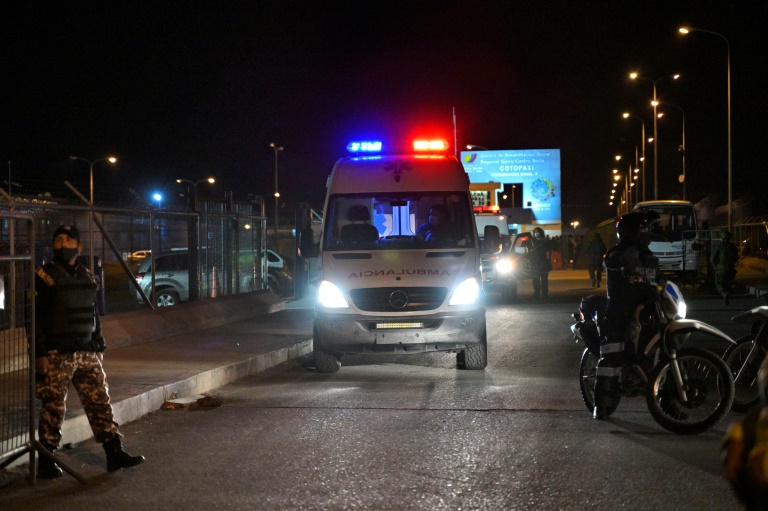
At least 15 dead in new Ecuador prison riot

At least 15 prisoners died Monday in the latest unrest inside Ecuador’s prison system, officials in the South American country reported.

The agency that manages Ecuador’s prisons, SNAI, gave the death toll in a statement which also said 21 people were injured in the clashes between inmates.

It had earlier announced that tactical units conducted operations to regain control of the facility, located in the Ecuadoran city of Latacunga.

The prison houses about 4,300 prisoners and is one of the largest in the country.

Violence in Ecuador’s prisons, where drug gangs vie for power, is often carried out with knives and sometimes involves beheadings. The violence has left more than 400 prisoners dead since February 2021.

On Monday, inmates climbed onto roofs while detonations were heard, according to television news footage.

Jorge Flores, SNAI’s deputy director, told reporters that Leandro Norero appeared to be “among the victims”.

Norero, suspected of links to drug trafficking, became one of the inmate leaders. 

Known by the alias “El Patron”, he was arrested last May for allegations of money laundering, in an operation in which $6.4 million, 24 gold bars, firearms and ammunition were allegedly seized. 

“Regarding the death of the defendant #LeandroN., #FiscaliaEc reports that after the corresponding identification experts will be able to confirm or not his death,” said the country’s prosecuting agency.

Military and police tactical units worked to regain control of the prison, SNAI said, in what provincial authorities called a successful operation.

“Control was retaken,” Cotopaxi provincial governor Oswaldo Coronel announced in the evening.

– ‘Torture centers’ –

According to official estimates, the country’s overcrowded prisons contain about 35,000 inmates, many of them members of gangs linked to drug trafficking.

A government committee noted in April that Ecuadorian prisons “are considered warehouses of human beings and torture centers.”

Bordered by Colombia and Peru, the world’s largest cocaine producers, Ecuador serves as a departure port for drug shipments, primarily to the United States and Europe.

In 2021, Ecuador seized a record 210 tons of drugs, mostly cocaine.

Last year, the country of 17.7 million people had a murder rate of 14 per 100,000, nearly double that of 2020.

In a bid to improve the living conditions in Ecuador’s prisons, President Guillermo Lasso launched an inmate census in August.

During a television interview on Monday, he offered “a message of condolence and solidarity with the families of those who died today in (the prison)”.

North Korea fires ballistic missile over Japan

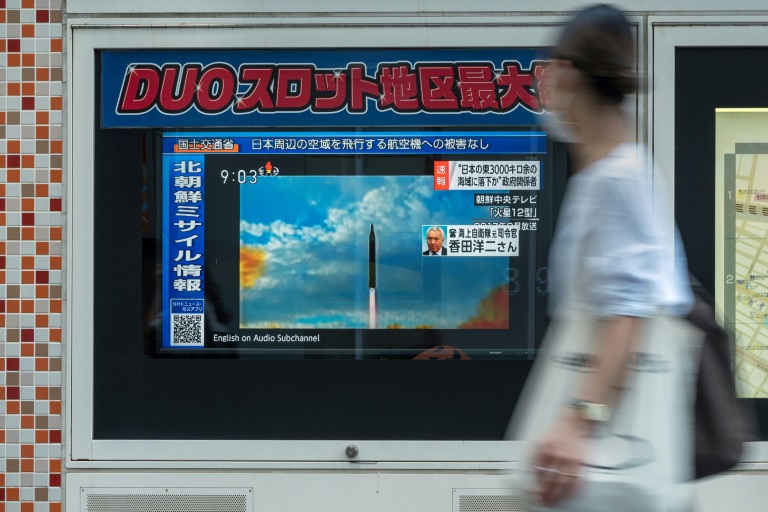
North Korea fired a ballistic missile over Japan for the first time in five years Tuesday, prompting Tokyo to activate its missile alert system and issue a rare warning for people to take shelter.

The latest launch — which the United States branded “reckless and dangerous” — comes in a record year of sanctions-busting weapons tests by North Korea, which recently revised its laws to declare itself an “irreversible” nuclear power.

The last time North Korea fired a missile over Japan was in 2017, at the height of a period of “fire and fury” when Pyongyang’s leader Kim Jong Un traded insults with US president Donald Trump.

South Korea said the intermediate-range ballistic missile (IRBM) flew some 4,500 kilometres (2,800 miles) — possibly a new distance record for North Korean tests, which are usually conducted on a lofted trajectory to avoid flying over neighbouring countries.

South Korean President Yoon Suk-yeol called the launch a “provocation” that violated UN regulations and vowed a “stern response” in a statement issued by his office.

Japanese Prime Minister Fumio Kishida described it as “an act of violence”, while European Union head Charles Michel called it “an unjustified aggression”.

The US State Department said the “reckless and dangerous launch” posed “an unacceptable threat to the Japanese public”.

Japanese Defence Minister Yasukazu Hamada said the missile could have been a Hwasong-12.

Pyongyang used Hwasong-12s the last two times it fired missiles over Japan — in August and September 2017 — tweeted Chad O’Carroll of specialist site NK News.

North Korea was not responding to routine daily contact on the inter-Korean liaison line Tuesday, South Korea’s unification ministry said.

– Nuclear message –

The Tuesday test is Pyongyang’s fifth missile launch in 10 days and sends a clear message to the United States, Park Won-gon, professor of North Korean Studies at Ewha University, told AFP.

The missiles “put South Korea, Japan, and Guam within range”, and show that Pyongyang could hit US bases with nukes if war broke out on the Korean peninsula, he said.

“As these are missiles that can carry nuclear warheads, the launch also has a political goal of once again declaring North Korea a defacto nuclear power and showing its complete denuclearisation is impossible,” Park added.

Seoul, Tokyo and Washington have been ramping up joint military drills to counter Pyongyang’s growing threats, staging the first trilateral anti-submarine drills in five years Friday.

That came just days after the US and South Korean navies conducted large-scale exercises.

Such drills infuriate North Korea, which sees them as rehearsals for an invasion.

US Vice President Kamala Harris visited Seoul last week and toured the heavily fortified Demilitarized Zone that divides the Korean peninsula on a trip to underscore her country’s “ironclad” commitment to South Korea’s defence.

About 28,500 US troops are stationed in South Korea to help protect it from the North.

– Significant escalation –

Firing a missile over Japan represented a “significant escalation” by North Korea, said Leif-Eric Easley, a professor at Ewha University in Seoul.

“Pyongyang is still in the middle of a provocation and testing cycle,” he added.

South Korean and US officials have been warning for months that North Korean leader Kim Jong Un is preparing to conduct another nuclear test, saying last week that this could happen soon after Pyongyang’s key ally China holds a Communist Party congress from October 16.

Pyongyang has tested nuclear weapons six times since 2006, most recently in 2017.

“North Korea always starts with a low-level provocation and gradually raises the level to attract media attention from all over the world,” said Go Myong-hyun, a researcher at the Asan Institute for Policy Studies.

“Their final provocation will probably be a nuclear test,” he said, adding that North Korea had taken the unusual and “very aggressive” step of overflying Japan to attract more attention.

“By launching the missile over Japan, they are showing that their nuclear threat is not just targeting South Korea.”

Australia hikes rates less than forecast, boosting stocks

Australia raised interest rates less than expected Tuesday, boosting stocks and dragging the local dollar lower, as officials grow concerned about a slowing global economy sparked by rising borrowing costs and surging prices.

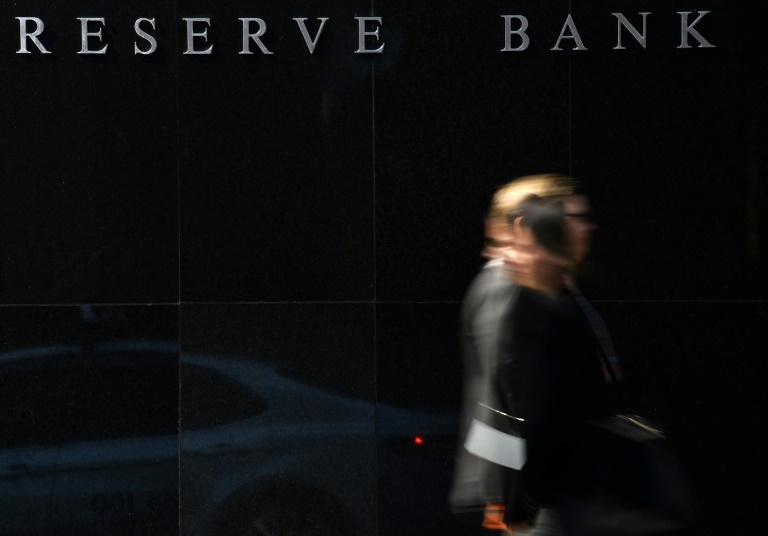
While the Reserve Bank of Australia’s 0.25 percentage point hike took the cash rate to a nine-year high of 2.60 percent, the increase was half what had been forecast as it joins others around the world in trying to rein in runaway inflation.

In a statement the RBA noted it had already increased rates “substantially in a short period of time”, though it held its inflation estimate for the year with a peak of 7.75 percent, before dropping to just over four percent in 2023.

“As is the case in most countries, inflation in Australia is too high,” the bank said in a statement.

It added that the surge in prices had been driven by “global factors”, along with strong spending levels in Australia.

The move highlights the tightrope central banks have to walk in trying to bring down inflation while at the same time trying to cushion their economies from a recession, a battle many commentators warn they are losing.

The Federal Reserve and European Central Bank have flagged further hikes at their next meetings, while the United Nations warned that the tightening programmes could trigger prolonged stagnation.

Sydney’s ASX 200 soared 3.8 percent after the announcement, while the Australian dollar dropped from US$0.6510 to as low as $0.6451 though it edged back slightly.

City Index Senior Market analyst Matt Simpson said the decision was “telling” after Australia had to “play catch-up with other central banks”.

“Already that trajectory is dying down. And as long as medium-term inflation expectations continue to behave, the case for a much higher cash is fading,” he said.

Federal Treasurer Jim Chalmers said the rise and international warnings of economic slowdowns would shape his upcoming budget announcement, which is due in three weeks.

“The storm clouds are gathering again in the global economy,” he told a news conference in Canberra.

“There’s no use pretending that the global situation hasn’t deteriorated.

“There’s no use pretending that rising inflation isn’t punching a hole in family budgets.”

Indonesia probes elite officers over stadium disaster

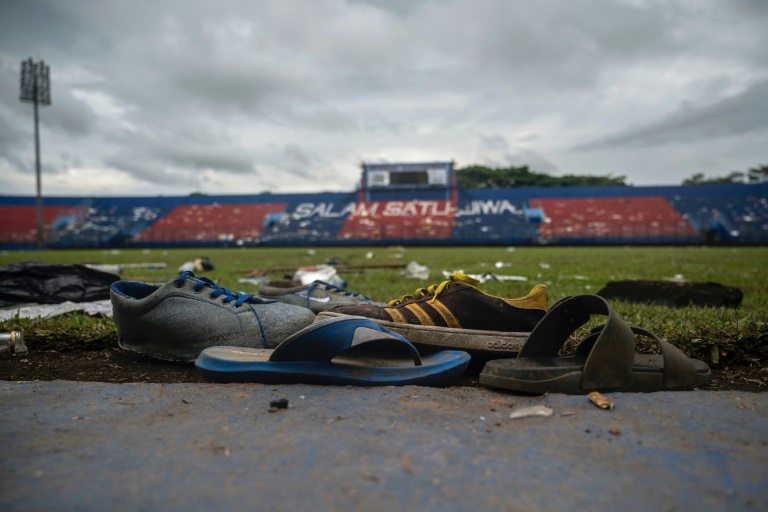
Elite Indonesian police officers were under investigation Tuesday over a stadium stampede that killed 125 people including dozens of children in one of the deadliest disasters in football history.

As public anger grew over the tragedy, police moved to punish those responsible for the crush in the city of Malang that witnesses say started when officers fired tear gas into packed stands to quell a pitch invasion.

Arema FC fans set up a makeshift centre in Malang Monday to receive legal complaints, saying they would file a lawsuit against officers for causing what they said were scores of deaths by indiscriminately targeting spectators in confined terraces.

Police described the incident as a riot and said two officers were killed, but survivors accused them of overreacting.

“If there was a riot, it (the tear gas) should be fired to the pitch, not in the stand,” Danny Agung Prasetyo, supporter group Arema DC’s coordinator, told AFP.

“Many of the victims were those who were in the stand. They were panicking because of the tear gas.”

A supporter at the centre said Arema fans would stage a large rally if no suspects were named by the weekend.

The local police chief was replaced Monday, nine officers were suspended and 19 others were put under investigation over the disaster in the stadium, which was filled with only hometown Arema FC fans, national police spokesman Dedi Prasetyo said.

He said those suspended were members of the Mobile Brigade Corps, or Brimob, a unit that acts as the special operations paramilitary unit for the Indonesian police force and is notorious for its aggressive crowd control tactics.

The Indonesian government suspended the country’s national football league and announced a task force to investigate the tragedy.

It said the probe would take two to three weeks.

The terraces of the Kanjuruhan stadium were packed with thousands of young “Aremania”, or Arema FC fans, for a match against fierce rivals Persebaya Surabaya.

But after a 3-2 defeat, the first at home for more than two decades to their adversaries, fans streamed down to the pitch to speak to players and management.

Police responded to the pitch invasion with force, kicking and hitting fans with batons, according to witnesses and video footage, prompting more fans to come onto the pitch.

Calls for an independent investigation have grown since details of the stampede started to emerge over the weekend.

“There is no instruction to fire tear gas and there is no instruction to lock the door,” Albertus Wahyurudhanto, a commissioner of the National Commission of Human Rights (Komnas HAM), told a press conference Tuesday.

Fan anger was displayed outside the stadium where a police truck was torched and the walls were daubed with graffiti that read “Tear gas vs mother’s tears” and “Our friends died here”.

– ‘Hit directly’ –

More vigils were planned in Malang on Tuesday after fans and Arema FC players gathered outside the stadium a day before to lay flowers at the scene and pray for the victims.

Among the dead were 32 children, an official at the women’s empowerment and child protection ministry told AFP, adding that the youngest was a toddler aged three or four.

FIFA president Gianni Infantino called the tragedy a “dark day” for football.

The safety guidelines of football’s global governing body prohibit the use of crowd control gas by police or stewards at pitchside.

Brazilian superstar Pele expressed his condolences and said “violence and sports do not mix.”

Football fan violence is an enduring problem in Indonesia, and Persebaya Surabaya supporters had been barred from the game because of it. 

But fans said they were not to blame.

Indonesian officials said more tickets had been allocated than should have been, while some of the stadium’s doors appeared to have been shut, according to witnesses.

That left physically stronger supporters to scale large fences in order to escape the mayhem while the most vulnerable were at the mercy of the crush as tear gas rained down.

“The doors were closed, that’s why people were pushing. Some lay down in the corner” by a closed gate to try to escape the crush, a 16-year-old survivor of the chaos told AFP.

“In the stand, there were some people who got hit (by canisters) directly. I saw it myself.”

Everything that could go wrong at a football match, appeared to do so on Saturday night, culminating in a disaster never seen before in an Indonesian stadium.

“You could see and sense that something bad could potentially happen. That’s the kind of fear you usually get when you travel to a game here,” Indonesian football pundit Pangeran Siahaan told AFP.

“There’s a lot of dangers every time you go into a football stadium in Indonesia.”

Xi decade reshapes China's military, and the region

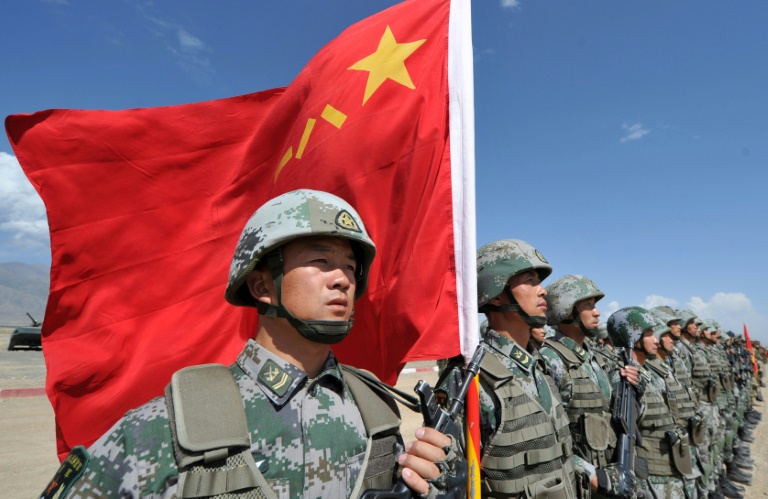
During Xi Jinping’s decade-long rule, China has built the world’s largest navy, revamped the globe’s biggest standing army, and amassed a nuclear and ballistic arsenal to trouble any foe.

With China’s neighbours now rushing to keep pace, Xi’s next five-year term is likely to see a quickening Asia-Pacific arms race.

From South Korea developing a blue-water navy to Australia buying nuclear-powered submarines, weapons shopping has surged across the region.

According to figures from the London-based International Institute for Strategic Studies, Asia-Pacific defence spending passed $1 trillion last year alone.

China, the Philippines and Vietnam have roughly doubled spending in the last decade. South Korea, India and Pakistan are not far behind.

Even Japan is proposing record defence budgets and inching towards ending its long-standing “no first strike” policy, citing an “increasingly severe” security environment.

“All the key players in the Indo-Pacific region are responding to China’s military modernisation, basically as fast as they can,” said Malcolm Davis, a former Australian defence official now with the Australian Strategic Policy Institute.

– Paper tiger no more –

For years, the People’s Liberation Army was seen as ill-equipped and ineffective — disparaged by one historian as “the world’s largest military museum”. 

It was kitted out with ageing Soviet-derived weaponry, riddled with corruption and was a predominantly infantry force with a less-than-stellar record in foreign campaigns.

The PLA’s participation in the Korean War cost almost 200,000 Chinese lives. A 1979 invasion of Vietnam cost tens of thousands more and has been mostly airbrushed from official histories.

When Xi became commander-in-chief of the PLA in 2013, some reforms were already under way.

They began in the 1990s, when Jiang Zemin was shocked and awed into action by US military prowess during the Gulf War and the Third Taiwan Strait Crisis.

But “it wasn’t really until Xi Jinping came in that that effort started translating to capability”, strategic consultant Alexander Neill told AFP.

The PLA had then just launched its first aircraft carrier, the Liaoning — a refurbished Ukrainian ship — and the J-15 multi-role fighter aircraft, based on a Sukhoi prototype.

Beijing’s military budget has now increased for 27 consecutive years, according to the Stockholm International Peace Research Institute.

– ‘Only competitor’ –

Today, China boasts two active aircraft carriers, hundreds of long- and intermediate-range ballistic missiles, thousands of warplanes and a navy surpassing even the United States’s.

After China launched a brief and partial blockade of Taiwan in August, a top US military officer tacitly conceded that preventing the real thing would not be easy, even for Washington.

“They have a very large navy, and if they want to bully and put ships around Taiwan, they very much can do that,” Seventh Fleet commander Karl Thomas told US media.

Meanwhile, China’s nuclear stockpile is increasing exponentially and — according to the Pentagon — can probably now be launched from land, sea and air, echoing the US nuclear triad.

According to the Bulletin of the Atomic Scientists, China has about 350 nuclear warheads, double the amount held during the Cold War.

US intelligence predicts that this stockpile may double again to 700 by 2027. New nuclear missile silos are being built in the northwest of the country.

Washington has pulled no punches in describing the scale of might and ambition held by the People’s Republic of China.

“The PRC is the only competitor capable of combining its economic, diplomatic, military, and technological power to mount a sustained challenge to a stable and open international system,” a Pentagon report last year said.

“Beijing seeks to reshape the international order to better align with its authoritarian system and national interests.”

As much as any hardware, it is this perceived global intent that has spooked China’s neighbours.

– Xi’s ‘huge favour’ –

Many of the big-ticket military projects around the region plainly have deterrence in mind — whether it is thwarting the “little blue men” of Beijing’s naval militias or a conventional attack.

South Korea plans to develop naval power capable of operating far from coastal waters, which experts say has little to do with the threat from rapidly arming North Korea.

Australia plans to acquire eight nuclear submarines — which can stay underwater for extended periods and launch retaliatory strikes — with British and American help, part of the so-called AUKUS agreement.

There is also discussion in Canberra about obtaining hypersonic weapons, longer-range ballistic missiles and even state-of-the-art B-21 stealth bombers, capable of striking anywhere in the world virtually undetected.

For Davis, all of these projects point to a realisation that China increasingly has the power to shape the region to its will.

“The days of the US Navy dominating the seas in the Western Pacific are fast approaching an end,” he said, and Asia-Pacific allies are beefing up their own defences accordingly.

“We wouldn’t have had AUKUS if it wasn’t for Xi Jinping. He’s done us a huge favour in that sense.”

North Korea fires ballistic missile over Japan

North Korea fired an intermediate-range ballistic missile over Japan on Tuesday, prompting Tokyo to activate the country’s missile alert system and order people to take shelter.

The last time North Korea fired a missile over Japan was in 2017, at the height of a period of “fire and fury” when Pyongyang’s leader Kim Jong Un traded insults with then-US president Donald Trump.

South Korea’s military said it had detected the launch of an IRBM, which flew around 4,500 kilometres (2,800 miles) at an altitude of about 970 kilometres and a speed of around Mach 17.

“Specific details are under close analysis by South Korean and US intelligence,” the South’s Joint Chiefs of Staff added in a statement.

South Korea’s President Yoon Suk-yeol called the launch a “provocation” that violated UN regulations.

Yoon “ordered a stern response and to take corresponding measures in cooperation with the United States and the international community”, his office said in a statement.

North Korea was not responding to routine daily contact on the inter-Korean liaison line Tuesday, Seoul’s unification ministry said.

Tokyo also confirmed the launch of an IRBM, activating the country’s missile alert warning system and urging people to take shelter.

“North Korea appears to have launched a missile. Please evacuate into buildings or underground,” the government said in an alert issued at 7:29 am (2229 GMT Monday).

Prime Minister Fumio Kishida told reporters that the launch was “an act of violence following recent repeated launches of ballistic missiles. We strongly condemn this.”

Defence Minister Yasukazu Hamada said that North Korea “has in the past launched Hwasong 12-type missiles four times, so this could be the same type”.

If so, the flight distance, which Tokyo estimated at 4,600 kilometres, was thought to be a new record for that particular type of missile.

The last two times North Korea fired Hwasong-12 missiles over Japan, in September and August 2017, they travelled 3,700 kilometres and 2,700 kilometres respectively, Chad O’Carroll of Seoul-based specialist site NK News wrote on Twitter.

“This is the 8th test of the Hwasong-12 and the 3rd time it has overflown Japan,” Jeffrey Lewis of the Middlebury Institute of International Studies wrote on Twitter.

Washington condemned the launch, with US National Security Advisor Jake Sullivan speaking to his counterparts in Seoul and Tokyo to discuss an “appropriate and robust” joint response. 

“Sullivan reinforced the United States’ ironclad commitments to the defense of Japan and the ROK (South Korea),” national security spokeswoman Adrienne Watson said in a statement.

– Military drills –

With talks long-stalled, nuclear-armed North Korea has doubled down on Kim’s military modernisation plans this year, testing a string of banned weaponry, including an intercontinental ballistic missile (ICBM) also for the first time since 2017.

Last week, Pyongyang fired short-range ballistic missiles on four occasions, including just hours after US Vice President Kamala Harris flew out of Seoul.

Pyongyang’s latest bout of intense weapons testing comes as Seoul, Tokyo and Washington ramp up joint military drills to counter growing threats from the North.

South Korea, Japan and the United States staged anti-submarine drills Friday — the first in five years — just days after Washington and Seoul’s navies conducted large-scale exercises in waters off the peninsula, involving a nuclear-powered US aircraft carrier.

Such drills infuriate North Korea, which sees them as rehearsals for an invasion.

Harris toured the heavily fortified Demilitarized Zone that divides the peninsula while on a trip that aimed to underscore her country’s “ironclad” commitment to South Korea’s defence against the North.

Washington has stationed about 28,500 troops in South Korea to help protect it from the North.

– Significant escalation –

Firing a missile over Japan represented a “significant escalation” by North Korea, said Leif-Eric Easley, a professor at Ewha University in Seoul.

“Pyongyang is still in the middle of a provocation and testing cycle,” he added.

“The Kim regime is developing weapons such as tactical nuclear warheads and submarine-launched ballistic missiles as part of a long-term strategy to outrun South Korea in an arms race and drive wedges among US allies.” 

South Korean and US officials have also been warning for months that Kim is preparing to conduct another nuclear test, saying last week that this could happen soon after China’s upcoming party congress on October 16.

North Korea, which is under multiple UN sanctions for its weapons programmes, typically seeks to maximise the geopolitical impact of its tests with careful timing.

The isolated country has tested nuclear weapons six times since 2006, most recently in 2017.

How China's civil society collapsed under Xi

Human rights activist Charles remembers a time when civil society was blossoming in China, and he could dedicate his time to helping improve the lives of people struggling in blue-collar jobs.

Now, 10 years into President Xi Jinping’s rule, community organisations such as Charles’s have been dismantled and hopes of a rebirth crushed.

Charles has fled China and several of his activist friends are in jail.

“After 2015, the whole of civil society began to collapse and become fragmented,” he told AFP, using a pseudonym for safety reasons.

Xi, on the brink of securing a third term at the apex of the world’s most populous country, has overseen a decade in which civil society movements, an emergent independent media and academic freedoms have been all but destroyed.

As Xi sought to eliminate any threats to the Communist Party, many non-governmental organisation workers, rights lawyers and activists were threatened, jailed or exiled.

AFP interviewed eight Chinese activists and intellectuals who described the collapse of civil society under Xi, though a few remain determined to keep working despite the risks.

Some face harassment from security officers who summon them weekly for questioning, while others cannot publish under their own names.

“My colleagues and I have frequently experienced interrogations lasting over 24 hours,” an LGBTQ rights NGO worker told AFP on condition of anonymity, adding that psychological trauma from the repeated questioning has compounded his woes.

“We’ve become more and more incapable, regardless of whether it’s from a financial or operational perspective, or on a personal level.”

– ‘709 crackdown’ –

The collapse of China’s civil society has been a long process riddled with obstacles for activists.

In 2015, more than 300 lawyers and rights defenders were arrested in a sweep named the “709 crackdown” after the date it was launched — July 9.

Many lawyers remained behind bars or under surveillance for years, while others were disbarred, according to rights groups.

Another watershed moment was the adoption in 2016 of the so-called foreign NGO law, which imposed restrictions and gave police wide-ranging powers over overseas NGOs operating in the country.

“In 2014, we could unfurl protest banners, conduct scientific fieldwork and collaborate with Chinese media to expose environmental abuses,” an environmental NGO worker told AFP on condition of anonymity for fear of reprisal.

“Now we must report to the police before we do anything. Each project must be in cooperation with a government department that feels more like a supervisory committee.”

– Zero-tolerance –

Today’s landscape is markedly different from even a few years ago, when civil society groups were able to operate in the relatively permissive climate that started under previous president Hu Jintao.

“At universities, several LGBTQ and gender-focused groups sprung up around 2015,” said Carl, an LGBTQ youth group member, although he felt a “tightening pressure”.

By 2018, the government’s zero-tolerance of activism came to a head with the authorities suppressing a budding #MeToo feminist movement and arresting dozens of student activists.

“Activities quietly permitted before were banned, while ideological work like political education classes ramped up”, said Carl.

In July 2022, Beijing’s prestigious Tsinghua University handed two students official warnings for distributing rainbow flags, while dozens of LGBTQ student groups’ social media pages were blocked.

– ‘Like grains of corn’ – 

Another harbinger of regression was a 2013 internal Party communique that banned advocating what was described as Western liberal values, such as constitutional democracy and press freedom. 

“It treated these ideologies as hostile, whereas in the 1980s we could discuss them and publish books about them,” said Gao Yu, a Beijing-based independent journalist who was either in prison or under house arrest between 2014 and 2020 for allegedly leaking the document.

“In a normal society, intellectuals can question the government’s mistakes. Otherwise… isn’t this the same as in the Mao era?” he asked, referring to Communist China’s founder Mao Zedong.

Now, 78-year-old Gao endures social media surveillance, has virtually no income and is blocked from overseas calls or gathering with friends.

“We are all like grains of corn ground down by the village millstone,” she said.

Replacing Gao and her peers are celebrity academics who parrot hawkish nationalist ideology, while others have been forced out of their positions or endure classroom surveillance from students.

“A kind of tattle-tale culture has flourished in China’s intellectual realm over the past decade,” said Wu Qiang, a former Tsinghua political science professor and Party critic. 

“Students have become censors reviewing their professor’s every sentence, instead of learning through mutual discussion.”

– ‘Unwinnable war’ –  

Faced with the increasingly harsh climate, many activists have either fled China or put their work on hold.

Only a handful persevere, despite growing hostility including online bullying.

“Perhaps right now we are at the bottom of a valley… but people are still tirelessly speaking out,” said Feng Yuan, founder of gender rights group Equity.

For others, like the environmental organisation worker, it is an “unwinnable war” against nationalist trolls who claim all NGO staff are “anti-China and brainwashed by the West”.

“It makes me feel like all my efforts have been wasted,” they said.  

Charles’s friends, #MeToo advocate Huang Xueqin and labour activist Wang Jianbing, have been detained without trial for over a year on subversion charges.

He believes authorities viewed their gatherings of young activists as a threat — and the threshold for prosecution is getting lower.

“The government is now targeting individuals who do small-scale, subtle, low-key activism,” he said.

“They have made sure there is no new generation of activists.”

Close Bitnami banner
Bitnami