World

Asian traders track Wall St up as US data tempers rate fears

Asian markets followed Wall Street higher Tuesday after weak US factory data sparked optimism that a series of big interest rate hikes were taking their toll, allowing the Federal Reserve to ease its foot off the pedal.

The rally in equities was matched by more gains in sterling as traders welcomed the government’s decision to scrap a planned cut in the top rate of income tax.

Oil also continued to rise on expectations OPEC and other major producers will slash output this week, having become spooked by a plunge in the commodity on recession fears.

All three main indexes in New York enjoyed a bumper start to the quarter after data showed US manufacturing growth slowed more than expected in September to its weakest in more than two years.

SPI Asset Management’s Stephen Innes said: “The positive aspect in the data is prices paid dropped to 51.7, the lowest print since June 2020, triggering a mini-risk revival in stocks and a sell-off on the US dollar as US yields continued to slide.

“In this hawkishly priced risk environment, bad data is considered good news, as it raises the possibility of a doveish pivot by the Federal Reserve.”

But he added that there was a lot more data to come this week, topped by Friday’s US jobs figures, that could alter investors’ views, while several Fed officials remained wedded to their rate hike plan to tame inflation.

Nicole Webb, at Wealth Enhancement Group, told Bloomberg Television that while the Fed will at some point stop hiking, “how long they hold us or suspend us there is still in question”.

Still, in early trade Tuesday, Asia built on the Wall Street surge.

Tokyo and Seoul were among the leaders, despite news that North Korea had fired a missile over Japan for the first time since 2017.

Sydney, Singapore, Taipei, Manila and Wellington were also sharply higher. Hong Kong and Shanghai are closed for holidays.

On currency markets, sterling held its gains against the dollar, which came on the back of lower US rate hike bets as well as the UK government’s decision to walk back a controversial tax cut.

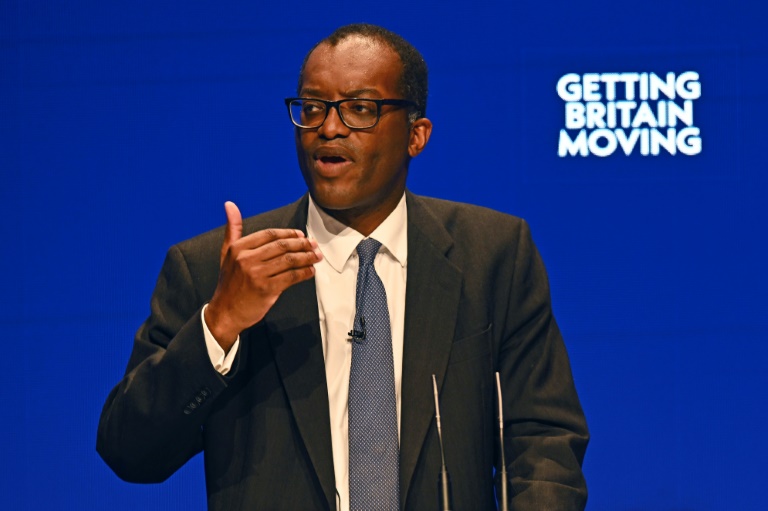
Ahead of a speech to a conference of the ruling Conservatives, finance minister Kwasi Kwarteng dropped the proposal, which was part of a big-borrowing mini-budget that sent shudders through markets.

The UK unit held above $1.13, having last Monday tanked to a record low $1.0350.

The tax cut would have cost about £2-3 billion out of an estimated £72.4 billion worth of debt issuance this year.

But National Australia Bank’s Tapas Strickland said the u-turn “is a sign that the government is responding to market concerns and also to polling which may mean the new government is not as cavalier as some had feared”.

Commodities traders are keenly awaiting Wednesday’s monthly meeting of OPEC and other producers after reports said it is considering a million-barrels-a-day output cut.

WTI surged more than five percent Monday and Brent was up 4.4 percent, recovering some of the huge losses suffered in recent months because of fears about demand caused by an expected recession.

The jump was also helped by the weaker dollar, which makes the so-called black gold cheaper for buyers using other currencies.

A cut would deal an extra blow to central banks trying to fight decades-high inflation, which has partly been driven by the spike in crude markets stoked by Russia’s invasion of Ukraine.

But SPI’s Innes added OPEC could justify the move by pointing to the recent drop in prices, which are down about 40 percent from June.

– Key figures around 0230 GMT –

Tokyo – Nikkei 225: UP 2.4 percent at 26,840.75 (break)

Hong Kong – Hang Seng Index: Closed for a holiday

Shanghai – Composite: Closed for a holiday

Pound/dollar: DOWN at $1.1311 from $1.1315 on Monday

Euro/dollar: DOWN at $0.9817 from $0.9822

Euro/pound: UP at 86.79 pence from 86.74 pence

Dollar/yen: UP at 144.77 yen from 144.66 yen

West Texas Intermediate: UP 0.1 percent at $83.74 per barrel

Brent North Sea crude: UP 0.3 percent at $89.15 per barrel

New York – Dow: UP 2.7 percent at 29,490.89 (close)

London – FTSE 100: UP 0.2 percent at 6,908.76 (close) 
Australia lists small wallaby among new endangered species

Australia listed a small wallaby and the grey snake among 15 new threatened species on Tuesday as it launched a zero-extinction plan for its unique wildlife.

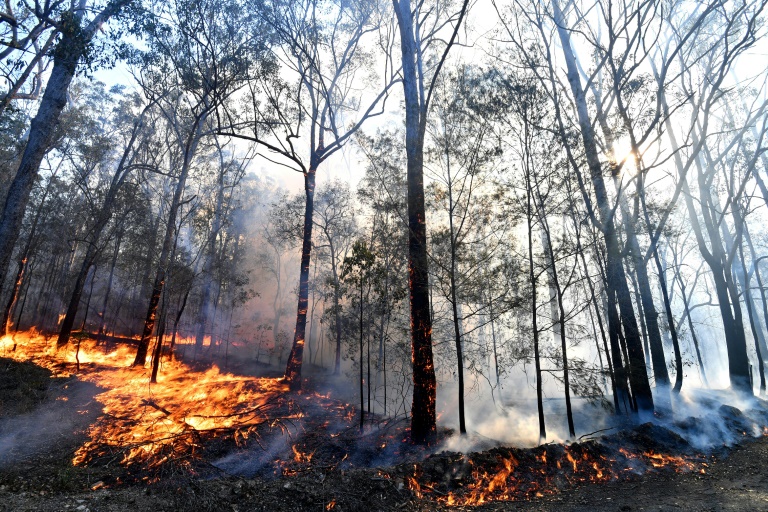
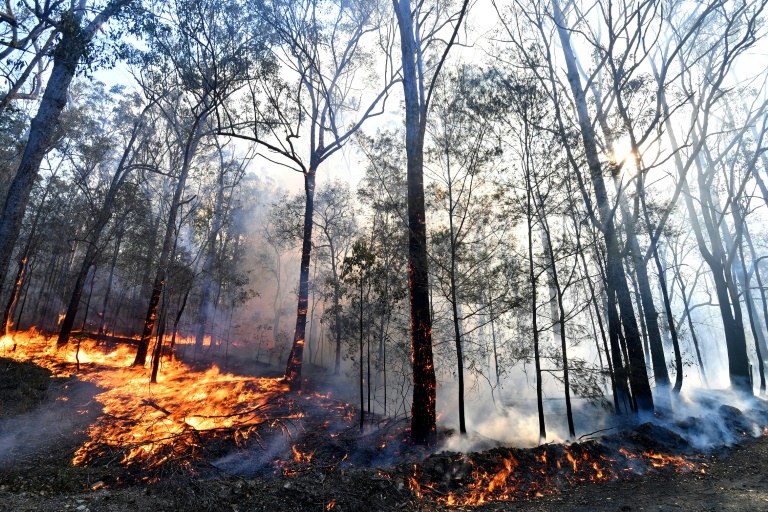
Many of Australia’s species are clinging to existence, their habitats shrinking from human activity and extreme events such as the 2019-2020 Black Summer bushfires, wildlife groups say.

Prime Minister Anthony Albanese’s government announced a new 10-year scheme to try and halt the slide into extinction of 110 “priority species” and shield 20 “priority places” from further degradation.

It aims to prevent any new extinctions of plants and animals while conserving at least 30 percent of Australia’s land mass.

Wildlife groups blame Australia’s poor record in protecting its unique species largely on habitat destruction, accelerated by global warming and resulting extreme weather.

The Black Summer fires burned through 5.8 million hectares in eastern Australia and killed or displaced an estimated 1-3 billion animals.

“The Black Summer bushfires in particular have seen devastating results for many species. We are determined to give wildlife a better chance,” said Environment Minister Tanya Plibersek.

“Listing species as threatened under national environment law is a critical step in protecting the species and habitats in need  of urgent help.”

– ‘Extinction capital’ –

Australia’s attempts to protect its wildlife had not worked so far, the minister added. 

“Australia is the mammal extinction capital of the world,” she said.

Among the 15 plants and animals listed as threatened are the vulnerable small parma wallaby, which faces danger from bushfires and predators, the endangered mildly venomous grey snake of Queensland, and the endangered small wingless matchstick grasshopper, which is sensitive to drought and frequent bushfires.

Wildlife groups welcomed the government’s goal of preventing any new plant or animal extinctions.

The objective “is ambitious but essential if future generations of Australians are to see animals like koalas, mountain pygmy possums, greater gliders and gang gang cockatoos,” said the Australian Conservation Foundation’s nature programme manager Basha Stasak.

“Stopping the destruction of wildlife habitat is the key to achieving this objective.”

Stasak called on the government to strengthen national environment law, saying it had failed to protect animals, plants and ecosystems.

Scientists had estimated the cost of tackling Australia’s “extinction crisis” at 1.69 billion Australian dollars ($1 billion) a year, Stasak said.

– ‘Downward spiral’ –

A five-yearly State of the Environment report released in July painted a picture of wildlife devastation on land and sea.

It cited the clearing of millions of hectares of primary forest and mass coral bleaching on the Great Barrier Reef caused by marine heatwaves.

WWF-Australia called for investment in recovery plans for all threatened species.

“Australia’s wildlife and wild places have been on a dangerous downward spiral,” said WWF-Australia chief conservation officer Rachel Lowry.

She welcomed Australia’s target of zero new extinctions, saying it matched the goals of New Zealand and European Union member countries.

Lowry pressed the government to set out and fund a recovery plan for the more than 1,900 threatened species in Australia.

“This plan picks 110 winners,” she said.

“It’s unclear how it will help our other ‘non priority’ threatened species such as our endangered greater glider for example.”

Plibersek told journalists that protecting 110 prioritised species would create a “halo effect” on interdependent species in the same habitat.

Protecting 20 locations could create “little Noah’s Arks, places that we can be confident we are returning to healthy populations of plants and animals,” she said.

Australia lists small wallaby among new endangered species

Australia listed a small wallaby and the grey snake among 15 new threatened species on Tuesday as it launched a zero-extinction plan for its unique wildlife.

Many of Australia’s species are clinging to existence, their habitats shrinking from human activity and extreme events such as the 2019-2020 Black Summer bushfires, wildlife groups say.

Prime Minister Anthony Albanese’s government announced a new 10-year scheme to try and halt the slide into extinction of 110 “priority species” and shield 20 “priority places” from further degradation.

It aims to prevent any new extinctions of plants and animals while conserving at least 30 percent of Australia’s land mass.

Wildlife groups blame Australia’s poor record in protecting its unique species largely on habitat destruction, accelerated by global warming and resulting extreme weather.

The Black Summer fires burned through 5.8 million hectares in eastern Australia and killed or displaced an estimated 1-3 billion animals.

“The Black Summer bushfires in particular have seen devastating results for many species. We are determined to give wildlife a better chance,” said Environment Minister Tanya Plibersek.

“Listing species as threatened under national environment law is a critical step in protecting the species and habitats in need  of urgent help.”

– ‘Extinction capital’ –

Australia’s attempts to protect its wildlife had not worked so far, the minister added. 

“Australia is the mammal extinction capital of the world,” she said.

Among the 15 plants and animals listed as threatened are the vulnerable small parma wallaby, which faces danger from bushfires and predators, the endangered mildly venomous grey snake of Queensland, and the endangered small wingless matchstick grasshopper, which is sensitive to drought and frequent bushfires.

Wildlife groups welcomed the government’s goal of preventing any new plant or animal extinctions.

The objective “is ambitious but essential if future generations of Australians are to see animals like koalas, mountain pygmy possums, greater gliders and gang gang cockatoos,” said the Australian Conservation Foundation’s nature programme manager Basha Stasak.

“Stopping the destruction of wildlife habitat is the key to achieving this objective.”

Stasak called on the government to strengthen national environment law, saying it had failed to protect animals, plants and ecosystems.

Scientists had estimated the cost of tackling Australia’s “extinction crisis” at 1.69 billion Australian dollars ($1 billion) a year, Stasak said.

– ‘Downward spiral’ –

A five-yearly State of the Environment report released in July painted a picture of wildlife devastation on land and sea.

It cited the clearing of millions of hectares of primary forest and mass coral bleaching on the Great Barrier Reef caused by marine heatwaves.

WWF-Australia called for investment in recovery plans for all threatened species.

“Australia’s wildlife and wild places have been on a dangerous downward spiral,” said WWF-Australia chief conservation officer Rachel Lowry.

She welcomed Australia’s target of zero new extinctions, saying it matched the goals of New Zealand and European Union member countries.

Lowry pressed the government to set out and fund a recovery plan for the more than 1,900 threatened species in Australia.

“This plan picks 110 winners,” she said.

“It’s unclear how it will help our other ‘non priority’ threatened species such as our endangered greater glider for example.”

Plibersek told journalists that protecting 110 prioritised species would create a “halo effect” on interdependent species in the same habitat.

Protecting 20 locations could create “little Noah’s Arks, places that we can be confident we are returning to healthy populations of plants and animals,” she said.

As Iraq concrete jungle swelters, ancient stone houses stay cool

As the sun beats down on Iraq, most people swelter in their concrete homes — but not the inhabitants of one mountain town known for its ancient and cool stone houses. 

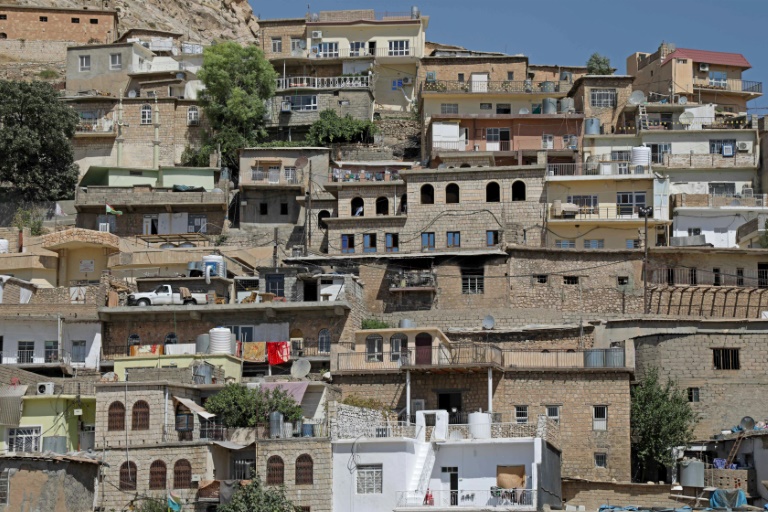
Tracing its roots back 2,700 years, the picturesque Kurdish town of Akre says it is better adapted to the modern-day perils of climate change than other parts of Iraq. 

“Stone houses are far more resistant” to the rising temperatures and also preserve the town’s unique character, said Mayor Baland Reda Zubair.

“Cement radiates heat, raises temperatures and affects the environment,” said Zubair of the building material that is allowed only in outlying neighbourhoods.

Many of Akre’s narrow alleyways can only be navigated by donkeys and wind through a historic city centre bathed in the pale yellow and brown hues of the locally quarried stone. 

Oil-rich Iraq is the world’s fifth-most vulnerable country to the effects of climate change, according to the United Nations. 

The Kurdistan region where Akre lies suffers from heat and water scarcity like the rest of the country.

But while Iraqi authorities have done little to address the challenges, Akre, a city of 100,000 residents about 500 kilometres (311 miles) north of Baghdad, believes sticking with the old ways will help it adapt.

Since 1991, when Kurdistan gained de facto autonomy from Iraq, it has declared concrete off limits for construction and renovation in the old city of Akre.

– No air-con –

An impressive building welcomes those entering the old city. Dating to 1853, it is a remnant of the Ottoman Empire that once ruled the area. 

“It’s an old military barracks,” said Jamil Siddik, a 63-year-old engineer who oversees renovation works in the city.

The limestone used for renovation is sourced from the mountains that surround Akre, he explained. For its residents, “limestone is easy to use. It’s cheap and available,” Siddik said.

It also provides great insulation. “Concrete blocks may only be 20 centimetres (7.9 inches) wide, while the stones are 40 or 60 centimetres wide,” he said.

Bewar Majeed, 37, lives in the old city. By his doorstep, kittens were playing in the sun, as the temperature reached 40 degrees Celsius (104 degrees Fahrenheit). 

But inside the house, the rooms are nice and cool thanks to its limestone walls.

“I don’t need an air conditioner,” he said. “I have a small air cooler, which is enough for me, and it’s less expensive.”

The city’s policy promoting stone over concrete relies on public financing.

For years after 2011, public funds paid for the renovation of 25 old houses and a mosque. In 2014, however, funding was suspended “because of the financial crisis”, said Mayor Zubair.

Now, he added, old city residents may renovate or build with their own money, so long as they avoid concrete, or “eventually cover it with stone”.

– Tourist draw –

On top of the environmental benefits, Akre’s conservation efforts aim to preserve its heritage value and attract tourism. 

According to the regional tourism board, 1.7 million visitors came to Iraqi Kurdistan during the first quarter of 2022, the vast majority of them Iraqis.

The autonomous region has cultivated an image of stability, distancing itself from the violence that has engulfed other parts of Iraq in recent years. 

Still, Kurdistan hasn’t been entirely spared the sounds of battle.

Neighbouring Turkey regularly carries out military operations there in its fight against the rebel Kurdistan Workers’ Party (PKK), which has been designated a “terrorist” group by Turkey and its Western allies.

In July, artillery bombardment several dozen kilometres away from Akre killed nine civilians, most of them Iraqi holidaymakers. Baghdad blamed Ankara, which denies the Iraqi claim.

But Akre’s residents shy away from politics. 

Ali, an ice cream vendor, said tourists who are drawn to the town bring him “joy”.

“We get Iraqis, Germans and French,” he added. “They like our historic city centre.”

Brazil heads for runoff vote with Bolsonaro buoyant

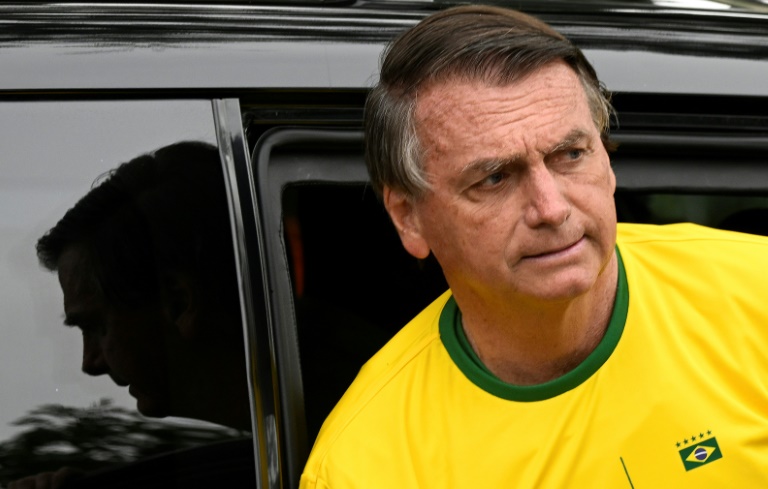
Brazil entered the final stretch of a deeply polarized presidential race Monday after an inconclusive first voting round put far-right incumbent Jair Bolsonaro in an unexpectedly strong position.

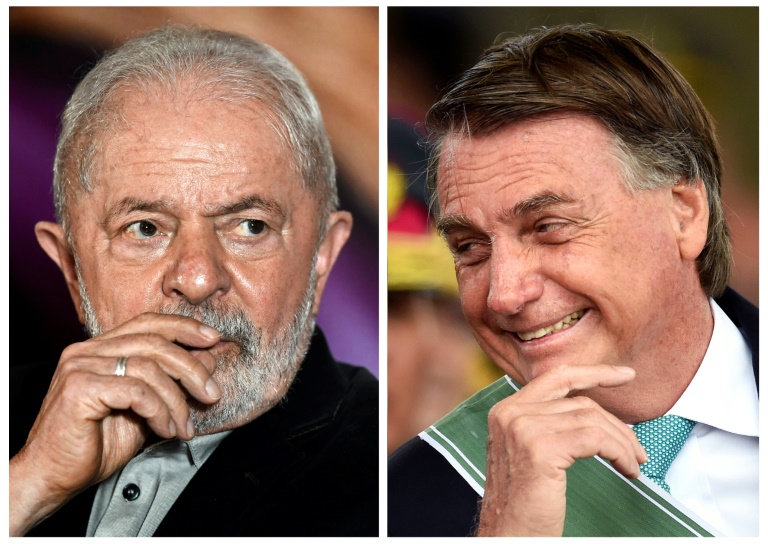
Bolsonaro, 67, garnered 43 percent of Sunday’s first-round votes compared to 48 percent for leftist frontrunner Luiz Inacio Lula da Silva — a five-point difference.

Polls had predicted a much larger gap of 14 points, recalling the surprises of Brexit and Donald Trump’s US election win in 2016.

Ex-president Lula, 76, had appeared to be within arm’s reach of taking the election in the first round with more than 50 percent of the vote — but the race now heads to an October 30 runoff.

Not only did Bolsonaro surpass expectations, but many of his allies performed better than polls predicted in congressional and gubernatorial races.

Despite finishing second, Bolsonaro sounded triumphant.

“Our adversaries prepared for a 100-meter sprint. We’re ready for a marathon,” he wrote on Twitter Monday.

“We’re confident we’re going to win, for God, country, family, life and liberty!”

Bolsonaro proved his movement remains a major force despite the controversies of his four-year tenure, marked by a shocking pandemic death toll blamed in part on his Covid-skeptic policies, surging destruction of the Amazon rainforest and a sharp rise in the number of Brazilians living in hunger.

The Sao Paulo Stock Exchange reacted to the first-round results in Latin America’s largest economy with a 5.5 percent rise in afternoon trading Monday.

Analysts said the market welcomed the strong showing from fiscal conservatives.

“No matter who wins the runoff, he’ll have to govern with a more right-wing, liberal, free-market Congress,” said economist Igor Macedo de Lucena.

– ‘The fight continues’ –

Both men declared themselves ready for the final push to attract the votes of some nine million Brazilians who cast their ballot for minority candidates — none of whom managed to break through five percent of support — and 31 million others who did not vote at all.

Lula, who wasted no time holding a strategy meeting with his campaign team Monday, said: “We have to talk to all the people who didn’t vote for us in the first round.” 

He added he was “ready to talk with the whole world” and said he was committed to forming a “bloc of Democrats” to defeat Bolsonaro.

“The deepest change in the country has already begun! It is not the people who have to fear,” Lulu said on Twitter.

Analysts say Bolsonaro’s performance bodes for a stressful and divisive four weeks ahead.

The incumbent has repeatedly sought to cast doubt on Brazil’s electronic voting system and questioned the validity of opinion polls placing him a distant second.

Now, he can argue that Sunday’s results bear out his claims.

– ‘Emboldened’ –

Bolsonaro’s rhetoric has raised fears he could trigger a Brazilian version of the riots in January last year at the US Capitol after former president Donald Trump refused to accept his 2020 election defeat.

Bolsonaro “will be very emboldened,” by Sunday’s electoral performance, said Michael Shifter of the Inter-American Dialogue think tank.

“He’s beaten the expectations…. He will play on that the experts were wrong: ‘I’ve got the momentum and I’ll defy expectations again in the second round’.”

Passions will be high on both sides.

Bolsonaro now has “an extra month to cause turmoil in the streets,” political scientist Guilherme Casaroes of the Getulio Vargas Foundation’s (FGV) Sao Paulo School of Business Administration told AFP.

“Any kind of doubt that he casts upon the electoral system will work in his favor… demobilizing voters not to go vote for Lula” — who left office after two terms in 2010 with an unprecedented 87-percent approval rating and is credited with helping lift 30 million people out of poverty.

Bolsonaro will continue hammering on Lula’s flaws, including his conviction for corruption — since overturned in court but not in the court of public opinion, analysts say.

“Lula’s chances of being elected seem considerably slighter,” said Casaroes.

As for Bolsonaro, it now appeared he “could make this a contest,” said Shifter.

“Instead of the great comeback (for Lula) it could be the great upset.”

Twitter Blue subscribers getting edit feature

Twitter on Monday said a feature to edit tweets is being rolled out to those subscribing to its Blue service in Australia, Canada and New Zealand.

The long-awaited editing tool test “went well,” so it is being made more widely available, the San Francisco based tech firm said in a tweet, adding that it is “coming soon” to the United States.

“Edit Tweet is a feature that lets people make changes to their Tweet after it’s been published,” the company said on its blog. “Think of it as a short period of time to do things like fix typos, add missed tags, and more.”

The tool will let users edit a tweet up to five times within 30 minutes of initially posting, Twitter said.

An icon looking like a slanted pen or pencil will indicate that a tweet has been edited, and a “version history” will be available to show what was changed, Twitter said.

Twitter Blue subscriptions are priced at $5 monthly, according to the company’s website.

Tesla Chief Executive Elon Musk, who is locked in a lawsuit with Twitter over his effort to break his $44 billion deal to buy the global social media site, had backed an edit button shortly before the company said in April it was studying the change.

Users of Twitter Blue — the subscription offering now available in the United States, Canada, Australia and New Zeeland– “receive early access to features and help us test them before they come to Twitter,” the company said.

An aim of the tweak is that “Tweeting will feel more approachable and less stressful,” Twitter said while testing the feature,

Yemen's fate hangs in balance as truce collapses

The United Nations envoy for Yemen scrambled Monday to revive a six-month truce after a missed deadline raised fears of a return to war and prompted rebel threats against Saudi Arabia and the United Arab Emirates.

Special envoy Hans Grundberg pledged “relentless efforts” to reinvigorate the truce, which lapsed on Sunday after bringing a sharp reduction in clashes since it came into force in April.

Iran-backed Huthi rebels have been fighting a Saudi-led pro-government coalition since 2015, in a war that has left hundreds of thousands dead and created the world’s worst humanitarian crisis according to the United Nations.

Grundberg’s plan to extend the truce — which was initially set to last two months and was renewed twice, to half a year — and to broaden it to new areas of agreement was rejected by the Huthis.

His proposal included paying civil servants’ salaries, opening routes into the rebel-blockaded city of Taez, expanding commercial flights from the rebel-held capital Sanaa and allowing more fuel ships into the port of Hodeida, also controlled by the Huthis.

It also contained commitments to release detainees, resume an “inclusive” political process and tackle economic issues, including public services.

But the northern-based Huthis, who seized Sanaa in 2014 and control large swathes of the Arabian peninsula’s poorest country, said the proposal “does not live up to the demands of the Yemeni people and does not establish the peace process”.

“The Yemeni people will not be deceived by false promises,” the Supreme Political Council said, demanding revenues from Yemen’s oil and gas resources, according to the Huthis’ Yemen News Agency.

Elisabeth Kendall, Middle East expert at Cambridge University, said there was still hope for a deal.

“There may still be a chance for the truce to be resurrected. It may simply be that the warring actors are jockeying for position by allowing the deadline to pass,” she told AFP.

“But I think the most we can hope for at this stage is another interim measure rather than the expanded six-month truce that the UN was seeking.”

– Sporadic clashes –

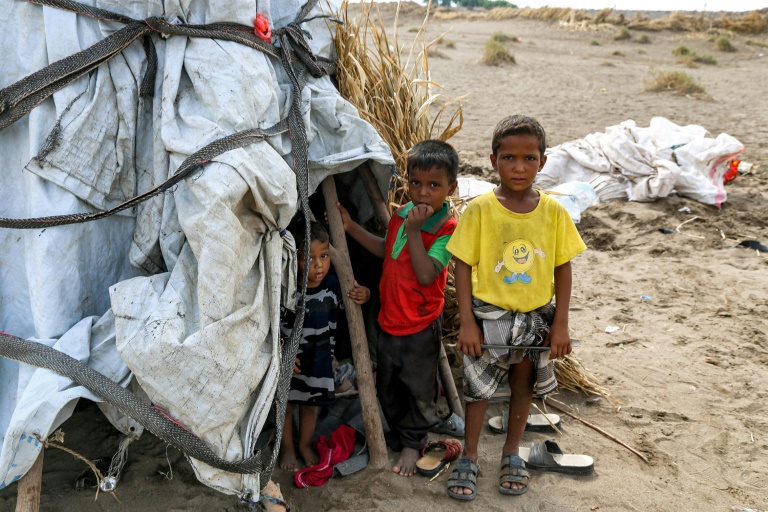
Aid groups have raised the alarm for the long-suffering people of Yemen, including 23.4 million Yemenis who are dependent on humanitarian aid.

“Over the past six months, the truce had given millions of people in Yemen respite from fighting and hope for a more lasting settlement of the conflict,” said Fabrizio Carboni, regional director for the International Committee of the Red Cross.

“We call on all parties to keep the dialogue open and put the needs of the Yemeni people first.”

As well as fighting on the ground, hostilities have been marked by coalition bombing raids and rebel drone-and-missile attacks on oil facilities in Saudi Arabia and the UAE, a major partner in the anti-Huthi alliance.

The Huthis’ military spokesman Yahya Saree warned oil companies in Saudi Arabia and the UAE “to organise their situation and leave”.

There was no immediate word from Riyadh or Abu Dhabi, but Yemen’s internationally recognised government, via a tweet from its Washington embassy, urged the UN Security Council to deal “firmly” with the Huthis over their “latest threats” and refusal to extend the truce.

Grundberg, who has shuttled between Sanaa and Oman, which was acting as a moderator, said he will continue “relentless efforts to engage with the parties to quickly reach an agreement on a way forward.”

“Ultimately, Yemenis need an end to the conflict through an inclusive political process and a negotiated settlement,” he added.

The United States on Monday expressed its “deep concern” at the expired truce, and said that the UN-mediated deal “represents the best opportunity Yemenis have had for peace in years.”

“The choice before the parties is simple: peace and a brighter future for Yemen, or a return to pointless destruction and suffering that will further fracture and isolate a country already on the brink,” State Department spokesman Ned Price added in a statement.

As Yemen’s fate remained unclear, government sources reported attacks by the Huthis south of Marib, the government’s last northern stronghold and key to Yemen’s oil resources.

Huthi shelling was also reported in Taez, Yemen’s third-biggest city, which has been blockaded by the rebels since 2016. Sporadic clashes have continued even during the truce period.

Biden to impose 'further costs' on Iran over protests crackdown

President Joe Biden on Monday said the United States would place “further costs” on Iran for its violent crackdown against nationwide protests sparked by outrage over the death of Mahsa Amini.

Amini, 22, was pronounced dead on September 16, days after the notorious morality police detained the Kurdish Iranian for allegedly breaching rules forcing women to wear hijab headscarves and modest clothes.

Anger over her death has sparked the biggest wave of protests to rock Iran in almost three years, with security forces in Tehran cracking down Sunday night on hundreds of university students.

“This week, the United States will be imposing further costs on perpetrators of violence against peaceful protestors,” Biden said in a statement.

“We will continue holding Iranian officials accountable and supporting the rights of Iranians to protest freely.”

Biden added he was “gravely concerned” about reports of the intensifying repression of protesters and said Washington stood with “all the citizens of Iran who are inspiring the world with their bravery”.

Biden gave no indication of what measures he was considering. Iran is already under crippling US economic sanctions largely related to its controversial nuclear programme.

White House Press Secretary Karine Jean-Pierre earlier on Monday stressed that the “problems with Iran’s behaviour” are separate from efforts to revive the 2015 nuclear accord, which Washington will pursue “as long as we believe” it is in US national security interests.

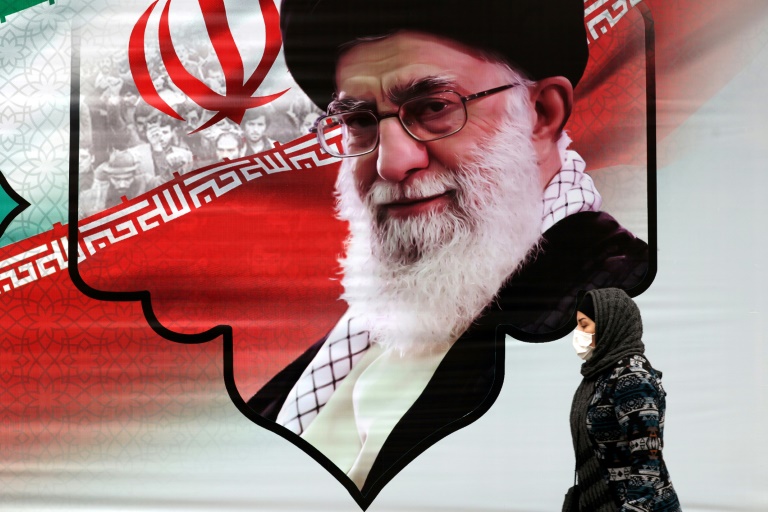
Iran’s supreme leader Ayatollah Ali Khamenei had accused arch-foes the United States and Israel of fomenting the upheaval.

The riots “were engineered by America and the occupying, false Zionist regime, as well as their paid agents, with the help of some traitorous Iranians abroad”, the Islamic republic’s leader said.

– ‘Incredible’ courage –

In his first public comments on Amini’s death, 83-year-old Khamenei stressed that police must “stand up to criminals”.

Khamenei said “some people, without proof or an investigation, have made the streets dangerous, burned the Koran, removed hijabs from veiled women and set fire to mosques and cars”.

He added that “this is not about hijab in Iran”, and that “many Iranian women who don’t observe the hijab perfectly are among the steadfast supporters of the Islamic republic.”

Concern grew over a night-time crackdown on students at Tehran’s prestigious Sharif University of Technology where, local media reported, riot police carrying steel pellet guns used tear gas and paintball guns against hundreds of students.

“Woman, life, liberty” the students shouted, as well as “students prefer death to humiliation”, Mehr news agency reported.

Oslo-based group Iran Human Rights posted videos apparently showing police on motorcycles chasing students running through an underground car park and taking away detainees, their heads covered in black cloth bags.

In one clip, which IHR said was taken at a Tehran metro station, a crowd can be heard chanting: “Don’t be afraid! Don’t be afraid! We are all together!”

In response to the university protests, German Foreign Minister Annalena Baerbock said the courage of the Iranians was “incredible”, and that the “regime’s brute force is an expression of sheer fear of the power of education and freedom.”

British Foreign Minister James Cleverly said the violence against protesters was “truly shocking”, and summoned Tehran’s top diplomat in London, while Canada imposed new sanctions citing “the egregious actions committed by Iran’s so-called ‘Morality Police'”.

Protests were also reported at other universities, including in the central city of Isfahan.

Iran has repeatedly accused outside forces of stoking the protests and last week said nine foreign nationals — including from France, Germany, Italy, the Netherlands and Poland — had been arrested.

– ‘Help me’ –

The parents of Italian woman Alessia Piperno, 30, from Rome, said they had lost contact with her after speaking to her on Wednesday — her birthday — but then received a phone call from her on Sunday apparently from detention.

“I’m fine but there are people here who say they have been inside for months and for no reason,” she told them, according to Il Messaggero, Rome’s daily newspaper. “I fear I won’t be let out again. Help me.”

Italy’s foreign ministry has so far made no comment on the identity of the Italian held.

At least 92 protesters have been killed so far in the Mahsa Amini rallies, said IHR, which has been working to assess the death toll despite internet outages and blocks on WhatsApp, Instagram and other online services. 

Amnesty International said earlier it had confirmed 53 deaths, after Iran’s semi-official Fars news agency said last week that “around 60” people had died.

At least 12 members of the security forces have been reported killed since September 16.

Apple to release Will Smith film this year despite Oscars slap

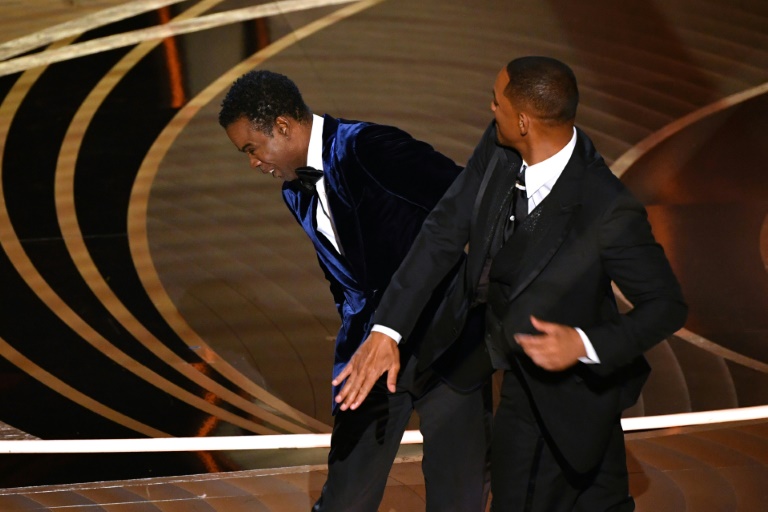
Less than a year after Will Smith shocked millions around the world by slapping Chris Rock at the Oscars, his new film “Emancipation” will be released this December, Apple said Monday.

The slavery drama was broadly assumed to have been delayed in the wake of Smith’s assault on comedian Rock, which drew widespread condemnation and resulted in Smith being banned from attending the Academy Awards ceremony for 10 years.

But Apple made the surprise announcement that the tainted star’s latest movie will hit theaters December 2, and begin streaming on Apple TV+ a week later.

The timing means Apple will be able to submit “Emancipation” to compete at the Oscars next March, just a year after it made history as the first streamer to win the Oscar for best picture with “CODA.”

Smith has kept a relatively low profile since that night at the Academy Awards, when he won best actor for his performance in “King Richard” just minutes after he had marched on stage and hit Rock for making a joke about his wife.

The former “Fresh Prince of Bel-Air” star made a public apology shortly after the incident, and released an emotional social media video about the moment in July, offering to meet with Rock “whenever you’re ready to talk.”

The 54-year-old also resigned his membership with the Academy of Motion Picture Arts and Sciences — although the organization did not revoke his best actor award, and his decade-long ban from attending the ceremony does not prevent him being nominated for Oscars.

Smith this weekend attended an advance screening of “Emancipation” hosted with the National Association for the Advancement of Colored People (NAACP) in the US capital Washington.

The movie stars Smith as a fugitive from slavery on a harrowing journey north from Louisiana seeking freedom.

His character Peter is inspired by the infamous photograph of a slave whose back was mutilated by lashes received on a plantation, and who was dubbed “Whipped Peter.” 

The film is directed by Antoine Fuqua, whose 2001 police drama “Training Day” earned a best actor Oscar for Denzel Washington. 

“Emancipation” was originally due to be filmed in Georgia, but production was moved last year after the southern US state approved a voting rights law that critics say is intended to depress turnout in Black and other underrepresented communities.

Election showed Brazil's far-right was sold short: analysts

If anything, Sunday’s surprise first round election surge for Brazilian President Jair Bolsonaro revealed a bigger-than expected appetite for his polarizing brand of conservative “God, homeland and family” politics, analysts say.

Bolsonaro got nearly two million more votes on Sunday than during his 2018 election, coming in at 43 percent of the vote compared to 48 percent for his opponent, former president Luiz Inacio Lula da Silva.

The incumbent president went into the first round with about 36 percent of polled voters saying they intended to vote for him.

But instead of trailing Lula by 14 percentage points as predicted by pollsters, Bolsonaro ended Sunday only five points or about six million votes behind, and a real chance at a second term.

“A demonstration of the strength of Bolsonarism,” the daily Folha de S.Paulo announced on its front page — referring to the incumbent’s mix of pro-God, anti-gay marriage, anti-abortion, anti-left and anti-establishment political rhetoric.

“Bolsonarism is growing more and more, and this is a reflection of a very conservative country,” voter Mateus Alcantara, a 26-year-old publicist, told AFP in Rio de Janeiro in the aftermath of Sunday’s vote.

His country, he added, was living a moment of “enormous polarization.”

Bolsonaro was thought to be entering the race damaged by a controversial four-year tenure marked by a shocking pandemic death toll blamed in part on his Covid-skeptic approach, surging destruction of the Amazon rainforest, and a sharp rise in Brazilians living in hunger.

He is frequently criticized for racist, homophobic and sexist remarks and for his vitriolic, combative approach to the media and critics.

But Bolsonaro’s “Bibles, bullets and beef” base — Evangelical Christians, security hardliners and the powerful agribusiness sector — now appears to be larger than thought.

“This election shows how deeply rooted the conservative movement is in Brazil,” sociologist Angela Alonso of the University of Sao Paulo wrote in a Folha de S.Paulo opinion piece.

– ‘More to the right’ –

Bolsonaro could also boast with better-than-predicted performances Sunday by many of his allies in congressional and gubernatorial races.

With his election in 2018, Brazil experienced an unprecedented wave in ultra-conservative voting that analysts at the time attributed to disgust with Lula’s Workers’ Party and its connection to a string of corruption scandals.

Now it seems that was not merely a reactive vote.

More than half the senators elected in the first round Sunday (15 out of 27) are Bolsonaro allies and his Liberal Party was on track to be the largest party in the lower house of congress.

Victors included highly-controversial Bolsonarists such as Eduardo Pazuello, who led the health ministry during the worst of the Covid-19 pandemic from May 2020 to March 2021.

Pazuello, who won a seat for Rio de Janeiro, had appeared before a Senate committee investigating a shortage of medical oxygen that caused the deaths of several dozens of patients in the northern city of Manaus.

“The polls had failed to perceive the strength of Jair Bolsonaro and his candidates,” commentator Vera Magalhaes noted in an editorial for the daily O Globo.

The results, she added, had been “more to the right than predicted.”

– Common touch –

For Jairo Nicolau, a political scientist at the Getulio Vargas Foundation, “some Brazilians are far-right, but Bolsonarism is more an expression of the country’s conservative movement.”

His movement had replaced center-right parties like the PSDB in power in the 1990s.

“The PSDB was a party of elites… This is where Bolsonaro makes a difference: he is truly a leader with the common touch, something the Brazilian right has not had for a long time,” added analyst Mayra Goulart.

Commentator Jamil Chade with the website UOL drew parallels with populist movements in Viktor Orban’s Hungary or in the United States under Donald Trump.

Like there, “the Bolsonarists’ strategy is to delegitimize the press, civil society or any external control body by creating channels of direct communication with the population to spread lies,” he said.

Close Bitnami banner
Bitnami