World

Hurricane Orlene hits Mexico's Pacific coast before weakening

Hurricane Orlene brought strong winds and heavy rains to Mexico’s northwestern Pacific coast on Monday but rapidly weakened as it moved inland, forecasters said.

Orlene came ashore as a Category One hurricane — the lowest on a scale of five — packing maximum sustained winds of 85 miles (140 kilometers) per hour, the US National Hurricane Center (NHC) said.

It quickly lost its hurricane strength as it churned over land and was downgraded to a tropical depression hours later, but still posed a risk of flash flooding and landslides, the NHC said.

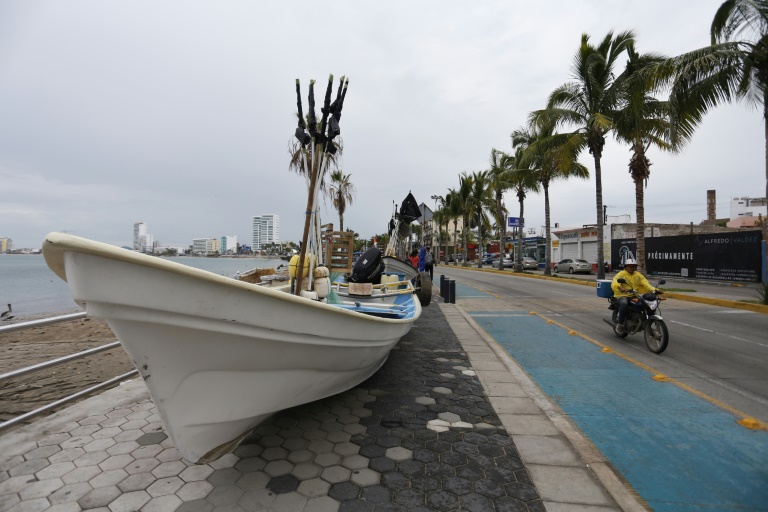
Boats had been brought ashore in the beachside city of Mazatlan in Sinaloa state ahead of Orlene’s arrival.

Businesses boarded up windows and laid down sandbags in case of flooding.

Orlene had strengthened to a powerful Category 4 hurricane on Sunday in the Pacific, prompting warnings for inhabitants of at-risk areas to take refuge in temporary shelters, but lost strength as it approached the coast.

Maximum sustained winds dropped to near 35 miles (55 kilometers) per hour, and Orlene was expected to dissipate by Monday night, according to the NHC.

Tropical cyclones hit Mexico every year on both its Pacific and Atlantic coasts, usually between May and November.

In October 1997, Hurricane Paulina hit Mexico’s Pacific coast as a Category 4 storm, leaving more than 200 dead.

US auto sales remain slow in third quarter

Automakers saw lackluster US sales in the third quarter, as manufacturers continued to grapple with supply constraints, according to reports from the companies Monday.

The auto sector has been battling a shortage of components with supply problems that initially affected mainly semiconductors later spreading to other parts.

Japan’s Toyota suffered a seven percent drop in sales in the latest three months, to more than 526,000 units, while FCA — part of the Stellantis group which includes the Fiat and Chrysler brands — saw its sales drop by six percent compared to the same period of 2021.

Jeff Kommor, FCA’s US head of sales, said “we continue to deal with challenging industry supply constraints.”

US automaker Ford, which is expected to announce its sales figures on Tuesday, had previously warned that the company would likely end the quarter with up to 45,000 vehicles stockpiled due to the lack of parts amid the persistent problems in its supply chains.

But the situation appears to be improving at General Motors, which bucked the trend to sell over 555,000 vehicles, marking a 24 percent jump compared to a year earlier.

GM retained its spot as top seller in the US market, and said “improved semiconductor supplies, stable production and improvements in dealer inventory” helped it to regain market share.

Hyundai reported a three percent rise in sales, but other brands such as Honda and Nissan suffered large declines.

Electric car maker Tesla, which does not detail its US sales, said on Sunday that it delivered 343,830 vehicles worldwide between July and September.

While this was at the low end of analyst expectations, it marked an increase of over 42 percent increase.

The outlook for the auto sector has become more uncertain with the economic slowdown and inflation weighing on consumers.

Cox Automotive lowered its forecast for full-year auto sales in the US to 13.7 million last week.

But “recent changes in the economic outlook from rising interest rates is beginning to chip away at demand, and the waiting line for new vehicles is likely getting much shorter,” said Cox economist Charlie Chesbrough.

Oil jumps but dollar bruised on US data

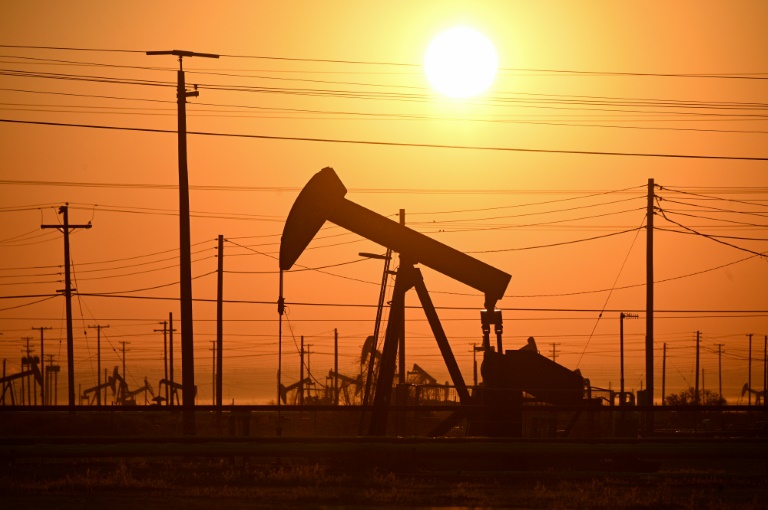
Oil prices jumped Monday on expectations of an OPEC output cut, while weak US data sent stocks higher amid rising hopes central banks may be able to ease off interest rate hikes.

Investors have been on edge over worries that rising interest rates, aimed at fighting sky-high inflation, could spark recessions, while the United Nations has called on central banks to slow down or risk pushing the world into grim prolonged stagnation.

A key manufacturing survey showing price pressures receding and demand slowing, helped buoy market sentiment amid hopes the Federal Reserve might soon pull back on its aggressive interest rate hikes.

The Institute for Supply Management said its manufacturing index dropped 1.9 points to 50.9 percent, just barely above the 50-percent threshold indicating expansion, as the prices index fell to the lowest in more than two years.

Fed officials have said the central bank will continue raising interest rates until inflation begins to drop, even if that means the US economy enters recession.

New York Fed President John Williams reiterated that message on Monday, saying that despite signs of easing demand and supply issues, inflation has become “broad-based … which will take longer to bring down.”

Still, investors are hoping interest rates may be close to a peak and the benchmark Dow jumped 2.7 percent, a good start to the new quarter after Wall Street’s worst month in 20 years.

Adam Sarhan of 50 Park Investments said “the market was extremely oversold,” which led some investors to come back looking for cheap shares.

“That happens during bear markets, the biggest up moves in history happened during bear markets,” he told AFP.

European stock indices moved higher following the US data, with Frankfurt’s DAX index ending the day 0.8 percent higher, the Paris CAC climbing 0.6 percent and London’s FTSE 100 adding 0.2 percent.

– Oil spikes before OPEC –

Oil prices leapt on reports that OPEC and its allies are considering a major output cut to stem a price plunge caused by demand worries.

But that stoked concerns about soaring inflation, which has been fueled this year by sky-high energy prices after key producer Russia’s invasion of Ukraine.

“Any cut will no doubt frustrate consuming countries that are on the verge of recession after spending a year dealing with soaring energy costs on the back of the post-pandemic recovery and war in Ukraine,” said OANDA analyst Craig Erlam.

Officials from the 13 members of the Organization of the Petroleum Exporting Countries (OPEC), led by Riyadh, and their 10 partners, led by Moscow, are due to meet physically on Wednesday for the first time since March 2020.

– Sterling gains on U-turn –

The British pound bounded above $1.13 following the latest US data, and after the UK government scrapped plans to axe its top income tax rate which helped send sterling spiraling to a record dollar low of $1.0350 a week ago.

Shares in Credit Suisse plunged to a new low in Zurich on Monday as the scandal-plagued lender sought to ease concerns about its financial health.

Its stock tumbled 11.6 percent to 3.58 Swiss francs ($3.61) before clawing back most of the ground, ending the day with a drop of 0.9 percent at 3.94 francs.

The Financial Times reported that senior executives sought over the weekend to reassure big clients and investors about the bank’s liquidity and capital position due to concerns raised about its financial strength.

Asian equities mainly fell Monday, with Hong Kong tumbling to its lowest point in more than a decade as fears for China’s economy deepens this year’s investor rout.

– Key figures around 2030 GMT –

New York – Dow: UP 2.7 percent at 29,490.89 (close)

New York – S&P 500: UP 2.6 percent at 3,678.43 (close)

New York – Nasdaq: UP 2.3 percent at 10,815.44 (close)

EURO STOXX 50: UP 0.7 percent at 3,342.17 (close)

London – FTSE 100: UP 0.2 percent at 6,908.76 (close) 

Frankfurt – DAX: UP 0.8 percent at 12,209.48 (close)

Paris – CAC 40: UP 0.6 percent at 5,794.15 (close)

Tokyo – Nikkei 225: UP 1.1 percent at 26,215.79 (close)

Hong Kong – Hang Seng Index: DOWN 0.8 percent at 17,079.51 (close)

Shanghai – Composite: Closed for a holiday

Pound/dollar: UP at $1.1315 from $1.1170 on Friday

Euro/dollar: UP at $0.9822 from $0.9802

Euro/pound: DOWN at 86.74 pence from 87.75 pence

Dollar/yen: DOWN at 144.66 yen from 144.74 yen

Brent North Sea crude: UP 4.4 percent at $88.86 per barrel

West Texas Intermediate: UP 5.2 percent at $82.63 per barrel

burs-rl/cdw/hs/des

UK govt vows reform despite U-turn on tax cut for the rich

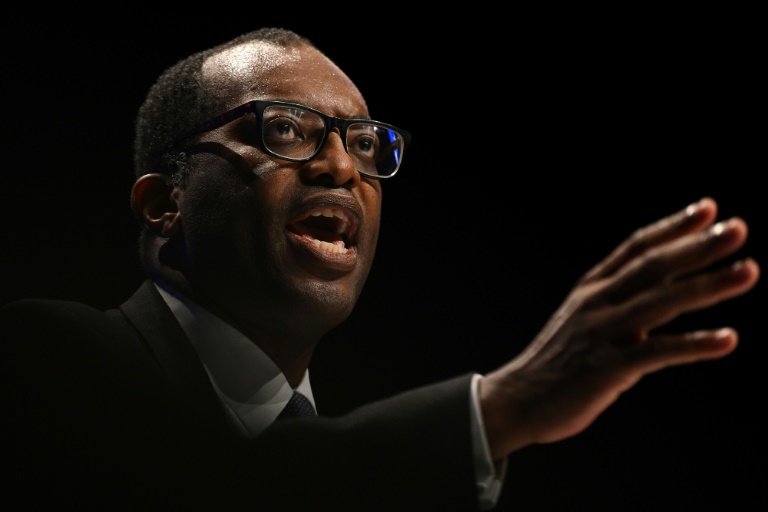
Britain’s under-fire finance minister Kwasi Kwarteng on Monday vowed to press on with his controversial economic reform plans, despite announcing a dramatic U-turn on a controversial tax cut for high earners.

The proposed cut was part of a debt-driven economic package that has bombed with the markets, the electorate and much of the ruling Conservative party.

The abrupt reversal raised questions about his and Prime Minister Liz Truss’s right-wing policy agenda, less than a month after taking power and a day after both vowed to stay the course.

“What a day. It has been tough,” Kwarteng said in a speech to the Tories’ annual conference in Birmingham, central England.

But he told delegates that “we need to focus on the task in hand”, implicitly criticising his Tory predecessors by saying there was a need to boost the economy out of its “slow, managed decline”.

“To grow the economy we really do need to do things differently,” he said.

Kwarteng pointedly avoided any specific mention of his about-face on the proposed scrapping of the 45 percent top rate of income tax.

But he insisted his and Truss’s contentious plans, which include axing a cap on bankers’ bonuses and reversing a planned rise in corporation tax, as well as a recent hike in national insurance contributions, were “sound” and “credible”.

“It will increase growth,” he added in the speech, which was delayed by an unspecified security alert at the venue. Police lifted the alert about an hour later.

– Political storm –

Earlier, Kwarteng said he had never considered resigning over the furore caused by the proposals, saying only that the decision to drop the tax cut was because it had become a “distraction”.

On the markets, the intention to pay for the cuts with billions more in extra borrowing had sent the pound tumbling to a record low against the dollar and UK government bond yields soaring.

The pound rebounded Monday as the government partially reversed course. 

Nevertheless, Kwarteng and Truss remain in the eye of a political storm, given the perceived unfairness of the package, which could yet see cuts to spending and benefits amid Britain’s worst cost-of-living crisis in generations.

As late as Sunday, the finance chief had been due to tell the conference that “we must stay the course”, according to a preview of his speech released by the Conservatives.

Truss on Sunday admitted communication errors in how the September 23 economic package had been presented, but agreed she was “absolutely committed” to abolishing the top tax rate. 

Within 24 hours, though, the 47-year-old prime minister — only in the role since September 6 — had performed one of most striking government U-turns in recent memory.

Truss told the BBC she had not discussed axing the high-earners’ tax band with her cabinet, who only seemed to learn of the reversal along with the public on Monday.

She also appeared to distance herself from the move by claiming “it was a decision that the chancellor made”, but her spokesman downplayed the comments.

“The prime minister was clear that… fiscal events are the responsibility of the chancellor — that’s all she was setting clear,” he told reporters Monday.

Out of a total tax package worth £45 billion ($50 billion), the top rate cut would have cost some £2 billion — relatively small, but outsized for its political impact.

Tory MPs who backed former finance minister Rishi Sunak — Truss’s rival in the recent Tory leadership race — had threatened to vote it down, raising the prospect of a major battle in the House of Commons.

Grant Shapps, who was refused a cabinet job by Truss, welcomed her scrapping the tax cut, which he told BBC radio had been planned with “grossly insensitive timing”.

– Credibility ‘destroyed’ –

With the U-turn, the stakes have soared for Truss as she prepares to close the party conference with a speech Wednesday.

A raft of polls have found Truss and her economic package deeply unpopular, alongside plummeting ratings for the Tories.

Some surveys showed Labour with mammoth leads of up to 33 points — its biggest since the heyday of its former prime minister Tony Blair in the late 1990s.

Labour’s finance spokeswoman Rachel Reeves said the climbdown “comes too late for the families who will pay higher mortgages and higher prices for years to come” following the recent market turmoil.

“The Tories have destroyed their economic credibility and damaged trust in the British economy,” she said.

US 'broad-based' inflation will take time to come down: Fed official

While there are some signs that global and domestic inflation pressures are easing, high prices have spread, making it harder to quell quickly, a top US central banker said Monday.

Continued strong demand for goods and for workers will keep pressure on inflation — which has hit the highest in 40 years — New York Federal Reserve Bank President John Williams said.

“This is resulting in broad-based inflation, which will take longer to bring down,” he said.

Prices soared over the past year in part due to worldwide supply chain snags, creating shortages of key components like computer chips needed for cars and electronics.

Those issues have been exacerbated by zero-Covid policies in China and the Russian invasion of Ukraine that sent food and energy prices surging.

Those supply constraints are easing, while rising interest rates are cooling demand, helping to bring down prices of many commodities like lumber, which should lower inflation, Williams said in a speech to the US Hispanic Chamber of Commerce National Conference in Phoenix, Arizona.

“Unfortunately, that’s it for the good news on inflation,” he said, warning that those factors “will not be enough by themselves to bring inflation back to our two percent objective.”

The Fed has moved aggressively this year to tamp down demand to help drive prices lower, hiking interest rates five times, for a total of three percentage points. And the central bank has said more increases are coming this year.

“From Main Street to Wall Street … inflation is the No. 1 concern,” Williams said, adding, “our job is not yet done.”

Even as supply issues improve, “demand for durable goods remains very high  — beyond what can be produced and brought to market,” while “demand for labor and services is far outstripping available supply.”

Still, he said he expects the aggressive Fed moves, along with similar steps by other major central banks, will help to restore balance globally.

Williams said “the combination of cooling global demand and steady improvements in supply … should contribute to inflation declining to about three percent next year.”

The Fed’s preferred index showed annual inflation slowed to 6.2 percent in August, from the 7.0 percent peak in June.

Williams said he expects US economic growth to be close to flat this year and post modest growth in 2023, with a slight uptick in unemployment.

Brazil vote: big night for far-right

President Jair Bolsonaro was not the only one to have a surprisingly strong night in Brazil’s elections Sunday: the far-right incumbent’s allies also beat expectations in congressional and governor’s races.

Political analysts say that means hardline conservatives will be powerful players in the Latin American giant’s new political landscape, weakening leftist front-runner Luiz Inacio Lula da Silva and his Workers’ Party (PT), even if he beats Bolsonaro in the October 30 presidential runoff.

Here is a look at some of the big wins for “Bolsonarismo”:

– Congress –

Bolsonaro’s Liberal Party (PL) is on track to be the largest party in the lower house of Congress, according to analysts.

Its newly elected congressmen include some of Bolsonaro’s most controversial allies:

– Ex-environment minister Ricardo Salles won a seat for Sao Paulo. He presided over a surge in destruction in the Amazon rainforest and was forced to resign last year after coming under investigation for involvement in a timber trafficking scheme.

– Ex-health minister Eduardo Pazuello won a seat for Rio de Janeiro. The army general oversaw Brazil’s response to Covid-19 during the worst phase of the pandemic, when hundreds of thousands of people died and severe oxygen shortages brought the health system in the northern city of Manaus to the brink of collapse.

– PL candidate Nikolas Ferreira, a 26-year-old social media personality, was the most-voted congressman-elect in the country, winning 1.4 million votes.

– Senate –

The PL and its allies won at least 15 of the 27 seats up for grabs in the 81-member Senate.

Bolsonaro allies elected include:

– Former football star Romario, a Senate member since 2015.

– Ex-science minister Marcos Ponte, Brazil’s first and only astronaut, who defied opinion polls to beat Lula ally Marcio Franca in Sao Paulo.

– Ex-women’s minister Damares Alves.

– Ex-agriculture minister Tereza Cristina.

– Ex-development minister Rogerio Marino.

– Vice President Hamilton Mourao, an army reserve general.

– Governors –

Far-right incumbent Claudio Castro (PL) easily won re-election as Rio de Janeiro state governor.

In Sao Paulo, Brazil’s most populous and wealthiest state, PL candidate Tarcisio Freitas, Bolsonaro’s former infrastructure minister and a top ally, shattered forecasts to win the first-round vote and force a runoff with Lula protege Fernando Haddad.

– Frenemies –

Adding to the bleak picture for Lula’s camp, the lead judge and prosecutor who sent him to jail on controversial corruption charges — since overturned — both won seats in the Senate.

Ex-judge Sergio Moro and ex-prosecutor Delton Dallagnol are not exactly Bolsonaro allies — especially Moro, who quit his post as the far-right president’s justice minister in 2020, accusing Bolsonaro of interfering in police investigations.

But they are certainly no friends of Lula, whom their mega-graft-busting probe, “Operation Car Wash,” sent to prison for 18 months.

Calls for more funding as pre-COP27 climate talks open in DR Congo

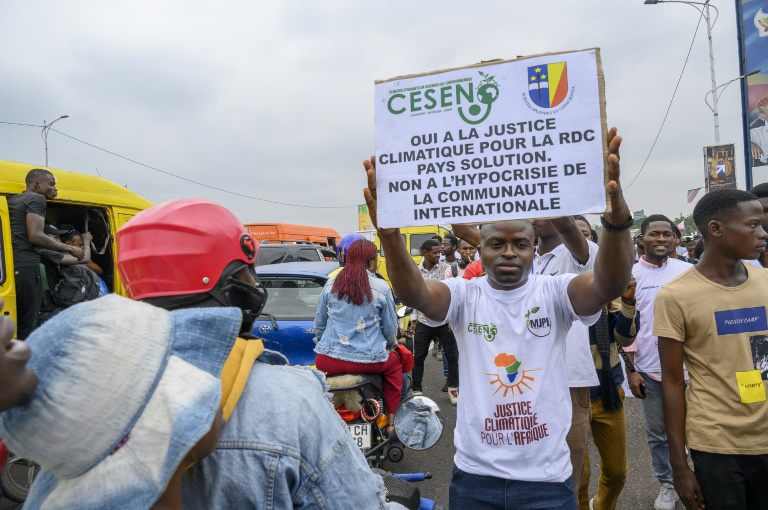
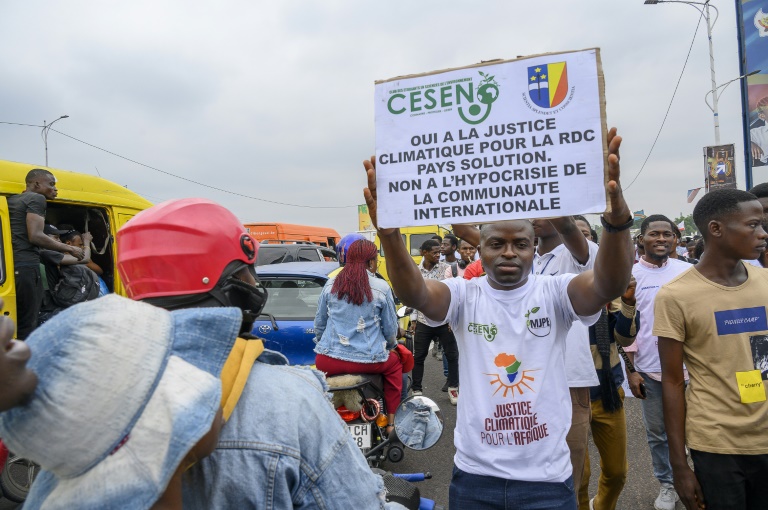
Warning “no-one will escape” a worsening crisis, DR Congo led calls on Monday for a surge in funding to brake global heating and fight its impacts at the start of pre-COP27 climate talks in Kinshasa. 

The haggle comes ahead of COP27 — the UN’s 27th summit-level gathering on climate change, which is due to take place in Egypt next month. 

At opening ceremonies in the DRC’s parliament building, Congolese Environment Minister Eve Bazaiba called on countries to respect financial pledges and endorse plans to help compensate climate-inflicted damage.

She added that money to protect carbon-absorbing rain forests — of which the DRC has vast tracts — should be viewed not as aid but as an investment in humanity’s future.

“Unless a global effort is made… no-one will escape,” Bazaiba warned. “We all breathe the same air.”

Egyptian Foreign Minister Sameh Shoukry also stressed the need for more money, noting an unfulfilled promise — dating back to COP15 in Copenhagen in 2009 — to provide developing countries with $100 billion dollars a year to fight climate change. 

Deputy UN Secretary-General Amina Mohammed offered a gloomy update on the battle today.

“All indicators on climate are heading in the wrong direction,” she said.

– Damages –

Delegates from over 50 countries are attending the two-day informal talks in Kinshasa, including US climate envoy John Kerry. The event winds up on Wednesday with side discussions.

Kerry, after meeting Bazaiba in the afternoon, said he was convinced it was possible to protect the environment, “but also to have appropriate development and job creation in the region”.

No formal announcements are expected in what is billed as a ground-clearing exercise ahead of the next month’s conference, taking place in Sharm el-Sheikh from November 6-18. 

UN Secretary-General Antonio Guterres, in New York, urged the world to act at the pre-COP27 talks against what he called “a life-or-death struggle for our own safety today and our survival tomorrow”.

“A third of Pakistan flooded. Europe’s hottest summer in 500 years. The Philippines hammered. The whole of Cuba in black-out. And here, in the United States, Hurricane Ian has delivered a brutal reminder that no country and no economy is immune from the climate crisis,” he said.

Greater support from wealthier countries, historically the world’s biggest carbon polluters, to their poorer counterparts is expected to dominate the talks. 

But post-pandemic economic strains and Russia’s invasion of Ukraine have cast a pall over the money question.

The last UN climate summit, COP26 in Glasgow in November 2021, reaffirmed the goal — agreed in Paris in 2015 — of limiting the rise in the Earth’s average temperature to well below 2.0 degrees Celsius (3.6 degrees Fahrenheit) above pre-industrial levels and pursuing efforts to limit it to 1.5C.

However, the latter goal may already be beyond reach as the Earth’s temperature is already 1.2C higher than before the Industrial Revolution. 

Poorer countries had also pushed at Glasgow for a financial mechanism to address losses and damage caused by climate change. 

But richer states rejected the call and the participants agreed instead to start a “dialogue” on financial compensation for damages.  

– ‘We also need bread’ –

Egypt, as host of COP27, has made implementing the pledge to curb global heating the priority of the November summit. 

The Democratic Republic of Congo, for its part, is pushing the message that it can act as a “solution country” for climate change due to its vast rainforests, which act as a carbon sink. 

Around 30 billion tonnes of carbon are stored across the Congo Basin, researchers estimated in a study for Nature in 2016. The figure is roughly equivalent to three years of global emissions.

However, the central African nation in July launched an auction for 30 oil and gas blocs — ignoring warnings from environmentalists that drilling could harm ecosystems and release vast amounts of heat-trapping gases. 

Bazaiba, the environment minister, told pre-COP27 delegates that Africa was facing a dilemma since the continent has contributed so little to climate change and yet has fossil-fuel resources that could alleviate poverty. 

“What should we do in this circumstance, let our children and small children die of hunger?” she asked, as applause rung out in the hall of the parliament building.

“As much as we need oxygen, we also need bread,” she said.

Calls for more funding as pre-COP27 climate talks open in DR Congo

Warning “no-one will escape” a worsening crisis, DR Congo led calls on Monday for a surge in funding to brake global heating and fight its impacts at the start of pre-COP27 climate talks in Kinshasa. 

The haggle comes ahead of COP27 — the UN’s 27th summit-level gathering on climate change, which is due to take place in Egypt next month. 

At opening ceremonies in the DRC’s parliament building, Congolese Environment Minister Eve Bazaiba called on countries to respect financial pledges and endorse plans to help compensate climate-inflicted damage.

She added that money to protect carbon-absorbing rain forests — of which the DRC has vast tracts — should be viewed not as aid but as an investment in humanity’s future.

“Unless a global effort is made… no-one will escape,” Bazaiba warned. “We all breathe the same air.”

Egyptian Foreign Minister Sameh Shoukry also stressed the need for more money, noting an unfulfilled promise — dating back to COP15 in Copenhagen in 2009 — to provide developing countries with $100 billion dollars a year to fight climate change. 

Deputy UN Secretary-General Amina Mohammed offered a gloomy update on the battle today.

“All indicators on climate are heading in the wrong direction,” she said.

– Damages –

Delegates from over 50 countries are attending the two-day informal talks in Kinshasa, including US climate envoy John Kerry. The event winds up on Wednesday with side discussions.

Kerry, after meeting Bazaiba in the afternoon, said he was convinced it was possible to protect the environment, “but also to have appropriate development and job creation in the region”.

No formal announcements are expected in what is billed as a ground-clearing exercise ahead of the next month’s conference, taking place in Sharm el-Sheikh from November 6-18. 

UN Secretary-General Antonio Guterres, in New York, urged the world to act at the pre-COP27 talks against what he called “a life-or-death struggle for our own safety today and our survival tomorrow”.

“A third of Pakistan flooded. Europe’s hottest summer in 500 years. The Philippines hammered. The whole of Cuba in black-out. And here, in the United States, Hurricane Ian has delivered a brutal reminder that no country and no economy is immune from the climate crisis,” he said.

Greater support from wealthier countries, historically the world’s biggest carbon polluters, to their poorer counterparts is expected to dominate the talks. 

But post-pandemic economic strains and Russia’s invasion of Ukraine have cast a pall over the money question.

The last UN climate summit, COP26 in Glasgow in November 2021, reaffirmed the goal — agreed in Paris in 2015 — of limiting the rise in the Earth’s average temperature to well below 2.0 degrees Celsius (3.6 degrees Fahrenheit) above pre-industrial levels and pursuing efforts to limit it to 1.5C.

However, the latter goal may already be beyond reach as the Earth’s temperature is already 1.2C higher than before the Industrial Revolution. 

Poorer countries had also pushed at Glasgow for a financial mechanism to address losses and damage caused by climate change. 

But richer states rejected the call and the participants agreed instead to start a “dialogue” on financial compensation for damages.  

– ‘We also need bread’ –

Egypt, as host of COP27, has made implementing the pledge to curb global heating the priority of the November summit. 

The Democratic Republic of Congo, for its part, is pushing the message that it can act as a “solution country” for climate change due to its vast rainforests, which act as a carbon sink. 

Around 30 billion tonnes of carbon are stored across the Congo Basin, researchers estimated in a study for Nature in 2016. The figure is roughly equivalent to three years of global emissions.

However, the central African nation in July launched an auction for 30 oil and gas blocs — ignoring warnings from environmentalists that drilling could harm ecosystems and release vast amounts of heat-trapping gases. 

Bazaiba, the environment minister, told pre-COP27 delegates that Africa was facing a dilemma since the continent has contributed so little to climate change and yet has fossil-fuel resources that could alleviate poverty. 

“What should we do in this circumstance, let our children and small children die of hunger?” she asked, as applause rung out in the hall of the parliament building.

“As much as we need oxygen, we also need bread,” she said.

Nobel shines light on paleogenetics, study of ancient DNA

While some may have been surprised that the Nobel Prize in Medicine was awarded to a paleogeneticist Monday, researchers say understanding our distant ancestors helps explain modern human health — even when it comes to Covid.

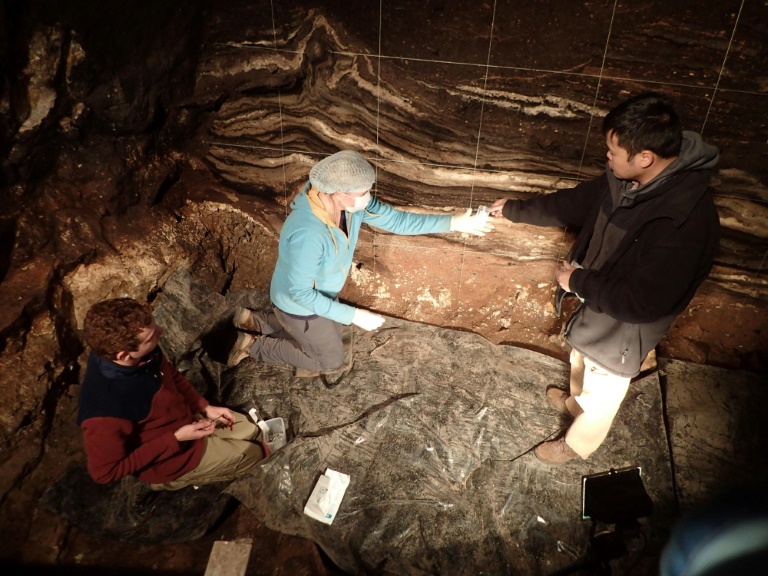
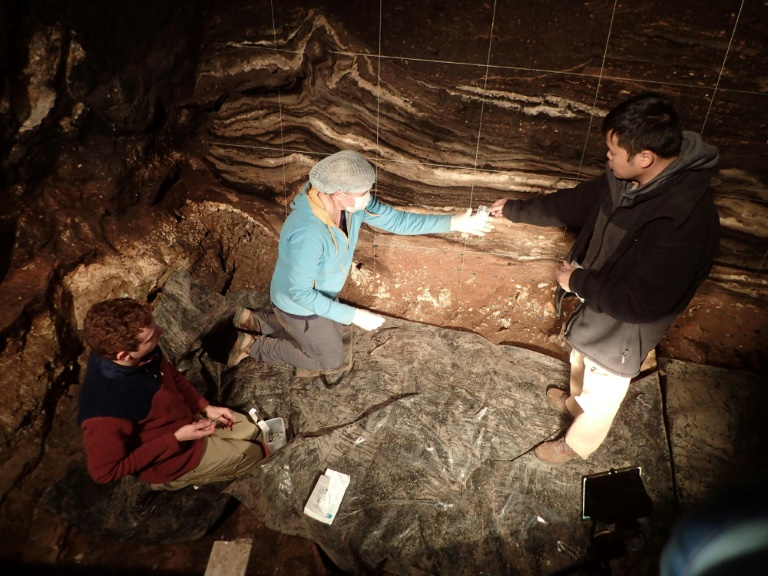
New Nobel laureate Svante Paabo is considered the father of both paleogenetics and paleogenomics, which aims to reconstruct the genetic information of long extinct human relatives.

But the prize may have led some to wonder why a pioneer in this field won the Nobel in medicine.

For example, what is the medical benefit of knowing that modern humans have an average of around two percent Neanderthal DNA, one of Paabo’s great discoveries?

For the second year running, the scientists behind mRNA vaccines were among the odds-maker’s favourites, with millions around the world being aware of the technology after getting it jabbed into their arms.

But the Nobels, which tend to reward research from decades in the past, chose Paabo.

“This revolutionary research in genetics and evolution falls within the range of topics that could and should be recognised by the Physiology or Medicine Nobel Prize,” said David Pendlebury, research head at analytics company Clarivate’s ISI institute.

“It is, however, not an award for a discovery relevant to clinical medicine, which many anticipated this year after a Nobel Prize focusing on physiology last year,” he said in a statement.

– ‘Completely justified’ –

Paleogeneticist Eva-Maria Geigl of the French research agency CNRS said it was “completely justified” to give Paabo a Nobel Prize in medicine.

“We must not forget that medicine is the exercise of keeping human beings in good health, so we must first understand biology,” she told AFP.

Paabo himself provided an example of this in 2020, when he showed that humans with a particular snippet of Neanderthal DNA have a higher risk of getting more serious symptoms from Covid-19.

The research could point towards a potential reason why Covid has often proved deadlier in places like South Asia, where many people have the DNA segment, compared to Africa, where it is far less common.

But the research is unlikely to contribute to new Covid treatment or approach. 

And it “is only a small, secondary subject” of Paabo’s vast amount of research, Geigl said.

It does however serve as an example of how paleogenetics weaves together the present with the distant past.

“We can understand, for example, what genes have made it possible to adapt in the past, and therefore which are important for our current health,” said genetic anthropologist Evelyne Heyer of France’s National Museum of Natural History, citing in particular the case of diabetes.

– Crisis in the field –

But, in a way, it was this unique mix of past and present that plunged the field into crisis in the early 2000s, a decade after first coming to prominence.

Numerous paleogenetics papers were discovered to be incorrect, because DNA from modern-day humans had accidentally been mixed in with samples from ancient humans.

It had apparently proved difficult for researchers to avoid contaminating their samples with their own DNA, which was not a problem for paleogeneticists working on animals. 

With the discipline brought into question, Paabo and other researchers led to the way to develop more reliable and advanced techniques.

Now, paleogeneticists have created a vast library of knowledge tracing the recent evolution of our species that gives insight not just into medical concerns, but also into social issues such as migration.

“We have thousands of ancient genomes that have been published, not just of Neanderthals but also of more recent humans,” Heyer said.

“They let us to show that we all have migrant ancestors, that we are a patchwork tapestry,” she added.

“It’s fundamental to how our species sees itself.”

Paabo said in an interview released by the Nobels on Monday that “it’s interesting to think if Neanderthals had survived another 40,000 years, how would that influence us?”

Would there be “racism against Neanderthals, because they were different from us?”

Nobel shines light on paleogenetics, study of ancient DNA

While some may have been surprised that the Nobel Prize in Medicine was awarded to a paleogeneticist Monday, researchers say understanding our distant ancestors helps explain modern human health — even when it comes to Covid.

New Nobel laureate Svante Paabo is considered the father of both paleogenetics and paleogenomics, which aims to reconstruct the genetic information of long extinct human relatives.

But the prize may have led some to wonder why a pioneer in this field won the Nobel in medicine.

For example, what is the medical benefit of knowing that modern humans have an average of around two percent Neanderthal DNA, one of Paabo’s great discoveries?

For the second year running, the scientists behind mRNA vaccines were among the odds-maker’s favourites, with millions around the world being aware of the technology after getting it jabbed into their arms.

But the Nobels, which tend to reward research from decades in the past, chose Paabo.

“This revolutionary research in genetics and evolution falls within the range of topics that could and should be recognised by the Physiology or Medicine Nobel Prize,” said David Pendlebury, research head at analytics company Clarivate’s ISI institute.

“It is, however, not an award for a discovery relevant to clinical medicine, which many anticipated this year after a Nobel Prize focusing on physiology last year,” he said in a statement.

– ‘Completely justified’ –

Paleogeneticist Eva-Maria Geigl of the French research agency CNRS said it was “completely justified” to give Paabo a Nobel Prize in medicine.

“We must not forget that medicine is the exercise of keeping human beings in good health, so we must first understand biology,” she told AFP.

Paabo himself provided an example of this in 2020, when he showed that humans with a particular snippet of Neanderthal DNA have a higher risk of getting more serious symptoms from Covid-19.

The research could point towards a potential reason why Covid has often proved deadlier in places like South Asia, where many people have the DNA segment, compared to Africa, where it is far less common.

But the research is unlikely to contribute to new Covid treatment or approach. 

And it “is only a small, secondary subject” of Paabo’s vast amount of research, Geigl said.

It does however serve as an example of how paleogenetics weaves together the present with the distant past.

“We can understand, for example, what genes have made it possible to adapt in the past, and therefore which are important for our current health,” said genetic anthropologist Evelyne Heyer of France’s National Museum of Natural History, citing in particular the case of diabetes.

– Crisis in the field –

But, in a way, it was this unique mix of past and present that plunged the field into crisis in the early 2000s, a decade after first coming to prominence.

Numerous paleogenetics papers were discovered to be incorrect, because DNA from modern-day humans had accidentally been mixed in with samples from ancient humans.

It had apparently proved difficult for researchers to avoid contaminating their samples with their own DNA, which was not a problem for paleogeneticists working on animals. 

With the discipline brought into question, Paabo and other researchers led to the way to develop more reliable and advanced techniques.

Now, paleogeneticists have created a vast library of knowledge tracing the recent evolution of our species that gives insight not just into medical concerns, but also into social issues such as migration.

“We have thousands of ancient genomes that have been published, not just of Neanderthals but also of more recent humans,” Heyer said.

“They let us to show that we all have migrant ancestors, that we are a patchwork tapestry,” she added.

“It’s fundamental to how our species sees itself.”

Paabo said in an interview released by the Nobels on Monday that “it’s interesting to think if Neanderthals had survived another 40,000 years, how would that influence us?”

Would there be “racism against Neanderthals, because they were different from us?”

Close Bitnami banner
Bitnami