World

Concerns over Credit Suisse viability surge as shares dive

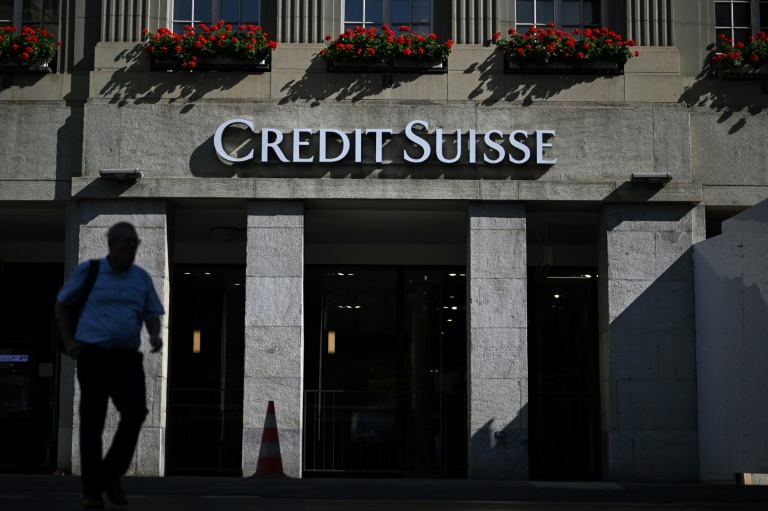
Credit Suisse shares plunged to new lows Monday, spurring swelling fears and even suggestions the bank could face a “Lehman Brothers moment”, despite expert assurances it is too big to fail.

Switzerland’s second-largest bank saw its share price sink 11.5 percent to a historic low of 3.518 Swiss francs ($3.563) a pop, after a new salvo of rumours surrounding the scandal-plagued bank.

The Bank of England is in touch with Swiss authorities to monitor Credit Suisse, British newspaper The Sunday Telegraph reported.

And the Financial Times daily said that senior executives have sought to reassure big clients and investors in recent days about the bank’s liquidity and capital position due to concerns raised about its financial strength.

Credit Suisse chief executive Ulrich Koerner, who only took the reins and the mammoth task of revitalising the bank in August, meanwhile sent an internal message to staff on Friday to ease their concerns.

In it, he warned there were “many factually inaccurate statements being made” about the bank.

It remains unclear if his memo helped calm the nerves of Credit Suisse employees, but it appears to have drawn more attention to the dramatic swings in the bank’s share price in recent weeks, and caused further jitters among investors.

– ‘Transformation plans’ –

Fears surrounding the “transformation plans” which Koerner is due to present on October 27 have been sending the bank’s shares into a tailspin, adding to its woes after two years of repeated scandals and crises.

The bank was especially rocked by the collapse last year of the British financial firm Greensill, in which some $10 billion had been committed through four funds, and then by the implosion of the US fund Archegos, which cost it more than $5 billion.

Since March 2021, Credit Suisse’s shares have lost 70 percent of their value.

Credit Suisse shares, listed on the Swiss stock exchange’s main SMI index, recovered most of their drop suffered in Monday morning trading to close the day down 0.9 percent at 3.94 Swiss francs.

As an indication of the growing concern, the price of so-called credit default swaps, or CDS, on the bank’s bonds suddenly surged last week.

These derivative financial products tend to be taken out by investors to protect against a payment default — a deteriorating view of the Credit Suisse’s creditworthiness.

The swaps now price in a roughly 23-percent chance that the bank defaults on its bonds within five years, according to Bloomberg News, which stresses nonetheless that they remain “far from distressed”.

– ‘Lehman Brothers moment’? –

Social media is meanwhile abuzz with discussions over a looming “Lehman Brothers moment”, referring to the giant US investment bank’s spectacular collapse which kicked off the 2008 global financial crisis.

Many observers however insist there is little risk of a Credit Suisse implosion.

“Is it possible?” Ipek Ozkardeskaya, a Swissquote analyst, asked in a note.

“Yes, it is possible, but it is highly unlikely.”

Credit Suisse figures among the banks worldwide that were labelled “too big to fail” after the Lehman Brothers debacle and were required to put aside large amounts of capital to ensure they could withstand future crises without affecting the rest of the banking sector.

Ozkardeskaya envisages three scenarios, including the bank’s new chief pulling off “a miracle” and quickly strengthening Credit Suisse as promised, “and the bank survives and thrives until the next scandal”.

A second scenario involves the Zurich-based bank becoming “a nice takeover target, and (getting) eaten by another bank,” while the third sees it “saved by the Swiss government.”

– ‘Buy time’ –

So far, the bank has provided no insight into the details of the coming “transformation plans”, beyond suggesting that it could include asset sales.

But even these few details have sparked concerns, with Jefferies analysts warning that “asset sales alone are unlikely to be the solution to the potential capital shortfall problem.”

Credit Suisse in this case would be “a forced seller”, they wrote in a note, pointing out that this could “create price pressure”. 

And while selling assets might “generate capital”, they warned it could also “reduce future earnings generation capacity”.

But asset sales could, the note acknowledged, “be a first step and buy time until shares recover and the outlook gets better.”

In his memo to staff Friday, Koerner meanwhile insisted on the “strong capital base and liquidity position of the bank.”

“We are in the process of reshaping Credit Suisse for a long-term, sustainable future — with significant potential for value creation,” he wrote.
Concerns over Credit Suisse viability surge as shares dive

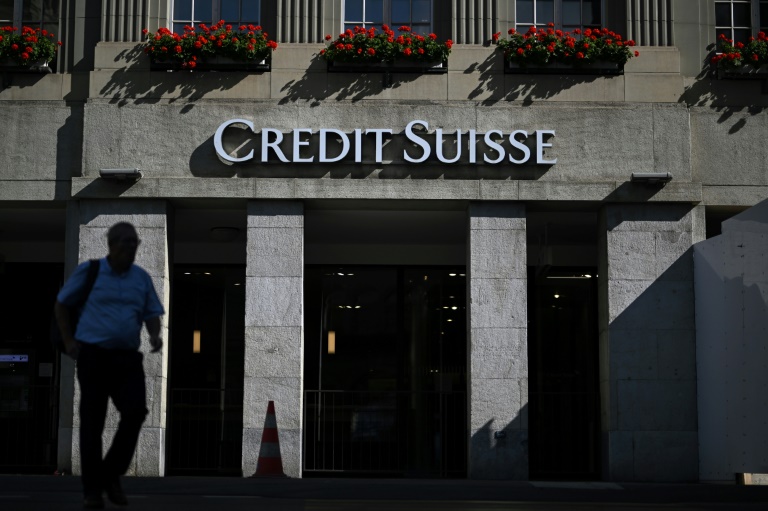
Credit Suisse shares plunged to new lows Monday, spurring swelling fears and even suggestions the bank could face a “Lehman Brothers moment”, despite expert assurances it is too big to fail.

Switzerland’s second-largest bank saw its share price sink 11.5 percent to a historic low of 3.518 Swiss francs ($3.563) a pop, after a new salvo of rumours surrounding the scandal-plagued bank.

The Bank of England is in touch with Swiss authorities to monitor Credit Suisse, British newspaper The Sunday Telegraph reported.

And the Financial Times daily said that senior executives have sought to reassure big clients and investors in recent days about the bank’s liquidity and capital position due to concerns raised about its financial strength.

Credit Suisse chief executive Ulrich Koerner, who only took the reins and the mammoth task of revitalising the bank in August, meanwhile sent an internal message to staff on Friday to ease their concerns.

In it, he warned there were “many factually inaccurate statements being made” about the bank.

It remains unclear if his memo helped calm the nerves of Credit Suisse employees, but it appears to have drawn more attention to the dramatic swings in the bank’s share price in recent weeks, and caused further jitters among investors.

– ‘Transformation plans’ –

Fears surrounding the “transformation plans” which Koerner is due to present on October 27 have been sending the bank’s shares into a tailspin, adding to its woes after two years of repeated scandals and crises.

The bank was especially rocked by the collapse last year of the British financial firm Greensill, in which some $10 billion had been committed through four funds, and then by the implosion of the US fund Archegos, which cost it more than $5 billion.

Since March 2021, Credit Suisse’s shares have lost 70 percent of their value.

Credit Suisse shares, listed on the Swiss stock exchange’s main SMI index, recovered most of their drop suffered in Monday morning trading to close the day down 0.9 percent at 3.94 Swiss francs.

As an indication of the growing concern, the price of so-called credit default swaps, or CDS, on the bank’s bonds suddenly surged last week.

These derivative financial products tend to be taken out by investors to protect against a payment default — a deteriorating view of the Credit Suisse’s creditworthiness.

The swaps now price in a roughly 23-percent chance that the bank defaults on its bonds within five years, according to Bloomberg News, which stresses nonetheless that they remain “far from distressed”.

– ‘Lehman Brothers moment’? –

Social media is meanwhile abuzz with discussions over a looming “Lehman Brothers moment”, referring to the giant US investment bank’s spectacular collapse which kicked off the 2008 global financial crisis.

Many observers however insist there is little risk of a Credit Suisse implosion.

“Is it possible?” Ipek Ozkardeskaya, a Swissquote analyst, asked in a note.

“Yes, it is possible, but it is highly unlikely.”

Credit Suisse figures among the banks worldwide that were labelled “too big to fail” after the Lehman Brothers debacle and were required to put aside large amounts of capital to ensure they could withstand future crises without affecting the rest of the banking sector.

Ozkardeskaya envisages three scenarios, including the bank’s new chief pulling off “a miracle” and quickly strengthening Credit Suisse as promised, “and the bank survives and thrives until the next scandal”.

A second scenario involves the Zurich-based bank becoming “a nice takeover target, and (getting) eaten by another bank,” while the third sees it “saved by the Swiss government.”

– ‘Buy time’ –

So far, the bank has provided no insight into the details of the coming “transformation plans”, beyond suggesting that it could include asset sales.

But even these few details have sparked concerns, with Jefferies analysts warning that “asset sales alone are unlikely to be the solution to the potential capital shortfall problem.”

Credit Suisse in this case would be “a forced seller”, they wrote in a note, pointing out that this could “create price pressure”. 

And while selling assets might “generate capital”, they warned it could also “reduce future earnings generation capacity”.

But asset sales could, the note acknowledged, “be a first step and buy time until shares recover and the outlook gets better.”

In his memo to staff Friday, Koerner meanwhile insisted on the “strong capital base and liquidity position of the bank.”

“We are in the process of reshaping Credit Suisse for a long-term, sustainable future — with significant potential for value creation,” he wrote.

Far-right Trump backers on trial for Capitol riot 'sedition'

The landmark sedition trial of five members of the far-right Oath Keepers opened Monday with prosecutors telling a jury that the group heavily armed itself on January 6, 2021 to attack the Capitol to keep Donald Trump in the presidency. 

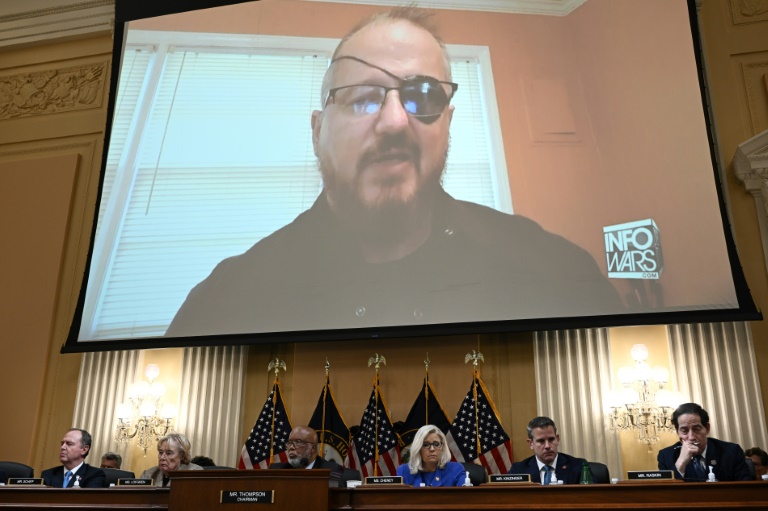
Justice Department attorney Jeffrey Nestler said that Stewart Rhodes, the eyepatch-wearing former soldier and Yale law school graduate, knew exactly what he was doing when he led the militia’s followers towards the Capitol.

Showing videos of the violent assault by dozens of group members dressed in military-style combat gear, Nestler said Rhodes directed them “like a general on the battlefield” as they sought to prevent 2020 election winner Joe Biden from being certified as the next president.

On January 6 the Oath Keepers “concocted a plan for an armed rebellion … plotting to oppose by force the government of the United  States,” Nestler said.

“They did not go to the capital to defend or to help. They went to attack,” he said.

– ‘Peacekeeping force’ –

But Rhodes’ lawyer Phillip Linder, the first to present for the defense, rejected the government case, saying Rhodes had brought the Oath Keepers to Washington to provide security for Trump’s speech that day and other pro-Trump events.

“The Oath Keepers are basically a peacekeeping force,” said Linder.

“The real evidence is going to show our clients were there to do security for events that were scheduled for the 5th and 6th” of January 2021, he said.

They had created an armed “quick reaction force” on that day just in case they were needed — it would have been “defensive”, he said, “if Trump called them in.

“Stewart Rhodes did not have any violent intent that day,” he said.

– Rare charge –

The trial was the first in hundreds of cases from the January 6 riot to make use of the rare charge of seditious conspiracy.

Carrying a potential 20-year prison sentence, it is a gamble for the Justice Department, which wants to underscore the seriousness of the event, in which Trump supporters sought to prevent Congress from certifying Joe Biden as the victor in the November 2020 presidential election.

Out of 870 people charged so far, the government has reserved sedition for just a few dozen of the attackers, mostly members of self-styled militia groups like the Oath Keepers and Proud Boys who allegedly planned and coordinated the assault.

Four other Oath Keeper leaders are standing trial with Rhodes: Kelly Meggs, Thomas Caldwell, Jessica Watkins, and Kenneth Harrelson. Another four will undergo a separate trial.

Defense attorneys had argued in filings that the Oath Keepers believed Trump would invoke the 1807 “Insurrection Act,” deputizing them to protect the country.

Linder said Rhodes did believe the Insurrection Act could be invoked, but said he did not plan any attack on the Capitol.

“Rhodes is extremely patriotic.. he is a constitutional expert,” the attorney said.

But Nestler said Rhodes told his followers that the possibility of Trump invoking the Act would provide legal protection for what they did at the Capitol.

“Rhodes’ talk about the Insurrection Act was legal cover,” Nestler said.

Despite being called on by many supporters to invoke it in the weeks and days before January 6, Trump in fact never did, Nestler noted.

Instead, Rhodes and the others spoke on encrypted chats of launching a civil war to prevent Joe Biden from becoming president.

“I’m personally gonna start the civil war myself,” if Congress moves to certify Biden as president-elect, Caldwell wrote to the others, the jury was told.

Senior officials among nine dead in Somalia car bombings

Nine people, including senior regional officials, were killed in twin car bombings claimed by Al-Shabaab in central Somalia on Monday, police said, as the government escalates an offensive against the Islamists. 

Two cars packed with explosives were detonated minutes apart outside local government offices in Beledweyne, a city at the heart of recent offensives against the Al-Qaeda-linked militants who control swathes of Somalia.

“The initial information we have received confirms the death of nine people” including a state minister and a commissioner, said Mohamed Moalim Ali, a local police commander.

The health minister of Hirshabelle state — where Beledweyne is located — and a deputy district commissioner were among the dead, Ali added, with 10 others injured in the “suicide attacks.”

Somali forces and “international security partners” have been waging an aggressive counterinsurgency in recent weeks, with the government on Monday announcing the killing of Abdullahi Yare, a top Al-Shabaab operative, in a joint air strike on Saturday in the south of the country.

“This leader… was the head preacher of the group and one of the most notorious members of the Shabaab group,” the ministry of information said.

A co-founder of Al-Shabaab with a $3 million US bounty on his head, Yare was believed to be next in line to take over the leadership of the movement from its ailing chief Ahmed Diriye, according to the ministry.

The US Africa Command said Monday that it carried out a drone strike targeting Al-Shabaab two days earlier in coordination with Somalia’s federal government.

“The command’s initial assessment is that the strike killed an Al-Shabaab leader and that no civilians were injured or killed,” it said in a statement.

Somalia’s recently elected President Hassan Sheikh Mohamud has vowed an all-out war on the jihadists, after a string of deadly attacks, including a 30-hour hotel siege in the capital Mogadishu that killed 21 people.

Mohamud last month urged citizens to stay away from areas controlled by Al-Shabaab as government forces supported by local clan militias launched offensives in Hiraan region, of which Beledweyne is the capital.

Military officials and clan elders told AFP that local residents had decided to take up arms against the militants, who have been accused of extorting money from them.

– ‘Huge explosion’ –

Witnesses of Monday’s twin bombings described a smaller blast followed by a massive second explosion.

“The explosion was huge, and it destroyed most buildings” nearby, said Mohamud Addow, who witnessed the attack. 

“I saw several people rushed to hospital and some dead bodies… some were unrecognisable.”

The United States, which recently restored a military presence in Somalia to fight the jihadists, condemned the bombings.

The attacks “targeted gov’t officials working to bring peace to the region & healthcare workers tending to the wounded,” the US embassy in Mogadishu said on Twitter.

Al-Shabaab, which claimed responsibility for the bombings, has waged a bloody insurrection against the Mogadishu government for 15 years and remains a potent force despite an African Union operation against the group.

Its fighters were ousted from the capital in 2011 but continue to stage attacks on military, government and civilian targets.

The group last week claimed responsibility for a bomb blast that killed a top Somali police officer near the Al-Shabaab-controlled village of Bursa, some 30 kilometres (20 miles) north of Mogadishu. 

US forces have in the past partnered with African Union soldiers and Somali troops in counterterrorism operations, and have conducted frequent raids and drone strikes on Al-Shabaab training camps throughout Somalia.

Last month, the US military said it had killed 27 jihadist fighters in an air strike near Bulobarde, the main town on the road linking Mogadishu to Beledweyne.

It said the air strike was carried out “at the request” of the Somali government.

President Joe Biden decided to restore a US military presence in Somalia in May, approving a request from the Pentagon, which deemed his predecessor Donald Trump’s rotation system too risky and ineffective.

Brazil heads for runoff vote with Bolsonaro buoyant

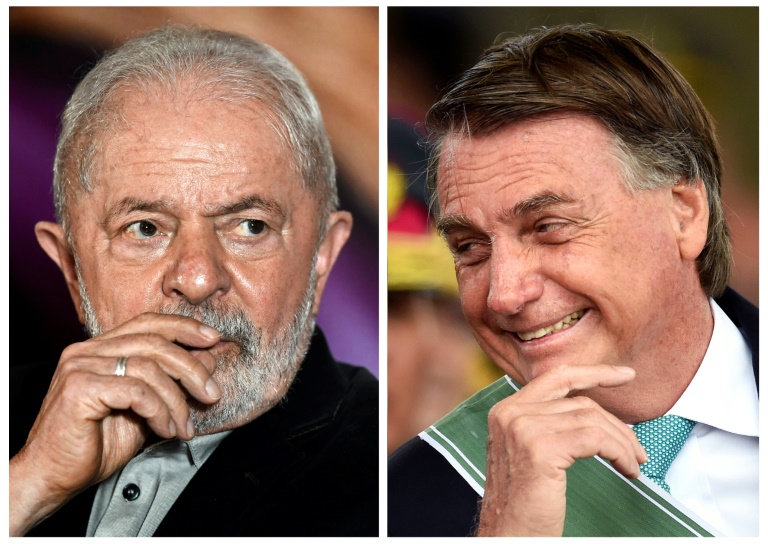
Brazil entered the final stretch of a deeply polarized presidential race Monday after an inconclusive first voting round put far-right incumbent Jair Bolsonaro in an unexpectedly strong position.

Bolsonaro, 67, garnered 43 percent of Sunday’s first-round votes compared to 48 percent for leftist frontrunner Luiz Inacio Lula da Silva — a five-point difference that polls had predicted would be a much larger gap of 14 points.

Ex-president Lula, 76, had appeared to be within arm’s reach of taking the election in the first round with more than 50 percent of the vote — but the race now heads to a October 30 runoff.

Not only Bolsonaro surpassed expectations: many allies of his “God, country and family” brand of conservative politics also performed better than poll predictions in congressional and gubernatorial races.

It signaled enthusiasm for the far-right leader and his policies despite Bolsonaro’s controversial four-year tenure, marked by a shocking pandemic death toll blamed in part on his Covid-skeptic approach, surging destruction of the Amazon rainforest, and a sharp rise in Brazilians living in hunger.

The Sao Paulo Stock Exchange welcomed the first-round results in Latin America’s largest economy with a rise of more than four percent Monday morning.

– ‘The fight continues’ –

Both men declared themselves ready for the final campaign to attract the vote of some nine million Brazilians who cast their ballot for minority candidates — none of whom managed to break through five percent of support — and 31 million others who did not vote at all.

Lula, who wasted no time convening his campaign team for a strategy meeting on Monday, said: “We will have to convince Brazilian society of what we are proposing.”

Addressing dumbstruck supporters in Sao Paulo Sunday, the leftist icon said he would start campaigning without delay, with more meetings with voters.

Lula said he looked forward to debating Bolsonaro head-to-head “to see if he’s going to keep telling lies,” and promised supporters: “The fight continues until the final victory!”

For his part, Bolsonaro tweeted: “we had more votes in the first round than in 2018 (when he won the presidency) — nearly two million.”

He added: “By the grace of God I have never lost an election and I know that we will not lose this time.”

Analysts say Bolsonaro’s performance bodes for a stressful and divisive four weeks before the vote.

The incumbent has repeatedly sought to cast doubt on Brazil’s electronic voting system and questioned the validity of opinion polls placing him a distant second.

Now, he can argue that Sunday’s results bear out his claims.

– ‘Emboldened’ –

Bolsonaro’s rhetoric has raised fears he could trigger a Brazilian version of the riots last year at the US Capitol after former president Donald Trump refused to accept his election defeat.

Bolsonaro “will be very emboldened,” by Sunday’s electoral performance, said Michael Shifter of the Inter-American Dialogue think tank.

“He’s beaten the expectations… He will play on that the experts were wrong: ‘I’ve got the momentum and I’ll defy expectations again in the second round’.”

Passions will be high on both sides.

Bolsonaro now has “an extra month to cause turmoil in the streets,” political scientist Guilherme Casaroes of the Getulio Vargas Foundation’s (FGV) Sao Paulo School of Business Administration told AFP.

“Any kind of doubt that he casts upon the electoral system will work in his favor… demobilizing voters not to go vote for Lula” — who left office after two terms in 2010 with an unprecedented 87-percent approval rating and is credited with helping lift 30 million people out of poverty.

Bolsonaro will continue hammering on Lula’s flaws, including his conviction for corruption — since overturned in court, but not in the court of public opinion, analysts say.

“Lula’s chances of being elected seem considerably slighter,” said Casaroes.

As for Bolsonaro, it now appeared he “could make this a contest,” said Shifter.

“Instead of the great comeback (for Lula) it could be the great upset.”

Voter Mateus Alcantara, a 26-year-old publicist, said in Rio de Janeiro his country was living a moment of “enormous polarization”

“Bolsonarism is growing more and more, and this is a reflection of a very conservative country,” he told AFP.

Macron's top adviser charged with conflict of interest

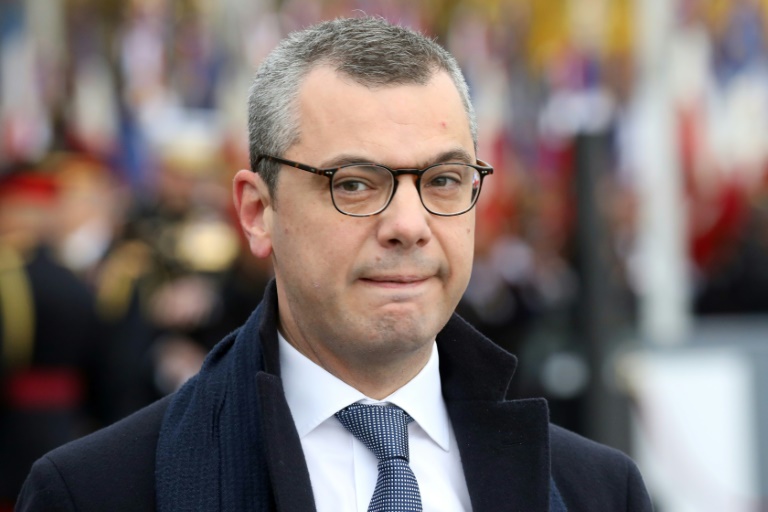
The top official in French President Emmanuel Macron’s office has been charged with a conflict of interest, the chief financial crimes prosecutor said Monday.

The move against Alexis Kohler, who holds one of France’s most powerful jobs as Elysee secretary-general, came hours after another Macron ally, Justice Minister Eric Dupond-Moretti, was ordered to stand trial in a separate case, also over a conflict of interest.

Kohler is accused over his professional and family links with Italian-Swiss shipping company Mediterranean Shipping Company (MSC) which is run by his mother’s cousins, prosecutor Jean-Francois Bohnert said in a statement.

On Monday, Kohler “categorically denied any wrongdoing”, his lawyer said, while an official in Macron’s office said Kohler remained in his post.

In 2018, Anticor, an anti-corruption NGO, filed a legal complaint against Kohler for illegal influence-peddling concerning contracts awarded to MSC in 2010 and 2011.

Kohler allegedly failed to reveal his family connections with MSC to the French agency for public investment where he worked at the time.

The case was dismissed the following year, but in 2020, Anticor filed a civil case which usually triggers a probe by an investigating magistrate.

Kohler, whose office at the Elysee is located next to that of the president, is often described as Macron’s right-hand man.

His job involves handling emergencies, major economic and social issues as well as some political decisions.

His lawyer, Eric Dezeuze, said the discovery of evidence linked to the charging would allow Kohler “to prove his innocence”.

But Anticor lawyer Jean-Baptiste Soufron said “the question of his resignation is now on the table”.

– Macron’s administration under pressure –

Adding to pressure on Macron’s administration, Justice Minister Dupond-Moretti was ordered Monday to stand trial, charged with misusing his position to settle scores with opponents from his legal career.

The former star lawyer is the first sitting French justice minister to be charged in a legal probe.

The accusations relate to administrative inquiries ordered into three judges during Dupond-Moretti’s time as minister, which were denounced by critics as a witchhunt.

The three judges had ordered police in 2014 to pore through the phone records of dozens of lawyers and magistrates, including Dupond-Moretti, as part of an investigation into former president Nicolas Sarkozy.

The order to stand trial was issued by the investigation commission of the Law Court of the Republic in Paris, which hears cases of alleged wrongdoing by serving ministers.

– ‘Many irregularities’ –

But his lawyers, Christophe Ingrain and Remi Lorrain, said they had already appealed, sparking a temporary suspension of the move. 

Lorrain said France’s highest appeals court would now pursue the matter.

A source close to the case said it was uncertain when the appeals court would rule on the matter.

Lorrain said there had been “many irregularities” in the case, and the chief prosecutor, Francois Molins, had been “unfair and biased”.

The case against Dupond-Moretti goes back to January 2021 when Anticor and a magistrates’ union filed a legal complaint, accusing him of using his ministerial powers to take revenge on his enemies in the judiciary. 

He was charged the following July.

Despite opposition calls for him to be sacked, Macron re-appointed him as justice minister in a cabinet reshuffle earlier this year.

France’s two main magistrates’ unions said the accusations put Dupond-Moretti in an “unprecedented” position.

In a statement they said there could be “another conflict of interest” when Dupond-Moretti, as justice minister, picks a successor to prosecutor Molins who is to retire in June.

“He would get to appoint his own accuser,” the unions said.

Anti-corruption NGO Transparency International called for Dupond-Moretti’s resignation.

Contacted by AFP, Prime Minister Elisabeth Borne’s office declined to comment on whether Dupond-Moretti’s job was at risk.

A spokesperson for the prime minister noted simply that “the procedure is ongoing” and that it was organised so as not to affect Dupond-Moretti’s business as justice minister.

Sweden's Paabo wins medicine Nobel for sequencing Neanderthal DNA

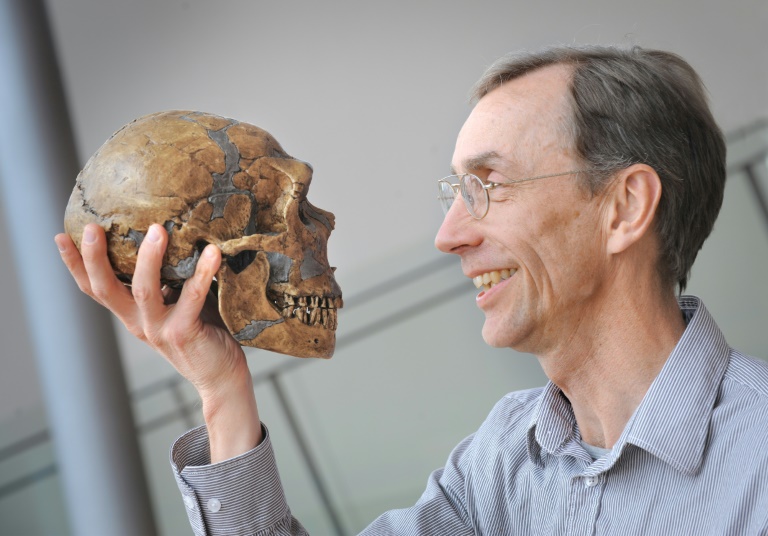
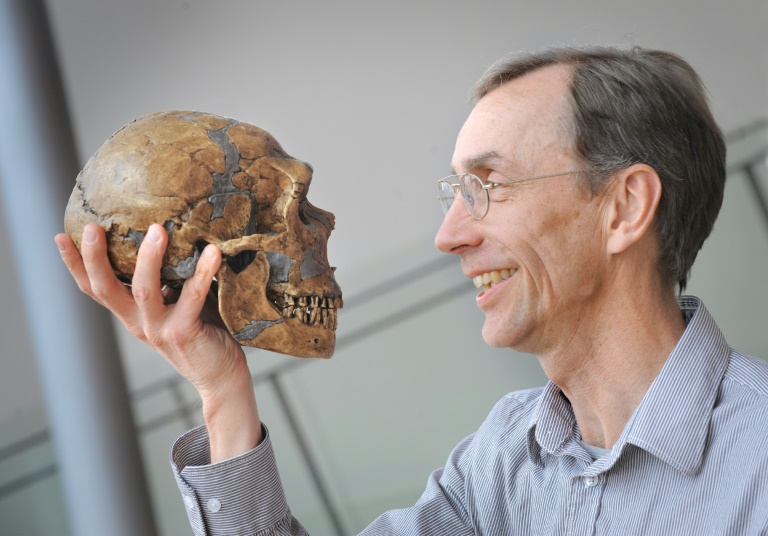
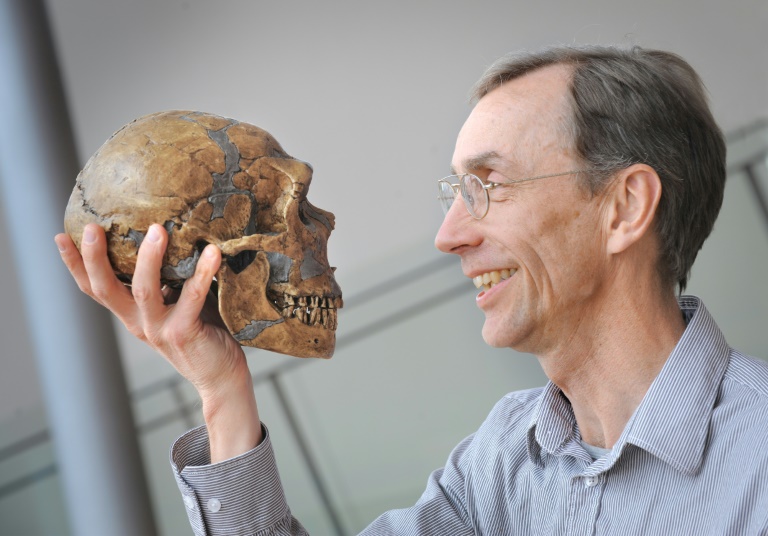
Swedish paleogeneticist Svante Paabo, who sequenced the genome of the Neanderthal and discovered the previously unknown hominin Denisova, on Monday won the Nobel Medicine Prize.

Paabo’s research gave rise to an entirely new scientific discipline called paleogenomics, and has “generated new understanding of our evolutionary history”, the Nobel committee said.

“By revealing genetic differences that distinguish all living humans from extinct hominins, his discoveries provide the basis for exploring what makes us uniquely human,” it said in a statement.

Paabo — the founder and director of the department of genetics at the Max Planck Institute for Evolutionary Anthropology in Leipzig — found that gene transfer had occurred from these now extinct hominins to Homo sapiens following the migration out of Africa around 70,000 years ago.

“This ancient flow of genes to present-day humans has physiological relevance today, for example affecting how our immune system reacts to infections,” the jury said.

One such example is that Covid-19 patients with a snippet of Neanderthal DNA run a higher risk of severe complications from the disease, Paabo found in a 2020 study.

Paabo told reporters he was surprised when the committee called to tell him he had won.

“At first I thought this is probably an elaborate prank done by people in my (research) group. But then it sounded a little bit too serious to me so I sort of accepted the fact”, he said.

Paabo, 67, takes home the award sum of 10 million kronor ($901,500).

He is the son of Sune Bergstrom, a Swede who won the 1982 Nobel Medicine Prize for discovering prostaglandins — biochemical compounds that influence blood pressure, body temperature, allergic reactions and other physiological phenomena.

In his 2014 memoir “Neanderthal Man: In Search of Lost Genomes”, Paabo wrote that he was conceived as a result of a secret extra-marital affair.

He later told The Guardian outlet that Bergstrom’s “official” family knew nothing of his or his mother’s existence, the Estonian chemist Karin Paabo, until 2005 after Bergstrom’s death.

Paabo also wrote in his memoir that he “had always thought of myself as gay” until he met the woman who would become his wife, primatologist Linda Vigilant, who also works at the Max Planck Institute. He now identifies as bisexual.

– Achieved ‘the seemingly impossible’ –

Homo sapiens are known to have first appeared in Africa around 300,000 years ago. 

Our closest known relatives, Neanderthals, developed outside Africa and populated Europe and Western Asia from around 400,000 to 30,000 years ago, when they became extinct.

That means that about 70,000 years ago, groups of Homo sapiens and Neanderthals coexisted in large parts of Eurasia for tens of thousands of years.

“The last 40,000 years is quite unique in human history in that we are the only form of humans around. Until that time there were almost always other types of humans that existed”, Paabo told the Nobel website.

In order to study the relationship between present-day humans and extinct Neanderthals, DNA needed to be sequenced from archaic specimens with only trace amounts of DNA left after thousands of years.

In 1990, Paabo managed to sequence a bit of mitochondrial DNA from a 40,000-year-old piece of bone.

“For the first time, we had access to a sequence from an extinct relative”, the Nobel jury said.

Comparisons with contemporary humans and chimpanzees showed that Neanderthals were genetically distinct.

Paabo then “accomplished the seemingly impossible”, the committee said, when he published the first Neanderthal genome sequence in 2010.

It showed that the most recent common ancestor of Neanderthals and Homo sapiens lived around 800,000 years ago. 

Paabo and his team were able to show that DNA sequences from Neanderthals were more similar to those from contemporary humans originating from Europe or Asia than those from Africa.

“This means that Neanderthals and Homo sapiens interbred during their millennia of coexistence,” the Nobel jury said.

In modern day humans with European or Asian descent, around one to four percent of the genome originates from Neanderthals.

– New addition to family tree –

In 2008, Paabo and his team went on to sequence a 40,000-year-old bone fragment found in the Denisova cave in southern Siberia. 

It contained exceptionally well-preserved DNA.

“The results caused a sensation — the DNA sequence was unique when compared to all known sequences from Neanderthals and present-day humans,” the Nobel jury said.

Paabo had discovered a previously unknown hominin, given the name Denisova.

Comparisons showed the gene flow had also occurred between Denisovans and Homo sapiens.

In the same cave, palaeontologists later discovered the fossil of a young girl who was part Neanderthal, part Denisovan, proving the two species interbred.

Paabo’s research proved that when Homo sapiens migrated out of Africa, at least two extinct hominin populations inhabited Eurasia — Neanderthals in western Eurasia, and Denisovans in the eastern parts.

Sweden's Paabo wins medicine Nobel for sequencing Neanderthal DNA

Swedish paleogeneticist Svante Paabo, who sequenced the genome of the Neanderthal and discovered the previously unknown hominin Denisova, on Monday won the Nobel Medicine Prize.

Paabo’s research gave rise to an entirely new scientific discipline called paleogenomics, and has “generated new understanding of our evolutionary history”, the Nobel committee said.

“By revealing genetic differences that distinguish all living humans from extinct hominins, his discoveries provide the basis for exploring what makes us uniquely human,” it said in a statement.

Paabo — the founder and director of the department of genetics at the Max Planck Institute for Evolutionary Anthropology in Leipzig — found that gene transfer had occurred from these now extinct hominins to Homo sapiens following the migration out of Africa around 70,000 years ago.

“This ancient flow of genes to present-day humans has physiological relevance today, for example affecting how our immune system reacts to infections,” the jury said.

One such example is that Covid-19 patients with a snippet of Neanderthal DNA run a higher risk of severe complications from the disease, Paabo found in a 2020 study.

Paabo told reporters he was surprised when the committee called to tell him he had won.

“At first I thought this is probably an elaborate prank done by people in my (research) group. But then it sounded a little bit too serious to me so I sort of accepted the fact”, he said.

Paabo, 67, takes home the award sum of 10 million kronor ($901,500).

He is the son of Sune Bergstrom, a Swede who won the 1982 Nobel Medicine Prize for discovering prostaglandins — biochemical compounds that influence blood pressure, body temperature, allergic reactions and other physiological phenomena.

In his 2014 memoir “Neanderthal Man: In Search of Lost Genomes”, Paabo wrote that he was conceived as a result of a secret extra-marital affair.

He later told The Guardian outlet that Bergstrom’s “official” family knew nothing of his or his mother’s existence, the Estonian chemist Karin Paabo, until 2005 after Bergstrom’s death.

Paabo also wrote in his memoir that he “had always thought of myself as gay” until he met the woman who would become his wife, primatologist Linda Vigilant, who also works at the Max Planck Institute. He now identifies as bisexual.

– Achieved ‘the seemingly impossible’ –

Homo sapiens are known to have first appeared in Africa around 300,000 years ago. 

Our closest known relatives, Neanderthals, developed outside Africa and populated Europe and Western Asia from around 400,000 to 30,000 years ago, when they became extinct.

That means that about 70,000 years ago, groups of Homo sapiens and Neanderthals coexisted in large parts of Eurasia for tens of thousands of years.

“The last 40,000 years is quite unique in human history in that we are the only form of humans around. Until that time there were almost always other types of humans that existed”, Paabo told the Nobel website.

In order to study the relationship between present-day humans and extinct Neanderthals, DNA needed to be sequenced from archaic specimens with only trace amounts of DNA left after thousands of years.

In 1990, Paabo managed to sequence a bit of mitochondrial DNA from a 40,000-year-old piece of bone.

“For the first time, we had access to a sequence from an extinct relative”, the Nobel jury said.

Comparisons with contemporary humans and chimpanzees showed that Neanderthals were genetically distinct.

Paabo then “accomplished the seemingly impossible”, the committee said, when he published the first Neanderthal genome sequence in 2010.

It showed that the most recent common ancestor of Neanderthals and Homo sapiens lived around 800,000 years ago. 

Paabo and his team were able to show that DNA sequences from Neanderthals were more similar to those from contemporary humans originating from Europe or Asia than those from Africa.

“This means that Neanderthals and Homo sapiens interbred during their millennia of coexistence,” the Nobel jury said.

In modern day humans with European or Asian descent, around one to four percent of the genome originates from Neanderthals.

– New addition to family tree –

In 2008, Paabo and his team went on to sequence a 40,000-year-old bone fragment found in the Denisova cave in southern Siberia. 

It contained exceptionally well-preserved DNA.

“The results caused a sensation — the DNA sequence was unique when compared to all known sequences from Neanderthals and present-day humans,” the Nobel jury said.

Paabo had discovered a previously unknown hominin, given the name Denisova.

Comparisons showed the gene flow had also occurred between Denisovans and Homo sapiens.

In the same cave, palaeontologists later discovered the fossil of a young girl who was part Neanderthal, part Denisovan, proving the two species interbred.

Paabo’s research proved that when Homo sapiens migrated out of Africa, at least two extinct hominin populations inhabited Eurasia — Neanderthals in western Eurasia, and Denisovans in the eastern parts.

Sweden's Paabo wins medicine Nobel for sequencing Neanderthal DNA

Swedish paleogeneticist Svante Paabo, who sequenced the genome of the Neanderthal and discovered the previously unknown hominin Denisova, on Monday won the Nobel Medicine Prize.

Paabo’s research gave rise to an entirely new scientific discipline called paleogenomics, and has “generated new understanding of our evolutionary history”, the Nobel committee said.

“By revealing genetic differences that distinguish all living humans from extinct hominins, his discoveries provide the basis for exploring what makes us uniquely human,” it said in a statement.

Paabo — the founder and director of the department of genetics at the Max Planck Institute for Evolutionary Anthropology in Leipzig — found that gene transfer had occurred from these now extinct hominins to Homo sapiens following the migration out of Africa around 70,000 years ago.

“This ancient flow of genes to present-day humans has physiological relevance today, for example affecting how our immune system reacts to infections,” the jury said.

One such example is that Covid-19 patients with a snippet of Neanderthal DNA run a higher risk of severe complications from the disease, Paabo found in a 2020 study.

Paabo told reporters he was surprised when the committee called to tell him he had won.

“At first I thought this is probably an elaborate prank done by people in my (research) group. But then it sounded a little bit too serious to me so I sort of accepted the fact”, he said.

Paabo, 67, takes home the award sum of 10 million kronor ($901,500).

He is the son of Sune Bergstrom, a Swede who won the 1982 Nobel Medicine Prize for discovering prostaglandins — biochemical compounds that influence blood pressure, body temperature, allergic reactions and other physiological phenomena.

In his 2014 memoir “Neanderthal Man: In Search of Lost Genomes”, Paabo wrote that he was conceived as a result of a secret extra-marital affair.

He later told The Guardian outlet that Bergstrom’s “official” family knew nothing of his or his mother’s existence, the Estonian chemist Karin Paabo, until 2005 after Bergstrom’s death.

Paabo also wrote in his memoir that he “had always thought of myself as gay” until he met the woman who would become his wife, primatologist Linda Vigilant, who also works at the Max Planck Institute. He now identifies as bisexual.

– Achieved ‘the seemingly impossible’ –

Homo sapiens are known to have first appeared in Africa around 300,000 years ago. 

Our closest known relatives, Neanderthals, developed outside Africa and populated Europe and Western Asia from around 400,000 to 30,000 years ago, when they became extinct.

That means that about 70,000 years ago, groups of Homo sapiens and Neanderthals coexisted in large parts of Eurasia for tens of thousands of years.

“The last 40,000 years is quite unique in human history in that we are the only form of humans around. Until that time there were almost always other types of humans that existed”, Paabo told the Nobel website.

In order to study the relationship between present-day humans and extinct Neanderthals, DNA needed to be sequenced from archaic specimens with only trace amounts of DNA left after thousands of years.

In 1990, Paabo managed to sequence a bit of mitochondrial DNA from a 40,000-year-old piece of bone.

“For the first time, we had access to a sequence from an extinct relative”, the Nobel jury said.

Comparisons with contemporary humans and chimpanzees showed that Neanderthals were genetically distinct.

Paabo then “accomplished the seemingly impossible”, the committee said, when he published the first Neanderthal genome sequence in 2010.

It showed that the most recent common ancestor of Neanderthals and Homo sapiens lived around 800,000 years ago. 

Paabo and his team were able to show that DNA sequences from Neanderthals were more similar to those from contemporary humans originating from Europe or Asia than those from Africa.

“This means that Neanderthals and Homo sapiens interbred during their millennia of coexistence,” the Nobel jury said.

In modern day humans with European or Asian descent, around one to four percent of the genome originates from Neanderthals.

– New addition to family tree –

In 2008, Paabo and his team went on to sequence a 40,000-year-old bone fragment found in the Denisova cave in southern Siberia. 

It contained exceptionally well-preserved DNA.

“The results caused a sensation — the DNA sequence was unique when compared to all known sequences from Neanderthals and present-day humans,” the Nobel jury said.

Paabo had discovered a previously unknown hominin, given the name Denisova.

Comparisons showed the gene flow had also occurred between Denisovans and Homo sapiens.

In the same cave, palaeontologists later discovered the fossil of a young girl who was part Neanderthal, part Denisovan, proving the two species interbred.

Paabo’s research proved that when Homo sapiens migrated out of Africa, at least two extinct hominin populations inhabited Eurasia — Neanderthals in western Eurasia, and Denisovans in the eastern parts.

US Supreme Court to hear cases challenging tech firm immunity

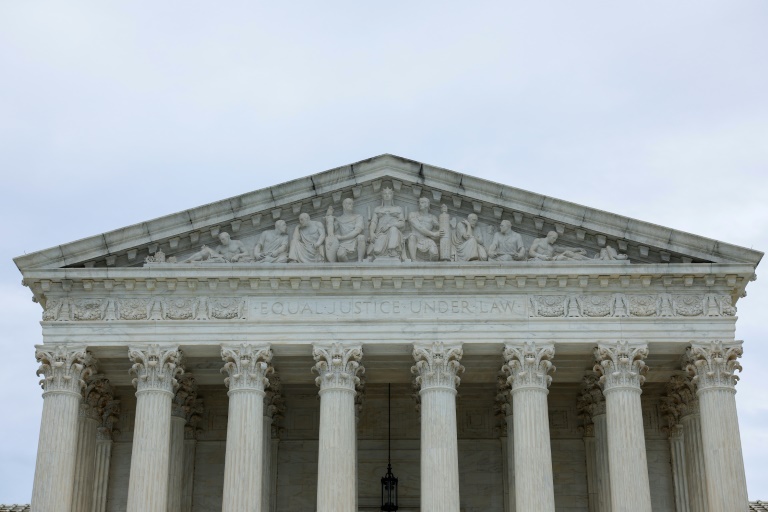
The US Supreme Court, in a decision with potentially far-reaching ramifications, agreed on Monday to hear two cases challenging the legal immunity of internet companies from liability for content posted by their users.

One of the cases accepted by the court was filed by the family of Nohemi Gonzalez, a 23-year-old American who was one of the 130 people killed in the November 2015 Islamic State attacks in Paris.

The complaint alleges that Google violated the US Anti-Terrorism Act by recommending IS videos that incited violence on Google-owned YouTube.

“Google’s services have played a uniquely essential role in the development of IS’s image, its success in recruiting members from around the world, and its ability to carry out attacks,” according to the complaint. 

Under Section 230 of the 1996 Communications Decency Act, social media companies such as Google, Facebook and Twitter are not considered to be publishers and are not legally liable for content posted by their users.

A lower court ruled in the Gonzalez case that Google enjoyed legal protection under Section 230, which its backers claim is essential to protecting freedom of expression on the internet.

Section 230 has come under attack, however, from both Democratic and Republican lawmakers, with the left claiming tech companies are promoting far-right hate speech and the right alleging it allows the firms censor conservative voices.

Among those who have been critical of Section 230 is former Republican president Donald Trump, who was banned from both Twitter and Facebook after the January 6, 2021 attack on the Capitol by his supporters.

The other related case accepted by the Supreme Court involves a lawsuit accusing Twitter of abetting terrorism in which a lower court declined to rule whether the messaging service enjoys a legal shield under Section 230.

Close Bitnami banner
Bitnami