World

UK govt vows reform despite U-turn on tax cut for the rich

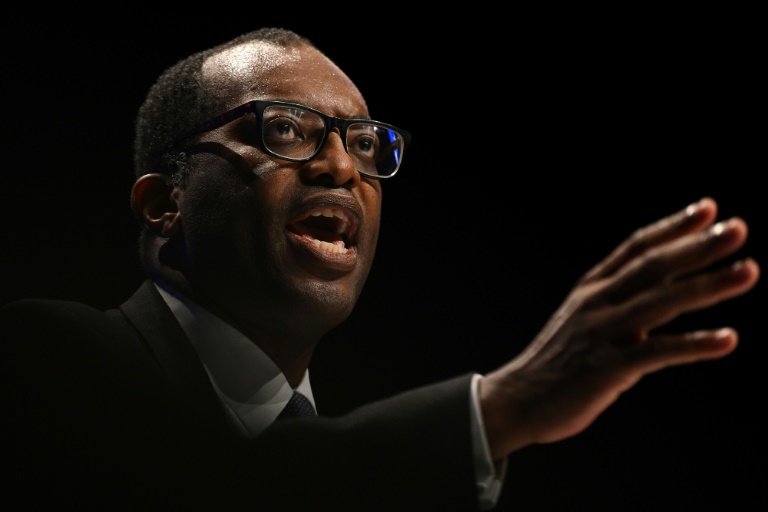
Britain’s under-fire finance minister Kwasi Kwarteng on Monday vowed to press on with his controversial economic reform plans, despite announcing a dramatic U-turn on a controversial tax cut for high earners.

The proposed cut was part of a debt-driven economic package that has bombed with the markets, the electorate and much of the ruling Conservative party.

The abrupt reversal raised questions about his and Prime Minister Liz Truss’s right-wing policy agenda, less than a month after taking power and a day after both vowed to stay the course.

“What a day. It has been tough,” Kwarteng said in a speech to the Tories’ annual conference in Birmingham, central England.

But he told delegates that “we need to focus on the task in hand”, implicitly criticising his Tory predecessors by saying there was a need to boost the economy out of its “slow, managed decline”.

“To grow the economy we really do need to do things differently,” he said.

Kwarteng pointedly avoided any specific mention of his about-face on the proposed scrapping of the 45 percent top rate of income tax.

But he insisted his and Truss’s contentious plans, which include axing a cap on bankers’ bonuses and reversing a planned rise in corporation tax, as well as a recent hike in national insurance contributions, were “sound” and “credible”.

“It will increase growth,” he added in the speech, which was delayed by an unspecified security alert at the venue. Police lifted the alert about an hour later.

– Political storm –

Earlier, Kwarteng said he had never considered resigning over the furore caused by the proposals, saying only that the decision to drop the tax cut was because it had become a “distraction”.

On the markets, the intention to pay for the cuts with billions more in extra borrowing had sent the pound tumbling to a record low against the dollar and UK government bond yields soaring.

The pound rebounded Monday as the government partially reversed course. 

Nevertheless, Kwarteng and Truss remain in the eye of a political storm, given the perceived unfairness of the package, which could yet see cuts to spending and benefits amid Britain’s worst cost-of-living crisis in generations.

As late as Sunday, the finance chief had been due to tell the conference that “we must stay the course”, according to a preview of his speech released by the Conservatives.

Truss on Sunday admitted communication errors in how the September 23 economic package had been presented, but agreed she was “absolutely committed” to abolishing the top tax rate. 

Within 24 hours, though, the 47-year-old prime minister — only in the role since September 6 — had performed one of most striking government U-turns in recent memory.

Truss told the BBC she had not discussed axing the high-earners’ tax band with her cabinet, who only seemed to learn of the reversal along with the public on Monday.

She also appeared to distance herself from the move by claiming “it was a decision that the chancellor made”, but her spokesman downplayed the comments.

“The prime minister was clear that… fiscal events are the responsibility of the chancellor — that’s all she was setting clear,” he told reporters Monday.

Out of a total tax package worth £45 billion ($50 billion), the top rate cut would have cost some £2 billion — relatively small, but outsized for its political impact.

Tory MPs who backed former finance minister Rishi Sunak — Truss’s rival in the recent Tory leadership race — had threatened to vote it down, raising the prospect of a major battle in the House of Commons.

Grant Shapps, who was refused a cabinet job by Truss, welcomed her scrapping the tax cut, which he told BBC radio had been planned with “grossly insensitive timing”.

– Credibility ‘destroyed’ –

With the U-turn, the stakes have soared for Truss as she prepares to close the party conference with a speech Wednesday.

A raft of polls have found Truss and her economic package deeply unpopular, alongside plummeting ratings for the Tories.

Some surveys showed Labour with mammoth leads of up to 33 points — its biggest since the heyday of its former prime minister Tony Blair in the late 1990s.

Labour’s finance spokeswoman Rachel Reeves said the climbdown “comes too late for the families who will pay higher mortgages and higher prices for years to come” following the recent market turmoil.

“The Tories have destroyed their economic credibility and damaged trust in the British economy,” she said.
Oil jumps but dollar bruised on US data

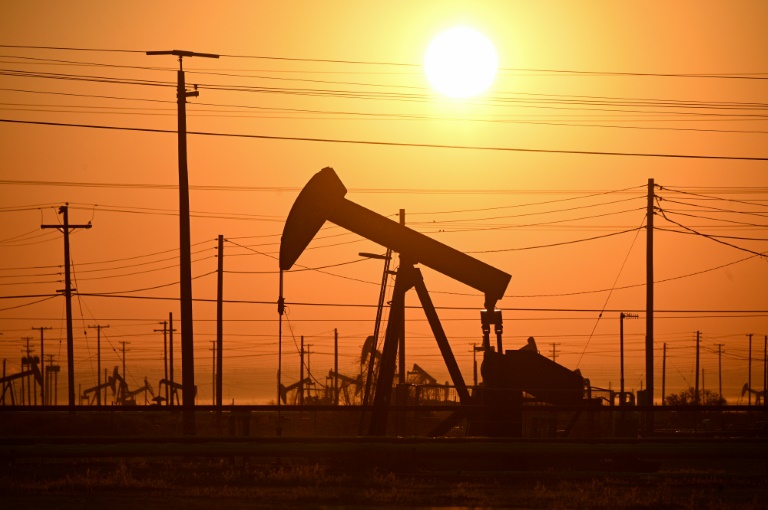
Oil prices jumped Monday on expectations of an OPEC output cut, while disappointing US data sent the dollar lower and stocks higher.

Investors have on edge over worries that rising interest rates, aimed at fighting sky-high inflation, could spark recessions.

With a key business survey flagging a slowing of the US economy, the dollar and US government bond yields moved lower as the US Federal Reserve may not need to raise interest rates as much as markets have feared to get a grip on inflation.

The Institute for Supply Management said its manufacturing index dropped 1.9 points to 50.9 percent, well below expectations and just barely above the 50-percent threshold indicating expansion.

That was the weakest pace in more than two years, and new orders fell by four percent.

Fed officials have indicated that the central bank will continue raising interest rates until inflation begins to drop, even if that means the US economy enters recession.

A slowdown means that a peak in interest rates may be close, and helped Wall Street stocks add to gains, with the Dow jumping 2.4 percent in late morning trade.

European stock indices moved higher following the US data, with Frankfurt’s DAX index ending the day 0.8 percent higher, the Paris CAC climbing 0.6 percent and London’s FTSE 100 adding 0.2 percent.

– Oil spikes before OPEC –

Oil prices leapt by more than five percent at one point as reports said OPEC and its allies are considering a major output cut to stem a price plunge caused by demand worries.

That stoked stubborn concerns about soaring inflation, which has been fuelled this year by sky-high energy prices after key producer Russia’s invasion of Ukraine.

“Any cut will no doubt frustrate consuming countries that are on the verge of recession after spending a year dealing with soaring energy costs on the back of the post-pandemic recovery and war in Ukraine,” said OANDA analyst Craig Erlam.

The 13 members of the Organization of the Petroleum Exporting Countries (OPEC), led by Riyadh, and their 10 partners led by Moscow will physically meet on Wednesday for the first time since March 2020.

– Sterling gains on U-turn –

The British pound bounded above $1.13 following the latest US data, and after the UK government scrapped plans to axe its top income tax rate in the wake of finance minister Kwasi Kwarteng’s debt-fuelled mini budget which helped send sterling spiralling to a record dollar low of $1.0350 one week ago.

UK gilts, or government bonds, remain supported by an emergency Bank of England intervention after yields had rocketed following the mini budget announcement.

– ‘Dicey’ sentiment –

Shares in Credit Suisse plunged to a new low in Zurich on Monday as the scandal-plagued lender sought to ease concerns about its financial health.

Its stock tumbled 11.6 percent to 3.58 Swiss francs ($3.61) before clawing back most of the ground, ending the day with a drop of 0.9 percent at 3.94 francs.

The Financial Times reported that senior executives sought over the weekend to reassure big clients and investors about the bank’s liquidity and capital position due to concerns raised about its financial strength.

“Sentiment is still pretty dicey and Credit Suisse is definitely weighing heavily today on European equities,” Markets.com analyst Neil Wilson told AFP.

“A globally systemic bank requiring to raise capital would be a major event and could certainly undermine confidence in the banking system.”

Asian equities mainly fell Monday, with Hong Kong tumbling to its lowest point in more than a decade as fears for China’s economy deepens this year’s investor rout.

– Key figures around 1530 GMT –

New York – Dow: UP 2.4 percent at 29,399.70 points

EURO STOXX 50: UP 0.7 percent at 3,342.17

London – FTSE 100: UP 0.2 percent at 6,908.76 (close) 

Frankfurt – DAX: UP 0.8 percent at 12,209.48 (close)

Paris – CAC 40: UP 0.6 percent at 5,794.15 (close)

Tokyo – Nikkei 225: UP 1.1 percent at 26,215.79 (close)

Hong Kong – Hang Seng Index: DOWN 0.8 percent at 17,079.51 (close)

Shanghai – Composite: Closed for a holiday

Pound/dollar: UP at $1.1301 from $1.1170 on Friday

Euro/dollar: UP at $0.9834 from $0.9802

Euro/pound: DOWN at 86.91 pence from 87.75 pence

Dollar/yen: DOWN at 144.32 yen from 144.74 yen

Brent North Sea crude: UP 3.8 percent at $88.41 per barrel

West Texas Intermediate: UP 4.3 percent at $82.88 per barrel

burs-rl/cdw

Hurricane Orlene lashes Mexico's Pacific coast

Hurricane Orlene made landfall on Monday on Mexico’s Pacific coast, bringing strong winds, heavy rain and a risk of flooding and landslides, forecasters said.

Orlene came ashore south of the beachside city of Mazatlan in Sinaloa state as a Category One hurricane — the weakest on a scale of five.

At 1500 GMT, the storm was packing maximum sustained winds of 75 miles (120 kilometers) per hour and moving inland toward the northeast, according to the US National Hurricane Center (NHC).

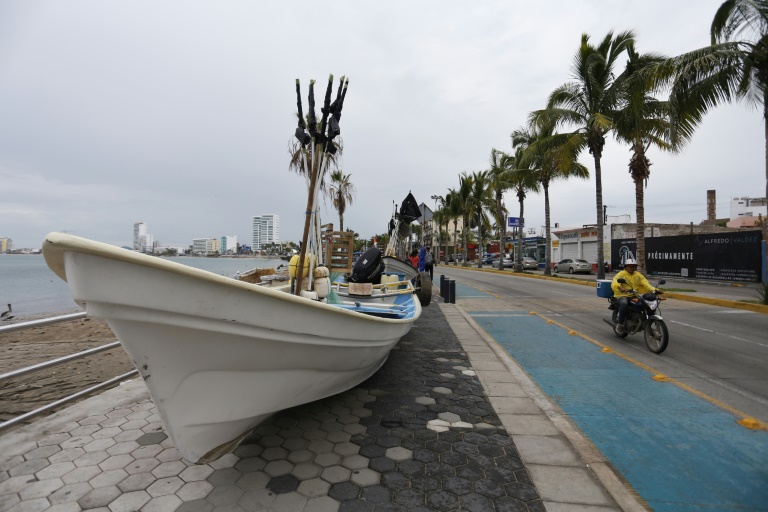
Boats had been brought ashore in Mazatlan ahead of Orlene’s arrival, and businesses boarded up windows and laid down sandbags in case of flooding.

Orlene had strengthened to a powerful Category 4 hurricane on Sunday in the Pacific, prompting warnings for inhabitants of at-risk areas to take refuge in temporary shelters.

But the storm gradually lost strength as it approached the coast and was expected to quickly lose its hurricane force after making landfall.

“Rapid weakening is expected during the next 12 to 24 hours as Orlene moves inland,” the NHC said.

“Orlene is forecast to weaken to a tropical storm by this afternoon, and dissipate tonight or early Tuesday,” it added.

Tropical cyclones hit Mexico every year on both its Pacific and Atlantic coasts, usually between May and November.

In October 1997, Hurricane Paulina hit Mexico’s Pacific coast as a Category 4 storm, leaving more than 200 dead.

The mysterious Denisovans

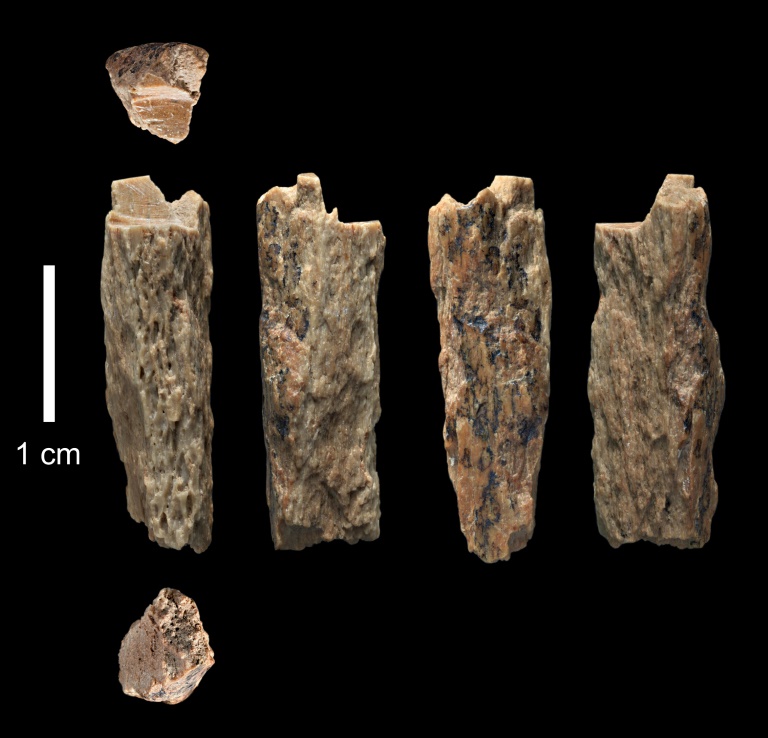
Little is known of the mysterious Denisovans. These distant relatives of the Neanderthals roamed eastern and southern Eurasia but left little trace of their time on Earth.

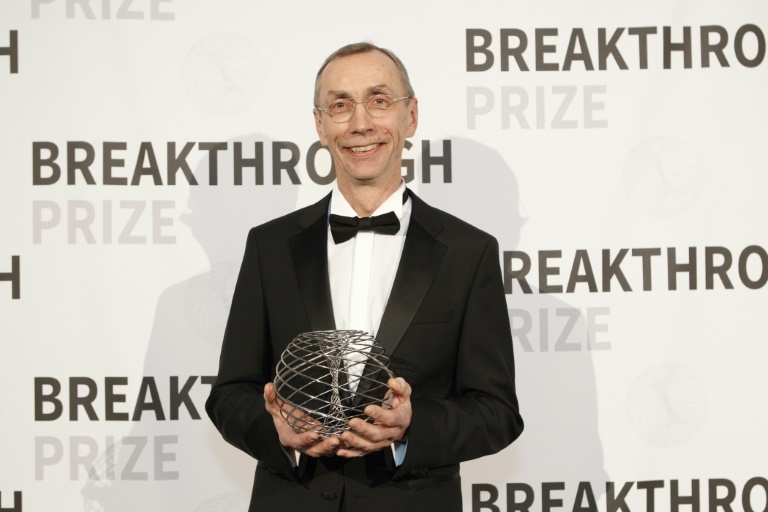
“Hominin Denisova” was discovered by Swedish paleogeneticist Svante Paabo, the winner of this year’s Nobel prize in medicine. 

In 2012, Paabo and his team sequenced the DNA of a remarkably well-preserved fragment of bone, 40,000 years old, found four years earlier in the Denisova cave in southern Siberia.

The result was astounding — they had come across an entirely novel hominin, distinct from Neanderthals and even more from Homo sapiens, aka modern humans.

The Denisovans shared a common ancestor with the Neanderthals until their populations diverged 380,000 to 470,000 years ago. 

This was much later than the split between modern humans and Neanderthals/Denisovans, which occurred between 550,000 and 760,000 years ago.

In the same cave, paleontologists later discovered the fossil of a young girl who was part Neanderthal, part Denisovan, proving that these two archaic species interbred.

But while we know the Neanderthals disappeared around 40,000 years ago, we have little idea as to when our other closest evolutionary relative went extinct.

We don’t know what the Denisovans looked like either as they left only rare fossilised traces of their time on Earth other than the fragments found in Siberia and a jawbone discovered on the Tibetan Plateau in 2019.

The work of Paabo and his team at the Max Planck Institute in Leipzig have nonetheless shed some light on our mysterious ancestor.

By comparing DNA sequences, they found a “gene flow” between both Denisovan and Neanderthals, and between Denisovans and modern humans.

In other words, before they went extinct, Denisovans also interbred with our species. 

Up to six percent of Denisovan DNA is still found in present-day humans in Asia-Pacific and southeast Asia — Australian Aborigines, Melanesians and the Negritos of the Philippines — suggesting our far-distant relative roamed over a vast swathe of east and south Eurasia.

Neanderthals, by contrast, lived in western Eurasia.

Scientists believe the ancient ancestors of today’s Melanesians interbred with Denisovans from southeast Asia, far from the frozen mountains of Siberia and Tibet.

Proof that the Denisovans had spread as far as the warm tropics of Asia was lacking until a missing link — a child’s tooth at least 130,000 years old — was discovered in a cave in Laos in 2018.

One of the biggest remaining mysteries is why modern humans were so successful in their expansion and why the Denisovans and Neanderthals went extinct, after having adapted to a Eurasian environment for several hundred thousand years.

Turkey and Libya sign maritime hydrocarbons deal

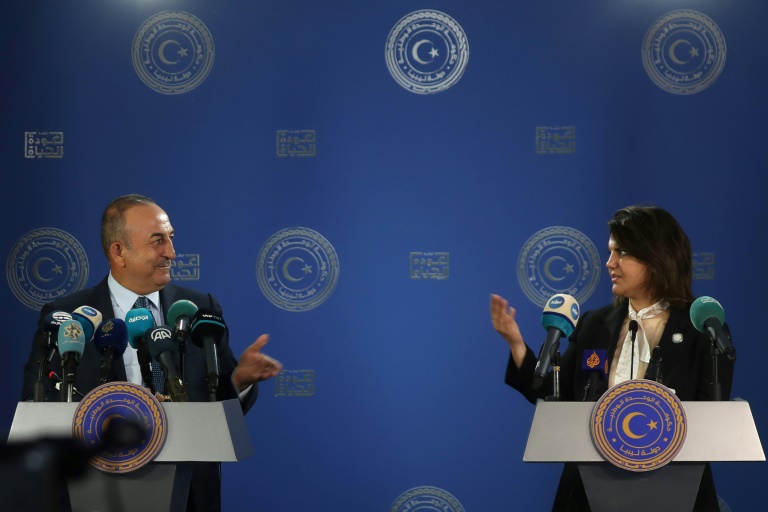
Turkey’s foreign minister signed a deal in Libya’s capital Monday allowing for oil and gas exploration in Libya’s Mediterranean waters, three years after a maritime border deal that angered European nations.

“We’ve signed a memorandum of understanding on exploration for hydrocarbons in Libya’s territorial waters and on Libyan soil, by mixed Turkish-Libyan companies,” Mevlut Cavusoglu said at a press conference in Tripoli.

The deal follows an agreement Turkey signed with authorities in Tripoli in 2019, which demarcated the countries’ shared maritime borders but sparked anger in Greece and Cyprus.

Cavusoglu however stressed on Monday that the new accord was between “two sovereign countries — it’s win-win for both, and other countries have no right to interfere”.

Najla al-Mangoush, foreign minister in Libya’s Government of National Unity, said the new deal was “important”, especially in light of “the Ukrainian crisis and its repercussions” for energy markets.

The deal was rejected by a rival administration in the war-torn country’s east.

Turkey had signed a controversial security agreement in November 2019 with Libya’s UN-recognised government at the time, laying claim to extensive, potentially gas-rich areas of the Mediterranean.

The deal came at the height of a year-long battle between rival governments vying for control of Libya’s capital.

The arrival of Turkish drones shortly afterwards was seen as crucial in the victory of Tripoli-based forces against those of eastern military chief Khalifa Haftar, backed at the time by Egypt, Russia and the United Arab Emirates.

– ‘Unacceptable’ –

Turkey continues to play a major role in Libya’s west, where rival governments are again struggling for control two years after the end of the last major conflict.

Since March, a government appointed by Libya’s eastern-based parliament has been attempting to take office in Tripoli, but has so far failed.

Both the speaker of parliament and the head of the rival administration rejected Monday’s accord.

Speaker Aguila Saleh, who has long argued that the Tripoli-based government’s mandate has expired, called the deal “illegal and unacceptable”, while the rival government of former interior minister Fathi Bashagha threatened to use the courts to annul it.

Cavusoglu was accompanied in Tripoli by a high-level delegation also including Turkey’s energy, defence and trade ministers.

Libya has been mired in violence for more than a decade since the 2011 toppling of dictator Moamer Kadhafi in a NATO-backed uprising.

Dozens of armed groups have been struggling for influence, backed by multiple foreign powers.

Kim Kardashian pays $1.26 mn for unlawful crypto promo

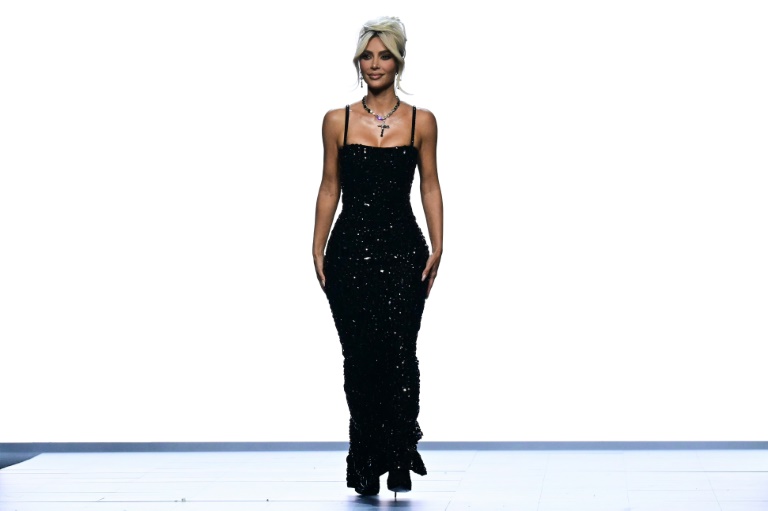
US reality star Kim Kardashian has agreed to pay a $1.26 million fine after unlawfully pushing a cryptocurrency on Instagram without revealing that she was paid to do so, the Securities and Exchange Commission announced Monday. 

The agency accused Kardashian, who has 331 million followers on Instagram — making her one of the top ten most followed people on the global social network — of failing to disclose that she was paid $250,000 to post about EMAX tokens, the crypto asset security being offered by EthereumMax.

The fine includes a penalty of $1 million plus $260,000, representing the amount Kardashian paid plus interest, the SEC said in a statement. She also agreed not to promote any crypto asset securities for three years.

“Are you guys into crypto????” the post, published in June of 2021, read.

“This is not financial advice but sharing what my friends just told me about the Ethereum Max token!”

SEC Chair Gary Gensler said the case was “a reminder that, when celebrities or influencers endorse investment opportunities, including crypto asset securities, it doesn’t mean that those investment products are right for all investors.”

“We encourage investors to consider an investment’s potential risks and opportunities in light of their own financial goals,” Gensler said in a statement.

– ‘Fully cooperated’ –

Reality-star-turned entrepreneur Kardashian came to fame with the US reality show “Keeping Up With the Kardashians,” which tracked the lives of her family members in Los Angeles.

The 41-year-old has steadily built her business empire in recent years — most visibly with her apparel and beauty brands — and has a net worth of $1.8 billion, according to Forbes.

She announced last month that she was branching into a new business arena with the launch of a private equity firm SKKY Partners.

“Ms. Kardashian is pleased to have resolved this matter with the SEC,” a lawyer for the star said in a statement sent to AFP.

She “fully cooperated with the SEC from the very beginning and she remains willing to do whatever she can to assist the SEC in this matter,” it said.

Kardashian “wanted to get this matter behind her to avoid a protracted dispute. The agreement she reached with the SEC allows her to do that so that she can move forward with her many different business pursuits.”

Other celebrities have been nabbed in the past by US authorities for illegally promoting cryptocurrencies, including boxer Floyd Mayweather, rap star DJ Khaled, actor Steven Seagal and rapper T.I.

In January, investors also launched a class action lawsuit against Kardashian, Mayweather and former basketball player Paul Pierce, as well as the two founders of EthereumMax, accusing them of artificially inflating the cryptocurrency’s price.

The ultra-volatile and poorly regulated crypto market has plunged in 2022.

Many central banks and financial market regulators have warned about the dangers posed by cryptocurrencies. But in the absence of a clear legislative framework, users are rarely informed when making their investments, say crypto critics.

Kim Kardashian pays $1.26 mn for unlawful crypto promo

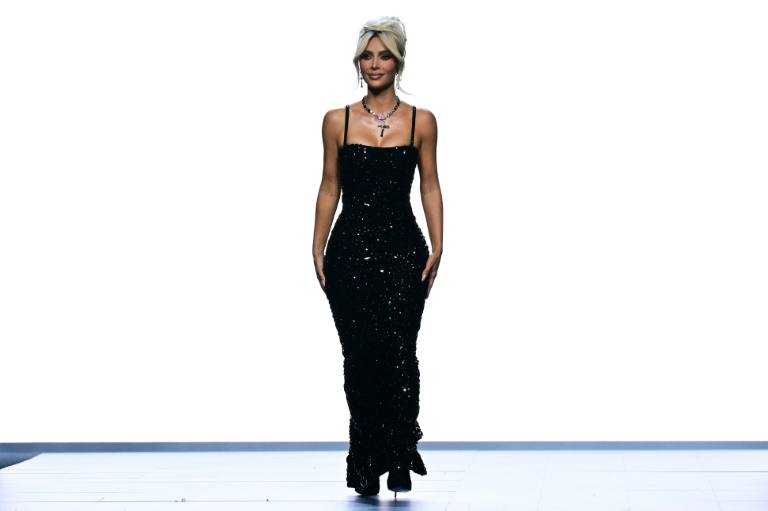
US reality star Kim Kardashian has agreed to pay a $1.26 million fine after unlawfully pushing a cryptocurrency on Instagram without revealing that she was paid to do so, the Securities and Exchange Commission announced Monday. 

The agency accused Kardashian, who has 331 million followers on Instagram — making her one of the top ten most followed people on the global social network — of failing to disclose that she was paid $250,000 to post about EMAX tokens, the crypto asset security being offered by EthereumMax.

The fine includes a penalty of $1 million plus $260,000, representing the amount Kardashian paid plus interest, the SEC said in a statement. She also agreed not to promote any crypto asset securities for three years.

“Are you guys into crypto????” the post, published in June of 2021, read.

“This is not financial advice but sharing what my friends just told me about the Ethereum Max token!”

SEC Chair Gary Gensler said the case was “a reminder that, when celebrities or influencers endorse investment opportunities, including crypto asset securities, it doesn’t mean that those investment products are right for all investors.”

“We encourage investors to consider an investment’s potential risks and opportunities in light of their own financial goals,” Gensler said in a statement.

– ‘Fully cooperated’ –

Reality-star-turned entrepreneur Kardashian came to fame with the US reality show “Keeping Up With the Kardashians,” which tracked the lives of her family members in Los Angeles.

The 41-year-old has steadily built her business empire in recent years — most visibly with her apparel and beauty brands — and has a net worth of $1.8 billion, according to Forbes.

She announced last month that she was branching into a new business arena with the launch of a private equity firm SKKY Partners.

“Ms. Kardashian is pleased to have resolved this matter with the SEC,” a lawyer for the star said in a statement sent to AFP.

She “fully cooperated with the SEC from the very beginning and she remains willing to do whatever she can to assist the SEC in this matter,” it said.

Kardashian “wanted to get this matter behind her to avoid a protracted dispute. The agreement she reached with the SEC allows her to do that so that she can move forward with her many different business pursuits.”

Other celebrities have been nabbed in the past by US authorities for illegally promoting cryptocurrencies, including boxer Floyd Mayweather, rap star DJ Khaled, actor Steven Seagal and rapper T.I.

In January, investors also launched a class action lawsuit against Kardashian, Mayweather and former basketball player Paul Pierce, as well as the two founders of EthereumMax, accusing them of artificially inflating the cryptocurrency’s price.

The ultra-volatile and poorly regulated crypto market has plunged in 2022.

Many central banks and financial market regulators have warned about the dangers posed by cryptocurrencies. But in the absence of a clear legislative framework, users are rarely informed when making their investments, say crypto critics.

Svante Paabo, Swedish medicine Nobel-winner follows in father's footsteps

Swedish paleogeneticist Svante Paabo, who won the Nobel Medicine Prize on Monday for using DNA to reveal the link between humans and Neanderthals, drew early inspiration from his Nobel laureate father.

However Paabo later learned that his father had been living a “double life”, and his existence had been kept a secret from his father’s other family. 

Paabo, 67, was awarded the medicine Nobel for a long list of achievements including sequencing the Neanderthal genome for the first time and discovering the existence of a distant human relative called the Denisovans. 

He was born in Stockholm in 1955 to Estonian chemist Karin Paabo and Sune Bergstrom, a biochemist who won the Nobel Medicine Prize in 1982. His father died in 2004.

In his 2014 memoir “Neanderthal Man: In Search of Lost Genomes”, Paabo wrote that he gained inspiration to study medicine at Sweden’s Uppsala University from his father, who had previously been a medical doctor.

Later he learned that his father “had two families, one of which did not know about the other,” he wrote.

“I had grown up as the secret extra-marital son of Sune Bergstrom,” Paabo wrote, adding that he had “only occasionally” seen his father as an adult.

Paabo also followed in his father’s footsteps by studying biochemistry, earning a PhD at Uppsala University for using DNA research to study a protein of adenovirus, common viruses which cause cold-like symptoms.

But Paabo had long been fascinated with mummies and “could not quite shake off my romantic fascination with ancient Egypt,” he wrote in his memoir.

– An impossible task –

The crossover of his medical research using DNA and preoccupation with mummies put him on the path that would become his life’s work.

“Could it be possible to study ancient DNA sequences and thereby clarify how ancient Egyptians were related to one another and to people today?” he asked in his book.

“Such questions were breathtaking. Surely they must have already occurred to someone else.”

Finding that they had not, Paabo sought his own answers.

It proved a difficult task, because there are only trace amounts of DNA left in ancients remains.

He first made international news in 1985, when he published research that found a DNA fragment in the mummy of a 2,400-year-old child.

Paabo then turned his focus toward Neanderthals when he was recruited by Germany’s Munich University in 1995.

A year later, he managed to sequence some mitochondrial DNA from a 40,000-year-old piece of Neanderthal bone. 

He then became the head of the genetics department at the Max Planck Institute for Evolutionary Anthropology in Leipzig, Germany.

He accomplished the “seemingly impossible task” of publishing the first Neanderthal genome sequence in 2010, according to a statement from the Nobel Assembly.

The research surprised by the scientific world by showing that Neanderthal genomes are still present in one to four percent of humans from European or Asian descent.

“We find traces of their DNA everywhere,” Paabo told AFP in 2018.

– ‘Normal human beings’ –

Also in 2010, Paabo and his team revealed the existence of Denisovans, an extinct human relative, just by sequencing the DNA from a 40,000-year-old finger bone.

Only a year before these breakthroughs were published, Paabo developed potentially life-threatening blood clots in his lungs.

While researching his illness, “to my amazement I stumbled upon references to my father’s work in 1943”, Paabo wrote in his memoir.

His father had “elucidated the chemical structure of herapain,” the drug “which had perhaps saved my life,” he wrote.

In an interview published by the Nobels on Monday, he said that having a Nobel-winning parent may have also given him confidence by showing that “such people are normal human beings and it’s not such an amazing thing”.

“You don’t put your parents on a pedestal,” he added.

Paabo wrote in his memoir that he “had always thought of myself as gay,” before meeting the woman who would become his wife.

He now identifies as bisexual and has two children with primatologist Linda Vigilant, who also works at the Max Planck Institute.

Vodafone, Hutchison in talks to merge UK ops

Vodafone on Monday confirmed it was in talks over merging its UK operations with rival Three UK, owned by Hong Kong-based CK Hutchison.

Vodafone said a combination would allow “the necessary scale to be able to accelerate the rollout of full 5G in the UK”, which has been partly hampered by Britain banning Chinese giant Huawei from involvement in the technology offering faster downloads than 4G.

Vodafone said it would have a majority 51-percent stake and CK Hutchison the remainder in a non-cash deal.

A merger would “expand broadband connectivity to rural communities and small businesses” in the UK, the statement said.

“The UK government rightly sees 5G as transformational for the economy and society and critical to the UK becoming more competitive in an increasingly digital world,” it added.

Vodafone’s share price was up about three percent in late trading on London’s FTSE 100 index, which was rising only slightly.

Susannah Streeter, senior investment and markets analyst at Hargreaves Lansdown, noted the possibility of “significant regulatory hurdles ahead for the deal, as the authorities weigh up the potential ceding ownership of more core UK infrastructure to an overseas owner”.

“Clearly much still needs to be agreed and it’s far from certain that this is a done deal, but if it is signed the joint venture with Three UK would create the biggest player in the UK mobile industry,” she added.

US manufacturing growth slows to lowest since 2020: survey

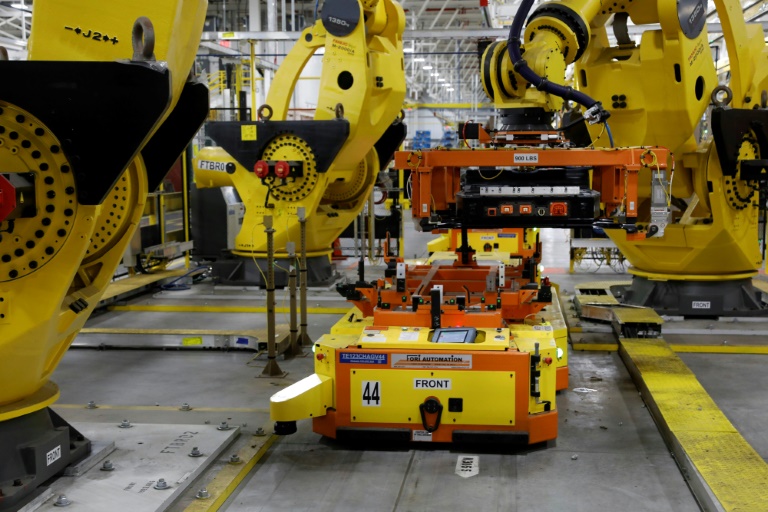
US manufacturing growth slowed in September to its weakest pace in more than two years amid a decline in orders, as well as easing price pressures, according to an industry survey released Monday.

The Institute for Supply Management said its manufacturing index dropped 1.9 points to 50.9 percent, well below expectations and just barely above the 50-percent threshold indicating expansion.

It was the weakest result since May 2020, ISM said.

“The US manufacturing sector continues to expand, but at the lowest rate since the pandemic recovery began,” ISM manufacturing survey chair Timothy Fiore said in a statement.

After companies surveyed for the past four months have reported “softening new orders rates, the September index reading reflects companies adjusting to potential future lower demand,” he said.

The new orders index fell sharply, sinking into contraction territory at 47.1 percent, though production edged up slightly, the report said.

The prices index also fell, still showing rising prices at 51.7 percent, but posting the lowest reading since June 2020.

Seven of the industries surveyed contracted compared to August, while nine reported growth.

“Concerns of global economic slowdown are growing, and (we are) experiencing some customers pulling back orders,” a chemical products firm said.

Several others pointed to ongoing supply chain issues hampering output.

Factory employment slowed sharply, and while Fiore said there was an uptick in hiring freezes, “Markedly absent from panelists’ comments was any large-scale mentioning of layoffs; this indicates companies are confident of near-term demand.”

Close Bitnami banner
Bitnami