World

32 children died in Indonesia stadium disaster, police chief sacked

At least 32 children died in Indonesia’s stadium crush, an official said Monday as police moved to punish those responsible for one of the deadliest disasters in football history.

The tragedy on Saturday night in the city of Malang saw a total of 125 people killed and 323 others injured after officers fired tear gas in a packed stadium to quell a pitch invasion, triggering a stampede.

Dozens of children caught in the chaos lost their lives, an official at the women’s empowerment and child protection ministry told AFP.

“From the latest data we received, out of 125 people who died in the accident, 32 of them were children, with the youngest being a toddler age three or four,” said Nahar, who like many Indonesians goes by only one name.

As anger mounted against police, Indonesia’s chief security minister Mahfud MD announced a task force had been formed to investigate and called for those responsible to be punished.

“We asked (police) to unveil who has perpetrated the crimes and take action against them and we also hope the national police will evaluate their security procedures,” he said in a broadcast statement.

The police force sacked its local chief in Malang within hours of the minister’s speech.

East Java police also suspended nine officers on the instruction of the national police force, national police spokesman Dedi Prasetyo told a press conference, without providing details about their role in the tragedy.

With police and sports officials on their way to Malang to investigate, Indonesia’s National Commission on Human Rights (Komnas HAM) levelled criticism at officers.

“If there was no tear gas, maybe there wouldn’t have been chaos,” commissioner Choirul Anam told a briefing.

– ‘We want accountability’ –

Saturday’s incident unfolded when fans of home team Arema FC stormed the pitch at the Kanjuruhan stadium after their loss 3-2 to bitter rivals Persebaya Surabaya.

Police responded by launching tear gas into packed terraces, prompting spectators to rush en masse to small gates where many were trampled or suffocated, according to witnesses.

“It felt like people were packed into a small tube with a tiny hole, and then they were smoked,” said 29-year-old spectator Ahmad Rizal Habibi, who escaped before the crush.

Police described the incident as a riot and said two officers were killed, but survivors accuse them of overreacting and causing the deaths of scores of spectators.

“One of our messages is for the authorities to investigate this thoroughly. And we want accountability. Who is to blame?” said 25-year-old Malang resident Andika, who declined to give his last name.

“We want justice for our fallen supporters.”

One witness outside the stadium said police refused to help when the crush happened.

“The place looked like a mass cemetery. Women and children were piling on top of one another,” Eko Prianto, 39, told AFP.

“I ran to the police or soldier to help. There were no medics in sight. The police did not help and the soldier threatened to beat me.”

– ‘Full responsibility’ –

In a tearful live address, Arema FC president Gilang Widya Pramana apologised for the tragedy.

“I, as the president of Arema FC, will take full responsibility for the incident that occurred,” he said.

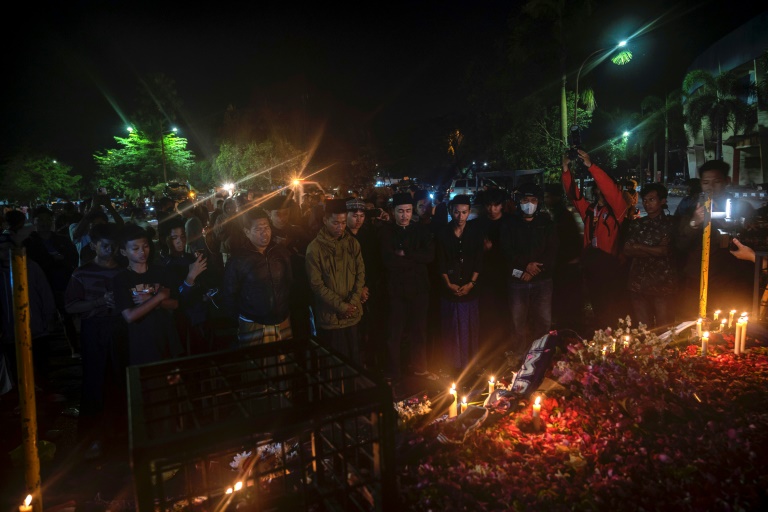
The Arema squad visited the site of the crush on Monday wearing black shirts to pay their respects and lay flowers before gathering on the pitch to pray for victims.

Newspaper Kompas published a black front page with the word “tragedy” and a stadium bearing the names of victims.

Graffiti daubed on the walls of the venue revealed bubbling anger towards authorities.

“My siblings were killed. Investigate thoroughly,” read one message scrawled on the stadium’s shutters, accompanied by a black ribbon and the date of the disaster.

“ACAB”, an acronym for “all cops are bastards”, was sprayed on another wall.

Indonesian President Joko Widodo ordered compensation for families of the victims to the tune of 50 million rupiah ($3,200) each, a minister said on Monday.

He has also suspended football matches until security improves and announced a probe.

Mahfud said the task force for the investigation would consist of government and football officials, academics and members of the media.

He said the probe would be “concluded in the next two or three weeks”.

But Human Rights Watch said the police and Indonesia’s football association “may be tempted to downplay or undermine full accountability for officials”.

– ‘A dark day’ –

Football fan violence is an enduring problem in Indonesia. 

Witnesses say supporters of the home team invaded the pitch after their loss to Persebaya Surabaya.

Persebaya Surabaya fans were barred from the game, due to the fear of violence. 

Mahfud said 42,000 tickets had been allocated for 38,000 seats.

After the stampede, Arema fans threw rocks at officers and torched vehicles including a police truck on the streets of Malang, according to police.

FIFA’s president Gianni Infantino called the tragedy a “dark day” for football.

The world governing body’s safety guidelines prohibit the use of crowd control gas by police or stewards at pitchside.

OPEC+ tipped to make big cut in oil output

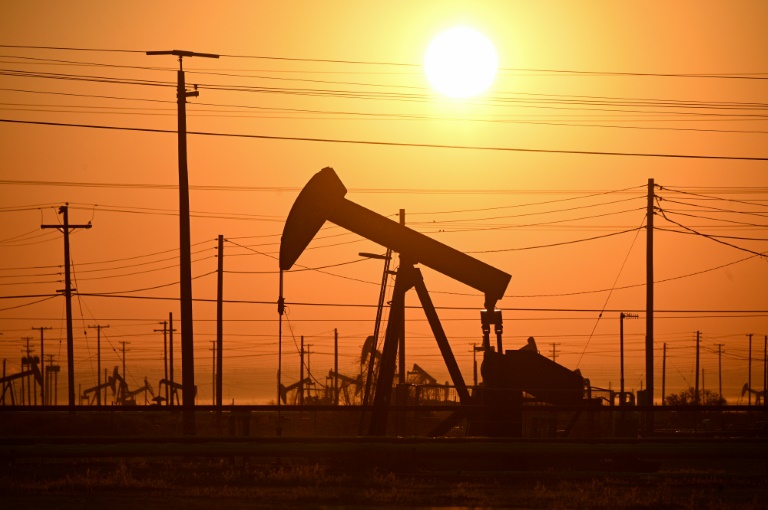
Major oil-producing nations led by Saudi Arabia and Russia are expected to make this week their biggest output cut since the start of the Covid pandemic in efforts to buttress prices.

Energy prices soared after Russia invaded Ukraine earlier this year, pushing inflation to decades-high levels that have put pressure on economies across the world.

But crude prices have fallen in recent months on concerns over demand amid a slowdown in the global economy.

The 13 members of the Organization of the Petroleum Exporting Countries (OPEC), led by Riyadh, and their 10 allies headed by Moscow will hold on Wednesday their first in-person meeting at the group’s headquarters in Vienna since March 2020.

Collectively known as OPEC+, the alliance drastically slashed output by almost 10 million barrels per day in April 2020 to reverse a massive drop in crude prices caused by Covid lockdowns.

OPEC+ began to raise production last year after the market improved — output returned to pre-pandemic levels this year, but only on paper as some members struggled to meet their quotas.

The group agreed last month on a slight cut of 100,000 bpd from October, the first in more than a year.

– One million cut –

Analysts now expect — and financial media have reported — that OPEC+ will discuss taking one million bpd out of the market from November at Wednesday’s meeting.

“There’s been plenty of rumours about how the alliance will respond to the deteriorating economic outlook and lower prices,” said Craig Erlam, analyst at trading platform OANDA.

“A sizeable cut now looks on the cards, the question is whether it will be large enough to offset the demand destruction caused by the impending economic downturn,” he added.

After soaring close to $140 per barrel in the aftermath of Russia’s invasion of Ukraine, oil prices have dropped below the $90 mark.

According to the UBS bank, a cut of at least 500,000 bpd would be necessary to stop the price plunge.

In anticipation of Wednesday’s meeting, oil prices jumped on Monday, with Brent North Sea crude, the international benchmark, rising by almost five percent to reach $89.15 — still far from its March peak.

– Ignoring the West –

Stephen Brennock, an analyst with PVM Energy, said OPEC+ would “want to reassert its influence” when the group meets this week.

“After all, the producer group has lost control over the oil market in recent weeks,” he said.

It remains to be seen how the United States and other major oil consumers will react to any OPEC+ decision to slash output.

Consumer countries have pushed for OPEC+ to open taps more widely to bring down prices — calls which the group has largely ignored.

US President Joe Biden made a controversial trip to Saudi Arabia in July in part to convince the kingdom to loosen the production taps, meeting Crown Prince Mohammed bin Salman despite his promise to make Riyadh a “pariah” following the 2018 killing of journalist Jamal Khashoggi.

“OPEC will not be making any friends among Western leaders, especially petroleum importers whose economies and currencies are ravaged by higher oil prices due to a deterioration in the trade balance,” said Stephen Innes, an analyst with SPI Asset Management, ahead of Wednesday’s meeting.

Observers have cast doubt how much more OPEC+ could possibly be pumping with some of its members struggling to meet quotas.

Bjarne Schieldrop, chief commodities analyst at SEB research group, predicted it would be “very easy for the group to implement cuts given that most members are stretched to the limit of what they can produce”.

He said Saudi Arabia was currently producing 11 million barrels per day.

“It hasn’t maintained such a high production more than twice in history and then only for 1-2 months,” he said.

Oil jumps, European stocks wobble on Credit Suisse fears

Oil prices jumped Monday on expectations of an OPEC output cut, while European stocks wobbled on fears over the health of Swiss bank Credit Suisse. 

Investors are already on edge over worries that rising interest rates, aimed at fighting sky-high inflation, could spark recessions.

The British pound bounced above $1.12 after the UK government scrapped plans to axe its top income tax rate, after a debt-fuelled budget had sent sterling spiralling to a record dollar low one week ago.

– Oil spikes before OPEC –

Oil prices leapt by more than five percent as reports said OPEC and its allies are considering a major output cut to stem a price plunge caused by demand worries.

That stoked stubborn concerns about soaring inflation, which has been fuelled this year by sky-high energy prices after key producer Russia’s invasion of Ukraine.

“Any cut will no doubt frustrate consuming countries that are on the verge of recession after spending a year dealing with soaring energy costs on the back of the post-pandemic recovery and war in Ukraine,” said OANDA analyst Craig Erlam.

The 13 members of the Organization of the Petroleum Exporting Countries (OPEC), led by Riyadh, and their 10 partners led by Moscow will physically meet on Wednesday for the first time since March 2020.

– ‘Dicey’ sentiment –

Shares in Credit Suisse plunged to a new low in Zurich on Monday as the scandal-plagued lender sought to ease concerns about its financial health.

Its stock tumbled 11.60 percent to 3.58 Swiss francs ($3.61) before clawing back ground to 3.78 francs, down more than five percent.

The Financial Times reported that senior executives sought over the weekend to reassure big clients and investors about the bank’s liquidity and capital position due to concerns raised about its financial strength.

“Sentiment is still pretty dicey and Credit Suisse is definitely weighing heavily today on European equities,” Markets.com analyst Neil Wilson told AFP.

“A globally systemic bank requiring to raise capital would be a major event and could certainly undermine confidence in the banking system.”

AvaTrade analyst Naseem Aslam said that: “The sad reality is that if there is something wrong with Credit Suisse, then we have a major issue as this is a gigantic institute, and the domino effect will be unbearable.”

– Sterling gains on U-turn –

The pound rallied briefly after UK finance minister Kwasi Kwarteng made a major U-turn by scrapping a controversial plan to axe the top income tax rate.

The cut was part of a controversial mini-budget unveiled by Kwarteng 10 days ago, which had sent sterling spinning to a record low of $1.0350. 

UK gilts, or government bonds, remain supported by an emergency Bank of England intervention after yields had rocketed following the mini budget announcement.

Wall Street’s main stock indices opened higher, with the Dow climbing 1.2 percent.

Asian equities mainly fell Monday, with Hong Kong tumbling to its lowest point in more than a decade as fears for China’s economy deepens this year’s investor rout.

The Hang Seng Index shed 0.83 percent, or 143.32 points, to close at 17,079.51. 

But crucially it crossed below the 17,000 level in the afternoon, touching a nadir not seen since October 2011 and the aftermath of the global financial crash and during the eurozone debt crisis.

– Key figures around 1330 GMT –

London – FTSE 100: DOWN 0.2 percent at 6,880.56 points 

Frankfurt – DAX: UP 0.3 percent at 12,150.08

Paris – CAC 40: DOWN less than 0.1 percent at 5,757.95

EURO STOXX 50: DOWN 0.2 percent at 3,324.27

New York – Dow: UP 1.2 percent at 29,063.74

Tokyo – Nikkei 225: UP 1.1 percent at 26,215.79 (close)

Hong Kong – Hang Seng Index: DOWN 0.8 percent at 17,079.51 (close)

Shanghai – Composite: Closed for a holiday

Pound/dollar: UP at $1.11 from $1.1170 on Friday

Euro/dollar: DOWN at $0.9774 from $0.9802

Euro/pound: DOWN at 86.98 pence from 87.75 pence

Dollar/yen: UP at 144.87 yen from 144.74 yen

Brent North Sea crude: UP 5.1 percent at $89.50 per barrel

West Texas Intermediate: UP 5.9 percent at $84.68 per barrel

burs-rl/lth

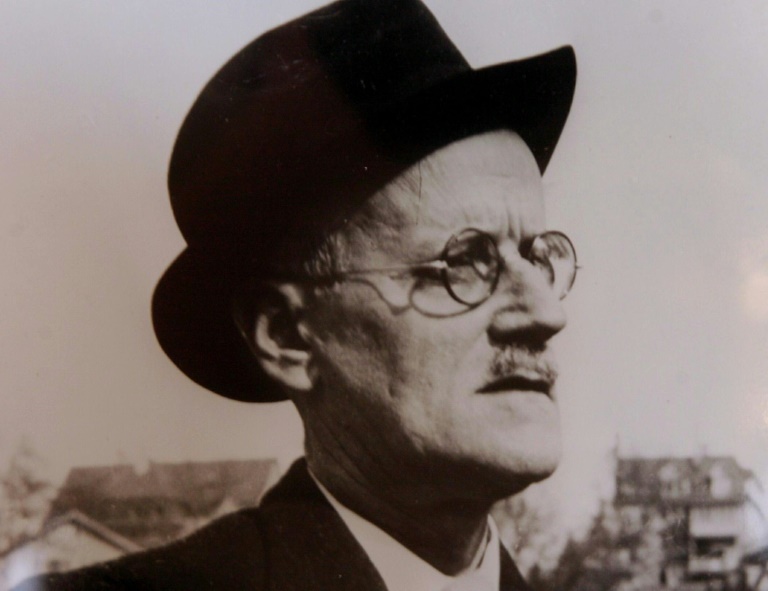
'Ulysses' European tour seeks modern touch for Joyce's epic novel

A festival dedicated to James Joyce’s novel “Ulysses” is touring 18 European cities, with artists and writers linking the work to contemporary issues such as immigration.

“Ulysses”, published in 1922, counts among the 20th century’s key novels, and its centenary has already sparked much celebration in Joyce’s native Ireland.

But Liam Browne, co-artistic curator of “Ulysses European Odyssey”, said the tour is to go beyond the kind of literary fandom seen at home.

“What interested us was Joyce as a European figure, rather than an Irish figure,” he told AFP on the margins of the tour event in Marseille on the southern French coast.

“In his imagination he was engaging with Dublin to write his novels but actually his day-to-day existence was in these European cities,” Browne said.

The crude language and sexual content in “Ulysses” meant there was no chance of it getting published in conservative 1920s Ireland or anywhere else in the English-speaking world.

It became the target of an obscenity trial in the United States, and was banned in Britain for more than a decade.

In the end, it was published in Paris by American Sylvia Beach, owner of the “Shakespeare and Company” bookshop which is still a gathering point for aspiring writers today.

The novel tells the story of a single day in the life of Dubliner Leopold Bloom, while Joyce links the day’s events to Homer’s “Odyssey”. Scholars are still busy tracing the subtle connections.

– Difficult to read –

The book has a reputation for being difficult to understand, with the New York Times predicting in its 1922 review that “not ten men or women out of a hundred can read ‘Ulysses’ through”.

Fans the world over still celebrate “Bloomsday” in honour of Joyce every year on June 16.

One of the aims of the European tour — involving actors, directors, writers, musicians, photographers and even food experts — is to connect the novel with today’s burning topics.

“We wanted a multi-art response and we wanted the art engaging with society and social issues,” Browne said. “Nationalism, exile, sexuality and the place of women in society.”

Joyce, who grew up in Dublin, later lived in Paris, Trieste in Italy, and Zurich in Switzerland, where he died.

“We believed that the book would not have become what it was without Joyce’s exile in Europe,” said co-artistic curator Sean Doran. “We are fascinated about this concept about home,” he said.

Marseille, he said, was “perfect to explore that subject, people here are coming from everywhere in the Mediterranean”.

An Anglo-Irish artist duo based in Marseille, Myles Quin and Gethan Dick, picked immigration and exile for their performance piece at the weekend, featuring recent arrivals from Afghanistan, Sudan, Algeria, Guinea and Syria in their depiction of the trauma of attempting to cross the Mediterranean in search for a better life.

“It seemed impossible to talk about them without making them actors in the performance,” said Sophie Cattani, co-founder of local arts collective “ildi ! eldi”.

Other venues for the tour, which is sponsored by the EU, include Athens, Budapest, Berlin and Istanbul.

Dublin will be its penultimate stop in 2024. The tour ends in Londonderry, also known as Derry, Northern Ireland, with female artists from the other venues joining in the festival’s finale.

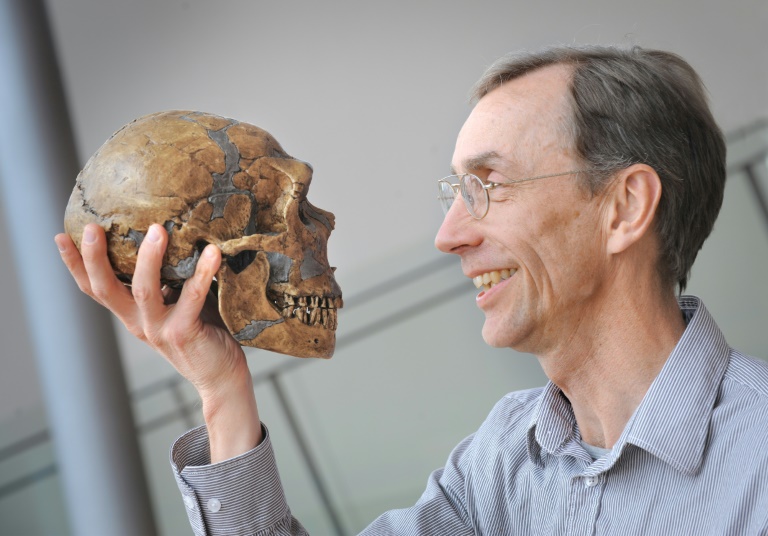
Sweden's Paabo wins medicine Nobel for sequencing Neanderthal DNA

Swedish paleogeneticist Svante Paabo, who sequenced the genome of the Neanderthal and discovered the previously unknown hominin Denisova, on Monday won the Nobel Medicine Prize.

Paabo’s research gave rise to an entirely new scientific discipline called paleogenomics, and has “generated new understanding of our evolutionary history”, the Nobel committee said.

“By revealing genetic differences that distinguish all living humans from extinct hominins, his discoveries provide the basis for exploring what makes us uniquely human,” it said in a statement.

Paabo — the founder and director of the department of genetics at the Max Planck Institute for Evolutionary Anthropology in Leipzig — found that gene transfer had occurred from these now extinct hominins to Homo sapiens following the migration out of Africa around 70,000 years ago.

“This ancient flow of genes to present-day humans has physiological relevance today, for example affecting how our immune system reacts to infections,” the jury said.

One such example is that Covid-19 patients with a snippet of Neanderthal DNA run a higher risk of severe complications from the disease, Paabo found in a 2020 study.

Paabo told prize organisers Monday that he was “gulping down his last cup of tea” before picking up his young daughter when the committee called him Monday to tell him his research was being honoured.

He was surprised, he said. “I somehow did not think that this would really qualify for a Nobel Prize”.

Paabo, 67, takes home the award sum of 10 million kronor ($901,500).

He is one of only a handful of Nobel science laureates to win the prize alone. Major scientific discoveries are usually awarded to two or three people to reflect large team collaborations.

Paabo is the son of Sune Bergstrom, a Swede who won the 1982 Nobel Medicine Prize for discovering prostaglandins — biochemical compounds that influence blood pressure, body temperature, allergic reactions and other physiological phenomena.

In his 2014 memoir “Neanderthal Man: In Search of Lost Genomes”, Paabo wrote that he was conceived as a result of a secret extra-marital affair.

He later told The Guardian outlet that Bergstrom’s “official” family knew nothing of his or his mother’s existence, the Estonian chemist Karin Paabo, until after Bergstrom’s death in 2005.

Paabo also wrote in his memoir that he “had always thought of myself as gay” until he met the woman who would become his wife, primatologist Linda Vigilant, who also works at the Max Planck Institute.

– Achieved ‘the seemingly impossible’ –

Homo sapiens are known to have first appeared in Africa around 300,000 years ago. 

Our closest known relatives, Neanderthals, developed outside Africa and populated Europe and Western Asia from around 400,000 to 30,000 years ago, when they became extinct.

That means that about 70,000 years ago, groups of Homo sapiens and Neanderthals coexisted in large parts of Eurasia for tens of thousands of years.

“The last 40,000 years is quite unique in human history in that we are the only form of humans around. Until that time there were almost always other types of humans that existed”, Paabo said in the interview with prize organisers.

In order to study the relationship between present-day humans and extinct Neanderthals, DNA needed to be sequenced from archaic specimens with only trace amounts of DNA left after thousands of years.

In 1990, Paabo managed to sequence a bit of mitochondrial DNA from a 40,000-year-old piece of bone.

“For the first time, we had access to a sequence from an extinct relative”, the Nobel jury said.

Comparisons with contemporary humans and chimpanzees showed that Neanderthals were genetically distinct.

Paabo then “accomplished the seemingly impossible”, the committee said, when he published the first Neanderthal genome sequence in 2010.

It showed that the most recent common ancestor of Neanderthals and Homo sapiens lived around 800,000 years ago. 

Paabo and his team were able to show that DNA sequences from Neanderthals were more similar to those from contemporary humans originating from Europe or Asia than those from Africa.

“This means that Neanderthals and Homo sapiens interbred during their millennia of coexistence,” the Nobel jury said.

In modern day humans with European or Asian descent, around one to four percent of the genome originates from Neanderthals.

– New addition to family tree –

In 2008, Paabo and his team went on to sequence a 40,000-year-old bone fragment found in the Denisova cave in southern Siberia. 

It contained exceptionally well-preserved DNA.

“The results caused a sensation — the DNA sequence was unique when compared to all known sequences from Neanderthals and present-day humans,” the Nobel jury said.

Paabo had discovered a previously unknown hominin, which was given the name Denisova.

Comparisons showed the gene flow had also occurred between Denisova and Homo sapiens.

As a result of Paabo’s research, we now know that when Homo sapiens migrated out of Africa, at least two extinct hominin populations inhabited Eurasia — Neanderthals lived in western Eurasia, whereas Denisovans populated the eastern parts of the continent.

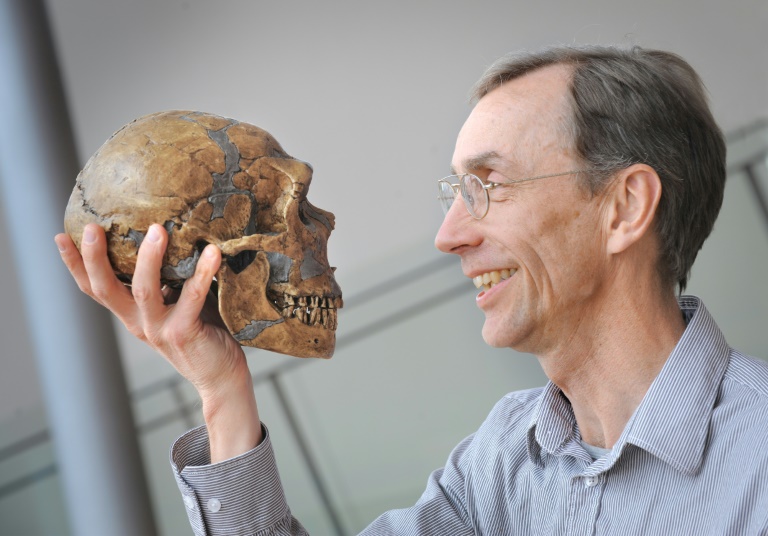
Sweden's Paabo wins medicine Nobel for sequencing Neanderthal DNA

Swedish paleogeneticist Svante Paabo, who sequenced the genome of the Neanderthal and discovered the previously unknown hominin Denisova, on Monday won the Nobel Medicine Prize.

Paabo’s research gave rise to an entirely new scientific discipline called paleogenomics, and has “generated new understanding of our evolutionary history”, the Nobel committee said.

“By revealing genetic differences that distinguish all living humans from extinct hominins, his discoveries provide the basis for exploring what makes us uniquely human,” it said in a statement.

Paabo — the founder and director of the department of genetics at the Max Planck Institute for Evolutionary Anthropology in Leipzig — found that gene transfer had occurred from these now extinct hominins to Homo sapiens following the migration out of Africa around 70,000 years ago.

“This ancient flow of genes to present-day humans has physiological relevance today, for example affecting how our immune system reacts to infections,” the jury said.

One such example is that Covid-19 patients with a snippet of Neanderthal DNA run a higher risk of severe complications from the disease, Paabo found in a 2020 study.

Paabo told prize organisers Monday that he was “gulping down his last cup of tea” before picking up his young daughter when the committee called him Monday to tell him his research was being honoured.

He was surprised, he said. “I somehow did not think that this would really qualify for a Nobel Prize”.

Paabo, 67, takes home the award sum of 10 million kronor ($901,500).

He is one of only a handful of Nobel science laureates to win the prize alone. Major scientific discoveries are usually awarded to two or three people to reflect large team collaborations.

Paabo is the son of Sune Bergstrom, a Swede who won the 1982 Nobel Medicine Prize for discovering prostaglandins — biochemical compounds that influence blood pressure, body temperature, allergic reactions and other physiological phenomena.

In his 2014 memoir “Neanderthal Man: In Search of Lost Genomes”, Paabo wrote that he was conceived as a result of a secret extra-marital affair.

He later told The Guardian outlet that Bergstrom’s “official” family knew nothing of his or his mother’s existence, the Estonian chemist Karin Paabo, until after Bergstrom’s death in 2005.

Paabo also wrote in his memoir that he “had always thought of myself as gay” until he met the woman who would become his wife, primatologist Linda Vigilant, who also works at the Max Planck Institute.

– Achieved ‘the seemingly impossible’ –

Homo sapiens are known to have first appeared in Africa around 300,000 years ago. 

Our closest known relatives, Neanderthals, developed outside Africa and populated Europe and Western Asia from around 400,000 to 30,000 years ago, when they became extinct.

That means that about 70,000 years ago, groups of Homo sapiens and Neanderthals coexisted in large parts of Eurasia for tens of thousands of years.

“The last 40,000 years is quite unique in human history in that we are the only form of humans around. Until that time there were almost always other types of humans that existed”, Paabo said in the interview with prize organisers.

In order to study the relationship between present-day humans and extinct Neanderthals, DNA needed to be sequenced from archaic specimens with only trace amounts of DNA left after thousands of years.

In 1990, Paabo managed to sequence a bit of mitochondrial DNA from a 40,000-year-old piece of bone.

“For the first time, we had access to a sequence from an extinct relative”, the Nobel jury said.

Comparisons with contemporary humans and chimpanzees showed that Neanderthals were genetically distinct.

Paabo then “accomplished the seemingly impossible”, the committee said, when he published the first Neanderthal genome sequence in 2010.

It showed that the most recent common ancestor of Neanderthals and Homo sapiens lived around 800,000 years ago. 

Paabo and his team were able to show that DNA sequences from Neanderthals were more similar to those from contemporary humans originating from Europe or Asia than those from Africa.

“This means that Neanderthals and Homo sapiens interbred during their millennia of coexistence,” the Nobel jury said.

In modern day humans with European or Asian descent, around one to four percent of the genome originates from Neanderthals.

– New addition to family tree –

In 2008, Paabo and his team went on to sequence a 40,000-year-old bone fragment found in the Denisova cave in southern Siberia. 

It contained exceptionally well-preserved DNA.

“The results caused a sensation — the DNA sequence was unique when compared to all known sequences from Neanderthals and present-day humans,” the Nobel jury said.

Paabo had discovered a previously unknown hominin, which was given the name Denisova.

Comparisons showed the gene flow had also occurred between Denisova and Homo sapiens.

As a result of Paabo’s research, we now know that when Homo sapiens migrated out of Africa, at least two extinct hominin populations inhabited Eurasia — Neanderthals lived in western Eurasia, whereas Denisovans populated the eastern parts of the continent.

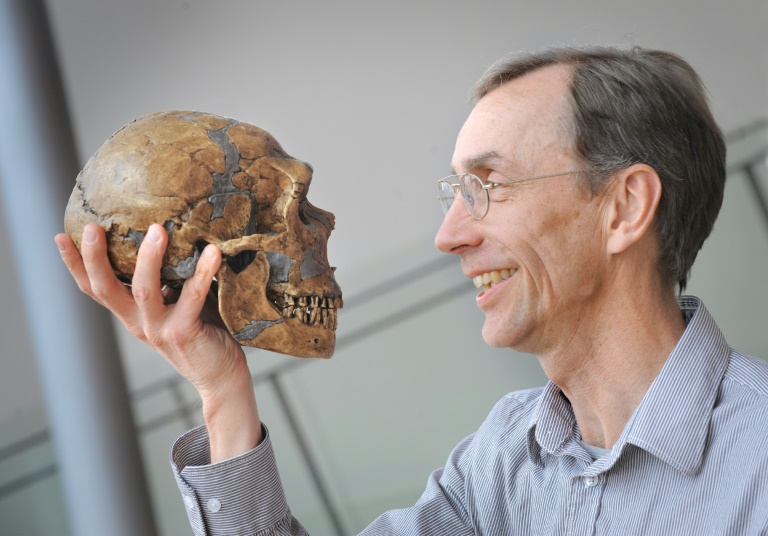
Sweden's Paabo wins medicine Nobel for sequencing Neanderthal DNA

Swedish paleogeneticist Svante Paabo, who sequenced the genome of the Neanderthal and discovered the previously unknown hominin Denisova, on Monday won the Nobel Medicine Prize.

Paabo’s research gave rise to an entirely new scientific discipline called paleogenomics, and has “generated new understanding of our evolutionary history”, the Nobel committee said.

“By revealing genetic differences that distinguish all living humans from extinct hominins, his discoveries provide the basis for exploring what makes us uniquely human,” it said in a statement.

Paabo — the founder and director of the department of genetics at the Max Planck Institute for Evolutionary Anthropology in Leipzig — found that gene transfer had occurred from these now extinct hominins to Homo sapiens following the migration out of Africa around 70,000 years ago.

“This ancient flow of genes to present-day humans has physiological relevance today, for example affecting how our immune system reacts to infections,” the jury said.

One such example is that Covid-19 patients with a snippet of Neanderthal DNA run a higher risk of severe complications from the disease, Paabo found in a 2020 study.

Paabo told prize organisers Monday that he was “gulping down his last cup of tea” before picking up his young daughter when the committee called him Monday to tell him his research was being honoured.

He was surprised, he said. “I somehow did not think that this would really qualify for a Nobel Prize”.

Paabo, 67, takes home the award sum of 10 million kronor ($901,500).

He is one of only a handful of Nobel science laureates to win the prize alone. Major scientific discoveries are usually awarded to two or three people to reflect large team collaborations.

Paabo is the son of Sune Bergstrom, a Swede who won the 1982 Nobel Medicine Prize for discovering prostaglandins — biochemical compounds that influence blood pressure, body temperature, allergic reactions and other physiological phenomena.

In his 2014 memoir “Neanderthal Man: In Search of Lost Genomes”, Paabo wrote that he was conceived as a result of a secret extra-marital affair.

He later told The Guardian outlet that Bergstrom’s “official” family knew nothing of his or his mother’s existence, the Estonian chemist Karin Paabo, until after Bergstrom’s death in 2005.

Paabo also wrote in his memoir that he “had always thought of myself as gay” until he met the woman who would become his wife, primatologist Linda Vigilant, who also works at the Max Planck Institute.

– Achieved ‘the seemingly impossible’ –

Homo sapiens are known to have first appeared in Africa around 300,000 years ago. 

Our closest known relatives, Neanderthals, developed outside Africa and populated Europe and Western Asia from around 400,000 to 30,000 years ago, when they became extinct.

That means that about 70,000 years ago, groups of Homo sapiens and Neanderthals coexisted in large parts of Eurasia for tens of thousands of years.

“The last 40,000 years is quite unique in human history in that we are the only form of humans around. Until that time there were almost always other types of humans that existed”, Paabo said in the interview with prize organisers.

In order to study the relationship between present-day humans and extinct Neanderthals, DNA needed to be sequenced from archaic specimens with only trace amounts of DNA left after thousands of years.

In 1990, Paabo managed to sequence a bit of mitochondrial DNA from a 40,000-year-old piece of bone.

“For the first time, we had access to a sequence from an extinct relative”, the Nobel jury said.

Comparisons with contemporary humans and chimpanzees showed that Neanderthals were genetically distinct.

Paabo then “accomplished the seemingly impossible”, the committee said, when he published the first Neanderthal genome sequence in 2010.

It showed that the most recent common ancestor of Neanderthals and Homo sapiens lived around 800,000 years ago. 

Paabo and his team were able to show that DNA sequences from Neanderthals were more similar to those from contemporary humans originating from Europe or Asia than those from Africa.

“This means that Neanderthals and Homo sapiens interbred during their millennia of coexistence,” the Nobel jury said.

In modern day humans with European or Asian descent, around one to four percent of the genome originates from Neanderthals.

– New addition to family tree –

In 2008, Paabo and his team went on to sequence a 40,000-year-old bone fragment found in the Denisova cave in southern Siberia. 

It contained exceptionally well-preserved DNA.

“The results caused a sensation — the DNA sequence was unique when compared to all known sequences from Neanderthals and present-day humans,” the Nobel jury said.

Paabo had discovered a previously unknown hominin, which was given the name Denisova.

Comparisons showed the gene flow had also occurred between Denisova and Homo sapiens.

As a result of Paabo’s research, we now know that when Homo sapiens migrated out of Africa, at least two extinct hominin populations inhabited Eurasia — Neanderthals lived in western Eurasia, whereas Denisovans populated the eastern parts of the continent.

Moroccan nomads' way of life threatened by climate change

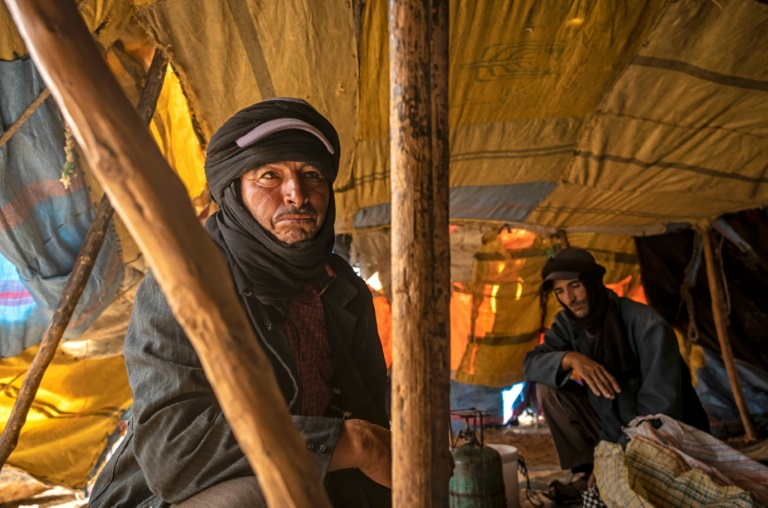
In the blistering desert of Morocco, the country’s last Berber nomads, the Amazigh, say their ancient lifestyle is under threat as climate change brings ever-more intense droughts.  

“Everything has changed,” said Moha Ouchaali, his wrinkled features framed by a black turban. “I don’t recognise myself anymore in the world of today. Even nature is turning against us.” 

Ouchaali, an Amazigh man in his 50s, has set up an encampment near a dry riverbed in barren hills about 280 kilometres (175 miles) east of Marrakesh. 

Amid the rocky, arid landscape near the village of Amellagou, he and his family have pitched two black woollen tents, lined with old animal fodder bags and fabric scraps.

One is for sleeping and hosting guests, the other serves as a kitchen.

“Water has become hard to find. Temperatures are going up and the drought is so harsh, but we can’t do much,” said Ouchaali.

His tribe, the Ait Aissa Izem, has spent centuries roaming the country to find food for their animals, but their way of life is steadily disappearing.

According to the last census, just 25,000 people in Morocco were nomadic in 2014, down by two-thirds in just a decade.

“We’re exhausted,” Ouchaali’s 45-year-old wife Ida said emotionally. “Before, we managed to live decently, but all these droughts, more and more intense, make our lives complicated. Without water we can’t do anything.”

– ‘Last nail in coffin’ –

This year has seen Morocco’s worst drought in four decades.

Rainfall is set to decline by 11 percent and average temperatures set to rise by 1.3 percent by 2050, according to forecasts from the Ministry of Agriculture.

“Nomads have always been seen as a barometer of climate change,” said anthropologist Ahmed Skounti.

“If these people, used to living in extreme conditions, can’t resist the intensity of global warming, that means things are bad.”

The drying up of water resources was “the last nail in the coffin for nomads”, he added.

In easier times, the Ait Aissa Izem would pass the summer in the relatively cool mountain valley of Imilchil, before heading to the area around regional capital Errachidia for the winter.

“That’s ancient history,” Ouchaali said, sitting in his tent and taking a sip of sweet Moroccan tea. “Today we go wherever there’s a bit of water left, to try to save the animals.”

Severe water shortages have even pushed some nomads to take the rare step of taking out loans to feed their livestock, their most vital asset.

“I’ve gone into debt to buy food for my animals so they don’t starve to death,” said Ahmed Assni, 37, sitting by a tiny, almost dried-out stream near Amellagou.

Saeed Ouhada said the difficulties had pushed him to find accommodation for his wife and children in Amellagou, while he stays with his parents in a camp on the edge of the town.

“Being a nomad isn’t what it used to be,” he said. “I’ll keep at it because I have to. My parents are old but they refuse to live in a town.” 

Driss Skounti, elected to represent nomads in the region, said the area used to have around 460 tents. Today, they don’t even add up to a tenth of that number.

– ‘Tired of fighting’ –

Some Moroccan nomads have given up their ancient lifestyle altogether — and not just because of the ever-worsening climate.

“I was tired of fighting,” said Haddou Oudach, 67, who settled permanently in Er-Rich in 2010.

“We’ve become outcasts from society. I can’t even imagine what nomads are going through today.”

Moha Haddachi, the head of an association for the Ait Aissa Izem nomads, said social and economic changes were making a nomadic lifestyle ever-more difficult. 

The scarcity of pastures due to land privatisation and agricultural investment also contributes to the difficulties, he said.

“Agricultural investors now dominate the spaces where nomads used to graze their herds.”

Nomads also face hostility from some villagers, angered by those camping in their region despite officially belonging to other provinces.

A law was passed in 2019 to delineate where nomads and sedentary farmers could graze their animals, but “nobody applies it”, Haddachi said.

Former nomad Oudach was despondent about “this era of selfishness where everyone thinks only of themselves”. 

“It wasn’t always like this, we used to be welcomed everywhere we went,” he said.

Embarking on a life of nomadism offers little to young people.

Houda Ouchaali, 19, says she can’t stand watching her parents “suffering and battling just to survive”.

“The new generation wants to turn the page on nomadism,” she said.

She now lives with an uncle in Er-Rich and is looking for professional training to allow her to “build a future” and escape the “stigmatising gaze that city people often have for nomads”.

Driss Skounti said he had little hope for the future of nomadism.

“Nomadic life has an identity and a tradition steeped in history,” he said, “but is doomed to disappear within 10 years.”

kao-agr/par/jsa/fz

Kim Kardashian pays $1.26 mn for unlawful crypto promo

US reality star Kim Kardashian has agreed to pay a $1.26 million fine after unlawfully pushing a cryptocurrency on Instagram without revealing that she was paid to do so, the Securities and Exchange Commission announced Monday. 

The agency accused Kardashian, who has 331 million followers on Instagram — making her one of the top ten most followed people on the global social network — of failing to disclose that she was paid $250,000 to post about EMAX tokens, the crypto asset security being offered by EthereumMax.

The fine includes a penalty of $1 million plus $260,000, representing the amount Kardashian paid plus interest, the SEC said in a statement. She also agreed not to promote any crypto asset securities for three years.

“This case is a reminder that, when celebrities or influencers endorse investment opportunities, including crypto asset securities, it doesn’t mean that those investment products are right for all investors,” said SEC Chair Gary Gensler in the statement.

“We encourage investors to consider an investment’s potential risks and opportunities in light of their own financial goals.”

Reality-star-turned entrepreneur Kardashian came to fame with the US reality show “Keeping Up With the Kardashians,” which tracked the lives of her family members in Los Angeles.

The 41-year-old has steadily built her business empire in recent years — most visibly with her apparel and beauty brands — and has a net worth of $1.8 billion, according to Forbes. 

She announced last month that she was branching into a new business arena with the launch of a private equity firm SKKY Partners.

Other celebrities have been nabbed in the past by US authorities for illegally promoting cryptocurrencies, including boxer Floyd Mayweather, rap star DJ Khaled, actor Steven Seagal and rapper T.I.

Kim Kardashian pays $1.26 mn for unlawful crypto promo

US reality star Kim Kardashian has agreed to pay a $1.26 million fine after unlawfully pushing a cryptocurrency on Instagram without revealing that she was paid to do so, the Securities and Exchange Commission announced Monday. 

The agency accused Kardashian, who has 331 million followers on Instagram — making her one of the top ten most followed people on the global social network — of failing to disclose that she was paid $250,000 to post about EMAX tokens, the crypto asset security being offered by EthereumMax.

The fine includes a penalty of $1 million plus $260,000, representing the amount Kardashian paid plus interest, the SEC said in a statement. She also agreed not to promote any crypto asset securities for three years.

“This case is a reminder that, when celebrities or influencers endorse investment opportunities, including crypto asset securities, it doesn’t mean that those investment products are right for all investors,” said SEC Chair Gary Gensler in the statement.

“We encourage investors to consider an investment’s potential risks and opportunities in light of their own financial goals.”

Reality-star-turned entrepreneur Kardashian came to fame with the US reality show “Keeping Up With the Kardashians,” which tracked the lives of her family members in Los Angeles.

The 41-year-old has steadily built her business empire in recent years — most visibly with her apparel and beauty brands — and has a net worth of $1.8 billion, according to Forbes. 

She announced last month that she was branching into a new business arena with the launch of a private equity firm SKKY Partners.

Other celebrities have been nabbed in the past by US authorities for illegally promoting cryptocurrencies, including boxer Floyd Mayweather, rap star DJ Khaled, actor Steven Seagal and rapper T.I.

Close Bitnami banner
Bitnami