World

Bosnia's Dodik eyes victory in fiercely contested race

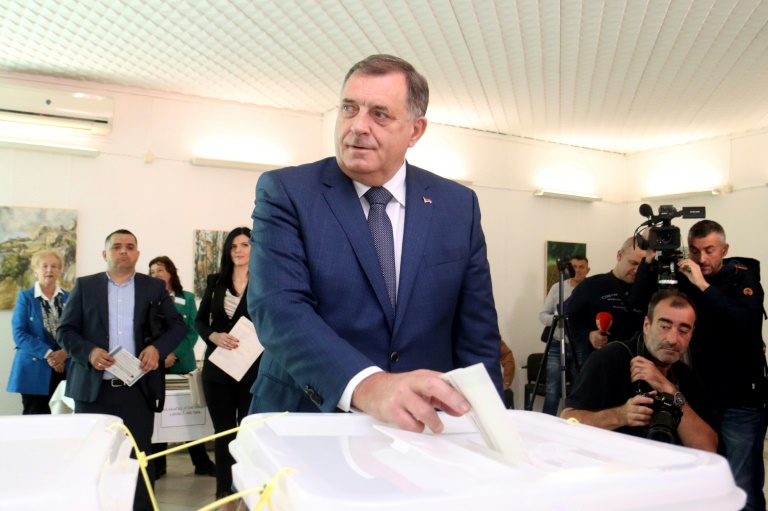
Bosnian Serb leader Milorad Dodik appeared on the path to an electoral win, preliminary results showed Monday, following a chaotic election night that saw his upstart rival accuse him of fraud in a fiercely contested race.

Hours earlier, the long-time leader of Bosnia’s Serbs looked poised to suffer a stunning defeat after his opponent Jelena Trivic claimed victory in the race for the presidency of the Republika Srpska (RS) — the country’s Serb entity. 

According to Bosnia’s election commission, Dodik had secured 49 percent of the vote compared to Trivic’s 42 percent, with 82 percent of the entity’s polling sites tallied. 

“The latest results confirm our big victory,” Dodik’s SNSD party tweeted on Monday. 

The tight race was just one in a dizzying number of contests in Bosnia on Sunday, with several upsets, and the sprawling results are likely to add fresh uncertainty in the restive political scene. 

Nearly three decades after war ravaged the Balkan country, Bosnia continues to be burdened by its ethnic divisions. 

The Balkan state has been governed by a dysfunctional administrative system created by the 1995 Dayton Agreement that succeeded in ending the conflict in the 1990s, but largely failed in providing a framework for the country’s political development.

Bosnia remains partitioned between a Serb entity and a Muslim-Croat federation connected by a weak central government.

In the war’s wake, ethnic political parties have long exploited the country’s divisions in a bid to maintain power.

For years, Dodik has been stoking tensions with his frequent calls for Bosnia’s Serbs to separate even further from the country’s central institutions, earning him fresh sanctions from the United States in January. 

Dodik is seeking his third term as the president of the RS, after completing a stint in the tripartite presidency. 

Trivic — a 39-year-old professor of economics — sought to offer an alternative by running on an anti-corruption ticket, while also loudly trumpeting the Serbs’ desire to maintain their autonomy in Bosnia. 

On Monday, Trivic and her party accused Dodik of outright fraud, saying the results in the contest had been rigged. 

“The whole process was contaminated,” Trivic told reporters in the RS capital Banja Luka. 

“The election process should be repeated in the whole RS,” she added. “This is our ultimate goal.”

The fight over the RS presidency was not the only surprise of the evening. 

The race for the Muslim Bosniak seat in the country’s tripartite presidency saw another professor, Denis Becirovic, clobber two-time president Bakir Izetbegovic in a landslide victory. 

The double-digit win was a stinging rebuke to Izetbegovic, who has been a major figure in post-war Bosnia’s political scene. 
Singapore proposes new law to tackle harmful online content

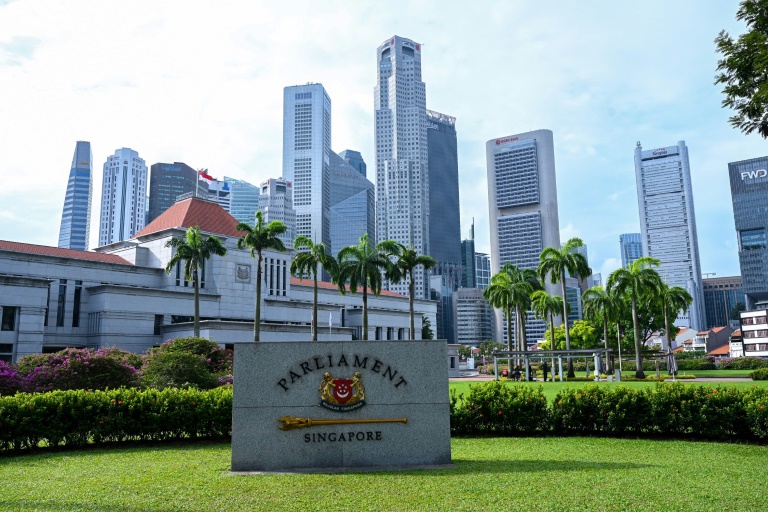
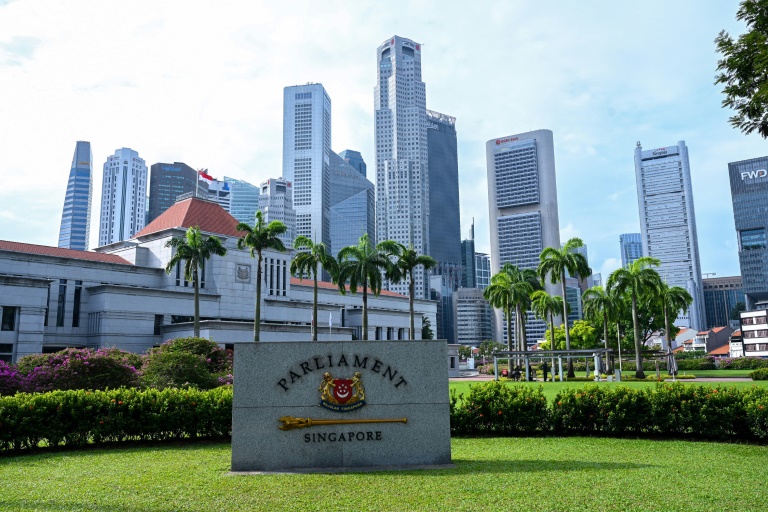
Social media sites could be blocked or fined in Singapore if they fail to stop users in the tightly-controlled country from accessing “harmful” content under a proposed law introduced in parliament on Monday.

Under the bill, regulators can order social media platforms to block “egregious content” including posts advocating violence and terrorism or depictions of child sexual exploitation.

Content that poses a public health risk or that is likely to cause racial and religious disharmony in Singapore is also included, the Ministry of Communications and Information said in a statement on Monday.

“While some online services have made efforts to address harmful content, the prevalence of harmful online content remains a concern, given the high level of digital penetration and pervasive usage of online services among Singapore users, including children”, the ministry said.

Regulators can also order platforms to block a specific account from being accessed by users in Singapore, but the orders will not apply to private communications.

Online communication services “with significant reach or impact in Singapore” may also be required to introduce measures to prevent Singapore users, particularly children, from accessing harmful content, the ministry said, without naming the platforms.

Parliament will debate the bill in November. If it is passed, it would give authorities another tool to control online content.

Singapore last year passed a contentious law aimed at preventing foreign interference in domestic politics. 

The law allows authorities to compel internet service providers and social media platforms to provide user information, block content and remove applications used to spread content they deem hostile.

Three years ago, the city-state passed a law combating “fake news”, which gives government ministers powers to order social media sites to put warnings next to posts authorities deem to be false, and in extreme cases get them taken down.

Singapore proposes new law to tackle harmful online content

Social media sites could be blocked or fined in Singapore if they fail to stop users in the tightly-controlled country from accessing “harmful” content under a proposed law introduced in parliament on Monday.

Under the bill, regulators can order social media platforms to block “egregious content” including posts advocating violence and terrorism or depictions of child sexual exploitation.

Content that poses a public health risk or that is likely to cause racial and religious disharmony in Singapore is also included, the Ministry of Communications and Information said in a statement on Monday.

“While some online services have made efforts to address harmful content, the prevalence of harmful online content remains a concern, given the high level of digital penetration and pervasive usage of online services among Singapore users, including children”, the ministry said.

Regulators can also order platforms to block a specific account from being accessed by users in Singapore, but the orders will not apply to private communications.

Online communication services “with significant reach or impact in Singapore” may also be required to introduce measures to prevent Singapore users, particularly children, from accessing harmful content, the ministry said, without naming the platforms.

Parliament will debate the bill in November. If it is passed, it would give authorities another tool to control online content.

Singapore last year passed a contentious law aimed at preventing foreign interference in domestic politics. 

The law allows authorities to compel internet service providers and social media platforms to provide user information, block content and remove applications used to spread content they deem hostile.

Three years ago, the city-state passed a law combating “fake news”, which gives government ministers powers to order social media sites to put warnings next to posts authorities deem to be false, and in extreme cases get them taken down.

Europe stocks sink on Credit Suisse fears; oil jumps

European stocks sank Monday on fears over the health of Swiss bank Credit Suisse, while oil jumped on expectations of an OPEC output cut. 

Investors are already on edge over worries that rising interest rates, aimed at fighting sky-high inflation, could spark recessions.

The British pound bounced above $1.12 after the UK scrapped plans to axe its top income tax rate, after a debt-fuelled budget had sent sterling spiralling to a record dollar low one week ago.

– ‘Dicey’ sentiment –

“Sentiment is still pretty dicey and Credit Suisse is definitely weighing heavily today on European equities,” Markets.com analyst Neil Wilson told AFP.

“A globally systemic bank requiring to raise capital would be a major event and could certainly undermine confidence in the banking system.”

Shares in Credit Suisse plunged to a new low in Zurich on Monday as the scandal-plagued lender sought to ease concerns about its financial health.

Stocks tumbled almost 10 percent to 3.58 Swiss francs ($3.61) before clawing back ground to 3.65 francs, down more than eight percent.

The Financial Times reported that senior executives sought over the weekend to reassure big clients and investors about the bank’s liquidity and capital position due to concerns raised about its financial strength.

“The sad reality is that if there is something wrong with Credit Suisse, then we have a major issue as this is a gigantic institute, and the domino effect will be unbearable,” said AvaTrade analyst Naseem Aslam.

– Oil spikes before OPEC –

Oil briefly leapt by more than four percent as reports said OPEC and its allies are considering a major output cut to stem a price plunge caused by demand worries.

That stoked stubborn concerns about soaring inflation, which has been fuelled this year by sky-high energy prices after key producer Russia’s invasion of Ukraine.

“The rumours of a potential OPEC production cut won’t do anything to calm worries about inflation and a recession,” said IG analyst Chris Beauchamp.

The 13 members of the Organization of the Petroleum Exporting Countries (OPEC), led by Riyadh, and their 10 partners led by Moscow will physically meet on Wednesday for the first time since March 2020.

– Sterling gains on U-turn –

The pound rallied briefly after UK finance minister Kwasi Kwarteng made a major U-turn with the scrapping of a controversial plan to axe the top income tax rate.

The cut was part of a controversial mini-budget unveiled by Kwarteng 10 days ago, which had sent sterling spinning to a record low of $1.0350. 

UK gilts, or government bonds, remain supported by an emergency Bank of England intervention after yields rocketed following the debt-fuelled budget late last month.

Asian equities mainly fell Monday, with Hong Kong tumbling to its lowest point in more than a decade as fears for China’s economy deepens this year’s investor rout.

The Hang Seng Index shed 0.83 percent, or 143.32 points, to close at 17,079.51. 

But crucially it crossed below the 17,000 level in the afternoon, touching a nadir not seen since October 2011 and the aftermath of the global financial crash and during the eurozone debt crisis.

– Key figures around 1100 GMT –

London – FTSE 100: DOWN 0.6 percent at 6,851.58 points 

Frankfurt – DAX: DOWN 0.6 percent at 12,045.07

Paris – CAC 40: DOWN 0.9 percent at 5,711.45

EURO STOXX 50: DOWN 0.7 percent at 3,295.64

Tokyo – Nikkei 225: UP 1.1 percent at 26,215.79 (close)

Hong Kong – Hang Seng Index: DOWN 0.8 percent at 17,079.51 (close)

Shanghai – Composite: Closed for a holiday

New York – Dow: DOWN 1.7 percent at 28,725.51 (close)

Pound/dollar: UP at $1.1187 from $1.1170 on Friday

Euro/dollar: DOWN at $0.9775 from $0.9802

Euro/pound: DOWN at 87.35 pence from 87.75 pence

Dollar/yen: UP at 145.08 yen from 144.74 yen

Brent North Sea crude: UP 4.0 percent at $88.55 per barrel

West Texas Intermediate: UP 4.1 percent at $82.71 per barrel

burs/rfj/bcp/kjm

32 children died in Indonesia stadium disaster

At least 32 children died in Indonesia’s stadium disaster, an official said Monday, as the government ordered police to identify the “perpetrators” of one of the deadliest disasters in football history.

The tragedy on Saturday night in the city of Malang saw a total of 125 people killed and 323 others injured after officers fired tear gas in a packed stadium to quell a pitch invasion, triggering a stampede.

Dozens of children caught in the chaos lost their lives, an official at the women’s empowerment and child protection ministry told AFP on Monday.

“From the latest data we received, out of 125 people who died in the accident, 32 of them were children, with the youngest being a toddler age three or four,” said Nahar, who like many Indonesians only goes by one name.

As anger mounted against police, Indonesia’s chief security minister Mahfud MD announced that a task force had been formed for an investigation.

“We ask the national police to find the perpetrators who have committed crimes in the next few days,” he said in a broadcast statement.

“We asked them to… take action against them and we also hope the national police will evaluate their security procedures.”

– ‘We want accountability’ –

The tragedy unfolded when fans of home team Arema FC stormed the pitch at the Kanjuruhan stadium after their loss 3-2 to bitter rivals Persebaya Surabaya.

Police responded by launching tear gas into packed terraces, prompting spectators to rush en masse to small gates where many were trampled or suffocated, according to witnesses.

“It felt like people were packed into a small tube with a tiny hole, and then they were smoked,” said 29-year-old spectator Ahmad Rizal Habibi, who escaped before the crush.

Police described the incident as a riot and said two officers were killed, but survivors accuse them of overreacting and causing the deaths of scores of spectators.

“One of our messages is for the authorities to investigate this thoroughly. And we want accountability. Who is to blame?” said 25-year-old Malang resident Andika, who declined to give his last name.

“We want justice for our fallen supporters.”

One witness outside the stadium said police refused to help when the crush happened.

“The place looked like a mass cemetery. Women and children were piling on top of one another,” Eko Prianto, 39, told AFP.

“I ran to the police or soldier to help. There were no medics in sight. The police did not help and the soldier threatened to beat me.”

Investigators planned to question football officials on Monday as well as the 18 officers responsible for being “the carrier or the operator of the weapons”, national police spokesman Dedi Prasetyo told a press conference.

– ‘Murderer’ –

In a tearful live address, Arema FC president Gilang Widya Pramana apologised for the club’s role in the tragedy.

“I, as the president of Arema FC, will take full responsibility for the incident that occurred. I deeply apologise to the victims, their families, all Indonesians, and Liga 1.”

The squad visited the site of the tragedy on Monday wearing black shirts to pay their respects and lay flowers before gathering on the pitch to pray for victims.

Newspaper Kompas published a black front page with the word “tragedy” and a stadium bearing the names of victims.

Graffiti daubed on the walls of the Kanjuruhan stadium revealed bubbling anger towards authorities.

“My siblings were killed. Investigate thoroughly,” read one message scrawled on the stadium’s shutters, accompanied by a black ribbon and the date of the disaster.

“ACAB”, an acronym for “all cops are bastards”, was sprayed on another wall.

Indonesian President Joko Widodo ordered compensation for families of the victims to the tune of 50 million rupiah ($3,200) each, a minister said on Monday.

He has also announced a probe into the tragedy.

But rights groups said officers should be held accountable for using tear gas in a confined area.

Mahfud said the task force for the investigation would consist of government and football officials, academics and members of the media.

“It is estimated the task can be concluded in the next two or three weeks,” he said.

Human Rights Watch said the police and Indonesia’s football association “may be tempted to downplay or undermine full accountability for officials”.

– ‘A dark day’ –

Fan violence is an enduring problem in Indonesia. 

Witnesses say supporters of the home team invaded the pitch after their loss to Persebaya Surabaya.

Persebaya Surabaya fans were barred from the game, due to the fear of violence. 

Mahfud said 42,000 tickets had been allocated for 38,000 seats.

After the stampede, Arema fans threw rocks at officers and torched vehicles including a police truck on the streets of Malang, according to police.

FIFA’s president Gianni Infantino called the tragedy a “dark day” for football.

The world governing body’s safety guidelines prohibit the use of crowd control gas by police or stewards at pitchside.

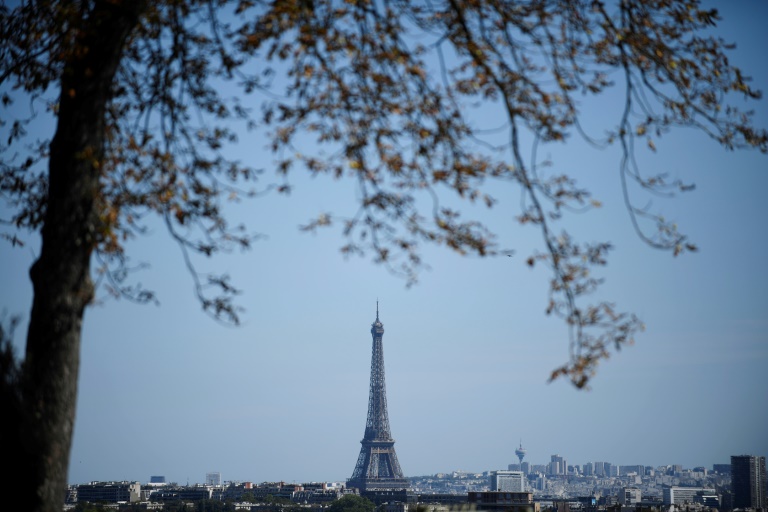
Paris abandons controversial re-landscaping around Eiffel Tower

The Paris mayor’s office has abandoned plans for new buildings around the foot of the Eiffel Tower following months of protests from environmentalists and a petition signed by nearly 150,000 people.

Under the scheme, around 20 mature trees would have been cut down, while four new buildings housing a cafe, shops, toilets and baggage drop-off were set to be constructed.

“I am announcing that we are completely cancelling any construction project at the foot of the tower but the re-landscaping is maintained,” deputy mayor Emmanuel Gregoire told the Journal du Dimanche.

A decision to save the trees had been made in May following protests and objections from local residents.

The landscaping is part of a much larger plan to re-organise the space around the famous tourist attraction, which will see roads and public areas planted with grass and shrubs.

“We are not giving into pressure but we would like that the project is not overshadowed by controversy. Let’s just say that we are removing some of the friction,” Gregoire continued.  

An area of 54 hectares (133 acres) around the tower, currently crisscrossed by several roads, will be largely turned over to pedestrians and “low-impact transportation” such as bus and bike lanes.

City authorities are aiming to finish as much as possible for the start of the Paris Olympic Games in 2024.

An estimated 150,000 people visit the tower site every day during the summer high season, including the 20,000 to 30,000 who climb the tower itself.

Overall, seven million people visit the tower each year. 

Campaigners were delighted that the plans for new buildings had been dropped and the trees saved.

“We’re satisfied for now but we remain vigilant,” said Thomas Brail from the National Surveillance Group for Trees (GNSA), which took part in a coalition of groups opposed to the plans.

Taiwan launches first English TV channel as China pressure grows

Taiwan launched its first English-language TV channel on Monday in a bid to boost its international outreach against an intensified pressure campaign by Beijing.

However, TaiwanPlus will only be available on the island for now, limiting its international reach.

Self-ruled Taiwan lives under constant threat of an invasion by China, which claims the island as part of its territory to be seized one day.

Beijing’s state-run media has an increasingly large global footprint, mostly through the CGTN television network and the embrace of social media platforms like Twitter and YouTube that are banned domestically.

Officials say TaiwanPlus, which started as an online streaming platform last year with government backing, will be used in part to counter China’s narrative.

Overseeing the launch ceremony on Monday, President Tsai Ing-wen said the 24-hour channel would “bring Taiwan to the international community” as it seeks closer ties with “countries that share our core values of freedom and democracy”.

“I am sure this new TV channel will help bolster our international outreach,” she said.

China has ramped up diplomatic and military pressure on Taiwan in recent years.

It aims to keep the island democracy isolated and has reacted with growing anger to visits by foreign politicians, most recently with a massive show of force to protest US House Speaker Nancy Pelosi’s trip in August.

“We have an evil neighbour that constantly threatens us with the use of force… but we are not intimidated and life goes on normally,” Premier Su Tseng-chang told reporters at the launch. 

“Freedom, democracy and human rights have progressed substantively. Many friends in the world want to know how Taiwan has managed that and Taiwan is willing to let the world know,” he added.

Culture Minister Lee Yung-te said the government hoped TaiwanPlus would be available in the United States in six months.

Bosnia's Dodik eyes victory in fiercely contested race

Bosnian Serb leader Milorad Dodik appeared on the path to an electoral win, preliminary results showed Monday, following a chaotic election night that saw his upstart rival also claim victory in a fiercely contested race.

Hours earlier, the long-time leader of Bosnia’s Serbs looked poised to suffer a stunning defeat after his opponent Jelena Trivic claimed victory in the race for the presidency of the Republika Srpska (RS) — the country’s Serb entity. 

According to Bosnia’s election commission, Dodik had secured 49 percent of the vote compared to Trivic’s 42 percent, with 82 percent of the entity’s polling sites tallied. 

“The latest results confirm our big victory,” Dodik’s SNSD party tweeted on Monday. 

The tight race was just one in a dizzying number of contests in Bosnia on Sunday, with several upsets, and the sprawling results are likely to add fresh uncertainty in the restive political scene. 

Nearly three decades after war ravaged the Balkan country, Bosnia continues to be burdened by its ethnic divisions. 

The Balkan state has been governed by a dysfunctional administrative system created by the 1995 Dayton Agreement that succeeded in ending the conflict in the 1990s, but largely failed in providing a framework for the country’s political development.

Bosnia remains partitioned between a Serb entity and a Muslim-Croat federation connected by a weak central government.

In the war’s wake, ethnic political parties have long exploited the country’s divisions in a bid to maintain power.

For years, Dodik has been stoking tensions with his frequent calls for Bosnia’s Serbs to separate even further from the country’s central institutions, earning him fresh sanctions from the United States in January. 

Dodik is seeking his third term as the president of the RS, after completing a stint in the tripartite presidency. 

Trivic — a 39-year-old professor of economics — sought to offer an alternative by running on an anti-corruption ticket, while also loudly trumpeting the Serbs’ desire to maintain their autonomy in Bosnia. 

The fight over the RS presidency was not the only surprise of the evening. 

The race for the Muslim Bosniak seat in the country’s tripartite presidency saw another professor, Denis Becirovic, clobber two-time president Bakir Izetbegovic in a landslide victory. 

The double-digit win was a stinging rebuke to Izetbegovic, who has been a major figure in post-war Bosnia’s political scene. 
Turkey's inflation rate hits fresh 24-year high

Turkish inflation jumped to a new 24-year high exceeding 83 percent in September, official data showed Monday, as President Recep Tayyip Erdogan presses for more interest rate cuts despite surging prices.

Turkey’s monetary policymakers are bucking the global trend of central banks raising interest rates to combat inflation, as high borrowing rates cool down the economy and prices.

But Erdogan, who has focused on growth ahead of a general election in June, has repeatedly railed against higher rates, calling them his “biggest enemy”.

The country’s central bank has followed his philosophy, lowering its policy rate to 12 percent from 13 percent last month.

Erdogan has called for more rate cuts at the bank’s next policy meeting on October 20, saying last week that it should be cut to single digits by the end of the year.

The TUIK state statistics agency said Monday that consumer prices rose by 83.45 percent in September on an annual basis, up from 80.2 percent in August.

Inflation began to rise worldwide after economies emerged from Covid lockdowns but it worsened this year as Russia’s invasion of Ukraine sent energy and food prices through the roof.

“We are going through a period in which the global economic crisis, deepened by  energy and commodity price increases triggered by the pandemic and war, has deeply affected all economies,” Erdogan said in a televised address on Monday.

“We will build the century of Turkey together, hopefully by overcoming the inflation issue,” Erdogan said.

– Lira sinks –

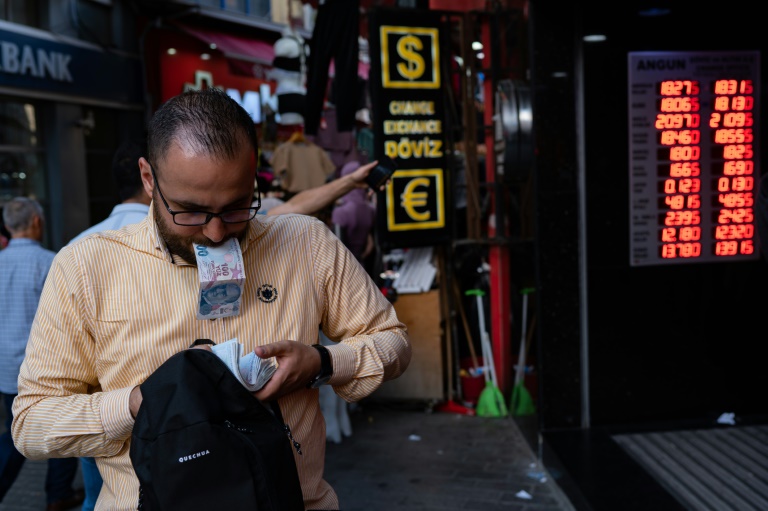
In parallel to red-hot prices, Turkey has endured a currency crisis, with the Turkish lira hitting a new record low of 18.56 against the dollar following the latest inflation reading.

September inflation was fuelled by transportation prices rising by 117.66 percent, food up more than 90 percent and housing prices climbing by more than 80 percent.

Hakan Kara, the former chief economist of the Turkish central bank, said on Twitter that the country has now experienced its sharpest inflation surge since World War II.

He said “breaking the record” was inevitable given the government’s unorthodox policies.

Liam Peach, senior emerging markets economist at London-based Capital Economics, said a large increase in electricity and gas prices pushed inflation higher in Turkey. 

“We think inflation will rise a bit further but with President Erdogan calling for further easing the central bank is likely to deliver another interest rate cut this month,” he wrote in a note to clients. 

– ‘Lost the plot’ –

Erdogan prioritises growth and exports over price stability, promising that prices will only start falling in January. 

“Erdogan has lost the plot on inflation —  which is what people care about, more than growth. Voters cannot feel real GDP growth, they see inflation,” said emerging market economic Timothy Ash of BlueBay Asset Management in London. 

High inflation is one of the pressing issues Erdogan’s ruling party needs to tackle as the crisis has seen its approval ratings drop to historic lows in the run up to next year’s election. 

Opposition leaders and many Turks no longer give credit to official government data.

A respected monthly study released by independent economists from Turkey’s ENAG research institute also showed prices soaring — at a much higher rate than the one reported by the state statistics agency.

ENAG said the official annual rate of consumer price increases reached 186.27 percent in September, compared to 181.37 percent in August.

32 children died in Indonesia stadium disaster

At least 32 children died in Indonesia’s stadium disaster, an official said Monday, as the government ordered police to identify the “perpetrators” of one of the deadliest disasters in football history.

The tragedy on Saturday night in the city of Malang saw a total of 125 people killed and 323 others injured after officers fired tear gas in a packed stadium to quell a pitch invasion, triggering a stampede.

Dozens of children caught in the chaos lost their lives, an official at the women’s empowerment and child protection ministry told AFP on Monday.

“From the latest data we received, out of 125 people who died in the accident, 32 of them were children, with the youngest being a toddler age three or four,” said Nahar, who like many Indonesians only goes by one name. 

As anger mounted against police, Indonesia’s chief security minister Mahfud MD announced that a task force had been formed for an investigation.

“We ask the national police to find the perpetrators who have committed crimes in the next few days,” he said in a broadcast statement.

“We asked them to… take action against them and we also hope the national police will evaluate their security procedures.”

– ‘We want accountability’ –

The tragedy unfolded when fans of home team Arema FC stormed the pitch at the Kanjuruhan stadium after their loss 3-2 to bitter rivals Persebaya Surabaya.

Police responded by launching tear gas into packed terraces, prompting spectators to rush en masse to small gates where many were trampled or suffocated, according to witnesses.

“It felt like people were packed into a small tube with a tiny hole, and then they were smoked,” said 29-year-old spectator Ahmad Rizal Habibi, who escaped before the crush.

Police described the incident as a riot and said two officers were killed, but survivors accuse them of overreacting and causing the deaths of scores of spectators.

“One of our messages is for the authorities to investigate this thoroughly. And we want accountability. Who is to blame?” said 25-year-old Malang resident Andika, who declined to give his last name. 

“We want justice for our fallen supporters.”

Investigators planned to question football officials on Monday as well as the 18 officers responsible for being “the carrier or the operator of the weapons”, national police spokesman Dedi Prasetyo told a press conference. 

– ‘Murderer’ –

In a tearful live address, Arema FC president Gilang Widya Pramana apologised for the club’s role in the tragedy.

“I, as the president of Arema FC, will take full responsibility for the incident that occurred. I deeply apologise to the victims, their families, all Indonesians, and Liga 1.”

The squad visited the site of the tragedy on Monday donned in black shirts to pay their respects and lay flowers before gathering on the pitch to pray for victims.

Newspaper Kompas published a black front page with the word “tragedy” and a stadium bearing the names of victims.

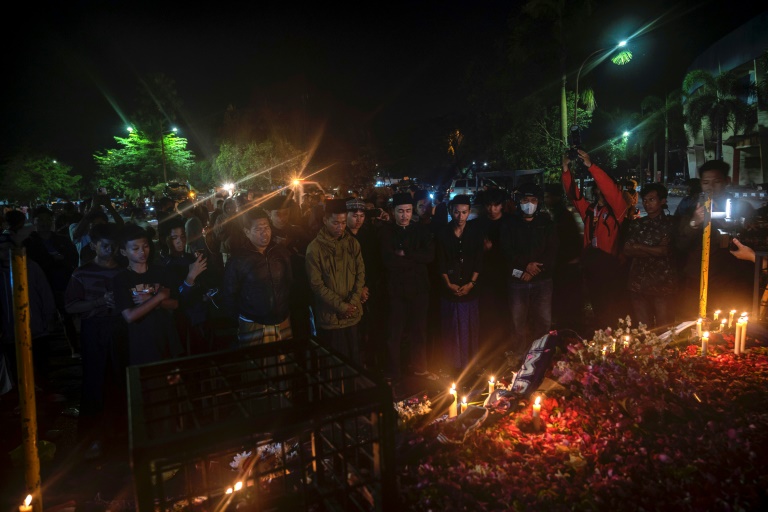
Outside the Kanjuruhan venue on Sunday evening, people held a vigil to honour the victims beneath a roaring lion statue that is the club’s symbol.

Graffiti daubed on the walls revealed bubbling anger towards authorities. 

“My siblings were killed. Investigate thoroughly,” read one message scrawled on the stadium’s shutters, accompanied by a black ribbon and the date of the disaster.

“ACAB”, an acronym for “all cops are bastards”, was sprayed on another wall.

In Jakarta, hundreds of football fans gathered outside the country’s biggest stadium on Sunday chanting “murderer, murderer”.

Indonesian President Joko Widodo announced a probe, but rights groups said officers should be held accountable for using tear gas in a confined area.

Mahfud said the task force for the investigation would consist of government officials, analysts, ministry representatives, football officials, academics and members of the media.

“It is estimated the task can be concluded in the next two or three weeks,” he said.

Human Rights Watch said it was not enough for the police and Indonesia’s football association to conduct their own probe as “they may be tempted to downplay or undermine full accountability for officials”.

– ‘A dark day’ –

Fan violence is an enduring problem in Indonesia. 

Witnesses of Saturday’s episode say supporters of the home team invaded the pitch after their loss to Persebaya Surabaya.

Persebaya Surabaya fans were barred from the game, due to the fear of violence. 

Mahfud said 42,000 tickets had been allocated for 38,000 seats.

After the stampede, Arema fans threw rocks at officers and torched vehicles including a police truck on the streets of Malang, according to police.

FIFA’s president Gianni Infantino called the tragedy a “dark day” for football.

The world governing body’s safety guidelines prohibit the use of crowd control gas by police or stewards at pitchside.

Close Bitnami banner
Bitnami