World

UK's new govt in major tax U-turn after uproar

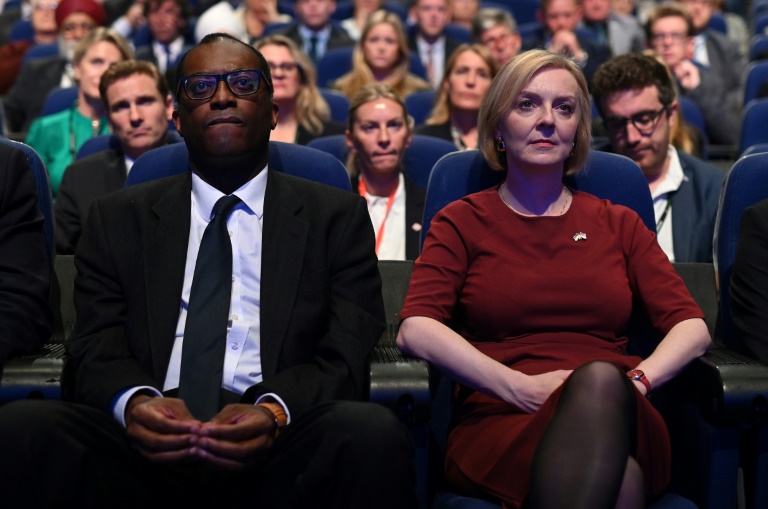
Britain’s beleaguered finance minister on Monday announced a dramatic U-turn on a tax cut unveiled as part of an economic package that has bombed with the markets, electorate and his party.

The abrupt change of course by Chancellor of the Exchequer Kwasi Kwarteng, and Prime Minister Liz Truss, raised questions about their right-wing project less than a month after she succeeded Boris Johnson.

“We get it, and we have listened,” Kwarteng said on Twitter, announcing that he would no longer be scrapping the 45 percent top rate of income tax levied on the highest earners.

Their plan also comprises axing a cap on bankers’ bonuses and reversing a planned rise in corporation tax, as well as a recent hike in national insurance contributions.

At the same time, they have refused to rule out cuts to spending and benefits in the middle of Britain’s worst cost-of-living crisis in generations.

The perceived unfairness of the package has ignited a political storm as Truss’s Conservatives gather for their annual conference in Birmingham.

On the markets, the intention to pay for the tax cuts with billions more in extra borrowing had sent the pound tumbling and UK government bond yields soaring.

The pound rebounded Monday as Kwarteng reversed course, telling BBC television from Birmingham that the focus on the top rate of tax had become a “massive distraction”. 

But asked if he had considered resigning, he said: “Not at all.”

“I’m very pleased that we’ve decided not to proceed with that because it was drowning out the elements of an excellent plan,” he insisted, pointing to a popular if costly scheme to cap energy bills.

– ‘Grossly insensitive’  –

Later Monday at the Tory conference, Kwarteng had been due to say: “We must stay the course. I am confident our plan is the right one.”

Instead, the finance chief was hastily rewriting his speech with the four-day gathering thrown into disarray.

On Sunday, Truss admitted communication errors in how the economic package had been presented on September 23, without conceding the need for any changes.

Asked if she was “absolutely committed” to abolishing the top tax rate, the prime minister — only in the role since September 6 — replied emphatically “yes”.

Less than 24 hours later, she had changed her tune.

“Our focus now is on building a high growth economy that funds world-class public services, boosts wages, and creates opportunities across the country,” she tweeted moments after Kwarteng announced the reversal.

Out of a total tax package worth £45 billion ($50 billion), the top rate cut would have cost some £2 billion — relatively small, but outsized for its political impact.

Tory MPs who backed former finance minister Rishi Sunak — Truss’s rival in the recent Tory leadership race — had threatened to vote it down, raising the prospect of a major battle in the House of Commons.

Grant Shapps, who was refused a cabinet job by Truss, welcomed her scrapping the tax cut, which he told BBC radio had been planned with “grossly insensitive timing”.

Shapps also hit out at threats made by the government to fire any Tory MPs who voted against the plan — which also drew a caustic reception from others.

– Champagne reception –

Truss told the BBC she had not discussed axing the high-earners’ tax band with her cabinet, and appeared to distance herself from the move by claiming “it was a decision that the chancellor made”.

With the U-turn, the stakes have soared for her as she prepares to close the party conference with a keynote speech on Wednesday.

One YouGov survey Friday found 51 percent of Britons think she should resign — and 54 percent want Kwarteng to go.

Several other polls in recent days showed a Labour lead of up to 33 points over the Tories — its biggest since the heyday of former Labour prime minister Tony Blair in the late 1990s.

Labour’s finance spokeswoman Rachel Reeves said the climbdown “comes too late for the families who will pay higher mortgages and higher prices for years to come” as a result of the recent market turmoil.

“The Tories have destroyed their economic credibility and damaged trust in the British economy,” she said.

Kwarteng, who used to work for a hedge fund, meanwhile expressed regret after it emerged that following the unveiling of his “mini-budget”, he had attended a champagne reception with financiers as the pound cratered.

Interviewed on LBC radio, Kwarteng said that “with hindsight it probably wasn’t the best day to go”.
UK's new govt in major tax U-turn after uproar

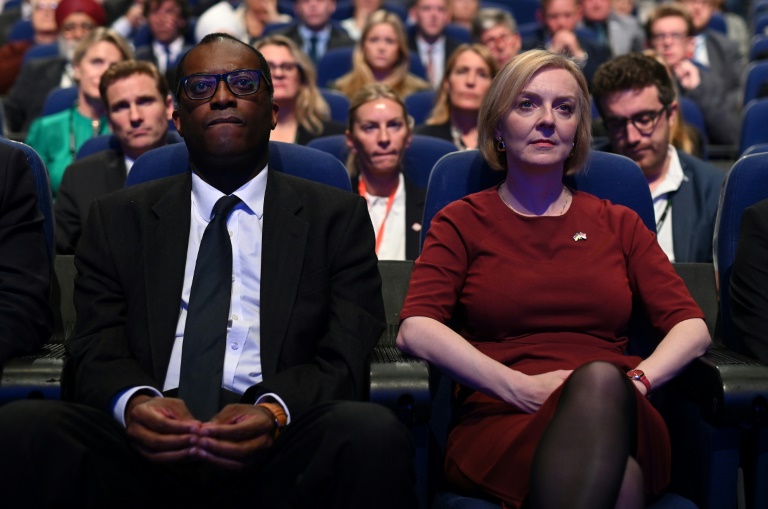
Britain’s beleaguered finance minister on Monday announced a dramatic U-turn on a tax cut unveiled as part of an economic package that has bombed with the markets, electorate and his party.

The abrupt change of course by Chancellor of the Exchequer Kwasi Kwarteng, and Prime Minister Liz Truss, raised questions about their right-wing project less than a month after she succeeded Boris Johnson.

“We get it, and we have listened,” Kwarteng said on Twitter, announcing that he would no longer be scrapping the 45 percent top rate of income tax levied on the highest earners.

Their plan also comprises axing a cap on bankers’ bonuses and reversing a planned rise in corporation tax, as well as a recent hike in national insurance contributions.

At the same time, they have refused to rule out cuts to spending and benefits in the middle of Britain’s worst cost-of-living crisis in generations.

The perceived unfairness of the package has ignited a political storm as Truss’s Conservatives gather for their annual conference in Birmingham.

On the markets, the intention to pay for the tax cuts with billions more in extra borrowing had sent the pound tumbling and UK government bond yields soaring.

The pound rebounded Monday as Kwarteng reversed course, telling BBC television from Birmingham that the focus on the top rate of tax had become a “massive distraction”. 

But asked if he had considered resigning, he said: “Not at all.”

“I’m very pleased that we’ve decided not to proceed with that because it was drowning out the elements of an excellent plan,” he insisted, pointing to a popular if costly scheme to cap energy bills.

– ‘Grossly insensitive’  –

Later Monday at the Tory conference, Kwarteng had been due to say: “We must stay the course. I am confident our plan is the right one.”

Instead, the finance chief was hastily rewriting his speech with the four-day gathering thrown into disarray.

On Sunday, Truss admitted communication errors in how the economic package had been presented on September 23, without conceding the need for any changes.

Asked if she was “absolutely committed” to abolishing the top tax rate, the prime minister — only in the role since September 6 — replied emphatically “yes”.

Less than 24 hours later, she had changed her tune.

“Our focus now is on building a high growth economy that funds world-class public services, boosts wages, and creates opportunities across the country,” she tweeted moments after Kwarteng announced the reversal.

Out of a total tax package worth £45 billion ($50 billion), the top rate cut would have cost some £2 billion — relatively small, but outsized for its political impact.

Tory MPs who backed former finance minister Rishi Sunak — Truss’s rival in the recent Tory leadership race — had threatened to vote it down, raising the prospect of a major battle in the House of Commons.

Grant Shapps, who was refused a cabinet job by Truss, welcomed her scrapping the tax cut, which he told BBC radio had been planned with “grossly insensitive timing”.

Shapps also hit out at threats made by the government to fire any Tory MPs who voted against the plan — which also drew a caustic reception from others.

– Champagne reception –

Truss told the BBC she had not discussed axing the high-earners’ tax band with her cabinet, and appeared to distance herself from the move by claiming “it was a decision that the chancellor made”.

With the U-turn, the stakes have soared for her as she prepares to close the party conference with a keynote speech on Wednesday.

One YouGov survey Friday found 51 percent of Britons think she should resign — and 54 percent want Kwarteng to go.

Several other polls in recent days showed a Labour lead of up to 33 points over the Tories — its biggest since the heyday of former Labour prime minister Tony Blair in the late 1990s.

Labour’s finance spokeswoman Rachel Reeves said the climbdown “comes too late for the families who will pay higher mortgages and higher prices for years to come” as a result of the recent market turmoil.

“The Tories have destroyed their economic credibility and damaged trust in the British economy,” she said.

Kwarteng, who used to work for a hedge fund, meanwhile expressed regret after it emerged that following the unveiling of his “mini-budget”, he had attended a champagne reception with financiers as the pound cratered.

Interviewed on LBC radio, Kwarteng said that “with hindsight it probably wasn’t the best day to go”.
Markets drop as traders eye jobs and earnings, oil jumps

Stocks slipped on Monday as investors await key US jobs data while girding themselves for a corporate earnings season many fear will highlight the impact of surging inflation and interest rates.

A report showing prices rose in the eurozone at a record pace last month added to concerns that central bank tightening has a long way to go, while Federal Reserve vice-chair Lael Brainard said US officials would not pull back too early.

Banks’ battle against inflation could also be made harder — particularly in Europe — as reports said OPEC and other oil producers are considering a major output cut owing to a plunge in prices caused by demand worries. 

Crude prices jumped more than four percent in Asian trade ahead of the possible cut.

Sterling enjoyed a brief rally above $1.12 — having hit a record low $1.0350 last Monday — after UK finance minister Kwasi Kwarteng made a major U-turn by saying he had scrapped controversial plans to axe the top income tax rate.

The cut was part of a controversial mini-budget unveiled by Kwarteng last Monday, which sent markets spinning.

Kwarteng’s announcement came as the ruling Conservatives hold their annual conference with new Prime Minister Liz Truss facing growing anger within the party.

The pound briefly hit a high of $1.1281 before easing back again.

All three main indexes on Wall Street ended down Friday, registering a third straight quarter of losses for the first time since the global financial crisis in 2009.

The release of US jobs data on Friday will be closely watched, with a strong reading likely to give the Fed more ammunition to unveil a fourth successive bumper rate hike at its November meeting.

Asian equity markets fell at the start of the week.

Hong Kong fell, having at one point dropped below 17,000 for the first time since 2011, while Sydney, Mumbai, Bangkok, Singapore, Taipei, Jakarta and Wellington were also in the red.

Tokyo rose, however, even as the Bank of Japan’s Tankan survey showed confidence fell among the country’s largest manufacturers for the third straight quarter. Manila also rose.

London, Paris and Frankfurt all tumbled in the morning.

– Crude slide ‘likely over’ –

With inflation remaining elevated, there is little prospect that the pain will ease any time soon.

On Friday, Brainard said: “Monetary policy will need to be restrictive for some time to have confidence that inflation is moving back to target.

“For these reasons, we are committed to avoiding pulling back prematurely.”

The comments were in line with other Fed officials, who have indicated borrowing costs were unlikely to be lowered until late 2023 or 2024.

“Last week’s developments reinforced our expectation that we will see further tightening in financial conditions, but also illustrated the short-term two-way volatility, which will likely accompany it,” Citigroup’s Ebrahim Rahbari said.

At a time of rising real rates, volatility and the strong dollar “we therefore remain very bearish regarding the outlook for global risk assets”, he added.

Markets are now bracing for company earnings reports, with traders keeping a close eye on their forecasts in light of the uncertain rate environment.

Saxo Capital Markets analysts said in a note that there was a risk-off mood “as corporate earnings misses continue to raise the threat of an ugly earnings season ahead”.

Both the US benchmark West Texas Intermediate crude and Brent climbed more than four percent, as reports said major producers were discussing a million-barrel per day cut in output to support prices in the face of falling demand.

The reduction would be the biggest since the pandemic began, when crude prices collapsed, and would help staunch a plunge in the oil markets over recent months. 

But OANDA’s Edward Moya said: “The slide in oil prices is likely over.

“Energy traders turned pessimistic over the summer given global slowdown fears, but now it seems the risks for oil are to the upside.”

And Suvro Sarkar, an energy analyst at DBS Bank, added: “It’s only going to be a matter of time before oil returns to $100 a barrel, especially with supplies set to tighten toward the end of the year.”

– Key figures around 0810 GMT –

Tokyo – Nikkei 225: UP 1.1 percent at 26,215.79 (close)

Hong Kong – Hang Seng Index: DOWN 0.8 percent at 17,079.51 (close)

Shanghai – Composite: Closed for a holiday

London – FTSE 100: DOWN 0.9 percent at 6,832.70

Pound/dollar: UP at $1.1211 from $1.1156 on Friday

Euro/dollar: DOWN at $0.9811 from $0.9802

Euro/pound: DOWN at 87.51 pence from 87.82 pence

Dollar/yen: UP at 145.00 yen from 144.80 yen

West Texas Intermediate: UP 4.5 percent to $83.06 per barrel

Brent North Sea crude: UP 4.4 percent to $88.83 per barrel

New York – Dow: DOWN 1.7 percent at 28,725.51 (close)

— Bloomberg News contributed to this story —

Markets drop as traders eye jobs and earnings, oil jumps

Stocks slipped on Monday as investors await key US jobs data while girding themselves for a corporate earnings season many fear will highlight the impact of surging inflation and interest rates.

A report showing prices rose in the eurozone at a record pace last month added to concerns that central bank tightening has a long way to go, while Federal Reserve vice-chair Lael Brainard said US officials would not pull back too early.

Banks’ battle against inflation could also be made harder — particularly in Europe — as reports said OPEC and other oil producers are considering a major output cut owing to a plunge in prices caused by demand worries. 

Crude prices jumped more than four percent in Asian trade ahead of the possible cut.

Sterling enjoyed a brief rally above $1.12 — having hit a record low $1.0350 last Monday — after UK finance minister Kwasi Kwarteng made a major U-turn by saying he had scrapped controversial plans to axe the top income tax rate.

The cut was part of a controversial mini-budget unveiled by Kwarteng last Monday, which sent markets spinning.

Kwarteng’s announcement came as the ruling Conservatives hold their annual conference with new Prime Minister Liz Truss facing growing anger within the party.

The pound briefly hit a high of $1.1281 before easing back again.

All three main indexes on Wall Street ended down Friday, registering a third straight quarter of losses for the first time since the global financial crisis in 2009.

The release of US jobs data on Friday will be closely watched, with a strong reading likely to give the Fed more ammunition to unveil a fourth successive bumper rate hike at its November meeting.

Asian equity markets fell at the start of the week.

Hong Kong fell, having at one point dropped below 17,000 for the first time since 2011, while Sydney, Mumbai, Bangkok, Singapore, Taipei, Jakarta and Wellington were also in the red.

Tokyo rose, however, even as the Bank of Japan’s Tankan survey showed confidence fell among the country’s largest manufacturers for the third straight quarter. Manila also rose.

London, Paris and Frankfurt all tumbled in the morning.

– Crude slide ‘likely over’ –

With inflation remaining elevated, there is little prospect that the pain will ease any time soon.

On Friday, Brainard said: “Monetary policy will need to be restrictive for some time to have confidence that inflation is moving back to target.

“For these reasons, we are committed to avoiding pulling back prematurely.”

The comments were in line with other Fed officials, who have indicated borrowing costs were unlikely to be lowered until late 2023 or 2024.

“Last week’s developments reinforced our expectation that we will see further tightening in financial conditions, but also illustrated the short-term two-way volatility, which will likely accompany it,” Citigroup’s Ebrahim Rahbari said.

At a time of rising real rates, volatility and the strong dollar “we therefore remain very bearish regarding the outlook for global risk assets”, he added.

Markets are now bracing for company earnings reports, with traders keeping a close eye on their forecasts in light of the uncertain rate environment.

Saxo Capital Markets analysts said in a note that there was a risk-off mood “as corporate earnings misses continue to raise the threat of an ugly earnings season ahead”.

Both the US benchmark West Texas Intermediate crude and Brent climbed more than four percent, as reports said major producers were discussing a million-barrel per day cut in output to support prices in the face of falling demand.

The reduction would be the biggest since the pandemic began, when crude prices collapsed, and would help staunch a plunge in the oil markets over recent months. 

But OANDA’s Edward Moya said: “The slide in oil prices is likely over.

“Energy traders turned pessimistic over the summer given global slowdown fears, but now it seems the risks for oil are to the upside.”

And Suvro Sarkar, an energy analyst at DBS Bank, added: “It’s only going to be a matter of time before oil returns to $100 a barrel, especially with supplies set to tighten toward the end of the year.”

– Key figures around 0810 GMT –

Tokyo – Nikkei 225: UP 1.1 percent at 26,215.79 (close)

Hong Kong – Hang Seng Index: DOWN 0.8 percent at 17,079.51 (close)

Shanghai – Composite: Closed for a holiday

London – FTSE 100: DOWN 0.9 percent at 6,832.70

Pound/dollar: UP at $1.1211 from $1.1156 on Friday

Euro/dollar: DOWN at $0.9811 from $0.9802

Euro/pound: DOWN at 87.51 pence from 87.82 pence

Dollar/yen: UP at 145.00 yen from 144.80 yen

West Texas Intermediate: UP 4.5 percent to $83.06 per barrel

Brent North Sea crude: UP 4.4 percent to $88.83 per barrel

New York – Dow: DOWN 1.7 percent at 28,725.51 (close)

— Bloomberg News contributed to this story —

Inconclusive vote: Brazil wakes up to four more weeks of uncertainty

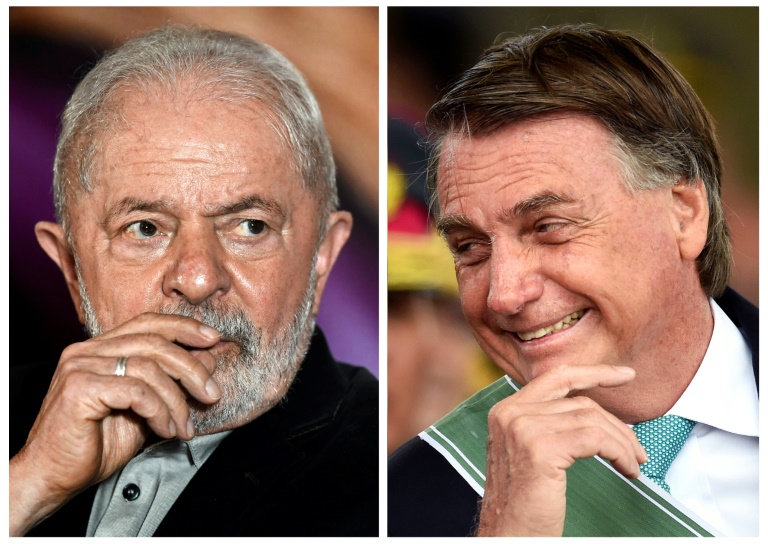
After an inconclusive first round of presidential elections, Brazilians woke up Monday to another month of uncertainty in a deeply polarized political environment and with renewed fears of unrest.

Seeking to make a spectacular comeback, ex-president and frontrunner Luiz Inacio Lula da Silva, 76, failed to garner the 50 percent of votes plus one needed to avoid an October 30 runoff against far-right incumbent Jair Bolsonaro, 67.

Lula got 48.4 percent of the vote in Sunday’s first round, followed by Bolsonaro with a much closer-than-expected 43.2 percent that seemed to signal a high level of enthusiasm for his conservative brand of “God, country and family” politics.

Lula had gone into Sunday’s first round with 50 percent of polled voter intention, and Bolsonaro with 36 percent.

The divisive president’s surprise performance likely spells a difficult time ahead, analysts said.

“I think it will be a very stressful campaign,” Leonardo Paz, Brazil consultant for the International Crisis Group, told AFP.

“Bolsonaro and Lula will come… for each other, and I think Bolsonaro will double down on… saying that the system was against him.”

Bolsonaro has repeatedly sought to cast doubt on Brazil’s electronic voting system and has questioned the validity of opinion polls that have consistently placed him a distant second.

Now, with real-life results seeming to bear out his claims, “more people… may believe in what Bolsonaro is saying,” said Paz.

– ‘Emboldened’ –

The incumbent president has repeatedly hinted that he would not accept a Lula victory, raising fears of a Brazilian version of the riots last year at the US Capitol after former president Donald Trump refused to accept his election loss.

Bolsonaro “will be very emboldened,” by Sunday’s electoral performance, said Michael Shifter of the Inter-American Dialogue think tank.

“It will give him some momentum because he’s beaten the expectations… He will play on that the experts were wrong: ‘I’ve got the momentum and I’ll defy expectations again in the second round’.”

Late Sunday, Bolsonaro proclaimed to journalists: “We defeated the opinion polls’ lie.”

Passions will be high on both sides for the next four weeks.

Lula’s failure to pull off a first-round victory leaves Bolsonaro with “an extra month to cause turmoil in the streets,” political scientist Guilherme Casaroes of the Getulio Vargas Foundation’s (FGV) Sao Paulo School of Business Administration told AFP.

“Any kind of doubt that he casts upon the electoral system will work in his favor… demobilizing voters not to go vote for Lula.”

This would mean hammering on Lula’s flaws, including his controversial conviction for corruption — since overturned in court, but not necessarily in the court of public opinion — and the 18 months he spent in jail.

“Certainly he (Bolsonaro) is very capable of revving up his base and they could interpret that (as the all-clear) to go after Lula supporters… You can’t rule it out,” said Shifter.

“There’s just a lot of rancor and a lot of hate and a lot of distrust and it would not be surprising if some of that leads to some unrest,” he added.

Any violence, however, was likely to be in the form of isolated incidents and not organized, just like it has been so far, analysts said.

– Headed for an upset? –

Sunday’s election outcome also suggested Bolsonaro cannot be written off.

“Lula’s chances of being elected seem considerably slighter,” said Casaroes.

A ‘Bolsonarist’ wave energized by the first-round results “will boost the president’s campaign and may help demobilize the non-convinced voters of Lula.”

It also means Lula will have to “court centrists and even conservatives much more aggressively during the next four weeks,” said the FGV’s Oliver Stuenkel, possibly hurting his standing with more radical leftist supporters.

Conversely, the disappointing result for Lula supporters might also serve to fire them up ahead of the next round.

“People that perhaps did not… vote because they thought that Bolsonaro would lose… they might go” vote in the next round, said Paz.

Added Casaroes: “Those who really care for democracy in the country will have to get off the couch. Occupying the public space against a strengthened Bolsonarism may be difficult, but it is the only way to prevent Bolsonaro’s long-run authoritarian project from consolidating at all levels.”

Relatives, survivors grieve at Indonesian hospital after stadium stampede

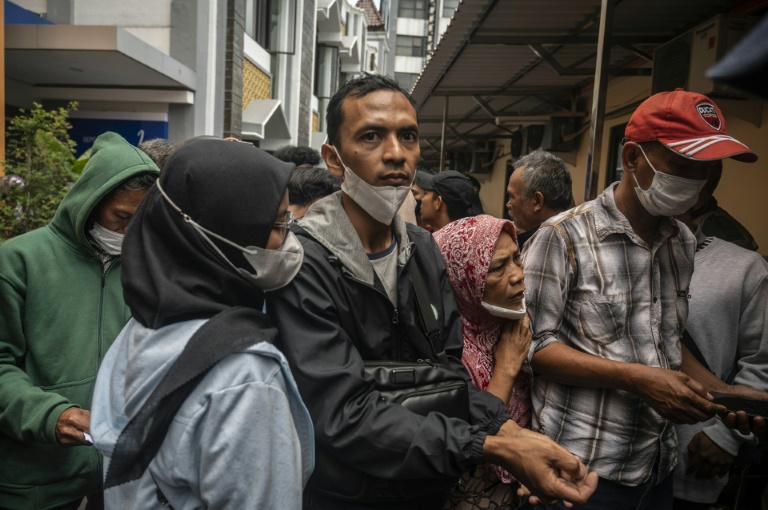
Etik sat cross-legged on the floor of the hospital, waiting anxiously for her daughter to regain consciousness after she was caught in one of the deadliest stadium disasters in world football history.

“It was her first time (at a match),” said Etik, holding back tears outside the intensive care unit at the Saiful Anwar hospital in the centre of the eastern Indonesian city of Malang.

Her 21-year-old daughter Dian Puspita was one of the spectators who had a close brush with death after police fired tear gas into packed terraces to quell a pitch invasion, causing panicked fans to rush for exits.

The ensuing stampede and chaos left at least 125 people dead, with more than 300 injured. 

Etik — who like many Indonesians goes by one name — grew worried when her daughter did not return home. 

“I called her but she didn’t pick up,” she said.

She rushed to the hospital after Puspita’s friend told her what had transpired, immediately heading to the emergency room to see her daughter, who lay on a bed with her shoulder broken and face red and swollen.

“I didn’t think this would happen,” said Etik, who waited for 12 hours at the hospital on Sunday.

Angry fans of Arema football club had invaded the pitch after losing to their fierce rivals Persebaya Surabaya, prompting the widely criticised response by police.

At the same hospital, 20-year-old Irgi Firdiansah remembers saving Puspita from the waves of spectators, as both of them struggled to survive the stampede. 

“It was full of smoke. I couldn’t see anything,” he said, tears flowing down his face.

Firdiansah said that the tear gas seemed to be aimed directly at spectators, and that as people panicked he was pushed and “could not move” when he was caught in the crush to flee the stadium.

His hands were bruised from being trampled upon, but he managed to hold on to Puspita and carry her out of the arena.

“I kept holding on to her even though I did not know her condition,” he said, his voice dropping to a low mumble as he described the harrowing experience.

– ‘Be strong’ –

Earlier in the day, chaos had engulfed the hospital as victims were rushed in, with the city’s other hospitals overwhelmed by the influx of the dead and injured. 

Many died from lack of oxygen after being pushed, pulled and stepped on in the chaos of the crush.

Indonesia’s government has called for the country’s police to identify and punish whoever was responsible for the tragedy.

As night fell, the hustle and bustle at the hospital died down. Relatives laid on mats and covered up with blankets to get some rest outside the facility, anxiously waiting for any news of their loved ones. 

Some people cradled their heads in their hands, praying for the survival of their relatives. Others attempted to sleep on hospital benches. 

Periodically, a megaphone would call out a name, a signal for the person’s relatives to enter the hospital and get the good — or bad — news. 

When Etik was last allowed to see her daughter, she held her hands and whispered her a message, one she hoped would not be the last she got to share with her daughter.

“You must be strong and wake up soon,” she told her.

Biden heads to storm-hit Puerto Rico

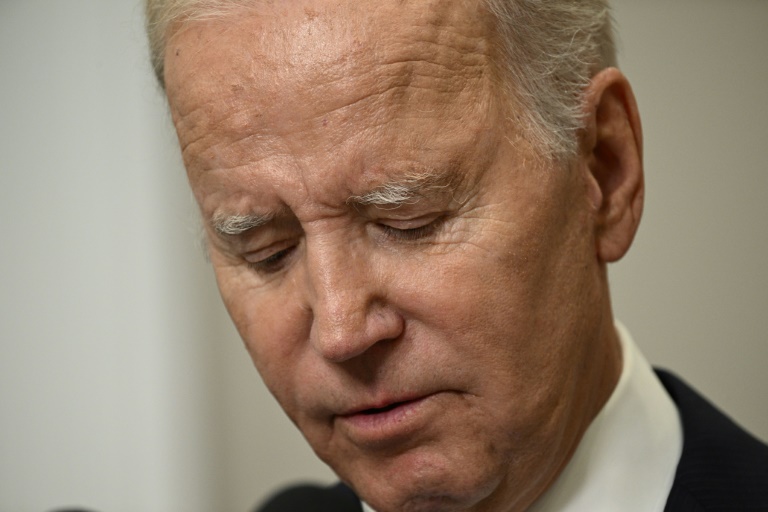
President Joe Biden and First Lady Jill Biden head to storm-ravaged Puerto Rico on Monday, in a bid to show solidarity with a US territory whose people have complained of neglect after past natural disasters.

The high-profile trip will be the first of two this week for the Bidens, who head on Wednesday to Florida to assess the devastating damage caused by Hurricane Ian.

Both Puerto Rico and Florida suffered numerous deaths, widespread power outages, dangerous flooding and grievous property damage from the recent hurricanes of rare intensity — first Fiona, then Ian.

No details of the Bidens’ trip have been announced, though visits to disaster zones are a customary duty of presidents.

But on Saturday, the president told a Congressional Black Caucus dinner that “our hearts… are heavy from the devastating hurricanes and storms in Puerto Rico, Florida and South Carolina. And we owe Puerto Rico a hell of a lot more than they’ve already gotten.”

Twenty-five people are believed to have died in Puerto Rico as a result of Hurricane Fiona, according to the island’s public health department, which is still investigating how 12 of the fatalities occurred.

The entire US territory lost power and about one million people were left temporarily without drinking water, when Fiona — then a powerful Category 4 storm — hammered the island in mid-September.

Biden declared a state of emergency for Puerto Rico on September 18.

Island residents — all US citizens — have complained of being overlooked by Washington after previous disasters, including the devastating hit from twin hurricanes, Irma and Maria, in 2017.

Florida, where Hurricane Ian roared on land Wednesday as a Category 4 storm, is still struggling to assess the extensive damage, particularly on its southwest coast.

The confirmed death toll from Ian, one of the most powerful storms ever to hit the US mainland, has soared to at least 58 in Florida and four in North Carolina with rescuers still searching for survivors in submerged neighborhoods.

More than 700,000 Floridians remained without power Sunday, according to the PowerOutage.us website, and officials said it could take months — and perhaps $50 billion or more — to rebuild devastated coastal zones.

Governments — federal, state and local — are often judged by the effectiveness of their response to such disasters.

After Hurricane Katrina devastated New Orleans and the Gulf coast, critics castigated then-president George W. Bush after photos showed him surveying damage while flying high overhead.

And after then-president Donald Trump, on a visit to Puerto Rico after the earlier storms there, took a basketball-style shot to distribute rolls of paper towels, the mayor of capital city San Juan called it “insulting” and “abominable.”

US defense chief vows to help Taiwan defend itself

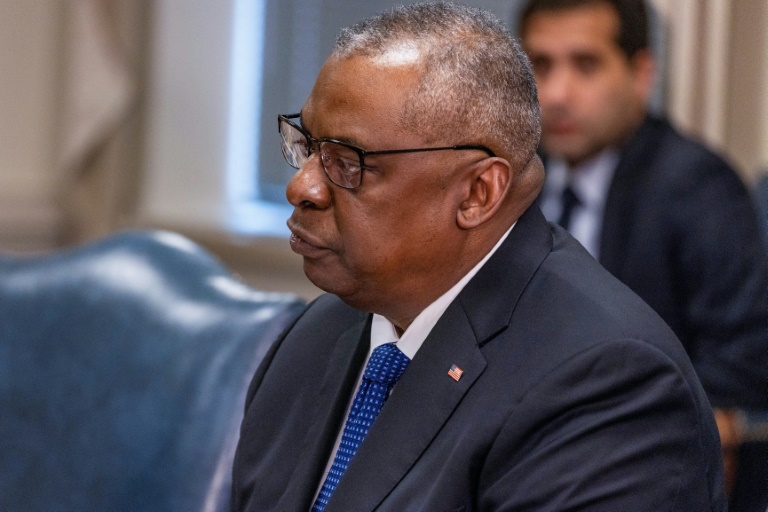
The United States will help Taiwan “develop the capability to defend itself” from a Chinese invasion, Defense Secretary Lloyd Austin said on Sunday, stopping short of President Joe Biden’s vow to send troops to the island.

“We’re committed to helping Taiwan develop the capability to defend itself,” Austin said in an interview with CNN.

Washington has historically maintained a policy of “strategic ambiguity” on whether it would intervene militarily if Taiwan were attacked by China. 

Asked in an interview with CBS last month whether US troops would defend Taiwan, Biden said “yes,” if it were “an unprecedented attack.”

Austin was asked by CNN host Fareed Zakaria whether the US military was preparing to send troops to Taiwan in line with Biden’s comments, but he declined to answer directly.

“The American military is always prepared to protect our interests and live up to our commitments. I think the president was clear in providing his answers as he responded to a hypothetical question,” Austin said.

“But, again, we continue to work to make sure that we have the right capabilities in the right places to ensure that we help our allies maintain a free and open Indo-Pacific,” he said.

Washington’s “strategic ambiguity” is designed both to ward off a Chinese invasion and to discourage Taiwan from provoking Beijing by formally declaring independence.

Asked if Biden’s comments meant a change in that policy, a White House spokesperson said at the time: “The president has said this before, including in Tokyo earlier this year. He also made clear then that our Taiwan policy hasn’t changed. That remains true.”

During a visit to Japan in May, Biden was asked whether he would commit US troops to Taiwan and he said “yes.”

“That’s the commitment we made,” he added.

Austin told CNN he saw no “imminent threat” of a Chinese invasion of Taiwan. 

But increased military activity on the Taiwan Strait showed that Beijing was moving to establish “a new normal,” he said.

Washington cut formal diplomatic relations with Taiwan in 1979, switching recognition to Beijing as the sole representative of China. But at the same time, the US maintained a decisive, if delicate role in supporting Taiwan.

Under a law passed by Congress, the US is required to sell Taiwan military supplies to ensure its self-defense against Beijing’s vastly larger armed forces.

Blinken to begin Latin American tour on Monday in Colombia

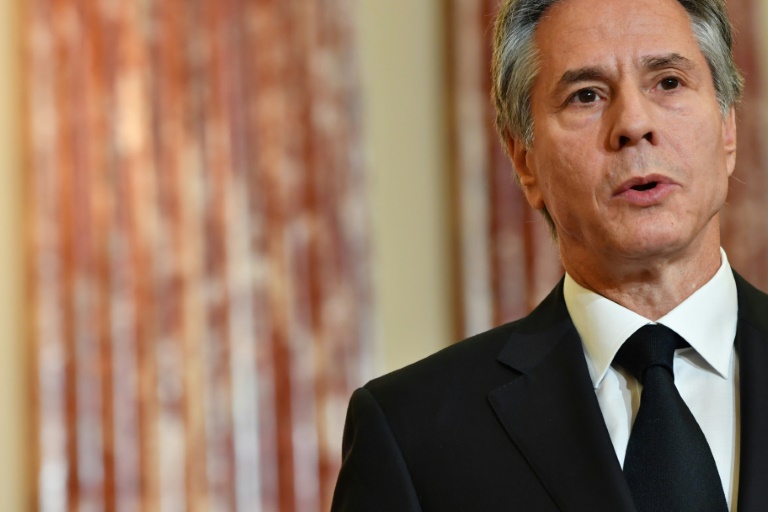
US Secretary of State Antony Blinken begins a tour of Latin American countries on Monday in Colombia, at a time when several key regional allies have recently elected leftist presidents.

The trip by the top US diplomat, whose country has been more focused in recent times on Asia and on the war in Ukraine, appears aimed partly at addressing any concerns of US neglect for its hemispheric allies.

After Colombia, Blinken will travel to Chile and Peru.

His trip begins a day after a hard-fought first-round election in Brazil, where voters faced a stark contrast between far-right President Jair Bolsonaro and leftist challenger and former president Luiz Inacio Lula da Silva. It will go to a runoff October 30 after Bolsonaro did surprisingly well against the heavily favored Lula.

Despite speculation that Bolsonaro might not accept an electoral defeat, Blinken said Sunday that the United States shares “Brazil’s confidence that the second round will be conducted in the same spirit of peace and civic duty.”

Blinken’s tour also comes on the heels of a prisoner exchange between the US and Venezuela, reflecting a cautious warming between the two despite the fact that Washington has never recognized the disputed 2018 re-election of Nicolas Maduro as president.

“We have never had stronger relations with this hemisphere,” Brian Nichols, US assistant secretary of state for Western Hemisphere Affairs, told journalists on Friday.

“We are not judging countries based on where they fall on the political spectrum but rather their commitment to democracy, the rule of law, and human rights,” he said. 

In Bogota on Monday and Tuesday, Blinken — making his second visit to Colombia as secretary of state — will meet with President Gustavo Petro, who in early August became the country’s first leftist president.

Aides said the two are expected to discuss drug trafficking and its impact on security, health and the environment, as well as migration. US officials have called Colombia’s protection of migrants fleeing poverty and unrest in Venezuela a “model for the region.”

In August, when Petro took office, American officials said they were prepared to hold “open and honest” discussions with him on the US-backed war against drugs. That effort has failed, Petro has said, calling instead for efforts to reduce cocaine demand in developed countries. 

Colombia, which has suffered through decades of civil war fueled in part by drug trafficking, is the world’s leading producer of cocaine, and the US is its principal market.

– A busy OAS agenda –

Blinken will then travel to Santiago on Wednesday for talks with Chile’s leftist president, Gabriel Boric. 

Boric, a bearded 36-year-old who once led student protests, came to power in March. 

The US diplomat will wind up his trip in Lima on Thursday and Friday, where he will meet Peru’s socialist president Pedro Castillo, a former union leader who is the son of peasant farmers. Since coming to power last year, Castillo has faced multiple investigations for corruption and influence-peddling.

While in Lima, Blinken will take part in the yearly general assembly of the Organization of American States.

The OAS gathering, bringing together  member countries from throughout the hemisphere, has a crowded agenda.

It will consider a resolution urging an end to “Russian aggression in Ukraine” — though some Latin American capitals have expressed hesitance — as well as resolutions on rights abuses in Nicaragua and on the dire economic and political situation in Haiti. 

Throughout his trip, Blinken will raise US concerns about democracy, immigration, human rights and climate change, according to a State Department statement Friday.

Blinken is also expected to flesh out some of the themes of the “Summit of the Americas” held in June in Los Angeles. It brought hemispheric leaders together and launched a partnership on immigration.

Indonesia orders stadium disaster 'perpetrators' punished

Indonesia’s government called on the country’s police Monday to identify and punish whoever was responsible for a stadium stampede that left 125 people dead, as anger mounted over one of the deadliest disasters in the history of football.

The tragedy on Saturday night in the city of Malang also saw 323 people injured after officers fired tear gas in a packed stadium to quell a pitch invasion, triggering a stampede.

“We ask the national police to find the perpetrators who have committed crimes in the next few days,” Indonesia’s chief security minister Mahfud MD said in a broadcast statement, without specifying who he was referring to.

“We asked them to unveil who has perpetrated the crimes and that action must be taken against them and we also hope the National Police will evaluate their security procedures,” he added, announcing a task force for the investigation had been formed.

The incident unfolded when fans of home team Arema FC stormed the pitch at the Kanjuruhan stadium after their loss 3-2 to bitter rivals Persebaya Surabaya.

Police responded by launching volleys of tear gas into packed terraces, prompting spectators to rush en masse to small gates where many were trampled or suffocated, according to witnesses.

Police described the incident as a riot in which two officers were killed but survivors accuse them of overreacting and causing the deaths of scores of spectators, including a five-year-old boy.

“One of our messages is for the authorities to investigate this (incident) thoroughly. And we want accountability, who is to blame?” said 25-year-old Andika, who declined to give his last name. 

“We want justice for our fallen supporters,” he said.

– ‘Murderer!’ –

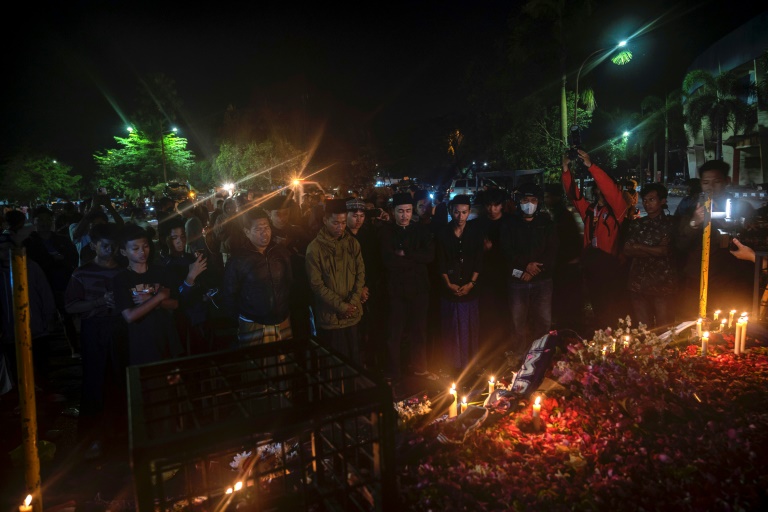
Outside the Kanjuruhan stadium on Sunday evening, people held a vigil beneath the roaring lion statue — the club’s symbol — to honour the victims.

But fresh graffiti daubed on the walls of the stadium revealed bubbling anger towards the authorities. 

“My siblings were killed. Investigate thoroughly,” read one message scrawled on the stadium’s shutters, accompanied by a black ribbon and the date of the tragedy.

“ACAB”, an acronym for “all cops are bastards”, was sprayed on another wall.

In Jakarta, hundreds of football fans gathered outside the country’s biggest stadium on Sunday chanting “murderer! murderer!”, singing songs in support of Arema FC and placing police tape on the complex’s fence.

Indonesian President Joko Widodo announced a probe into the incident, but rights groups said it should be independent and officers should be held accountable for using tear gas in a confined area.

“We call on authorities to conduct a swift, thorough, and independent investigation into the use of tear gas at the stadium and ensure that those who are found to have committed violations are tried in open court,” Amnesty International said in a statement.

“This loss of life cannot go unanswered.”

Mahfud said the task force would be chosen in the next 24 hours and would consist of government officials, analysts, ministry representatives, football organisation officials, academics and members of the media.

He said authorities would announce the results of the probe as soon as possible.

“It is estimated the task can be concluded in the next two or three weeks,” he said.

– ‘Fans died in players’ arms’ –

Anger against the authorities gathered pace online, with many critical posts going viral in Indonesia.

“Investigate thoroughly. Firing tear gas in a closed space full of humans is a serious violation,” read one tweet that was liked 11,000 times.

An online petition titled “The police must stop using tear gas” gathered nearly 6,000 signatures by Monday morning.

The fallout came as more information emerged about the stampede, with Arema FC’s Chilean football coach saying “fans died in the arms of players”.

“The boys passed by with victims in their arms,” Javier Roca told Spanish broadcaster Cadena Ser.

“I think the police overstepped their mark.”

Fan violence is an enduring problem in Indonesia. 

Witnesses of Saturday’s violence say fans of the home team Arema invaded the pitch after their loss to Persebaya Surabaya.

Persebaya Surabaya supporters had not been allowed to buy tickets to the game, due to the fear of violence.

After the deadly stampede, Arema fans threw rocks at officers and torched vehicles including a police truck on the streets of Malang, according to the police.

FIFA’s president Gianni Infantino called the tragedy a “dark day” for football but stopped short of calling for any action by authorities.

The world football governing body’s safety guidelines prohibit the carrying of crowd control gas by police or stewards at pitchside.

World football united to mourn the tragedy, with Spanish clubs holding a minute’s silence and top teams across Europe sending their condolences online.

Close Bitnami banner
Bitnami