World

Moroccan nomads' way of life threatened by climate change

In the blistering desert of Morocco, the country’s last Berber nomads, the Amazigh, say their ancient lifestyle is under threat as climate change brings ever-more intense droughts.  

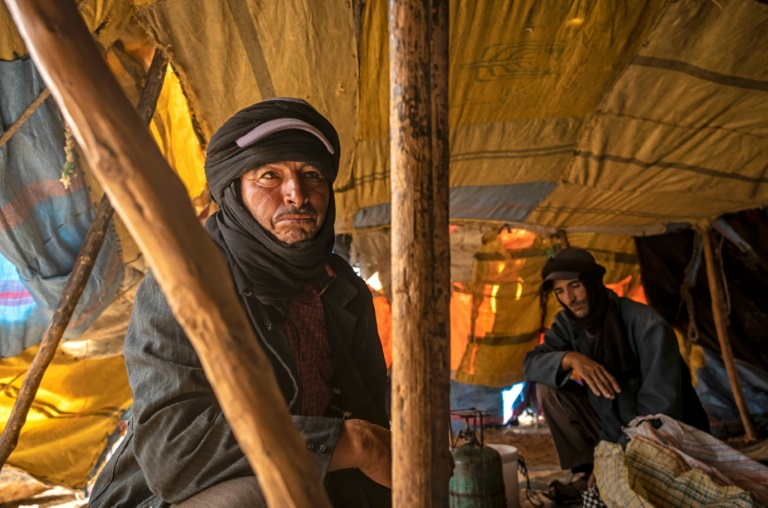
“Everything has changed,” said Moha Ouchaali, his wrinkled features framed by a black turban. “I don’t recognise myself anymore in the world of today. Even nature is turning against us.” 

Ouchaali, an Amazigh man in his 50s, has set up an encampment near a dry riverbed in barren hills about 280 kilometres (174 miles) east of Marrakesh. 

Amid the rocky, arid landscape near the village of Amellagou, he and his family have pitched two black woollen tents, lined with old animal fodder bags and fabric scraps.

One is for sleeping and hosting guests, the other serves as a kitchen.

“Water has become hard to find. Temperatures are going up and the drought is so harsh, but we can’t do much,” said Ouchaali.

His tribe, the Ait Aissa Izem, has spent centuries roaming the country to find food for their animals, but their way of life is steadily disappearing.

According to the last census, just 25,000 people in Morocco were nomadic in 2014, down by two-thirds in just a decade.

“We’re exhausted,” Ouchaali’s 45-year-old wife Ida said emotionally.

“Before, we managed to live decently, but all these droughts, more and more intense, make our lives complicated. Without water we can’t do anything.”

– ‘Last nail in coffin’ –

This year has seen Morocco’s worst drought in four decades.

Rainfall is set to decline by 11 percent and average temperatures set to rise by 1.3 percent by 2050, according to forecasts from the Ministry of Agriculture.

“Nomads have always been seen as a barometer of climate change,” said anthropologist Ahmed Skounti.

“If these people, used to living in extreme conditions, can’t resist the intensity of global warming, that means things are bad.”

The drying up of water resources was “the last nail in the coffin for nomads”, he added.

In easier times, the Ait Aissa Izem would pass the summer in the relatively cool mountain valley of Imilchil, before heading to the area around regional capital Errachidia for the winter.

“That’s ancient history,” Ouchaali said, sitting in his tent and taking a sip of sweet Moroccan tea. “Today we go wherever there’s a bit of water left, to try to save the animals.”

Severe water shortages have even pushed some nomads to take the rare step of taking out loans to feed their livestock, their most vital asset.

“I’ve gone into debt to buy food for my animals so they don’t starve to death,” said Ahmed Assni, 37, sitting by a tiny, almost dried-out stream near Amellagou.

Saeed Ouhada said the difficulties had pushed him to find accommodation for his wife and children in Amellagou, while he stays with his parents in a camp on the edge of the town.

“Being a nomad isn’t what it used to be,” he said. “I’ll keep at it because I have to. My parents are old but they refuse to live in a town.” 

Driss Skounti, elected to represent nomads in the region, said the area used to have around 460 tents. Today, they don’t even add up to a tenth of that number.

– ‘Tired of fighting’ –

Some Moroccan nomads have given up their ancient lifestyle altogether — and not just because of the ever-worsening climate.

“I was tired of fighting,” said Haddou Oudach, 67, who settled permanently in Er-Rich in 2010.

“We’ve become outcasts from society. I can’t even imagine what nomads are going through today.”

Moha Haddachi, the head of an association for the Ait Aissa Izem nomads, said social and economic changes were making a nomadic lifestyle ever-more difficult. 

The scarcity of pastures due to land privatisation and agricultural investment also contributes to the difficulties, he said.

“Agricultural investors now dominate the spaces where nomads used to graze their herds.”

Nomads also face hostility from some villagers, angered by those camping in their region despite officially belonging to other provinces.

A law was passed in 2019 to delineate where nomads and sedentary farmers could graze their animals, but “nobody applies it”, Haddachi said.

Former nomad Oudach is despondent about “this era of selfishness where everyone thinks only of themselves”. 

“It wasn’t always like this, we used to be welcomed everywhere we went,” he said.

Embarking on a life of nomadism offers little to young people.

Houda Ouchaali, 19, says she can’t stand watching her parents “suffering and battling just to survive”.

“The new generation wants to turn the page on nomadism,” she said.

She now lives with an uncle in Er-Rich and is looking for professional training to allow her to “build a future” and escape the “stigmatising gaze that city people often have for nomads”.

Driss Skounti said he had little hope for the future of nomadism.

“Nomadic life has an identity and a tradition steeped in history,” he said, “but is doomed to disappear within 10 years.”
African climate summit opens in DR Congo

Environment ministers from about 50 countries will gather in the Democratic Republic of Congo on Monday for a “pre-COP27” climate summit, with rich nations likely to come under pressure to raise spending to combat climate change.

The talks in the DRC’s capital, Kinshasa, are informal but meant to allow various countries and green groups to take stock of political positions ahead of COP27 — the United Nations climate gathering of world leaders in Egypt next month.

An opening ceremony will take place in the Congolese parliament building in Kinshasa, followed by discussions on mitigating climate change, and providing funding for countries already damaged by global heating and severe weather events. 

Delegates from about 50 countries are expected to attend the talks, including United States climate envoy John Kerry. 

“The emphasis will certainly be on support from industrialised countries to countries in the south,” a Western diplomat recently told AFP. 

The last UN climate summit, COP26 in Glasgow in November 2021, reaffirmed the goal — agreed in Paris in 2015 — of limiting the rise in the Earth’s average temperature to well below 2.0 degrees Celsius above pre-industrial levels and pursuing efforts to limit it to 1.5C.

That goal may already be beyond reach as the Earth’s temperature is already 1.2C higher than before the Industrial Revolution of the 19th century. 

Poorer countries had pushed at Glasgow for a financial mechanism to address losses and damage caused by climate change. 

But wealthier nations — the largest polluters — rejected the call and the participants agreed instead to start a “dialogue” on financial compensation for damages.  

– Climate justice –

Egypt, which is hosting COP27, has made implementing the pledge to curb global heating the priority of the November summit. 

Poorer countries are again likely to remind their richer counterparts of the need to increase financial support. 

The latter have so far failed to deliver on their promise to provide $100 billion a year to help developing countries limit climate change. 

Demands for climate justice were front and centre of a protest in Kinshasa last month, where young Congolese activists chanted slogans and demanded that world leaders take swift action rather than repeat old promises.

The Congolese government is also expected drive home the message that it requires funding to protect its vast rainforests, which act as a carbon sink. 

Around 30 billion tonnes of carbon are stored across the Congo Basin, researchers estimated in a study for Nature in 2016. The figure is roughly equivalent to three years of global emissions.

However, the central African nation in July launched an auction for 30 oil and gas blocs, ignoring warnings from environmentalists that exploiting them could harm ecosystems and release vast amounts of heat-trapping gases. 

One of the poorest countries in the world, the DRC argues that drilling for oil and gas could help diversify its economy and benefit the Congolese people. 

African climate summit opens in DR Congo

Environment ministers from about 50 countries will gather in the Democratic Republic of Congo on Monday for a “pre-COP27” climate summit, with rich nations likely to come under pressure to raise spending to combat climate change.

The talks in the DRC’s capital, Kinshasa, are informal but meant to allow various countries and green groups to take stock of political positions ahead of COP27 — the United Nations climate gathering of world leaders in Egypt next month.

An opening ceremony will take place in the Congolese parliament building in Kinshasa, followed by discussions on mitigating climate change, and providing funding for countries already damaged by global heating and severe weather events. 

Delegates from about 50 countries are expected to attend the talks, including United States climate envoy John Kerry. 

“The emphasis will certainly be on support from industrialised countries to countries in the south,” a Western diplomat recently told AFP. 

The last UN climate summit, COP26 in Glasgow in November 2021, reaffirmed the goal — agreed in Paris in 2015 — of limiting the rise in the Earth’s average temperature to well below 2.0 degrees Celsius above pre-industrial levels and pursuing efforts to limit it to 1.5C.

That goal may already be beyond reach as the Earth’s temperature is already 1.2C higher than before the Industrial Revolution of the 19th century. 

Poorer countries had pushed at Glasgow for a financial mechanism to address losses and damage caused by climate change. 

But wealthier nations — the largest polluters — rejected the call and the participants agreed instead to start a “dialogue” on financial compensation for damages.  

– Climate justice –

Egypt, which is hosting COP27, has made implementing the pledge to curb global heating the priority of the November summit. 

Poorer countries are again likely to remind their richer counterparts of the need to increase financial support. 

The latter have so far failed to deliver on their promise to provide $100 billion a year to help developing countries limit climate change. 

Demands for climate justice were front and centre of a protest in Kinshasa last month, where young Congolese activists chanted slogans and demanded that world leaders take swift action rather than repeat old promises.

The Congolese government is also expected drive home the message that it requires funding to protect its vast rainforests, which act as a carbon sink. 

Around 30 billion tonnes of carbon are stored across the Congo Basin, researchers estimated in a study for Nature in 2016. The figure is roughly equivalent to three years of global emissions.

However, the central African nation in July launched an auction for 30 oil and gas blocs, ignoring warnings from environmentalists that exploiting them could harm ecosystems and release vast amounts of heat-trapping gases. 

One of the poorest countries in the world, the DRC argues that drilling for oil and gas could help diversify its economy and benefit the Congolese people. 

Ukraine says key eastern town 'cleared' of Russian troops

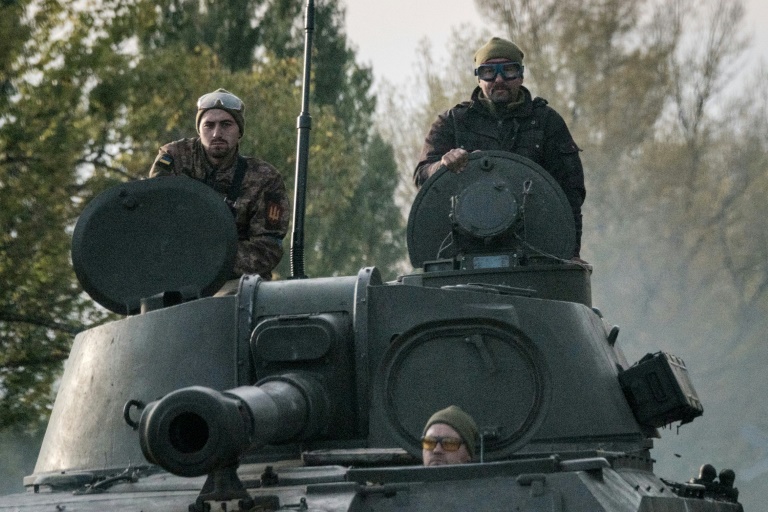
Ukraine’s President Volodymyr Zelensky said Sunday that Lyman, a key town located in one of four Ukrainian regions annexed by Russia, had been “cleared” of Moscow’s troops.

The latest development in Ukraine’s weeks-long counter-offensive against Moscow’s invasion comes as Russia pushed forward with finalising the annexation of captured Ukrainian territories despite condemnation from Kyiv and the West. 

The recapture of Lyman — which Moscow’s forces pummelled for weeks to control earlier this year — marks the first Ukrainian military victory in a territory the Kremlin has claimed as its own and vowed to defend by all possible means.

Ukraine’s army said it had entered Lyman, a strategic railway hub in the eastern Donetsk region, on Saturday, prompting Moscow to announce the “withdrawal” of its troops from the town towards “more favourable lines”.

The recapture of Lyman had become the most popular story in the media, Zelensky noted in his Sunday evening address. “But the successes of our soldiers are not limited to Lyman,” he added.

The previous day he had pledged to retake more areas in the country’s eastern Donbas region within the week.

“Now I am optimistic and very motivated,” a 33-year-old Ukrainian soldier using the nom de guerre “Smoke”, told AFP after returning from near Lyman.

“I see the activity on the front line, and how foreign weapons… help us take our lands back.”

Kyiv got a further boost Sunday when Berlin said Germany, Denmark and Norway would deliver 16 armoured howitzer artillery systems from 2023.

The three NATO members had agreed to jointly finance the procurement of the Slovakian Zuzana-2 guns, the German defence ministry said, although the announcement falls short of Kyiv’s demands for Germany’s Leopard battle tanks.

– Russian court approves annexation –

With Russian losses mounting, some experts have warned that President Vladimir Putin could turn to nuclear weapons — an option floated by one Putin ally.

Chechen leader Ramzan Kadyrov said Saturday that Russia should consider using “low-yield nuclear weapons” after Moscow’s troops were forced out of Lyman.

Putin staged a grand Kremlin ceremony on Friday to celebrate the annexation of the four Ukrainian territories — Donetsk, Kherson, Lugansk and Zaporizhzhia — following referendums denounced as void by Kyiv and its allies.

Despite condemnation from the West, Russia’s Constitutional Court on Sunday recognised as lawful the annexation accords Putin signed with the Moscow-backed leaders of the four Ukrainian territories.

The annexation treaties will be considered by Russia’s lower house of parliament, the State Duma, on Monday, according to Duma speaker Vyacheslav Volodin.

The European Union’s foreign policy chief Josep Borrell said Russia’s annexation move made ending the conflict “much more difficult, almost impossible”.

Pope Francis on Sunday “implored” Putin to stop the “spiral of violence and death”, condemning the annexations as breaches of international law.

The four territories create a crucial land corridor between Russia and the Crimean Peninsula, which was annexed by Moscow in 2014.

Together the five regions make up around 20 percent of Ukraine.

Kyiv has also called for the immediate release of Ihor Murashov, the chief of the Moscow-held Zaporizhzhia nuclear power plant, condemning his “illegal detention” by the Russians on Friday.

“This is another manifestation of completely frank Russian terror,” Zelensky said Sunday.

Following the annexations, Washington announced “severe” new sanctions against Russian officials and the defence industry, and said G7 allies support imposing “costs” on any nation backing annexation.

French President Emmanuel Macron promised to work on introducing new EU sanctions against Moscow following a telephone conversation Sunday with Zelensky, his office said.

US National Security Advisor Jake Sullivan also discussed the developments with Ukraine’s presidential chief of staff Andriy Yermak in Istanbul.

Washington and its allies would “impose severe costs” on any individual or entity that backed Russia’s “purported” annexations, said Sullivan, according to a statement from his office.

– ‘Grave concern’ –

In a statement from the International Atomic Energy Agency (IAEA), its chief Rafael Grossi said Murashov’s detention was cause for “grave concern”.

Grossi is expected to travel to Kyiv and Moscow “next week”, the UN agency added.

Zaporizhzhia — Europe’s largest nuclear energy facility — has been at the centre of tensions, with Moscow and Kyiv accusing each other of strikes on and near the plant, raising fears of an atomic disaster.

Zelensky urged the US-led military alliance NATO to grant his country fast-track membership.

He also vowed never to hold talks with Russia as long as Putin remains in power.

NATO chief Jens Stoltenberg slammed the annexations as “illegal and illegitimate” but remained non-committal after Ukraine said it was applying to join the Western alliance.

Stay or go? Hard choice for Florida islanders devasted by Ian

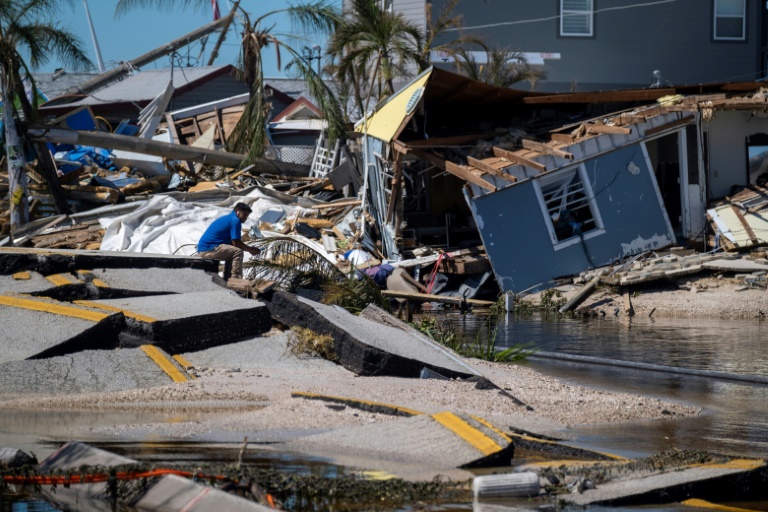
Karen Pagliaro walks down Matlacha’s main street, dodging downed trees, debris and abandoned vehicles, unsure where to go in the small island town cut off after Hurricane Ian damaged bridges linking it to mainland Florida.  

“We feel kind of forgotten,” says the 50-year-old teacher, who lost her home to the storm. “We thought they’d send in help, water and supplies and things, and we were told no, just get off.”

Until Wednesday, Matlacha was a small paradise in southwest Florida.

The fishing village of 800 people across two islets was dotted with colorful wooden houses built around the wide street. It was a place to enjoy the sea, good weather, seafood restaurants and small art galleries. 

The hurricane changed everything. 

Three days after Ian hit, the Coast Guard, firefighters and citizens from nearby towns are still coming by boat to rescue the last residents who were trapped there after refusing to evacuate. 

Other residents, those who did leave the island, are making the journey in the opposite direction from the mainland to check on the damage to their homes. 

Christian Lopez watches the jetty as the emergency services evacuate people — but he has no intention of leaving, despite losing his home.  

“I’d rather stay here than go somewhere else and be on the street. Here at least we have a little roof and we are going to try to fix up the trailer where we live,” says the 25-year-old. 

– ‘I never want to come back’ –

At the other end of Matlacha, the main street is cut off by a huge crevasse that people have to cross thanks to a makeshift bridge made of a metal board.    

Dozens of stunned and weary people walk somberly about, taking in the devastation. Most of them share the same uncertainty of not knowing what to do or where to go. 

“I don’t have a plan,” says John Lynch, sounding resigned. The 59-year-old’s house is sinking into the sea and he is preparing to leave. 

“We’ve been here for 25 years… It’s heartbreaking because this is where we plan on living for the rest of our lives.”  

Karen Pagliaro doesn’t know what she is going to do either. She has nowhere to go. The school where she works is temporarily closed because of hurricane damage. 

What is clear to her is that she wants to return to live in Matlacha.  “It’s our beloved city and we love it here,” she says.  

Near the pier, Jim Bedra doesn’t share that sentiment. The septuagenarian is about to leave town with his wife, Kathy, and their dog, Luna, on a Coast Guard boat.   

Last week he wanted to evacuate the island with Kathy and their 31-year-old son, but the two convinced him to stay where they had lived since 2013.  

He no longer has a home and his voice cracks at the thought. “We are going to stay in a shelter, I imagine,” says Bedra, who wants to return to his safely landlocked home state of Ohio. 

“I never want to come back here,” he says before boarding the boat for the mainland. 

“This is not the retirement we looked for.”

ma/st/bbk

At least 92 killed in Iran's Mahsa Amini protests: rights group

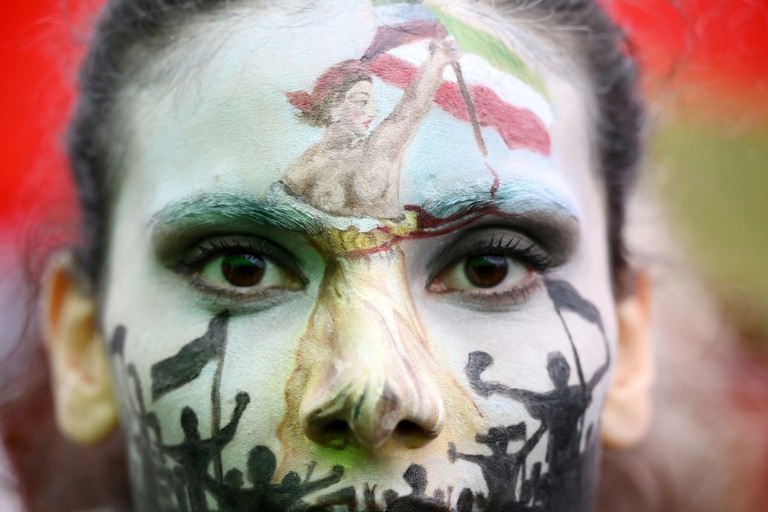
At least 92 people have been killed as Iran has cracked down on women-led protests sparked by the death of Mahsa Amini after her arrest by the notorious morality police, the group Iran Human Rights said Sunday.

As protests stretch into a third week, President Ebrahim Raisi on Sunday said that the “enemies” of Iran had “failed in their conspiracy”.

Amini, a 22-year-old Kurdish Iranian, was pronounced dead on September 16 after she was detained for allegedly breaching rules requiring women to wear hijab headscarves and modest clothes, sparking Iran’s biggest wave of popular unrest in almost three years.

An additional 41 people died in clashes Friday in Iran’s far southeast, an area bordering Afghanistan and Pakistan, Oslo-based IHR also said, citing local sources. Those protests were sparked by accusations a police chief in the region had raped a teenage girl of the Baluch Sunni minority, it said.

Solidarity rallies with Iranian women — who have defiantly burnt the hijabs they have been obliged to wear since the 1979 Islamic revolution — have been held worldwide, with demonstrations in more than 150 cities on Saturday.

In Iran itself, clashes between protesters and security forces have rocked cities nationwide for 16 nights in a row after they first flared in western regions home to Amini and Iran’s Kurdish minority.

“Rioters” and “thugs”, some hurling Molotov cocktails, attacked the Tehran headquarters of Iran’s leading ultraconservative daily Kayhan on Saturday, said the newspaper, whose director is appointed by supreme leader Ayatollah Ali Khamenei.

IHR director Mahmood Amiry-Moghaddam urged the international community to take urgent steps against the Islamic republic to stop the killing of Iranian protesters, saying they amount to “crimes against humanity”.

– ‘Teenage girl raped’ –

At least 92 protesters in the Mahsa Amini rallies have been killed so far, said IHR, which has been working to assess the death toll despite internet outages and blocks on WhatsApp, Instagram and other online services. 

London-based Amnesty International said earlier it had confirmed 53 deaths, after Iran’s semi-official Fars news agency said last week that “around 60” people had died.

On Sunday, the official IRNA news agency said a paramilitary man “stabbed” during “recent riots” in the Shiite holy city of Qom south of Tehran died in hospital.

Tehran has also battled unrest in the country’s southeast, and it said five Revolutionary Guards members were killed in clashes Friday in Zahedan, the capital of Sistan-Baluchestan province.

The poverty-stricken region has often seen clashes with Baluchi minority rebels, Sunni Muslim extremist groups and drug smuggling gangs.

IHR accused the security forces of the mainly Shiite country of “bloodily repressing” the Zahedan protest that erupted after Friday prayers over accusations a police chief in the province’s port city of Chabahar had raped a 15-year-old girl.

A Sunni preacher, Molavi Abdol Hamid, had on Wednesday warned the community was “inflamed” over the alleged rape.

– US-Iranian released –

Iran has accused outside forces of stoking the nationwide protests, especially the United States and Washington’s allies, and on Friday the intelligence ministry said nine foreign nationals — including from France, Germany, Italy, the Netherlands and Poland — had been arrested.

The unrest comes as Iran seeks to revive its 2015 nuclear deal with the United States and other major powers to end sanctions that have throttled its oil-rich economy and seen South Korea, China and Japan freeze billions of dollars in Iranian funds.

The landmark Vienna deal — which had promised sanctions relief in return for strict nuclear controls — has been in tatters since then US president Donald Trump withdrew from it in 2018 and Iran later backed away from its own commitments.

“At a time when the Islamic republic was overcoming economic problems… the enemies came into play with the intention of isolating the country, but they failed in this conspiracy,” Raisi said Sunday.

In a rare concession, Iran has allowed a detained Iranian-American, Baquer Namazi, 85, to leave the country and released his son Siamak Namazi, 50, from detention, the United Nations confirmed Saturday.

Baquer Namazi is a former UNICEF official who was detained in February 2016 when he went to Iran to press for the release of Siamak, who had been arrested in October of the previous year.

Both were convicted of espionage and sentenced to 10 years in prison.

Iranian state media said Sunday that, following the prisoner release, Iran was now awaiting the unfreezing of about $7 billion in funds held abroad.

burs/sjw/pjm/hc

Poll puts Bulgaria ex-PM Borisov back on top but short of allies

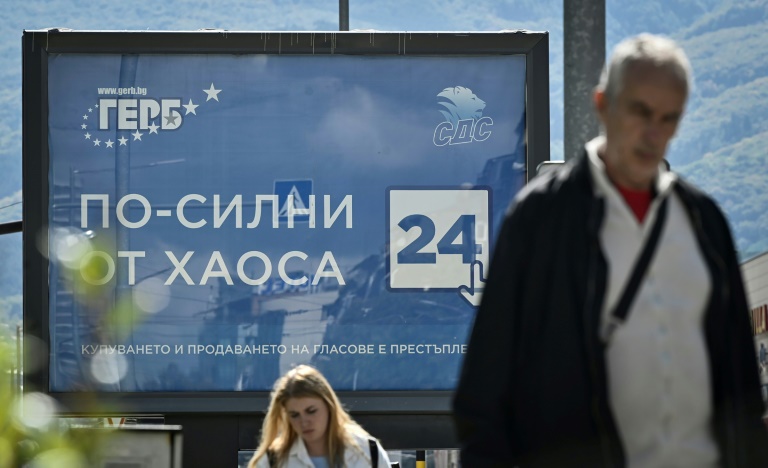
Early results from Bulgaria’s general election on Sunday indicated that the party of conservative former premier Boyko Borisov came first, but analysts warned the result is unlikely to offer an end to the country’s worst period of political instability since the end of communism.

Borisov’s GERB party looks to have won around 23-25 percent of the vote in the fourth such election in 18 months after he led a campaign promising a return to stability against a backdrop of soaring inflation and Russia’s invasion of Ukraine.

However, 63-year-old veteran former premier Borisov, who has three previous spells at the helm, will face an uphill battle finding coalition partners.

GERB was followed, according to the projections based on early results, by the party of centrist rival Kiril Petkov which is estimated to have won around 19-20 percent of the vote.

While endemic corruption was the focus of the previous vote last November, the country’s economic woes are now top of voters’ concerns. The European Union’s poorest member state is battling annual inflation of close to 20 percent.

Sunday’s vote was marked by a lack of political enthusiasm, with turnout of just 25 percent by 4:00 p.m. local time (1300 GMT).

– ‘The lesser evil’ –

The Balkan country has been dogged by political instability since early last year, when GERB lost power following massive anti-corruption demonstrations. 

Borisov’s rival, outgoing reformist premier Kiril Petkov, 42, had urged voters to let him “continue the change” his government had initiated on an anti-corruption platform.

The Harvard-educated former entrepreneur stormed onto the political scene in 2021 but lasted just seven months in office as his precarious four-party coalition fell apart over the summer, eventually being toppled in a no-confidence motion.

“The situation is the same as after the last election but even more complicated,” Daniel Smilov from the Centre for Liberal Strategies think tank told the BTV television station.

“Coalitions that were possible then are no longer possible now,” he said, alluding to the rancour that broke out between Petkov and his erstwhile allies.

Petkov’s government had offered substantial rises in pensions and he said he wanted a rise in the average salary in Bulgaria, which now stands at 870 euros ($853), the lowest in the 27-nation EU.

He conceded electoral defeat on Sunday night, acknowledging that “the people have given (GERB) a mandate to form a government”.

Petkov repeated his promise not to go into coalition with GERB, instead promising to be an “opposition scrutinising the spending of every lev”, the name of the local currency.

Borisov has cast himself as Bulgaria’s “most experienced” politician, stressing the country’s European Union and NATO allegiances.

“We need people with experience in these troubled times,” 62-year-old garage owner Bogomil Gruev said after casting his ballot in a Sofia suburb. “We can reproach Boyko for some things but he is the lesser evil.”

Another voter, 47-year-old nurse Rada Mincheva, praised Borisov’s ability to manoeuvre between western and Russian interests.

“The war is very close to us,” she said. “We’d better not provoke anyone.”

– Borisov isolated –

Borisov has said he would be open to talks with anyone on forming a cabinet — for the sake of stability amid the war in Ukraine and people’s fears about rising inflation.

“What’s important for us is for reason to prevail…,” he said earlier on Sunday. “Believe me, right now I am the most well-meaning and open person to all parties.”

However, New Bulgarian University analyst Antony Todorov was sceptical about the chances of Borisov’s GERB party being in a position to form a stable coalition.

“I don’t believe that GERB, which is very isolated, could return to power,” Todorov said.

The protracted political instability has left Bulgaria struggling to pass reforms and has hampered economic growth.

Borisov’s options for coalition partners appear to be limited to the Turkish minority MRF party, projected to have won around 15 percent of the vote, and two pro-Russian parties which have gained prominence since the start of Russia’s invasion of Ukraine.

Those two parties, Vazrazhdane and Bulgarian Progress, are projected to have won around 15 percent of the vote between them.

While a member of the EU and NATO, Bulgaria also has strong historical, cultural and economic ties with Russia.

Tesla says deliveries increased in Q3

New vehicle deliveries by Tesla increased in the third quarter, beating the previous three months during which its Chinese factory was shuttered for multiple weeks, the US electric automaker announced Sunday.

Between July and September, Tesla delivered a total of 343,380 vehicles around the world, the company led by Elon Musk said in a statement.

That represents an increase of 43 percent over the same period last year, and 35 percent more than the second quarter of 2022.

While the Q3 results show a return to growth for Tesla deliveries, the total number was at the very bottom end of analyst estimates, which were between 343,000 and 370,000.

The company said it was facing headwinds with regard to “vehicle transportation capacity,” which it hoped to resolve with better distribution among its factories — including recently opened sites in Berlin and Austin, Texas.

Wedbush Securities analyst Dan Ives described the quarter as “nothing to write home about” in a note to investors, while the market would likely be “disappointed by the softer delivery number in 3Q.”

“That said, we view this more of a logistical speed bump rather than the start of a softer delivery trajectory,” he added.

Tesla has managed to increase deliveries every quarter since the beginning of the pandemic, with the exception of Q2 this year, when the company was forced to close its Chinese factory.

Tesla also reported an increase in auto output, with 365,923 vehicles produced in the third quarter — 54 percent more than the same period last year, though a pace that would likely prevent it from reaching 1.5 million vehicles total for the year, as Musk had estimated in April.

The company plans to release its full quarterly results on October 19.

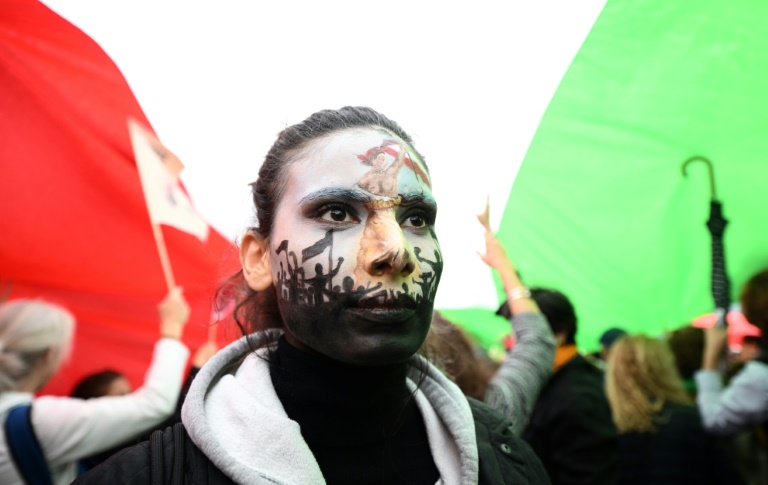
'Woman. Life. Freedom': Thousands march in Paris to back Iran protests

Thousands of people marched in Paris on Sunday to condemn Iran’s Islamic leadership in a giant show of solidarity with the protests that erupted there after the death in custody of young Mahsa Amini.

Following major rallies in key diaspora cities including Los Angeles and Toronto over the weekend, a vast stream of people walked from the French capital’s traditional protest hub of Place de la Republique to Place de la Nation.

“Join the first feminist revolution!” and “Mahsa Amini — your name has made the tyranny of the ayatollahs shake!” were among the slogans carried by the protesters as they braved sometimes pouring rain.

They chanted “death to the Islamic republic!”, “death to the dictator”, as well as “Woman. Life. Freedom”, the three words that have become the main slogan of the protests in Iran.

They also sang along to “Baraye” (“For”) which Iranian songwriter Shervin Hajipour put together using Twitter postings about the protests.

The song became a huge viral hit on Instagram, moving many to tears, but Hajipour has now been arrested in a symbol of the vehemence of the crackdown against the protests in Iran.

Despite that crackdown, which according to the Iran Human Rights (IHR) group has left 92 dead and severe cuts to the internet, protests are continuing daily in Iran.

Iranian President Ebrahim Raisi on Sunday again accused Iran’s “enemies” of “conspiring” against the state and said their attempts had “failed”, as the country’s largest anti-government protests since 2019 showed no signs of abating.

The groundswell of popular unrest began after Amini, a 22-year-old Iranian Kurd arrested by the morality police for infringing Iran’s strict dress code for women, was declared dead in custody on September 16.

– ‘Iran has become one big prison’ –

“For once, it is the women who have risen up and are being joined by the men. This is really the time to try to change things,” said Guilda Torabi, a student of Iranian origin in Paris.

“They go out to protest, but they get killed. We are lucky to be able to demonstrate and fight for them. So we will keep on coming,” she said.

Toura Dana, a French-Iranian engineer, added: “Now we have become the voice of the Iranian people who are cut off. Now Iran has become one big prison.”

Prominent figures of the French left — including Socialist leader Olivier Faure, prominent Greens figure Sandrine Rousseau and far-left MEP Manon Aubry — addressed the crowd. 

But their speeches, especially Rousseau’s, were marked by loud boos from many present, with the Iranian diaspora known globally for its diversity of political opinion.

Also present was French graphic book author Marjane Satrapi whose classic “Persepolis” tells the story of a girl growing up in post-revolutionary Iran and dealing with the obligatory hijab.

Protesters voiced anger that French President Emmanuel Macron had met Iranian counterpart Raisi in New York on the sidelines of the UN General Assembly shortly after the death of Amini.

“The French government flirts with the mullahs while the mullahs kill women,” read one slogan above an image of Macron shaking hands with Raisi.

Hurricane Orlene headed for Mexico

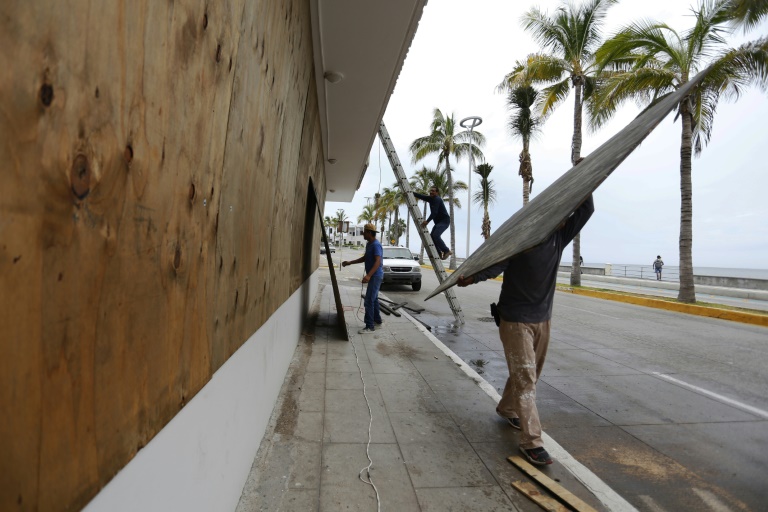
Powerful Hurricane Orlene headed Sunday toward Mexico’s Pacific coast, where it is expected to make landfall on Monday night, the US National Hurricane Center said.

The storm lost some strength as it moved across the water, falling from Category 4 to 3, the agency said.

But it is expected to be a strong hurricane when it passes near or over the Islas Marias archipelago, and remain a hurricane when it reaches southwestern Mexico, the NHC said.

The NHC forecast that the storm would pass over the Islas Marias Sunday night or Monday morning, and reach the mainland by Monday night.

Mexico’s National Water Commission (Conagua) predicted that the storm would be a Category 1 or 2 hurricane by the time it moves onto land.

The storm will generate wind gusts of up to 70 miles (110 kilometers) per hour and waves of up to 16 feet (five meters) on the coasts of Nayarit and Jalisco states, Conagua added, urging the inhabitants of at-risk areas to take refuge in temporary shelters. 

The Ministry of the Navy has closed the ports of Nayarit and Jalisco.

Authorities are keeping a close eye on the storm’s track as they mull whether to evacuate tourists from Mexican beach resorts to temporary shelters, Víctor Hugo Roldan, director of Civil Protection in Jalisco, told the press.

Tropical cyclones hit Mexico every year on both its Pacific and Atlantic coasts, usually between May and November. 

In October 1997, Hurricane Paulina hit Mexico’s Pacific coast as a Category 4 storm, leaving more than 200 dead.

Close Bitnami banner
Bitnami