World

Hurricane Orlene headed for Mexico

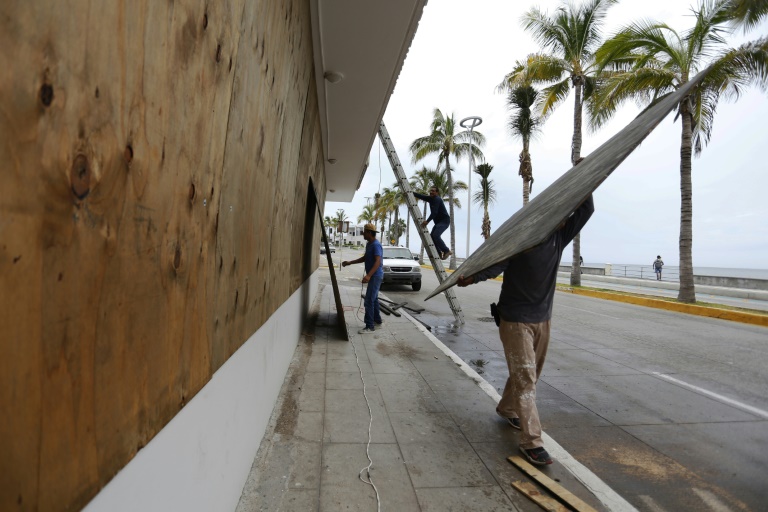
Powerful Hurricane Orlene headed Sunday toward Mexico’s Pacific coast, where it is expected to make landfall on Monday night, the US National Hurricane Center said.

The storm lost some strength as it moved across the water, falling from Category 4 to 3, the agency said.

But it is expected to be a strong hurricane when it passes near or over the Islas Marias archipelago, and remain a hurricane when it reaches southwestern Mexico, the NHC said.

The NHC forecast that the storm would pass over the Islas Marias Sunday night or Monday morning, and reach the mainland by Monday night.

Mexico’s National Water Commission (Conagua) predicted that the storm would be a Category 1 or 2 hurricane by the time it moves onto land.

The storm will generate wind gusts of up to 70 miles (110 kilometers) per hour and waves of up to 16 feet (five meters) on the coasts of Nayarit and Jalisco states, Conagua added, urging the inhabitants of at-risk areas to take refuge in temporary shelters. 

The Ministry of the Navy has closed the ports of Nayarit and Jalisco.

Authorities are keeping a close eye on the storm’s track as they mull whether to evacuate tourists from Mexican beach resorts to temporary shelters, Víctor Hugo Roldan, director of Civil Protection in Jalisco, told the press.

Tropical cyclones hit Mexico every year on both its Pacific and Atlantic coasts, usually between May and November. 

In October 1997, Hurricane Paulina hit Mexico’s Pacific coast as a Category 4 storm, leaving more than 200 dead.

'Woman. Life. Freedom': Thousands march in Paris to back Iran protests

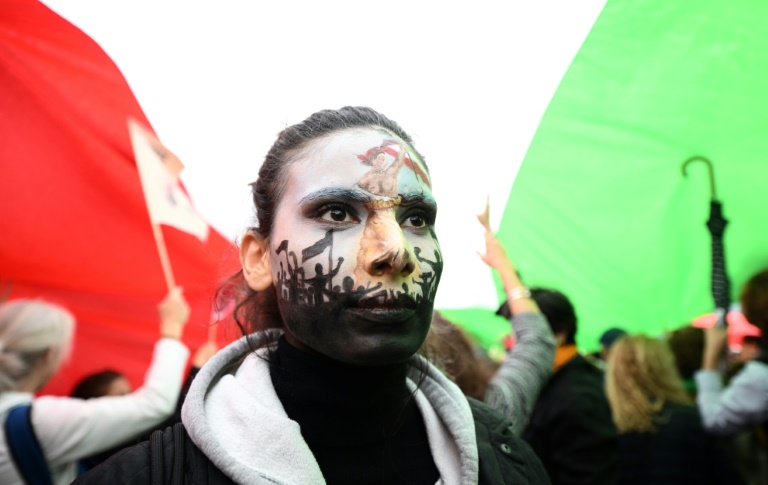
Thousands of people marched in Paris on Sunday to condemn Iran’s Islamic leadership in a giant show of solidarity with the protests that erupted there after the death in custody of young Mahsa Amini.

Following major rallies in key diaspora cities including Los Angeles and Toronto over the weekend, a vast stream of people walked from the French capital’s traditional protest hub of Place de la Republique to Place de la Nation.

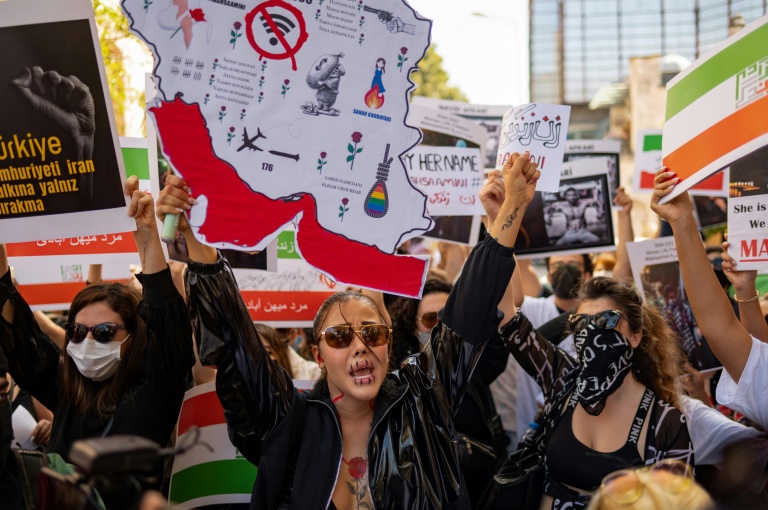
“Join the first feminist revolution!” and “Mahsa Amini — your name has made the tyranny of the ayatollahs shake!” were among the slogans carried by the protesters as they braved sometimes pouring rain.

They chanted “death to the Islamic republic!”, “death to the dictator”, as well as “Woman. Life. Freedom”, the three words that have become the main slogan of the protests in Iran.

They also sang along to “Baraye” (“For”) which Iranian songwriter Shervin Hajipour put together using Twitter postings about the protests.

The song became a huge viral hit on Instagram, moving many to tears, but Hajipour has now been arrested in a symbol of the vehemence of the crackdown against the protests in Iran.

Despite that crackdown, which according to the Iran Human Rights (IHR) group has left 92 dead and severe cuts to the internet, protests are continuing daily in Iran.

Iranian President Ebrahim Raisi on Sunday again accused Iran’s “enemies” of “conspiring” against the state and said their attempts had “failed”, as the country’s largest anti-government protests since 2019 showed no signs of abating.

The groundswell of popular unrest began after Amini, a 22-year-old Iranian Kurd arrested by the morality police for infringing Iran’s strict dress code for women, was declared dead in custody on September 16.

– ‘Iran has become one big prison’ –

“For once, it is the women who have risen up and are being joined by the men. This is really the time to try to change things,” said Guilda Torabi, a student of Iranian origin in Paris.

“They go out to protest, but they get killed. We are lucky to be able to demonstrate and fight for them. So we will keep on coming,” she said.

Toura Dana, a French-Iranian engineer, added: “Now we have become the voice of the Iranian people who are cut off. Now Iran has become one big prison.”

Prominent figures of the French left — including Socialist leader Olivier Faure, prominent Greens figure Sandrine Rousseau and far-left MEP Manon Aubry — addressed the crowd. 

But their speeches, especially Rousseau’s, were marked by loud boos from many present, with the Iranian diaspora known globally for its diversity of political opinion.

Also present was French graphic book author Marjane Satrapi whose classic “Persepolis” tells the story of a girl growing up in post-revolutionary Iran and dealing with the obligatory hijab.

Protesters voiced anger that French President Emmanuel Macron had met Iranian counterpart Raisi in New York on the sidelines of the UN General Assembly shortly after the death of Amini.

“The French government flirts with the mullahs while the mullahs kill women,” read one slogan above an image of Macron shaking hands with Raisi.

Poll puts Bulgaria ex-PM Borisov back on top but short of allies

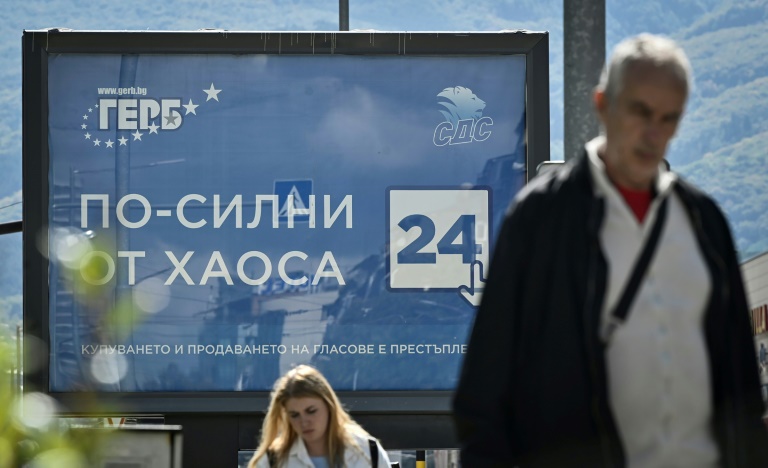
Exit polls indicated the party of conservative former premier Boyko Borisov has come first in Bulgaria’s general election Sunday, the country’s fourth in 18 months, held amid mounting anxiety over soaring inflation and the impact of the Ukraine war.

Borisov’s GERB party has won around 25 percent of the vote, followed by the party of his centrist rival Kiril Petkov, which won around 19 percent, according to exit polls.

However, 63-year-old veteran former premier Borisov will face an uphill battle finding coalition partners.

He has previously held power three times, and ran on a ticket of restoring calm and ending the worst period of political instability in Bulgaria’s post-communist history.

While endemic corruption was the focus of the previous vote last November, economic woes are now top of voters’ concerns.

The European Union’s poorest member state is battling annual inflation of close to 20 percent.

Krasimira Velkova, a 64-year-old economist who cast her ballot in Sofia, confirmed these fears.

“People worry about inflation, about the fact that when you enter a food store, a shopping trolley that’s just half full costs a fortune. The difference compared to last year is absolutely staggering,” she told AFP.

“We are worried about how we’ll get through the winter,” Velkova added.

Sunday’s vote was marked by a lack of enthusiasm, with turnout on just 25 percent at 4:00 p.m. local time (1300 GMT).

– ‘The lesser evil’ –

On Sunday Borisov argued that he was Bulgaria’s “most experienced” politician and stressed the country’s European Union and NATO allegiances.

“We need people with experience in these troubled times,” 62-year-old garage owner Bogomil Gruev said after casting a ballot in a Sofia suburb. “We can reproach Boyko for some things but he is the lesser evil.”

Another voter, 47-year-old nurse Rada Mincheva, praised Borisov’s ability to manoeuvre between western and Russian interests.

“The war is very close to us,” she said. “We’d better not provoke anyone.”

The Balkan country has been dogged by political instability since early last year, when GERB lost power following massive anti-corruption demonstrations. 

Borisov’s rival, outgoing reformist premier Kiril Petkov, 42, had urged voters to let him “continue the change” his government had initiated on an anti-corruption platform.

The Harvard-educated former entrepreneur stormed onto the political scene in 2021 but his precarious four-party coalition was toppled in a no-confidence motion after just seven months.

Petkov urged people on Sunday “to make the important choice… to move forward towards a new, prosperous, capable and transformed Bulgaria.

“I hope that more young people who left will return to Bulgaria!” he said after casting his ballot in Sofia.

His government had offered substantial rises in pensions and Petkov said he was planning a rise of the average salary in Bulgaria, which now stands at 870 euros ($853), the lowest in the 27-nation EU.

Retired lawyer Sasho Chobanov, 74, hailed the “right foundations” laid down by Petkov’s reformist, if short-lived, cabinet.

“The only thing that I am anxious about, from a moral point of view, is not to have the bandit party come back to power,” he said, referring to GERB.

– Borisov isolated –

Petkov has categorically ruled out forming a coalition with Borisov, heightening fears the vote may fail to end the country’s political turmoil. 

Borisov, on the other hand, repeated once again on Sunday that he would be open to talks with anyone on forming a cabinet — for the sake of stability amid the war in Ukraine and people’s fears about rising inflation.

“What’s important for us is for reason to prevail…,” he said. “Believe me, right now I am the most well-meaning and open person to all parties.”

However, New Bulgarian University analyst Antony Todorov was sceptical about the chances of Borisov’s GERB party being in a position to form a stable coalition.

“I don’t believe that GERB, which is very isolated, could return to power,” Todorov said.

The protracted political instability has left Bulgaria struggling to pass reforms and has hampered economic growth.

Another analyst, Georgy Kiryakov, said Borisov could find potential coalition partners in the Turkish minority MRF party and the pro-Russian ultra-nationalist Vazrazhdane party, which look to have taken 14 and 10 percent of the vote respectively.

Ethnic tensions dominate as Bosnia votes

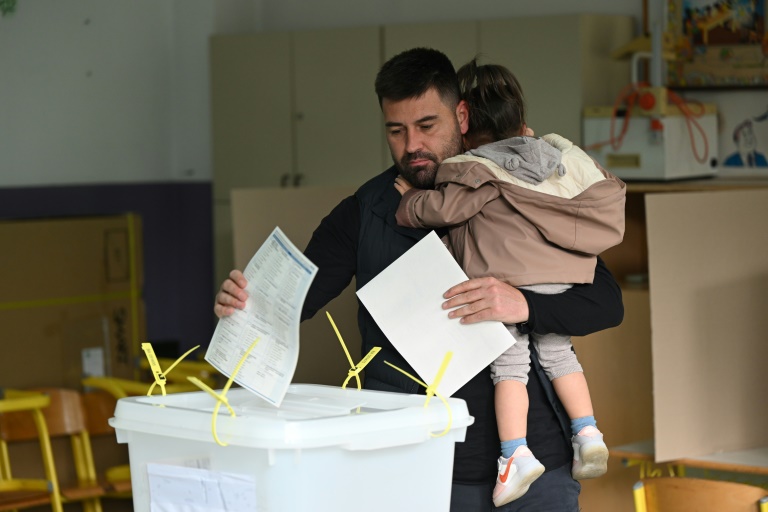
Bosnians voted in general elections on Sunday, following a campaign marked by threats of secession, political infighting and fears of future turmoil as ethnic tensions in the country grow.  

Voters cast ballots in a dizzying number of contests, including for the three members of Bosnia’s tripartite presidency, the deputies of the central parliament and a string of local races.

The polls closed at 7:00 pm local time (17:00 GMT), with the first batch of preliminary results expected within hours.

Nearly three decades after war ravaged the Balkan country, Bosnia continues to be burdened by its ethnic divisions. 

The Balkan state has been governed by a dysfunctional administrative system created by the 1995 Dayton Agreement that succeeded in ending the conflict in the 1990s, but largely failed in providing a framework for the country’s political development.

Bosnia remains partitioned between a Serb entity — the Republika Srpska (RS) — and a Muslim-Croat federation connected by a weak central government.

In the war’s wake, ethnic political parties have long exploited the country’s divisions in a bid to maintain power.

“I hope for nothing. I vote because that is the only thing I can do as an individual,” said Amra Besic, a 57-year-old economist, after voting.

– Coalition clash –

In the run-up to Sunday’s vote, the country has been torn between secessionist Orthodox Serbs and Catholic Croats demanding greater autonomy and electoral reforms. 

The country’s Muslim Bosniaks will also face a choice of voting for a disparate, 11-party coalition that is trying to unseat the rule of the mainstream SDA.

The SDA is led by Bakir Izetbegovic — the son of the first president of independent Bosnia — and has largely dominated the political scene in the country for decades. 

After casting a ballot at a polling station in downtown Sarajevo, Izetbegovic called on Bosnians to vote for politicians “who will not create blockades and crises, who will not chase away the youth from Bosnia-Herzegovina”. 

Ahead of the polls, many voters said the lack of young candidates offering fresh ideas had left them largely uninspired. 

“Most of the candidates that are running are the ones we have been watching for the last 20 years,” said Sara Djogic, a 21-year-old philosophy student in the capital Sarajevo. 

“There are not many who offer something new,” she added.

With little to no polling data available, analysts said incumbents and nationalist parties that have dominated the post-war political scene are likely to win many of the races.

The leader of Bosnia’s Serbs, Milorad Dodik, is seeking his third term as the president of the RS, after completing a stint in the tripartite presidency. 

For the past year, Dodik has been stoking tensions with his frequent calls for Bosnia’s Serbs to separate even further from the country’s central institutions, earning him fresh sanctions from the US in January. 

“People are motivated to vote for stability, for peace, for a safe life in this region,” said Dodik after voting in his home village of Laktasi in the RS. 

Dodik’s primary challenger Jelena Trivic has vowed to crack down on corruption in the RS if elected. 

“Our revenge will be the law,” Trivic said before the vote.

– Fears of turmoil –

For the country’s Catholic Croats, political turmoil has also been brewing.

Ahead of the election, many Croats have been demanding electoral reforms with the leading nationalist party HDZ threatening to boycott the contest.

Their grievances are steeped in the vast numerical advantage held by Bosniaks in the Muslim-Croat federation, which has allowed Muslim voters to hold de facto control over who can be elected to lead the Croats at the presidential level. 

HDZ and other Croat parties have been calling for the creation of a new mechanism to allow the community to choose their own representatives to the presidency and upper house. 

The move, however, has been fiercely opposed by the federation’s ruling Bosniak party.

With threats of fresh boycotts, fears are growing of potential turmoil after the polls if the incumbent Croat co-president Zeljko Komsic — who is widely reviled by all Croat parties that view him as a Bosniak proxy — is re-elected.

The ever-present threats and vitriol has led some to skip the polling booth on Sunday. 

“I do not expect anything new after these elections. Everything will be the same,” said Mira Sladojevic, a pensioner in her seventies in Sarajevo.

“I haven’t voted for a long time,” she added. 

Others hoped the elections would offer a fresh chance for change in Bosnia. 

“I have never been as optimistic,” Muniba Hodzic, a 63-year-old pensioner, told AFP. 

“I decided who I am going to vote for, and I think things will get better for us.”

Fall of Ukraine rail hub threatens Russian war gains

As Russian troops retreat after losing the key Ukrainian town of Lyman they need to set up a new frontline to protect their dwindling gains — but one key supply route has already been cut off.

The railway lines in northeastern Ukraine converge at Kupiansk Vuzlovyi before heading south towards Svatove, in the Luhansk region, now claimed by Moscow as an annexed Russian territory.

During the first six months of this year’s Russian invasion of Ukraine, the trains rattling through Kupiansk Vuzlovyi’s huge marshalling yards carried supplies southwards to the occupation forces.

But now the soldiers patrolling the modern — but heavily-damaged — station are Ukrainian and the tracks are silent.

“This site has always been considered a target of strategic importance, it’s a railway and cargo connection point,” said “Rosomakha”, a soldier whose call sign is the Ukrainian word for “Wolverine”.

As Rosomakha’s unit visited the station on Sunday, Ukraine’s President Volodymyr Zelensky was announcing that Lyman, a frontline town in the Donetsk region, had been cleared of Russian troops.

Kupiansk Vuzlovyi, an industrial suburb on the east bank of the Oskil river southeast of Kupiansk proper, fell a week earlier when the Russian troops holed up in its brick factory withdrew under fire.

The Russian forces are now expected to try again to stall the Ukrainian offensive deeper inside the territory Moscow claims to have annexed, 30 kilometres (19 miles) down the rail line in Svatove.

– ‘Our land’ –

But Rosomakha and his comrades are not overly concerned. They claim that the Russians fled in disarray and that, once Ukraine has reorganised its forces in Kupiansk, they are ready to press on.

“They escaped in panic and they relocated a lot of units elsewhere in the middle of the summer,” he said, adding that recently captured prisoners had given them a good idea of Russian planning.

Ukraine knows, for example, that some of the Russian positions have been reinforced with conscripts since President Vladimir Putin announced what he called a “partial mobilisation” of reserve manpower.

But they are not intimidated by this, nor by Moscow’s claim on Friday to have annexed four Ukrainian regions, including Luhansk and Donetsk, into Russia — a move dismissed by the international community.

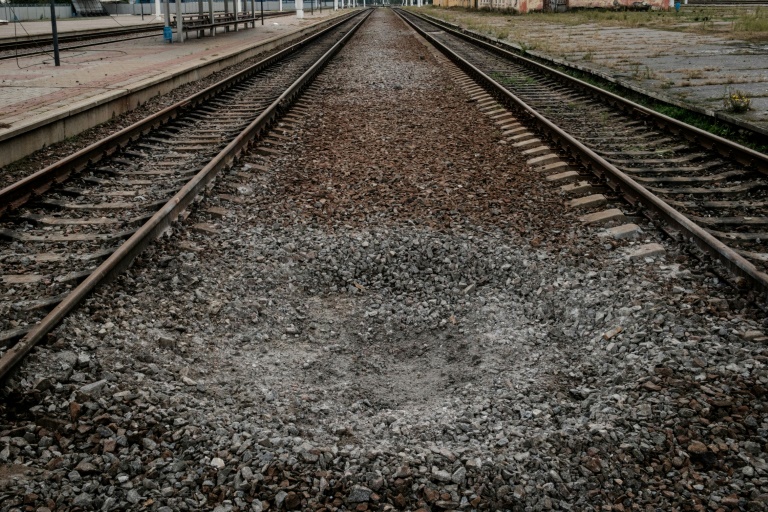
“According to Ukrainian law, this is the territory of Ukraine, this is our land,” Rosomakha told AFP at Kupiansk Vuzlovyi station, standing by a crater left by a 120mm mortar shell fired by the retreating Russians. 

“I’m originally from the Luhansk region, which is why I won’t stop until the very last Russian is removed from this land.”

Behind him the tall glass windows of the station are shattered, and the ticket hall is empty and silent, the timetable still showing departure times for Kharkiv, Kyiv and the far off Black Sea port of Odessa.

Stay or go? Hard choice for Florida islanders devasted by Ian

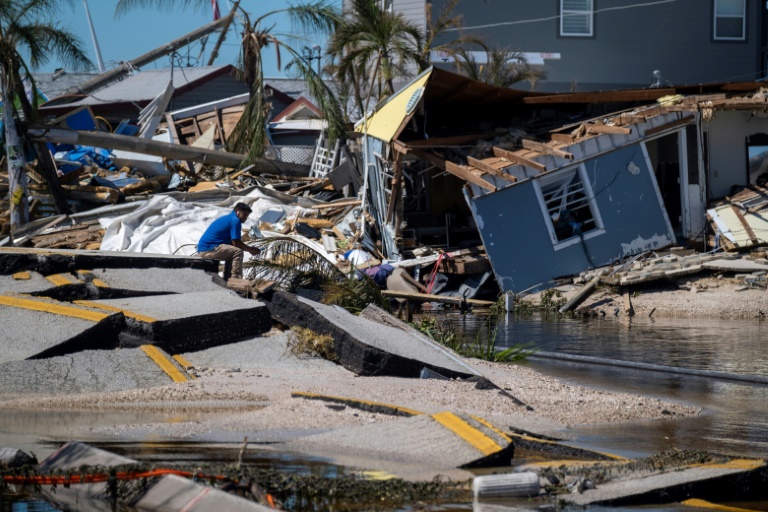
Karen Pagliaro walks down Matlacha’s main street, dodging downed trees, debris and abandoned vehicles, unsure where to go in the small island town cut off after Hurricane Ian damaged bridges linking it to mainland Florida.  

“We feel kind of forgotten,” says the 50-year-old teacher, who lost her home to the storm. “We thought they’d send in help, water and supplies and things, and we were told no, just get off.”

Until Wednesday, Matlacha was a small paradise in southwest Florida.

The fishing village of 800 people across two islets was dotted with colorful wooden houses built around the wide street. It was a place to enjoy the sea, good weather, seafood restaurants and small art galleries. 

The hurricane changed everything. 

Three days after Ian hit, the Coast Guard, firefighters and citizens from nearby towns are still coming by boat to rescue the last residents who were trapped there after refusing to evacuate. 

Other residents, those who did leave the island, are making the journey in the opposite direction from the mainland to check on the damage to their homes. 

Christian Lopez watches the jetty as the emergency services evacuate people — but he has no intention of leaving, despite losing his home.  

“I’d rather stay here than go somewhere else and be on the street. Here at least we have a little roof and we are going to try to fix up the trailer where we live,” says the 25-year-old. 

– ‘I never want to come back’ –

At the other end of Matlacha, the main street is cut off by a huge crevasse that people have to cross thanks to a makeshift bridge made of a metal board.    

Dozens of stunned and weary people walk somberly about, taking in the devastation. Most of them share the same uncertainty of not knowing what to do or where to go. 

“I don’t have a plan,” says John Lynch, sounding resigned. The 59-year-old’s house is sinking into the sea and he is preparing to leave. 

“We’ve been here for 25 years… It’s heartbreaking because this is where we plan on living for the rest of our lives.”  

Karen Pagliaro doesn’t know what she is going to do either. She has nowhere to go. The school where she works is temporarily closed because of hurricane damage. 

What is clear to her is that she wants to return to live in Matlacha.  “It’s our beloved city and we love it here,” she says.  

Near the pier, Jim Bedra doesn’t share that sentiment. The septuagenarian is about to leave town with his wife, Kathy, and their dog, Luna, on a Coast Guard boat.   

Last week he wanted to evacuate the island with Kathy and their 31-year-old son, but the two convinced him to stay where they had lived since 2013.  

He no longer has a home and his voice cracks at the thought. “We are going to stay in a shelter, I imagine,” says Bedra, who wants to return to his safely landlocked home state of Ohio. 

“I never want to come back here,” he says before boarding the boat for the mainland. 

“This is not the retirement we looked for.”

ma/st/bbk

Bulgarians vote again, anxious about soaring prices

Bulgarians voted on Sunday in their fourth general election in 18 months, anxious about soaring consumer prices and energy costs ahead of a winter overshadowed by the Ukraine war.

While endemic corruption was the focus of the previous vote last November, economic woes are now top of voters’ concerns.

The European Union’s poorest member state is battling annual inflation of close to 20 percent.

Krasimira Velkova, a 64-year-old economist who cast her ballot in Sofia, confirmed these fears.

“People worry about inflation, about the fact that when you enter a food store, a shopping trolley that’s just half full costs a fortune. The difference compared to last year is absolutely staggering,” she told AFP.

“We are worried about how we’ll get through the winter,” Velkova added.

Bulgaria’s veteran former premier Boyko Borisov, 63, could benefit from people’s fears.

He held power three times and dominated politics for a decade and is now eyeing a comeback on a “return to stability” platform. 

On Sunday he trumpeted that he was Bulgaria’s “most experienced” politician and stressed the country’s European Union and NATO allegiances.

“We need people with experience in these troubled times. We can reproach Boyko for some things but he is the lesser evil”, 62-year-old garage owner Bogomil Gruev said after casting a ballot in a Sofia suburb.

Another voter, 47-year-old nurse Rada Mincheva, praised Borisov’s ability to manoeuvre between western and Russian interests.

“The war is very close to us. We’d better not provoke anyone,” she said.

Polls on the eve of the ballot show support for his conservative GERB party rising, crediting it with about 25 percent of the votes.


– ‘A new Bulgaria’ – 

The Balkan country has been dogged by political instability since early last year, when GERB lost power following massive anti-corruption demonstrations. 

Borisov’s rival, outgoing reformist premier Kiril Petkov, 42, has urged voters to let him “continue the change” he started under a “zero corruption” slogan but was lagging in the polls on around 16 percent.

The Harvard-educated former entrepreneur stormed onto the political scene in 2021 but his precarious four-party coalition was toppled in a no-confidence motion after just seven months in power.

Petkov urged people on Sunday “to make the important choice… to move forward towards a new, prosperous, capable and transformed Bulgaria”.

“I hope that more young people who left will return to Bulgaria!” he said after casting his ballot in Sofia, together with his Canadian wife.

His government had offered substantial rises in pensions and Petkov said he was planning a rise of the average salary in Bulgaria, which now stands at 870 euros ($853), the lowest in the 27-nation EU.

Retired lawyer Sasho Chobanov, 74, hailed the “right foundations” laid down by Petkov’s reformist, if short-lived, cabinet.

“The only thing that I am anxious about, from a moral point of view, is not to have the bandit party come back to power,” he said, referring to GERB.


– Voter fatigue –

Petkov categorically ruled out forming a coalition with Borisov, heightening fears the vote may fail to end the country’s worst period of political instability since the end of Communism in 1989. 

Borisov, on the other hand, repeated once again on Sunday that he would be open to talks with anyone on forming a cabinet — for the sake of stability amid the war in Ukraine and people’s fears about rising inflation.

“What’s important for us is for reason to prevail… Believe me, right now I am the most well-meaning and open person to all parties,” he said.

However, New Bulgarian University analyst Antony Todorov was sceptical about the chances of Borisov’s GERB party being in a position to form a stable coalition.

“I don’t believe that GERB, which is very isolated, could return to power,” Todorov said.

The protracted political instability has left Bulgaria struggling to pass reforms and has hampered economic growth.

Another analyst, Georgy Kiryakov, said Borisov could find potential coalition partners in the Turkish minority MRF party and the pro-Russian ultra-nationalist Vazrazhdane party.

Voter fatigue was also high, analysts said. By by 4:00 pm, turnout was just over 25 percent of eligible voters — roughly the same as during the snap vote in November 2021.

Voting was due to end at 8:00 pm (1700 GMT), when polling agencies will announce their first exit poll results.

Hundreds protest in Turkey in support of Iranian women

Hundreds of protesters took to the streets in Turkey on Sunday to condemn Iran’s crackdown on women-led demonstrations sparked by a young woman’s death after her arrest by the country’s notorious morality police.

In Istanbul, many Iranians were among the hundreds of people who chanted slogans against the Tehran regime and in support of Iranian women.

Women held red roses, Iranian flags and signs bearing the words “women, life, freedom”, the battle cry of the protest movement that has rocked Iran and was triggered last month by the death of Mahsa Amini, a 22-year-old Iranian Kurd.

In Diyarbakir, a southeastern city with a majority Kurdish population, around 200 people gathered brandishing photographs of Iranian women killed in the crackdown and a large banner with the slogan “women, life, freedom” in Kurdish, an AFP correspondent reported.

A demonstration in solidarity with Iranian women attended by hundreds of people was also held in the western city of Izmir on Saturday evening, according to images published on social media and verified by AFP.

At least 92 people have been killed in Iran since the start of the protests two weeks ago, Norway-based NGO Iran Human Rights said on Sunday.

UK's Truss admits tax cuts misstep at start of tense Tory conference

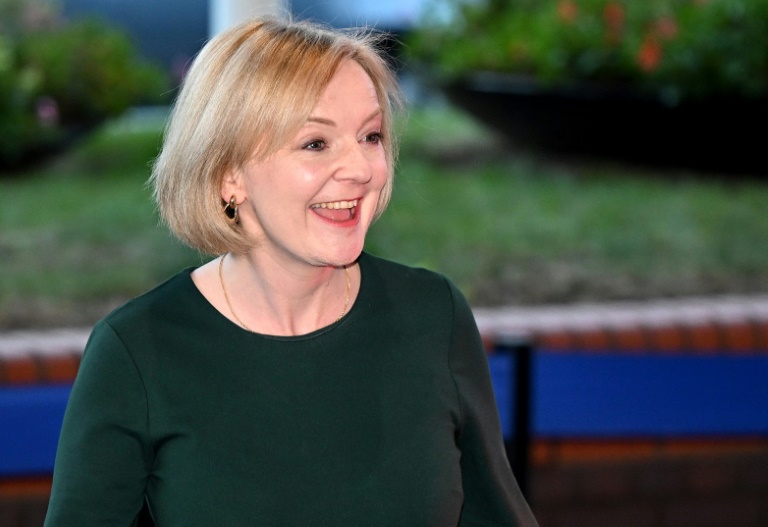
UK Prime Minister Liz Truss on Sunday conceded she should have better prepared Britain for her recent debt-driven mini-budget, which slashed taxes and sparked market turmoil, as her restive ruling Tories kick off their annual conference.

Less than a month into the job but already mired in a deep crisis, the new Tory leader insisted the controversial plans would return Britain to economic growth, as it grapples with decades-high inflation and imminent recession.

With the Conservative party faithful gathering for four days in Birmingham, Truss also sought to reassure critics she will reduce the extra government borrowing earmarked to fund the tax cuts for the wealthiest.

“I do stand by the package we announced… but I do accept we should have laid the ground better there,” Truss told the BBC in her first live TV appearance since the contentious proposals were unveiled on September 23.  

“We have a clear plan moving forward both to deal with the energy crisis and to deal with inflation, but also to get the economy growing,” she added, while also vowing to curb government debt “over the medium term”.

– ‘Under a bus’ –

Opposition parties, much of the public and even Conservative MPs — notably backers of her defeated leadership rival Rishi Sunak — are aghast at the mini-budget announced by finance minister Kwasi Kwarteng.

It went further than many had expected, abolishing the top rate of income tax and lifting a cap on bankers’ bonuses.

Markets tanked in response, and the Bank of England staged an emergency intervention to bail out embattled pension funds, setting the stage for a likely fractious annual conference.

Truss revealed on Sunday she had not discussed axeing high-earners’ 45-percent tax rate with her cabinet, and appeared to distance herself from the politically toxic move by claiming “it was a decision that the chancellor made”.

That prompted an immediate rebuke from erstwhile Tory MP ally Nadine Dorries, who accused her of “throwing (Kwarteng) under a bus on the first day of conference”.

Appearing on the BBC immediately after Truss, Conservative lawmaker Michael Gove was one of several Tories to express alarm at the plans.

He branded them “profoundly” problematic and said there would need to be “a course correction”.

– Poll rout –

Reports suggest some Tory MPs could join opposition parties’ attempts to block aspects of the mini-budget in parliament.

Meanwhile concerns are growing of a return to government austerity measures, after cabinet minister Simon Clarke warned on Saturday of the “very large welfare state” and need to “trim the fat”.

Critics argue Truss — elected leader by just 81,000 party members after the summer-long leadership contest — has no mandate to reimpose the type of swingeing cuts seen under the Conservative-led coalition government of 2010-2015.

During the campaign, the 47-year-old insisted she was “not planning public spending reductions”, but failed to reiterate that stance on Sunday.

A raft of polls have found Truss and her economic package deeply unpopular, alongside plummeting ratings for the Tories.

Some surveys showed Labour with mammoth leads of up to 33 points — its biggest since the heyday of its former prime minister Tony Blair in the late 1990s.

Echoing Blair, Labour leader Keir Starmer insists his party now represents mainstream UK voters.

Truss may at least take some relief from reports that Sunak and former prime minister Boris Johnson will stay away from Birmingham.

– ‘Decadence’ –

But plenty of critics remain.

Hundreds of protesters angry at the government’s handling of the worsening cost-of-living crisis massed in Birmingham on Sunday, after mass demonstrations in London and elsewhere the previous day.

“I’m here because this is the worst government we’ve had in my lifetime — and I’m nearly 73,” retired teacher Jane Scott told AFP at the protest in the city’s Victoria Square.

As various industries stage nationwide strikes this year, rail union leader Mick Lynch joined the rally, branding the situation “a class struggle”.

“We’ve seen the decadence and the corruption of the ruling class in this country,” he told attendees chanting “Tax the rich, not the poor. We won’t take it any more” and waving “Tories out” placards.

Inside the conference, the programme has been pared back to eliminate some of its fringe partying following the September 8 death of Queen Elizabeth II -– who appointed Truss only two days before she died. 

Kwarteng is due to address the main floor on Monday, before Truss closes it with the leader’s keynote speech on Wednesday.

UK's Truss admits tax cuts misstep at start of tense Tory conference

UK Prime Minister Liz Truss on Sunday conceded she should have better prepared Britain for her recent debt-driven mini-budget, which slashed taxes and sparked market turmoil, as her restive ruling Tories kick off their annual conference.

Less than a month into the job but already mired in a deep crisis, the new Tory leader insisted the controversial plans would return Britain to economic growth, as it grapples with decades-high inflation and imminent recession.

With the Conservative party faithful gathering for four days in Birmingham, Truss also sought to reassure critics she will reduce the extra government borrowing earmarked to fund the tax cuts for the wealthiest.

“I do stand by the package we announced… but I do accept we should have laid the ground better there,” Truss told the BBC in her first live TV appearance since the contentious proposals were unveiled on September 23.  

“We have a clear plan moving forward both to deal with the energy crisis and to deal with inflation, but also to get the economy growing,” she added, while also vowing to curb government debt “over the medium term”.

– ‘Under a bus’ –

Opposition parties, much of the public and even Conservative MPs — notably backers of her defeated leadership rival Rishi Sunak — are aghast at the mini-budget announced by finance minister Kwasi Kwarteng.

It went further than many had expected, abolishing the top rate of income tax and lifting a cap on bankers’ bonuses.

Markets tanked in response, and the Bank of England staged an emergency intervention to bail out embattled pension funds, setting the stage for a likely fractious annual conference.

Truss revealed on Sunday she had not discussed axeing high-earners’ 45-percent tax rate with her cabinet, and appeared to distance herself from the politically toxic move by claiming “it was a decision that the chancellor made”.

That prompted an immediate rebuke from erstwhile Tory MP ally Nadine Dorries, who accused her of “throwing (Kwarteng) under a bus on the first day of conference”.

Appearing on the BBC immediately after Truss, Conservative lawmaker Michael Gove was one of several Tories to express alarm at the plans.

He branded them “profoundly” problematic and said there would need to be “a course correction”.

– Poll rout –

Reports suggest some Tory MPs could join opposition parties’ attempts to block aspects of the mini-budget in parliament.

Meanwhile concerns are growing of a return to government austerity measures, after cabinet minister Simon Clarke warned on Saturday of the “very large welfare state” and need to “trim the fat”.

Critics argue Truss — elected leader by just 81,000 party members after the summer-long leadership contest — has no mandate to reimpose the type of swingeing cuts seen under the Conservative-led coalition government of 2010-2015.

During the campaign, the 47-year-old insisted she was “not planning public spending reductions”, but failed to reiterate that stance on Sunday.

A raft of polls have found Truss and her economic package deeply unpopular, alongside plummeting ratings for the Tories.

Some surveys showed Labour with mammoth leads of up to 33 points — its biggest since the heyday of its former prime minister Tony Blair in the late 1990s.

Echoing Blair, Labour leader Keir Starmer insists his party now represents mainstream UK voters.

Truss may at least take some relief from reports that Sunak and former prime minister Boris Johnson will stay away from Birmingham.

– ‘Decadence’ –

But plenty of critics remain.

Hundreds of protesters angry at the government’s handling of the worsening cost-of-living crisis massed in Birmingham on Sunday, after mass demonstrations in London and elsewhere the previous day.

“I’m here because this is the worst government we’ve had in my lifetime — and I’m nearly 73,” retired teacher Jane Scott told AFP at the protest in the city’s Victoria Square.

As various industries stage nationwide strikes this year, rail union leader Mick Lynch joined the rally, branding the situation “a class struggle”.

“We’ve seen the decadence and the corruption of the ruling class in this country,” he told attendees chanting “Tax the rich, not the poor. We won’t take it any more” and waving “Tories out” placards.

Inside the conference, the programme has been pared back to eliminate some of its fringe partying following the September 8 death of Queen Elizabeth II -– who appointed Truss only two days before she died. 

Kwarteng is due to address the main floor on Monday, before Truss closes it with the leader’s keynote speech on Wednesday.

Close Bitnami banner
Bitnami