World

Stay or go? Hard choice for Florida islanders devasted by Ian

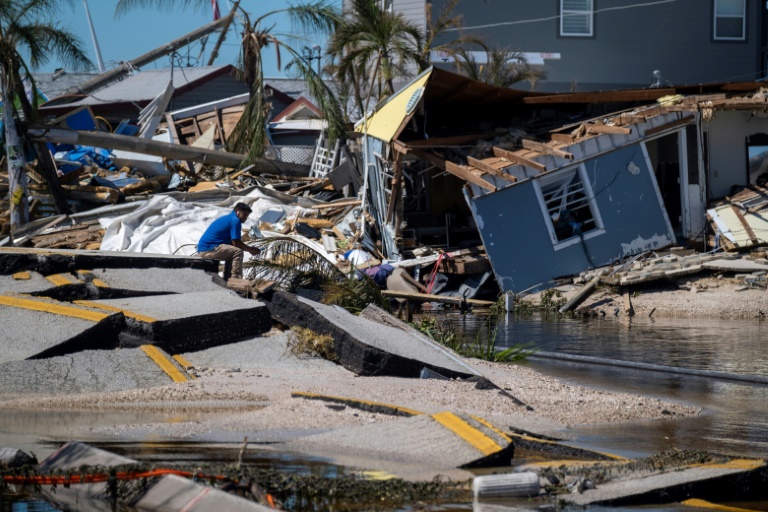
Karen Pagliaro walks down Matlacha’s main street, dodging downed trees, debris and abandoned vehicles, unsure where to go in the small island town cut off after Hurricane Ian damaged bridges linking it to mainland Florida.  

“We feel kind of forgotten,” says the 50-year-old teacher, who lost her home to the storm. “We thought they’d send in help, water and supplies and things, and we were told no, just get off.”

Until Wednesday, Matlacha was a small paradise in southwest Florida.

The fishing village of 800 people across two islets was dotted with colorful wooden houses built around the wide street. It was a place to enjoy the sea, good weather, seafood restaurants and small art galleries. 

The hurricane changed everything. 

Three days after Ian hit, the Coast Guard, firefighters and citizens from nearby towns are still coming by boat to rescue the last residents who were trapped there after refusing to evacuate. 

Other residents, those who did leave the island, are making the journey in the opposite direction from the mainland to check on the damage to their homes. 

Christian Lopez watches the jetty as the emergency services evacuate people — but he has no intention of leaving, despite losing his home.  

“I’d rather stay here than go somewhere else and be on the street. Here at least we have a little roof and we are going to try to fix up the trailer where we live,” says the 25-year-old. 

– ‘I never want to come back’ –

At the other end of Matlacha, the main street is cut off by a huge crevasse that people have to cross thanks to a makeshift bridge made of a metal board.    

Dozens of stunned and weary people walk somberly about, taking in the devastation. Most of them share the same uncertainty of not knowing what to do or where to go. 

“I don’t have a plan,” says John Lynch, sounding resigned. The 59-year-old’s house is sinking into the sea and he is preparing to leave. 

“We’ve been here for 25 years… It’s heartbreaking because this is where we plan on living for the rest of our lives.”  

Karen Pagliaro doesn’t know what she is going to do either. She has nowhere to go. The school where she works is temporarily closed because of hurricane damage. 

What is clear to her is that she wants to return to live in Matlacha.  “It’s our beloved city and we love it here,” she says.  

Near the pier, Jim Bedra doesn’t share that sentiment. The septuagenarian is about to leave town with his wife, Kathy, and their dog, Luna, on a Coast Guard boat.   

Last week he wanted to evacuate the island with Kathy and their 31-year-old son, but the two convinced him to stay where they had lived since 2013.  

He no longer has a home and his voice cracks at the thought. “We are going to stay in a shelter, I imagine,” says Bedra, who wants to return to his safely landlocked home state of Ohio. 

“I never want to come back here,” he says before boarding the boat for the mainland. 

“This is not the retirement we looked for.”ma/st/bbk
Ukraine demining teams race to clear danger before winter

Small, hidden and lethal, mines and other explosives left behind by retreating Russian forces in eastern Ukraine pose an urgent challenge for demining teams ahead of winter.

“Without us, there is no chance of repairing services like electricity before winter,” said Artem, who heads a mine-clearing unit working around recently liberated Izyum.

“We found more than 30 mines and artillery shells today, mostly shells,” the 33-year-old told AFP, wiping his brow after removing his protective eyewear.

His 10-strong unit is tasked with clearing areas around damaged critical infrastructure such as electricity cables, water and gas pipes.

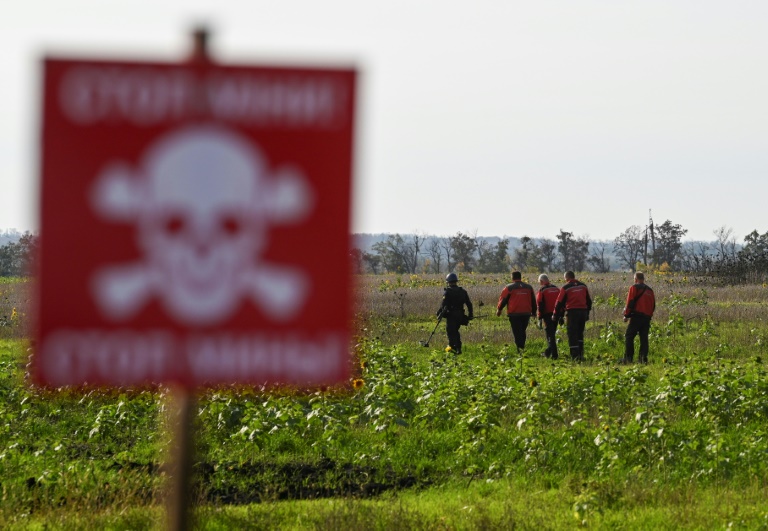
“Every day we start off where we finished yesterday,” he said, as a team of electricity workers gingerly advanced in single file behind a mine clearer into a sunflower field and towards a broken cable.

Other colleagues stacked discovered mines with detonators safely removed beside a truck for loading and disposal.

Demining teams dot the debris-strewn road verges between Izyum, which was captured by Ukrainian forces last month after six months, and the border of Donetsk region not far down the road.

Artem, who didn’t want to give his full name, spoke candidly about his team’s perilous work, scanning road verges and carefully wading into tall grass fields. 

“Its our job, it’s what we know how to do, but now even more than ever it’s our duty,” he said, referring to Russia’s invasion of Ukraine.

– No end in sight –

“We have 35 staff, in seven teams, from different regions of Ukraine,” said Vasyl Melnyk, commander of the demining teams in Izyum district.

“Nobody knows how long the process will last,” the 42-year-old told AFP at the base in Izyum.

“Despite the help of international organisations we haven’t even finished finding mines left since the first phase of the conflict began in 2014,” he said. 

But he added that “if we work quickly”, Izyum district can be cleared by November so that infrastructure can be operational again by winter.

Since the liberation of Izyum in early September, his teams have covered some 100 hectares in the district, and found over 5,000 mines from around former Russian positions.

The haul includes both anti-tank and anti-personnel mines as well as artillery shells, and, he said, “butterfly” mines, which are internationally banned. 

The small green explosives with wing-like sides, known in Ukrainian as “petals”, are especially dangerous, according to Melnyk, as they can be picked up by children.

Out on the road, emptied of traffic other than military vehicles headed for the front, one of Sacha’s team hammers in wooden poles along the cleared verges.

“It’s no more dangerous than crossing the road on a normal day,” said 44-year-old Sacha with a shrug and a cigarette in his mouth.

“Now the nearest mine is two metres away, so it’s safe here more or less,” he said as a colleague stapled a red sign to the pole with a white skull and crossbones reading: “Danger – Mines!”

At least 125 dead in Indonesia football stadium stampede

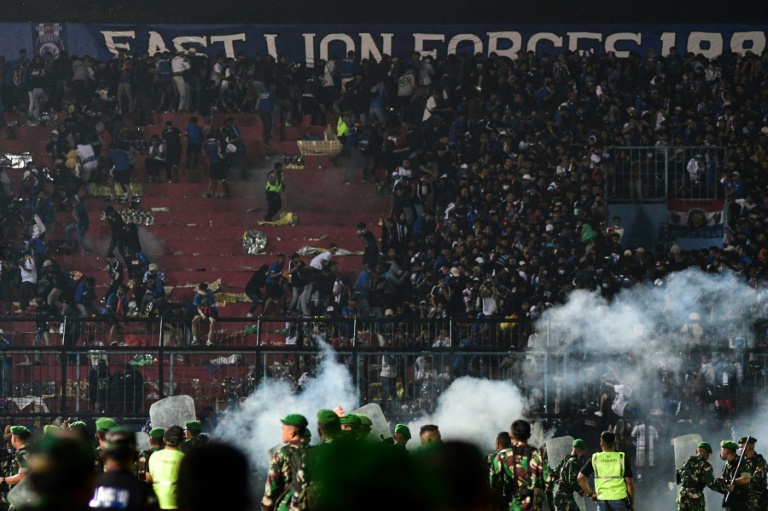
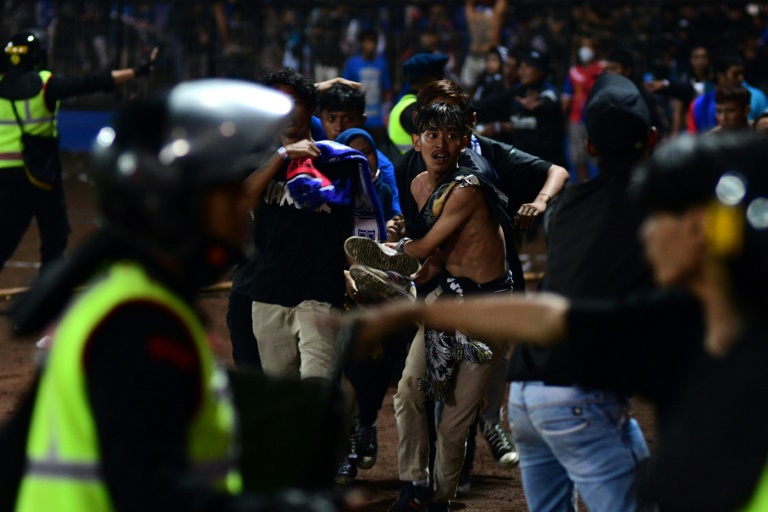
At least 125 people died at an Indonesian football stadium when thousands of angry home fans invaded the pitch and police responded with tear gas that triggered a stampede, authorities said Sunday.

The tragedy on Saturday night in the city of Malang, which also left 323 injured according to police, was one of the world’s deadliest sporting stadium disasters.

Arema FC supporters at the Kanjuruhan stadium stormed the pitch after their team lost 3-2 to the visiting team and bitter rivals, Persebaya Surabaya.

Police, who described the unrest as “riots”, said they tried to force fans to return to the stands and fired tear gas after two officers were killed.

Many of the victims were trampled or choked to death, according to police. 

At least 125 people died, East Java deputy governor Emil Dardak told broadcaster Metro TV on Sunday evening, significantly lowering officials’ earlier death toll of 174 because of double counting.

“Some names were recorded twice because they had been referred to another hospital and were written down again,” he said, citing data collected by local police from 10 hospitals.

Survivors described panicking spectators in a packed crowd as tear gas rained down on them.

“Officers fired tear gas, and automatically people were rushing to come out, pushing each other and it caused many victims,” 43-year-old spectator Doni, who declined to give his last name, told AFP.

“Nothing was happening, there was no riot. I don’t know what the issue was, they suddenly fired tear gas. That’s what shocked me, didn’t they think about kids, women?”

President Joko Widodo ordered an investigation into the tragedy, a safety review into all football matches and directed the country’s football association to suspend all matches until “security improvements” were completed.

A hospital director told local TV that one of the victims was five years old.

Images taken from inside the stadium during the stampede showed police firing huge amounts of tear gas and people clambering over fences. 

Amnesty International called for an investigation into why tear gas was deployed in a confined space, saying it should only be used “when other methods have failed”.

People carried injured spectators through the chaos and survivors lugged lifeless bodies out of the stadium. 

“It was so terrifying, so shocking,” 22-year-old survivor Sam Gilang, who lost three friends in the crush, told AFP.

“People were pushing each other and… many were trampled on their way to the exit gate. My eyes were burning because of the tear gas. I fortunately managed to climb up the fence and survived,” he said.

– Enduring violence –

Video footage circulating on social media showed people shouting obscenities at police, who were holding riot shields and wielding batons.

Torched vehicles, including a police truck, littered the streets outside the stadium on Sunday morning.

The stadium holds 42,000 people and authorities said it was a sell-out. Police said 3,000 people stormed the pitch. 

Fan violence is an enduring problem in Indonesia, where deep rivalries have previously turned into deadly confrontations.

Arema FC and Persebaya Surabaya are longtime rivals.

Persebaya Surabaya fans were not allowed to buy tickets for the game due to fears of violence.

However Indonesia’s coordinating minister for political, legal and security affairs, Mahfud MD, said organisers ignored a recommendation to print fewer tickets and hold the match in the afternoon instead of the evening.

On Sunday, Arema fans threw flower petals at the club’s lion mascot monument outside the stadium in tribute to the victims.

In Jakarta as many as 300 football fans, including some known as diehard “ultras”, gathered for a candlelit vigil outside the Gelora Bung Karno stadium, Indonesia’s biggest. Some chanted “Murderer!” and set off firecrackers.

– Football world mourns –

The football world mourned the disaster with Gianni Infantino, president of world football governing body FIFA, calling the stampede “a tragedy beyond comprehension”.

Manchester United and Barcelona posted tributes online while Spanish football clubs were to observe a minute’s silence before matches on Sunday as a mark of respect.

The German football association and Italy’s Serie A also tweeted their condolences.

The Asian Football Confederation, the governing body for football in the region, expressed its regret at the loss of life.

The Football Association of Indonesia (PSSI) was in touch with FIFA about the stampede and hoped to avoid sanctions, PSSI secretary general Yunus Yussi told a press conference.

FIFA’s safety guidelines prohibit the carrying of crowd control gas by police or stewards at pitchside.

Indonesia is to host the FIFA Under-20 World Cup in May.

It is also bidding to replace China as host of the 2023 Asian Cup alongside South Korea and Qatar, with a decision due this month.

Other stadium disasters include a 1989 crush at Britain’s Hillsborough Stadium, which led to the deaths of 97 Liverpool fans, and the 2012 Port Said stadium tragedy in Egypt where 74 people died in clashes.

In 1964, 320 people were killed and more than 1,000 injured during a stampede at a Peru-Argentina Olympic qualifier at Lima’s National Stadium.

King Charles III won't attend COP27 after Truss reportedly 'objected'

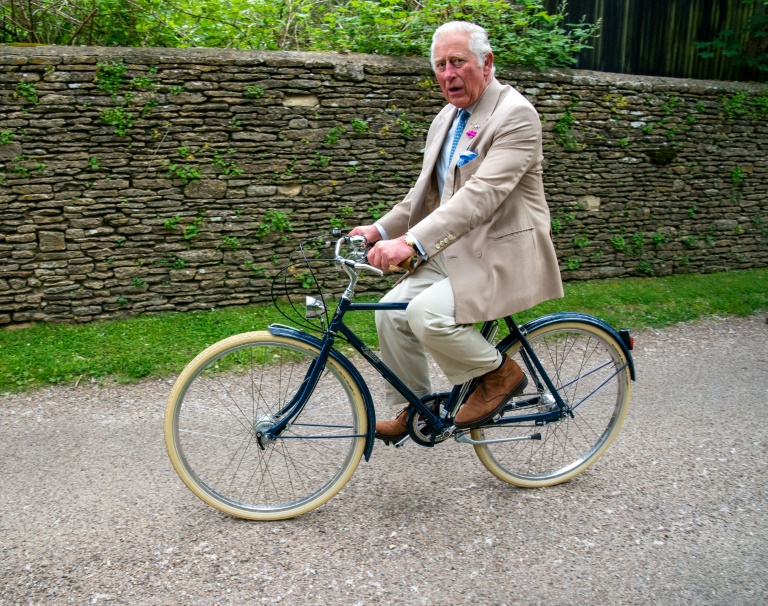
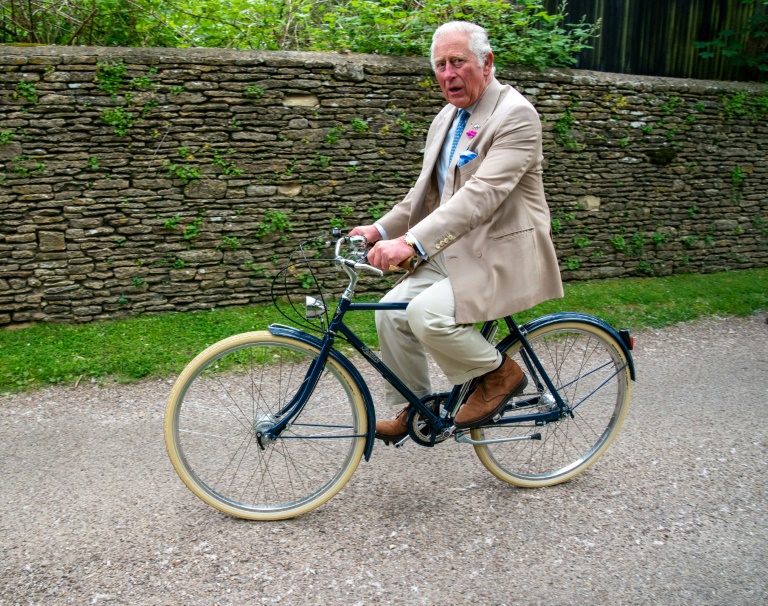
King Charles III will not travel to next month’s United Nations climate summit in Egypt, Buckingham Palace confirmed on Sunday, after UK Prime Minister Liz Truss reportedly “objected” to the keen environmentalist attending.

Britain’s new monarch, who took the throne when his mother Queen Elizabeth II died last month, had intended to deliver a speech to world leaders gathering at the COP27 summit on November 6-18, the Sunday Times reported.

But the plan has been axed after Truss — who was appointed prime minister by the late queen just two days before the latter died — opposed it during a personal audience with Charles at the palace last month, the newspaper said.

Queen Elizabeth addressed the last UN climate summit in November 2021, with the blessing of the Tory government led by Truss’s predecessor Boris Johnson.

Charles III’s office appeared to distance itself from the incendiary newspaper report, insisting the king had sought Truss’s advice.

“With mutual friendship and respect there was agreement that the king would not attend,” it told the BBC.

The Sunday Times story comes amid speculation Britain’s new leader — already under fire over her economic plans which have sparked market turmoil — could controversially scale back the country’s legally binding climate commitments.

Her newly assembled cabinet contains a number of ministers who have expressed scepticism about the so-called 2050 net zero goals, while Truss herself is seen as less enthusiastic about the policy than predecessor Johnson.

The newspaper said she is unlikely to attend COP27 — the 27th Conference of the Parties to the UN Framework Convention on Climate Change — in the Egyptian resort of Sharm el-Sheikh.

Britain hosted the last summit, COP26, in the Scottish city Glasgow. In addition to the late queen, Charles and his son William both addressed the event.

– ‘Benching soft power’ –

Downing Street declined to comment on the report.

Cabinet minister Simon Clarke dismissed it as “simply not true”, telling Sky News the decision had been made “consensually” and “amicably”.

Meanwhile, Conservative party chairman Jake Berry told the broadcaster the government was “committed to the net zero target by 2050”.

However, Tory MP Tobias Ellwood urged a rethink over the monarch’s non-participation in Egypt, tweeting he hoped “common sense will prevail”. 

“King Charles is a globally respected voice on the environment and climate change,” Ellwood added. 

“His attendance would add serious authority to the British delegation. Can we really go from hosting COP26 to benching soft power at COP27?”

The Sunday Times said the episode was “likely to fuel tensions” between Charles and Truss, but cited a government source who claimed the audience had been “cordial” and there had “not been a row”.

Meanwhile, a royal source told the paper: “It is no mystery that the king was invited to go there. 

“He had to think very carefully about what steps to take for his first overseas tour, and he is not going to be attending COP(27).”

Under convention in Britain, all overseas official visits by members of the royal family are undertaken in accordance with advice from the government.

However, despite not attending in person, reports said the king still hopes to be able to contribute in some form to the conference.

Charles III is a committed environmentalist, with a long history of campaigning for better conservation, organic farming and tackling climate change.

King Charles III won't attend COP27 after Truss reportedly 'objected'

King Charles III will not travel to next month’s United Nations climate summit in Egypt, Buckingham Palace confirmed on Sunday, after UK Prime Minister Liz Truss reportedly “objected” to the keen environmentalist attending.

Britain’s new monarch, who took the throne when his mother Queen Elizabeth II died last month, had intended to deliver a speech to world leaders gathering at the COP27 summit on November 6-18, the Sunday Times reported.

But the plan has been axed after Truss — who was appointed prime minister by the late queen just two days before the latter died — opposed it during a personal audience with Charles at the palace last month, the newspaper said.

Queen Elizabeth addressed the last UN climate summit in November 2021, with the blessing of the Tory government led by Truss’s predecessor Boris Johnson.

Charles III’s office appeared to distance itself from the incendiary newspaper report, insisting the king had sought Truss’s advice.

“With mutual friendship and respect there was agreement that the king would not attend,” it told the BBC.

The Sunday Times story comes amid speculation Britain’s new leader — already under fire over her economic plans which have sparked market turmoil — could controversially scale back the country’s legally binding climate commitments.

Her newly assembled cabinet contains a number of ministers who have expressed scepticism about the so-called 2050 net zero goals, while Truss herself is seen as less enthusiastic about the policy than predecessor Johnson.

The newspaper said she is unlikely to attend COP27 — the 27th Conference of the Parties to the UN Framework Convention on Climate Change — in the Egyptian resort of Sharm el-Sheikh.

Britain hosted the last summit, COP26, in the Scottish city Glasgow. In addition to the late queen, Charles and his son William both addressed the event.

– ‘Benching soft power’ –

Downing Street declined to comment on the report.

Cabinet minister Simon Clarke dismissed it as “simply not true”, telling Sky News the decision had been made “consensually” and “amicably”.

Meanwhile, Conservative party chairman Jake Berry told the broadcaster the government was “committed to the net zero target by 2050”.

However, Tory MP Tobias Ellwood urged a rethink over the monarch’s non-participation in Egypt, tweeting he hoped “common sense will prevail”. 

“King Charles is a globally respected voice on the environment and climate change,” Ellwood added. 

“His attendance would add serious authority to the British delegation. Can we really go from hosting COP26 to benching soft power at COP27?”

The Sunday Times said the episode was “likely to fuel tensions” between Charles and Truss, but cited a government source who claimed the audience had been “cordial” and there had “not been a row”.

Meanwhile, a royal source told the paper: “It is no mystery that the king was invited to go there. 

“He had to think very carefully about what steps to take for his first overseas tour, and he is not going to be attending COP(27).”

Under convention in Britain, all overseas official visits by members of the royal family are undertaken in accordance with advice from the government.

However, despite not attending in person, reports said the king still hopes to be able to contribute in some form to the conference.

Charles III is a committed environmentalist, with a long history of campaigning for better conservation, organic farming and tackling climate change.

Unrest simmers in Burkina Faso after claimed coup

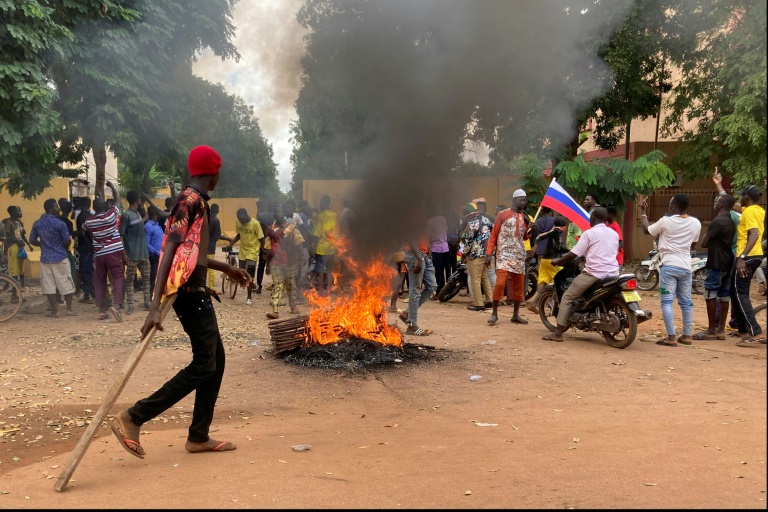
Security forces fired tear gas to disperse angry protesters outside the French embassy in Burkina Faso’s capital on Sunday, as unrest simmered in the impoverished, restive West African nation following the claim of a second coup this year.

The latest unrest began on Friday, when junior military officers announced they had toppled the country’s junta leader, sparking deep concern among world powers over the latest putsch to hit the Sahel region battling a growing Islamist insurgency.

Late on Saturday, the junta leader, Paul-Henri Sandaogo Damiba, said he had no intention of giving up power and urged the officers to “come to their senses”.

His comments came shortly after the army general staff dismissed the coup as an “internal crisis” within the military and said dialogue was “ongoing” to remedy the situation.

The capital remained tense overnight, with demonstrators gathering on the main roads of Ouagadougou as a helicopter hovered above.

In a statement read out on television on Sunday, the officers who claimed the coup said they had lifted a curfew they had imposed and called for a meeting of ministry heads for later in the day.

The officers had accused Damiba of having hidden at a military base of former colonial power France to plot a “counteroffensive,” charges that he and France denied.

On Sunday, dozens of supporters of the new self-proclaimed putsch leader, Ibrahim Traore, gathered at the French embassy in the capital.

Security forces fired tear gas from inside the compound to disperse the protesters after they set fire to barriers outside and lobbed rocks at the structure, with some trying to scale the fence, according to an AFP reporter on the scene.

There were no immediate reports of injuries.

The French foreign ministry condemned “the violence against our embassy in the strongest terms” by “hostile demonstrators manipulated by a disinformation campaign against us.”

It marked the latest incident against a France-linked building in two days, after a fire at the embassy on Saturday and a blaze in front of the French Institute in the western city of Bobo-Dioulasso. A French institute in the capital also sustained major damage, the foreign ministry said.

Traore called for an end to the attacks on Sunday.

“Things are progressively returning to order, so we urge you to freely go about your business and to refrain from any act of violence and vandalism… notably those that could be perpetrated against the French embassy and the French military base,” an officer said, reading a statement on television from Traore, who stood by his side.

The officers said they had carried out their putsch because Damiba had failed to quell jihadist attacks in the country.

Damiba himself came to power in a coup in January. He installed himself as leader of the country’s 16 million people after accusing elected president Roch Marc Christian Kabore of failing to beat back jihadist fighters. But the insurgency has raged on.

More than 40 percent of Burkina Faso remains outside government control.

Thousands have died and about two million have been displaced by the fighting since 2015, when the insurgency spread to Burkina Faso from Mali.

– ‘Burkina Faso needs peace’ –

Friday’s coup claim sparked a wave of international criticism, including from the United States, the African Union, the European Union and the regional grouping ECOWAS.

“Burkina Faso needs peace, stability and unity to fight terrorist groups and criminal networks operating in parts of the country,” said a statement by UN Secretary General Antonio Guterres.

Jihadist violence has also prompted a series of coups in Mali, Guinea and Chad since 2020.

The new Burkina putschists said they were willing “to go to other partners ready to help in the fight against terrorism”.

No country was explicitly mentioned but Russia, whose influence is growing in French-speaking Africa, is among the possible partners in question.

A few hours before the coup on Friday, hundreds of people had rallied in the capital seeking Damiba’s departure, the end of France’s military presence in the Sahel and military cooperation with Russia.

France has a contingent of military special forces based in Kamboinsin, which is about 30 kilometres (19 miles) from Ouagadougou.

Chaos before stampede delivered disaster to Indonesia football fans

Sam Gilang rushed to the exit of the Indonesian football stadium with thousands of other terrified spectators as police fired tear gas and hit fans with batons, creating a stampede that claimed at least 125 lives.

“People were pushing each other and… many were trampled on their way to the exit gate,” the 22-year-old survivor told AFP. 

Spectators — including women and children — pushed and stepped on one another, scrambling through the packed terrace gasping for air, to reach any exit at Kanjuruhan stadium in the city of Malang, East Java. 

Many of the victims were trampled or choked to death, police said, in what is one of the worst disasters in sporting history.

Gilang lost three friends in the crush. “It was so terrifying, so shocking,” he said.

A domino effect of tragic events unfolded after the final whistle in a 3-2 win for visiting team Persebaya Surabaya — the bitter rivals of Malang city’s Arema FC.

Several thousand fans descended to the pitch — some angry, some who wanted to join the crowd to shake the hands of players for home team Arema FC after the loss to their fierce rivals.

With horns blaring and obscenities shouted at the police from the crowd, they watched as their fellow fans ran across the grass.

But the police tried to force fans back into the confined stands, pushing them with their batons and riot shields.

They then unleashed a hail of tear gas on the terraces in front of the stadium’s exit gates 12 and 13. 

Police said there was a “riot” but some witnesses rebuffed that description of events.

“There was no riot. I don’t know what the issue was, they suddenly fired tear gas,” 43-year-old spectator Doni, who declined to give his last name, told AFP.

“That’s what shocked me, didn’t they think about kids, women?”

– ‘Smoke spread everywhere’ –

Panic set in as the canisters rained down, causing hundreds to rush for the exit points. 

“Smoke spread everywhere, I got hit and I panicked. The exit was already too crowded. I was confused and scared about which to take,” said 17-year-old Fian, who declined to give his last name. 

With his eyes stinging and unable to breathe, Fian recalled people shouting to each other, “escape through the emergency exit to your left!” — potentially directing hundreds to a doorway only wide enough for one person. 

Those who managed to get out emerged carrying lifeless bodies out of the stadium, inciting fury among the escaped spectators.

Supporters threw any item they could find — rocks, plastic bottles — at police as officials tried to evacuate from the stadium.

Toppling police cars and trucks, furious fans set them ablaze in an act of revenge for what had transpired. 

“The police were so arrogant, they could have just directed the supporters,” Gilang said. “It’s enough to use the batons, no need to use tear gas.”

Back in the stadium, one of Gilang’s friends lay dead in the home team’s changing room, carried there after being trampled to death. 

In the immediate aftermath, Indonesia is grappling with its own Hillsborough moment — the 1987 disaster in England that led to the deaths of 97 Liverpool fans during an FA Cup semi-final.

President Joko Widodo said an investigation into Indonesia’s tragedy will follow, as well as a safety review into all football matches — which are suspended until “security improvements” are completed.

But improvements or not, “now my parents said I am not allowed to go watch football anymore,” survivor Fian said. 

At least 125 dead in Indonesia football stadium stampede

At least 125 people died at an Indonesian football stadium when thousands of angry home fans invaded the pitch and police responded with tear gas that triggered a stampede, authorities said Sunday.

The tragedy on Saturday night in the city of Malang, which also left 180 injured, was one of the world’s deadliest sporting stadium disasters.

Arema FC supporters at the Kanjuruhan stadium stormed the pitch after their team lost 3-2 to the visiting team and bitter rivals, Persebaya Surabaya.

Police, who described the unrest as “riots”, said they tried to force fans to return to the stands and fired tear gas after two officers were killed.

Many of the victims were trampled or choked to death, according to police. 

At least 125 people died, East Java deputy governor Emil Dardak told broadcaster Metro TV on Sunday evening, significantly lowering officials’ earlier death toll of 174 because of double counting.

“124 have been identified and one has not. Some names were recorded twice because they had been referred to another hospital and were written down again,” he said, citing data collected by local police from 10 hospitals.

Survivors described panicking spectators in a packed crowd as tear gas rained down on them.

“Officers fired tear gas, and automatically people were rushing to come out, pushing each other and it caused many victims,” 43-year-old spectator Doni, who declined to give his last name, told AFP.

“Nothing was happening, there was no riot. I don’t know what the issue was, they suddenly fired tear gas. That’s what shocked me, didn’t they think about kids, women?”

President Joko Widodo ordered an investigation into the tragedy, a safety review into all football matches and directed the country’s football association to suspend all matches until “security improvements” were completed.

“I deeply regret this tragedy and I hope this football tragedy will be the last in our country,” Widodo said.

A hospital director told local TV that one of the victims was five years old.

Images taken from inside the stadium during the stampede showed police firing huge amounts of tear gas and people clambering over fences. 

Amnesty International called for an investigation into why tear gas was deployed in a confined space.

“Tear gas should only be used to disperse crowds when widespread violence has occurred and when other methods have failed. People must be warned that tear gas will be used and allowed to disperse,” it said in a statement.

People carried injured spectators through the chaos and survivors lugged lifeless bodies out of the stadium. 

“It was so terrifying, so shocking,” 22-year-old survivor Sam Gilang, who lost three friends in the crush, told AFP.

“People were pushing each other and… many were trampled on their way to the exit gate. My eyes were burning because of the tear gas. I fortunately managed to climb up the fence and survived,” he said.

– Enduring violence –

Video footage circulating on social media showed people shouting obscenities at police, who were holding riot shields and wielding batons.

Torched vehicles, including a police truck, littered the streets outside the stadium on Sunday morning. Police said 13 vehicles in total were damaged.

The stadium holds 42,000 people and authorities said it was a sell-out. Police said 3,000 people stormed the pitch. 

Fan violence is an enduring problem in Indonesia, where deep rivalries have previously turned into deadly confrontations.

Arema FC and Persebaya Surabaya are longtime rivals.

Persebaya Surabaya fans were not allowed to buy tickets for the game due to fears of violence.

However Indonesia’s coordinating minister for political, legal and security affairs, Mahfud MD, said organisers ignored a recommendation to print fewer tickets and hold the match in the afternoon instead of the evening.

On Sunday, Arema fans threw flower petals at the club’s lion mascot monument outside the stadium in tribute to the victims.

– Football world mourns –

The football world mourned the disaster with Gianni Infantino, president of world football governing body FIFA, calling the stampede “a tragedy beyond comprehension”.

Clubs Manchester United and Barcelona and Paris Saint-Germain defender Sergio Ramos also posted tributes online.

Spanish football clubs will also observe a minute’s silence before matches on Sunday as a mark of respect for the victims.

The Asian Football Confederation, the governing body for football in the region, expressed its regret at the loss of life.

The Football Association of Indonesia (PSSI) was in touch with FIFA about the stampede and hoped to avoid sanctions, PSSI secretary general Yunus Yussi told a press conference.

FIFA’s safety guidelines prohibit the carrying of crowd control gas by police or stewards at pitchside.

Indonesia is to host the FIFA Under-20 World Cup in May.

It is also bidding to replace China as host of the 2023 Asian Cup alongside South Korea and Qatar, with a decision due this month.

Other stadium disasters include a 1989 crush at Britain’s Hillsborough Stadium, which led to the deaths of 97 Liverpool fans, and the 2012 Port Said stadium tragedy in Egypt where 74 people died in clashes.

In 1964, 320 people were killed and more than 1,000 injured during a stampede at a Peru-Argentina Olympic qualifier at Lima’s National Stadium.

UK's Truss admits tax cuts misstep at start of tense Tory conference

UK Prime Minister Liz Truss on Sunday conceded she should have better prepared Britain for her recent debt-fuelled mini-budget slashing taxes, which sparked market turmoil, dismal headlines and disastrous polls.

Less than a month into the job but already mired in a deep crisis, the new Tory leader insisted the controversial plans would return Britain to economic growth, as it grapples with decades-high inflation and imminent recession.

As her restive ruling Conservative party’s annual conference gets underway in Birmingham, Truss also sought to reassure critics she will reduce the extra government borrowing earmarked to fund the tax cuts for the wealthiest.

“I do stand by the package we announced… but I do accept we should have laid the ground better there,” Truss told the BBC in her first live TV appearance since the contentious proposals were unveiled on September 23.  

“We have a clear plan moving forward both to deal with the energy crisis and to deal with inflation, but also to get the economy growing,” she added, while also vowing to curb government borrowing “over the medium term”.

– ‘Under a bus’ –

Opposition parties, much of the public and even Conservative MPs — notably backers of her defeated leadership rival Rishi Sunak — are aghast at the mini-budget announced by finance minister Kwasi Kwarteng.

It went further than many had expected, abolishing the top rate of income tax and lifting a cap on bankers’ bonuses.

Markets tanked in response, and the Bank of England staged an emergency intervention to bail out embattled pension funds, setting the stage for a difficult four-day gathering in Birmingham.

Truss revealed Sunday she had not discussed axing high-earners’ 45 percent tax rate with her cabinet, and appeared to distance herself from the politically toxic move by claiming “it was a decision that the chancellor made”.

That prompted an immediate rebuke from erstwhile Tory MP ally Nadine Dorries, who accused her of “throwing (Kwarteng) under a bus on the first day of conference”.

Meanwhile, appearing on the BBC immediately after Truss, senior Conservative lawmaker Michael Gove branded the plans “profoundly” problematic and said there would need to be “a course correction”.

– Poll rout –

Reports suggest some Tory MPs could join opposition parties’ attempts to block the most controversial aspects of the mini-budget in parliament.

They emerge as a raft of polls showed a dramatic slump in the standing of the party as well as Truss and Kwarteng.

One Yougov survey Friday found 51 percent of Britons think that she should resign — and 54 percent want the finance minister to go.

Several other polls in recent days showed the Labour party with mammoth leads of up to 33 points over the Conservatives — its biggest since the heyday of former Labour prime minister Tony Blair in the late 1990s.

Echoing Blair, Labour leader Keir Starmer insists that his party now represents mainstream UK voters.

As it is, both Sunak and former prime minister Boris Johnson are reportedly staying away from Birmingham.

But Truss will have plenty of critics lying in wait at what the Tories bill as Europe’s largest annual political event.

Protesters angry at rising energy bills and the government’s handling of the worsening cost-of-living crisis massed in London and other cities Saturday, with more demonstrations planned for Birmingham on Sunday.

– Existential threat? –

Kwarteng is due to address the grassroots gathering on Monday, before Truss closes it with the leader’s keynote speech on Wednesday.

Although both have ruled out a U-turn on their economic package, they conceded ground Friday by allowing the Office for Budget Responsibility to send Kwarteng an initial independent costing score-card of it later next week.

But the OBR has confirmed none of its assessments will be published until November 23 — something critics are urging the government to bring forward.

In Birmingham, the conference programme has already been pared back to eliminate some of its fringe partying following the September 8 death of Queen Elizabeth II -– who appointed Truss only two days before she died. 

Many commentators are urging contrition from the new leader, to avoid the kind of doomsday scenario laid out by senior Tory MP Charles Walker.

A general election is not due until January 2025 at the latest. But if one were held tomorrow, Walker said, “we would cease to exist as a functioning political party”.

Bulgarians vote again, anxious about soaring prices

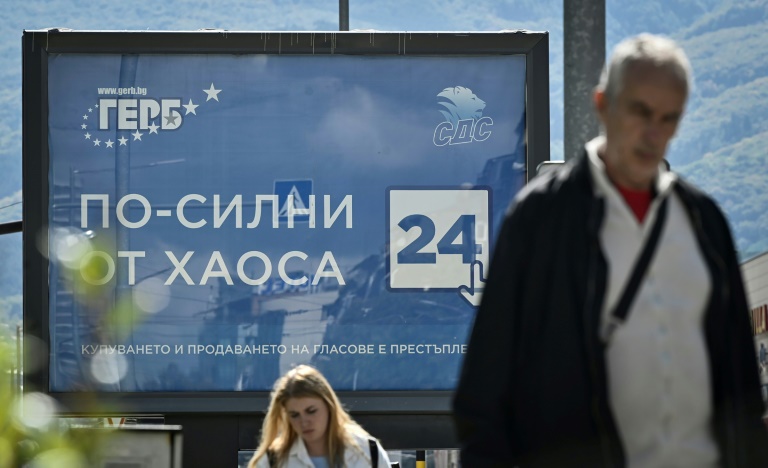
Bulgarians voted on Sunday in their fourth general election in 18 months, anxious about soaring consumer prices and energy costs ahead of a winter overshadowed by the Ukraine war.

While endemic corruption was the focus of the previous vote last November, economic woes are now top of voters’ concerns.

The European Union’s poorest member state is battling annual inflation of close to 20 percent.

Krasimira Velkova, a 64-year-old economist from Sofia who came to cast her ballot shortly after polls opened, confirmed these fears.

“People worry about inflation, about the fact that when you enter a food store, a shopping trolley that’s just half full costs a fortune. The difference compared to last year is absolutely staggering,” she told AFP.

“We are worried about how we’ll get through the winter, how we’ll bear the cold, if we’ll be able to pay our bills,” Velkova added.

Bulgaria’s former premier Boyko Borisov, 63, could benefit from people’s fears.

He held power three times and dominated politics for a decade and is now eyeing a comeback on a “return to stability” platform.

Polls on the eve of the ballot show support for his conservative GERB party rising, crediting it with about 25 percent of the votes.


– ‘More work to do’ – 

The Balkan country has been dogged by political instability since early last year, when GERB lost power following massive anti-corruption demonstrations. 

Borisov’s rival, outgoing reformist premier Kiril Petkov, 42, has urged voters to let him “continue the change” he started but is lagging in the polls on around 16 percent.

The Harvard-educated former entrepreneur stormed onto the political scene in 2021 and managed to piece together a precarious four-party coalition after winning last November’s vote.

However, after a stint in power of just seven months, he was toppled in a no-confidence motion.

In an interview with AFP this week, Petkov trumpeted his success in the fight against “corruption practices” that allowed his cabinet to redistribute public funds, offering pension rises and free kindergarten.

“So it’s a great first step but we have a lot more work to do,” he said.

“The challenge is to really show that the Bulgarians have made the choice — the choice for a new, European, progressive, transparent Bulgaria versus going back to the years of transition, to the politicians of corruption,” he said.

“I hope that more young people who left will return to Bulgaria!” a smiling Petkov said after casting his ballot in Sofia, together with his Canadian wife.

Retired lawyer Sasho Chobanov, 74, hailed the “right foundations” laid down by Petkov’s reformist, if short-lived, cabinet.

“The only thing that I am anxious about, from a moral point of view, is not to have the bandit party come back to power,” he said, referring to GERB.


– Pro-Russian kingmakers? –

Petkov categorically ruled out forming a coalition with Borisov, heightening fears the vote may fail to end the country’s worst period of political instability since the end of Communism in 1989. 

Borisov, on the other hand, repeated once again on Sunday that he would be open to anyone for talks on a cabinet — for the sake of stability amid the war in Ukraine and people’s fears about rising inflation.

“What’s important for us is for reason to prevail… Believe me, right now I am the most well-meaning and open person to all parties,” he said.

Todorov, the analyst, said he was sceptical about the chances of Borisov’s GERB party being in a position to form a stable coalition.

“I don’t believe that GERB, which is very isolated, could return to power,” Todorov said.

“The situation is critical. Bulgaria needs a government but not at any cost,” he added.

The protracted political instability has left Bulgaria struggling to pass reforms and has hampered economic growth.

Another analyst, Georgy Kiryakov, said Borisov could find potential coalition partners in the Turkish minority MRF party and the ultra-nationalist Vazrazhdane party.

The openly pro-Russian formation has gained popularity since the Russian invasion of Ukraine in February.

In a country with close historical, economic and cultural ties with Moscow, latest polls credit it with 11 to 14 percent of the vote.

Voter fatigue was also high, analysts said, with less than 9.0 percent of the eligible voters casting a ballot by 11:00 am.

Voting was due to end at 8:00, pm when polling agencies will announce their first exit poll results.

Close Bitnami banner
Bitnami