World

Bulgarians vote again, anxious about soaring prices

Bulgarians vote Sunday in their fourth general election in 18 months, anxious about soaring consumer prices and energy costs ahead of a winter overshadowed by the Ukraine war.

While endemic corruption was the focus of the previous vote last November, economic woes are now top of voters’ concerns.

The European Union’s poorest member state is battling annual inflation of close to 20 percent.

“Voters are preoccupied with the prices a lot more than with the geostrategical topics that political parties bicker about,” political analyst Antony Todorov told AFP.

Recent studies revealed “a fear of winter” among many Bulgarians worried about the looming impact of rising costs for heating and food.

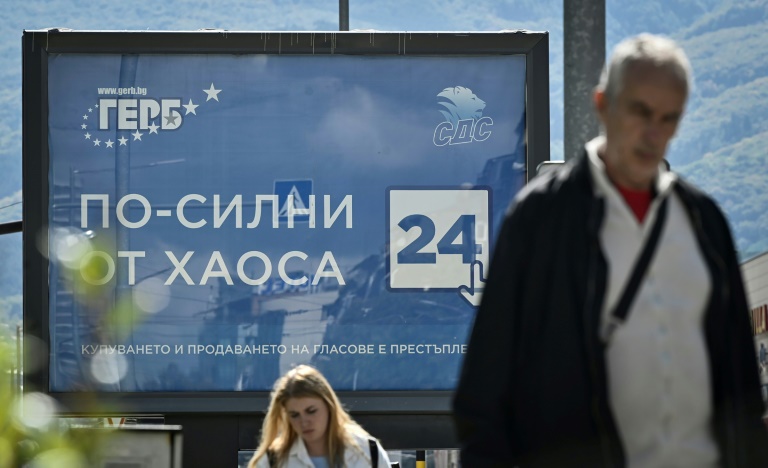
Attempting to address those fears, former three-time premier Boyko Borisov — who is eyeing another comeback — pledged to supporters Friday to combat “the chaos”.

The 63-year-old who dominated politics for a decade until last year told a final campaign event in the central city of Plovdiv that he would “work for the stability of the country”.

Polls on the eve of the ballot put his conservative GERB party in front, with about 25 percent of the votes.


– ‘More work to do’ – 

The Balkan country has been dogged by political instability since early last year when the GERB party lost power following massive anti-corruption demonstrations. 

Borisov’s rival, outgoing reformist premier Kiril Petkov, 42, has urged voters to let him “continue the change” he started but is lagging in the polls on around 16 percent.

The Harvard-educated former entrepreneur stormed onto the political scene in 2021 and managed to piece together a precarious four-party coalition after winning last November’s vote.

However, after only a seven-month stint in power, he was toppled in a no-confidence motion.

In an interview with AFP this week, Petkov trumpeted his success in the fight against “corruption practices” that allowed his cabinet to redistribute public funds, offering pension rises and free kindergartens.

“So it’s a great first step, but we have a lot more work to do,” he said.

“The challenge is to really show that the Bulgarians have made the choice, the choice for a new European, progressive, transparent Bulgaria versus going back to the years of transition, to the politicians of corruption,” he urged.

Petkov categorically ruled out holding talks on forming a coalition with Borisov, heightening fears that the vote may fail to end the country’s worst period of political instability since the end of communism in 1989. 


– Pro-Russian kingmakers? –

Borisov, on the other hand, has said he would be “open to anyone” for talks on a cabinet for the sake of stability.

Todorov, the analyst, said he was sceptical about the chances of Borisov’s GERB party being in that position.

“I don’t believe that GERB, which is very isolated, could return to power,” Todorov said.

“The situation is critical, Bulgaria needs a government but not at any cost,” he added.

Another analyst, Georgy Kiryakov, said Borisov could find potential coalition partners in the Turkish minority MRF party and the ultra-nationalist Vazrazhdane party.

The openly pro-Russian formation has gained popularity since the start of the Russian invasion of Ukraine in February.

In a country with close historical, economic and cultural ties with Moscow, latest polls credit it with 11 to 14 percent of the vote.

Vazrazhdane’s “behaviour could prove decisive”, Kiryakov said.

The protracted political instability has left Bulgaria struggling to pass reforms and has hampered economic growth.

It has also accelerated an exodus of young people from the country, which has already lost a 10th of its population in the past decade.

And the cost of holding one snap election after another is also an issue that Borisov jumped on at Friday’s campaign event.

Linking the outlay to big infrastructure projects that he championed while in office, he said: “We have spent a billion for elections, as much as (for building) four stadiums in Plovdiv.”

vs/anb/ds/kjm/it


At least 129 dead after riot at Indonesia football match

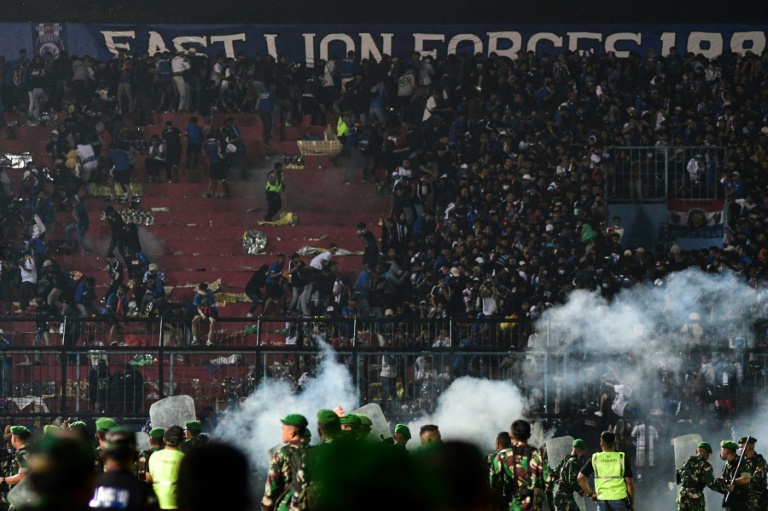
At least 129 people died at a football stadium in Indonesia when thousands of fans invaded the pitch and police fired tear gas that triggered a stampede, authorities said Sunday.

The tragedy on Saturday night in the eastern city of Malang, which also left 180 injured, was one of the world’s deadliest sporting stadium disasters.

Arema FC supporters at the Kanjuruhan stadium stormed the pitch late on Saturday after their team lost 3-2 to the visiting team and bitter rivals, Persebaya Surabaya.

Police, who described the unrest as “riots”, said they tried to persuade fans to return to the stands and fired tear gas after two officers were killed. 

Many of the victims were trampled or choked to death, according to police. 

East Java police chief Nico Afinta said a total of 127 people had died, but the toll was later raised to 129. 

A hospital director told local TV that one of the victims was five years old. 

Images taken from inside the stadium during the stampede showed poluce firing huge amounts of tear gas and people clambering over fences. 

People were carrying injured spectators through the chaos. 

Video footage circulating on social media showed people shouting obscenities at police, who were holding riot shields and wielding batons.

The stadium holds 42,000 people and authorities said it was a sell-out, Police said 3,000 people stormed the pitch. 

“We would like to convey that… not all of them were anarchic. Only about 3,000 who entered the pitch,” Afinta said.

– League suspended –

Torched vehicles, including a police truck, littered the streets outside the stadium on Sunday morning. Police said 13 vehicles in total were damaged.

The Indonesian government apologised for the incident and promised to investigate the circumstances surrounding the stampede.

“This is a regrettable incident that ‘injures’ our football at a time when supporters can watch football matches from the stadium,” Indonesian Sports and Youth Minister Zainudin Amali told broadcaster Kompas.

“We will thoroughly evaluate the organisation of the match and the attendance of supporters. Will we return to banning supporters from attending the matches? That is what we will discuss.”

East Java Governor Khofifah Indar Parawansa said the provincial government will give 10 million rupiah ($650) in compensation to the families of the victims and the local regency will give five million rupiah.

“This is part of our empathy to the families of the victims,” she said.

Fan violence is an enduring problem in Indonesia, where deep rivalries have previously turned into deadly confrontations.

Arema FC and Persebaya Surabaya are longtime rivals.

Persebaya Surabaya fans were not allowed to buy tickets for the game due to fears of violence.

However Indonesia’s coordinating minister for political, legal and security affairs, Mahfud MD, said organisers ignored the recommendation of authorities to hold the match in the afternoon instead of the evening.

And he said the government had recommended only 38,000 tickets be printed, but there was instead a sell-out crowd of 42,000.

“The government has made improvements to the implementation of football matches… and will continue to improve. But this sport, which is a favourite of the wider community, often provokes supporters to express emotions suddenly,” he said in an Instagram post.

The Football Association of Indonesia (PSSI) suspended football matches of Indonesia’s top league, BRI Liga 1, for one week. 

It also banned Arema FC from hosting home games for the rest of the season and said it would send an investigation team to Malang to establish the cause of the crush.

“We’re sorry and apologise to families of the victims and all parties over the incident,” PSSI chairman Mochamad Iriawan said. 

Indonesia is to host the FIFA Under-20 World Cup in May at six stadiums across the country. The Kanjuruhan stadium in Malang is not included in that list.

Other stadium disasters include a 1989 crush in the stands at Britain’s Hillsborough Stadium, which led to the deaths of 97 Liverpool fans, and the 2012 Port Said stadium tragedy in Egypt where 74 people died in clashes.

In 1964, 320 people were killed and more than 1,000 injured during a stampede at a Peru-Argentina Olympic qualifier at Lima’s National Stadium.

Burkina junta chief urges putschists to 'come to their senses'

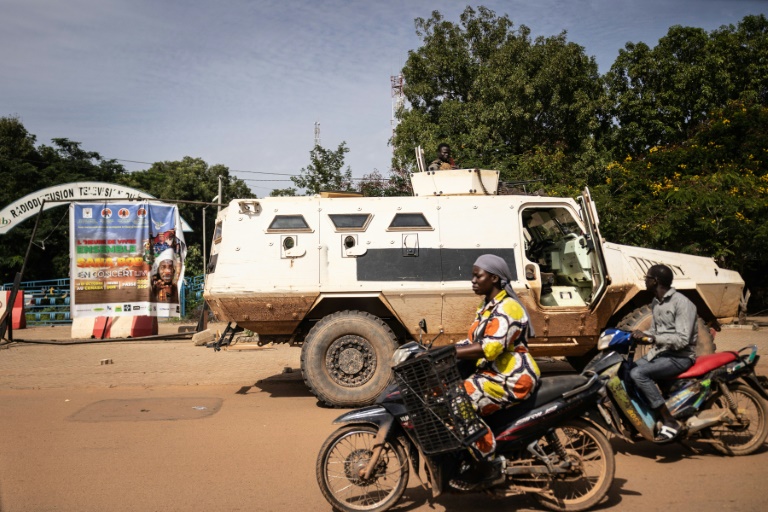
Burkina Faso’s junta leader Paul-Henri Sandaogo Damiba on Saturday urged junior officers to “come to their senses” after they claimed to have ousted him in a reported coup that sparked deep concern among foreign leaders.

The officers on Friday said they had toppled Damiba, accusing him of failure to quell jihadist attacks. It is the second coup this year in the West African country, and the latest in the Sahel region, much of which is battling a growing Islamist insurgency.

Making his first comments since the putsch, Damiba in a written statement urged his rivals “to come to their senses to avoid a fratricidal war that Burkina Faso doesn’t need”.

He rejected allegations by the army officers who seized power that he was hiding in a French base, but provided no further details about his location.

Damiba himself came to power in a coup in January. He installed himself as leader of the country’s 16 million people after accusing elected president Roch Marc Christian Kabore of failing to beat back jihadist fighters. But the insurgency has raged on.

Damiba “is believed to have taken refuge in the French base at Kamboinsin in order to plan a counter-offensive to stir up trouble in our defence and security forces”, the junior officers said Saturday in a statement read out on national television and signed by Captain Ibrahim Traore, the country’s new leader. 

In his comments on the presidency’s official Facebook page, Damiba called that claim an attempt “to manipulate opinion”.

France, the former colonial power in Burkina Faso, via its embassy earlier Saturday also denied “any involvement of the French army in the events of the last few hours”. 

It denied “rumours that Burkinabe authorities have been hosted or are under the protection of the French military”.

The general staff of Burkina Faso’s army dismissed the coup as an “internal crisis” within the military, and said dialogue was “ongoing” to remedy the situation.

– ‘Burkina Faso needs peace’ –

Among a wave of international criticism, UN Secretary General Antonio Guterres “strongly condemns any attempt to seize power by the force of arms and calls on all actors to refrain from violence and seek dialogue”, his spokesman said.

“Burkina Faso needs peace, stability and unity to fight terrorist groups and criminal networks operating in parts of the country,” the UN statement added.

Jihadist violence has also prompted a series of coups in Mali, Guinea and Chad since 2020.

The new Burkina Faso putschists said they were willing “to go to other partners ready to help in the fight against terrorism”.

No country was explicitly mentioned but Russia, whose influence is growing in French-speaking Africa, is among the possible partners in question.

France has a contingent of military special forces based in Kamboinsin which is about 30 kilometres (19 miles) from the capital Ouagadougou.

A few hours before the coup occurred on Friday, hundreds of people had rallied in the capital seeking the departure of Damiba, the end of France’s military presence in the Sahel and military cooperation with Russia.

– Gunfire, helicopters –

The situation in the capital Ouagadougou was tense on Saturday, with gunfire and soldiers deployed in the streets.

Helicopters hovered above the city and shops shut their doors.

Late Saturday a French government spokeswoman strongly condemned “violence” against its embassy after an AFP reporter said he saw a fire burning outside the building in Ouagadougou.

Witnesses said a fire also broke out in front of the French Institute in the western city of Bobo-Dioulasso.

African Union chief Moussa Faki Mahamat condemned the “unconstitutional change of government” in Burkina Faso.

The European Union warned the latest coup put in danger efforts towards restoring constitutional order by July 2024, while the US government said it was “deeply concerned”.

– Damiba accused of failure –

Just before 8:00 pm (2000 GMT) on Friday, more than a dozen soldiers in fatigues appeared on the state television and radio broadcaster to announce Damiba’s removal.

They proclaimed 34-year-old Captain Traore in charge. He was previously head of the anti-jihadist special forces unit “Cobra” in the northern region of Kaya.

“Damiba failed,” said Habibata Rouamba, a trader and activist.

“Since he came to power, the zones that were peaceful were attacked. He took power but then he betrayed us.”

The new leaders suspended the constitution, sealed the borders, dissolved the transitional government and legislative assembly, and instituted a 9:00 pm to 5:00 am curfew.

More than 40 percent of Burkina Faso remains outside government control.

In the north and east, towns have been blockaded by insurgents who have blown up bridges and attacked supply convoys.

Thousands have died and about two million have been displaced by the fighting since 2015 when the insurgency spread to Burkina Faso from Mali.

Bosnia heads to polls as ethnic tensions dominate vote

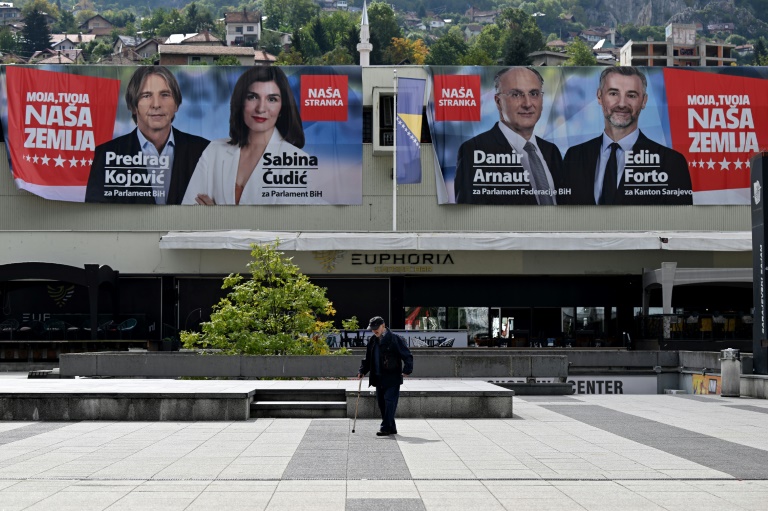
Bosnia will head to the polls Sunday to vote in general elections following a campaign season marked by threats of secession, political infighting, and fears of future turmoil as ethnic tensions in the country grow.  

Voters will cast ballots in a dizzying number of contests, including for the three members of Bosnia’s tripartite presidency, the deputies of the central parliament and a string of local races.

Polls are set to open at 7:00 am local time (5:00 GMT). 

Nearly three decades after war ravaged the Balkan country, Bosnia continues to be burdened by its ethnic divisions. 

The Balkan state has been governed by a dysfunctional administrative system created by the 1995 Dayton Agreement that succeeded in ending the war in the 1990s, but largely failed in providing a framework for the country’s political development.

Bosnia remains partitioned between a Serb entity — the Republika Srpska (RS) — and a Muslim-Croat federation connected by a weak central government.

In the war’s wake, ethnic political parties have long exploited the country’s divisions in a bid to maintain power.

– Coalition clash –

In the run-up to Sunday’s vote, the country has been torn between secessionist Orthodox Serbs and Catholic Croats demanding greater autonomy and electoral reforms. 

The country’s Muslim Bosniaks will also face a choice of voting for a disparate, 11-party coalition that is trying to unseat the rule of the mainstream SDA.   

The SDA is led by Bakir Izetbegovic — the son of the first president of independent Bosnia — and has largely dominated the political scene in the country for decades. 

Many voters say that the lack of young candidates offering fresh ideas has left them largely uninspired on the eve of the elections. 

“Most of the candidates that are running are the ones we have been watching for the last twenty years,” said Sara Djogic, a 21-year-old philosophy student in the capital Sarajevo. 

“There are not many who offer something new,” she added.

With little to no polling data available, analysts say incumbents and nationalist parties that have dominated the post-war political scene are likely to win many of the races.

The leader of Bosnia’s Serbs, Milorad Dodik, is seeking his third term as the president of the RS, after completing a stint in the tripartite presidency. 

For the past year, Dodik has been stoking tensions with his frequent calls for Bosnia’s Serbs to separate even further from the country’s central institutions, earning him fresh sanctions from the US in January. 

Dodik’s primary challenger Jelena Trivic has vowed to crack down on corruption in the RS if elected. 

“Our revenge will be the law,” Trivic said ahead of the polls.

– Fears of turmoil –

For the country’s Catholic Croats, political turmoil has also been brewing.

Ahead of the election, many Croats have been demanding electoral reforms with the leading nationalist party HDZ threatening to boycott the contest.

Their grievances are steeped in the vast numerical advantage held by Bosniaks in the Muslim-Croat federation, which has allowed Muslim voters to hold de-facto control over who can be elected to lead the Croats at the presidential level. 

HDZ and other Croat parties have been calling for the creation of a new mechanism to allow the community to choose their own representatives to the presidency and upper house. 

The move, however, has been fiercely opposed by the federation’s ruling Bosniak party.

With threats of fresh boycotts, fears are growing of potential turmoil after the polls if the incumbent Croat co-president Zeljko Komsic — who is widely reviled by all Croat parties that view him as a Bosniak proxy — is re-elected.

The ever-present threats and vitriol has led some to skip the polling booth on Sunday. 

“I do not expect anything new after these elections. Everything will be the same,” said Mira Sladojevic, a pensioner in her seventies in Sarajevo.

“I haven’t voted for a long time,” she added. 

The first wave of preliminary results are expected several hours after the polls close at 7:00 pm (19:00 GMT).

Brazil votes in Bolsonaro-Lula showdown

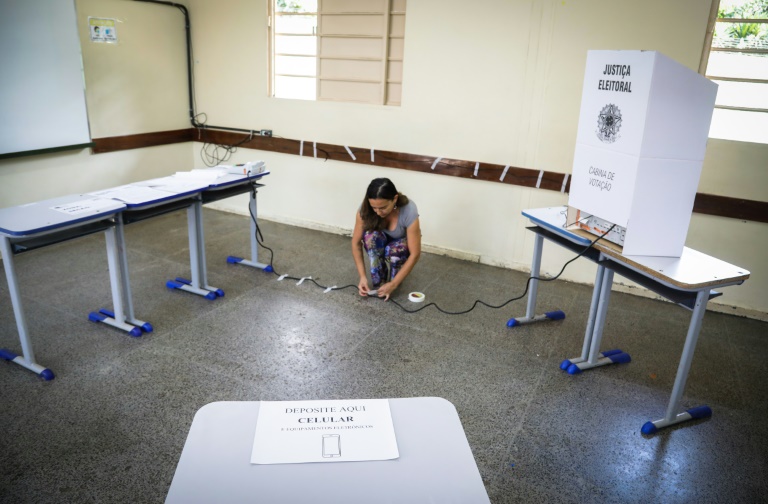
Brazil votes Sunday in a polarizing presidential election, with all eyes on whether front-runner Luiz Inacio Lula da Silva can win in a single round — and whether incumbent Jair Bolsonaro will accept the result.

The campaign, which left the Latin American giant deeply divided, ended with former president Lula (2003-2010) leading ex-army captain Bolsonaro with 50 percent of valid votes to 36 percent, according to a final poll from the Datafolha institute released Saturday evening.

The figures put Lula on the cusp of the score needed to win outright and avoid a runoff on October 30: half the valid votes, plus one.

But Bolsonaro, known for his combative style, has repeatedly said “only God” can remove him from office, attacked supposed fraud in Brazil’s electronic voting system, and vowed his re-election bid can have just three outcomes: “prison, death or victory.”

Lula, the charismatic but tarnished ex-president seeking to stage a comeback at 76, says he fears the incumbent will create “turmoil” if he loses — a concern heard often in Brazil heading into election day.

Bolsonaro’s attacks on the voting system have raised fears of a Brazilian version of the riots that erupted at the US Capitol last year after his political role model, former president Donald Trump, refused to accept his election loss.

“I do think (Bolsonaro) will contest the election result if he loses,” said political analyst Adriano Laureno of consulting firm Prospectiva.

“But that doesn’t mean he’ll succeed. The international community will recognize the result quickly… There might be some kind of turmoil and uncertainty around the transition, but there’s no risk of a democratic rupture.”

Observers from the Organization of American States, the Carter Center, the Inter-American Union of Electoral Organizations (UNIORE) and other international bodies will be monitoring the vote.

The White House meanwhile said the United States would be watching the vote “closely.”

More than 500,000 security-force members will be deployed on election day.

Public Security Minister Anderson Torres sought to downplay fears of unrest.

“We’re having an election, not a war,” he said.

– Heavyweight bout –

Lula, the ex-metalworker who rose from destitute poverty to become the most popular president in Brazilian history, is seeking to stage a remarkable return, four years after falling spectacularly from grace when he was jailed for 18 months on controversial corruption charges.

Accused in a massive graft scheme centered on state-run oil company Petrobras, Lula regained the right to run for office last year when the Supreme Court annulled his convictions, ruling the lead judge in the case was biased.

In the meantime, Bolsonaro, 67, who swept to office on a wave of anti-establishment outrage in 2018, has lost his outsider shine.

Vowing to defend “God, country and family,” the president retains the die-hard backing of his “Bibles, bullets and beef” base — Evangelical Christians, security hardliners and the powerful agribusiness sector.

But he has lost moderate voters with his management of the weak economy, his vitriolic attacks on Congress, the courts and the press, a surge in destruction in the Amazon rainforest, and his failure to contain the devastation of Covid-19, which has claimed more than 685,000 lives in Brazil.

– ‘Gun to our heads’ –

Many voters are deeply disillusioned with both contenders — and the lack of other options — in a race where none of the other nine candidates managed to break out of single digits in the polls.

“It’s like we have a gun to our heads,” 27-year-old Uber driver Matheus Fernandes told AFP in Lula’s home state of Pernambuco.

His plan: cast a blank ballot.

Lula plans to vote in Sao Bernardo do Campo, outside Sao Paulo, where he rose to prominence as a union leader. Bolsonaro, a former Rio de Janeiro congressman, will vote in the iconic beach city, then return to Brasilia to watch the results.

The polls open at 8:00 am and close at 5:00 pm (1100-2000 GMT), with results expected some two hours later.

Brazil’s 156 million voters will also be electing the lower house of Congress, one-third of the Senate and governors and state legislators in all 27 states.

Nicaragua breaks ties with Netherlands, bars US envoy

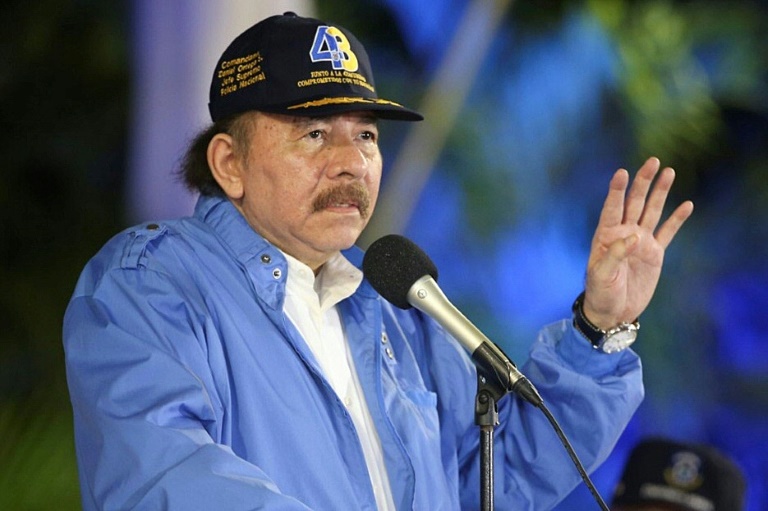
Nicaragua found itself even more isolated on the international stage Saturday after saying it would deny entry to the ambassador appointed by Washington and then severing diplomatic ties with the Netherlands.

President Daniel Ortega’s government is facing mounting diplomatic pressure over what the United States has called “a dramatic deterioration” of human rights — which has seen the jailing of dozens of political opponents, students and journalists.

With Ortega scoffing at Western powers, US authorities said President Joe Biden remained committed to maintaining a diplomatic presence in Managua and that the United States sought “a return to democratic rule in Nicaragua.”  

Nicaragua’s latest moves came as the European Union’s envoy was expelled from the Central American country.

Declared persona non grata on Friday, EU ambassador Bettina Muscheidt left Nicaragua Saturday on a commercial flight to France via Mexico City.

Managua cut ties with the Dutch government on Friday evening, describing The Hague as “interventionist” and “neocolonialist” after its ambassador, Christine Pirenne, said her country would not fund the construction of a hospital.

In a letter sent to AFP Saturday, the Dutch foreign ministry condemned the “regrettable” and “disproportionate” response.

The Netherlands said it had decided to permanently end funding for construction of a hospital in Nicaragua — on hold since 2018 — because of the “deteriorating situation in the field of democracy and human rights.”

It said it had given Managua several warnings but now Nicaragua was “closing the door.”

The Nicaraguan government had on Friday blamed the “repeated meddling, interventionist and neocolonialist position of the Kingdom of the Netherlands” for the row.

Earlier in the day, Ortega had lashed out at the European nation. 

“Those who come to disrespect our people, our homeland, they should not appear again in Nicaragua. And we do not want relations with that interventionist government,” Ortega said in reference to Pirenne, who is based in Costa Rica.

The Netherlands closed its offices in Managua in 2013 and conducts all its Central American diplomatic work from Costa Rica.

Before Ortega’s remarks, his wife, Vice President Rosario Murillo, said Friday that new US envoy Hugo Rodriguez “will not under any circumstances be admitted into our Nicaragua.”

“Let that be clear to the imperialists,” she added on state media.

The US Senate confirmed Rodriguez’s ambassador posting Thursday, despite Nicaragua having previously said it would reject him.

On Saturday a State Department spokesperson said “Mr Rodriguez continues to enjoy the president’s highest confidence.”

In Rodriguez’s absence, current Ambassador Kevin Sullivan will remain at his post in Managua, the spokesman said.

“The United States remains committed to promoting a return to democratic rule in Nicaragua, in support of the Nicaraguan people’s aspirations,” the official added.

Nicaragua said it blocked Rodriguez because of “disrespectful” comments made during a Senate hearing — in which he described Nicaragua as a “pariah state in the region” and branded Ortega’s government a dictatorship.

Rodriguez had said he would support using all economic and diplomatic tools to bring about “a change in direction” in Nicaragua, and notably suggested kicking the country out of the Dominican Republic-Central America Free Trade Agreement.

On Wednesday, Ortega branded the Catholic Church a “perfect dictatorship,” reflecting ongoing tensions between his government and the religious institution over 2018 protests that Ortega has accused the church of backing.

Those protests were crushed in a crackdown that left hundreds dead.

burs-st/mlm/bfm

Venezuela frees 7 Americans in swap for Maduro wife's nephews

Caracas on Saturday freed seven detained Americans — including five oil executives — in exchange for the release of two nephews of Venezuela’s first lady who were jailed in the United States for drug-trafficking.

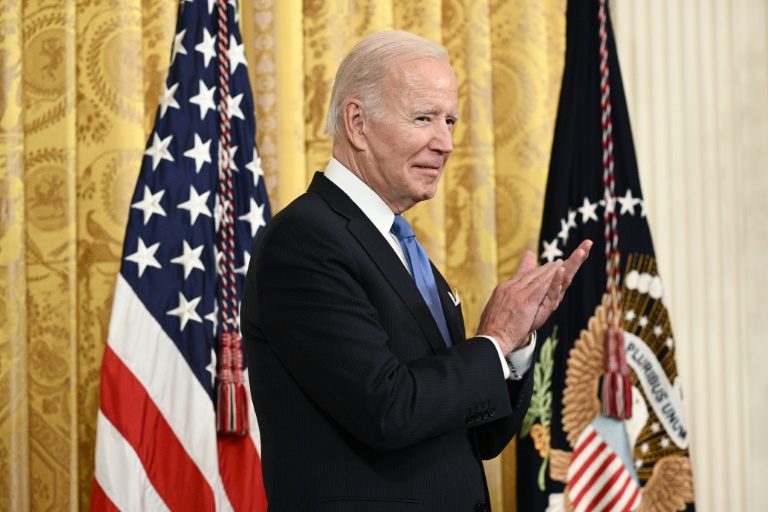
President Joe Biden issued the announcement that the Americans were on their way home — and a senior official in his administration confirmed shortly afterwards that the US leader had made the “painful decision” to greenlight the prisoner swap in order to secure their freedom.

“Today, after years of being wrongfully detained in Venezuela, we are bringing home Jorge Toledo, Tomeu Vadell, Alirio Zambrano, Jose Luis Zambrano, Jose Pereira, Matthew Heath, and Osman Khan,” Biden said in a statement.

The negotiated release of “two young Venezuelans” held in the United States was confirmed in a near-simultaneous statement by Caracas — whose relations with Washington have been severely strained for years.

While Venezuelan authorities did not name the pair, they were identified by the senior US official as Francisco Flores de Freitas and his cousin Efrain Antonio Campos Flores — both nephews of President Nicolas Maduro’s wife, Cilia Flores.

“As a result of various conversations held since March 5 with representatives of the government of the United States, the release of two young Venezuelans unjustly imprisoned in that country has been achieved,” said the communique from Caracas.

Arrested in 2015 in a US sting operation in Haiti, the cousins were sentenced two years later to 18 years in prison for plotting to smuggle 800 kilos (1,760 pounds) of cocaine into the United States. 

The Venezuelan government says they were framed.

It became clear in negotiations that the release of the two Venezuelans, “sometimes referred to as the ‘narco nephews’ due to their relationship with Nicolas Maduro’s wife, was essential to securing the release of these Americans,” a senior US administration official told reporters.

“The president made a tough decision, a painful decision, to offer something the Venezuelans have actively sought” in the months-long swap negotiations, the official added.

– Oil executives freed –

Five of the seven freed Americans were executives of the Citgo oil corporation, detained in 2017 while on a business trip to the South American country and accused of corruption.

Citgo is the US subsidiary of Venezuela’s state oil company PDVSA.

The Citgo employees — former company president Pereira, along with Vadell, Toledo, and the Zambranos — each had been sentenced to more than 13 years in prison.

The other two Americans freed — Heath and Khan — were arrested separately.

“All seven of these Americans are in stable health,” and Biden has spoken with each of them, the administration official said.

They said the exchange took place Saturday “in a country between Venezuela and the United States.”

“A plane landed from our side, carrying those two — and a plane landed that departed from Venezuela carrying the seven Americans,” the official said.

“And then the passengers departed on different planes from the ones they came in on.”

Biden in his statement vowed his “unflinching commitment to keep faith with Americans held hostage and wrongfully detained all around the world.”

The United States had long contended that its seven nationals were held on spurious charges. State Department spokesman Ned Price referred to them a year ago as “political pawns.”

Relations between the two countries have been at rock-bottom for years. The United States is one of some 60 countries that refused to recognize Maduro as the legally elected president after a widely disputed 2018 election.

But Russia’s invasion of Ukraine — and the pressure it placed on global energy supplies — brought behind-the-scenes efforts to engineer at least a minimal warming with Venezuela, a major oil producer.

A high-level US delegation traveled to Caracas in March to meet with Maduro in talks some analysts saw as a possible turning point, and which Maduro described as “respectful, cordial and diplomatic.”

Following that meeting, Caracas had previously freed two Citgo employees.

On Saturday, the senior administration official said “tough negotiations” led to the Americans’ release. “We’ve been raising their cases with Venezuelans for months now.”

Ukraine forces enter key Russia-annexed town, Zelensky vows to press onward

Ukraine said Saturday its forces had begun moving into the key eastern town of Lyman, located in one of the four Ukrainian regions that Russia annexed, with President Volodymyr Zelensky pledging more areas would follow within the week.

The latest development — a feature of Kyiv’s weeks-long counter-offensive against Moscow’s invasion — comes as Germany’s defence minister made a surprise visit to Ukraine, but also amid accusations Russia killed 24 civilians in the eastern Kharkiv region.

The recapture of Lyman — which Moscow’s forces pummelled for weeks to control this spring — would mark the first Ukrainian military victory in territory that the Kremlin has claimed as its own and has vowed to defend by all possible means.

Ukraine’s defence ministry announced its forces were “entering” Lyman in the eastern Donetsk region after the army said it had “encircled” several thousand Russian troops near the town.

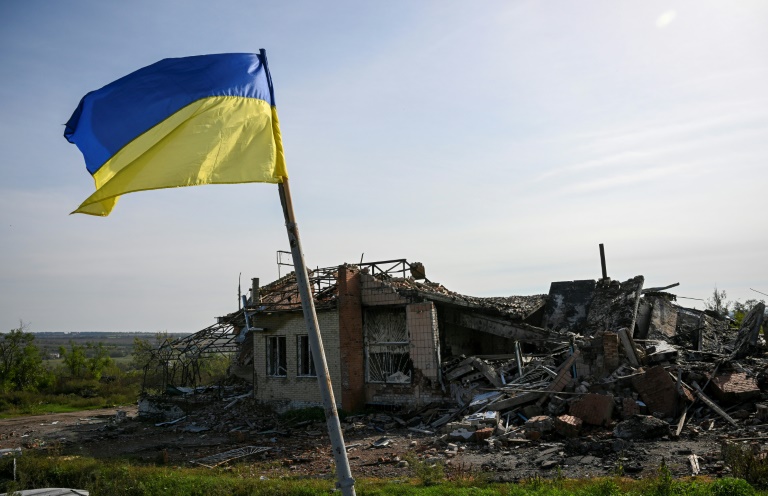
The ministry posted a video of soldiers holding up a yellow and blue Ukrainian flag near a sign with the town’s name.

“Throughout this week, more Ukrainian flags have been raised in the Donbas,” Zelensky said in his evening address. “There will be even more in a week.”

Shortly after Ukraine’s announcement on Lyman, Russia’s defence ministry said it had “withdrawn” troops from the town “to more favourable lines”.

With Russian losses mounting, experts have warned that President Vladimir Putin could turn to nuclear weapons to defend territory — an option floated by a Putin ally.

Chechen leader Ramzan Kadyrov said Russia should consider using low-yield nuclear weapons after Moscow’s troops were forced out of a Lyman.

“In my personal opinion, more drastic measures should be taken, up to the declaration of martial law in the border areas and use of low-yield nuclear weapons,” Kadyrov said on his Telegram channel.

Kadyrov governs Russia’s Muslim-majority Chechnya Republic with an iron fist.

The developments came a day after Putin staged a grand Kremlin ceremony celebrating the annexation of the four Ukrainian territories.

In a call with Ukrainian Defense Minister Oleksii Reznikov, Pentagon chief Lloyd Austin condemned what he called the “sham referenda”, according to a readout from his spokesman Saturday, and reiterated “the US will never recognize these illegal and illegitimate attempts at annexation.”

The four territories create a crucial land corridor between Russia and the Crimean Peninsula, also annexed by Moscow, in 2014.

Together the five regions make up around 20 percent of Ukraine, where Kyiv in recent weeks has been clawing back territory.

Elsewhere in the south Saturday, German Defence Minister Christine Lambrecht visited the port city of Odessa.

Kyiv has been urging her country to send battle tanks to aid in its counter-attack, but the German government has so far refused.

– Civilians gunned down –

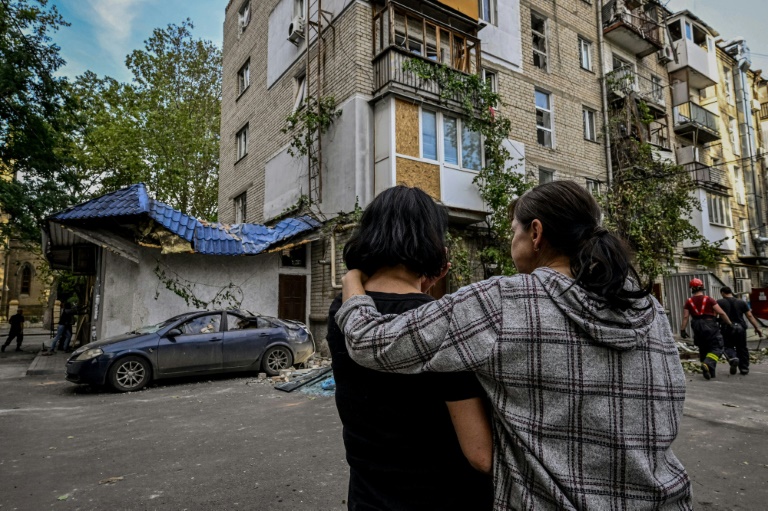
Also on Saturday, Ukrainian officials accused Russia of killing 24 civilians, including 13 children, in an attack on a road convoy near a recently recaptured town in Kharkiv.

Ukrainian troops on Friday had shown AFP reporters a group of vehicles riddled with bullet holes and several corpses in civilian clothes, a short distance east of the recently recaptured town of Kupiansk.

A Ukrainian official said the death toll of a Russian attack on a separate civilian convoy near the city of Zaporizhzhia on Friday had risen to 30 civilians and one police officer killed.

Kyiv also called for the immediate release of the chief of the Moscow-held Zaporizhzhia nuclear power plant, condemning his “illegal detention” by the Russians.

Ihor Murashov was leaving the plant Friday when he was detained and “driven in an unknown direction” while blindfolded, Ukraine’s nuclear agency Energoatom said.

Zaporizhzhia — Europe’s largest nuclear energy facility — has been at the centre of tensions with Moscow and Kyiv accusing each other of strikes on and near the plant, raising fears of an atomic disaster.

– ‘Illegitimate’ annexation –

Following Friday’s annexation, Washington announced “severe” new sanctions against Russian officials and the defence industry, and said G7 allies support imposing “costs” on any nation backing annexation.

Zelensky urged the US-led military alliance NATO to grant his country fast-track membership.

He also vowed never to hold talks with Russia as long as Putin was in power.

NATO chief Jens Stoltenberg slammed the annexation as “illegal and illegitimate” but remained non-committal after Ukraine said it was applying to join the Western alliance.

Turkey said Saturday Russia’s annexation was a “grave violation of the established principles of international law”.

Despite Putin’s warnings prior to the annexation that he could use nuclear weapons to defend the captured territories, Ukraine’s Foreign Minister Dmytro Kuleba said Kyiv would “continue liberating our land and our people”.

Kuleba also said Ukraine brought the annexations to the International Court of Justice and urged the Hague-based court to hear the case “as soon as possible”.

burs/pvh/bfm/mlm

Iran students protest over crackdown since Mahsa Amini death

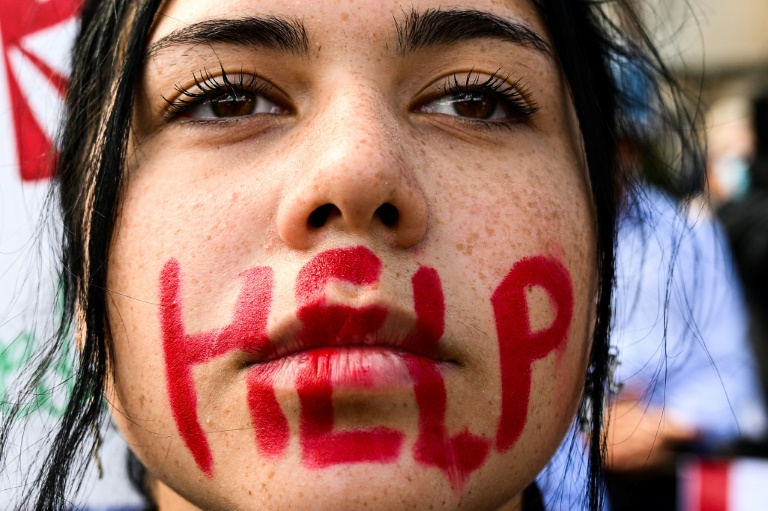
Students demonstrated in Tehran and other Iranian cities Saturday against an ongoing crackdown on dissent over the death last month of Mahsa Amini in the custody of the Islamic republic’s notorious morality police.

Iranians based abroad and their supporters gathered in cities around the world in solidarity.

A wave of street violence has rocked Iran since Amini, a 22-year-old Iranian Kurd, died after her arrest by the morality police for allegedly failing to observe the Islamic republic’s strict dress code for women.

Protests have been held nightly for more than two weeks, despite a bloody crackdown that a rights group says has claimed more than 80 lives.

“Woman, life, freedom” and “Death to the dictator”, they chanted in the streets of Amini’s hometown of Saqqez, in Kurdistan province of northwest Iran.

On Saturday, riot police massed at major road junctions across the capital, as students demonstrated in Enghelab (Revolution) Square near Tehran University in the city centre to press for the release of arrested students.

Police clashed with the protesters who were chanting slogans and arrested some of them, the semi-official Fars news agency reported.

Video footage shared by the Oslo-based Iran Human Rights group also showed student protests in other cities, including second city Mashhad and Karaj, west of the capital.

The protesters were seen chanting and women having removed their headscarves.

Demonstrations of support were called in 159 cities across the globe — from Auckland to New York and Seoul to Zurich, the Iranians for Justice and Human Rights group said.

In Rome, at a rally of about 1,000 people, a half dozen women cut their hair in solidarity.

But in Beirut, the head of Lebanon’s Iran-backed Hezbollah movement, Hasan Nasrallah, described Amini’s death as a “vague incident” that was being used against Tehran.

“This vague incident was exploited and people took to the streets,” Nasrallah said, adding that the protests do not reflect the true will of the Iranian people. 

– Arrests of foreigners –

The protests flared in Iran on September 16, when Amini was pronounced dead three days after falling into a coma following her arrest.

Iran Human Rights group says at least 83 people have been killed in the crackdown. Amnesty International says it has confirmed 52 fatalities, while Iran’s Fars agency has put the death toll at “around 60”.

It is the bloodiest unrest in Iran since a ruthless crackdown on demonstrations in November 2019 over a sudden hike in fuel prices that killed at least 304 people, according to Amnesty.

Mir Hossein Mousavi, a former prime minister who has been under house arrest for more than a decade, urged security forces to halt the violence, in a message on the Instagram account of opposition group Kaleme.

“I would like to remind all the armed forces of their pledge to protect our land, Iran, and the lives, property, and rights of the people,” he said.

Iran’s intelligence ministry said Friday that “nine foreign nationals”, including from France, Germany, Italy, the Netherlands and Poland, were arrested “at or behind the scene of riots”, along with 256 members of outlawed opposition groups.

But on Saturday, the United Nations announced that Iranian-American Baquer Namazi, 85, a former UN official who had long been barred from leaving Iran, had been given permission to fly out for medical treatment while his son Siamak, 50, had been released from seven years in prison.

The family’s lawyer Jared Genser welcomed the Iranian moves as “critical first steps”, but added: “We will not rest until the Namazis can all return to the United States.”

The administration of President Joe Biden had made a revived nuclear deal with Iran conditional on the family’s release.

Iran has blamed outside forces for the nationwide protests.

On Wednesday, the Revolutionary Guards launched cross-border missile and drone strikes that killed 14 people including an American, in autonomous Iraqi Kurdistan, accusing rebel groups in the region of fuelling the unrest.

On Saturday, Iranian forces mounted a new bombardment of Kurdish rebel bases over the border that caused damage but no casualties, a rebel official told AFP.

burs/dv/kir/hc

Ukraine forces entering key town in Russia-annexed region

Ukraine said Saturday its forces were entering the key eastern town of Lyman, located in one of the four Ukrainian regions that Russia annexed despite international condemnation.

The recapture of Lyman — which Moscow’s forces pummelled for weeks to control this spring — would mark the first Ukrainian military victory in territory that the Kremlin has claimed as its own and has vowed to defend by all possible means.

Ukraine’s defence ministry announced its forces were “entering” Lyman in the eastern Donetsk region after Kyiv’s army said it had “encircled” several thousand Russian troops near the town.

The ministry posted a video of soldiers holding up a yellow and blue Ukrainian flag near a sign with the town’s name.

Shortly after Ukraine’s announcement, Russia’s defence ministry said it had “withdrawn” troops from Lyman “to more favourable lines”.

Chechen leader Ramzan Kadyrov said Russia should consider using low-yield nuclear weapons after Moscow’s troops were forced out of a Lyman.

“In my personal opinion, more drastic measures should be taken, up to the declaration of martial law in the border areas and use of low-yield nuclear weapons,” Kadyrov said on his Telegram channel.

Kadyrov is in charge of Russia’s Muslim-majority Chechnya Republic which he governs with an iron fist.

The developments came a day after Russian President Vladimir Putin staged a grand ceremony in the Kremlin to celebrate the annexations of four Ukrainian territories.

“I want to say this to the Kyiv regime and its masters in the West: People living in Lugansk, Donetsk, Kherson and Zaporizhzhia are becoming our citizens forever,” Putin said.

US President Joe Biden condemned Friday’s ceremony in Moscow as a “sham routine” and pledged to continue backing Kyiv.

The four annexed territories create a crucial land corridor between Russia and the Crimean Peninsula, annexed by Moscow in 2014.

Together, the five regions make up around 20 percent of Ukraine, where Kyiv in recent weeks has been clawing back territory.

– Civilians gunned down –

On Saturday, Ukrainian officials accused Russia of killing 24 civilians, including 13 children, in an attack on a road convoy near a recently recaptured town in the eastern Kharkiv region.

Ukrainian troops on Friday had shown AFP reporters a group of vehicles riddled with bullet holes and several corpses in civilian clothes, a short distance east of the recently recaptured town of Kupiansk.

A Ukrainian official said the death toll of a Russian attack on a separate civilian convoy near the city of Zaporizhzhia on Friday had risen to 30 civilians and one police officer killed.

Kyiv also called for the immediate release of the chief of the Moscow-held Zaporizhzhia nuclear power plant, condemning his “illegal detention” by the Russians.

Ihor Murashov was leaving the plant Friday when he was detained and “driven in an unknown direction” while blindfolded, Ukraine’s nuclear agency Energoatom said. 

Zaporizhzhia — Europe’s largest nuclear energy facility — has been at the centre of tensions in recent weeks after Moscow and Kyiv accused each other of strikes on and near the plant, raising fears of an atomic disaster.

– ‘Illegitimate’ annexation –

Following Friday’s annexation, Washington announced “severe” new sanctions against Russian officials and the defence industry, and said G7 allies support imposing “costs” on any nation that backs the annexation.

Ukrainian President Volodymyr Zelensky urged the US-led military alliance NATO to grant his country fast-track membership.

He also vowed never to hold talks with Russia as long as Putin was in power.

NATO chief Jens Stoltenberg slammed the annexation as “illegal and illegitimate” but remained non-committal after Ukraine said it was applying to join the Western alliance.

Turkey said Saturday Russia’s annexation was a “grave violation of the established principles of international law”.

Despite warnings from Putin prior to the annexation that he could use nuclear weapons to defend the captured territories, Ukraine’s Foreign Minister Dmytro Kuleba said Kyiv would “continue liberating our land and our people”.

Kuleba also said Ukraine brought the annexations to the International Court of Justice and urged the Hague-based court to hear the case “as soon as possible”.

US National Security Advisor Jake Sullivan said Friday that Washington would announce an “immediate” new weapons shipment for Kyiv next week.

Sullivan also said that, while there is a “risk” of Putin using nuclear weapons, there was no indication he would do so imminently. 

burs/pvh/ah

Close Bitnami banner
Bitnami