World

Centrists set to win Latvia election in shadow of Ukraine war

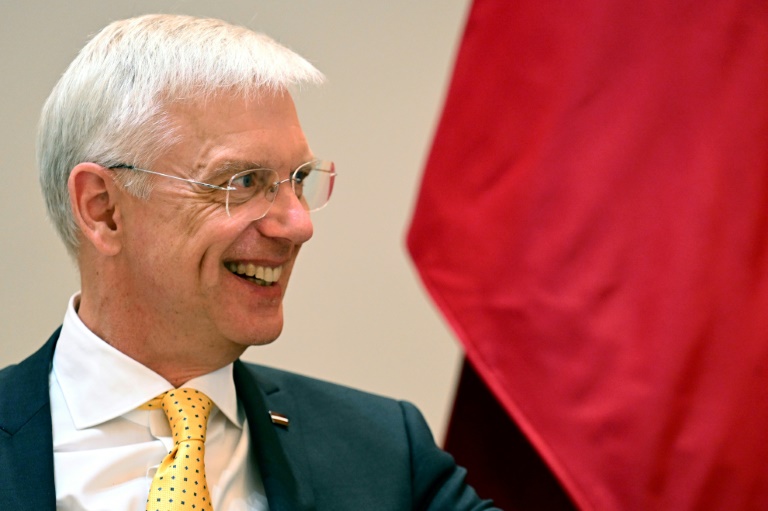
Prime Minister Krisjanis Karins’s party was headed for victory in Latvia’s general election on Saturday, according to an exit poll which also showed major setbacks for parties representing the Baltic state’s large Russian-speaking minority.

The poll put Karins’s New Unity in first place with 22.5 percent and said Harmony, a social-democratic party that has won the vote in recent years, could fail to make the threshold for entering parliament.

Latvians voted in the shadow of neighbouring Russia’s invasion of Ukraine, with many concerned about Russian aggression and expansionism.

National security and support for Ukraine were key issues for many voters, as well as the need for stability in this country of 1.8 million people on the eastern edge of the European Union and NATO.

“The election results look rather promising for my own party but it’s a little early to say,” Karins told reporters after polls closed.

Regarding Russian threats, Karins said: “Neither I nor my government nor my country reacts on fear.

“We will continue to invest in our own defence as a NATO member state,” he added.

Karins said he expected the consultations on forming a new government to begin on Monday.

Political expert Marcis Krastins said Karins was “most likely” to win, depending on how many smaller parties supporting him get past the five percent threshold for entering parliament.

“Russians invading Ukraine helps Karins to secure voters in Latvia because in such times people tend to rally around the flag,” Krastins said.

The exit poll showed the United List, which includes the Greens and regional parties, coming in second place with 11.5 percent followed by the Green Farmers Union with 10.9 percent and National Alliance with 8.4 percent.

According to the exit poll, only one party representing the Russian-speaking minority, called Stability!, would scrape past the threshold to enter parliament with 5.4 percent.

The minority makes up around 30 percent of the population. 

– Solidarity with Ukraine –

One voter said he made his decision based on the conflict raging nearby.

“I am 83 years old, I lived through Soviet and German military occupations… I am today making my choice depending on which party supports Ukraine the most against the Russian invasion,” Verners Karkliņs told AFP.

“People are seeing that we are already in a storm, but it will only get stronger, and it’s making people think more about their future and their country’s future,” President Egils Levits told journalists after voting.

Ahead of the vote, Levits had warned people against backing politicians in the Russian-speaking community who “hesitated to clearly state who is the aggressor and who is the victim at the outset of the Russian invasion”.

Referring to the energy crisis and economic difficulties, he had also cautioned against populists saying he was “highly sceptical of political parties and figures promising to get us out of this mess quickly and easily.

“I do not trust those who offer simple, and most often useless, solutions to extraordinarily complex problems,” he said.

Dominated over the centuries by Teutonic knights, Swedes, Poles, then Russians, Latvia gained independence in 1918 before finding itself under Soviet occupation in 1944-1990.

– Identity challenged? –

Along with inhabitants of nearby Poland and their Baltic neighbours Lithuania and Estonia, many Latvians feel their country is vulnerable even though it is in the EU and NATO.

The outgoing government has shown strong support for Ukraine, hiked defence spending and worked towards greater energy security.

The Harmony party condemned Russia’s invasion but has been less vocal about accusations that Russian forces are carrying out human rights atrocities.

Some Russian speakers in Latvia said that Latvian attitudes towards them have deteriorated since the war started and feel their linguistic and cultural identity is being challenged.

“In Latvia, Russian-speakers are in a way collateral victims of the war,” said Miroslavs Mitrofanovs, co-chairman of the Latvian Russian Union party, which scored only 3.2 percent in the exit poll.
Iran students protest over crackdown since Mahsa Amini death

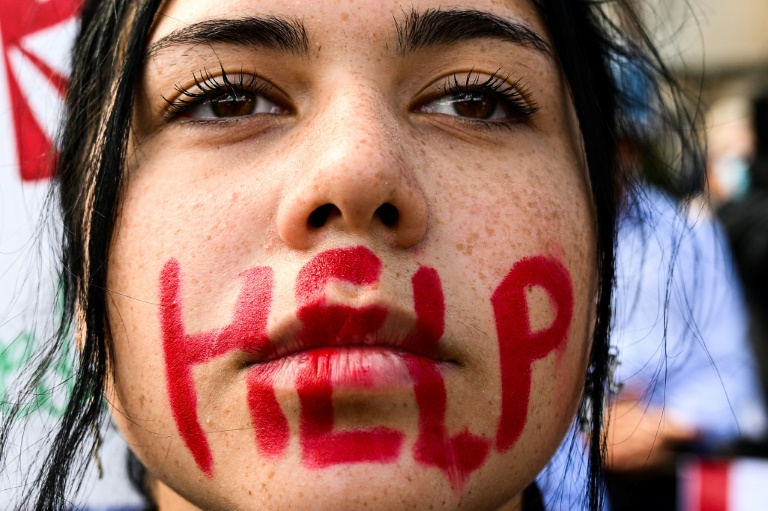
Students demonstrated in Tehran and other Iranian cities Saturday against an ongoing crackdown on dissent over the death last month of Mahsa Amini in the custody of the Islamic republic’s notorious morality police.

Iranians based abroad and their supporters gathered in cities around the world in solidarity.

A wave of street violence has rocked Iran since Amini, a 22-year-old Iranian Kurd, died after her arrest by the morality police for allegedly failing to observe the Islamic republic’s strict dress code for women.

Protests have been held nightly for more than two weeks, despite a bloody crackdown that a rights group says has claimed more than 80 lives.

“Woman, life, freedom” and “Death to the dictator”, they chanted in the streets of Amini’s hometown of Saqqez, in Kurdistan province.

On Saturday, riot police massed at major road junctions across the capital, as students demonstrated in Enghelab (Revolution) Square near Tehran University in the city centre to press for the release of arrested students.

Police clashed with the protesters who were chanting slogans and arrested some of them, the semi-official Fars news agency reported.

Video footage shared by the Oslo-based Iran Human Rights group also showed student protests in other cities, including second city Mashhad and Karaj, west of the capital.

The protesters were seen chanting and women having removed their headscarves.

Demonstrations of support were called in 159 cities across the globe — from Auckland to New York and Seoul to Zurich, the Iranians for Justice and Human Rights group said.

In Rome, at a rally of about 1,000 people, a half dozen women cut their hair in solidarity.

But in Beirut, the head of Lebanon’s Iran-backed Hezbollah movement, Hasan Nasrallah, described Amini’s death as a “vague incident” that was being used against Tehran.

“This vague incident was exploited and people took to the streets,” Nasrallah said, adding that the protests do not reflect the true will of the Iranian people. 

– Arrests of foreigners –

The protests flared in Iran on September 16, when Amini was pronounced dead three days after falling into a coma following her arrest.

Iran Human Rights group says at least 83 people have been killed in the crackdown. Amnesty International says it has confirmed 52 fatalities, while Iran’s Fars agency has put the death toll at “around 60”.

It is the bloodiest unrest in Iran since a ruthless crackdown on demonstrations in November 2019 over a sudden hike in fuel prices that killed at least 304 people, according to Amnesty.

Mir Hossein Mousavi, a former prime minister who has been under house arrest for more than a decade, urged security forces to halt the violence, in a message on the Instagram account of opposition group Kaleme.

“I would like to remind all the armed forces of their pledge to protect our land, Iran, and the lives, property, and rights of the people,” he said.

Iran’s intelligence ministry said Friday that “nine foreign nationals”, including from France, Germany, Italy, the Netherlands and Poland, were arrested “at or behind the scene of riots”, along with 256 members of outlawed opposition groups.

Unrest also erupted on Friday in Iran’s southeastern Sistan-Baluchestan province, which borders Afghanistan and Pakistan.

The Islamic Revolutionary Guard Corps said two of its colonels were killed, bringing the official toll to 20 dead during clashes in the province where three police stations were attacked.

“Several chain stores were looted and set on fire, and a number of banks and government centres were also damaged,” said Sistan-Baluchestan governor Hossein Khiabani.

Poverty-stricken Sistan-Baluchestan is a flashpoint for clashes with drug smuggling gangs, as well as rebels from the Baluchi minority and Sunni Muslim extremist groups.

Iran has blamed outside forces for the nationwide protests.

On Wednesday, the Revolutionary Guards launched cross-border missile and drone strikes that killed 14 people in autonomous Iraqi Kurdistan, accusing rebel groups in the region of fuelling the unrest.

The US said one of its citizens was killed in the strikes.

On Saturday, Iranian forces mounted a new bombardment of Kurdish rebel bases over the border that caused damage but no casualties, a rebel official told AFP.

burs/dv/kir/hc

Rescue efforts continue as Florida takes stock of Hurricane Ian devastation

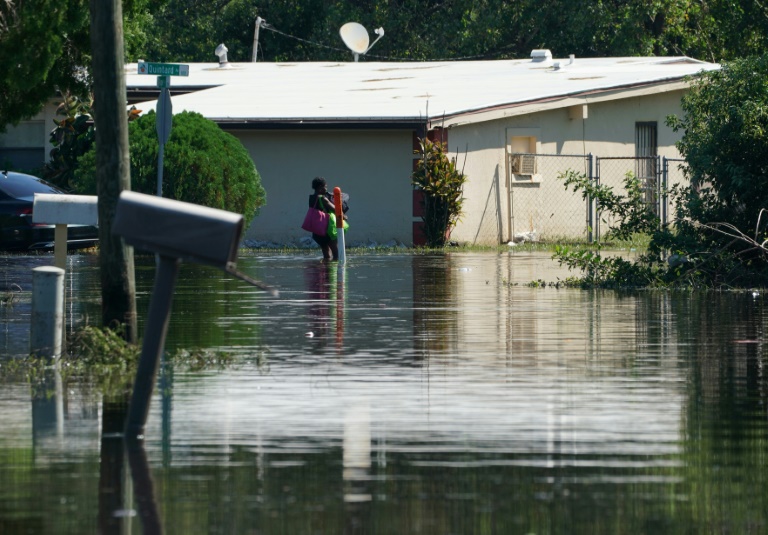
Shocked Florida communities counted their dead Saturday as the full scale of the devastation came into focus, two days after Hurricane Ian tore into the coastline as one of the most powerful storms ever to hit the United States.

Rescuers were still searching for survivors in flooded neighborhoods and along the state’s southwest coast, where homes, restaurants and businesses were ripped apart as Ian roared ashore as a powerful Category 4 hurricane on Wednesday.

The death toll climbed to 24 on Saturday, according to the Florida Medical Examiners Commission, with some US media reporting it could be three times that. 

Sixteen migrants also remain missing from a boat that sank during the hurricane on Wednesday, according to the US Coast Guard. Two people were found dead and nine others rescued, including four Cubans who swam to shore in the Florida Keys.

More than 1.2 million customers remained without power in Florida Saturday, hampering efforts by those who evacuated to return to their homes to take stock of what they lost. 

“It’s just flipped upside down, soaking wet, full of mud,” resident Pete Belinda said of the home he and his wife share on the lower floor of their daughter’s house in Fort Myers Beach, a town on the Gulf of Mexico coast which took the brunt of the storm.

Ian passed over Florida and into the Atlantic Ocean before making US landfall again, this time on the South Carolina coast on Friday as a Category 1 hurricane, with maximum sustained winds of 85 miles (140 kilometers) per hour.

It was later downgraded to a post-tropical cyclone, and is set to dissipate over Virginia later Saturday.

More than 320,000 people remained without power across North and South Carolina and Virginia, the tracking website poweroutage.us said Saturday.

“We’re just beginning to see the scale of the destruction” in Florida, US President Joe Biden said Friday.

“It’s likely to rank among the worst in the nation’s history,” he said of Ian.

With damage estimates running into the tens of billions of dollars, Biden said it’s “going to take months, years to rebuild.”

“It’s not just a crisis for Florida,” he said. “This is an American crisis.”

CoreLogic, a firm that specializes in property analysis, said wind-related losses for residential and commercial properties in Florida could cost insurers up to $32 billion, while flooding losses could reach $15 billion.

“This is the costliest Florida storm since Hurricane Andrew made landfall in 1992,” CoreLogic’s Tom Larsen said.

– Rescues continue – 

On Friday, the Coast Guard said it had made 117 rescues using boats and helicopters of people trapped in flooded homes.

Governor Ron DeSantis said hundreds of other rescue personnel were going door-to-door “up and down the coastline.”

Many Floridians evacuated ahead of the storm, but thousands chose to shelter in place and ride it out.

Two hard-hit barrier islands near Fort Myers — Pine Island and Sanibel Island — were cut off after the storm damaged causeways to the mainland.

Aerial photo and video show breathtaking destruction in Sanibel and elsewhere.

In Fort Myers Beach, a recreational boat called Crackerjack sat atop a pile of debris like an abandoned toy. A trailer park was blasted away to almost nothing.

A handful of restaurants and bars reopened in Fort Myers, giving an illusion of normalcy amid downed trees and shattered storefronts.

Before pummeling Florida, Ian plunged all of Cuba into darkness after downing the island’s power network.

Electricity was gradually returning, but many homes remain without power.

Human-induced climate change is resulting in more severe weather events across the globe, scientists say — including with Ian.

According to a rapid and preliminary analysis, human-caused climate change increased the extreme rain that Ian unleashed by over 10 percent, US scientists said.

Critics fear Saudi prince seeks legal cover with PM title

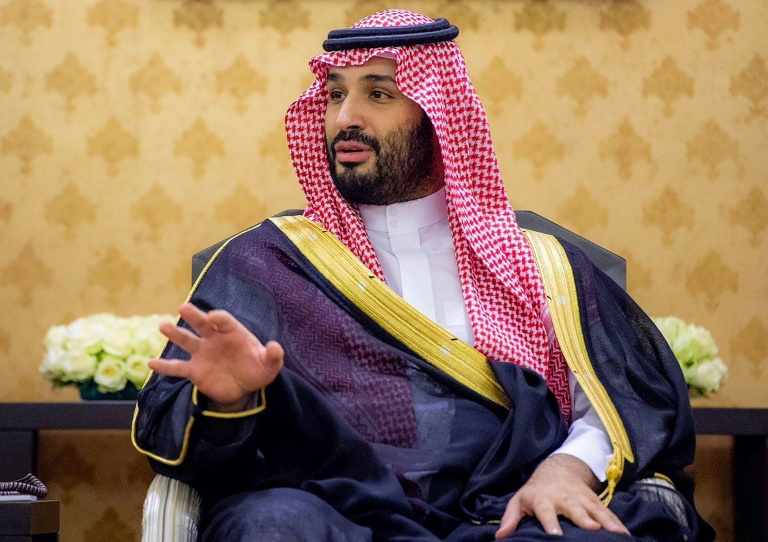
Saudi Crown Prince Mohammed bin Salman’s new title of prime minister, announced this week, could prove more significant abroad than inside the kingdom where he already wields enormous power.

The appointment by royal decree comes as the administration of US President Joe Biden is debating whether Prince Mohammed qualifies for immunity from lawsuits filed in American courts. 

Before Prince Mohammed’s title bump was announced, a judge had given US lawyers a deadline of October 3 to file a “statement of interest” on the immunity question. But on Friday, citing Prince Mohammed’s new position, the administration requested an additional 45 days to make up its mind, according to a court filing seen by AFP.

The 37-year-old de facto ruler of the world’s biggest crude exporter has been targeted in multiple lawsuits in the US in recent years, notably over the 2018 killing of Saudi journalist Jamal Khashoggi in the kingdom’s Istanbul consulate, which temporarily turned him into a pariah in the West.

His lawyers have argued that he “sits at the apex of Saudi Arabia’s government” and thus qualifies for immunity.

Human rights activists and government critics immediately speculated this week that making Prince Mohammed prime minister was a bald-faced attempt to strengthen the immunity claim and skirt legal exposure.

Sarah Leah Whitson, executive director of the NGO Khashoggi founded, Democracy for the Arab World Now (DAWN), told AFP it was a “last-ditch effort to conjure up a new title for him” — in other words, “a title-washing ploy”.

Saudi officials did not respond to requests for comment on the move. 

– Hit squads and hacks –

In October 2020, two years after Khashoggi’s death, DAWN filed a complaint in the United States along with Khashoggi’s fiancee, Hatice Cengiz, accusing Prince Mohammed of involvement in a “conspiracy” that led to Khashoggi being kidnapped, bound, drugged, tortured and assassinated. 

Last year, Biden declassified an intelligence report that found Prince Mohammed had approved the operation against Khashoggi, an assertion Saudi authorities deny. 

The legal threats to Prince Mohammed in US courts go beyond Khashoggi. 

He was also named in a lawsuit filed by Saad al-Jabri, a former top intelligence official who fell out of favour as Prince Mohammed manoeuvred to become first in line to the throne in 2017. 

That complaint accuses Prince Mohammed of trying to lure Jabri back to Saudi Arabia from exile in Canada — then, when that didn’t work, “deploying a hit squad” to kill him on Canadian soil, a plot foiled when most of the would-be assailants were turned back at the border. 

In yet another case, Prince Mohammed was accused by Lebanese journalist Ghada Oueiss of involvement in a scheme to hack her mobile device and disseminate “stolen personal images” to defame her and prevent her from reporting on human rights issues. 

The immunity issue appeared to come to a head over the summer, when a US judge gave Biden’s administration until August 1 to say whether it believed Prince Mohammed qualified. 

After Biden visited Saudi Arabia in July, abandoning a previous pledge to turn Saudi Arabia into a “pariah”, his administration requested an additional 60 days to decide whether to weigh in on the matter. 

Assuming the second, 45-day extension requested on Friday is granted, the new deadline will fall in mid-November.

– ‘In control’ at home –

Before this week’s announcement, Prince Mohammed, often referred to by his initials “MBS”, had been serving as deputy prime minister and defence minister, managing major portfolios from energy to security and beyond. 

Little is expected to change inside the kingdom as a result of his new title, said Umar Karim, an expert on Saudi politics at the University of Birmingham. 

“MBS was already completely in control, and there was no threat as such to him that could be countered by him becoming prime minister,” Karim said. 

At the same time, it is not clear whether becoming prime minister will significantly bolster Prince Mohammed’s claim of immunity, given that King Salman remains head of state. 

Observers pointed out that King Salman chaired a cabinet meeting the same day that Prince Mohammed’s promotion was announced. 

Even if the immunity question is resolved in the United States, it is likely to pop up in other countries.

In July, a group of NGOs filed a complaint in France alleging that Prince Mohammed was an accomplice to Khashoggi’s torture and enforced disappearance.

They said the charges could be prosecuted in France, which recognises universal jurisdiction.

Prince Mohammed “does not have immunity from prosecution because as crown prince he is not head of state”, they said.

Ukraine says 24 dead after attack on civilian convoy

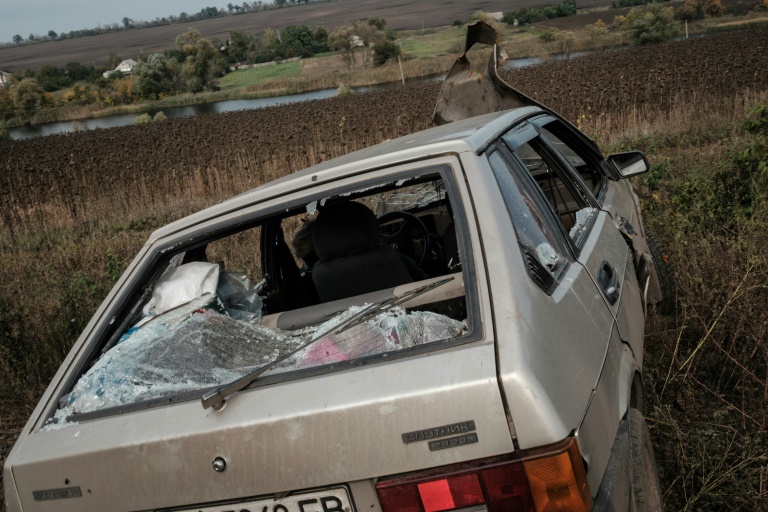
Ukraine on Saturday accused Russian forces of gunning down 24 civilians, including 13 children, in an attack on a road convoy near the recently recaptured town of Kupiansk.

On Friday, Ukrainian troops had shown AFP reporters a group of vehicles riddled with bullet holes and several corpses in civilian clothes outside the village of Kyrylivka, a short distance east of Kupiansk.

A day later, Kharkiv regional governor Oleg Synegubov put the preliminary death toll at 24 including, he said, a pregnant woman and 13 children, alleging: “Russians fired on the civilians at close range.”

In an online video shared by official channels, a senior paramedic from the Kupiansk Department of Emergency Medical Care confirmed these numbers.

The Kharkiv region prosecutor’s office said: “On September 30 prosecutors, investigators of the Security Service and the police discovered a convoy of seven cars that had been shot.  

“The car queue was shot by the Russian army on September 25, when civilians were trying to evacuate,” the statement alleged. 

“Two cars have burnt completely with children and their parents inside — they burnt alive,” it said. 

Ukrainian officials have launched an investigation and allege that the Russian forces that were driven out of Kyrylivka last Sunday were behind the war’s latest apparent massacre.

“The occupiers are being defeated on the battlefield and desperately respond by killing civilians,” said the head of the Security Service of Ukraine, Vasyl Malyuk.

“We will find everyone and hold them accountable for committed atrocities,” he said. “Several people had managed to escape from Hell. Now they’re testifying to the investigators.”

Governor Synegubov’s spokeswoman told AFP the site of the killings was still unsafe for investigators, being a short distance from the still active frontline between Ukrainian and Russian forces.

On Friday, AFP reporters counted the bodies of at least 11 civilians in the wrecked cars, some burned beyond recognition.  

Ukrainian troops operating nearby said they had found the dead on an exposed section of road alongside a rail track, as defeated Russian forces retreated from the area. 

– Bullet holes –

On Friday the bodies remained where they had died in and around the vehicles on a road running southeast from Kyrylivka 70 kilometres (43 miles) east of Kharkiv, in the direction of the Russian retreat. 

A small van or minibus was completely burnt out, with the carbonised remains of four people within. At least one of these corpses appeared small enough to have been a child.

“The vehicles were moving all together as a civilian convoy. We can see that there is almost no distance between the vehicles,” said “Filya”, a Ukrainian soldier who guided AFP to the scene. 

“And obviously they were attacked by gunfire because you can see the bullet holes … One car was set on fire and it’s impossible to recognise the people without an expert,” he said.

Russia’s February invasion allowed Moscow to seize a swathe of northern and eastern Ukraine, but this month a lightning Ukrainian counteroffensive in the Kharkiv region has driven them back.

Russian occupations forces have been accused of brutalising and murdering civilians several times during the seven-month-old war, and have hit cities with deadly missile strikes. 

Ukraine forces entering key town in Russia-annexed region

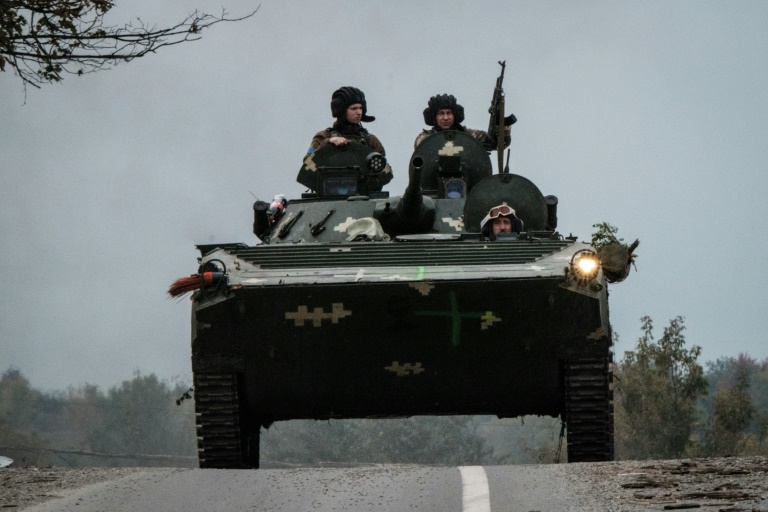
Ukraine said Saturday its forces were entering the key eastern town of Lyman, located in one of the four Ukrainian regions that Russia annexed despite international condemnation.

The recapture of Lyman — which Moscow’s forces pummelled for weeks to control this spring — would mark the first Ukrainian military victory in territory that the Kremlin has claimed as its own and has vowed to defend by all possible means.

Ukraine’s defence ministry announced its forces were “entering” Lyman in the eastern Donetsk region after Kyiv’s army said it had “encircled” several thousand Russian troops near the town.

The ministry posted a video of soldiers holding up a yellow and blue Ukrainian flag near a sign with the town’s name.

Shortly after Ukraine’s announcement, Russia’s defence ministry said it had “withdrawn” troops from Lyman “to more favourable lines”.

The development came a day after Russian President Vladimir Putin staged a grand ceremony in the Kremlin to celebrate the annexations of four Ukrainian territories.

“I want to say this to the Kyiv regime and its masters in the West: People living in Lugansk, Donetsk, Kherson and Zaporizhzhia are becoming our citizens forever,” Putin said.

US President Joe Biden condemned Friday’s ceremony in Moscow as a “sham routine” and pledged to continue backing Kyiv.

The four annexed territories create a crucial land corridor between Russia and the Crimean Peninsula, annexed by Moscow in 2014.

Together, the five regions make up around 20 percent of Ukraine, where Kyiv in recent weeks has been clawing back territory.

– Civilians gunned down –

On Saturday, Ukrainian officials accused Russia of gunning down 24 civilians, including children, in an attack on a road convoy near a recently recaptured town in the eastern Kharkiv region.

Ukrainian troops on Friday had shown AFP reporters a group of vehicles riddled with bullet holes and several corpses in civilian clothes, a short distance east of Kupiansk.

Kyiv also called for the immediate release of the chief of the Moscow-held Zaporizhzhia nuclear power plant, condemning his “illegal detention” by the Russians.

Ihor Murashov was leaving the plant Friday when he was detained and “driven in an unknown direction” while blindfolded, Ukraine’s nuclear agency Energoatom said. 

Zaporizhzhia — Europe’s largest nuclear energy facility — has been at the centre of tensions in recent weeks after Moscow and Kyiv accused each other of strikes on and near the plant, raising fears of an atomic disaster.

– ‘Illegal and illegitimate’ annexation –

Following Friday’s annexation, Washington announced “severe” new sanctions against Russian officials and the defence industry, and said G7 allies support imposing “costs” on any nation that backs the annexation.

Ukrainian President Volodymyr Zelensky urged the US-led military alliance NATO to grant his country fast-track membership.

He also vowed never to hold talks with Russia as long as Putin was in power.

NATO chief Jens Stoltenberg slammed the annexation as “illegal and illegitimate” but remained non-committal after Ukraine said it was applying to join the Western alliance.

Turkey said Saturday Russia’s annexation was a “grave violation of the established principles of international law”.

Despite warnings from Putin prior to the annexation that he could use nuclear weapons to defend the captured territories, Ukraine’s Foreign Minister Dmytro Kuleba said Kyiv would “continue liberating our land and our people”.

Kuleba also said Ukraine brought the annexations to the International Court of Justice and urged the Hague-based court to hear the case “as soon as possible”.

US National Security Advisor Jake Sullivan said Friday that Washington would announce an “immediate” new weapons shipment for Kyiv next week.

Sullivan also said that while there is a “risk” of Putin using nuclear weapons, there was no indication he would do so imminently. 

burs/yad

UN raises Kabul classroom bombing death toll to 35 as women protest 'genocide'

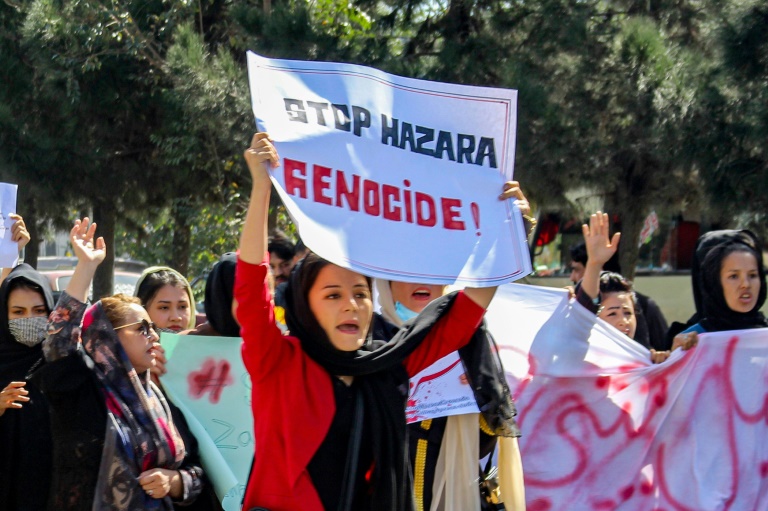
The death toll of a suicide bombing on a Kabul classroom has risen to 35, the UN said Saturday, as Shiite Hazara women who bore the brunt of the attack staged a defiant protest against the “genocide” of their minority community.

On Friday a suicide attacker blew himself up in a Kabul study hall as hundreds of pupils were taking tests in preparation for university entrance exams in the city’s Dasht-e-Barchi area.

The western neighbourhood is a predominantly Shiite Muslim enclave and home to the minority Hazara community — a historically oppressed group that has been targeted in some of Afghanistan’s most brutal attacks in recent years.

“The latest casualty figures from the attack number at least 35 fatalities, with an additional 82 wounded,” the United Nations Assistance Mission in Afghanistan (UNAMA) said in a statement.

More than 20 of those killed were girls and women, it said.

The UN mission’s casualty figure is higher than the toll Kabul authorities have given.

An interior ministry official told AFP anonymously on Saturday that 25 people were killed and 33 wounded in the attack on the Kaaj Higher Educational Centre — updating an earlier toll of 20 killed and 27 wounded.

Since returning to power last August, security has been a sensitive topic for the Taliban and the hardliners have often been keen to downplay attacks challenging their regime.

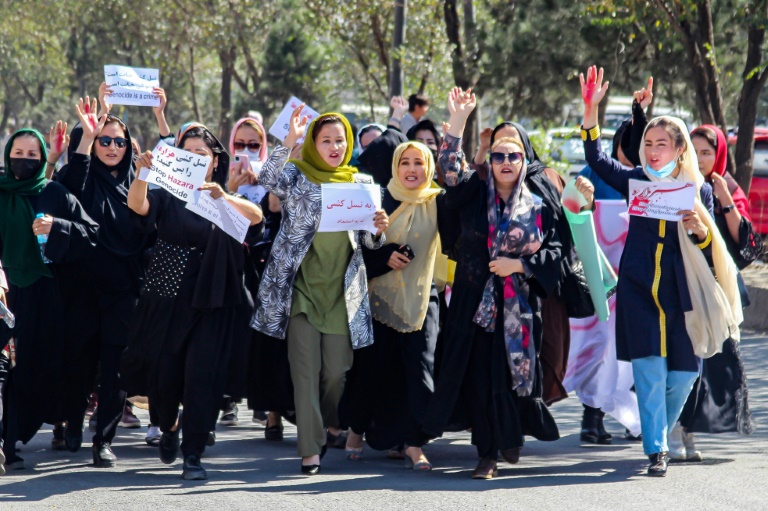
Meanwhile on Saturday dozens of Hazara women defied a Taliban ban on rallies to protest the latest bloodshed in their community.

Around 50 women chanted, “Stop Hazara genocide, it’s not a crime to be a Shiite”, as they marched past a hospital in Dasht-e-Barchi where several victims of the attack were being treated.

Dressed in black hijabs and headscarves, the protesters carried banners that read: “Stop killing Hazaras”, an AFP correspondent reported.

Witnesses have told AFP that the suicide attacker detonated in the women’s section of the gender-segregated study hall.

Wajiha, a survivor, saw her friends and male students scrabbling to escape from the hall after the attack.

“I saw boys climbing the compound wall and pulling girls along. I saw one boy who was himself injured but he kept pulling girls out,” Wajiha told AFP on Saturday.

Protester Farzana Ahmadi said the attack was “against the Hazaras and Hazara girls”.

“We demand a stop to this genocide. We staged the protest to demand our rights,” she told AFP.

– Regular target –

Protesters later gathered in front of the hospital and chanted slogans as dozens of heavily armed Taliban, some carrying rocket-propelled-grenade launchers, kept watch.

“Taliban urged to safeguard rights of all Afghans & stop using weapons to prevent right of peaceful protest,” the UN mission said on Twitter after the protest.

Since the hardline Taliban returned to power, women’s protests have become risky, with numerous demonstrators detained and rallies broken up by Taliban forces firing shots in the air.

No group has claimed responsibility for Friday’s attack.

But the jihadist Islamic State (IS) group regards Shiites as heretics and has previously claimed attacks in the area targeting girls, schools and mosques.

The Taliban have also been accused by rights groups of targeting the Hazaras during their 20-year insurgency against the former US-backed government.

Amnesty International said Friday’s attack was “a shamefaced reminder of the inaptitude and utter failure of the Taliban, as de-facto authorities, to protect the people of Afghanistan”.

Since returning to office the Taliban have pledged to protect minorities and clamp down on security threats.

“We promise to all our compatriots that we will do more to bring the perpetrators of yesterday’s and similar attacks to justice,” the foreign ministry said on Saturday after Friday’s attack drew widespread international condemnation.

In May last year, before the Taliban’s return to power, at least 85 people — mainly girls — were killed and about 300 were wounded when three bombs exploded near their school in Dasht-e-Barchi.

Again, no group claimed responsibility, but a year earlier IS claimed a suicide attack on an educational centre in the same area that killed 24.

Afghan Hazaras vow return to class despite academy bombing

Bodies strewn everywhere, a ceiling caved by blastwaves, classmates dragging each other to safety — survivors of a suicide bombing in a Kabul study hall described scenes of horror after what should have been a typical exam. 

Nonetheless, faced with a death toll of mostly women, students of the minority Hazara community were unbowed by the obstacles to education in Afghanistan — pledging Saturday they will return to class. 

“Education is our weapon and they want to take this weapon away from us,” said 19-year-old Wajiha, a day after escaping the assault that killed 35, according to a UN death toll.

“I want to study,” she told AFP. “It’s my dream and I will always fight for it.”

On Friday a bomber blew himself up in the women’s section of a gender-segregated study hall in the western district of Dasht-e-Barchi.

Hundreds of students from the historically oppressed Shiite Hazara community were settling down for a test at the Kaaj Higher Educational Centre when the assault began.

“We were sitting in the classroom and had just started our exam when suddenly there was the sound of gunfire,” said Wajiha, after revisiting the scene of the devastated schoolroom.

The attacker — a tall man dressed in military fatigues and holding a gun — fired continuously, she said, forcing the girls to hide under the benches.

“After the gunfire, there was an explosion and the whole ceiling of the classroom fell, then there was complete silence,” Wajiha said, her voice choking with emotion.

Recounting her story in a hijab and grey headscarf, Wajiha said she lost two of her friends and a teacher in the attack.

In the frantic aftermath, she saw her friends and male students scrabbling to escape.

“I saw boys climbing the compound wall and pulling girls along. I saw one boy who was himself injured but he kept pulling girls out,” Wajiha said.

“I don’t know how I escaped from the classroom. I don’t know how I jumped across the wall.”

– ‘Never stop studying’ –

Arsalan, 18, who was writing his test in the courtyard of the centre, saw bodies of women strewn on the floor of the hall.

“It was horrific. There was chaos everywhere,” said Arsalan, who credits his survival on his decision to sit outside the classroom.

“I pulled two girls out but I was unable to continue.”

Those behind the attack, which no group has yet claimed, aim to stop Hazaras from progressing, he said.

“They want to eliminate us completely. Why are they not attacking any other community?” he asked.

The historically marginalised Hazaras comprise between 10 to 20 percent of Afghanistan’s 38 million citizens.

The group massively benefitted when US-led forces overthrew the previous Taliban government in 2001.

They were able to put their children in schools — including their daughters — and entered the political scene and workforce in unprecedented numbers.

However recently they have been targeted in some of the most brutal attacks in Afghanistan, some claimed by the Islamic State group which regards them as heretics.

But Arezo Jaghori, a resident from Dasht-e-Barchi, said nothing will stop them from seeking an education.

“We will never stop studying, no matter what happens,” the 16-year-old vowed. 

“We feel sad for those who lost their lives on this path, but we are proud of ourselves,” she said. “No one can stop us.”

Troops in Burkina capital amid international condemnation of new coup

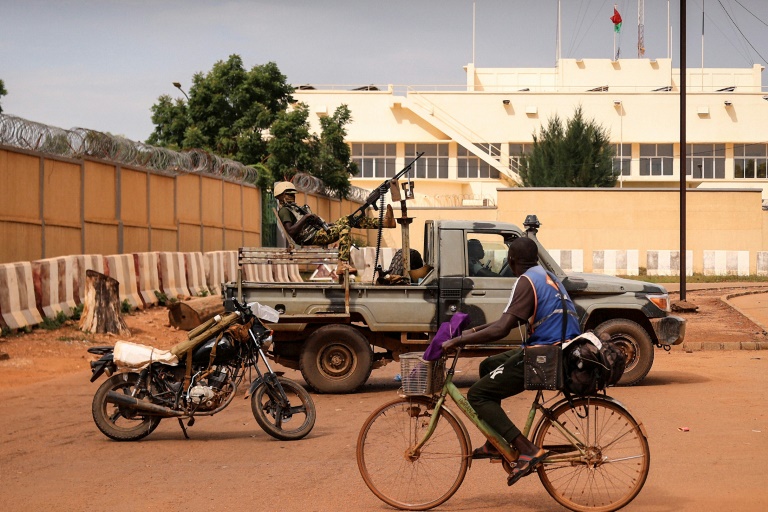
Soldiers blocked main roads and gunfire was heard in the capital of Burkina Faso on Saturday, as world powers condemned the second coup this year in the deeply poor and restive West African country.

Junior officers toppled a junta leader on Friday, saying he had failed to fight jihadist attacks in the country.

On Saturday, several witnesses told AFP they heard gunfire in the centre of the capital Ouagadougou, after which troops once again blocked the main roads in the city, including around the presidency.

Helicopters hovered above the city and shops that had opened for business in the morning shut their doors. 

The European Union and the African Union added their voices to a chorus of global condemnation to the change in power.

“The chairperson calls upon the military to immediately and totally refrain from any acts of violence or threats to the civilian population, civil liberties, human rights,” the AU said in a statement, calling for the restoration of the constitutional order by July 2024.

AU chief Moussa Faki Mahamat said he was deeply concerned about the resurgence of unconstitutional ousters in the West African nation and elsewhere on the continent.

The European Union warned that the coup put in danger efforts undertaken to restore constitutional order by July 1, 2024 and called for the new authorities to respect previous agreements. 

“The European Union also deplores the degradation of the security and humanitarian situation in the country,” the bloc’s foreign policy chief Josep Borrell said in a statement.

The Economic Community of West African States regional bloc “condemned in the strongest possible terms” the latest seizure of power, calling it “inappropriate.”

Burkina Faso’s former colonial ruler France told its citizens in Ouagadougou — believed to number between 4,000 and 5,000 — to stay home.

The United States called “for a return to calm and restraint by all actors”.

On Friday, pre-dawn gunfire erupted in the dusty and spread-out capital around the presidential palace and culminated in the latest coup.

Just before 8:00 pm (2000 GMT) on Friday, more than a dozen soldiers in fatigues appeared on the state television and radio broadcaster to announce the removal of Lieutenant-Colonel Paul-Henri Sandaogo Damiba.

They proclaimed 34-year-old Captain Ibrahim Traore in charge.

“We have decided to take our responsibilities, driven by a single ideal: the restoration of security and integrity of our territory,” they said.

“Damiba failed. Since he came to power, the zones that were peaceful were attacked. He took power but then he betrayed us,” Habibata Rouamba, a trader and activist said on Saturday.

With much of the Sahel region battling a growing Islamist insurgency, the violence has prompted a series of coups in Mali, Guinea and Chad since 2020. 

In January, Damiba installed himself as leader of the country of 16 million after accusing elected president Roch Marc Christian Kabore of failing to beat back the jihadists.

– Damiba accused of failure –

But with more than 40 percent of the country outside government control, the latest putsch leaders said Damiba, too, had failed.

“Far from liberating the occupied territories, the once-peaceful areas have come under terrorist control,” the new military leaders said. 

They then suspended the constitution, sealed the borders, dissolved the transitional government and legislative assembly and instituted a 9:00 pm to 5:00 am curfew.

New strongman Traore was previously head of anti-jihadist special forces unit “Cobra” in the northern region of Kaya.

– Junta leader’s fate unclear –

Damiba’s fate remains unknown. Though he had promised to make security his priority when he took charge on January 24, violent attacks have increased since March.

In the north and east, towns have been blockaded by insurgents who have blown up bridges and attacked supply convoys.

As in bordering countries, insurgents affiliated with Al-Qaeda and the Islamic State group have stoked unrest.

Thousands have died and about two million have been displaced by the fighting since 2015 when the insurgency spread to Burkina Faso, which has since become the epicentre of the violence across the Sahel.

In September, a particularly bloody month, Damiba sacked his defence minister and assumed the role himself.

Earlier this week, suspected jihadists attacked a convoy carrying supplies to the town of Djibo in the north of the country. The government said 11 soldiers died and around 50 civilians were missing.

African Union condemns latest Burkina Faso coup

The African Union on Saturday condemned the “unconstitutional change of government” in Burkina Faso, a day after the second coup this year in the deeply poor and restive West African country.

Junior officers toppled a junta leader on Friday, saying he had failed to fight jihadist attacks in the country.

“The chairperson calls upon the military to immediately and totally refrain from any acts of violence or threats to the civilian population, civil liberties, human rights,” the AU said in a statement, calling for the restoration of the constitutional order by July 2024.

AU chief Moussa Faki Mahamat said he was deeply concerned about the resurgence of unconstitutional ousters in the West African nation and elsewhere on the continent. 

In Burkina Faso’s capital, Ouagadougou, an uneasy calm reigned as soldiers in armoured vehicles and pickup trucks guarded the national television centre but traffic slowly resumed on arterial roads.

Shops slowly started reopening in the dusty and spread-out city, where pre-dawn gunfire on Friday around the presidential palace culminated in the latest coup, that drew wide condemnation. 

The Economic Community of West African States regional bloc “condemned in the strongest possible terms” the latest seizure of power, calling it “inappropriate” at a time when progress was being made for a return to constitutional order by July 1, 2024.

Burkina Faso’s former colonial ruler France told its citizens in Ouagadougou, believed to number between 4,000 and 5,000, to stay home, while the European Union expressed “concern” at the unfolding events.

The United States called “for a return to calm and restraint by all actors”.

Just before 8:00 pm (2000 GMT) on Friday, more than a dozen soldiers in fatigues appeared on the state television and radio broadcaster to announce the removal of Lieutenant-Colonel Paul-Henri Sandaogo Damiba.

They proclaimed 34-year-old Captain Ibrahim Traore in charge.

“We have decided to take our responsibilities, driven by a single ideal: the restoration of security and integrity of our territory,” they said.

“Damiba failed. Since he came to power, the zones that were peaceful were attacked. He took power but then he betrayed us,” Habibata Rouamba, a trader and activist said on Saturday.

With much of the Sahel region battling a growing Islamist insurgency, the violence has prompted a series of coups in Mali, Guinea and Chad since 2020. 

In January, Damiba installed himself as leader of the country of 16 million after accusing elected president Roch Marc Christian Kabore of failing to beat back the jihadists.

– Damiba accused of failure –

But with more than 40 percent of the country outside government control, the latest putsch leaders said Damiba, too, had failed.

“Far from liberating the occupied territories, the once-peaceful areas have come under terrorist control,” the new military leaders said. 

They then suspended the constitution, sealed the borders, dissolved the transitional government and legislative assembly and instituted a 9:00 pm to 5:00 am curfew.

New strongman Traore was previously head of anti-jihadist special forces unit “Cobra” in the northern region of Kaya.

– Junta leader’s fate unclear –

Damiba’s fate remains unknown. 

In the morning, shots rang out in the Ouaga 2000 neighbourhood, which houses both the presidential and junta headquarters.

State television was cut for several hours prior to the military announcement, broadcasting just a blank screen with the message “no video signal”.

Though Damiba had promised to make security his priority when he took charge on January 24, violent attacks have increased since March.

In the north and east, towns have been blockaded by insurgents who have blown up bridges and attacked supply convoys.

As in bordering countries, insurgents affiliated with Al-Qaeda and the Islamic State group have stoked unrest.

Thousands have died and about two million have been displaced by the fighting since 2015 when the insurgency spread to Burkina Faso, which has since become the epicentre of the violence across the Sahel.

In September, a particularly bloody month, Damiba sacked his defence minister and assumed the role himself.

Earlier this week, suspected jihadists attacked a convoy carrying supplies to the town of Djibo in the north of the country. The government said 11 soldiers died and around 50 civilians were missing.

Close Bitnami banner
Bitnami