World

Tobacco giant Altria ends non-compete accord with Juul

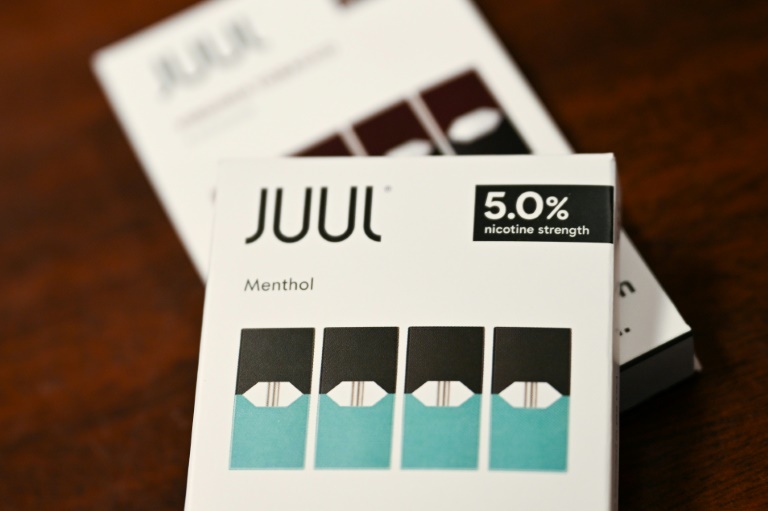
Tobacco giant Altria said Friday it ended a non-compete agreement with Juul, which is mired in a fight with a US agency over its ability to sell vaping products.

Altria, the parent company of Philip Morris USA and other brands in tobacco and nicotine, “exercised our option to be released from our Juul non-competition obligations,” the company said in a securities filing.

The announcement allows Altria to pursue the acquisition of another vaping company, or to develop its own products.

Altria in late 2018 invested about $13 billion in Juul, a stake that has been written down several times as Juul has faced various government crackdowns.

Altria’s move comes as Juul challenges a June action by the US Food and Drug Administration ordering all products made by Juul Labs off the market after finding the vaping giant had failed to address certain safety concerns.

The FDA order was suspended by a federal judge after an appeal by Juul.

Juul has submitted an appeal to the FDA, arguing that its products are safe for adult smokers.

Juul said Friday that the end of the non-compete clause with Altria “gives us more flexibility as it increases the financial and strategic options we can pursue to secure our business and address the impact of the FDA’s now stayed order,” a Juul spokesman said. 

“As we continue to operate in the market and go through the FDA’s review process, we remain confident in our science and evidence and believe that we will be able to demonstrate that our products do in fact meet the statutory standard of being ‘appropriate for the protection of the public health.'”

The agreement between the companies released Altria if its Juul investment falls below 10 percent of its initial value. At June 30, Altria’s investment in Juul was valued at $450 million.

Putin annexes four more Ukraine territories

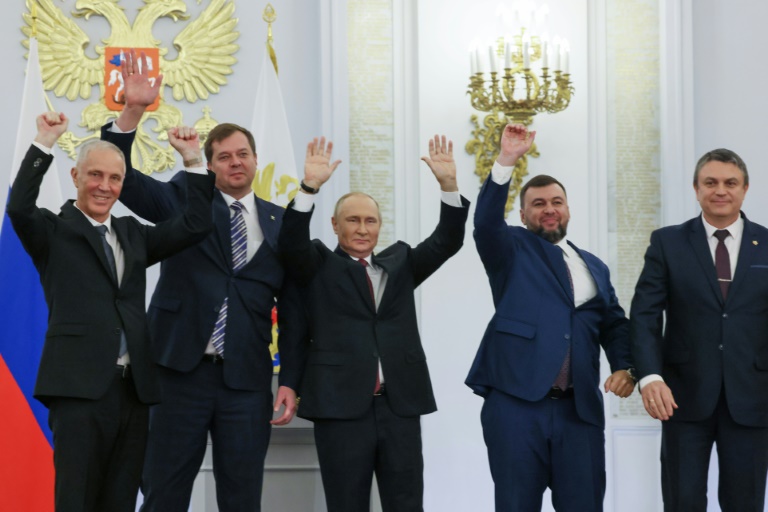
Russian President Vladimir Putin on Friday annexed four territories in Ukraine controlled by his army at a grand ceremony in the Kremlin and urged Kyiv to lay down its arms and negotiate an end to seven months of fighting.

The lavish ceremony at the Kremlin, a turning point in recent post-Soviet history, came hours after shelling killed 25 people in Ukraine’s southern region of Zaporizhzhia, one of the worst attacks against civilians in months.

Putin was defiant during a address to Russia’s most senior political elite, telling the West the land grab was irreversible and calling on Ukraine’s emboldened army to give up and negotiate a surrender.

“I want to say this to the Kyiv regime and its masters in the West: People living in Lugansk, Donetsk, Kherson and Zaporizhzhia are becoming our citizens forever,” Putin said.

“We call on the Kyiv regime to immediately stop fighting and stop all hostilities… and return to the negotiating table,” the Russian leader added.

The packed hall erupted to chants of “Russia! Russia” after the four leaders inked the deal, and Putin — rarely seen making physical contact since the pandemic — joined hands with his proxy leaders and was shown shouting along in unison on state TV.

Leading up to the ceremony Putin warned he could use nuclear weapons to retain control of the territories as Kyiv vowed the move would make no difference to its aims of kicking out Russian troops. 

Ukraine’s closest backer, Washington, said it would “never” recognise Russia’s authority in the regions.

– ‘Bloodthirsty scum’ –

But early on Friday, an attack in Zaporizhzhia in the south, killed at least 25 people as civilians were preparing to leave to pick up relatives, Ukrainian officials said.

Bodies of people wearing civilian clothes were strewn across the ground after the attack and windows of cars blown out, an AFP photographer said.

One man, 56-year-old Viktor, said his life was saved because he went to get a coffee.

“The waitress gave it to me. And there was a bang. She got scared and left the cafe. A few minutes later, there was another explosion. Now she is on the floor,” he said.

“I managed to hide. She did not.”

“Only complete terrorists could do this,” said Ukrainian President Volodymyr Zelensky. “Bloodthirsty scum! You will definitely answer,” he added. 

But pro-Kremlin regional chief Vladimir Rogov accused Ukrainian troops of carrying out a “terrorist act”.

In central Moscow, at least 10,000 people were convening for state-organised annexation celebrations, with huge banners emblazoned: “Donetsk. Lugansk. Zaporizhzhia. Kherson. Russia!”

– ‘Nobody believes it’ –

“I’m happy if they want to join Russia,” Natalya Bodner, a 37-year-old lawyer told AFP. “They have more hope than we do”.

“It should have been done a long time ago,” a Russian serviceman Ildar Babaev from the southern region of Dagestan said.

“This is the right decision”.

The four territories create a crucial land corridor between Russia and the Crimean peninsula, annexed by Moscow in 2014.

But the Kremlin said Friday it “needed to clarify” the exact borders of Kherson and Zaporizhzhia — neither fully controlled by Moscow’s forces — that it intends to annex.

Together, all five regions including Crimea, make up around 20 percent of Ukraine, whose forces in recent weeks have been clawing back wins as part of a counter-offensive.

In Sloviansk, a city in Donetsk, a military medic who goes by the name of Coconut said the annexations were nonsense.

“If my neighbour comes to my house and announces that it’s his, nobody believes it actually belongs to him,” he told AFP.

In Kherson, Russian officials announced that Ukrainian strikes with US-supplied precision artillery systems had killed a senior security chief of the Russian-controlled region.

– Security Council vote –

A “pinpoint” strike by Himars hit his house, Kirill Stremousov, the deputy head of the Russian proxy administration said.

It was the latest of several targeted attacks on Russian-appointed officials in the region.

Ukrainian forces are also on the doorstep of Lyman in Donetsk, which Moscow’s forces pummelled for weeks to capture this summer. 

“Lyman is partially surrounded,” said Denis Pushilin, the pro-Moscow leader in the breakaway region of Donetsk, on social media. Two nearby villages were “not fully under our control,” he added.

On Thursday, President Joe Biden said the United States would “never, never, never” recognise Russian sovereignty over the territories set for annexation.

The four regions’ Kremlin-installed leaders formally requested annexation after claiming residents backed the move in hastily organised referendums that were dismissed by Kyiv and the West as fraudulent.

Ukraine has said the West’s only appropriate response is to hit Russia with more sanctions and to supply Ukrainian forces with more weapons to keep reclaiming territory.

The UN Security Council will vote Friday on a resolution condemning the referendums, according to France, the council’s current president, but it has no chance of passing due to Moscow’s veto power.

Zelensky is calling an “urgent” meeting of his national security council for Friday, his spokesman said.

burs/jm

Deadly hurricane heads for Carolinas after devastation in Florida

US forecasters expect Hurricane Ian to unleash life-threatening conditions on the Carolina states on Friday after causing devastation in Florida, where it killed at least 12 people with the toll expected to rise.

After weakening across land, Ian regained its Category 1 status in the Atlantic Ocean, the US National Hurricane Center said, predicting up to seven feet (two meters) of storm surge as it slams into the South Carolina coast by afternoon.

The storm, one of the most powerful ever to hit the United States, left hundreds of people in need of rescue in Florida.

State Governor Ron DeSantis on Friday described the coastal Fort Myers area as “ground zero,” adding “but this was such a big storm that there are effects far inland.”

Many people evacuated, but thousands chose to shelter in place. DeSantis said Florida officials had so far contacted 20,000 people who chose to stay.

At least 12 people have been confirmed dead, according to local officials, the majority of them in Charlotte county.

DeSantis has warned that it was too early to give a death toll, and that concrete information about casualty numbers could be expected over several days. 

The NHC has issued a hurricane warning for South Carolina’s entire coast, as well as portions of Georgia and North Carolina.

– ‘Horrifying sounds’ –

Ian then is set to weaken fast and “dissipate near the North Carolina/Virginia border by Saturday night,” the NHC said.

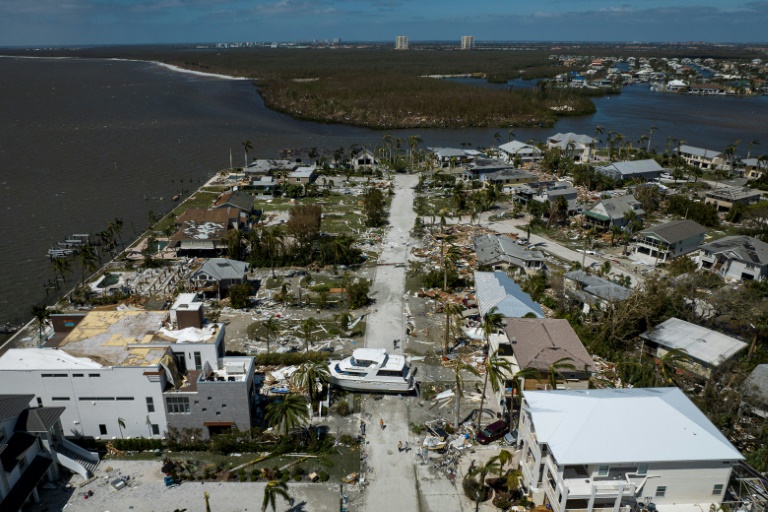
Fort Myers, where Ian came ashore as a powerful Category 4 hurricane on Wednesday, took much of the brunt, as streets became rivers and seawater poured into houses.

Dozens of boats moored in the marina were sunk while others were tossed onto downtown streets.

DeSantis described the destruction as a “500-year flood event.”

Tom Johnson of Fort Myers had a front row seat for the chaos from his apartment on the second floor of a two-story harbourside building.

“I was scared because I’ve never been through that,” the 54-year-old told AFP. “It was just the most horrifying sounds with debris flying everywhere, doors flying off.”

His home was undamaged but one of his neighbors, Janelle Thil, was not so lucky and had to ask other residents for help after her ground floor apartment began to flood.

“They got my dogs and then I jumped out of the window and swam,” the 42-year-old said.

When Thil returned to her apartment after the storm passed, she said she opened the door and “had to wait about five minutes for all the floodwaters to come out.”

“I loved my home,” she said. “But I’m alive and that’s what matters.”

A US Coast Guard official said helicopter crews were plucking people from the rooftops of homes inundated by floodwaters.

– Millions without power –

Seventeen migrants were missing from a boat that sank during the hurricane on Wednesday, with one person found dead and nine others rescued, the Coast Guard said. Among them were four Cubans who swam to shore in the Florida Keys.

Much of Florida’s southwest coast was plunged into darkness after the storm wiped out power.

Tracking website PowerOutage.us said two million homes and businesses remained without electricity in the Sunshine State on Friday.

Two barrier islands near Fort Myers, Pine Island and Sanibel Island, popular with vacationers, were essentially cut off when the storm damaged causeways to the mainland.

Before pummeling Florida, Ian plunged all of Cuba into darkness after downing the island’s power network.

Electricity was gradually returning, but many homes remain without power.

Laura Mujica joined dozens of Cuban women gathered in the capital Havana on Thursday to demand electricity be restored in the city.

“We took to the street, because we haven’t had electricity for several days and we are tired of it. 

“We women decided to take to the streets to empower ourselves and protest so that the electricity will be fixed,” said the 20-year-old.

Human-induced climate change is resulting in more severe weather events across the globe, scientists say — including with Ian.

According to a rapid and preliminary analysis, human-caused climate change increased the extreme rain that Ian unleashed by over 10 percent, US scientists said.

Latvia's Russian-speakers fear becoming Ukraine war 'collateral'

Russia’s invasion of Ukraine has complicated things for Latvia’s Russian-speakers, already caught between an attachment to country versus cultural and linguistic identity and who now fear becoming collateral victims of Moscow’s war.

“With the war in Ukraine, the attitude of Latvians towards their Russian-speaking fellow citizens has deteriorated considerably,” said Vladimir Dorofeev, a 48-year-old tour guide and member of the country’s minority.

The Baltic state’s Russian-speaking population is “being associated with Russia”.

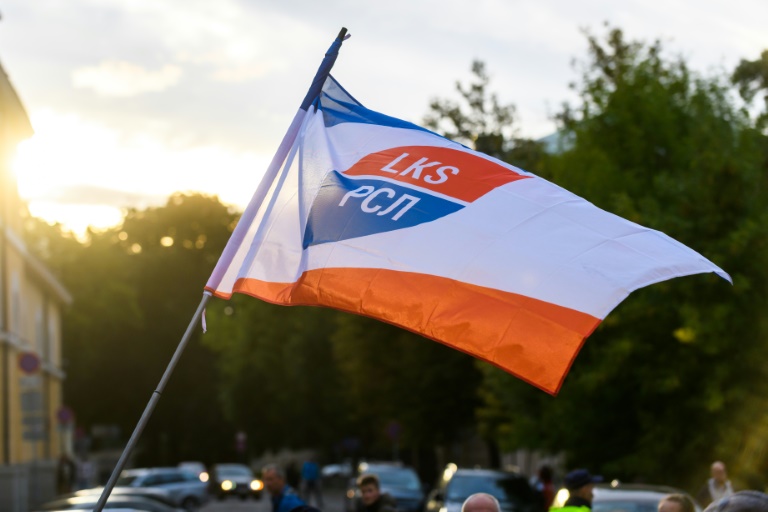
The father-of-three — a Russian speaker born and raised in the capital Riga and married to a Latvian — was attending a rally by the Latvian Russian Union party.

Carrying signs that read “No to Assimilation” and “Stop Linguistic Genocide”, around 100 people protest a reform making Latvian the only language of instruction.

Dorofeev remains undecided whether he will vote for the Latvian Russian Union in Saturday’s general election.

According to opinion polls, the small party suspected of Kremlin ties is hovering at the electoral threshold, like other groups traditionally associated with the Russian-speaking minority.

That has not always been the case. Over the previous decade, most elections were won by the social-democratic party Harmony, which is backed by Russian-speakers.

But Harmony never found an ally to govern with, as other parties kept their distance. 

– Fear of deportation –

“The Ukraine war altered attitudes towards Russian-speakers in Latvia, especially among those with painful memories from the Soviet Union,” said Tatiana Efimova, a member of the minority.

“For some, everything associated with Russia and the Russian language is painful,” she told AFP. 

The 40-year-old logistics specialist said she does not feel discriminated against in Latvia. 

“I’m an ethnic Russian but I speak Latvian. I have Latvian friends and no one has ever said anything to me,” she said. 

Latvians “want to protect their language, their nation, their identity. There’s few of them, so it’s understandable.”

According to an opinion survey from April, support for Russia among Latvia’s Russian-speakers fell to 13 percent from 20 the previous month, while support for Ukraine rose to 30 percent from 25. 

The undecided remained steady at 47 percent, the research centre SKDS found.

Dominated over the centuries by Teutonic knights, Swedes, Poles, then Russians, Latvia gained independence in 1918 before finding itself under Soviet occupation in 1944-1990. 

Tens of thousands of Latvians were deported and replaced with Russians, noticeably altering the country’s social and linguistic mix. 

Today, the Russian-speaking minority makes up around 30 percent of the population of 1.8 million. 

– ‘Non-citizens’ –

After Latvia regained independence in 1991, the political class championed the model of a nation state built around Latvian national identity rather than that of a multicultural country, said Sergejs Kruks, an expert in culture and communication.

“According to this nationalist view, which still prevails today, anyone born into Russian culture by definition supports Putin’s politics,” he told AFP. 

In 1991, Latvia passed a law granting citizenship only to those who were Latvians before 1940 and their descendants, rather than everyone across the board. 

Since then, anyone hoping to acquire citizenship must pass a Latvian language and history test — a difficult feat for many Russian-speakers, especially the elderly. 

Unable or unwilling to meet that hurdle, some wind up as non-citizens who receive an “alien’s passport” without citizenship.

Non-citizens constitute nearly 10 percent of the population. They do not have the right to vote and cannot work in the public sector or become lawyers, notaries or pharmacists. 

Their situation has led the Kremlin to criticise Latvia, which does not hide its wariness of Russia — despite EU and NATO membership.

– ‘Kremlin-friendly fake news’ –

The Ukraine war has only further complicated things. 

“In Latvia, Russian-speakers are in a way collateral victims of the war,” said Miroslavs Mitrofanovs, co-chairman of the Latvian Russian Union. 

“Russian authorities untied the hands of Latvian nationalists who are now taking it out on us,” said Mitrofanovs, who before the war frequently appeared on Russian state television.

“They’ve banned the Russian language at schools and Russian television, they’ve torn down monuments to the liberators from Nazism,” he told AFP, referring to a Riga memorial celebrating the Red Army that was dismantled last month.

For Latvian writer Arvids Degis, this kind of narrative is marginal and tends to surface around election time.

“But it doesn’t stick and is usually ridiculed as ‘Kremlin-friendly fake news’,” he told AFP.

Key US inflation index shows signs of slowing in August

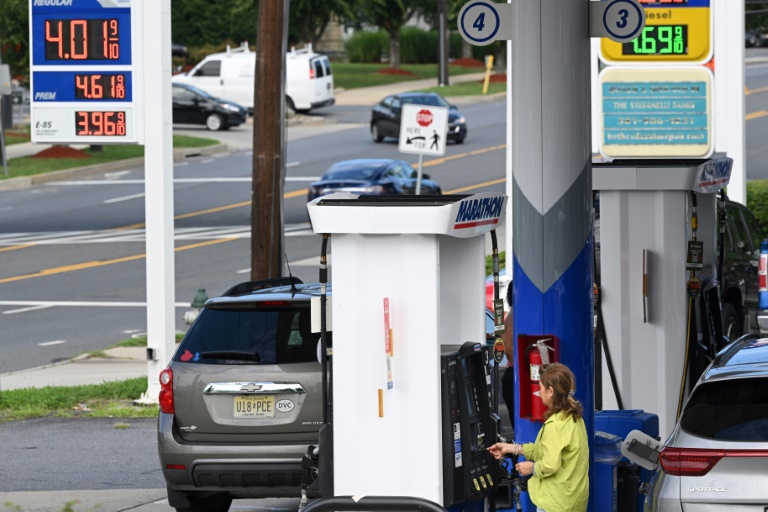
A closely-watched measure of US inflation showed the annual pace of price increases slowed slightly in August as energy costs fell and increases in food costs eased, according to government data released Friday.

But while the data moved in the right direction, it may not provide much comfort to President Joe Biden or the Federal Reserve since inflation remains at the highest level since the early 1980s.

The Fed’s preferred inflation measure, the personal consumption expenditures (PCE) price index, increased 6.2 percent from August 2021, down slightly from the pace in July and from the 7.0 percent peak in June, the Commerce Department reported.

Inflation picked up speed last year and has accelerated this year as global supply chain snarls and worker shortages pushed prices higher — factors worsened by Russia’s war on Ukraine, which sent food and energy prices soaring worldwide.

Energy prices increased 24.7 percent over the past year while food prices are up 12.4 percent, the report showed. 

The Fed focuses on the PCE price index as it reflects consumers’ actual spending, including shifts to lower cost items, unlike the more well-known consumer price index (CPI), which also slowed in August from the blistering 9.1 percent rate in June — the highest in 40 years.

The Fed has raised interest rates aggressively this year to try to cool demand and tamp down inflation pressures, and officials have said more increases are coming before the year is out.

However, the report may not provide much comfort to central bankers as it showed widespread increases in goods and services prices, beyond the volatile food and energy components.

Excluding food and energy, the “core” PCE price index for August increased 4.9 percent from one year ago, accelerating faster than in July.

“The big and unwelcome surprise here is the overshoot in the core PCE,” said Ian Shepherdson of Pantheon Macroeconomics. 

While “it’s not as bad as it looks … appearances count, and this does not look good,” he said, predicting a fourth straight three-quarter point Fed interest rate hike in November.

Compared to the prior month, the index rose 0.3 percent, rebounding after a slight dip in July, while the core PCE jumped 0.6 percent, the report said.

The data also showed household spending increased 0.4 percent in the month, after falling in July, although economists say the trend is slowing.

UK teen died after 'negative effects of online content': coroner

A 14-year-old British girl died from an act of self-harm while suffering from the “negative effects of online content”, a coroner said Friday, in a case that has shone a spotlight on social media companies.

Molly Russell was “exposed to material that may have influenced her in a negative way and, in addition, what had started as a depression had become a more serious depressive illness,” Andrew Walker ruled at North London Coroner’s Court.

The teenager “died from an act of self-harm while suffering depression”, he said, but added it would not be “safe” to conclude it was suicide.

Some of the content she viewed was “particularly graphic” and “normalised her condition,” said Walker.

Of the 16,300 posts Russell saved, shared or liked on Instagram in the six-month period before her death, 2,100 related to depression, self-harm or suicide, the inquest was told.

Russell, from Harrow in northwest London, died in November 2017, leading her family to set up a campaign highlighting the dangers of social media.

“Molly was a thoughtful, sweet-natured, caring, inquisitive, selfless, beautiful individual — although a few words cannot possibly encapsulate our wonderful girl,” her father Ian said in a statement.

“We have heard a senior Meta (Instagram parent company) executive describe this deadly stream of content the platform’s algorithms pushed to Molly as ‘safe’ and not contravening the platform’s policies.

“If this demented trail of life-sucking content was safe, my daughter Molly would probably still be alive and instead of being a bereaved family of four, there would be five of us looking forward to a life full of purpose and promise that lay ahead for our adorable Molly.

“It’s time the toxic corporate culture at the heart of the world’s biggest social media platform changed,” he urged.

– Silicon Valley ‘shockwaves’ –

The week-long hearing became heated when the family’s lawyer, Oliver Sanders, took a Meta executive to task.

A visibly angry Sanders asked Elizabeth Lagone, the head of health and wellbeing at Meta, why the platform allowed children to use it when it was “allowing people to put potentially harmful content on it”.

“You are not a parent, you are just a business in America. You have no right to do that. The children who are opening these accounts don’t have the capacity to consent to this,” he said.

Lagone apologised after being shown footage, viewed by Russell, that “violated our policies”.

In a statement issued following the ruling, a spokeswoman for Meta said: “Our thoughts are with the Russell family and everyone who has been affected by this tragic death.

“We’ll continue our work with the world’s leading independent experts to help ensure that the changes we make offer the best possible protection and support for teens,” she added.

Children’s charity NSPCC said the ruling “must be a turning point”, stressing that any delay to a government bill dealing with online safety “would be inconceivable to parents”.

“Tech companies must be held accountable when they don’t make children’s safety a priority,” tweeted the charity. 

NSPCC chief executive Peter Wanless said the ruling should “send shockwaves through Silicon Valley”.

“The magnitude of this moment for children everywhere cannot be understated,” he added.

Eurozone inflation jumps to record 10% as energy prices soar

Eurozone consumer prices skyrocketed by a record 10 percent in September, official data showed on Friday, as inflation reached double digits on the back of soaring energy prices caused by Russia’s war on Ukraine.

Stoked by a staggering 40.8 percent rise in energy prices, the yearly inflation rate in the 19-country single currency area hit its highest level since records began, according to Eurostat.

The historic level of inflation will encourage the European Central Bank to stay on its current path of rate hikes, in an effort to cool prices despite the risk of triggering economic recession in Europe.

The ECB is desperate to prevent inflation from taking root in the economy and is taking measures that will reduce demand and could therefore slow growth.

The ECB argues that the hikes are also necessary to put monetary policy on a more “neutral” footing after many years of negative rates and stimulus programmes that pumped tens of billions of euros into the eurozone economy.

The leap to 10 percent followed a 9.1 percent rise in August and doused hopes that inflation would begin to ease as energy markets stabilise seven months after Russia launched its invasion of Ukraine.

Making matters more complicated for policymakers, the eurozone’s powerhouse economies showed widely divergent inflation rates, with Germany seeing price hikes of 10.8 percent and France at 6.2 percent.

In the Netherlands inflation prices rose by 17.1 percent, the highest since World War II, in a major leap from an already sky-high 12 percent a month earlier.

Also muddying the waters, some eurozone countries are pushing through major national spending to ease the energy price burden on consumers, creating further fragmentation in the European economy.

In an urgent effort to tame prices, European Union energy ministers on Friday agreed to cut peak-hour power consumption and impose windfall levies on energy companies.

– ECB rate hike looms –

In the face of a tough balancing act, ECB chief Christine Lagarde indicated this week she would go ahead with another hefty rate hike of 0.75 percentage points at the bank’s next meeting on October 27.

“We expect to raise interest rates further over the next several meetings to dampen demand and guard against the risk of a persistent upward shift in inflation expectations,” she told EU lawmakers. 

Energy prices in Europe remain under intense pressure with Russia starving the continent of gas supply as winter approaches.

The ECB’s target for inflation is two percent and efforts to get closer to that level have raised fears that the central bank may lead the bloc into a recession in its effort to reduce prices.

“The jump in the eurozone’s headline inflation rate in September into double digits will be of grave concern to the ECB,” said Jessica Hinds of Capital Economics.

“Despite the weak economic outlook we expect the banks to prioritise inflation and deliver another bumper rate hike next month,” she added.

Eurostat data also published on Friday showed the eurozone unemployment rate remaining at a record low of 6.6 percent in July.

This will further encourage the ECB to stay the course and choose fighting inflation over concerns about economic growth and its consequences on employment.

Clashes as Iran protests over Mahsa Amini death enter third week

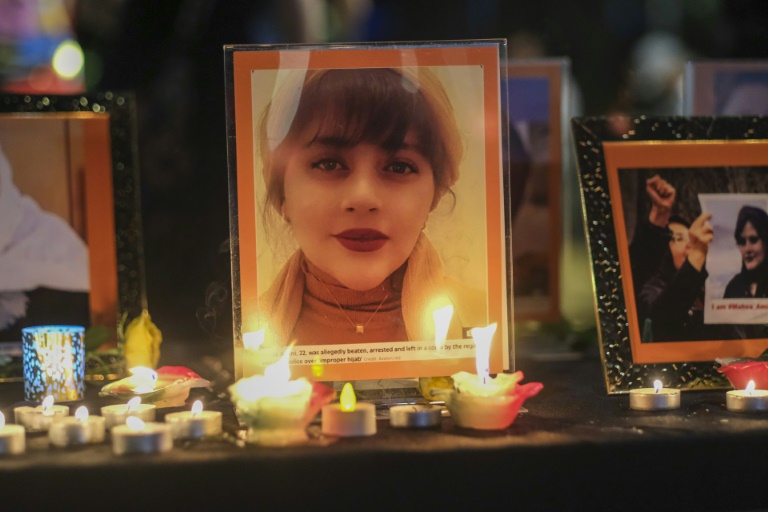
Iranian security forces opened fire on angry protesters as street violence sparked by the death of Kurdish woman Mahsa Amini entered a third week on Friday, foreign-based opposition media reported.

Dozens have been killed in a crackdown on the protests that erupted when Amini, 22, died in custody three days after her arrest by the notorious morality police in Tehran for allegedly breaching the Islamic republic’s strict dress code for women.

“Death to the dictator,” bare-headed women chanted in the northwestern city of Ardabil, said Iran International, a Persian-language television station based in London.

In the southwestern city of Ahvaz, security forces fired tear gas to disperse scores of people who streamed onto the streets jeering and shouting anti-government slogans, in another video shared by the channel.

Men braved gunfire as they stoned a police station in Zahedan, near Iran’s southeastern border with Pakistan, other footage showed. AFP was unable to immediately verify the videos.

Women have defiantly burned their headscarves and cut their hair in the protests over Amini’s death, announced September 16, that are the biggest seen in Iran since protests in November 2019 over fuel price rises.

Amnesty International said Iran was intentionally using lethal force against the protesters, adding that without international action “beyond statements of condemnation” more people risk being killed.

“The Iranian authorities have mobilised their well-honed machinery of repression to ruthlessly crack down on nationwide protests in an attempt to thwart any challenge to their power,” it said.

– Order to confront protests ‘mercilessly’ –

Amnesty said it had obtained a leaked official document issued to the commanders of armed forces in all provinces on September 21 instructing them to “severely confront” protesters.

Another leaked document showed that on September 23, the commander of the armed forces in Mazandaran province, where some of the deadliest clashes have taken place, ordered security forces to “confront mercilessly, going as far as causing deaths, any unrest by rioters and anti-revolutionaries”.

The NGO said it had confirmed 52 deaths in the protests but the toll was likely higher. Another rights group, Oslo-based Iran Human Rights, said 83 people were confirmed to have been killed, while Iran’s Fars news agency has put the toll at “around 60” dead.

Amnesty’s warning comes as Iran presses ahead with an intensifying crackdown that has seen the arrest of many journalists, activists and other prominent figures.

Former Iranian international footballer Hossein Manahi was arrested Friday after supporting the protests on his social media accounts, state media said.

In a letter on Friday, Iranian football fans asked FIFA to ban their national team from this year’s World Cup in Qatar over the crackdown.

“Why would FIFA give the Iranian state and its representatives a global stage, while it not only refuses to respect basic human rights and dignities, but is currently torturing and killing its own people?” they wrote on behalf of the Open Stadiums campaign.

Security forces also arrested singer Shervin Hajipour, whose song “Baraye” (“For”) made up of tweets about the protests went viral on Instagram, the rights group Article 19 said.

His song, which racked up millions of views and prompted many to comment that it moved them to tears, has now been removed from his Instagram account.

Iran also arrested a woman who drew praise online after being shown eating out in Tehran without a headscarf in an image that went viral on social media.

“The security agencies contacted my sister Donya Rad and asked her to give some explanations,” her sister Dina tweeted. “Today, after going where she was told, she was arrested” and sent to Tehran’s notorious Evin prison.

– Outside forces –

The Committee to Protect Journalists says at least 29 journalists have been arrested, including Nilufar Hamedi and Elahe Mohammadi, female reporters who helped expose Amini’s case.

The crackdown has drawn widespread international condemnation.

Demonstrations of solidarity with Iranian women have been held worldwide, and rallies are planned in 77 cities on Saturday.

Iran has blamed outside forces for the protests, and on Wednesday it launched cross-border missile and drone strikes that killed 14 people in Iraq’s Kurdistan region, accusing rebel groups based there of fuelling the unrest.

Iran’s Revolutionary Guards pledged to carry out more attacks until the groups are disarmed.

The United States said one of its citizens had been killed in the Iranian strikes.

burs/dv/kir

Suicide attack on Kabul classroom kills 19, mostly young women

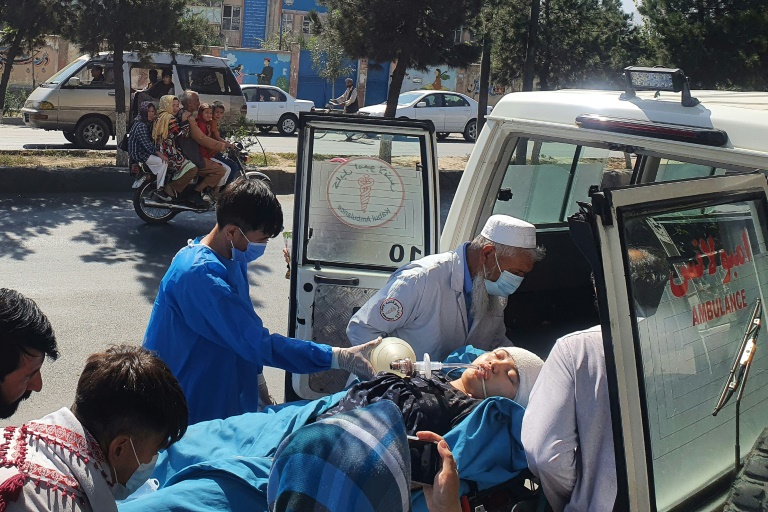
A suicide bomber attacked an education centre in the Afghan capital on Friday where hundreds of students were preparing for university exams, killing at least 19 people, most of them young women.

The bombing happened in the Dasht-e-Barchi neighbourhood of western Kabul, a predominantly Shiite Muslim area home to the minority Hazara community, the target of some of Afghanistan’s most deadly attacks.

The bomber shot dead two security guards before entering the gender-segregated classroom, student Ali Irfani, who escaped the carnage, told AFP.

“Not many boys were hit because they were at the rear end of the classroom. The bomber entered from the front door where girls were sitting,” he said.

Akbar, another student witness, also told AFP that young women made up most of the casualties, with up to 600 people in the hall at the time.

No group has yet claimed responsibility for the blast at Kaaj Higher Educational Centre, which coaches students for university admission tests. 

However, the jihadist Islamic State group has claimed previous attacks in the area targeting girls, schools, mosques and a maternity hospital.

A resident who ferried victims to hospitals said they saw body parts scattered across the floor of the hall.

“Many students were hit by shrapnel in their head, neck and eyes,” said Asadullah Jahangir. 

Kabul police spokesman Khalid Zadran said 19 people were killed and 27 others wounded. 

A shopkeeper from the neighbourhood said there was a loud explosion and then crowds of students rushed out of the centre.

“It was chaos as many students, boys and girls, tried to escape from the building. It was a horrific scene. Everyone was so scared,” he told AFP, requesting anonymity.

Italian NGO Emergency, which operates a hospital in Kabul, said it had received 22 patients at the facility, including 20 women, two of whom had died. 

“The victims are all between 18 and 25 years old, and most of them were in the classroom to take an exam,” it said in a statement.

– ‘Shamefaced’ –

The Taliban’s return to power in Afghanistan last year brought an end to a two-decade war and a significant reduction in violence, but security has begun to deteriorate in recent months.

In April, two deadly bomb blasts on the same day at separate education centres in Dasht-e-Barchi killed six people and wounded at least 20 others.

Friday’s attack is a “shamefaced reminder of the ineptitude and utter failure of the Taliban, as de facto authorities, to protect the people of Afghanistan”, Samira Hamid of rights group Amnesty International said in a statement.

Afghanistan’s Shiite Hazaras have faced persecution for decades, targeted by the Taliban during their insurgency against the former US-backed government and by IS — both of which consider Shiites heretics. 

Families on Friday rushed to hospitals where ambulances arrived with victims, and lists of those confirmed dead or wounded were posted on the walls.

“We didn’t find her here,” a distressed woman looking for her sister at one of the hospitals told AFP. “She was 19 years old.”

“We are calling her but she’s not responding.”

Last year, before the Taliban returned to power, at least 85 people — mainly girl students — were killed and about 300 wounded when three bombs exploded near their school in the area.

No group claimed responsibility, but a year earlier IS claimed a suicide attack on an educational centre in the same neighbourhood that killed 24, including students.

In May 2020, the group was blamed for a gun attack on a maternity ward of a hospital in Dasht-e-Barchi that killed 25 people, including new mothers.

Education is a flashpoint issue in Afghanistan, with the Taliban blocking many girls from returning to secondary education. Islamic State also stands against the education of women and girls.

abh-qb-ash-jd/axn

UK teen died after 'negative effects of online content': coroner

A 14-year-old British girl died from an act of self harm while suffering from the “negative effects of online content”, a coroner said Friday in a case that shone a spotlight on social media companies.

Molly Russell was “exposed to material that may have influenced her in a negative way and, in addition, what had started as a depression had become a more serious depressive illness,” Andrew Walker ruled at North London Coroner’s Court.

The teenager “died from an act of self-harm while suffering depression”, he said, but added it would not be “safe” to conclude it was suicide.

Some of the content she viewed was “particularly graphic” and “normalised her condition,” said Walker.

Russell, from Harrow in northwest London, died in November 2017, leading her family to set up a campaign highlighting the dangers of social media.

“There are too many others similarly affected right now,” her father Ian Russell said after the ruling.

“At this point, I just want to say however dark it seems, there is always hope. 

“I hope that this will be an important step in bringing about much needed change,” he added.

The week-long hearing became heated when the family’s lawyer, Oliver Sanders, took an Instagram executive to task.

A visibly angry Sanders asked Elizabeth Lagone, the head of health and wellbeing at Meta, Instagram’s parent company, why the platform allowed children to use it when it was “allowing people to put potentially harmful content on it”.

“You are not a parent, you are just a business in America. You have no right to do that. The children who are opening these accounts don’t have the capacity to consent to this,” he said.

Lagone apologised after being shown footage, viewed by Russell, that “violated our policies”.

Of the 16,300 posts Russell saved, shared or liked on Instagram in the six-month period before her death, 2,100 related to depression, self-harm or suicide, the inquest heard.

Children’s charity NSPCC said the ruling “must be a turning point”.

“Tech companies must be held accountable when they don’t make children’s safety a priority,” tweeted the charity. 

“This must be a turning point,” it added, stressing that any delay to a government bill dealing with online safety “would be inconceivable to parents”.

Close Bitnami banner
Bitnami