World

Taliban fire into air to disperse women's rally backing Iran protests

Taliban forces on Thursday used gunfire to disperse a women’s rally in the Afghan capital in support of protests in Iran over the death of a woman in morality police custody.

Neighbours Afghanistan and Iran are both run by hardline Islamist governments that use religious police to enforce strict dress codes on women. 

Dozens of people have been killed in demonstrations that have erupted over 22-year-old Mahsa Amini’s death in Tehran after she was arrested for allegedly breaching rules on hijabs and modest clothing.

Chanting the same “Women, life, freedom” mantra used in Iran, about 25 women protested in front of Kabul’s Iranian embassy before Taliban forces fired into the air, an AFP correspondent reported.

“The message of today’s demonstration in Kabul is that women are not alone in the world and are demanding their rights from the international community,” a woman activist who took part in the protest told AFP by phone later. 

Another protester in Kabul, who asked not to be named for security reasons, told AFP by phone that “we need to end these horrific governments”.

“People here are also tired of the Taliban’s crimes. We are sure that one day our people will rise in the same way as the Iranian people,” she said. 

Women in headscarves carried banners that read: “Iran has risen, now it’s our turn!” and “From Kabul to Iran, say no to dictatorship!”

Taliban forces swiftly snatched the banners and tore them in front of the protesters. 

They also threatened to beat the protesters with their rifle butts, and ordered some journalists to delete videos of the rally.

– ‘Severe restrictions’ –

Protests staged by women in Afghanistan have become increasingly rare after the detention of core activists at the start of the year. 

Like in Iran, Afghan women risk arrest, violence and stigma for taking part in demonstrations calling for their rights. 

Since returning to power, the Taliban have issued a slew of restrictions controlling women’s lives based on their strict interpretation of Islamic sharia law.

Many of the rules — including dress code, segregation from men and travelling with a male guardian — are monitored by the Taliban’s vice and virtue police, who roam the streets dressed in white. 

Women must fully cover themselves in public, preferably with the all-encompassing burqa, according to the rules, which are enforced with varying rigour across the country.  

The Taliban have also blocked girls from returning to secondary schools and barred women from many government jobs, although some senior Taliban officials are divided on the issue of education. 

Deputy foreign minister Sher Mohammad Abbas Stanikzai at a function earlier this week said “education is obligatory for men and women”.

“If we want national unity then doors of educational institutions must be open for all,” he said on live television. 

The state of women’s rights in Afghanistan remains a top concern for Western nations, with no country yet officially recognising the Taliban government. 

Earlier this week, a United Nations report denounced the “severe restrictions” on women and called for them to be reversed. 

“The international community has not and will not forget Afghan women and girls,” the report said.
Millions without power, major flooding in Florida hurricane

Hurricane Ian flooded cities, turned out the lights on millions, and left migrants from an overturned boat missing on Thursday as Florida assessed damage from one of the most intense US storms in years.

Officials readied a major emergency response to the deluge that laid waste to coastal Florida as the hurricane roared through beachfront towns and horizontal rain pounded communities for hours.

The National Hurricane Center (NHC) downgraded Ian to a tropical storm, but said it was causing “catastrophic flooding” and forecast further “life-threatening” floods, storm surge and high winds in Florida as well as Georgia and South Carolina.

The US Border Patrol said that a boat carrying migrants sank at sea during the hurricane, leaving 20 missing. Four Cubans swam to shore in the Florida Keys islands and the coast guard rescued three others.

Ian also menaced the city of Orlando and the nearby Disney theme parks, which were shuttered Wednesday and Thursday.

President Joe Biden declared a “major disaster” in Florida, a move that frees up federal funding for storm relief.

As dawn broke across the state’s west coast, residents got their first glimpse at the damage. 

Ian made landfall as an extremely powerful hurricane just after 3:00 pm Wednesday on the barrier island of Cayo Costa, west of the city of Fort Myers.

Dramatic television footage from the coastal city of Naples showed floodwaters surging into beachfront homes, submerging roads and sweeping away vehicles.

– ‘A lot of destruction’ –

Pete DiMara, chief of Naples Fire-Rescue, told CNN that a surge of four to six feet (up to two metres) swept through his station, leaving crews unable to respond to emergencies.

Many cell towers are down and “the surge has certainly caused a lot of destruction in the area,” DiMara said, urging residents to stay home until his crews can reach them.

To the north, some neighborhoods in Fort Myers, a city of 83,000, resembled lakes.

The NHC said Ian’s maximum sustained winds reached 150 miles (240 kilometers) per hour when it landed as a Category 4 hurricane — just shy of the maximum Category 5.

As a tropical storm, they had dropped to a maximum 65 miles per hour.

Some 2.6 million of Florida’s 11 million electricity customers were without power on Thursday, according to the PowerOutage tracking website.

Florida’s Governor Ron DeSantis said the state should brace for a “nasty, nasty day, two days.”

The town of Punta Gorda was in near-total darkness overnight after the storm wiped out power, save for the few buildings with generators.

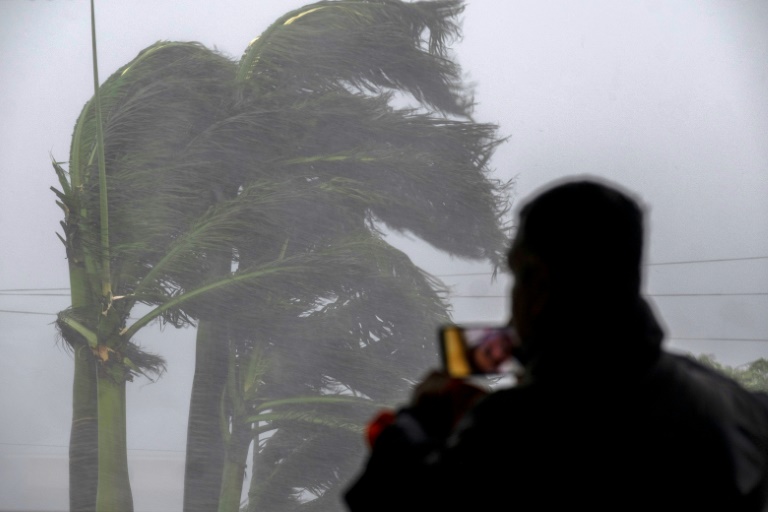
Howling winds toppled trees, pulled chunks out of roofs, and turned debris into dangerous projectiles whipping through town.

Mandatory evacuation orders had been issued for about 2.5 million people in a dozen coastal Florida counties, with several dozen shelters set up.

Airports stopped all commercial flights, and cruise ship companies delayed departures or canceled voyages.

The storm was set to move off the east-central coast of Florida later Thursday and emerge into the Atlantic before blowing through Georgia and the Carolinas to the north.

“Some slight re-intensification is forecast, and Ian could be near hurricane strength when it approaches the coast of South Carolina on Friday,” according to the NHC.

– National Guard called up –

Ian had plunged all of Cuba into darkness Tuesday, after battering the country’s west as a Category 3 storm and downing the island’s power network.

At least two people died in Pinar del Rio province, state media in the country of more than 11 million reported.

By Wednesday power had been restored for some residents of Havana and another 11 provinces, but not in Cuba’s three worst-affected provinces.

In the United States, some 5,000 National Guard personnel were mobilized in Florida as DeSantis vowed an all-out rescue and recovery effort. 

“There will be thousands of Floridians who will need help rebuilding,” the governor said.

Last year, four hurricanes were among 20 separate weather incidents that cost the United States $1 billion or more, the second-most billion-dollar disasters recorded in a calendar year behind 2020, the National Oceanic and Atmospheric Administration said.

Human activity has caused life-threatening climate change resulting in more severe weather events across the globe.

Millions without power, major flooding in Florida hurricane

Hurricane Ian flooded cities, turned out the lights on millions, and left migrants from an overturned boat missing on Thursday as Florida assessed damage from one of the most intense US storms in years.

Officials readied a major emergency response to the deluge that laid waste to coastal Florida as the hurricane roared through beachfront towns and horizontal rain pounded communities for hours.

The National Hurricane Center (NHC) downgraded Ian to a tropical storm, but said it was causing “catastrophic flooding” and forecast further “life-threatening” floods, storm surge and high winds in Florida as well as Georgia and South Carolina.

The US Border Patrol said that a boat carrying migrants sank at sea during the hurricane, leaving 20 missing. Four Cubans swam to shore in the Florida Keys islands and the coast guard rescued three others.

Ian also menaced the city of Orlando and the nearby Disney theme parks, which were shuttered Wednesday and Thursday.

President Joe Biden declared a “major disaster” in Florida, a move that frees up federal funding for storm relief.

As dawn broke across the state’s west coast, residents got their first glimpse at the damage. 

Ian made landfall as an extremely powerful hurricane just after 3:00 pm Wednesday on the barrier island of Cayo Costa, west of the city of Fort Myers.

Dramatic television footage from the coastal city of Naples showed floodwaters surging into beachfront homes, submerging roads and sweeping away vehicles.

– ‘A lot of destruction’ –

Pete DiMara, chief of Naples Fire-Rescue, told CNN that a surge of four to six feet (up to two metres) swept through his station, leaving crews unable to respond to emergencies.

Many cell towers are down and “the surge has certainly caused a lot of destruction in the area,” DiMara said, urging residents to stay home until his crews can reach them.

To the north, some neighborhoods in Fort Myers, a city of 83,000, resembled lakes.

The NHC said Ian’s maximum sustained winds reached 150 miles (240 kilometers) per hour when it landed as a Category 4 hurricane — just shy of the maximum Category 5.

As a tropical storm, they had dropped to a maximum 65 miles per hour.

Some 2.6 million of Florida’s 11 million electricity customers were without power on Thursday, according to the PowerOutage tracking website.

Florida’s Governor Ron DeSantis said the state should brace for a “nasty, nasty day, two days.”

The town of Punta Gorda was in near-total darkness overnight after the storm wiped out power, save for the few buildings with generators.

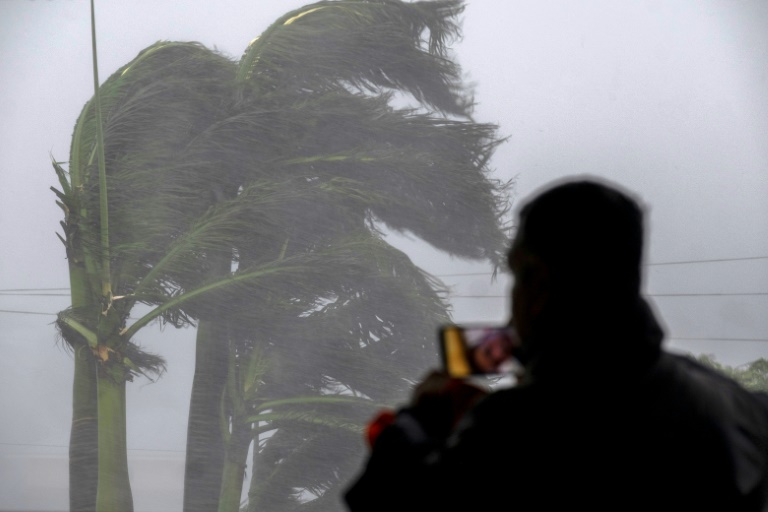
Howling winds toppled trees, pulled chunks out of roofs, and turned debris into dangerous projectiles whipping through town.

Mandatory evacuation orders had been issued for about 2.5 million people in a dozen coastal Florida counties, with several dozen shelters set up.

Airports stopped all commercial flights, and cruise ship companies delayed departures or canceled voyages.

The storm was set to move off the east-central coast of Florida later Thursday and emerge into the Atlantic before blowing through Georgia and the Carolinas to the north.

“Some slight re-intensification is forecast, and Ian could be near hurricane strength when it approaches the coast of South Carolina on Friday,” according to the NHC.

– National Guard called up –

Ian had plunged all of Cuba into darkness Tuesday, after battering the country’s west as a Category 3 storm and downing the island’s power network.

At least two people died in Pinar del Rio province, state media in the country of more than 11 million reported.

By Wednesday power had been restored for some residents of Havana and another 11 provinces, but not in Cuba’s three worst-affected provinces.

In the United States, some 5,000 National Guard personnel were mobilized in Florida as DeSantis vowed an all-out rescue and recovery effort. 

“There will be thousands of Floridians who will need help rebuilding,” the governor said.

Last year, four hurricanes were among 20 separate weather incidents that cost the United States $1 billion or more, the second-most billion-dollar disasters recorded in a calendar year behind 2020, the National Oceanic and Atmospheric Administration said.

Human activity has caused life-threatening climate change resulting in more severe weather events across the globe.

European stocks drop, pound recovers

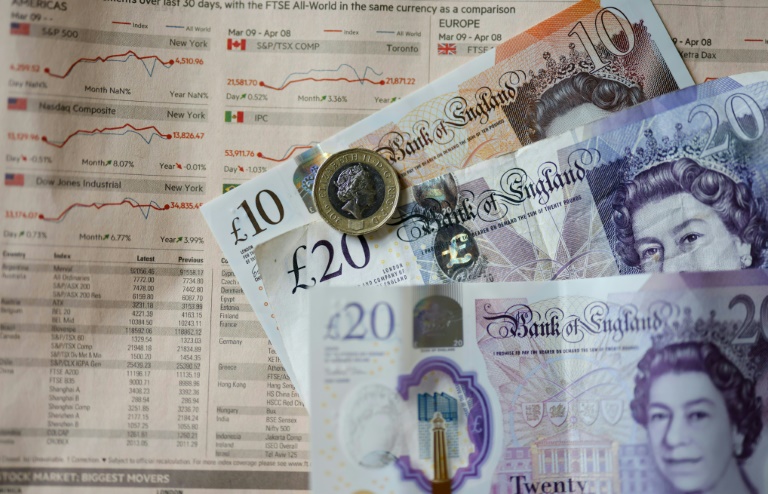
European equities sank Thursday on fears that rising interest rates will spark a global recession, while the pound clawed back ground one day after emergency bond-market intervention from the Bank of England.

German inflation accelerated sharply in September, official data showed Thursday in the latest indication that Europe’s biggest economy is buckling under the pressure from soaring energy prices.

Consumer prices spiked 10.0 percent compared to the same month a year earlier.

German Chancellor Olaf Scholz announced that the nation would plough 200 billion euros ($194 billion) into shielding households and businesses from skyrocketing energy costs in the wake of Russia’s invasion of Ukraine.

However, Frankfurt stocks accelerated losses to shed 1.6 percent in value, while Paris showed a similar drop.

London equities fell as the pound rebounded somewhat from earlier falls, one day after the BoE snapped up UK bonds to avert a risk to UK financial stability.

The BoE, the European Central Bank, the US Federal Reserve and many other counterparts are ratcheting up interest rates to fight decades-high inflation.

Oil prices dropped on the strong dollar, which makes US-priced commodities more expensive for buyers using weaker units.

– ‘Pessimistic’ investors –

“There’s a growing list of reasons why investors are pessimistic right now, with the prospect of an interest-rate recession being right up there,” Craig Erlam, analyst at trading platform OANDA, told AFP.

“But we are increasingly seeing pressures mounting and forcing responses from policymakers that are not normal. That started out as super-sized rate hikes, and now includes Japanese foreign-exchange interventions and the BoE intervening in bond markets.”

Stocks had also rallied Wednesday partly after the BoE’s surprise purchase, which came after Britain’s recent tax-cutting budget sparked soaring bond yields and sent the pound to a record dollar low on Monday. 

The BoE launched a two-week programme to buy long-term UK bonds, capped initially at £65 billion ($71 billion), as UK pension funds scrambled to sell investments to remain solvent.

Despite falling equities, the UK bond market was further soothed on Thursday.

The UK government’s 30-year sovereign bond yield retreated further to 3.97 percent, having briefly surged Wednesday to a 1998 peak at 5.14 percent.

Meanwhile, sentiment was also dented this week by leaks from the undersea Nord Stream pipelines running from Russia to Europe.

That sparked accusations of sabotage amid strained relations between the West and sanctions-hit Russia over the latter’s war on Ukraine.

– Key figures at around 1210 GMT –

London – FTSE 100: DOWN 1.2 percent at 6,922.60 points 

Frankfurt – DAX: DOWN 1.6 percent at 11,985.83

Paris – CAC 40: DOWN 1.4 percent at 5,683.07

EURO STOXX 50: DOWN 1.5 percent at 3,284.01

Tokyo – Nikkei 225: UP 1.0 percent at 26,422.05 (close)

Hong Kong – Hang Seng Index: DOWN 0.5 percent at 17,165.87

Shanghai – Composite: DOWN 0.1 percent at 3,041.20 (close)

New York – Dow: UP 1.9 percent at 29,683.74 (close)

Pound/dollar: UP at $1.0844 from $1.0689 on Wednesday

Euro/dollar: DOWN at $0.9710 from $0.9735

Euro/pound: UP at 89.53 pence from 89.40 pence

Dollar/yen: UP at 144.70 yen from 144.16 yen

Brent North Sea crude: UP 0.1 percent at $89.37 per barrel

West Texas Intermediate: UP 0.2 percent at $82.28 per barrel

burs-rfj/lth

Qatar says World Cup fans do not need Covid vaccination

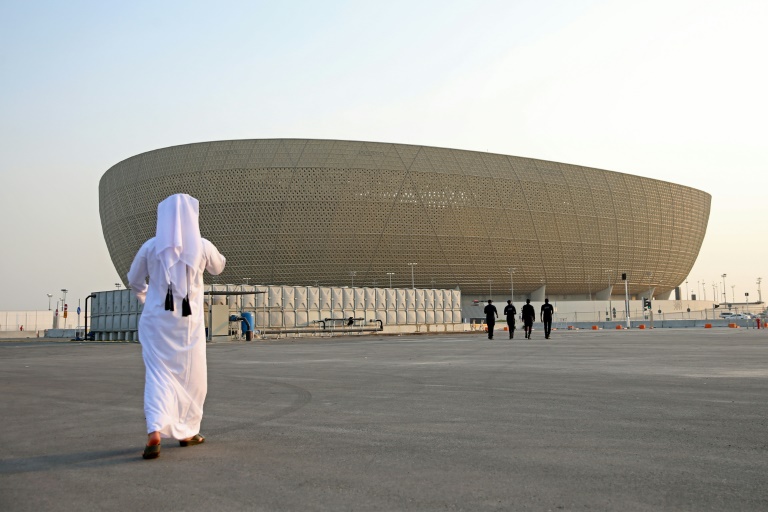
Coronavirus vaccinations will not be mandatory for the million-plus fans going to the World Cup in Qatar this year, the Gulf state said Thursday.

But players and match officials may be forced into a secure “bio-bubble” if Covid-19 cases take off again, with the threat of expulsion from the tournament for those who breach the secure environment, the health ministry said.

The 29-day tournament will be the first major global sporting event with fans since the eruption in December 2019 of the Covid pandemic, which has since killed more than six million people.

Qatari organisers, who have predicted that more than one million people will pack Doha for the matches, and football’s governing body, FIFA, have said they want the event to be a sign the world is getting over the devastating pandemic.

But Qatar’s health ministry warned in its World Cup guidelines that special measures would be ordered “in the event of a worsening pandemic situation in the country”, such as the emergence of a threatening new variant.

With Covid-19 currently considered under control, “there will be no vaccination requirement for participants and visiting spectators,” the ministry said.

All visitors aged over six will have to produce negative Covid-19 tests before taking flights to Qatar for the tournament that starts November 20.

Fans will have to wear masks in public transport but authorities are only recommending the use of masks at the eight stadiums in the Doha region where matches will be played.

Anyone who tests positive for Covid-19 in Qatar will have to isolate for five days, the guidelines added.

– Bio-bubble ready –

Organisers and FIFA are most worried about the first two weeks of the tournament when four matches a day are planned and the peak number of supporters from the 32 competing nations will be packing stadiums, fan zones and tourist spots.

Some estimates say there could be up to 350,000 visiting fans in Doha at the same time during the weekend of November 26-27.

Officials say Doha airport and the city’s roads will be facing peak pressure that weekend.

Because of the pressure on accommodation, only fans with tickets can enter Qatar from November 1, though each person with a ticket is allowed to invite three guests.

Each person entering the country must download a special fan pass, a Hayya card, and Qatar’s anti-Covid health application, Ehteraz.

The app has to be shown at the entrance to metro stations and most shopping malls.

“If metro stations and malls want to check the app, then people need to be ready for some queues,” said one tourism consultant who is advising a major chain of hotels in Qatar.

Other measures may also be difficult to enforce because of the shear numbers, experts said.

The ministry is recommending a one metre (three feet) space between diners in cafes and restaurants.

Virtually every team at the World Cup will have players who have refused to have vaccines, officials acknowledged.

England’s Premier League said this year that 15 percent of players had refused vaccines.

Qatar’s health ministry said it would force players, referees and officials to stay in a secure “bio-bubble” if coronavirus cases take off “to allow for the safe operation and continuation of the event.”

Hotel rooms, training facilities and transport to and from stadiums would all be sealed off.

“Breaching the bubble arrangement may result in an immediate dismissal of the violator from the event and removal from event hotel and accommodation,” the ministry said.

Anti-war novel banned by Nazis revived through German eyes

Banned by the Nazis for its anti-war message, the classic novel “All Quiet on the Western Front” is getting a Netflix revival with lessons for a new troubled age.

The nearly century-old book, already the subject of an Oscar-winning film and an acclaimed TV movie, is being brought to the screen for the first time by a German director.

“My film stands out from American or British (war) films made from the point of view of the victors,” film-maker Edward Berger, 52, told AFP.

“In Germany, there is always this feeling of shame, mourning and guilt (surrounding war). It was important for me to present this perspective.”

Published in 1929, the novel by Erich Maria Remarque depicts the experiences of a teenage German soldier during World War I.

It is one of the most influential examples of anti-militaristic literature ever written, translated into over 60 languages and selling more than 50 million copies worldwide.

Just one year after it came out, a US film adaptation by Lewis Milestone was released which would win the Academy Awards for best picture and best director.

But its subversive message saw the work banned in Germany and targeted in the 1933 book burnings by the Nazis, who accused it of “betraying soldiers”.

– ‘Propaganda and manipulation’ –

Berger, the director, is best known for his 2018 Emmy-nominated miniseries “Patrick Melrose” starring Benedict Cumberbatch.

He said the movie, which has been selected as Germany’s submission for the 2023 international feature film Oscar, aimed to show “the perspective of the vanquished”.

This includes aspects not covered in the book: the signing of the Armistice after World War I and the harsh conditions imposed on the Germans that later fed Nazi propaganda to justify nationalism and the outbreak of World War II.

In the novel, the entire conflict is viewed through the eyes of Paul Baeumer (played in the film by Austrian stage actor Felix Kammerer), a volunteer soldier on the Western front.

Once in the trenches, he quickly becomes aware of the absurdity of war and the patriotic brain-washing that got him there.

Berger said he was pushed to accept the project by his 16-year-old daughter, who had just studied this book like several generations of high school students before her.

When he started filming nearly three years ago, he also wanted to tackle growing nationalism in the West.

“There was Brexit, Trump, Orban — there were a lot of voters choosing the far-right,” he said.

“Institutions like the EU, which has guaranteed the peace for us for 70 years, were being called into question by demagogues through propaganda and manipulation.”

By making a movie that shows where such developments can lead, Berger said he was also sounding an alarm bell.

– ‘Emotional punch’ –

Although the director declined to discuss the war raging in Ukraine, reviewers noted the obvious parallels to a story about a soldier fighting for a nationalist lie. 

Martin Schwickert of the RND media group called the film “frighteningly current in light of the Ukraine war”, saying it “made plain what war means for those who have to fight it”. 

In the book and the film, Baeumer dies a few days before the end of the conflict along with all of his comrades. Shortly before, he kills a French soldier.

In one of several graphic battle scenes which drew comparisons with Steven Spielberg’s “Saving Private Ryan”, Baeumer recognises his enemy’s shared humanity. 

While rummaging in the pocket of the fallen Frenchman’s uniform, Baeumer discovers a photo of his wife and his young daughter and blames himself for having made a widow and an orphan.

After its release in German cinemas on Thursday, the film will be available worldwide on Netflix in October.

Its premiere drew mixed reviews, with the conservative daily Frankfurter Allgemeine Zeitung withering in its critique: “In Germany, even after 100 years, one can’t see the difference between a good and a bad war film”.

However the top-selling Bild hailed the two-and-a-half-hour film as “brilliantly shot, wonderfully acted and packing a strong emotional punch”.

“As devastating as the story is, it’s magnificently brought to the screen. A film everyone should see, especially in these times.”

Kremlin announces Ukraine annexation ceremony for Friday

Russia will formally annex four regions of Ukraine its troops occupy at a grand ceremony in Moscow on Friday, the Kremlin has announced, after it suggested using nuclear weapons to defend the territories.

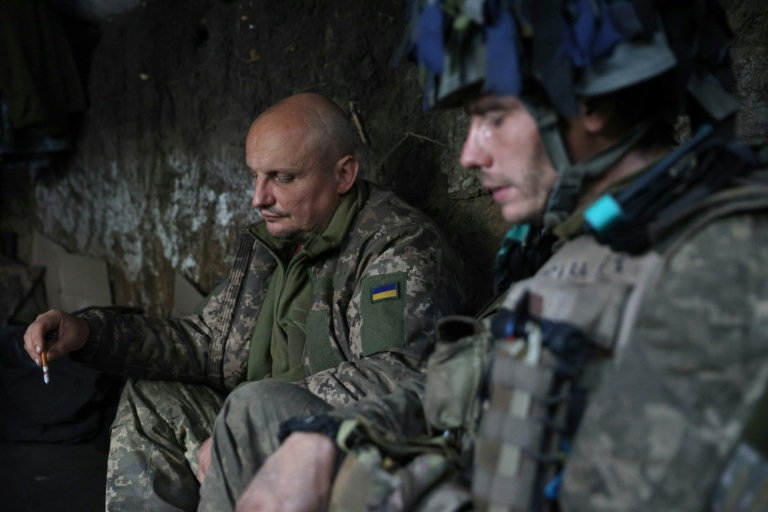
The threats from senior Russian officials have not deterred a sweeping counter-offensive from Kyiv, which has been pushing back Russian troops in the east and is edging nearer the Donetsk region city of Lyman that Moscow’s forces battered for weeks to fully capture.

President Vladimir Putin’s spokesman Dmitry Peskov said the annexation would be formalised at a ceremony in the Kremlin. The Russian leader will make a “major” speech, he added.

“Tomorrow in Saint George’s Hall at the Grand Kremlin Palace at 15:00 (1200 GMT) a signing ceremony will take place on the incorporation of the new territories into Russia,” Peskov told reporters.

The Kremlin-installed leaders of the four regions were gathered in the Russian capital on Thursday, a day after pro-Moscow authorities had appealed to Putin directly to integrate the territories into Russia.

Their nearly simultaneous requests to the Kremlin came after the four regions claimed residents had unanimously backed the move in hastily organised referendums that were dismissed by Kyiv and the West as illegal, fraudulent and void.

– Ukraine advances in Donetsk –

Ukraine after the so-called referendums said the only appropriate response from the West was to hit Russia with more sanctions and to supply Ukrainian forces with more weapons to keep reclaiming territory.

“Ukraine cannot and will not tolerate any attempts by Russia to seize any part of our land,” President Volodymyr Zelensky said late Wednesday.

The four territories — Kherson and Zaporizhzhia in the south; Donetsk and Lugansk in the east — create a crucial land corridor between Russia and the Crimean peninsula, annexed by Moscow in 2014.

Together, all five make up around 20 percent of Ukraine, whose forces in recent weeks have been clawing back ground.

Kyiv’s army in particular has been showing progress in the eastern Kharkiv region and recapturing territory in Donetsk, and military observers say Kyiv’s forces are close to capturing Lyman.

“The enemy is carrying out regular attempts to encircle the city,” a pro-Russian official in the Donetsk region, Alexei Nikonorov, told state TV on Thursday.

“At the moment, our units manage to repel all attacks,” he claimed.

– ‘I don’t want to kill people’ –

Still, Russian forces are striking out along the entire frontline of Ukraine and officials in Kyiv said Thursday that Russian bombardments had killed three in the Dnipropetrovsk region, five in Donetsk and wounded seven in the Kharkiv region.

Along with threats to use nuclear weapons, Putin announced a mobilisation of hundreds of thousands of Russian men to bolster Moscow’s army in Ukraine, sparking demonstrations and an exodus of men abroad.

On a bright morning in Mongolia’s capital Ulaanbaatar, a young Russian fleeing Moscow’s first military call-up since World War II had a stark answer for why he had left: “I don’t want to kill people.”

“It was very difficult to leave everything behind — home, motherland, my relatives — but it’s better than killing people,” the man in his 20s told AFP, speaking on condition of anonymity.

The exodus from Russia into Mongolia follows a similar trend in ex-Soviet countries like Georgia, Kazakhstan and Armenia.

EU member Finland is also affected and announced Thursday it would be shuttering its border to Russians with Schengen tourist visas beginning the next day.

Russia’s move to annex the Ukrainian territories was met with the announcement from the United States of a new package of weapons and supplies worth $1.1 billion, including precision rocket systems, ammunition, armoured vehicles and radars.

And the European Commission proposed fresh sanctions targeting Russian exports worth seven billion euros, an oil price cap, an expanded travel blacklist and asset freezes.

Rwandan tycoon had key genocide role, trial hears

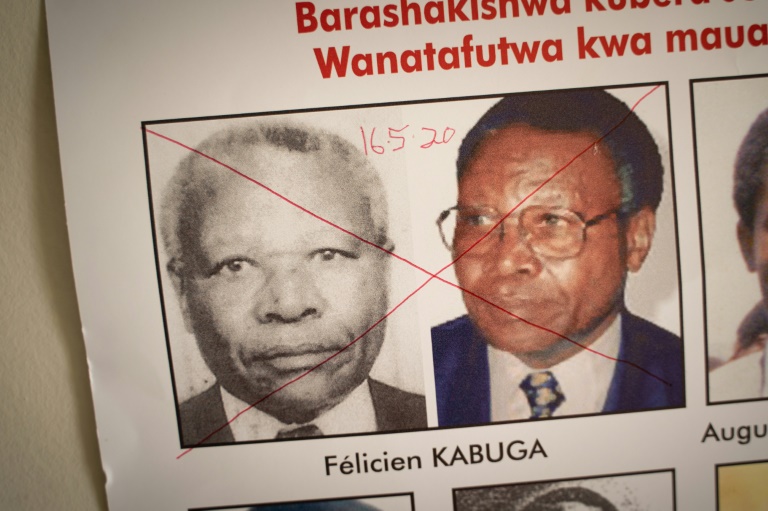
Rwandan tycoon Felicien Kabuga played a crucial role in the 1994 genocide that shocked the world, prosecutors said as he boycotted the opening of his own trial in The Hague on Thursday.

The last major suspect from the slaughter, the now-87-year-old set up a hate broadcaster that urged ethnic Hutus to kill rival Tutsi “cockroaches” and armed the murderous Interahamwe militia with machetes, a UN tribunal heard.

The wheelchair-bound Kabuga refused to appear in court and stayed in his jail cell as the trial got underway, more than a quarter of a century after the 100-day rampage that left over 800,000 people dead.

“Twenty-eight years after the events, this trial is about holding Felicien Kabuga to account for his substantial and intentional role in that genocide,” lead prosecutor Rashid S. Rashid told the court.

“Kabuga didn’t need to wield a rifle or a machete at a roadblock, rather he supplied weapons in bulk and facilitated the training that prepared the Interahamwe to use them,” he added.

“He didn’t need to pick up a microphone to call for the extermination of the Tutsi on the radio, rather he founded, funded and served as president of… the radio station that broadcast genocidal propaganda across Rwanda.”

After decades on the run, Kabuga was arrested in France in 2020 and sent to a UN court.

Kabuga’s lawyers entered a not guilty plea at a first appearance in 2020 at the UN’s International Residual Mechanism for Criminal Tribunals, and have repeatedly tried to halt the trial on health grounds.

– ‘Cockroaches’ –

Head judge Iain Bonomy said on Thursday that Kabuga had decided not to attend the opening of the trial in person or watch by video link but “appropriate course is to proceed”.

Kabuga issued a statement saying that he court had refused to let him appoint his own lawyer and that he had lost confidence in his own defence attorney, Emmanuel Altit.

Prosecutors said that as a wealthy ally of Rwanda’s then-ruling party, Kabuga helped create the pro-Hutu Radio-Television Libre des Mille Collines (RTLM), which broadcast anti-Tutsi propaganda.

As Rwanda descended into carnage after the shooting down of a plane carrying the country’s Hutu president in April 1994, RLTM’s spewed “constant frenzied overt calls for extermination,” said Rupert Elderkin, another prosecution lawyer.

The radio station described Tutsis as “cockroaches” and “subhuman vermin” and identified the hiding places of Tutsis where they were later killed, he said.

The prosecutor said RTLM broadcasts “were comparable to Nazi propaganda about the Jews.”

Yet in a video played to the court Kabuga defended the broadcaster at the time, saying it “can’t please everyone” and was trying to “enlighten the population”.

Kabuga also directly supported the Interahamwe militias during the genocide, prosecutors said.

He allegedly bankrolled the death squads, imported machetes and other weapons, and organised training for them.

Kabuga himself is also alleged to have personally handed out weapons at Interahamwe rallies. “Kabuga then told them to go and finish the job,” Elderkin said.

– ‘Significant step’ –

More than 50 witnesses are expected to appear for the prosecution, starting next week, in a trial that is set to take months.

After fleeing Rwanda, Kabuga spent more than 20 years evading an arrest warrant issued by the UN war crimes tribunal for Rwanda, helped by a network of former allies.

He was finally caught in a small apartment in Paris and sent to The Hague for trial.

Kabuga is one of the last top Rwandan genocide suspects to face justice, with 62 convicted by the tribunal so far.

Four key but lesser suspects are still at large while others have recently died, including the man seen as the architect of the genocide, Augustin Bizimana, and former presidential guard commander Protais Mpiranya.

The trial is being closely watched in the small central African nation, including in Kabuga’s native village of Nyange.

“We are looking forward to his trial. It has been a long time coming,” Anastase Kamizinkunze, the district head of IBUKA, the umbrella association for genocide survivors, told AFP.

Human Rights Watch welcomed the start of the trial.

“This is a significant step in efforts to ensure accountability for planning, ordering, and carrying out the genocide in Rwanda,” the rights group said.

UK's PM defends 'difficult' tax cuts despite market turmoil

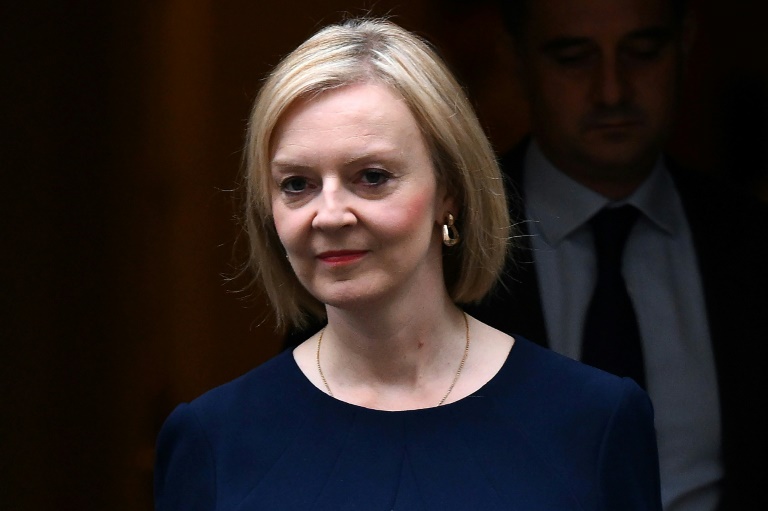
UK Prime Minister Liz Truss on Thursday defended her tax cutting policy after days of silence during which markets tanked and the Bank of England was forced into an emergency intervention.

“We had to take urgent action to get our economy growing, get Britain moving, and also deal with inflation,” she said in a round of local BBC radio interviews.

“And of course, that means taking controversial and difficult decisions, but I’m prepared to do that as prime minister,” she said in her first comments to UK media since the crisis sparked by Friday’s “mini-budget”. 

“It’s important the United Kingdom’s on the front foot, that we are pulling all the levers we can to drive economic growth. That is what we are pushing ahead with.” 

In power for less than a month, Truss is already under severe pressure after the markets reacted to her government’s tax cuts by sending the pound to an all-time low against the dollar.

UK markets remain highly volatile, with the central bank intervening on Wednesday to buy government bonds in order to prevent a “material risk” to stability.

The Bank of England announced a two-week programme to buy long-term UK bonds, capped initially at £65 billion ($71 billion), as UK pension funds scrambled to sell investments in order to remain solvent.

After sterling hit its dollar low early Monday, the bank said it would “not hesitate to change interest rates by as much as needed” to curb high inflation.

But it also signalled that it would wait until its next policy meeting on November 3 before fully assessing the impact of the government’s contentious plans.

Opposition leaders have demanded that Truss cancel her Conservative party’s annual conference starting on Sunday and recall parliament over the crisis.

– Truss v IMF –

Markets are concerned that Britain cannot fund its huge spending commitments, having announced a massive fuel subsidy package alongside the tax cuts.

Truss defended her fiscal policy, which includes a cut to the top rate of income tax, arguing the UK currently had its highest tax burden in 70 years. 

“We’ve reduced those taxes across the board. And of course people who are better off tend to pay more taxes,” she said.

The pound slipped again on Thursday, while former Bank of England chief Mark Carney said the government had “undercut” financial institutions. 

“Unfortunately having a partial budget, in these circumstances — tough global economy, tough financial market position, working at cross-purposes with the bank — has led to quite dramatic moves in financial markets,” he told the BBC. 

But Truss insisted she was working “very closely” with the central bank.

In a highly unusual intervention on Wednesday, the International Monetary Fund said it was “closely monitoring” developments and urged the UK government to change tack.

It noted that Truss and her finance minister, Kwasi Kwarteng, were trying to deal with the energy shock and boost growth.

“However, given elevated inflation pressures in many countries… we do not recommend large and untargeted fiscal packages at this juncture.” 

The IMF stressed the importance of fiscal policy not working “at cross purposes to monetary policy”.

Many central banks, including the Bank of England, are aggressively hiking interest rates in a bid to cool decades-high inflation. 

“There are many people with many different opinions, but what I think nobody is arguing with is that we had to take action to deal with what is a very, very difficult economic situation,” Truss retorted.

“My priority was making sure that we were supporting the British people in what is going to be a very difficult winter.”

Fourth leak detected at Russian gas pipeline to Europe

A fourth leak has been detected in undersea gas pipelines linking Russia to Europe, the Swedish Coast Guard said Thursday, after explosions were reported earlier this week in what NATO called “reckless” sabotage.

The Nord Stream 1 and 2 pipelines link Russia to Germany, and have been at the centre of geopolitical tensions as Russia cut gas supplies to Europe in suspected retaliation against Western sanctions following Moscow’s invasion of Ukraine.

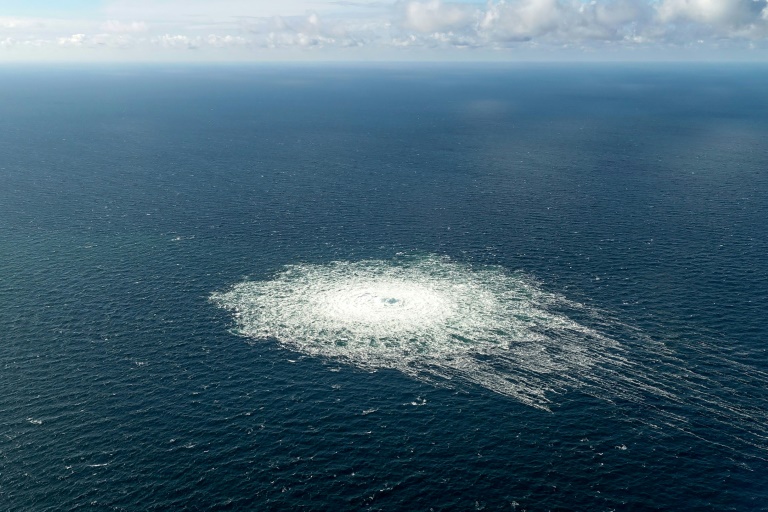
The Swedish Coast Guard confirmed Thursday there were four leaks in total on the pipeline in the Baltic Sea — two on the Swedish side and two on the Danish side. Three leaks were previously reported. 

While the pipelines — operated by a consortium majority-owned by Russian gas giant Gazprom — are not currently in operation, they both still contained gas.

On Thursday, NATO declared that the damage was “the result of deliberate, reckless and irresponsible acts of sabotage”.

“These leaks are causing risks to shipping and substantial environmental damage,” the Western military alliance said in a statement. 

Russia has denied it was behind the explosions — as did the United States, saying Moscow’s suggestion it would damage the pipeline was “ridiculous”. 

Russia’s security service launched an “international terrorism” investigation into the gas leaks, saying the damage had caused “significant economic damage to the Russian Federation”.

It said Thursday suspects a foreign state of being behind the leaks.

The UN Security Council will meet Friday to discuss the matter.

– ‘Constant’ gas flow –

The vast leaks have caused underwater gas plumes, with significant bubbling at the surface of the sea several hundred metres wide, making it impossible to immediately inspect the structures. 

Seismic institutes on Tuesday reported they had recorded “in all likelihood” explosions in the area, prior to the leaks being detected.

A Swedish Coast Guard search and rescue vessel was patrolling the area.

“The crew reports that the flow of gas visible on the surface is constant,” the agency said in a statement. 

Danish authorities said the leaks will continue until the gas in the pipelines is exhausted, which is expected to occur on Sunday.

Fatih Birol, executive director of the International Energy Agency (IEA), said at a symposium in Paris that to him it was “very obvious” who was behind the leaks.

He said natural gas shortages in the wake of the war in Ukraine could make for a tough winter in Europe. 

“In the absence of a major negative surprise, I think Europe, in terms of natural gas, can survive this winter with a lot of bruises in our bodies in terms of prices, economy and social issues, but we can go through that,” Birol said. 

According to climate groups, Nord Stream 1 and 2 contained some 350,000 tonnes of natural gas — methane.

Greenpeace says the leaks could have the effect of almost 30 million tonnes of CO2, or more than two-thirds of the annual emissions of Denmark.

Close Bitnami banner
Bitnami