World

Fourth leak detected at Russian gas pipeline to Europe

A fourth leak has been detected in undersea gas pipelines linking Russia to Europe, the Swedish Coast Guard said Thursday, after explosions were reported earlier this week in what NATO called “reckless” sabotage.

The Nord Stream 1 and 2 pipelines link Russia to Germany, and have been at the centre of geopolitical tensions as Russia cut gas supplies to Europe in suspected retaliation against Western sanctions following Moscow’s invasion of Ukraine.

The Swedish Coast Guard confirmed Thursday there were four leaks in total on the pipeline in the Baltic Sea — two on the Swedish side and two on the Danish side. Three leaks were previously reported. 

While the pipelines — operated by a consortium majority-owned by Russian gas giant Gazprom — are not currently in operation, they both still contained gas.

On Thursday, NATO declared that the damage was “the result of deliberate, reckless and irresponsible acts of sabotage”.

“These leaks are causing risks to shipping and substantial environmental damage,” the Western military alliance said in a statement. 

Russia has denied it was behind the explosions — as did the United States, saying Moscow’s suggestion it would damage the pipeline was “ridiculous”. 

Russia’s security service launched an “international terrorism” investigation into the gas leaks, saying the damage had caused “significant economic damage to the Russian Federation”.

It said Thursday suspects a foreign state of being behind the leaks.

The UN Security Council will meet Friday to discuss the matter.

– ‘Constant’ gas flow –

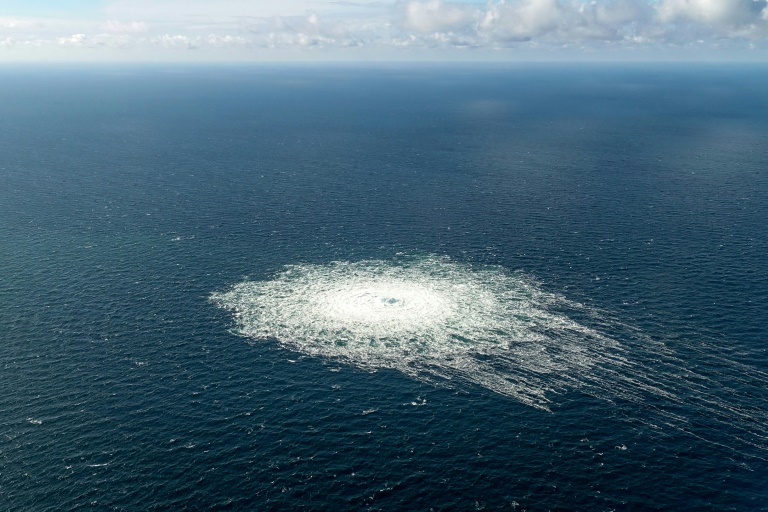
The vast leaks have caused underwater gas plumes, with significant bubbling at the surface of the sea several hundred metres wide, making it impossible to immediately inspect the structures. 

Seismic institutes on Tuesday reported they had recorded “in all likelihood” explosions in the area, prior to the leaks being detected.

A Swedish Coast Guard search and rescue vessel was patrolling the area.

“The crew reports that the flow of gas visible on the surface is constant,” the agency said in a statement. 

Danish authorities said the leaks will continue until the gas in the pipelines is exhausted, which is expected to occur on Sunday.

Fatih Birol, executive director of the International Energy Agency (IEA), said at a symposium in Paris that to him it was “very obvious” who was behind the leaks.

He said natural gas shortages in the wake of the war in Ukraine could make for a tough winter in Europe. 

“In the absence of a major negative surprise, I think Europe, in terms of natural gas, can survive this winter with a lot of bruises in our bodies in terms of prices, economy and social issues, but we can go through that,” Birol said. 

According to climate groups, Nord Stream 1 and 2 contained some 350,000 tonnes of natural gas — methane.

Greenpeace says the leaks could have the effect of almost 30 million tonnes of CO2, or more than two-thirds of the annual emissions of Denmark.

Taliban fire into air to disperse women's rally backing Iran protests

Taliban forces on Thursday used gunfire to disperse a women’s rally in the Afghan capital supporting protests in Iran over the death of a woman in morality police custody.

Both Afghanistan and Iran are run by hardline Islamist governments that enforce strict dress codes on women. 

Chanting the same “Women, life, freedom” mantra used in Iran, about 25 women protested in front of Kabul’s Iranian embassy before Taliban forces fired into the air, an AFP correspondent reported.

In neighbouring Iran, dozens of people have been killed since demonstrations erupted over 22-year-old Mahsa Amini’s death after she was arrested for allegedly breaching rules on hijabs and modest clothing.

On Thursday in Kabul, women in headscarves carried banners that read: “Iran has risen, now it’s our turn!” and “From Kabul to Iran, say no to dictatorship!”

“We need to end these horrific governments,” said a protester who did not reveal her name for security reasons. 

“People here are also tired of the Taliban’s crimes. We are sure that one day our people will rise in the same way as the Iranian people,” she said. 

Taliban forces swiftly snatched the banners and tore them in front of the protesters. 

They also ordered some journalists to delete videos of the rally.

An organiser, speaking anonymously, told AFP the rally was staged “to show our support and solidarity with the people of Iran and the women victims of the Taliban in Afghanistan”.

– ‘Severe restrictions’ –

Protests staged by women in Afghanistan have become increasingly rare after the detention of core activists at the start of the year. 

Like in Iran, women risk arrest, violence and stigma for taking part in demonstrations calling for their rights. 

Since returning to power last year, the Taliban have issued a slew of restrictions controlling women’s lives based on their interpretation of Islamic sharia law.

Many of the rules — including dress code, segregation from men and travelling with a male guardian — are monitored by the Taliban’s vice and virtue police who roam the streets dressed in white. 

Women must fully cover themselves in public, preferably with the all-encompassing burqa, according to the rules, which are enforced with varying rigour across the country.  

The Taliban have also blocked girls from returning to secondary schools and barred women from many government jobs, although some senior Taliban are divided on the issue of education. 

Deputy foreign minister Sher Mohammad Abbas Stanikzai at a function earlier this week said “education is obligatory for men and women”.

“If we want national unity then doors of educational institutions must be open for all,” he said on live television. 

The state of women’s rights in Afghanistan remains a top concern for Western nations, with no country yet officially recognising the Taliban government. 

Earlier this week, a United Nations report denounced the “severe restrictions” on women and called for them to be reversed. 

“The international community has not and will not forget Afghan women and girls,” the report said.

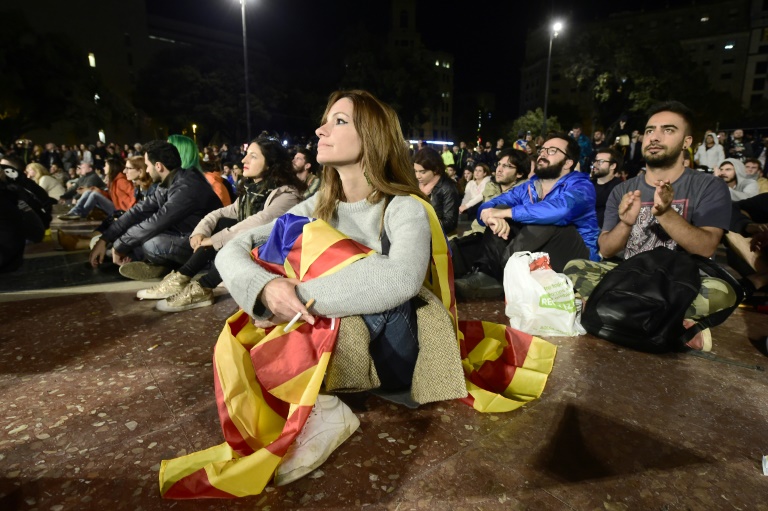
Catalan separatists in crisis 5 years after referendum

Josep Lluis Rodriguez has not given up hope of an independent Catalonia. But five years after a banned referendum, he no longer expects anything from the deeply-divided separatist leaders in Barcelona.

“Of course there is frustration and anger, because they didn’t do what they should have done,” the 62-year-old former company boss told AFP of the leaders who failed to make good on their separatist promises. 

“It’s clear they are no longer openly interested in independence,” he said, standing outside the church in Arenys de Munt just north of Barcelona.

The ill-fated referendum of October 1, 2017 unleashed a political crisis from which the separatists have never recovered, and on the eve of the anniversary, Catalonia’s pro-independence coalition was on the point of collapse.

Many Catalan independence flags can be seen fluttering from balconies along the main street in Arenys de Munt, a town of of 9,000 residents which was the first place to hold a symbolic referendum on independence in 2009.

Hundreds of municipalities followed suit, driving a groundswell of pro-independence activism which would reach its climax in the events of October 2017 under the regional government of Carles Puigdemont.

Despite being banned by the Spanish courts, the 2017 referendum organised by the separatist government went ahead but descended into chaos as police moved in to stop it, sparking confrontations marred by violence.

“October 1 was when civil society really came out en masse,” catching the separatist parties by surprise who had not expected such a huge mobilisation in response to their moves towards independence, Rodriguez said.

“It was only later that we realised that they didn’t have a concrete plan, nor structures in place (for achieving independence),” said Rodriguez, an activist with the ANC, the region’s biggest grassroots separatist movement.

Despite the police crackdown, the fact the referendum took place at all was “a great victory for the Catalans”, he said. 

And to mark the anniversary this Saturday, he will attend a demonstration in Barcelona bent on securing a new referendum.

“We’re organised and when the time comes, we will mobilise.”

– Divided and squabbling –

The results of the October 2017 referendum were never independently corroborated, and weeks of confusion followed, culminating in a short-lived symbolic declaration of independence by the Catalan parliament. 

That proved to be the straw that broke the camel’s back, with Madrid sacking the Catalan government, suspending the region’s autonomy and putting its leaders on trial as it struggled to handle Spain’s worst political crisis in decades. 

Despite passions running high over independence, the region itself remains divided, with only 41 percent in favour of separation while 52 percent want to remain in Spain, the latest survey suggested. 

But it’s a far cry from the 49 percent who wanted to break away in the October 2017 poll.

Last year, the separatists again won a majority in the regional elections and managed to cobble together a fragile coalition grouping the left-wing ERC and hardline JxC. 

But they are sharply at odds over how to achieve independence, with ERC backing a negotiated strategy via dialogue with Madrid, while JxC prefers a confrontational approach given that Spain has ruled out any new referendum. 

“The political deadlock is ongoing, the Catalan government is divided and every day they attack each other in the press over a thousand things,” said Joan Botella, a political scientist at Barcelona’s Autonomous University.

“Nobody is suggesting a way forward or how to resolve the conflict.” 

– ‘Won’t happen in my lifetime’ –

Fed up with the impasse, the ANC called people onto the streets for the annual “Diada” march on September 11 with a rallying cry denouncing the politicians and insisting “only the people and civil society can achieve independence”. 

The powerful movement has been openly critical of the Catalan government’s dialogue with Madrid, and this year its leader Pere Aragones did not attend the rally.

Police said 150,000 people turned out for the event, the lowest figure in a decade — without counting the two years of the Covid-19 pandemic. 

“People feel cheated and frustrated but it doesn’t mean they will stop backing independence,” said Josep Sanchez, mayor of Arenys de Munt, standing next to a small monument by the town hall marking the 2017 referendum.

But shopkeeper Magda Artigas has lost any hope of seeing the emergence of an independent Catalan republic, despite voting for one in successive referendums in 2009, 2014 and 2017. 

“I’m already 64, it won’t happen in my lifetime,” she said with a sad smile.

Porsche ignites blockbuster IPO, defying market turmoil

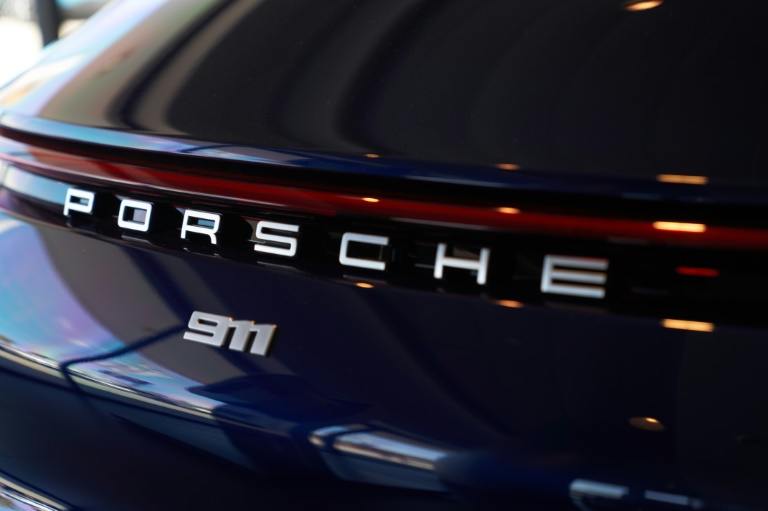
Luxury sports carmaker Porsche raced onto the Frankfurt stock exchange Thursday with one of Europe’s biggest listings in years, leveraging its brand power to defy global market turmoil.

Its shares rose to over 84.70 euros ($81.90) in morning trading, bettering the 82.50 euros price set by its parent company Volkswagen, and outperforming a weak Frankfurt market.

Even as markets worldwide suffer from surging inflation and mounting recession fears, the maker of the 911 sports car has pushed ahead with the bold flotation that gives Porsche a valuation of more than 76 billion euros.

The carmaker’s chief Oliver Blume said the listing was a “historic moment for Porsche”, as he rang the bell to mark the start of trading at the Frankfurt exchange. 

“A big, proud day for all of us… We are adding a new chapter to the unique history of Porsche,” added Blume, who is also the CEO of the wider German auto group Volkswagen.

Volkswagen is set to raise 9.4 billion euros ($9.2 billion) from the listing, with some to be ploughed into the group’s shift to electric vehicles that is bringing it into greater competition with US rival Tesla.

In terms of value of shares issued, Porsche’s is the biggest stock market debut in Germany since Deutsche Telekom’s in 1996, and the largest in Europe since the 2011 flotation of Switzerland-based commodities giant Glencore.

– ‘Crazy, cool’ –

Analysts have looked to the carmaker’s market entry for some cheer against a morose economic backdrop, with investment bank Berenberg saying it could “offer a catalyst in an industry sorely lacking positive surprises”.

It has generated buzz in Porsche’s home market of Germany, where top tabloid Bild described it as “crazy, cool, fast-paced”.

“Sports car icon Porsche goes full throttle and races onto the stock market,” read a column in the paper.

It has also drawn interest from major investors, including Qatar and Abu Dhabi’s public investment funds, Norway’s sovereign wealth fund and US asset management firm T. Rowe Price. 

The IPO has seen 113.9 million shares of “Porsche AG” issued.

While the carmaker’s valuation is below some earlier estimates, it still catapults it above rivals such as BMW, with a valuation of 47 billion euros, and Mercedes-Benz, with a 56-billion-euro capitalisation.

– Electric drive –

Porsche has joined the electric drive of the Volkswagen group, whose brands also include Audi and Skoda, in earnest. 

The electric “Taycan” has been the brand’s best-selling model since January, an electric version of the “Macan” is due in 2024, as well as the launch of a new SUV in the middle of the decade.

The electric strategy includes building battery factories across Europe and the US. Volkswagen announced this week it will work with Belgian group Umicore to produce battery materials. 

The IPO sees preferential shares sold to investors, which have no voting rights, while Volkswagen is also selling 25 percent of the carmaker to Porsche SE. 

The eponymous company is a listed holding controlled by the Porsche-Piech family, who in turn are the main shareholders in Volkswagen.

This means that Porsche SE will have a blocking minority that will allow it to steer the future of the company.

Volkswagen hopes that listing a minority stake in Porsche will push up its own stock market value, which is 85 billion euros — just a fraction of Tesla’s, at just over $900 billion.

While the Porsche IPO generated excitement, concerns surrounding governance have been brewing at Volkswagen.

The dual role of Blume  — who has kept the top job at Porsche, despite being recently appointed CEO of Volkswagen group — has in particular raised eyebrows.

Myanmar junta court sentences Australian economist, Suu Kyi to 3 years

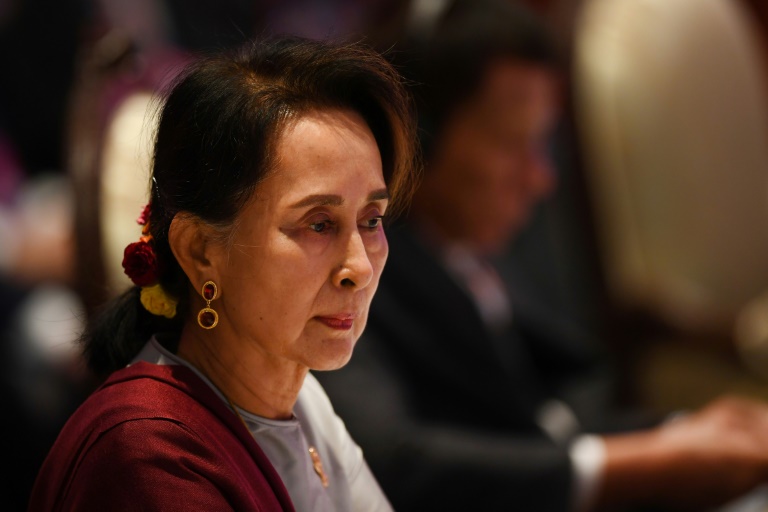
Myanmar’s junta sentenced an Australian economist to three years in prison Thursday while also handing down another conviction to ousted leader Aung San Suu Kyi, a source told AFP on Thursday.

Both have been detained since a coup in February last year, when the military ousted Suu Kyi’s government, for which Sean Turnell was an adviser.

“Mr Sean Turnell, Daw Aung San Suu Kyi and another three were sentenced to three years imprisonment each under the Official Secrets Act,” the source told AFP, adding that Suu Kyi would appeal her verdict.

Turnell was also convicted for three years under the country’s immigration act, the source said, adding that he will serve the second conviction concurrently, and that his sentence would be eligible for a time already served deduction.

His sentence provoked a swift reaction from Canberra, with the foreign ministry rejecting his conviction and urging his “immediate release”.

Suu Kyi has already been convicted of corruption and a clutch of other charges by a closed court.

A junta spokesman did not respond to a request for comment.

Turnell was in the middle of a phone interview with the BBC when he was detained after the 2021 coup.

“I’ve just been detained at the moment, and perhaps charged with something, I don’t know what that would be, could be anything at all of course,” Turnell told the broadcaster at the time.

In August, he pleaded not guilty to breaching the colonial-era secrets act during his trial in a junta court — inaccessible to journalists — in the capital Naypyidaw.

He was facing a maximum penalty of 14 years in prison.

The exact details of Turnell’s alleged offence have not been made public, though state television has said he had access to “secret state financial information” and had tried to flee the country.

– ‘Immediate release’ –

In a statement following Turnell’s conviction, Australian Foreign Minister Penny Wong rejected the charges and urged his “immediate release”.

She said the economist was tried in a “closed court” and Australian officials had made “every effort to attend the verdict but were denied access”.

“We will continue to take every opportunity to advocate strongly for Professor Turnell until he has returned to his family in Australia,” she added.

Turnell’s wife Ha Vu said her family was devastated over the news.

“It’s heartbreaking for me, our daughter, Sean’s 85-year-old father and the rest of our family,” she said in a statement.

“My husband has already been in a Myanmar prison for almost two-thirds of his sentence. Please consider the contributions that he has made to Myanmar, and deport him now,” she added.

Human rights organisations also condemned the sentences.

The convictions demonstrated the junta had “no qualms about their international pariah status”, said Elaine Pearson, Asia director at Human Rights Watch.

“Concerted action” from the international community was needed “to turn the human rights situation around in the country”, she said.

Amnesty International’s Tim O’Connor said Turnell was denied a fair trial and adequate access to legal counsel or consular assistance.

“The proceedings have been an outright sham and Myanmar’s military must immediately release Turnell so he can return to his family in Australia,” he said.

Turnell’s friend and fellow economist Tim Harcourt expressed disappointment over the verdict.

“I do hope that like Danny Fenster, he’ll be deported in the coming days,” he told AFP, referring to a US journalist who received an 11-year prison sentence and was pardoned and deported last year. 

Myanmar has been in turmoil since the military seized power in 2021, ousting Suu Kyi’s elected government.

More than 2,200 people have been killed and 15,000 arrested in the military’s crackdown on dissent since the coup, according to a local monitoring group.

Rwandan tycoon had key genocide role, trial hears

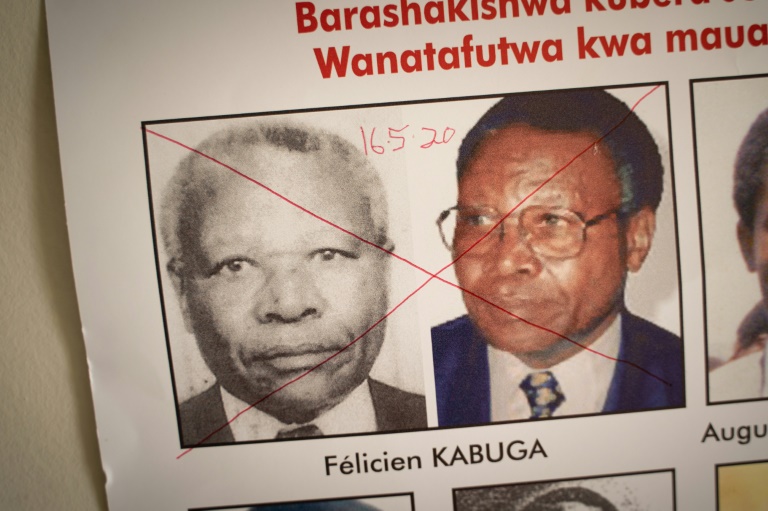
Rwandan tycoon Felicien Kabuga played a “substantial” role in the 1994 genocide that shocked the world, prosecutors said at the opening of his trial in The Hague on Thursday.

Once one of Rwanda’s richest men, the 87-year-old Kabuga used his vast wealth to set up hate media that urged ethnic Hutus to kill rival Tutsi “snakes” and supplied the murderous Interahamwe militia with machetes, the prosecution said.

The wheelchair-bound Kabuga himself refused to appear for his trial at the UN’s International Residual Mechanism for Criminal Tribunals due to a dispute over his lawyer.

“Kabuga didn’t need to wield a rifle or a machete at a roadblock, rather he supplied weapons in bulk and facilitated the training that prepared the Interahamwe to use them,” prosecutor Rashid S. Rashid told the court.

“He didn’t need to pick up a microphone to call for the extermination of the Tutsi on the radio, rather he founded, funded and served as president of… the radio station that broadcast genocidal propaganda across Rwanda.”

After decades on the run, Kabuga was arrested in France in 2020 and sent to a UN court to face charges over the killing of 800,000 Tutsis and moderate Hutus.

Kabuga’s lawyers entered a not guilty plea at a first appearance in 2020 and have repeatedly tried but failed to halt the trial on health grounds.

But Rashid told the court, “Twenty-eight years after the events, this trial is about holding Felicien Kabuga to account for his substantial and intentional role in that genocide.”

The trial is being closely watched in the small central African nation, including in Kabuga’s native village of Nyange.

“We are looking forward to his trial. It has been a long time coming,” Anastase Kamizinkunze, the district head of IBUKA, the umbrella association for genocide survivors, told AFP.

Human Rights Watch welcomed the start of the trial.

“This is a significant step in efforts to ensure accountability for planning, ordering, and carrying out the genocide in Rwanda,” the rights group said.

– ‘Distributed machetes’ –

The UN says 800,000 people were murdered in Rwanda in 1994 in a 100-day rampage.

An ally of Rwanda’s then-ruling party, Kabuga allegedly helped create the Interahamwe Hutu militia group and the Radio-Television Libre des Mille Collines (RTLM), whose broadcasts incited people to murder.

The radio station identified the hiding places of Tutsis where they were later killed, prosecutors said in the indictment.

Kabuga also allegedly imported and distributed machetes to genocidal groups and ordered them to kill Tutsis.

More than 50 witnesses are expected to appear for the prosecution, which said they needed about 40 hours to wrap up their case.

After fleeing Rwanda, Kabuga spent more than 20 years evading an arrest warrant issued in 1997 by using a series of false passports.

Investigators say he was helped by a network of former Rwandan allies to evade justice in several countries before he was finally caught in a small apartment in Paris.

His lawyers argued he should face trial in France for health reasons but the nation’s top court ruled he should be moved to UN custody.

Kabuga is one of the last top suspects of the Rwandan genocide to face justice, with 62 convicted so far.

Others, including the man seen as the architect of the genocide, Augustin Bizimana, and former presidential guard commander Protais Mpiranya, have both died.

Victims have called for a swift trial for Kabuga noting “if he dies before facing justice, he would have died under the presumption of innocence”. 

But in Nyange, many residents still speak fondly of the man who rose from humble farming stock to run an empire of coffee, tea and real estate.

“He paid us well,” said Alphonsine Musengimana, 35, who worked on Kabuga’s tea plantations as a child.

burs-jhe-d/bp

US VP Harris tours DMZ after North Korea missile launches

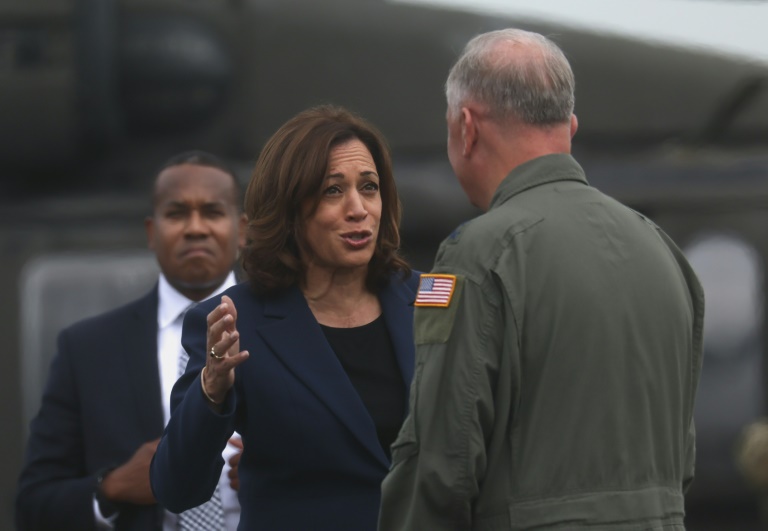
US Vice President Kamala Harris toured South Korea’s heavily fortified border with the nuclear-armed North on Thursday, part of a trip aimed at strengthening the security alliance with Seoul.

Pyongyang conducted two banned ballistic missile launches in the days before Harris’s arrival, continuing a record-breaking streak of weapons tests this year.

At an observation post atop a steep hill overlooking North Korea, Harris peered through bulky binoculars as US and South Korean soldiers pointed out features, including defences, in the area.

“It’s so close,” she said.

Harris also visited the Panmunjom Truce Village — where then-US president Donald Trump met the North’s Kim Jong Un in 2019 — and talked to US soldiers at Camp Bonifas in the Joint Security Area.

On the North Korean side of the border at Panmunjom, guards in hazmat suits could be seen watching as Harris was shown the demarcation line between the two countries — which remain technically at war.

Speaking at the Demilitarized Zone (DMZ), Harris said that US and South Korean soldiers were “serving shoulder to shoulder… to maintain the security and the stability of this region of the world”.

She said the US commitment to South Korea’s defence was “ironclad”, adding that the allies were “aligned” in their response to the growing threat posed by the North’s weapons programs.

The allies both want “a complete denuclearisation of the Korean peninsula”, but in the interim they are “ready to address any contingency”, she said.

South Korean and US officials have warned for months that Kim Jong Un is preparing to conduct another nuclear test. 

Harris decried North Korea’s “brutal dictatorship, rampant human rights violations and an unlawful weapons program that threatens peace and stability”.

– Yoon talks –

Washington has about 28,500 troops stationed in South Korea to help protect it from the North, and the allies are conducting a large-scale joint naval exercise this week in a show of force.

Harris’ trip to the DMZ is likely to infuriate Pyongyang, which branded United States House Speaker Nancy Pelosi the “worst destroyer of international peace” when she visited the border in August.

Harris arrived in Seoul after a trip to Japan, where she attended the state funeral of assassinated former prime minister Shinzo Abe.

Earlier Thursday, Harris met President Yoon Suk-yeol for talks dominated by security issues — although Seoul also raised its concerns over a new law signed by US President Joe Biden that removes subsidies for electric cars built outside America, impacting Korean automakers such as Hyundai and Kia.

Harris, America’s first woman vice president, also met what the White House called “groundbreaking women leaders” of South Korea to discuss gender equality issues, a topic she said she raised with Yoon during their talks.

Yoon, who has pledged to abolish Seoul’s Ministry of Gender Equality, has faced domestic criticism for a lack of women in his cabinet.

– Nuclear test? –

On Wednesday, the South’s spy agency said North Korea’s next nuclear test could happen as soon as next month, likely after China’s upcoming party congress but before the US midterms.

The isolated regime has tested nuclear weapons six times since 2006, most recently in 2017. Earlier this month it changed its laws, declaring itself an “irreversible” nuclear power.

“North Korea’s growing nuclear missile threat raises concerns in Seoul about the reliability of Washington’s defence commitments,” said Leif-Eric Easley, a professor at Ewha University in Seoul.

But sending the USS Ronald Reagan supercarrier and Harris to South Korea demonstrates both America’s military capabilities and political will, he added.

During President Yoon’s tenure, Seoul and Washington have boosted joint military exercises, which they insist are purely defensive. North Korea sees them as rehearsals for an invasion.

During her trip, Harris also raised the issue of Seoul working more closely with Japan on security issues.

Seoul announced Thursday that it would hold trilateral anti-submarine drills with Japan and the US, the first such exercises since 2017. 

South Korean officials said this weekend they had detected signs Pyongyang could be preparing to fire a submarine-launched ballistic missile.

'Better than killing people': Russians flee into Mongolia

On a bright morning in Mongolia’s capital Ulaanbaatar, a young Russian fleeing Moscow’s first military call-up since World War II had a stark answer for why he had left: “I don’t want to kill people.”

He was among thousands of Russians who have streamed across the land border into Mongolia over the past week since President Vladimir Putin issued a mobilisation order for the war in Ukraine.

The announcement sent shock waves across the vast nation and triggered an international exodus, with tens of thousands leaving the country since the mobilisation.

Finland, Norway, Turkey and Georgia have, like Mongolia, reported an increase in Russian arrivals in recent days.

“It was very difficult to leave everything behind — home, motherland, my relatives — but it’s better than killing people,” the man in his twenties told AFP, speaking on condition of anonymity.

He said he had decided to go to Mongolia because it appeared easily accessible.

“I grabbed my papers and bags and ran,” he said. 

He said there is a huge network of online groups helping Russian men evade conscription, with travel advice changing constantly as draft evaders navigate the challenges of fleeing their country at a moment’s notice.

– ‘I can’t trust them’ –

Fears that Moscow may close the borders have accelerated many Russians’ decision to flee, though the Kremlin said Monday no decision had been taken to shut the frontiers.

The head of just one checkpoint in the Mongolian frontier town of Altanbulag told AFP on Sunday that more than 3,000 Russians had entered the country via the crossing since the call-up was announced, most of them men. 

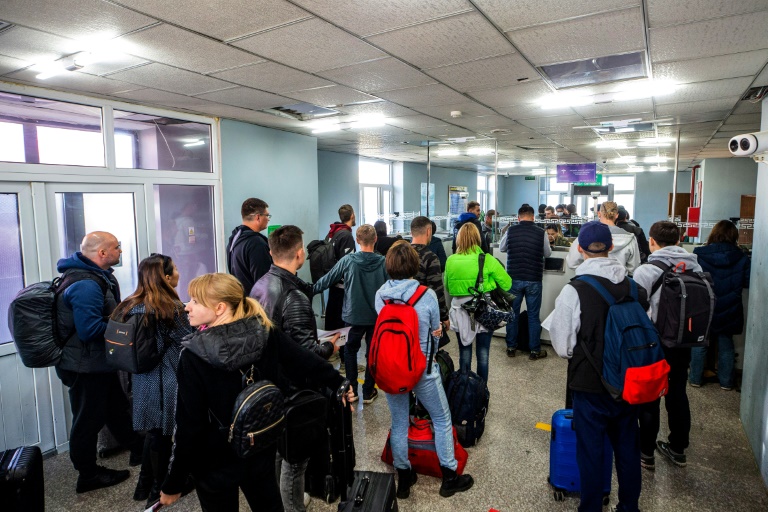
An AFP reporter also saw queues of people holding Russian passports outside the immigration counter for the crossing.

Many of those who have entered Mongolia have now made their way to Ulaanbaatar, over 350 kilometres’ (220 miles’) drive from the nearest border crossing. 

“At first, I thought I knew what was happening,” another young Russian said of the Ukraine war.

“But after a certain government’s actions — when they contradicted what they were saying before — I realised that I can’t trust them.”

He said he plans to stay in Mongolia for a month. 

Many of his friends were unable to leave Russia as they did not have passports, he said, adding that he hoped his relatives would not be threatened. 

Objectors to the war in Russia have been imprisoned or denounced in state media, making public opposition highly dangerous.

The Mongolian government has taken a neutral stance on the invasion, which Russia launched in February.

The former Soviet satellite state has used its ties with Russia to hedge against growing Chinese influence in recent decades, and shares a 3,500-kilometre border with Russia. 

But last week, former president Tsakhia Elbegdorj urged Putin to end the conflict.

He said ethnic Mongolians in Russia had been used as “cannon fodder” and killed in their thousands in Ukraine.

UK PM Truss defends 'controversial' tax cuts despite market turmoil

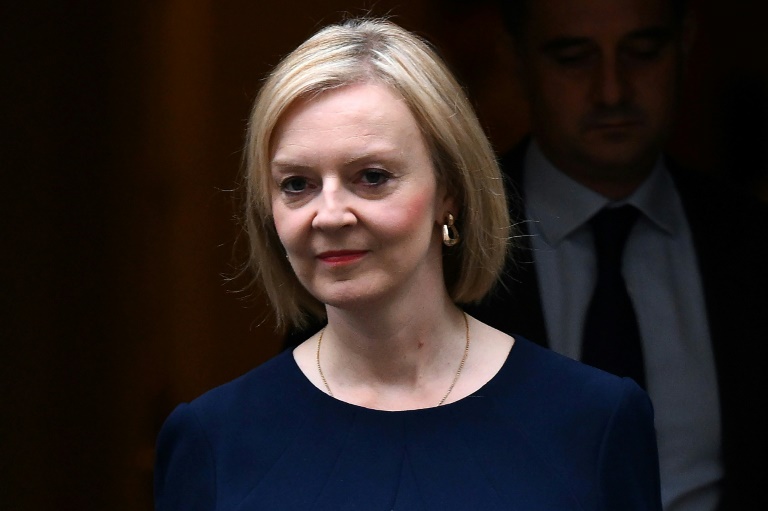
UK Prime Minister Liz Truss on Thursday defended her tax cuts policy, despite it triggering market turmoil and forcing a Bank of England intervention to prevent “material risk” to the economy.

“We had to take urgent action to get our economy growing, get Britain moving, and also deal with inflation,” she told local station BBC Radio Leeds in her first comments since the crisis sparked by Friday’s mini-budget. 

“And of course, that means taking controversial and difficult decisions, but I’m prepared to do that as prime minister.

“It’s important the United Kingdom’s on the front foot, that we are pulling all the levers we can to drive economic growth. That is what we are pushing ahead with,” she later told BBC Radio Lancashire.

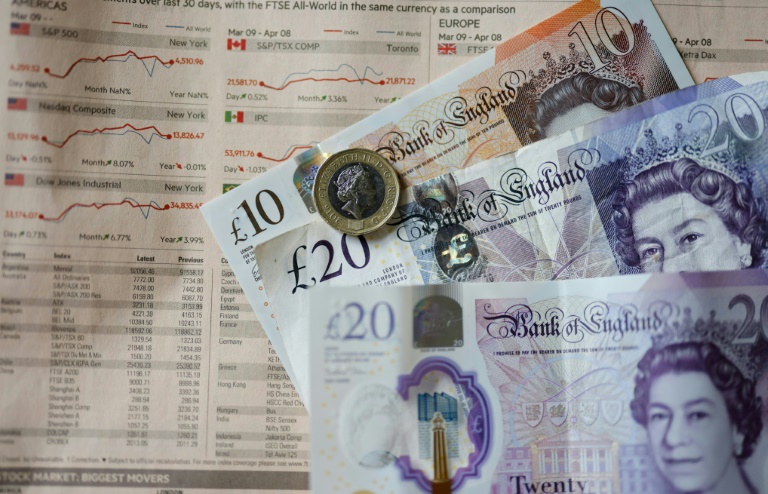
Despite being in power for less than a month, Truss is already under severe pressure after the markets reacted to her government’s tax cuts by sending the pound to an all-time low against the dollar.

UK markets remain highly volatile, with the Bank of England intervening on Wednesday to buy government bonds in order to prevent a “material risk” to stability.

After sterling hit its dollar low early Monday, the bank said it would “not hesitate to change interest rates by as much as needed” to curb high inflation.

But it also signalled that it would wait until its next policy meeting on November 3 before fully assessing the impact of the government’s contentious plans.

Opposition leaders have demanded that Truss cancel her party’s conference that starts on Sunday and recall parliament over the crisis.

– Govt ‘undercut’ City –

Markets are concerned that Britain cannot fund its huge spending commitments, having announced a massive fuel subsidy package alongside the tax cuts.

“My priority was making sure that we were supporting the British people in what is going to be a very difficult winter,” she told BBC Radio Norfolk.

“There are many people with many different opinions, but what I think nobody is arguing with is that we had to take action to deal with what is a very, very difficult economic situation.”

The pound slipped again on Thursday, while former Bank of England chief Mark Carney said the government had “undercut” financial institutions.

“Unfortunately having a partial budget, in these circumstances — tough global economy, tough financial market position, working at cross-purposes with the Bank — has led to quite dramatic moves in financial markets,” he told the BBC.

But Truss insisted she was working “very closely” with the central bank.

In a highly unusual intervention on Wednesday, the IMF said it was “closely monitoring” developments and urged the government to change tack.

“We understand that the sizable fiscal package announced aims at helping families and businesses deal with the energy shock and at boosting growth via tax cuts and supply measures.

“However, given elevated inflation pressures in many countries… we do not recommend large and untargeted fiscal packages at this juncture.” 

The IMF stressed the importance of fiscal policy not working “at cross purposes to monetary policy”.

Many central banks, including the Bank of England, are aggressively hiking interest rates in a bid to cool decades-high inflation. 

Sterling, markets drop again as BoE boost wears off

The pound and European equities fell Thursday after the previous day’s bank of England-fuelled rally, with investors growing increasingly worried about the UK economy as Prime Minister Liz Truss backed the controversial mini-budget that sparked turmoil across global markets.

The central bank sparked a surge across risk assets Wednesday following the announcement of a two-week programme to spend £65 billion ($71 billion) buying long-dated UK bonds “to restore orderly market conditions”.

The move came after new finance minister Kwasi Kwarteng unveiled a tax-cutting mini-budget Friday that many experts, including the International Monetary Fund, warned would fan borrowing and deal a further blow to the already fragile economy.

Kwarteng’s plan sent yields on UK government bonds, as well as those of other countries, soaring and raised the prospect of even bigger interest rate hikes.

The BoE move provided a massive shot in the arm for investors, pushing yields down, and sterling and stock markets up. Analysts said the decision provided some hope that central banks were ready to step in with support if things got too bad.

However, the impact was short lived as traders continue to worry about the long-term effect on the UK economy from the budget.

“The Bank moved to stop contagion, but stress remains and it remains the case that it must tighten policy faster to offset the effects of the budget,” said Markets.com analyst Neil Wilson.

The new round of easing also knocked the BoE’s plan to fight inflation off course as it had to suspend a programme to sell “gilts”, which had helped lift borrowing costs.

The pound fell back below $1.0800 Thursday, having spiked at $1.0900 earlier, while the FTSE 100 plunged more than two percent. Paris and Frankfurt were not far behind as data showed German inflation had hit 8.8 percent. Still, in some bright news, Spain said price rises slowed to below 10 percent this month.

That came after most Asian markets enjoyed a rare day of gains.

Truss appeared to push back against calls for her to perform a U-turn.

“We’re facing very, very difficult economic times, we’re facing that on a global level,” she said Thursday in interviews with local BBC radio stations.

“We had to take urgent action to get our economy growing and that means taking controversial and difficult decisions,” she said in her first comments since the storm erupted.

OANDA’s Edward Moya warned of more rough seas for sterling.

“The British pound went on a little roller coaster ride following the BoE action to buy unlimited long-dated gilts, but will still probably remain heavy over the country’s fiscal situation, current account deficit, financial stability risks, and energy poverty likelihood for parts of the population,” he said in a note.

And MUFG analyst Lee Hardman said the BoE move “has certainly upped the level of concern over the potential negative economic and financial market fallout from the loss of confidence in UK’s public finances”.

The general mood on trading floors remains dark as the Fed and other central banks zero in on hiking borrowing costs to fight decades-high inflation.

“All eyes are on inflation and interest rates,” said Josh Emanuel at Wilshire. “Equities are really going to take their cues from bond markets. So if you see bond yields move lower, that is a good sign for equities.”

Julia Raiskin at Citi added that “markets are very pessimistic… Other than the dollar, there are not many assets that are trading constructively.”

– Key figures at around 0720 GMT –

London – FTSE 100: DOWN 2.2 percent at 6,852.06

Pound/dollar: DOWN at $1.0782 from $1.0889 on Wednesday

Euro/dollar: DOWN at $0.9653 from $0.9735

Euro/pound: UP at 89.56 from 89.39 pence 

Dollar/yen: UP at 144.73 yen from 144.11 yen

Tokyo – Nikkei 225: UP 1.0 percent at 26,422.05 (close)

Hong Kong – Hang Seng Index: DOWN 0.5 percent at 17,165.87

Shanghai – Composite: DOWN 0.1 percent at 3,041.20 (close)

West Texas Intermediate: DOWN 0.7 percent at $81.57 per barrel

Brent North Sea crude: DOWN 0.7 percent at $88.68 per barrel

New York – Dow: UP 1.9 percent at 29,683.74 (close)

Close Bitnami banner
Bitnami