World

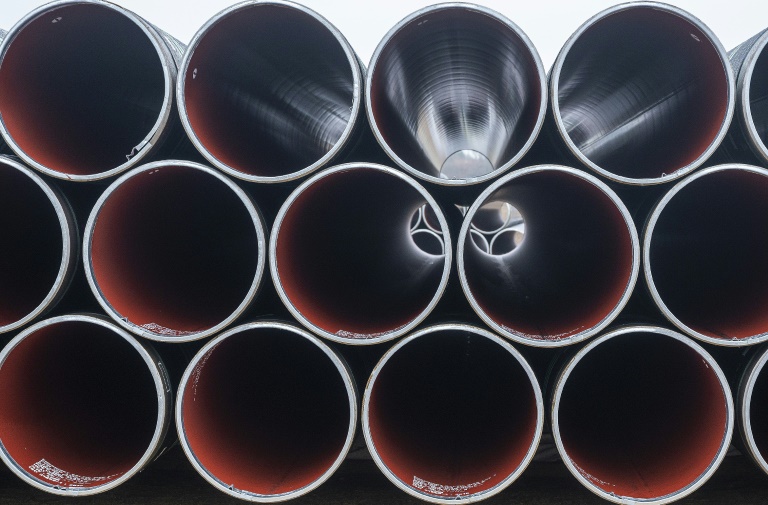
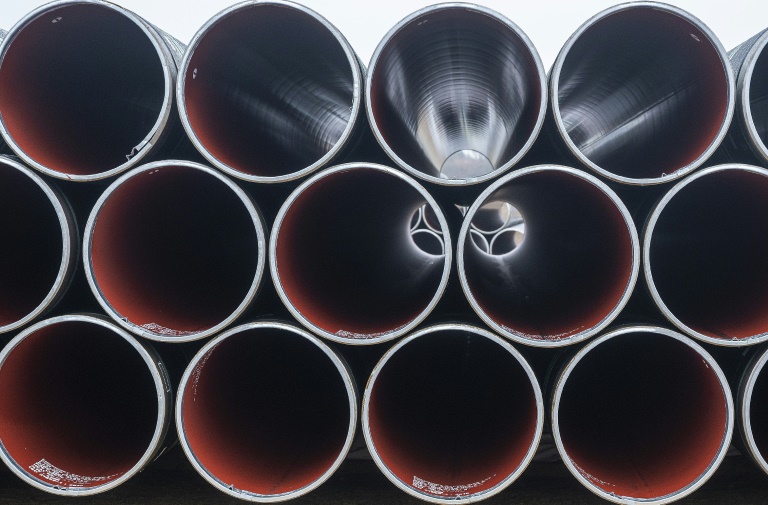
EU sees sabotage in gas pipe leaks

The EU said Wednesday that leaks from two Russia-Germany undersea gas pipelines appeared to be “a deliberate act”, as Moscow said it would call for a UN Security Council meeting over the incident.

The three outflows from the Nord Stream 1 and 2 pipelines have sent natural gas prices soaring, exacerbating an energy crunch in Europe as it stands on the threshold to winter and fanning geopolitical tensions.

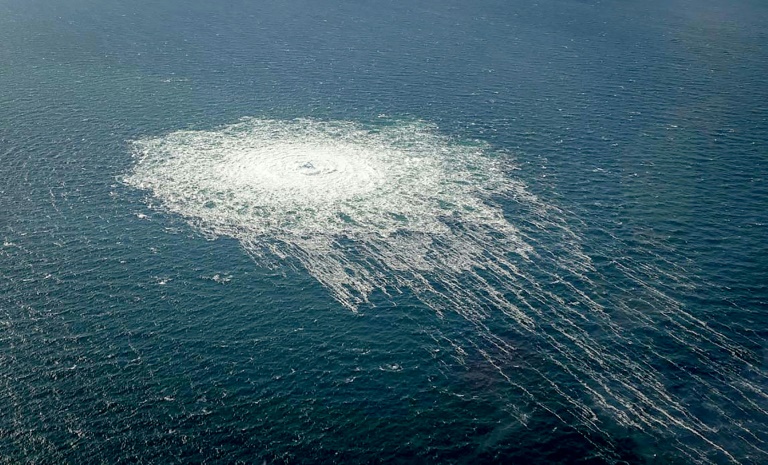
Methane gas from the leaks are bubbling to the surface of the Baltic Sea close to Denmark and Sweden in discharges expected to last for a week, until depletion of the gas in the pipelines.

Europe has alleged the leaks are from sabotage, and fossil fuel-rich Norway boosted security at its installations in response.

They “are not a coincidence,” EU foreign policy chief Josep Borrell said in a statement. “All available information indicates those leaks are the result of a deliberate act.”

He warned: “Any deliberate disruption of European energy infrastructure is utterly unacceptable and will be met with a robust and united response.”

Suspicion has focused on Russia, which has cut gas supplies to Europe in retaliation for severe Western sanctions over the war in Ukraine.

But the Kremlin hit back, saying it was “stupid and absurd” to accuse Russia of causing the leaks and calling instead for President Joe Biden to answer whether the US was behind them.

The Kremlin said it would ask for the United Nations Security Council to convene “in connection with provocations” over the pipeline.

EU chiefs Ursula von der Leyen and Charles Michel have both also blamed the Nord Stream leaks on sabotage, as have leaders of several European countries.

Michel tweeted that they “appear to be an attempt to further destabilise energy supply to EU”.

He added: “Those responsible will be held fully accountable and made to pay.”

The EU is currently mulling further sanctions on Russia for annexation votes imposed on four regions in Ukraine its forces occupy.

Neither of the Nord Stream pipelines are currently operational, but they were full with gas when they were hit with what Swedish seismologists said were “massive releases of energy”.

One of the seismologists told AFP “there isn’t much else than a blast that could cause it”.

Danish Defence Minister Morten Bodskov told reporters in Brussels that “it can easily take one or two weeks for the area to calm down enough” for an inspection to verify the cause.

Two Danish military vessels have been sent to the area.

Non-EU member Norway — which has now overtaken Russia as the biggest supplier of gas to Europe — said it will beef up security around its oil and gas facilities.

“The government has decided to put measures in place to increase security at infrastructure sites, land terminals and platforms on the Norwegian continental shelf,” Norwegian Energy Minister Terje Aasland said.

The Norwegian Petroleum Safety Authority earlier this week called for “increased vigilance from all operators and shipping companies on the continental shelf”.

Built in parallel to the Nord Stream 1 pipeline, Nord Stream 2 was intended to double the capacity for Russian gas imports to Germany.

But Berlin blocked newly completed Nord Stream 2 in the days before the war.

Germany, which has been highly dependent on imports of fossil fuels from Russia to meet its energy needs, has since come under acute stress as Moscow’s supplies dwindle.

Sweden and Poland agree sabotage is the most likely cause of the Nord Stream leaks, with Warsaw suggesting Russia was probably the culprit, to escalate the war in Ukraine.
Pakistan FM warns of consequences to Taliban isolation

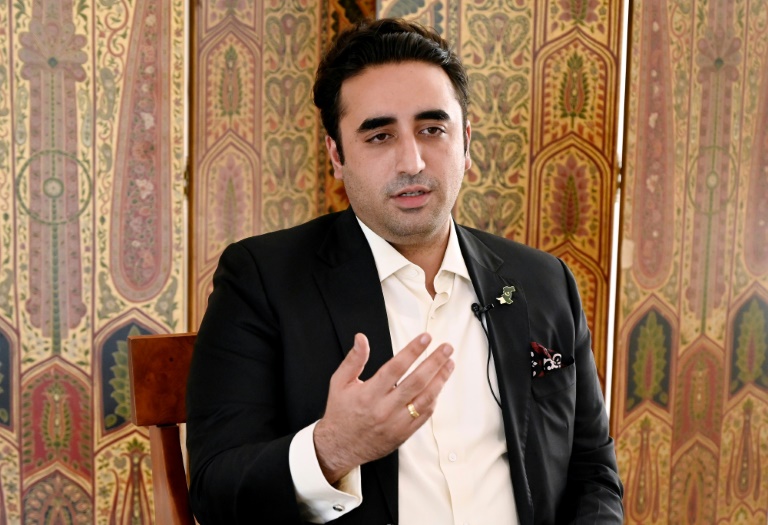
Pakistan’s foreign minister wants the world to engage the Taliban, warning of dangerous consequences if Afghanistan’s rulers are again isolated.

In an interview with AFP on a visit to Washington, Bilawal Bhutto Zardari cautioned against creating “parallel governance” after the United States, distrustful of the Taliban, put Afghanistan’s frozen assets in a professional fund in Switzerland.

“We’ve learned from the past that when we wash our hands and turn our backs, we end up creating unintended consequences and more problems for ourselves,” Bhutto Zardari said Tuesday.

“I believe that our concerns of an economic collapse, of an exodus of refugees, of a threat of new recruits for organizations such as ISIS-K and others, outweigh concerns that there may be about their financial institutions.”

The Taliban returned to power last year after the United States ended a two-decade war. Relations had soured with Pakistan, whose powerful military and intelligence apparatus was accused in Washington of quietly nurturing the Islamist militants despite providing logistical access to US forces.

In contrast to some previous Pakistani officials, the foreign minister — whose mother, former prime minister Benazir Bhutto, was assassinated in 2007 — offered no warm words for the Taliban.

But he said the militants needed “political space” on concerns such as women’s rights, which have been sharply curtailed.

“Throughout history, theocratic, autocratic regimes haven’t exactly tended to expand rights at times of economic strife,” he said.

“In fact, they tend to hold on to cultural issues and other issues to engage their population.”

The United States came away unpersuaded from a series of talks with the Taliban and in August said the militants had violated promises by welcoming Al-Qaeda leader Ayman al-Zawahiri, who was found at a house in Kabul and killed in a US strike.

– ‘Great power rivalries’ –


Bhutto Zardari, the Oxford-educated 34-year-old scion of a preeminent political dynasty, took office five months ago amid political turbulence in Pakistan after a no-confidence vote in former prime minister Imran Khan.

The strife comes as Pakistan is ravaged by floods that have submerged one-third of the country, displacing millions.

At a meeting Monday, US Secretary of State Antony Blinken promised long-term support. In a message less welcome by Pakistan, the top US diplomat also called on Islamabad to ask China to restructure debt accumulated as Beijing builds billions of dollars of infrastructure in a quest for Indian Ocean port access.

Asked about Blinken’s remarks, Bhutto Zardari said he has had “very productive conversations” with China and said he hoped that assistance after the historic floods “does not fall prey to great power rivalries and geostrategic issues.”

With Beijing seen by many Pakistanis as an uncritical ally, successive governments in Islamabad have rebuffed US calls to weigh in on the mass incarceration of Uyghurs and other mostly Muslim people, a campaign Washington calls genocide.

“I’m sure that the United States would like for us to comment more on China’s internal affairs,” Bhutto Zardari said.

“But maybe if we start by addressing disputes that are recognized by bodies such as the United Nations as disputes of an international nature, that would be more productive.”

He was referring to Kashmir, the Himalayan territory divided between India and Pakistan and the trigger for two of their three full-fledged wars.

Indian Prime Minister Narendra Modi, a Hindu nationalist, in 2019 stripped Muslim-majority Jammu and Kashmir of its historic autonomy and opened the way for other Indian citizens to live there.

Bhutto Zardari recalled that when his Pakistan People’s Party was in power in 2010, it moved to open  trade with India, then led by prime minister Manmohan Singh.

“We were willing to take the political risk, stick our necks on the line, and touch the third rail of Pakistani politics — but because we knew that there was a rational, reasonable player on the other end who would perhaps be willing to reciprocate,” Bhutto Zardari said.

“Unfortunately, that space does not exist today. It’s a very different India.”

Kwasi Kwarteng: baptism of fire for UK's new finance minister

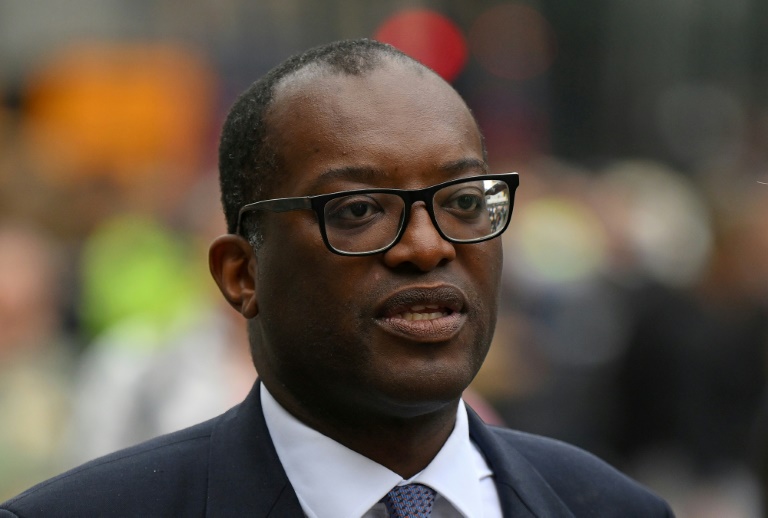
Kwasi Kwarteng has been finance minister for less than a month but is already in the firing line as Britain’s economy teeters on the brink following his first policy announcement.

The 47-year-old free-marketeer last week announced sweeping tax cuts, spooking currency and bond markets concerned about his mammoth spending commitments, and earning a rebuke from the IMF.

Kwarteng is a close ally of Liz Truss, who this month won the race to become prime minister following the resignation of scandal-hit Boris Johnson.

She was voted in by Conservative members on a promise to cut taxes, plans that her rival Rishi Sunak, who was finance minister under Johnson, said were a recipe for disaster in the face of spiralling inflation.

Kwarteng’s devout belief in liberal economics made him the obvious choice to carry out her plans, despite the warnings.

The pair were also at the forefront of urgent moves to help millions of Britons suffering under the strain of rocketing energy prices that have pushed UK inflation to a 40-year high.

Those spending plans allied with the tax cuts sent sterling plunging to its lowest-ever value against the dollar earlier this week, as critics decried the government’s “KamiKwasi” economics. 

– ‘Committed Thatcherite’ –

“There is lots of pressure on Kwasi Kwarteng,” said Tony Travers, a professor at the London School of Economics, who described the minister as a “committed Thatcherite” in reference to former leader and free-market proponent Margaret Thatcher.

“He might have started out as believing in a smaller state and a more deregulated economy, but he’s living in a world where the public expects almost exactly the opposite,” Travers told AFP.

An enthusiastic backer of Brexit, Kwarteng replaced Iraqi-born Nadhim Zahawi, who lasted only two months as chancellor.

Zahawi took over from Sunak, who resigned as finance minister in opposition to Johnson before then losing out to Truss in the contest for 10 Downing Street.

Four years before the 2016 Brexit vote, Kwarteng joined with Truss and other Tory right-wingers to write a free-market manifesto called “Britannia Unchained”, which described British workers as “among the worst idlers in the world”.

He has enthusiastically endorsed Truss’s plans for a “lean state” and to put “money back into people’s pockets”.

In presenting his controversial budget measures on September 23, Kwarteng declared it “a very good day for the UK, because we’ve got a growth plan”.

But disquiet among Tory MPs is growing ahead of the party’s annual conference next week, as opinion polls show voters strongly opposed to the budget plan including its tax cuts for the richest. 

– TV swearing –

In his previous role as energy minister, Kwarteng drew the ire of green groups after he said Russia’s invasion of Ukraine meant the UK needed further investment in North Sea drilling, to diversify its energy mix.

Britain’s first black chancellor of the exchequer, Kwarteng is the son of an economist and lawyer who emigrated to Britain from Ghana. 

The London-born Kwarteng won a scholarship to the elite school Eton, before attending both the University of Cambridge and Harvard University.

While at Cambridge, he represented Trinity College on the long-running quiz programme “University Challenge”, earning his first national media exposure for uttering an expletive when he got a question wrong.

Kwarteng worked as a financial analyst and newspaper columnist before being elected as a Tory MP in 2010.

A former department colleague, Mark Fletcher, said Kwarteng was “fiercely bright and serious” and also a huge cricket fan.

“If you can explain things to him in a cricket analogy you will always get his attention,” he told The Times.

Previously in a relationship with senior Tory MP Amber Rudd, Kwarteng is married to lawyer Harriet Edwards, who gave birth to a daughter last year.

Major energy supplier Norway ups security amid sabotage talk

After worrying drone reports and the “sabotage” of Nord Stream’s Baltic Sea pipelines, Europe’s biggest gas supplier Norway is beefing up security at its energy installations, which experts have singled out as vulnerable targets.

As spectacular as they may be, the gas leaks on the Nord Stream 1 and 2 pipelines linking Russia to Germany have no effect on Europe’s energy supply since they were not operational due to the war in Ukraine.

But a sabotage — the favoured theory among European leaders — of this type on Norwegian facilities would have a catastrophic impact on the continent, which is already struggling to meet its energy needs as winter approaches.

Norway has become Europe’s main gas supplier after Moscow cut deliveries in suspected retaliation against Western sanctions following its invasion of Ukraine.

The Scandinavian country has a vast network of pipelines linking it to the continent.

It is currently pumping at full capacity: according to official forecasts, its gas exports could set a record of 122 billion cubic metres this year.

That can be compared to the 150 billion cubic metres of gas per year that Russia supplied to the European Union before the war in Ukraine.

Faced with these stakes, Norwegian police announced Wednesday they were strengthening security measures already in place in the energy sector in a bid to reduce the risk of an attack.

“The situation is being taken very seriously and several measures have already been put in place to guarantee the best security possible”, police official Tone Vangen said in a statement.

She did not provide details, citing security reasons. 

On Tuesday, Petroleum and Energy Minister Terje Aasland made a similar announcement citing “reports of increased drone activity” near offshore oil platforms.

Norwegian energy giant Equinor has reported flights of “unidentified drones near certain installations”, a phenomenon not encountered before now.

“We are taking this very seriously and we have reported it to police,” Equinor spokesman Eskil Eriksen told AFP, providing no further details.

– Gas pipelines a weak link –

Echoing authorities, oil companies said they were taking extra precautions at their platforms, bases and land and sea installations.

Stretching over thousands of kilometres, sometimes at great depths, the oil and gas pipelines are a weak link in the energy supply chain that is so vital to Europe. 

“They are vulnerable, very exposed,” said Tor Ivar Strommen, a researcher at the Royal Norwegian Naval Academy.

He called for the introduction of additional security measures, including regular pipe inspections to ensure that explosives have not been placed there as well as closer monitoring of shipping near pipelines.

Prime Minister Jonas Gahr Store told Norwegian news agency NTB there was “no specific threat against Norway”.

But for professor and director of the Norwegian Institute for Defence Studies, Sven Holtsmark, it was “likely” that Moscow, often accused of using energy as a weapon, would try to sabotage Norwegian infrastructure.

“Before, the idea of Russia attacking Norwegian facilities would have seemed completely absurd, but we can no longer afford to exclude this possibility” in order to undermine European support for Ukraine, he told AFP.

“(Russian President) Vladimir Putin’s toolbox is running out and the war in Ukraine doesn’t seem to be going away any time soon. 

“So to me it makes sense for Putin to decide to sabotage Norwegian facilities, especially as it would be difficult to prove that Russia was behind it,” the expert added.

Major energy supplier Norway ups security amid sabotage talk

After worrying drone reports and the “sabotage” of Nord Stream’s Baltic Sea pipelines, Europe’s biggest gas supplier Norway is beefing up security at its energy installations, which experts have singled out as vulnerable targets.

As spectacular as they may be, the gas leaks on the Nord Stream 1 and 2 pipelines linking Russia to Germany have no effect on Europe’s energy supply since they were not operational due to the war in Ukraine.

But a sabotage — the favoured theory among European leaders — of this type on Norwegian facilities would have a catastrophic impact on the continent, which is already struggling to meet its energy needs as winter approaches.

Norway has become Europe’s main gas supplier after Moscow cut deliveries in suspected retaliation against Western sanctions following its invasion of Ukraine.

The Scandinavian country has a vast network of pipelines linking it to the continent.

It is currently pumping at full capacity: according to official forecasts, its gas exports could set a record of 122 billion cubic metres this year.

That can be compared to the 150 billion cubic metres of gas per year that Russia supplied to the European Union before the war in Ukraine.

Faced with these stakes, Norwegian police announced Wednesday they were strengthening security measures already in place in the energy sector in a bid to reduce the risk of an attack.

“The situation is being taken very seriously and several measures have already been put in place to guarantee the best security possible”, police official Tone Vangen said in a statement.

She did not provide details, citing security reasons. 

On Tuesday, Petroleum and Energy Minister Terje Aasland made a similar announcement citing “reports of increased drone activity” near offshore oil platforms.

Norwegian energy giant Equinor has reported flights of “unidentified drones near certain installations”, a phenomenon not encountered before now.

“We are taking this very seriously and we have reported it to police,” Equinor spokesman Eskil Eriksen told AFP, providing no further details.

– Gas pipelines a weak link –

Echoing authorities, oil companies said they were taking extra precautions at their platforms, bases and land and sea installations.

Stretching over thousands of kilometres, sometimes at great depths, the oil and gas pipelines are a weak link in the energy supply chain that is so vital to Europe. 

“They are vulnerable, very exposed,” said Tor Ivar Strommen, a researcher at the Royal Norwegian Naval Academy.

He called for the introduction of additional security measures, including regular pipe inspections to ensure that explosives have not been placed there as well as closer monitoring of shipping near pipelines.

Prime Minister Jonas Gahr Store told Norwegian news agency NTB there was “no specific threat against Norway”.

But for professor and director of the Norwegian Institute for Defence Studies, Sven Holtsmark, it was “likely” that Moscow, often accused of using energy as a weapon, would try to sabotage Norwegian infrastructure.

“Before, the idea of Russia attacking Norwegian facilities would have seemed completely absurd, but we can no longer afford to exclude this possibility” in order to undermine European support for Ukraine, he told AFP.

“(Russian President) Vladimir Putin’s toolbox is running out and the war in Ukraine doesn’t seem to be going away any time soon. 

“So to me it makes sense for Putin to decide to sabotage Norwegian facilities, especially as it would be difficult to prove that Russia was behind it,” the expert added.

Experts encouraged by Alzheimer drug preliminary data

Experts on Wednesday said they were encouraged after preliminary data for a new Alzheimer’s drug showed it slowed cognitive decline, the first medicine to accomplish this goal.

The treatment, called lecanemab, was tested in a clinical trial of nearly 1,800 people, and slowed cognitive decline by 27 percent across an 18-month period, according to early results announced by makers Biogen and Eisai.

“This is the first drug that’s been shown to not only remove the build-up of a protein called amyloid in the brain, but to have a small but statistically significant impact on cognitive decline in people with early-stage disease,” said Susan Kohlhaas of Alzheimer’s UK.

But experts cautioned their comments were tempered by the preliminary nature of the results, which were announced by press release ahead of publication in a peer-reviewed journal, as the companies look to bring the treatment to market as early as January 2023 in the United States.

Biogen previously brought another Alzheimer’s drug to market called Aduhelm, but there was significant controversy over the evidence it worked, and its approval led to three high-level resignations in the US Food and Drug Administration.

According to a statement by Biogen and Eisai, in addition to slowing cognitive decline, the new treatment also slowed build-up in the brain of the protein amyloid, which forms sticky plaques and kills brain cells.

Side effects included higher rates of swelling and bleeding in the brain in the group that received the treatment compared to the group that received a placebo.

Both treatment and placebo groups had people of similar characteristics, including a broad range of underlying conditions. A quarter were either Hispanic or African American.

Michel Vounatsos, CEO of Biogen, said the announcement “gives patients and their families hope that lecanemab, if approved, can potentially slow the progression of Alzheimer’s disease.”

Masud Husain, a professor of neurology at the University of Oxford, said in a statement: “While the summary of the results certainly seems very encouraging, we have to be cautious until we are allowed to review the data fully. 

“It is also important to bear in mind that the trial results apply only to people with mild Alzheimer’s disease, not everyone with the condition, and that there were important side effects of the drug, including bleeds in the brain.”

Musk seeks to lift regulator 'muzzle' on Tesla tweets

Tesla chief Elon Musk has asked a New York court to overturn a provision in an agreement with the US securities regulator requiring a lawyer’s pre-approval of tweets related to the electric vehicle company.

In a court document filed Tuesday evening with a Manhattan federal appeals court, Musk’s lawyers described the provision as “a government-imposed muzzle.”

“The effect of the provision is to inhibit and chill Mr. Musk’s lawful speech,” they said, decrying the requirement as “unconstitutional.”

Billionaire Musk was reprimanded by the Securities and Exchange Commission after posting a tweet in 2018, in which he said he had acquired funding to take Tesla private, but did not provide proof or file paperwork with the SEC.

The tweet, which caused share prices to fluctuate wildly, was ruled to be “false and misleading” and shareholders accused Tesla of securities fraud.

The SEC also charged Musk with fraud and ordered him to step down as chair of Tesla’s board of directors, pay a $20 million fine and, after another controversial tweet in early 2019, demanded his tweets directly related to business of the company be vetted by a lawyer before posting.

An attempt by Musk to free himself from oversight was rejected in April, with US District Judge Lewis Liman ruling the “claim that he was the victim of economic duress is wholly unpersuasive.”

He found that Musk did not want to adhere to the agreement anymore as “his company has become, in his estimation, all but invincible.”

Musk, whose fortune is estimated by Forbes to be nearly $260 billion, is also locked in a lawsuit with Twitter over a potential acquisition of the micro-blogging platform, with the trial due to take place in October.

Stocks slump, dollar surges on recession fears

Global stock markets mostly sank Wednesday and the dollar soared as investors fretted over recession fears and heightened Ukraine tensions.

“With the prospect of a sharp economic slowdown, further pain for households and businesses, and investor sentiment on its knees, alas equities markets continue their descent,” said AJ Bell investment director Russ Mould.

The major Asian markets all closed down, and European stocks were down through afternoon trading.

The US was the exception, with markets edging up slightly at the open.

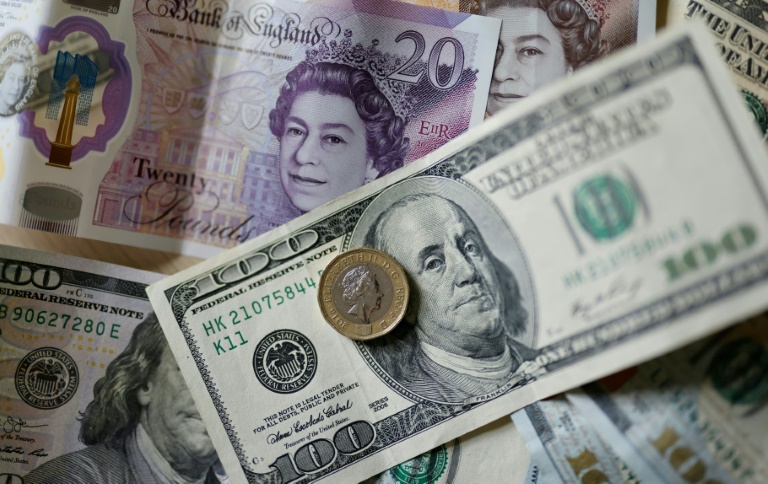
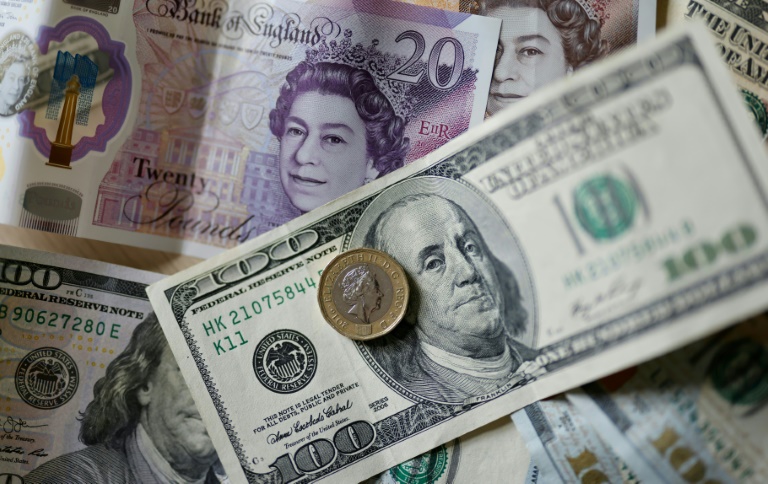
The British pound slumped 1.7 percent against the haven dollar — despite the Bank of England snapping up UK government bonds to try to bring calm to markets.

However, the UK government’s 30-year bond yield managed to retreat to 4.44 percent, having hit a 1998 peak at 5.14 percent.

The BoE intervention followed rare criticism Tuesday from the International Monetary Fund, which argued that Britain’s recent budget could increase inequality and worsen inflation.

Credit ratings agency Moody’s also waded in overnight with a warning about soaring debt.

New finance minister Kwasi Kwarteng’s tax-cutting plan last week sent shockwaves through markets, pushing the pound to a record low and leading to dire warnings for Britain’s economy.

“The BoE’s intervention is an attempt to soothe investor nerves after they were spooked by last week’s mini-budget,” said City Index analyst Fawad Razaqzada.

– Go-to dollar –

The dollar remains the go-to unit as the US Federal Reserve leads the way in raising interest rates.

Observers are betting that US borrowing costs will peak at around 4.75 percent next year, and are expected to remain elevated for some time.

The prospect of such tight monetary policy has battered equities, as US 10-year Treasury yields — a gauge of future rates — hit four percent for the first time since 2010.

“Fear of tightening-induced recessions has wiped out the recovery we saw in stock markets over the bulk of the summer as investors were once again burned by an over-eagerness to catch the bottom in the market, despite there being little evidence of it being justified,” said OANDA’s Craig Erlam.

“That fear has now gripped the markets and we may see a little more caution going forward,” he said.

Sentiment was also rattled by worries about developments in Ukraine, after Kremlin-installed authorities in four regions under Russian control claimed victory in annexation votes, with Moscow warning it could use nuclear weapons to defend the territories.

Ukraine and its allies have denounced the so-called referendums as a sham, saying the West would never recognise the results.

– Key figures at around 1345 GMT –

London – FTSE 100: DOWN 0.3 percent at 6,984.59 points

Frankfurt – DAX: DOWN 0.3 percent at 12104.37 

Paris – CAC 40: DOWN 0.5 percent at 5,728.16 

EURO STOXX 50: DOWN 0.4 percent at 3,315.49

New York – Dow: UP 0.2 percent at 29,193.25 

Tokyo – Nikkei 225: DOWN 1.5 percent at 26,173.98 (close)

Hong Kong – Hang Seng Index: DOWN 3.4 percent at 17,250.88 (close)

Shanghai – Composite: DOWN 1.6 percent at 3,045.07 (close)

Pound/dollar: DOWN at $1.0655 from $1.0730 on Tuesday

Euro/dollar: DOWN at $0.9587 from $0.9595

Euro/pound: UP at 90.67 pence from 89.39 pence 

Dollar/yen: DOWN at 144.43 yen from 144.81 yen

Brent North Sea crude: UP 0.1 percent at $85.67 per barrel

West Texas Intermediate: UP 1.0 percent at $79.46 per barrel

burs-rfj/rox/cdw

Stocks slump, dollar surges on recession fears

Global stock markets mostly sank Wednesday and the dollar soared as investors fretted over recession fears and heightened Ukraine tensions.

“With the prospect of a sharp economic slowdown, further pain for households and businesses, and investor sentiment on its knees, alas equities markets continue their descent,” said AJ Bell investment director Russ Mould.

The major Asian markets all closed down, and European stocks were down through afternoon trading.

The US was the exception, with markets edging up slightly at the open.

The British pound slumped 1.7 percent against the haven dollar — despite the Bank of England snapping up UK government bonds to try to bring calm to markets.

However, the UK government’s 30-year bond yield managed to retreat to 4.44 percent, having hit a 1998 peak at 5.14 percent.

The BoE intervention followed rare criticism Tuesday from the International Monetary Fund, which argued that Britain’s recent budget could increase inequality and worsen inflation.

Credit ratings agency Moody’s also waded in overnight with a warning about soaring debt.

New finance minister Kwasi Kwarteng’s tax-cutting plan last week sent shockwaves through markets, pushing the pound to a record low and leading to dire warnings for Britain’s economy.

“The BoE’s intervention is an attempt to soothe investor nerves after they were spooked by last week’s mini-budget,” said City Index analyst Fawad Razaqzada.

– Go-to dollar –

The dollar remains the go-to unit as the US Federal Reserve leads the way in raising interest rates.

Observers are betting that US borrowing costs will peak at around 4.75 percent next year, and are expected to remain elevated for some time.

The prospect of such tight monetary policy has battered equities, as US 10-year Treasury yields — a gauge of future rates — hit four percent for the first time since 2010.

“Fear of tightening-induced recessions has wiped out the recovery we saw in stock markets over the bulk of the summer as investors were once again burned by an over-eagerness to catch the bottom in the market, despite there being little evidence of it being justified,” said OANDA’s Craig Erlam.

“That fear has now gripped the markets and we may see a little more caution going forward,” he said.

Sentiment was also rattled by worries about developments in Ukraine, after Kremlin-installed authorities in four regions under Russian control claimed victory in annexation votes, with Moscow warning it could use nuclear weapons to defend the territories.

Ukraine and its allies have denounced the so-called referendums as a sham, saying the West would never recognise the results.

– Key figures at around 1345 GMT –

London – FTSE 100: DOWN 0.3 percent at 6,984.59 points

Frankfurt – DAX: DOWN 0.3 percent at 12104.37 

Paris – CAC 40: DOWN 0.5 percent at 5,728.16 

EURO STOXX 50: DOWN 0.4 percent at 3,315.49

New York – Dow: UP 0.2 percent at 29,193.25 

Tokyo – Nikkei 225: DOWN 1.5 percent at 26,173.98 (close)

Hong Kong – Hang Seng Index: DOWN 3.4 percent at 17,250.88 (close)

Shanghai – Composite: DOWN 1.6 percent at 3,045.07 (close)

Pound/dollar: DOWN at $1.0655 from $1.0730 on Tuesday

Euro/dollar: DOWN at $0.9587 from $0.9595

Euro/pound: UP at 90.67 pence from 89.39 pence 

Dollar/yen: DOWN at 144.43 yen from 144.81 yen

Brent North Sea crude: UP 0.1 percent at $85.67 per barrel

West Texas Intermediate: UP 1.0 percent at $79.46 per barrel

burs-rfj/rox/cdw

Oldest chimp from renown Guinean group dies

Guinea’s oldest chimpanzee and one of the last members of a globally famous endangered community has died in solitude around the age of 71, the environment ministry said.

Fana, a female chimp born around 1951, was part of a troop that gained global fame for uncanny abilities to use tools.

The tiny community of apes lives in a forest around the village of Bossou, in the far southeastern corner of the country.

Scientists have trekked to the remote location for decades to study the chimps’ remarkable use of stone hammers and anvils to crack open nuts — the most sophisticated act ever observed of humanity’s genetically closest relative.

But Fana’s death brings the number of Bossou chimpanzees down to just six or seven.

Half are females, though two are no longer able to reproduce.

Fana had been showing signs of exhaustion over the past few months, the environment ministry said on Facebook Tuesday. 

Her left upper limb has been paralysed since she took a bad fall nearly 25 years ago and she had long since stopped climbing trees. 

She lived alone as she became less mobile.

Her body was found on September 19 and she was buried the next day in the presence of local villagers.

The Bossou apes have a unique relationship with the village population.

The great apes live in the wild but share the territory and its resources with the locals, who protect them, believing them to be reincarnated ancestors.

Up until 2003, the Bossou chimp group had been relatively stable at around 21 animals. But it lost seven members to the flu that year.

It has also been affected by human activities in the area. 

Locals traditionally use slash-and-burn agriculture, and though they had preserved a 320-hectare block of forest around Bossou, surrounding deforestation has cut it off from the rest of the Mount Nimba Strict Nature Reserve, where there are more numerous chimp communities.

Slash-and-burn agriculture sees people cultivate lands until they become depleted, then clear forests to create new lands, and repeat the cycle.

The UNESCO World Heritage-listed reserve straddles Guinea’s borders with Liberia and Ivory Coast.

Fana leaves behind two sons, Foaf and Fanwa. She is predeceased by her daughter, Fotayou.

Close Bitnami banner
Bitnami