World

Boost climate action or we'll see you in court, activists tell govts

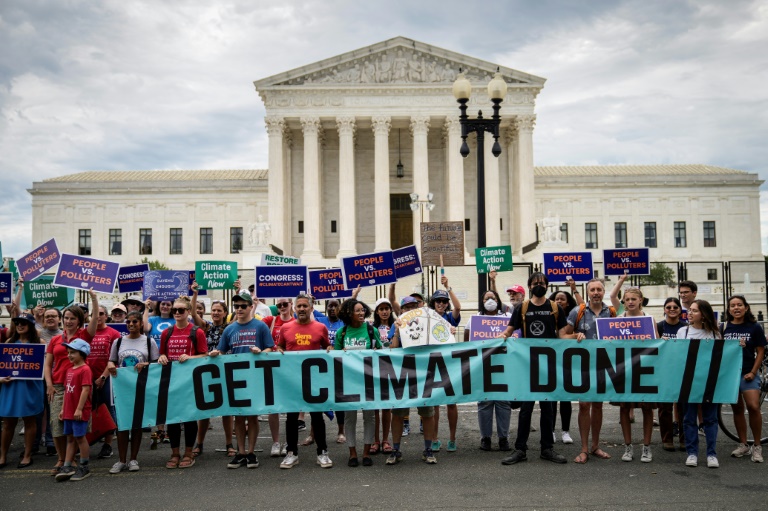
Governments around the world must scale up climate action “or face further legal action”, an open letter from campaign groups warned Tuesday, as battles over policies to cut emissions and protect the environment are increasingly fought in the courts.

From legal efforts to steer governments to do more to curb fossil fuel pollution, to court action over companies’ misleading green claims, the number, scope and ambitions of climate litigation is expanding, say experts, with an increasing number of cases are being launched against governments. 

And that will continue if they do not use the upcoming United Nations COP meeting in Egypt to substantially enhance their climate action, according to an open letter signed by lawyers from more than 20 organisations around the world. 

“Governments of the world: your delay is costing lives. Strong action is needed now to protect people and the planet,” the letter said. 

“If you continue to fail us, we will continue to turn to the courts to demand accountability.”

The groups said they had already launched more than 80 legal cases around the world to “compel” governments from the Netherlands to Brazil, warning that the world was on the “precipice of the most serious intergenerational violation of human rights in history”.

Research from the Grantham Research Institute at the London School of Economics this year has found that of the 2,000 or so climate legal cases filed since 1986, almost a quarter were started since the beginning of 2020. 

Some 80 of these cases have been filed against national or subnational governments since 2005, the research found, with a record number of 30 new cases submitted in 2021. 

Perhaps the most successful of this kind of case was environmental group Urgenda’s landmark 2019 victory in Dutch courts, which saw the government ordered to reduce greenhouse gas emissions by at least 25 percent by the end of 2020. The target was largely met.

“Climate action is a legal duty. Yet governments are failing to comply with their own laws and commitments,” said Sarah Mead Co-Director of Climate Litigation Network, part of the Urgenda Foundation, which signed the letter. 

“We want to make sure that countries understand that the law is on our side.”

– Cases rise –

But legal rulings can go both ways. 

In June, the US Supreme Court ruled that the government’s key environmental agency cannot issue broad limits on greenhouse gases.

Campaigners say that energy companies are increasingly turning to international arbitration to recoup investments as governments accelerate the shift away from fossil fuels.

Earth has warmed nearly 1.2 degrees Celsius above pre-industrial levels so far, unleashing more intense weather extremes, including dangerous heatwaves and floods.  

The 2015 Paris Agreement saw governments agree to a cap on warming of well below 2C and preferably a safer 1.5C. 

But the UN’s Environment Programme has said that even taking into account updated global promises to cut emissions of heat-trapping gases, the world is currently on course to warm 2.8C. 
'A new era': NASA strikes asteroid in key test of planetary defense

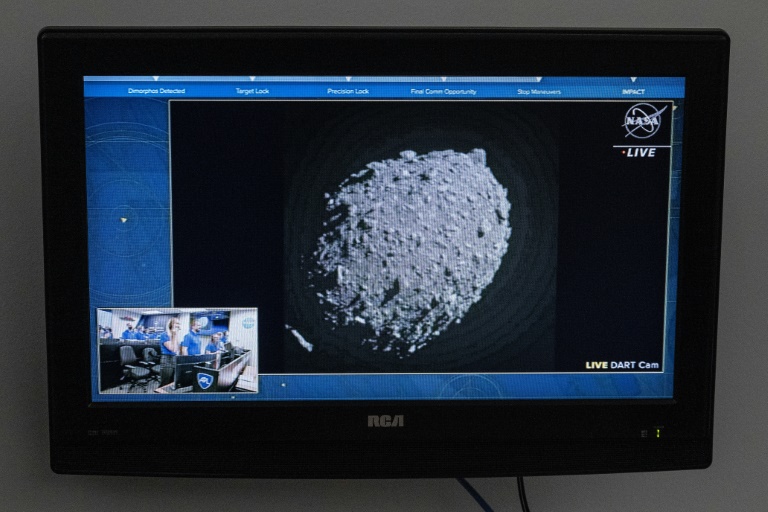
Bullseye: A NASA spaceship on Monday struck an asteroid seven million miles away in order to deflect its orbit, succeeding in a historic test of humanity’s ability to prevent a celestial object from devastating life on Earth.

The Double Asteroid Redirection Test (DART) impactor hit its target, the space rock Dimorphos, at 7:14 pm Eastern Time (2314 GMT), 10 months after blasting off from California on its pioneering mission.

“We’re embarking on a new era, an era in which we potentially have the capability to protect ourselves from something like a dangerous hazardous asteroid impact,” said Lori Glaze, director of NASA’s planetary science division.

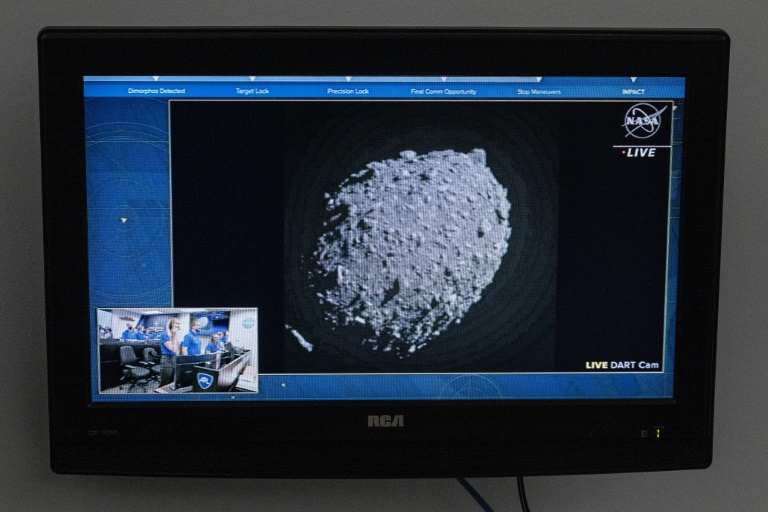
Dimorphos — a 530-foot (160-meter) asteroid roughly comparable in size to an Egyptian pyramid — orbits a half-mile long big brother called Didymos. Never seen before, the “moonlet” appeared as a speck of light around an hour before the collision.

Its egg-like shape and craggy, boulder-dotted surface finally came into clear view in the last few minutes, as DART raced toward it at roughly 14,500 miles (23,500 kilometers) per hour.

NASA scientists and engineers erupted in applause as the screen froze on a final image, indicating that signal had been lost and impact had taken place.

To be sure, the pair of asteroids pose no threat to our planet as they loop the Sun every two of our years.

But NASA has deemed the experiment important to carry out before an actual need is discovered.

By striking Dimorphos head on, NASA hopes to push it into a smaller orbit, shaving 10 minutes off the time it takes to encircle Didymos, which is currently 11 hours and 55 minutes. 

Ground telescopes — which can’t see the asteroid system directly but can detect a shift in patterns of light coming from it — should provide a definitive orbital period in the coming days and weeks. 

The proof-of-concept has made a reality of what has before only been attempted in science fiction — notably in films such as “Armageddon” and “Don’t Look Up.” 

– Astronomy community abuzz –

Minutes after impact, a toaster-sized satellite called LICIACube, which already separated from DART a few weeks ago, was expected to make a close pass of the site to capture images of the collision and the ejecta — the pulverized rock thrown off by the strike.

LICIACube’s pictures will be sent back in the next weeks and months. 

Also watching the event: an array of telescopes, both on Earth and in space — including the recently operational James Webb — which might be able to see a brightening cloud of dust.

The mission has set the global astronomy community abuzz, with more than three dozen ground telescopes participating, including optical, radio and radar. 

“There’s a lot of them, and it’s incredibly exciting to have lost count,” said DART mission planetary astronomer Christina Thomas.

Finally, a full picture of what the system looks like will be revealed when a European Space Agency mission four years down the line called Hera arrives to survey Dimorphos’ surface and measure its mass, which scientists can currently only guess at.

– ‘Earthlings can sleep better’ –

Very few of the billions of asteroids and comets in our solar system are considered potentially hazardous to our planet, and none are expected in the next hundred years or so. 

But wait long enough, and it will happen.

We know that from the geological record — for example, the six-mile wide Chicxulub asteroid struck Earth 66 million years ago, plunging the world into a long winter that led to the mass extinction of the dinosaurs along with 75 percent of all species.

An asteroid the size of Dimorphos, by contrast, would only cause a regional impact, such as devastating a city, albeit with greater force than any nuclear bomb in history.

How much momentum DART imparts on Dimorphos will depend on whether the asteroid is solid rock, or more like a “rubbish pile” of boulders bound by mutual gravity — a property that’s not yet known.

If it had missed, NASA would have another shot in two years’ time, with the spaceship containing just enough fuel for another pass.

But its success marks the first step towards a world capable of defending itself from a future existential threat.

“I think Earthlings can sleep better, definitely I will,” said DART mission systems engineer Elena Adams.

'A new era': NASA strikes asteroid in key test of planetary defense

Bullseye: A NASA spaceship on Monday struck an asteroid seven million miles away in order to deflect its orbit, succeeding in a historic test of humanity’s ability to prevent a celestial object from devastating life on Earth.

The Double Asteroid Redirection Test (DART) impactor hit its target, the space rock Dimorphos, at 7:14 pm Eastern Time (2314 GMT), 10 months after blasting off from California on its pioneering mission.

“We’re embarking on a new era, an era in which we potentially have the capability to protect ourselves from something like a dangerous hazardous asteroid impact,” said Lori Glaze, director of NASA’s planetary science division.

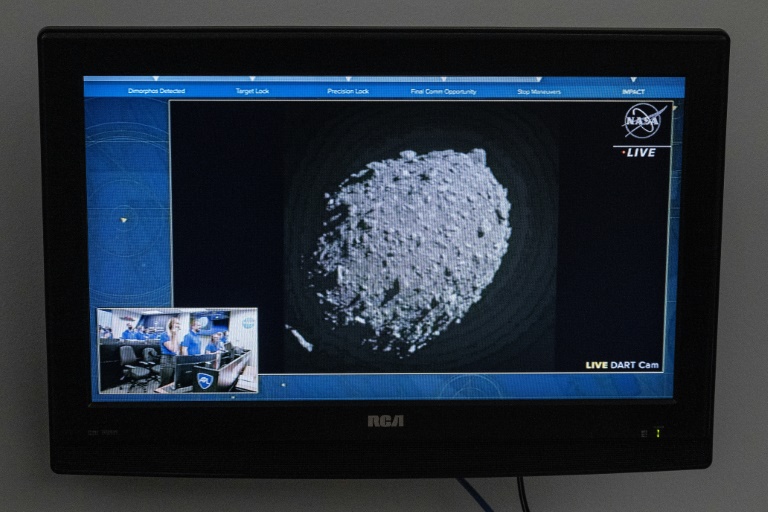
Dimorphos — a 530-foot (160-meter) asteroid roughly comparable in size to an Egyptian pyramid — orbits a half-mile long big brother called Didymos. Never seen before, the “moonlet” appeared as a speck of light around an hour before the collision.

Its egg-like shape and craggy, boulder-dotted surface finally came into clear view in the last few minutes, as DART raced toward it at roughly 14,500 miles (23,500 kilometers) per hour.

NASA scientists and engineers erupted in applause as the screen froze on a final image, indicating that signal had been lost and impact had taken place.

To be sure, the pair of asteroids pose no threat to our planet as they loop the Sun every two of our years.

But NASA has deemed the experiment important to carry out before an actual need is discovered.

By striking Dimorphos head on, NASA hopes to push it into a smaller orbit, shaving 10 minutes off the time it takes to encircle Didymos, which is currently 11 hours and 55 minutes. 

Ground telescopes — which can’t see the asteroid system directly but can detect a shift in patterns of light coming from it — should provide a definitive orbital period in the coming days and weeks. 

The proof-of-concept has made a reality of what has before only been attempted in science fiction — notably in films such as “Armageddon” and “Don’t Look Up.” 

– Astronomy community abuzz –

Minutes after impact, a toaster-sized satellite called LICIACube, which already separated from DART a few weeks ago, was expected to make a close pass of the site to capture images of the collision and the ejecta — the pulverized rock thrown off by the strike.

LICIACube’s pictures will be sent back in the next weeks and months. 

Also watching the event: an array of telescopes, both on Earth and in space — including the recently operational James Webb — which might be able to see a brightening cloud of dust.

The mission has set the global astronomy community abuzz, with more than three dozen ground telescopes participating, including optical, radio and radar. 

“There’s a lot of them, and it’s incredibly exciting to have lost count,” said DART mission planetary astronomer Christina Thomas.

Finally, a full picture of what the system looks like will be revealed when a European Space Agency mission four years down the line called Hera arrives to survey Dimorphos’ surface and measure its mass, which scientists can currently only guess at.

– ‘Earthlings can sleep better’ –

Very few of the billions of asteroids and comets in our solar system are considered potentially hazardous to our planet, and none are expected in the next hundred years or so. 

But wait long enough, and it will happen.

We know that from the geological record — for example, the six-mile wide Chicxulub asteroid struck Earth 66 million years ago, plunging the world into a long winter that led to the mass extinction of the dinosaurs along with 75 percent of all species.

An asteroid the size of Dimorphos, by contrast, would only cause a regional impact, such as devastating a city, albeit with greater force than any nuclear bomb in history.

How much momentum DART imparts on Dimorphos will depend on whether the asteroid is solid rock, or more like a “rubbish pile” of boulders bound by mutual gravity — a property that’s not yet known.

If it had missed, NASA would have another shot in two years’ time, with the spaceship containing just enough fuel for another pass.

But its success marks the first step towards a world capable of defending itself from a future existential threat.

“I think Earthlings can sleep better, definitely I will,” said DART mission systems engineer Elena Adams.

'A new era': NASA strikes asteroid in key test of planetary defense

Bullseye: A NASA spaceship on Monday struck an asteroid seven million miles away in order to deflect its orbit, succeeding in a historic test of humanity’s ability to prevent a celestial object from devastating life on Earth.

The Double Asteroid Redirection Test (DART) impactor hit its target, the space rock Dimorphos, at 7:14 pm Eastern Time (2314 GMT), 10 months after blasting off from California on its pioneering mission.

“We’re embarking on a new era, an era in which we potentially have the capability to protect ourselves from something like a dangerous hazardous asteroid impact,” said Lori Glaze, director of NASA’s planetary science division.

Dimorphos — a 530-foot (160-meter) asteroid roughly comparable in size to an Egyptian pyramid — orbits a half-mile long big brother called Didymos. Never seen before, the “moonlet” appeared as a speck of light around an hour before the collision.

Its egg-like shape and craggy, boulder-dotted surface finally came into clear view in the last few minutes, as DART raced toward it at roughly 14,500 miles (23,500 kilometers) per hour.

NASA scientists and engineers erupted in applause as the screen froze on a final image, indicating that signal had been lost and impact had taken place.

To be sure, the pair of asteroids pose no threat to our planet as they loop the Sun every two of our years.

But NASA has deemed the experiment important to carry out before an actual need is discovered.

By striking Dimorphos head on, NASA hopes to push it into a smaller orbit, shaving 10 minutes off the time it takes to encircle Didymos, which is currently 11 hours and 55 minutes. 

Ground telescopes — which can’t see the asteroid system directly but can detect a shift in patterns of light coming from it — should provide a definitive orbital period in the coming days and weeks. 

The proof-of-concept has made a reality of what has before only been attempted in science fiction — notably in films such as “Armageddon” and “Don’t Look Up.” 

– Astronomy community abuzz –

Minutes after impact, a toaster-sized satellite called LICIACube, which already separated from DART a few weeks ago, was expected to make a close pass of the site to capture images of the collision and the ejecta — the pulverized rock thrown off by the strike.

LICIACube’s pictures will be sent back in the next weeks and months. 

Also watching the event: an array of telescopes, both on Earth and in space — including the recently operational James Webb — which might be able to see a brightening cloud of dust.

The mission has set the global astronomy community abuzz, with more than three dozen ground telescopes participating, including optical, radio and radar. 

“There’s a lot of them, and it’s incredibly exciting to have lost count,” said DART mission planetary astronomer Christina Thomas.

Finally, a full picture of what the system looks like will be revealed when a European Space Agency mission four years down the line called Hera arrives to survey Dimorphos’ surface and measure its mass, which scientists can currently only guess at.

– ‘Earthlings can sleep better’ –

Very few of the billions of asteroids and comets in our solar system are considered potentially hazardous to our planet, and none are expected in the next hundred years or so. 

But wait long enough, and it will happen.

We know that from the geological record — for example, the six-mile wide Chicxulub asteroid struck Earth 66 million years ago, plunging the world into a long winter that led to the mass extinction of the dinosaurs along with 75 percent of all species.

An asteroid the size of Dimorphos, by contrast, would only cause a regional impact, such as devastating a city, albeit with greater force than any nuclear bomb in history.

How much momentum DART imparts on Dimorphos will depend on whether the asteroid is solid rock, or more like a “rubbish pile” of boulders bound by mutual gravity — a property that’s not yet known.

If it had missed, NASA would have another shot in two years’ time, with the spaceship containing just enough fuel for another pass.

But its success marks the first step towards a world capable of defending itself from a future existential threat.

“I think Earthlings can sleep better, definitely I will,” said DART mission systems engineer Elena Adams.

Thousands march to demand justice for Mexico's missing students

Thousands of Mexicans marched on Monday demanding justice on the eighth anniversary of the disappearance of 43 students, after investigators branded the atrocity a “state crime” involving the military and other institutions.

President Andres Manuel Lopez Obrador urged protesters to rally peacefully in memory of the victims of a tragedy that shocked the nation and prompted international indignation.

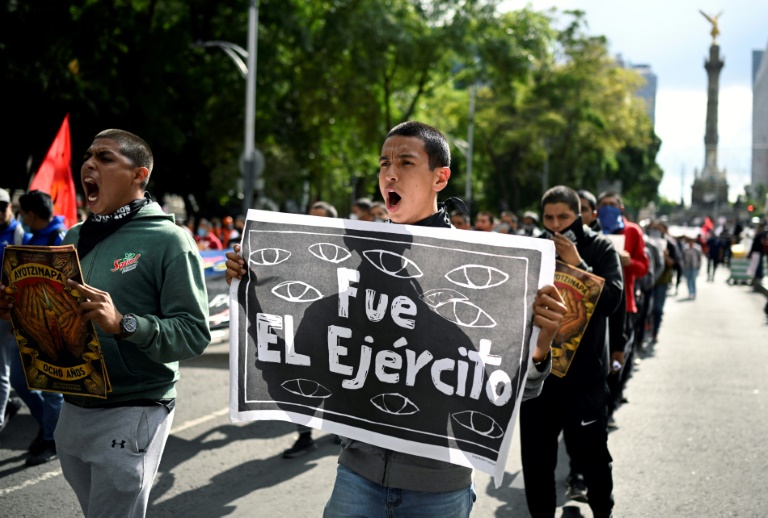
Relatives, students and other demonstrators advanced through the heart of Mexico City chanting slogans such as “alive they took them, alive we want them!”

Some carried signs reading: “It was the army.”

“We demand that the military be investigated, that they be punished,” said Blanca Nava, the mother of one of the students.

Lopez Obrador’s appeal came after several dozen members of the security forces were injured on Friday in clashes with protesters hurling rocks and homemade explosive devices at a Mexican military base.

“The only thing is to avoid violence,” Lopez Obrador told reporters, declaring Monday a day of national mourning.

“It’s not about throwing stones or Molotov cocktails. It’s about protesting peacefully,” he said. 

Monday’s march appeared to be mostly peaceful, with only occasional skirmishes between protesters and the police. 

– Unsolved crime –

The 43 teaching students had commandeered buses in the southern state of Guerrero to travel to a demonstration in Mexico City before they went missing.

Investigators say they were detained by corrupt police and handed over to a drug cartel that mistook them for members of a rival gang, but exactly what happened to them is disputed.

Last month, a truth commission tasked by Lopez Obrador’s government to investigate the atrocity declared the case a “state crime” involving agents of various institutions.

It said that military personnel bore “clear responsibility,” either directly or through negligence.

Arrest warrants have been issued for more than 80 suspects, including military personnel, police officers and cartel members.

But a lawyer for the victims’ families, Vidulfo Rosales, told reporters that prosecutors had withdrawn at least 20 of the warrants.

“That’s why there were strenuous demands for answers,” he said, referring to Friday’s protest violence, which came despite a number of high-profile detentions in the case.

Former attorney general Jesus Murillo Karam, who led a controversial investigation into the mass disappearance, was arrested last month on charges of forced disappearance, torture and obstruction of justice.

This month an army general and two other military personnel were also detained.

According to an official report presented in 2015 by the government of then-president Enrique Pena Nieto, cartel members killed the students and incinerated their remains at a garbage dump.

Those conclusions were rejected by relatives, independent experts and the office of the United Nations High Commissioner for Human Rights.

So far, the remains of only three victims have been identified.

Stocks volatile, pound hits record low

Wall Street stocks fell again Monday as recession fears brought volatility to financial markets, pushing the pound to an all-time low against the greenback and pressuring oil prices.

After last week’s rout, US indices climbed early in the session before tumbling back into the red.

Both the Dow and S&P 500 dropped more than one percent to finish at their lowest value of the year. The Dow also entered a “bear market,” defined as a 20 percent retreat from its last record.

London shares closed flat, paring earlier losses after the pound hit a record low against the dollar on surging fears about the ailing UK economy, before recovering ground.

“Investors are reacting to a really toxic brew of bad news that was made worse by what happened in the UK on Friday, which was the stimulus spending into an already bigger inflationary problem,” said Andy Kapyrin, co-chief investment officer at RegentAtlantic. 

“I’m not sure that we’ve seen the bottom here,” Kapyrin said. “But I think it does make sense for investors to dip their toe into the water, the stock market is materially cheaper than it started the year.”

Having extended losses in morning trading, Frankfurt and Paris edged higher by mid-afternoon, only to close the session in the red.

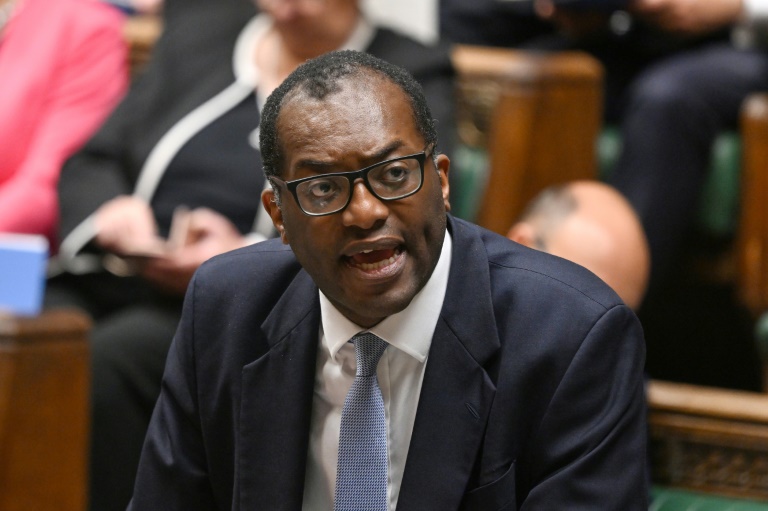
The pound on Monday struck an all-time low at $1.0350, days after new UK finance minister Kwasi Kwarteng’s inflation-fighting budget.

The Bank of England said it was paying close attention to financial markets and would “not hesitate to change interest rates by as much as needed” to curb inflation.

Economists expressed concerns that last week’s huge tax-cutting budget from the government of new Prime Minister Liz Truss — aimed at helping the recession-threatened economy — could actually spark massive borrowing and further fuel inflation.

Sterling has struggled in recent years as the UK fails to strike major trade deals following its exit from the European Union.

Prior to Monday’s crash, the pound suffered a series of 37-year lows against the greenback this month on UK recession fears propelled by sky-high inflation.

The euro has additionally come under heavy selling pressure against the dollar in recent months, as the Federal Reserve hikes interest rates more aggressively than the European Central Bank.

The euro struck a new 20-year low at $0.9554 on Monday before recovering.

A day after Eurosceptic populists swept to victory in Italy’s general election, the interest rates on 10-year government bonds hit their highest level for around a decade in France, Germany and Italy.

But the Italian stock market closed higher as markets assessed the future political landscape.

“Time will tell how successful the new government will prove to be but the prospect of some political stability appears to be generating a small relief rally today,” said Craig Erlam, analyst at trading platform OANDA.

Elsewhere, oil prices pulled back, with US benchmark West Texas intermediate ending at its lowest level since January, as the strong dollar weighed on the commodity, along with worries over petroleum demand.

– Key figures at around 2030 GMT –

Pound/dollar: DOWN at $1.0689 from $1.0859 on Friday

Euro/dollar: DOWN at $0.9611 from $0.9687

Euro/pound: UP at 89.87 pence from 89.29 pence 

Dollar/yen: UP at 144.72 yen from 143.31 yen

New York – Dow: DOWN 1.1 percent at 29,260.81 (close)

New York – S&P 500: DOWN 1.0 percent at 3,655.04 (close)

New York – Nasdaq: DOWN 0.6 percent at 10,802.92 (close)

London – FTSE 100: UP less than 0.1 percent at 7,020.95 (close)

Frankfurt – DAX: DOWN 0.5 percent at 12,227.92 (close)

Paris – CAC 40: DOWN 0.2 percent at 5,769.39 (close)

EURO STOXX 50: DOWN 0.2 percent at 3,342.56  (close)

Tokyo – Nikkei 225: DOWN 2.7 percent at 26,431.55 (close)

Hong Kong – Hang Seng Index: DOWN 0.4 percent at 17,855.14 (close)

Shanghai – Composite: DOWN 1.2 percent at 3,051.23 (close)

West Texas Intermediate: DOWN 2.6 percent at $78.71 per barrel

Brent North Sea crude: DOWN 2.4 percent at $84.06 per barrel

US brings fraud charges in $100 mn New Jersey deli case

US officials announced fraud charges Monday against three men who orchestrated a $100 million scheme to inflate the market value of a company whose only revenue source was a small-town New Jersey delicatessen.

It is the latest twist in the odd saga of a Paulsboro, New Jersey deli owned by Hometown International, which saw its stock valuation soar in 2021 despite annual deli revenues of less than $40,000.

Now the company is the target of a criminal indictment by the Justice Department and civil charges by the Securities and Exchange Commission over the inflated $100 million market value.

The Justice Department charged James Patten and the father-son duo of Peter Coker Sr and Peter Coker Jr with a conspiracy in which they took control of two companies and their stock trading to artificially pump up equity valuations.

Hometown began selling shares on the OTC Marketplace in 2019 after which the three men took over the company, along with a second entity that traded on the OTC, E-Waste Corporation.

The trio shifted shares to shell companies to mask control, while transferring other shares to family members and friends whose log-in details they had obtained.

Having parties set up on both sides of the transaction, the men then used the accounts to perform a series of “match and wash trades” to pump up the value of Hometown by 939 percent and E-Waste by 19,900 percent, the Justice Department said.

“These tactics artificially inflated the price of Hometown International and E-Waste’s stock by giving the false impression that there was a genuine market interest in the stock,” said a DOJ press release.

Patten and Coker Sr were arrested Monday and scheduled to appear in federal court in North Carolina, while Coker Jr, who is based in Hong Kong, remains at large, DOJ said.

Venezuela, Colombia reopen border to vehicles carrying goods

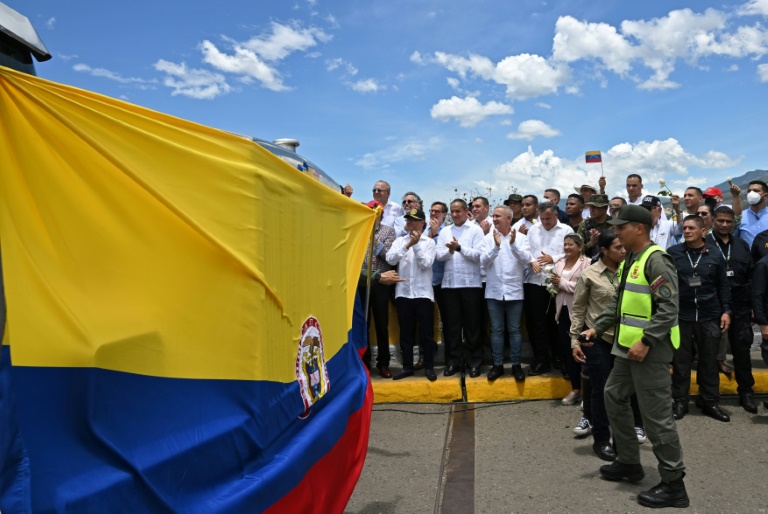
Venezuela and Colombia on Monday reopened their border to vehicles transporting goods following seven years of partial closure, including three years in which it was fully closed due to a political spat.

Colombia President Gustavo Petro and representatives of the government of Venezuela leader Nicolas Maduro attended the ceremony.

The first truck left San Antonio del Tachira on the Venezuelan side of the border just after midday and crossed the Simon Bolivar bridge to Cucuta in Colombia.

“We are resuming relations and taking firm steps to advance in the total and absolute opening of the border between brother peoples,” said Maduro on Twitter.

“It’s a historic and transcendental day!”

The South American neighbors broke off diplomatic relations in 2019 under Colombia’s conservative president Ivan Duque.

But since Petro succeeded him in August, Colombia’s first ever left-wing president has moved to mend relations with Venezuela’s populist leftist government.

“It is very, very important for us to progress on the fundamental rights of the people. Families have been separated, there was a break in our relationships of respect and trust,” Colombian lawmaker Jairo Cristo said during the ceremony.

This reopening is the first step toward the complete reestablishment of commercial relations between the two countries, which were worth around $7.2 billion in 2008.

The neighbors share a 2,200-kilometer (1,350-mile) border infested with armed groups that have created insecurity by fighting over lucrative illegal trades such as drug trafficking and smuggling.

The two countries were due to resume flights between their capitals on Monday.

Caracas and Bogota formally reestablished diplomatic relations on August 29 by sending ambassadors to each other’s capitals.

Venezuela had broken off diplomatic relations in 2019 after Duque expressed support for opposition leader Juan Guaido’s attempts to oust Maduro. 

Border crossing by vehicles carrying goods had been restricted since 2015 but were blocked entirely in 2019 as Guaido unsuccessfully tried to force through trucks carrying food and medicine from the United States.

Venezuela has suffered years of economic crisis that has seen poverty soar and millions of people leave the country, many to settle in Colombia.

Biden seeks up-front disclosure of airline ticket fees

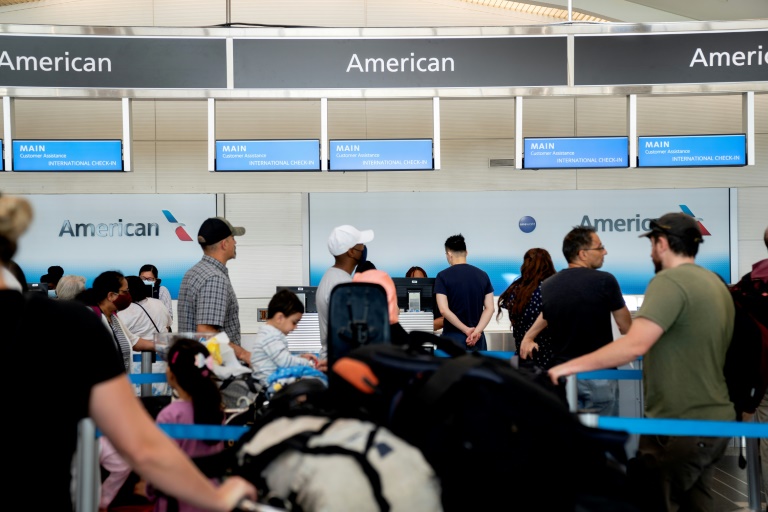
Airlines would be required to disclose fees for luggage or for passengers to sit next to their children prior to ticket purchase under a regulation proposed Monday by the Biden administration.

The action, proposed by the US Department of Transportation (DOT), responds to consumer complaints about hidden fees for services no longer typically included in the base fare.

Besides surcharges for checked or carry-on baggage and fees to sit with a child, airlines would also be required to disclose up front fees for changing or canceling a flight,  according to a DOT press release. 

The proposed rule, which will be open up to a 60-day public comment period, would also apply to third-party sellers of airline tickets, or online websites that list fares, DOT said.

“Airline passengers deserve to know the full, true cost of their flights before they buy a ticket,” said US Transportation Secretary Pete Buttigieg. 

“This new proposed rule would require airlines to be transparent with customers about the fees they charge, which will help travelers make informed decisions and save money.”

Airlines for America (A4A) said the industry already provides customers with clear information on ticket pricing, including taxes and government fees, which account for more than 20 percent of many ticket prices for domestic flights, said a spokesperson for the group, which represents large US carriers.

“A4A member passenger airlines — which are fierce competitors — already offer transparency to consumers from first search to touchdown,” the group said.

“A4A members offer a range of options — including fully refundable fares — to increase accessibility to air travel and to help customers make ticket selections that best fit their needs,” the group added.

“In addition to the total cost, the terms of ticket selection for these options are stated at the time of purchase.”

Rights group says Iran protest death toll tops 75 as crackdown intensifies

More than 75 people have been killed in the Iranian authorities’ crackdown against unrest sparked by the death of Kurdish woman Mahsa Amini in morality police custody, a rights group said Monday.

The authorities last put the death toll at 41, including several members of the security forces.

Officials said Monday they arrested more than 1,200 people as the dragnet widens against the nationwide demonstrations over Amini’s death, following her arrest for allegedly breaching the country’s strict rules on hijab headscarves and modest clothing.

Tensions with Western powers grew as Germany summoned the Iranian ambassador and Canada announced sanctions, a day after the European Union deplored the crackdown and Tehran called in the British and Norwegian envoys.

Protests had flared for a tenth consecutive night on Sunday across Iran. A Tehran crowd shouted “death to the dictator”, calling for the end of the more than three-decade rule of supreme leader Ayatollah Ali Khamenei, 83, in footage shared by Oslo-based Iran Human Rights (IHR).

The group said at least 76 people have been killed in the crackdown in Iran, up from a previous count of 57. 

“Woman, Life, Freedom!” crowds have chanted as female protesters have defiantly thrown their hijabs into bonfires and blazing rubbish dumpsters — a rallying cry that has been echoed at solidarity protests worldwide, including in London and Paris at the weekend.

– ‘Police on duty 24 hours’ –

“We call on the international community to decisively and unitedly take practical steps to stop the killing and torture of protesters,” said IHR’s director Mahmood Amiry-Moghaddam.

Video footage and death certificates obtained by IHR showed that “live ammunition is being directly fired at protesters,” he alleged.  

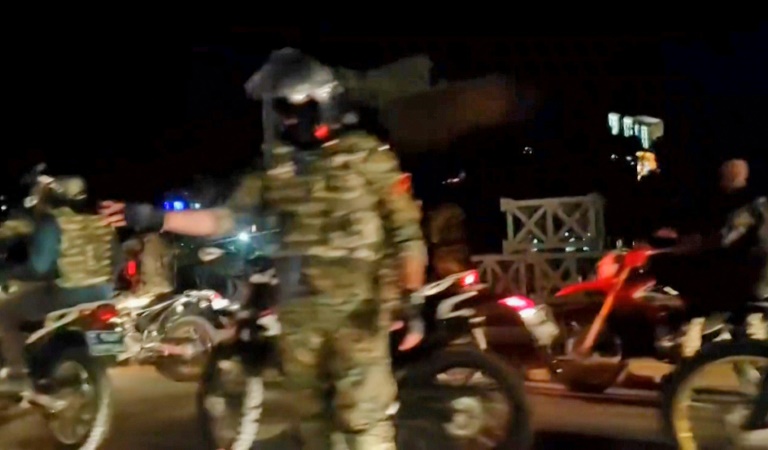
Iranian riot police in black body armour have beaten protesters with truncheons in running street battles, and students have torn down large pictures of the supreme leader and his predecessor Ayatollah Ruhollah Khomeini, in recent video footage published by AFP.

In Iran’s biggest protests in almost three years, security forces have used water cannons but also fired birdshot and live rounds, according to rights groups, while protesters have hurled rocks, torched police cars and set public buildings ablaze.

Authorities say about 450 people have been arrested in northern Mazandaran province, on top of over 700 reported Saturday in neighbouring Gilan, along with dozens in several other regions.

Twenty journalists are among those arrested, according to the Committee to Protect Journalists (CPJ). 

“Rioters have attacked government buildings and damaged public property,” Mazandaran’s chief prosecutor Mohammad Karimi told official news agency IRNA, charging that they were steered by “foreign anti-revolutionary agents”.

Tehran police have been deployed “24 hours a day” and many have not slept, said the Iranian judiciary chief, Gholamhossein Mohseni Ejei, thanking exhausted officers and the capital’s police chief during a visit to their headquarters Sunday, in a video posted by Mizan Online.

Ejei earlier stressed “the need for decisive action without leniency” against the protest instigators.

But a powerful Shiite cleric long aligned with the country’s ultra-conservative establishment urged authorities to take a softer line. 

“The leaders must listen to the demands of the people, resolve their problems and show sensitivity to their rights,” said Grand Ayatollah Hossein Nouri Hamedani on Sunday.

Despite sweeping internet restrictions, including blocks on Instagram and WhatsApp, new videos shared widely on social media showed protests Sunday night in Tehran and cities including Yazd, Isfahan and Bushehr on the Persian Gulf.

Norway-based Kurdish rights group Hengaw said a protest was held in Amini’s hometown of Saqqez “despite a heavy military presence”, and there were reports of a 10-year-old girl being shot and hospitalised in the northern town of Bukan.

Reports said that students at Tehran and Al-Zahra Universities and the Sharif Institute have gone on strike and urged professors to join them.

– Tensions with West –

The EU’s foreign policy chief Josep Borrell on Sunday slammed Iran for its “widespread and disproportionate use of force against nonviolent protestors”. 

He said the EU would “continue to consider all the options at its disposal … to address the killing of Mahsa Amini” and the state response to the protests in Iran, a country already under punishing sanctions over its nuclear programme.

Germany on Monday said it had summoned the Iranian ambassador over the crackdown on the protests.

Tehran, for its part, said Sunday it had summoned Britain’s ambassador to protest what it called an “invitation to riots” by London-based Farsi language media, and Norway’s envoy over the parliamentary speaker’s “unconstructive comments” on the protests.

The United States last week imposed sanctions against the morality police, and Canadian Prime Minister Justin Trudeau said on Monday that his own country would follow suit as part of a sanctions package “on dozens of individuals and entities”.

burs/fz-sjw/dwo/jsa

Close Bitnami banner
Bitnami