World

UK PM Truss under fire as pound sinks

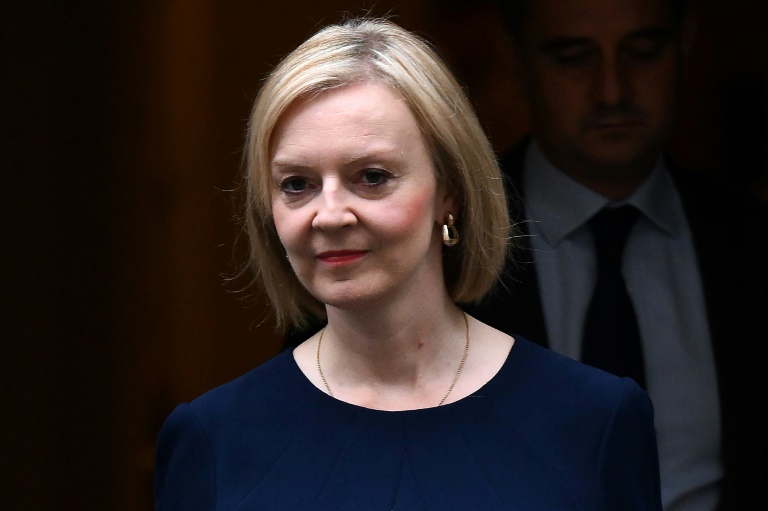
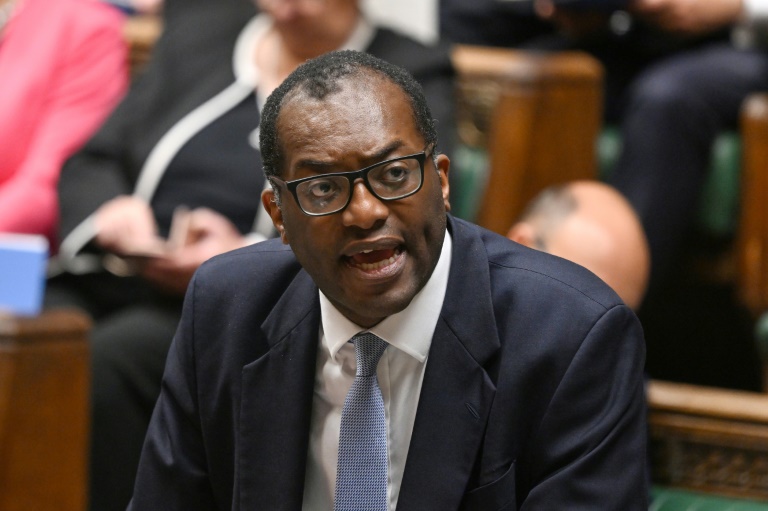
The government of new British Prime Minister Liz Truss on Monday came under pressure after the pound hit a record low against the dollar following last week’s huge tax-cutting budget.

The main opposition Labour party lambasted Truss for the massive spending plans, which some economists warn could further fuel inflation.

Labour’s finance spokeswoman Rachel Reeves described the situation as a “national emergency” and likened Truss and her chancellor of the exchequer Kwasi Kwarteng to “two desperate gamblers in a casino chasing a losing run”.

“The message from financial markets was clear on Friday and this morning that message is even more stark: sterling is down. That means higher prices, as the costs of imports rise,” she said. 

“The cost of government borrowing is up. That means that more taxpayers money will go into paying the interest on our government debt.

“And in turn that means the cost of borrowing for working people will now go up to with higher mortgage repayments,” she told Labour’s annual conference in Liverpool, northwest England.

Britain has been facing a cost-of-living crisis with soaring energy prices coupled with inflation and wage stagnation.

– Pound sinks –

Kwarteng was appointed finance minister by Truss earlier this month after she took office following a leadership battle to replace Boris Johnson as head of the ruling Conservative party.

On Friday Kwarteng unveiled a multi-billion-pound package to support households and businesses.

He also slashed taxes, bringing forward a plan to cut the lowest rate of income tax and reducing the highest to 40 percent from 45 percent to kickstart the economy.

But investors were spooked by the huge amount of borrowing likely needed for the package, which critics said would benefit the rich far more than the poorest hit by the cost-of-living crisis.

The cost of the energy support measures alone have been calculated at £60 billion ($65 billion) for only six months.

But economists estimate the whole tax package at between £100-200 billion.

The pound on Monday struck an all-time low at $1.0350 before regaining some ground to stand at $1.0728 around 1115 GMT.

The pound had already suffered a series of 37-year lows against the greenback this month on UK recession fears propelled by high inflation.

– ‘Back to 1970s’ –

Economist Nouriel Roubini, known for his pessimistic predictions and having anticipated the subprime crisis, said on Twitter he believed Britain was headed “back to the 1970s”.

“Stagflation and eventually the need to go and beg for an IMF (International Monetary Fund) bailout…. Truss and her cabinet are clueless,” he said.

The Bank of England (BoE), which on Thursday raised its rate by 0.50 percentage points to 2.25 percent, may need to meet urgently to raise the rate again.

The markets now believe that the rate could rise two percentage points by November, when its next meeting is scheduled.

Without intervention this week, the pound could well fall below parity to the dollar soon, warned Lee Hardman, analyst at MUFG, Japan’s largest bank.

The tension between the Bank of England and the Treasury was now “palpable”, added Susannah Streeter, analyst at Hargreaves Lansdown, with members of the Central Bank wanting to limit inflation by weakening demand and political leaders who want to boost it.

Sky News, citing unnamed sources, said the Bank of England was due to issue a statement.

While inflation reached 9.9 percent in the UK — the highest in the G7 — the central bank also estimated that the country had entered recession during the third quarter.

The pound is not the only currency in difficulty against the dollar: since the beginning of the year, the yen has lost 20 percent, while the euro has fallen by 15 percent. 

During the pound’s previous historic low, in 1985, several large countries, including the United States, had signed the Plaza agreement, which aimed to voluntarily depreciate the greenback.

“Are we getting closer to a ‘Plaza moment’?” said John Velis, analyst at BNY Mellon.

“The USD real exchange rate is currently as high as it was at that time, but the spirit of cooperation doesn’t yet seem to be present among the major economies in the world now,” he said.
UK PM Truss under fire as pound sinks

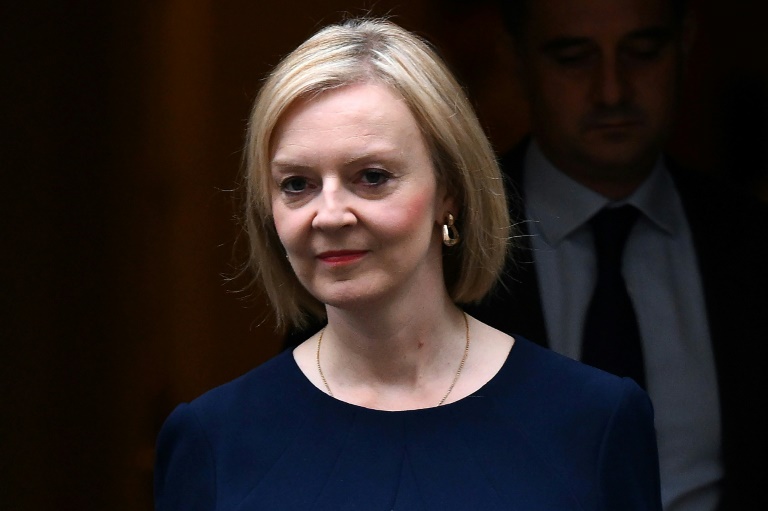
The government of new British Prime Minister Liz Truss on Monday came under pressure after the pound hit a record low against the dollar following last week’s huge tax-cutting budget.

The main opposition Labour party lambasted Truss for the massive spending plans, which some economists warn could further fuel inflation.

Labour’s finance spokeswoman Rachel Reeves described the situation as a “national emergency” and likened Truss and her chancellor of the exchequer Kwasi Kwarteng to “two desperate gamblers in a casino chasing a losing run”.

“The message from financial markets was clear on Friday and this morning that message is even more stark: sterling is down. That means higher prices, as the costs of imports rise,” she said. 

“The cost of government borrowing is up. That means that more taxpayers money will go into paying the interest on our government debt.

“And in turn that means the cost of borrowing for working people will now go up to with higher mortgage repayments,” she told Labour’s annual conference in Liverpool, northwest England.

Britain has been facing a cost-of-living crisis with soaring energy prices coupled with inflation and wage stagnation.

– Pound sinks –

Kwarteng was appointed finance minister by Truss earlier this month after she took office following a leadership battle to replace Boris Johnson as head of the ruling Conservative party.

On Friday Kwarteng unveiled a multi-billion-pound package to support households and businesses.

He also slashed taxes, bringing forward a plan to cut the lowest rate of income tax and reducing the highest to 40 percent from 45 percent to kickstart the economy.

But investors were spooked by the huge amount of borrowing likely needed for the package, which critics said would benefit the rich far more than the poorest hit by the cost-of-living crisis.

The cost of the energy support measures alone have been calculated at £60 billion ($65 billion) for only six months.

But economists estimate the whole tax package at between £100-200 billion.

The pound on Monday struck an all-time low at $1.0350 before regaining some ground to stand at $1.0728 around 1115 GMT.

The pound had already suffered a series of 37-year lows against the greenback this month on UK recession fears propelled by high inflation.

– ‘Back to 1970s’ –

Economist Nouriel Roubini, known for his pessimistic predictions and having anticipated the subprime crisis, said on Twitter he believed Britain was headed “back to the 1970s”.

“Stagflation and eventually the need to go and beg for an IMF (International Monetary Fund) bailout…. Truss and her cabinet are clueless,” he said.

The Bank of England (BoE), which on Thursday raised its rate by 0.50 percentage points to 2.25 percent, may need to meet urgently to raise the rate again.

The markets now believe that the rate could rise two percentage points by November, when its next meeting is scheduled.

Without intervention this week, the pound could well fall below parity to the dollar soon, warned Lee Hardman, analyst at MUFG, Japan’s largest bank.

The tension between the Bank of England and the Treasury was now “palpable”, added Susannah Streeter, analyst at Hargreaves Lansdown, with members of the Central Bank wanting to limit inflation by weakening demand and political leaders who want to boost it.

Sky News, citing unnamed sources, said the Bank of England was due to issue a statement.

While inflation reached 9.9 percent in the UK — the highest in the G7 — the central bank also estimated that the country had entered recession during the third quarter.

The pound is not the only currency in difficulty against the dollar: since the beginning of the year, the yen has lost 20 percent, while the euro has fallen by 15 percent. 

During the pound’s previous historic low, in 1985, several large countries, including the United States, had signed the Plaza agreement, which aimed to voluntarily depreciate the greenback.

“Are we getting closer to a ‘Plaza moment’?” said John Velis, analyst at BNY Mellon.

“The USD real exchange rate is currently as high as it was at that time, but the spirit of cooperation doesn’t yet seem to be present among the major economies in the world now,” he said.
Stocks volatile, pound hits record low

Markets seesawed and the British pound took a beating Monday as recession fears brought volatility to the markets.

Having extended losses in morning trading, Frankfurt and Paris edged higher by mid afternoon.

London shares remained lower, however, after the pound hit a record low against the dollar on surging fears about the ailing UK economy, before recovering.

Further clouding the horizon, the OECD warned the world economy would take a bigger hit than previously forecast next year due to the effects of Russia’s war in Ukraine.

“Volatility reigns supreme in a jittery market environment,” analyst Patrick O’Hare at Briefing.com said.

Wall Street stocks also fell shortly after trading opened, amid the upheaval in the foreign exchange market.

The pound on Monday struck an all-time low at $1.0350, days after new UK finance minister Kwasi Kwarteng’s inflation-fighting budget.

Economists expressed concerns that last week’s huge tax-cutting budget from the government of new Prime Minister Liz Truss — aimed at helping the recession-threatened economy — could actually spark massive borrowing and further fuel inflation.

“The market’s reactions show that investors have lost confidence in the government’s approach, creating a level of volatility that puts the pound on par with some emerging market peers,” said Fiona Cincotta, a senior analyst at City Index.

“Attention is now turning to the BoE (Bank of England) to step in to support the pound.”

Sterling has struggled in recent years as the UK fails to strike major trade deals following its exit from the European Union.

Prior to Monday’s crash, the pound suffered a series of 37-year lows against the greenback this month on UK recession fears propelled by sky-high inflation.

The euro has additionally come under heavy selling pressure against the dollar in recent months, as the Federal Reserve hikes interest rates more aggressively than the European Central Bank.

The euro struck a new 20-year low at $0.9554 on Monday before recovering.

A day after Eurosceptic populists swept to victory in Italy’s general election, the interest rates on 10-year government bonds hit their highest level for around a decade in France, Germany and Italy.

But the Italian stock market climbed as markets assessed the future political landscape.

“Time will tell how successful the new government will prove to be but the prospect of some political stability appears to be generating a small relief rally today,” said Craig Erlam, analyst at trading platform OANDA.

Elsewhere, the Moscow stock exchange plunged by 10 percent to its lowest point since Russia began its Ukraine offensive seven months ago as tensions grew across the country over partial military mobilisation.

– Key figures at around 1340 GMT –

Pound/dollar: UP at $1.0861 from $1.0852 on Friday

Euro/dollar: DOWN at $0.9663 from $0.9695

Euro/pound: DOWN at 0.8895 pence from 89.28 pence 

Dollar/yen: UP at 144.05 yen from 143.31 yen

London – FTSE 100: DOWN 0.4 percent at 6,991.89 points

Frankfurt – DAX: UP 0.4 percent at 12,336.04 

Paris – CAC 40: UP 0.3 percent at 5,800.28

EURO STOXX 50: UP 0.5 percent at 3,364.39 

New York – Dow: DOWN 0.3 percent at 29,496.06 

Tokyo – Nikkei 225: DOWN 2.7 percent at 26,431.55 (close)

Hong Kong – Hang Seng Index: DOWN 0.4 percent at 17,855.14 (close)

Shanghai – Composite: DOWN 1.2 percent at 3,051.23 (close)

West Texas Intermediate: UP 1.1 percent at $79.57 per barrel

Brent North Sea crude: UP 0.8 percent at $86.80 per barrel

burs-bcp/

Ukraine probes suspected mass burial on Russia border

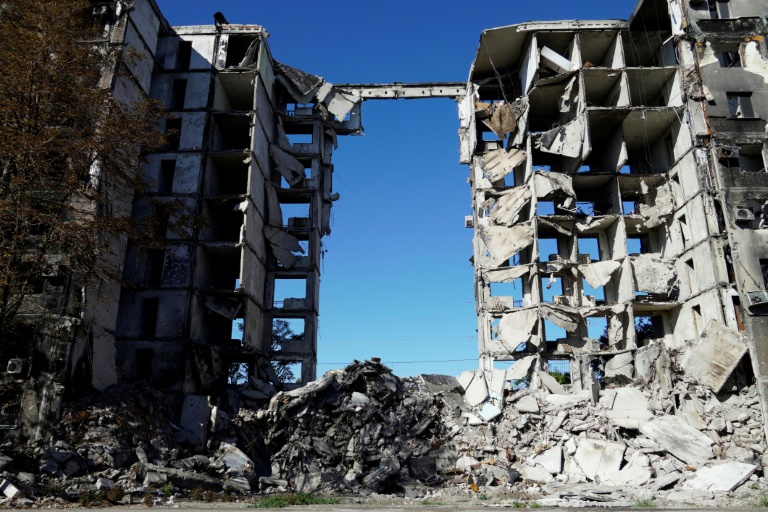
Ukraine’s latest suspected mass burial site is in a shell-damaged and abandoned industrial chicken farm, on a hill near the Russian border strewn with the debris of battle.

It is not known how many bodies lie there — troops and officials speak of 90 to 100 without saying how they know — but the signs of recent violence lie in rubble all around. 

Parts of the turret of a destroyed tank have been tossed in the air and crashed through the shrapnel-shredded roof of a hangar-like shed, crushing empty poultry cages below.

A cold wind blows through the dust from shattered cement bricks and the handful of Ukrainian troops on guard wince occasionally when one of their own tanks lobs a shell towards Russia. 

De-mining teams have not yet arrived at the site outside Kozacha Lopan, around two kilometres (just over a mile) from the border, and the potential mass grave has yet to be disturbed.

“I was told by the soldiers who came to our village that they saw a burial place of soldiers, but they didn’t specify the number,” said Lyudmyla Vakulenko, head of the Kozacha Lopan local administration.

“They said a specialised unit would look into it,” she added.

The forensic teams are expected later this week, once the area is deemed safe for work. On Monday, soldiers moved gingerly, avoiding unpaved areas, wary of mines and unexploded shells.

– Unexploded shells –

But reports of the potential mass burial will confirm the worst fears of Ukrainians, still shocked by the discovery of a makeshift forest cemetery further south in recaptured Izyum.

There, Ukrainian investigation teams found what they said were 447 bodies buried during the Russian occupation of the area: 425 civilians, including five children, and 22 Ukrainian servicemen.

The Kharkiv regional governor, Oleg Synegubov, said that most of the Izyum bodies showed signs of a violent death and that 30 of the victims appeared to have been tortured beforehand.

On Sunday, President Volodymyr Zelensky told CBS News that Ukraine had found “two more mass graves, big graves with hundreds of people”, but it was not clear if he was referring to Kozacha Lopan.

It is not yet known whose bodies lie in the chicken plant. Soldiers guarding the complex told AFP they expected to find the corpses of both Russian and Ukrainian troops and local civilians.

But Vakulenko says the officer who told her of the find said the military thinks it is a grave for soldiers, and that she has received another clue as to the soldiers’ potential identity.

On April 22, she says, a Ukrainian force from the 72nd Mechanised Brigade counterattacked Russian forces dug in near the chicken plant, but were beaten back with heavy casualties.

The area was finally liberated by Ukrainian forces this month, and over the weekend Vakulenko — who runs the civil administration in the border area north of the city of Kharkiv — got a call.

“Yes, there was a phone call on the community hotline from a woman named Olena. I don’t know if she’s a relative or a friend, just ‘Olena’,” Vakulenko told AFP.

“She left her phone number said that some of her relatives or friends were killed on April 22 near the village of Kozacha Lopan.

“She asked, ‘Can I get some official information?’ And we answered: ‘So far, no. Until the exhumation is carried out. Until this unit does its work and tells us what happened’.”

– Under-floor bunker –

Whoever is buried under the chicken plant, it seems clear who was there when the burials took place. The hangars and outhouses are full of the signs of Russian occupation.

Deep trenches have been dug under the floors of some of the sheds, each the size of the tank that would have squatted there under the cover of the cavernous, metal-roofed poultry barns.

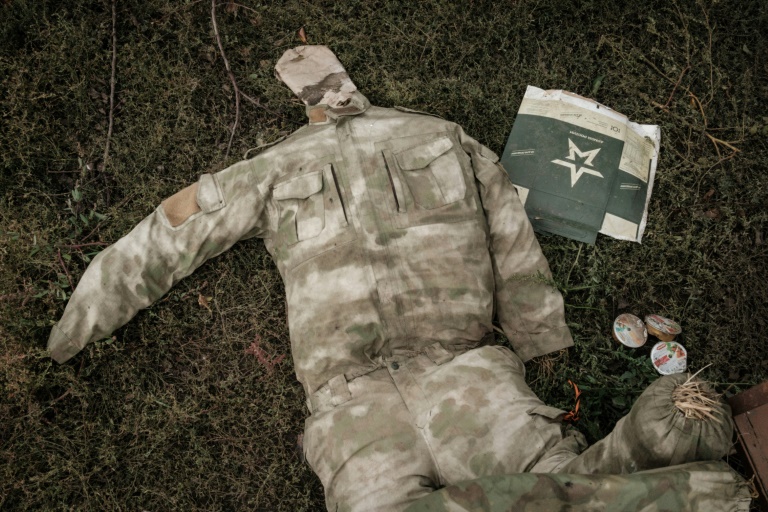
A Russian tank crewman’s leather helmet hung on a fence post, and a Russian-issue military jacket lay in the mud.

Ukrainian forces said the unit based there was recruited from Abkhazia, a breakaway region of Georgia under Russian occupation.

In the farm’s mechanical workshop, a bunker has been dug under the concrete floor, and the former residents have built a makeshift gym with a concrete barbell and a punching bag made of car tyres.

A shell hole has ripped through one corner of the roof, allowing a shaft of sunlight into the gloom.    

Apple to make iPhone 14 in India in shift away from China

Apple will manufacture its new flagship smartphone in India, the US tech giant said Monday, as it seeks to diversify production away from a dependence on China.

The iPhone supply chain is based mainly in China but the country’s zero-Covid policies and tensions with the United States have hurt production, analysts say.

“We’re excited to be manufacturing iPhone 14 in India,” Apple said in a brief statement.

The California-based firm already makes older iPhone models in India via Taiwanese manufacturers such as Foxconn, which has a factory in the southern state of Tamil Nadu.

The latest announcement comes just weeks after Apple launched new smartphones. The tech behemoth is commencing production of the iPhone 14 in India much earlier than it did for previous models, Canalys analyst Sanyam Chaurasia said.

“Over the last couple of years, it has been increasingly diversifying its supply chain to India,” Chaurasia told AFP.

About 7.5 million iPhones — around three percent of Apple’s global production — were made in India last year, the analyst added.

“We expect that the local production of iPhones could reach more than 11 million this year,” he said.

Apple’s announcement will be a boost to Prime Minister Narendra Modi’s “Make in India” strategy under which he has urged foreign businesses to manufacture goods in the South Asian nation.

Apple to make iPhone 14 in India in shift away from China

Apple will manufacture its new flagship smartphone in India, the US tech giant said Monday, as it seeks to diversify production away from a dependence on China.

The iPhone supply chain is based mainly in China but the country’s zero-Covid policies and tensions with the United States have hurt production, analysts say.

“We’re excited to be manufacturing iPhone 14 in India,” Apple said in a brief statement.

The California-based firm already makes older iPhone models in India via Taiwanese manufacturers such as Foxconn, which has a factory in the southern state of Tamil Nadu.

The latest announcement comes just weeks after Apple launched new smartphones. The tech behemoth is commencing production of the iPhone 14 in India much earlier than it did for previous models, Canalys analyst Sanyam Chaurasia said.

“Over the last couple of years, it has been increasingly diversifying its supply chain to India,” Chaurasia told AFP.

About 7.5 million iPhones — around three percent of Apple’s global production — were made in India last year, the analyst added.

“We expect that the local production of iPhones could reach more than 11 million this year,” he said.

Apple’s announcement will be a boost to Prime Minister Narendra Modi’s “Make in India” strategy under which he has urged foreign businesses to manufacture goods in the South Asian nation.

Russia school shooting kills 15, including children

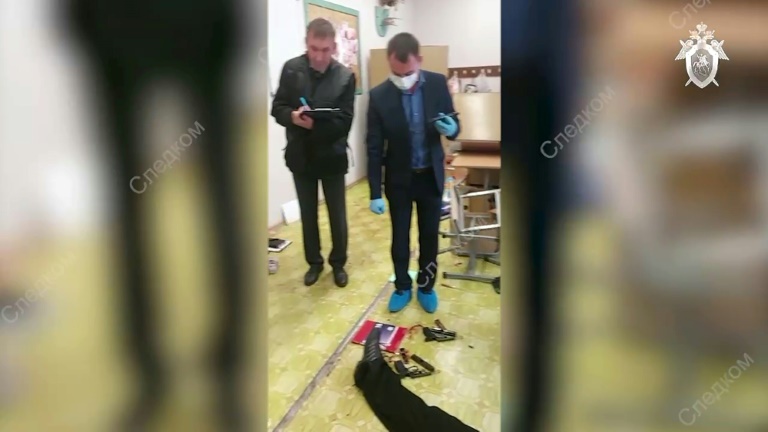
The death toll has risen to 15 people, including 11 children, after a man opened fire Monday at his former school in central Russia, authorities said.

The attack was the latest in a series of school shootings that have shaken Russia in recent years and came with the country on edge over efforts to mobilise tens of thousands of men to fight in Ukraine.

Russian President Vladimir Putin denounced the “inhuman terrorist attack” in the city of Izhevsk, the Kremlin said, adding that the shooter “apparently belongs to a neo-fascist group”. 

According to investigators, the attacker “was wearing a black top with Nazi symbols and a balaclava” when his body was discovered.

He was later identified as a local man born in 1988, who graduated from the school.

Investigators have said two security guards and two teachers were among the victims, while the attacker “committed suicide”. 

Authorities previously announced a death toll of seven children and six adults but did not specify if that included the suspected shooter.

Investigators said they were searching his home and probing his “adherence to neo-fascist views and Nazi ideology”. 

The region’s governor Alexander Brechalov confirmed there were “casualties and wounded among children”, speaking in a video statement outside school No88 in Izhevsk. 

Rescue and medical workers could be seen in the background, some running inside the school with stretchers.

Brechalov declared a period of mourning in the region to last until Thursday. 

A city of around 630,000 people, Izhevsk is the regional capital of Russia’s Udmurt Republic, located around 1,000 kilometres (620 miles) east of Moscow.  

The attack came just hours after a man had opened fire and severely wounded a recruitment officer at an enlistment centre in Siberia.

Russia’s last major school shooting was in April, when a man opened fire in a kindergarten in the central Ulyanovsk region, leaving a teacher and two children dead.

The shooter, described as “mentally ill”, was later found dead, with officials saying he had shot himself.

– Tightening gun laws –

Mass shootings at schools and universities in Russia were rare until 2021, when the country was rocked by two separate killing sprees in the central Russian cities of Kazan and Perm that spurred lawmakers to tighten laws regulating access to guns.

In September 2021, a student dressed in black tactical clothing and helmet armed with a hunting rifle swept through Perm State University buildings killing six people, mostly women, and injuring two dozen others.

The gunman resisted arrest and was shot by law enforcement as he was apprehended and moved to a medical facility for treatment.

It was the second such attack that year, after a 19-year-old former student shot dead nine people at his old school in the Kazan in May.

Investigators said that the gunman suffered from a mental impairment, but was deemed fit to receive a licence for the semi-automatic shotgun that he used.

On the day of that attack Putin called for a review of gun control laws and the age to acquire hunting rifles was increased from 18 to 21 and medical checks were strengthened.

Authorities have blamed foreign influence for previous school shootings, saying young Russians have been exposed online and through television to similar attacks in the United States and elsewhere.

Other high-profile shooting cases have taken place in Russia’s army, putting the issue of hazing in the spotlight in the country where military service is compulsory for men aged between 18 and 27. 

In November 2020, a 20-year-old soldier killed three fellow servicemen at a military base near the city of Voronezh. In a similar attack in 2019, a young recruit shot dead eight servicemen, saying he faced bullying and harassment in the army.

Cuban voters back liberalized family code

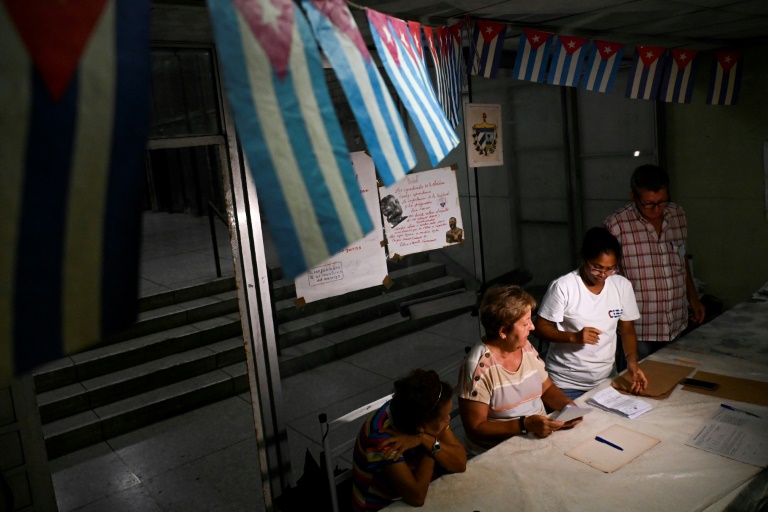
Cubans voted to legalize same-sex marriage and adoption as well as surrogate pregnancies in a referendum over the weekend, the communist country’s electoral officials said Monday.

Preliminary results indicate an “irreversible trend,” with 66 percent of votes counted so far in favor of the government-backed change, electoral council president Alina Balseiro said on state television. 

“The Family Code has been ratified by the people,” she said. 

The updated code represents a major shift in a country where machismo is strong and where the authorities sent LGBTQ people to militarized labor camps in the 1960s and 1970s.

Official attitudes have since evolved, and the government conducted an intense media campaign in favor of the overhaul, which will replace the country’s 1975 Family Code.

The new code permits surrogate pregnancies, as long as no money changes hands, while boosting the rights of children, the elderly and the disabled.

It defines marriage as the union between two people, rather than that of a man and a woman.

According to the National Electoral Council, about 68 percent of Cuba’s 8.4 million eligible voters had cast a ballot by 5:00 pm (2100 GMT) Sunday night. 

The law required 50 percent voter approval to be adopted.

The referendum came amid the country’s worst economic crisis in 30 years and some predicted the vote could provide an opportunity to voice opposition to the government, with dissidents calling on citizens to reject the code or to abstain.

World economy to slow, 'paying the price of war': OECD

The world economy will take a bigger hit than previously forecast next year due to the effects of Russia’s war in Ukraine, the OECD said Monday.

In a bleak report titled “paying the price of war”, the Paris-based organisation noted that the conflict aggravated inflationary pressure when the cost of living was already rising quickly.

“The world is paying a very heavy price for Russia’s aggression against Ukraine,” OECD Secretary-General Mathias Cormann said in a news conference.

“Households and firms are suffering as costs rise and purchasing power is taking a hit,” Cormann said.

Covid outbreaks are still having an impact on the global economy while growth has also been affected by rising interest rates as central banks scramble to cool red-hot prices, the OECD said.

“A number of indicators have taken a turn for the worse, and the global growth outlook has darkened,” the Organisation for Economic Co-operation and Development said in the report.

Global growth stalled in the second quarter of this year and data in many economies “now point to an extended period of subdued growth”, the OECD said.

The organisation slashed its 2023 growth forecast for the global economy to 2.2 percent, down from 2.8 percent in its previous estimate in June.

“The central scenario is not a global recession, but risks have increased in the past few months,” said the OECD’s interim chief economist Alvaro Pereira.

To highlight the impact of Russia’s invasion of Ukraine, the OECD said global output in 2023 is now projected to be $2.8 trillion lower than previously estimated before the conflict in December 2021.

“This is the size of the French economy,” Pereira said.

– German recession –

The outlook for nearly all nations in the Group of 20 top economies was cut, except for Turkey, Indonesia and Britain, though the latter is forecast to have zero growth.

Growth in the United States — the world’s biggest economy — is forecast to slow to 0.5 percent in 2023.

The growth forecast for China, whose economy has been hit by strict Covid lockdowns, was cut sharply for this year to 3.2 percent while it was slightly lower to 4.7 percent for 2023.

Germany is now expected to go into recession next year with Europe’s biggest economy now seen shrinking by 0.7 percent — a 2.4-percentage-point drop from the previous forecast.

The country’s economy has been hit the hardest in Europe as it has relied heavily on Russian supplies of natural gas, which Moscow has cut significantly in suspected retaliation to Western sanctions.

The eurozone as a whole will post meagre growth of 0.3 percent, a sharp downgrade from 1.6 percent.

The OECD kept its 2022 global growth forecast unchanged at three percent after previously lowering it.

– ‘Significant uncertainty’ –

The war has sent energy and food prices soaring over concerns about supply as Russia is a major oil and gas producer while Ukraine is a key exporter of grains to countries across the world.

Inflation had already been on the rise before the conflict due to bottlenecks in the global supply chain after countries emerged from Covid lockdowns.

“Inflationary pressures have become increasingly broad-based, with higher energy, transportation and other costs being passed through into prices,” the OECD said.

The OECD raised its inflation forecast for the G20 to 8.2 percent for 2022 and 6.6 percent for next year.

Governments have announced emergency measures to help households and businesses cope with the soaring cost of living.

But the measures “have been poorly targeted”, the OECD said.

Central banks, meanwhile, have ramped up interest rates, a move necessary to tame inflation but that can also push economies into recession.

The monetary tightening is a “key factor slowing global growth”, the OECD said.

The organisation warned that “significant uncertainty surrounds the projections” for the global economy.

More severe fuel shortages could shave off a further 1.25-percentage-points from Europe’s economy in 2023 and a half-point for global growth.

Pro-Kremlin businessman confirms he founded Wagner mercenary group

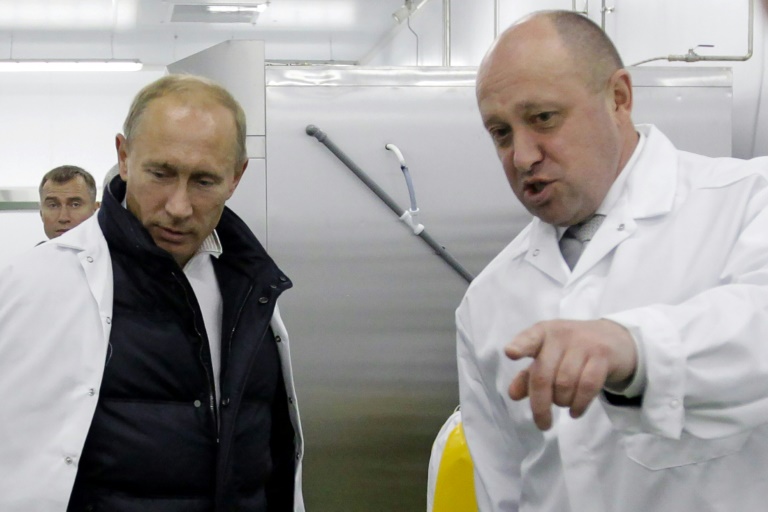
Russian businessman Yevgeny Prigozhin, an ally of President Vladimir Putin, said on Monday he had founded the Wagner mercenary group and confirmed its deployment to countries in Latin America and Africa.

Prigozhin said in a statement from his company, Concord, that he founded the group to send fighters to Ukraine’s Donbas region in 2014.

“From that moment, on May 1, 2014, a group of patriots was born, which later acquired the name BTG Wagner,” he said. 

Prigozhin, dubbed “Putin’s chef” because of his Kremlin catering contracts, has previously denied links with Wagner. 

“I myself cleaned the old weapons, figured out bulletproof vests and found specialists who could help me with this,” Prigozhin added.

“These guys — heroes who defended the Syrian people, other people of Arab countries, destitute Africans and Latin Americans — have become the pillars of our motherland,” he said.

Prigozhin, 61, has been hit with EU and US sanctions, accused of being behind a “troll factory” that attempted to interfere in the 2016 US presidential election.

For years, the Wagner group has been suspected of playing a role in realising Moscow’s overseas ambitions, with the Kremlin denying any links.

Its presence has been reported in conflict zones including Syria, Libya, Mali, Ukraine and the Central African Republic, where it has been accused of abuses and capturing state power.

Critics say it is Putin’s “shadow army”, promoting Russian interests by providing fighters, military instructors and advisers.

Wagner’s presence was forced into the spotlight in 2018 when independent newspaper Novaya Gazeta reported that several Russian-speaking men who killed and mutilated a detainee on video in Syria were Wagner fighters.

Earlier this month, a video was shared on social media seeming to show Prigozhin recruiting inmates of a Russian prison to bolster Wagner’s ranks in Ukraine.

The Russian army has faced difficulties in its seven-month-old military intervention, with Putin last week ordering a partial mobilisation of reservists to regain momentum after Kyiv’s forces retook swathes of Moscow-controlled territory in a counter-offensive.

Russian media have reported that Prigozhin controls Wagner’s finances, whereas its operations are managed by Dmitry Utkin, a shadowy figure who allegedly served in Russia’s military intelligence.

Utkin was received at the Kremlin in 2016 for a ceremony paying tribute to “heroes” who served in Syria and has been photographed with Putin.

Close Bitnami banner
Bitnami