World

US gives a new $457 mln for Ukraine law enforcement

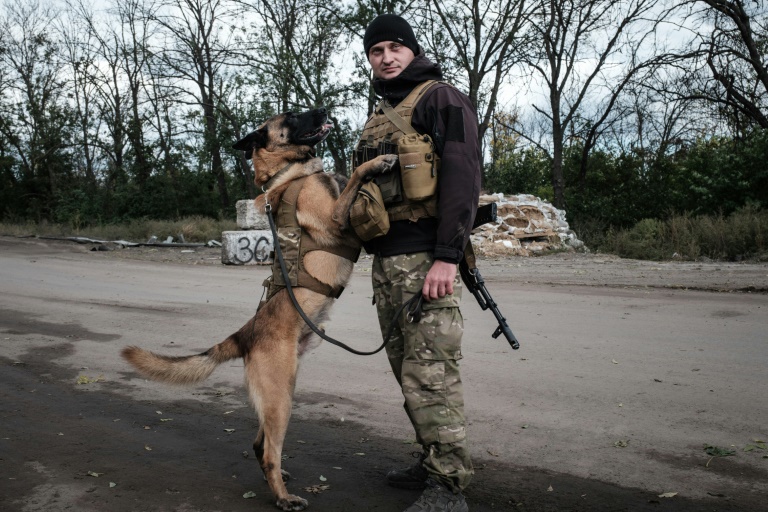
The United States on Monday announced another $457.5 million for Ukrainian law enforcement, its latest funding to Kyiv in addition to billions for the military as it fights Russian invaders.

The latest assistance will support the national police and border guards and also support efforts to probe alleged atrocities by Russian troops as they withdraw.

“Our provision of personal protective equipment, medical supplies and armored vehicles has significantly reduced casualties for Ukrainian civilians and their defenders,” Secretary of State Antony Blinken said in a statement.

“The United States stands side-by-side with the Ukrainian people and remains committed to supporting a democratic, independent and sovereign Ukraine.”

The United States has committed in total more than $645 million to Ukrainian law enforcement since mid-December, according to the State Department.

The funding for prosecution of atrocities comes after Ukraine uncovered a mass burial site in the town of Izyum after repelling Russian troops. The bodies of 447 people, mostly civilians, were uncovered, some showing signs of torture.

President Voldoymyr Zelensky has spoken of two more mass graves and in an address to the UN General Assembly last week demanded “punishment” for Russia.

French borrowing to hit record as 2023 budget unveiled

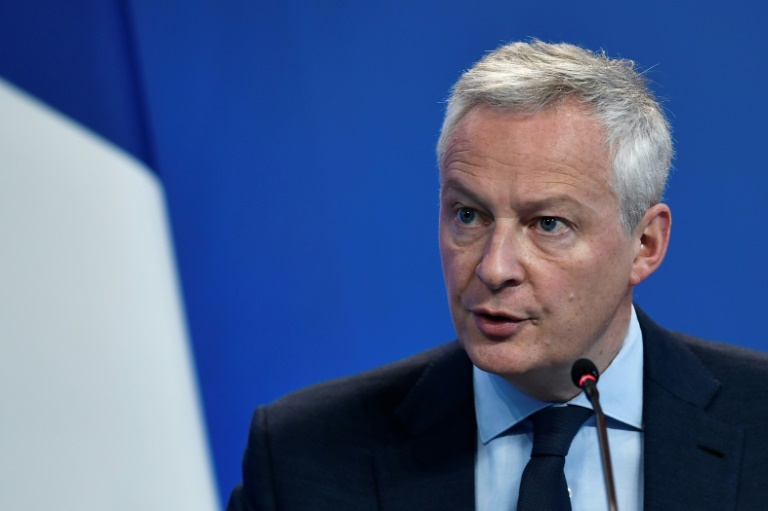
The French government will borrow a record 270 billion euros ($260 billion) next year to finance a budget that includes caps on energy prices that are expected to soar over the winter, officials said Monday.

“This is not a restrictive budget, nor an easy one — it’s a responsible and protective budget at a time of great uncertainties,” Finance Minister Bruno Le Maire said at a press conference.

Electricity and gas prices have jumped since Russia’s invasion of Ukraine, and officials are urging energy “sobriety” to help avoid any shortages as the conflict drags on.

The government has vowed that, from January, increases of electricity and gas prices will be limited to 15 percent, a measure expected to cost 45 billion euros.

“There’s a large amount of spending because of gas,” Le Maire acknowledged, saying “this can only reinforce our determination to accelerate the climate transition.”

The government has also announced pay increases for teachers, judges and other civil servants as inflation is forecast to reach 4.3 percent next year after 5.4 percent in 2022.

And nearly 11,000 more public employees will be hired, in a stark reversal of President Emmanuel Macron’s 2017 campaign promise to slash 120,000 public-sector jobs.

The government is tabling on growth of one percent, a forecast Le Maire defended as “credible and pro-active” despite an estimate of just 0.5 percent GDP growth by the Bank of France, and 0.6 percent from economists at the OECD.

The public deficit is expected to reach five percent of GDP, as the EU has suspended the rules limiting deficit spending to three percent of GDP because of Russia’s war against Ukraine.

The budget plans are likely to face fierce opposition in parliament, where Macron’s centrist party and its allies lost their majority in elections earlier this year.

Macron also plans to push ahead with a pension reform that would gradually start pushing up the official retirement age from 62 currently, setting up a standoff with unions and left-wing opposition parties.

A nationwide strike against the reform has already been called for Thursday.

UK eyes big TikTok fine over child privacy lapse

Britain on Monday warned it could fine TikTok £27 million ($29 million) over a potential failure to protect children’s privacy on the Chinese-owned video app.

The Information Commissioner’s Office said the social media company “may have processed the data of children under the age of 13 without appropriate parental consent”.

The ICO also found that the short-form video platform may have “failed to provide proper information to its users in a concise, transparent and easily understood way”.

The watchdog has served the group with a notice of intent — which is a legal document that precedes a possible fine — over the possible breach of UK data protection law.

“We all want children to be able to learn and experience the digital world, but with proper data privacy protections,” said Information Commissioner John Edwards.

“Companies providing digital services have a legal duty to put those protections in place, but our provisional view is that TikTok fell short of meeting that requirement.”

In response, TikTok said it disagreed with the ICO’s provisional views and stressed that no final conclusions had been reached.

“While we respect the ICO’s role in safeguarding privacy in the UK, we disagree with the preliminary views expressed and intend to formally respond to the ICO in due course,” TikTok said in a statement.

Iran protests flare for 10th night as tensions grow with West

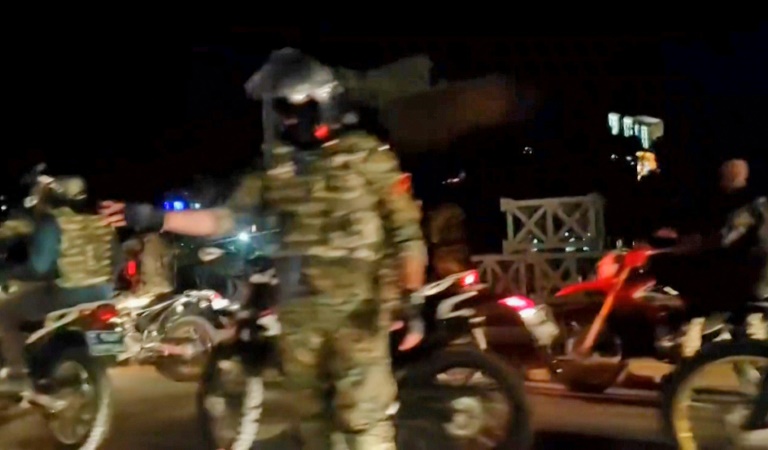
Iran has arrested more than 1,200 protesters, officials said Monday, in its lethal crackdown on 10 nights of unrest driven by outrage over the death of Kurdish woman Mahsa Amini in the custody of the notorious morality police.

At least 41 people have been killed as Iran has heavily deployed security forces against nationwide demonstrations sparked by the death of Amini, 22, following her arrest for allegedly breaching Iran’s strict rules on hijab headscarves and modest clothing.

Tensions grew between the Islamic republic and Western nations as Germany summoned the Iranian ambassador, a day after the European Union protested the “widespread and disproportionate use of force” and Tehran called in the British and Norwegian envoys.

Protests flared again across Iran overnight as a Tehran crowd shouted “death to the dictator”, calling for the end of the more than three-decade rule of supreme leader Ayatollah Ali Khamenei, 83, in footage shared by Oslo-based group Iran Human Rights.

“Woman, Life, Freedom!” the crowds have chanted as female protesters have defiantly burnt their hijabs in bonfires and blazing rubbish dumpsters — a rallying cry that has been echoed at solidarity protests worldwide, including in London and Paris at the weekend.

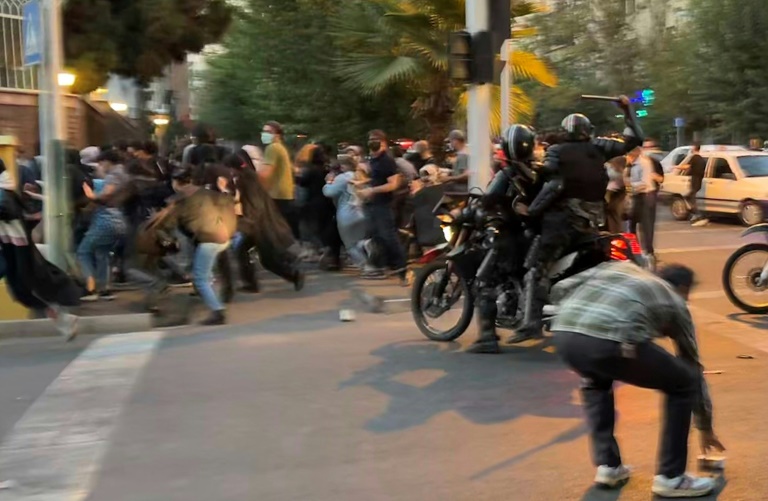
Iranian riot police in black body armour have beaten protesters with truncheons in running street battles, and students have torn down large pictures of the supreme leader and his predecessor Ayatollah Ruhollah Khomenei, in recent video footage published by AFP.

In Iran’s biggest protests in almost three years, security forces have used water canon but also fired birdshot and live rounds, according to rights groups, while protesters have hurled rocks, torched police cars and set public buildings ablaze.

The IHR rights group said Sunday at least 57 protesters have been killed.

The total number of officially reported arrests rose above 1,200, according to state media reports citing various officials, including about 450 in northern Mazandaran province, over 700 reported Saturday in neighbouring Gilan and dozens in several other regions.

– ‘Police on duty 24 hours’ –

“Rioters have attacked government buildings and damaged public property,” Mazandaran’s chief prosecutor, Mohammad Karimi, was quoted as saying by official news agency IRNA, charging that they were steered by “foreign anti-revolutionary agents”.

Tehran police have been deployed “24 hours a day”, said the Iranian judiciary chief, Gholamhossein Mohseni Ejei, thanking exhausted officers and the capital’s police chief during a visit to their headquarters Sunday, in a video posted by Mizan Online.

Many police officers “did not sleep last night and the nights before … and they must be thanked,” said Ejei, who earlier stressed “the need for decisive action without leniency” against the protest instigators. Several security officers have also died, according to Iranian media.

Despite sweeping internet restrictions, including blocks on Instagram and WhatsApp, new videos shared widely on social media showed protests Sunday night in Tehran and cities including Yazd, Isfahan and Bushehr on the Persian Gulf.

Norway-based Kurdish rights group Hengaw said a protest was held in Amini’s home town of Saqqez “despite a heavy military presence”, and there were reports a 10-year-old girl being hospitalised after she was shot in the northern town of Bukan.

The Tasnim news agency published photos of about 20 “riot leaders”, including several women, taken in the holy shrine city of Qom, and said the military and security forces were calling on citizens to “identify them and inform the authorities”.

Other reports said that students at Tehran and Al-Zahra Universities and the Sharif Institute have gone on strike, refusing to attend lessons and urging their professors to join.

– ‘Disproportionate force’ –

The European Union has slammed Iran, charging that “the widespread and disproportionate use of force against nonviolent protestors is unjustifiable and unacceptable”, in a statement by its foreign policy chief Josep Borrell on Sunday.

He said the EU would “continue to consider all the options at its disposal … to address the killing of Mahsa Amini” and the state response to the protests in Iran, a country already under punishing sanctions over its nuclear programme.

Germany on Monday said it had summoned the Iranian ambassador over the crackdown on the protests.

“I can confirm that we have summoned the Iranian ambassador… and the conversation will take place this afternoon,” a foreign ministry spokesman said in Berlin.

Tehran, for its part, said Sunday it had summoned Britain’s ambassador to protest what it called an “invitation to riots” by London-based Farsi language media, and Norway’s envoy over the parliamentary speaker’s “unconstructive comments” on the protests.

US President Joe Biden last week saluted the Iranian protesters, telling the UN General Assembly that “we stand with the brave citizens and the brave women of Iran who right now are demonstrating to secure their basic rights”.

burs/fz-sjw/pjm

Pound hits record low versus dollar, Italy stocks up after vote

The pound hit a record low against the dollar Monday on surging fears about the ailing UK economy.

Stock markets mostly extended losses and oil prices fell further after last week’s routs that were triggered by growing prospects of a global recession.

However, the Italian stock market climbed as markets assessed Italy’s future political landscape after Eurosceptic populists swept to victory in the eurozone member’s general election.

“The pound’s crash is showing markets have a lack of confidence in the UK and that its financial strength is under siege,” said Jessica Amir at Saxo Capital Markets.

“The pound is a whisker away from (dollar) parity and the situation is going to only worsen from here.”

Economists expressed concerns that last week’s huge tax-cutting budget from the government of new Prime Minister Liz Truss — aimed at helping the recession-threatened economy — could actually spark massive borrowing and further fuel inflation.

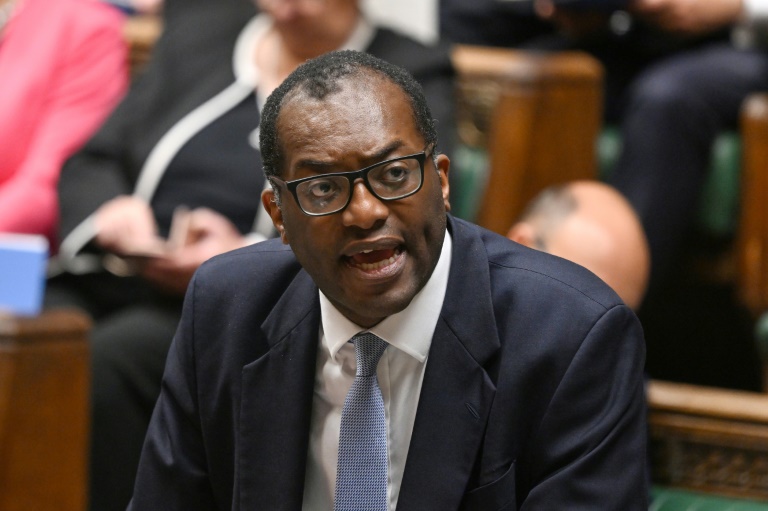
The pound on Monday struck an all-time low at $1.0350, days after new UK finance minister Kwasi Kwarteng’s inflation-fighting budget.

Sterling has struggled in recent years as the UK fails to strike major trade deals following its exit from the European Union.

Prior to Monday’s crash, the pound suffered a series of 37-year lows against the greenback this month on UK recession fears propelled by sky-high inflation.

The euro has additionally come under heavy selling pressure against the dollar in recent months, as the Federal Reserve hikes interest rates more aggressively than the European Central Bank.

– Italian stocks –

In stock market trading Monday, Milan’s FTSE MIB rose 0.5 percent to 21,174.60 points.

However the euro struck a new 20-year low at $0.9554.

“Italy is clearly outperforming following the election result,” noted Craig Erlam, analyst at Oanda trading group. 

“Time will tell how successful the new government will prove to be but the prospect of some political stability appears to be generating a small relief rally today.”

Italy took a sharp turn to the right after Giorgia Meloni’s Eurosceptic populist party swept to victory in a weekend general election, putting a one-time Mussolini admirer on course to become the first woman to lead the country.

Meloni’s Brothers of Italy party, which has neo-fascist roots, won 26 percent in Sunday’s election, according to partial results.

It leads a coalition set to win a majority in parliament.

Elsewhere, the Moscow stock exchange plunged 10 percent to its lowest point since Russia began its Ukraine offensive seven months ago as tensions grew across the country over partial military mobilisation.

The benchmark ruble-denominated Moex index sank 10.2 percent to 1,873.55 points in early afternoon trading, dropping below the 1,900 points mark for the first time since the February invasion of neighbouring Ukraine.

– Key figures at around 1215 GMT –

Pound/dollar: DOWN at $1.0721 from $1.0852 on Friday

Euro/dollar: DOWN at $0.9645 from $0.9695

Euro/pound: UP at 89.93 pence from 89.28 pence 

Dollar/yen: UP at 144.30 yen from 143.31 yen

London – FTSE 100: DOWN 0.7 percent at 6,969.77 points

Frankfurt – DAX: DOWN 0.1 percent at 12,273.63

Paris – CAC 40: DOWN 0.1 percent at 5,777.09

EURO STOXX 50: DOWN 0.1 percent at 3,346.93

Tokyo – Nikkei 225: DOWN 2.7 percent at 26,431.55 (close)

Hong Kong – Hang Seng Index: DOWN 0.4 percent at 17,855.14 (close)

Shanghai – Composite: DOWN 1.2 percent at 3,051.23 (close)

New York – Dow: DOWN 1.6 percent at 29,590.41 (close)

West Texas Intermediate: DOWN 1.0 percent at $77.98 per barrel

Brent North Sea crude: DOWN 1.1 percent at $85.17 per barrel

burs-bcp/rfj/kjm

Russia school shooting leaves 13 dead, including children

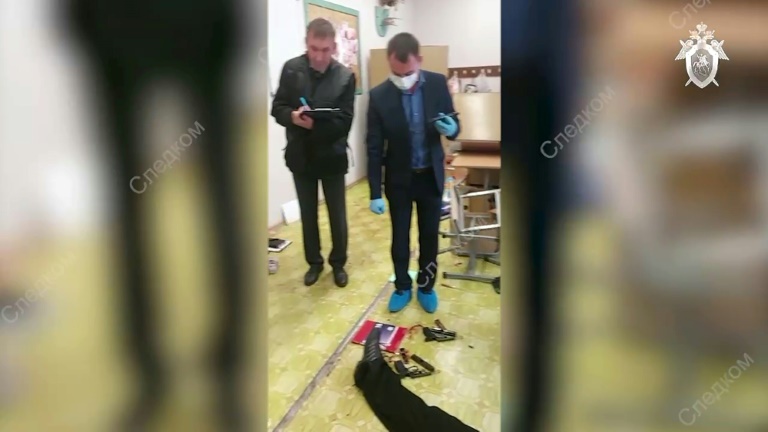
The death toll has risen to 13 people, including seven children, after a man opened fire Monday at his former school in central Russia, authorities said.

The attack was the latest in a series of school shootings that have shaken Russia in recent years and came with the country on edge over efforts to mobilise tens of thousands of men to fight in Ukraine.

Russian President Vladimir Putin denounced the “inhuman terrorist attack” in the city of Izhevsk, the Kremlin said, adding that the shooter “apparently belongs to a neo-fascist group”. 

According to investigators, the attacker “was wearing a black top with Nazi symbols and a balaclava” when his body was discovered.

He was later identified as a local man born in 1988, who graduated from this school.

Investigators have said two security guards and two teachers were among the victims, while the attacker “committed suicide”. 

Authorities previously announced a death toll of nine people but did not specify if that included the suspected shooter.

Investigators said they were conducting a search in his home and looking into his “adherence to neo-fascist views and Nazi ideology”. 

The region’s governor Alexander Brechalov confirmed there were “casualties and wounded among children”, speaking in a video statement outside school No88 in Izhevsk. 

Rescue and medical workers could be seen in the background, some running inside the school with stretchers.

Russia’s health ministry said “14 ambulance teams” were working at the scene to help the injured, news agencies reported.

Brechalov declared a period of mourning in the region to last until Thursday. 

A city of around 630,000 people, Izhevsk is the regional capital of Russia’s Udmurt Republic, located around 1,000 kilometres (620 miles) east of Moscow.  

The attack came just hours after a man had opened fire and severely wounded a recruitment officer at an enlistment centre in Siberia.

Russia’s last major school shooting was in April, when an armed man opened fire in a kindergarten in the central Ulyanovsk region, leaving a teacher and two children dead.

The shooter, described as “mentally ill”, was later found dead, with officials saying he had shot himself.

– Tightening gun laws –

Mass shootings at schools and universities in Russia were rare until 2021, when the country was rocked by two separate killing sprees in the central Russian cities of Kazan and Perm that spurred lawmakers to tighten laws regulating access to guns.

In September 2021, a student dressed in black tactical clothing and helmet armed with a hunting rifle swept through Perm State University buildings killing six people, mostly women, and injuring two dozen others.

The gunman resisted arrest and was shot by law enforcement as he was apprehended and moved to a medical facility for treatment.

It was the second such attack that year, after a 19-year-old former student shot dead nine people at his old school in the Kazan in May.

Investigators said that the gunman suffered from a brain disorder, but was deemed fit to receive a license for the semi-automatic shotgun that he used.

On the day of that attack Putin called for a review of gun control laws and the age to acquire hunting rifles was increased from 18 to 21 and medical checks were strengthened.

Authorities have blamed foreign influence for previous school shootings, saying young Russians have been exposed online and on television to similar attacks in the United States and elsewhere.

Other high-profile shooting cases have taken place in Russia’s army, putting the issue of hazing in the spotlight in the country were military service is compulsory for men aged between 18 and 27. 

In November 2020, a 20-year-old soldier killed three fellow servicemen at a military base near the city of Voronezh. In a similar attack in 2019, a young recruit shot dead eight servicemen, saying he faced bullying and harassment in the army.

Ukrainian geeks turned guerrillas make frontline drones

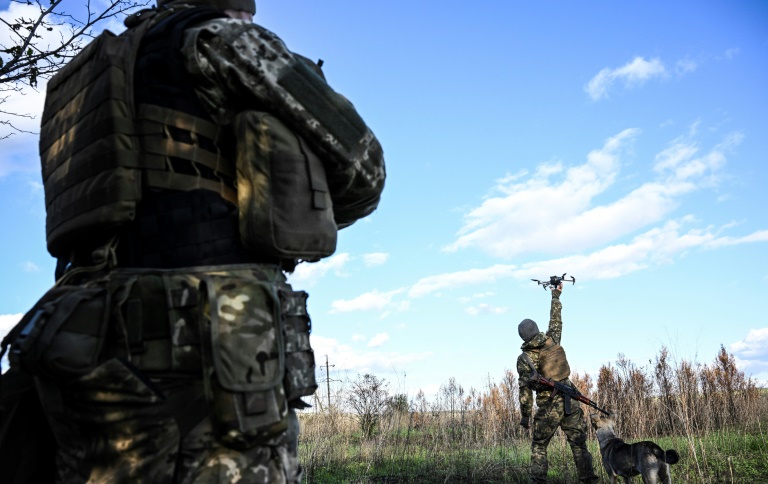
For young Ukrainian geeks, making drones — for reconnaissance or destruction — in a house basement near the Donbas frontline is “new generation” guerrilla warfare.

In dim light, the 20-somethings busily piece together electronic components spread out on tables, with the help of laptops and documents, while artillery fire thuds in the background.

Next the repair room next door -– a laundry room before the war — drones are patched up using spare parts taken from aircraft damaged “in battle” against the Russians.

In the garden shed meanwhile, a 19-year-old, whose nom de guerre is Varnak, transforms grenades designed for grenade launchers into bombs to be dropped from drones.

You just add fins to them and change the detonation system, he tells AFP, smiling.

“I manage explosives here in my section… We work on grenades and create homemade explosive objects”, says the young man, who joined the unit after responding to an announcement on Twitter.

He inscribes personalised messages for the enemy on the miniature bombs, including “Victory — and happy birthday!” and “People who live without freedom have bad taste”.

In the house garage, a platform covered with electronics is mounted on four wheels where the team puts finishing touches to a kamikaze drone able to carry an anti-tank mine, or any other type of explosive. 

A heavy machine gun waits meanwhile in the corner to be transformed into a robotic firing station.

– ‘Volunteers’ –

Aktor (“Actor” in Ukrainian) was a student at the Igor Sikorsky Technical University in Kyiv when Russia launched its invasion in February. Today, he wears a uniform and works on “robotics” to perfect kamikaze drones.

For him, these technologies can make a difference in the conflict in Ukraine “because the current war … is a new generation war”.

“It is no longer people with weapons who wage war but robotic vehicles, with a very high technical level”, says the 22-year-old.

“Why should one soldier shoot another when you have a robot that can deliver a ton of explosives to an ammunition dump?” he asks.

The group’s founder and leader, Zmiy (“Snake” in Ukrainian), is a bearded veteran of the conflict that began in 2014 in the Donbas, eastern Ukraine.

Zmiy, who wears rimmed glasses and a baseball cap decorated with a US flag, says the group comprises about 40 men and women. 

Its core team are veterans like him.

“All the others who build and invent devices joined us via Twitter. They are volunteers,” he tells AFP.

A short distance from their base and less than two kilometres (1.2 miles) from the Russian lines, Mikho the navigator and 11 the pilot prepare a drone for a bomb drop on Russian positions.

Amid constant artillery exchanges, the two men attached a bomb under the drone, a US-made model commercially available for around 3,000 euros ($2,900).

Guided by Mikho, 11 observes the Russian positions on his screen. Then he releases the bomb, which falls vertically and crashes down, exploding in a cloud of smoke.

Immediately, the Russian soldiers’ assault rifles crackle. The Russians try to destroy the device, which hovers about 300 metres (984 feet) above them. But the drone return to the Ukrainian side unscathed.

Iran steps up arrests of activists, journalists

Iran is stepping up arrests of activists and journalists in a crackdown against civil society as anti-regime protests continue to rage nationwide, activists said on Monday.

Eighteen journalists have been imprisoned since the protests erupted earlier this month over the death of Mahsa Amini, 22, who had been arrested by the country’s notorious morality police, according to the Washington-based Committee to Protect Journalists (CPJ).

Numerous activists and lawyers have also been held, including the prominent freedom of speech campaigner Hossein Ronaghi who was arrested over the weekend, reports in Persian-language media abroad said.

The arrests come on top of severe Internet restrictions and blocking of sites including Instagram and WhatsApp, which activists say is aimed at preventing details of the protests filtering out to the outside world.

“By targeting journalists amid a great deal of violence after restricting access to WhatsApp and Instagram, the Iranian authorities are sending a clear message that there must be no coverage of the protests,” Reporters Without Borders (RSF) said in a statement.

Ronaghi, who is bitterly critical of Iran’s Islamic leadership and has contributed to the Washington Post, said in a video posted at the weekend that he had initially eluded arrest by escaping his flat when agents came for him at home.

But security forces detained him on Saturday along with both his lawyers, London-based Iran International said, saying that he had told his family from prison that he had been beaten in detention.

Activists also said two university students in their early 20s who were also beginning careers as writers — Banafsheh Kamali and Maedeh Jamal — had been arrested.

Videos were posted on social media claimed to show the moment when Jamal was arrested with a female voice yelling “Help! Help!”.

Among the 18 journalists held, according to the CPJ, are photojournalist Yalda Moaiery, who won international recognition for an iconic 2019 photo of protests and reporter Nilufar Hamedi who exposed the case of Amini by going to the hospital where she was in a coma.

Meanwhile, the authorities also arrested five prominent members of the Bahai religious minority in different cities across the country, said Diane Alai, representative of the Bahai International Community (BIC) to the UN in Geneva.

The Bahai, Iran’s largest non-Muslim religious minority but not recognised in the Islamic Republic, had already been experiencing a crackdown even before the protests started with senior figures arrested and homes destroyed.

Six people killed in Philippine typhoon

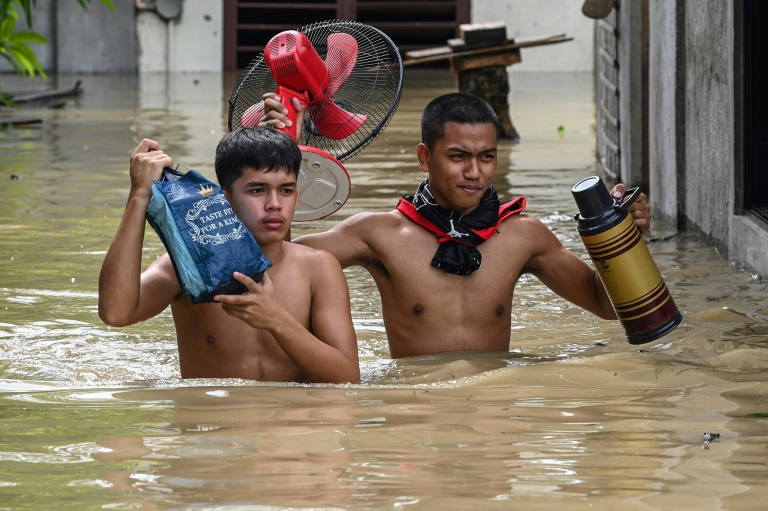
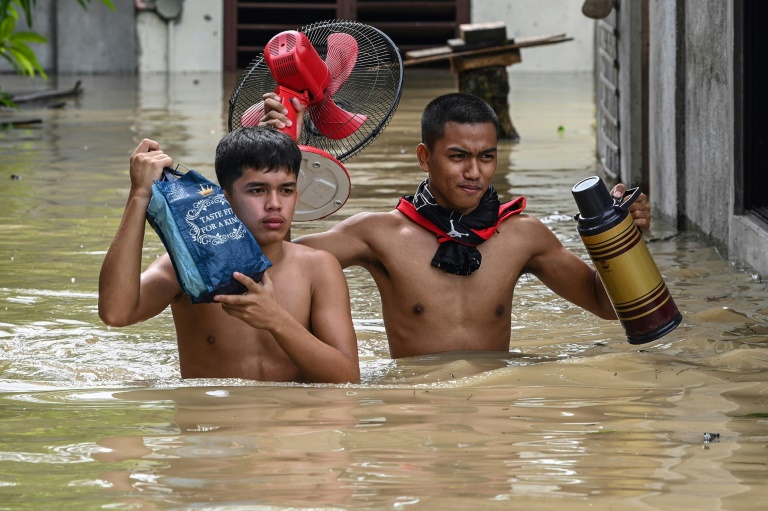
The strongest typhoon to hit the Philippines this year left at least six people dead, authorities said Monday, after heavy rain and fierce winds battered the country’s most populous island.

Typhoon Noru toppled trees, knocked out power and flooded low-lying communities as it swept across Luzon on Sunday and Monday.

There have so far been no reports of widespread severe damage to buildings from the storm, which hit the country as a super typhoon. 

Five people suffered minor injuries and several others are missing, disaster officials said.  

“I think that we may have gotten lucky at least this time, a little bit,” President Ferdinand Marcos Jr told a briefing with disaster agencies.

Five rescuers were killed after they were sent to help flooded residents in San Miguel municipality in Bulacan province, near the capital Manila.

Lieutenant-Colonel Romualdo Andres, chief of police in San Miguel, said the rescuers were wading through floodwaters when a wall collapsed, sending them into the fast current.

“Our house was swept away by the flood, it’s gone,” said Willie Ortega, 59, in San Miguel. “We weren’t able to save anything, even the rice to eat, none.”  

An elderly man died after he was hit by a landslide in Burdeos municipality on the Polillo Islands, part of Quezon province, where the storm made landfall, said Garner Jimenez from the local civil defence office.

The Philippines is regularly ravaged by storms, with scientists warning they are becoming more powerful as the world gets warmer because of climate change.

Noru smashed into the archipelago nation on Sunday after an unprecedented “explosive intensification” in wind speeds, the state weather forecaster said earlier.

It made landfall about 100 kilometres (62 miles) northeast of Manila, before weakening to a typhoon as it crossed a mountain range, coconut plantations and rice fields.

More than 74,000 people were evacuated from their homes before the storm hit, as the meteorology agency warned heavy rain could cause “serious flooding” in vulnerable areas and trigger landslides.

But on Monday, there was no sign of the widespread devastation many had feared, as the storm moved over the South China Sea towards Vietnam.

State weather forecaster Ana Laurel said Noru brought less rain and moved faster compared to other destructive typhoons that have hit the Philippines.

“It all depends on the interplay of the weather systems. Each typhoon has its own characteristics,” Laurel explained.

Aerial footage taken during Marcos’s inspection flight over central Luzon showed rivers that were swollen or had burst their banks, and patches of farmland under water.

Officials estimate about 141 million pesos ($2.4  million) worth of crops were damaged.

National disaster agency spokesperson Rafaelito Alejandro described the storm’s impact as “very minimal”. 

Marcos said preparations for the storm helped. 

“You might think that we overdid it. There is no such thing as overkill when it comes to disasters,” he said.

– ‘The wind was whistling’ – 

The Polillo Islands bore the brunt of Noru with storm surges blamed for flooding coastal communities.

“The wind was whistling and it had heavy rains,” said Ervin Calleja, a 49-year-old teacher in Burdeos municipality.

Ferocious winds ripped off roofs and brought down large trees. Some crops were wiped out.

“Here at the town centre all banana trees were flattened, 100 percent,” said Liezel Calusin, a member of the civil defence team in Polillo municipality. 

“We still have no electricity, but the phones are working.”

In Banaba village near Manila, Terrence Reyes fled his riverside home with his family and neighbours as floodwaters rose during the storm. 

They returned home Monday to find their belongings sodden and caked in mud.

“We just have to throw them away and start over again,” Reyes, 25, said. 

The Philippines — ranked among the most vulnerable nations to the impacts of climate change — is hit by an average of 20 storms every year.

Six people killed in Philippine typhoon

The strongest typhoon to hit the Philippines this year left at least six people dead, authorities said Monday, after heavy rain and fierce winds battered the country’s most populous island.

Typhoon Noru toppled trees, knocked out power and flooded low-lying communities as it swept across Luzon on Sunday and Monday.

There have so far been no reports of widespread severe damage to buildings from the storm, which hit the country as a super typhoon. 

Five people suffered minor injuries and several others are missing, disaster officials said.  

“I think that we may have gotten lucky at least this time, a little bit,” President Ferdinand Marcos Jr told a briefing with disaster agencies.

Five rescuers were killed after they were sent to help flooded residents in San Miguel municipality in Bulacan province, near the capital Manila.

Lieutenant-Colonel Romualdo Andres, chief of police in San Miguel, said the rescuers were wading through floodwaters when a wall collapsed, sending them into the fast current.

“Our house was swept away by the flood, it’s gone,” said Willie Ortega, 59, in San Miguel. “We weren’t able to save anything, even the rice to eat, none.”  

An elderly man died after he was hit by a landslide in Burdeos municipality on the Polillo Islands, part of Quezon province, where the storm made landfall, said Garner Jimenez from the local civil defence office.

The Philippines is regularly ravaged by storms, with scientists warning they are becoming more powerful as the world gets warmer because of climate change.

Noru smashed into the archipelago nation on Sunday after an unprecedented “explosive intensification” in wind speeds, the state weather forecaster said earlier.

It made landfall about 100 kilometres (62 miles) northeast of Manila, before weakening to a typhoon as it crossed a mountain range, coconut plantations and rice fields.

More than 74,000 people were evacuated from their homes before the storm hit, as the meteorology agency warned heavy rain could cause “serious flooding” in vulnerable areas and trigger landslides.

But on Monday, there was no sign of the widespread devastation many had feared, as the storm moved over the South China Sea towards Vietnam.

State weather forecaster Ana Laurel said Noru brought less rain and moved faster compared to other destructive typhoons that have hit the Philippines.

“It all depends on the interplay of the weather systems. Each typhoon has its own characteristics,” Laurel explained.

Aerial footage taken during Marcos’s inspection flight over central Luzon showed rivers that were swollen or had burst their banks, and patches of farmland under water.

Officials estimate about 141 million pesos ($2.4  million) worth of crops were damaged.

National disaster agency spokesperson Rafaelito Alejandro described the storm’s impact as “very minimal”. 

Marcos said preparations for the storm helped. 

“You might think that we overdid it. There is no such thing as overkill when it comes to disasters,” he said.

– ‘The wind was whistling’ – 

The Polillo Islands bore the brunt of Noru with storm surges blamed for flooding coastal communities.

“The wind was whistling and it had heavy rains,” said Ervin Calleja, a 49-year-old teacher in Burdeos municipality.

Ferocious winds ripped off roofs and brought down large trees. Some crops were wiped out.

“Here at the town centre all banana trees were flattened, 100 percent,” said Liezel Calusin, a member of the civil defence team in Polillo municipality. 

“We still have no electricity, but the phones are working.”

In Banaba village near Manila, Terrence Reyes fled his riverside home with his family and neighbours as floodwaters rose during the storm. 

They returned home Monday to find their belongings sodden and caked in mud.

“We just have to throw them away and start over again,” Reyes, 25, said. 

The Philippines — ranked among the most vulnerable nations to the impacts of climate change — is hit by an average of 20 storms every year.

Close Bitnami banner
Bitnami