World

Ian strengthens to Category 1 hurricane as it nears Cuba: NHC

Tropical storm Ian has strengthened into a Category 1 hurricane as it nears western Cuba, the US National Hurricane Center (NHC) said on Monday.

“Ian becomes a hurricane,” the NHC said in an advisory, warning that “additional rapid strengthening is expected today.”

The storm was moving northwest toward Cuba and the Cayman Islands with maximum sustained winds of 75 miles (120 kilometers) per hour, the NHC said.

It added that western Cuba was expected to bear the brunt of the storm on Monday when it could be hit by “significant wind and storm surge impacts.”

People in the US state of Florida were also preparing for the storm’s imminent arrival, with the NHC issuing a hurricane watch for the state’s west coast, including Tampa Bay.

On Sunday, Florida’s Governor Ron DeSantis declared a state of emergency in all 67 counties as officials scrambled to prepare for the storm. 

“Expect heavy rains, strong winds, flash flooding, storm surge and even isolated tornados,” DeSantis told reporters on Sunday.

The governor urged residents to stock up on food, water, medicine and fuel and to prepare for power outages.

DeSantis activated 2,500 National Guard members to help with the effort.

Authorities in several Florida municipalities, including Miami, Fort Lauderdale and Tampa, began distributing free sandbags to residents to help them protect their homes from the risk of flooding. 

President Joe Biden approved emergency aid to 24 counties in Florida through the Federal Emergency Management Agency (FEMA).

“It’s never too early to prepare,” Tampa Mayor Jane Castor tweeted.

– Fiona’s wake –

The Caribbean and parts of eastern Canada are still counting the costs of powerful storm Fiona, which tore through the region last week.

Fiona claimed seven lives as it roared through the Caribbean at the start of a week of havoc.

When it arrived in eastern Canada, the storm packed intense winds of 80 miles (130 kilometers) per hour, bringing torrential rain and waves of up to 40 feet (12 meters).

Canadian authorities have now confirmed two deaths caused when Fiona tore into Nova Scotia and Newfoundland as a post-tropical cyclone early Saturday.

Prince Edward Island authorities on Sunday confirmed the death of one person while officials in Newfoundland said they found the body of a 73-year-old woman believed to have been swept from her home. She was apparently sheltering in her basement when waves broke through.

“The devastation is immense,” Nova Scotia Premier Tim Houston told reporters. “The magnitude of the storm is incredible.”

Storm surges swept at least 20 homes into the sea in the town of Channel-Port aux Basques, on the southwestern tip of Newfoundland.

Mayor Brian Button described “a total war zone” in the coastal community. 

Around 200 residents had been evacuated before the storm hit.

“Some people have lost everything, and I mean everything,” Button told CBC News.

Ian strengthens to Category 1 hurricane as it nears Cuba: NHC

Tropical storm Ian has strengthened into a Category 1 hurricane as it nears western Cuba, the US National Hurricane Center (NHC) said on Monday.

“Ian becomes a hurricane,” the NHC said in an advisory, warning that “additional rapid strengthening is expected today.”

The storm was moving northwest toward Cuba and the Cayman Islands with maximum sustained winds of 75 miles (120 kilometers) per hour, the NHC said.

It added that western Cuba was expected to bear the brunt of the storm on Monday when it could be hit by “significant wind and storm surge impacts.”

People in the US state of Florida were also preparing for the storm’s imminent arrival, with the NHC issuing a hurricane watch for the state’s west coast, including Tampa Bay.

On Sunday, Florida’s Governor Ron DeSantis declared a state of emergency in all 67 counties as officials scrambled to prepare for the storm. 

“Expect heavy rains, strong winds, flash flooding, storm surge and even isolated tornados,” DeSantis told reporters on Sunday.

The governor urged residents to stock up on food, water, medicine and fuel and to prepare for power outages.

DeSantis activated 2,500 National Guard members to help with the effort.

Authorities in several Florida municipalities, including Miami, Fort Lauderdale and Tampa, began distributing free sandbags to residents to help them protect their homes from the risk of flooding. 

President Joe Biden approved emergency aid to 24 counties in Florida through the Federal Emergency Management Agency (FEMA).

“It’s never too early to prepare,” Tampa Mayor Jane Castor tweeted.

– Fiona’s wake –

The Caribbean and parts of eastern Canada are still counting the costs of powerful storm Fiona, which tore through the region last week.

Fiona claimed seven lives as it roared through the Caribbean at the start of a week of havoc.

When it arrived in eastern Canada, the storm packed intense winds of 80 miles (130 kilometers) per hour, bringing torrential rain and waves of up to 40 feet (12 meters).

Canadian authorities have now confirmed two deaths caused when Fiona tore into Nova Scotia and Newfoundland as a post-tropical cyclone early Saturday.

Prince Edward Island authorities on Sunday confirmed the death of one person while officials in Newfoundland said they found the body of a 73-year-old woman believed to have been swept from her home. She was apparently sheltering in her basement when waves broke through.

“The devastation is immense,” Nova Scotia Premier Tim Houston told reporters. “The magnitude of the storm is incredible.”

Storm surges swept at least 20 homes into the sea in the town of Channel-Port aux Basques, on the southwestern tip of Newfoundland.

Mayor Brian Button described “a total war zone” in the coastal community. 

Around 200 residents had been evacuated before the storm hit.

“Some people have lost everything, and I mean everything,” Button told CBC News.
US, South Korea begin naval drills after North's missile test

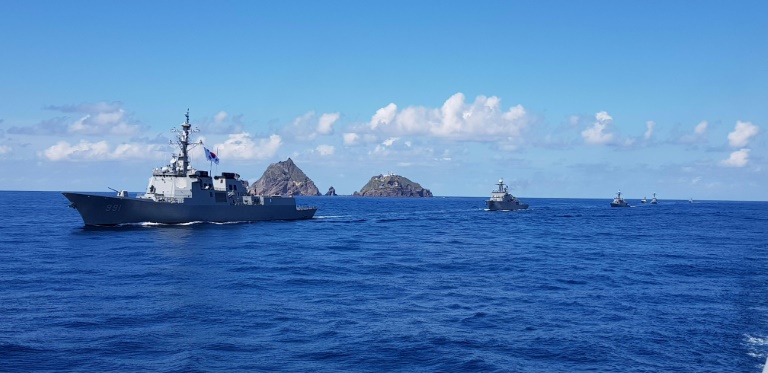
South Korea and the United States began their first combined naval exercise near the peninsula in five years on Monday, a day after Pyongyang conducted a ballistic missile launch.

Washington is Seoul’s key security ally and stations about 28,500 troops in South Korea to protect it from the nuclear-armed North.

South Korea’s hawkish President Yoon Suk-yeol, who took office in May, has vowed to beef up joint military exercises with the United States, after years of failed diplomacy with North Korea under his predecessor.

“This exercise was prepared to demonstrate the strong will of the South Korea-US alliance to respond to North Korean provocations,” the South’s navy said in a statement.

The four-day exercise on South Korea’s east coast will involve more than 20 vessels and an assortment of aircraft, which will conduct drills for anti-ship and anti-submarine warfare operations, tactical manoeuvres and other maritime operations, the navy added.

“Through this exercise, we will further improve the ability to conduct joint operations between the naval forces of the two countries,” Kwak Kwang-sub, a senior South Korean naval officer, said in the statement.

The drills come a day after nuclear-armed Pyongyang conducted another ballistic missile launch, the latest in its record-breaking blitz of weapons tests this year.

North Korea is under multiple sets of international sanctions over its programmes to develop nuclear weapons and ballistic missiles.

Close neighbour China said it had “noted” the joint military drills in the region when asked about the missile launch on Monday, and called for “dialogue and consultation”.

“The main issue is that the North Korean side’s legitimate and reasonable concerns have not received due response,” foreign ministry spokesman Wang Wenbin said at a routine briefing.

“The US should shoulder its own responsibilities, stop confrontation and pressure, and create conditions for the resumption of meaningful dialogue.”

Seoul has also detected signs the North is preparing to fire a submarine-launched ballistic missile (SLBM), the president’s office said Saturday, a weapon Pyongyang last tested in May.

Earlier this month, the North revised its nuclear weapons law, enshrining a “first strike” doctrine and vowing never to give up its nukes.

Allies Washington and Seoul have long carried out joint exercises, which they insist are purely defensive. North Korea, however, sees them as rehearsals for an invasion.

Last month, the United States and South Korea staged their biggest combined military drills since 2018 — the resumption of large-scale training sessions that had been scaled back due to Covid-19 and the period of diplomacy with Pyongyang.

NASA to deflect asteroid in key test of planetary defense

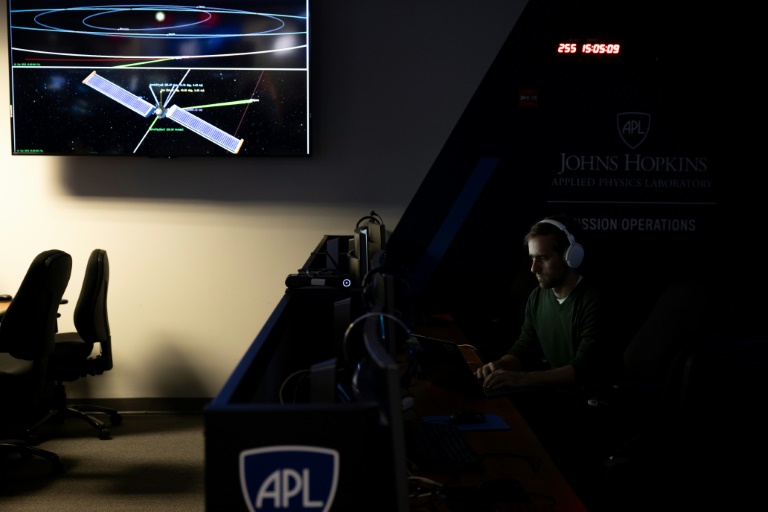
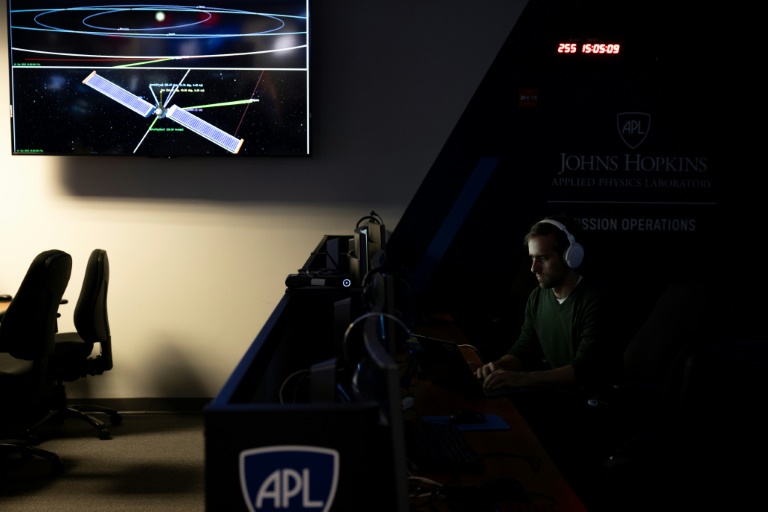
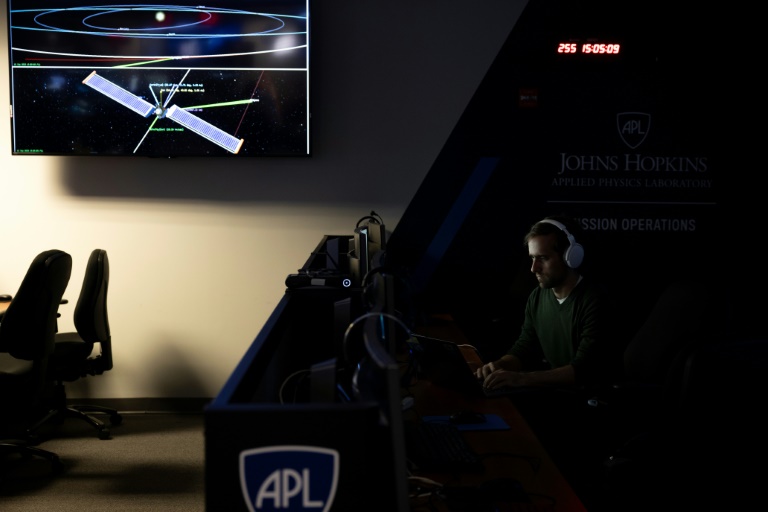
NASA will on Monday attempt a feat humanity has never before accomplished: deliberately smacking a spacecraft into an asteroid to slightly deflect its orbit, in a key test of our ability to stop cosmic objects from devastating life on Earth.

The Double Asteroid Redirection Test (DART) spaceship launched from California last November and is fast approaching its target, which it will strike at roughly 14,000 miles (22,500 kilometers) per hour.

To be sure, neither the asteroid moonlet Dimorphos, nor the big brother it orbits, called Didymos, pose any threat as the pair loop the Sun, passing about seven million miles from Earth at nearest approach.

But NASA has deemed the experiment important to carry out before an actual need is discovered.

If all goes to plan, impact between the car-sized spacecraft, and the 530-foot (160 meters, or two Statues of Liberty) asteroid should take place at 7:14 pm Eastern Time (2314 GMT), and can be followed on a NASA livestream.

By striking Dimorphos head on, NASA hopes to push it into a smaller orbit, shaving ten minutes off the time it takes to encircle Didymos, which is currently 11 hours and 55 minutes — a change that will be detected by ground telescopes in the days that follow.

The proof-of-concept experiment will make a reality of what has before only been attempted in science fiction — notably films such as “Armageddon” and “Don’t Look Up.” 

– Technically challenging –

As the craft propels itself through space, flying autonomously for the mission’s final phase, its camera system will start to beam down the very first pictures of Dimorphos.

Minutes later, a toaster-sized satellite called LICIACube, which separated from DART a couple of weeks earlier, will make a close pass of the site to capture images of the collision and the ejecta — the pulverized rock thrown off by impact.

LICIACube’s pictures will be sent back in the weeks and months that follow. 

Also watching the event: an array of telescopes, both on Earth and in space — including the recently operational James Webb — which might be able to see a brightening cloud of dust.

Finally, a full picture of what the system looks like will be revealed when a European Space Agency mission four years down the line called Hera arrives to survey Dimorphos’s surface and measure its mass, which scientists can only guess at currently.

– Being prepared –

Very few of the billions of asteroids and comets in our solar system are considered potentially hazardous to our planet, and none are expected in the next hundred or so years. 

But “I guarantee to you that if you wait long enough, there will be an object,” said NASA’s Thomas Zurbuchen. 

We know that from the geological record — for example, the six-mile wide Chicxulub asteroid struck Earth 66 million years ago, plunging the world into a long winter that led to the mass extinction of the dinosaurs along with 75 percent of all species.

An asteroid the size of Dimorphos, by contrast, would only cause a regional impact, such as devastating a city, albeit with greater force than any nuclear bomb in history.

How much momentum DART imparts on Dimorphos will depend on whether the asteroid is solid rock, or more like a “rubbish pile” of boulders bound by mutual gravity, a property that’s not yet known.

The shape of the asteroid is also not known, but NASA engineers are confident DART’s SmartNav guidance system will hit its target.

If it misses, NASA will have another shot in two years’ time, with the spaceship containing just enough fuel for another pass.

But if it succeeds, Chabot said, the mission will mark the first step towards a world capable of defending itself from a future existential threat.

NASA to deflect asteroid in key test of planetary defense

NASA will on Monday attempt a feat humanity has never before accomplished: deliberately smacking a spacecraft into an asteroid to slightly deflect its orbit, in a key test of our ability to stop cosmic objects from devastating life on Earth.

The Double Asteroid Redirection Test (DART) spaceship launched from California last November and is fast approaching its target, which it will strike at roughly 14,000 miles (22,500 kilometers) per hour.

To be sure, neither the asteroid moonlet Dimorphos, nor the big brother it orbits, called Didymos, pose any threat as the pair loop the Sun, passing about seven million miles from Earth at nearest approach.

But NASA has deemed the experiment important to carry out before an actual need is discovered.

If all goes to plan, impact between the car-sized spacecraft, and the 530-foot (160 meters, or two Statues of Liberty) asteroid should take place at 7:14 pm Eastern Time (2314 GMT), and can be followed on a NASA livestream.

By striking Dimorphos head on, NASA hopes to push it into a smaller orbit, shaving ten minutes off the time it takes to encircle Didymos, which is currently 11 hours and 55 minutes — a change that will be detected by ground telescopes in the days that follow.

The proof-of-concept experiment will make a reality of what has before only been attempted in science fiction — notably films such as “Armageddon” and “Don’t Look Up.” 

– Technically challenging –

As the craft propels itself through space, flying autonomously for the mission’s final phase, its camera system will start to beam down the very first pictures of Dimorphos.

Minutes later, a toaster-sized satellite called LICIACube, which separated from DART a couple of weeks earlier, will make a close pass of the site to capture images of the collision and the ejecta — the pulverized rock thrown off by impact.

LICIACube’s pictures will be sent back in the weeks and months that follow. 

Also watching the event: an array of telescopes, both on Earth and in space — including the recently operational James Webb — which might be able to see a brightening cloud of dust.

Finally, a full picture of what the system looks like will be revealed when a European Space Agency mission four years down the line called Hera arrives to survey Dimorphos’s surface and measure its mass, which scientists can only guess at currently.

– Being prepared –

Very few of the billions of asteroids and comets in our solar system are considered potentially hazardous to our planet, and none are expected in the next hundred or so years. 

But “I guarantee to you that if you wait long enough, there will be an object,” said NASA’s Thomas Zurbuchen. 

We know that from the geological record — for example, the six-mile wide Chicxulub asteroid struck Earth 66 million years ago, plunging the world into a long winter that led to the mass extinction of the dinosaurs along with 75 percent of all species.

An asteroid the size of Dimorphos, by contrast, would only cause a regional impact, such as devastating a city, albeit with greater force than any nuclear bomb in history.

How much momentum DART imparts on Dimorphos will depend on whether the asteroid is solid rock, or more like a “rubbish pile” of boulders bound by mutual gravity, a property that’s not yet known.

The shape of the asteroid is also not known, but NASA engineers are confident DART’s SmartNav guidance system will hit its target.

If it misses, NASA will have another shot in two years’ time, with the spaceship containing just enough fuel for another pass.

But if it succeeds, Chabot said, the mission will mark the first step towards a world capable of defending itself from a future existential threat.

NASA to deflect asteroid in key test of planetary defense

NASA will on Monday attempt a feat humanity has never before accomplished: deliberately smacking a spacecraft into an asteroid to slightly deflect its orbit, in a key test of our ability to stop cosmic objects from devastating life on Earth.

The Double Asteroid Redirection Test (DART) spaceship launched from California last November and is fast approaching its target, which it will strike at roughly 14,000 miles (22,500 kilometers) per hour.

To be sure, neither the asteroid moonlet Dimorphos, nor the big brother it orbits, called Didymos, pose any threat as the pair loop the Sun, passing about seven million miles from Earth at nearest approach.

But NASA has deemed the experiment important to carry out before an actual need is discovered.

If all goes to plan, impact between the car-sized spacecraft, and the 530-foot (160 meters, or two Statues of Liberty) asteroid should take place at 7:14 pm Eastern Time (2314 GMT), and can be followed on a NASA livestream.

By striking Dimorphos head on, NASA hopes to push it into a smaller orbit, shaving ten minutes off the time it takes to encircle Didymos, which is currently 11 hours and 55 minutes — a change that will be detected by ground telescopes in the days that follow.

The proof-of-concept experiment will make a reality of what has before only been attempted in science fiction — notably films such as “Armageddon” and “Don’t Look Up.” 

– Technically challenging –

As the craft propels itself through space, flying autonomously for the mission’s final phase, its camera system will start to beam down the very first pictures of Dimorphos.

Minutes later, a toaster-sized satellite called LICIACube, which separated from DART a couple of weeks earlier, will make a close pass of the site to capture images of the collision and the ejecta — the pulverized rock thrown off by impact.

LICIACube’s pictures will be sent back in the weeks and months that follow. 

Also watching the event: an array of telescopes, both on Earth and in space — including the recently operational James Webb — which might be able to see a brightening cloud of dust.

Finally, a full picture of what the system looks like will be revealed when a European Space Agency mission four years down the line called Hera arrives to survey Dimorphos’s surface and measure its mass, which scientists can only guess at currently.

– Being prepared –

Very few of the billions of asteroids and comets in our solar system are considered potentially hazardous to our planet, and none are expected in the next hundred or so years. 

But “I guarantee to you that if you wait long enough, there will be an object,” said NASA’s Thomas Zurbuchen. 

We know that from the geological record — for example, the six-mile wide Chicxulub asteroid struck Earth 66 million years ago, plunging the world into a long winter that led to the mass extinction of the dinosaurs along with 75 percent of all species.

An asteroid the size of Dimorphos, by contrast, would only cause a regional impact, such as devastating a city, albeit with greater force than any nuclear bomb in history.

How much momentum DART imparts on Dimorphos will depend on whether the asteroid is solid rock, or more like a “rubbish pile” of boulders bound by mutual gravity, a property that’s not yet known.

The shape of the asteroid is also not known, but NASA engineers are confident DART’s SmartNav guidance system will hit its target.

If it misses, NASA will have another shot in two years’ time, with the spaceship containing just enough fuel for another pass.

But if it succeeds, Chabot said, the mission will mark the first step towards a world capable of defending itself from a future existential threat.

Iran protests flare for 10th night as tensions grow with West

Tensions have grown between Iran and Western powers over the Islamic republic’s lethal crackdown on 10 nights of protests driven by outrage over the death of Mahsa Amini after her arrest by the morality police.

At least 41 people have been killed and more than 1,000 arrested, officials say, in the unrest sparked by the death of the 22-year-old Kurdish woman after she was detained for allegedly breaching strict rules on hijab headscarves and modest clothing. 

Angry protests flared again in Iran overnight to Monday, where crowds in Tehran called for the downfall of supreme leader Ayatollah Ali Khamenei, 83, shouting “death to the dictator” in footage posted online by Oslo-based group Iran Human Rights.

“Woman, Life, Freedom!” has been the rallying cry as women have taken off and burnt their hijabs in bonfires or symbolically cut off their hair, cheered on by crowds.

About 450 “rioters” have been arrested in just one province, Mazandaran, its chief prosecutor Mohammad Karimi said according to the official IRNA news agency, two days after over 700 arrests were reported in neighbouring Gilan.

“Over the past few days, rioters have attacked government buildings and damaged public property in several parts of Mazandaran under the direction of foreign anti-revolution agents,” Karimi said.

The Tasnim news agency published around 20 photos of “riot leaders”, including women, taken in the holy shrine city of Qom, saying security forces were calling on citizens to “identify them and inform the authorities”.

The European Union has slammed Iran, charging that “the widespread and disproportionate use of force against nonviolent protestors is unjustifiable and unacceptable”, in a statement by its foreign policy chief Josep Borrell on Sunday.

He said the EU would “continue to consider all the options at its disposal … to address the killing of Mahsa Amini” and the state response to the protests in Iran, a country already under punishing sanctions over its nuclear programme.

– Internet blackout –

Tehran has summoned Britain’s ambassador to protest what it called an “invitation to riots” by London-based Farsi language media, and Norway’s envoy over the parliamentary speaker’s “unconstructive comments” on the protests.

In Iran’s biggest protests in almost three years, security forces have used batons and water canon but also fired bird shot and live rounds, rights groups say, against the protesters who have hurled rocks, torched police cars and set public buildings ablaze.

The IHR rights group said Sunday at least 57 protesters have been killed, but noted its reporting was limited by internet blackouts and the blocking of WhatsApp and Instagram following earlier bans on Facebook, Twitter, TikTok and other services.

There were fears the violence could escalate further after judiciary chief Gholamhossein Mohseni Ejei spoke of “the need for decisive action without leniency” against “riot” leaders, echoing a warning by ultra-conservative President Ebrahim Raisi.

Solidarity protests have been held in cities worldwide, and tensions flared into street clashes in Paris and London at the weekend, where crowds tried to reach Iran’s embassies.

In London, 12 people were arrested and five officers “seriously injured”, the Metropolitan Police said, after “masonry, bottles and other projectiles were thrown and a number of officers were injured”, some with broken bones.

In Paris, thousands took to the streets, many chanting “Death to the Islamic republic”, before riot police fired tear gas to prevent protesters from marching on Tehran’s diplomatic mission, AFP reporters and eye-witnesses said.

– Call for teachers strike –

Iran has blamed “foreign plots” for the unrest and accused its arch enemy the United States and its allies of stoking the demonstrations.

US President Joe Biden last week saluted the protesters, telling the UN General Assembly that “we stand with the brave citizens and the brave women of Iran who right now are demonstrating to secure their basic rights”.

Iran’s government has organised large rallies in defence of the mandatory hijab rules, including one on Sunday in Tehran’s Enghelab (Revolution) Square.

“Martyrs died so that this hijab will be on our head,” said female demonstrator Nafiseh, 28.

The main reformist group inside Iran, the Union of Islamic Iran People’s Party, however, has called for the repeal of the mandatory dress code.

IHR reported Sunday that Iranian teachers’ unions were calling on staff and students to boycott classes on Monday and Wednesday in support of the protests. 

burs/fz/pjm

World economy to slow, 'paying the price of war': OECD

The world economy will take a bigger hit than previously forecast next year due to the effects of Russia’s war in Ukraine, the OECD said Monday.

In a bleak report titled “paying the price of war”, the Paris-based organisation noted that the conflict aggravated inflationary pressure when the cost of living was already rising quickly.

Covid outbreaks are still having an impact on the global economy while growth has also been affected by rising interest rates as central banks scramble to cool red-hot prices, the OECD said.

“A number of indicators have taken a turn for the worse, and the global growth outlook has darkened,” the Organisation for Economic Co-operation and Development said in the report.

Global growth stalled in the second quarter of this year and data in many economies “now point to an extended period of subdued growth”, the OECD said.

The organisation slashed its 2023 growth forecast for the global economy to 2.2 percent, down from 2.8 percent in its previous estimate in June.

– German recession –

The outlook for nearly all nations in the Group of 20 top economies was cut, except for Turkey, Indonesia and Britain, though the latter is forecast to have zero growth.

Growth in the United States — the world’s biggest economy — is forecast to slow to 0.5 percent in 2023.

The growth forecast for China, whose economy has been hit by strict Covid lockdowns, was cut sharply for this year to 3.2 percent while it was slightly lower to 4.7 percent for 2023.

Germany is now expected to go into recession next year with Europe’s biggest economy now seen shrinking by 0.7 percent — a 2.4-percentage-point drop from the previous forecast.

The country’s economy has been hit the hardest in Europe as it has relied heavily on Russian supplies of natural gas, which Moscow has cut significantly in suspected retaliation to Western sanctions.

The eurozone as a whole will post meagre growth of 0.3 percent, a sharp downgrade from 1.6 percent.

The OECD kept its 2022 global growth forecast unchanged at three percent after previously lowering it.

To highlight the impact of Russia’s invasion of Ukraine, the OECD said global output in 2023 is now projected to be $2.8 trillion lower than previously estimated before the conflict in December 2021.

– ‘Significant uncertainty’ –

The war has sent energy and food prices soaring over concerns about supply as Russia is a major oil and gas producer while Ukraine is a key exporter of grains to countries across the world.

Inflation had already been on the rise before the conflict due to bottlenecks in the global supply chain after countries emerged from Covid lockdowns.

“The effects of the war and the continuing impacts of Covid-19 outbreaks in some parts of the world have dented growth and put additional upward pressure on prices,” the OECD said.

“Inflationary pressures have become increasingly broad-based, with higher energy, transportation and other costs being passed through into prices,” it said.

The OECD raised its inflation forecast for the G20 to 8.2 percent for 2022 and 6.6 percent for next year.

Governments have announced emergency measures to help households and businesses cope with the soaring cost of living.

But the fiscal measures to offset energy costs “have been poorly targeted”, the OECD said.

Central banks, meanwhile, have ramped up interest rates, a move necessary to tame inflation but that can also push economies into recession.

The monetary tightening is a “key factor slowing global growth”, the OECD said.

The organisation warned that “significant uncertainty surrounds the projections” for the global economy.

More severe fuel shortages could shave off a further 1.25-percentage-points from Europe’s economy in 2023 and a half-point for global growth

World economy to slow, 'paying the price of war': OECD

The world economy will take a bigger hit than previously forecast next year due to the effects of Russia’s war in Ukraine, the OECD said Monday.

In a bleak report titled “paying the price of war”, the Paris-based organisation noted that the conflict aggravated inflationary pressure when the cost of living was already rising quickly.

Covid outbreaks are still having an impact on the global economy while growth has also been affected by rising interest rates as central banks scramble to cool red-hot prices, the OECD said.

“A number of indicators have taken a turn for the worse, and the global growth outlook has darkened,” the Organisation for Economic Co-operation and Development said in the report.

Global growth stalled in the second quarter of this year and data in many economies “now point to an extended period of subdued growth”, the OECD said.

The organisation slashed its 2023 growth forecast for the global economy to 2.2 percent, down from 2.8 percent in its previous estimate in June.

– German recession –

The outlook for nearly all nations in the Group of 20 top economies was cut, except for Turkey, Indonesia and Britain, though the latter is forecast to have zero growth.

Growth in the United States — the world’s biggest economy — is forecast to slow to 0.5 percent in 2023.

The growth forecast for China, whose economy has been hit by strict Covid lockdowns, was cut sharply for this year to 3.2 percent while it was slightly lower to 4.7 percent for 2023.

Germany is now expected to go into recession next year with Europe’s biggest economy now seen shrinking by 0.7 percent — a 2.4-percentage-point drop from the previous forecast.

The country’s economy has been hit the hardest in Europe as it has relied heavily on Russian supplies of natural gas, which Moscow has cut significantly in suspected retaliation to Western sanctions.

The eurozone as a whole will post meagre growth of 0.3 percent, a sharp downgrade from 1.6 percent.

The OECD kept its 2022 global growth forecast unchanged at three percent after previously lowering it.

To highlight the impact of Russia’s invasion of Ukraine, the OECD said global output in 2023 is now projected to be $2.8 trillion lower than previously estimated before the conflict in December 2021.

– ‘Significant uncertainty’ –

The war has sent energy and food prices soaring over concerns about supply as Russia is a major oil and gas producer while Ukraine is a key exporter of grains to countries across the world.

Inflation had already been on the rise before the conflict due to bottlenecks in the global supply chain after countries emerged from Covid lockdowns.

“The effects of the war and the continuing impacts of Covid-19 outbreaks in some parts of the world have dented growth and put additional upward pressure on prices,” the OECD said.

“Inflationary pressures have become increasingly broad-based, with higher energy, transportation and other costs being passed through into prices,” it said.

The OECD raised its inflation forecast for the G20 to 8.2 percent for 2022 and 6.6 percent for next year.

Governments have announced emergency measures to help households and businesses cope with the soaring cost of living.

But the fiscal measures to offset energy costs “have been poorly targeted”, the OECD said.

Central banks, meanwhile, have ramped up interest rates, a move necessary to tame inflation but that can also push economies into recession.

The monetary tightening is a “key factor slowing global growth”, the OECD said.

The organisation warned that “significant uncertainty surrounds the projections” for the global economy.

More severe fuel shortages could shave off a further 1.25-percentage-points from Europe’s economy in 2023 and a half-point for global growth

Pound hits record low versus dollar, markets hit by recession fears

The pound hit a record low against the dollar Monday on surging fears about the UK economy after the government unveiled a huge tax-cutting budget.

The selloff came as equity markets across Asia and Europe fell again owing to a growing expectation that central bank interest rate hikes to fight runaway inflation would lead to deep and painful recessions. Oil also suffered more hefty selling.

Officials in several countries including the United States, Britain, Switzerland and Sweden announced more increases in the cost of borrowing.

The moves sent equity markets deep into the red again after officials reiterated their focus on fighting inflation, even if that means causing a recession.

But the biggest casualty of the week was the pound, which fell below $1.10 for the first time since 1985 as new finance minister Kwasi Kwarteng announced his controversial mini-budget.

It then extended the losses Monday to briefly touch an all-time low of $1.0350 in Asian trade after he said he intended to unveil further reductions, despite his budget causing ructions on London’s markets.

It also fell to a two-year low against the euro, though the single currency remains under pressure against the dollar, sitting at 2002 levels.

Now, observers are warning that the pound could fall even further.

“The pound’s crash is showing markets have a lack of confidence in the UK and that its financial strength is under siege,” said Jessica Amir, of Saxo Capital Markets. 

“The pound is a whisker away from parity and the situation is going to only worsen from here.”

Kwarteng, who was appointed by Liz Truss after she became prime minister earlier this month, said he planned to slash taxes to kickstart the British economy and provide cash to cushion families from rocketing energy costs.

But investors were spooked by the huge amount of borrowing likely needed for the multi-billion-pound package, which critics said would benefit the rich far more than the poorest during a cost-of-living crisis.

Sterling’s drop has led to speculation the Bank of England will have to step in with an emergency interest rate hike to give the currency a much-needed shot in the arm.

– ‘Macau casinos soar’ –

“Whether or not the UK government announcement of the biggest tax reduction since 1972… will in time yield a significant growth dividend is not something markets are yet willing to contemplate,” said National Australia Bank’s Ray Attrill.

“Instead, they were consumed by worries over the scale of near-term UK government financing needs, at a time when the current account deficit is running at more than eight percent of GDP.”

He added: “Chatter about a possible UK sovereign rating downgrade has already begun.”

And former US treasury secretary Lawrence Summers was scathing of Britain’s recent monetary policy decisions.

“It makes me very sorry to say, but I think the UK is behaving a bit like an emerging market turning itself into a submerging market,” he told Bloomberg Television’s Wall Street Week last week.

“Between Brexit, how far the Bank of England got behind the curve and now these fiscal policies, I think Britain will be remembered for having (pursued) the worst macroeconomic policies of any major country in a long time.”

The collapse in sterling came as markets across the world are sent into a spin by recession worries caused by a sharp tightening of monetary policy by central banks fighting decades-high inflation. 

New York’s three main indexes ended well down, with the Dow at a two-year low, and Asia followed suit.

Tokyo shed more than two percent as traders there returned from a long weekend break, while Seoul was off more than three percent, with Sydney, Shanghai, Mumbai, Singapore, Taipei and Jakarta also tanking.

Hong Kong was also down having reversed early gains that came after the city said it would relax strict hotel quarantine measures for international travellers.

Still, Macau casino stocks rallied as the city said it would accept Chinese tour groups again from November, having been blocked during the pandemic.

London edged up tentatively after Friday’s hammering, while Paris and Frankfurt were also higher.

Oil prices ticked lower, extending the big losses suffered Friday as expectations that a recession is looming hammer demand expectations.

The surging greenback added to the sell-off in crude, which is priced in dollars and therefore ore expensive for buyers using other currencies. 

Both main contracts are sitting at their lowest levels since January, having wiped out all the gains seen in the wake of Russia’s invasion of Ukraine.

Black Gold Investors’ Gary Ross described the strong dollar as “a wrecking ball for commodities”.

– Key figures at around 0810 GMT –

Pound/dollar: DOWN at $1.0700 from $1.0852 on Friday

Euro/pound: UP at 90.40 pence from 89.28 pence 

Euro/dollar: DOWN at $ 0.9673 from 0.9695

Dollar/yen: UP at 143.96 yen from 143.31 yen

London – FTSE 100: UP 0.3 percent at 7,039.64

Tokyo – Nikkei 225: DOWN 2.7 percent at 26,431.55 (close)

Hong Kong – Hang Seng Index: DOWN 0.4 percent at 17,855.14 (close)

Shanghai – Composite: DOWN 1.2 percent at 3,051.23 (close)

West Texas Intermediate: DOWN 0.2 percent at $78.58 per barrel

Brent North Sea crude: DOWN 0.4 percent at $85.84 per barrel

New York – Dow: DOWN 1.6 percent at 29,590.41 (close)

Close Bitnami banner
Bitnami