World

Mali post-coup PM denounces France, salutes Russia at UN

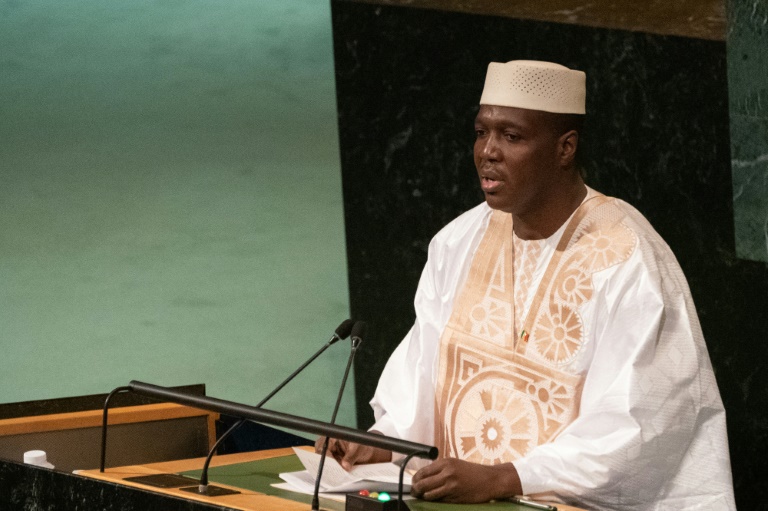
Mali’s military-appointed prime minister on Saturday lashed out at France as well as the United Nations in a grievance-filled address over his nation’s deteriorating security.

Colonel Abdoulaye Maiga, named last month by coup leaders as Mali’s interim prime minister, accused France of having “stabbed in the back” the West African nation with its withdrawal of troops.

French leaders “have disowned universal moral values and betrayed the rich history of the Lumieres philosophers and turned themselves into a junta in the service of obscurantism,” he told the UN General Assembly.

Maiga denounced the former colonial power for “neocolonialist, condescending, paternalist and vengeful policies” such as sanctions on the junta in Mali, which has seen two coups since 2020.

He instead saluted “the exemplary and fruitful cooperation between Mali and Russia,” whose Wagner Group security firm has been hired by the junta in Bamako despite widespread concerns in the West.

Maiga also denounced UN Secretary-General Antonio Guterres, who in a recent interview rejected the junta’s claims that 46 Ivorian soldiers detained in Mali were mercenaries.

Ivory Coast said that the soldiers, detained at the Bamako airport, were sent to provide backup to the UN peacekeeping force MINUSMA, one of the international body’s largest and most dangerous missions.

“Mr. Secretary-General, Mali shall exert all legal consequences over your actions,”  Maiga said, before repeating his call for reform of MINUSMA.

Maiga also attacked the leaders of several West African nations that have put pressure on the junta.

He charged that Niger’s President Mohamed Bazoum was not actually from Niger and accused Ivorian President Alassane Ouattara of “keeping power only for himself and his clan” by changing the constitution to have a third term.

The military in 2020 threw out Mali’s elected president, Ibrahim Boubacar Keita, amid frustration over the failure to stop a jihadist insurgency.

France in August withdrew its last troops from Mali after a nine-year deployment, seeing little progress against the jihadists and sour relations with the junta.

On eve of election, Italy braces for potential far-right win

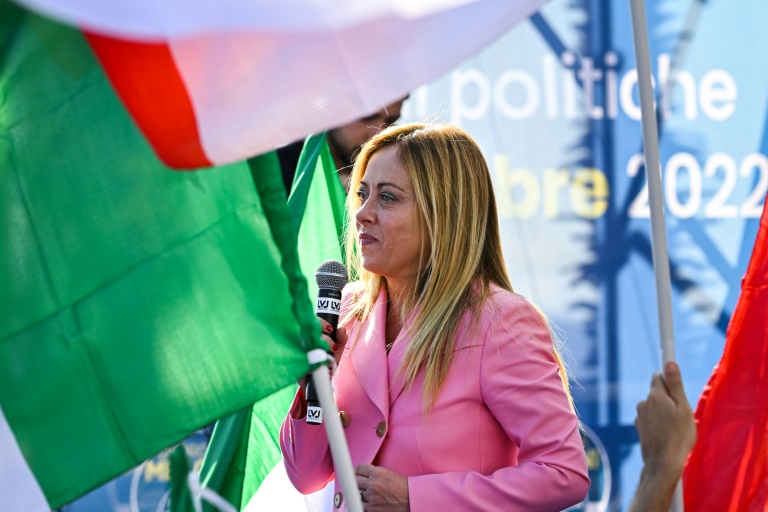
Italians on Saturday braced for seismic change, on the eve of an election forecast to hand Italy the most right-wing government since World War II.

Out with internationally respected Mario Draghi and in — polls say — with Eurosceptic Giorgia Meloni, head of the post-fascist Brothers of Italy party, who is widely tipped to become the country’s first woman to head a government.

“The country is eager for a change, a new face,” Wolfango Piccoli of the London-based political risk consultancy Teneo told AFP.

Italy is battling a series of crises, from rampant inflation and extreme weather events linked to climate change, to an energy crisis aggravated by the war in Ukraine.

The campaign, sparked by Draghi’s downfall in July, wrapped up on Friday, giving Italians a day of reprieve as electioneering is banned until the vote.

People who spoke to AFP in Rome on Saturday said they were unsure the day before the election as the latest polls show that the Brothers of Italy party is likely to win and form a government.

“I am worried by the fact that the polls have the right-wing as the winner, especially Giorgia Meloni,” said Maria Tasca, a 27-year-old student originally from Sicily.

– ‘No magic solution’ –

“From what she has said on women’s rights, on young people’s rights, on rights in general, I see things going backwards by at least 50 years,” Tasca added.

“The problems are worldwide, there’s no magic solution. But sometimes you have to change,” said a 75-year-old shop owner, who gave his name only as Dante.

Meloni, 45, has worked hard over the past few weeks to reassure skittish investors and an anxious Brussels that her party’s historic ties to supporters of dictator Benito Mussolini are a thing of the past.

She has softened her tone and posted a video of herself on TikTok making traditional pastries from the Puglia region.

But she channelled warrior Aragorn from Tolkien’s Lord of the Rings on Thursday at the closing rally for the right-wing coalition, which unites her Brothers of Italy with Matteo Salvini’s anti-immigration League party and billionaire Silvio Berlusconi’s Forza Italia.

The self-described “Christian mother” segued smoothly from the fantasy king to blaming the left for the country’s “drug dealers, thieves, rapists and mafia”, adding: “This Italy ends on Sunday”.

Berlusconi, 85, was at her side. 

The media mogul — who is on trial accused of bribing starlets not to testify about his allegedly erotic parties — has campaigned mainly online, wooing grandmothers and housewives with promises of stay-at-home salaries.

– TikTok jokes –

He has also chased the youth vote with some TikTok jokes — including one about not trying to steal their girlfriends.

The race has seen the parties try to win over voters with ideas such as sending goods from northern to southern Italy via tube and fighting climate change with cannabis.

Former interior minister Salvini, 49, campaigned under the slogan “Credo” (I believe), earning him a rebuke from the Catholic Church.

Fearful of losing a significant chunk of his supporters to Meloni, Salvini has tried to stand out by calling for an end to sanctions against Russia and railing against Brussels.

But the end of his campaign was overshadowed by a video clip of him describing a blind League candidate on Thursday as “an eye for Italians”.

The centre-left’s Enrico Letta, head of the Democratic Party (PD), rocked up to his final rally in an electric van — reminding voters of his earlier efforts to promote ecologically friendly transport, when his electric campaign bus ran out of battery.

His main rival for votes on the left, Giuseppe Conte, head of the populist Five Star Movement, seemed to have more staying power.

He was photographed so often standing head and shoulders above the crowd amid a throng of supporters that the media dubbed him the “travelling Madonna”.

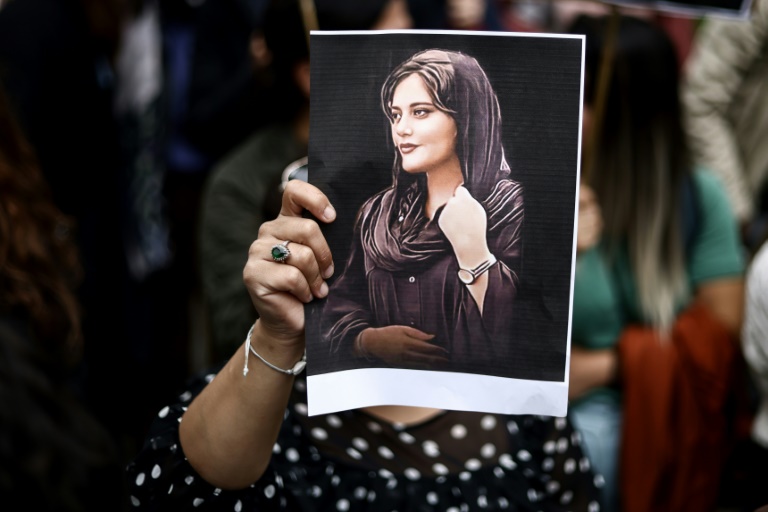
Death toll doubles, hundreds arrested in 'harrowing' Iran protest crackdown

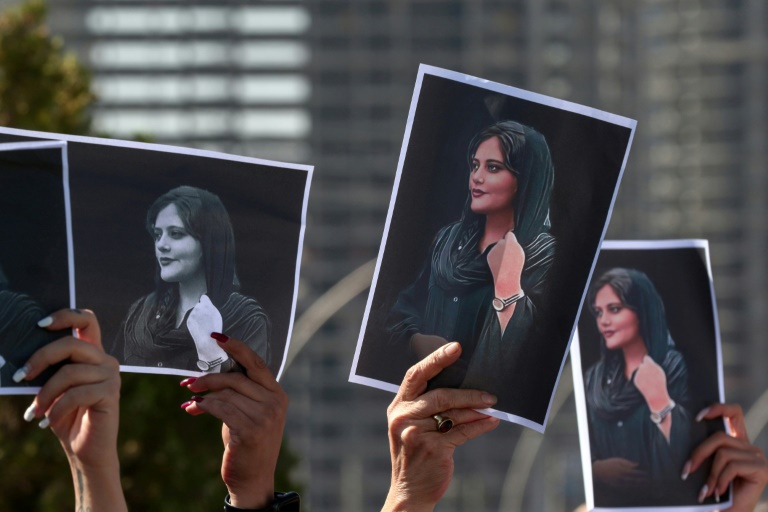
The official death toll has nearly doubled to 35 in a crackdown by Iran’s security forces on more than a week of protests that erupted after the death of a young woman in custody.

Hundreds of angry demonstrators have been arrested with crowds taking to the streets of major cities across Iran for eight straight nights since the death of Mahsa Amini.

The 22-year-old Kurd was pronounced dead after spending three days in a coma following her arrest by the feared morality police for an alleged violation of the Islamic republic’s strict dress code.

State television said the number of deaths in “recent riots” had risen to 35, up from 17 previously, including at least five security personnel.

Waves of arrests have been reported, with the police chief in the northern province of Gilan announcing Saturday “the arrest of 739 rioters, including 60 women,” in Gilan alone, Tasnim news agency said.

Protests were held around Iran on Friday night, with online videos showing some turning violent, including in Tehran.

Footage showed security forces firing what appeared to be live ammunition at unarmed demonstrators in the northwestern cities of Piranshahr, Mahabad and Urmia.

In a video shared by the Oslo-based Iran Human Rights organisation, a uniformed member of the security forces is seen shooting an AK-47 assault rifle at protesters in Shahr-e Rey, on Tehran’s southern outskirts.

Security forces have also arrested activists and journalists, with Sherif Mansour of US-based media watchdog the Committee to Protect Journalists (CPJ) reporting 11 had been detained since Monday.

They include Niloufar Hamedi of the reformist newspaper Shargh, who reported on Amini’s death.

– Militia bases attacked –

Elsewhere, the Norway-based Kurdish rights group Hengaw said protesters “took control” of parts of the town of Oshnaviyeh, in West Azerbaijan province.

Images showed protesters walking freely with their hands aloft in triumph, but Hengaw acknowledged this could be “temporary” and expressed fears of a new crackdown there.

Iran’s judiciary said “rioters attacked three Basij bases” in Oshnaviyeh, referring to the state-sanctioned Islamic militia. But it denied the security forces had lost control of the town.

Ultra-conservative President Ebrahim Raisi vowed to deal “decisively” with those behind the violence in a phone call Saturday with the family of a Basij member killed in the northeastern city of Mashhad.

His comment came after Amnesty International warned of “the risk of further bloodshed amid a deliberately imposed internet blackout”.

The London-based human rights group said evidence it gathered from 20 cities pointed to “a harrowing pattern of Iranian security forces deliberately and unlawfully firing live ammunition at protesters”.

Amnesty said security forces had shot dead at least 19 people on Wednesday night alone, including at least three children.

Friday night’s protests came only hours after thousands marched in government-supported pro-hijab rallies in cities including Tehran, Ahvaz, Isfahan, Qom and Tabriz.

Amini died on September 16 following her arrest by Iran’s morality police, a unit responsible for enforcing the Islamic republic’s strict dress code for women.

Activists said she suffered a blow to the head in custody but this has not been confirmed by the Iranian authorities, who have opened an investigation.

Iranian women have burnt their headscarves and symbolically cut their hair in protest at the strict dress code, echoed in solidarity demonstrations from New York to Istanbul and Brussels to Arbil, in Iraqi Kurdistan.

– ‘No beating’ –

Iran’s Interior Minister Ahmad Vahidi insisted Amini had not been beaten.

“Reports from oversight bodies were received, witnesses were interviewed, videos were reviewed, forensic opinions were obtained and it was found that there had been no beating,” he said.

The minister said Iran was investigating Amini’s death, adding: “We must wait for the final opinion of the medical examiner, which takes time”.

Amnesty dismissed the Iranian probe and called on the world to take “meaningful action” against the bloody crackdown.

“UN member states must go beyond toothless statements, hear the cries for justice from victims and human rights defenders in Iran and urgently set up an independent UN investigative mechanism,” said Heba Morayef, its director for the Middle East and North Africa.

Iran has imposed tough restrictions on the use of the internet in a bid to hamper protesters gathering and stop the flow of images of the backlash from reaching the outside world.

The United States announced Friday it was easing export restrictions on Iran to expand internet services.

The new measures would “help counter the Iranian government’s efforts to surveil and censor its citizens,” said Secretary of State Antony Blinken.

burs/dv/kir

Storm Fiona slams into east Canada, major power outages

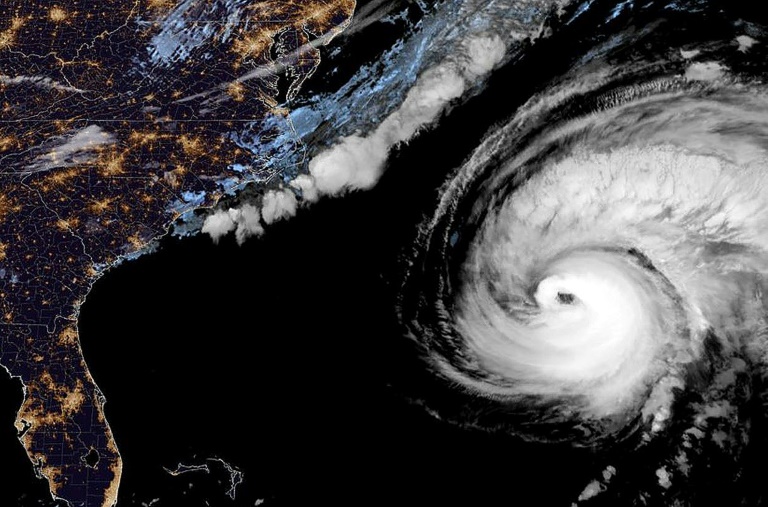
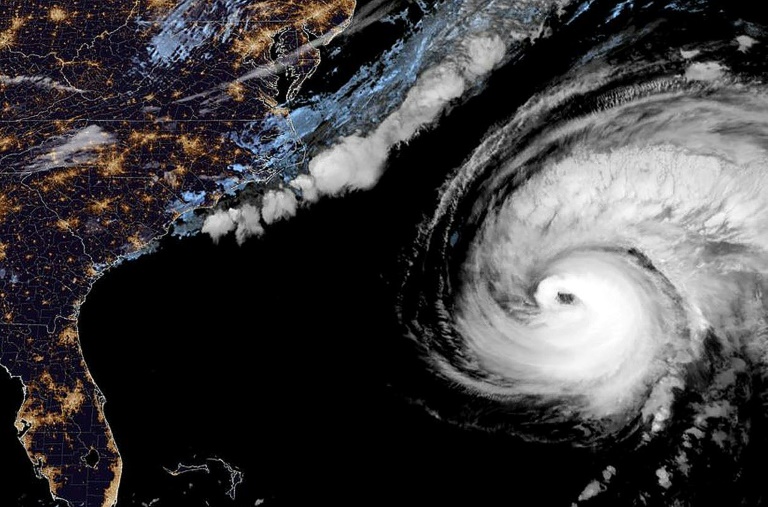
Powerful storm Fiona knocked out electricity to more than 500,000 homes Saturday as it lashed east Canada with strong winds and heavy rains in conditions that police said were “like nothing we’ve ever seen.”

Though downgraded from a hurricane, Fiona still packed winds of 85 miles (137 kilometers) per hour as it barreled ashore in the early hours after battering the Caribbean, according to meteorologists.

In the province of Novia Scotia, more than 400,000 households were without electricity, Novia Scotia Power reported.

In neighboring Price Edward Island, some 82,000 households lost power, with police in the provincial capital Charlottetown posting images of tangles of downed power lines and roofs punctured by felled trees. 

“Conditions are like nothing we’ve ever seen,” police tweeted. 

“It’s incredible, there is no electricity, no wi-fi, no more network,” said Charlottetown mayor Philip Brown on Radio-Canada TV.

“It’s stronger than Hurricane Juan in 2003. A lot of trees have fallen, there is a lot of flooding on the roads.”

Canada had issued severe weather warnings for swathes of its eastern coast.

“Significant impacts from high winds, storm surge, and heavy rainfall are expected,” the US National Hurricane Center said in an advisory. 

The Canadian Hurricane Center (CHC) said high-speed winds had been reported in Nova Scotia, Prince Edward Island, Iles-de-la-Madeleine and Newfoundland and that the storm would steam northeast, causing “damaging wind, waves, and storm surge.”

Rainfall of up to 4.9 inches (125 millimeters) was recorded in Nova Scotia and Prince Edward Island, the CHC said, with large waves hitting Nova Scotia and western Newfoundland of up to 40 feet (12 meters). 

The CHC said conditions would improve in western Nova Scotia and eastern New Brunswick on Saturday.

Authorities in Nova Scotia had issued an emergency alert on phones, saying people should stay inside with enough supplies for at least 72 hours.

In Halifax, the capital of Nova Scotia, stores sold out of propane gas cylinders for camping stoves as residents stocked up.

Before it hit, Prime Minister Justin Trudeau called the storm “a bad one,” adding it “could have significant impacts right across the region.”

– Puerto Rico hard hit –

Fiona had skirted Bermuda a day earlier, with residents battening down and authorities calling for people to remain inside as strong winds raked over the British territory. No fatalities or major damage were reported as the storm passed roughly 100 miles to the west of the island.

Bermuda, whose economy is fueled by international finance and tourism, is wealthy compared with most Caribbean countries, and structures must be built to strict planning codes to withstand storms. Some have done so for centuries.

Fiona killed at least four people in Puerto Rico earlier this week, according to US media, while two deaths were reported in the Dominican Republic and one in the French overseas department of Guadeloupe. 

President Joe Biden declared a state of emergency in Puerto Rico, a US territory that is still struggling to recover from Hurricane Maria five years ago.

In the Dominican Republic, President Luis Abinader declared three eastern provinces to be disaster zones.

burs-st-aha/sw/bgs

Storm Fiona slams into east Canada, major power outages

Powerful storm Fiona knocked out electricity to more than 500,000 homes Saturday as it lashed east Canada with strong winds and heavy rains in conditions that police said were “like nothing we’ve ever seen.”

Though downgraded from a hurricane, Fiona still packed winds of 85 miles (137 kilometers) per hour as it barreled ashore in the early hours after battering the Caribbean, according to meteorologists.

In the province of Novia Scotia, more than 400,000 households were without electricity, Novia Scotia Power reported.

In neighboring Price Edward Island, some 82,000 households lost power, with police in the provincial capital Charlottetown posting images of tangles of downed power lines and roofs punctured by felled trees. 

“Conditions are like nothing we’ve ever seen,” police tweeted. 

“It’s incredible, there is no electricity, no wi-fi, no more network,” said Charlottetown mayor Philip Brown on Radio-Canada TV.

“It’s stronger than Hurricane Juan in 2003. A lot of trees have fallen, there is a lot of flooding on the roads.”

Canada had issued severe weather warnings for swathes of its eastern coast.

“Significant impacts from high winds, storm surge, and heavy rainfall are expected,” the US National Hurricane Center said in an advisory. 

The Canadian Hurricane Center (CHC) said high-speed winds had been reported in Nova Scotia, Prince Edward Island, Iles-de-la-Madeleine and Newfoundland and that the storm would steam northeast, causing “damaging wind, waves, and storm surge.”

Rainfall of up to 4.9 inches (125 millimeters) was recorded in Nova Scotia and Prince Edward Island, the CHC said, with large waves hitting Nova Scotia and western Newfoundland of up to 40 feet (12 meters). 

The CHC said conditions would improve in western Nova Scotia and eastern New Brunswick on Saturday.

Authorities in Nova Scotia had issued an emergency alert on phones, saying people should stay inside with enough supplies for at least 72 hours.

In Halifax, the capital of Nova Scotia, stores sold out of propane gas cylinders for camping stoves as residents stocked up.

Before it hit, Prime Minister Justin Trudeau called the storm “a bad one,” adding it “could have significant impacts right across the region.”

– Puerto Rico hard hit –

Fiona had skirted Bermuda a day earlier, with residents battening down and authorities calling for people to remain inside as strong winds raked over the British territory. No fatalities or major damage were reported as the storm passed roughly 100 miles to the west of the island.

Bermuda, whose economy is fueled by international finance and tourism, is wealthy compared with most Caribbean countries, and structures must be built to strict planning codes to withstand storms. Some have done so for centuries.

Fiona killed at least four people in Puerto Rico earlier this week, according to US media, while two deaths were reported in the Dominican Republic and one in the French overseas department of Guadeloupe. 

President Joe Biden declared a state of emergency in Puerto Rico, a US territory that is still struggling to recover from Hurricane Maria five years ago.

In the Dominican Republic, President Luis Abinader declared three eastern provinces to be disaster zones.

burs-st-aha/sw/bgs

France's TotalEnergies injects further $1.5 bn into Qatar gas

France’s TotalEnergies on Saturday signed a new $1.5 billion deal to help expand Qatar’s natural gas production as Europe scrambles to find new energy sources to replace Russian supplies.

But TotalEnergies chairman Patrick Pouyanne and Qatar Energy Minister Saad Sherida Al-Kaabi expressed surprise at reports that Germany was resisting 20-year contracts — insisting that Europe must agree longer contracts to guarantee supplies.

The French energy giant will have a 9.3 percent stake in Qatar’s North Field South project, part of the world’s biggest natural gas reserves, Kaabi said at a signing ceremony.

Pouyanne said TotalEnergies would invest $1.5 billion in the new field.

It had already agreed in June to put more than $2 billion into Qatar’s North Field East and Kaabi said: “With this agreement, we see an enhanced position for TotalEnergies as a long term strategic partner”.

Twenty five percent of the field is to be reserved for foreign firms and more deals will be announced in coming weeks, Kaabi said.

Britain’s Shell, Italy’s ENI and US giants ConocoPhillips and ExxonMobil have already signed up to be part of North Field East.

– Security will cost –

Qatar has embarked on a massive expansion of the whole North Field, aiming to increase its liquefied natural gas (LNG) production by more than 60 percent by 2027.

The boost comes as Europe struggles to replace supplies of Russian oil and natural gas that have fallen victim to the Ukraine war.

Kaabi, who is to host talks with German Chancellor Olaf Scholz in Doha on Sunday, refused to discuss negotiations with Germany but expressed surprise at media reports that Qatar was insisting on a 20 year supply deal.

Russia’s invasion of Ukraine in February came as Europe was already facing an energy crisis and the Gulf state has hosted muliple visits by European leaders seeking gas supplies.

Europe had rejected the long-term deals that Qatar seeks, but a change in attitude has been forced as it faces a looming winter of energy shortages.

“We are in active discussions with the majority of buyers around the world and some are advancing more than others,” Kaabi told a news conference after the ceremony.

“For us, 15 years plus constitutes a long term deal,” the minister added.

Pouyanne said Europe had to accept longer deals to guarantee supplies. Producer countries and energy majors have insisted on the need for certainty in contracts to justify the huge investments needed in the gas industry.

“Most of the leaders of the world have discovered the words LNG,” said Pouyanne.

“The question is simple — the longer it (the contract) is, the better the price will be for the buyer.

“If you want a cheap price for a short duration, the answer will be ‘no’.”

Qatar is one of the world’s top LNG producers, alongside the United States, Australia and Russia. 

State-owned Qatar Energy estimates the North Field holds about 10 percent of the world’s known natural gas reserves.

LNG from the North Field is expected to start coming on line in 2026.

The offshore reserves extend over the maritime border with Iran, whose efforts to exploit its adjacent South Pars field have been hindered by US sanctions.

South Korea, Japan and China have traditionally been the main markets for Qatari LNG.

Qatar’s gas is among the cheapest to produce and has fuelled an economic boom in the tiny Gulf emirate, which is now one of the world’s wealthiest countries.

Pharoah Sanders, cosmic jazz saxophonist, dead at 81

Pharoah Sanders, one of the most wildly inventive figures in jazz who wrestled his saxophone to its limits and felt equally at home in Indian and African music, died Saturday. He was 81.

His record label, Luaka Bop, said he died peacefully around friends and family in Los Angeles.

“Always and forever the most beautiful human being, may he rest in peace,” a label statement said.

Taking the open-mindedness of the free jazz movement to new heights, Sanders would virtually attack his saxophone by heavily overblowing on the mouthpiece — of which he collected hundreds — as well as biting the reed and even shouting into the bell of the instrument.

Sanders, a disciple of John Coltrane, who played aggressive solos on the jazz master’s classic late-career “Live in Japan” album, was often seen as a sort of successor to the global-minded legend after Coltrane’s sudden death in 1967.

Ornette Coleman — arguably the most important pioneer of free jazz — called Sanders “probably the best tenor player in the world.” 

But Sanders, who to a lesser extent played soprano and alto sax as well, also divided audiences and never reached quite the same commercial success as Coltrane, Coleman or other historic jazz innovators.

With solos that built from screeching and squawking to silky and melodic, Sanders was described as a godfather of spiritual or even cosmic jazz, although the reticent musician brushed aside labels.

His best-known works included “The Creator Has a Master Plan,” a nearly 33-minute track off his “Karma” album on which Sanders sounds as if he is exorcising demons, before reaching back to a heavenly state.

Leon Thomas sings on the track, released in 1969 at the apex of counterculture, with the lines, “The creator has a master plan / Peace and happiness for every man.”

“Upper Egypt and Lower Egypt,” off Sanders’ influential 1967 “Tauhid” album, builds off guitar twangs and a gentle xylophone paying tribute to African tradition as Sanders storms in with a saxophone that sounds like tortured howls.

– Seeing saxophone as self –

“I don’t really see the horn anymore. I’m trying to see myself,” he said in the liner notes to “Tauhid,” his first album on the Impulse! label that put out Coltrane.

“And similarly, as to the sounds I get, it’s not that I’m trying to scream on my horn, I’m just trying to put all my feelings into the horn,” he said.

Farrell Sanders — he changed his first name’s spelling at the encouragement of futuristic jazz composer Sun Ra — was born and raised in segregated Little Rock, Arkansas, where he played clarinet in a school band and explored jazz from touring artists.

He moved after high school to Oakland, California, where for the first time he enjoyed the freedom to attend racially mixed clubs and had a fateful first meeting with Coltrane as they shopped for mouthpieces.

He later headed to New York where he at times fell into homelessness, working as a cook and even selling his blood to survive.

He met Sun Ra while cooking at a Greenwich Village club. Discovering his musical talent, Sun Ra and Coltrane enlisted Sanders as a band member, with Sanders coming into his own as a band leader after Coltrane’s death.

Describing his style in a 1996 interview with the San Francisco Chronicle, Sanders said: “I have a dark sound; a lot of the younger guys have a bright sound, but I like a dark sound with more roundness, more depth and feeling in it,” he said.

“I want my sound to be like a fragrance that people will like — something fresh, like the smell of your grandmother’s cake cooking,” he said.

– Spiritual explorations –

Sanders — distinctive in his later years for his long white beard and fez cap — dabbled in pop music, starting with 1971’s “Thembi,” named after his wife.

But his mainstream direction was brief and he often found more musical kinship outside the United States. On 1969’s “Jewels of Thought,” Sanders explored mysticism from across Africa, opening with a Sufi meditation for peace.

Decades later on “The Trance of Seven Colors,” Sanders collaborated with Mahmoud Guinia, the Moroccan master of the spiritual gnawa music and of the guembri lute.

Sanders’ 1996 album “Message from Home” delved into the influences of sub-Saharan Africa including highlife, the pop mix of Western and traditional music that originated in Ghana.

He also explored Indian form with his collaborations with Alice Coltrane, the jazz master’s second wife, who became a yogi.

Sanders voiced the most admiration for Indian musicians, including Bismillah Khan, who brought a wider audience to the shehnai, a type of oboe played frequently at processions on the subcontinent, and Ravi Shankar, who made the sitar international.

Sanders, accustomed to the sharing of energy within jazz bands, described Indian musicians as achieving “pure music.”

“Nobody is trying to cut each other’s throat. There’s no ego,” he told the San Francisco Chronicle.

Describing his own music, he said: “I want to take the audience on a spiritual journey; I want to stir them up, excite them. Then I bring them back with a calming feeling.”

Death toll doubles, hundreds arrested in 'harrowing' Iran protest crackdown

The official death toll has nearly doubled to 35 in a crackdown by Iran’s security forces on more than a week of protests that erupted after the death of a young woman in custody.

Hundreds of angry demonstrators have been arrested with crowds taking to the streets of major cities across Iran for eight straight nights since the death of Mahsa Amini.

The 22-year-old Kurd was pronounced dead after spending three days in a coma following her arrest by Iran’s feared morality police for wearing the hijab headscarf in an “improper” way.

State television said the number of deaths in “recent riots” had risen to 35, up from 17 previously, including at least five security personnel.

Sweeping arrests have been reported, with the police chief in the northwestern province of Guilan announcing Saturday “the arrest of 739 rioters including 60 women” in his region alone, Tasnim news agency said.

Protests were held around the Islamic republic on Friday night, with online videos showing some turning violent, including in Tehran.

Footage showed security forces firing what appeared to be live ammunition at unarmed demonstrators in the northwestern cities of Piranshahr, Mahabad and Urmia.

In a video shared by the Oslo-based Iran Human Rights non-governmental organisation, a uniformed member of the security forces is seen shooting an AK-47 assault rifle at protesters in Shahr-e Rey, on Tehran’s southern outskirts.

Security forces have carried out a wave of arrests of activists and journalists, with Sherif Mansour of US-based media watchdog the Committee to Protect Journalists (CPJ) reporting 11 had been detained since Monday.

They include Niloufar Hamedi of the reformist newspaper Shargh, who reported on Amini’s death.

– Internet blackout –

Elsewhere, the Norway-based Kurdish rights group Hengaw said protesters “took control” of parts of the city of Oshnaviyeh, in West Azerbaijan province.

Images showed protesters walking freely with their hands aloft in triumph, but Hengaw acknowledged this could be “temporary” and expressed fears of a new crackdown there.

Amnesty International warned of “the risk of further bloodshed amid a deliberately imposed internet blackout”.

The London-based human rights group said evidence it gathered from 20 cities across Iran pointed to “a harrowing pattern of Iranian security forces deliberately and unlawfully firing live ammunition at protesters”.

In its statement, Amnesty said security forces had shot dead at least 19 people on Wednesday night alone, including at least three children.

Thousands of people marched through Tehran during a pro-hijab rally Friday, paying tribute to security forces who have moved to quell a week of protests by what media called “conspirators”.

Demonstrations in support of the security forces also took place in the cities of Ahvaz, Isfahan, Qom and Tabriz.

Amini died following her arrest by Iran’s morality police, a unit responsible for enforcing the Islamic republic’s strict dress code for women.

Activists said she suffered a blow to the head in custody but this has not been confirmed by the Iranian authorities, who have opened an investigation.

Iranian women have burnt their headscarves and symbolically cut their hair in protest at the strict dress code, echoed in solidarity demonstrations from New York to Istanbul and Brussels to Santiago, Chile.

– ‘Toothless’ –

Iran’s Interior Minister Ahmad Vahidi insisted Amini had not been beaten.

“Reports from oversight bodies were received, witnesses were interviewed, videos were reviewed, forensic opinions were obtained and it was found that there had been no beating,” he said.

The minister said Iran was investigating Amini’s death, adding “we must wait for the final opinion of the medical examiner, which takes time”.

Amnesty dismissed the Iranian probe and called on the world to take “meaningful action” against the bloody crackdown.

“UN member states must go beyond toothless statements, hear the cries for justice from victims and human rights defenders in Iran and urgently set up an independent UN investigative mechanism,” said Heba Morayef, its director for the Middle East and North Africa.

Iran has imposed tough restrictions on the use of the internet in a bid to hamper protesters gathering and stop the flow of images of the backlash from reaching the outside world.

The United States announced Friday it was easing export restrictions on Iran to expand internet services.

The new measures would “help counter the Iranian government’s efforts to surveil and censor its citizens,” said Secretary of State Antony Blinken.

burs/pjm/dv

Hurricane Fiona hits Canada after brushing Bermuda

Hurricane Fiona made landfall in eastern Canada’s Nova Scotia on Saturday, the US National Hurricane Center said, with maximum sustained winds of 90 miles (144 kilometers) per hour and heavy rainfall.

The NHC said the storm would affect many parts of eastern Canada as a “powerful hurricane-force cyclone”. Canada has issued severe weather warnings for much of its eastern coast.

“Significant impacts from high winds, storm surge, and heavy rainfall are expected,” the NHC said in an advisory. 

The Canadian Hurricane Center (CHC) said high-speed winds had been reported in Nova Scotia, Prince Edward Island, Iles-de-la-Madeleine and southwestern Newfoundland.

Rainfall of up to 4.9 inches (125 millimeters) had been recorded in Nova Scotia and Prince Edward Island, the CHC said, with a “high likelihood” of storm surges affecting Nova Scotia, the Gulf of St. Lawrence and western Newfoundland. 

“It is certainly going to be a historic, extreme event for eastern Canada,” Bob Robichaud, a meteorologist for the CHC, told reporters before the storm made landfall. 

“It’s a major hurricane… All that momentum is trapped within the storm, so it’s very difficult for something like that to actually wind down.”

In its latest bulletin, the CHC said conditions would improve in western Nova Scotia and eastern New Brunswick on Saturday, but would persist elsewhere.

At 0900 GMT, the hurricane was located in eastern Nova Scotia, about 130 miles (210 km) northeast of Halifax, and was moving north-northwest at 40 miles (65 km) per hour, the CHC said.

The NHC said hurricane-force winds would extend out to 175 miles (280 km) from the storm’s center, and tropical-storm-force winds would affect areas up to 405 miles (650 km) away. 

Authorities in Nova Scotia issued an emergency alert on phones, saying power outages were likely and people should stay inside with enough supplies for at least 72 hours.

Prime Minister Justin Trudeau called the storm “a bad one,” adding it “could have significant impacts right across the region.”

In Halifax, the capital of Nova Scotia, stores sold out of propane gas cylinders for camping stoves as residents stocked up.

“Hopefully it will slow up when it hits the cooler water, but it doesn’t sound like it’s going to,” Dave Buis of the Northern Yacht Club in North Sydney, Nova Scotia, told Canadian television.

– Puerto Rico hard hit –

Bermuda, which Fiona skirted by a day earlier, had at the time called on residents to remain inside as strong winds raked over the British territory, but no fatalities or major damage were reported as the storm passed roughly 100 miles to the west of the island.

The Belco power company said 15,000 out of 36,000 households were without power on Friday evening, with electricity being rapidly returned to many areas.

The Royal Bermuda Regiment said it was waiting for winds to die down before clearing roads. Residents posted images of downed power lines and some flooding on social media.

“We had some minor damage to the premises but nothing serious,” Jason Rainer, owner of a souvenir shop in the capital Hamilton told AFP, saying some doors and windows had been blown out.

Store owners had covered windows with sheets of metal and wood.

The island of about 64,000 people is no stranger to hurricanes — but it is also tiny, just 21 square miles (54 sq km), and one of the most remote places in the world, 640 miles from its closest neighbor, the United States.

Bermuda, whose economy is fueled by international finance and tourism, is wealthy compared with most Caribbean countries, and structures must be built to strict planning codes to withstand storms. Some have done so for centuries.

Fiona killed four people in Puerto Rico earlier this week, according to US media, while two deaths were reported in the Dominican Republic and one in the French overseas department of Guadeloupe. 

President Joe Biden declared a state of emergency in Puerto Rico, a US territory that is still struggling to recover from Hurricane Maria five years ago.

In the Dominican Republic, President Luis Abinader declared three eastern provinces to be disaster zones.

burs-st-aha/smw

Hurricane Fiona hits Canada after brushing Bermuda

Hurricane Fiona made landfall in eastern Canada’s Nova Scotia on Saturday, the US National Hurricane Center said, with maximum sustained winds of 90 miles (144 kilometers) per hour and heavy rainfall.

The NHC said the storm would affect many parts of eastern Canada as a “powerful hurricane-force cyclone”. Canada has issued severe weather warnings for much of its eastern coast.

“Significant impacts from high winds, storm surge, and heavy rainfall are expected,” the NHC said in an advisory. 

The Canadian Hurricane Center (CHC) said high-speed winds had been reported in Nova Scotia, Prince Edward Island, Iles-de-la-Madeleine and southwestern Newfoundland.

Rainfall of up to 4.9 inches (125 millimeters) had been recorded in Nova Scotia and Prince Edward Island, the CHC said, with a “high likelihood” of storm surges affecting Nova Scotia, the Gulf of St. Lawrence and western Newfoundland. 

“It is certainly going to be a historic, extreme event for eastern Canada,” Bob Robichaud, a meteorologist for the CHC, told reporters before the storm made landfall. 

“It’s a major hurricane… All that momentum is trapped within the storm, so it’s very difficult for something like that to actually wind down.”

In its latest bulletin, the CHC said conditions would improve in western Nova Scotia and eastern New Brunswick on Saturday, but would persist elsewhere.

At 0900 GMT, the hurricane was located in eastern Nova Scotia, about 130 miles (210 km) northeast of Halifax, and was moving north-northwest at 40 miles (65 km) per hour, the CHC said.

The NHC said hurricane-force winds would extend out to 175 miles (280 km) from the storm’s center, and tropical-storm-force winds would affect areas up to 405 miles (650 km) away. 

Authorities in Nova Scotia issued an emergency alert on phones, saying power outages were likely and people should stay inside with enough supplies for at least 72 hours.

Prime Minister Justin Trudeau called the storm “a bad one,” adding it “could have significant impacts right across the region.”

In Halifax, the capital of Nova Scotia, stores sold out of propane gas cylinders for camping stoves as residents stocked up.

“Hopefully it will slow up when it hits the cooler water, but it doesn’t sound like it’s going to,” Dave Buis of the Northern Yacht Club in North Sydney, Nova Scotia, told Canadian television.

– Puerto Rico hard hit –

Bermuda, which Fiona skirted by a day earlier, had at the time called on residents to remain inside as strong winds raked over the British territory, but no fatalities or major damage were reported as the storm passed roughly 100 miles to the west of the island.

The Belco power company said 15,000 out of 36,000 households were without power on Friday evening, with electricity being rapidly returned to many areas.

The Royal Bermuda Regiment said it was waiting for winds to die down before clearing roads. Residents posted images of downed power lines and some flooding on social media.

“We had some minor damage to the premises but nothing serious,” Jason Rainer, owner of a souvenir shop in the capital Hamilton told AFP, saying some doors and windows had been blown out.

Store owners had covered windows with sheets of metal and wood.

The island of about 64,000 people is no stranger to hurricanes — but it is also tiny, just 21 square miles (54 sq km), and one of the most remote places in the world, 640 miles from its closest neighbor, the United States.

Bermuda, whose economy is fueled by international finance and tourism, is wealthy compared with most Caribbean countries, and structures must be built to strict planning codes to withstand storms. Some have done so for centuries.

Fiona killed four people in Puerto Rico earlier this week, according to US media, while two deaths were reported in the Dominican Republic and one in the French overseas department of Guadeloupe. 

President Joe Biden declared a state of emergency in Puerto Rico, a US territory that is still struggling to recover from Hurricane Maria five years ago.

In the Dominican Republic, President Luis Abinader declared three eastern provinces to be disaster zones.

burs-st-aha/smw

Close Bitnami banner
Bitnami