World

Hurricane Fiona hits Canada after brushing Bermuda

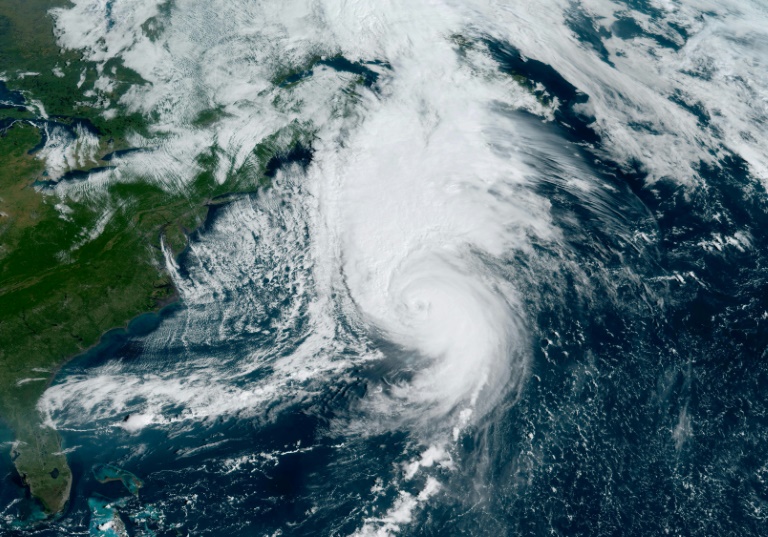
Hurricane Fiona made landfall in eastern Canada’s Nova Scotia on Saturday, the US National Hurricane Center said, with maximum winds of 90 miles (144 kilometers) per hour and heavy rainfall.

The NHC said the storm would affect many parts of eastern Canada as a “powerful hurricane-force cyclone”. Canada has issued severe weather warnings for much of its eastern coast.

“Significant impacts from high winds, storm surge, and heavy rainfall are expected,” the NHC said in an advisory. 

The Canadian Hurricane Center (CHC) said high-speed winds had been reported in Nova Scotia, Prince Edward Island, Iles-de-la-Madeleine and southwestern Newfoundland.

Rainfall of up to 4.9 inches (125 millimeters) had been recorded in Nova Scotia and Prince Edward Island, the CHC said, with a “high likelihood” of storm surges affecting Nova Scotia, the Gulf of St. Lawrence and western Newfoundland. 

“It is certainly going to be a historic, extreme event for eastern Canada,” Bob Robichaud, a meteorologist for the CHC, told reporters before the storm made landfall. 

“It’s a major hurricane… All that momentum is trapped within the storm, so it’s very difficult for something like that to actually wind down.”

In its latest bulletin, the CHC said conditions would improve in western Nova Scotia and eastern New Brunswick on Saturday, but would persist elsewhere.

At 0900 GMT, the hurricane was located in eastern Nova Scotia, about 130 miles (210 km) northeast of Halifax, and was moving north-northwest at 40 miles (65 km) per hour, the CHC said.

Authorities in Nova Scotia issued an emergency alert on phones, saying power outages were likely and people should stay inside with enough supplies for at least 72 hours.

Prime Minister Justin Trudeau called the storm “a bad one,” adding it “could have significant impacts right across the region.”

In Halifax, the capital of Nova Scotia, stores sold out of propane gas cylinders for camping stoves as residents stocked up.

“Hopefully it will slow up when it hits the cooler water, but it doesn’t sound like it’s going to,” Dave Buis of the Northern Yacht Club in North Sydney, Nova Scotia, told Canadian television.

– Puerto Rico hard hit –

Bermuda, which Fiona skirted by a day earlier, had at the time called on residents to remain inside as strong winds raked over the British territory, but no fatalities or major damage were reported as the storm passed roughly 100 miles to the west of the island.

The Belco power company said 15,000 out of 36,000 households were without power on Friday evening, with electricity being rapidly returned to many areas.

The Royal Bermuda Regiment said it was waiting for winds to die down before clearing roads. Residents posted images of downed power lines and some flooding on social media.

“We had some minor damage to the premises but nothing serious,” Jason Rainer, owner of a souvenir shop in the capital Hamilton told AFP, saying some doors and windows had been blown out.

Store owners had covered windows with sheets of metal and wood.

The island of about 64,000 people is no stranger to hurricanes — but it is also tiny, just 21 square miles (54 sq km), and one of the most remote places in the world, 640 miles from its closest neighbor, the United States.

Bermuda, whose economy is fueled by international finance and tourism, is wealthy compared with most Caribbean countries, and structures must be built to strict planning codes to withstand storms. Some have done so for centuries.

Fiona killed four people in Puerto Rico earlier this week, according to US media, while one death was reported in the French overseas department of Guadeloupe and another in the Dominican Republic. 

President Joe Biden declared a state of emergency in Puerto Rico, a US territory that is still struggling to recover from Hurricane Maria five years ago.

In the Dominican Republic, President Luis Abinader declared three eastern provinces to be disaster zones.

burs-st-aha/smw
Hurricane Fiona hits Canada after brushing Bermuda

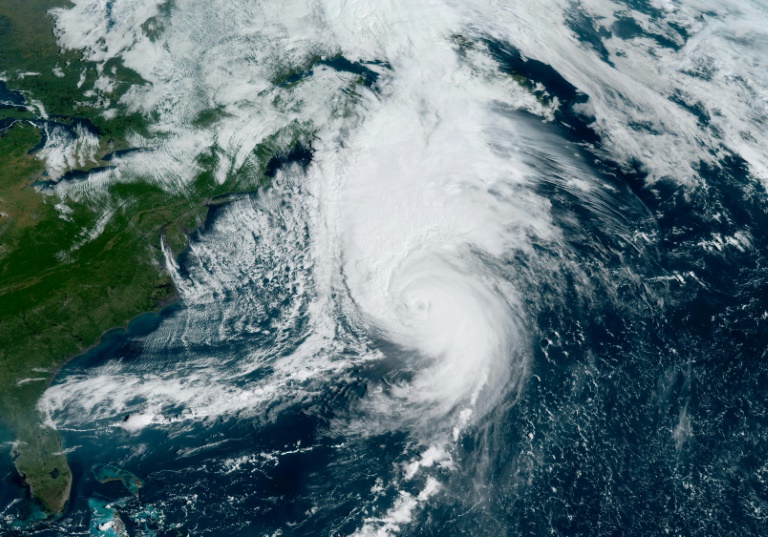
Hurricane Fiona made landfall in eastern Canada’s Nova Scotia on Saturday, the US National Hurricane Center said, with maximum winds of 90 miles (144 kilometers) per hour and heavy rainfall.

The NHC said the storm would affect many parts of eastern Canada as a “powerful hurricane-force cyclone”. Canada has issued severe weather warnings for much of its eastern coast.

“Significant impacts from high winds, storm surge, and heavy rainfall are expected,” the NHC said in an advisory. 

The Canadian Hurricane Center (CHC) said high-speed winds had been reported in Nova Scotia, Prince Edward Island, Iles-de-la-Madeleine and southwestern Newfoundland.

Rainfall of up to 4.9 inches (125 millimeters) had been recorded in Nova Scotia and Prince Edward Island, the CHC said, with a “high likelihood” of storm surges affecting Nova Scotia, the Gulf of St. Lawrence and western Newfoundland. 

“It is certainly going to be a historic, extreme event for eastern Canada,” Bob Robichaud, a meteorologist for the CHC, told reporters before the storm made landfall. 

“It’s a major hurricane… All that momentum is trapped within the storm, so it’s very difficult for something like that to actually wind down.”

In its latest bulletin, the CHC said conditions would improve in western Nova Scotia and eastern New Brunswick on Saturday, but would persist elsewhere.

At 0900 GMT, the hurricane was located in eastern Nova Scotia, about 130 miles (210 km) northeast of Halifax, and was moving north-northwest at 40 miles (65 km) per hour, the CHC said.

Authorities in Nova Scotia issued an emergency alert on phones, saying power outages were likely and people should stay inside with enough supplies for at least 72 hours.

Prime Minister Justin Trudeau called the storm “a bad one,” adding it “could have significant impacts right across the region.”

In Halifax, the capital of Nova Scotia, stores sold out of propane gas cylinders for camping stoves as residents stocked up.

“Hopefully it will slow up when it hits the cooler water, but it doesn’t sound like it’s going to,” Dave Buis of the Northern Yacht Club in North Sydney, Nova Scotia, told Canadian television.

– Puerto Rico hard hit –

Bermuda, which Fiona skirted by a day earlier, had at the time called on residents to remain inside as strong winds raked over the British territory, but no fatalities or major damage were reported as the storm passed roughly 100 miles to the west of the island.

The Belco power company said 15,000 out of 36,000 households were without power on Friday evening, with electricity being rapidly returned to many areas.

The Royal Bermuda Regiment said it was waiting for winds to die down before clearing roads. Residents posted images of downed power lines and some flooding on social media.

“We had some minor damage to the premises but nothing serious,” Jason Rainer, owner of a souvenir shop in the capital Hamilton told AFP, saying some doors and windows had been blown out.

Store owners had covered windows with sheets of metal and wood.

The island of about 64,000 people is no stranger to hurricanes — but it is also tiny, just 21 square miles (54 sq km), and one of the most remote places in the world, 640 miles from its closest neighbor, the United States.

Bermuda, whose economy is fueled by international finance and tourism, is wealthy compared with most Caribbean countries, and structures must be built to strict planning codes to withstand storms. Some have done so for centuries.

Fiona killed four people in Puerto Rico earlier this week, according to US media, while one death was reported in the French overseas department of Guadeloupe and another in the Dominican Republic. 

President Joe Biden declared a state of emergency in Puerto Rico, a US territory that is still struggling to recover from Hurricane Maria five years ago.

In the Dominican Republic, President Luis Abinader declared three eastern provinces to be disaster zones.

burs-st-aha/smw
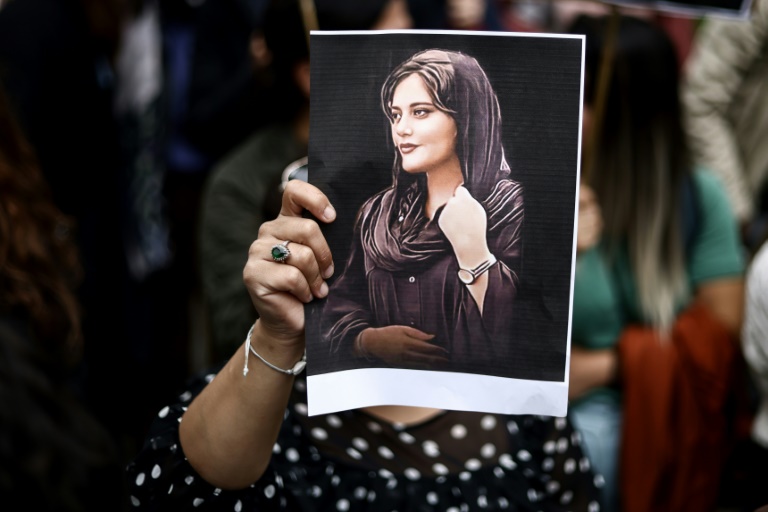
Death toll doubles in 'harrowing' Iran protest crackdown

The official death toll has nearly doubled to 35 in a crackdown by Iran’s security forces on more than a week of protests that erupted after the death of a young woman in custody.

Angry demonstrators have taken to the streets of major cities across Iran, including the capital Tehran, for eight straight nights since the death of 22-year-old Mahsa Amini.

The Kurdish woman was pronounced dead after spending three days in a coma following her arrest by Iran’s feared morality police for wearing the hijab headscarf in an “improper” way.

“The number of people who died in recent riots in the country has risen to 35,” state media said, raising the official toll from at least 17 dead, including five security personnel.

Protests were held around the Islamic republic on Friday, with online videos showing some turning violent in Tehran and other major cities including Tabriz.

In some of the footage, security forces could be seen firing what appeared to be live ammunition at unarmed demonstrators in the northwestern cities of Piranshahr, Mahabad and Urmia.

In one video shared by the Oslo-based Iran Human Rights non-governmental organisation, a uniformed member of the security forces is seen shooting an AK-47 assault rifle at protesters in Tehran’s Ferdowsi Boulevard.

It said other footage showed a “stream of state security forces… on a Tehran highway” on Friday night.

Security forces have carried out a wave of arrests of activists and journalists, including Niloufar Hamedi of the reformist newspaper Shargh, who reported on Amini’s death.

– Internet blackout –

Elsewhere, the Norway-based Kurdish rights group Hengaw said protesters “took control” of parts of the city of Oshnaviyeh, in West Azerbaijan province.

Images showed protesters walking freely with their hands aloft in triumph, but Hengaw acknowledged this could be “temporary” and expressed fears of a new crackdown there.

Amnesty International warned late Friday of “the risk of further bloodshed amid a deliberately imposed internet blackout”.

The London-based human rights group said evidence it gathered from 20 cities across Iran pointed to “a harrowing pattern of Iranian security forces deliberately and unlawfully firing live ammunition at protesters”.

In its statement, Amnesty said security forces had shot dead at least 19 people on Wednesday night alone, including at least three children.

Thousands of people marched through Tehran during a pro-hijab rally Friday, paying tribute to security forces who have moved to quell a week of protests by what media called “conspirators”.

Demonstrations in support of the security forces also took place in several cities across the country including Ahvaz, Isfahan, Qom and Tabriz.

Amini died following her arrest by Iran’s morality police, a unit responsible for enforcing the Islamic republic’s strict dress code for women.

Activists said she suffered a blow to the head in custody but this has not been confirmed by the Iranian authorities, who have opened an investigation.

Iranian women have burnt their headscarves and symbolically cut their hair in protest at the strict dress code, echoed in solidarity demonstrations from New York to Istanbul and Brussels to Santiago, Chile.

– ‘Toothless’ –

On Friday night, Iran’s Interior Minister Ahmad Vahidi insisted Amini had not been beaten.

“Reports from oversight bodies were received, witnesses were interviewed, videos were reviewed, forensic opinions were obtained and it was found that there had been no beating,” Vahidi said.

The minister said Iran was investigating the cause of Amini’s death, adding “we must wait for the final opinion of the medical examiner, which takes time”.

Amnesty International dismissed Iran’s investigation and called on the world to take “meaningful action” against the bloody crackdown.

“UN member states must go beyond toothless statements, hear the cries for justice from victims and human rights defenders in Iran and urgently set up an independent UN investigative mechanism,” said Heba Morayef, its director for the Middle East and North Africa.

Iran has imposed tough restrictions on the use of the internet in a bid to hamper protesters gathering and stop the flow of images of the backlash from reaching the outside world.

The United States announced Friday it was easing export restrictions on Iran to expand internet services.

The new measures would “help counter the Iranian government’s efforts to surveil and censor its citizens,” said Secretary of State Antony Blinken.

burs/dv/pjm

Blinken urges calm on Taiwan in talks with China

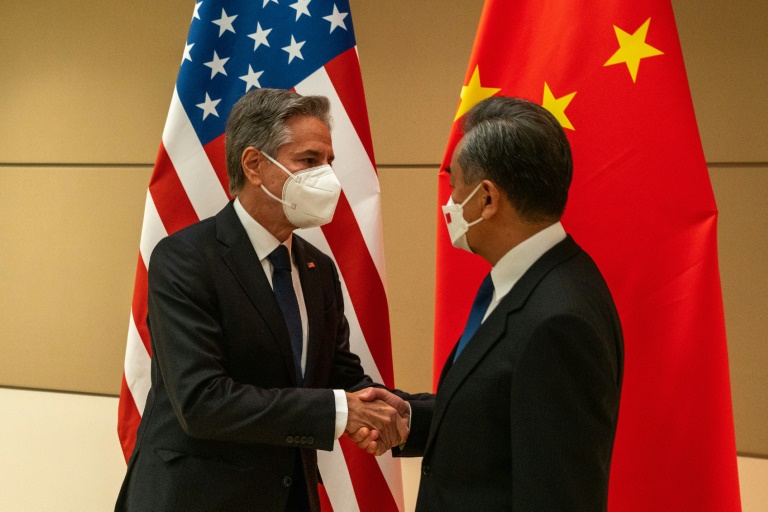
US Secretary of State Antony Blinken called Friday for calm over Taiwan as he met his Chinese counterpart, as soaring tensions showed signs of easing a notch.

Blinken met for 90 minutes with Chinese Foreign Minister Wang Yi in New York on the sidelines of the United Nations General Assembly, in talks a US official described as “extremely candid” and focused largely on Taiwan.

Blinken “stressed that preserving peace and stability across the Taiwan Strait is critical to regional and global security and prosperity,” a State Department statement said.

He “discussed the need to maintain open lines of communication and responsibly manage the US-PRC relationship, especially during times of tension,” it added, using the acronym for the People’s Republic of China.

A State Department official described the exchange on Taiwan as “direct and honest.” 

The official said Blinken also renewed US warnings not to support Russia’s invasion of Ukraine, amid guarded US hopes that Beijing is taking a distance from Moscow, nominally its ally.

Wang met in New York with Ukraine’s foreign minister for the first time since the war and, in a Security Council session Thursday, emphasized the need for a ceasefire rather than support for Russia.

Blinken, who went ahead with the talks despite the death of his father the previous day, met Wang for the first time since a sit-down in July in Bali, where both sides appeared optimistic for more stability.

One month later, House Speaker Nancy Pelosi visited Taiwan, infuriating Beijing, which staged exercises seen as a trial run for an invasion of the self-governing democracy, which it claims as its territory.

And in an interview aired Sunday, President Joe Biden said he was ready to intervene militarily if China uses force in Taiwan, once again deviating from decades of US ambiguity.

In the meeting with Blinken, Wang accused the US of “sending very wrong and dangerous signals” encouraging Taiwan independence, the Chinese foreign ministry said in a readout.

Wang told Blinken that China wished for “peaceful reunification” with Taiwan and warned that “the more rampant ‘Taiwan independence’ activities are, the less likely a peaceful solution would be,” according to the foreign ministry.

The US official said Blinken insisted to Wang that “there has been no change” to the US policy of only recognizing Beijing and voiced opposition to “unilateral changes to the status quo” by either side.

– Taiwan the ‘biggest risk’ –

In a sign that tensions have eased, Wang also met in New York with US climate envoy John Kerry, despite China’s announcement after Pelosi’s visit that it was curbing cooperation on the issue, a key priority for Biden.

But in a speech before his talks with Blinken, Wang called Taiwan “the biggest risk in China-US relations” and accused the United States of stoking pro-independence forces.

“Taiwan independence is like a highly disruptive great rhinoceros charging toward us. It must be stopped resolutely,” he said at the Asia Society think tank.

“Just as the US will not allow Hawaii to be stripped away, China has the right to uphold the unification of the country,” he said.

He denounced the US decision to “allow” the Taiwan visit by Pelosi, who is second in line to the presidency after the vice president. The Biden administration, while privately concerned about her trip, noted that Congress is a separate branch of government.

But Wang was conciliatory toward Biden. The New York talks are expected to lay the groundwork for a first meeting between Biden and President Xi Jinping since they became their two countries’ leaders, likely in Bali in November on the sidelines of a summit of the Group of 20 economic powers.

Wang said that both Biden and Xi seek to “make the China-US relationship work” and to “steer clear of conflict and confrontation.”

The US Congress is a stronghold of support for Taiwan, a vibrant democracy and major technological power.

Last week, a Senate committee took a first step to providing billions of dollars in weapons directly to Taiwan to deter China, a ramp-up from decades of only selling weapons requested by Taipei.

Tensions have also risen over human rights, with the United States accusing the communist state of carrying out genocide against the mostly Muslim Uyghur people.

Indigenous activists raise climate awareness on sidelines of UNGA

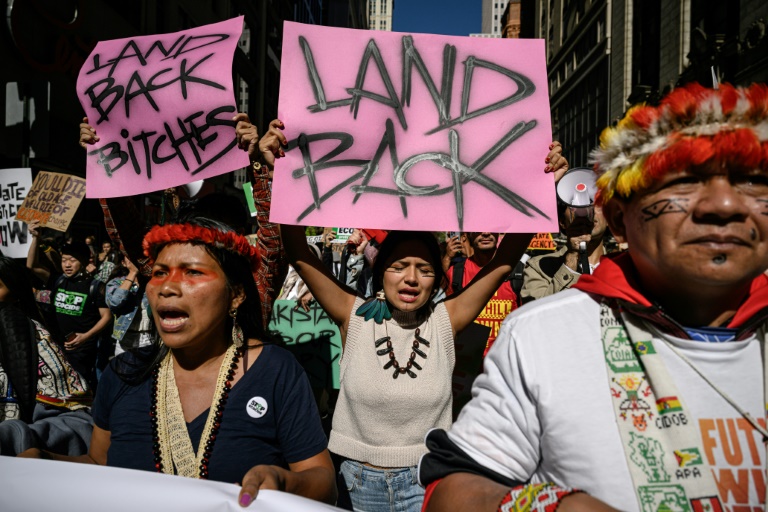
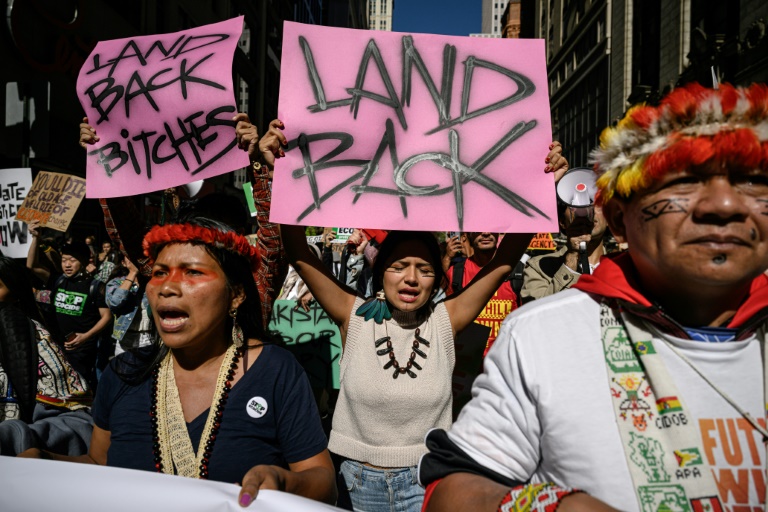
Uyukar Domingo Peas, an Ecuadorian Indigenous activist, says if there are still “reservoirs of natural resources” in the world, it is “because we have protected them for thousands of years.” 

Peas has been fighting against the destruction of forests for three decades and regrets that states and companies continue to destroy the Amazon despite the urgency of the climate crisis.

“The Amazon must remain intact for the youth and the rest of humanity,” the 58-year-old from the Achuar nation told AFP, lamenting that governments and corporations have not sought the ancestral knowledge of Indigenous peoples to save the planet.

Peas was speaking at Environment Week, a series of independent events involving Indigenous peoples from around the world that is being held in New York on the sidelines of the United Nations General Assembly.

An estimated 80 percent of the world’s tropical forests — about 800 million hectares — are in Indigenous territories, according to organizations that defend them. 

Many Indigenous people blame capitalism for the destruction of their forests. 

“We want companies and banks to stop investing for money and invest for the common good” because “climate change harms every human being,” he said. 

He is calling for funds to implement the Amazon Sacred Headwaters Initiative, which aims to protect 35 million hectares in the Amazon rainforest of Peru and Ecuador, and is home to 30 Indigenous communities with around 600,000 people.

He hopes that the nine countries that share the Amazon — often referred to as the lungs of the planet, spread over nearly 300 million hectares with three million inhabitants from more than 500 peoples — will also join this initiative.

– ‘Bioeconomy’ – 

Peas advocates for a new “bioeconomy,” with new sources of energy, tourism programs and other initiatives to ensure that Indigenous youth do not migrate away from their homelands. 

“We want to take care of the jungle and live off the jungle,” he said. 

Compared to the large sums needed for the oil and mining projects that pollute their lands and rivers, Peas’ initiative requires just $19 million over 10 years. 

“Mother Earth does not expect us to save her, she expects us to respect her,” said Nemonte Nenquimo, the Ecuadorian chief of the Waorani nation. 

– ‘Where does the money go?’- 

The Covid pandemic and “the collective hysteria of oil-dependent countries” following the conflict in Ukraine have dealt a severe blow to the Indigenous climate struggle, said Levi Sucre, of the Bribri community, an Indigenous people living between Costa Rica and Panama. 

With priorities set on economic recovery, Indigenous rights “have regressed alarmingly in the last two, three years,” he told AFP. 

He said that the most alarming case is that of Brazil, where the government “deliberately ignores the Indigenous peoples.” 

Indigenous peoples’ representatives complain that the resources agreed upon at climate meetings barely ever reached them. 

Monica Kristiani Ndoen, a young Indonesian Indigenous leader, said that “the challenge is to access climate funds directly.” 

“The question is where does the money go?” 

For the Venezuelan Gregorio Diaz Mirabal, general coordinator of the Indigenous Organizations of the Amazon Basin (COICA), the problem is that “we are not present in the meetings where the decisions are taken.”

“If you want us to continue to provide oxygen, rivers, forests, drinking water, respect our house,” he said. 

Indigenous activists raise climate awareness on sidelines of UNGA

Uyukar Domingo Peas, an Ecuadorian Indigenous activist, says if there are still “reservoirs of natural resources” in the world, it is “because we have protected them for thousands of years.” 

Peas has been fighting against the destruction of forests for three decades and regrets that states and companies continue to destroy the Amazon despite the urgency of the climate crisis.

“The Amazon must remain intact for the youth and the rest of humanity,” the 58-year-old from the Achuar nation told AFP, lamenting that governments and corporations have not sought the ancestral knowledge of Indigenous peoples to save the planet.

Peas was speaking at Environment Week, a series of independent events involving Indigenous peoples from around the world that is being held in New York on the sidelines of the United Nations General Assembly.

An estimated 80 percent of the world’s tropical forests — about 800 million hectares — are in Indigenous territories, according to organizations that defend them. 

Many Indigenous people blame capitalism for the destruction of their forests. 

“We want companies and banks to stop investing for money and invest for the common good” because “climate change harms every human being,” he said. 

He is calling for funds to implement the Amazon Sacred Headwaters Initiative, which aims to protect 35 million hectares in the Amazon rainforest of Peru and Ecuador, and is home to 30 Indigenous communities with around 600,000 people.

He hopes that the nine countries that share the Amazon — often referred to as the lungs of the planet, spread over nearly 300 million hectares with three million inhabitants from more than 500 peoples — will also join this initiative.

– ‘Bioeconomy’ – 

Peas advocates for a new “bioeconomy,” with new sources of energy, tourism programs and other initiatives to ensure that Indigenous youth do not migrate away from their homelands. 

“We want to take care of the jungle and live off the jungle,” he said. 

Compared to the large sums needed for the oil and mining projects that pollute their lands and rivers, Peas’ initiative requires just $19 million over 10 years. 

“Mother Earth does not expect us to save her, she expects us to respect her,” said Nemonte Nenquimo, the Ecuadorian chief of the Waorani nation. 

– ‘Where does the money go?’- 

The Covid pandemic and “the collective hysteria of oil-dependent countries” following the conflict in Ukraine have dealt a severe blow to the Indigenous climate struggle, said Levi Sucre, of the Bribri community, an Indigenous people living between Costa Rica and Panama. 

With priorities set on economic recovery, Indigenous rights “have regressed alarmingly in the last two, three years,” he told AFP. 

He said that the most alarming case is that of Brazil, where the government “deliberately ignores the Indigenous peoples.” 

Indigenous peoples’ representatives complain that the resources agreed upon at climate meetings barely ever reached them. 

Monica Kristiani Ndoen, a young Indonesian Indigenous leader, said that “the challenge is to access climate funds directly.” 

“The question is where does the money go?” 

For the Venezuelan Gregorio Diaz Mirabal, general coordinator of the Indigenous Organizations of the Amazon Basin (COICA), the problem is that “we are not present in the meetings where the decisions are taken.”

“If you want us to continue to provide oxygen, rivers, forests, drinking water, respect our house,” he said. 

From warriors to grandpa jokes as Italy readies to vote

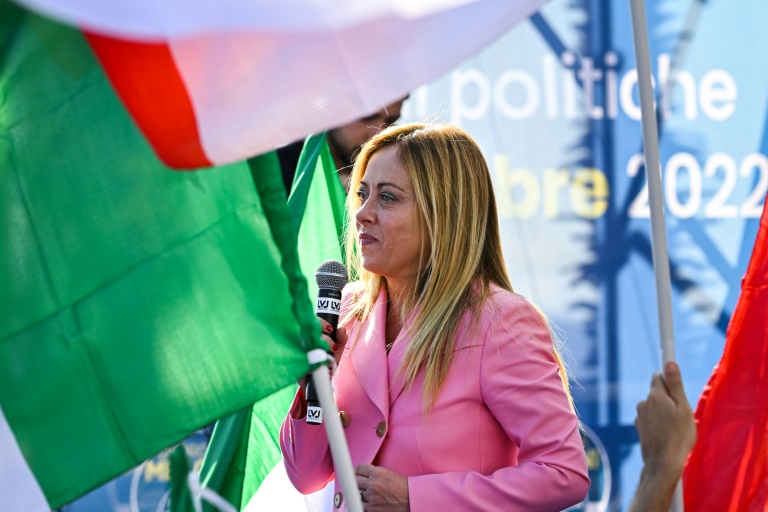
Italians were on Saturday braced for seismic change, on the eve of an election forecast to hand Italy the most right-wing government since World War II.

Out with internationally respected Mario Draghi and in — polls say — with eurosceptic Giorgia Meloni, head of the post-fascist Brothers of Italy party, who is widely tipped to become the country’s first female prime minister.

“The country is eager for a change, a new face,” Wolfango Piccoli of the London-based political risk consultancy Teneo told AFP.

The vote comes as Italy battles a series of crises, from rampant inflation and extreme weather events linked to climate change, to an energy crisis aggravated by the war in Ukraine.

The campaign, sparked by Draghi’s downfall in July, wrapped up on Friday, giving Italians a day of reprieve as electioneering is banned until the vote.

It was a chance to look back at some of the highlights of a race which saw the parties try to win over voters with ideas such as sending goods from northern to southern Italy via tube and fighting climate change with cannabis.

Meloni, 45, has worked hard over the past few weeks to reassure skittish investors and an anxious Brussels that her party’s historic ties to supporters of dictator Benito Mussolini are a thing of the past.

She has softened her tone, worn a lot of pink and posted a video of herself on TikTok making traditional pastries from the Puglia region.

But she channelled warrior Aragorn from Tolkien’s Lord of the Rings on Thursday at the closing rally for the right-wing coalition, which unites her Brothers of Italy with Matteo Salvini’s anti-immigration League party and billionaire Silvio Berlusconi’s Forza Italia.

– TikTok jokes –

The self-described “Christian mother” segued smoothly from the fantasy king to blaming the left for the country’s “drug dealers, thieves, rapists and mafia”, adding: “This Italy ends on Sunday”.

Berlusconi, 85, was at her side. The media mogul, who is on trial accused of bribing starlets not to testify about his allegedly erotic parties, has campaigned mainly online, wooing the country’s grandmas and housewives with promises of stay-at-home salaries.

He has also chased the youth vote with some TikTok jokes — including one about not trying to steal their girlfriends.

Former interior minister Salvini, 49, campaigned under the slogan “Credo” (I believe), earning him a reprove from the Catholic Church.

Fearful of losing a significant chunk of his supporters to Meloni, Salvini has tried to stand out by calling for an end to sanctions against Russia and railing against Brussels.

But the end of his campaign was overshadowed by a video clip of him describing a blind League candidate on Thursday as “an eye for Italians”.

The centre-left’s Enrico Letta, head of the Democratic Party (PD), rocked up to his final rally in an electric van — reminding voters of his earlier efforts to promote ecologically friendly transport, when his electric campaign bus ran out of battery.

His main rival for votes on the left, Giuseppe Conte, head of the populist Five Star Movement (M5S), seemed to have more staying power.

He was photographed so often standing head and shoulders above the crowd amid a throng of supporters that the media dubbed him the “travelling Madonna”.

Neighbouring Russia, Latvians prep for war

When war erupted in Ukraine, the head of Latvia’s fashion chamber Dita Danosa did not hesitate to become an army reservist, swapping her usually stylish clothes for military fatigues.

“I really felt I couldn’t be passive and just watch television,” the 49-year-old told AFP at the Mezaine military training ground in western Latvia.

“So I decided, yes, the national guard was the place for me.”

Since Russian forces invaded Ukraine in February, Baltic states like Latvia — which shares a border with Russia — are anxious about what Moscow might do next.

This fear has led to a four-fold increase in volunteers, like Danosa, for the army’s reserve force known as the national guard, or Zemessardze in Latvian.

“When the war started, all European values were endangered,” Danosa said, punctuating the silence between the bursts of two bullets.

While Latvia’s EU and NATO membership reassured her, Danosa said she felt under threat “because Russian aggression is unpredictable and we don’t know what can happen”.

Dressed in full combat clothing, including a magazine belt, she recalled that Latvia has a “history of occupation”. The former Soviet republic regained its independence in 1991.

Mezaine’s location is symbolic. During the Cold War, it was home to the Skrunda-1 radar station, whose two large installations were to alert the Soviet Red Army in the event of a missile attack from the West.

Now the area is used for, among other things, urban guerrilla training.

– 4,000 applications –

Created in 1991, the national guard is the largest component of armed forces in the country of 1.85 million people.

Made up of some 9,600 volunteers, it is divided into four brigades. The national army meanwhile has around 6,000 professional soldiers.

The guard’s commander-in-chief Egils Lescinskis hailed the “great increase” in volunteer interest and said fewer people were dropping out.

He said they had received around 4,000 applications since the beginning of 2022, up from around 1,000 candidates on average each year.

Around 20 percent of the volunteers this year are women.

The volunteers take part in 21 days of basic training, usually spread over seven weekends, after which they are ready to serve when called up.

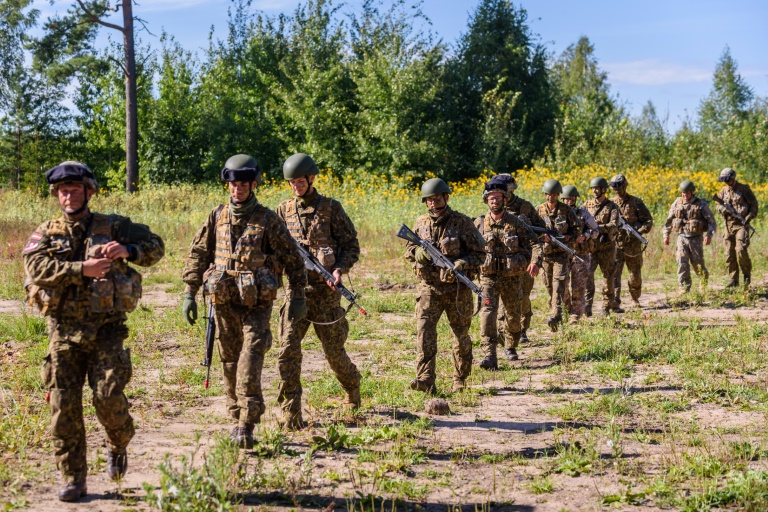
On a recent Saturday, around 30 volunteers armed with rifles in camouflage fatigues waited in total silence at the edge of a thick forest.

Their only communication as they prepared to attack a convoy was through hand gestures or pulling on a wire.

When the vehicle arrived, the burst of heavy gunfire was deafening. A few seconds later, a car horn pierced through the air.

The driver, head against the wheel, played dead.

– ‘Protect our loved ones’ –

Training includes “everything from basic survival to understanding what is war,” said recruit Rudolfs Aboltins.

“How to take up arms or even how to present yourself or talk to people, how to engage with unexpected situations in society as well as in combat,” he added.

Like Danosa, Aboltins joined the guard after the invasion.

Although he felt no immediate threat to Latvia, the “atrocities” in Ukraine mean “what I’m doing right now could matter in the future”, he said.

“Many of us have pacifist tendencies. We took arms and started learning to shoot because we want to be able to protect our loved ones,” he told AFP.

After basic training, he will take part in a specialised course to improve communication between civilians and troops.

Others who wish can also specialise in areas such as anti-tank warfare, medical aid or train to become snipers.

“My wife said at least one family member needs to join and get some basic skills,” said 35-year-old entrepreneur and father-of-two Juris Kukulis.

“So if something happens, we know what to do.”

Milan fashion mobilises for Italy vote

Go out and vote to protect your rights, top Italian designers urged compatriots this week as the Milan shows coincided with elections predicted to see a far-right government take power in Rome.

From Donatella Versace to Valentino’s Pierpaolo Piccioli, calls to mobilise have been everywhere at Milan Fashion Week. Houses such as Gucci and Fendi are actively helping their employees cast their ballots in Sunday’s general elections.

“Go out and vote, these elections are so important for our country!” Versace said on Instagram ahead of her fashion house’s Friday show.

“On September 25 vote to protect rights already acquired, thinking about progress and with an eye on the future,” she posted.

“Never look back.”

Left-wing activists fear the ascent to power of far-right leader Giorgia Meloni, who is leading opinion polls, will lead to a step backward for rights in Catholic-majority Italy.

Meloni and her main ally, League party leader Matteo Salvini, advocate traditional Catholic family values and rail against what she calls “LGBT lobbies”.

Meloni says she would not change the law legalising abortion, but says she wants to give mothers “the choice” not to terminate.

Piccioli, creative director at Valentino, published a lengthy post on Instagram in defence of tolerance, under the title, “A man of the left”.

– ‘Afraid of the consequences’ –

“The idea that there are people, human beings, who at this moment may be afraid of the consequences of this election fills me with rage,” he wrote.

He called on young people in particular to go and vote, because “we must not step back a millimetre on rights we have, and in fact the time is right to acquire new and fundamental ones”.

Influencer and fashion entrepreneur Chiara Ferragni has also called on her 28 million Instagram followers to defend LGBTQ and abortion rights.

While accepting that many people might feel unhappy about the choices on offer, she warned that not voting “is only to delegate to others what is up to us to decide”.

For millions of Italians, however, taking part in elections is not straightforward.

Postal voting is not available except for those living abroad, meaning they must physically return to their legal place of residence to cast a ballot.

And here again designers in Milan are getting involved.

Giacomo, a member of staff for Gucci based in Rome who did not give his last name, said the fashion giant “has completely reorganised the work to allow us to go home to vote”.

Like the rest of his team, he is in Milan for the spring/summer 2023 catwalk shows that run until Monday.

– Paying for travel home –

“We organised a lot of things to finish up on Saturday — we’re on our knees but reassured to be able to go and vote,” he told AFP.

“Some of us will go back to Milan on Sunday evening or Monday to continue the post-show work, and everything is taken care of by Gucci.”

From designers and stylists to production and marketing staff, about 80 percent of the teams of fashion houses are mobilised to Milan both for the show and, afterwards, sales.

Serge Brunschwig, head of Fendi, which had its show here on Wednesday, said its Milan showroom would close on election day on Sunday.

“We are paying for the travel of our Italian teams so they can go to their polling stations and return to Milan on Monday or Tuesday,” he said. 

With turnout predicted to be historically low, below 70 percent, many here feel that if they can get back to vote, then they should.

“Some of us have to go and vote in Puglia, in Sicily, in Sardinia,” said Roberto Strino, 39,  who works for Giorgio Armani, railing against the lack of a technological alternative.

“I will do it, because the elections are very important and we must take a stand against the far-right.”

Russia proxies hold breakaway polls in Ukraine

Kremlin-held regions of eastern and southern Ukraine entered the second day of voting to become part of Russia on Saturday, in referendums dismissed as a “sham” by US President Joe Biden.

The voting on whether Russia should annex four regions of Ukraine started Friday, dramatically raising the stakes seven months after Moscow’s troops invaded.

The same day polling got under way, UN and Ukrainian officials revealed what they said was more evidence of Russian “war crimes” — including executions and torture.

“Russia’s referenda are a sham –- a false pretext to try to annex parts of Ukraine by force in flagrant violation of international law,” Biden said.

“We will work with our allies and partners to impose additional swift and severe economic costs on Russia.”

It even prompted a reaction from Beijing, Moscow’s closest ally since the war began in February.

Chinese Foreign Minister Wang Yi — in comments made to his Ukrainian counterpart Dmytro Kuleba at the UN General Assembly Friday — said the “sovereignty and territorial integrity of all countries must be respected”.

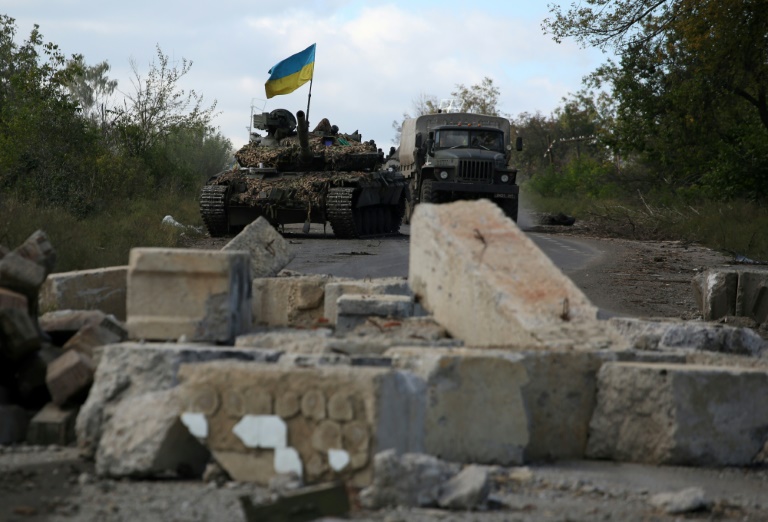
Ukrainian forces said they were clawing back territory from Moscow-backed separatists in the very lands Russia wants to assimilate.

Voting is being held in Russian-controlled areas of Donetsk and Lugansk in the east, and Kherson and Zaporizhzhia in the south.

Authorities there are going door-to-door for four days to collect votes. Polling stations then open Tuesday for residents to cast ballots on the final day.

It was also possible to vote at the building in Moscow that represents the Donetsk breakaway region. 

Leonid, a 59-year-old military official, told AFP he was “feeling happy”.

“Ultimately, things are moving towards the restoration of the Soviet Union. The referendum is one step towards this.”

– ‘No legitimacy’ –

The vote was announced earlier this week after a Ukrainian counteroffensive seized most of the northeastern Kharkiv region — bringing hundreds of settlements back under Kyiv’s control after months of Russian occupation.

The four regions’ integration into Russia would represent a major escalation of the conflict as Moscow would consider any military move there as an attack on its own territory.

The referendums are reminiscent of the one held after Russia annexed Ukraine’s Crimea in 2014.

Ukrainian President Volodymyr Zelensky on Friday denounced the polls.

“The world will react absolutely justly to the sham referenda,” he said, describing them as “crimes against international law and the law of Ukraine”.

Earlier Friday, G7 nations said the polls will “never” be recognised and have “no legal effect or legitimacy”.

– Evidence of ‘war crimes’ –

UN investigators meanwhile on Friday accused Russia of committing war crimes on a “massive scale” in Ukraine — listing bombings, executions, torture and horrific sexual violence.

Erik Mose of the Commission of Inquiry — an investigative team set up by the Security Council in March — said they had seen evidence of a “large number of executions” and the rape and torture of children.

In eastern Kharkiv region, Ukrainian officials said Friday they had finished exhuming 447 bodies from a site near the city of Izyum, which was recaptured from Russian forces.

“Most of them have signs of violent death, and 30 have signs of torture,” said Kharkiv regional governor Oleg Synegubov.

“There are bodies with rope around their necks, with their hands tied, with broken limbs and gunshot wounds.” 

The Kremlin has accused Kyiv of fabricating evidence of the alleged war crimes.

– ‘Tomorrow you will go to war’ –

Putin this week warned that Moscow would use “all means” to protect its territory — which former Russian leader Dmitry Medvedev said on social media could include the use of “strategic nuclear weapons”. 

Moscow began its mandatory troop call-up on Thursday after Putin called for about 300,000 reservists to bolster the war effort.

But men were leaving Russia in droves before they were made to join, with flights to neighbouring countries booked up for days to come.

Some, however, could not avoid the summons.

Andrei, who turned 18 last week, was called up after being detained during the anti-mobilisation protests in Moscow.

He recently began university and should not have been caught up in the recruitment drive, according to Russian Defence Minister Sergei Shoigu who had said students would not be called up.

“As we say, Russia is a country of endless possibilities,” Andrei joked bitterly.

Mikhail Suetin, 29, also detained at an anti-mobilisation protest, was also summoned.

“To be told ‘tomorrow you will go to war’,” he said, “that was a surprise.”

burs-jj/dhc/qan

Close Bitnami banner
Bitnami