World

Hurricane Fiona bears down on Canada after brushing Bermuda

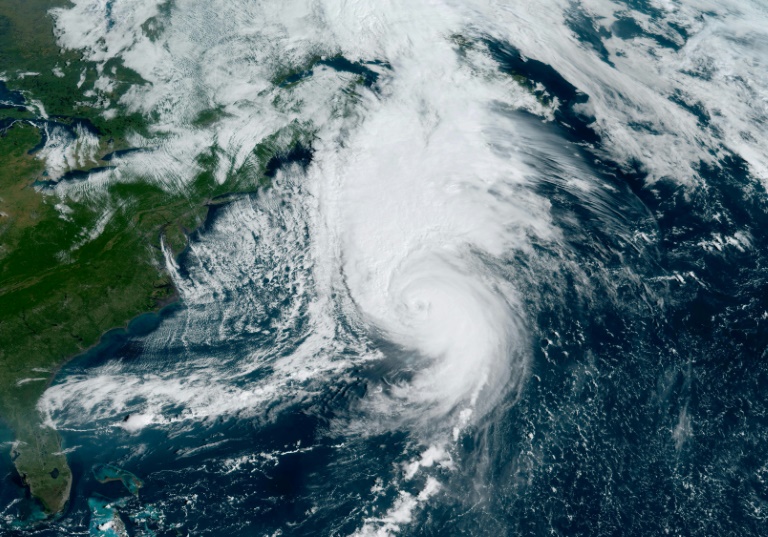
Hurricane Fiona barreled towards Canada on Friday with Nova Scotia province on high alert after the storm swept past Bermuda, where it left much of the population without power but caused little damage.

The US National Hurricane Center said Fiona was packing sustained winds of near 125 miles (205 kilometers) an hour and was “expected to be a powerful hurricane-force cyclone” when it makes landfall overnight into Saturday.

“It is certainly going to be a historic, extreme event for Eastern Canada,” Bob Robichaud, a meteorologist for the Canadian Hurricane Center, told reporters.

“It’s a major hurricane… All that momentum is trapped within the storm, so it’s very difficult for something like that to actually wind down.”

In its latest bulletin, the CHC described the storm as a “severe event” that will “impact Atlantic Canada and eastern Quebec with heavy rainfall and powerful hurricane force winds beginning tonight.”

At midnight GMT, the hurricane was located just over 200 km south of Sable Island, a small sandy strip off Nova Scotia, and was moving north at a speed of 56 kph, according to the CHC.

Authorities in Nova Scotia issued an emergency alert on phones, saying power outages were likely and people should stay inside with enough supplies for at least 72 hours.

Prime Minister Justin Trudeau called the storm “a bad one,” adding it “could have significant impacts right across the region.”

In Halifax, the capital of Nova Scotia, stores sold out of propane gas cylinders for camping stoves as residents stocked up.

“Hopefully it will slow up when it hits the cooler water, but it doesn’t sound like it’s going to,” Dave Buis of the Northern Yacht Club in North Sydney, Nova Scotia, told Canadian television.

– Puerto Rico hard hit –

Bermuda had earlier called on residents to remain inside as strong winds raked over the British territory, but no fatalities or major damage were reported as Fiona passed roughly 100 miles to the west of the island.

The Belco power company said 15,000 out of 36,000 households were without power on Friday evening, with electricity being rapidly returned to many areas.

The Royal Bermuda Regiment said it was waiting for winds to die down before clearing roads. Residents posted images of downed power lines and some flooding on social media.

“We had some minor damage to the premises but nothing serious,” Jason Rainer, owner of a souvenir shop in the capital Hamilton told AFP, saying some doors and windows had been blown out.

Store owners had covered windows with metal and wood sheets.

The island of about 64,000 people is no stranger to hurricanes — but it is also tiny, just 21 square miles (54 sq km), and one of the most remote places in the world, 640 miles from its closest neighbor, the United States.

Bermuda, whose economy is fueled by international finance and tourism, is wealthy compared with most Caribbean countries, and structures must be built to strict planning codes to withstand storms. Some have done so for centuries.

Fiona killed four people in Puerto Rico earlier this week, according to US media, while one death was reported in the French overseas department of Guadeloupe and another in the Dominican Republic. 

President Joe Biden declared a state of emergency in Puerto Rico, a US territory that is still struggling to recover from Hurricane Maria five years ago.

In the Dominican Republic, President Luis Abinader declared three eastern provinces to be disaster zones.
Hurricane Fiona bears down on Canada after brushing Bermuda

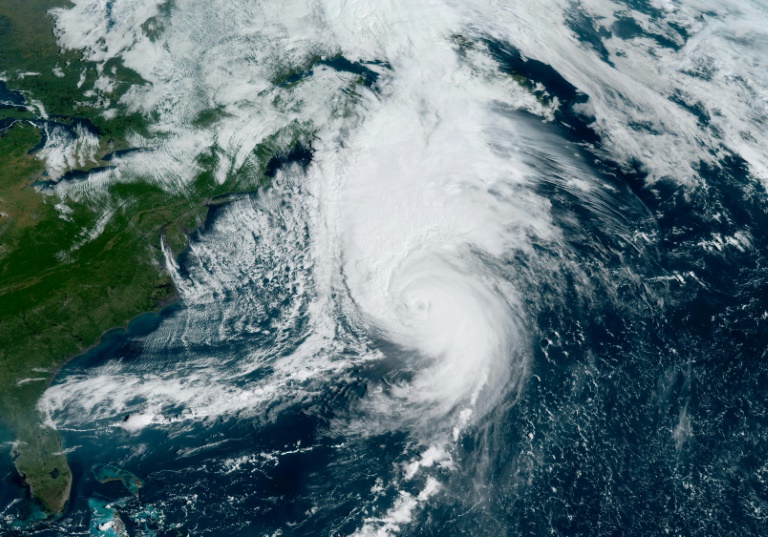
Hurricane Fiona barreled towards Canada on Friday with Nova Scotia province on high alert after the storm swept past Bermuda, where it left much of the population without power but caused little damage.

The US National Hurricane Center said Fiona was packing sustained winds of near 125 miles (205 kilometers) an hour and was “expected to be a powerful hurricane-force cyclone” when it makes landfall overnight into Saturday.

“It is certainly going to be a historic, extreme event for Eastern Canada,” Bob Robichaud, a meteorologist for the Canadian Hurricane Center, told reporters.

“It’s a major hurricane… All that momentum is trapped within the storm, so it’s very difficult for something like that to actually wind down.”

In its latest bulletin, the CHC described the storm as a “severe event” that will “impact Atlantic Canada and eastern Quebec with heavy rainfall and powerful hurricane force winds beginning tonight.”

At midnight GMT, the hurricane was located just over 200 km south of Sable Island, a small sandy strip off Nova Scotia, and was moving north at a speed of 56 kph, according to the CHC.

Authorities in Nova Scotia issued an emergency alert on phones, saying power outages were likely and people should stay inside with enough supplies for at least 72 hours.

Prime Minister Justin Trudeau called the storm “a bad one,” adding it “could have significant impacts right across the region.”

In Halifax, the capital of Nova Scotia, stores sold out of propane gas cylinders for camping stoves as residents stocked up.

“Hopefully it will slow up when it hits the cooler water, but it doesn’t sound like it’s going to,” Dave Buis of the Northern Yacht Club in North Sydney, Nova Scotia, told Canadian television.

– Puerto Rico hard hit –

Bermuda had earlier called on residents to remain inside as strong winds raked over the British territory, but no fatalities or major damage were reported as Fiona passed roughly 100 miles to the west of the island.

The Belco power company said 15,000 out of 36,000 households were without power on Friday evening, with electricity being rapidly returned to many areas.

The Royal Bermuda Regiment said it was waiting for winds to die down before clearing roads. Residents posted images of downed power lines and some flooding on social media.

“We had some minor damage to the premises but nothing serious,” Jason Rainer, owner of a souvenir shop in the capital Hamilton told AFP, saying some doors and windows had been blown out.

Store owners had covered windows with metal and wood sheets.

The island of about 64,000 people is no stranger to hurricanes — but it is also tiny, just 21 square miles (54 sq km), and one of the most remote places in the world, 640 miles from its closest neighbor, the United States.

Bermuda, whose economy is fueled by international finance and tourism, is wealthy compared with most Caribbean countries, and structures must be built to strict planning codes to withstand storms. Some have done so for centuries.

Fiona killed four people in Puerto Rico earlier this week, according to US media, while one death was reported in the French overseas department of Guadeloupe and another in the Dominican Republic. 

President Joe Biden declared a state of emergency in Puerto Rico, a US territory that is still struggling to recover from Hurricane Maria five years ago.

In the Dominican Republic, President Luis Abinader declared three eastern provinces to be disaster zones.
Clashes erupt at Mexico protest over missing students

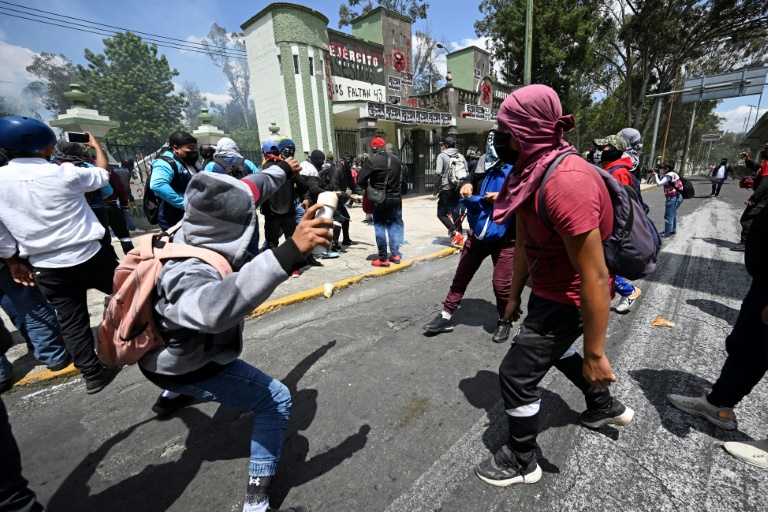
Protesters hurling rocks and homemade explosive devices clashed with security forces at a Mexican military base during a demonstration Friday over the disappearance of 43 students in 2014.

Mexico City officials said nearly 40 law enforcement officers were injured in the clashes.

Hundreds of demonstrators, some shouting “murderers,” pulled down metal fencing and tried to enter Military Camp No. 1 in Mexico City in the latest event marking the eighth anniversary of the tragedy.

Authorities fired water cannon in response.

The confrontation came a day after around a dozen police officers were injured at a protest outside the attorney general’s office to demand justice for the students.

And on Wednesday, relatives staged a rally outside Israel’s embassy, demanding the extradition of Tomas Zeron, a former top investigator wanted in connection with one of the country’s worst human rights tragedies.

The 43 teaching students had commandeered buses in the southern state of Guerrero to travel to a demonstration in Mexico City before they went missing.

Investigators say they were detained by corrupt police and handed over to a drug cartel that mistook them for members of a rival gang, but exactly what happened to them is disputed.

Last month, a truth commission tasked by the current government to investigate the atrocity branded the case a “state crime” involving agents of various institutions.

It said that military personnel bore “clear responsibility,” either directly or through negligence.

Arrest warrants have been issued for more than 80 suspects, including military personnel, police officers and cartel members.

Former attorney general Jesus Murillo Karam, who led a controversial investigation into the mass disappearance, was detained last month on charges of forced disappearance, torture and obstruction of justice.

Ukrainians race to fix shelled homes ahead of winter

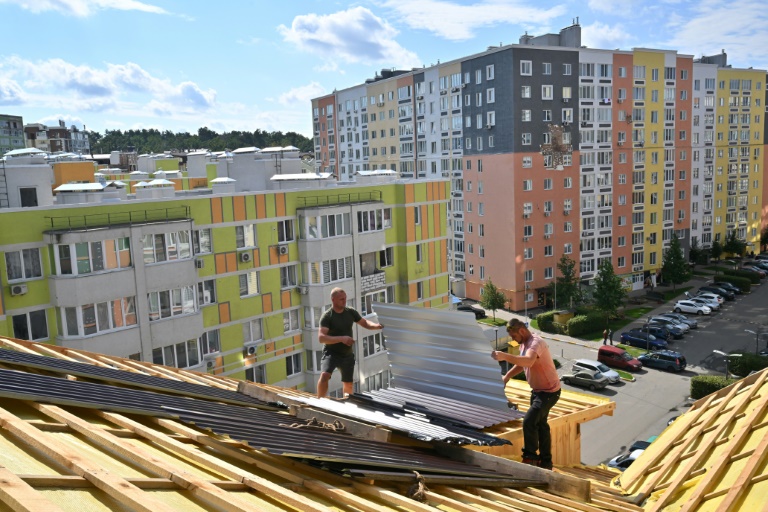
On the half-ruined top floor of an apartment block in war-scarred Irpin near Kyiv, Mykhailo Kyrylenko looks proudly at the new roof taking shape.

Over a hundred residential blocks in Irpin — dubbed a “hero city” by President Volodymyr Zelensky for holding back Russian invaders headed towards the capital — were badly damaged by shelling.

Now the advance of winter presents a different threat, as they urgently need to complete the repairs before the temperatures drop.

With state and local funds in short supply, the 16,000 Irpin residents left homeless by the shelling find themselves in a race against time to get their homes ready.

“We did not wait for any help,” said Kyrylenko, the head of his building’s residents’ association. “I understand that there is a war in the country, many people understand this.”

His brightly coloured block with yellow-painted gable walls was hit by four shells during the first days of the invasion, which began on February 24. Those strikes destroyed the roof and burned down the top floor.

After weeks of fighting however, Ukrainian forces recaptured the town, prompting the 65-year-old Kyrylenko to mobilise the building’s residents.

When government experts assessed that the top floor could be saved, he organised a vote, with most in favour of rebuilding.

“People don’t have much money, but they agreed” to donate funds to gradually restore the shattered apartments, Kyrylenko, wearing dark-blue work overalls, told AFP.  

“If we were waiting for the state to help us, then … we would definitely have to dismantle the fifth floor, it would collapse,” he said.

– Roof is key –

His efforts quickly saw results.

Out of 40 apartments in the building, about a dozen remained continuously occupied. They were reconnected to the water supply, sewerage and electricity — although there is still no gas.

“The most important thing is to get the roof on so that rainwater and snow do not get inside,” Kyrylenko said, looking up at new wooden beams almost all of which were now in place.

But bare brick walls on the sides and piles of construction debris underfoot indicated the work still to do.

The residents themselves and charitable foundations have already contributed significant sums, but Kyrylenko said at least two million gryvnia ($53,000) more was needed to winter-proof the building.

“Eight families now live here and will continue to do so,” Kyrylenko said.

On the fourth floor, Viktor Murygin’s appartment suffered minimal damage, with only faint streaks on light-coloured walls visible after rain.

Despite being less affected however, 63-year-old Murygin contributed both money and his labour to the reconstruction drive.

It was a constant fight against the elements, said Murygin. 

“It was necessary to protect not only my apartment, but also the apartments below.”

And thanks to the damp-resistant materials bought by charities, three apartments had so far been saved.

– Plea for help –

While residents of many other Ukrainian cities hit by Russian shells desperately seek reconstruction funds, government and local officials are beginning to respond.

Prime Minister Denys Shmygal announced last week a government allocation of around 3.4 billion gryvnia ($91 million) for “operational restoration work”. 

But much more was needed, said Irpin mayor Oleksandr Markushyn.

“We appeal to the entire world community to help us with building materials, with funding for reconstruction,” Markushyn wrote on social media earlier this month on Irpin’s annual “City Day”.

“This is the most difficult City Day in the history of Irpin. We cannot celebrate because the occupiers left behind ruins.”

The bicycle making its way through Bogota's hellish traffic

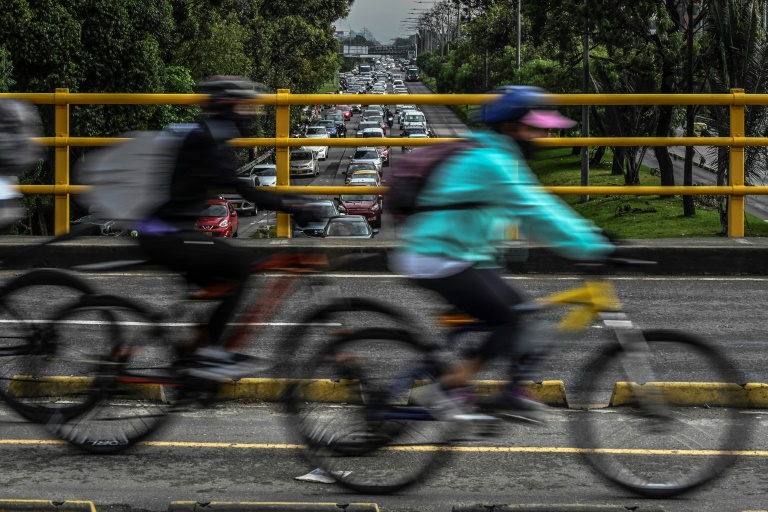
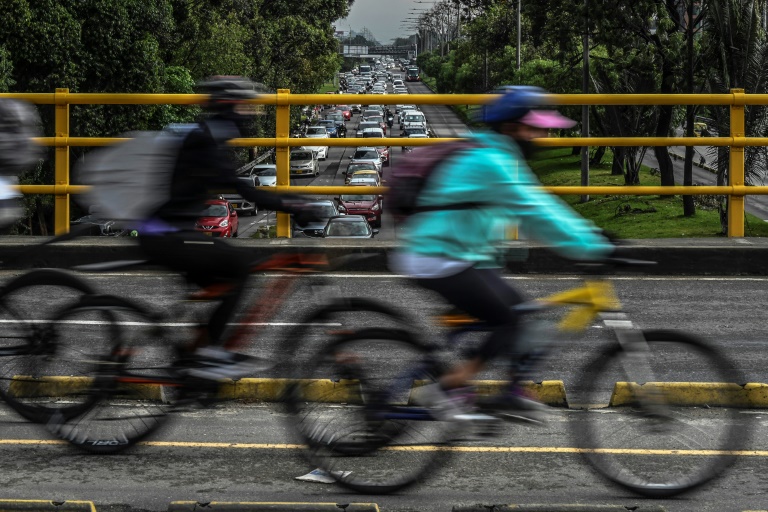
Each morning, hundreds of cyclists ride through the socially disadvantaged neighborhood of Kennedy in southern Bogota.

Gripping their handlebars, laborers, seamstresses and students are choosing pedal power over cars and buses.

A cheap alternative to public transportation and an effective way to beat Bogota’s horrendous traffic jams, the bicycle has taken off in one of the world’s most congested cities.

“It’s a practical way to get around for the people of Bogota, also because we are poor,” said Carlos Felipe Pardo, founder of Despacio, an NGO that supports alternative forms of mobility.

Ricardo Buitrago’s bicycle repair business has taken off in the six years since he started it.

Hands blackened with grease, he says up to 10,000 cyclists use the bicycle lane in front of his workshop every day.

One of them is Maria Ellis. She lives close to her office in Bogota, but it still takes her more than 1.5 hours to get to work.

“By bike it takes 25 minutes, so the bicycle is much better,” she smiled.

– Traffic nightmare –

Bogota’s eight million residents dread every car journey. At rush hour, crossing the city can take up to three hours.

In 2019, 880,000 daily journeys were made by bicycle in Bogota, according to the mayor’s office, amounting to close to seven percent of all such movement in the capital.

And that figure jumped to 13 percent during the pandemic, according to Pardo.

Bogota was one of the first cities to create temporary cycle lanes during the pandemic to aid mobility while respecting distancing protocols.

It was a move that was replicated throughout the world, including Paris.

Bogota has close to 600 kilometers (370 miles) of dedicated cycle lanes, the most comprehensive cycle network in Latin America, and the government is working on expanding it further, said mobility minister Avila Moreno.

Not all of these are in a good condition. Some are only separated from the intense traffic by plastic bollards while others have been deformed by tree roots.

But at least they exist.

– Cheap but dangerous –

Unlike in many European capitals, where riding the bicycle is sometimes seen as trendy, in Colombia, which has a minimum wage of only $220 a month, it is considered a reliable and affordable form of transportation. 

“Many view the bicycle as a cheap way to avoid public transport,” said Moreno.

Security guard Pedro Quimbaya, 53, says he saves 150,000 pesos ($35) a month in bus fare.

The flip side is that it can be dangerous.

“At rush hour the traffic is very heavy, there are too many bicycles, the lanes aren’t very good, you have to be very careful,” said Ellis.

Over the first half of 2022, 50 cyclists were killed in traffic incidents in Bogota.

Then there is the risk of theft. Quimbaya says he has been attacked several times and his bicycle worth $270, more than a month’s salary, was stolen by a gang.

Nearly 11,000 bicycles were stolen in 2020, according to the mayor’s office and theft continues to rise.

Pardo says the capital needs more infrastructure, better security and better trained drivers.

“Bogota has progressed on all these fronts but still needs to improve,” he added.

– Next Copenhagen? –

Moreno, the recently appointed mobility minister, says the city has “huge potential.”

“It’s a work in progress that other big cities like Copenhagen have already been through,” she said. “Bogota is following the same path.”

The municipality will roll out 3,300 public free-to-use bicycles in October.

Colombia has long been in love with the bicycle, not least thanks to its great cycling champions such as Egan Bernal, who won the Tour de France in 2019, and Nairo Quintana, a two-time Grand Tour winner.

The last three Bogota mayors, including incumbent Claudia Lopez and current President Gustavo Petro, have promoted bicycle use.

Ever since 1974, the city’s main avenues have been closed off to vehicles for several hours on Sundays to be replaced by thousands of bicycles.

Bogota “could become the world bicycle capital. It’s possible, even though we’re still far from that,” said Pardo, the NGO head.

“We can get people out of their cars and onto bicycles,” said Moreno.

Buitrago, the bicycle repairman, agrees: “The bicycle is the future.”

The bicycle making its way through Bogota's hellish traffic

Each morning, hundreds of cyclists ride through the socially disadvantaged neighborhood of Kennedy in southern Bogota.

Gripping their handlebars, laborers, seamstresses and students are choosing pedal power over cars and buses.

A cheap alternative to public transportation and an effective way to beat Bogota’s horrendous traffic jams, the bicycle has taken off in one of the world’s most congested cities.

“It’s a practical way to get around for the people of Bogota, also because we are poor,” said Carlos Felipe Pardo, founder of Despacio, an NGO that supports alternative forms of mobility.

Ricardo Buitrago’s bicycle repair business has taken off in the six years since he started it.

Hands blackened with grease, he says up to 10,000 cyclists use the bicycle lane in front of his workshop every day.

One of them is Maria Ellis. She lives close to her office in Bogota, but it still takes her more than 1.5 hours to get to work.

“By bike it takes 25 minutes, so the bicycle is much better,” she smiled.

– Traffic nightmare –

Bogota’s eight million residents dread every car journey. At rush hour, crossing the city can take up to three hours.

In 2019, 880,000 daily journeys were made by bicycle in Bogota, according to the mayor’s office, amounting to close to seven percent of all such movement in the capital.

And that figure jumped to 13 percent during the pandemic, according to Pardo.

Bogota was one of the first cities to create temporary cycle lanes during the pandemic to aid mobility while respecting distancing protocols.

It was a move that was replicated throughout the world, including Paris.

Bogota has close to 600 kilometers (370 miles) of dedicated cycle lanes, the most comprehensive cycle network in Latin America, and the government is working on expanding it further, said mobility minister Avila Moreno.

Not all of these are in a good condition. Some are only separated from the intense traffic by plastic bollards while others have been deformed by tree roots.

But at least they exist.

– Cheap but dangerous –

Unlike in many European capitals, where riding the bicycle is sometimes seen as trendy, in Colombia, which has a minimum wage of only $220 a month, it is considered a reliable and affordable form of transportation. 

“Many view the bicycle as a cheap way to avoid public transport,” said Moreno.

Security guard Pedro Quimbaya, 53, says he saves 150,000 pesos ($35) a month in bus fare.

The flip side is that it can be dangerous.

“At rush hour the traffic is very heavy, there are too many bicycles, the lanes aren’t very good, you have to be very careful,” said Ellis.

Over the first half of 2022, 50 cyclists were killed in traffic incidents in Bogota.

Then there is the risk of theft. Quimbaya says he has been attacked several times and his bicycle worth $270, more than a month’s salary, was stolen by a gang.

Nearly 11,000 bicycles were stolen in 2020, according to the mayor’s office and theft continues to rise.

Pardo says the capital needs more infrastructure, better security and better trained drivers.

“Bogota has progressed on all these fronts but still needs to improve,” he added.

– Next Copenhagen? –

Moreno, the recently appointed mobility minister, says the city has “huge potential.”

“It’s a work in progress that other big cities like Copenhagen have already been through,” she said. “Bogota is following the same path.”

The municipality will roll out 3,300 public free-to-use bicycles in October.

Colombia has long been in love with the bicycle, not least thanks to its great cycling champions such as Egan Bernal, who won the Tour de France in 2019, and Nairo Quintana, a two-time Grand Tour winner.

The last three Bogota mayors, including incumbent Claudia Lopez and current President Gustavo Petro, have promoted bicycle use.

Ever since 1974, the city’s main avenues have been closed off to vehicles for several hours on Sundays to be replaced by thousands of bicycles.

Bogota “could become the world bicycle capital. It’s possible, even though we’re still far from that,” said Pardo, the NGO head.

“We can get people out of their cars and onto bicycles,” said Moreno.

Buitrago, the bicycle repairman, agrees: “The bicycle is the future.”

What could happen if Putin used nuclear weapons in Ukraine?

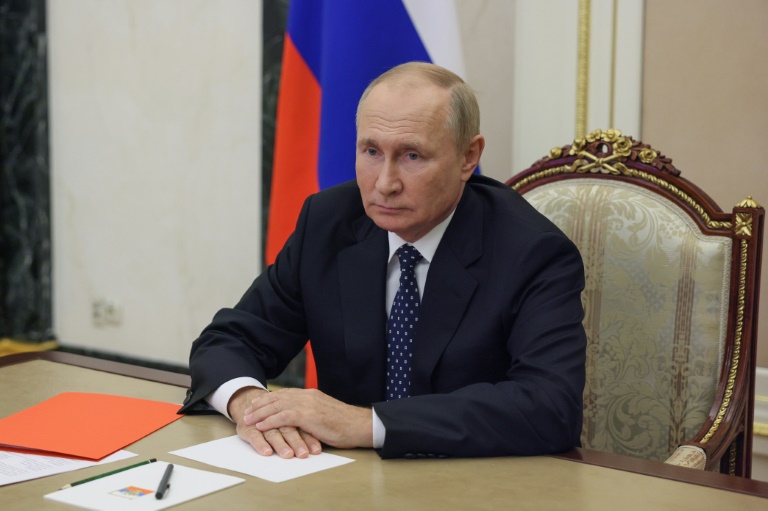
President Vladimir Putin’s threat to use a nuclear weapon in Ukraine if Russian “territorial integrity” is threatened has sparked deep discussion in the West as to how it would respond.

“Those who are trying to blackmail us with nuclear weapons should know that the wind can also turn in their direction,” Putin said, adding: “This is not a bluff.”

However analysts aren’t convinced the Russian president is willing to be the first to unleash nuclear weapons since the US bombed Japan in 1945.

AFP spoke with several experts and officials about the possible scenarios that could arise should Russia carry out a nuclear attack.

What would a Russian nuclear attack look like?

Analysts say Moscow would likely deploy one or more “tactical” or battlefield nuclear bombs.

These are small weapons, ranging from 0.3 kilotons to 100 kilotons of explosive power, compared to the 1.2 megatons of the largest US strategic warhead or the 58 megaton bomb Russia tested in 1961.

Tactical bombs are designed to have a limited impact on the battlefield, compared to strategic nuclear weapons which are designed to fight and win all-out wars.

But “small” and “limited” are relative: The atom bomb the US dropped on Hiroshima in 1945 to devastating effect was just 15 kilotons.

What would Moscow target?

Analysts say Russia’s goal in using a tactical nuclear bomb in Ukraine would be to frighten it into surrender or submission to negotiations, and to divide the country’s Western backers.

Mark Cancian, a military expert with the CSIS International Security Program in Washington, said Russia would not likely use nuclear weapons on the front lines. 

Capturing 20 miles (32 kilometers) of territory could require 20 small nuclear bombs — small gains for the huge risks of introducing nuclear weapons and nuclear fallout.

“Just using one will not be enough,” Cancian said.

Moscow could instead send a strong message and avoid significant casualties by detonating a nuclear bomb over water, or exploding one high over Ukraine to generate an electromagnetic pulse that would knock out electronic equipment.

Or Putin could opt for greater destruction and death: attacking a Ukraine military base, or hitting an urban center like Kyiv, generating mass casualties and possibly killing the country’s political leadership.

Such scenarios “would likely be designed to split the NATO alliance and global consensus against Putin,” Jon Wolfsthal, a former white House nuclear policy expert, wrote Friday on Substack.

But “it is unclear if it would succeed, and could just as easily be seen as desperation as resolve,” he said.

Should the West respond with nukes?

The West has remained ambiguous on how it would respond to a tactical nuclear strike, and the choices are complicated.

The United States and NATO do not want to appear weak in front of an implicit nuclear threat.

But they also would want to avoid the possibility that the war in Ukraine — not a NATO member — could escalate into a much broader, devastating global nuclear war.

Experts say the West would have no option but to respond, and that a response should come from NATO as a group, rather than the United States alone.

Any response should “ensure both that Putin’s military situation did not improve from such a strike, and that his political, economic and personal position suffered as a result,” said Wolfsthal.

The United States has positioned about 100 of its own tactical nuclear weapons in NATO countries and could respond in kind against Russian forces.

That would demonstrate resolve and remind Moscow of the danger of its actions, according to Matthew Kroenig of the Atlantic Council.

However, he said, “it might also provoke a Russian nuclear reprisal, raising the risk of a larger nuclear exchange and further humanitarian disaster.”

Another risk is that some NATO members might reject a nuclear response, serving Putin’s aims of weakening the alliance.

Give Ukraine the ability to attack Russia?

Answering a Russian nuclear attack in a more conventional military or diplomatic way, and supplying Ukraine with more lethal arms to attack Russia, could be more effective, experts say.

“Russian nuclear use might provide an opening to convince countries that have so far been reluctant — such as India and possibly even China — to participate in escalating sanctions,” said Kroenig.

In addition, the United States could offer Ukraine NATO aircraft, Patriot and THAAD anti-missile batteries, and ATACMS long-range missiles that could be used by Ukraine forces to strike deep inside Russia.

“Whatever restrictions we have on Ukraine forces — and I think we have some restrictions — I think we take all of those off,” said Cancian.

Bangladesh PM denounces 'tragedy' of rich nations on climate

A country of fertile, densely populated deltas, low-lying Bangladesh is among the most vulnerable nations in the world to climate change. 

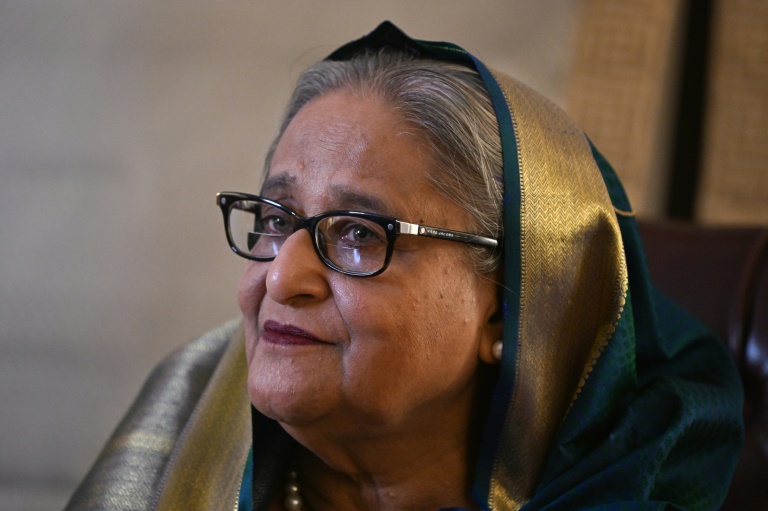
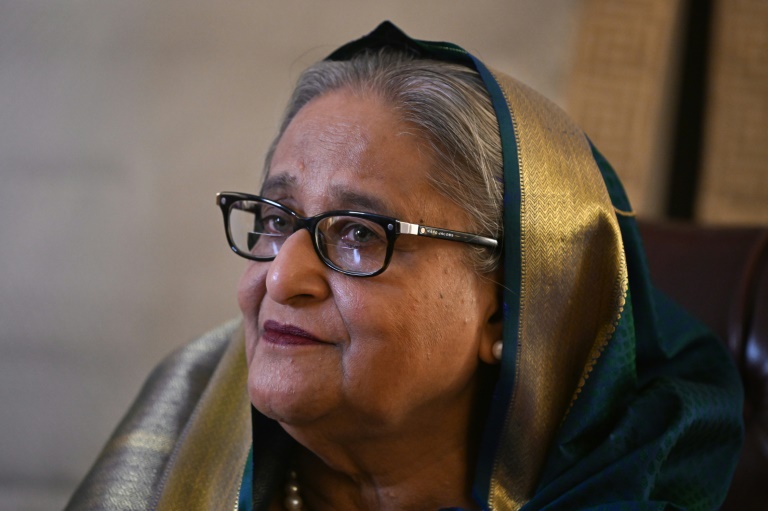
But the urgency of the situation is not being matched by actions of countries responsible for emissions, Prime Minister Sheikh Hasina said.

“They don’t act. They can talk but they don’t act,” she told AFP on a visit to New York for the United Nations General Assembly.

“The rich countries, the developed countries, this is their responsibility. They should come forward. But we are not getting that much response from them. That is the tragedy,” she said.

“I know the rich countries, they want to become more rich and rich. They don’t bother for others.”

Bangladesh has produced a miniscule amount of the greenhouse gas emissions that have already contributed to the warming of the planet by an average of nearly 1.2 degrees Celsius above pre-industrial levels.

The Paris accord called for $100 billion a year by 2020 from wealthy nations to help developing nations cope with climate change. That year, $83.3 billion was committed, including through private sources, according to Organization for Economic Co-operation and Development figures.

One key issue facing the next UN climate summit, to take place in Egypt in November, is whether wealthy nations also need to pay for losses and damages from climate change — not just to pay for adaptation and mitigation.

“We want that fund to be raised. Unfortunately we didn’t get a good response from the developed countries,” Hasina said.

“Because they are the responsible ones for these damages, they should come forward,” the 74-year-old added.

Wealthy nations have agreed only to discuss the loss and damage issue through 2024.

This year’s General Assembly featured repeated calls for climate justice. The leader of tiny Vanuatu urged an international treaty against fossil fuels while the prime minister of Pakistan warned that floods that have swamped one-third of his country could happen elsewhere.

– Questions on Rohingya –

Climate is not the only issue on which Bangladesh sees inaction from the West.

Some 750,000 Rohingya fled to Bangladesh in 2017 after a scorched-earth campaign against the minority group by troops in neighboring Myanmar, a campaign that the United States has described as genocide.

While the world has saluted Bangladesh for taking in the refugees — along with 100,000 who fled earlier violence — attention has shifted since the Covid-19 pandemic and now Russia’s invasion of Ukraine.

“As long as they are in our country, we feel that it is our duty,” she said. But for Bangladeshi hosts, patience is running thin, she said.

Michelle Bachelet, then the UN human rights chief, said on a visit in August that there was growing anti-Rohingya sentiment in Bangladesh.

“Local people also suffer a lot,” Hasina said. “I can’t say that they’re angry, but they feel uncomfortable.”

“All the burden is coming upon us. This is a problem.”

The Rohingya refugees, who are mostly Muslim, live largely in ramshackle camps with tarpaulins, sheet metal and bamboo.

Bachelet on her visit said there was no prospect of sending them back to Buddhist-majority, military-run Myanmar, where the Rohingya are not considered citizens.

But in her interview, Hasina signaled that there were few options other than for the Rohingya to reside in camps.

“It is not possible for us to give them an open space because they have their own country. They want to go back there. So that is the main priority for everybody,” Hasina said.

“If anybody wants to take them, they can take them,” she added. “Why should I object?”

Bangladesh PM denounces 'tragedy' of rich nations on climate

A country of fertile, densely populated deltas, low-lying Bangladesh is among the most vulnerable nations in the world to climate change. 

But the urgency of the situation is not being matched by actions of countries responsible for emissions, Prime Minister Sheikh Hasina said.

“They don’t act. They can talk but they don’t act,” she told AFP on a visit to New York for the United Nations General Assembly.

“The rich countries, the developed countries, this is their responsibility. They should come forward. But we are not getting that much response from them. That is the tragedy,” she said.

“I know the rich countries, they want to become more rich and rich. They don’t bother for others.”

Bangladesh has produced a miniscule amount of the greenhouse gas emissions that have already contributed to the warming of the planet by an average of nearly 1.2 degrees Celsius above pre-industrial levels.

The Paris accord called for $100 billion a year by 2020 from wealthy nations to help developing nations cope with climate change. That year, $83.3 billion was committed, including through private sources, according to Organization for Economic Co-operation and Development figures.

One key issue facing the next UN climate summit, to take place in Egypt in November, is whether wealthy nations also need to pay for losses and damages from climate change — not just to pay for adaptation and mitigation.

“We want that fund to be raised. Unfortunately we didn’t get a good response from the developed countries,” Hasina said.

“Because they are the responsible ones for these damages, they should come forward,” the 74-year-old added.

Wealthy nations have agreed only to discuss the loss and damage issue through 2024.

This year’s General Assembly featured repeated calls for climate justice. The leader of tiny Vanuatu urged an international treaty against fossil fuels while the prime minister of Pakistan warned that floods that have swamped one-third of his country could happen elsewhere.

– Questions on Rohingya –

Climate is not the only issue on which Bangladesh sees inaction from the West.

Some 750,000 Rohingya fled to Bangladesh in 2017 after a scorched-earth campaign against the minority group by troops in neighboring Myanmar, a campaign that the United States has described as genocide.

While the world has saluted Bangladesh for taking in the refugees — along with 100,000 who fled earlier violence — attention has shifted since the Covid-19 pandemic and now Russia’s invasion of Ukraine.

“As long as they are in our country, we feel that it is our duty,” she said. But for Bangladeshi hosts, patience is running thin, she said.

Michelle Bachelet, then the UN human rights chief, said on a visit in August that there was growing anti-Rohingya sentiment in Bangladesh.

“Local people also suffer a lot,” Hasina said. “I can’t say that they’re angry, but they feel uncomfortable.”

“All the burden is coming upon us. This is a problem.”

The Rohingya refugees, who are mostly Muslim, live largely in ramshackle camps with tarpaulins, sheet metal and bamboo.

Bachelet on her visit said there was no prospect of sending them back to Buddhist-majority, military-run Myanmar, where the Rohingya are not considered citizens.

But in her interview, Hasina signaled that there were few options other than for the Rohingya to reside in camps.

“It is not possible for us to give them an open space because they have their own country. They want to go back there. So that is the main priority for everybody,” Hasina said.

“If anybody wants to take them, they can take them,” she added. “Why should I object?”

NASA's Tuesday Moon launch threatened by storm

NASA’s historic uncrewed mission to the Moon is facing fresh difficulties.

After technical problems derailed two launch attempts several weeks ago, a new liftoff of the Artemis 1 mission scheduled for Tuesday is now threatened by a storm gathering in the Caribbean.

The storm, which has not yet been assigned a name, is currently located south of the Dominican Republic.

But it is expected to grow into a hurricane in the coming days and could move north to Florida, home to the Kennedy Space Center, from which the rocket is set to launch.

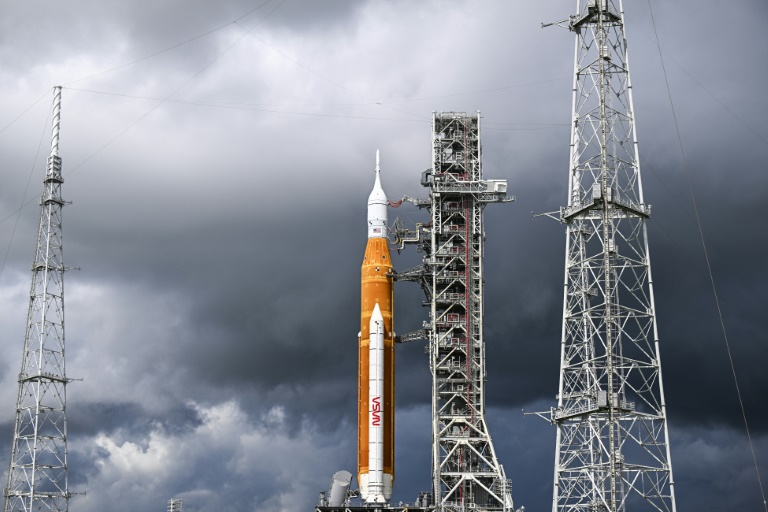
“Our plan A is to stay to course and to get the launch off on September 27,” Mike Bolger, NASA’s exploration ground systems manager, told reporters on Friday. “But we realized we also need to be really paying attention and thinking about a plan B.”

That would entail wheeling the giant Space Launch System rocket back to the Vehicle Assembly Building, known as VAB.

“If we were to go down to Plan B we need a couple days to pivot from our current tanking test or launch configuration to execute rollback and get back into the protection of the VAB,” Bolger said, adding that a decision should be made by early afternoon on Saturday.

On the launch pad the orange and white SLS rocket can withstand wind gusts of up to 137 kilometers per hour. But if it has to be sheltered, the current launch window, which runs until October 4, will be missed.

The next launch window will run from October 17 to 31, with one possibility of take-off per day, except from October 24-26 and 28.

A successful Artemis 1 mission will come as a huge relief to the US space agency, after years of delays and cost overruns. But another setback would be a blow to NASA, after two previous launch attempts were scrapped when the rocket experienced technical glitches including a fuel leak.

The launch dates depend on NASA receiving a special waiver to avoid having to retest batteries on an emergency flight system that is used to destroy the rocket if it strays from its designated range to a populated area.

On Tuesday the launch window will open at 11:37 local time and will last 70 minutes.

If the rocket takes off that day, the mission will last 39 days before it lands in the Pacific Ocean on November 5.

The Artemis 1 space mission hopes to test the SLS as well as the unmanned Orion capsule that sits atop, in preparation for future Moon-bound journeys with humans aboard.

Mannequins equipped with sensors are standing in for astronauts on the mission and will record acceleration, vibration and radiation levels.

The next mission, Artemis 2, will take astronauts into orbit around the Moon without landing on its surface.

The crew of Artemis 3 is to land on the Moon in 2025 at the earliest.

Close Bitnami banner
Bitnami