World

World markets plunge on growing recession fears

Stock markets tumbled, the pound crashed against the dollar and oil prices slumped Friday on growing recession fears after central banks this week ramped up interest rates to fight decades-high inflation.

With price rises showing no solid sign of letting up, monetary policymakers have gone on the offensive, warning that short-term hits to economies are less painful than the long-term effects of not acting.

The Federal Reserve’s decision Wednesday to lift borrowing costs by 0.75 percentage point for a third successive meeting was followed by a warning that more big rises were in the pipeline and that rates would likely come down only in 2024.

There were similar moves by central banks in other countries including Britain, Sweden, Norway, Switzerland, the Philippines and Indonesia — all pointing to a dark outlook for markets.

Wall Street extended losses Friday, with the Dow finishing at its lowest level since November 2020, while European equities sank in afternoon deals and Asia finished lower.

“A negative end to the week in Asia, and Europe has quickly followed as the prospect of much more tightening and a recession weighs on sentiment,” said Craig Erlam, analyst at trading platform OANDA.

The British pound tumbled to a 37-year low under $1.10 as a tax-cutting budget sparked public finance concerns while recession fears mounted.

“Equity markets are also plunging on concerns that this (UK) package could further push inflation even higher, and thus make it more difficult to bring back down,” said Michael Hewson, chief market analyst at CMC Markets UK.

“Sterling is in the firing line as traders are turning their backs on all things British. There is a creeping feeling the extra government borrowing that is in the pipeline will severely weigh on the UK economy,” added David Madden, market analyst at Equiti Capital.

In the eurozone, recession fears deepened as data showed its economic activity fell once again in September.

The S&P eurozone PMI dropped to 48.2 in September — with a score under 50 representing economic contraction.

The euro hit a new two-decade low at $0.9751.

“A eurozone recession is on the cards as companies report worsening business conditions and intensifying price pressures linked to soaring energy costs,” said Chris Williamson, chief business economist at S&P Global Market Intelligence.

He added that falling UK business activity this month indicates that the British economy is likely already in recession.

Recession fears also caused oil prices to fall, with the main US contract, WTI, finishing below $80 a barrel for the first time in seven months.

Traders were keeping a close eye as well on developments following the Japanese finance ministry’s intervention to support the yen, after it hit a new 24-year low of 146 against the dollar.

The first such intervention since 1998 helped strengthen the yen but it remained above 140.

Analysts warned the move was unlikely to have much long-term impact and the yen remained vulnerable owing to the Bank of Japan’s refusal to tighten policy — citing a need to boost the economy.

– Key figures at around 2040 GMT –

New York – Dow: DOWN 1.6 percent at 29,590.41 (close)

New York – S&P 500: DOWN 1.7 percent at 3,693.23 (close)

New York – Nasdaq: DOWN 1.8 percent at 10,867.93 (close)

London – FTSE 100: DOWN 2.0 percent at 7,018.60 (close) 

Frankfurt – DAX: DOWN 2.0 percent at 12,284.19 (close)

Paris – CAC 40: DOWN 2.3 percent at 5,783.14 (close) 

EURO STOXX 50: DOWN 2.3  percent at 3,348.60 (close) 

Hong Kong – Hang Seng Index: DOWN 1.2 percent at 17,933.27 (close)

Shanghai – Composite: DOWN 0.7 percent at 3,088.77 (close)

Tokyo – Nikkei 225: Closed for a holiday

Pound/dollar: DOWN at 1.0852 from $1.1252 Thursday

Euro/dollar: DOWN at $ 0.9695 from $0.9839

Euro/pound: UP at 89.28 pence from 87.40 pence 

Dollar/yen: UP at 143.31 yen from 142.35 yen

West Texas Intermediate: DOWN 5.7 percent at $78.74 per barrel

Brent North Sea crude: DOWN 4.8 percent at $86.15 per barrel

burs-jmb/dw
Iran protests flare anew hours after pro-government rallies

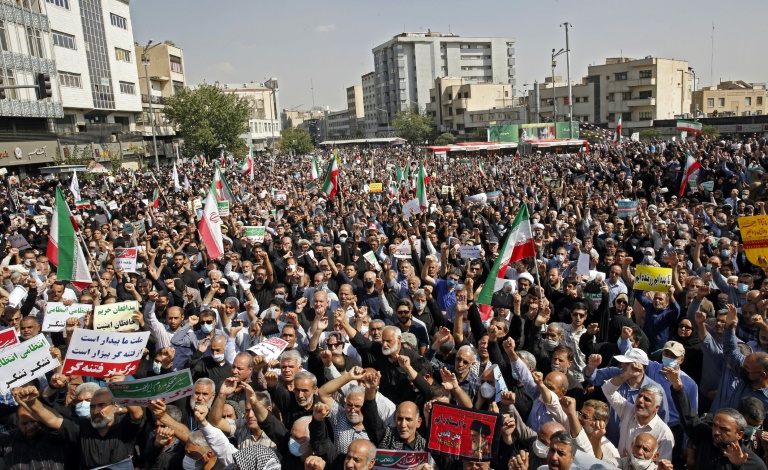
Protests flared in Iran for an eighth straight night Friday over the death of a young woman arrested by morality police, verified social media posts showed, hours after counter-demonstrations mobilised by authorities.

At least 50 people have been killed by security forces in the anti-government protests, Iran Human Rights, an Oslo-based organisation, said — more than three times the official death toll of 17, which includes five security personnel. 

The street violence, which IHR says has spread to 80 towns and cities, was triggered by the death of Mahsa Amini, a 22-year-old Kurd who had spent three days in a coma after being detained by the morality police in Tehran.

Verified footage spread on social media showed large crowds of protesters gathering in several neighbourhoods of the capital Tehran after dark, just hours after the government-backed rallies dispersed.

Some were confronted by armed anti-riot police or militia.

Iran has imposed tough restrictions on the use of the internet in a bid to hamper protesters gathering and stop the flow of images of the backlash from reaching the outside world.

– ‘Afraid of own people’ –

The United States announced Friday it was easing export restrictions on Iran to expand internet services, days after SpaceX owner Elon Musk said he would seek an exemption from sanctions to offer his company’s Starlink satellite service in the Islamic republic.

The new measures will “help counter the Iranian government’s efforts to surveil and censor its citizens,” said Secretary of State Antony Blinken.

“It is clear that the Iranian government is afraid of its own people,” he added.

On Friday, thousands took to the streets in support of the hijab at government-backed counter rallies in Tehran and other cities.

“The great demonstration of the Iranian people condemning the conspirators and the sacrileges against religion took place today,” Iran’s Mehr news agency said.

State television broadcast footage of pro-hijab demonstrators in central Tehran, many of them men but also women dressed in black chadors.

– Deadly clashes –

Amini died on September 16, three days after she was hospitalised following her arrest by the morality police, the unit responsible for enforcing the Islamic republic’s strict dress code for women.

Activists said she suffered a blow to the head in custody but this has been disputed by the Iranian authorities, who have opened an investigation.

After she was pronounced dead, angry protests flared and spread to major cities, including Isfahan, Mashhad, Shiraz and Tabriz as well as her native Kurdistan province.

In the latest violence, demonstrators clashed with security forces on Friday evening in the city of Bokan in West Azerbaijan province, said Hengaw, a second Oslo-based rights group. The report by this Kurdish organisation could not be independently verified.

In the city of Babol, in northern Mazandaran province, demonstrators were seen setting ablaze a large billboard bearing the image of Iran’s supreme leader Ayatollah Ali Khamenei, in videos shared online. 

Unverified footage appeared to show protesters setting fire to a base of the feared Basij militia on Ferdowsi Street in downtown Terhan. It could not immediately be verified.

Some women demonstrators have defiantly taken off their hijabs and burned them in bonfires or symbolically cut their hair before cheering crowds, video footage spread virally on social media has shown.

– ‘Bleeding profusely’ –

Demonstrators have hurled stones at security forces, set fire to police cars and chanted anti-government slogans, state news agency IRNA reported.

“The government has responded with live ammunition, pellet guns and tear gas, according to videos shared on social media that have also shown protesters bleeding profusely,” the New York-based Center for Human Rights in Iran (CHRI) said.

Internet access has been restricted in what web monitor NetBlocks has called a “curfew-style pattern of disruptions”.

“Online platforms remained restricted and connectivity is intermittent for many users and mobile internet was disrupted for a third day on Friday,” NetBlocks said.

Measures were taken in response to “the actions carried out via these social networks by counter-revolutionaries against national security”, Iran’s Fars news agency said.

President Ebrahim Raisi, at a news conference in New York where he attended the UN General Assembly, said on Thursday: “We must differentiate between demonstrators and vandalism”.

The unrest comes at a particularly sensitive time for the leadership, as the Iranian economy remains mired in a crisis largely caused by US sanctions over its nuclear programme.

burs/dv/kir/dwo

White House rebukes World Bank chief in climate row

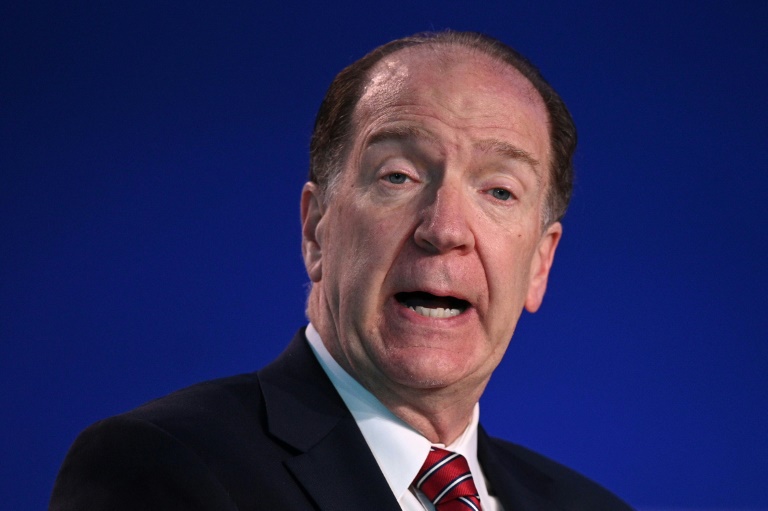
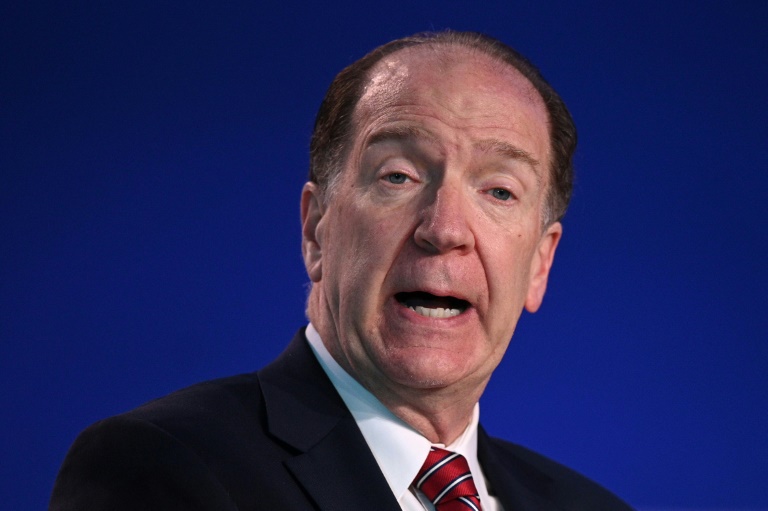
The White House on Friday rebuked the head of the World Bank David Malpass, who is battling charges of climate denial for dodging questions on the role of man-made emissions in global warming.

Under mounting fire, Malpass has rejected suggestions he might quit over the uproar — and has moved to clarify his position several times in recent days.

“Look, it’s clear that greenhouse gas emissions from human activity are adding to, are causing climate change,” he told Politico Friday, affirming that none of the bank’s member countries had asked him to leave and that he was “not resigning.”

“The task for us, for the world, is to pull together the projects and the funding that actually has an impact,” he said.

Malpass is a veteran of Republican US administrations and was tapped to lead the bank in 2019 by then-president Donald Trump, who famously and repeatedly denied the science behind climate change.

Climate activists have previously called for Malpass to be removed for what they say is an inadequate approach to the climate crisis — but the chorus grew suddenly louder after his appearance at a New York Times-organized conference this week.

Asked on stage to respond to a claim by former US vice president Al Gore that he was a climate denier, Malpass declined multiple times to say whether he believed man-made emissions were warming the planet — responding, “I’m not a scientist.”

“We condemn the words of the president,” Press Secretary Karine Jean-Pierre told a White House briefing in response to the incident.

“We expect the World Bank to be a global leader” on the climate crisis response, she said, adding that the US Treasury Department “has and will continue to make that expectation clear to the World Bank leadership.”

Malpass has been seeking to course-correct since the row erupted earlier this week, and in an interview with CNN on Thursday he clearly acknowledged that climate-warming emissions were “coming from manmade sources, including fossil fuels, methane, agricultural uses and industrial uses.”

“I’m not a denier,” he told the network, saying his message had been “tangled” and he was “not always good at conveying” what he means.

But the uproar shows little sign of dying down, with the Union of Concerned Scientists the latest group to call for him to be “replaced immediately.”

Pressed on whether President Joe Biden still has confidence in Malpass and media reports that some US officials are seeking his removal, Jean-Pierre said: “Removing him requires a majority of shareholders, so that’s something to keep in mind.”

“The US believes the World Bank must be a full partner in delivering on the aggressive climate agenda, poverty reduction and sustainability development. Again, Treasury will hold Malpass accountable to this position and support the many staff working to fight climate change.”

– ‘I am worried’ –

Malpass’s initial nomination faced intense criticism but since taking the role he has been a staunch supporter of aid and debt relief for the poorest nations, in addition to consistently noting the dangers from climate change.

In a speech in June where he warned about the overlapping crises facing the global community amid soaring inflation and debt distress, he emphasized the need to “effectively address climate change.”

“It requires massive investments in cleaner energy, energy efficiency, and electricity grids and transmission. Gas flaring, methane leakage, and the operation of antiquated coal-fired power plants, with severe health and environmental impacts, continue with little abatement,” he said.

Even so, critics of the lending institution have grown increasingly loud.

“I am worried right now about the World Bank,” the Nobel Prize-winning economist Joseph Stiglitz told AFP earlier this week.

“Unfortunately the World Bank has not taken the kind of global leadership that the world needs right now” on climate and other critical issues, said Stiglitz, himself a former chief economist of the institution.

The head of the World Bank is traditionally an American, while the leader of the other big international lender in Washington, the IMF, tends to be European. 

Malpass is not the first leader of one of those institutions to come under fire for personal or professional behavior.

His predecessor Jim Yong Kim faced controversy over reforms and management of the Bank and then left early to join the private sector, while current IMF chief Kristalina Georgieva fell into hot water over changes made to data in a now discontinued World Bank report that painted China in a more positive light.

White House rebukes World Bank chief in climate row

The White House on Friday rebuked the head of the World Bank David Malpass, who is battling charges of climate denial for dodging questions on the role of man-made emissions in global warming.

Under mounting fire, Malpass has rejected suggestions he might quit over the uproar — and has moved to clarify his position several times in recent days.

“Look, it’s clear that greenhouse gas emissions from human activity are adding to, are causing climate change,” he told Politico Friday, affirming that none of the bank’s member countries had asked him to leave and that he was “not resigning.”

“The task for us, for the world, is to pull together the projects and the funding that actually has an impact,” he said.

Malpass is a veteran of Republican US administrations and was tapped to lead the bank in 2019 by then-president Donald Trump, who famously and repeatedly denied the science behind climate change.

Climate activists have previously called for Malpass to be removed for what they say is an inadequate approach to the climate crisis — but the chorus grew suddenly louder after his appearance at a New York Times-organized conference this week.

Asked on stage to respond to a claim by former US vice president Al Gore that he was a climate denier, Malpass declined multiple times to say whether he believed man-made emissions were warming the planet — responding, “I’m not a scientist.”

“We condemn the words of the president,” Press Secretary Karine Jean-Pierre told a White House briefing in response to the incident.

“We expect the World Bank to be a global leader” on the climate crisis response, she said, adding that the US Treasury Department “has and will continue to make that expectation clear to the World Bank leadership.”

Malpass has been seeking to course-correct since the row erupted earlier this week, and in an interview with CNN on Thursday he clearly acknowledged that climate-warming emissions were “coming from manmade sources, including fossil fuels, methane, agricultural uses and industrial uses.”

“I’m not a denier,” he told the network, saying his message had been “tangled” and he was “not always good at conveying” what he means.

But the uproar shows little sign of dying down, with the Union of Concerned Scientists the latest group to call for him to be “replaced immediately.”

Pressed on whether President Joe Biden still has confidence in Malpass and media reports that some US officials are seeking his removal, Jean-Pierre said: “Removing him requires a majority of shareholders, so that’s something to keep in mind.”

“The US believes the World Bank must be a full partner in delivering on the aggressive climate agenda, poverty reduction and sustainability development. Again, Treasury will hold Malpass accountable to this position and support the many staff working to fight climate change.”

– ‘I am worried’ –

Malpass’s initial nomination faced intense criticism but since taking the role he has been a staunch supporter of aid and debt relief for the poorest nations, in addition to consistently noting the dangers from climate change.

In a speech in June where he warned about the overlapping crises facing the global community amid soaring inflation and debt distress, he emphasized the need to “effectively address climate change.”

“It requires massive investments in cleaner energy, energy efficiency, and electricity grids and transmission. Gas flaring, methane leakage, and the operation of antiquated coal-fired power plants, with severe health and environmental impacts, continue with little abatement,” he said.

Even so, critics of the lending institution have grown increasingly loud.

“I am worried right now about the World Bank,” the Nobel Prize-winning economist Joseph Stiglitz told AFP earlier this week.

“Unfortunately the World Bank has not taken the kind of global leadership that the world needs right now” on climate and other critical issues, said Stiglitz, himself a former chief economist of the institution.

The head of the World Bank is traditionally an American, while the leader of the other big international lender in Washington, the IMF, tends to be European. 

Malpass is not the first leader of one of those institutions to come under fire for personal or professional behavior.

His predecessor Jim Yong Kim faced controversy over reforms and management of the Bank and then left early to join the private sector, while current IMF chief Kristalina Georgieva fell into hot water over changes made to data in a now discontinued World Bank report that painted China in a more positive light.

Pakistan's dire floods signal global climate crisis, PM tells UN

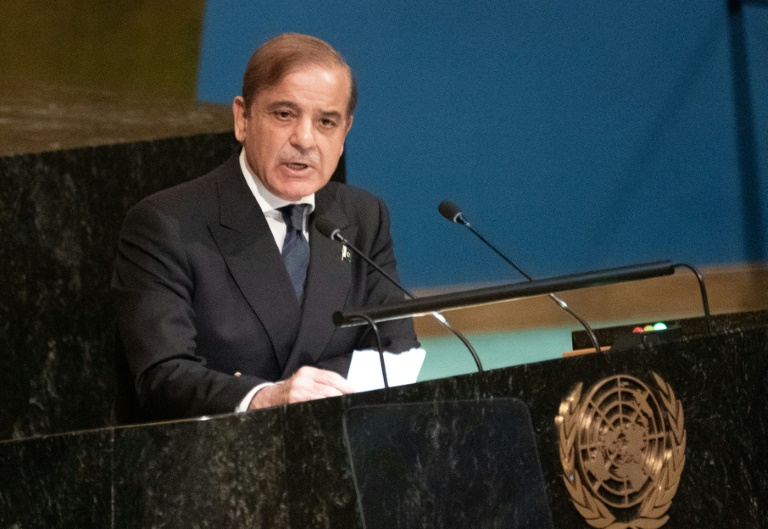
Pakistan Prime Minister Shehbaz Sharif warned Friday that his country’s worst-ever floods were a sign of climate catastrophes to come around the world, as he urged justice for developing nations that bear little responsibility for warming.

Unprecedented monsoon downpours flooded a third of the country — an area the size of the United Kingdom — killing nearly 1,600 people and displacing more than seven million.

“What happened in Pakistan will not stay in Pakistan,” he said in a passionate address to the United Nations General Assembly, adding that lost homes, decimated livelihoods and deluged cropland had meant that for many, life had “changed forever.”

Sharif said injustice was inherent in the crisis, with his country of 220 million people at “ground zero” of climate change but responsible for less than one percent of carbon emissions. 

“Why are my people paying the price of such high global warming through no fault of their own? Nature has unleashed her fury on Pakistan without looking at our carbon footprint, which is next to nothing,” he said.

“It is therefore entirely reasonable to expect some approximation of justice for this loss and damage,” he continued, adding his voice to growing calls among developing countries for financial compensation from rich polluters.

– Climate compensation –

The issue of “loss and damage” payments is deeply contentious. 

Supporters argue that historic polluters have a moral imperative to pay for the loss and damage already caused by multiplying extreme weather events, which have not been prevented by measures to mitigate or adapt to global warming.

The idea has so far been shot down by rich nations, but UN chief Antonio Guterres endorsed the proposal a few days ago and it is due to be discussed at the next UN climate summit in Egypt.

Pakistan has estimated total financial losses at $30 billion, and on Friday its finance minister Miftah Ismail tweeted the county was seeking debt relief from bilateral creditors. 

Turning his attention to neighboring Afghanistan, Sharif urged the international community to heed a $4.2 billion UN appeal for humanitarian and economic assistance and release the country’s financial reserves, frozen since the Taliban seized power last year.

“Pakistan is working to encourage respect for the rights of Afghan girls and women to education and work. Yet, at this point, isolating the Afghan Interim Government could aggravate the suffering of the Afghan people, who are already destitute,” he said.

The United States recently set up an outside fund to manage Afghanistan’s frozen assets, saying it did not trust the Taliban.

On Kashmir, the Himalayan territory disputed between Pakistan and India since the two countries’ independence from Britain, Sharif accused New Delhi of embarking on “illegal demographic changes” by opening the Muslim-majority region to mass migration by Hindu Indians.

He called on India to “walk the path of peace and dialogue by reversing its illegal steps of 15 August 2019,” when New Delhi revoked Kashmir’s constitutional autonomy. 

Solomons leader claims neutrality to UN but defends China ties

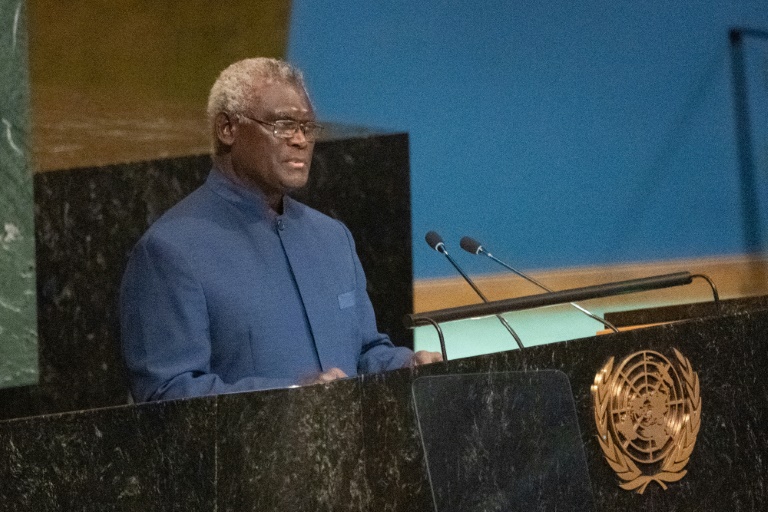
Solomon Islands leader Manasseh Sogavare on Friday told the United Nations his South Pacific country remains neutral despite growing ties with China, charging that he has been “vilified” for the relationship with Beijing.

The sprawling archipelago switched diplomatic recognition from Taipei to Beijing in 2019 and signed a security pact with Beijing in April, with some critics warning of authoritarian tendencies by Sogavare.

“We will not align ourselves with any external powers or security architecture that targets our or any other sovereign country or threatens regional or international peace,” the prime minister told the UN General Assembly.

“Solomon Islands will not be coerced into choosing sides.”

He said his country of fewer than one million citizens has been unfairly targeted and subjected to “a barrage of unwarranted and misplaced criticisms” as major powers vie for Pacific influence.

“Solomon Islands has been vilified in the media since formalizing its relationship with China,” he said. 

Sogavare has deepened his nation’s ties with China and earlier this month he was successful in efforts to change the constitution to delay scheduled elections until 2024 at the earliest.

The four-time leader has twice been ousted by votes of no confidence and faced street protests against his decision to switch diplomatic recognition.

After widespread rioting in the capital Honiara and demands for his ouster last year, his government signed a secretive defense pact with Beijing that — according to a leaked draft — allows him to call in Chinese security forces to quell unrest.

Sogavare at the UN called on all countries to “not inflame tensions” in or near the Taiwan Strait, amid mounting concerns over the self-governing democracy claimed by Beijing.

“Any miscalculation could threaten international peace and security and could have disastrous consequences on global trade,” he said.

Pakistan's dire floods signal global crisis, PM tells UN

Pakistan Prime Minister Shehbaz Sharif warned the United Nations on Friday that climate disasters will not remain confined to his country, in the wake of floods that have devastated the South Asian giant.

“What happened in Pakistan will not stay in Pakistan,” he said in his first address to the General Assembly, adding that life had “changed forever.”

Sharif drew attention to the injustice inherent in the crisis, with his country at “ground zero” of climate change but responsible for less than one percent of carbon emissions.  

“Why are my people paying the price of such high global warming through no fault of their own? Nature has unleashed her fury on Pakistan without looking at our carbon footprint, which is next to nothing,” he said.

“It is therefore entirely reasonable to expect some approximation of justice for this loss and damage, not to mention building back better with resilience,” he said, adding his voice to growing calls among developing countries for financial compensation from rich polluters.

Pakistan has been lashed by unprecedented monsoon downpours flooding a third of the country — an area the size of the United Kingdom — and killing nearly 1,600 people, according to the latest government figures.

More than seven million people have been displaced, many living in makeshift tents without protection from mosquitoes, and often with little access to clean drinking water or washing facilities.

Blinken urges calm on Taiwan in talks with China

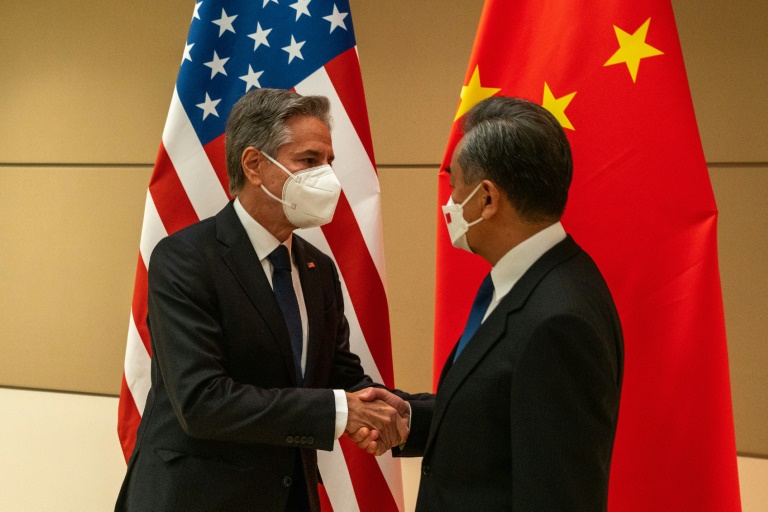
US Secretary of State Antony Blinken called Friday for calm over Taiwan as he met his Chinese counterpart, as soaring tensions showed signs of easing a notch.

Blinken met for 90 minutes with Chinese Foreign Minister Wang Yi in New York on the sidelines of the UN General Assembly, in talks a US official described as “extremely candid” and focused largely on Taiwan.

Blinken “stressed that preserving peace and stability across the Taiwan Strait is critical to regional and global security and prosperity,” a State Department statement said.

He “discussed the need to maintain open lines of communication and responsibly manage the US-PRC relationship, especially during times of tension,” it added, using the acronym for the People’s Republic of China.

A State Department official described the exchange on Taiwan as “direct and honest.” 

The official said Blinken also renewed US warnings not to support Russia’s invasion of Ukraine, amid guarded US hopes that Beijing is taking a distance from Moscow, nominally its ally.

Wang met in New York with Ukraine’s foreign minister for the first time since the war and, in a Security Council session Thursday, emphasized the need for a ceasefire rather than support for Russia.

Blinken, who went ahead with the talks despite the death of his father the previous day, met Wang for the first time since a sit-down in July in Bali, where both sides appeared optimistic for more stability.

One month later, House Speaker Nancy Pelosi visited Taiwan, infuriating Beijing, which staged exercises seen as a trial run for an invasion of the self-governing democracy, which it claims as its territory.

And in an interview aired Sunday, President Joe Biden said he was ready to intervene militarily if China uses force in Taiwan, once again deviating from decades of US ambiguity.

The US official said Blinken insisted to Wang that “there has been no change” to the US policy of only recognizing Beijing and voiced opposition to “unilateral changes to the status quo” by either side.

– Taiwan the ‘biggest risk’ –

In a sign that tensions have eased, Wang also met in New York with US climate envoy John Kerry, despite China’s announcement after Pelosi’s visit that it was curbing cooperation on the issue, a key priority for Biden.

But in a speech before his talks with Blinken, Wang called Taiwan “the biggest risk in China-US relations” and accused the United States of stoking pro-independence forces.

“Taiwan independence is like a highly disruptive great rhinoceros charging toward us. It must be stopped resolutely,” he said at the Asia Society think tank.

“Just as the US will not allow Hawaii to be stripped away, China has the right to uphold the unification of the country,” he said.

He denounced the US decision to “allow” the Taiwan visit by Pelosi, who is second in line to the presidency after the vice president. The Biden administration, while privately concerned about her trip, noted that Congress is a separate branch of government.

But Wang was conciliatory toward Biden. The New York talks are expected to lay the groundwork for a first meeting between Biden and President Xi Jinping since they became their two countries’ leaders, likely in Bali in November on the sidelines of a summit of the Group of 20 economic powers.

Wang said that both Biden and Xi seek to “make the China-US relationship work” and to “steer clear of conflict and confrontation.”

The US Congress is a stronghold of support for Taiwan, a vibrant democracy and major technological power.

Last week, a Senate committee took a first step to providing billions of dollars in weapons directly to Taiwan to deter China, a ramp-up from decades of only selling weapons requested by Taipei.

Tensions have also risen over human rights, with the United States accusing the communist state of carrying out genocide against the mostly Muslim Uyghur people.

World Bank chief Malpass says won't quit over climate denial row

World Bank President David Malpass said Friday he had no plans to stand down, as he battles charges of climate denial for dodging questions on the role of man-made emissions in global warming.

Climate activists had previously called for Malpass to be removed for what they say is an inadequate approach to the climate crisis — and the chorus grew louder after his appearance at a New York Times-organized conference this week.

Pressed on stage to respond to a claim by former US vice president Al Gore that he was a climate denier, Malpass declined multiple times to say whether he believed man-made emissions were warming the planet — responding, “I’m not a scientist.”

Under mounting fire, Malpass has moved to clarify his position and did so again on Friday, as he rebuffed suggestions he might quit over the uproar.

“Not resigning,” Malpass said in an interview with Politico, when asked if he had envisaged quitting over the firestorm. “Nor have I” considered it, he said, affirming that none of the bank’s member countries had asked him to leave.

“Look, it’s clear that greenhouse gas emissions from human activity are adding to, are causing climate change,” he told Politico. “And so the task for us, for the world, is to pull together the projects and the funding that actually has an impact.”

In an interview with CNN a day earlier, Malpass had likewise acknowledged that climate-warming emissions were “coming from manmade sources, including fossil fuels, methane, agricultural uses and industrial uses.”

“I’m not a denier,” he told the network, adding that his message had been “tangled” and he was “not always good at conveying” what he means.

Despite his efforts at damage control, the uproar showed little sign of dying down, with the Union of Concerned Scientists the latest group to call for him to be replaced.

“People living in the Global South deserve to have the World Bank led by a fierce climate advocate, not someone who hasn’t spent enough time with the bank’s deep bench of scientists and experts to understand the most basic facts about the causes of climate change,” the group’s president, Johanna Chao Kreilick, said in a statement.

“Mr. Malpass should be replaced immediately,” she added.

– ‘I am worried’ –

While Malpass sought to emphasize the bank’s action on climate, its critics have grown increasingly loud.

“I am worried right now about the World Bank,” the Nobel Prize-winning economist Joseph Stiglitz told AFP earlier this week.

On critical issues including climate change, he said, “unfortunately the World Bank has not taken the kind of global leadership that the world needs right now.”

The head of the World Bank is traditionally an American, while the leader of the other big international lender in Washington, the IMF, tends to be European. 

Malpass is a veteran of Republican administrations in the United States and was appointed in 2019 while Donald Trump, who famously and repeatedly denied the science behind climate change, was president.

His term ends in 2024 and he can only be removed by a vote of the World Bank’s board.

World Bank chief Malpass says won't quit over climate denial row

World Bank President David Malpass said Friday he had no plans to stand down, as he battles charges of climate denial for dodging questions on the role of man-made emissions in global warming.

Climate activists had previously called for Malpass to be removed for what they say is an inadequate approach to the climate crisis — and the chorus grew louder after his appearance at a New York Times-organized conference this week.

Pressed on stage to respond to a claim by former US vice president Al Gore that he was a climate denier, Malpass declined multiple times to say whether he believed man-made emissions were warming the planet — responding, “I’m not a scientist.”

Under mounting fire, Malpass has moved to clarify his position and did so again on Friday, as he rebuffed suggestions he might quit over the uproar.

“Not resigning,” Malpass said in an interview with Politico, when asked if he had envisaged quitting over the firestorm. “Nor have I” considered it, he said, affirming that none of the bank’s member countries had asked him to leave.

“Look, it’s clear that greenhouse gas emissions from human activity are adding to, are causing climate change,” he told Politico. “And so the task for us, for the world, is to pull together the projects and the funding that actually has an impact.”

In an interview with CNN a day earlier, Malpass had likewise acknowledged that climate-warming emissions were “coming from manmade sources, including fossil fuels, methane, agricultural uses and industrial uses.”

“I’m not a denier,” he told the network, adding that his message had been “tangled” and he was “not always good at conveying” what he means.

Despite his efforts at damage control, the uproar showed little sign of dying down, with the Union of Concerned Scientists the latest group to call for him to be replaced.

“People living in the Global South deserve to have the World Bank led by a fierce climate advocate, not someone who hasn’t spent enough time with the bank’s deep bench of scientists and experts to understand the most basic facts about the causes of climate change,” the group’s president, Johanna Chao Kreilick, said in a statement.

“Mr. Malpass should be replaced immediately,” she added.

– ‘I am worried’ –

While Malpass sought to emphasize the bank’s action on climate, its critics have grown increasingly loud.

“I am worried right now about the World Bank,” the Nobel Prize-winning economist Joseph Stiglitz told AFP earlier this week.

On critical issues including climate change, he said, “unfortunately the World Bank has not taken the kind of global leadership that the world needs right now.”

The head of the World Bank is traditionally an American, while the leader of the other big international lender in Washington, the IMF, tends to be European. 

Malpass is a veteran of Republican administrations in the United States and was appointed in 2019 while Donald Trump, who famously and repeatedly denied the science behind climate change, was president.

His term ends in 2024 and he can only be removed by a vote of the World Bank’s board.

Close Bitnami banner
Bitnami