World

Thousands attend pro-hijab Iran rallies

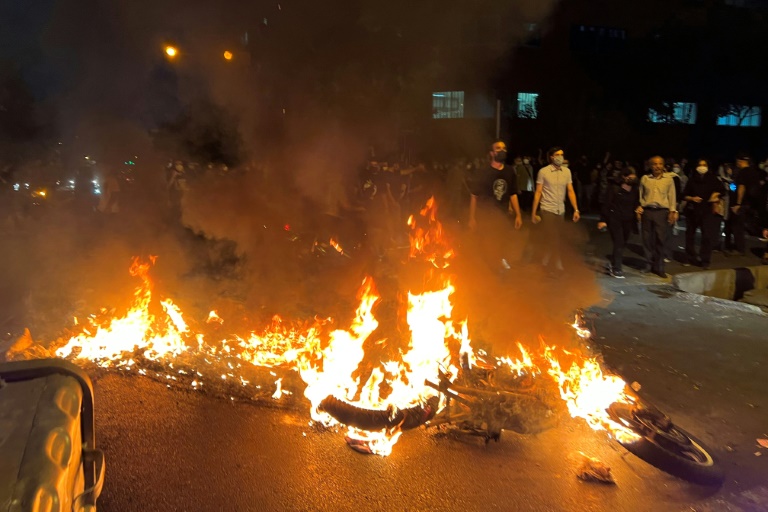
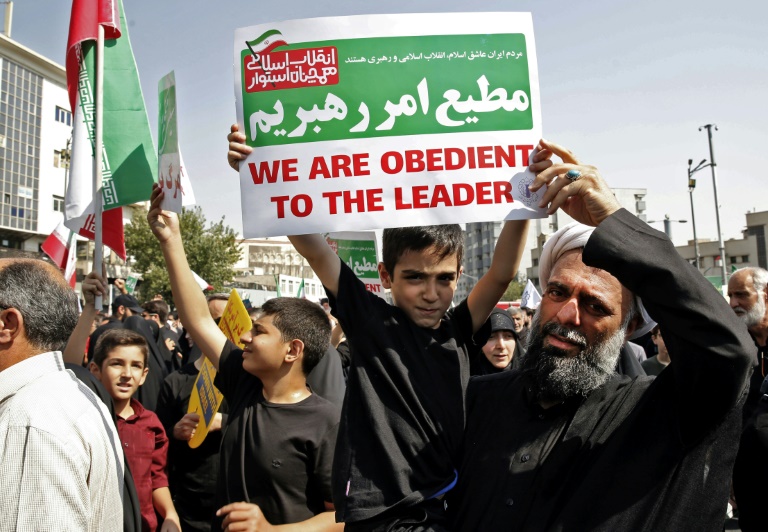
Thousands demonstrated across Iran on Friday at government-backed pro-hijab counter rallies, after a week of bloody protests over the death of a woman arrested for wearing the Islamic headscarf “improperly”.

At least 50 people have been killed by security forces in the anti-government protests, Iran Human Rights, an Oslo-based organisation, said on Friday — more than three times the official death toll of 17, which includes five security personnel. 

The street violence, which IHR says has spread to 80 towns and cities, was triggered by the death of Mahsa Amini, a 22-year-old Kurd who had spent three days in a coma after being detained by the morality police in Tehran.

As part of the crackdown, Iran has imposed tough restrictions on the use of the internet in a bid to hamper protesters gathering and stop the flow of images of the backlash from reaching the outside world.

The United States announced Friday it was easing export restrictions on Iran to expand internet services, days after SpaceX owner Elon Musk said he would seek an exemption from sanctions to offer his company’s Starlink satellite service in the Islamic republic.

The new measure will allow technology companies to “expand the range of internet services available to Iranians,” Deputy Treasury Secretary Wally Adeyemo said.

On Friday, thousands took to the streets in support of the hijab and a conservative dress code at government-backed counter rallies in Tehran and other cities including Ahvaz, Isfahan, Qom and Tabriz.

“The great demonstration of the Iranian people condemning the conspirators and the sacrileges against religion took place today,” Iran’s Mehr news agency said.

State television broadcast footage of pro-hijab demonstrators in central Tehran, many of them men but also women dressed in black chadors.

– Deadly overnight clashes –

Amini died on September 16, three days after she was hospitalised following her arrest by the morality police, the unit responsible for enforcing the Islamic republic’s strict dress code for women.

Activists said she suffered a blow to the head in custody but this has not been confirmed by the Iranian authorities, who have opened an investigation.

After she was pronounced dead, angry protests flared and spread to major cities, including Isfahan, Mashhad, Shiraz and Tabriz as well as the capital.

In the latest violence, security forces fired “semi-heavy weapons” at demonstrators during overnight clashes in the northern city of Oshnaviyeh, the Oslo-based Kurdish rights group Hengaw said on Friday. The report could not be independently verified.

In nearby Babol, demonstrators were seen setting ablaze a large billboard bearing the image of Iran’s supreme leader Ayatollah Ali Khamenei, in videos shared online. 

Iran Human Rights said that its updated toll of 50 dead included six people who were killed by fire from security forces in the town of Rezvanshahr in the northern Gilan province on Thursday night, while the other deaths were recorded in Babol and Amol.

A previous toll from the New York-based Center for Human Rights in Iran (CHRI) put the death toll at 36.

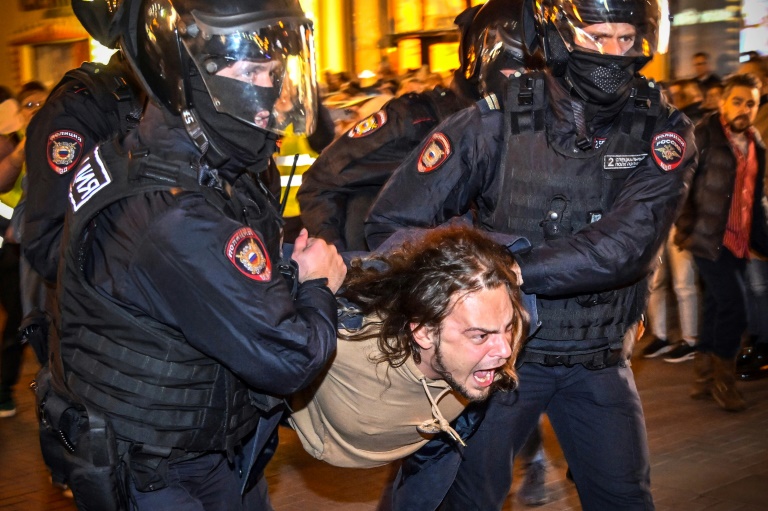
Some women demonstrators have defiantly taken off their hijabs and burned them in bonfires or symbolically cut their hair before cheering crowds, video footage spread virally on social media has shown.

Security forces have arrested activists including Majid Tavakoli, who has been repeatedly imprisoned in recent years, including after disputed 2009 elections.

– ‘Bleeding profusely’ –

Demonstrators have hurled stones at them, set fire to police cars and chanted anti-government slogans, IRNA reported.

“The government has responded with live ammunition, pellet guns and tear gas, according to videos shared on social media that have also shown protesters bleeding profusely,” the CHRI said.

Internet access has been restricted in what web monitor NetBlocks has called a “curfew-style pattern of disruptions” amid the angry protests sparked by Amini’s death.

“Online platforms remained restricted and connectivity is intermittent for many users and mobile internet was disrupted for a third day on Friday,” NetBlocks said.

Access to social media services, Instagram and WhatsApp have been blocked since Wednesday night, and connections were still largely disrupted on Friday.

The measure was taken in response to “the actions carried out via these social networks by counter-revolutionaries against national security”, Iran’s Fars news agency said.

President Ebrahim Raisi, at a news conference in New York where he attended the UN General Assembly, said: “We must differentiate between demonstrators and vandalism”.

The unrest comes at a particularly sensitive time for the leadership, as the Iranian economy remains mired in a crisis largely caused by sanctions over its nuclear programme.

burs/dv/dwo/kir
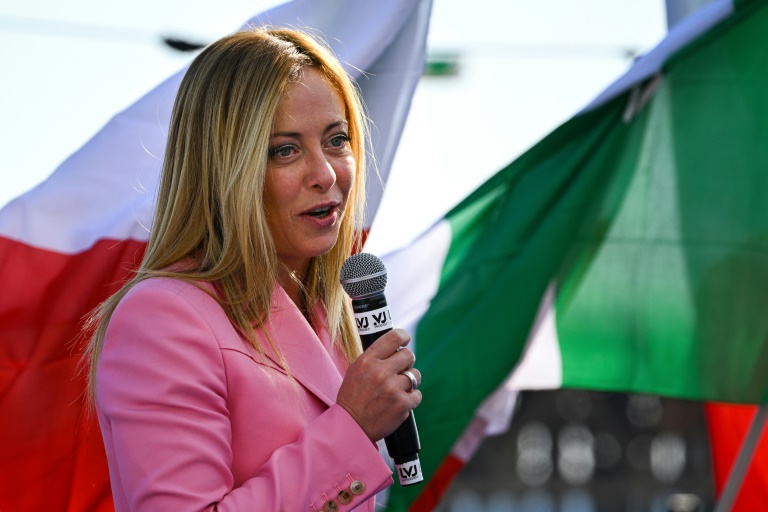
Italy's Meloni heads south in final vote push

Italian far-right leader Giorgia Meloni closed her campaign for weekend elections in Naples Friday amid speculation her long-forecast victory may be marred by a shift in support in the south.

The 45-year-old leader of the post-fascist Brothers of Italy took questions from a mostly young audience at a final rally on the beachfront before a blackout on campaigning ahead of Sunday’s vote.

“I’m a patriot… we are a party of the south, as well as of the nation,” Meloni declared, vowing to work to help a region that has long suffered higher unemployment and poverty than elsewhere.

The last official polls published two weeks ago gave Meloni and her right-wing alliance, including Matteo Salvini’s League and Silvio Berlusconi’s Forza Italia, an almost unstoppable lead.

Most analysts still believe they will win on Sunday, forming the first far-right led government in Italy since the fall of dictator Benito Mussolini after World War II.

But it may not be the landslide they were expecting thanks to both a fall in support for Meloni’s allies and a surge for her rivals.

The Five Star Movement, which swept to power in the last general election in 2018 on a wave of support in the south, appears to be making gains.

Although its anti-establishment credentials had been damaged after sharing power with most of its main rivals, leader Giuseppe Conte, the former premier, has been fighting back.

“The game is not completely up, because I think that in the south, Five Star… will have more numbers than expected,” said Franco Pavoncello, professor of political science at John Cabot University in Rome.

He cited the support in the south for the citizen’s income, an anti-poverty measure introduced by Five Star three years ago — which Meloni has pledged to abolish.

She insisted Friday the state should support those who cannot work, for example for health reasons, but said that those who can should find a job.

She “inspires confidence” said one supporter in Naples, 71-year-old Leone Carmelo.

– Russian, European rows –

From winning just four percent in 2018 elections to a predicted 24 percent today, Meloni’s party has enjoyed a meteoric rise.

A self-confessed “Christian woman and mother”, eurosceptic and anti-immigration, she has eclipsed Salvini as the face of Italy’s popular far right.

But if the League and Berlusconi’s Forza Italia fail to maintain their support, her route to power could be threatened.

As they wrapped up campaigning on Friday, Salvini and Berlusconi were causing headlines over issues dear to their supporters’ hearts — Europe and Russia.

In a round of media interviews, Salvini expressed his outrage at what he claimed was an attempt by EU chief Ursula von der Leyen to interfere in the election.

Von der Leyen told an audience in the United States overnight that the EU might use “tools” if a far-right government in Rome proved as disruptive as Hungary and Poland.

“What is that, a threat?” Salvini tweeted in response. “Shameful arrogance.”

He called on her to resign or apologise, later announcing a sit-in at the European Commission offices in Rome.

Berlusconi meanwhile was forced to clarify remarks about Vladimir Putin after suggesting the Russian leader had been “pushed” by his entourage into invading Ukraine.

“The aggression against Ukraine is unjustifiable and unacceptable,” he said following an outcry.

Russia is one of several fault lines within the right-wing coalition, which could threaten the stability of any government they form.

While Berlusconi and Salvini have long had ties with Moscow, Meloni strongly backed EU sanctions against Russia and the sending of weapons to Ukraine.

Their main rival, Enrico Letta of the centre-left Democratic Party, has warned that a populist eurosceptic government in Rome would be a risk for the EU.

“All those who have told us the Italian right is moderate are lying,” he said ahead of his final rally in Rome late Friday.

“Two days before the vote, taking Putin’s side and requesting von der Leyen’s resignation… what more needs to happen than this?”

Although his party is polling just behind Meloni’s, without a broad leftist coalition — which he tried but failed to create — he stands little chance of taking power.

Europe faces dilemma on Russians fleeing Putin's draft

The European Union is facing a tough balancing act over how to deal with Russians fleeing military mobilisation, as some countries look to block entry and others offer possible refuge.

President Vladimir Putin’s order on Wednesday calling up hundreds of thousands to fight in Ukraine appeared to send droves of Russian men scrambling for the exit in a bid to avoid going to the front lines. 

Flights to countries granting visa-free entry to Russians, mainly neighbouring former Soviet republics, were nearly entirely booked up despite rocketing prices, and queues were reported at some borders.  

So far, the numbers coming to the EU seem modest as the bloc had already curtailed travel from Russia by banning direct flights and toughening up visa rules in the wake of the invasion of Ukraine.  

Finland — the only member that had kept its land border open with Moscow — reported that arrivals from Russia doubled to 6,470 the day after Putin’s announcement. 

But despite the small scale, the issue is stirring debate in Brussels as EU members adopt starkly differing approaches to Russians looking to escape the fighting.  

The Baltic states and Poland — which had already gone further than others in the EU by drastically restricting entry for Russians with visas — are leading those taking a hawkish line. 

“Many Russians who now flee Russia because of mobilisation were fine with killing Ukrainians. They did not protest then,” Latvia’s foreign minister, Edgars Rinkevics, wrote on Twitter.

“There are considerable security risks admitting them and plenty of countries outside EU to go (to).”

Estonia’s interior minister, Lauri Laanemets, told local media, “We should not offer protection to deserters.”

“That would be fundamentally contradictory to the aim of all our sanctions so far, which is the collective responsibility of Russian citizens,” he said.

Finland on Friday signalled that it was taking the same track by announcing it would “significantly restrict the entry of Russian citizens” after the uptick in arrivals that followed Putin’s decree.

– ‘Overthrow Putin’ –

At the other end of the spectrum, Germany signalled on Thursday that it may be ready to take in Russians fleeing conscription. 

“Deserters threatened with serious repression can as a rule obtain international protection in Germany,” Interior Minister Nancy Faeser told the Frankfurter Allgemeine Zeitung newspaper.

“Anyone who courageously opposes Putin’s regime, and thereby falls into great danger, can file for asylum on grounds of political persecution,” she said.

Berlin’s softer line drew a stinging rebuke from Ukraine’s ambassador, Andriy Melnyk, who insisted, “Young Russians who don’t want to go to war must finally overthrow Putin.”

The European Commission, the EU’s executive arm, said on Friday that it was “monitoring” the situation, amid calls for the bloc to issue guidelines to its 27 member states over how to tackle any arrivals. 

EU ambassadors are set to be briefed on the issue at an urgent meeting on Ukraine on September 26.

The EU struck a landmark agreement in March to open its doors to millions of Ukrainians — mainly woman, children and elderly people — fleeing the Russian invasion. 

But there is far less sympathy for the Russians — mainly young men — who could now seek a way out, even if some argue that not giving them an escape route will end up bolstering Putin’s war machine. 

European diplomats warn that coming up with a common approach will be tough and the Commission appears reluctant to get involved unless the number of arrivals shoots up. 

Immigration is a notoriously thorny theme in Brussels and EU nations fiercely guard their prerogative over the subject. 

European law guarantees a right to claim asylum for people arriving in the bloc. But that is not automatically granted, especially if there is a security risk. 

“This is an unprecedented situation,” EU spokeswoman Anitta Hipper said. 

When we look at the situation at the moment in terms of security, we need to take these geopolitical concerns into account and the risks to our security as well.”

Strong winds hit Bermuda as Hurricane Fiona heads for Canada

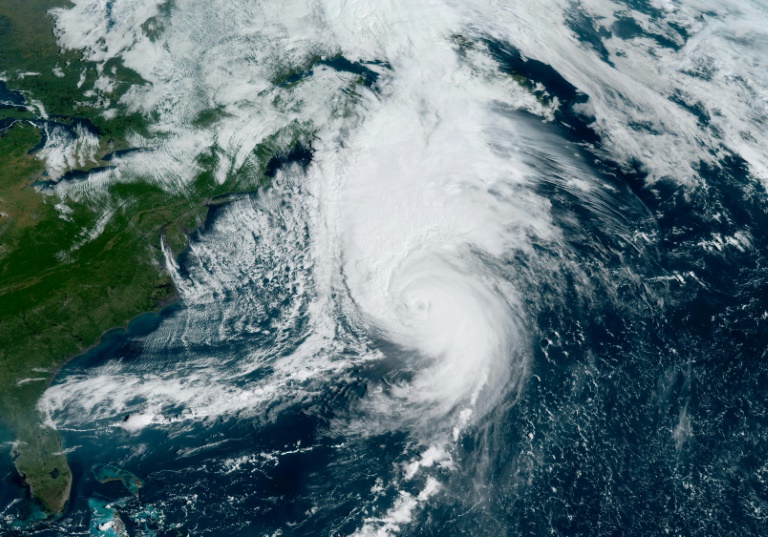
Bermuda assessed damage Friday after Hurricane Fiona brushed past the island overnight, causing flooding and leaving most of the population without power as it set course for Canada.

Hurricane conditions were expected to hit Nova Scotia province by evening, with the US National Hurricane Center saying Fiona had again strengthened to a Category 4 storm as “it races toward Atlantic Canada.”

Emergency officials in Bermuda called on residents to remain inside as strong winds raked over the British territory, which was buffeted by gusts of more than 100 miles (160 kilometers) per hour and pounding seas.

But no fatalities or major damage were reported as Fiona passed roughly 100 miles to the west of the island.

The Belco power company said 29,000 out of 36,000 households were without power.

“We are not in the clear. Stay off the roads,” Premier David Burt tweeted, adding no major incidents were reported.

The Royal Bermuda Regiment and Belco said they were waiting for winds to die down before clearing roads and restoring power.

Residents posted images of downed power lines and some flooding on social media.

“This morning (it is) very windy outside. We had some minor damage to the premises but nothing serious,” Jason Rainer, owner of a souvenir shop in the capital Hamilton told AFP, saying some doors and windows had been blown out.

Store owners had covered windows with metal and wood sheets.

The island of about 64,000 people is no stranger to hurricanes — but it is also tiny, just 21 square miles (54 square kilometers), and one of the most remote places in the world, 640 miles from its closest neighbor, the United States.

– A well-prepared island –

“You have to live with it because you live here, you can’t run anywhere because it’s just a little island,” said JoeAnn Scott, a shopworker in Hamilton.

Bermudians try to “enjoy it as it comes,” she said. “And pray and pray. That’s what we do, pray and party,” she added with a laugh.

At Bermuda’s famed Horseshoe Bay Beach, onlookers watched pounding waves on Thursday before the storm hit, while two kitesurfers risked extreme conditions out at sea.

Because of the island’s isolation, preparations are taken seriously.

Many boats were taken out of the water earlier in the week, public schools were closed, buses and ferries stopped and an emergency shelter opened.

In addition to laying in supplies of candles and food, some Bermudians drew buckets of water and filled bathtubs from the tanks at the side of their homes ahead of the expected power outages.

There is no fresh water source on the island, so all buildings have white, lime-washed roofs that are used to catch rainwater in tanks that is then pumped into homes. 

Bermuda, whose economy is fueled by international finance and tourism, is wealthy compared to most Caribbean countries, and structures must be built to strict planning codes to withstand storms. Some have done so for centuries.

“The construction is really built to last, and we don’t see the devastation ever that the Caribbean has experienced over the years,” resident Elaine Murray said.

Fiona killed four people in Puerto Rico earlier this week, according to US media, while one death was reported in the French overseas department of Guadeloupe and another in the Dominican Republic. 

President Joe Biden has declared a state of emergency in Puerto Rico, a US territory that is still struggling to recover from Hurricane Maria five years ago.

In the Dominican Republic, President Luis Abinader declared three eastern provinces to be disaster zones.

Iran in new internet crackdown to thwart protesters

Iran has imposed tough and targeted restrictions on internet use to try to prevent protests and stop images of crackdowns on their demonstrations reaching the outside world, observers say.

Activists have expressed alarm that the restrictions could allow the authorities to carry out repression “under the cover of darkness”.

The latest measures also affect Instagram which is hugely popular in Iran and until now has remained unblocked.

The protests erupted a week ago over the death in Tehran of Mahsa Amini, 22, following her arrest by the notorious morality police. They started in her northern home province of Kurdistan before spreading nationwide.

Internet access monitor Netblocks described the access cuts as the most “severe internet restrictions” in Iran since the deadly crackdown on protests in November 2019, when the country experienced a near-complete internet shutdown.

It said that mobile data networks had been cut — with a fresh loss of connectivity Friday — and that there had been severe regional restrictions of access to Instagram and WhatsApp.

“It’s significantly different to what we saw in November 2019,” said Mahsa Alimardani, senior Iran researcher for freedom of expression group Article 19.

“It’s not as near total and complete as it was back then, but more sporadic,” she told AFP.

“But there are definitely a lot of disruptions and shutdowns happening,” she added, while emphasising that people were still managing to connect sometimes to filtered networks through VPNs.

– ‘Under cover of darkness’ –

Alimardani said the Iranian authorities could be wary of the effect of a total internet shutdown on the economy as well as daily use for things like online medical appointments.

They were also falling back on the National Information Network, an autonomous infrastructure Iran wants to develop as a homegrown internet, she added.

While the restrictions had “added hurdles” to the publishing of videos of the protests however, they were “still coming out”.

The United Sates announced Friday it would ease export restrictions on Iran to expand access to internet services, including anti-virus and malware tools, for Iranians hit by the restrictions.

“While the Iranian government is cutting off its people’s access to the global internet, today the United States is taking action to support the free flow of information to the Iranian people,” said the US special envoy for Iran Robert Malley on Twitter. 

Videos posted on social media have included viral images of women burning their headscarves and demonstrators tearing down images of the Islamic republic’s leadership, as well as security forces firing on protesters.

Iran’s November 2019 protest wave was sparked by a rise in fuel prices. Activists argue that the internet shutdown back then allowed the authorities to carry out bloody repression largely hidden from the world.

Amnesty International says 321 people were killed during that period but emphasises that this only includes confirmed fatalities and that the real toll may be much higher.

The rights group said it was now “gravely concerned about Iranian authorities disrupting access to internet and mobile networks”. Amnesty called on world leaders to take urgent action pressuring Iran “to stop killing and injuring more protesters under the cover of darkness”.

New York-based Center for Human Rights in Iran (CHRI) director Hadi Ghaemi had similar concerns.

“The potential for massive bloodshed now is real,” he said.

“The government has blocked internet access because it wants to prevent people from sending evidence of the state’s atrocities to the outside world.”

– ‘Stifle free expression’ –

Instagram head Adam Mosseri has expressed concern over the cuts, while WhatsApp, which is also owned by social media giant Meta, insisted it was not behind any access cuts. They would “do everything in our technical power to maintain our services”, they said in a statement.

Secure messaging service Signal confirmed it remained blocked in Iran and encouraged users outside to set up a proxy server to help people connect.

The blocking of major platforms by Iran in recent years — including Facebook, Twitter, Telegram, YouTube and TikTok — had left Instagram and WhatsApp as the two most widely used social media apps in Iran.

State media reports confirmed that officials had ordered access to these two services to be restricted.

Observers have also noted a regional targeting of the internet cuts, focussing in on the Kurdistan region where some of the fiercest clashes have taken place.

“Disruptions to the internet are usually part of a larger effort to stifle the free expression and association of the Iranian population, and to curtail ongoing protests,” the UN’s panel of human rights experts said.

Apple Music to sponsor Super Bowl half-time show

Apple Music is to replace Pepsi as the title sponsor of the Super Bowl’s prestigious half-time show, the NFL announced on Friday.

Neither Apple nor the NFL disclosed terms of the sponsorship, described as a multi-year agreement. 

US media reported the NFL has been seeking around $50 million a year for sponsorship of the show, one of the traditional highlights of the biggest event on the US sporting calendar.

“We couldn’t think of a more appropriate partner for the world’s most-watched musical performance than Apple Music, a service that entertains, inspires, and motivates millions of people,” said Nana-Yaw Asamoah, the NFL’s senior vice president of partner strategy.

The sponsorship is the latest example of a technology giant embracing live sport in the United States.

Amazon has already started screening the NFL’s Thursday fixtures while Apple TV has also struck deals to stream live baseball and Major League Soccer.

Apple Music’s sponsorship of the Super Bowl half-time show will start in 2023, when the NFL’s championship game is staged in Glendale, Arizona on February 12.

More than 120 million viewers watched The Super Bowl half-time show in Los Angeles earlier this year, when stars such as Dr. Dre, Snoop Dogg, Eminem, Mary J. Blige and Kendrick Lamar appeared together.

Past half-time shows have featured a galaxy of music icons, such as Michael Jackson, Madonna, U2, the Rolling Stones and Bruce Springsteen.

UK fights inflation with tax-cutting budget

Britain’s new government on Friday unveiled a multi-billion-pound package to support households and businesses hit by the highest inflation in decades, cutting taxes as the nation heads for recession.

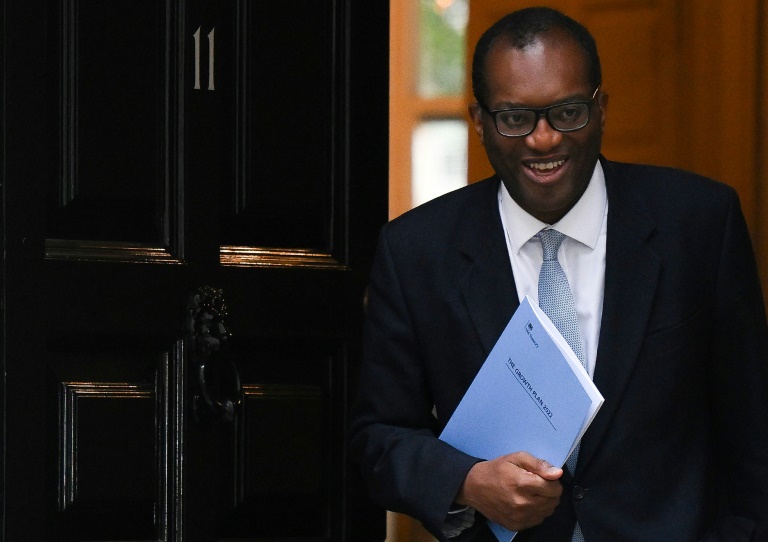
Finance minister Kwasi Kwarteng, fresh from being appointed by new Prime Minister Liz Truss, said caps on soaring energy bills would cost £60 billion ($68 billion) in the first six months.

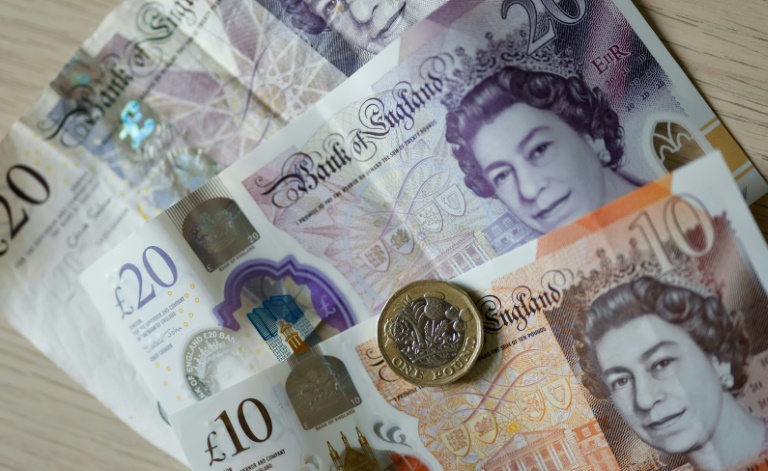
The costly plan aims to boost economic growth — but sterling collapsed to its lowest level against the dollar since 1985 as traders fretted over its impact on public finances.

“The PM has acted with great speed to announce one of the most significant interventions the British state has ever made,” Kwarteng told parliament in a so-called mini budget.

“People need to know that help is coming.”

In a controversial move as millions of Britons face a cost-of-living crisis, Kwarteng axed an EU-inherited cap on bankers’ bonuses following Brexit to bolster the financial services sector.

He brought forward a plan to cut the lowest rate of income tax, and reduced the highest to 40 percent from 45.

The chancellor of the exchequer also reversed a planned increase in tax on company profits signed off by Truss’s predecessor Boris Johnson.

He had announced Thursday that he would scrap a tax on salaries, reversing a 1.25-percentage-point rise in National Insurance implemented by predecessor Rishi Sunak.

It comes as economists warned that Britain was likely already in recession, with rocketing fuel and food prices taking their toll.

Opposition politicians slammed the budget for rewarding the rich.

“The chancellor has made clear who his priorities are today — not a plan for growth, a plan to reward the already wealthy,” said Rachel Reeves, finance spokeswoman for the main opposition Labour party.

– Pound collapse –

In an ominous sign, the pound tanked to $1.0897 — the lowest level since 1985 — and London’s stock market sank more than two percent as recession fears mounted.

“Sterling is in the firing line. There is a creeping feeling the extra government borrowing that is in the pipeline will severely weigh on the UK economy,” said IG analyst David Madden.

Kwarteng also lifted the point at which tax is levied on purchases of residential properties, as soaring interest rates put the brakes on the housing market.

Britain will meanwhile reintroduce VAT refunds to tourists, a scheme which had previously been scrapped following Brexit.

Kwarteng released his plan a day after the Bank of England suggested the country was slipping into recession as it hiked interest rates again to tame red-hot inflation.

With prices soaring, Britain on Wednesday announced a six-month plan to pay about half of energy bills for businesses.

Truss had already launched a two-year household energy price freeze. The caps will not kick in, however, until Britons face another large hike in gas and electricity bills from October.

The average household will have their annual energy bill capped at £2,500 until 2024 but many are expected to spend above that to keep homes warm over the winter.

Wholesale electricity and gas prices for companies — as well as charities, hospitals and schools — will also be capped.

Yet UK energy firms including BP and Shell will not get the cap, as their profits jumped after Russia’s war in Ukraine sent oil and gas prices soaring.

Labour has demanded that the government extends an energy-sector windfall tax launched by Sunak earlier this year.

But Truss ruled it out, arguing that additional taxes hinder economic recovery and efforts by energy groups to transition into greener companies.

She took office on September 6, two days before the death of Queen Elizabeth II, after winning an election of Conservative party members on a tax-cutting platform.

– ‘Unacceptable strikes’ –

Kwarteng on Friday confirmed plans to shake up the welfare system.

Some 120,000 people in part-time work would face a benefit cut should they fail to take new steps to look for more work.

The cost-of-living crisis has triggered some of the biggest strike action in more than 30 years, involving sectors from the rail industry to postal services and even lawyers.

Kwarteng told MPs the government would legislate “to ensure strikes can only be called once negotiations have genuinely broken down”.

At UN, Vanuatu calls for fossil fuel non-proliferation treaty

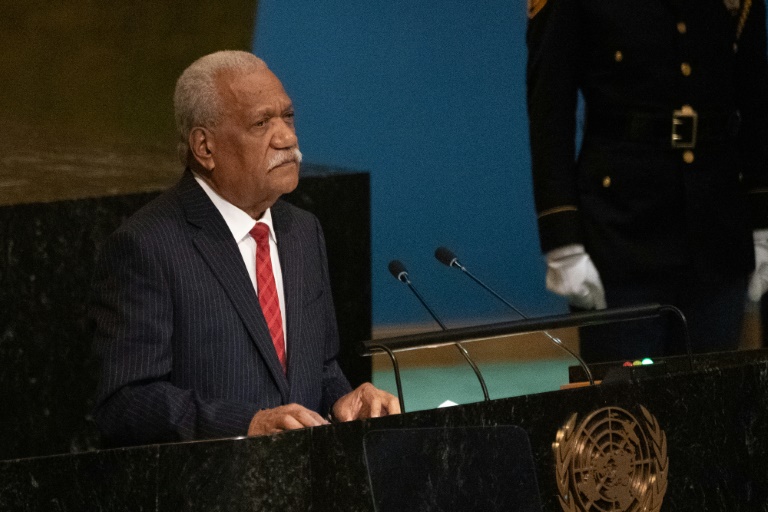
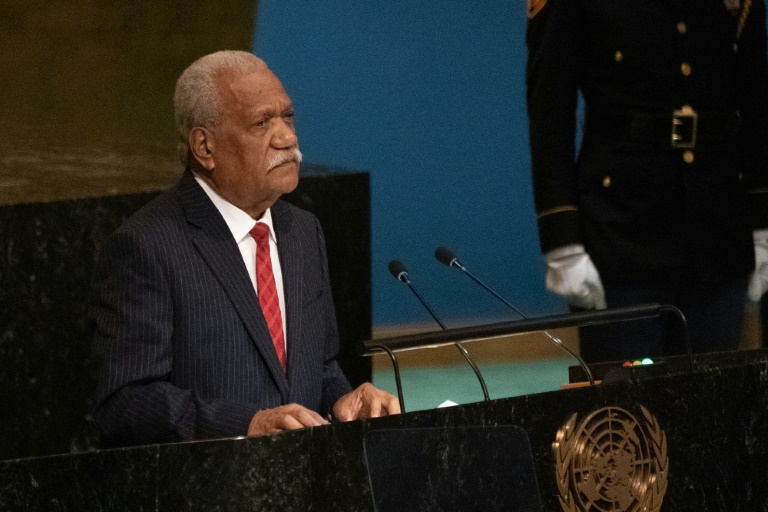
Vanuatu on Friday became the first nation to launch a diplomatic push for a fossil fuel non-proliferation treaty, a proposed legal path to phase out coal, oil and gas globally by likening their threat to nuclear weapons. 

In his address to the United Nations General Assembly, President Nikenike Vurobaravu evoked the existential crisis caused by rapid global heating, from hurricanes and coral bleaching to wildfires, prolonged droughts and flooding.

“Fundamental human rights are being violated, and we are measuring climate change not in degrees of Celsius or tons of carbon, but in human lives,” he said.

“We call for the development of a Fossil Fuel Non-Proliferation Treaty to phase down coal, oil and gas production in line with 1.5C, and enable a global just transition for every worker, community and nation with fossil fuel dependence.”

The Paris climate accord called on nations to aspire to limit warming to 1.5 degrees Celsius above pre-industrial levels, a goal that is far off track.

In a statement, the climate campaign group 350 compared the proposed treaty to accords that were pivotal in managing the threats of nuclear weapons and landmines.

Vanuatu, an archipelago home to 300,000 people that lies some 1,100 miles (1,750 kilometers) to the east of Australia, adds its voice to a call that has been endorsed by more than 65 cities and regional governments around the globe. 

These include London, Lima, Los Angeles, Kolkata, Paris and Hawaii. The proposal has also been backed by the Vatican and the World Health Organization.

“The modern addiction to fossil fuels is not just an act of environmental vandalism. From the health perspective, it is an act of self-sabotage,” WHO chief Tedros Adhanom Ghebreyesus said last week.

– Leading voice on climate –

Tiny Vanuatu is already carbon negative, but it is among the world’s most vulnerable countries to climate change. Its approximately 80 islands are threatened by rising sea levels, droughts and more intense storms. 

In August, it submitted among the most comprehensive climate targets under the UN, including adding cost estimates for how much it required from major polluters in “loss and damage” payments for their historic and ongoing carbon emissions.

The issue is a major sticking point between rich and poor nations, and is set to be discussed at the next UN climate summit, COP27.

Vanuatu has also been leading a campaign to have the International Court of Justice issue an opinion on climate justice and human rights.

Campaigner Kalo Afeaki of Tonga said: “Fossil fuels did this, and if we continue to burn them, we will see more islands in the Pacific, islands like my home of Tonga, disappear. We need countries to be bold, because we have run out of time.”

Without drastic course correction, the world is on track to 2.7C heating by the year 2100, according to the Climate Action Tracker.

This level of warming would dramatically reshape the world’s climate systems, bringing extreme heat to vast swathes of the planet, depleting biodiversity and water availability, and devastating agriculture, among other impacts.

At UN, Vanuatu calls for fossil fuel non-proliferation treaty

Vanuatu on Friday became the first nation to launch a diplomatic push for a fossil fuel non-proliferation treaty, a proposed legal path to phase out coal, oil and gas globally by likening their threat to nuclear weapons. 

In his address to the United Nations General Assembly, President Nikenike Vurobaravu evoked the existential crisis caused by rapid global heating, from hurricanes and coral bleaching to wildfires, prolonged droughts and flooding.

“Fundamental human rights are being violated, and we are measuring climate change not in degrees of Celsius or tons of carbon, but in human lives,” he said.

“We call for the development of a Fossil Fuel Non-Proliferation Treaty to phase down coal, oil and gas production in line with 1.5C, and enable a global just transition for every worker, community and nation with fossil fuel dependence.”

The Paris climate accord called on nations to aspire to limit warming to 1.5 degrees Celsius above pre-industrial levels, a goal that is far off track.

In a statement, the climate campaign group 350 compared the proposed treaty to accords that were pivotal in managing the threats of nuclear weapons and landmines.

Vanuatu, an archipelago home to 300,000 people that lies some 1,100 miles (1,750 kilometers) to the east of Australia, adds its voice to a call that has been endorsed by more than 65 cities and regional governments around the globe. 

These include London, Lima, Los Angeles, Kolkata, Paris and Hawaii. The proposal has also been backed by the Vatican and the World Health Organization.

“The modern addiction to fossil fuels is not just an act of environmental vandalism. From the health perspective, it is an act of self-sabotage,” WHO chief Tedros Adhanom Ghebreyesus said last week.

– Leading voice on climate –

Tiny Vanuatu is already carbon negative, but it is among the world’s most vulnerable countries to climate change. Its approximately 80 islands are threatened by rising sea levels, droughts and more intense storms. 

In August, it submitted among the most comprehensive climate targets under the UN, including adding cost estimates for how much it required from major polluters in “loss and damage” payments for their historic and ongoing carbon emissions.

The issue is a major sticking point between rich and poor nations, and is set to be discussed at the next UN climate summit, COP27.

Vanuatu has also been leading a campaign to have the International Court of Justice issue an opinion on climate justice and human rights.

Campaigner Kalo Afeaki of Tonga said: “Fossil fuels did this, and if we continue to burn them, we will see more islands in the Pacific, islands like my home of Tonga, disappear. We need countries to be bold, because we have run out of time.”

Without drastic course correction, the world is on track to 2.7C heating by the year 2100, according to the Climate Action Tracker.

This level of warming would dramatically reshape the world’s climate systems, bringing extreme heat to vast swathes of the planet, depleting biodiversity and water availability, and devastating agriculture, among other impacts.

World markets plunge on growing recession fears

Stock markets tumbled, the pound crashed against the dollar and oil prices slumped Friday on growing recession fears after central banks this week ramped up interest rates to fight decades-high inflation.

With price rises showing no solid sign of letting up, monetary policymakers have gone on the offensive, warning that short-term hits to economies are less painful than the long-term effects of not acting.

The Federal Reserve’s decision Wednesday to lift borrowing costs by 0.75 percentage points for a third successive meeting was followed by a warning that more big rises were in the pipeline and that rates would likely come down only in 2024.

There were similar moves by central banks in other countries including Britain, Sweden, Norway, Switzerland, the Philippines and Indonesia — all pointing to a dark outlook for markets.

Wall Street extended losses Friday while European equities sank in afternoon deals and Asia finished lower.

“A negative end to the week in Asia, and Europe has quickly followed as the prospect of much more tightening and a recession weighs on sentiment,” said Craig Erlam, analyst at trading platform OANDA.

In a sign that recession expectations are rising, the 10-year US Treasury yield jumped to its highest level in a decade.

The UK 10-year yield struck an 11-year high on Friday.

The British pound tumbled to a 37-year low under $1.10 as a tax-cutting budget sparked public finance concerns while recession fears mounted.

“Equity markets are also plunging on concerns that this (UK) package could further push inflation even higher, and thus make it more difficult to bring back down,” said Michael Hewson, chief market analyst at CMC Markets UK.

“Sterling is in the firing line as traders are turning their backs on all things British. There is a creeping feeling the extra government borrowing that is in the pipeline will severely weigh on the UK economy,” added David Madden, market analyst at Equiti Capital.

In the eurozone, recession fears deepened as data showed its economic activity fell once again in September.

The S&P eurozone PMI dropped to 48.2 in September — with a score under 50 representing economic contraction.

The euro hit a new two-decade low at $0.9751.

“A eurozone recession is on the cards as companies report worsening business conditions and intensifying price pressures linked to soaring energy costs,” said Chris Williamson, chief business economist at S&P Global Market Intelligence.

He added that falling UK business activity this month indicates that the British economy is likely already in recession.

Recession fears also caused oil prices to fall, with the main US contract, WTI, falling below $80 for the first time since January.

Traders were keeping a close eye as well on developments following the Japanese finance ministry’s intervention to support the yen, after it hit a new 24-year low of 146 against the dollar.

The first such intervention since 1998 helped strengthen the yen but it remained above 140.

Analysts warned the move was unlikely to have much long-term impact and the yen remained vulnerable owing to the Bank of Japan’s refusal to tighten policy — citing a need to boost the economy.

– Key figures at around 1530 GMT –

New York – Dow: DOWN 1.52 percent at 29,618.21 points

London – FTSE 100: DOWN 1.97 percent at 7,018.60 (close) 

Frankfurt – DAX: DOWN 1.97 percent at 12,284.19 (close)

Paris – CAC 40: DOWN 2.28 percent at 5,783.14 (close) 

EURO STOXX 50: DOWN 2.3  percent at 3,355.97  

Hong Kong – Hang Seng Index: DOWN 1.2 percent at 17,933.27 (close)

Shanghai – Composite: DOWN 0.7 percent at 3,088.77 (close)

Tokyo – Nikkei 225: Closed for a holiday

Pound/dollar: DOWN at 1.0926 from $1.1252 Thursday

Euro/dollar: DOWN at $ 0.9727 from $0.9839

Euro/pound: UP at 89.00 pence from 87.40 pence 

Dollar/yen: UP at 143.17 yen from 142.35 yen

West Texas Intermediate: DOWN 4.49 percent at $79.00 per barrel

Brent North Sea crude: DOWN 4.14 percent at $86.32 per barrel

burs-ach/cdw

Close Bitnami banner
Bitnami