World

Strong winds hit Bermuda as Hurricane Fiona heads for Canada

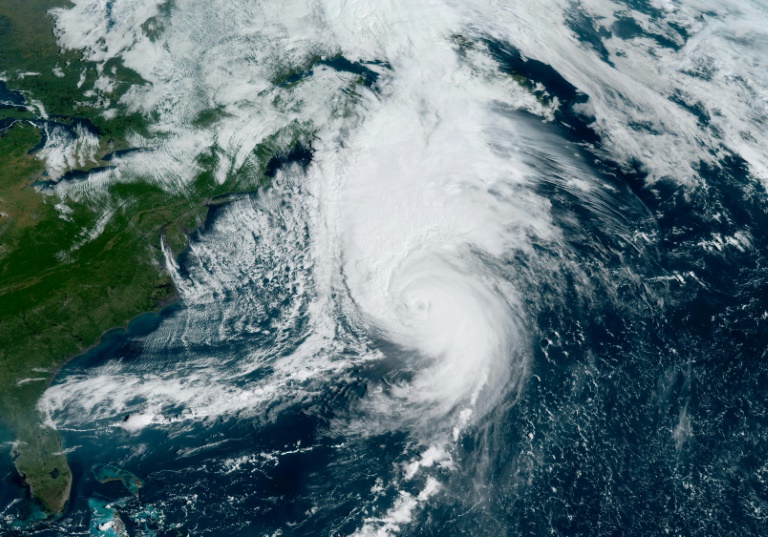
Bermuda assessed damage Friday after Hurricane Fiona brushed past the island overnight, causing flooding and leaving most of the population without power as it set course for Canada.

Hurricane conditions were expected to hit Nova Scotia province by evening, with the US National Hurricane Center saying Fiona had again strengthened to a Category 4 storm as “it races toward Atlantic Canada.”

Emergency officials in Bermuda called on residents to remain inside as strong winds raked over the British territory, which was buffeted by gusts of more than 100 miles (160 kilometers) per hour and pounding seas.

But no fatalities or major damage were reported as Fiona passed roughly 100 miles to the west of the island.

The Belco power company said 29,000 out of 36,000 households were without power.

“We are not in the clear. Stay off the roads,” Premier David Burt tweeted, adding no major incidents were reported.

The Royal Bermuda Regiment and Belco said they were waiting for winds to die down before clearing roads and restoring power.

Residents posted images of downed power lines and some flooding on social media.

“This morning (it is) very windy outside. We had some minor damage to the premises but nothing serious,” Jason Rainer, owner of a souvenir shop in the capital Hamilton told AFP, saying some doors and windows had been blown out.

Store owners had covered windows with metal and wood sheets.

The island of about 64,000 people is no stranger to hurricanes — but it is also tiny, just 21 square miles (54 square kilometers), and one of the most remote places in the world, 640 miles from its closest neighbor, the United States.

– A well-prepared island –

“You have to live with it because you live here, you can’t run anywhere because it’s just a little island,” said JoeAnn Scott, a shopworker in Hamilton.

Bermudians try to “enjoy it as it comes,” she said. “And pray and pray. That’s what we do, pray and party,” she added with a laugh.

At Bermuda’s famed Horseshoe Bay Beach, onlookers watched pounding waves on Thursday before the storm hit, while two kitesurfers risked extreme conditions out at sea.

Because of the island’s isolation, preparations are taken seriously.

Many boats were taken out of the water earlier in the week, public schools were closed, buses and ferries stopped and an emergency shelter opened.

In addition to laying in supplies of candles and food, some Bermudians drew buckets of water and filled bathtubs from the tanks at the side of their homes ahead of the expected power outages.

There is no fresh water source on the island, so all buildings have white, lime-washed roofs that are used to catch rainwater in tanks that is then pumped into homes. 

Bermuda, whose economy is fueled by international finance and tourism, is wealthy compared to most Caribbean countries, and structures must be built to strict planning codes to withstand storms. Some have done so for centuries.

“The construction is really built to last, and we don’t see the devastation ever that the Caribbean has experienced over the years,” resident Elaine Murray said.

Fiona killed four people in Puerto Rico earlier this week, according to US media, while one death was reported in the French overseas department of Guadeloupe and another in the Dominican Republic. 

President Joe Biden has declared a state of emergency in Puerto Rico, a US territory that is still struggling to recover from Hurricane Maria five years ago.

In the Dominican Republic, President Luis Abinader declared three eastern provinces to be disaster zones.
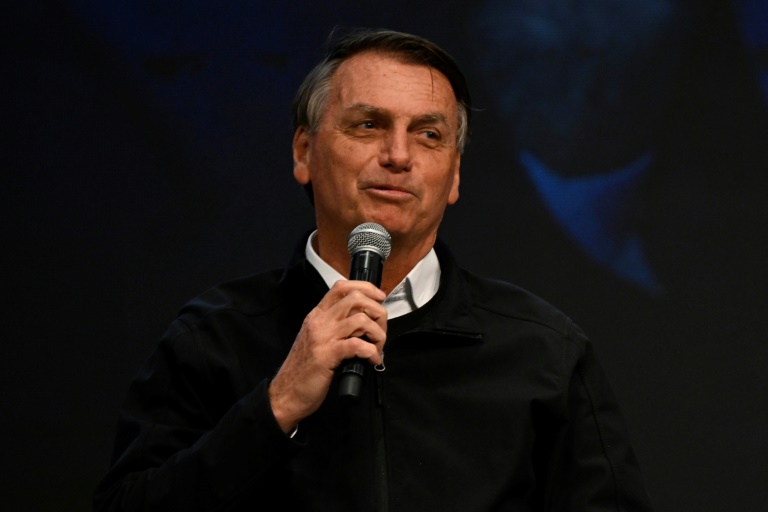

Brazil's business sector still supports Bolsonaro, but with reservations

Brazil’s business sector, which views the economic policies of leftist presidential hopeful Luiz Inacio Lula da Silva with suspicion, will again vote for incumbent Jair Bolsonaro, but this time with more reservation, experts say.

Bolsonaro had 62 percent of voter intentions in the business sector in a poll published by Datafolha late on Thursday, compared to just 24 percent for Lula.

That is in stark contrast to Lula’s 47-33 advantage among the general population.

Elected in 2018 on a promise to reduce state intervention, Bolsonaro stayed true to his word with a series of policies favoring business, introducing privatizations and drafting fiscal reform.

Small- and medium-sized business owners greatly appreciated Bolsonaro’s refusal to pause the economy during the coronavirus pandemic, which killed 685,000 Brazilians, according to Daniela Campello, a political science expert at the Getulio Vargas Foundation.

The post-pandemic economic rebound also worked in the president’s favor.

After GDP fell during the pandemic, Latin America’s largest economy grew by 4.6 percent in 2021 and is expected to keep growing by 2.65 percent this year.

– Economic rebound –

Business leaders fear Lula will impose “greater state interventionism in the economy and a commitment to redistribution in favor of workers, his electorate,” said Campello.

Lula has, for example, promised to roll back a 2017 labor reform that was heavily criticized by labor rights groups.

The former president, in power from 2003-10, has a 70 percent rejection rating amongst business leaders, according to Datafolha.

Meanwhile, the agrobusiness sector, which accounts for almost 28 percent of Brazil’s GDP, is one of Bolsonaro’s most fervent supporters.

Oscar Cervi, a major grain producer, is one of the largest contributors to Bolsonaro’s campaign with one million reais (around $200,000).

A convoy of tractors even took part in the traditional military parade in Brasilia during independence day celebrations on September 7.

The sector has benefited from investments in infrastructure such as ports and railways, and continues to fare well despite difficulties caused by Russia’s invasion of Ukraine, said Luiz Carlos Correa Carvalho, president of the Brazilian agrobusiness association.

Bolsonaro’s opposition to Brazil’s indigenous groups’ claims on land — an issue now in the hands of the Supreme Court — additionally proved popular with a sector that thrives on clearing rainforests for farmland.

“Lula even said the agrobusiness is ‘right-wing and fascist’… which is why producers are very afraid and view him as a threat,” said Correa Carvalho.

– Support not unanimous – 

The other fear in the agrobusiness sector is that Lula will follow the lead of neighboring Argentina’s center-left President Alberto Fernandez and impose export taxes, said one consultant under condition of anonymity.

The president’s faithful include a group of entrepreneurs currently being investigated by the Supreme Court for voicing their support for a coup d’etat should Bolsonaro lose the election.

But this staunch support for the far right leader is not unanimous.

Businessman Luis Stuhlberger insisted he will “never again” vote for the “psychopath” Bolsonaro.

Business sector “support is more divided” than it was in 2018, said Christopher Garman, Americas executive director at the consulting firm Eurasia Group.

Auto industry and international commerce directors told AFP they did not want to take sides this time, having supported Bolsonaro last election.

Powerful business organizations such as the Federation of Sao Paulo Industries and Federation of Banks even signed an open letter in defense of democracy following attacks by Bolsonaro against the electoral system.

Bolsonaro lost credibility for his fiscal management and has “a terrible reputation outside the country and… in environmental terms,” added Garman.

And that convinced some heads of multinationals to embrace Lula.

Green protest hits DR Congo ahead of climate summit

Climate activists protested in the Democratic Republic of Congo’s capital Kinshasa on Friday ahead of a climate summit in the city next month. 

Kinshasa is due to host the pre-COP27 talks in October, before the main summit begins in Egypt in November.  

But the pre-COP27 meeting comes after the DRC put 27 oil and gas blocks up for auction in July, ignoring warnings from environmentalists that drilling in peatlands and forests could release huge volumes of carbon dioxide. 

On Friday, about 200 protesters marched in Kinshasa toting banners bearing slogans such as “No to new fossil fuels”.

Rose Mathe, a 22-year-old climate activist, said developing the oil and gas blocks contradicted the government’s push to brand the DRC as a “solution country” for climate change. 

“The world is transitioning towards 100-percent renewable energy,” she said, adding that drilling for oil is environmentally destructive.

Roughly the size of western Europe, the DRC enjoys vast mineral riches, including huge reserves of cobalt and lithium that are critical for battery production. 

Peatlands in the Congo Basin also store around 30 billion tonnes of carbon, according to a 2016 Nature study. The figure is roughly equivalent to three years’ of global emissions.

Patient Muamba, a campaigner for Greenpeace Africa who attended the protest, told AFP petrol has no future. 

“We’re asking the government cancel these offers,” he said, referring to the oil and gas auction. 

The DRC’s government has argued that drilling will be conducted using methods that minimise harm to the environment. It has also stressed that exploiting oil and gas will help diversify the mining-reliant economy. 

About three-quarters of the DRC’s population of 90 million people lives on under $1.9 a day, according to World Bank figures. 

US, China top diplomats meet to contain high tensions on Taiwan

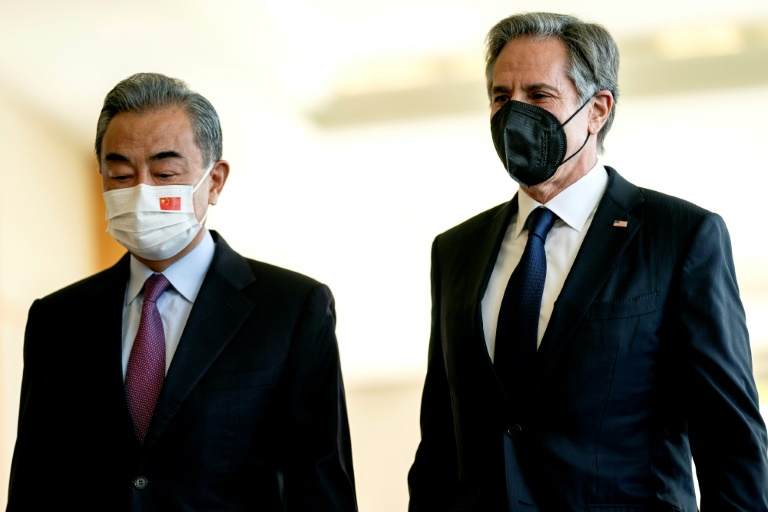
The top US and Chinese diplomats met Friday in New York as soaring tensions show signs of easing, but Beijing issued a new warning against support for Taiwan.

Secretary of State Antony Blinken and Chinese Foreign Minister Wang Yi shook hands but only exchanged pleasantries before the cameras before sitting down with aides on the sidelines of the annual United Nations summit.

It was their first encounter since extensive talks in July in Bali where both sides appeared optimistic for more stability.

One month later, House Speaker Nancy Pelosi visited Taiwan, infuriating Beijing which staged exercises seen as a trial run for an invasion of the self-governing democracy.

In a sign of smoother ties, Wang also met in New York with US climate envoy John Kerry despite China’s announcement after Pelosi’s visit that it was curbing cooperation on the issue, a key priority for Biden.

Blinken went ahead with the talks despite paring down his schedule following the death of his father on Thursday. Immediately before seeing Wang, he met with his counterparts from Australia, Japan and India, the so-called “Quad” which Beijing has denounced as an attempt to isolate it.

“Our four countries know very well the significant challenges that we face, as well as the opportunities that are before us, demand more than ever that we work together,” Blinken said as the ministers signed an agreement on cooperation in disaster relief.

– Taiwan the ‘biggest risk’ –

President Joe Biden in an interview aired Sunday said he was ready to intervene militarily if China uses force in Taiwan, once again deviating from decades of US ambiguity.

In a speech before his talks with Blinken, Wang reiterated anger over US support for Taiwan, which China considers part of its territory.

“The Taiwan question is growing into the biggest risk in China-US relations. Should it be mishandled it is most likely to devastate bilateral ties,” he said at the Asia Society think tank.

“Just as the US will not allow Hawaii to be stripped away, China has the right to uphold the unification of the country,” he said.

He denounced the US decision to “allow” the Taiwan visit by Pelosi, who is second in line to the presidency after the vice president. The Biden administration, while privately concerned about her trip, noted that Congress is a separate branch of government.

But Wang was conciliatory toward Biden. The New York talks are expected to lay the groundwork for a first meeting between Biden and President Xi Jinping since they became their two countries’ leaders, likely in Bali in November on the sidelines of a summit of the Group of 20 economic powers.

Wang said that both Biden and Xi seek to “make the China-US relationship work” and to “steer clear of conflict and confrontation.”

The US Congress is a stronghold of support for Taiwan, a vibrant democracy and major technological power.

Last week a Senate committee took a first step to providing billions of dollars in weapons directly to Taiwan to deter China, a ramp-up from decades of only selling weapons requested by Taipei.

Tensions have also risen over human rights with the United States accusing the communist state of carrying out genocide against the mostly Muslim Uyghur people.

Biden, like his predecessor Donald Trump, has viewed a rising China as the chief global competitor to the United States and vowed to reorient US foreign policy around the challenge.

Russia’s invasion in February of Ukraine quickly diverted the US focus to Europe but also heightened fears that Beijing could make good on years of threats to use force against Taiwan.

Yet US officials have also been heartened that China has shown some distance from Russia, nominally its close ally.

Wang met in New York with Ukraine’s foreign minister for the first time since the war and in a Security Council session Thursday emphasized the need for a ceasefire rather than support for Russia.

Germany's Scholz to visit Gulf states on energy hunt

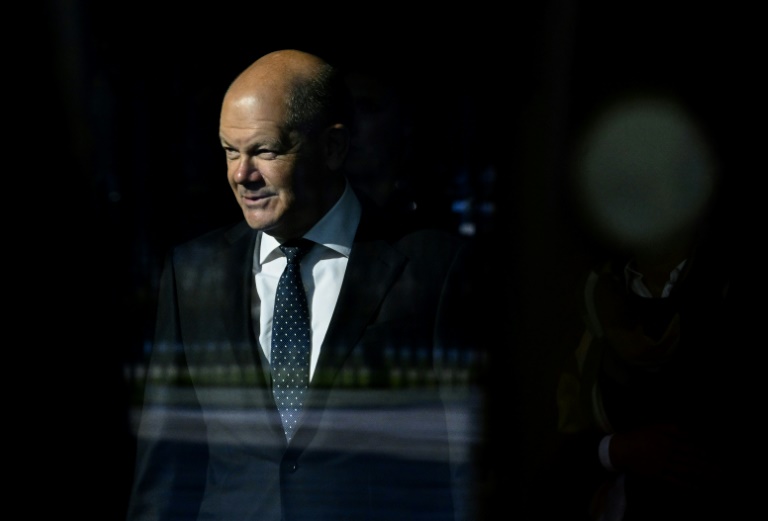
German Chancellor Olaf Scholz will on Saturday begin a two-day tour of Gulf states, including Saudi Arabia, in the hope of sealing new energy deals with the fossil fuel exporters.

Scholz, accompanied by a sizeable industry delegation, will first head to Saudi Arabia before visiting the United Arab Emirates and Qatar on Sunday.

The chancellor hopes to agree new energy partnerships with the oil- and gas-rich Gulf states, with the loss of Russian supplies in the wake of the invasion of Ukraine.

Scholz however is faced with a diplomatic balancing act, as he will have to navigate significant differences with his hosts over human rights.

“We are meeting with difficult partners there,” a government source said, but Germany “cannot rule out working together” with them.

Scholz’s planned meeting with the Saudi Crown Prince Mohammed bin Salman on Saturday is seen as particularly sensitive.

Bin Salman was until recently regarded as a pariah in the West due to his suspected role in the murder of Washington Post journalist Jamal Khashoggi in 2018.

The German government strongly condemned the journalist’s murder and would not be “editing” its position, the government sources indicated.

– ‘Have to work with Saudis’ –

Saudi Arabia’s importance as a fossil fuels exporter and regional power meant a “solid working relationship” was needed with the crown prince, said a government source.

The 36-year-old was likely to steer the country through “the next 10, 20 or 30 years”, he added. 

Nor is the visit being considered as just an “energy shopping tour”.

Berlin also wants to extend cooperation on new technologies such as green hydrogen produced using renewable energy, which Germany could import in vast quantities from the Gulf states, said government sources.

The chancellor would also seek to strengthen political cooperation with the regional powers, courted on the other side by Russia and China. 

Scholz would seek to “build as broad a network as possible in this world and advocate for his positions”, the source said.

“We have to work with Saudi Arabia if we want to sort out, for example, the question of the war in Yemen or tackle the Iranian question,” the government source said.

On Saturday, Scholz is also set to meet Saudi King Salman, though the ageing monarch is said to play an ever smaller role in government affairs.

On Sunday, Scholz will head to the UAE and meet with President Sheikh Mohamed bin Zayed Al-Nahyan. 

In the afternoon, the chancellor will hold talks with Qatari Emir Sheikh Tamim bin Hamad Al-Thani.

At UN, Vanuatu calls for fossil fuel non-proliferation treaty

Vanuatu on Friday became the first nation to launch a diplomatic push for a fossil fuel non-proliferation treaty, a proposed legal path to phase out coal, oil and gas globally by likening their threat to nuclear weapons. 

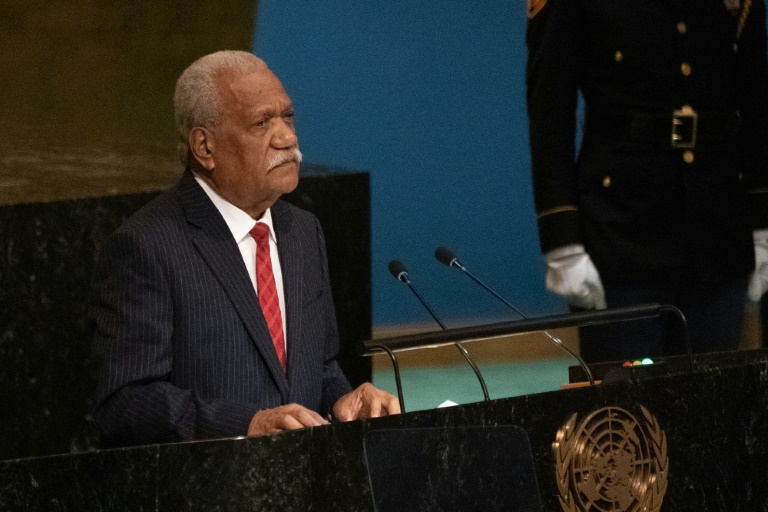
In his address to the United Nations General Assembly, President Nikenike Vurobaravu evoked the existential crisis caused by rapid global heating, from hurricanes and coral bleaching to wildfires, prolonged droughts and flooding.

“We call for the development of a Fossil Fuel Non-Proliferation Treaty to phase down coal, oil and gas production in line with 1.5C, and enable a global just transition for every worker, community and nation with fossil fuel dependence,” he said.

The Paris climate accord called on nations to aspire to limit warming to 1.5 degrees Celsius above pre-industrial levels, a goal that is far off track.

Vanuatu, an archipelago home to 300,000 people that lies 1,000 miles (1,600 kilometers) to the east of Australia, adds its voice to a call that has been endorsed by more than 65 cities and regional governments around the globe. 

These include London, Lima, Los Angeles, Kolkata, Paris and Hawaii. The proposal has also been backed by the Vatican and the World Health Organization.

Tiny Vanuatu this month submitted one of the world’s most comprehensive climate targets under the UN, and has been leading a campaign to have the International Court of Justice issue an opinion on climate justice and human rights.

In a statement, the climate campaign group 350 compared the proposed treaty to accords that were pivotal in managing the threats of nuclear weapons and landmines.

At UN, Vanuatu calls for fossil fuel non-proliferation treaty

Vanuatu on Friday became the first nation to launch a diplomatic push for a fossil fuel non-proliferation treaty, a proposed legal path to phase out coal, oil and gas globally by likening their threat to nuclear weapons. 

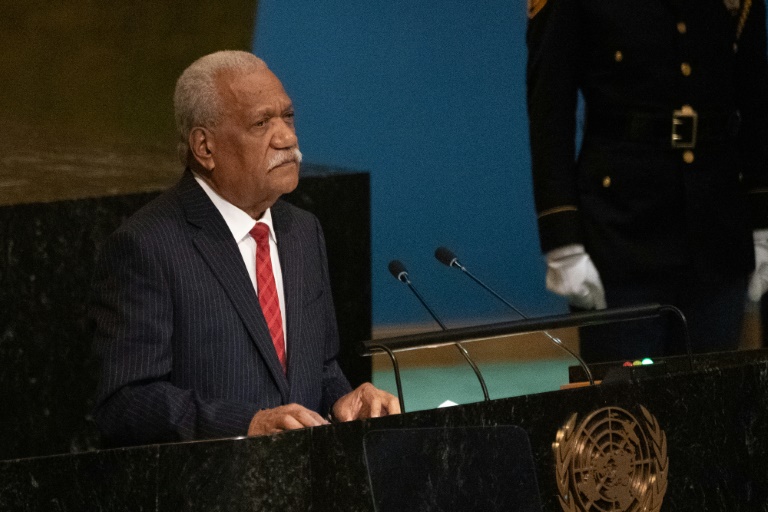
In his address to the United Nations General Assembly, President Nikenike Vurobaravu evoked the existential crisis caused by rapid global heating, from hurricanes and coral bleaching to wildfires, prolonged droughts and flooding.

“We call for the development of a Fossil Fuel Non-Proliferation Treaty to phase down coal, oil and gas production in line with 1.5C, and enable a global just transition for every worker, community and nation with fossil fuel dependence,” he said.

The Paris climate accord called on nations to aspire to limit warming to 1.5 degrees Celsius above pre-industrial levels, a goal that is far off track.

Vanuatu, an archipelago home to 300,000 people that lies 1,000 miles (1,600 kilometers) to the east of Australia, adds its voice to a call that has been endorsed by more than 65 cities and regional governments around the globe. 

These include London, Lima, Los Angeles, Kolkata, Paris and Hawaii. The proposal has also been backed by the Vatican and the World Health Organization.

Tiny Vanuatu this month submitted one of the world’s most comprehensive climate targets under the UN, and has been leading a campaign to have the International Court of Justice issue an opinion on climate justice and human rights.

In a statement, the climate campaign group 350 compared the proposed treaty to accords that were pivotal in managing the threats of nuclear weapons and landmines.

Thousands attend pro-hijab Iran rallies

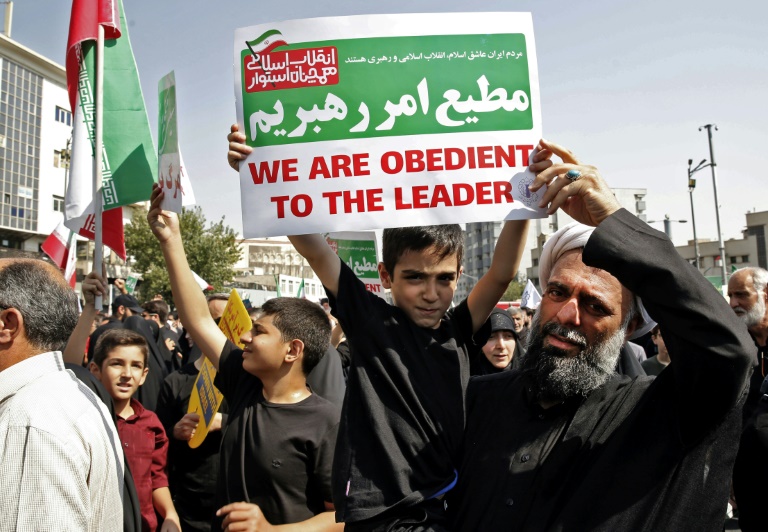
Thousands demonstrated across Iran on Friday at government-backed pro-hijab counter rallies, after a week of bloody protests over the death of a woman arrested for “improperly” wearing the Islamic headscarf.

Iran has been rocked by street violence since the death last week of Mahsa Amini, a 22-year-old Kurd who had spent three days in a coma after being detained by the morality police.

The official death toll from the clashes remains at least 17, including five security personnel, but the New York-based Center for Human Rights in Iran (CHRI) put the figure at 36 and said it expected it to rise.

As part of the crackdown, Iran has imposed tough restrictions on the use of the internet in a bid to hamper protesters gathering and stop the flow of images of the backlash from reaching the outside world.

The United States announced Friday it was easing export restrictions on Iran to expand internet services, days after SpaceX owner Elon Musk said he would seek an exemption from sanctions to offer his company’s Starlink satellite service in the Islamic republic.

The new measure will allow technology companies to “expand the range of internet services available to Iranians,” Deputy Treasury Secretary Wally Adeyemo said.

On Friday, thousands took to the streets in support of the hijab and a conservative dress code at government-backed counter rallies in Tehran and other cities including Ahvaz, Isfahan, Qom and Tabriz.

“The great demonstration of the Iranian people condemning the conspirators and the sacrileges against religion took place today,” Iran’s Mehr news agency said.

State television broadcast footage of pro-hijab demonstrators in central Tehran, many of them men but also women dressed in black chadors.

– Overnight clashes –

Amini died on September 16, three days after she was hospitalised following her arrest by the morality police, a unit responsible for enforcing the Islamic republic’s strict dress code for women.

Activists said she suffered a blow to the head in custody but this has not been confirmed by the Iranian authorities, who have opened an investigation.

After she was pronounced dead, angry protests flared and spread to major urban centres, including the capital, Isfahan, Mashhad, Shiraz and Tabriz.

In the latest violence, security forces fired “semi-heavy weapons” at demonstrators during overnight clashes in the northern city of Oshnaviyeh, the Oslo-based Kurdish rights group Hengaw said on Friday. The report could not be independently verified.

In nearby Babol, demonstrators were seen setting ablaze a large billboard bearing the image of Iran’s supreme leader Ayatollah Ali Khamenei, in videos shared online.

Some women demonstrators have defiantly taken off their hijabs and burned them in bonfires or symbolically cut their hair before cheering crowds, video footage spread virally on social media has shown.

Security forces have arrested activists including Majid Tavakoli, who has been repeatedly imprisoned in recent years, including after disputed 2009 elections.

– ‘Bleeding profusely’ –

Demonstrators have hurled stones at them, set fire to police cars and chanted anti-government slogans, IRNA reported.

“The government has responded with live ammunition, pellet guns and tear gas, according to videos shared on social media that have also shown protesters bleeding profusely,” the CHRI said.

Internet access has been restricted in what web monitor NetBlocks has called a “curfew-style pattern of disruptions” amid the angry protests sparked by Amini’s death.

“Online platforms remained restricted and connectivity is intermittent for many users and mobile internet was disrupted for a third day on Friday,” NetBlocks said.

Access to social media services, Instagram and WhatsApp have been blocked since Wednesday night, and connections were still largely disrupted on Friday.

The measure was taken in response to “the actions carried out via these social networks by counter-revolutionaries against national security”, Iran’s Fars news agency said.

President Ebrahim Raisi, at a news conference in New York where he attended the UN General Assembly, said: “We must differentiate between demonstrators and vandalism”.

The unrest comes at a particularly sensitive time for the leadership, as the Iranian economy remains mired in a crisis largely caused by sanctions over its nuclear programme.

burs/dv/kir

Ukraine war saps Russian sway over Caucasus, Central Asia

As the invasion of Ukraine drains Russia’s forces, Moscow’s grip on its former Soviet backyard in the Caucasus and Central Asia is loosening with unpredictable consequences, experts say.

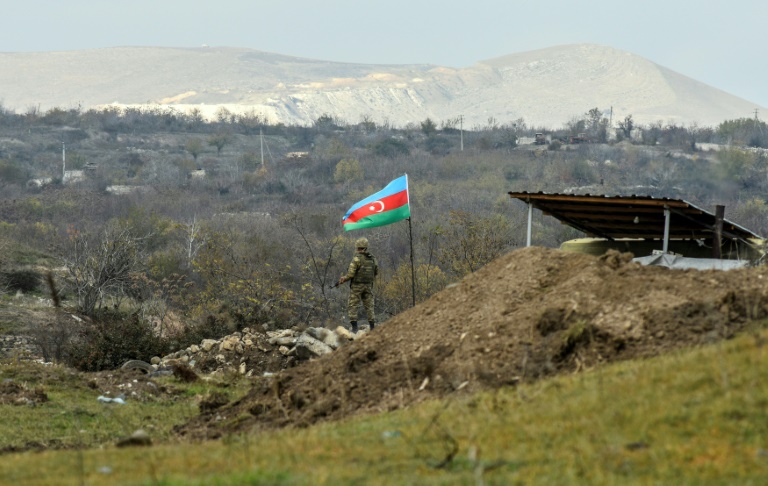
A recent flare-up of fighting between Armenia and Azerbaijan and deadly clashes between Kyrgyzstan and Tajikistan have shown how surprisingly little sway Russia currently has over the region, which ranges from the Black Sea to the Caspian Sea.

“The entire periphery of Russia is breaking up and it’s obvious that it can’t do anything to control it,” said one European diplomatic source, asking not to be named.

A key illustration of Russia’ rapid reputational loss in the region is the inaction of the Collective Security Treaty Organization (CSTO), a regional pact, in the face of the Azerbaijan-Armenia clashes.

Headquartered in Moscow, the CSTO groups Russia and the former Soviet republics of Armenia, Belarus, Kazakhstan, Kyrgyzstan and Tajikistan.

– ‘Failure to uphold’ –

In Armenia, angry demonstrators have protested against CSTO’s failure to assist their country against Azerbaijan, blaming a Russia they previously considered to be their ally.

“Russia’s failure to uphold its treaty obligation to protect Armenia signals the beginning of a new era in the region, where smaller rivals like Azerbaijan can dictate terms with a confidence unthinkable only a year ago,” wrote Ben Dubow at CEPA, a US think tank.

“The first half of September 2022 may well go down as the fatal moment Russia’s lost its ability to dictate terms in its former empire,” he said.

Waiting in the wings are China and Turkey, the other key actors in the explosive region, while voices sceptical towards Russia’s Ukraine adventure are becoming louder.

At a meeting this month of the Shanghai Cooperation Organisation (SCO), a Moscow- and Beijing-led security group, China and India voiced criticism over the Ukraine invasion. Several central Asian countries have allowed pro-Ukraine demonstrations.

“The CSTO’s weak response to the Azeri attacks is fueling protests among Armenians who want their country to leave the Russian-controlled military bloc,” tweeted Moldavian researcher Denis Cenusa.

“We need to keep an eye on what’s happening in Armenia,” said Michael Levystone, an expert on Russia and central Asia at IFRI, a French international relations think tank.

Before Moscow’s war against Kyiv, “there was a strong emphasis that Russia could not be defeated”, said Murat Aslan at SETA, a Turkish research body.

But now, there is a chance of small-scale conflicts erupting, with Russia unable to influence the course of events.

“If Russia is defeated, everything will change,” Aslan said.

On the other hand, should Russia emerge from Ukraine victorious after all, the “psychological effect” will mean that Moscow gets to “impose any agenda” in the Caucasus, he said.

– ‘Root of the problem’ –

But unless it does, faultlines will continue to become increasingly obvious.

One is a lack of recognised and demarcated geographical borders, which Moscow never thought were necessary. It treats the region as an administrative area rather than a group of genuinely independent countries.

“Almost half of the border between Tajikistan and Kyrgyzstan is still undefined, and that’s the root of the problem,” said Isabella Damiani, an expert on Central Asian geography at Versailles university in France.

Meanwhile Turkey, a historic ally of Azerbaijan and present in both the Caspian and Black Sea regions, stands to benefit from Russia’s unusual inertia.

Like China, which is promoting its “new Silk Road” initiative, Turkey is quietly moving its pawns into place, notably via the Organisation of Turkic States (OTS) in which Ankara is they key player, said Levystone.

Turkey has concluded military partnerships with all Central Asian governments, including Tajikistan — the only non-Turkic state in the region and whose language derives from Persian. 

“There is the real question of whether OTS will turn into a political-military alliance around Ankara,” Levystone said.

Aslan agreed, saying, “If Russian fails in Ukraine, that organisation will become much more active.”

World markets plunge on growing recession fears

Stock markets tumbled, the pound crashed against the dollar and oil prices slumped Friday on growing recession fears after central banks this week ramped up interest rates to fight decades-high inflation.

With price rises showing no solid sign of letting up, monetary policymakers have gone on the offensive, warning that short-term hits to economies are less painful than the long-term effects of not acting.

The Federal Reserve’s decision Wednesday to lift borrowing costs by 0.75 percentage points for a third successive meeting was followed by a warning that more big rises were in the pipeline and that rates would likely come down only in 2024.

There were similar moves by central banks in other countries including Britain, Sweden, Norway, Switzerland, the Philippines and Indonesia — all pointing to a dark outlook for markets.

Wall Street extended losses Friday while European equities sank in afternoon deals and Asia finished lower.

“A negative end to the week in Asia, and Europe has quickly followed as the prospect of much more tightening and a recession weighs on sentiment,” said Craig Erlam, analyst at trading platform OANDA.

In a sign that recession expectations are rising, the 10-year US Treasury yield jumped to its highest level in a decade.

“It’s a messy situation in the Treasury market to be sure and that is creating a messy situation for stocks. However, it’s not just a US situation. Things are messy elsewhere,” said Briefing.com analyst Patrick O’Hare.

The UK 10-year yield struck an 11-year high on Friday.

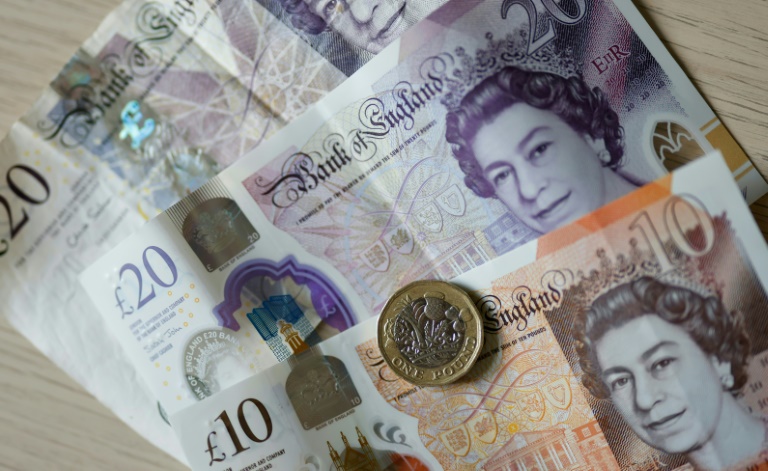
The British pound tumbled to a 37-year low under $1.10 as a tax-cutting budget sparked public finance concerns while recession fears mounted.

“Equity markets are also plunging on concerns that this (UK) package could further push inflation even higher, and thus make it more difficult to bring back down,” said Michael Hewson, chief market analyst at CMC Markets UK.

In the eurozone, recession fears deepened as data showed its economic activity fell once again in September.

The S&P eurozone PMI dropped to 48.2 in September — with a score under 50 representing economic contraction.

The euro hit a new two-decade low at $0.9751.

“A eurozone recession is on the cards as companies report worsening business conditions and intensifying price pressures linked to soaring energy costs,” said Chris Williamson, chief business economist at S&P Global Market Intelligence.

He added that falling UK business activity this month indicates that the British economy is likely already in recession.

Recession fears also caused oil prices to fall, with the main US contract, WTI, falling below $80 for the first time since January.

Traders were keeping a close eye as well on developments following the Japanese finance ministry’s intervention to support the yen, after it hit a new 24-year low of 146 against the dollar.

The first such intervention since 1998 helped strengthen the yen but it remained above 140.

Analysts warned the move was unlikely to have much long-term impact and the yen remained vulnerable owing to the Bank of Japan’s refusal to tighten policy — citing a need to boost the economy.

– Key figures at around 1435 GMT –

New York – Dow: DOWN 1.4 percent at 29,644.98 points

London – FTSE 100: DOWN 2.3 percent at 6,997.50 

Frankfurt – DAX: DOWN 1.9 percent at 12,294.22

Paris – CAC 40: DOWN 2.3 percent at 5,782.79

EURO STOXX 50: DOWN 2.3 percent at 3,349.75

Hong Kong – Hang Seng Index: DOWN 1.2 percent at 17,933.27 (close)

Shanghai – Composite: DOWN 0.7 percent at 3,088.77 (close)

Tokyo – Nikkei 225: Closed for a holiday

Pound/dollar: DOWN at $1.0972 from $1.1252 Thursday

Euro/dollar: DOWN at $0.9726 from $0.9839

Euro/pound: UP at 88.65 pence from 87.40 pence 

Dollar/yen: UP at 143.12 yen from 142.35 yen

West Texas Intermediate: DOWN 4.9 percent at $78.61 per barrel

Brent North Sea crude: DOWN 4.6 percent at $84.95 per barrel

burs-lth/ach  

Close Bitnami banner
Bitnami