World

Historic UK castle at risk from climate change: heritage body

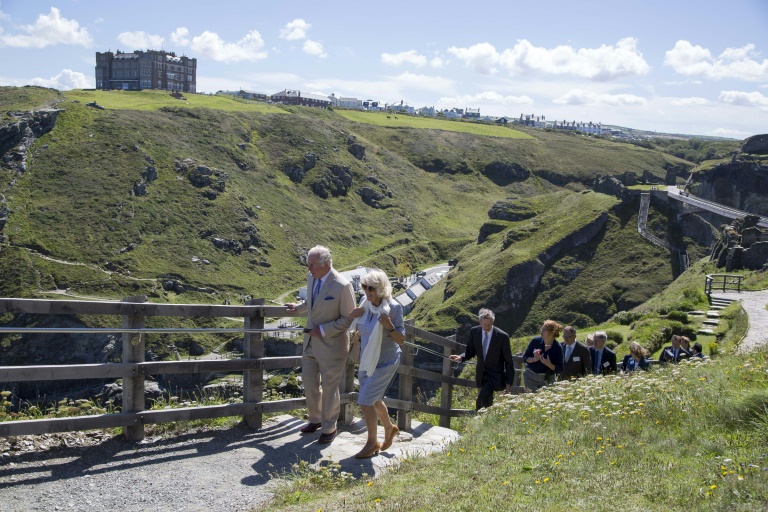
The cliff-top ruins of an ancient castle long claimed as the birthplace of the legendary King Arthur is “at risk of being lost for ever” as climate change quickens the pace of coastal erosion, a UK heritage body warned on Friday.

Tintagel Castle in Cornwall, southwest England, attracts tens of thousands of visitors each year, fuelled by the legend of King Arthur and his fabled Round Table.

But the structure is now among six important historic coastal sites at risk “as a result of accelerating coastal erosion”, charity English Heritage said.

“Erosion along England’s coastline is nothing new but the rate of land loss that we have seen over the past few years is alarming, and some scenarios indicate that sea levels could increase by up to a metre (3.2 feet) by the end of the century,” said English Heritage Estates director Rob Woodside.

In the last century sea levels rose by 14 centimetres along the southern coast of England, according to the body.

“Climate change is accelerating the issues faced by our coastal heritage. Rising sea levels and more regular storms pose a real risk to the future of many of our sites,” Woodside added.

The legend of the ancient English king and his Round Table of knights has inspired numerous filmmakers over the years.

Although researchers have never established if King Arthur was a real person or a mythical hero, some historians believe there was an important English leader called Arthur around the fifth century, although not necessarily a king.

English Heritage said parts of the cliff directly in front of Tintagel Castle’s visitor centre recently fell into the sea due to coastal erosion.

This and other damage caused by storms last winter alone would cost £40,000 ($44,000) to repair, the charity said.

“Protecting our coastal heritage from the effects of erosion and flooding is one of the greatest challenges English Heritage has ever faced,” it said.

“Sea levels are rising at their fastest rate for more than 2,700 years and are predicted to surge by up to a metre before the end of the 21st century.”

Other sites in southwest England listed by English Heritage as being at risk include Hurst Castle and Calshot Castle, both built by the 16th century king Henry VIII in Hampshire, southern England.

English Heritage said it was launching a public appeal via its website to raise funds to shore up the sites and make them less vulnerable to coastal erosion.

“If these coastal properties are to survive the coming decades, we will need to strengthen their walls and build sea defences to protect them,” it added.
Hong Kong scrapping quarantine for international arrivals

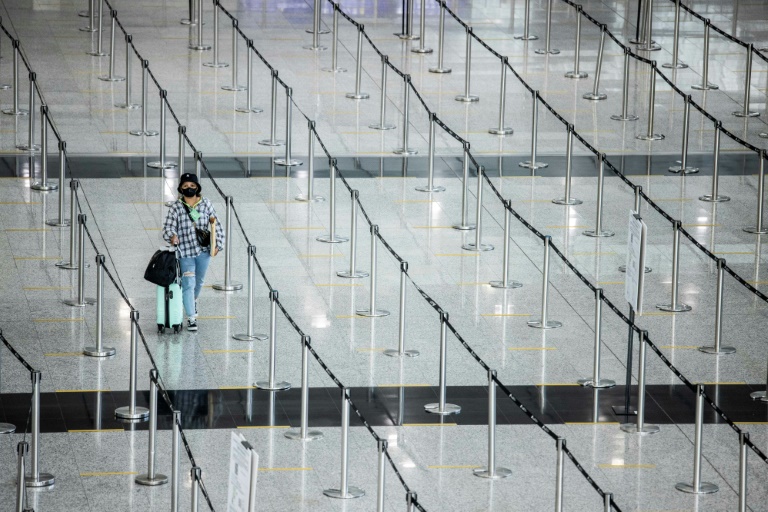
Hong Kong announced Friday it will end mandatory hotel quarantine, scrapping some of the world’s toughest travel restrictions, which battered the economy and kept the finance hub internationally isolated.

The long-awaited move brings relief to residents and businesses clamouring for the city to rejoin the rest of the world in resuming unhindered travel and living with Covid-19 — though many pandemic restrictions remain.

For the past two and a half years Hong Kong has adhered to a version of China’s strict zero-Covid rules, deepening a brain drain as rivals reopened.

The announcement leaves mainland China as the only major economy still hewing to lengthy quarantine for international arrivals.

Chief Executive John Lee said the current three days of hotel quarantine would be reduced to zero for those arriving from overseas.

From September 26, travellers will be subject to PCR tests on arrival and will be unable to visit restaurants and bars for the first three days under a system authorities have dubbed “0+3”. 

“Under this arrangement, the quarantine hotel system will be cancelled,” Lee told reporters.

But strict pandemic rules will stay in place, including social distancing restrictions, mandatory mask wearing and digital health codes to enter public venues. 

Overseas arrivals will also need further PCR tests on days two, four and six in the city.

Tourists who test positive face being isolated in hotel rooms at their own expense. Most residents can isolate at home, but those who cannot may be sent to government facilities. 

Group gatherings of more than four people in public remain banned.

Authorities also said they were lifting quotas on arrivals from mainland China — but those going in the opposite direction must still quarantine under Beijing’s strict zero-Covid rules.

– Recession –

Hong Kong once boasted one of the world’s busiest airports, but passenger numbers this year are just 3.8 percent of pre-pandemic levels.

The government faced mounting pressure from residents, business leaders and even some of its own public health advisers to end quarantine, especially after Covid tore through the city at the start of the year.

Since that wave, the number of local infections far outstripped those coming in from overseas. 

At its peak, quarantine lasted as long as 21 days, and about 113,000 residents have left the city since mid-2021.

The economic toll has been severe. 

The city is currently in a technical recession — two consecutive quarters of negative growth. 

Finance chief Paul Chan has warned Hong Kong’s fiscal deficit is expected to balloon to HK$100 billion ($12.7 billion) this year, twice initial estimates.   

“For Hong Kong to truly regain competitiveness vis-a-vis other cities around the world, the announcement is not enough; Hong Kong should be totally connected to the world without hindrance,” said local AmCham president Eden Woon.

– Travel rush –

The websites of both Cathay Pacific and its low-cost wing HK Express saw delays as customers rushed to make bookings.

But it is unlikely Hong Kong will see a sudden flurry of mass tourism. 

Many global airlines have reduced routes or stopped flying to the city. 

Cathay currently supplies about 45 percent of seats into and out of the city, but had previously warned it will only be able to increase routes by one-third this year because of the difficulties in finding staff and planes. 

Cathay said it would add “more than 200 pairs of passenger flights” in October to both regional and long-haul destinations.

Many of its unused aircraft have been parked in the dry climate of interior Australia to better preserve them.

– Rivals reopened –

Although it stuck to China’s zero-Covid rules, Hong Kong’s experience of the pandemic was not the same as the mainland’s.

Like China, Singapore, New Zealand and Taiwan, Hong Kong’s travel curbs helped stamp out the virus in 2020 as the pandemic left a wave of death across much of the rest of the globe.

But as an international hub, Hong Kong struggled to keep the virus out indefinitely and could not deploy the kind of city-wide lockdowns used on the authoritarian mainland.

The Omicron variant ripped through mostly unvaccinated elderly victims, overwhelming hospitals that were not adequately prepared.

Despite the tough travel curbs and social distancing rules, Hong Kong had one of the world’s highest per capita fatality rates, with nearly 10,000 deaths in a population of 7.4 million.

Taiwan, which said Thursday it would end quarantine rules in mid-October, has a similar number of deaths but its population is three times the size.

Hong Kong’s approach stood in stark contrast to financial rivals such as London, Singapore, New York and Tokyo, which steadily reopened this year.

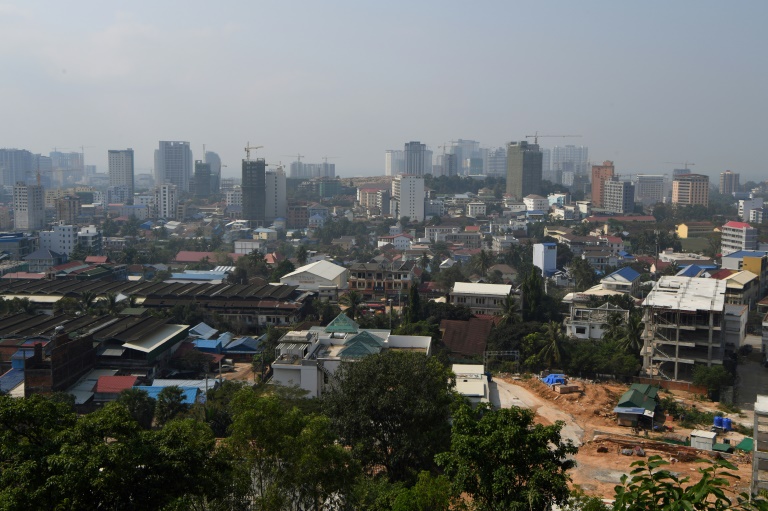
One dead, 21 missing as boat capsizes off Cambodia

One person died and more than 20 are missing at sea after a boat carrying Chinese nationals sank off the coast of Cambodia, an official said Friday.

The boat with 41 Chinese people on board got into difficulties off Sihanoukville on Thursday, provincial spokesperson Kheang Phearom told AFP.

The once-quiet fishing village of Sihanoukville has been transformed by a Chinese investment boom in recent years, with dozens of casinos opening.

There have been growing reports of Chinese workers being trafficked or smuggled into the city to work.

Kheang Phearom said 19 people have been rescued and the body of a woman recovered from the water. 

Officials are searching for the others, he said.

Provincial police chief Chuon Narin told pro-government media outlet Fresh News that a representative of the group told police they left China from a port in Guangdong province by speedboat on September 11.

Nearly a week later, they were transferred to a wooden boat with two Cambodian crew members in international waters, the police chief said. That vessel began to sink after breaking down on Thursday.

He said a fishing boat picked up the two Cambodians and left, abandoning them and their boat in the sea.

According to Kheang Phearom, the Cambodians had also been detained for questioning.

Chinese Foreign Ministry spokesperson Wang Wenbin said Beijing was in “close contact” with Cambodian officials.

China “requests that the Cambodian side make full efforts to carry out search and rescue operations, and quickly confirm and find out relevant circumstances,” Wang said.

– Illegal labour –

Cambodian authorities have been trying to crack down on people-smuggling and trafficking networks following widespread reports of people from other Southeast Asian countries being tricked into migrating for job opportunities billed as lucrative.

“The sinking and loss of life is a real tragedy, but the fact there is smuggling and trafficking where it happened is no surprise,” said Jeremy Douglas of the UN Office on Drugs and Crime.

“We’ve seen intelligence and cases related to drug and timber shipments in the area in recent years, and the coast is pretty much wide open.”

There have been multiple recent reports of Chinese workers being duped into working in casinos or online scam operations in Sihanoukville and prevented from leaving.

Police and immigration officials raided a compound in the city earlier this month and detained more than 140 foreigners working illegally, 130 of them Chinese.

Officials said they had found evidence of illegal confinement and torture, illegal gambling, prostitution and human trafficking.

Along with thousands of mobile phones and hundreds of computers, officers also seized handcuffs, electric batons and electric shock equipment.

Last month, around 40 Vietnamese workers at a Cambodian casino broke out and swam across a river back to their homeland, while in July dozens of Indonesians were rescued from a scam operation in Sihanoukville, according to media reports.

Russia holds breakaway polls in Ukraine

Moscow-held regions of Ukraine were voting Friday on whether to become part of Russia, in referendums that Kyiv and its allies have condemned as an unlawful land grab.

The referendums in the eastern Donetsk and Lugansk regions, as well as in the southern Kherson and Zaporizhzhia regions have been dismissed as a sham by Kyiv’s Western allies.

The voting, which spans five days, comes after Russian President Vladimir Putin announced this week a mandatory troop call-up for about 300,000 reservists, also sparking Western condemnation.

Authorities are to go door-to-door for four days to collect votes. Polling stations will then open on Tuesday for residents to cast ballots on the final day of voting. 

It was also possible to vote at the building in Moscow that represents the Donetsk breakaway region. 

Leonid, a 59-year-old military official, told AFP he came to vote “feeling happy”. 

“Ultimately, things are moving towards the restoration of the Soviet Union. The referendum is one step towards this,” he said.

Earlier this month, Ukrainian forces seized back most of the north-eastern Kharkiv region in a huge counter-offensive that has seen Kyiv retake hundreds of towns and villages that had been under Russian control for months.

On Friday, Russian news agency TASS showed officials in courtyards of buildings in Donetsk notifying residents by loudspeaker that voting had started and surrounding a resident while he cast his ballot.

– ‘Sham’ –

Denis Pushilin, a pro-Russian separatist leader in the Donetsk region — which makes up part of the industrial Donbass region — said in a Telegram post that “Donbas is Russia”.

“The voice of each of you will confirm the truth,” he said.

The four regions’ integration into Russia — which for most observers is a foregone conclusion — would represent a major new escalation of the conflict.

“We cannot –- we will not -– allow president Putin to get away with it,” US Secretary of State Antony Blinken told the UN Security Council on Thursday, condemning the referendums as a “sham”.

The referendums are reminiscent of Russia’s annexation of Ukraine’s Crimea in 2014. 

Western capitals maintain that a similar vote at the time was fraudulent and hit Moscow with sanctions in response.

At the UN General Assembly, Russian Foreign Minister Sergei Lavrov lashed out at Western accusations against the ballots and accused Ukraine of driving “Russophobia”.

– Paper ballots –

In Donetsk and Lugansk — which Putin already recognised as independent before invading Ukraine in February — residents are answering if they support their “republic’s entry into Russia”, TASS reported.

Ballots in Kherson and Zaporizhzhia ask the question: “Are you in favour of secession from Ukraine, formation of an independent state by the region and its joining the Russian Federation as a subject of the Russian Federation?”

Russian news agencies reported that the voting process began on Friday at 0500 GMT.

“Given the short deadlines and the lack of technical equipment, it was decided not to hold electronic voting and use the traditional paper ballots,” TASS reported.

Ukrainian President Volodymyr Zelensky denounced the referendums as a “farce” and hailed Western allies for their condemnation of Russia’s moves.

“I am grateful to everyone in the world who supported us, who clearly condemned another Russian lie,” he said during his daily address on Thursday.

Putin said Moscow would use “all means” to protect its territory — a statement that former Russian leader Dmitry Medvedev said on social media would mean including “strategic nuclear weapons”. 

Moscow on Thursday began its mandatory troop call-up, after Putin called for about 300,000 reservists to bolster the war effort.

– ‘Don’t want to die’ –

Amateur footage posted on social media purported to show hundreds of Russians responding to the military summons. The Russian military said that at least 10,000 people had volunteered to fight in 24 hours since the order.

But men were also leaving Russia in droves before they were made to join.

Flights to neighbouring countries, mainly former Soviet republics that grant visa-free entry to Russians, are nearly entirely booked and prices have skyrocketed.

A man who gave his name only as Dmitri flew to Armenia with just one small bag, leaving behind his wife and children. 

“I don’t want to die in this senseless war,” he told AFP.

Military-aged men made up the majority of those arriving off a recent flight from Moscow at Yerevan airport and many were reluctant to speak.

The Armenian capital has become a major destination for fleeing Russians as Russia becomes increasingly isolated internationally since launching the war on February 24.

“The situation in Russia would make anyone want to leave,” said 44-year-old Sergei, looking lost and exhausted in the airport’s arrivals hall.

burs-pmu/jm

Strong winds, heavy rains hit Bermuda as Hurricane Fiona skirts by

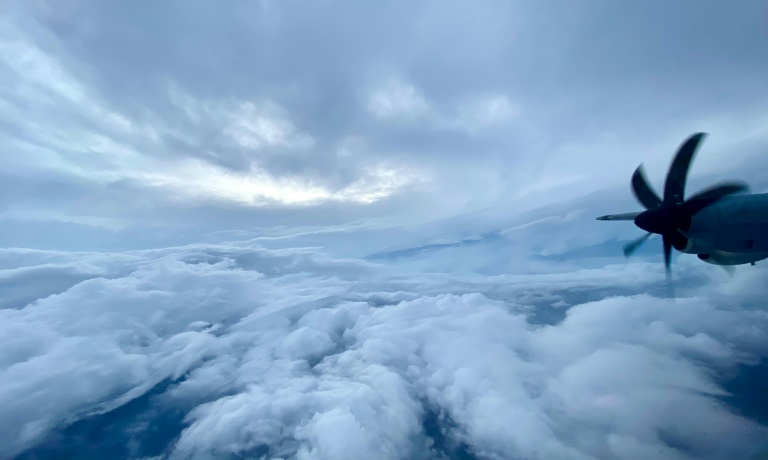
Gusts of 100 miles an hour and driving rain buffeted Bermuda early Friday, leaving thousands without power and fearing coastal damage as Hurricane Fiona, a powerful Category 3 storm, slid past the Atlantic island.

At 6:00 am local time (0900 GMT), Fiona’s center was located about 155 miles (250 kilometers) northwest of the British territory, according to the US National Hurricane Center (NHC), which downgraded the storm to Category 3 on the Saffir-Simpson scale in its latest advisory.

Overnight, several areas reported power outages, with more than 7,000 people affected, according to the main electric utility.

On Thursday, with hurricane warnings in effect and the NHC forecasting sustained winds at the center of the storm of more than 125 miles per hour — with even higher gusts — Bermuda residents said they were taking no chances. 

“This storm is going to be worse than the last one,” Richard Hartley, a store owner in the capital Hamilton told AFP as he and his wife covered the shop’s cedar-lined windows with metal sheets. 

Hurricane-force winds extend more than 70 miles from the storm’s eye, and tropical-storm-force winds up to 200 miles, the NHC said, predicting up to four inches (10 centimeters) of rain along with “large and destructive” waves and storm surge. 

The island of about 64,000 people is no stranger to hurricanes — but it is also tiny, just 21 square miles (54 square kilometers), and one of the most remote places in the world, 640 miles from its closest neighbor, the United States.

That means there is nowhere to evacuate to when a big storm hits.

“You have to live with it because you live here, you can’t run anywhere because it’s just a little island,” said JoeAnn Scott, a shopworker in Hamilton.

Bermudians try to “enjoy it as it comes,” she said. “And pray and pray. That’s what we do, pray and party,” she added with a laugh. 

At Bermuda’s famed Horseshoe Bay Beach, where onlookers came to assess the pounding waves and stretch their legs ahead of a long night inside, resident Gina Maughan said the island would be ready. 

“It’s always interesting to come down and see the surf,” she said, watching two kitesurfers soar into the air. 

“These guys are a little crazy,” she added.

– Construction ‘built to last’ –

Because of the island’s isolation, preparations are taken seriously.

Many boats were taken out of the water earlier in the week, outdoor furniture was moved inside, and the storm shutters bordering windows on most houses were checked. 

Public schools will be closed on Friday, and the government announced that an emergency shelter would be opened. Buses and ferries had stopped running by late Thursday.

The Royal Bermuda Regiment was on standby to help with clearing operations, and National Security Minister Michael Weeks implored residents to stay inside until the all clear was given.

“Please Bermuda, no driving around, no venturing out to take pictures, no reckless behavior,” he told a press conference.

In addition to laying in supplies of candles and food, some Bermudians were also drawing buckets of water and filling bathtubs from the tanks at the side of their homes ahead of the expected power outages.

There is no fresh water source on the island, so all buildings have white, lime-washed roofs that are used to catch rainwater that is directed into tanks and pumped into homes as the main water supply. 

Bermuda, whose economy is fueled by international finance and tourism, is wealthy compared to most Caribbean countries, and structures must be built to strict planning codes to withstand storms. Some have done so for centuries. 

“The construction is really built to last, and we don’t see the devastation ever that the Caribbean has experienced over the years,” resident Elaine Murray said.

Fiona killed four people in Puerto Rico earlier this week, according to US media, while one death was reported in the French overseas department of Guadeloupe and another in the Dominican Republic. 

President Joe Biden has declared a state of emergency in Puerto Rico, a US territory that is still struggling to recover from Hurricane Maria five years ago.

In the Dominican Republic, President Luis Abinader declared three eastern provinces to be disaster zones.

Farther north in Bermuda, islanders were calm. 

“I’ve been through a lot of hurricanes, so no, I’m not worried,” said resident Rochelle Jones.

But if things do go wrong, Bermudians will “all come out together and we help each other,” she said. 

Hong Kong scrapping quarantine for international arrivals

Hong Kong announced Friday it will end mandatory hotel quarantine, scrapping some of the world’s toughest travel restrictions, which battered the economy and kept the finance hub internationally isolated.

The long-awaited move brings relief to residents and businesses clamouring for the city to rejoin the rest of the world in resuming unhindered travel and living with Covid-19. 

For the past two and a half years Hong Kong has adhered to a version of China’s strict zero-Covid rules, deepening a brain drain as rivals reopened.

The announcement leaves mainland China as the only major economy still hewing to lengthy quarantine for international arrivals.

Chief Executive John Lee said the current three days of hotel quarantine would be reduced to zero for those arriving from overseas.

From September 26, travellers will be subject to PCR tests on arrival and will be unable to visit restaurants and bars for the first three days under a system authorities have dubbed “0+3”. 

“Under this arrangement, the quarantine hotel system will be cancelled,” Lee told reporters.

But tourists who test positive on arrival will still be isolated in hotel rooms or government camps.

The government also said it was lifting quotas on arrivals from mainland China — but those going in the opposite direction must still quarantine under Beijing’s strict zero-Covid rules.

– Recession –

Hong Kong once boasted one of the world’s busiest airports but passenger numbers this year are just 3.8 percent of pre-pandemic levels.

The government faced mounting pressure from residents, business leaders and even some of its own public health advisors to end quarantine, especially after Covid tore through the city at the start of the year.

Since that wave, the number of local infections far outweighed those coming in from overseas. 

At its peak, quarantine lasted as long as 21 days and about 113,000 residents have left the city since mid-2021, according to official figures.

The economic toll has been severe. 

The city is currently in a technical recession — two consecutive quarters of negative growth. 

Finance chief Paul Chan has warned Hong Kong will likely end 2022 in a full recession while the fiscal deficit is expected to balloon to HK$100 billion ($12.7 billion), twice initial estimates.   

“For Hong Kong to truly regain competitiveness vis-a-vis other cities around the world, the announcement is not enough; Hong Kong should be totally connected to the world without hindrance,” said AmCham president Eden Woon.

– Travel rush –

The websites of both Cathay Pacific and its low-cost wing HK Express saw delays as customers rushed to make bookings.

But it is unlikely Hong Kong will see a sudden flurry of mass tourism. 

Many global airlines have reduced routes or stopped flying to the city over the past two years. 

Cathay currently supplies about 45 percent of seats into and out of the city, but had previously warned it will only be able to increase routes by one-third this year because of the difficulties in finding staff and planes. 

In a statement, Cathay said it would add “more than 200 pairs of passenger flights” in October to both regional and long-haul destinations.

Many of its unused aircraft have been parked in the dry climate of interior Australia to better preserve them.

Even before Friday’s announcement, the cost of flights to cities like Los Angeles and London was more than double what they were pre-pandemic. 

– Rivals reopened –

Although it stuck to China’s zero-Covid rules, Hong Kong’s experience of the pandemic was not the same as the mainland’s.

Like China, Singapore, New Zealand and Taiwan, Hong Kong’s travel curbs helped stamp out the virus in 2020 as the pandemic left a wave of death and illness across much of the rest of the globe.

But as an international hub, Hong Kong struggled to keep the virus out indefinitely and could not deploy the kind of city-wide lockdowns used on the authoritarian mainland.

The Omicron variant ripped through mostly unvaccinated elderly victims, overwhelming hospitals that were not adequately prepared.

Despite the tough travel curbs and social distancing rules, Hong Kong had one of the world’s highest per capita fatality rates, with nearly 10,000 deaths in a population of 7.4 million.

Taiwan, which said Thursday it would end quarantine rules in mid-October, has a similar number of deaths but its population is three times the size.

Hong Kong’s approach stood in stark contrast to financial rivals such as London, Singapore, New York and Tokyo, which steadily reopened this year.

About four million people are expected to visit Singapore this year. 

Recession-bound UK fights inflation with tax cuts

The UK’s new government on Friday unveiled a multi-billion-pound package to support households and businesses hit by the highest inflation in decades, cutting taxes as the nation heads for recession.

Finance minister Kwasi Kwarteng, fresh from being appointed by new Prime Minister Liz Truss, said caps on soaring energy bills would cost about £60 billion ($68 billion) in the first six months. 

“The PM has acted with great speed to announce one of the most significant interventions the British state has ever made,” Kwarteng told parliament in a so-called mini budget.

“People need to know that help is coming.”

In a controversial move as millions of Britons face a cost-of-living crisis, Kwarteng axed an EU-inherited cap on bankers’ bonuses following Brexit to bolster the financial services sector.

He brought forward a plan to cut the lowest rate of income tax and reduced the highest to 40 percent from 45.

The chancellor of the exchequer also reversed a planned increase in tax on company profits signed off by Truss’s predecessor Boris Johnson.

Kwarteng already on Thursday said he would scrap a tax on salaries, reversing a 1.25-percentage-point rise in National Insurance implemented by his predecessor Rishi Sunak.

It comes as the Bank of England warns that Britain is slipping into recession, as rocketing fuel and food prices take their toll.

Adding to the pain, the pound has fallen against the dollar, sinking to a fresh 37-year low under $1.12 ahead of Kwarteng’s announcement.

Kwarteng also lifted the point at which tax is levied on purchases of residential properties, as soaring interest rates put the brakes on the housing market.

– Capping energy bills –

Britain on Wednesday announced a six-month plan to pay about half of energy bills for businesses.

Truss had already launched a two-year household energy price freeze. The caps will not kick in, however, until Britons face another large hike in gas and electricity bills from October.

The average household will have their annual energy bill capped at £2,500 until 2024 but many are expected to spend above that to keep homes warm over the winter.

Wholesale electricity and gas prices for firms — as well as charities, hospitals and schools — will be capped at half the expected cost on the open market.

UK energy companies including BP and Shell will not benefit from the cap, as they enjoy soaring profits after the invasion of Ukraine by major oil and gas producer Russia.

Britain’s main opposition Labour party has demanded that the government extends a windfall tax on energy companies launched by Sunak earlier this year.

But Truss ruled out such a move, arguing that additional taxes hinder economic recovery and efforts by energy groups to transition into greener companies.

She took office on September 6, two days before the death of Queen Elizabeth II, after winning an election of Conservative party members on a tax-cutting platform.

Kwarteng on Friday confirmed plans to shake up the welfare system.

Some 120,000 people in part-time work would face a benefit cut should they fail to take new steps to look for more work.

Kwarteng had described the policy as a “win-win”, pitching it as a way to fill 1.2 million UK job vacancies.

– Strikes, rate rises –

With prices rocketing, wage values are eroding, triggering some of the biggest strike action Britain has seen in more than 30 years. 

From the rail sector to postal services and even lawyers, tens of thousands of workers are carrying out industrial action aimed at securing bigger salaries.

“At such a critical time for our economy, it is simply unacceptable that strike action is disrupting so many lives,” Kwarteng told MPs.

He said the government would legislate “to ensure strikes can only be called once negotiations have genuinely broken down”.

Surging interest rates aimed at cooling sky-high inflation are meanwhile hurting consumers and businesses, as well as pushing up the cost of government borrowing.

The Bank of England on Thursday ramped up its key rate by another half-point to 2.25 percent, and warned the UK would slide into recession in the current third quarter.

Recession-bound UK fights inflation with tax cuts

The UK’s new government on Friday unveiled a multi-billion-pound package to support households and businesses hit by the highest inflation in decades, cutting taxes as the nation heads for recession.

Finance minister Kwasi Kwarteng, fresh from being appointed by new Prime Minister Liz Truss, said caps on soaring energy bills would cost about £60 billion ($68 billion) in the first six months. 

“The PM has acted with great speed to announce one of the most significant interventions the British state has ever made,” Kwarteng told parliament in a so-called mini budget.

“People need to know that help is coming.”

In a controversial move as millions of Britons face a cost-of-living crisis, Kwarteng axed an EU-inherited cap on bankers’ bonuses following Brexit to bolster the financial services sector.

He brought forward a plan to cut the lowest rate of income tax and reduced the highest to 40 percent from 45.

The chancellor of the exchequer also reversed a planned increase in tax on company profits signed off by Truss’s predecessor Boris Johnson.

Kwarteng already on Thursday said he would scrap a tax on salaries, reversing a 1.25-percentage-point rise in National Insurance implemented by his predecessor Rishi Sunak.

It comes as the Bank of England warns that Britain is slipping into recession, as rocketing fuel and food prices take their toll.

Adding to the pain, the pound has fallen against the dollar, sinking to a fresh 37-year low under $1.12 ahead of Kwarteng’s announcement.

Kwarteng also lifted the point at which tax is levied on purchases of residential properties, as soaring interest rates put the brakes on the housing market.

– Capping energy bills –

Britain on Wednesday announced a six-month plan to pay about half of energy bills for businesses.

Truss had already launched a two-year household energy price freeze. The caps will not kick in, however, until Britons face another large hike in gas and electricity bills from October.

The average household will have their annual energy bill capped at £2,500 until 2024 but many are expected to spend above that to keep homes warm over the winter.

Wholesale electricity and gas prices for firms — as well as charities, hospitals and schools — will be capped at half the expected cost on the open market.

UK energy companies including BP and Shell will not benefit from the cap, as they enjoy soaring profits after the invasion of Ukraine by major oil and gas producer Russia.

Britain’s main opposition Labour party has demanded that the government extends a windfall tax on energy companies launched by Sunak earlier this year.

But Truss ruled out such a move, arguing that additional taxes hinder economic recovery and efforts by energy groups to transition into greener companies.

She took office on September 6, two days before the death of Queen Elizabeth II, after winning an election of Conservative party members on a tax-cutting platform.

Kwarteng on Friday confirmed plans to shake up the welfare system.

Some 120,000 people in part-time work would face a benefit cut should they fail to take new steps to look for more work.

Kwarteng had described the policy as a “win-win”, pitching it as a way to fill 1.2 million UK job vacancies.

– Strikes, rate rises –

With prices rocketing, wage values are eroding, triggering some of the biggest strike action Britain has seen in more than 30 years. 

From the rail sector to postal services and even lawyers, tens of thousands of workers are carrying out industrial action aimed at securing bigger salaries.

“At such a critical time for our economy, it is simply unacceptable that strike action is disrupting so many lives,” Kwarteng told MPs.

He said the government would legislate “to ensure strikes can only be called once negotiations have genuinely broken down”.

Surging interest rates aimed at cooling sky-high inflation are meanwhile hurting consumers and businesses, as well as pushing up the cost of government borrowing.

The Bank of England on Thursday ramped up its key rate by another half-point to 2.25 percent, and warned the UK would slide into recession in the current third quarter.

Iran braces for counter rallies as protest deaths mount

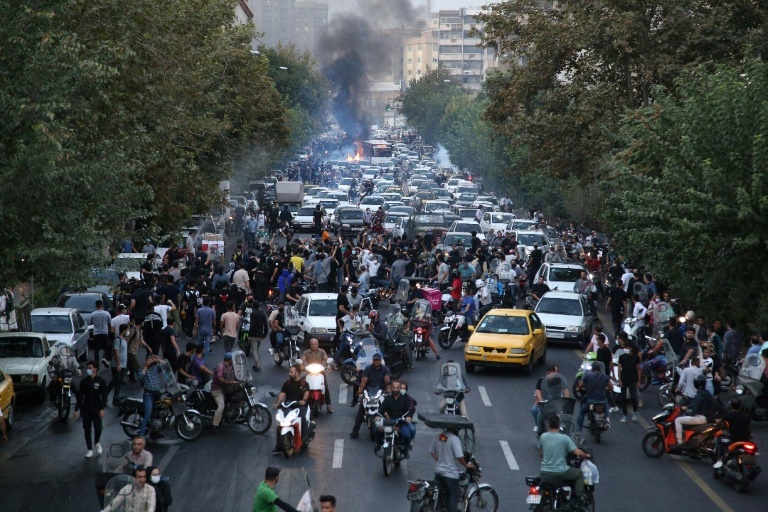
Internet access remained severely restricted in Iran ahead of counter rallies on Friday, after a week of protests over the death in police custody of Kurdish woman Mahsa Amini that have left at least 17 dead.

Amini, 22, died after her arrest by the Islamic republic’s feared morality police for allegedly wearing a hijab headscarf in an “improper” way, and news of her death sparked widespread outrage.

The official death toll rose to at least 17 on Thursday, including five security personnel, but the New York-based Center for Human Rights in Iran said its sources put the figure much higher.

“On the 7th day of #IranProtest, officials admit to at least 17 deaths w/ independent sources say 36,” the CHRI said in a Twitter post.

“Expect the number to rise. World leaders must press Iranian officials to allow protest without lethal force.”

Government-backed nationwide rallies in support of the hijab and a conservative dress code for women have been announced for Friday by Iran’s Islamic Development Coordination Council, the official news agency IRNA reported.

Security forces fired “semi-heavy weapons” at demonstrators during overnight clashes in the northern city of Oshnaviyeh, said the Olso-based Kurdish rights group Hengaw.

In the nearby city of Babol, demonstrators were seen setting ablaze a large billboard bearing the image of Iran’s supreme leader Ayatollah Ali Khamenei, according to videos shared online which could not be independently verified.

Since Amini was pronounced dead on September 16, three days after she was arrested in Tehran by Iran’s morality police, protests have spread to most major urban centres of the country, including the capital, Isfahan, Mashhad, Rasht and Saqez.

Activists said the woman, whose Kurdish first name is Jhina, had suffered a fatal blow to the head, a claim denied by officials who have announced an investigation.

– ‘Bleeding profusely’ –

Unprecedented images have shown protesters defacing or burning images of Khamenei and late Revolutionary Guards commander Qasem Soleimani.

Some women demonstrators have defiantly taken off their hijabs and burned them in bonfires or symbolically cut their hair before cheering crowds, video footage spread virally on social media has shown.

In response, security forces have fired at crowds with birdshot and metal pellets, and deployed tear gas and water cannon, said Amnesty International and other human rights groups.

Demonstrators have hurled stones at them, set fire to police cars and chanted anti-government slogans, IRNA reported.

“The government has responded with live ammunition, pellet guns and tear gas, according to videos shared on social media that have also shown protesters bleeding profusely”, CHRI said in a statement.

Internet access has been restricted in what web monitor NetBlocks on Thursday called a “curfew-style pattern of disruptions” amid the angry protests sparked by Amini’s death.

– Pro-hijab rallies –

Access to social media services Instagram and WhatsApp have been blocked since Wednesday night, and connections were still largely disrupted on Friday.

The measure was taken in response to “the actions carried out via these social networks by counter-revolutionaries against national security”, Iran’s Fars news agency said.

The council responsible for organising Friday’s pro-hijab rallies called the protesters “mercenaries”.

It has accused them of insulting the Koran and the Prophet Mohammed, as well as having burned down mosques and Iran’s flag and “desecrated the women’s hijab”, IRNA reported.

Judiciary chief Gholam Hossein Mohseni-Ejei on Thursday called on the attorney general and the legal authorities to maintain peace and security and to confront “disruptive elements and professional rioters”.

The intelligence services warned in a statement that “due to the exploitation of the situation by counter-revolutionary movements, any participation in illegal demonstrations will be punished by justice”.

President Ebrahim Raisi, at a news conference in New York where he attended the UN General Assembly, said: “We must differentiate between demonstrators and vandalism”.

The unrest comes at a particularly sensitive time for the leadership, as the Iranian economy remains mired in a crisis largely caused by sanctions over its nuclear programme.

Iran’s powerful Islamic Revolutionary Guard Corps labelled the protests a “conspiracy of the enemy”.

burs/dv/hc

Markets endure further losses, dollar rises as central banks turn screws

Asian markets fell again Friday and the dollar extended gains as part of a global sell-off fuelled by recession fears after central banks around the world ramped up interest rates to fight decades-high inflation.

With price rises showing no solid sign of letting up, monetary policymakers have been forced to go on the offensive, warning that short-term hits to economies are less painful than the long-term effects of not acting.

The Federal Reserve’s decision Wednesday to lift borrowing costs 75 basis points for a third successive meeting was followed by a warning that more were in the pipeline and they would not likely come down until 2024.

That came along with similar moves by banks in several other countries including Britain, Sweden, Norway, Switzerland, the Philippines and Indonesia — all pointing to a dark outlook for equities.

“We see this new even-higher-for-longer rate path as associated with a substantially higher likelihood of a hard landing, and so not just unambiguously hawkish but unambiguously bad for risk,” Krishna Guha, vice-chair of Evercore ISI, said.

In a sign that recession expectations are rising, the 10-year US Treasury yield jumped to 3.7 percent, its highest level in a decade, while the S&P 500 sank to its weakest level since June and just above its 2022 lows.

There were also losses on the Nasdaq and Dow, while London, Paris and Frankfurt shed more than one percent apiece.

Asia followed suit.

Hong Kong dropped, even as the city’s government lifted long-running hotel quarantine rules for incoming travellers as officials look to kickstart the battered economy. 

Shanghai, Sydney, Mumbai, Bangkok, Seoul, Singapore, Wellington, Taipei and Manila also retreated.

London, Paris and Frankfurt all fell in the morning.

The dollar, which has surged to multi-decade highs against its major peers as well as emerging currencies, held its strength.

Traders are keeping a close eye on developments following the Japanese finance ministry’s intervention to support the yen, after it hit a new 24-year low of 146 against the dollar.

The first such intervention since 1998, it helped strengthen the yen to just above 140.

But analysts warned the move was unlikely to have much long-term impact and the yen remained vulnerable owing to the Bank of Japan’s refusal to tighten policy — citing a need to boost the economy — as the Fed ramps up rates.

“Given the now even starker contrast between the (central bank’s) policy stance and central banks everywhere else in the world… (the) MoF will need to be in this intervention game for the long haul and in size if it is to have much hope of arresting yen weakness in an ongoing strong dollar environment,” said National Australia Bank’s Ray Attrill.

The pound also fell to a new 37-year low of $1.1170, even after the Bank of England hiked interest rates by half a point.

Oil markets remain subdued by concerns about a hit to demand caused by the expected recession.

Both main contracts dipped even as speculation swirled that OPEC and other major producers could cut output as they fear prices are falling too fast.

The commodity has fallen about a third from highs seen soon after Russia’s February invasion of Ukraine, and is even below levels seen before the conflict.

“This is going to be a very, very volatile last quarter,” said Amrita Sen, of Energy Aspects, on Bloomberg Television. She added that there were “just too many different and contradictory factors driving prices right now”.

– Key figures at around 0810 GMT –

Hong Kong – Hang Seng Index: DOWN 1.2 percent at 17,933.27 (close)

Shanghai – Composite: DOWN 0.7 percent at 3,088.77 (close)

London – FTSE 100: DOWN 0.4 percent at 7,130.11

Tokyo – Nikkei 225: Closed for a holiday

Dollar/yen: DOWN at 142.27 yen from 142.35 yen Thursday

Pound/dollar: DOWN at $1.1178 from $1.1252

Euro/dollar: DOWN at $0.9777 from $0.9839

Euro/pound: UP at 87.43 pence from 87.40 pence 

West Texas Intermediate: DOWN 1.6 percent at $82.19 per barrel

Brent North Sea crude: DOWN 1.5 percent at $89.13 per barrel

New York – Dow: DOWN 0.4 percent at 30,076.68 (close)

— Bloomberg News contributed to this story —

Close Bitnami banner
Bitnami