World

Russia holds breakaway polls in Ukraine

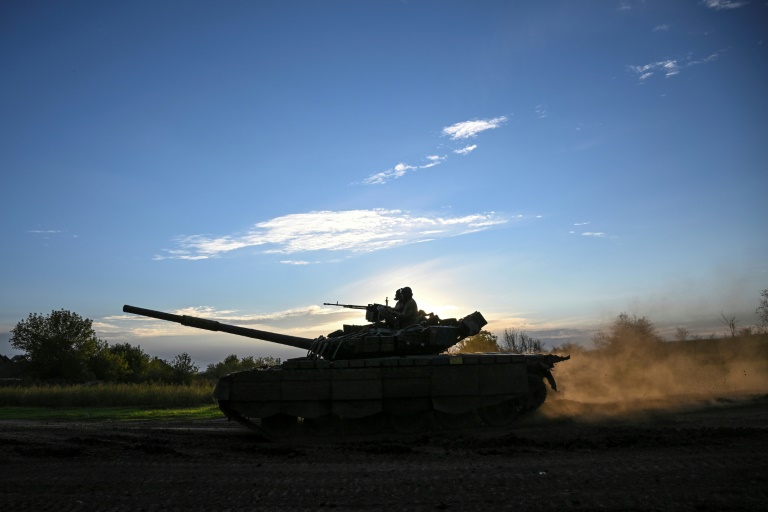
Moscow-held regions of Ukraine began voting Friday on whether to become part of Russia, in referendums that Kyiv and its allies have condemned as an unlawful land grab.

The referendums in eastern Donetsk and Lugansk regions, as well as in the southern Kherson and Zaporizhzhia regions have been roundly dismissed as a sham by Kyiv’s Western allies.

They come after Putin announced this week a mandatory troop call-up for about 300,000 reservists, which also sparked resounding condemnation in the West.

The mobilisation comes after Ukrainian forces seized back most of the northeastern Kharkiv region in a huge counter-offensive that has seen Kyiv retaking hundreds of towns and villages under Russian control for months.

The four regions’ integration into Russia — which for most observers is already a foregone conclusion — would represent a major new escalation of the conflict.

“We cannot –- we will not -– allow President Putin to get away with it,” US Secretary of State Antony Blinken said in a UN Security Council session on Thursday, lashing out against the referendums as a “sham”.

“The very international order we’ve gathered here to uphold is being shredded before our eyes… (Defending Ukraine’s sovereignty) is about protecting an international order where no nation can redraw the borders of another by force,” he said. 

The referendums are reminiscent of one in 2014 that saw Ukraine’s Crimea  annexed by Russia. 

Western capitals have maintained that the vote was fraudulent and hit Moscow with sanctions in response.

In New York this week, Western leaders have unanimously condemned the ballots and the troop call-up, with French President Macron telling the UN General Assembly that the referendums were a “travesty”.

Russian Foreign Minister Sergei Lavrov lashed out at the accusations, condemning Ukraine for driving “Russophobia”.

“There’s an attempt today to impose on us a completely different narrative about Russian aggression as the origin of this tragedy,” Lavrov told the Security Council.

– ‘A farce’ – 

In the eastern Donetsk and Lugansk regions — already recognised as independent by Putin right before he launched the invasion in February — residents are answering if they support their “republic’s entry into Russia”, according to Russian news agency TASS.

Ballots in Kherson and Zaporizhzhia regions  have the question: “Are you in favour of secession from Ukraine, formation of an independent state by the region and its joining the Russian Federation as a subject of the Russian Federation?”

Russian news agencies reported that the voting process began on Friday at 0500 GMT. Earlier, TASS said the balloting in the four regions would be untraditional.

“Given the short deadlines and the lack of technical equipment, it was decided not to hold electronic voting and use the traditional paper ballots,” it added.

Instead, authorities would go door-to-door for the first four days to collect votes, and then polling stations would be open on the final day, Tuesday, for residents to cast ballots.

Leonid Pasechnik, the leader of self-proclaimed Lugansk People’s Republic, told TASS they have been waiting for this referendum since 2014, calling it “our common dream and common future”. 

But Ukrainian President Volodymyr Zelensky denounced the referendums as a “farce”, and hailed Western allies for their condemnation of Russia’s moves.

“I am grateful to everyone in the world who supported us, who clearly condemned another Russian lie,” he said during his daily address on Thursday.

Putin said Moscow would use “all means” to protect its territory — a statement that former Russian leader Dmitry Medvedev said on social media would mean including “strategic nuclear weapons”. 

Medvedev also predicted the voting regions “will integrate into Russia”.

– Russians fleeing – 

Moscow on Thursday began its mandatory troop call-up, after Putin’s call for about 300,000 reservists to bolster the war effort.

Amateur footage posted on social media purported to show hundreds of Russian citizens across the country responding to the military summons, and the Russian military said that at least 10,000 people had volunteered to fight in 24 hours since the order.

But men were also leaving Russia in droves before they were made to join, and across Russia on Wednesday, more than 1,300 people were arrested during protests, a monitoring group reported.

Flights to neighbouring countries, mainly former Soviet republics that allow Russians visa-free entry, are nearly entirely booked and prices have skyrocketed, pointing to an exodus of Russians wanting to avoid going to war.

“I don’t want to go to the war,” a man named Dmitri, who had flown to Armenia with just one small bag, told AFP. 

“I don’t want to die in this senseless war. This is a fratricidal war.”

Military-aged men made up the majority of those arriving off the latest flight from Moscow at Yerevan airport and many were reluctant to speak.

The Armenian capital has become a major destination for Russians fleeing since war began on February 24, drawing fierce international opposition that has aimed to isolate Russia.

Looking lost and exhausted in Yerevan airport’s arrivals hall, 44-year-old Sergei said he had fled Russia to escape being called up.

“The situation in Russia would make anyone want to leave,” he told AFP.

Calling on Russians to resist the mobilisation, Zelensky urged them to protest, fight back “or surrender” to the Ukrainian army. 

“You are already complicit in all these crimes, murders and torture of Ukrainians. Because you were silent,” he said.
Conflict tourism: Kashmir hottest new destination for Indians

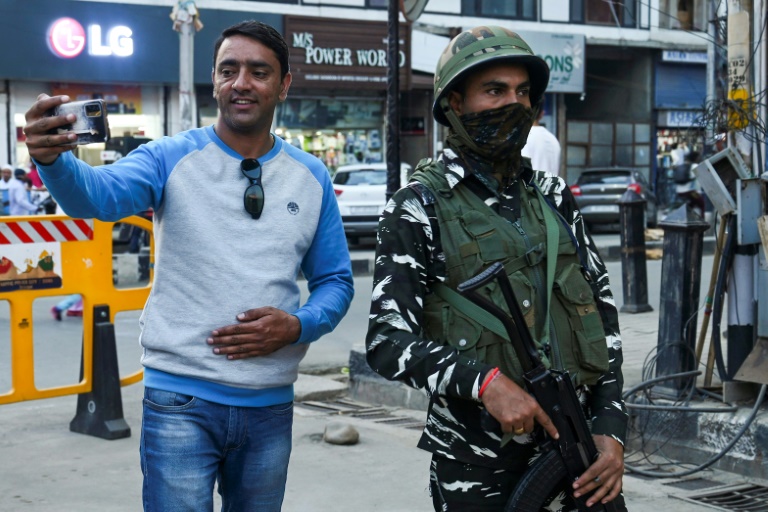
Standing on a fortified Kashmir street, an Indian tourist poses triumphantly for her husband’s camera, clutching the national flag in each hand and flanked by two soldiers carrying rifles.

India’s hottest new travel destination is also the site of its deadliest insurgency, where regular skirmishes break out between separatist militants and Indian troops, half a million of whom are stationed in Kashmir.

A big-budget tourism campaign, inaugurated early last year, is luring Indians to Kashmir with the promise of stunning Himalayan scenery, snow-covered hill stations and the remote Hindu shrines dotting the Muslim-majority region.

More than 1.6 million Indian travellers visited the disputed territory in the first six months of this year — a new record, according to local officials, and four times the number that visited over the same period in 2019.

Many fraternise and take selfies with soldiers, and are dismissive of the regular firefights between troops and rebels taking place out of sight from popular destinations. 

“Now everything is fine in Kashmir,” Dilip Bhai, a visitor from India’s Gujarat state, told AFP while waiting in queue outside a restaurant guarded by paramilitary forces.

“The news of violence we hear in media is more rumour than reality,” he said, adding that whatever armed clashes were happening “on the side” did not worry him. 

Security forces have tightened a chokehold on Kashmir — also claimed and partly controlled by Pakistan — since 2019, when India’s government revoked the limited autonomy constitutionally guaranteed to the region.

That year, thousands of people were taken into preventative detention to forestall expected protests against the sudden decision, while authorities severed communications links in what became the world’s longest-ever internet shutdown. 

Public protests have since been made virtually impossible, local journalists are regularly harassed by police and the region is shut off to foreign reporters. 

But clashes still break out in the territory almost every week, with officials counting 130 suspected rebels and 19 members of the security forces killed over the first six months of the year.

The constitutional change opened up land purchases and local jobs to Indians from outside Kashmir, and for residents, this year’s influx of travellers is the final insult. 

“Promotion of tourism is good, but it is done with a kind of nationalist triumphalism,” a leading Kashmiri trader told AFP, asking not to be named for fear of government reprisal.

“It’s like war by other means,” they added. “The way tourism is being promoted by the government is telling Indians: go spend time there and make Kashmir yours.”

– ‘We changed past perceptions’ –

A 1989 rebellion against Indian rule in Kashmir started a long-running insurgency that killed thousands of people and sparked a panicked migration of Hindu residents from the Muslim-majority valley.

Periodic attempts to revive the tourism market faltered, with three popular uprisings between 2008 and 2016 leaving more than 300 civilians dead and scaring off potential visitors. 

But after Prime Minister Narendra Modi’s government revoked Kashmir’s limited autonomy three years ago, authorities again began promoting the region to Indians as one of the country’s premier getaway destinations. 

A promotional blitz followed, with festivals, travel marts, roadshows and summits featuring Indian travel operators, sponsored by the local government and 21 major cities across India.

The government announced the opening of a ski resort among 75 new “untapped destinations” for tourists, including some close to the heavily militarised de facto border that divides Kashmir between India and Pakistan.

Authorities are also courting investors to build 20,000 hotel rooms in addition to the 50,000 already in the territory, and they eased a homestay policy to encourage residents to host visitors.

Sarmad Hafeez, the local government’s tourism secretary, told AFP that the official budget to promote tourism had “quadrupled” in the past two years.

“We changed past perceptions about Kashmir,” he said. “Events sent out a clear message that Kashmir is safe to travel to.”

– ‘Last nail in the coffin’ –

India’s drive to open Kashmir’s remarkable landscape to tourism comes as the rest of its established economy languishes after the change in the territory’s status.

Drastic curbs on civic life and an intensified counterinsurgency campaign have stifled local business.

The government has also removed tax barriers that had helped protect local production from outside competition.

“This was the last nail in the coffin of our manufacturing industry,” Shahid Kamili, president of the Federation Chamber of Commerce and Industry in Kashmir (FCIK), told AFP.

Industrial production accounts for 15 percent of the local economy, according to FCIK data — three times the most optimistic figures for the tourism sector. 

But 350,000 industrial workers lost their jobs since the region’s autonomy was rescinded, Kamili said. 

The region’s potential for growth as a travel destination remains hampered by its violent history and prevailing unhappiness with Indian rule, leaving some visitors unnerved by the heavy security presence.

“If Kashmir is a part of India,” a tourist from West Bengal told AFP, “then we should ask why there are so many security forces everywhere.”

Cubans to vote on same-sex marriage, surrogacy

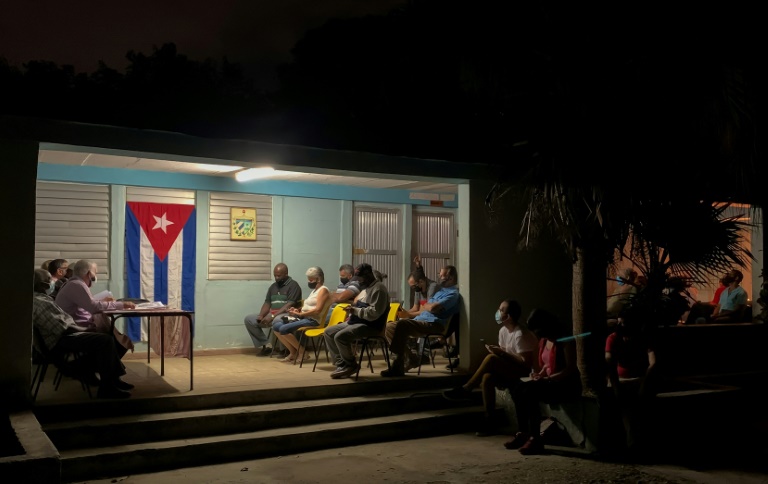
Cubans will vote on Sunday in a referendum on whether to allow same-sex marriage and surrogate pregnancies, which experts say could turn into an opportunity to voice opposition against the government.

More than eight million Cubans aged over 16 are eligible to participate in the voluntary and secret ballot — the first time a law will be decided by public vote.

Coming just months after the government passed a penal code slammed for rolling back freedom of expression, the family code would not only permit marriage and surrogacy (as long as no money is exchanged), but also adoption by same-sex couples and parental rights for non-biological mothers and fathers.

If the law is approved, Cuba would become only the ninth country in Latin America to allow same-sex marriage, following in the footsteps of Argentina, Brazil, Colombia, Ecuador, Costa Rica, Chile, Uruguay and some Mexican states.

The vote comes with Cuba mired in a deep economic crisis that is fueling mass immigration away from the island, with an increasingly vocal population expressing unhappiness with the one-party state.

As a result, Sunday’s referendum on the government initiative may become a protest vote.

With Havana having carried out an intense campaign in favor of the measures, a vote against the items could provide Cubans with a rare opportunity to publicly rebuke their government.

Many could vote “No” or even abstain altogether as a way “to make the government pay for the crisis,” Arturo Lopez-Levy, a Cuban academic at Holy Names University in California, told AFP.

The referendum, he added, amounted to a unique “opportunity to show approval or disapproval” with the communist government.

And while “No” is unlikely to win, it is expected to garner between 25 and 30 percent of votes, which would in itself be something of a rebuke to the government.

In 2019, the new constitution was also put to a referendum and approved with 78 percent of the vote, but that was already the lowest approval rate the government had received since the 1959 communist revolution.

– Clampdown –

Six decades after Fidel Castro’s revolution, Cuba is experiencing its worst economic crisis in 30 years, fueled by ramped-up US sanctions and a tourism collapse due to the coronavirus pandemic.

Many Cubans are struggling to access medicine, electricity, fuel and basic foodstuffs amid critical import shortages and staggering inflation.

The country erupted in historic anti-government protests in July last year by citizens clamoring for food and greater freedoms. 

Hundreds were detained and jailed, but this has not stopped repeated demonstrations in recent months in a country notoriously intolerant of dissent.

In May, the parliament unanimously approved a reform to Cuba’s penal code, with strict limits on social media use opponents say was designed to quash future displays of public discontent.

– ‘A father and a mother’ –

The family code is meant to replace legislation from 1975 that defines marriage as a union between a man and a woman.

The government had sought to change this in the 2019 constitution, but withdrew its proposal amid strong opposition from churches and conservative groups.

It was worked instead into the family code, which President Miguel Diaz-Canel tweeted on Wednesday represents “the hope of thousands of people marked by painful stories of exclusion and silence.”

Marginalization of LGBTQ people in traditionally macho Cuban society peaked in the 1960s and ’70s. 

In 2010, Castro admitted the Cuban revolution had oppressed members of the community as deviants, including with forced labor camps for re-education. Some were driven into exile.

A major opponent of the family code is Cuba’s powerful Catholic Church, which maintains “it is a child’s right to have a father and a mother.”

The government beat the drum for its initiative during weeks of countrywide public consultations it said were attended by more than half of Cuba’s 11.2 million people.

Other proposals in the code include clearly defining the rights of the elderly, and stipulating that no one found guilty of abusing minors can ever adopt a child.

The code requires more than 50 percent of votes to pass, and would enter into force the day after the results are known.

Even if there is a protest vote Sunday, or the draft is rejected on principle, some believe the outcome is already sewn up anyway, and the code will pass.

“It is already decided,” said Martha Beatriz Roque, a long-term dissident who is convinced the government was merely paying lip service to “respecting the rights of people.”

US aircraft carrier arrives in South Korea to 'deter' Pyongyang

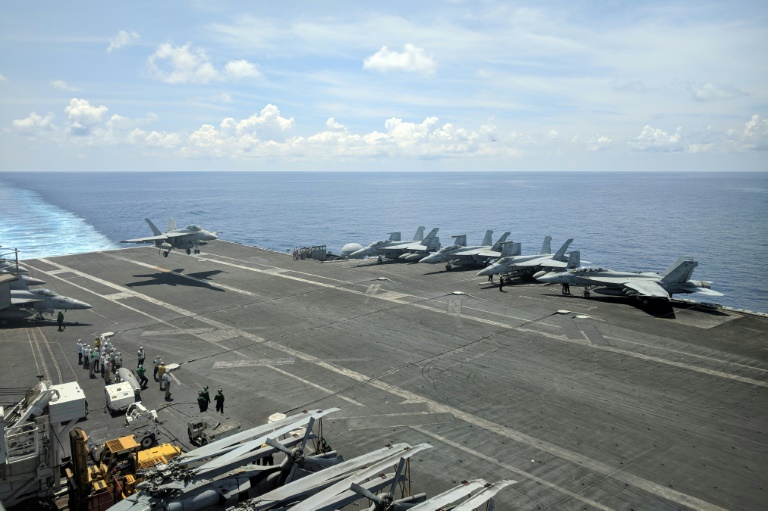
A US aircraft carrier arrived in South Korea Friday for the first time in nearly five years, ahead of joint drills in a show of force aimed at the nuclear-armed North.

The nuclear-powered USS Ronald Reagan and vessels from its strike group docked in the southern port city of Busan, part of a push by Seoul and Washington to have more US strategic assets operating in the region.

South Korea’s hawkish President Yoon Suk-yeol, who took office in May, has vowed to beef up joint military exercises with the United States, after years of failed diplomacy with North Korea under his predecessor.

“The deployment of the carrier USS Ronald Reagan to Busan demonstrates the strength of the South Korea-US alliance,” a South Korean defence ministry official told AFP.

The visit aims to “deter North Korea’s nuclear and missile threats”, the official added.

Pyongyang has conducted a record-breaking blitz of weapons tests this year, and earlier this month revised its nuclear law, enshrining a “first strike” doctrine and vowing never to give up its nukes.

The US Navy said the USS Ronald Reagan is accompanied on the South Korea visit by two vessels from its strike group — the USS Chancellorsville, a guided-missile cruiser, and the USS Barry, a guided missile destroyer.

They will take part in joint drills of South Korea’s east coast this month, the Yonhap news agency said, adding that the nuclear-powered submarine USS Annapolis is also expected to participate.

The carrier’s visit comes after months of warnings from South Korean and US officials that North Korean leader Kim Jong Un is preparing to conduct another nuclear test.

The isolated regime has tested nuclear weapons six times since 2006. Its last and most powerful one in 2017 — which Pyongyang claimed was a hydrogen bomb — had an estimated yield of 250 kilotons.

Washington is Seoul’s key security ally and stations about 28,500 troops in South Korea to protect it from the North.

The two countries have long carried out joint exercises, which they insist are purely defensive but North Korea sees them as rehearsals for an invasion.

Last month, the United States and South Korea staged their biggest combined military drills since 2018 — the resumption of large-scale training sessions that had been scaled back due to Covid-19 and the bout of failed diplomacy with Pyongyang.

Hong Kong replaced by Singapore as Asia's top finance centre

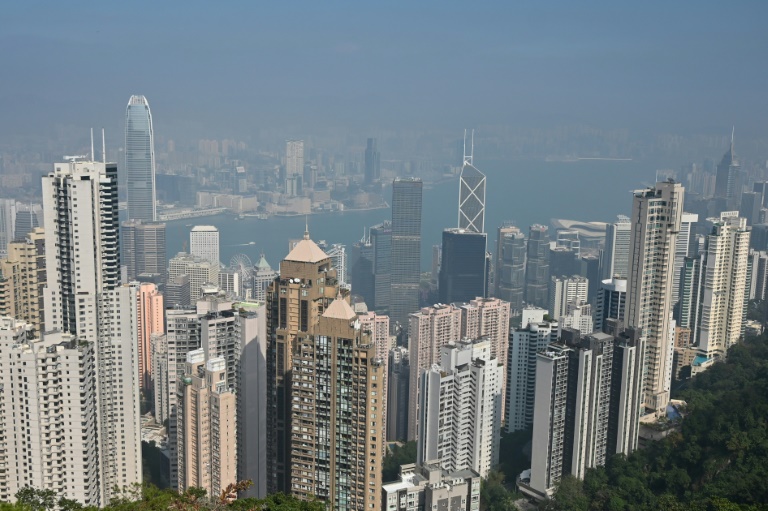
Hong Kong has lost its crown as Asia’s premier finance centre to Singapore in a global ranking list where New York and London maintained their number one and two spots.

Singapore jumped three places to third in the twice-a-year Global Financial Centres Index (GFCI) which assesses 119 cities around the world and was published late Thursday.

Hong Kong has adhered to a version of China’s strict zero-Covid rules throughout the pandemic, battering the economy and deepening a brain drain as rival business hubs reopen.

The city still mandates three days of hotel quarantine for all international arrivals while its border with the Chinese mainland is mostly closed.

In contrast, Singapore successfully shifted to endemicity earlier this year and has reopened without restrictions.

The city-state is hosting a slew of financial and business conferences in the coming months as well as a Formula 1 night race next week, while about four million people are expected to visit this year.

In a 600-word statement responding to the latest GFCI ranking, Hong Kong’s government focused on the city scoring a higher points rating than the year before.

“We will continue to listen to views and be bold in taking forward reforms to consolidate and strengthen Hong Kong’s capital market and our role as an international financial centre,” the government said.

The statement did not mention the coronavirus or the ongoing pandemic controls.

San Francisco came in at number five in the survey, up two spots. Shanghai, which was shut down earlier this year under China’s coronavirus controls, was number six followed by Los Angeles, Beijing and Shenzhen. 

Paris took tenth spot, replacing Tokyo which fell to 16th place.

US charges Boeing with misleading investors on 737 MAX safety, fined $200 mn

US securities officials fined Boeing $200 million over the aviation giant’s misleading assurances about the safety of the 737 MAX airplane following two deadly crashes, regulators announced Thursday.

Boeing agreed to the penalty to settle charges it “negligently violated the antifraud provisions” of US securities laws, the Securities and Exchange Commission said in a statement, saying the company and its leader “put profits over people.”

Boeing’s former chief executive, Dennis Muilenburg, also agreed to pay $1 million to settle the same charges in a civil case.

The settlement is the latest hit to Boeing over the MAX following the Lion Air Crash in Indonesia in October 2018 and the Ethiopian Airlines crash in Ethiopia in March 2019, which together claimed nearly 350 lives.

One month after the first crash, a Boeing press release approved by Muilenburg “selectively highlighted certain facts,” implying that pilot error and poor aircraft maintenance contributed to the crash.

The press release also attested to the aircraft’s safety, not disclosing that Boeing knew a key flight handling system, the Maneuvering Characteristics Augmentation System (MCAS), posed safety issues and was being redesigned.

After the second crash, Boeing and Muilenburg assured the public that there was “no surprise or gap” in the federal certification of the MAX despite being aware of contrary information, the SEC said.

– Boeing ‘failed’ –

“In times of crisis and tragedy, it is especially important that public companies and executives provide full, fair, and truthful disclosures to the markets,” said SEC chair Gary Gensler in a press release.

“The Boeing Company and its former CEO, Dennis Muilenburg, failed in this most basic obligation. They misled investors by providing assurances about the safety of the 737 MAX, despite knowing about serious safety concerns.”

The SEC said both Boeing and Muilenburg, in agreeing to pay the penalties, did not admit or deny the agency’s findings.

Boeing said the agreement “fully resolves” the SEC’s inquiry and is part of the company’s “broader effort to responsibly resolve outstanding legal matters related to the 737 MAX accidents in a manner that serves the best interests of our shareholders, employees, and other stakeholders,” a company spokesman said.

“We will never forget those lost on Lion Air Flight 610 and Ethiopian Airlines Flight 302, and we have made broad and deep changes across our company in response to those accidents.”

Robert Clifford, a lawyer representing families of victims aboard the Ethiopian Airlines flight, called for “Muilenburg or anyone else who persuaded the government to keep the MAX 737 Boeing flying” to be “fully investigated for conduct that could be criminal in nature.”

US air safety authorities cleared Boeing’s 737 MAX to resume service in November 2020 following a 20-month grounding after the crashes.

A principal cause of the two crashes was identified as the MCAS, which was supposed to keep the plane from stalling as it ascended but instead forced the nose of the plane downward. The Federal Aviation Administration required Boeing to upgrade this system to address the flaw.

In January 2021, Boeing agreed to pay $2.5 billion to settle a US criminal charge over claims the company defrauded regulators overseeing the 737 MAX.

Conflict tourism: Kashmir hottest new destination for Indians

Standing on a fortified Kashmir street, an Indian tourist poses triumphantly for her husband’s camera, clutching the national flag in each hand and flanked by two soldiers carrying rifles.

India’s hottest new travel destination is also the site of its deadliest insurgency, where regular skirmishes break out between separatist militants and Indian troops, half a million of whom are stationed in Kashmir.

A big-budget tourism campaign, inaugurated early last year, is luring Indians to Kashmir with the promise of stunning Himalayan scenery, snow-covered hill stations and the remote Hindu shrines dotting the Muslim-majority region.

More than 1.6 million Indian travellers visited the disputed territory in the first six months of this year — a new record, according to local officials, and four times the number that visited over the same period in 2019.

Many fraternise and take selfies with soldiers, and are dismissive of the regular firefights between troops and rebels taking place out of sight from popular destinations. 

“Now everything is fine in Kashmir,” Dilip Bhai, a visitor from India’s Gujarat state, told AFP while waiting in queue outside a restaurant guarded by paramilitary forces.

“The news of violence we hear in media is more rumour than reality,” he said, adding that whatever armed clashes were happening “on the side” did not worry him. 

Security forces have tightened a chokehold on Kashmir — also claimed and partly controlled by Pakistan — since 2019, when India’s government revoked the limited autonomy constitutionally guaranteed to the region.

That year, thousands of people were taken into preventative detention to forestall expected protests against the sudden decision, while authorities severed communications links in what became the world’s longest-ever internet shutdown. 

Public protests have since been made virtually impossible, local journalists are regularly harassed by police and the region is shut off to foreign reporters. 

But clashes still break out in the territory almost every week, with officials counting 130 suspected rebels and 19 members of the security forces killed over the first six months of the year.

The constitutional change opened up land purchases and local jobs to Indians from outside Kashmir, and for residents, this year’s influx of travellers is the final insult. 

“Promotion of tourism is good, but it is done with a kind of nationalist triumphalism,” a leading Kashmiri trader told AFP, asking not to be named for fear of government reprisal.

“It’s like war by other means,” they added. “The way tourism is being promoted by the government is telling Indians: go spend time there and make Kashmir yours.”

– ‘We changed past perceptions’ –

A 1989 rebellion against Indian rule in Kashmir started a long-running insurgency that killed thousands of people and sparked a panicked migration of Hindu residents from the Muslim-majority valley.

Periodic attempts to revive the tourism market faltered, with three popular uprisings between 2008 and 2016 leaving more than 300 civilians dead and scaring off potential visitors. 

But after Prime Minister Narendra Modi’s government revoked Kashmir’s limited autonomy three years ago, authorities again began promoting the region to Indians as one of the country’s premier getaway destinations. 

A promotional blitz followed, with festivals, travel marts, roadshows and summits featuring Indian travel operators, sponsored by the local government and 21 major cities across India.

The government announced the opening of a ski resort among 75 new “untapped destinations” for tourists, including some close to the heavily militarised de facto border that divides Kashmir between India and Pakistan.

Authorities are also courting investors to build 20,000 hotel rooms in addition to the 50,000 already in the territory, and they eased a homestay policy to encourage residents to host visitors.

Sarmad Hafeez, the local government’s tourism secretary, told AFP that the official budget to promote tourism had “quadrupled” in the past two years.

“We changed past perceptions about Kashmir,” he said. “Events sent out a clear message that Kashmir is safe to travel to.”

– ‘Last nail in the coffin’ –

India’s drive to open Kashmir’s remarkable landscape to tourism comes as the rest of its established economy languishes after the change in the territory’s status.

Drastic curbs on civic life and an intensified counterinsurgency campaign have stifled local business.

The government has also removed tax barriers that had helped protect local production from outside competition.

“This was the last nail in the coffin of our manufacturing industry,” Shahid Kamili, president of the Federation Chamber of Commerce and Industry in Kashmir (FCIK), told AFP.

Industrial production accounts for 15 percent of the local economy, according to FCIK data — three times the most optimistic figures for the tourism sector. 

But 350,000 industrial workers lost their jobs since the region’s autonomy was rescinded, Kamili said. 

The region’s potential for growth as a travel destination remains hampered by its violent history and prevailing unhappiness with Indian rule, leaving some visitors unnerved by the heavy security presence.

“If Kashmir is a part of India,” a tourist from West Bengal told AFP, “then we should ask why there are so many security forces everywhere.”

Lachlan Murdoch faces off with Crikey in defamation row

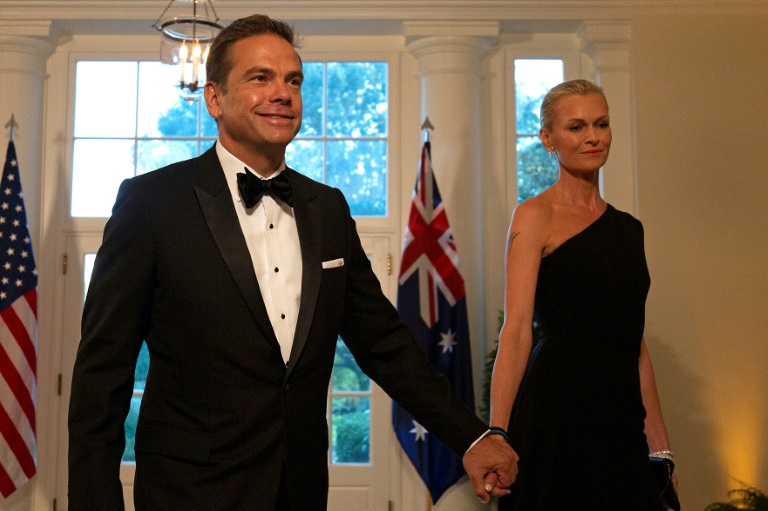
The high-stakes defamation battle between News Corp co-chairman Lachlan Murdoch and small Australian news outlet Crikey will go to trial beginning March 27 in Sydney.

Rupert Murdoch’s eldest son — who is also chief executive of Fox News parent Fox Corporation — is suing Crikey over an opinion piece that linked his family’s media empire to the January 6, 2021 storming of the US Capitol by supporters of then-President Donald Trump.

The media scion’s lawyers claimed their client was defamed over a dozen times in the article, which accused “the Murdochs and their slew of poisonous Fox News commentators” of being “unindicted co-conspirators” in the Capitol riot.

On Friday, Murdoch’s barrister — top defamation litigator Sue Chrysanthou — pushed for the earliest possible trial date, arguing Crikey had been “directing ridicule and hatred” towards her client.

She said Crikey was “publicly claiming martyrdom”, pointing to the outlet running billboard advertisements about the case and fundraising online for its defence.

In the past month, Crikey’s GoFundMe campaign has raised nearly A$500,000 (US$333,000) and garnered support from two former Australian Prime Ministers, Kevin Rudd and Malcolm Turnbull.

“Lachlan Murdoch owns boats that are worth more than Crikey,” Turnbull commented alongside his Aus$5,000 (US$3,400) donation.

– A very public fight –

The legal scuffle over the opinion piece burst into international headlines last month, when Crikey ran an advertisement in The New York Times daring Murdoch to sue.

The often pugilistic website said it welcomed the opportunity to “test this important issue of freedom of public interest journalism in a courtroom”.

Murdoch filed his lawsuit the next day.

The tussle pits an upstart website, with subscriber numbers in the low tens of thousands, against one of the world’s largest media empires.

Defamation expert David Rolph from the University of Sydney told AFP Murdoch’s case could be the first test of recent attempts to reform Australia’s notoriously tough defamation laws.

Australia has gained a reputation as “the defamation capital of the world” after a slew of lawsuits launched by high-profile figures, including actors and politicians.

Crikey’s defence, filed with the Federal Court Tuesday, denied it defamed Murdoch and flagged it would lean on two new defences created by the reforms.

“One is a serious harm threshold… the plaintiff now has to prove that they not only suffered some harm to reputation, but that it was serious harm to reputation,” Rolph explained.

Crikey will also seek to argue that the opinion piece, by writer Bernard Keane, was in the public interest.

“I suppose the difficulty here is that defence is entirely untested. This will be a test case of that,” Rolph said.

– Public interest fight –

In a statement issued Thursday, Crikey chief executive Will Hayward said his company was fighting the case because “there is an issue of fundamental public importance at stake”.

“We think it is important in an open, well-functioning society that the rich and powerful can be critiqued.”

While Murdoch has stayed quiet since launching the case, his statement of claim accused Crikey of using the legal saga to drive subscriptions.

He has asked the court to permanently ban Crikey from publishing anything suggesting he “illegally conspired with Donald Trump” around the events of January 6.

The case will be heard by Justice Wigney, who has overseen several closely-watched defamation trials — including actor Geoffrey Rush’s successful suit against another Australian media outlet.

Wigney said Friday that before the trial begins, he would seek to have the parties enter mediation where “cool commercial minds may prevail”.

Asian markets suffer further losses as central banks turn screws

Asian markets fell again Friday as part of a global sell-off fuelled by recession fears after central banks around the world ramped up interest rates to fight decades-high inflation.

With price rises showing no solid sign of letting up, monetary policymakers have been forced to go on the offensive, warning that short-term hits to economies are less painful than the long-term effects of not acting.

The Federal Reserve’s decision Wednesday to lift borrowing costs 75 basis points for a third successive meeting was followed by a warning that more were in the pipeline and they would not likely come down until 2024.

That came along with similar moves by banks in several other countries including Britain, Sweden, Norway, Switzerland, the Philippines and Indonesia — all pointing to a dark outlook for equities.

“We see this new even-higher-for-longer rate path as associated with a substantially higher likelihood of a hard landing, and so not just unambiguously hawkish but unambiguously bad for risk,” Krishna Guha, vice chairman of Evercore ISI, said.

In a sign that recession expectations are rising, the yield on a 10-year US Treasury jumped to 3.7 percent, its highest level in a decade, while the S&P 500 sank to its weakest level since June and just above its 2022 lows.

There were also losses on the Nasdaq and Dow, while London, Paris and Frankfurt shed more than one percent apiece.

Asia largely followed suit, though bargain-buying provided a modicum of support.

Hong Kong, Shanghai, Sydney, Seoul, Singapore, Wellington, Taipei and Manila all dropped.

The dollar, which has surged to multi-decade highs against its major peers as well as emerging currencies, held its strength.

Traders are keeping a close eye on developments following the Japanese finance ministry’s intervention to support the yen, after it hit a new 24-year low of 146 against the dollar.

The first such intervention since 1998, it helped strengthen the yen to just above 140.

However, analysts warned the move was unlikely to have much long-term impact and the yen remained vulnerable owing to the Bank of Japan’s refusal to tighten policy — citing a need to boost the economy — as the Fed ramps up rates.

“Given the now even starker contrast between the (central bank’s) policy stance and central banks everywhere else in the world… (the) MoF will need to be in this intervention game for the long haul and in size if it is to have much hope of arresting yen weakness in an ongoing strong dollar environment,” said National Australia Bank’s Ray Attrill.

Oil markets remain subdued by concerns about a hit to demand caused by the expected recession.

Both main contracts fluctuated as speculation swirled that OPEC and other major producers could cut output as they fear prices are falling too fast.

The commodity has fallen about a third from highs seen soon after Russia’s February invasion of Ukraine, and is even below levels seen before the conflict.

“This is going to be a very, very volatile last quarter,” said Amrita Sen, of Energy Aspects, on Bloomberg Television. She added that there were “just too many different and contradictory factors driving prices right now”.

– Key figures at around 0230 GMT –

Hong Kong – Hang Seng Index: DOWN 0.5 percent at 18,066.14

Shanghai – Composite: DOWN 0.4 percent at 3,096.17

Tokyo – Nikkei 225: Closed for a holiday

Dollar/yen: DOWN at 142.13 yen from 142.35 yen Thursday

Pound/dollar: DOWN at $1.1239 from $1.1252

Euro/dollar: DOWN at $0.9829 from $0.9839

Euro/pound: UP at 87.46 pence from 87.40 pence 

West Texas Intermediate: FLAT at $83.47 per barrel

Brent North Sea crude: DOWN 0.1 percent at $90.40 per barrel

New York – Dow: DOWN 0.4 percent at 30,076.68 (close)

London – FTSE 100: DOWN 1.1 percent at 7,159.52 (close)

— Bloomberg News contributed to this story —

Asian markets suffer further losses as central banks turn screws

Asian markets fell again Friday as part of a global sell-off fuelled by recession fears after central banks around the world ramped up interest rates to fight decades-high inflation.

With price rises showing no solid sign of letting up, monetary policymakers have been forced to go on the offensive, warning that short-term hits to economies are less painful than the long-term effects of not acting.

The Federal Reserve’s decision Wednesday to lift borrowing costs 75 basis points for a third successive meeting was followed by a warning that more were in the pipeline and they would not likely come down until 2024.

That came along with similar moves by banks in several other countries including Britain, Sweden, Norway, Switzerland, the Philippines and Indonesia — all pointing to a dark outlook for equities.

“We see this new even-higher-for-longer rate path as associated with a substantially higher likelihood of a hard landing, and so not just unambiguously hawkish but unambiguously bad for risk,” Krishna Guha, vice chairman of Evercore ISI, said.

In a sign that recession expectations are rising, the yield on a 10-year US Treasury jumped to 3.7 percent, its highest level in a decade, while the S&P 500 sank to its weakest level since June and just above its 2022 lows.

There were also losses on the Nasdaq and Dow, while London, Paris and Frankfurt shed more than one percent apiece.

Asia largely followed suit, though bargain-buying provided a modicum of support.

Hong Kong, Shanghai, Sydney, Seoul, Singapore, Wellington, Taipei and Manila all dropped.

The dollar, which has surged to multi-decade highs against its major peers as well as emerging currencies, held its strength.

Traders are keeping a close eye on developments following the Japanese finance ministry’s intervention to support the yen, after it hit a new 24-year low of 146 against the dollar.

The first such intervention since 1998, it helped strengthen the yen to just above 140.

However, analysts warned the move was unlikely to have much long-term impact and the yen remained vulnerable owing to the Bank of Japan’s refusal to tighten policy — citing a need to boost the economy — as the Fed ramps up rates.

“Given the now even starker contrast between the (central bank’s) policy stance and central banks everywhere else in the world… (the) MoF will need to be in this intervention game for the long haul and in size if it is to have much hope of arresting yen weakness in an ongoing strong dollar environment,” said National Australia Bank’s Ray Attrill.

Oil markets remain subdued by concerns about a hit to demand caused by the expected recession.

Both main contracts fluctuated as speculation swirled that OPEC and other major producers could cut output as they fear prices are falling too fast.

The commodity has fallen about a third from highs seen soon after Russia’s February invasion of Ukraine, and is even below levels seen before the conflict.

“This is going to be a very, very volatile last quarter,” said Amrita Sen, of Energy Aspects, on Bloomberg Television. She added that there were “just too many different and contradictory factors driving prices right now”.

– Key figures at around 0230 GMT –

Hong Kong – Hang Seng Index: DOWN 0.5 percent at 18,066.14

Shanghai – Composite: DOWN 0.4 percent at 3,096.17

Tokyo – Nikkei 225: Closed for a holiday

Dollar/yen: DOWN at 142.13 yen from 142.35 yen Thursday

Pound/dollar: DOWN at $1.1239 from $1.1252

Euro/dollar: DOWN at $0.9829 from $0.9839

Euro/pound: UP at 87.46 pence from 87.40 pence 

West Texas Intermediate: FLAT at $83.47 per barrel

Brent North Sea crude: DOWN 0.1 percent at $90.40 per barrel

New York – Dow: DOWN 0.4 percent at 30,076.68 (close)

London – FTSE 100: DOWN 1.1 percent at 7,159.52 (close)

— Bloomberg News contributed to this story —

Close Bitnami banner
Bitnami