World

US seeks action, possible UN resolution, on Myanmar junta

The United States is seeking more pressure on Myanmar’s junta through the United Nations and is urging the international community not to recognize upcoming elections, a senior official said Thursday.

“There is wide acknowledgement that the regime needs to feel more pressure,” State Department Counselor Derek Chollet, who is leading US diplomacy on Myanmar during the annual United Nations General Assembly, told AFP.

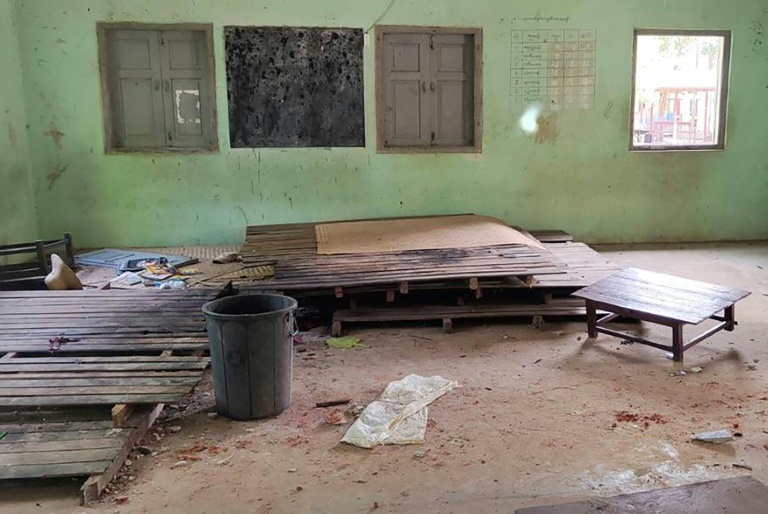
He pointed to outrage over an air strike this month that killed 11 schoolchildren as well as the July execution of four prominent prisoners by the junta, which threw out the elected government in February 2021, ending a decade-long experiment in democracy.

Chollet said he held talks both with other governments and with representatives of the National Unity Government — dominated by ousted civilian leader Aung San Suu Kyi’s party — and held a virtual meeting with armed ethnic groups inside the country also known as Burma.

He said he spoke with other nations about a Security Council resolution although the effort was in “the very early stages” with specifics not yet clear.

“We think we have to be realistic as on all issues about how far Russia and China are willing to let the Council take action,” he said, referring to the veto-wielding allies of Myanmar’s military.

“We think it’s important to try,” he said.

He said that he also conveyed to other governments that “we shouldn’t lend any sense of credibility” to elections the junta plans for next August.

“I told them that we see no chance that these elections could be free and fair, given the fact that the regime doesn’t control as much as half the territory, you’ve got political prisoners being locked up and killed, and Aung San Suu Kyi basically in isolation and no one has seen her for 20 months,” Chollet said.

Earlier Thursday, the UN special rapporteur on the rights situation in Myanmar, Thomas Andrews, warned that the election would be “fraud.”

The United States has imposed a series of sanctions, including targeting junta leaders, since the coup.

But it has held off on one step urged by activists, targeting Myanmar’s oil and gas industry, amid opposition from ally Thailand which imports energy from its neighbor.

The Southeast Asian bloc ASEAN has unsuccessfully sought to broker a diplomatic way out of the crisis with the generals and some US partners, notably Myanmar’s neighbor India, have hesitated at tough action.
Brazil's business sector still supports Bolsonaro, but with reservations

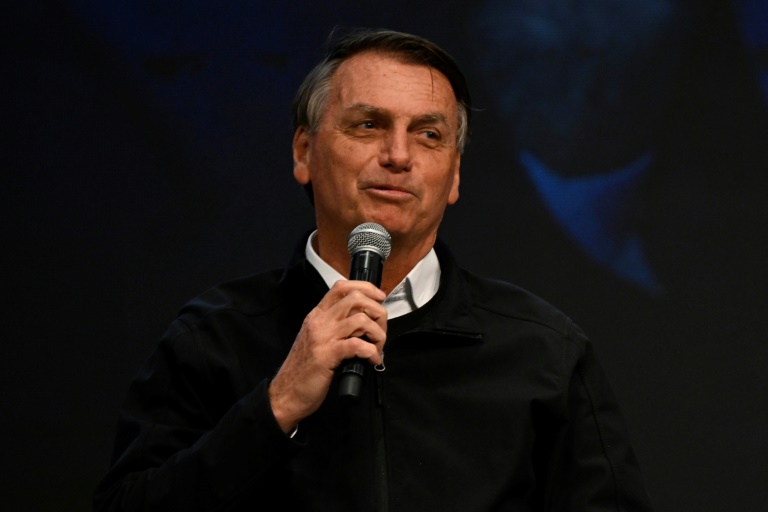
Brazil’s business sector, which views the economic policies of leftist presidential hopeful Luiz Inacio Lula da Silva with suspicion, will again vote for incumbent Jair Bolsonaro, but this time with more reservation, experts say.

Elected in 2018 on a promise to reduce state intervention, Bolsonaro stayed true to his word with a series of policies favoring business, introducing privatizations and drafting fiscal reform.

Small- and medium-sized business owners greatly appreciated Bolsonaro’s refusal to pause the economy during the coronavirus pandemic, which killed 685,000 Brazilians, according to Daniela Campello, a political science expert at the Getulio Vargas Foundation.

The post-pandemic economic rebound also worked in the president’s favor.

After GDP fell during the pandemic, Latin America’s largest economy grew by 4.6 percent in 2021 and is expected to keep growing by 2.65 percent this year.

– Economic rebound –

Business leaders fear Lula will impose “greater state interventionism in the economy and a commitment to redistribution in favor of workers, his electorate,” said Campello.

Lula has, for example, promised to roll back a 2017 labor reform that was heavily criticized by labor rights groups.

Meanwhile the agrobusiness sector, which accounts for almost 28 percent of Brazil’s GDP, is one of Bolsonaro’s most fervent supporters.

Oscar Cervi, a major grain producer, is one of the largest contributors to Bolsonaro’s campaign with one million reais (around $200,000).

A convoy of tractors even took part in the traditional military parade in Brasilia during independence day celebrations on September 7.

The sector has benefited from investments in infrastructure such as ports and railways, and continues to fare well despite difficulties caused by Russia’s invasion of Ukraine, said Luiz Carlos Correa Carvalho, president of the Brazilian agrobusiness association.

Bolsonaro’s opposition to Brazil’s indigenous groups’ claims on land  — an issue now in the hands of the Supreme Court — additionally proved popular with a sector that thrives on chopping down rainforests to produce farmland.

“Lula even said the agrobusiness is ‘right-wing and fascist’… which is why producers are very afraid and view him as a threat,” said Correa Carvalho.

– Support not unanimous – 

The other fear in the agrobusiness sector is that Lula will follow the lead of neighboring Argentina’s center-left President Alberto Fernandez and impose export taxes, said one consultant under condition of anonymity.

The president’s faithful include a group of entrepreneurs currently being investigated by the Supreme Court for voicing their support for a coup d’etat should Bolsonaro lose the election.

But this staunch support for the far right leader is not unanimous.

Businessman Luis Stuhlberger insists he will “never again” vote for the “psychopath” Bolsonaro.

Business sector “support is more divided” than it was in 2018, said Christopher Garman, Americas executive director at the consulting firm Eurasia Group.

Auto industry and international commerce directors told AFP they did not want to take sides this time having supported Bolsonaro last election.

Powerful business organizations such as the Federation of Sao Paulo Industries and Federation of Banks even signed an open letter in defense of democracy following attacks by Bolsonaro against the electoral system.

Bolsonaro lost credibility for his fiscal management and has “a terrible reputation outside the country and… in environmental terms,” added Garman.

And that convinced some heads of multinationals to embrace Lula.

NASA gears up to deflect asteroid, in key test of planetary defense

Bet the dinosaurs wish they’d thought of this.

NASA on Monday will attempt a feat humanity has never before accomplished: deliberately smacking a spacecraft into an asteroid to slightly deflect its orbit, in a key test of our ability to stop cosmic objects from devastating life on Earth.

The Double Asteroid Redirection Test (DART) spaceship launched from California last November and is fast approaching its target, which it will strike at roughly 14,000 miles per hour (23,000 kph).

To be sure, neither the asteroid moonlet Dimorphos, nor the big brother it orbits, called Didymos, pose any threat as the pair loop the Sun, passing some seven million miles from Earth at nearest approach.

But the experiment is one NASA has deemed important to carry out before an actual need is discovered.

“This is an exciting time, not only for the agency, but in space history and in the history of humankind quite frankly,” Lindley Johnson, a planetary defense officer for NASA told reporters in a briefing Thursday.

If all goes to plan, impact between the car-sized spacecraft, and the 530-foot (160 meters, or two Statues of Liberty) asteroid should take place at 7:14pm Eastern Time (2314 GMT), and can be followed on a NASA livestream.

By striking Dimorphos head on, NASA hopes to push it into a smaller orbit, shaving ten minutes off the time it takes to encircle Didymos, which is currently 11 hours and 55 minutes — a change that will be detected by ground telescopes in the days that follow.

The proof-of-concept experiment will make a reality what has before only been attempted in science fiction — notably films such as “Armageddon” and “Don’t Look Up.” 

– Technically challenging –

As the craft propels itself through space, flying autonomously for the mission’s final phase like a self-guided missile, its main camera system, called DRACO, will start to beam down the very first pictures of Dimorphos.

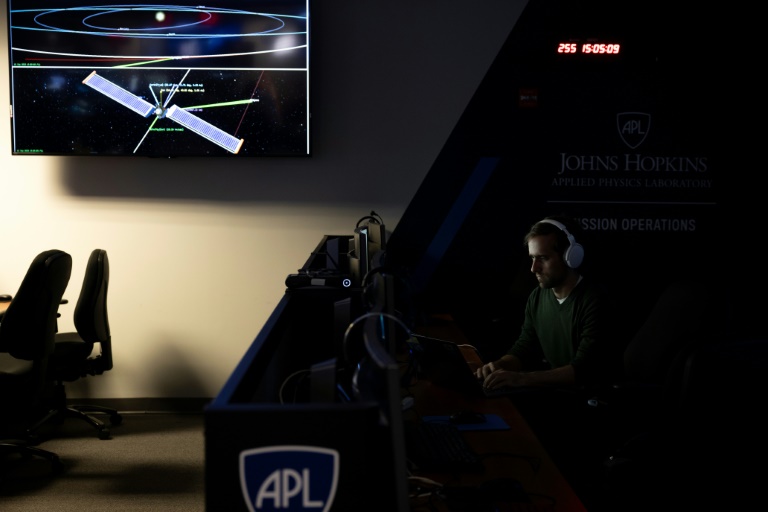
“It’s going to start off as a little point of light and then eventually it’s going to zoom and fill the whole entire field of view,” said Nancy Chabot of Johns Hopkins Applied Physics Laboratory (APL), which hosts mission control in a recent briefing.

“These images will continue until they don’t,” added the planetary scientist.

Minutes later, a toaster-sized satellite called LICIACube, which separated from DART a couple of weeks earlier, will make a close pass of the site to capture images of the collision and the ejecta — the pulverized rock thrown off by impact.

LICIACube’s picture will be sent back in the weeks and months that follow. 

Also watching the event: an array of telescopes, both on Earth and in space — including the recently operational James Webb — which might be able to see a brightening cloud of dust.

Finally, a full picture of what the system looks like will be revealed when a European Space Agency mission four years down the line called Hera arrives to survey Dimorphos’s surface and measure its mass, which scientists can only guess at currently.

– Being prepared –

Very few of the billions of asteroids and comets in our solar system are considered potentially hazardous to our planet, and none in the next hundred or so years. 

But “I guarantee to you that if you wait long enough, there will be an object,” said Thomas Zurbuchen, NASA’s chief scientist. 

We know that from the geological record — for example, the six-mile wide Chicxulub asteroid struck Earth 66 million years ago, plunging the world into a long winter that led to the mass extinction of the dinosaurs along with 75 percent of species.

An asteroid the size of Dimorphos, by contrast, would only cause a regional impact, such as devastating a city, albeit with a greater force than any nuclear bomb in history.

Scientists are also hoping to glean valuable new information that can inform them about the nature of asteroids more generally. 

How much momentum DART imparts on Dimorphos will depend on whether the asteroid is solid rock, or more like a “rubbish pile” of boulders bound by mutual gravity, a property that’s not yet known.

We also don’t know its actual shape: whether it’s more like a dog bone or a donut, but NASA engineers are confident DART’s SmartNav guidance system will hit its target.

If it misses, NASA will have another shot in two years’ time, with the spaceship containing just enough fuel for another pass.

But if it succeeds, then it’s a first step towards a world capable of defending itself from a future existential threat, said Chabot. 

Fortified Bermuda braces for powerful Hurricane Fiona

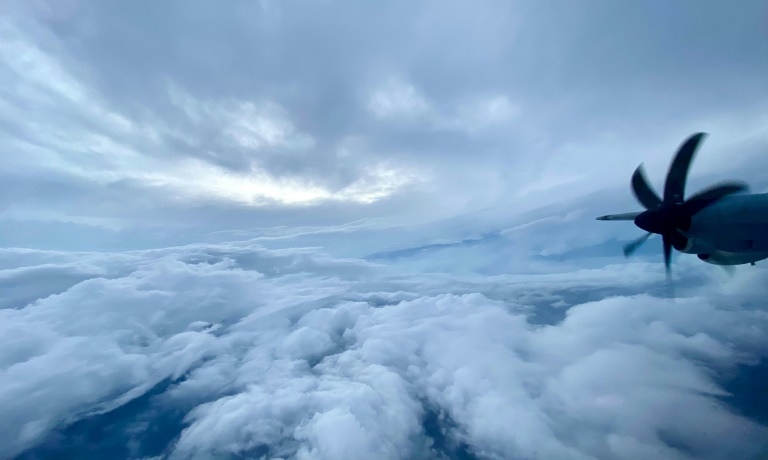
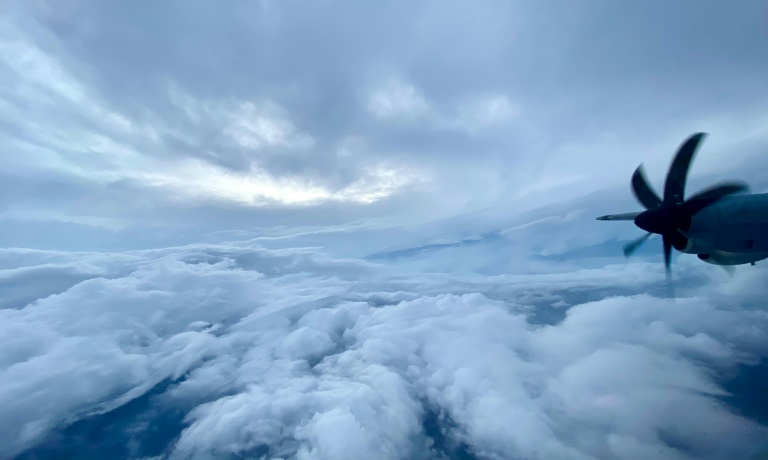
The beach chairs and umbrellas were put away, storefronts were covered and a lighthouse illuminated racing clouds overhead as Bermuda braced Thursday for Hurricane Fiona, a powerful Category 4 storm that has left a trail of destruction in the Caribbean.

Wind and waves were picking up as darkness fell over the British territory, and Bermudians rushed to the safety of their sturdy homes ahead of the storm, whose center will pass more than 100 miles (160 kilometers) to the west-northwest of the island early Friday, according to the Bermuda Weather Service. 

Fiona remained a Category 4 storm, the second-highest level on the Saffir-Simpson scale, though Accuweather forecasters said it could be downgraded to a Category 3 as it passes Bermuda around 5:00 am (0800 GMT).

With a storm of that strength and size, residents were taking no chances. 

“This storm is going to be worse than the last one,” Richard Hartley, owner of the Torwood Home store in the capital, Hamilton, told AFP as he and his wife covered the shop’s cedar-lined windows with metal sheets. 

The US National Hurricane Center (NHC) said the Fiona was packing maximum sustained winds of near 130 miles per hour, with higher gusts.

Hurricane force winds extend more than 70 miles from the storm’s eye, and tropical storm force winds up to 200 miles, the NHC said, predicting up to four inches (10 centimeters) of rain and “large and destructive” waves and storm surge. 

The island of some 64,000 people is no stranger to hurricanes — but it is also tiny, just 21 square miles (54 square kilometers), and one of the most remote places in the world, 640 miles from its closest neighbor, the United States.

That means there is nowhere to evacuate to when a big storm hits.

“You have to live with it because you live here, you can’t run anywhere because it’s just a little island,” said JoeAnn Scott, a shopworker in Hamilton.

Bermudians try to “enjoy it as it comes,” she said. “And pray and pray. That’s what we do, pray and party,” she added with a laugh. 

At Bermuda’s famed Horseshoe Bay Beach, where onlookers came to assess the pounding waves and stretch their legs ahead of a long night inside, resident Gina Maughan said the island would be ready. 

“It’s always interesting to come down and see the surf,” she said, watching two kitesurfers soar into the air. 

“These guys are a little crazy,” she added.

– Construction ‘built to last’ –

Because of the island’s isolation, preparations are taken seriously.

Many boats were taken out of the water earlier in the week, outdoor furniture was moved inside, and the storm shutters bordering windows on most houses were checked. 

Public schools will be closed on Friday, and the government announced that an emergency shelter will be opened. Buses and ferries had stopped running by late Thursday.

The Royal Bermuda Regiment was on standby to help with clearing operations, and National Security Minister Michael Weeks implored residents to stay inside until the all clear was given.

“Please Bermuda, no driving around, no venturing out to take pictures, no reckless behavior,” he told a press conference.

In addition to laying in supplies of candles and food, some Bermudians were also drawing buckets of water and filling bathtubs from the tanks at the side of their homes ahead of expected power outages.

There is no fresh water source on the island, so all buildings have white, lime-washed roofs that are used to catch rainwater that is directed into tanks and pumped into homes as the main water supply. 

Bermuda, whose economy is fueled by international finance and tourism, is wealthy compared to most Caribbean countries, and structures must be built to strict planning codes to withstand storms. Some have done so for centuries. 

“The construction is really built to last, and we don’t see the devastation ever that the Caribbean has experienced over the years,” shop owner Hartley’s wife, Elaine Murray, said.

Fiona killed four people in Puerto Rico earlier this week, according to US media, while one death was reported in the French overseas department of Guadeloupe and another in the Dominican Republic. 

President Joe Biden has declared a state of emergency in Puerto Rico, a US territory that is still struggling to recover from Hurricane Maria five years ago.

In the Dominican Republic, President Luis Abinader declared three eastern provinces to be disaster zones.

Farther north in Bermuda, islanders were calm. 

“I’ve been through a lot of hurricanes, so no, I’m not worried,” said resident Rochelle Jones.

But if things do go wrong, Bermudians will “all come out together and we help each other,” she said. 

Fortified Bermuda braces for powerful Hurricane Fiona

The beach chairs and umbrellas were put away, storefronts were covered and a lighthouse illuminated racing clouds overhead as Bermuda braced Thursday for Hurricane Fiona, a powerful Category 4 storm that has left a trail of destruction in the Caribbean.

Wind and waves were picking up as darkness fell over the British territory, and Bermudians rushed to the safety of their sturdy homes ahead of the storm, whose center will pass more than 100 miles (160 kilometers) to the west-northwest of the island early Friday, according to the Bermuda Weather Service. 

Fiona remained a Category 4 storm, the second-highest level on the Saffir-Simpson scale, though Accuweather forecasters said it could be downgraded to a Category 3 as it passes Bermuda around 5:00 am (0800 GMT).

With a storm of that strength and size, residents were taking no chances. 

“This storm is going to be worse than the last one,” Richard Hartley, owner of the Torwood Home store in the capital, Hamilton, told AFP as he and his wife covered the shop’s cedar-lined windows with metal sheets. 

The US National Hurricane Center (NHC) said the Fiona was packing maximum sustained winds of near 130 miles per hour, with higher gusts.

Hurricane force winds extend more than 70 miles from the storm’s eye, and tropical storm force winds up to 200 miles, the NHC said, predicting up to four inches (10 centimeters) of rain and “large and destructive” waves and storm surge. 

The island of some 64,000 people is no stranger to hurricanes — but it is also tiny, just 21 square miles (54 square kilometers), and one of the most remote places in the world, 640 miles from its closest neighbor, the United States.

That means there is nowhere to evacuate to when a big storm hits.

“You have to live with it because you live here, you can’t run anywhere because it’s just a little island,” said JoeAnn Scott, a shopworker in Hamilton.

Bermudians try to “enjoy it as it comes,” she said. “And pray and pray. That’s what we do, pray and party,” she added with a laugh. 

At Bermuda’s famed Horseshoe Bay Beach, where onlookers came to assess the pounding waves and stretch their legs ahead of a long night inside, resident Gina Maughan said the island would be ready. 

“It’s always interesting to come down and see the surf,” she said, watching two kitesurfers soar into the air. 

“These guys are a little crazy,” she added.

– Construction ‘built to last’ –

Because of the island’s isolation, preparations are taken seriously.

Many boats were taken out of the water earlier in the week, outdoor furniture was moved inside, and the storm shutters bordering windows on most houses were checked. 

Public schools will be closed on Friday, and the government announced that an emergency shelter will be opened. Buses and ferries had stopped running by late Thursday.

The Royal Bermuda Regiment was on standby to help with clearing operations, and National Security Minister Michael Weeks implored residents to stay inside until the all clear was given.

“Please Bermuda, no driving around, no venturing out to take pictures, no reckless behavior,” he told a press conference.

In addition to laying in supplies of candles and food, some Bermudians were also drawing buckets of water and filling bathtubs from the tanks at the side of their homes ahead of expected power outages.

There is no fresh water source on the island, so all buildings have white, lime-washed roofs that are used to catch rainwater that is directed into tanks and pumped into homes as the main water supply. 

Bermuda, whose economy is fueled by international finance and tourism, is wealthy compared to most Caribbean countries, and structures must be built to strict planning codes to withstand storms. Some have done so for centuries. 

“The construction is really built to last, and we don’t see the devastation ever that the Caribbean has experienced over the years,” shop owner Hartley’s wife, Elaine Murray, said.

Fiona killed four people in Puerto Rico earlier this week, according to US media, while one death was reported in the French overseas department of Guadeloupe and another in the Dominican Republic. 

President Joe Biden has declared a state of emergency in Puerto Rico, a US territory that is still struggling to recover from Hurricane Maria five years ago.

In the Dominican Republic, President Luis Abinader declared three eastern provinces to be disaster zones.

Farther north in Bermuda, islanders were calm. 

“I’ve been through a lot of hurricanes, so no, I’m not worried,” said resident Rochelle Jones.

But if things do go wrong, Bermudians will “all come out together and we help each other,” she said. 

Ahead of World Cup, influencer 'Mr Q' lifts veil on Qatar

At a time when prickly questions are being asked about Qatar and its hosting of the World Cup, Khalifa Al Haroon offers a smile, a sigh and a shrug as he seeks to explain its mysteries.

Known to his growing number of followers as Mr Q, the 38-year-old has become a social media hit by partially lifting the veil over the tiny but mega-rich Gulf state that describes itself as a “conservative” Islamic country.

The first World Cup in an Arab nation has put a spotlight on Qatar’s treatment of foreign workers, gender rights and even the use of air conditioning in stadiums.

Haroon’s cheerful #QTip videos broach everything from saying “Hello” in Arabic to the right way for men to wear the flowing ghutra headdress. There is also an edition on labour rights.

With less than 60 days to the November 20 start of the tournament, he now has more than 100,000 followers on Instagram and more than 115,000 on YouTube. And the numbers keep growing.

Qatar has dozens of online influencers on topics ranging from “modest” but expensive fashion, to the latest sports car being imported into what is now one of the world’s wealthiest nations.

Haroon carved out his niche by elucidating Qatar’s unknowns to its growing expat community — and now the hordes of football fans expected for the World Cup.

Haroon — who was born to a Qatari father and British mother and spent 16 years in Bahrain — said he was first confronted by global stereotypes about Qatar and the Middle East while studying for a law degree in Britain.

He had wanted to become an actor, but instead launched his social media presence in 2008 with a blog.

“I was in the perfect position because I was a Qatari who has never lived properly in Qatar,” he said.

– ‘Trust your own eyes’ –

“In essence, I was like a foreigner in my own country and so I had the same questions that foreigners did, and so it just made it easy for me to start putting together information.”

Haroon said there has to be a distinction between “negative news” and misinformation about his country.

“When it comes to fake news, obviously, I think everybody understands that it’s not true and so the only thing that I could do is show people videos and pictures and show them what we’re really like because you can trust your own eyes.”

Some people, he said, have told him they decided to move to Qatar after watching his videos.

Haroon, who is now a consultant to the Qatar Football Association and an eSports entrepreneur, said he is excited about the World Cup “because people can now come here and experience it for themselves and make their own judgements instead of just believing what’s written”.

His main grouse is how outsiders see something negative about Qatar and then believe that all Qataris “accept it or we all agree with it”.

Many supporters of the 31 foreign countries who will play in Qatar have raised concerns, however, about the welcome awaiting them. Can they drink? And what will happen to same-sex couples in a country where homosexuality is illegal?

The government has insisted that beer, normally restricted, will be available and that everyone is welcome. Haroon wants outsiders to experience “real Qatari hospitality”, with its food and coffee culture.

“Of course there are going to be certain social norms,” said Haroon. “What we are asking for is just respect the country. And of course the country will definitely be respecting everyone that comes.”

“Some people might make mistakes because they don’t know what the rules are and that’s OK,” he added.

“The point is our culture is all about intention, our religion is about intention, so as long as you have good intentions and you want to do the right thing, you have nothing to worry about.”

War leaves Ukraine farming village queueing for food

Ukraine’s farmland is famed for its rich black soil and considered a breadbasket for the world, but on Thursday, after months of war, residents of a frontline farming village were queueing for food.

The Russian invasion force that crossed the border on February 24 did not quite reach little Lebyazhe, as Ukrainian troops scrambled to defend routes to the country’s second city, Kharkiv.

But the quiet rural community, sometimes hit by shelling, found itself embroiled in the ensuing conflict, until this month’s lightning Ukrainian counteroffensive drove the invader back.

“It’s been terrible, terrible. I can’t even describe it,” said 75-year-old Galina Mykhailivna, hunkered down while waiting for food rations in front of a village cultural centre with a gaping shell hole in the facade. 

“It’s tragic, they destroyed the whole village,” she declared, exaggerating in her distress as most of the houses remain standing, although signs of war are everywhere.

“It was so nice before, now it’s ruined,” she said.

As the residents gathered, a Ukrainian army truck-mounted multiple rocket launcher rumbled through the narrow lanes of the village, while artillery detonations boomed from time to time.

– Six months without power –

Ominously, Lebyazhe lies downstream from a major dam on the Siversky Donets river damaged this week by a Russian missile, amid signs Moscow is targeting civilian infrastructure.

Its hinterland boasts vast swathes of sunflower fields — a global source of cooking oil — and homes in the village itself typically keep productive vegetable patches, goats and ducks.

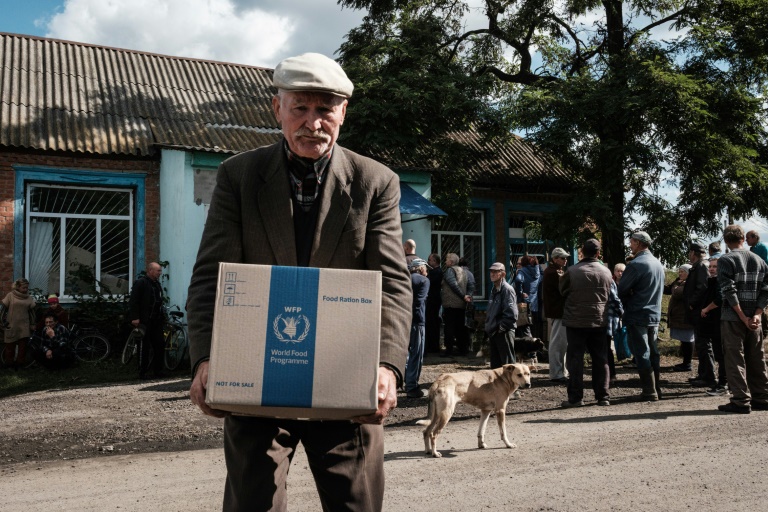
But on Thursday, community leader Olexander Nesmiyan — the tallest man in the village — was overseeing the distribution of food parcels.

Each box, emblazoned with the logo of the UN World Food Programme, holds 12 kilos (26 pounds) of basic foodstuffs — rice, oil, pasta, canned beans and canned meat — enough to feed one person for one month.

It was a weighty burden for some of the elderly villagers to carry, but neighbours helped out. Boxes were loaded into wheelbarrows and strapped to bikes, as dogs and children enjoyed playing among the crowd.

The gathering is cheerful, a trip out to the village store and a chance to greet neighbours, perhaps to forget about Lebyazhe’s other problems for a few hours.

“Yes, six months without electricity. And now already three months without gas, but we’ll make it somehow,” said 65-year-old Lyubov Polushkyna.

Britain unveils anti-inflation budget as recession looms

The UK’s new government unveils Friday multibillion-pound measures aimed at supporting households and businesses hit by decades-high inflation.

Finance minister Kwasi Kwarteng, fresh from being appointed by new Prime Minister Liz Truss, will deliver his mini-budget at 0830 GMT.

Kwarteng announced late Thursday he will scrap Truss’s predecessor Boris Johnson’s plan to hike taxes on salaries.

The news came after the Bank of England warned that Britain was slipping into recession, as rocketing fuel and food prices take their toll.

– Growing economy –

“Taxing our way to prosperity has never worked,” the Chancellor of the Exchequer said.

“To raise living standards for all, we need to be unapologetic about growing our economy.

“Cutting tax is crucial to this.”

He is similarly expected to reverse Johnson’s planned tax increase on company profits.

Kwarteng will also outline Friday the cost of a decision to cap energy bills.

He could axe a bankers’ bonus cap, which has been in place since 2014 and is a legacy of EU membership.

Truss took office on September 6, two days before the death of Queen Elizabeth II, after winning an election of Conservative party members on a tax-cutting platform.

While the tax reversals are not strictly cuts, the government could announce Friday reduced levies on home purchases.

Analysts from British bank Barclays estimate the cost of the government’s total package could hit £235 billion ($267 billion), far more than its jobs protection scheme during the pandemic.

– Capping energy bills –

Britain on Wednesday announced a six-month plan to pay about half of energy bills for businesses.

Truss had already launched a two-year household energy price freeze. The caps will not kick in, however, until Britons face another large hike in gas and electricity bills at the start of October.

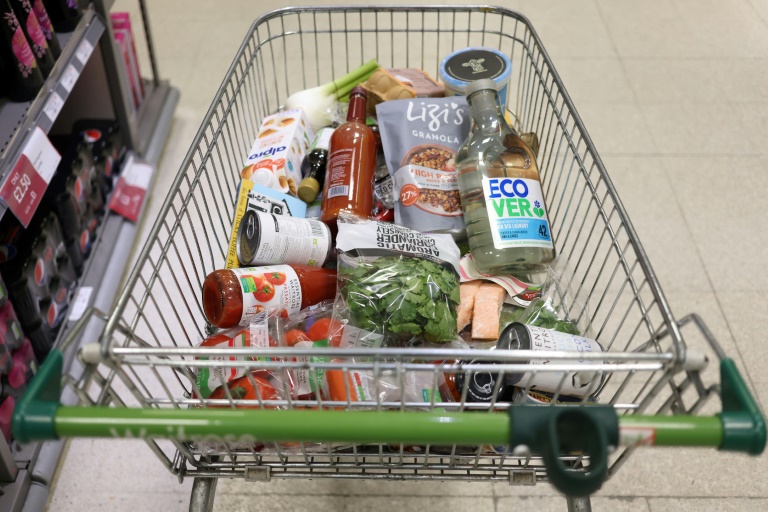
The average household will have their annual energy bill capped at £2,500 until 2024 but many are expected to spend above that to keep homes warm over the winter.

Wholesale electricity and gas prices for firms — as well as charities, hospitals and schools — will be capped at half the expected cost on the open market.

UK energy companies including BP and Shell will not benefit from the cap, as they enjoy soaring profits after the invasion of Ukraine by major oil and gas producer Russia.

Britain’s main opposition Labour party has demanded that the government extends a windfall tax on energy companies that former finance minister Rishi Sunak launched earlier this year.

But Truss ruled out such a move, arguing that additional taxes will hinder economic recovery and efforts by energy groups to transition into greener companies.

Growth is at the heart of the new government’s policy, with Kwarteng on Wednesday outlining plans to shake up the welfare system.

Some 120,000 people in part-time work could face a benefit cut should they fail to take new steps to look for more work, he is set to confirm.

Kwarteng has described the policy as a “win-win”, pitching it as a way to fill 1.2 million UK job vacancies.

– Strikes, rate rises –

With prices rocketing, wage values are eroding, triggering some of the biggest strike action Britain has seen in more than 30 years. 

From the rail sector to postal services and even lawyers, tens of thousands of workers are carrying out industrial action aimed at securing bigger salaries.

In addition, soaring interest rates are hurting consumers and businesses.

The cost of government borrowing is also ballooning as a result.

The Bank of England on Thursday ramped up its key rate by another half-point to 2.25 percent to tackle high inflation, and warned the UK would slide into recession in the current third quarter.

Britain unveils anti-inflation budget as recession looms

The UK’s new government unveils Friday multibillion-pound measures aimed at supporting households and businesses hit by decades-high inflation.

Finance minister Kwasi Kwarteng, fresh from being appointed by new Prime Minister Liz Truss, will deliver his mini-budget at 0830 GMT.

Kwarteng announced late Thursday he will scrap Truss’s predecessor Boris Johnson’s plan to hike taxes on salaries.

The news came after the Bank of England warned that Britain was slipping into recession, as rocketing fuel and food prices take their toll.

– Growing economy –

“Taxing our way to prosperity has never worked,” the Chancellor of the Exchequer said.

“To raise living standards for all, we need to be unapologetic about growing our economy.

“Cutting tax is crucial to this.”

He is similarly expected to reverse Johnson’s planned tax increase on company profits.

Kwarteng will also outline Friday the cost of a decision to cap energy bills.

He could axe a bankers’ bonus cap, which has been in place since 2014 and is a legacy of EU membership.

Truss took office on September 6, two days before the death of Queen Elizabeth II, after winning an election of Conservative party members on a tax-cutting platform.

While the tax reversals are not strictly cuts, the government could announce Friday reduced levies on home purchases.

Analysts from British bank Barclays estimate the cost of the government’s total package could hit £235 billion ($267 billion), far more than its jobs protection scheme during the pandemic.

– Capping energy bills –

Britain on Wednesday announced a six-month plan to pay about half of energy bills for businesses.

Truss had already launched a two-year household energy price freeze. The caps will not kick in, however, until Britons face another large hike in gas and electricity bills at the start of October.

The average household will have their annual energy bill capped at £2,500 until 2024 but many are expected to spend above that to keep homes warm over the winter.

Wholesale electricity and gas prices for firms — as well as charities, hospitals and schools — will be capped at half the expected cost on the open market.

UK energy companies including BP and Shell will not benefit from the cap, as they enjoy soaring profits after the invasion of Ukraine by major oil and gas producer Russia.

Britain’s main opposition Labour party has demanded that the government extends a windfall tax on energy companies that former finance minister Rishi Sunak launched earlier this year.

But Truss ruled out such a move, arguing that additional taxes will hinder economic recovery and efforts by energy groups to transition into greener companies.

Growth is at the heart of the new government’s policy, with Kwarteng on Wednesday outlining plans to shake up the welfare system.

Some 120,000 people in part-time work could face a benefit cut should they fail to take new steps to look for more work, he is set to confirm.

Kwarteng has described the policy as a “win-win”, pitching it as a way to fill 1.2 million UK job vacancies.

– Strikes, rate rises –

With prices rocketing, wage values are eroding, triggering some of the biggest strike action Britain has seen in more than 30 years. 

From the rail sector to postal services and even lawyers, tens of thousands of workers are carrying out industrial action aimed at securing bigger salaries.

In addition, soaring interest rates are hurting consumers and businesses.

The cost of government borrowing is also ballooning as a result.

The Bank of England on Thursday ramped up its key rate by another half-point to 2.25 percent to tackle high inflation, and warned the UK would slide into recession in the current third quarter.

Facebook whistleblower launches nonprofit to take on big tech

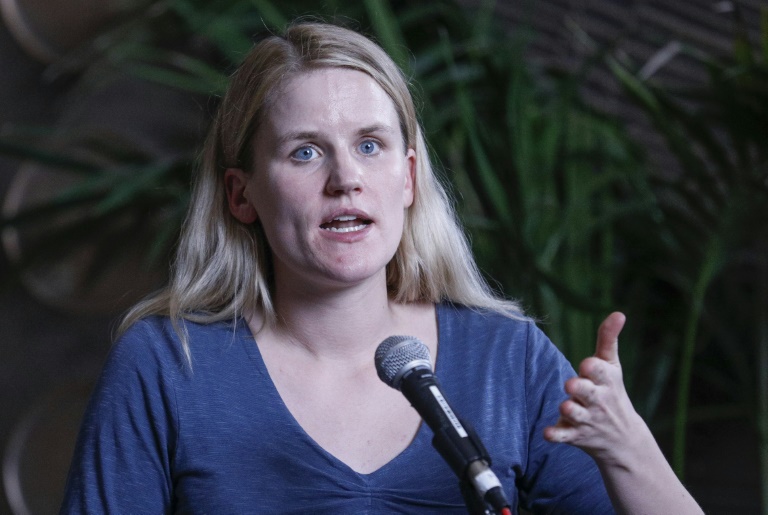
Whistleblower Frances Haugen — a former Facebook engineer who leaked documents suggesting the firm put profits before safety — on Thursday launched an organization devoted to fighting harm caused by social media.

The new Beyond the Screen nonprofit said that its first project will be to document ways big tech is failing in its “legal and ethical obligations to society” and help come up with ways to solve those problems.

“We can have social media that brings out the best in us, and that’s what Beyond the Screen is working toward,” Haugen said in a statement.

“Beyond the Screen will focus on tangible solutions to help users gain control of our social media experience.”

Haugen last year leaked reams of internal studies showing executives knew of their site’s potential for harm, prompting a renewed US push for regulation.

Haugen contended the tech titan, which has since rebranded itself as Meta, put profits over safety. Meta has fought back against the accusation.

Haugen’s nonprofit said it will collaborate with groups including Common Sense Media and Project Liberty that share a “commitment to supporting healthier social media.”

Beyond the Screen’s first project “represents a bold, inclusive, and much-needed effort to drive a seismic shift in how social media operates,” Project Liberty founder Frank McCourt said, according to Beyond the Screen’s statement.

“We look forward to working with Frances and her team to launch this new initiative and advance our shared goal of enabling healthier digital communities and stopping harmful business models.”

Since leaving Facebook in 2021, Haugen has advocated in the US and other countries for legislation meant to make social media platforms safer, particularly for young people.

Close Bitnami banner
Bitnami