World

CIA chief: I'm no Jason Bourne, I drive an old Subaru

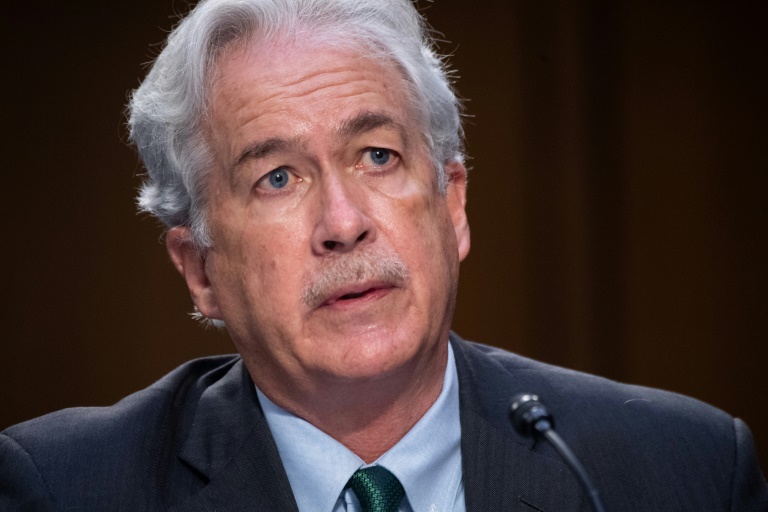
CIA Director Bill Burns said in the US spy agency’s first-ever podcast Thursday that his life is nothing like Jason Bourne and James Bond, ripping hot cars through crowded cities and deploying unimaginable lethal gadgets.

Popular spy films show “a world of heroic individuals who drive fast cars and defuse bombs and solve world crises all on their own every day,” Burns said.

“That, I have to tell you, is a constant source of amusement for my wife and daughters.”

“I’m most comfortable driving our 2013 Subaru Outback at posted speed limits and, for me at least, the height of technological daring is when I can finally get the Roku remote to work at home,” he admitted.

Burns, 66, a veteran diplomat who has run the Central Intelligence Agency since March 2021, made the comments in the first episode of “The Langley Files,” a podcast that pledges to demystify the super-secret agency.

Burns’ main point was to stress that while the CIA has many officers undercover in the field, they are not dramatic solo operators like Bond, Bourne or Jack Ryan of Hollywood fame.

“The truth is that intelligence is very much a team sport. It’s a profession of hard collective work and shared risks,” Burns said.

And besides field operators, it involves teams of people — scientists, digital specialists and other analysts — sifting information in offices.

He held up the operation that found and killed al-Qaeda leader Ayman al-Zawahiri in July, as well as CIA intelligence in December and January showing Russia planned to invade Ukraine, as important successes.

“Our successes are often obscured, our failures are often painfully visible, and our sacrifices are often unknown. But a certain amount of discretion certainly comes with the territory,” Burns said.

The podcast is hosted by “Dee” and “Walter,” but a CIA spokesperson would not give their last names or even say if the first names were authentic.

Asked how often the podcast would appear, the spokesperson said, “Periodically.”

Russia begins troop mobilisation for Ukraine fight

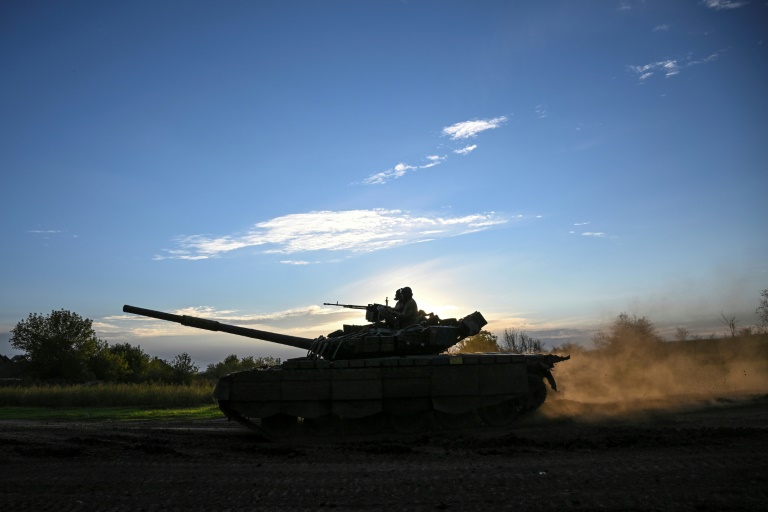
Moscow began its mandatory troop call-up Thursday to try to bolster a stumbling war effort in Ukraine, with authorities saying thousands had volunteered even as Russian men fled the country to avoid being forced to fight.

Amateur footage posted on social media since President Vladimir Putin ordered the mobilisation of reservists on Wednesday purported to show hundreds of Russian citizens across the country responding to military summons.

The call-up came as Moscow-held regions of Ukraine are to vote in coming days on whether to become part of Russia in referendums that have been called an unlawful land grab by Kyiv and its allies. 

Moscow took these steps after Ukrainian forces seized back most of the northeastern Kharkiv region, which has been seen as a possible turning point in the seven-month war that had fallen into stalemate.

The Russian military said Thursday that at least 10,000 people had volunteered to fight in 24 hours since the order, but men also rushed to leave Russia before they were made to join.

Flights out of Russia to neighbouring countries, mainly former Soviet republics that allow Russians visa-free entry, are nearly entirely booked and prices have skyrocketed, pointing to an exodus of Russians wanting to avoid going to war.

“I don’t want to go to the war,” a man named Dmitri, who had flown to Armenia with just one small bag, told AFP. “I don’t want to die in this senseless war. This is a fratricidal war.”

Military-aged men made up the majority of those arriving off the latest flight from Moscow at Yerevan airport and many were reluctant to speak.

The Armenian capital has become a major destination for Russians fleeing since war began on February 24, drawing fierce international opposition that has aimed to isolate Russia.

Looking lost and exhausted in Yerevan airport’s arrivals hall, 44-year-old Sergei said he had fled Russia to escape being called up.

“The situation in Russia would make anyone want to leave,” he told AFP.

Ukrainian President Volodymyr Zelensky called on Russians to resist Putin’s partial mobilisation during his daily address on Thursday evening.

“Protest. Fight back. Run away. Or surrender” to the Ukrainian army, he said. “You are already complicit in all these crimes, murders and torture of Ukrainians. Because you were silent. Because you are silent.”

More than 1,300 people were arrested during anti-mobilisation demonstrations across Russia on Wednesday, a monitoring group reported.

– Annexation ‘vote’ –

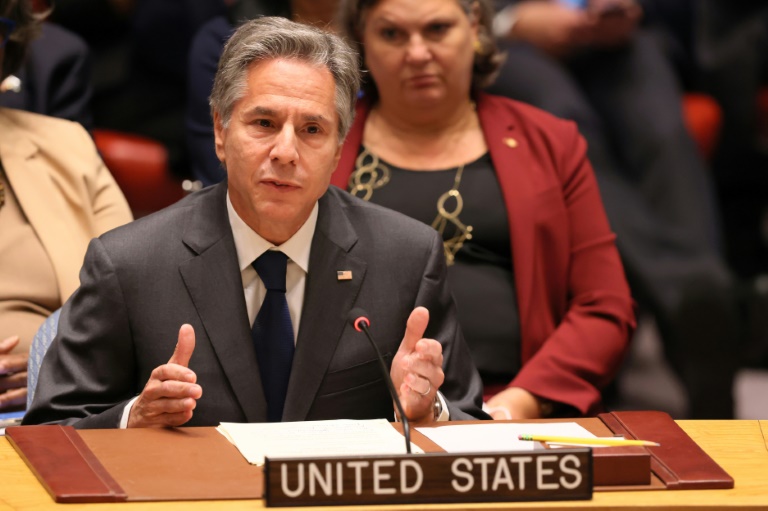
US Secretary of State Antony Blinken on Thursday demanded Putin be held to account as he faced Russia in a Security Council session in which the United Nations catalogued abuses in Ukraine.

“We cannot — we will not — let President Putin get away with it,” Blinken said.

Russian Foreign Minister Sergei Lavrov — whom Blinken has refused to meet individually since the February invasion — lashed out at Western accusations.

“There’s an attempt today to impose on us a completely different narrative about Russian aggression as the origin of this tragedy,” Lavrov told the Security Council.

The confrontation on the diplomatic stage escalated as Kremlin-installed officials in Ukrainian regions controlled by Moscow’s forces vowed on Thursday to press ahead with annexation polls this week.

Four Russian-occupied regions of Ukraine — Donetsk and Lugansk in the east and Kherson and Zaporizhzhia in the south — announced that they would hold the votes over five days, beginning on Friday.

Western leaders convening in New York this week unanimously condemned the ballots. 

Speaking at the United Nations, US President Joe Biden accused Russian counterpart Vladimir Putin of “shamelessly” violating the UN Charter with a war aimed at “extinguishing Ukraine’s right to exist as a state”.

– Nuclear threat –

The integration of the war-scarred regions into Russia would represent a major escalation of the conflict, as Moscow could then try to say it was defending its own territory from Ukrainian forces.

After the votes were announced by his proxy officials in Ukraine, Putin announced that Russia would call up some 300,000 reservists to bolster the war effort and cautioned that Moscow would use “all means” to protect its territory.

Former Russian leader Dmitry Medvedev said in a statement on social media that those means included “strategic nuclear weapons”. He predicted the voting regions “will integrate into Russia”.

For most observers, the results of the concurrent votes are already a foregone conclusion and were rushed because Ukrainian forces were making sweeping gains in a counter-offensive to recapture the east.

The referendums are reminiscent of a similar ballot in 2014 that saw the Crimean Peninsula in Ukraine annexed by Russia. Western capitals said the vote was fraudulent and hit Moscow with sanctions in response.

Election officials in the Donetsk region, partially controlled since 2014 by Moscow-backed separatists, said voting would take place door-to-door for the first days. But it would only be possible in polling stations on the final day, Tuesday.

Markets drop as central banks hike rates

Stock markets retreated on Thursday after the US Federal Reserve and central banks in Europe unleashed more hefty interest rate hikes that aim to stomp out inflation but have raised fears of recession.

On Wall Street, the tech-rich Nasdaq led the major indices lower, falling 1.4 percent a day after the Fed’s aggressive rate hike sent equities tumbling the previous day.

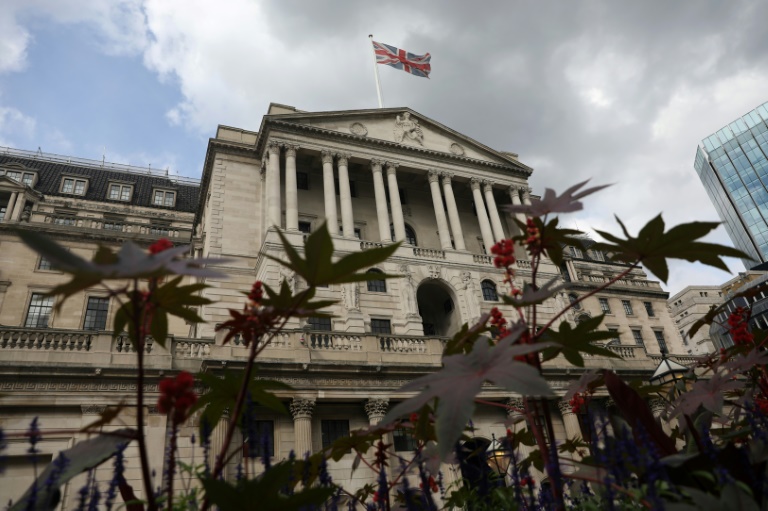
European markets finished lower, with London’s FTSE 100 down 1.1 percent after the Bank of England raised its policy rate again and signaled that the UK entered recession in the current quarter.

The BoE’s 0.5-percentage-point hike was smaller than the Fed’s third consecutive 0.75-point increase.

“Today has seen another bout of downside for stock markets throughout Europe and the US, with geopolitical and economic concerns providing a drag on risk assets once again,” Joshua Mahony, senior market analyst at online trading platform IG.

“On a week dominated by central banks, it was always going to be difficult to envisage a scenario where traders emerge with a positive outlook,” he added.

The world’s major central banks are rushing to ramp up rates to dampen red-hot consumer prices, but traders, and many economists, fear rising borrowing costs will trigger a global downturn.

While the Fed’s latest super-sized move was widely expected, there was some surprise at the central bank’s forecast that borrowing costs would likely be held above four percent throughout next year.

Fed Chair Jerome Powell reiterated his determination to focus on bringing down inflation — which is at a four-decade high — and accepted that the campaign would hit Americans hard.

“What hit home for market participants yesterday is that the Fed, steered by Fed Chair Powell, really means business now in restoring price stability, and if that means a hard landing for the economy, so be it,” said Briefing.com analyst Patrick O’Hare.

– Japan bucks the trend –

Switzerland and Norway also made hefty interest rate hikes on Thursday, two days after a massive increase in Sweden.

In Asia, Indonesia and the Philippines also tightened monetary policy but the Bank of Japan bucked the global trend as it left its status quo in place.

The dollar pared back gains after rising against other major currencies following the Fed’s rate decision.

The British pound briefly dived to a new 37-year low at $1.1212 but recovered after the BoE announcement.

The euro touched a new 20-year dollar low of $0.9809.

The yen, which has been plummeting due to the policy gap between the US and Japanese central banks, clawed back against the dollar after Japan’s Finance Ministry said it intervened in the market to support the currency.

– Key figures at around 2030 GMT –

New York – Dow: DOWN 0.4 percent at 30,076.68 (close)

New York – S&P 500: DOWN 0.8 percent at 3,757.99 (close)

New York – Nasdaq: DOWN 1.4 percent at 11,066.81 (close)

London – FTSE 100: DOWN 1.1 percent at 7,159.52 (close)

Frankfurt – DAX: DOWN 1.8 percent at 12,531.63 (close)

Paris – CAC 40: DOWN 1.9 percent at 5,918.50 (close)

EURO STOXX 50: DOWN 1.9 percent at 3,427.14 (close)

Tokyo – Nikkei 225: DOWN 0.6 percent at 27,153,83 (close)

Hong Kong – Hang Seng Index: DOWN 1.6 percent at 18,147.95 (close)

Shanghai – Composite: DOWN 0.3 percent at 3,108.91 (close)

Pound/dollar: DOWN at $1.1252 from $1.1270 Wednesday

Euro/dollar: UP at $0.9839 from $0.9837

Euro/pound: UP at 87.40 pence from 87.29 pence 

Dollar/yen: DOWN at 142.35 yen from 144.06 yen

Brent North Sea crude: UP 0.7 percent at $90.46 per barrel

West Texas Intermediate: UP 0.7 percent at $83.49 per barrel

burs-jmb/hs

Canada launches review of cannabis legalization four years on

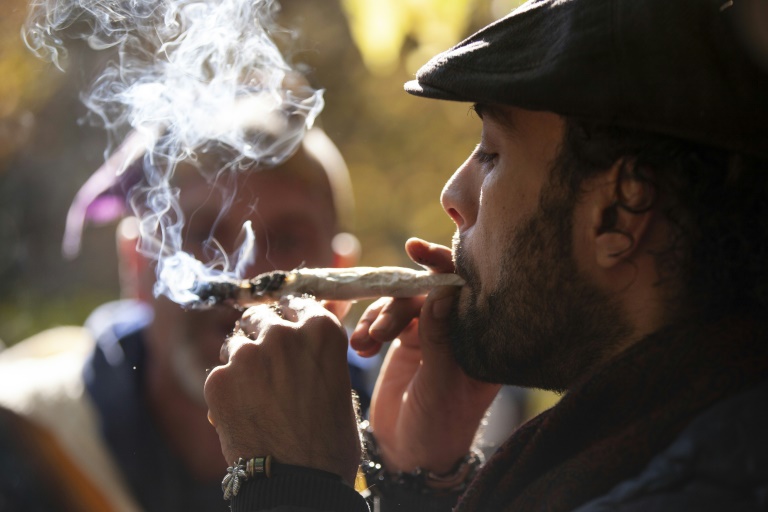
Canada on Thursday launched a long-awaited review of its cannabis regulations, four years after becoming the first major economy to legalize its recreational use.

An expert panel led by Morris Rosenberg, a former deputy minister of justice, is to measure the impact of legalization on youth, Indigenous peoples and others, as well as the economy and an illicit market that the new regime was meant to displace.

The panel is also to examine regulatory burdens on the industry and determine if a separate framework for medical marijuana — which has been legal since 2001 — needed to be maintained in order to provide access to patients.

The mandated review, coming one year late due to the pandemic, is expected to take 18 months.

The industry has complained about what it calls exceptionally high taxes on cannabis, a glut of stores — both licensed and unlicensed — and restrictions on advertising and marketing that have made it harder to compete with the black market.

At a news conference, Health Minister Jean-Yves Duclos said preliminary data this year showed 69 percent of the cannabis market has moved from illicit sources to legal, regulated suppliers.

The review, he said, will help the government “strengthen the (cannabis) act so that it meets the needs of all Canadians while continuing to displace the illicit market.”

Addictions Minister Carolyn Bennett said, “We knew that young people are at increased risk of experiencing harms from cannabis, such as mental health problems including dependence and disorders related to anxiety and depression.”

Public awareness campaigns, she said, have made “young people more aware of the harms of consuming cannabis,” but their level of consumption has not fallen since legalization, as hoped. 

Rather, it has remained relatively stable, she said.

According to government data, 25 percent of the population, or 9.5 million Canadians, used cannabis in 2021, down slightly from the previous year.

They spent an average of Can$69 (US$51) on pot per month.

Water in asteroid dust offers clues to life on Earth

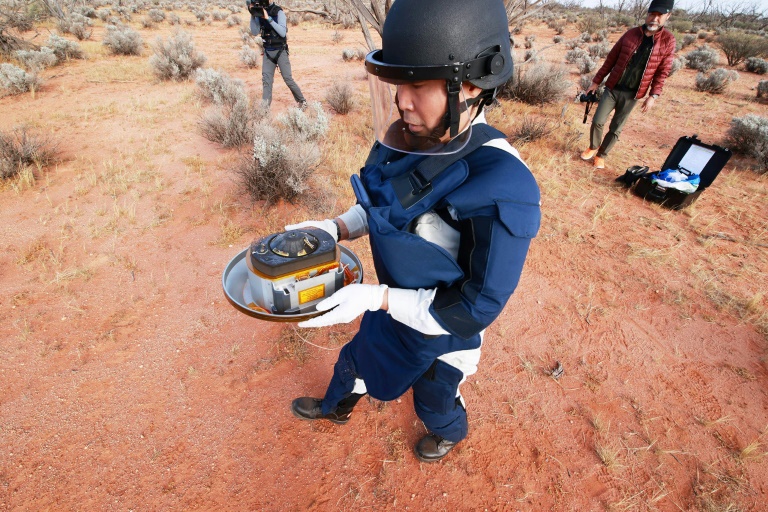
Specks of dust retrieved by a Japanese space probe from an asteroid some 300 million kilometres from Earth have revealed a surprising component: a drop of water, scientists said Friday.

The discovery offers new support for the theory that life on Earth was seeded from outer space.

The findings are in the latest research to be published from the analysis of 5.4 grams of rocks and dust gathered by the Hayabusa-2 probe from the asteroid Ryugu.

“This drop of water has great meaning,” lead scientist Tomoki Nakamura of Tohoku University told reporters ahead of the research’s publication in the journal Science on Friday.

“Many researchers believe that water was brought (from outer space) but we actually discovered water in Ryugu, an asteroid near Earth, for the first time.”

Hayabusa-2 was launched in 2014 on its mission to Ryugu, and returned to Earth’s orbit two years ago to drop off a capsule containing the sample.

The precious cargo has already yielded several insights, including organic material that showed some of the building blocks of life on Earth, amino acids, may have been formed in space.

The research published Friday says the team found a drop of fluid in the Ryugu sample “which was carbonated water containing salt and organic matter”, Nakamura said.

That bolsters the theory that asteroids like Ryugu, or its larger parent asteroid, could have “provided water, which contains salt and organic matter” in collisions with Earth, Nakamura said.

“We have discovered evidence that this (process) may have been directly linked to, for example, the origin of the oceans or organic matter on Earth.”

Nakamura’s team, comprising about 150 researchers — including 30 from the United States, Britain, France, Italy, and China — is one of the largest teams analysing the sample from Ryugu.

The sample has been divided among different scientific teams to maximise the chance of new discoveries.

Kensei Kobayashi, an astrobiology expert and professor emeritus at Yokohama National University who is not part of the research group, hailed the discovery.

“The fact that water was discovered in the sample itself is surprising,” given its fragility and the chances of it being destroyed in outer space, he told AFP.

“It does suggest that the asteroid contained water — in the form of fluid and not just ice — and organic matter may have been generated in that water.”

Russia begins troop mobilisation for Ukraine fight

Moscow began its mandatory troop call-up Thursday to try to bolster a stumbling war effort in Ukraine, with authorities saying thousands had volunteered even as Russian men fled the country to avoid being forced to fight.

Amateur footage posted on social media since President Vladimir Putin ordered the mobilisation of reservists on Wednesday purported to show hundreds of Russian citizens across the country responding to military summons.

The call-up came as Moscow-held regions of Ukraine are to vote in coming days on whether to become part of Russia in referendums that have been called an unlawful land grab by Kyiv and its allies. 

Moscow took these steps after Ukrainian forces seized back most of the northeastern Kharkiv region, which has been seen as a possible turning point in the seven-month war that had fallen into stalemate.

The Russian military said Thursday that at least 10,000 people had volunteered to fight in 24 hours since the order, but men also rushed to leave Russia before they were made to join.

“I don’t want to go to the war,” a man named Dmitri, who had flown to Armenia with just one small bag, told AFP. “I don’t want to die in this senseless war. This is a fratricidal war.”

– Annexation ‘vote’ –

Military-aged men made up the majority of those arriving off the latest flight from Moscow at the Armenian airport and many were reluctant to speak.

Yerevan has become a major destination for Russians fleeing since war began on February 24, drawing fierce international opposition that has aimed to isolate Russia.

US Secretary of State Antony Blinken on Thursday demanded Putin be held to account as he faced Russia in a Security Council session in which the United Nations catalogued abuses in Ukraine.

“We cannot — we will not — let President Putin get away with it,” Blinken told the Security Council in a special session as leaders met at the United Nations.

Russian Foreign Minister Sergei Lavrov — whom Blinken has refused to meet individually since the February invasion — lashed out at Western accusations.

“There’s an attempt today to impose on us a completely different narrative about Russian aggression as the origin of this tragedy,” Lavrov told the Security Council.

The confrontation on the diplomatic stage escalated as Kremlin-installed officials in Ukrainian regions controlled by Moscow’s forces vowed on Thursday to press ahead with annexation polls this week.

Four Russian-occupied regions of Ukraine — Donetsk and Lugansk in the east and Kherson and Zaporizhzhia in the south — announced that they would hold the votes over five days, beginning on Friday.

Vladimir Saldo, the Moscow-installed head of Kherson, which fell early into the Russian invasion, said the referendum would go ahead in his region regardless of the criticism.

“The date has been set. We have the green light. Voting begins tomorrow and nothing can prevent this,” he told Russian state-run media.

“People have been waiting and they’re demanding that this vote is held soon,” he added.

Western leaders convening in New York this week unanimously condemned the ballots. 

Speaking at the United Nations, US President Joe Biden accused Russian President Vladimir Putin of “shamelessly” violating the UN Charter with a war aimed at “extinguishing Ukraine’s right to exist as a state”.

– ‘Anyone would want to leave’ –

The integration of the war-scarred regions into Russia would represent a major escalation of the conflict, as Moscow could then try to say it was defending its own territory from Ukrainian forces.

After the votes were announced by his proxy officials in Ukraine, Putin announced that Russia would call up some 300,000 reservists to bolster the war effort and cautioned that Moscow would use “all means” to protect its territory.

Former Russian leader Dmitry Medvedev said in a statement on social media that those means included “strategic nuclear weapons”. He predicted the voting regions “will integrate into Russia”.

For most observers, the results of the concurrent votes are already a foregone conclusion and were rushed because Ukrainian forces were making sweeping gains in a counter-offensive to recapture the east.

The referendums are reminiscent of a similar ballot in 2014 that saw the Crimean Peninsula in Ukraine annexed by Russia. Western capitals said the vote was fraudulent and hit Moscow with sanctions in response.

Election officials in the Donetsk region, which has been partially controlled since 2014 by Moscow-backed separatists, said that voting would take place door-to-door for the first days. But it would only be possible in polling stations on the final day, Tuesday.

Putin’s move this week to call up reservists for Ukraine sparked small protests across Russia, resulting in more than 1,300 people being detained.

Flights out of Russia to neighbouring countries, mainly former Soviet republics that allow Russians visa-free entry, are nearly entirely booked and prices have skyrocketed, pointing to an exodus of Russians wanting to avoid going to war.

Looking lost and exhausted in the arrivals hall of the airport in the capital of Armenia, 44-year-old Sergei said he had fled Russia to escape being called up.

“The situation in Russia would make anyone want to leave,” he told AFP on condition of anonymity.

With plywood and prayers, Bermuda prepares for Hurricane Fiona

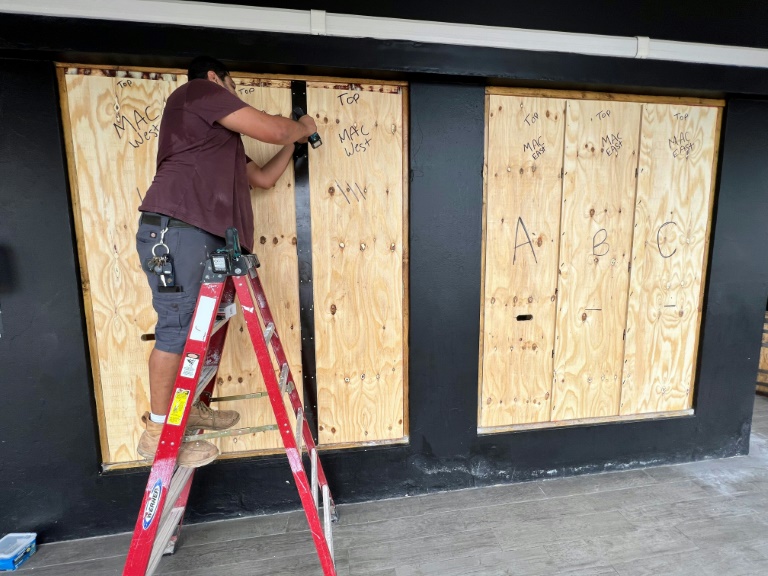
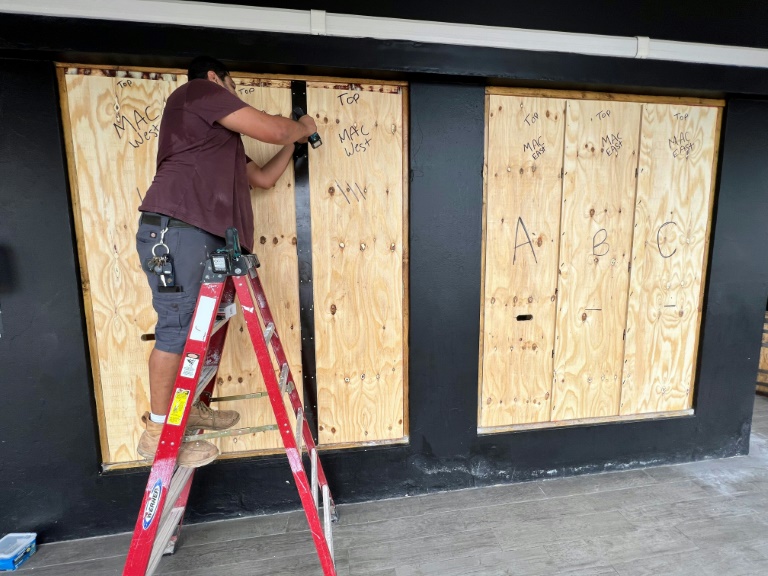
Bermudians covered storefronts and stocked up on candles, food and water while Hurricane Fiona churned towards the Atlantic island Thursday as a powerful Category 4 storm, after leaving a trail of destruction across the Caribbean.

The Bermuda Weather Service said the center of Fiona was forecast to pass more than 110 miles (180 kilometers) to the west of the British territory on Friday morning at around 5:00 am (0700 GMT), but with a storm of that strength and size, residents were taking no chances. 

“This storm is going to be worse than the last one,” Richard Hartley, owner of the Torwood Home store in the capital, Hamilton, told AFP as he and his wife covered the shop’s cedar-lined windows with metal sheets. 

“The wind is going to come straight in from the south. So this corner is very exposed to the winds,” he explained.

Fiona is a Category 4 hurricane, the second highest level on the Saffir-Simpson scale. The US National Hurricane Center (NHC) said the storm was packing maximum sustained winds of near 130 miles per hour, with higher gusts.

Hurricane force winds extend more than 70 miles from the storm’s eye, and tropical storm force winds up to 200 miles, the NHC said.

A hurricane warning was in effect in Bermuda Thursday morning, with the NHC predicting up to four inches (10 centimeters) of rain and “large and destructive” waves and storm surge. 

The British territory of some 64,000 people is no stranger to hurricanes — but it is also tiny, just 21 square miles and one of the most remote places in the world, 640 miles from its closest neighbor, the United States.

That means there is nowhere to evacuate to when a big storm hits.

“You have to live with it because you live here, you can’t run anywhere because it’s just a little island,” said JoeAnn Scott, a shopworker in Hamilton.

Bermudians try to “enjoy it as it comes,” she said. “And pray and pray. That’s what we do, pray and party,” she added with a laugh. 

– Construction ‘built to last’ –

Because of the island’s isolation, preparations are taken seriously even when widespread damage is not expected.

Many of the boats docked at Bermuda’s Dinghy Club and Yacht Club were taken out of the water earlier in the week, outdoor furniture at homes and restaurants was taken inside, and the storm shutters bordering windows on most houses were checked. 

Public schools will be closed on Friday, and the government announced that buses will stop running later Thursday afternoon. The Royal Bermuda Regiment was on standby to help with clearing operations.

In addition to laying in supplies of candles and food, some Bermudians were also drawing buckets of water from the tanks at the side of their homes.

There is no fresh water source on the island, so all buildings have white, lime-washed roofs that are used to catch rainwater that is directed into tanks as the main water supply. It is then pumped into homes using electricity. 

Bermuda, whose economy is fueled by international finance and tourism, is wealthy compared to most Caribbean countries, and structures must be built to strict planning codes to withstand storms. Some have done so for centuries. 

“The construction is really built to last, and we don’t see the devastation ever that the Caribbean has experienced over the years,” shop owner Hartley’s wife, Elaine Murray, said.

Fiona killed four people in Puerto Rico earlier this week, according to US media, while one death was reported in the French overseas department of Guadeloupe and another in the Dominican Republic. 

President Joe Biden has declared a state of emergency in Puerto Rico, a US territory that is still struggling to recover from Hurricane Maria five years ago.

In the Dominican Republic, President Luis Abinader declared three eastern provinces to be disaster zones.

Farther north in Bermuda, residents continued to watch Fiona closely in case the storm veers further east in the coming hours — but islanders were calm. 

“I’ve been through a lot of hurricanes, so no, I’m not worried,” said resident Rochelle Jones.

But if things do go wrong, Bermudians will “all come out together and we help each other,” she said. 

With plywood and prayers, Bermuda prepares for Hurricane Fiona

Bermudians covered storefronts and stocked up on candles, food and water while Hurricane Fiona churned towards the Atlantic island Thursday as a powerful Category 4 storm, after leaving a trail of destruction across the Caribbean.

The Bermuda Weather Service said the center of Fiona was forecast to pass more than 110 miles (180 kilometers) to the west of the British territory on Friday morning at around 5:00 am (0700 GMT), but with a storm of that strength and size, residents were taking no chances. 

“This storm is going to be worse than the last one,” Richard Hartley, owner of the Torwood Home store in the capital, Hamilton, told AFP as he and his wife covered the shop’s cedar-lined windows with metal sheets. 

“The wind is going to come straight in from the south. So this corner is very exposed to the winds,” he explained.

Fiona is a Category 4 hurricane, the second highest level on the Saffir-Simpson scale. The US National Hurricane Center (NHC) said the storm was packing maximum sustained winds of near 130 miles per hour, with higher gusts.

Hurricane force winds extend more than 70 miles from the storm’s eye, and tropical storm force winds up to 200 miles, the NHC said.

A hurricane warning was in effect in Bermuda Thursday morning, with the NHC predicting up to four inches (10 centimeters) of rain and “large and destructive” waves and storm surge. 

The British territory of some 64,000 people is no stranger to hurricanes — but it is also tiny, just 21 square miles and one of the most remote places in the world, 640 miles from its closest neighbor, the United States.

That means there is nowhere to evacuate to when a big storm hits.

“You have to live with it because you live here, you can’t run anywhere because it’s just a little island,” said JoeAnn Scott, a shopworker in Hamilton.

Bermudians try to “enjoy it as it comes,” she said. “And pray and pray. That’s what we do, pray and party,” she added with a laugh. 

– Construction ‘built to last’ –

Because of the island’s isolation, preparations are taken seriously even when widespread damage is not expected.

Many of the boats docked at Bermuda’s Dinghy Club and Yacht Club were taken out of the water earlier in the week, outdoor furniture at homes and restaurants was taken inside, and the storm shutters bordering windows on most houses were checked. 

Public schools will be closed on Friday, and the government announced that buses will stop running later Thursday afternoon. The Royal Bermuda Regiment was on standby to help with clearing operations.

In addition to laying in supplies of candles and food, some Bermudians were also drawing buckets of water from the tanks at the side of their homes.

There is no fresh water source on the island, so all buildings have white, lime-washed roofs that are used to catch rainwater that is directed into tanks as the main water supply. It is then pumped into homes using electricity. 

Bermuda, whose economy is fueled by international finance and tourism, is wealthy compared to most Caribbean countries, and structures must be built to strict planning codes to withstand storms. Some have done so for centuries. 

“The construction is really built to last, and we don’t see the devastation ever that the Caribbean has experienced over the years,” shop owner Hartley’s wife, Elaine Murray, said.

Fiona killed four people in Puerto Rico earlier this week, according to US media, while one death was reported in the French overseas department of Guadeloupe and another in the Dominican Republic. 

President Joe Biden has declared a state of emergency in Puerto Rico, a US territory that is still struggling to recover from Hurricane Maria five years ago.

In the Dominican Republic, President Luis Abinader declared three eastern provinces to be disaster zones.

Farther north in Bermuda, residents continued to watch Fiona closely in case the storm veers further east in the coming hours — but islanders were calm. 

“I’ve been through a lot of hurricanes, so no, I’m not worried,” said resident Rochelle Jones.

But if things do go wrong, Bermudians will “all come out together and we help each other,” she said. 

Blinken demands action on Putin at UN showdown on Ukraine

US Secretary of State Antony Blinken on Thursday demanded President Vladimir Putin be held to account as he faced Russia in a Security Council session in which the United Nations catalogued abuses in Ukraine.

“The very international order we’ve gathered here to uphold is being shredded before our eyes,” Blinken told the Security Council in a special session as leaders met at the United Nations.

“We cannot — we will not — let President Putin get away with it,” he said.

Blinken accused Putin of adding “fuel to the fire” with recent steps including calling up reservists and planning referendums in Russian-held Ukrainian territory just as Kyiv made strong gains on the ground.

The top US diplomat said it was critical to show that “no nation can redraw the borders of another by force.”

“If we fail to defend this principle when the Kremlin is so flagrantly violating it, we send the message to aggressors everywhere that they can ignore it, too.”

Russian Foreign Minister Sergei Lavrov — whom Blinken has refused to meet individually since the February invasion — lashed out at Western accusations.

“There’s an attempt today to impose on us a completely different narrative about Russian aggression as the origin of this tragedy,” Lavrov told the Security Council.

He accused Ukraine of “Russophobia,” including through its imposition of Ukrainian language rules.

“The United States and their allies with the connivance of international human rights organizations have been covering the crimes of the Kyiv regime,” Lavrov said.

France, the current head of the Security Council, called the session to highlight the quest for accountability in Ukraine.

“There is no peace without justice,” French Foreign Minister Catherine Colonna told reporters. 

Opening the session, Secretary-General Antonio Guterres said that the UN rights body has seen “a catalog of cruelty — summary executions, sexual violence, torture and other inhumane and degrading treatment against civilians and prisoners of war.

– ‘Echoes of Nuremburg’ –

“All these allegations must be thoroughly investigated, to ensure accountability,” he said, without directly pointing the finger at Russia. 

“Perpetrators must be held to account in fair and independent judicial proceedings. Victims and their families have a right to justice, remedy and reparation,” Guterres said.

Ukrainian President Volodymyr Zelensky, addressing the General Assembly on Wednesday, demanded a special tribunal and “punishment” for Russia over its invasion and abuses.

Highlighting evidence from Ukraine was Karim Khan, prosecutor of the International Criminal Court, which announced an investigation into possible war crimes just days after Russia invaded its neighbor in February.

“In my view the echoes of Nuremburg should be heard today,” he told the Security Council Thursday, referring to the German city where Nazi war crimes trials were held.

Khan has traveled to Ukraine and visited the town of Bucha, where the discovery of dozens of bodies in the streets and in mass graves horrified the world.

Moscow at the time dismissed the atrocities as fake, and on Thursday Lavrov said Ukraine’s efforts to blame Russia for war crimes was a “propaganda operation.”

But Khan pushed back, telling the Security Council: “When I went to Bucha, and went behind St. Andrew’s church, the bodies I saw were not fake.”

Ukraine’s representative at the meeting, Foreign Minister Dmytro Kuleba, urged “solidarity and unity” of UN member states to help Kyiv fight Russian aggression.

“The best way to prevent more Russian atrocities from happening is to provide Ukraine with more necessary weapons,” he told reporters.

Russia before the war forged closer ties with China. But the United States has welcomed what it sees as a cautious tone by China, which has not supplied significant military supplies to Moscow.

“The priority is for the parties to resume dialogue without preconditions,” Chinese Foreign Minister Wang Yi told the session.

Markets drop as central banks hike rates

Stock markets retreated on Thursday as the US Federal Reserve and several of Europe’s central banks unleashed more hefty interest rate hikes that aim to stomp inflation but raise fears of recession.

On Wall Street, the Dow Jones Industrial Average was off 0.4 percent in late morning trading, with the broader S&P 500 and tech-heavy Nasdaq Composite down further.

European markets finished lower, with London’s FTSE 100 down 1.1 percent after the Bank of England raised its rate again to combat inflation and signalled that the UK entered recession in the current quarter.

The BoE’s 0.5-percentage-point hike was smaller than the US Federal Reserve’s third consecutive 0.75-point increase.

“Today has seen another bout of downside for stock markets throughout Europe and the US, with geopolitical and economic concerns providing a drag on risk assets once again,” Joshua Mahony, senior market analyst at online trading platform IG.

“On a week dominated by central banks, it was always going to be difficult to envisage a scenario where traders emerge with a positive outlook,” he added.

The world’s major central banks are rushing to ramp up rates to dampen red-hot global consumer prices, but traders fear rising borrowing costs will herald recession.

While the Fed’s 0.75-percentage-point rise was widely expected, there was some surprise at the central bank’s forecast that borrowing costs would likely be held above four percent throughout next year.

Fed chairman Jerome Powell reiterated his determination to focus on bringing down inflation — which is at a four-decade high — and accepted that the campaign would hit Americans hard.

“What hit home for market participants yesterday is that the Fed, steered by Fed Chair Powell, really means business now in restoring price stability, and if that means a hard landing for the economy, so be it,” said Briefing.com analyst Patrick O’Hare.

– Japan bucks the trend –

Switzerland and Norway also sprang hefty interest rate hikes on Thursday, two days after a super-sized increase in Sweden.

In Asia, Indonesia and the Philippines also tightened monetary policy but the Bank of Japan bucked the global trend as it left its status quo in place.

The dollar pared back gains after rising against other major currencies following the Fed’s rate decision.

The British pound briefly dived to a new 37-year low at $1.1212 but recovered after the BoE announcement.

The euro touched a new 20-year dollar low of $0.9809.

The yen, which has been plummeting due to the policy gap between the US and Japanese central banks, clawed back against the dollar after Japan’s finance ministry said it intervened in the currency market.

Oil prices extended recent gains after Russian President Vladimir Putin announced a partial mobilisation of the Russian army and made a veiled threat to use nuclear weapons against the West.

– Key figures at around 1530 GMT –

New York – Dow: DOWN 0.4 percent at 30,055.94 points

EURO STOXX 50: DOWN 1.9 percent at 3,427.14

London – FTSE 100: DOWN 1.1 percent at 7,159.52 (close)

Frankfurt – DAX: DOWN 1.8 percent at 12,531.63 (close)

Paris – CAC 40: DOWN 1.9 percent at 5,918.50 (close)

Tokyo – Nikkei 225: DOWN 0.6 percent at 27,153,83 (close)

Hong Kong – Hang Seng Index: DOWN 1.6 percent at 18,147.95 (close)

Shanghai – Composite: DOWN 0.3 percent at 3,108.91 (close)

Pound/dollar: DOWN at $1.1256 from $1.1270 Wednesday

Euro/dollar: DOWN at $0.9821 from $0.9837

Euro/pound: DOWN at 87.24 pence from 87.29 pence 

Dollar/yen: DOWN at 142.25 yen from 144.06 yen

Brent North Sea crude: UP 0.9 percent at $90.63 per barrel

West Texas Intermediate: UP 0.9 percent at $83.69 per barrel

burs-rl/lth

Close Bitnami banner
Bitnami