World

Blinken demands action on Putin at UN showdown on Ukraine

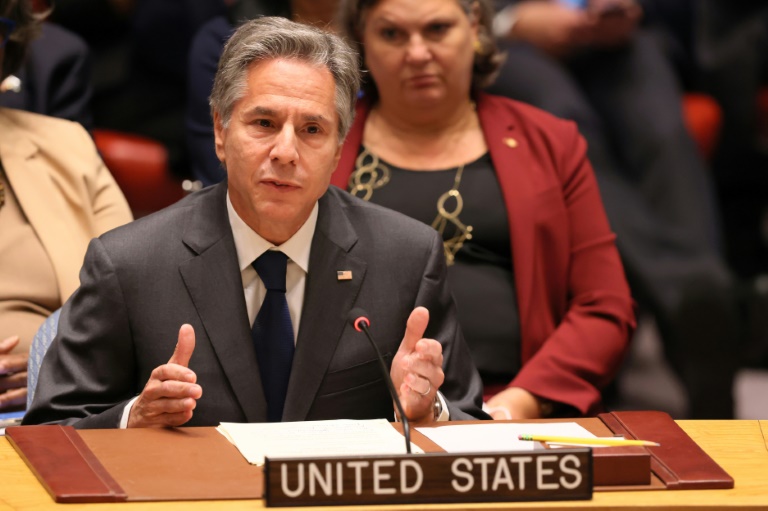
US Secretary of State Antony Blinken on Thursday demanded that President Vladimir Putin be held to account as he faced Russia in a Security Council session in which the United Nations catalogued abuses in Ukraine.

“The very international order we’ve gathered here to uphold is being shredded before our eyes,” Blinken told the Security Council in a special session as leaders met at the United Nations.

“We cannot — we will not — let President Putin get away with it,” he said.

Blinken accused Putin of adding “fuel to the fire” with recent steps including calling up reservists and planning referendums in Russian-held Ukrainian territory.

The top US diplomat said it was critical to show that “no nation can redraw the borders of another by force.”

“If we fail to defend this principle when the Kremlin is so flagrantly violating it, we send the message to aggressors everywhere that they can ignore it, too.”

France, the current head of the Security Council, called the session to highlight the quest for accountability in Ukraine.

“There is no peace without justice,” French Foreign Minister Catherine Colonna told reporters. 

Opening the session, Secretary-General Antonio Guterres said that the UN rights body has seen “a catalog of cruelty — summary executions, sexual violence, torture and other inhumane and degrading treatment against civilians and prisoners of war.

“All these allegations must be thoroughly investigated, to ensure accountability,” he said, without directly pointing the finger at Russia. 

“Perpetrators must be held to account in fair and independent judicial proceedings. Victims and their families have a right to justice, remedy and reparation,” Guterres said.

Russian Foreign Minister Sergei Lavrov was in attendance, although he did not appear during the initial speeches. Blinken has refused one-on-one talks with his Russian counterpart since the invasion, doubting Moscow’s willingness for any peace efforts.

– ‘Echoes of Nuremburg’ –

Ukrainian President Volodymyr Zelensky, addressing the General Assembly on Wednesday, demanded a special tribunal and “punishment” for Russia over its invasion and abuses.

Highlighting evidence from Ukraine was Karim Khan, prosecutor of the International Criminal Court, which announced an investigation into possible war crimes just days after Russia invaded its neighbor in February.

“In my view the echoes of Nuremburg should be heard today,” he told the Security Council Thursday, referring to the German city where Nazi war crimes trials were held.

Khan has traveled to Ukraine and visited the town of Bucha, where the discovery of dozens of bodies in the streets and in mass graves horrified the world.

Moscow at the time dismissed the atrocities as fake, but at Thursday’s meeting Khan pushed back.

“When I went to Bucha, and went behind St. Andrew’s church, the bodies I saw were not fake.”

Ukraine’s representative at the Security Council meeting, Foreign Minister Dmytro Kuleba, urged “solidarity and unity” of UN member states to help Kyiv fight Russian aggression.

“The best way to prevent more Russian atrocities from happening is to provide Ukraine with more necessary weapons,” he told reporters.
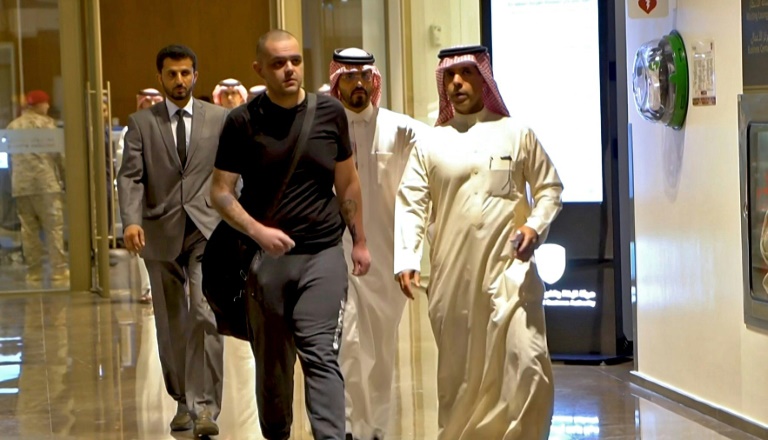
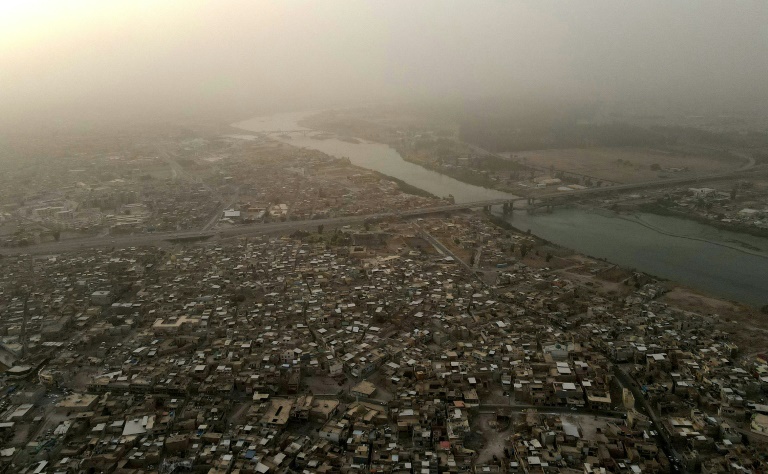
Britons held in Ukraine back home after prisoner swap

Five British men released from detention by Russian-backed separatists in Ukraine in a prisoner swap, are now back home, a group campaigning for their liberation said Thursday.

“We know that all are back safely in the UK now and looking forward to normality with their families after this horrific ordeal,” humanitarian organisation Presidium Network said in a statement emailed to AFP.

Prime Minister Liz Truss tweeted Wednesday that the men’s release was “hugely welcome”.

Five British men — Aiden Aslin, Shaun Pinner, Dylan Healy, John Harding and Andrew Hill — were released as part of a record-high prisoner swap that also freed US, Moroccan, Swedish and Croatian nationals as well Ukrainian and separatist fighters and a major pro-Moscow politician.

Aslin told journalists on his doorstep in Newark in eastern England: “I just want to say I want to thank President (Volodymyr) Zelensky and the Saudi authorities and everyone else that was involved in our release.

“In the next few days, the rest of us will say what we need to say to the media,” he said, asking for privacy “after the traumatic experience that we have just been through”.

Aslin stood beside a hand-drawn sign saying “Welcome home Aiden”.

Pinner’s family released a photo of him smiling and hugging family members.

The freed prisoners were flown out to Riyadh on Wednesday after Crown Prince Mohammed bin Salman took part in negotiations.

The British men had been held by Russian proxies in the separatist hub of Donetsk after joining the war as volunteer fighters and aid workers. 

Aslin and Pinner were sentenced to death in June, while the other three men went on trial in August on the same charge of serving as mercenaries.

One British man, Paul Urey, died in captivity after being detained shortly after the war began in April. 

Ukraine’s Foreign Minister Dmytro Kuleba said this month that the aid worker’s body had been handed to Kyiv and showed “signs of possible unspeakable torture”. 

His mother Linda Urey posted on Facebook of the prisoner release: “I’m happy for those involved however I’m devastated that my son is not one of them.”

Urey’s family have been crowdfunding to raise money to repatriate his body.

His mother wrote that his body is still in Kyiv “lying in a freezer almost three months dead”. 

Britain’s foreign minister James Cleverly said Wednesday that “our thoughts remain with the family of Paul Urey”.

Fossil fuels make up 90% of Middle East air pollution: study

More than 90 percent of harmful air pollution in the Middle East and parts of North Africa comes from fossil fuels, according to research Thursday that showed the region “permanently exceeded” dangerous air quality levels.

The World Health Organization this year said the MENA region had some of the poorest air quality on Earth. 

The long-standing assumption was that the smog choking most of the region’s cities was primarily composed of desert sand, given their location on the world’s “dust belt” where there are frequently more than 20 major sand storms each year. 

In 2017, an international team of researchers set off on an epic voyage across the eastern Mediterranean, through the Suez Canal and around the Gulf, using specialised equipment to analyse air quality and particulate matter on shore. 

They found that the vast majority of small particles — which can penetrate deep into the lungs, resulting in greater health risk — were manmade, mainly from the production and use of fossil fuels. 

Writing in the journal Communications Earth & Environment, they showed how the region is blanketed in particularly harmful compounds such as sulphur dioxide, which is a direct result of oil extraction.

Emissions from container vessels in one of the busiest shipping lanes in the world also contributed to the smog. 

“We have refineries such as those in Saudi Arabia and the United Arab Emirates that are a big source of air pollution as well as ships on the Red Sea, and in the Suez Canal region,” said Jos Lelieveld, lead study author from Germany’s Max Planck Institute for Chemistry.

“So the combination of all of these means that the air is much more polluted than what most people hope it to be.”

The team used health and mortality metrics to calculate the number of excess deaths caused by air pollution in the MENA region annually.

The percentage of fossil-fuel driven mortality varied between nations, with 5.9 percent of deaths in Cyprus attributable to air pollution versus 15.9 in Kuwait.

This is a far higher mortality rate than in other industrialised regions. The US and Germany, for example, have 3 percent and 3.7 percent mortality due to air pollution, respectively.

Region-wide, the team calculated that air pollution from fossil fuel use caused one in eight deaths, noting that air quality there “permanently exceeded” WHO guidelines.

“It is very comparable with things that are really of great concern, for example, tobacco smoking and high cholesterol, which are major health risks in the region,” Lelieveld told AFP.

“And the realisation of this in the region is practically zero.”

He said that while governments in the region counted on fossil fuel production for the majority of their income, the time would come when the health costs due to pollution compounded growing pressure to decarbonise their economies. 

“They’re not stupid, they know that fossil fuels will end at some point,” said Lelieveld.

“I’m hoping this is an additional incentive.”

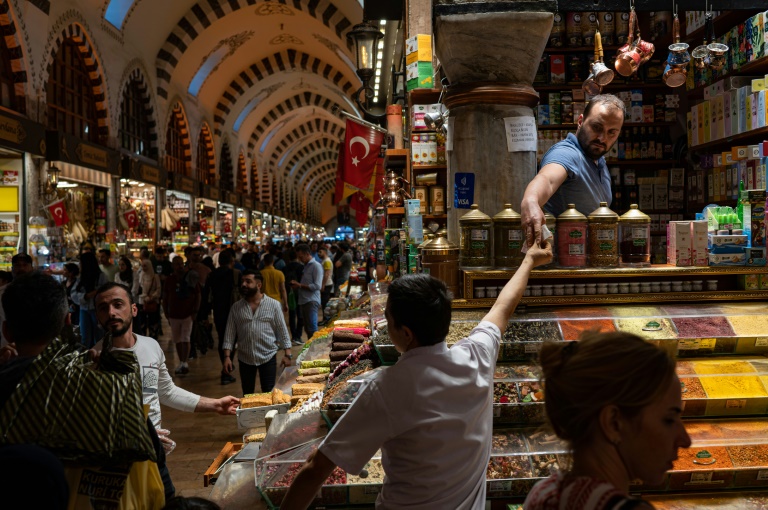
Inflation-hit Turkey cuts rate for second month

Turkey’s troubled lira on Thursday plumbed new lows after the central bank cut its policy rate for the second straight month  despite annual inflation reaching 80 percent and still edging higher.

The central bank lowered its benchmark rate to 12 from 13 percent and blamed skyrocketing consumer prices on external factors such as the global jump in the cost of energy and food caused by Russia’s invasion of Ukraine.

The decision highlights Turkish policymakers’ strong focus on economic growth nine months before a general election that polls show President Recep Tayyip Erdogan is on track to lose.

Turkey has gone the opposite direction of most other central banks worldwide which are raising rates to combat cost of living crises.

The US Federal Reserve and its European peers announced hefty hikes this week.

Erdogan’s unflinching focus on growth at all costs has put the lira under massive pressure and exposed Turkey’s once-vibrant banking sector to new risks.

The lira established a new historic low of 18.41 against the dollar before recovering some its losses after the announcement.

The central bank’s cut was in direct response to data showing that Turkey’s industrial production and retail sales were both starting to slow.

“Since the beginning of July, leading indicators have been pointing to a slowdown in growth due to the weakening foreign demand,” the central bank said.

“Leading indicators for the third quarter continue pointing to loss of momentum in economic activity due to the decreasing foreign demand.”

– ‘I am an economist’ –

Erdogan rejects conventional economics and believes that inflation can be brought under control by cutting interest rates.

“I am an economist,” Erdogan told US television this week. 

“Currently, there are countries which feel threatened by inflation of even eight or nine percent. We have 80 percent,” he said.

“And in my country, the shelves are not empty in the markets.”

Turkey’s inflation rate is now the highest since 1998.

Erdogan’s two-decade rule was built on a pledge to create a new middle-class and end the corruption and mismanagement that plagued successive governments in the 1980s and 1990s.

But his Islamic-rooted party and its hard-right nationalist allies now face the real possibility of losing their parliamentary majority in next year’s polls.

Erdogan himself is expected to struggle in a likely second round runoff against any of his potential opposition rivals.

The Turkish leader has responded to the economic crisis by radically changing his foreign policy and making up with many of his former rivals in the petrodollar-rich Arab world.

Additional deals with Russia have helped shore up Turkey’s dwindling foreign currency reserves and potentially given Erdogan enough breathing room to ride out the economic storm until June.

– ‘Managed markets’ –

Analysts at Fitch Ratings said they expect the central bank to end its era of unconventional economics and start raising rates after the election.

But there is little concensus on whether the central bank intends to take its rate any lower — and what damage this might inflict.

“The latest note does not rule out further reduction in the policy rate,” ING Bank’s chief Turkey economist Muhammet Mercan noted.

Liam Peach at Capital Economics said he expected the lira to drop to 24 against the dollar by the end of the year.

“Further cuts are likely to be more gradual going forward,” Peach wrote in report.

Others said the Turkish policy rate was so far below inflation that any further moves would need to be massive to have any real economic effect.

“The Turkish central bank’s policy rate really has little real meaning these days, given inflation at 80 percent plus,” said BlueBay Asset Management analyst Timothy Ash.

“The managed markets in Turkey are now aimed at engineering Erdogan’s re-election.”

'I don't want to die': Russians flee abroad after Putin's call-up

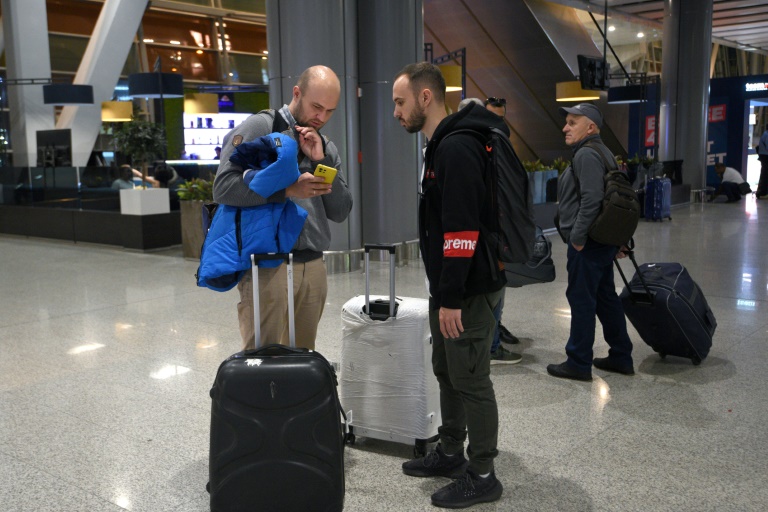
Dmitri flew to Armenia with just one small bag, leaving behind his wife and children, adding to the thousands fleeing Russia to avoid serving in the war against Ukraine.

“I don’t want to go to the war,” he told AFP. “I don’t want to die in this senseless war. This is a fratricidal war.”

Russian President Vladimir Putin’s decision this week to mobilise several hundred thousand reservists has spurred a fresh exodus over the country’s borders.

“The situation in Russia would make anyone want to leave,” said another new arrival, 44-year-old Sergei, who arrived with his teenage son.

Looking lost and exhausted in an Armenian airport, he confirmed that they had fled “because of the mobilisation”, but refused to give his full name.

“We choose not to wait to be called up,” said his 17-year-old son Nikolai. “I am not panicking, but I feel this uncertainty,” he added.

It was a sentiment shared by other Russians arriving off the same flight to Yerevan.

“It’s wrong to go to war in the 21st century — to put it mildly,” Alexei, 39, told AFP.

He was not sure if he would ever be able return to Russia, he added. “It all depends on the situation.”

– ‘False information’ –

Military-aged men made up the majority of those arriving off the latest flight from Moscow. Many were reluctant to speak.

Yerevan has become a major destination for Russians fleeing since war began on February 24.

Since then, Armenia says at least 40,000 Russians have arrived in the small Caucasus country, once a part of the Soviet Union.

Nearly 50,000 Russians have fled to neighbouring Georgia, national statistics from June showed.

The Kremlin on Thursday dismissed as “fake” reports that Russians eligible for mobilisation were rushing for the exit.

“A great deal of false information has emerged about this,” said spokesman Dmitry Peskov.

But flights out of Russia were nearly fully booked for the week ahead to cities in the nearby former Soviet countries of Armenia, Azerbaijan, Georgia, Kazakhstan, Kyrgyzstan and Tajikistan.

And Putin’s call-up order did not just provoke a dash for the exit — there were protests too.

Police arrested more than 1,300 people Wednesday at demonstrations against mobilisation across Russia, according to one group monitoring protests, OVD-Info.

On social networks, there were fears Russia would seal its borders.

But Germany’s Interior Minister Nancy Faeser said Thursday Russian deserters could “obtain international protection” in her country.

– ‘Almost nobody supports the war’ –

Finnish border authorities said Thursday they had seen an increase in traffic from Russia following Putin’s announcement. But it stressed that the influx was still at relatively low levels.

At the Vaalimaa border crossing in Finland, there was a line of cars about 150 metres long could be seen Thursday afternoon.

“It was busy in the morning and at night, but now it’s starting to calm down,” Elias Laine, a border guard there told AFP.

A 23-year-old project manager from Moscow told AFP the mobilisation had pushed forward his plans to leave Russia by October.

“I’m eligible for the call-up,” he explained.

“Some people went to protests because they’ve got nothing to lose. Others are looking into laws and talking lawyers to find out whether they can be conscripted,” he said.

And back in Yerevan, another Russian who had managed to get out said he was “shocked” by Putin’s mobilisation announcement.

“Almost nobody supports the war,” he said. “This is all so painful. I want all of this to end soon.”

He declined to give either his first or last name, citing security concerns.

Iran protests pose new test for clerical leadership

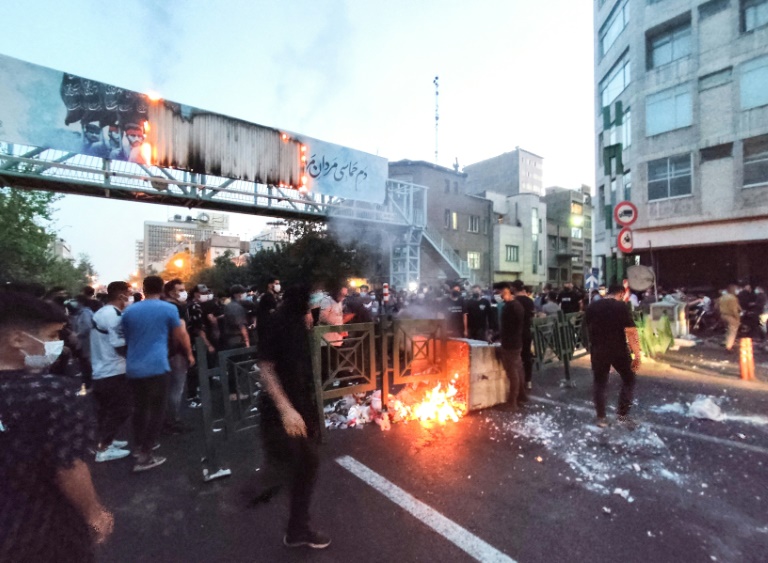
Women setting their headscarves ablaze and chanting anti-regime slogans. Pictures of the leadership defaced and burned. Vehicles belonging to the security forces set on fire. 

The images of the protests in Iran are indicative of the taboo-breaking nature of a movement that erupted after the death of Mahsa Amini, 22, following her arrest by the notorious morality police.

A country where street dissent is tightly controlled, Iran has seen bursts of protest in recent years, notably the 2009 “Green Movement” that followed disputed elections, protests in November 2019 over fuel price rises and rallies this year over the cost of living.

But analysts say that these protests present a new challenge to the Islamic system under supreme leader Ayatollah Ali Khamenei, 83, as they are now taking place nationwide, have support across social classes as well as ethnic groups and were instigated by women.

Amini, also known by her Kurdish first name of Jhina, was visiting Tehran with her family last week when she was arrested for purportedly violating Iran’s strict dress code rules for women, in place since shortly after the 1979 Islamic Revolution.

She fell into a coma hours after her arrest and died in hospital on September 16. 

Activists contend she was ill-treated in detention and could have suffered a blow to the head. While this is not confirmed by the authorities, the anger fuelled the protests that started from her funeral last Saturday.

“These are the biggest protests since November 2019,” said Ali Fathollah-Nejad, Iran expert at the Issam Fares Institute for Public Policy and International Affairs at the American University of Beirut.

“While the last two nationwide uprisings were led by the lower classes and were triggered by socio-economic degradation, this time the trigger was socio-cultural and political, comparable to the 2009 Green Movement,” he told AFP.

– ‘Outrage shared’ –

The 2009 movement had been driven by demands by the middle class for fair elections and the 2019 protests by the anger of the lower classes, he said.

“Current conditions in Iran suggest that there may be a tendency toward unifying both groups. The outrage over Amini’s death is shared by both the middle and lower classes,” said Fathollah-Nejad.

The protests also come at a particularly sensitive time for the leadership, when the Iranian economy remains mired in a crisis largely caused by international sanctions over its nuclear programme.

Despite repeated warnings from Europe that time is running out, there is also no indication that the sides are on the verge of agreeing a deal to revive the 2015 Iran nuclear accord (JCPOA) that would see sanctions eased.

The protests have featured chants of “death to the dictator” as well as other anti-regime slogans and the emergence of a new rallying cry, “Zan, zendegi, azadi” (“Woman, life, freedom”).

Unprecedented images have shown protesters defacing or burning images of Khamenei or, on one occasion, setting fire to a giant image of Revolutionary Guards commander Qassem Soleimani, who is presented by the authorities as a near mythical figure after his 2020 killing by the United States in Iraq.

Protesters have also been seen directly resisting security forces, with women refusing to put their headscarves back on in front of the police and vehicles belonging to the security forces torched.

At least 31 civilians have been killed in the protests, according to the Oslo-based Iran Human Rights NGO. Activists fear authorities will resort to the repression that, according Amnesty International, saw at least 321 people killed by the security forces in November 2019.

Saeid Golkar, senior fellow at the Tony Blair Institute for Global Change, described the protests as a “turning point” and predicted that moral policing — “an ideological cornerstone of the Islamic republic” — would be weaker in future.

“This cannot be solved until the regime implements a series of reforms. Since the Islamic republic is both an ideological regime, inefficient and corrupt, it cannot solve its own created problems,” he told AFP.  

“Even if the regime can successfully suppress these protests by brutal force, the situation will be very different from the past.”

– ‘Even higher level of violence’ –

The authorities appear to have resorted to the familiar tactic of restricting access to the internet in a bid to prevent images being shared, activists say. 

The Netblocks monitor said access to Instagram — the only major social network which is not blocked in Iran — was severely restricted from Wednesday.

The Iranian authorities’ responses “are manifest reflections of the deepening crisis of impunity in the country and the state’s policy of resorting to even higher levels of violence to quell criticisms and protests”, said Saloua Ghazouani from freedom of expression group Article 19.

The protests have extended well beyond the Kurdistan province from where Amini originated to become a nationwide movement — extending to Tehran, the Caspian provinces in the north, the historic cities of Isfahan and Shiraz and even the tourist hub of Kish island in the Gulf. 

“I think there will be a hardening of the regime and that it will also push them to show no flexibility on the JCPOA,” said a European diplomatic source, asking not to be named.

“These demonstrations are likely to put in question the survival of the regime. In November 2019 they did not hesitate to shoot. I do not see why they would hesitate this year,” added the source.

Iran demonstrations hit home for diaspora women

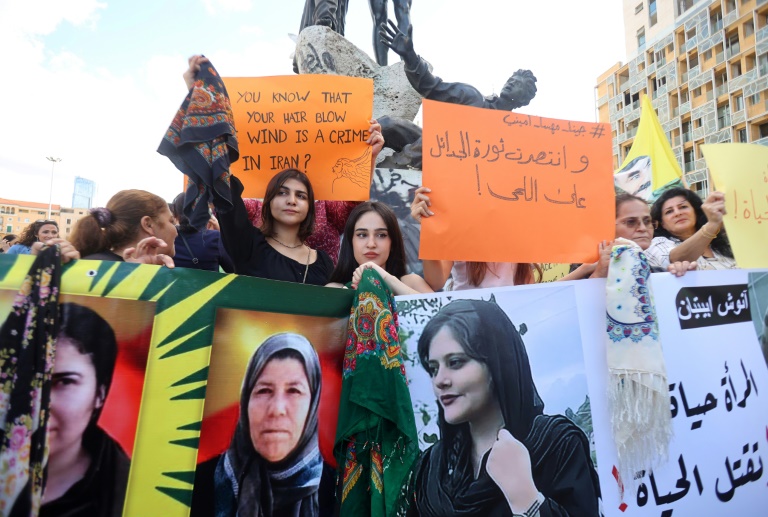
As Iranian women bare their heads and burn Islamic veils in demonstrations that have met nationwide repression, hopes and emotions are also running high among those living abroad.

Inside Iran, at least 17 people have died in protests that broke out after Iranian authorities announced the death of 22-year-old Mahsa Amini on September 16.

Amini, who was from the northeastern province of Kurdistan, was arrested by the Islamic republic’s feared morality police, enforcers of the strict dress code for women.

Activists say she died after a fatal blow to the head, an account denied by authorities, who have promised an investigation.

“(She) went to Tehran to visit her family. I told my mum that could easily have been me, or my sister, or my cousins,” said Sara, a 48-year-old teacher living in France. Like several others interviewed, she asked for her last name not to be published.

“That girl wasn’t even an activist, just a normal girl like me… That’s what’s different about this time,” she added. “It’s what’s affected and shocked people.”

Sara nervously recalled how she herself was arrested by the morality police on a trip to Iran when she was in her 30s.

Held in the same Iran detention centre where Amini was kept, she was “very afraid”, she said.

– ‘Women leading the charge’ –

Iranians, women among them, have staged highly visible demonstrations against the regime before, most memorably in 2009.

“What’s unprecedented about these protests is that women are leading the charge”, said Azadeh Kian, a sociology professor specialising in Iran at Paris Cite University.

“The economic crisis, unemployment and political immobility” have been the main focus of demonstrations over the past five years, Kian said.

“But this time, we’re hearing protests not just against the general situation in the country, but also for women’s rights. That’s an important change.”

Videos posted on social media have documented many women participants at demonstrations removing their veils to reveal their hair and angrily brandishing their head coverings.

They chant slogans, including “Woman, life, freedom!”

Women, especially in Kurdistan province, have “burned their veils to burn the ideological foundations of the regime”, said Kian. “It’s a very strong symbol.”

Other women have posted videos of themselves cutting their hair in protest.

But there has been a harsh response to the demonstrations.

Oslo-based NGO Iran Human Rights has reported 31 civilians killed — nearly twice the official toll of at least 17.

“My heart and stomach are so tense that I can’t speak,” said Mona, an Iranian researcher in her 40s.

Someone she knew was caught in clouds of tear gas unleashed by police in Tehran on Wednesday.

“It’s hard to think about things over there right now, my brain freezes up,” Mona added. “Several people I know are now in prison.”

– ‘Pressure cooker’ –

Under the morality police, Iranian women must cover their hair. They are also forbidden from wearing coats that do not reach below the knee, tight trousers, jeans with holes or brightly coloured outfits.

Sara remembers her accusers targeting her for her short trousers and lack of socks.

She was brought in a minibus to the detention centre, where women were held in underground cells.

“I was terrified because I’d heard rumours about violence. I grabbed one of the posts in the stairway, crying and shouting.”

In Sara’s case, her mother was able to free her around midnight on the day of her arrest, although she had to leave her identity card until her daughter had completed an hours-long “behavioural correction” course.

Sara said there had been “a build-up of repression for 43 years”, ever since Iran’s 1979 Islamic revolution.

“It’s like a pressure cooker and now it’s exploded. I hope it will keep going,” she said. “Women are saying that they don’t want any more of it.”

She believes the women joining today’s demonstrations are mostly “young, around 20, with no fear and so much hope.

“We’ve been waiting for these days in Iran for so long,” said Saeideh Mirzaei, 38, a doctoral student at the University of Manitoba in Canada who has organised demonstrations in Winnipeg.

Her feelings were split between “rage” and “joy”, said Mirzaei. She would continue protesting “as long as people are on the streets in Iran”.

Outside the United Nations building in New York, 44-year-old healthcare professional Fereshteh was taking part in a noisy protest “to support Iranians inside Iran, who are fighting for their rights, risking their lives”.

Women in Iran “set their veils on fire in front of the police, which means so much when you are dealing with murderers,” she added.

“They are risking their lives, which means they are done and so sick and tired of this crazy regime which is in power.”

In Geneva, 63-year-old Azadeh was demonstrating outside UN headquarters.

“We have a rage which we can’t really control,” she said, her thoughts with her family still living in Iran.

“The veil should no longer be compulsory. We ought to be free!” she said.

“Iranians are very angry. They’ve dared to say that they’ve had enough” of the morality police and other forms of repression, Azadeh added. “When will they stop?”

Cambodia Khmer Rouge court upholds conviction in final ruling

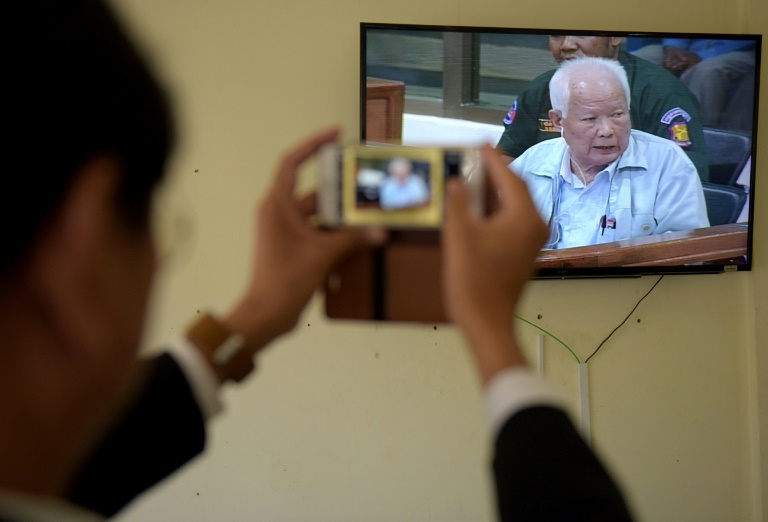
Cambodia’s UN-backed Khmer Rouge war crimes court gave its final verdict Thursday, upholding the genocide conviction and life sentence imposed on the regime’s last surviving leader.

The tribunal was ruling on an appeal by Khieu Samphan, head of state for the murderous communist regime, which wiped out a quarter of the Cambodian population in less than four years in the 1970s.

Survivors welcomed the verdict, the last that will be issued by the tribunal, which has cost more than $330 million and prosecuted only five Khmer Rouge leaders, two of whom died during proceedings.

“The Supreme Court chamber finds no merit in Khieu Samphan’s arguments regarding genocide and rejects them,” Chief Judge Kong Srim said in the lengthy ruling.

The court also upheld the 2018 convictions against the 91-year-old for multiple crimes against humanity — including murder, torture and enslavement  — on the basis of a “joint criminal enterprise”, even if he did not personally take part in all crimes.

It backed the earlier ruling that Khieu Samphan had “direct contemporaneous knowledge of the commission of crimes and shared the intent for their commission”.

But it reversed convictions on murder and persecution charges relating to two specific locations.

Around 500 people packed into the courtroom to hear the verdict, including Buddhist monks, diplomats, government officials and Khmer Rouge survivors.

Chum Mey, 91, one of only a handful of people to survive the S-21 torture prison, where around 18,000 were butchered, welcomed the verdict.

“I am happy, the sentence is reasonable, it gives me justice,” he said.

Lim Ching, who lost more than 20 relatives, including her mother, told AFP that “the sentence is the right one — the Pol Pot regime did bad things and killed people”.

– ‘Heinous’ crimes –

The hybrid court, with both Cambodian and international judges, was set up to try the senior leaders of the genocidal regime, which wiped out about two million people through starvation, torture, forced labour and mass executions during its 1975-79 rule.

Regime chief Pol Pot, known as “Brother Number One”, never faced justice, dying in 1998 before the court was set up.

Khieu Samphan’s genocide conviction relates to the persecution of ethnic-minority Vietnamese, seen by the Khmer Rouge as treacherous enemies within.

Judge Kong Srim said the charges related to “some of the most heinous events” during the Khmer Rouge’s blood-soaked rule.

The frail Khieu Samphan sat hunched in a wheelchair in the dock, listening intently to the lengthy ruling through headphones.

His argument that the Khmer Rouge was simply a political movement, aimed at improving the lives of Cambodians, was rejected by the court.

“By no stretch of the imagination could it be seriously stated that the CPK revolution was implemented in a benevolent or altruistic manner,” the ruling said, using an abbreviation for the Communist Party of Kampuchea, the Khmer Rouge’s official name.

– Historic work –

Alongside Khieu Samphan in the 2018 case, “Brother Number Two” Nuon Chea was also sentenced to life for genocide and other crimes, including forced marriages and rapes.

Nuon Chea died in 2019.

Both men were given life sentences by the court in 2014 for crimes against humanity in another case related to the violent forced evacuation of Phnom Penh in April 1975, when Khmer Rouge troops drove the population of the capital into rural labour camps.

The only other person convicted by the special court was Kaing Guek Eav, better known as Duch, head of the S-21  interrogation centre where about 18,000 people were murdered.

Duch also died several years after being convicted.

Ly Sos, a Cham Muslim survivor, said Thursday’s ruling would bring some comfort to his community, which was also persecuted by the Khmer Rouge.

“This is good news for Cambodia that the only surviving Khmer Rouge leader has been convicted — I am happy, but I regret that we could not convict those who died,” the 63-year-old said.

While the tribunal, formally known as the Extraordinary Chambers in the Courts of Cambodia (ECCC), has secured few convictions, experts say it has done valuable work promoting national reconciliation.

Cambodian Deputy Prime Minister Bin Chhin told reporters after the verdict that the court was “internationally recognised as a model” for other countries looking to prosecute cases after wars or internal conflicts. 

The Documentation Center of Cambodia (DC-Cam), which conducts research on the Khmer Rouge regime, said the verdict “represents the international community’s next step forward in atrocities crimes prevention”.

Former colonial power France hailed the ruling, with the foreign ministry saying the court had contributed to peace in Cambodia.

S.Africa teens build solar train as power cuts haunt commuters

For years, students in a South African township have seen their parents struggle to use trains for daily commutes, the railways frequently hobbled by power outages and cable thefts.

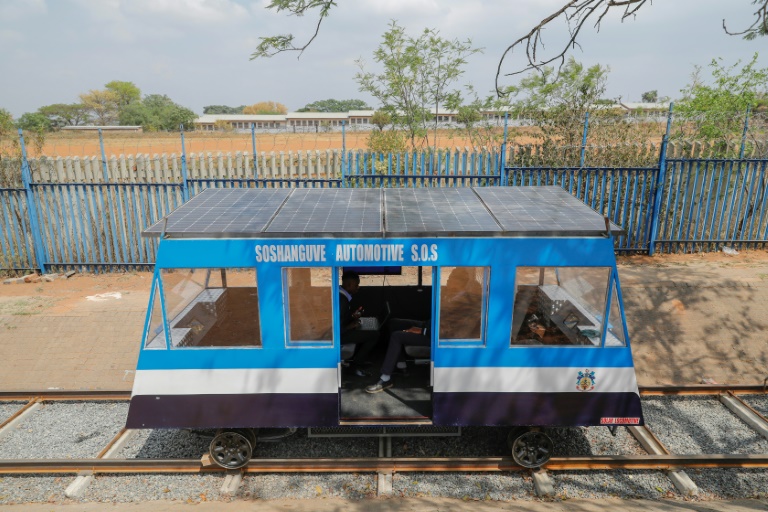
To respond to the crisis, a group of 20 teenagers invented South Africa’s first fully solar-powered train.

Photovoltaic panels fitted to the roof, the angular blue-and-white test train moves on an 18-metre-long (60 feet) test track in Soshanguve township north of the capital Pretoria. 

Trains are the cheapest mode of transport in South Africa, used mostly by the poor and working class.

“Our parents… no longer use trains (because of) cable theft… and load shedding,” said Ronnie Masindi, 18, referring to rolling blackouts caused by failures at old and poorly maintained coal-powered plants.

The state power company Eskom started imposing on-and-off power rationing 15 years ago to prevent a total national blackout. 

The power outages, known locally as load-shedding, have worsened over the years disrupting commerce and industry, including rail services.

Infrastructure operator Transnet has struggled to keep rail traffic flowing smoothly since the economic challenges of the pandemic fuelled a surge in cable theft.

By 2020, rail use among public transport users was down almost two-thirds compared to 2013, according to the National Households Travel Survey with many commuters turning to more expensive minibus taxis.

Masindi said they decided to “create and build a solar-powered train that uses solar to move instead of (mains) electricity”. 

The journey has not been without its challenges. 

A lack of funding delayed production of the prototype locomotive, and the government later chipped in.

“It was not a straight line,” said another student, Lethabo Nkadimeng, 17. “It was like taking a hike to the highest peak of the mountain.”

The train, which can run at 30 kilometres (20 miles) per hour, was showcased at a recent universities innovation event.

For now, the prototype can run for 10 return trips on the track installed on the grounds of a school. 

It will be used for further research, and eventually presented as a model the government could adopt. 

Fitted with car seats and a flat-screen TV to entertain passengers, it took the students two years to build. 

“What we have realised is, if we you give township learners space, resources and a little mentorship they can do anything that any learner can do around the world,” said Kgomotso Maimane, the project’s supervising teacher.

UK government lifts gas fracking ban in England

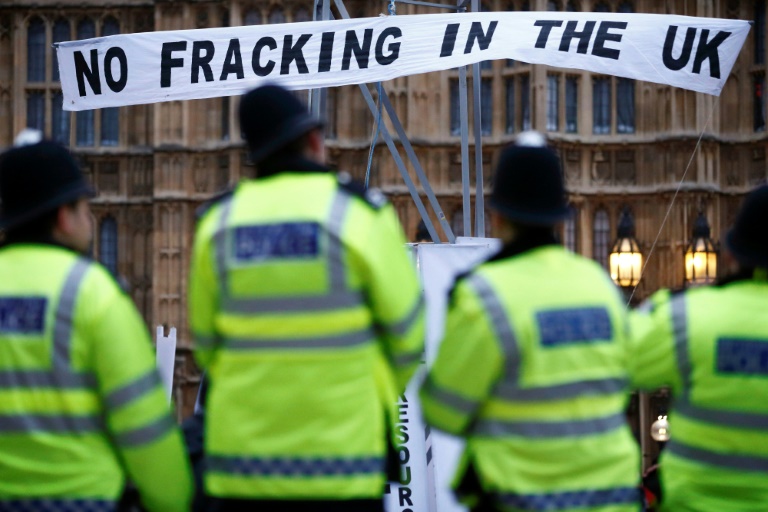
Britain on Thursday lifted England’s moratorium on controversial gas fracking to boost energy security, despite breaking the ruling Conservative party’s manifesto pledge.

Prime Minister Liz Truss had flagged the move two weeks ago, shortly after taking office, in a vast package tackling turmoil in energy markets after key gas supplier Russia invaded Ukraine.

The UK had in 2019 called a halt to fracking — or hydraulic fracturing which is used to release hydrocarbons locked deep underground — due to fears it could trigger earthquakes.

The moratorium was imposed under Truss’ predecessor Boris Johnson following a series of earth tremors, but the government has switched tack after Russia cut off gas supplies to most of Europe, sending prices soaring.

– Energy security –

“In light of Putin’s illegal invasion of Ukraine and weaponisation of energy, strengthening our energy security is an absolute priority,” business and energy secretary Jacob Rees-Mogg said in a government statement.

He reaffirmed Truss’s goal of making Britain a net energy exporter by 2040.

“To get there we will need to explore all avenues available to us through solar, wind, oil and gas production — so it’s right that we’ve lifted the pause to realise any potential sources of domestic gas.”

The Department for Business, Energy and Industrial Strategy (BEIS) confirmed a new oil and gas licensing round next month for 100 new licences, but only with support from local communities.

However, the announcement sparked uproar in parliament because it broke the Conservatives’ manifesto promise from the 2019 general election.

Opposition lawmakers and Conservatives representing constituencies in northern England — where tremors were felt in 2011 — hit out.

– ‘Charter for earthquakes’ –

The main opposition Labour party labelled the new policy “a charter for earthquakes”.

Labour climate spokesman Ed Miliband questioned Rees-Mogg about where the evidence was for the decision.

“The 2019 manifesto on which he and every member of the party opposite stood said this ‘we will not support fracking unless the science shows categorically that it can be done safely’,” Miliband said before parliament.

“They are lifting the ban, but they can’t supply the evidence.”

Liberal Democrat environment spokeswoman Wera Hobhouse added that people in drilling areas were being treated as guinea pigs.

“The Conservatives’ obsession with fracking lays bare that they don’t actually think that climate change is happening and are not willing to take the urgent action needed,” said Hobhouse.

“If people suffer polluted water and dangerous earthquakes, this decision will prove unforgivable.”

– ‘Shown to be safe’ –

Rees-Mogg replied that fracking was “safe” and greener than energy sources from abroad.

“It is more environmentally friendly to use our own sources of fuel rather than to extract them from other countries and transport them here at great cost, both financially and in terms of carbon,” he said.

“It is safe. It is shown to be safe,” he insisted.

He added the policy would “bring us cheaper energy” at a time of rocketing prices.

Fracking is carried out by blasting a mixture of water, sand and chemicals underground to release shale oil and gas.

But environmentalists argue that the process contaminates water supplies, hurts wildlife, causes earthquakes and contributes to global climate change.

Green pressure groups slammed Thursday’s decision.

“Ripping up the rules that protect people from fracking would send shockwaves through local communities,” said Friends of the Earth campaigner Danny Gross.

“If the government caves into the fracking industry and allows them to cause larger earthquakes, it will further undermine confidence that fracking can be done safely.”

The BEIS also published the British Geological Survey’s scientific review into shale gas extraction.

The review highlighted “limited current understanding” of UK geology and onshore shale resources “should be a reason to drill more wells to gather more evidence and data”, the government study added.

Close Bitnami banner
Bitnami