World

China's former justice minister faces life in prison for bribery

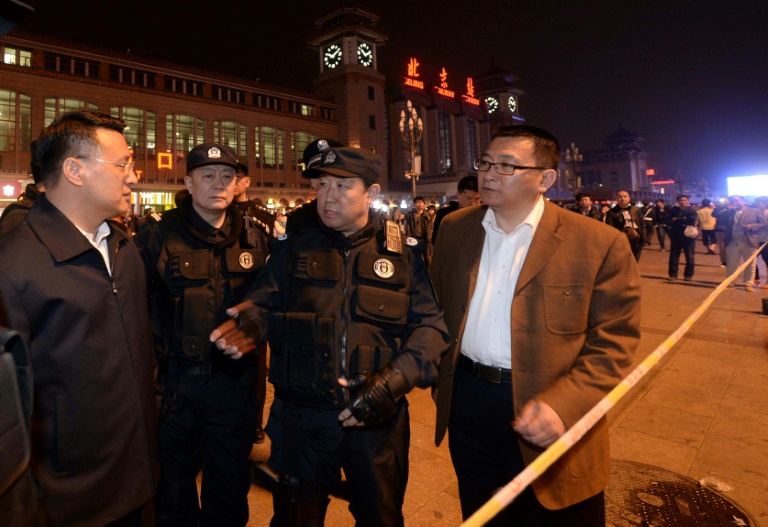
China’s former justice minister faces life in prison after a court handed him a suspended death sentence on Thursday for taking bribes and “bending the law”.

Fu Zhenghua’s death sentence will be commuted to life imprisonment after a two-year reprieve, the Intermediate People’s Court in the city of Changchun said in a statement.

The high-profile sentencing — part of a sweeping anti-graft campaign — comes just three weeks before a key political meeting where President Xi Jinping is expected to secure an unprecedented third term.

The court said former politician Fu had abused his power while in a range of senior positions from 2005 to 2021.

“(He is) deprived of political rights for life and all personal property should be confiscated,” it added.

Fu, 67, had accepted bribes worth over 117 million yuan ($16.5 million), the court said.

Between 2014 and 2015, when Fu was head of the Beijing Public Security Bureau, the court said he hid evidence of suspected crimes committed by his brother, Fu Weihua, and failed to handle the case in accordance with the law.

– Anti-corruption drive –

During his tenure as Beijing’s top cop, Fu is thought to have led the corruption investigation into Zhou Yongkang, the former security chief who was jailed in 2015 in one of the anti-graft campaign’s most high-profile cases.

Fu was a member of the Central Political and Legal Affairs Commission and the minister of justice before entering semi-retirement in May 2020.

He was serving as the deputy director of the social and legal affairs committee on the standing committee of the Chinese People’s Political Consultative Conference (CPPCC) — a largely ceremonial advisory body — when anti-graft authorities launched an investigation into his dealings last October.

More than a million officials have been punished under the anti-corruption campaign, which critics say has also served as a means to remove Xi’s political enemies since he came to power in 2013.

The Chinese leader has accelerated the pace of the anti-graft campaign in the run-up to the party congress in mid-October.

Separately on Thursday, the former head of Jiangsu province’s Political and Legal Committee was handed a suspended death sentence for taking bribes worth more than 440 million yuan ($62 million), CCTV reported.

The court also convicted Wang Like of bribing disgraced former vice-minister of public security Sun Lijun, who pleaded guilty to accepting more than 646 million yuan ($91.2 million) in bribes in July. Sun has yet to be sentenced.

Three former police chiefs were given harsh sentences for corruption on Wednesday, accused of being part of Sun Lijun’s “political clique”.

Gong Daoan, former police chief of Shanghai; Deng Huilin, former police chief of Chongqing; and Liu Xinyun, former police chief of coal-rich Shanxi province, were sentenced in separate courts in Hebei province.

Gong, former deputy mayor and director of the Shanghai Public Security Bureau, was given a life sentence for accepting bribes worth 73.43 million yuan ($10.4 million), state broadcaster CCTV reported.

Deng, the former director of the Chongqing Public Security Bureau, was jailed for 15 years for taking 42.67 million yuan ($6 million) in bribes, CCTV said.

Liu, the former top cop in Shanxi, was imprisoned for 14 years for taking bribes worth 13.33 million ($1.9 million), CCTV reported.
Iran demonstrations hit home for diaspora women

As Iranian women bare their heads and burn Islamic veils in demonstrations that have met nationwide repression, hopes and emotions are also running high among those living abroad.

Several people have died in protests that broke out after Iranian authorities announced the death of 22-year-old Mahsa Amini on September 16.

Amini, who was from the northeastern province of Kurdistan, was arrested by the Islamic republic’s feared morality police, enforcers of the strict dress code for women.

Activists say she died after a fatal blow to the head, an account denied by authorities, who have promised an investigation.

“(She) went to Tehran to visit her family. I told my mum that could easily have been me, or my sister, or my cousins,” said Sara, a 48-year-old teacher living in France, who like several others interviewed asked for her last name not to be published.

“That girl wasn’t even an activist, just a normal girl like me… That’s what’s different about this time. It’s what’s affected and shocked people,” she added.

Sara nervously recalls how she herself was arrested by the morality police on a trip to Iran when she was in her 30s.

She was held in the same Iran detention centre where Amini was kept and was “very afraid”.

– ‘Women leading the charge’ –

Iranians, women among them, have staged highly visible demonstrations against the regime before, most memorably in 2009.

But “what’s unprecedented about these protests is that women are leading the charge”, said Azadeh Kian, a sociology professor specialising in Iran at Paris Cite University.

“The economic crisis, unemployment and political immobility” have been the main focus of demonstrations over the past five years, Kian said.

“But this time, we’re hearing protests not just against the general situation in the country, but also for women’s rights. That’s an important change.”

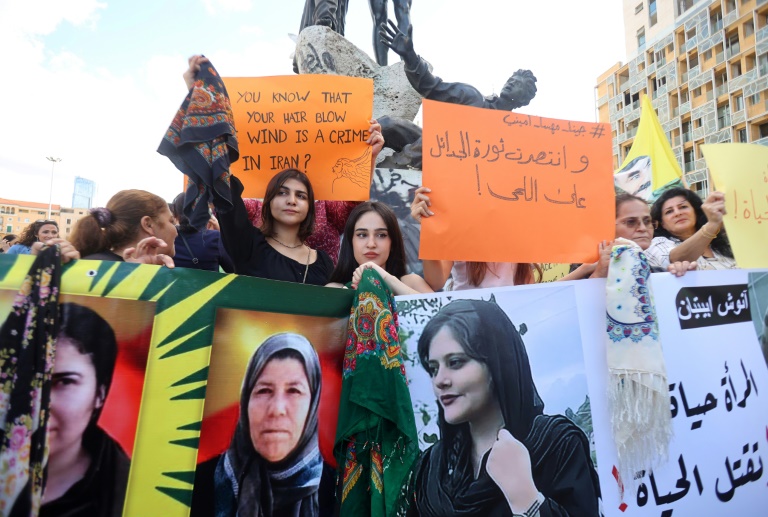
Videos posted on social media have documented many women participants at demonstrations, removing their veils to reveal their hair and angrily brandishing their head coverings.

They chant slogans, including “Woman, life, freedom!”

Especially in Kurdistan province, women have “burned their veils to burn the ideological foundations of the regime”, Kian said. “It’s a very strong symbol”.

Other women have posted videos of themselves cutting their hair in protest.

“My friends and I are all very sad. We’re suffering for all the women in Iran,” said Narges Mirnezhad, a 37-year-old artist living in Strasbourg, eastern France.

Several of Mirnezhad’s friends were arrested on Tuesday evening after joining demonstrations and have been in custody since.

“Many girls” burned their veils at the University of Tehran on Wednesday, she said.

– ‘Pressure cooker’ –

Under the morality police, Iranian women must cover their hair. They are also forbidden from wearing coats that do not reach below the knee, tight trousers, jeans with holes or brightly coloured outfits.

Sara remembers her accusers targeting her for her short trousers and lack of socks.

She was brought in a minibus to the detention centre, where women were held in underground cells.

“I was terrified because I’d heard rumours about violence. I grabbed one of the posts in the stairway, crying and shouting.”

In Sara’s case, her mother was able to free her around midnight on the day of her arrest, although she had to leave her identity card until her daughter had completed an hours-long “behavioural correction” course.

Sara said there had been “a build-up of repression for 43 years”, ever since Iran’s 1979 Islamic revolution.

“It’s like a pressure cooker and now it’s exploded. I hope it will keep going,” she said. “Women are saying that they don’t want any more of it”.

She believes the women joining today’s demonstrations are mostly “young, around 20, with no fear and so much hope”.

Outside the United Nations building in New York, 44-year-old healthcare professional Fereshteh was taking part in a noisy protest “to support Iranians inside Iran, who are fighting for their rights, risking their lives”.

Women in Iran “set their veils on fire in front of the police, which means so much when you are dealing with murderers. They are risking their lives, which means they are done and so sick and tired of this crazy regime which is in power,” she added.

In Geneva, 63-year-old Azadeh was demonstrating outside UN headquarters.

“We have a rage which we can’t really control,” she said, her thoughts with her family still living in Iran.

“The veil should no longer be compulsory. We ought to be free!” she said.

“Iranians are very angry. They’ve dared to say that they’ve had enough” of the morality police and other forms of repression, Azadeh added, asking, “When will they stop?”

Japan government intervenes to support cratering yen

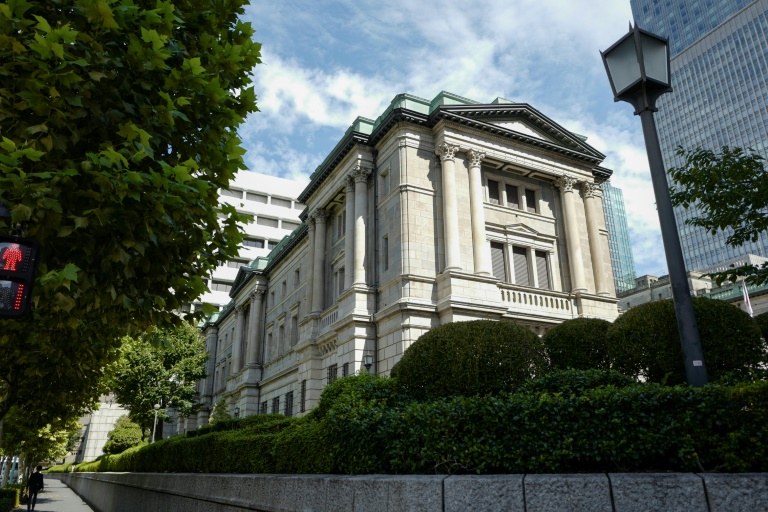
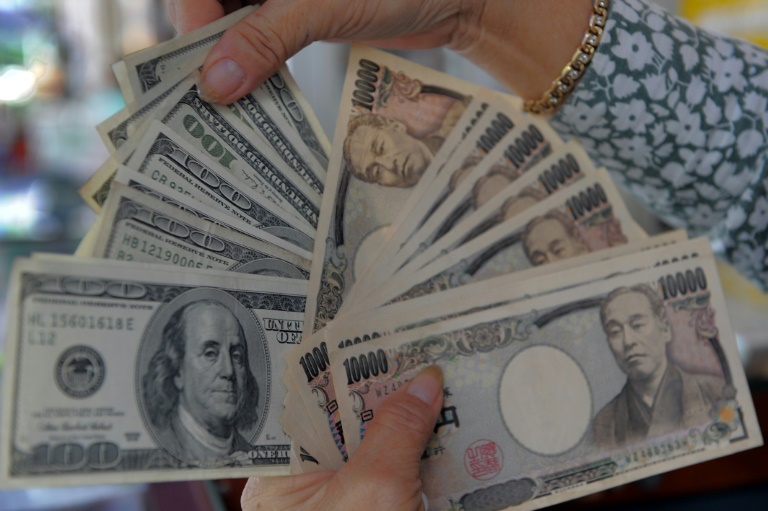
Japan’s finance ministry said Thursday it intervened in the currency market to bolster the yen, which has plummeted against the dollar in recent months on the widening policy gap between the US and Japanese central banks.

It was the first government intervention to prop up the currency since 1998 and came after the dollar neared 146 yen earlier in the day.

“Although exchange rates are in principle determined by the market, excessive fluctuations caused by speculation cannot be tolerated,” Finance Minister Shunichi Suzuki told reporters.

“Based on this, we intervened in the foreign exchange market today. We will continue to monitor developments in the market with a strong sense of urgency and take necessary action against excessive fluctuations,” he added.

He declined to detail the scale of the intervention, or its length. And he refused to confirm whether it had been coordinated with Washington or other capitals, saying only he was “in constant contact with relevant monetary authorities”.

The move, which involves selling dollars and buying yen, saw the greenback retreat as low as 140.70 before gaining slightly.

Top currency official Masato Kanda told reporters that the intervention was not triggered by the yen falling to a particular level.

“We don’t think about the level at all. In principle, (what matters) is volatility.”

The yen has been weakening against the dollar for months, but sank further on Thursday after the US Federal Reserve again hiked rates to tame inflation, while the Bank of Japan left its ultra-loose monetary policy in place.

Prices in Japan are rising, with the Consumer Price Index (CPI) rising by 2.8 percent year-on-year in August, the highest level since 2014.

But the central bank views the increases as temporary, and believes its dovish policy is needed to achieve a long-standing target of sustained two-percent inflation — seen as necessary to turbocharge growth in the world’s third-largest economy.

After a two-day meeting, it said it would leave its current policy in place until “CPI exceeds two percent and stays above the target in a stable manner.”

– ‘Temporary respite’ –

A weaker yen has some positive effects, particularly for Japanese exporters, but the recent rapid depreciation has begun to stir concern in Japan, pushing up the cost of imported goods for consumers and businesses.

Earlier this month, the central bank reportedly conducted a “rate check”, an operation often seen as a precursor to a currency intervention.

The move came shortly after the yen neared the 145 point, but the reports only temporarily bolstered the Japanese unit.

It has plunged from around 115 in March, and the Bank of Japan (BoJ) on Thursday repeated that “it is necessary to pay due attention to developments in financial and foreign exchange markets and their impact on Japan’s economic activity and prices”.

But BoJ Governor Haruhiko Kuroda, whose term expires next year, told reporters before the intervention announcement that the bank’s role did not extend to moving foreign exchange.

“We haven’t been and will not be targeting certain levels of foreign exchange,” he said.

“It is desirable that forex rates reflect economic and financial fundamentals, however the recent rapid depreciation of the yen is not that and is negative for the economy,” he added.

He noted though that the dollar has gained against most major currencies, and analysts said that the yen’s surge after the intervention could prove little more than a “temporary respite”.

“Basically the only thing stopping USD/JPY from rising towards 150 is Japanese foreign exchange intervention, but even then it will only be a temporary respite,” said Alvin Tan, head of Asia FX Strategy at RBC Capital Markets.

“The yawning policy divergence between the Fed and the BoJ, along with the related widening USD-JPY yield spread, is exerting a powerful and fundamental force, propelling USD/JPY higher,” he told AFP, saying he anticipated the dollar breaking 150 yen by 2023.

Markets tumble again as Fed hikes rates, warns more pain to come

European stocks sank Thursday following sharp losses in Asia and on Wall Street, but the dollar spiked after the Federal Reserve signalled more hefty US interest rate hikes.

Equities tanked after the US central bank warned of more pain to come, as it unveiled the third straight jumbo rate increase on Wednesday to tackle decades-high inflation.

The British pound briefly dived to a new 37-year low at $1.1212, even as the Bank of England prepared to announce its second bumper rate rise in a row later Thursday.

The greenback also soared to a fresh 24-year high of 145.90 yen, prompting the Bank of Japan to embark on a rare intervention to protect its currency. The euro wallowed at a 20-year dollar low.

– Pricing in recession –

“Share prices are falling, the dollar is surging, and the bond market is pricing in a recession as the US Federal Reserve keeps tightening monetary policy and seemingly snuffs out any hope for a pivot or even a pause in its new-found zeal for fighting inflation,” said AJ Bell investment director Russ Mould.

“Fed chair Jerome Powell … noted there was no painless way to bring inflation under control,” he added.

The world’s major central banks are rushing to ramp up rates to dampen red-hot global consumer prices, but traders fear rising borrowing costs will herald recession.

Switzerland and Norway sprang hefty interest rate hikes on Thursday, mirroring this week’s big rises in Sweden and the United States.

In Asia, Indonesia and the Philippines also tightened monetary policy but the BoJ left its status quo in place.

While the Fed’s 0.75-percentage-point rise was widely expected, there was some surprise at the central bank’s forecast that borrowing costs would likely be held above four percent throughout next year.

Powell reiterated his determination to focus on bringing down inflation — which is at a four-decade high — and accepted that the campaign would hit Americans hard.

– No ‘painless way’ –

“We have got to get inflation behind us,” Powell said after the decision.

“I wish there were a painless way to do that. There isn’t.”

He added that “the historical record cautions strongly against prematurely loosening policy” and the Fed would “keep at it until the job is done”.

In reaction, Wall Street tumbled as traders contemplated an era of higher-for-longer rates, which could hit companies’ bottom lines.

Asia followed suit, with Hong Kong down at an 11-year low — while Tokyo, Shanghai, Seoul, Singapore, Mumbai, Taipei and Manila also down.

The Fed has for months tried to walk a fine line between fighting soaring prices and trying to keep the economy from contracting, but officials accept the chances of success are narrow.

“With the new rate projections, the Fed is engineering a hard landing — a soft landing is almost out of the question,” said Seema Shah, of Principal Global Investors.

Commentators are now betting on a fourth straight 75-basis-point rate hike at the next Fed meeting in November.

Oil prices extended recent gains after Russian President Vladimir Putin’s announced a partial mobilisation of the Russian army and a veiled threat to use nuclear weapons against the West.

– Key figures at around 1015 GMT –

London – FTSE 100: DOWN 0.4 percent at 7,211.71 points

Frankfurt – DAX: DOWN 0.7 percent at 12,680.86

Paris – CAC 40: DOWN 0.8 percent at 5,985.64

EURO STOXX 50: DOWN 0.7 percent at 3,468.83

Tokyo – Nikkei 225: DOWN 0.6 percent at 27,153,83 (close)

Hong Kong – Hang Seng Index: DOWN 1.6 percent at 18,147.95 (close)

Shanghai – Composite: DOWN 0.3 percent at 3,108.91 (close)

New York – Dow: DOWN 1.7 percent at 30,183.78 (close)

Pound/dollar: UP at $1.1332 from $1.1270 Wednesday

Euro/dollar: UP at $0.9875 from $0.9837

Euro/pound: DOWN at 87.14 pence from 87.29 pence 

Dollar/yen: DOWN at 142.50 yen from 144.06 yen

Brent North Sea crude: UP 1.0 percent at $90.76 per barrel

West Texas Intermediate: UP 1.2 percent at $83.89 per barrel

burs-rfj/yad

Cambodia Khmer Rouge court upholds conviction in final ruling

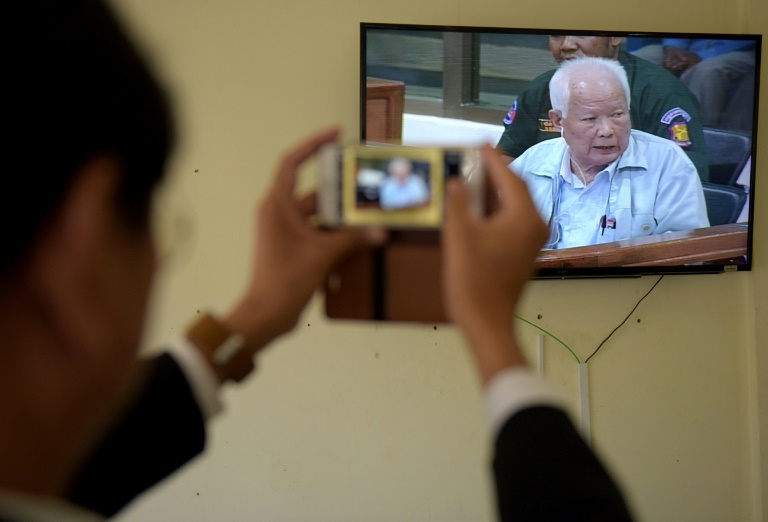
Cambodia’s UN-backed Khmer Rouge war crimes court gave its final verdict Thursday, upholding the genocide conviction and life sentence imposed on the regime’s last surviving leader.

The tribunal was ruling on an appeal by Khieu Samphan, head of state for the murderous communist regime which wiped out a quarter of the Cambodian population in less than four years in the 1970s.

Survivors welcomed the verdict, the last that will be issued by the tribunal, which has cost more than $330 million and prosecuted only five Khmer Rouge leaders, two of whom died during proceedings.

“The Supreme Court chamber finds no merit in Khieu Samphan’s arguments regarding genocide and rejects them,” Chief Judge Kong Srim said in the lengthy ruling.

The court also upheld the 2018 convictions against the 91-year-old for multiple crimes against humanity — including murder, torture and enslavement  — on the basis of a “joint criminal enterprise”, even if he did not personally take part in all crimes.

It backed the earlier ruling that Khieu Samphan had “direct contemporaneous knowledge of the commission of crimes and shared the intent for their commission”.

But it reversed convictions on murder and persecution charges relating to two specific locations.

Around 500 people packed into the courtroom to hear the verdict, including Buddhist monks, diplomats, government officials and Khmer Rouge survivors.

Chum Mey, 91, one of only a handful of people to survive the S-21 torture prison, where around 18,000 were butchered, welcomed the verdict.

“I am happy, the sentence is reasonable, it gives me justice,” he said.

Lim Ching, who lost more than 20 relatives, including her mother, told AFP that “the sentence is the right one — the Pol Pot regime did bad things and killed people.”

– ‘Heinous’ crimes –

The hybrid court, with both Cambodian and international judges, was set up to try the senior leaders of the genocidal regime, which wiped out about two million people through starvation, torture, forced labour and mass executions during its 1975-79 rule.

Regime chief Pol Pot, known as “Brother Number One”, never faced justice, dying in 1998 before the court was set up.

The genocide conviction relates to the persecution of ethnic-minority Vietnamese, seen by the Khmer Rouge as treacherous enemies within.

Judge Kong Srim said the charges related to “some of the most heinous events” during the Khmer Rouge’s blood-soaked rule.

The frail Khieu Samphan sat hunched in a wheelchair in the dock, listening intently to the lengthy ruling through headphones.

His argument that the Khmer Rouge was simply a political movement, aimed at improving the lives of Cambodians, was rejected by the court.

“By no stretch of the imagination could it be seriously stated that the CPK revolution was implemented in a benevolent or altruistic manner,” the ruling said, using an abbreviation for the Communist Party of Kampuchea, the Khmer Rouge’s official name.

– Historic work –

Alongside Khieu Samphan in the 2018 case, “Brother Number Two” Nuon Chea was also sentenced to life for genocide and other crimes, including forced marriages and rapes.

Nuon Chea died in 2019.

Both men were given life sentences by the court in 2014 for crimes against humanity in another case related to the violent forced evacuation of Phnom Penh in April 1975, when Khmer Rouge troops drove the population of the capital into rural labour camps.

The only other person convicted by the special court was Kaing Guek Eav, better known as Duch, head of the notorious S-21 torture interrogation centre where about 18,000 people were murdered.

Duch also died several years after being convicted.

Ly Sos, a Cham Muslim survivor, said Thursday’s ruling would bring some comfort to his community, which was also persecuted by the Khmer Rouge.

“This is good news for Cambodia that the only surviving Khmer Rouge leader has been convicted — I am happy, but I regret that we could not convict those who died,” the 63-year-old said.

While the tribunal, formally known as the Extraordinary Chambers in the Courts of Cambodia (ECCC), has secured few convictions, experts say it has done valuable work promoting national reconciliation.

Cambodian Deputy Prime Minister Bin Chhin told reporters after the verdict that the court was “internationally recognised as a model” for other countries looking to prosecute cases after wars or internal conflicts. 

Fergal Gaynor, one of the prosecutors, said no court could bring full justice for such “immeasurably vast” horrors, but the tribunal had contributed to the global fight against impunity for mass atrocity crimes.

The Documentation Center of Cambodia (DC-Cam), which conducts research on the Khmer Rouge regime, said the “lessons learned” from the period must be incorporated into a broader understanding of atrocities.

In a statement released Thursday, DC-Cam said the verdict “represents the international community’s next step forward in atrocities crimes prevention”.

Strong quake shakes Mexico, leaving two dead

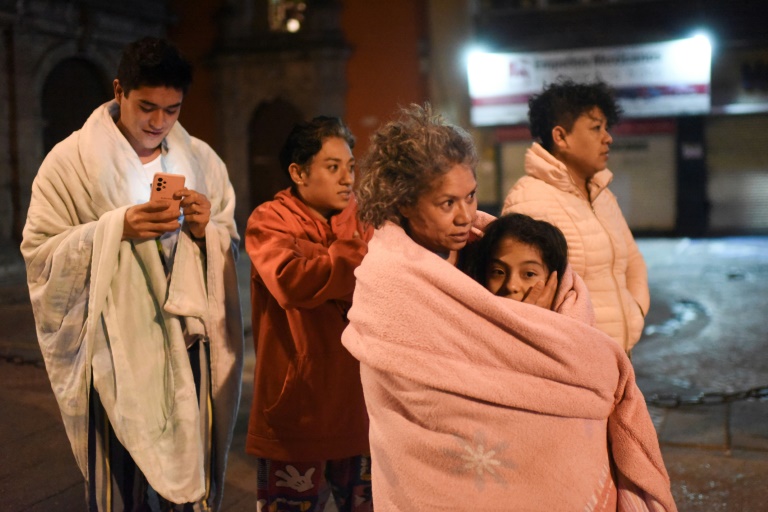
A strong earthquake jolted Mexico on Thursday, leaving at least two people dead as residents rushed into the streets of the capital in the middle of the night days after another powerful tremor.

A woman died in Mexico City after falling down some stairs and hitting her head when the quake triggered early warning alarms, while a second victim in the capital suffered a heart attack, authorities said.

The epicenter of the 6.9-magnitude earthquake was near the Pacific coast, 84 kilometers (52 miles) south of Coalcoman in the western state of Michoacan, the national seismological agency reported.

The US Geological Survey (USGS) estimated the magnitude at 6.8.

It was the strongest of more than 1,200 aftershocks from a magnitude 7.7 quake that struck the same area on Monday, the national seismological agency said.

That tremor left two people dead in western Mexico, damaged several thousand buildings and sparked panic more than 400 kilometers away in Mexico City.

The latest quake again triggered alarms in the capital shortly after 1:00 am (0600 GMT) and caused buildings to shake and sway.

Many people quickly evacuated their homes when the alarms sounded, some still dressed in pajamas and carrying their pet dogs.

“We had a 6.9 magnitude aftershock with an epicenter in Coalcoman,” President Andres Manuel Lopez Obrador said on Twitter.

“Unfortunately, two people lost their lives in Mexico City,” he said, adding that there were no reports of victims in the western states of Michoacan, Colima and Jalisco.

Mexico City Mayor Claudia Sheinbaum said official helicopters had flown over the capital and that there were no initial reports of destruction.

“So far there is no damage in the city after the earthquake,” she tweeted.

The quake hit at a depth of 12 kilometers, according to the national seismological agency, while the USGS estimated the depth at 24 kilometers, located about 410 kilometers from Mexico City.

– Traumatic anniversary –

Monday’s tremor came less than an hour after millions of people in Mexico City participated in emergency drills on the anniversary of two deadly earthquakes in 1985 and 2017.

The timing was no more than a coincidence, the national seismological agency said.

“There is no scientific reason to explain it,” it added.

On September 19, 1985, an 8.1-magnitude quake killed more than 10,000 people and destroyed hundreds of buildings.

On the anniversary of that earthquake in 2017, a magnitude 7.1 quake left around 370 people dead, mainly in the capital.

During Monday’s earthquake, a man was killed by falling debris in a shopping center in Manzanillo in the western state of Colima.

A woman later died of injuries caused by a falling wall in the same city.

Mexico sits in the world’s most seismically and volcanically active zone, known as the Ring of Fire, where the Pacific plate meets surrounding tectonic plates.

Mexico City, which together with surrounding urban areas is home to more than 20 million people, is built in a natural basin filled with the sediment of a former lake, making it particularly vulnerable to earthquakes.

The capital has an early warning alarm system using seismic monitors that aims to give residents enough time to evacuate buildings when earthquakes hit seismic zones near the Pacific coast.

Strong quake shakes Mexico, leaving two dead

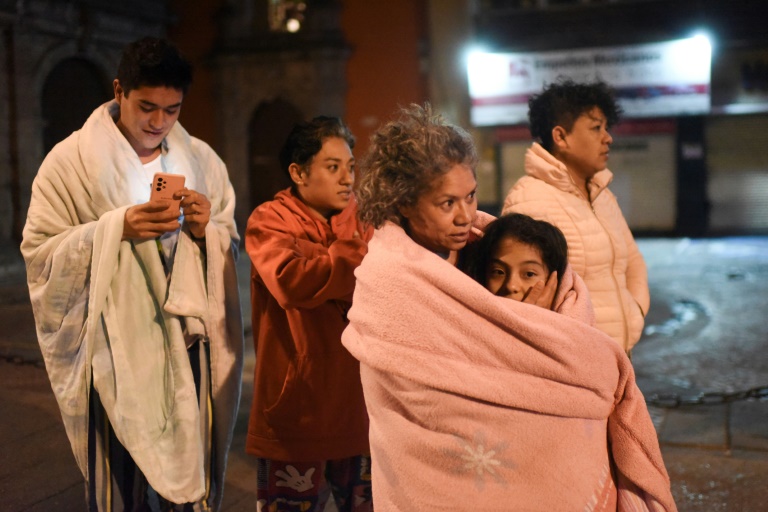
A strong earthquake jolted Mexico on Thursday, leaving at least two people dead as residents rushed into the streets of the capital in the middle of the night days after another powerful tremor.

A woman died in Mexico City after falling down some stairs and hitting her head when the quake triggered early warning alarms, while a second victim in the capital suffered a heart attack, authorities said.

The epicenter of the 6.9-magnitude earthquake was near the Pacific coast, 84 kilometers (52 miles) south of Coalcoman in the western state of Michoacan, the national seismological agency reported.

The US Geological Survey (USGS) estimated the magnitude at 6.8.

It was the strongest of more than 1,200 aftershocks from a magnitude 7.7 quake that struck the same area on Monday, the national seismological agency said.

That tremor left two people dead in western Mexico, damaged several thousand buildings and sparked panic more than 400 kilometers away in Mexico City.

The latest quake again triggered alarms in the capital shortly after 1:00 am (0600 GMT) and caused buildings to shake and sway.

Many people quickly evacuated their homes when the alarms sounded, some still dressed in pajamas and carrying their pet dogs.

“We had a 6.9 magnitude aftershock with an epicenter in Coalcoman,” President Andres Manuel Lopez Obrador said on Twitter.

“Unfortunately, two people lost their lives in Mexico City,” he said, adding that there were no reports of victims in the western states of Michoacan, Colima and Jalisco.

Mexico City Mayor Claudia Sheinbaum said official helicopters had flown over the capital and that there were no initial reports of destruction.

“So far there is no damage in the city after the earthquake,” she tweeted.

The quake hit at a depth of 12 kilometers, according to the national seismological agency, while the USGS estimated the depth at 24 kilometers, located about 410 kilometers from Mexico City.

– Traumatic anniversary –

Monday’s tremor came less than an hour after millions of people in Mexico City participated in emergency drills on the anniversary of two deadly earthquakes in 1985 and 2017.

The timing was no more than a coincidence, the national seismological agency said.

“There is no scientific reason to explain it,” it added.

On September 19, 1985, an 8.1-magnitude quake killed more than 10,000 people and destroyed hundreds of buildings.

On the anniversary of that earthquake in 2017, a magnitude 7.1 quake left around 370 people dead, mainly in the capital.

During Monday’s earthquake, a man was killed by falling debris in a shopping center in Manzanillo in the western state of Colima.

A woman later died of injuries caused by a falling wall in the same city.

Mexico sits in the world’s most seismically and volcanically active zone, known as the Ring of Fire, where the Pacific plate meets surrounding tectonic plates.

Mexico City, which together with surrounding urban areas is home to more than 20 million people, is built in a natural basin filled with the sediment of a former lake, making it particularly vulnerable to earthquakes.

The capital has an early warning alarm system using seismic monitors that aims to give residents enough time to evacuate buildings when earthquakes hit seismic zones near the Pacific coast.

Norway, Swiss central banks hike rates to tame inflation

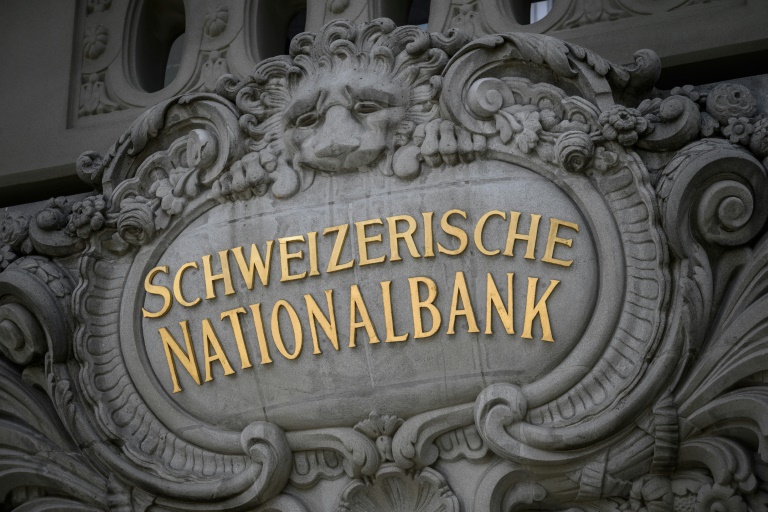
The Swiss and Norwegian central banks announced hefty interest rate hikes on Thursday as global monetary policymakers ramp up the battle against runaway inflation.

The moves follow big rate rises in Sweden and the United States this week and come ahead of another increase expected to be announced by the Bank of England on Thursday.

Norway’s central bank raised its rate to its highest level since 2011 while the Swiss National Bank ended its negative-rate era.

The Swiss central bank raised its policy rate by 0.75 percentage points to 0.5 percent.

The SNB, which first pushed its rates down into negative territory in January 2015, said the move was needed to counter “the renewed rise in inflationary pressure and the spread of inflation to goods and services that have so far been less affected”.

It said the change would take effect on Friday, adding, “It cannot be ruled out that further increases in the SNB policy rate will be necessary to ensure price stability over the medium term.”

The central bank also said it was “willing to be active in the foreign exchange market as necessary… to provide appropriate monetary conditions”.

The negative rate meant that depositors had to pay to park their money at the bank.

The SNB, which in June hiked its interest rate for the first time in 15 years, has joined a global tightening of monetary policy to tame soaring prices.

Inflation began to rise worldwide as economies emerged from Covid lockdowns, and it worsened as energy and food prices skyrocketed after Russia invaded Ukraine in late February.

Inflation in Switzerland rose 3.5 percent in August and is “likely to remain at an elevated level for the time being”, it said.

“The latest rise in inflation is principally due to higher prices for goods, especially energy and food,” it added.

Given the new rate hike, which should rein in price hikes, the bank said it now forecasts that inflation should gradually decline to three percent for the full year 2022, 2.4 percent for 2023 and 1.7 percent for 2024.

“Without today’s SNB policy rate increase, the inflation forecast would be significantly higher,” it said.

The tightening of monetary policy worldwide has caused stock markets to drop as investors fear that the rising rates could spark a recession.

– More hikes elsewhere –

Norway’s central bank lifted its policy rate by 0.5 percentage points to 2.25 percent and warned that it would “most likely” be raised further in November.

“Inflation has risen rapidly over the past months and has been far higher than projected,” Norges Bank said in a statement.

“The labour market is tight but there are now clear signs of a cooling economy,” it said.

Inflation reached 6.5 percent in August, more than triple the central bank’s two-percent target.

“There are prospects that inflation will remain high for longer than projected earlier,” said Norges Bank governor Ida Wolden Bache.

The Swedish central bank surprised markets on Tuesday with a supersized 1.0-percentage-point hike.

The US Federal Reserve rolled out a third consecutive 0.75-percentage-point increase on Thursday, with chairman Jerome Powell saying there was no “painless” way to bring down inflation.

The Bank of England was forecast to lift its key rate by 0.5 percentage points to 2.25 percent later on Thursday, repeating an increase in August that had been the biggest rise since 1995.

noo-nl-phy-lth/gil

'Very high chance' Hong Kong will end year in recession

Hong Kong is set to end the year in the midst of a full-blown recession, the city’s finance chief warned Thursday, as spiralling interest rates join strict Covid-19 controls in hammering the economy.

“There is a very high chance for Hong Kong to record a negative GDP growth for this year,” Financial Secretary Paul Chan told reporters, adding that interest rates were being raised “at a pace that was never seen in the past three decades”.

The Chinese city’s monetary policy moves with the Federal Reserve because its currency, one of the cornerstones of its business hub reputation, is pegged to the US dollar.

The Fed’s hawkish rate hikes, aimed at curbing soaring inflation, come at an especially difficult time for Hong Kong, dampening sentiment when the economy is already struggling.

The city is currently in a technical recession — recording two consecutive quarters of negative growth this year.

The government has adhered to a version of China’s zero-Covid policy for more than 2.5 years, enforcing strict coronavirus controls and mandatory quarantine for international arrivals.

Quarantine, once as long as three weeks, has been reduced to three days. The government has signalled it may soon join the rest of the world in scrapping travel curbs.

Chan signalled his support for making travel and business easier. 

“The aspects related to the pandemic need to continue to improve in order for us to see larger investments because people are more cautious in a high interest rates environment,” he said.

– ‘Falling behind’ –

Business leaders have long been warning that the pandemic controls, combined with Beijing’s ongoing crackdown on dissent, have made it harder to attract talent and cut off Hong Kong internationally, especially as rivals reopen.

The city has seen a net outflow of more than 200,000 people in the last two years, a record population drop.  

“Hong Kong should be ahead of other Asian cities. But now there’s a feeling that we’re falling behind and being left isolated,” Eden Woon, the new head of the city’s American Chamber of Commerce told the South China Morning Post in an article published Thursday. 

“There are people leaving and the problems of retaining talent. All these things add up together and need to be addressed,” he added.

But earlier this week a senior Chinese official said it was “inappropriate” to say the city was seeing an exodus. 

“Hong Kong’s population drop is caused by various factors and there is no way to suggest that it is a result of an emigration wave,” Huang Liuquan, deputy director of the Hong Kong and Macau Affairs Office, said Tuesday. 

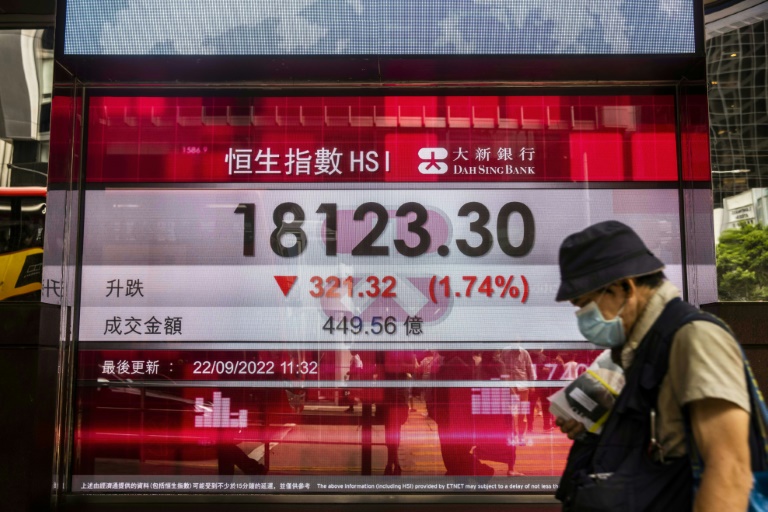
The Fed’s rate hikes hit Hong Kong’s stock market, which fell as much as 2.6 percent on Thursday, to 17,965.33, the lowest since December 2011. It pared some of those losses by the close, ending down 1.6 percent. 

The Hang Seng Index has been one of the worst performing top bourses in the past two years, shedding more than 22 percent since the start of January following last year’s 14 percent drop.

While the Hong Kong Monetary Authority has no choice but to follow the Fed, major banks such as Standard Chartered and HSBC have resisted that pressure. 

But on Thursday, both HSBC and Standard Chartered hiked their prime lending rates in Hong Kong by 12.5 basis points, the first raise in years. 

That could impact the city’s once white-hot property sector, with Goldman Sachs Group estimating prices may slide by about 20 percent over the next four years. 

Hong Kong also saw a recession in 2019 when months of huge and sometimes violent democracy protests rocked the city.

China's former justice minister faces life in prison for bribery

China’s former justice minister faces life in prison after a court handed him a suspended death sentence on Thursday for taking bribes and “bending the law”.

Fu Zhenghua’s death sentence will be commuted to life imprisonment after a two-year reprieve, the Intermediate People’s Court in the city of Changchun said in a statement.

The high-profile sentencing — part of a sweeping anti-graft campaign — comes just three weeks before a key political meeting where President Xi Jinping is expected to secure an unprecedented third term.

The court said former politician Fu had abused his power while in a range of senior positions from 2005 to 2021.

“(He is) deprived of political rights for life and all personal property should be confiscated,” it added.

Fu, 67, had accepted bribes worth over 117 million yuan ($16.5 million), the court said.

Between 2014 and 2015, when Fu was head of the Beijing Public Security Bureau, the court said he hid evidence of suspected crimes committed by his brother, Fu Weihua, and failed to handle the case in accordance with the law.

– Anti-corruption drive –

During his tenure as Beijing’s top cop, Fu is thought to have led the corruption investigation into Zhou Yongkang, the former security chief who was jailed in 2015 in one of the anti-graft campaign’s most high-profile cases.

Fu was a member of the Central Political and Legal Affairs Commission and the minister of justice before entering semi-retirement in May 2020.

He was serving as the deputy director of the social and legal affairs committee on the standing committee of the Chinese People’s Political Consultative Conference (CPPCC) — a largely ceremonial advisory body — when anti-graft authorities launched an investigation into his dealings last October.

More than a million officials have been punished under the anti-corruption campaign, which critics say has also served as a means to remove Xi’s political enemies since he came to power in 2013.

The Chinese leader has accelerated the pace of the anti-graft campaign in the run-up to the party congress in mid-October.

Three former police chiefs, all accused of graft, were given harsh sentences for corruption on Wednesday.

Gong Daoan, former police chief of Shanghai; Deng Huilin, former police chief of Chongqing; and Liu Xinyun, former police chief of coal-rich Shanxi province, were sentenced in separate courts in Hebei province.

Gong, former deputy mayor and director of the Shanghai Public Security Bureau, was given a life sentence for accepting bribes worth 73.43 million yuan ($10.4 million), state broadcaster CCTV reported.

Deng, the former director of the Chongqing Public Security Bureau, was jailed for 15 years for taking 42.67 million yuan ($6 million) in bribes, CCTV said.

Liu, the former top cop in Shanxi was imprisoned for 14 years for taking bribes worth 13.33 million ($1.9 million), CCTV reported.
Close Bitnami banner
Bitnami