World

Drought decimates Texas' key cotton crop

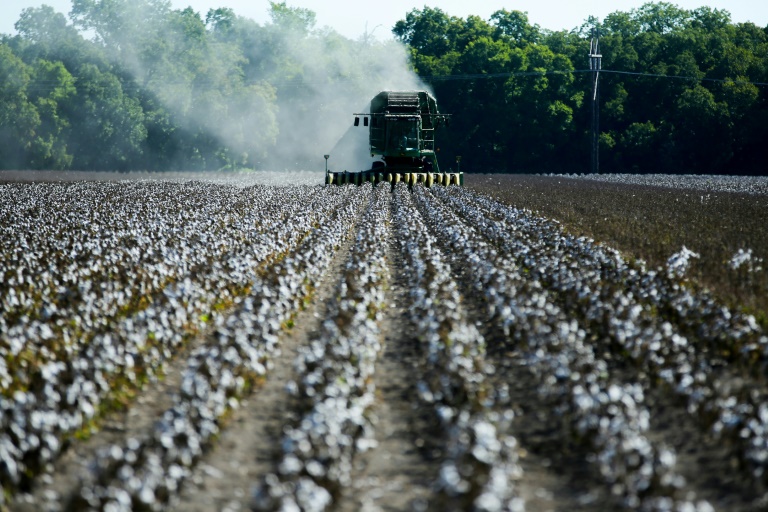
On Sutton Page’s ravaged cotton fields, there is almost nothing left to pick. The Texas farmer managed to salvage maybe a fifth of his crop, but the rest was lost to the severe drought that has taken a steep toll across the region.

This year, his harvest is “not well,” he says, but in reality, the drought in northern Texas has proven to be a disaster, with most of Page’s neighbors not even bothering to harvest their crop, leaving “bare, bare fields.” 

Texas produces almost half of America’s cotton, and the United States is the world’s third largest supplier, behind India and China. 

This year, national production will hit its lowest level since 2015, down 21 percent year-on-year, and Texas will suffer a 58 percent drop, the US Department of Agriculture estimates. 

In the northwest of the state, where cotton is the lifeline of the local economy and water is scarce, the 2022 harvest “could be one of the worst in 30 years,” worries Darren Hudson, professor of agricultural economics at Texas Tech University. 

With the cascading consequences for the global textile industry, in an economy already reeling from the pandemic, Hudson put the likely economic impact for the region at $2 billion.

Landon Orman, 30, works on 2,000 acres of cotton near Abilene, three hours west of Dallas. His non-irrigated cotton did not even sprout, while his partially watered crop grew but its yield will be slashed by half. 

In total, he predicts an 85 percent drop in production compared to a normal year. Like so many others, he has crop insurance, so “financially we’re not really doing that bad. But as a farmer, it sucks pretty bad that we can’t grow stuff sometimes.” 

– Depressing –

In Lubbock, the region’s cotton hub, rainfall over the past 12 months has roughly been half its normal volume, and what little fell came too late to save the crop.

“Starting in January, all the way to the month of May, no, no literally no rain,” said Sutton Page, 48. And from May “we started having 100 degree days and 30 mile an hour winds and it just dried everything out.” 

He had to plow 80 percent of his dying crop back into the ground to stop the land drying out. Of the few small plants that actually grew, it may not even be economical to harvest them.

“It’s a little depressing to some degree, because you work hard all year and you get to get the farms ready and you fertilize and, and and your crop doesn’t come up,” he said. 

– Frequency –

Cotton farmers in the plains of Texas know there will always be bad years, but the drought of 2022 could be the worst yet. And some worry there could be more on the way.

The region is “seeing worse conditions than this time last year,” and these are settling in over time, notes Curtis Riganti, a climatologist specializing in drought. 

“In the past 10 years, we saw maybe five or six of those years where we saw drought. Maybe one or two of those years we saw a very catastrophic drought,” said Kody Bessent, director of one of the region’s cotton growers’ associations.

These farmers in Texas, a state where climate skepticism abounds, prefer to see unpredictable weather cycles repeating themselves rather than the effects of global warming, which makes extreme weather events more common. 

While waiting for answers, everyone is trying their best just to maintain humidity in their soil.
Drought decimates Texas' key cotton crop

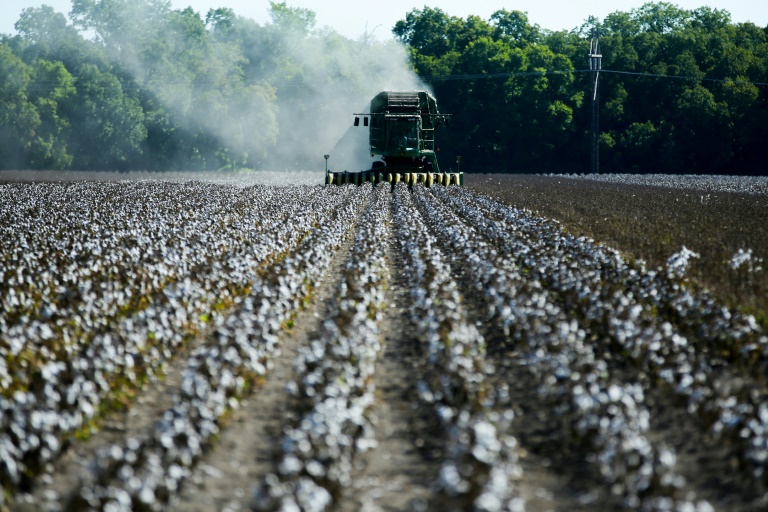
On Sutton Page’s ravaged cotton fields, there is almost nothing left to pick. The Texas farmer managed to salvage maybe a fifth of his crop, but the rest was lost to the severe drought that has taken a steep toll across the region.

This year, his harvest is “not well,” he says, but in reality, the drought in northern Texas has proven to be a disaster, with most of Page’s neighbors not even bothering to harvest their crop, leaving “bare, bare fields.” 

Texas produces almost half of America’s cotton, and the United States is the world’s third largest supplier, behind India and China. 

This year, national production will hit its lowest level since 2015, down 21 percent year-on-year, and Texas will suffer a 58 percent drop, the US Department of Agriculture estimates. 

In the northwest of the state, where cotton is the lifeline of the local economy and water is scarce, the 2022 harvest “could be one of the worst in 30 years,” worries Darren Hudson, professor of agricultural economics at Texas Tech University. 

With the cascading consequences for the global textile industry, in an economy already reeling from the pandemic, Hudson put the likely economic impact for the region at $2 billion.

Landon Orman, 30, works on 2,000 acres of cotton near Abilene, three hours west of Dallas. His non-irrigated cotton did not even sprout, while his partially watered crop grew but its yield will be slashed by half. 

In total, he predicts an 85 percent drop in production compared to a normal year. Like so many others, he has crop insurance, so “financially we’re not really doing that bad. But as a farmer, it sucks pretty bad that we can’t grow stuff sometimes.” 

– Depressing –

In Lubbock, the region’s cotton hub, rainfall over the past 12 months has roughly been half its normal volume, and what little fell came too late to save the crop.

“Starting in January, all the way to the month of May, no, no literally no rain,” said Sutton Page, 48. And from May “we started having 100 degree days and 30 mile an hour winds and it just dried everything out.” 

He had to plow 80 percent of his dying crop back into the ground to stop the land drying out. Of the few small plants that actually grew, it may not even be economical to harvest them.

“It’s a little depressing to some degree, because you work hard all year and you get to get the farms ready and you fertilize and, and and your crop doesn’t come up,” he said. 

– Frequency –

Cotton farmers in the plains of Texas know there will always be bad years, but the drought of 2022 could be the worst yet. And some worry there could be more on the way.

The region is “seeing worse conditions than this time last year,” and these are settling in over time, notes Curtis Riganti, a climatologist specializing in drought. 

“In the past 10 years, we saw maybe five or six of those years where we saw drought. Maybe one or two of those years we saw a very catastrophic drought,” said Kody Bessent, director of one of the region’s cotton growers’ associations.

These farmers in Texas, a state where climate skepticism abounds, prefer to see unpredictable weather cycles repeating themselves rather than the effects of global warming, which makes extreme weather events more common. 

While waiting for answers, everyone is trying their best just to maintain humidity in their soil.
Prime-time lies: Brazil candidates take information wars to TV

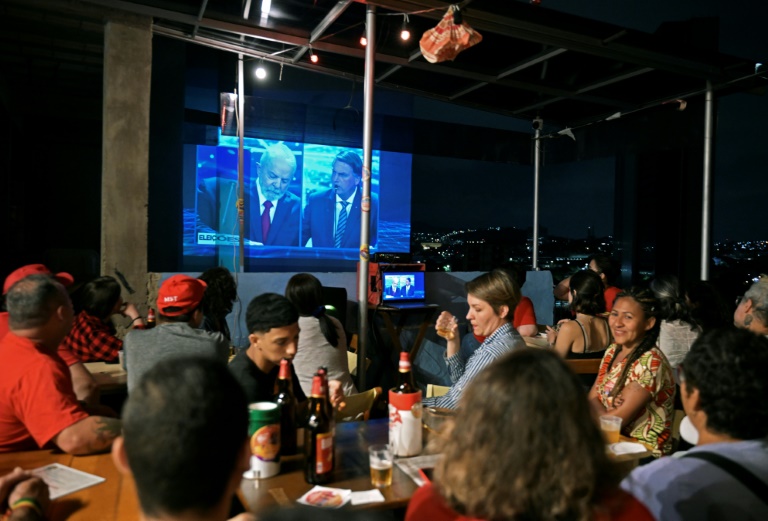
Disinformation on social networks has become routine as Brazil heads for deeply divisive elections, but it can gain traction and a broader audience when it comes straight from the candidates’ mouths on national television.

The official start last month of the campaign for the October 2 elections means candidates have huge exposure on TV, including prime-time interviews, debates and daily ad spots paid for with public funds.

In practice, that has meant a flood of false narratives being beamed into Brazilian living rooms, whether it is incumbent President Jair Bolsonaro taking credit for the idea to create a mega-popular instant payments system known as “Pix” or front-runner Luiz Inacio Lula da Silva claiming he was absolved of all corruption charges against him, to cite just two examples.

In reality, Brazil’s central bank started working on Pix in 2018, a year before the far-right incumbent took office. And Lula, the charismatic but tarnished leftist who led Brazil from 2003 to 2010, had his controversial convictions stemming from the “Car Wash” corruption scandal overturned on procedural grounds. He was not absolved.

“Campaigns are above all a war of narratives,” and candidates often use distorted or outright false statements to sell themselves, says Amaro Grassi, a public policy expert at the Getulio Vargas Foundation.

There is nothing new about lies in politics.

But analysts warn TV is now giving broader reach to the disinformation that has been raging for months on social networks in Brazil.

“Television is still a mass medium” in Brazil, says Arthur Ituassu, associate professor of political communication at Pontifical Catholic University in Rio de Janeiro.

Unlike social media, Brazilian television — where the vast majority of audience share is still concentrated among a handful of top networks, notably the dominant TV Globo — reaches a broad population that is “not segmented by nature,” he says.

– ‘If it’s on TV, it’s true’ –

“Television is still a space that reaches the general public, going well beyond the audience that is already firmly in one camp or the other,” says Helena Martins, a communications professor at the Federal University of Ceara.

There is also a widely held belief that “if it’s on TV, it’s true,” she adds.

The 2018 race that brought Bolsonaro to power was already awash in disinformation, especially on social media — hugely powerful in a country that has more smart phones than people (an estimated 242 million, for 213 million inhabitants).

If anything, the campaign is arguably uglier this time around, given that the presidential race is highly polarized between the far-right incumbent and his leftist nemesis.

Amid those deep divisions, 85 percent of Brazilians say disinformation could influence the outcome of the election, according to a poll from the Ipec institute published on September 6.

At the same time, however, polls show there are relatively few voters left to persuade: 78 percent of voters say their minds are “completely” made up, found a poll from the Datafolha institute published last week.

The same poll found Lula had 45 percent of the vote, to 33 percent for Bolsonaro — broadly in line with the institute’s previous poll.

No other candidate was in double digits.

“There’s a very high level of consolidation of voter intentions. That makes it difficult for any narrative to change the picture at this point,” says Grassi.

That has not stopped the candidates from seeking to rile up their bases with truth-bending statements, hoping to persuade the odd undecided or third-candidate voter in the process.

Lula, for example, has repeatedly exaggerated his accomplishments on the economy.

Bolsonaro has meanwhile accused Lula of being anti-Evangelical and anti-agribusiness, two powerful groups that lean toward the incumbent.

“The idea is to reinforce those groups’ rejection of Lula,” says Grassi.

“Because in an election as polarized as this, it ends up being largely a battle of rejection.”

Lebanon's past echoes its grim present in exhibition

In a war-scarred Beirut heritage house turned museum, archives of Lebanon’s troubled past fuse with artistic depictions of its grim present to portray a country seemingly in perpetual turmoil.

Newspaper clippings, film negatives and diary entries from the years before Lebanon’s 1975-1990 civil war tell a story of government corruption, public sector strikes and student protests.

They are shown alongside contemporary pictures, video footage and art installations illustrating today’s Lebanon, in the grip of political paralysis and its worst ever economic crisis.

“Allo, Beirut?”, which premiered Thursday and runs until 2023, seeks to map out the decades-old rot at the heart of Lebanon’s downward spiral, said the exhibition’s director Delphine Abirached Darmency.

“It’s strange sometimes to explain what we are experiencing without knowing what happened in the past,” she said.

“Beirut is suffering, we are suffering,” she added, arguing that much of Lebanon’s misery is rooted in the problems of a bygone era.

The exhibit was born in part from the discovery of the archives of late billionaire Jean Prosper Gay-Para, who owned the once-famous Les Caves du Roy nightclub and is widely regarded as a symbol of Lebanon’s pre-civil war golden era.

“Those sick minds, obsessed with making money,” Gay-Para writes about the country’s political elite, in a text on display.

That sentiment is still widely shared by a population battered by the unprecedented economic crisis that is widely blamed on the country’s business and political barons.

Gay-Para “was talking in the 1960s about what we are living today”, Darmency said.

– ‘Condition of loss’ –

More than three decades after the devastating civil war, Lebanon is reeling from a financial crisis that has seen poverty spike as the currency has lost more than 90 percent of its value on the black market.

Beirut also remains scarred by the huge 2020 portside blast of a pile of ammonium nitrate that killed more than 200 people and compounded a population exodus of a similar scale to that of the civil war period.

In addition to the archive material, the show features installations by young Lebanese artists who were asked to express their feelings about their city. 

Rawane Nassif made a short documentary about the Beirut neighbourhood she grew up in, and to which she returned this year after two decades away to take care of her sick parents, both of whom have since died.

“The movie depicts the condition of loss,” the 38-year-old anthropologist and filmmaker told AFP. “Beirut is in mourning. It is mourning the death of its people and the death of all the chances it once had.”

Visual artist Raoul Mallat, 28, also explored the theme of grief, in a short film combining archive family footage from his childhood with recent shots of Beirut.

“This project helped me a lot in grieving some aspects of my city that I will not find again,” he said.

– ‘Built on rubble’ –

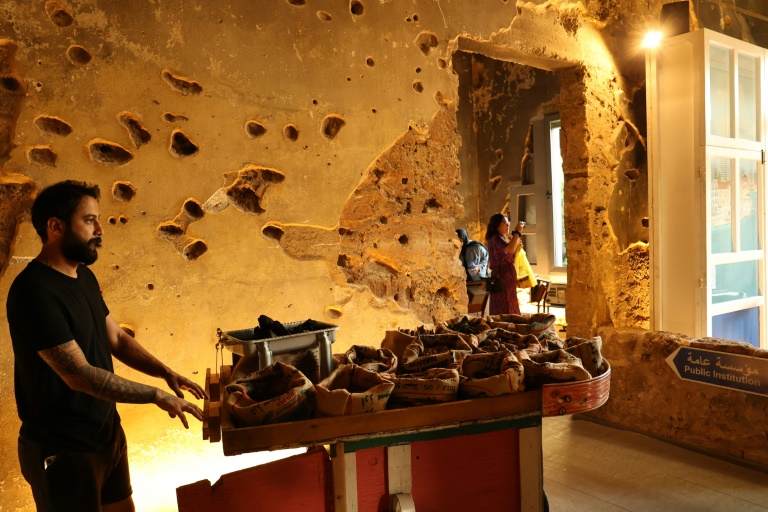
The venue for the exhibit is itself a testament to Lebanon’s complicated past. The three-storey Beit Beirut, known as the Yellow House, was built in the 1920s by renowned architect Youssef Bey Aftimos. 

Riddled with bullet holes and other civil war damage, it stands alongside what used to be known as the “Green Line” that separated Beirut’s Muslim and Christian districts during the conflict.

It was renovated and turned into a museum and cultural space that temporarily opened in 2017. It closed again due to difficulties, but the new exhibit has once more opened it to the public.

Holes in the walls once used by wartime gunmen have been fitted with screens showing footage of the unprecedented protest movement of 2019 that demanded sweeping political change before it ran out of steam.

One of the rooms is decorated with worn-out furniture and destroyed objects collected from the now-abandoned Les Caves du Roy nightclub in an attempt to recreate the space from Beirut’s heyday.

The installation by Lebanese artists Rola Abu Darwish and Rana Abbout aims to make a symbolic statement about rubble and Lebanon’s tumultuous existence.

“Beirut is built on rubble,” said Abu Darwish, 38. “One of the main elements of Beirut to me is rubble.

“It’s part of where we live, how we live, and who we are. And I feel that in the direction we’re going, we are going to be making more rubble.”

'Grand Theft Auto' maker says game code stolen

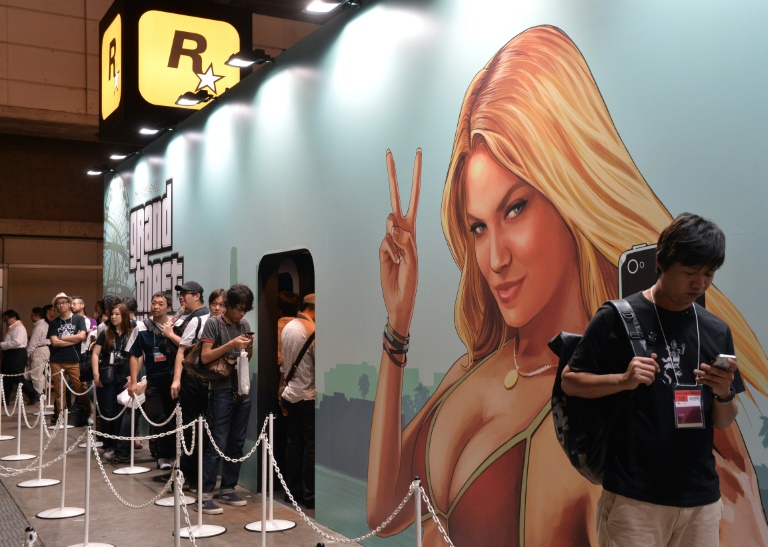
Rockstar Games said Monday that data from the next installment in its blockbuster “Grand Theft Auto” franchise was stolen, as glimpses of play spread on social media.

The normally tight-lipped video game maker’s comment came after a trove of data that a hacker said was from a “Grand Theft Auto 6” title in the works was shared online, along with word that source code was also swiped from Rockstar.

“We recently suffered a network intrusion in which an unauthorized third party illegally accessed and downloaded confidential information from our systems, including early development footage for the next ‘Grand Theft Auto,'” Rockstar said in a tweet from its official account.

“We are extremely disappointed to have any details of our next game shared with you in this way.”

Rockstar added that it did not expect the hack to disrupt any of its projects or online play of its games, and that work on the next “Grand Theft Auto” game will continue as planned.

More than 230 million copies of “Grand Theft Auto,” referred to as “GTA,” have been sold overall.

“We have already taken steps to isolate and contain this incident,” Rockstar parent Take-Two Interactive said in a Securities and Exchange Commission filing about the hack.

The GTA franchise, in which players take on the role of a criminal, has been criticized for glorifying law-breaking, violence and abuse of women.

The maker of the notorious video game franchise announced in February that a new edition is under development, confirming long-bubbling speculation.

New York-based Rockstar Games did not say when GTA 6 will hit the street or how it will be different from the previous edition of the game released in 2013 to blockbuster sales.

“We watched GTA 6 leak and Rockstar Games – the most secretive company in the video game industry – get hacked in real time,” said a late Sunday tweet from the Gaming Detective account that included an apparent image of the title art.

“Let it be known we were here to witness history.”

Brazil reports more Amazon fires so far this year than all of 2021

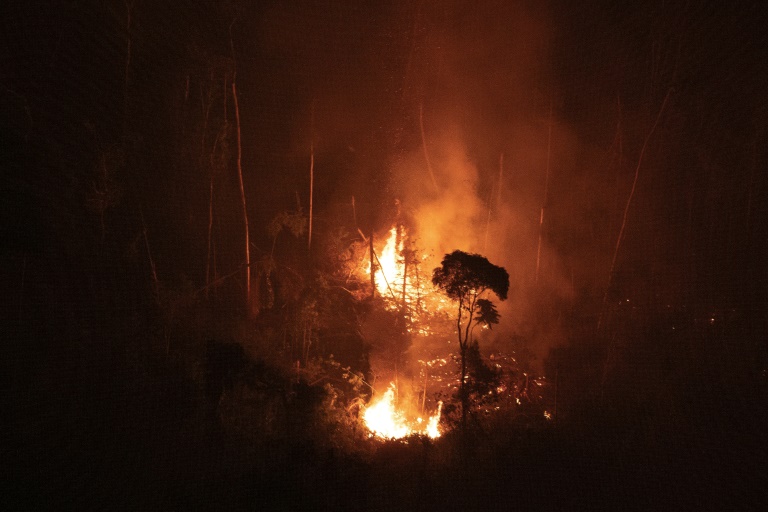
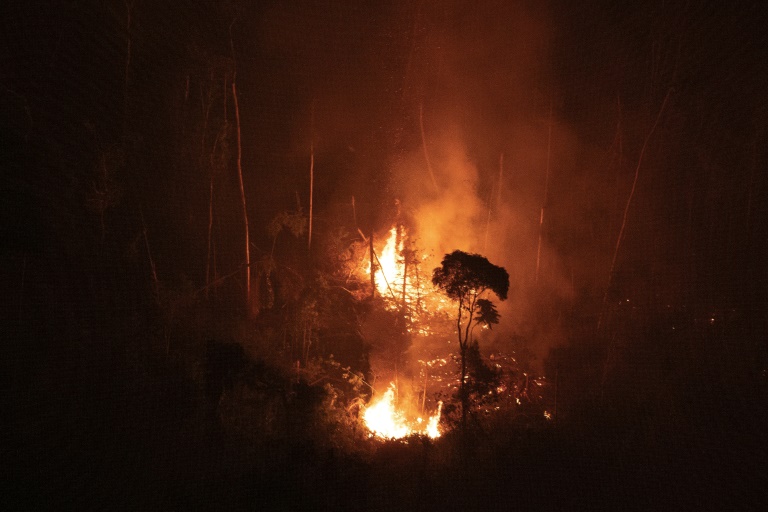
The number of forest fires in the Brazilian Amazon so far this year has already surpassed that for all of 2021, according to official figures released Monday that triggered new alarm for the world’s biggest rainforest.

Satellite monitoring has detected 75,592 fires from January 1 to September 18, already higher than the 75,090 detected for all of last year, according to the Brazilian space agency, INPE.

The latest grim news from the rainforest will likely add to pressure on President Jair Bolsonaro, who is fighting to win reelection next month and faces international criticism over a surge in destruction in the Amazon on his watch.

Since the far-right agribusiness ally took office in January 2019, average annual deforestation in the Brazilian Amazon has increased by 75 percent compared to the previous decade, destroying the forest cover of an area nearly the size of Puerto Rico last year.

Experts say Amazon fires are caused mainly by illegal farmers, ranchers and speculators clearing land and torching the trees.

Despite the advancing destruction, the Bolsonaro administration has slashed budgets for environmental enforcement operations and pushed to open protected Amazon lands to mining.

Greenpeace Brazil spokesman Andre Freitas called the latest figures a “tragedy foretold.”

“After four years of a clear and objective anti-environmental policy by the federal government, we are seeing that as we approach the end of this government’s term — one of the darkest periods ever for the Brazilian environment — land-grabbers and other illegal actors see it as the perfect opportunity to advance on the forest,” he said in a statement.

– Election-year row –

This has been a worrying year for the Amazon, a key buffer against global warming.

Deforestation in the Brazilian Amazon last month was nearly double the figure from August 2021, at 1,661 square kilometers (641 square miles).

And since the burning season began in earnest in August with the arrival of drier weather, the number of fires has soared.

According to INPE figures, there have been multiple days that surpassed the so-called “Day of Fire” on August 10, 2019, when farmers launched a coordinated plan to burn huge amounts of felled rainforest in the northern state of Para.

Then, fires sent thick gray smoke all the way to Sao Paulo, some 2,500 kilometers (1,500 miles) away, and triggered a global outcry over images of one of Earth’s most vital resources burning.

Bolsonaro vehemently rejects that criticism, insisting Brazil “protects its forests much better than Europe” and batting away international alarm with the line: “The Amazon belongs to Brazilians, and always will.”

The front-runner vying to unseat him in next month’s presidential elections, leftist ex-president Luiz Inacio Lula da Silva, has vowed to do a better job protecting the Amazon.

Deforestation in Brazil’s 60-percent share of the Amazon basin fell sharply under Lula, from nearly 28,000 square kilometers in 2004 to 7,000 in 2010.

Still, he has faced criticism from environmentalists for his own track record, which notably included the controversial decision to build the massive Belo Monte hydroelectric dam in the Amazon.

And the highest number of fires ever recorded in the Brazilian Amazon by INPE, whose records go back to 1998, was on his watch: 218,637, in 2004.

Brazil reports more Amazon fires so far this year than all of 2021

The number of forest fires in the Brazilian Amazon so far this year has already surpassed that for all of 2021, according to official figures released Monday that triggered new alarm for the world’s biggest rainforest.

Satellite monitoring has detected 75,592 fires from January 1 to September 18, already higher than the 75,090 detected for all of last year, according to the Brazilian space agency, INPE.

The latest grim news from the rainforest will likely add to pressure on President Jair Bolsonaro, who is fighting to win reelection next month and faces international criticism over a surge in destruction in the Amazon on his watch.

Since the far-right agribusiness ally took office in January 2019, average annual deforestation in the Brazilian Amazon has increased by 75 percent compared to the previous decade, destroying the forest cover of an area nearly the size of Puerto Rico last year.

Experts say Amazon fires are caused mainly by illegal farmers, ranchers and speculators clearing land and torching the trees.

Despite the advancing destruction, the Bolsonaro administration has slashed budgets for environmental enforcement operations and pushed to open protected Amazon lands to mining.

Greenpeace Brazil spokesman Andre Freitas called the latest figures a “tragedy foretold.”

“After four years of a clear and objective anti-environmental policy by the federal government, we are seeing that as we approach the end of this government’s term — one of the darkest periods ever for the Brazilian environment — land-grabbers and other illegal actors see it as the perfect opportunity to advance on the forest,” he said in a statement.

– Election-year row –

This has been a worrying year for the Amazon, a key buffer against global warming.

Deforestation in the Brazilian Amazon last month was nearly double the figure from August 2021, at 1,661 square kilometers (641 square miles).

And since the burning season began in earnest in August with the arrival of drier weather, the number of fires has soared.

According to INPE figures, there have been multiple days that surpassed the so-called “Day of Fire” on August 10, 2019, when farmers launched a coordinated plan to burn huge amounts of felled rainforest in the northern state of Para.

Then, fires sent thick gray smoke all the way to Sao Paulo, some 2,500 kilometers (1,500 miles) away, and triggered a global outcry over images of one of Earth’s most vital resources burning.

Bolsonaro vehemently rejects that criticism, insisting Brazil “protects its forests much better than Europe” and batting away international alarm with the line: “The Amazon belongs to Brazilians, and always will.”

The front-runner vying to unseat him in next month’s presidential elections, leftist ex-president Luiz Inacio Lula da Silva, has vowed to do a better job protecting the Amazon.

Deforestation in Brazil’s 60-percent share of the Amazon basin fell sharply under Lula, from nearly 28,000 square kilometers in 2004 to 7,000 in 2010.

Still, he has faced criticism from environmentalists for his own track record, which notably included the controversial decision to build the massive Belo Monte hydroelectric dam in the Amazon.

And the highest number of fires ever recorded in the Brazilian Amazon by INPE, whose records go back to 1998, was on his watch: 218,637, in 2004.

New Iran protests over woman's death after 'morality police' arrest

Fresh protests broke out Monday in Iran over the death of a young woman who had been arrested by the “morality police” that enforces a strict dress code, local media reported.

Public anger has grown since authorities on Friday announced the death of Mahsa Amini, 22, in a hospital after three days in a coma, following her arrest by Tehran’s morality police during a visit to the capital on September 13.

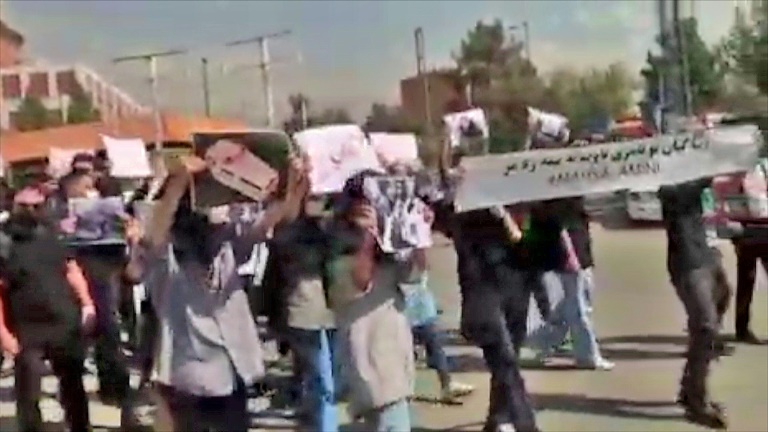
Demonstrations were held in Tehran, including in several universities, and the second city Mashhad, according to the Fars and Tasnim news agencies.

Protesters marched down Hijab Street — or “headscarf street” — in central Tehran denouncing the morality police, the ISNA news agency reported.

“Several hundred people chanted slogans against the authorities, some of them took off their hijab,” Fars said, adding that “police arrested several people and dispersed the crowd using batons and tear gas”.

A brief video released by Fars showed a crowd of several dozen people, including women who had removed their headscarves, shouting “Death to the Islamic republic!”

A “similar gathering” took place in the northeastern city of Mashhad, the Tasnim agency reported.

On Sunday, police made arrests and fired tear gas in the dead woman’s home province of Kurdistan, where some 500 people had protested, some smashing car windows and torching rubbish bins, reports said.

– Anger –

The morality police units enforce a dress code in the Islamic republic that demands women wear headscarves in public.

It also bans tight trousers, ripped jeans, clothes that expose the knees and brightly coloured outfits.

Police have insisted there was “no physical contact” between officers and the victim. 

Tehran police chief General Hossein Rahimi said Monday the woman had violated the dress code, and that his colleagues had asked her relatives to bring her “decent clothes”.

He again rejected “unjust accusations against the police” and said “the evidence shows that there was no negligence or inappropriate behaviour on the part of the police”.

“This is an unfortunate incident and we wish never to see such incidents again.”

Students rallied at Tehran and Shahid Beheshti universities, demanding “clarification” on how Amini died, according to Fars and Tasnim news agencies.

A spokesperson for the European Union’s foreign policy chief Josep Borrell said Amini’s “unacceptable” death was a “killing” following the injuries she suffered in police custody.

The perpetrators must be held accountable and the Iranian authorities must respect its citizens’ rights, the spokesperson added in a statement.

France said her death was “deeply shocking” and called for a “transparent investigation… to shed light on the circumstances of this tragedy”.

Amini’s death has reignited calls to rein in morality police actions against women suspected of violating the dress code, in effect since the 1979 Islamic revolution.

Filmmakers, artists, athletes and political and religious figures have taken to social media to express their anger.

President Ebrahim Raisi, an ultra-conservative former judiciary chief who came to power last year, has ordered an inquiry into Amini’s death.

– Distraught father –

State television on Friday broadcast a short surveillance video that showed a woman identified as Amini collapsing in the police station after an argument with a policewoman. 

Amjad Amini, the victim’s father, told Fars that he did “not accept what (the police) showed him”, arguing that “the film has been cut”. 

He also criticised the “slow response” of the emergency services, adding: “I believe Mahsa was transferred to the hospital late.” 

Interior Minister Ahmad Vahidi said Saturday he had received reports that the emergency services had arrived “immediately” at the scene.

“Mahsa apparently had previous physical problems and we have reports that she had undergone brain surgery at the age of five,” Vahidi said.

Her father, however, “insists that his daughter had no history of illness and was in perfect health”, Fars reported.

Politics back as UK's new PM makes debut trip to UN

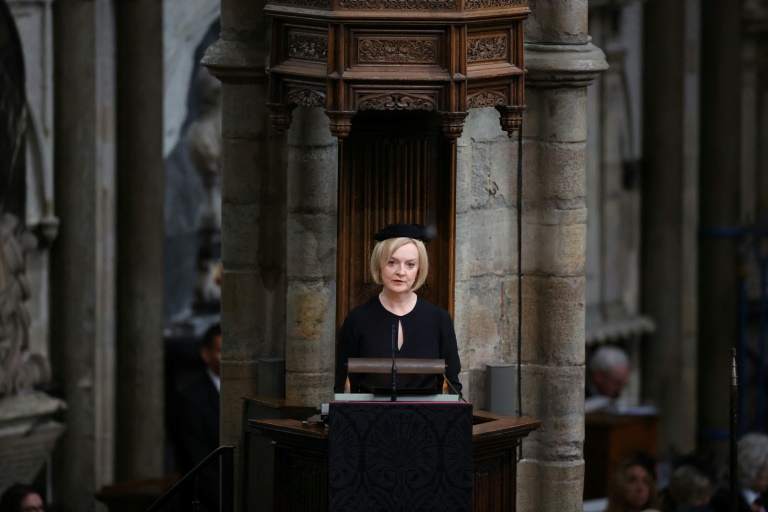
Hours after delivering a sombre reading at Monday’s funeral of Queen Elizabeth II, Britain’s new Prime Minister Liz Truss flew to stage her debut at the UN General Assembly.

In New York this week, Boris Johnson’s successor is due to meet US President Joe Biden and French President Emmanuel Macron — two leaders who are antagonistic towards Truss’s hard line on Brexit and Northern Ireland.

Truss was appointed on September 6, in one of Queen Elizabeth II’s final ceremonial acts as head of state. She died two days later, triggering 10 days of national mourning during which UK political life was suspended.

The respite will prove short-lived as Truss thrusts into hard-nosed diplomacy, and as her nascent government tackles a cost-of-living crisis brought on by Russia’s war in Ukraine that is hurting millions at home.

She is due back in London on Thursday, a day before Finance Minister Kwasi Kwarteng delivers an emergency budget statement after the government vowed a costly scheme to cap rocketing energy bills.

At the UN, Truss will seek to “spur further international action to end energy dependence on Russia, making sure the world is never in this position again”, her spokesman told reporters.

She will also build on Johnson’s outspoken support for Ukraine, because “the whole world suffers when a regime like (Russian President Vladimir) Putin’s is allowed to bully and blackmail its neighbours”, the spokesman said.

In her keynote speech to the UN on Wednesday, Truss is expected to say that the UK will remain “an active defender of our democratic values” against authoritarian foes.

– ‘Unbreakable’ bond –

Truss was meant to meet Biden in London on Sunday, for a courtesy meeting on the margins of the queen’s state funeral. That was deferred to enable full bilateral talks in New York.

While the president paid fulsome tribute to Elizabeth II, his administration is fretting as her namesake prime minister threatens to rip up post-Brexit trading rules for Northern Ireland.

Truss also ruffled cross-Channel feathers when, campaigning for the Conservative party leadership last month, she said “the jury’s out” on whether Macron was a “friend or foe” to Britain.

The French president, in contrast, came to London for the state funeral to underline the “unbreakable” bond between France and Britain, aides said.

As well as Macron, Truss is due to meet EU commission chief Ursula von der Leyen in New York, as Brussels pursues legal action against London over its Brexit plans.

The prime minister’s schedule includes meetings with the leaders of Japan, Israel, Spain and Turkey as part of her diplomatic bow, having already been in contact with several Commonwealth counterparts ahead of the funeral.

Wall Street ends up thanks to technical rebound and bargain hunt

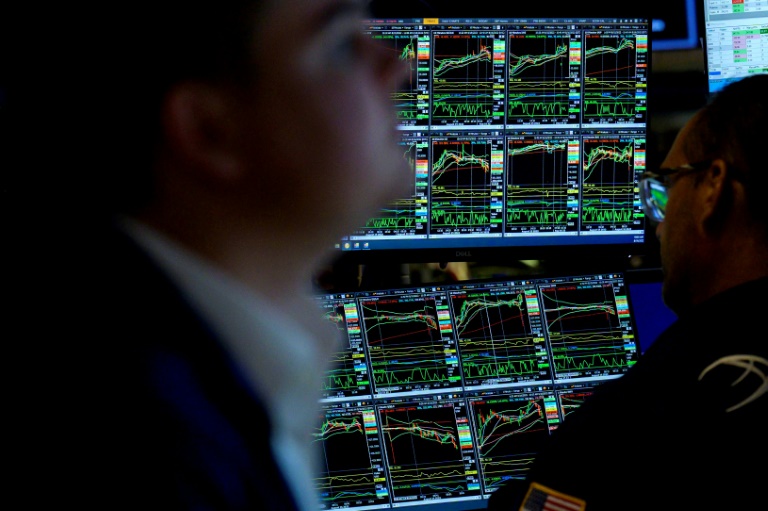
US stocks closed higher Monday thanks to a technical rebound and bargain-hunting after last week’s nightmarish run.

The Dow Jones industrial average gained 0.64 percent, the tech-rich Nasdaq was up 0.76 percent and the S&P 500 ended 0.69 percent higher.

All three indices had opened in the red Monday morning, before oscillating back and forth much of the day and finally gaining points before the close. 

“I think today it really was about bargain hunting,” RegentAtlantic analyst Andy Kapyrin said. 

Major Nasdaq stocks, such as Apple (+2.5 percent), Meta (+1.18 percent) and Nvidia (+1.39 percent) all ended higher after struggling for several days. 

After flagging Friday, FedEx (+1.17 percent ) was also in demand Monday, as was Gap (+4.39 percent), which was hit by a downturn last week after its deal with designer and rapper Kanye West ended. 

Briefing.com said the markets also benefitted from a technical rebound, with the S&P 500 flipping its direction after nearing a low Friday. 

Investors have their sights fixed on Washington as the Federal Reserve meets Tuesday and is expected to announce 75 basis point interest rate increase Wednesday. 

“The market is so oversold, so bearish, so few people optimistic on equities, that there’s very little room for a negative surprise,” Kapyrin said of Wednesday’s announcement, predicting it would be unlikely for investors to react negatively to a rate increase. 

Monday also saw a further rise in bond rates, in line with the Fed’s recent moves.

Ten-year US Treasury bonds hit 3.5 percent for the first time in 11 years. 

And two-year rates went up to 3.96 percent for the first time in nearly 15 years.

“We very rapidly have gone from a place where investors have not really seemed to be paying much attention to what the Fed says” to “a really a fitful and sporadic investor reaction” to Fed announcements, US Bank Wealth Management investor Bill Merz said. 

Merz said the market will likely be more sensitive to the Fed’s economic projections Wednesday than any rate changes. 

Close Bitnami banner
Bitnami