World

US judge tosses murder conviction of man featured on 'Serial' podcast

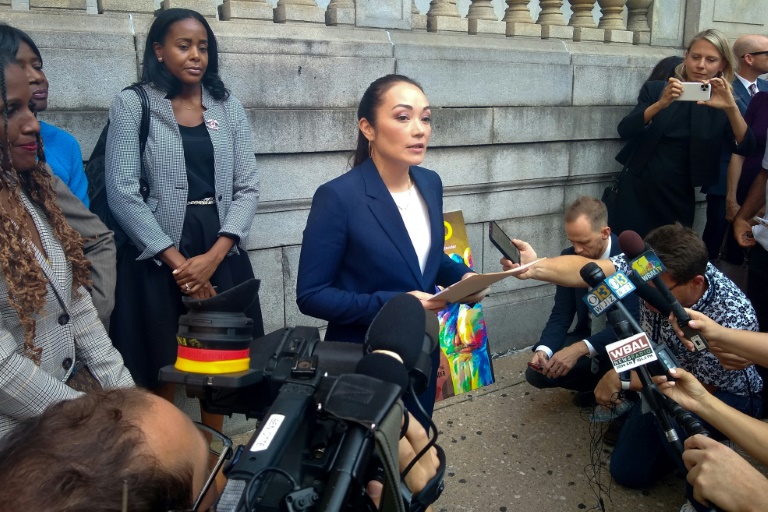
A US judge on Monday threw out the conviction of a man who has served more than two decades in prison for his ex-girlfriend’s murder — a case that received worldwide attention thanks to the hit podcast “Serial.”

Baltimore City Circuit Court Judge Melissa Phinn vacated the conviction of Adnan Syed, 42, who has been serving a life sentence since 2000 for the 1999 murder of Hae Min Lee. 

Phinn ordered Syed released immediately on his own recognizance “in the interests of justice and fairness.”

Cheers erupted in the packed courtroom when the judge ordered officers to “remove the shackles” from Syed, who was sporting a thick beard and wearing a white shirt, dark tie and a white skullcap.

Lee’s body was found buried in February 1999 in a shallow grave in the woods of Baltimore, Maryland. The 18-year-old had been strangled.

Syed has steadfastly maintained his innocence but his multiple appeals had been denied, including by the US Supreme Court which declined in 2019 to hear his case.

In a surprise move last week, the Baltimore City state’s attorney, Marilyn Mosby, announced that she had asked the court to vacate Syed’s conviction while a further investigation is carried out.

Assistant state’s attorney Becky Feldman told the judge on Monday the decision was prompted by the discovery of new information regarding two alternative suspects and the unreliability of cell phone data used to convict Syed.

“The state has lost confidence in the integrity of his conviction,” Feldman said. “We need to make sure we hold the correct person accountable.

“We will be continuing our investigation,” she said, while promising to “do everything we can to bring justice to the Lee family.”

Syed’s attorney, Erica Suter, also addressed the court, saying “my client is innocent.”

Suter was asked by reporters how Syed, who did not make any public statement, reacted to the judge’s decision.

“He said he could not believe it’s real,” she said. 

– ‘Blindsided’ –


Baltimore City prosecutors now have 30 days to either bring new charges against Syed or dismiss the case.

“We’re not yet declaring Adnan Syed is innocent,” Mosby, the state’s attorney, told reporters after the hearing.

She said the state was awaiting the results of new DNA tests on Lee’s clothing before deciding whether to drop all charges or organize a new trial.   

Before the hearing began, Lee’s brother, Young Lee, addressed the court by Zoom.

An emotional Lee said he was “kind of blindsided” by the prosecutor’s decision to vacate Syed’s conviction.

“Out of nowhere I hear that there’s a motion to vacate judgment,” he said. “It’s tough going through this again and again and again.”

Lee said he “trusts the court system” and asked the judge to “make the right decision.”

Syed’s case earned worldwide attention when it was taken up in 2014 by “Serial,” a weekly podcast that saw a journalist revisit his conviction and cast doubt on his guilt.

His case has also been the subject of a four-part documentary on the HBO channel called “The Case Against Adnan Syed.”

The “Serial” podcast — a mix of investigative journalism, first-person narrative and dramatic storytelling — focused its first season on Syed’s story in 12 nail-biting episodes.

Both Syed and Lee were high school honor students and children from immigrant families — he Pakistani, she South Korean — who had concealed their relationship from their conservative parents.

Prosecutors said during the trial that Syed was a scorned lover who felt humiliated after Lee broke up with him.

Britain and the world bid adieu to Queen Elizabeth II

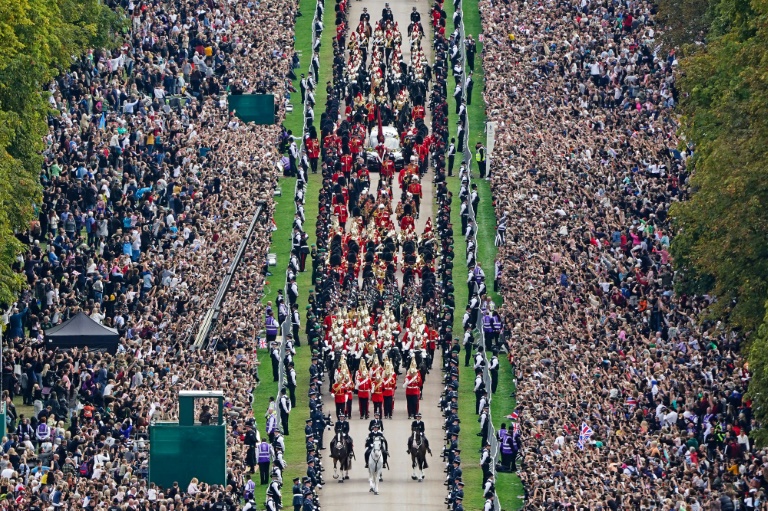
Britain said farewell to Queen Elizabeth II on Monday at a historic state funeral attended by world leaders, before a ceremonial journey past hundreds of thousands of mourners to her final place of rest.

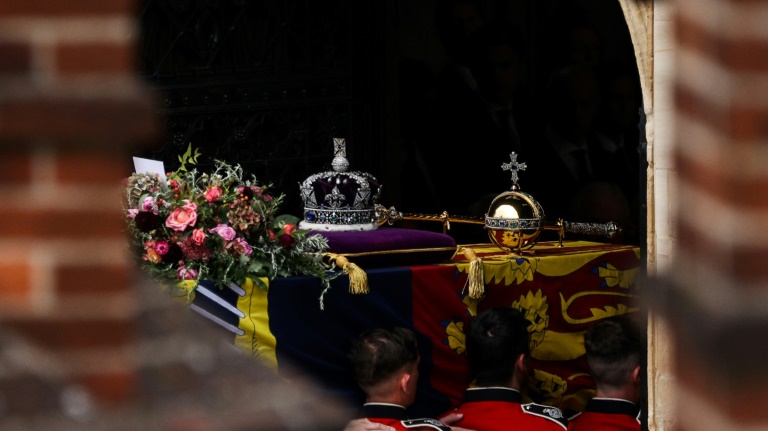
Huge crowds gathered in London to watch as the queen’s flag-draped coffin, topped with the Imperial State Crown, her orb and sceptre, was carried slowly to a gun carriage from parliament’s Westminster Hall where it had lain in state since Wednesday.

To the tune of pipes and drums, the gun carriage — used at every state funeral since Queen Victoria’s in 1901 — was then drawn by 142 junior enlisted sailors in the Royal Navy to Westminster Abbey.

The thousand-year-old church’s tenor bell tolled 96 times at one-minute intervals — one for every year of her life — and stopped a minute before the service began at 11:00 am (1000 GMT).

In his funeral sermon, Archbishop of Canterbury Justin Welby praised the queen’s life of duty and service to the UK and the Commonwealth.

“People of loving service are rare in any walk of life. Leaders of loving service are still rarer,” he told the 2,000 guests, who included US President Joe Biden and Japan’s Emperor Naruhito.

The coffin was then borne, to the rhythmic strains of funeral marches, on a three-hour journey through the streets of London to Windsor Castle, west of the capital.

All along the route, a sea of arms were raised aloft, clutching mobile phones, to record the choreographed display of military precision.

The last chants of “God save the queen” were heard as onlookers scattered flowers on the road, and muffled church bells rang in the distance.

A private burial took place late Monday in the King George VI Memorial Chapel, conducted by the Dean of Windsor, the official website of the royal family said.

“The Queen was buried together with the Duke of Edinburgh,” a statement said, referring to her husband of 73 years Prince Philip who died last year.

– Corgis –

Army veteran Robert MacDonald, 48, was among the dense crowd lining the three-mile (five-kilometre) Long Walk leading up to Windsor Castle.

“I was in the infantry for 26 years, so the queen was my boss,” he said, adding he wanted to “salute one last time as the hearse passed by”.

On the Long Walk, the military cortege passed by the late queen’s Fell pony, Carltonlima Emma, standing without a rider. It was met at the castle by her last two corgi dogs, Muick and Sandy.

The queen — the longest-serving monarch in British history — died at Balmoral, her Scottish Highland retreat, on September 8 after a year of declining health. 

Her eldest son and successor, King Charles III, dressed in ceremonial military uniform, followed the solemn processions in London, alongside his three siblings.

They were accompanied by Charles’s eldest son Prince William, William’s estranged brother, Prince Harry, and other senior royals.

William’s two eldest children, George, aged nine, and Charlotte, aged seven, also walked behind the coffin in Westminster Abbey.

Late Sunday, Charles, 73, and his wife, Queen Consort Camilla, 75, said they had been “deeply touched” by the public’s flood of messages.

“I wanted simply to take this opportunity to say thank you,” Charles said.

Britain, a country much changed since the queen’s coronation in the same abbey in 1953, has dug deep into its centuries of tradition to honour the only monarch most of its people have ever known.

– ‘Moment of history’ –

“It’s once in a lifetime,” said student Naomi Thompson, 22, camped out in the crowds at London’s Hyde Park.

John MacKinnon, a 49-year-old insurance broker from London, added: “The ceremony was perfect in every way. 

“Very spectacular, as it should be for a great queen.”

Others unable to be in London gathered in cinemas and churches around England, Scotland, Wales and Northern Ireland to watch the service and procession on big screens.

Auto engineer Jamie Page, a 41-year-old former soldier, stood on Whitehall to observe the funeral procession, wearing his military medals from service in the Iraq war.

“She means everything, she was like a gift from God,” he said.

The funeral — watched by the crowds in silence — lasted just under an hour.

It ended with trumpeters playing “The Last Post”, two minutes of silence in memory of the queen and the reworded national anthem, “God Save the King”.

Oscar-winning actor and Royal Shakespeare Company veteran Kenneth Branagh was in attendance, telling AFP it was “very solemn and done with great compassion”. 

“The music was very beautiful. It felt beautifully judged, respectful and sensitive,” he said.

– Driven to Windsor –

The long procession filed past Downing Street, government buildings in Whitehall, through Horse Guards Parade and up The Mall, the tree-lined avenue that leads to Buckingham Palace decked out in red, white and blue.

At nearby Wellington Arch, 6,000 members of the armed forces who had marched in hypnotic lockstep halted and the coffin was transferred to the royal hearse.

Charles saluted and the national anthem played again before the hearse headed by road to Windsor Castle.

The queen was buried alongside her father king George VI, her mother queen Elizabeth and sister princess Margaret, reuniting in death the family who once called themselves “us four”. 

The coffin of her husband Philip, who died last year aged 99, was transferred to lie alongside her.  

Elizabeth’s funeral could not be more different from Philip’s at St George’s Chapel, Windsor, in April 2021.

Coronavirus restrictions limited mourners to just 30, led by the queen, a solitary figure in mourning black and a matching facemask. 

In contrast on Monday, the abbey was packed with dignitaries and some ordinary Britons who were honoured for their military or community service, especially during the Covid-19 pandemic.

“You were fortunate to have had her for 70 years; we all were,” Biden said on Sunday after signing a book of condolence. “The world is better for her.”

In the abbey pews was Liz Truss, whom the queen appointed as the 15th British prime minister of her reign just two days before her death, in her last major ceremonial duty.

All of Truss’s living predecessors were there plus her counterparts and representatives from the 14 Commonwealth countries outside Britain where Charles is also head of state.

Whether they remain constitutional monarchies or become republics is likely to be the defining feature of Charles’s reign.

– Royal vault –

The queen’s death has prompted deep reflection about the Britain she reigned over, the legacy of its past, its present state and what the future might hold, as well as the values of lifelong service and duty she came to represent.

Hundreds of thousands of people are estimated to have queued, sometimes for up to 25 hours and overnight, to file past the queen’s coffin as it lay in state.

Chrissy Heerey, a serving member of the Royal Air Force who joined the marathon queue twice, was the last person through the doors early Monday and described the experience as “amazing”.

Throughout the procession after the funeral, Big Ben, the giant bell atop the Elizabeth Tower at one end of the Houses of Parliament, tolled and military guns fired at one-minute intervals.

At Windsor, the Sebastopol Bell — captured in Crimea in 1856 — and the Curfew Tower Bell also sounded.

A vast television audience watched the funeral worldwide and online, in a sign of the enduring fascination with the woman once described as “the last global monarch”.

At Windsor, the queen’s crown, orb and sceptre were removed and placed on the altar at a committal service. 

The most senior officer of the royal household, the lord chamberlain, broke his “wand of office” and placed it on the coffin, symbolising the end of her reign.

The lead-lined oak casket, draped with the queen’s colours, was then lowered into the Royal Vault.

A lone bagpiper played a lament, the mournful tune fading as he walked away.

How many ants are on Earth? 20 quadrillion, study says

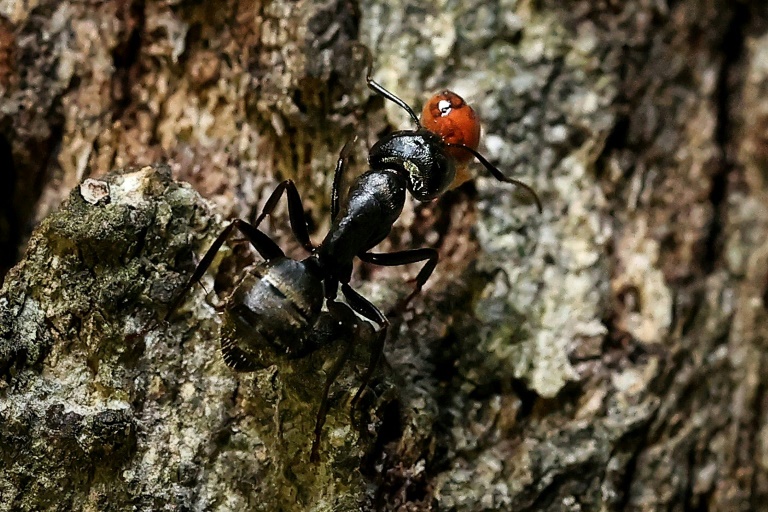
There are at least 20 quadrillion ants on Earth, according to a new study that says even that staggering figure likely underestimates the total population of the insects, which are an essential part of ecosystems around the world.

Determining the global population of ants is important for measuring the consequences of changes to their habitat — including those caused by climate change.

Ants play a significant role, dispersing seeds, hosting organisms and serving as either predators or prey.

Some studies have already attempted to estimate the global ant population, but they resulted in a far smaller number than 20 quadrillion, which is 20 million billion.

For this new attempt — published Monday in the journal Proceedings of the National Academy of Sciences (PNAS) — researchers analyzed 465 studies that measured the number of ants locally in the field.

The hundreds of studies used two standardized techniques: setting traps that captured ants passing by during a certain period of time, or analyzing the number of ants on a given patch of leaves on the ground.

While surveys have been carried out on all continents, some major regions had little or no data, including central Africa and Asia.

This is why “the true abundance of ants globally is likely to be considerably higher” than estimated, the study says. “It is of utmost importance that we fill these remaining gaps to achieve a comprehensive picture of insect diversity.”

There are more than 15,700 named species and subspecies of ants that are found all over the planet, and probably an equal number that have yet to be described.

But nearly two-thirds of them are found in only two types of ecosystems: tropical forests and savannahs.

Based on the estimated number of ants, their total global biomass is thought to be 12 megatons of dry carbon — more than that of wild birds and mammals combined, and 20 percent of that of humans.

In the future, researchers plan to study the environmental factors influencing population density of the tiny creatures.

Body of missing Italian tourist found in Peruvian Andes

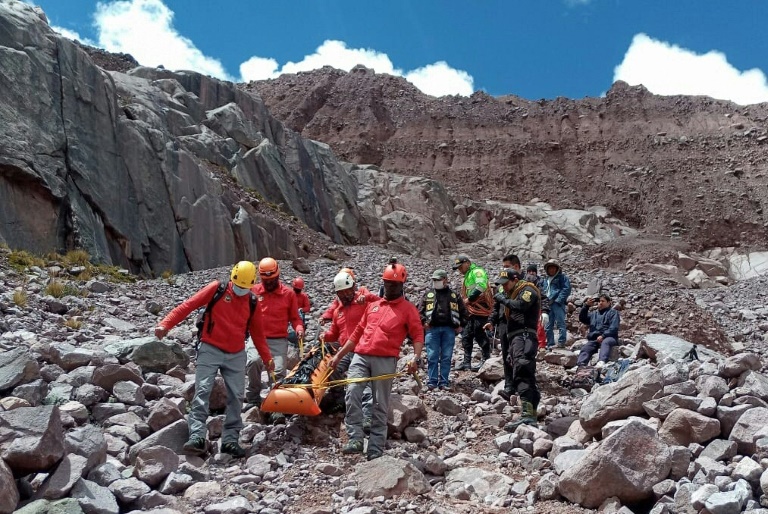
A high mountain patrol found the body of a missing Italian tourist who disappeared 80 days ago while hiking in the Peruvian Andes, police said on Monday.

Alberto Fedele, who was 30, had left the village of Urubamba in the southeastern Cusco region on July 4, heading for the Juchuycocha lake near the 5,500-meter high Chicon mountain.

Police say he died in a landslide.

“We have located and recovered the body of the Italian citizen who disappeared several weeks ago,” a spokesman for Cusco’s high mountain police force told AFP by telephone.

The patrol climbed up the slopes of the Chicon on Saturday towards an area where locals had seen a body.

They found a photograph of Fedele’s passport and his mobile phone in a pocket of his jacket, the state Andina news agency said.

The body has been transferred to a morgue in Urubamba to continue investigations, the police spokesman said.

Fedele’s body was found in a “wild and rugged” area, which is why police assume he died in a landslide, Andina said.

Urubamba, a town of 15,000 people around 50 kilometers north of the city of Cusco — the former capital of the Inca empire — is popular with tourists heading for the Inca citadel Machu Picchu, Peru’s best known tourist site.

Police began looking for Fedele in July after a friend reported him missing.

Fidele’s case is similar to that of Belgian tourist Natacha de Crombrugghe, who was 28 when she disappeared in January while preparing for a tour of the Andean region of Arequipa after visiting Machu Picchu.

In the last five years, a Spanish and an American tourist also went missing in the Cusco area, local media said.

Ukraine faces Russian resistance in frontline Kupiansk

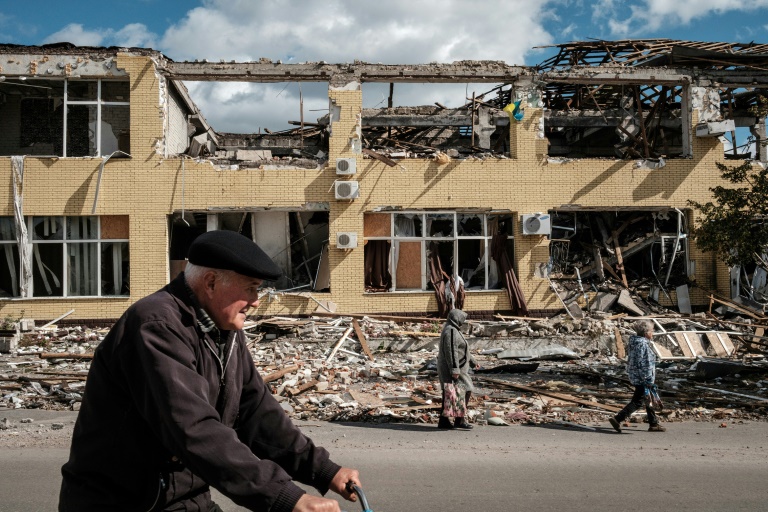
Ukraine’s troops retook almost all of the Kharkiv region in their lightning counter-offensive, but in the city of Kupiansk — split in two by the Oskil River — Russian forces are fighting to hold on.

So recent is the Ukrainian victory in Kupiansk, a rail hub, that billboards erected by President Vladimir Putin’s United Russia party still loom over smashed shop fronts, while shells whistle overhead.  

The Kharkiv region in northeast Ukraine was an early target of Russia’s invasion in February this year, and Kyiv’s counterattack this month was hailed as a potential turning point in the war.

In the past two weeks, Ukraine has pushed the Russians back from the fields around the regional capital Kharkiv and has liberated a string of villages — along with most of Kupiansk.

They have still not quite completed the symbolic feat of forcing Russia out of the entire Kharkiv region, and back into Donetsk, the eastern region the Kremlin insists was its main target all along.  

On Monday, a steady stream of civilians were seeking transport out of Kupiansk, fleeing the shellfire and what locals said was the week-long failure of water and electricity supplies.

“It was impossible to stay where we were living,” said 56-year-old Lyudmyla, who braved the constant crack of shells to cross the river from the disputed east bank to the relative safety of the west. 

“There was incoming fire not just every day, but literally every hour. It’s very tough there, on the other bank of the river.”

Most of the noise is outgoing fire from Ukrainian tanks and artillery.

But — just as a small unit of Ukrainian infantry advanced towards a bridge painted in Russia’s red, white and blue national colours — there was a fierce exchange of rocket and artillery fire. 

– ‘Ukraine is getting closer’ –

Ukrainian soldiers took cover, ducking under a damaged brick building and a column of smoke rose in the distance. 

Nearby, not yet torn down, a propaganda poster reads: “We are with Russia. One nation.”

Because Kupiansk is a rail hub some military analysts said its capture would make it harder to supply Russian forces deployed further south defending their increasingly fragile gains in the Donbas.

It is also a road crossing point for the Oskil, and several bridges in the city have been all but wrecked in the fighting.   

A bearded Ukrainian medic on a quad bike — the vehicle he noted was best to negotiate the cracked and twisted bridges — said he had brought back a wounded civilian from the other bank, his third in two days. 

As families cowered by the roadside on the western edge of town waiting for a lift, a Ukrainian tank on a low hill west of the city lobbed shells over their homes, targeting Russians to the east.

“Ukraine is getting closer, but there are still Russian troops in some parts of the town,” said 33-year-old Olena Glushko. “Just terrifying, terrifying. It’s horrible.”

Ukrainians are now a constant sight in the town, speeding around in modified civilian vehicles or marching in line with packs of supplies.

But when Olena first saw them after six months of Russian occupation, she was so overwhelmed that: “I wanted to burst into tears and to laugh at the same time.”

UN report warns of crimes against humanity in Ethiopia

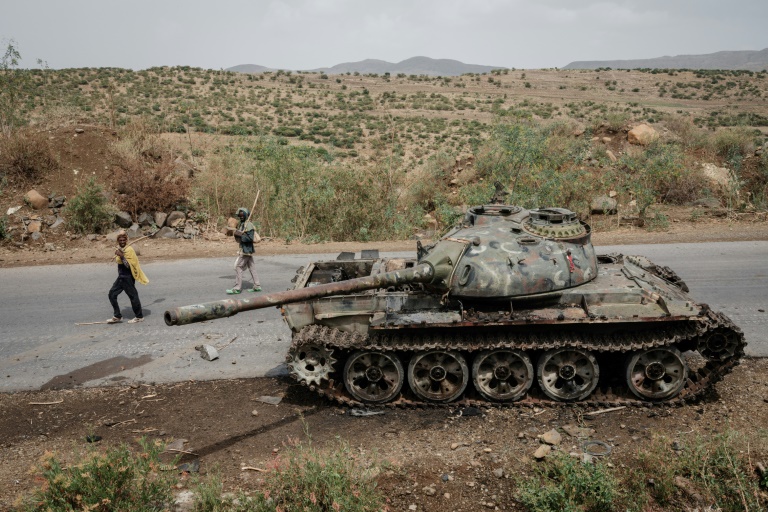
UN investigators said Monday they believed Ethiopia’s government was behind ongoing crimes against humanity in Tigray, and warned the resumption of the conflict there increased the risk of “further atrocity crimes”.

In its first report, the Commission of Human Rights Experts on Ethiopia said it had found evidence of widespread violations by all sides since fighting erupted in the northern Tigray region in November 2020.

The commission, created by the UN Human Rights Council last December and made up of three independent rights experts, said it had “reasonable grounds to believe that, in several instances, these violations amount to war crimes and crimes against humanity”.

The experts listed a long line of horrific violations, from extrajudicial killings to intentional starvation and rape and sexual violence perpetrated on a “staggering scale”.

And they highlighted in particular the situation in Tigray, where the government and its allies have denied around six million people access to basic services, including the internet and banking, for more than a year.

Severe restrictions on humanitarian access have left 90 percent of the region’s population in dire need of assistance.

– ‘Shocking’ –

The report said there were “reasonable grounds to believe that the Federal Government and allied regional State governments have committed and continue to commit the crimes against humanity of persecution on ethnic grounds and other inhumane acts”.

They were “intentionally causing great suffering or serious injury to body or to mental or physical health based on their ongoing denial and obstruction of humanitarian assistance to Tigray”, the report said.

In a statement, commission chair Kaari Betty Murungi described the humanitarian crisis in Tigray as “shocking, both in terms of scale and duration”.

“The widespread denial and obstruction of access to basic services, food, healthcare, and humanitarian assistance is having a devastating impact on the civilian population,” she said.

She condemned likely crimes against humanity and warned that the government appeared to be “using starvation as a method of warfare”.

Murungi called on the government to “immediately restore basic services and ensure full and unfettered humanitarian access”.

She also urged Tigrayan forces to “ensure that humanitarian agencies are able to operate without impediment”.

– ‘Atrocity crimes’ –

Since war broke out in November 2020, thousands have died, and many more have been forced to flee their homes as the conflict expanded from Tigray to the neighbouring regions of Amhara and Afar.

A truce in March had raised hopes for a peaceful resolution of the war, but those were dashed when combat resumed last month.

“With a resumption of hostilities in northern Ethiopia, there is a very real risk of further civilian suffering and further atrocity crimes,” Murungi warned. 

Even before the fighting resumed, the experts said they had found evidence that rape and sexual violence had been perpetrated on a “staggering scale” since the conflict erupted, especially targeting Tigrayan women and girls.

An earlier joint investigation by the UN rights office and Ethiopia’s Human Rights Commission determined that possible war crimes and crimes against humanity had been committed by all sides.

Tigrayan authorities welcomed the report, with a spokesman telling AFP they had “always maintained” that Ethiopia’s government was responsible for crimes against humanity in the region.

Monday’s report meanwhile also found reasonable grounds to believe that Tigrayan forces had committed war crimes, including large-scale killings of Amhara civilians, rape and sexual violence.

– ‘Hatred along ethnic lines’ –

The experts voiced alarm at their findings, which they said “reflect profound polarisation and hatred along ethnic lines in Ethiopia”.

“This has created a disturbing cycle of extreme violence and retribution, which raises the imminent threat of further and more pronounced atrocity crimes,” their report warned.

The report, due to be presented to the rights council on September 22, made a number of recommendations, including that all parties to the conflict “immediately cease hostilities and violations… including those that might amount to war crimes or crimes against humanity”.

It calls on the UN rights office to ensure “full monitoring” of the situation in Ethiopia, and urges the Ethiopian government, its Eritrean ally and authorities in Tigray to investigate and bring all perpetrators of abuses to justice.

Switzerland signs contract for 36 US fighter jets

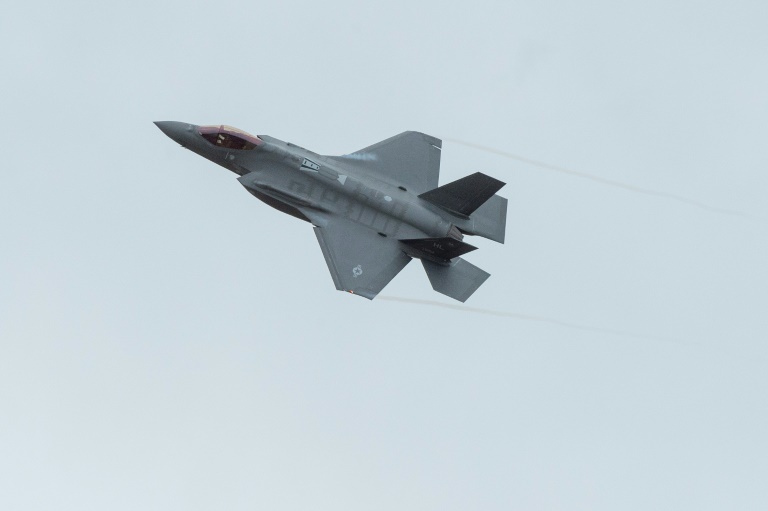
Switzerland signed a controversial contract on Monday to buy 36 US F-35 stealth fighter jets at a cost of more than six billion francs ($6.2 billion). 

“National Armaments Director Martin Sonderegger and the Swiss F-35A Program Manager Darko Savic signed the procurement contract on 19 September 2022 at armasuisse in Bern,” said armasuisse, the country’s arms procurement agency.

“With this, the procurement of 36 F-35A is contractually agreed,” it added.

The selection of the F-35 by the Swiss government in June 2021 sparked some controversy, particularly in light of the cost-overruns of the fighter programme in the United States.

But a Swiss parliamentary investigation did not call into question the selection of the fighter.

The Swiss government and parliament also short-circuited holding a referendum on the plane’s purchase despite enough signatures being collected to put the issue to voters, saying there was not enough time to do so before manufacturer Lockheed Martin’s offer expires.

But Swiss voters had already narrowly approved in September 2020 spending six billion Swiss francs to replace the country’s fleet of ageing F/A-18 Hornets and F-5 Tigers.

The F-35s will be delivered between 2027 and 2030.

Switzerland joins a growing number of European countries which have opted for the stealth multi-role combat aircraft, including Belgium, Britain, Denmark, Finland, Italy, Greece, Germany, the Netherlands, Norway, and Poland.

'Grand Theft Auto' maker says game code stolen

Rockstar Games said Monday that data from the next installment in its blockbuster “Grand Theft Auto” franchise was stolen, as glimpses of play spread on social media.

The normally tight-lipped video game maker’s comment came after a trove of data that a hacker said was from a “Grand Theft Auto 6” title in the works was shared online, along with word that source code was also swiped from Rockstar.

“We recently suffered a network intrusion in which an unauthorized third party illegally accessed and downloaded confidential information from our systems, including early development footage for the next ‘Grand Theft Auto,'” Rockstar said in a tweet from its official account.

“We are extremely disappointed to have any details of our next game shared with you in this way.”

Rockstar added that it did not expect the hack to disrupt any of its projects or online play of its games, and that work on the next “Grand Theft Auto” game will continue as planned.

More than 230 million copies of “Grand Theft Auto,” referred to as “GTA,” have been sold overall.

“We have already taken steps to isolate and contain this incident,” Rockstar parent Take-Two Interactive said in a Securities and Exchange Commission filing about the hack.

The GTA franchise, in which players take on the role of a criminal, has been criticized for glorifying law-breaking, violence and abuse of women.

The maker of the notorious video game franchise announced in February that a new edition is under development, confirming long-bubbling speculation.

New York-based Rockstar Games did not say when GTA 6 will hit the street or how it will be different from the previous edition of the game released in 2013 to blockbuster sales.

“We watched GTA 6 leak and Rockstar Games – the most secretive company in the video game industry – get hacked in real time,” said a late Sunday tweet from the Gaming Detective account that included an apparent image of the title art.

“Let it be known we were here to witness history.”

A final goodbye at the queen's beloved home

The royal family celebrated a “life of service, love and faith” as they bade farewell to Queen Elizabeth II in an intimate ceremony inside the grounds of her beloved Windsor Castle on Monday. 

Following the majesty and pomp of her state funeral at London’s Westminster Abbey earlier in the day, a smaller congregation gathered at the Gothic St George’s Chapel to pay a more personal goodbye.

The royal hearse carrying the sovereign’s body arrived at the castle at 3:40 pm after a 25-mile (40-kilometre) drive west from London, entering its gates to applause and tears among the huge crowd that had gathered since early morning. 

The queen, who died on September 8 aged 96, moved with her late husband Prince Philip to the castle in early 2020, as the coronavirus pandemic began, and spent most of her time there.

Inside, her coffin was taken by the castle’s manicured walkways, freshly mowed lawns and thousands of bouquets left by well-wishers, along with wreaths sent by wellwishers from around the world.

Her eldest son and successor, King Charles III, his heir William and second son Harry followed behind the coffin as it slowly made its way towards St George’s Chapel.

Red-jacketed Grenadier Guards carried the heavy lead-lined oak casket through the great doorway of the chapel and its crowded nave, where many mourners bowed their heads in respect.

A choir sang the coffin to its catafalque, which was draped in purple velvet.

The Dean of Windsor David Conner, who led the ceremony, hailed Elizabeth’s “profound Christian faith” that “bore so much fruit”. 

“Fruit, in a life of unstinting service to the nation, the Commonwealth and the wider world,” he added.

– ‘Calm and dignified’ –

Elizabeth often prayed in St George’s Chapel, which dates back more than 500 years, and it was her wish that a final ceremony be held there.

Although more intimate than Westminster Abbey, where hundreds of heads of states, foreign royalty and public figures were among the 2,000 guests, the service was still attended by around 800 mourners. 

The chapel, whose construction began in 1475, is dear to the royal family, who have celebrated numerous baptisms and weddings there.

It is where Prince Harry married Meghan Markle in 2018 and also where Prince Philip’s funeral was held under coronavirus restrictions last year.

Her father King George VI, mother Queen Elizabeth and younger sister Princess Margaret are all interred at Windsor. 

“In the midst of our rapidly changing and frequently troubled world, (the queen’s) calm and dignified presence has given us confidence to face the future, as she did, with courage and hope,” said Conner, offering thanks for a “long life” and calling it “a blessing for us”.

The sound of song and prayer then filled the chapel’s ornate wooden choir, underneath the suspended banners of the Knights of the Garter, the ancient order of chivalry founded in the 14th century. 

– ‘God Save the King’ –

The queen was personally involved in planning many details of the ceremony, including the music.

It was mainly composed by William Harris, the chapel’s organist between 1933 and 1961, whom the palace said taught the young Elizabeth to play the piano. 

Before the final hymn, the royal sceptre and orb as well as the imperial crown — symbols of the British monarchy’s spirtual and temporal power — were removed from the coffin and placed on three red cushions on the altar.

Charles then covered the coffin with the official flag of the Grenadier Guards.

The Lord Chamberlain — the most senior official in the royal household — broke his “wand of office”, a highly symbolic gesture signifying the end of Elizabeth’s reign. 

The ceremony, which lasted around an hour, closed with another rendition of “God Save the King”, the reworded national anthem.

For the first time in his life, Charles does not have to sing it. He stood straight, staring straight ahead as he had done all day.

But as the coffin of his “darling mama” was lowered into the Royal Vault, he blinked and bit his lip.

Hurricane Fiona hits Dominican Republic after ravaging Puerto Rico

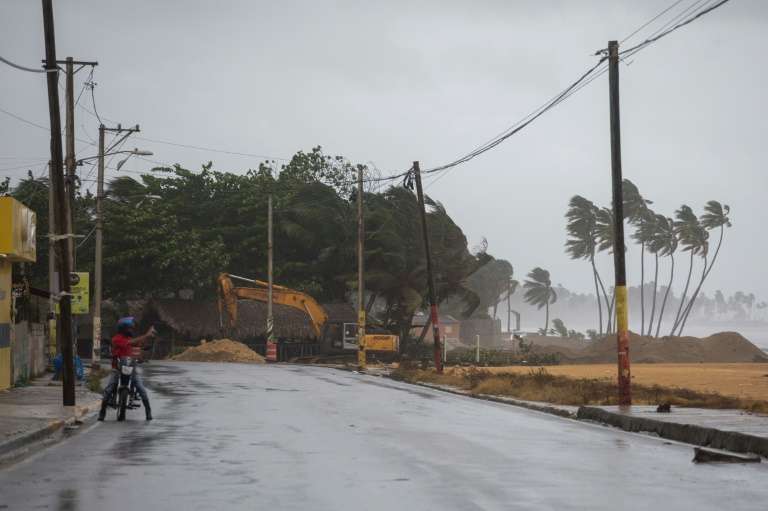
Hurricane Fiona slammed into the Dominican Republic on Monday after knocking out power and causing widespread flooding in Puerto Rico.

Puerto Rico Governor Pedro Pierluisi said the storm had caused “catastrophic” damage in the US island territory with some areas receiving more than 30 inches (76 centimeters) of rain.

Fiona made landfall on the eastern edge of the Dominican Republic early Monday packing maximum sustained winds of 90 miles per hour (144 kilometers per hour), the US National Hurricane Center (NHC) said.

“Life-threatening flash and urban flooding is likely for eastern portions of the Dominican Republic,” it said.

The Dominican authorities did not provide any immediate updates on the toll from the storm but local press reports said some coastal towns in the east had experienced flooding with roads washed out.

Ahead of Fiona’s arrival in the Dominican Republic, President Luis Abinader suspended work on Monday and the island placed 13 of its 32 provinces on red alert.

In Puerto Rico, Fiona caused landslides, blocked roads and toppled trees, power lines and bridges, Pierluisi said.

Fernando Vera, a resident of the town of Utuado, told US broadcaster NPR his family has never fully recovered from the devastation of Hurricane Maria five years ago.

“We still struggle from the consequences of Maria and it’s kind of difficult knowing we’re going to probably have to start over again,” Vera said.

The governor said Fiona had caused “unprecedented” flooding, including in areas never previously affected. 

“Unfortunately, we expect more rain throughout the island today and tomorrow,” he said.

Most of Puerto Rico, an island of three million people, was without power, but electricity had been restored for about 100,000 customers on Monday, the governor said.

The hurricane has also left around 196,000 people without drinking water as a result of power outages and flooded rivers, officials said.

– ‘Start over again’ –

Fiona made landfall in Puerto Rico on Sunday afternoon as a Category One hurricane, at the lowest end of the five-tier Saffir-Simpson scale.

The storm has caused one fatality — a man who was killed after his house was swept away by flooding in the French overseas department of Guadeloupe, when Fiona was still classified as a tropical storm.

US President Joe Biden declared a state of emergency for Puerto Rico on Sunday, authorizing the Federal Emergency Management Agency to provide assistance.

The former Spanish colony became a US territory in the late 19th century before gaining the status of associated free state in 1950.

After years of financial woes and recession, Puerto Rico in 2017 declared the largest bankruptcy ever by a local US administration.

Later that year, a double hit from hurricanes Irma and Maria added to the misery, devastating the electrical grid on the island — which has suffered from major infrastructure problems for years.

The grid was privatized in June 2021 in an effort to resolve the problem of blackouts, but the issue has persisted, and the entire island lost power earlier this year.

bur/cl/ec

Close Bitnami banner
Bitnami