World

Hurricane Fiona hits Dominican Republic after ravaging Puerto Rico

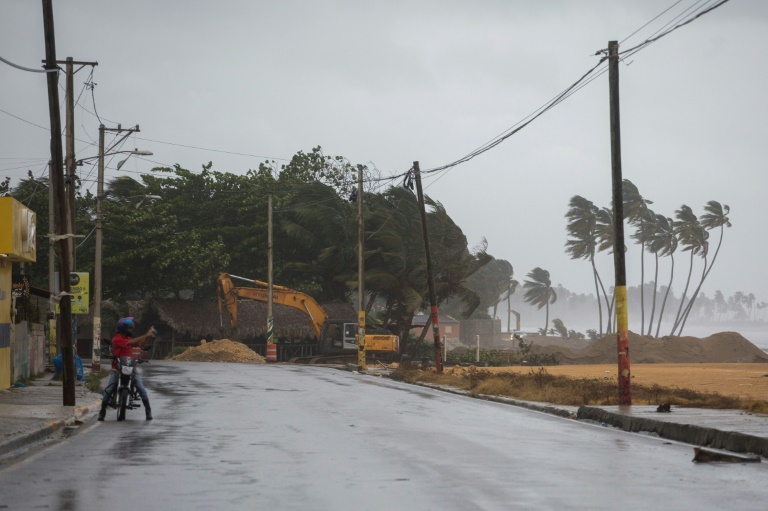
Hurricane Fiona slammed into the Dominican Republic on Monday after knocking out power and causing widespread flooding in Puerto Rico.

Puerto Rico Governor Pedro Pierluisi said the storm had caused “catastrophic” damage in the US island territory with some areas receiving more than 30 inches (76 centimeters) of rain.

Fiona made landfall on the eastern edge of the Dominican Republic early Monday packing maximum sustained winds of 90 miles per hour (144 kilometers per hour), the US National Hurricane Center (NHC) said.

“Life-threatening flash and urban flooding is likely for eastern portions of the Dominican Republic,” it said.

The Dominican authorities did not provide any immediate updates on the toll from the storm but local press reports said some coastal towns in the east had experienced flooding with roads washed out.

Ahead of Fiona’s arrival in the Dominican Republic, President Luis Abinader suspended work on Monday and the island placed 13 of its 32 provinces on red alert.

In Puerto Rico, Fiona caused landslides, blocked roads and toppled trees, power lines and bridges, Pierluisi said.

Fernando Vera, a resident of the town of Utuado, told US broadcaster NPR his family has never fully recovered from the devastation of Hurricane Maria five years ago.

“We still struggle from the consequences of Maria and it’s kind of difficult knowing we’re going to probably have to start over again,” Vera said.

The governor said Fiona had caused “unprecedented” flooding, including in areas never previously affected. 

“Unfortunately, we expect more rain throughout the island today and tomorrow,” he said.

Most of Puerto Rico, an island of three million people, was without power, but electricity had been restored for about 100,000 customers on Monday, the governor said.

The hurricane has also left around 196,000 people without drinking water as a result of power outages and flooded rivers, officials said.

– ‘Start over again’ –

Fiona made landfall in Puerto Rico on Sunday afternoon as a Category One hurricane, at the lowest end of the five-tier Saffir-Simpson scale.

The storm has caused one fatality — a man who was killed after his house was swept away by flooding in the French overseas department of Guadeloupe, when Fiona was still classified as a tropical storm.

US President Joe Biden declared a state of emergency for Puerto Rico on Sunday, authorizing the Federal Emergency Management Agency to provide assistance.

The former Spanish colony became a US territory in the late 19th century before gaining the status of associated free state in 1950.

After years of financial woes and recession, Puerto Rico in 2017 declared the largest bankruptcy ever by a local US administration.

Later that year, a double hit from hurricanes Irma and Maria added to the misery, devastating the electrical grid on the island — which has suffered from major infrastructure problems for years.

The grid was privatized in June 2021 in an effort to resolve the problem of blackouts, but the issue has persisted, and the entire island lost power earlier this year.

bur/cl/ec

UN chief warns education becoming 'great divider'

UN Secretary-General Antonio Guterres warned Monday that unequal education was quickly dividing the planet as he sought to keep development on the agenda ahead of a week of diplomacy focused on global crises.

The UN chief called a special summit on education a day before world leaders meet for the annual General Assembly, although a number of key officials including US President Joe Biden delayed their arrivals in New York due to Queen Elizabeth II’s funeral.

“Education is in a deep crisis. Instead of being the great enabler, education is fast becoming the great divide,” Guterres told the summit.

He warned that the Covid-19 pandemic has had a “devastating impact” on learning, with poor students lacking technology at a particular disadvantage, and conflicts further disrupting schools.

Guterres appealed to all countries to prioritize increasing spending per student even amid question marks over the global economy.

In a report earlier this month, the UN Development Programme said Covid has set back humanity’s progress by five years.

Guterres also called out Afghanistan’s Taliban, who have deprived more than one million teenage girls of education since the Islamist militants returned to power in August 2021.

“I appeal to the authorities in Afghanistan: Lift all restrictions on girls’ access to secondary education immediately,” he said.

Addressing the summit, Somaya Faruqi, who was part of Afghanistan’s celebrated girl’s robotics team, said the Taliban are “slowly erasing our existence in society.” 

“Thousands of girls may never return back to school. Many have been married off. The promises of reopening schools came and went,” she said.

Appealing to world leaders, she said, “You must not forget those who are left behind, those not lucky enough to be at school.”

“Show your solidarity with me and millions of Afghan girls.”

– Diplomacy on Ukraine, Iran –

The UN General Assembly — with its epic traffic and demonstrations jamming Midtown Manhattan — is back in person after two years of the pandemic, with leaders required to show up if they wish to speak.

The General Assembly voted to make just one exception — for Ukrainian President Volodymyr Zelensky, who is leading resistance to a Russian invasion.

Russian Foreign Minister Sergei Lavrov headed to New York for the summit, where he heard an appeal Monday from his French counterpart, Catherine Colonna, to allow a security zone outside the Zaporizhzhia nuclear plant, whose occupation by Moscow has raised mounting concerns.

Also high on the agenda for the UN week will be Iran, whose hardline president, Ebrahim Raisi, is traveling to the General Assembly for the first time.

In a US television interview ahead of his arrival, Raisi said that Iran wanted “guarantees” before returning to a nuclear deal that former president Donald Trump trashed in 2018.

“We cannot trust the Americans because of the behavior that we have already seen from them. That is why if there is no guarantee, there is no trust,” he told CBS News’ “60 Minutes” program.

Biden supports a return to the 2015 agreement, under which Iran drastically scaled back nuclear work in return for promises of sanctions relief.

But the Biden administration says it is impossible in the US system to promise what a future president would do.

Colonna said French President Emmanuel Macron may meet Raisi in hopes of making progress.

But she warned, “There is no better offer for Iran.”

“It’s up to them to make a decision.”

Raisi can expect to be dogged by protests during his visit including by exile groups that have called for his arrest over mass executions of opponents a decade after the 1979 Islamic revolution.

Britain and the world bid adieu to Queen Elizabeth II

Britain said farewell to Queen Elizabeth II on Monday at a historic state funeral attended by world leaders, before a ceremonial journey past hundreds of thousands of mourners to her final place of rest.

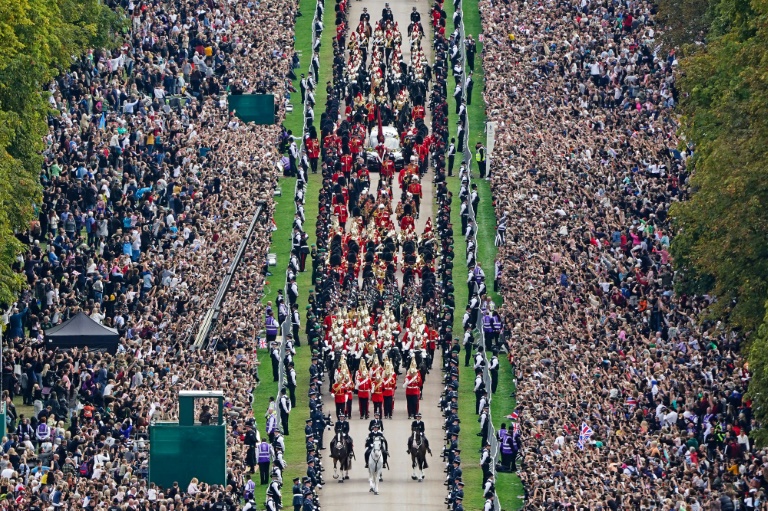
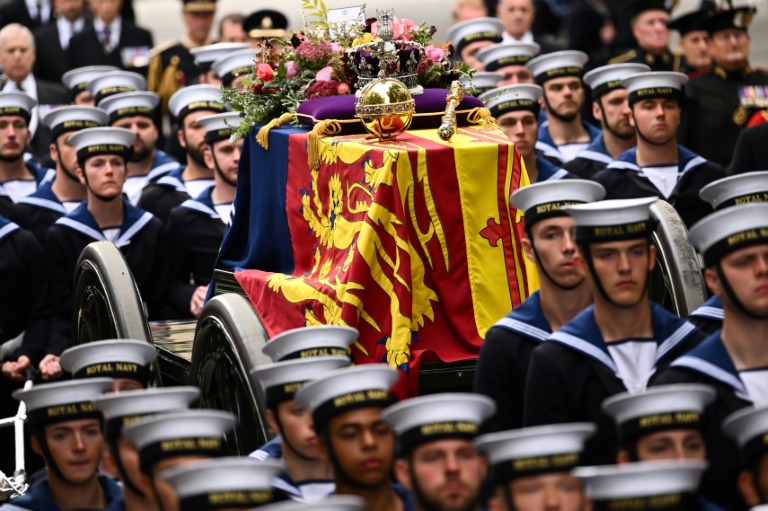
Huge crowds gathered in London to watch as the queen’s flag-draped coffin, topped with the Imperial State Crown, her orb and sceptre, was carried slowly to a gun carriage from parliament’s Westminster Hall where it had lain in state since Wednesday.

To the tune of pipes and drums, the gun carriage — used at every state funeral since Queen Victoria’s in 1901 — was then drawn by 142 junior enlisted sailors in the Royal Navy to Westminster Abbey.

The thousand-year-old church’s tenor bell tolled 96 times at one-minute intervals — one for every year of her life — and stopped a minute before the service began at 11:00 am (1000 GMT).

In his funeral sermon, Archbishop of Canterbury Justin Welby praised the queen’s life of duty and service to the UK and Commonwealth.

“People of loving service are rare in any walk of life. Leaders of loving service are still rarer,” he told the 2,000 guests, who included US President Joe Biden and Japan’s Emperor Naruhito.

The coffin was then borne, to the rhythmic strains of funeral marches, on a three-hour journey through the streets of London to Windsor Castle, west of the capital.

All along the route, a sea of arms were raised aloft, clutching mobile phones, to record the choreographed display of military precision.

The last chants of “God save the queen” were heard as onlookers scattered flowers on the road, and muffled church bells rang in the distance.

– Corgis –

Army veteran Robert MacDonald, 48, was among the dense crowd lining the three-mile (five-kilometre) Long Walk leading up to Windsor Castle.

“I was in the infantry for 26 years, so the queen was my boss,” he said, adding he wanted to “salute one last time as the hearse passed by”.

On the Long Walk, the military cortege passed by the late queen’s Fell pony, Carltonlima Emma, standing without a rider. It was met at the castle by her last two corgi dogs, Muick and Sandy.

The queen — the longest-serving monarch in British history — died at Balmoral, her Scottish Highland retreat, on September 8 after a year of declining health. 

Her eldest son and successor, King Charles III, dressed in ceremonial military uniform, followed the solemn processions in London, alongside his three siblings.

They were accompanied by Charles’s eldest son Prince William, William’s estranged brother, Prince Harry, and other senior royals.

William’s two eldest children, George, aged nine, and Charlotte, aged seven, who are next in line to the throne, also walked behind the coffin in Westminster Abbey.

Late Sunday, Charles, 73, and his wife, Queen Consort Camilla, 75, said they had been “deeply touched” by the public’s flood of messages.

“I wanted simply to take this opportunity to say thank you,” he said.

Britain, a country much changed since the queen’s coronation in the same abbey in 1953, has dug deep into its centuries of tradition to honour the only monarch that most of its people have ever known.

– ‘Moment of history’ –

“It’s once in a lifetime,” said student Naomi Thompson, 22, camped out in the crowds at London’s Hyde Park.

“It’s a moment of history,” said engineer Alice Garret, 28.

John MacKinnon, a 49-year-old insurance broker from London, added: “The ceremony was perfect in every way. 

“Very spectacular, as it should be for a great queen.”

Others unable to be in London gathered in cinemas and churches around England, Scotland, Wales and Northern Ireland to watch the service and procession on big screens.

Auto engineer Jamie Page, a 41-year-old former soldier, stood on Whitehall to observe the funeral procession, wearing his military medals from service in the Iraq war.

“She means everything, she was like a gift from God,” he said.

But on Charles, the oldest person yet to ascend the British throne, Page added: “Who knows, time will tell.”

The funeral — watched by the crowds in silence — lasted just under an hour.

It ended with trumpeters playing “The Last Post”, two minutes of silence in memory of the queen and the reworded national anthem, “God Save the King”.

Oscar-winning actor and Royal Shakespeare Company veteran Kenneth Branagh was in attendance, telling AFP it was “very solemn and done with great compassion”. 

“The music was very beautiful. It felt beautifully judged, respectful and sensitive,” he said.

– Driven to Windsor –

The long procession filed past Downing Street, government buildings in Whitehall, through Horse Guards Parade and up The Mall, the tree-lined avenue that leads to Buckingham Palace decked out in red, white and blue.

At nearby Wellington Arch, 6,000 members of the armed forces who had marched in hypnotic lockstep halted and the coffin was transferred to the royal hearse.

Charles saluted and the national anthem played again before the hearse headed by road to Windsor Castle.

The queen will be buried alongside her father king George VI, her mother queen Elizabeth and sister princess Margaret, reuniting in death the family who once called themselves “us four”. 

The coffin of her husband, Prince Philip, who died last year aged 99, will also be transferred to lie alongside her.  

Elizabeth’s funeral could not be more different from Philip’s at St George’s Chapel, Windsor, in April 2021.

Coronavirus restrictions limited mourners to just 30, led by the queen, a solitary figure in mourning black and a matching facemask. 

In contrast on Monday, the abbey was packed with dignitaries and some ordinary Britons who were honoured for their military or community service, especially during the Covid pandemic.

“You were fortunate to have had her for 70 years; we all were,” Biden said on Sunday after signing a book of condolence. “The world is better for her.”

In the abbey pews was Liz Truss, whom the queen appointed as the 15th British prime minister of her reign just two days before her death, in her last major ceremonial duty.

All of Truss’s living predecessors were there plus her counterparts and representatives from the 14 Commonwealth countries outside Britain where Charles is also head of state.

Whether they remain constitutional monarchies or become republics is likely to be the defining feature of Charles’s reign.

– Royal vault –

The queen’s death has prompted deep reflection about the Britain she reigned over, the legacy of its past, its present state and what the future might hold, as well as the values of lifelong service and duty she came to represent during her 70-year reign.

Hundreds of thousands of people are estimated to have queued, sometimes for up to 25 hours and overnight, to file past the queen’s coffin as it lay in state.

Chrissy Heerey, a serving member of the Royal Air Force who joined the marathon queue twice, was the last person through the doors early Monday and described the experience as “amazing”.

Throughout the procession after the funeral, Big Ben, the giant bell atop the Elizabeth Tower at one end of the Houses of Parliament, tolled and military guns fired at one-minute intervals.

At Windsor, the Sebastopol Bell — captured in Crimea in 1856 — and the Curfew Tower Bell also sounded.

A vast television audience had been expected to watch the funeral worldwide and online, in a sign of the enduring fascination with the woman once described as “the last global monarch”.

At Windsor, the queen’s crown, orb and sceptre were removed and placed on the altar at a committal service. 

The most senior officer of the royal household, the lord chamberlain, broke his “wand of office” and placed it on the coffin, symbolising the end of her reign.

The lead-lined oak casket, draped with the queen’s colours, was then lowered into the Royal Vault.

A lone bagpiper played a lament, the mournful tune fading as he walked away.

A private interment ceremony will take place at the adjoining King George VI Memorial Chapel at 1830 GMT.

Afghanistan frees American in exchange for Taliban ally

An American navy veteran detained in Afghanistan since 2020 was released in exchange for a Taliban ally imprisoned in the US for heroin smuggling, US and Afghan officials announced Monday.

The Taliban government freed Mark Frerichs, a navy veteran who was working as a civil engineer on construction projects in Afghanistan when he was detained 31 months ago.

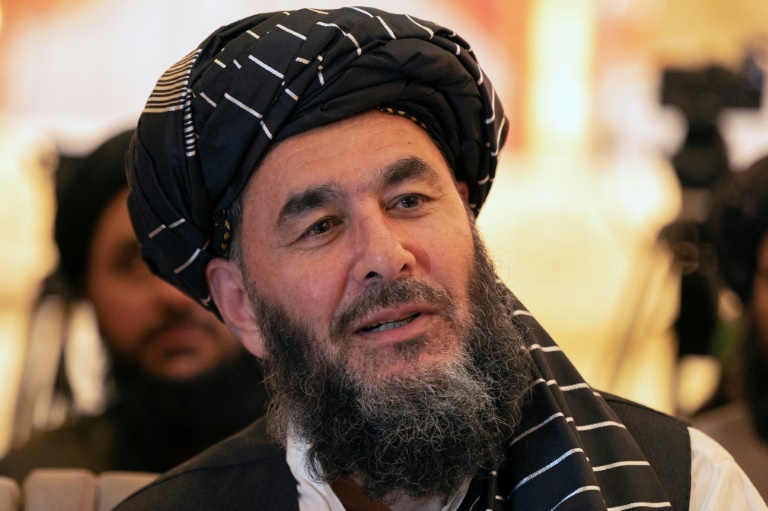
The US government meanwhile released Bashar Noorzai, a former regional strongman who was sentenced to life imprisonment in a US court 17 years ago for smuggling large amounts of heroin.

“After long negotiations, US citizen Mark Frerichs was handed over to an American delegation and that delegation handed over (Noorzai) to us today at Kabul airport,” Afghan Foreign Minister Amir Khan Muttaqi said at a press conference.

“We are happy that at Kabul International Airport, in the capital of Afghanistan, we witnessed the wonderful ceremony of one of our compatriots returning home.”

Frerichs meanwhile flew to Doha, a US official said, adding that he was “in stable health.”

“Today, we have secured the release of Mark Frerichs, and he will soon be home,” President Joe Biden said in a statement.

“Bringing the negotiations that led to Mark’s freedom to a successful resolution required difficult decisions, which I did not take lightly,” he said.   

– Hero’s welcome –

Noorzai was welcomed with a hero’s fanfare by the government of the newly-styled Islamic Emirate of Afghanistan (IEA). Photos show he was greeted by masked Taliban soldiers bearing floral garlands.

“If the IEA had not shown its strong determination, I would not have been here today,” Noorzai said.

“My release in exchange for an American will be a source of peace between Afghanistan and Americans.”

Noorzai is the second Afghan inmate released by the United States in recent months. In June, Assadullah Haroon was released after 15 years of detention in the United States’ notorious Guantanamo Bay prison.

Haroon was accused of links to Al-Qaeda but languished without charge for years at the US detention centre in Cuba, after his arrest in 2006 while working as a honey trader.

Afghan security analyst Hekmatullah Hekmat said Noorzai’s release was a “major achievement” for Kabul’s new rulers.

“The Taliban can tell their foot soldiers and Afghans that they are able to bring back their people held by opposition groups,” he told AFP.

Muttaqi said the homecoming of Noorzai marks the beginning of a “new chapter” in relations between Afghanistan and the United States.

– ‘Non-negotiable’ –

For Washington Frerichs’ release was a priority issue to resolve after US forces withdrew from Afghanistan in August 2021 following the Taliban’s seizure of power.

The United States and allies have refused to recognise the new government, with Washington repeatedly telling the Taliban that they will have to “earn” legitimacy.

Biden had warned in January that the Taliban must release Frerich “before it can expect any consideration of its aspirations for legitimacy.”

Noorzai, a militia commander, once fought with US-backed mujahideen forces against the Soviet occupation of Afghanistan and was a close associate of the Taliban’s late founder Mullah Omar.

While he held no official position, Noorzai had “provided strong support including weapons” for the Taliban in the 1990s, Taliban government spokesman Zabihullah Mujahid told AFP on Monday.

After travelling to the United States in 2005 he was arrested, accused of running a “worldwide narcotics network.” When released he had served 17 years of a life sentence in a federal prison.

– Delayed by Zawahiri killing –

Biden, who spoke to Frerichs’ family ahead of the release, did not mention the deal involved.

But a senior Biden administration official said that the president okayed the swap in June after the Taliban made clear they wanted Noorzai in exchange for Frerichs’ freedom.

Granting Noorzai clemency and returning him would “not materially change” the situation for Americans or the state of the Afghan drug trade, the US official said.

The official said the deal was delayed as Biden ordered the drone strike that killed Al-Qaeda leader Ayman al-Zawahiri in his Kabul residence on July 31.

Immediately after that, Washington quickly resumed pressure on Kabul for the exchange, warning them not to harm Frerichs and that a release could “begin to rebuild trust,” the official said. 

Emotion and majesty at Queen Elizabeth II's funeral

Queen Elizabeth II’s funeral service at Westminster Abbey on Monday ebbed between moments of triumph and peace, lament and emotion — and awesome majesty.

Inside the imposing Gothic church, royalty and government leaders said farewell to a monarch whose longevity and omnipresence made her — in the words of French President Emmanuel Macron — “The Queen”.

It was at the abbey in 1953 that she was crowned. It was there that she married Prince Philip, in 1947.

The service contained touches referencing that history. 

The hymn “The Lord’s My Shepherd” was sung at her wedding to Philip; the choir’s anthem “O Taste and see how gracious the Lord is”, was composed for the coronation.

– Thunder of drums –

The hubbub as people took their seats quietened down a full hour before the service, then fell silent as foreign royalty slowly entered the abbey.

The coffin was borne in procession from nearby Westminster Hall and the thunder of the approaching drums and sound of the massed pipes reverberated in the church as the procession passed outside.

Westminster Abbey’s tenor bell tolled every minute for 96 minutes, signifying the age at which Britain’s longest-reigning sovereign died on September 8.

Each strike added to the anticipation, while the organ music, played in minor keys, grew louder and deeper as the bearer party approached.

As the coffin arrived at the Great West Door, the 2,000 congregants stood in a wave spreading towards the altar.

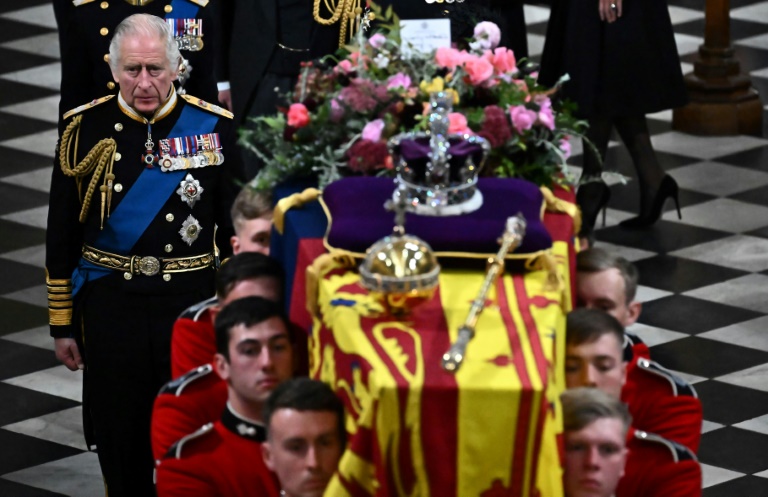
Eight Grenadier Guardsmen in scarlet jackets, their bearskin hats removed, carried the coffin over the memorial stone for Winston Churchill, the first of Queen Elizabeth II’s 15 prime ministers.

The late monarch’s eldest son, King Charles III, led the royal family walking slowly behind the coffin.

Prince William, now the heir to the throne, stayed close to his son Prince George, a nine-year-old boy who will one day take on his late great-grandmother’s duties.

William’s wife Catherine occasionally held the hand of their daughter Princess Charlotte, aged seven.

– A promise ‘well kept’ –

On the lead-lined, oak coffin lay a new wreath of flowers, with the message “In loving and devoted memory. Charles R”, meaning Rex, or king.

The coffin also bore the Royal Standard flag and the instruments of state — the Imperial State Crown, the Orb and the Sceptre.

These Crown Jewels were part of the coronation regalia when Queen Elizabeth II made her solemn oaths of service. They glittered in the flickering light of the candles surrounding the coffin. 

The service included Bible readings by Commonwealth Secretary-General Patricia Scotland and by Liz Truss — appointed by the queen as her last British prime minister only two days before she passed away.

In his sermon, Archbishop of Canterbury Justin Welby recalled how a young princess Elizabeth, aged 21, had pledged to serve her future subjects, in Britain and the Commonwealth, for life.

“Rarely has a promise been so well kept,” he said.

In April 2020, as millions in Britain plunged into anxious isolation during the Covid-19 lockdown, Queen Elizabeth II made a rare national broadcast to say “We will meet again”, reprising a line from a World War II song that kept hope burning in the darkest hours.

Welby ended his sermon by saying all who followed Queen Elizabeth II’s example could say those words with her.

– Silence, and peace –

During the prayers, the sun shone through the vast south rose window, bringing out the Royal Standard’s vivid red, blue and yellow hues on the coffin.

After the Last Post’s final note died out in the roof, a two-minute silence fell.

It was broken by trumpets sounding a triumphant reveille.

The singing of the national anthem, now “God Save the King”, symbolised the transfer to a new reign. Throughout, King Charles stared straight ahead at his mother’s coffin.

The Queen’s Piper ended the state funeral with the traditional Scottish lament “Sleep, dearie, sleep”.

The bearer party then returned to take the coffin to the waiting procession on the slow march and drive to St George’s Castle, Windsor Castle.

In several steps, they gradually turned with the coffin to face the Great West Door.

At each turn, the Imperial State Crown’s 2,868 diamonds, 269 pearls, 17 sapphires and 11 emeralds sparkled anew, taking on different colours.

Bishop Rose Hudson-Wilkin, who served as the Queen’s Chaplin, told AFP afterwards: “It was beautiful. 

“It captured her essence, her faith and it felt as if we just said farewell not only to a mother but also to a woman of great esteem, and a woman who was loved.”

Britain and the world bid adieu to Queen Elizabeth II

Britain said farewell to Queen Elizabeth II on Monday at a historic state funeral attended by world leaders, before a ceremonial journey past hundreds of thousands of mourners to her final place of rest.

Huge crowds gathered in London to watch as the queen’s flag-draped coffin, topped with the Imperial State Crown, her orb and sceptre, was carried slowly to a gun carriage from parliament’s Westminster Hall where it had lain in state since Wednesday.

To the tune of pipes and drums, the gun carriage — used at every state funeral since Queen Victoria’s in 1901 — was then drawn by 142 junior enlisted sailors in the Royal Navy to Westminster Abbey.

The thousand-year-old church’s tenor bell tolled 96 times at one-minute intervals — one for every year of her life — and stopped a minute before the service began at 11:00 am (1000 GMT).

In his funeral sermon, Archbishop of Canterbury Justin Welby praised the queen’s life of duty and service to the UK and Commonwealth.

“People of loving service are rare in any walk of life. Leaders of loving service are still rarer,” he told the 2,000 guests, who included US President Joe Biden and Japan’s Emperor Naruhito.

The coffin was then borne, to the rhythmic strains of funeral marches, on three-hour journey through the streets of London and on to Windsor Castle, west of the capital.

All along the route, a sea of arms were raised aloft, clutching mobile phones, to record the choreographed display of military precision.

The last chants of “God save the queen” were heard as onlookers scattered flowers on the road, and muffled church bells rang in the distance.

– Corgis –

Army veteran Robert MacDonald, 48, was among the dense crowd lining the three-mile (five-kilometre) Long Walk leading up to Windsor Castle.

“I was in the infantry for 26 years, so the queen was my boss. I came to… pay my respects and salute one last time as the hearse passed by,” he said.

On the Long Walk, the military cortege passed by the late queen’s Fell pony, Carltonlima Emma, standing without a rider. It was met at the castle by her last two corgi dogs, Muick and Sandy.

The queen — the longest-serving monarch in British history — died at Balmoral, her Scottish Highland retreat, on September 8 after a year of declining health. 

Her eldest son and successor, King Charles III, dressed in ceremonial military uniform, followed the solemn processions in London, alongside his three siblings.

They were accompanied by Charles’s eldest son Prince William, William’s estranged brother, Prince Harry, and other senior royals.

William’s two eldest children, George, aged nine, and Charlotte, aged seven, who are next in line to the throne, also walked behind the coffin in Westminster Abbey.

Late Sunday, Charles, 73, and his wife, Queen Consort Camilla, 75, said they had been “deeply touched” by the public’s flood of messages.

“I wanted simply to take this opportunity to say thank you,” he said.

Britain, a country much changed since the queen’s coronation in the same abbey in 1953, has dug deep into its centuries of tradition to honour the only monarch that most of its people have ever known.

– ‘Moment of history’ –

“It’s once in a lifetime,” said student Naomi Thompson, 22, camped out in the crowds at London’s Hyde Park.

“It’s a moment of history,” said engineer Alice Garret, 28.

John MacKinnon, a 49-year-old insurance broker from London, added: “The ceremony was perfect in every way. 

“Very spectacular, as it should be for a great queen.”

Others unable to be in London gathered in cinemas and churches around England, Scotland, Wales and Northern Ireland to watch the service and procession on big screens.

Auto engineer Jamie Page, a 41-year-old former soldier, stood on Whitehall to observe the funeral procession, wearing his military medals from service in the Iraq war.

“She means everything, she was like a gift from God,” he said.

But on Charles, the oldest person yet to ascend the British throne, Page added: “Who knows, time will tell.”

The funeral — watched by the crowds in silence — lasted just under an hour.

It ended with trumpeters playing “The Last Post”, two minutes of silence in memory of the queen and the reworded national anthem, “God Save the King”.

– Driven to Windsor –

The long procession filed past Downing Street, government buildings in Whitehall, through Horse Guards Parade and up The Mall, the tree-lined avenue that leads to Buckingham Palace decked out in red, white and blue.

At nearby Wellington Arch, 6,000 members of the armed forces who had marched in hypnotic lockstep halted and the coffin was transferred to the royal hearse.

Charles saluted and the national anthem played again before the hearse headed by road to Windsor Castle.

The queen will be buried alongside her father king George VI, her mother queen Elizabeth and sister princess Margaret, reuniting in death the family who once called themselves “us four”. 

The coffin of her husband, Prince Philip, who died last year aged 99, will also be transferred to lie alongside her.  

Elizabeth’s funeral could not be more different from Philip’s at St George’s Chapel, Windsor, in April 2021.

Coronavirus restrictions limited mourners to just 30, led by the queen, a solitary figure in mourning black and a matching facemask. 

In contrast on Monday, the abbey was packed with dignitaries and some ordinary Britons who were honoured for their military or community service, especially during the Covid pandemic.

“You were fortunate to have had her for 70 years; we all were,” Biden said on Sunday after signing a book of condolence. “The world is better for her.”

In the abbey pews was Liz Truss, whom the queen appointed as the 15th British prime minister of her reign just two days before her death, in her last major ceremonial duty.

All of Truss’s living predecessors were there plus her counterparts and representatives from the 14 Commonwealth countries outside Britain where Charles is also head of state.

– Royal vault –

Whether they remain constitutional monarchies or become republics is likely to be the defining feature of Charles’s reign.

The queen’s death has prompted deep reflection about the Britain she reigned over, the legacy of its past, its present state and what the future might hold, as well as the values of lifelong service and duty she came to represent during her 70-year reign.

Hundreds of thousands of people are estimated to have queued, sometimes for up to 25 hours and overnight, to file past the queen’s coffin as it lay in state.

Chrissy Heerey, a serving member of the Royal Air Force who joined the marathon queue twice, was the last person through the doors early Monday and described the experience as “amazing”.

Throughout the procession after the funeral, Big Ben, the giant bell atop the Elizabeth Tower at one end of the Houses of Parliament, tolled and military guns fired at one-minute intervals.

At Windsor, the Sebastopol Bell — captured in Crimea in 1856 — and the Curfew Tower Bell also sounded.

A vast television audience had been expected to watch the funeral worldwide and online, in a sign of the enduring fascination with the woman once described as “the last global monarch”.

At Windsor, the queen’s crown, orb and sceptre will be removed and placed on the altar at a committal service. 

The most senior officer of the royal household, the lord chamberlain, breaks his “wand of office” and places it on the coffin, symbolising the end of her reign.

The lead-lined oak casket, draped with the queen’s colours, will be lowered into the Royal Vault as a lone bagpiper plays a lament. 

A private interment ceremony will take place at the adjoining King George VI Memorial Chapel at 1830 GMT.
Rate hikes: a double-edged sword for central banks

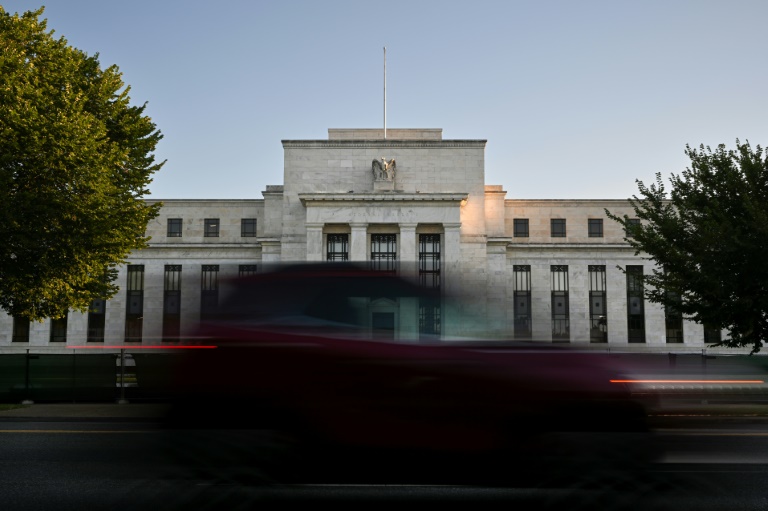
Central banks worldwide are using aggressive interest rate hikes to lasso galloping inflation, at the risk of pulling down the global economy with it.

The US Federal Reserve and its counterparts in Europe and most emerging economies have been raising rates this year as consumer prices have soared to decades-high levels.

While higher rates aim to tame runaway inflation by slowing economic activity, they can cause a recession if borrowing costs become too steep for businesses and individuals.

“It reminds me what used to happen in the Middle Ages: bloodletting,” Nobel laureate economist Joseph Stiglitz told AFP, referring to the belief at the time that patients could be cured from illnesses by making them bleed.

“When they let out the blood, the patient didn’t recover, usually, unless a miracle happened. And so they let out more blood and the patient got sicker and sicker,” Stiglitz said.

“I am afraid that central banks will do the same thing now,” he warned.

The Federal Reserve will announce its latest monetary policy decision on Wednesday, with investors fearing that after two straight rate increases of 0.75 percentage points, the bank could go for a full point this time.

The Bank of England and its peers in South Africa, Sweden and Switzerland are also expected to continue to tighten their monetary policies at their own meetings this week.

– ‘Transitory’ no more –

Consumer prices began to rise due to bottlenecks in supply chains as companies struggled to keep up with a pick-up in demand after economies began to emerge from Covid lockdowns.

After repeatedly describing inflation as “transitory” last year, the Federal Reserve and the European Central Bank changed their tune this year as Russia’s invasion of Ukraine caused energy and food prices to soar.

Central banks have since raised hikes in an almost synchronised way, raising concerns that their late and aggressive reactions could now do more harm than good.

“Did the economy really need this to slow down?” said Eric Dor, director of economic studies at the IESEG school of management in France.

“Inflation itself caused activity to slow down,” Dor said. “Households are losing their purchasing power, wages increases are lower than the inflation rate and (inflation) put a brake on consumption.”

ECB President Christine Lagarde acknowledged the possible hit to the economy last week.

“Will it cause a little loss of growth? It’s possible,” she said Friday at a conference in Paris. “It is a risk that we have to take after weighing it well.”

Earlier this month, US Treasury Secretary Janet Yellen said there is “certainly a risk” of an economic downturn.

But she noted the US job market is “exceptionally strong” with nearly two vacancies for every worker looking for a job.

– ‘Wrong prescription’ –

The United States is still haunted by the spectre of inflation that lasted for almost a decade in the 1970s and 1980s.

A World Bank report released last week said a worldwide slowdown accompanied by tighter monetary policies could trigger a global recession next year, with sharp declines in emerging and developing countries in particular.

While economists debate whether the cure for inflation might be worse than the disease, some disagree over the reasons behind the soaring prices.

Stiglitz said demand is not the cause.

“Central banks around the world are pretending or acting as if it was demand that created inflation,” he said, noting that higher rates will neither produce more energy nor food or help ease the global supply chain crisis.

“Using a recipe for the wrong diagnosis is getting the wrong prescription,” he said, adding that higher rates will raise the cost of making the investments needed to relieve the bottlenecks and raise rents in the United States.

Ukraine conflict may hike long-term grain prices 7%: study

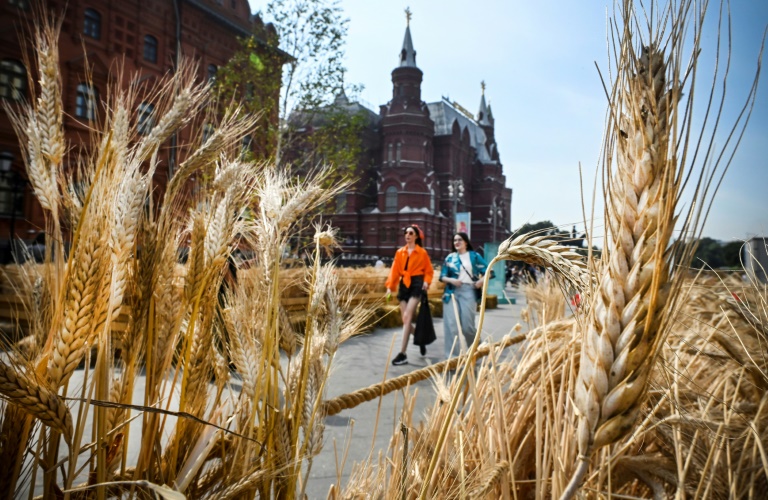
Russia’s invasion of Ukraine may cause long-term grain prices to rise seven percent, according to a study on Monday showing how expanded production elsewhere to compensate would lead to higher greenhouse gas emissions.

Russia and Ukraine are global breadbaskets, together exporting about 28 percent of the world’s wheat supply.

Russia’s blockade of Black Sea ports and sanctions on Moscow have caused short-term price surges and triggered fears of an acute hunger crisis. 

Researchers in the United States and Uruguay modelled the likely impact of the conflict on wheat and maize prices over the coming 12 months, looking at a variety of scenarios.

One model found that if Russian grain exports were halved and Ukrainian exports significantly reduced during that time, maize would be 4.6 percent more expensive and wheat 7.2 percent more expensive — even assuming that other exporters could step in and fill the shortfall. 

They said the price increase would persist as long as exports remained restricted.

To close the supply gap, the study found that other major producers would need to expand their grain growing areas significantly. 

Were all grain exports from Ukraine to cease, Australia would need to expand its wheat area by 1 percent, China by 1.5 percent, the European Union by 1.9 percent and India by 1.2 percent, according to the model.

This land-use change would lead to just over a billion tonnes of additional carbon dioxide equivalent added to the atmosphere, according to the study published in Nature Food. 

“The cropland expansion resulting from the war in Ukraine is occurring at the expense of more carbon emissions,” said lead author Jerome Dumortier, a researcher at the O’Neill School of Public and Environmental Affairs in Indianapolis, US.

United Nations chief Antonio Guterres warned in July that Russia’s invasion of Ukraine had combined with the lingering trade impacts of Covid-19 to create an “unprecedented global hunger crisis”.

Figures from the UN’s Food and Agriculture Organization show food prices are currently more than 10 percent higher than they were a year ago. 

Although Moscow and Kyiv reached an agreement in July to resume some grain exports, there are fears that the conflict could lead to years of elevated food prices. 

Dumortier said that it was not currently clear whether other grain producers were able to meet global demand, meaning prices could rise even further than predicted in the models. 

“There are drought conditions in South America, Europe, and China, and export restrictions from various countries,” he told AFP. 

“Given those hinderances to full adjustment, commodity prices may be higher than what is estimated in the paper.”

Ukraine conflict may hike long-term grain prices 7%: study

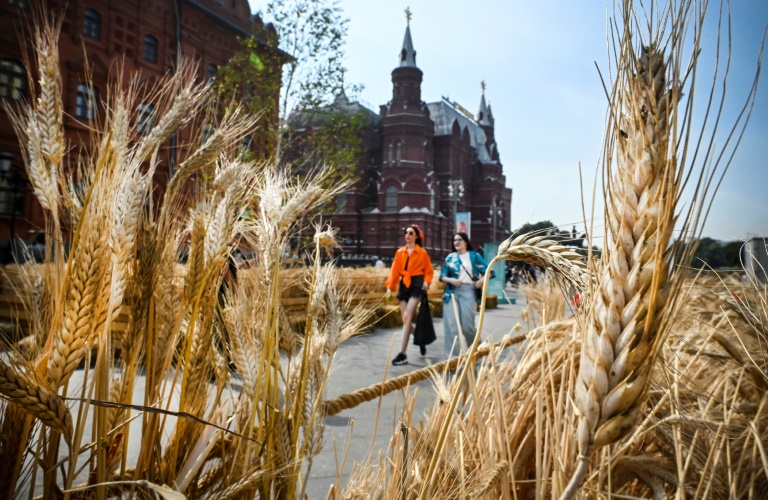
Russia’s invasion of Ukraine may cause long-term grain prices to rise seven percent, according to a study on Monday showing how expanded production elsewhere to compensate would lead to higher greenhouse gas emissions.

Russia and Ukraine are global breadbaskets, together exporting about 28 percent of the world’s wheat supply.

Russia’s blockade of Black Sea ports and sanctions on Moscow have caused short-term price surges and triggered fears of an acute hunger crisis. 

Researchers in the United States and Uruguay modelled the likely impact of the conflict on wheat and maize prices over the coming 12 months, looking at a variety of scenarios.

One model found that if Russian grain exports were halved and Ukrainian exports significantly reduced during that time, maize would be 4.6 percent more expensive and wheat 7.2 percent more expensive — even assuming that other exporters could step in and fill the shortfall. 

They said the price increase would persist as long as exports remained restricted.

To close the supply gap, the study found that other major producers would need to expand their grain growing areas significantly. 

Were all grain exports from Ukraine to cease, Australia would need to expand its wheat area by 1 percent, China by 1.5 percent, the European Union by 1.9 percent and India by 1.2 percent, according to the model.

This land-use change would lead to just over a billion tonnes of additional carbon dioxide equivalent added to the atmosphere, according to the study published in Nature Food. 

“The cropland expansion resulting from the war in Ukraine is occurring at the expense of more carbon emissions,” said lead author Jerome Dumortier, a researcher at the O’Neill School of Public and Environmental Affairs in Indianapolis, US.

United Nations chief Antonio Guterres warned in July that Russia’s invasion of Ukraine had combined with the lingering trade impacts of Covid-19 to create an “unprecedented global hunger crisis”.

Figures from the UN’s Food and Agriculture Organization show food prices are currently more than 10 percent higher than they were a year ago. 

Although Moscow and Kyiv reached an agreement in July to resume some grain exports, there are fears that the conflict could lead to years of elevated food prices. 

Dumortier said that it was not currently clear whether other grain producers were able to meet global demand, meaning prices could rise even further than predicted in the models. 

“There are drought conditions in South America, Europe, and China, and export restrictions from various countries,” he told AFP. 

“Given those hinderances to full adjustment, commodity prices may be higher than what is estimated in the paper.”

Lebanon currency hits new low, sparking protests

The Lebanese pound fell to a new low against the US dollar on the black market Monday as a severe economic downturn has sparked bank hold-ups by angry depositors and anti-government protests.

Recent weeks have seen a spate of incidents in which people armed with real or toy guns held up banks to demand access to their frozen savings, only to be celebrated as folk heroes.

Amid the turmoil, the pound plunged to 38,600 against the greenback on Monday, according to websites monitoring the exchange rate, a record low for the beleaguered currency.

For decades, the Lebanese pound was pegged at 1,507 to the dollar, meaning that it has lost around 95 percent of its black market value since 2019.

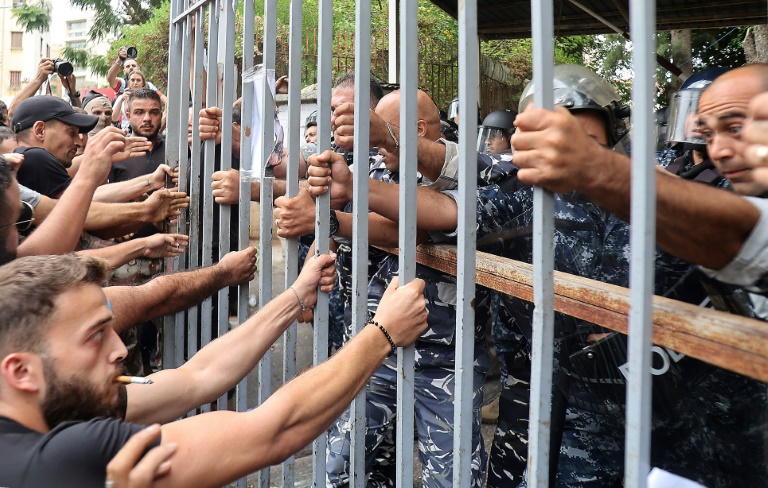
At the Justice Palace in Beirut on Monday, dozens stormed through a metal gate outside to protest the detention of two people over last week’s bank hold-ups.

Elsewhere, activists angered by Lebanon’s deep economic crash blockaded roads in the capital and in the northern port city of Tripoli. 

A financial crash widely blamed on government corruption and mismanagement has caused the worst economic crisis in Lebanon’s history.

Lebanese banker Saeb El-Zein said the pound’s decline was due to a rising demand for dollars on the black market following the government’s decision to lift state subsidies, including on fuel. 

– ‘Slow progress’ –

With four out of five Lebanese now living in poverty according to the United Nations, the country has been desperately seeking a bailout from the International Monetary Fund.

An IMF delegation arrived in Lebanon on Monday to follow up on the implementation of the reforms it demands, following a staff-level agreement in April on a $3 billion loan programme.

“There’s been slow progress in implementing some of the critical actions that we think are required to move forward with a programme,” IMF spokesman Gerry Rice said last week.

Amid the painful crisis, Lebanese depositors have been locked out of their foreign currency savings by banking controls that have gradually tightened since 2019.

Banks have in the past been targeted in street protests, often leaving their windows and ATMs smashed. 

Now, many frustrated depositors, unable to transfer or withdraw their dollar deposits, have resorted to desperate bank heists to free their money.

Lebanon saw at least seven such hold-ups last week, five of them on a single day.

As a result, Lebanese banks sealed their doors on Monday as part of a three-day closure due to the mounting security concerns.

Close Bitnami banner
Bitnami