World

'Extremely rare' Rameses II-era burial cave found in Israel

Israeli archaeologists on Sunday announced the “once-in-a-lifetime” discovery of a burial cave from the time of ancient Egyptian Pharaoh Rameses II, filled with dozens of pottery pieces and bronze artefacts.

The cave was uncovered on a beach Tuesday, when a mechanical digger working at the Palmahim national park hit its roof, with archaeologists using a ladder to descend into the spacious, man-made square cave.

In a video released by the Israel Antiquities Authority, gobsmacked archaeologists shine flashlights on dozens of pottery vessels in a variety of forms and sizes, dating back to the reign of the ancient Egyptian king who died in 1213 BC.

Bowls — some of them painted red, some containing bones — chalices, cooking pots, storage jars, lamps and bronze arrowheads or spearheads could be seen in the cave.

The objects were burial offerings to accompany the deceased on their last journey to the afterlife, found untouched since being placed there about 3,300 years ago.

At least one relatively intact skeleton was also found in two rectangular plots in the corner of the cave.

“The cave may furnish a complete picture of the Late Bronze Age funerary customs,” said Eli Yannai, an IAA Bronze Age expert.

It is an “extremely rare… once-in-a-lifetime discovery”, Yannai said, pointing to the extra fortune of the cave having remained sealed until its recent uncovering.

– ‘Like an Indiana Jones movie’ –

The findings date to the reign of Rameses II, who controlled Canaan, a territory that roughly encompassed modern day Israel and the Palestinian territories. 

The provenance of the pottery vessels — Cyprus, Lebanon, northern Syria, Gaza and Jaffa — is testimony to the “lively trading activity that took place along the coast”, Yannai said in an IAA statement.

Another IAA archaeologist, David Gelman, theorised as to the identity of the skeletons in the cave, located in what is today a popular beach in central Israel.

“The fact that these people were buried along with weapons, including entire arrows, shows that these people might have been warriors, perhaps they were guards on ships — which may have been the reason they were able to obtain vessels from all around the area,” he said.

Regardless of who the inhabitants of the cave were, the find was “incredible,” said Gelman.

“Burial caves are rare as it is, and finding one that hasn’t been touched since it was first used 3,300 years ago is something you rarely ever find,” he said.

“It feels like something out of an Indiana Jones movie: just going into the ground and everything is just laying there as it was initially -– intact pottery vessels, weapons, vessels made out of bronze, burials just as they were.”

The cave has been resealed and is under guard while a plan for its excavation is being formulated, the IAA said. 

It noted that “a few items” had been looted from it in the short period of time between its discovery and closure. 
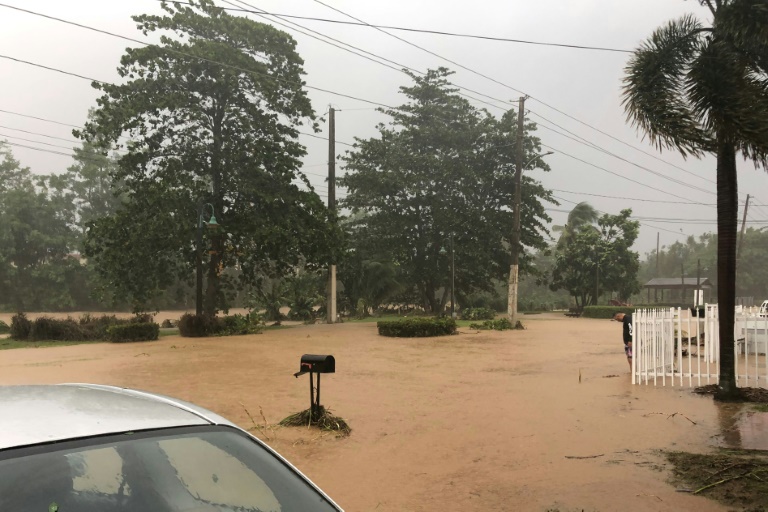
Power out in Puerto Rico, 'catastrophic' damage in several areas from Fiona

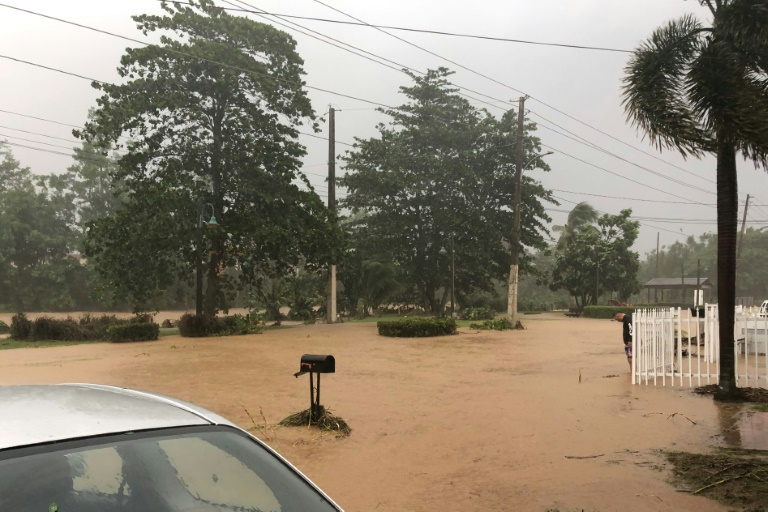
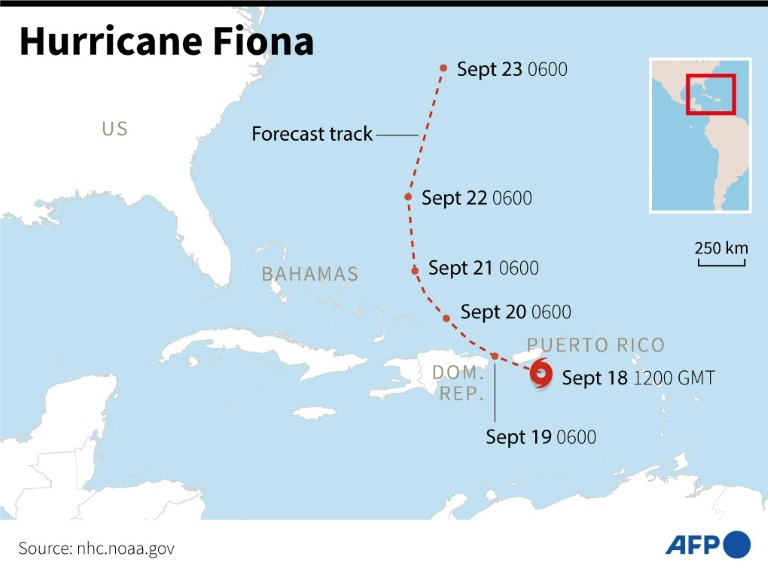
Hurricane Fiona knocked out power across Puerto Rico Sunday before making landfall, dumping torrential rain and wreaking “catastrophic” damage in several areas of the US island territory before spinning off towards the Dominican Republic.

Landslides, blocked roads, fallen trees and power lines, as well as a collapsed bridge in the town of Utuado in the central mountainous region were among the destruction already levied by Fiona, Governor Pedro Pierluisi told an evening press conference.

In addition, the entire territory of more than three million people lost power as the hurricane neared, with Pierluisi reporting the electrical system out of service.

Although the hurricane’s eye is now off the territory’s coast, destructive rain and devastating flash floods are expected to buffet the islands overnight before dealing a blow to the Dominican Republic on Monday.

Fiona will go down as a “catastrophic event due to the impacts of flooding” in Puerto Rico’s central mountainous region, east and south, Pierluisi tweeted, adding that 9-13 inches (23-33 centimeters) of rain had fallen in just five hours.

“Rainfall amounts will produce catastrophic life-threatening flash floods and urban flooding across Puerto Rico and portions of the eastern Dominican Republic, along with mudslides and landslides in areas of higher terrain,” the US National Hurricane Center (NHC) said.

The hurricane has also left some 196,000 people without drinking water as a result of power outages and flooded rivers, officials said.

Ahead of Fiona’s arrival in the Dominican Republic, President Luis Abinader suspended work in the public and private sectors for Monday.

It had made landfall in Puerto Rico Sunday afternoon as a Category One hurricane packing sustained winds of 85 miles (140 kilometers) per hour, at the lowest end of the five-tier Saffier-Simpson scale.

Fiona is expected to grow stronger, turning into a “major hurricane” before it heads north into the open waters of the Atlantic Ocean, according to the NHC.

– ‘Extremely delicate’ –

In the town of Utuado, a family saw the zinc roof of its house — ripped off in 2017 by Hurricane Maria, then replaced — torn off yet again, according to local media.

“This is an extremely delicate and sad situation. The damage we are seeing is catastrophic in several areas,” Pierluisi told reporters at the Sunday press conference.

“The entire island is experiencing a large accumulation of rain. Multiple cases of severe damage have been reported in many towns.”

The storm has already caused a fatality, with a man left dead when his house was swept away by flooding in the French overseas department of Guadeloupe, when Fiona was still classified as a tropical storm.

US President Joe Biden declared a state of emergency for Puerto Rico on Sunday, authorizing the Federal Emergency Management Agency to provide assistance.

The NHC also said tropical storm conditions are expected in the Turks and Caicos Islands and the southeastern Bahamas by late Monday or early Tuesday.

– ‘Stay in their homes’ –

Pierluisi told reporters that officials were reiterating “the request to our people, which the majority have heeded, to stay in their homes or seek refuge if they need it.”

The island — which has suffered from major infrastructure problems for years — was hit by hurricanes Irma and Maria in 2017, devastating its electrical grid.

The grid was privatized in June 2021 in an effort to resolve the problem of blackouts, but the issue has persisted, and the entire island lost power earlier this year.

The former Spanish colony became a US territory in the late 19th century before gaining the status of associated free state in 1950.

After years of financial woes and recession, in 2017 the island declared the largest bankruptcy ever by a local US administration. Later that year, hurricanes Irma and Maria added to the island’s misery, and sparked a feud between San Juan and Washington.

Then-president Donald Trump’s administration was widely accused of failing to provide sufficient federal aid to Puerto Rico after Hurricane Maria struck.

Footage of him tossing paper towels to survivors during a visit to the island drew criticism, and Trump later claimed the storm’s death toll had been inflated by Democrats to “make me look as bad as possible.”

Power out in Puerto Rico, 'catastrophic' damage in several areas from Fiona

Hurricane Fiona knocked out power across Puerto Rico Sunday before making landfall, dumping torrential rain and wreaking “catastrophic” damage in several areas of the US island territory before spinning off towards the Dominican Republic.

Landslides, blocked roads, fallen trees and power lines, as well as a collapsed bridge in the town of Utuado in the central mountainous region were among the destruction already levied by Fiona, Governor Pedro Pierluisi told an evening press conference.

In addition, the entire territory of more than three million people lost power as the hurricane neared, with Pierluisi reporting the electrical system out of service.

Although the hurricane’s eye is now off the territory’s coast, destructive rain and devastating flash floods are expected to buffet the islands overnight before dealing a blow to the Dominican Republic on Monday.

Fiona will go down as a “catastrophic event due to the impacts of flooding” in Puerto Rico’s central mountainous region, east and south, Pierluisi tweeted, adding that 9-13 inches (23-33 centimeters) of rain had fallen in just five hours.

“Rainfall amounts will produce catastrophic life-threatening flash floods and urban flooding across Puerto Rico and portions of the eastern Dominican Republic, along with mudslides and landslides in areas of higher terrain,” the US National Hurricane Center (NHC) said.

The hurricane has also left some 196,000 people without drinking water as a result of power outages and flooded rivers, officials said.

Ahead of Fiona’s arrival in the Dominican Republic, President Luis Abinader suspended work in the public and private sectors for Monday.

It had made landfall in Puerto Rico Sunday afternoon as a Category One hurricane packing sustained winds of 85 miles (140 kilometers) per hour, at the lowest end of the five-tier Saffier-Simpson scale.

Fiona is expected to grow stronger, turning into a “major hurricane” before it heads north into the open waters of the Atlantic Ocean, according to the NHC.

– ‘Extremely delicate’ –

In the town of Utuado, a family saw the zinc roof of its house — ripped off in 2017 by Hurricane Maria, then replaced — torn off yet again, according to local media.

“This is an extremely delicate and sad situation. The damage we are seeing is catastrophic in several areas,” Pierluisi told reporters at the Sunday press conference.

“The entire island is experiencing a large accumulation of rain. Multiple cases of severe damage have been reported in many towns.”

The storm has already caused a fatality, with a man left dead when his house was swept away by flooding in the French overseas department of Guadeloupe, when Fiona was still classified as a tropical storm.

US President Joe Biden declared a state of emergency for Puerto Rico on Sunday, authorizing the Federal Emergency Management Agency to provide assistance.

The NHC also said tropical storm conditions are expected in the Turks and Caicos Islands and the southeastern Bahamas by late Monday or early Tuesday.

– ‘Stay in their homes’ –

Pierluisi told reporters that officials were reiterating “the request to our people, which the majority have heeded, to stay in their homes or seek refuge if they need it.”

The island — which has suffered from major infrastructure problems for years — was hit by hurricanes Irma and Maria in 2017, devastating its electrical grid.

The grid was privatized in June 2021 in an effort to resolve the problem of blackouts, but the issue has persisted, and the entire island lost power earlier this year.

The former Spanish colony became a US territory in the late 19th century before gaining the status of associated free state in 1950.

After years of financial woes and recession, in 2017 the island declared the largest bankruptcy ever by a local US administration. Later that year, hurricanes Irma and Maria added to the island’s misery, and sparked a feud between San Juan and Washington.

Then-president Donald Trump’s administration was widely accused of failing to provide sufficient federal aid to Puerto Rico after Hurricane Maria struck.

Footage of him tossing paper towels to survivors during a visit to the island drew criticism, and Trump later claimed the storm’s death toll had been inflated by Democrats to “make me look as bad as possible.”

EU wants to suspend Hungary financing as it awaits reforms

The European Union’s executive arm on Sunday proposed suspending 7.5 billion euros in financing for Hungary, as it awaited potential “game changer” anti-corruption reforms from Budapest.

Hungarian Prime Minister Viktor Orban’s government also came under renewed fire for its close ties with Moscow, accused of having dragged its feet on freezing Russian assets since the invasion of Ukraine.

The European Union and Hungary have been at loggerheads for months, with Brussels suspecting the government led by nationalist leader Orban of undercutting the rule of law and using EU money to enrich its cronies.

The European Commission’s budget commissioner, Johannes Hahn, told journalists Sunday that the EU’s executive had proposed suspending funding “amounting to (an) estimated amount of 7.5 billion euros ($7.5 billion)”.

On Saturday, Hungary’s government said that MPs would vote next week on a series of laws aimed at easing the conflict.

The measures are expected to include setting up independent anti-corruption watchdogs to monitor the use of EU funds as well as steps to make the legislative process more transparent.

Hahn said he was “very confident that… we will see significant reforms in Hungary, which indeed will be a game changer”.

Hungary had committed to “fully inform” the commission about implementing measures to address their concerns by November 19, he added.

– ‘Trojan horse’ –

Poland — another eastern EU member accused of flouting the rule of law — said it would fully oppose any measure depriving Hungary of the funds.

Nationalist Prime Minister Mateusz Morawiecki told journalists Sunday that such a move would be “absolutely unauthorised”.

The EU’s Justice Commissioner Didier Reynders added to the tensions between Brussels and Hungary on Sunday as he said the government’s friendliness with the Kremlin was potentially behind its foot-dragging on implementing anti-Russian sanctions.

Reynders said that while the bloc had frozen assets worth 14.5 billion euros following Russia’s invasion of Ukraine, Hungary had only contributed just over than 3,000 euros to the total.

“We must put a lot of pressure” on Hungary because “we can assume that its very close ties with Russia are perhaps preventing it from acting”, he told television channel LCI.

In Ukraine meanwhile, presidential advisor Mykhaylo Podolyak described Hungary as a “Trojan horse seeking the collapse of (the) EU at the expense of European taxpayers.

“Let’s call a spade a spade… Orban hates Ukraine and dreams of (a) ‘Russian world’ in Europe. Should (the) EU finance these diversions?” he wrote on Twitter.

– Orban’s ‘last chance’? –

Orban’s administration has struck a more emollient tone towards Brussels recently. 

Justice Minister Judit Varga reacted to the Commission’s proposal by acknowledging that “we still have work to do” to end the row, while insisting: “We are moving in the right direction.

“We are working to ensure that the Hungarian people receive the resources they are entitled to!” Varga commented on her Facebook page Sunday.

Tibor Navracsics, the Hungarian minister in charge of negotiations with the EU, told reporters on Sunday he was confident that “we can conclude these negotiations before the end of the year and sign the related agreements” to enable the release of the funds.

But German MEP Daniel Freund told AFP that although the freezing of funds to Hungary was not enough to “stop Orban and his cronies from stealing EU funds”.

“Those are good measures, and they should be adopted, but they are not sufficient to stop corruption, let alone to make Hungary a functioning democracy,” he said.

French European Parliament member Valerie Hayer tweeted that this was the “last chance” for Orban.

“The time for discussions is over,” she said.

The final decision on the proposal will be taken by the EU Council.

Gergely Gulyas, Orban’s chief of staff, told reporters on Saturday that MPs would vote within days on measures designed to allay concerns about graft and a lack of transparency in public procurement.

The conciliatory move from Budapest comes as the Hungarian economy faces increasing pressure from a weakening local currency and fast-rising inflation. Both have hit new records this year.

On Thursday, the European Parliament declared that Hungary was no longer a “full democracy” a symbolic vote that infuriated Budapest.

EU wants to suspend Hungary financing as it awaits reforms

The European Union’s executive arm on Sunday proposed suspending 7.5 billion euros in financing for Hungary, as it awaited potential “game changer” anti-corruption reforms from Budapest.

Hungarian Prime Minister Viktor Orban’s government also came under renewed fire for its close ties with Moscow, accused of having dragged its feet on freezing Russian assets since the invasion of Ukraine.

The European Union and Hungary have been at loggerheads for months, with Brussels suspecting the government led by nationalist leader Orban of undercutting the rule of law and using EU money to enrich its cronies.

The European Commission’s budget commissioner, Johannes Hahn, told journalists Sunday that the EU’s executive had proposed suspending funding “amounting to (an) estimated amount of 7.5 billion euros ($7.5 billion)”.

On Saturday, Hungary’s government said that MPs would vote next week on a series of laws aimed at easing the conflict.

The measures are expected to include setting up independent anti-corruption watchdogs to monitor the use of EU funds as well as steps to make the legislative process more transparent.

Hahn said he was “very confident that… we will see significant reforms in Hungary, which indeed will be a game changer”.

Hungary had committed to “fully inform” the commission about implementing measures to address their concerns by November 19, he added.

– ‘Trojan horse’ –

Poland — another eastern EU member accused of flouting the rule of law — said it would fully oppose any measure depriving Hungary of the funds.

Nationalist Prime Minister Mateusz Morawiecki told journalists Sunday that such a move would be “absolutely unauthorised”.

The EU’s Justice Commissioner Didier Reynders added to the tensions between Brussels and Hungary on Sunday as he said the government’s friendliness with the Kremlin was potentially behind its foot-dragging on implementing anti-Russian sanctions.

Reynders said that while the bloc had frozen assets worth 14.5 billion euros following Russia’s invasion of Ukraine, Hungary had only contributed just over than 3,000 euros to the total.

“We must put a lot of pressure” on Hungary because “we can assume that its very close ties with Russia are perhaps preventing it from acting”, he told television channel LCI.

In Ukraine meanwhile, presidential advisor Mykhaylo Podolyak described Hungary as a “Trojan horse seeking the collapse of (the) EU at the expense of European taxpayers.

“Let’s call a spade a spade… Orban hates Ukraine and dreams of (a) ‘Russian world’ in Europe. Should (the) EU finance these diversions?” he wrote on Twitter.

– Orban’s ‘last chance’? –

Orban’s administration has struck a more emollient tone towards Brussels recently. 

Justice Minister Judit Varga reacted to the Commission’s proposal by acknowledging that “we still have work to do” to end the row, while insisting: “We are moving in the right direction.

“We are working to ensure that the Hungarian people receive the resources they are entitled to!” Varga commented on her Facebook page Sunday.

Tibor Navracsics, the Hungarian minister in charge of negotiations with the EU, told reporters on Sunday he was confident that “we can conclude these negotiations before the end of the year and sign the related agreements” to enable the release of the funds.

But German MEP Daniel Freund told AFP that although the freezing of funds to Hungary was not enough to “stop Orban and his cronies from stealing EU funds”.

“Those are good measures, and they should be adopted, but they are not sufficient to stop corruption, let alone to make Hungary a functioning democracy,” he said.

French European Parliament member Valerie Hayer tweeted that this was the “last chance” for Orban.

“The time for discussions is over,” she said.

The final decision on the proposal will be taken by the EU Council.

Gergely Gulyas, Orban’s chief of staff, told reporters on Saturday that MPs would vote within days on measures designed to allay concerns about graft and a lack of transparency in public procurement.

The conciliatory move from Budapest comes as the Hungarian economy faces increasing pressure from a weakening local currency and fast-rising inflation. Both have hit new records this year.

On Thursday, the European Parliament declared that Hungary was no longer a “full democracy” a symbolic vote that infuriated Budapest.

Fossil fuel reserves contain 3.5 tn tonnes of CO2: database

Burning the world’s remaining fossil fuel reserves would unleash 3.5 trillion tonnes of greenhouse gas emissions — seven times the remaining carbon budget to cap global heating at 1.5C — according to the first public inventory of hydrocarbons released Monday.

Human activity since the Industrial Revolution, largely powered by coal, oil and gas, has led to just under 1.2 degrees Celsius of warming and brought with it ever fiercer droughts, floods and storms supercharged by rising seas. 

The United Nations estimates that Earth’s remaining carbon budget — how much more pollution we can add to the atmosphere before the 1.5C temperature goal of the Paris Agreement is missed — to be around 360 billion tonnes of CO2 equivalent, or nine years at current emission levels.

The UN’s annual Production Gap assessment last year found that governments plan to burn more than twice the fossil fuels by 2030 that would be consistent with a 1.5C world. 

But until now there has been no comprehensive global inventory of countries’ remaining reserves. 

The Global Registry of Fossil Fuels seeks to provide greater clarity on oil, gas and coal reserves to fill knowledge gaps about global supply and to help policymakers better manage their phaseouts. 

Containing more than 50,000 fields across 89 countries, it found that some countries on their own held reserves containing enough carbon to blow through the entire world’s carbon budget. 

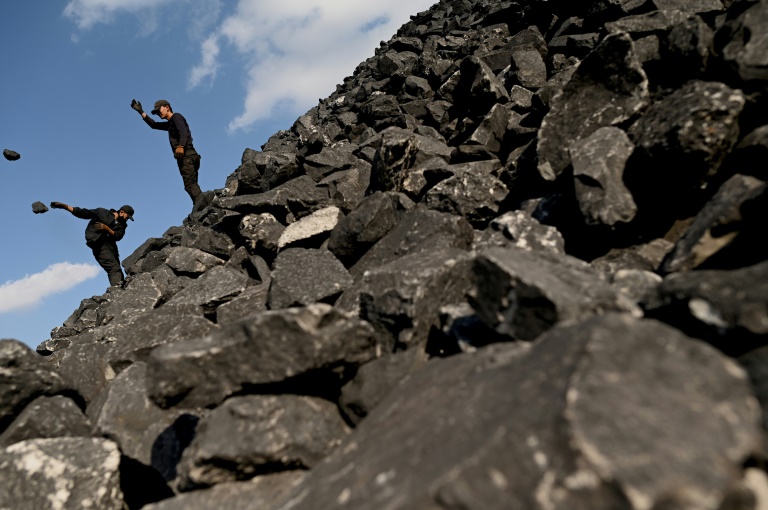
For example, US coal reserves embed 520 billion tonnes of CO2 equivalent. China, Russia and Australia all hold enough reserves to miss 1.5C, it found. 

All told, the remaining fossil fuel reserves contain seven times the emissions of the carbon budget for 1.5C.

“We have very little time to address the remaining carbon budget, said Rebecca Byrnes, deputy Director of Fossil Fuel Non-Proliferation Treaty, who helped compile the registry.

“As long as we’re not measuring what is being produced, it’s incredibly hard to measure or regulate that production,” she told AFP. 

– Transparency, accountability –

The registry has emissions data for individual oil, gas or goal projects.

Of the 50,000 fields included, the most potent source of emissions is the Ghawar oil field in Saudi Arabia, which churns out some 525 million tons of carbon emissions each year. 

The top 12 most polluting sites were all in the Gulf or Russia, according to the database.

Byrnes said that the inventory could help apply investor pressure in countries with large hydrocarbon reserves but saw little prospect of popular pressure to shift away from fossil fuels.

“This just demonstrates that it is a global challenge and many countries that are major producers but aren’t as democratic as the US for example — that’s where transparency comes in,” she told AFP. 

“We’re not kidding ourselves that the registry will overnight result in sort of a massive governance regime on fossil fuels. But it sheds a light on where fossil fuel production is happening to investors and other actors to hold their governments to account.”

The inventory also highlighted large variability in the price of carbon between countries, with taxes on emissions generating nearly $100 per tonne in Iraq but just $5 per tonne in Britain.

Simon Kofe, Tuvalu’s foreign minister, said the database could “assist in effectively ending coal, oil and gas production”.

“It will help governments, companies, and investors make decisions to align their fossil fuel production with the 1.5C temperature limit and, thus, concretely prevent the demise of our island homes, as well as all countries throughout our global community.”

Puerto Rico without power as Hurricane Fiona approaches

Hurricane Fiona barreled toward Puerto Rico’s coast on Sunday, knocking out all power and threatening to cause “catastrophic flooding” in the US island territory.

Packing winds of 85 miles (140 kilometers) per hour, Fiona is forecast to strengthen further in the next 48 hours as it moves toward Puerto Rico and the Dominican Republic before heading north into the open waters of the Atlantic Ocean.

The US National Hurricane Center (NHC) said the eye of the storm was approaching the southwest coast of Puerto Rico, and that “catastrophic flooding” was expected there and in the Dominican Republic, an island nation to the west.

“Additional strengthening is forecast during the next 48 hours while Fiona moves near Puerto Rico, the Dominican Republic and over the southwestern Atlantic,” the NHC said.

The National Weather Service’s San Juan office also warned on Twitter of “life-threatening flash flooding of streams, highways and streets, as well as urban, low-lying and poorly drained areas.”

The island lost power as Fiona neared Puerto Rico, Governor Pedro Pierluisi said in a statement posted on Twitter.

“Due to the effect of the hurricane, the electrical system is currently out of service,” he said, adding that flooding has been reported in various parts of the island.

The storm has already caused a fatality, with a man left dead when his house was swept away by flooding in the French overseas department of Guadeloupe, when Fiona was still classified as a tropical storm.

US President Joe Biden declared a state of emergency for Puerto Rico on Sunday as Fiona approached the island, authorizing the Federal Emergency Management Agency to provide assistance.

– ‘Go to shelters’ –

Pierluisi told a news conference the previous day that “we are asking residents not to leave their homes and to go to shelters if they are in areas prone to landslides and flooding.”

The island — which has suffered from major infrastructure problems for years — was hit by hurricanes Irma and Maria in 2017, devastating its electrical grid.

The grid was privatized in June 2021 in an effort to resolve the problem of blackouts, but the issue has persisted, and the entire island lost power earlier this year.

Power outages were hitting Puerto Rico even before the full force of Hurricane Fiona struck, with more than 388,000 people without electricity, according to tracking website poweroutage.us.

The former Spanish colony became a US territory in the late 19th century before gaining the status of associated free state in 1950.

After years of financial woes and recession, in 2017 the island declared the largest bankruptcy ever by a local US administration. Later that year, hurricanes Irma and Maria added to the island’s woes, and sparked a feud between San Juan and Washington.

Then-president Donald Trump’s administration was widely accused of failing to provide sufficient federal aid to Puerto Rico after Hurricane Maria struck.

Footage of him tossing paper towels to survivors during a visit to the island drew criticism, and Trump later claimed the storm’s death toll had been inflated by Democrats to “make me look as bad as possible.”

Italy's Salvini fires up base in northern fiefdom

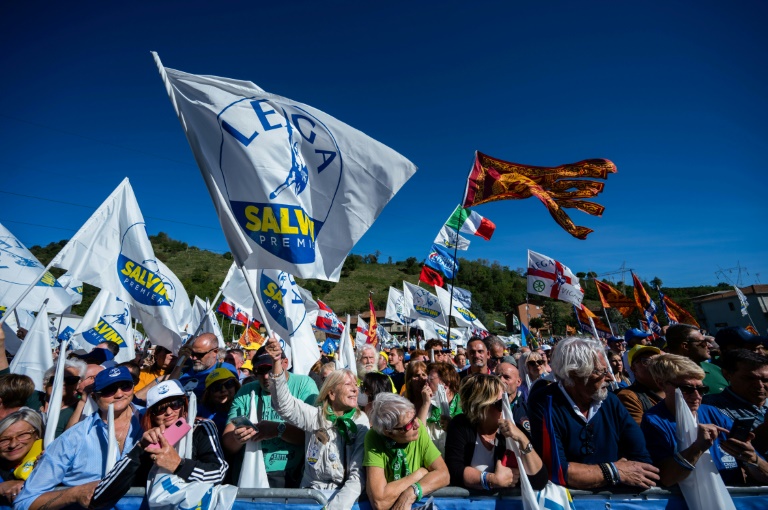
Italy’s anti-immigration leader Matteo Salvini, who is trailing the far-right’s Giorgia Meloni in the polls ahead of next week’s general election, sought on Sunday to galvanise his hard-right, populist, eurosceptic base.

“This is Italy, full of hope and dreams and looking to the future,” Salvini told the crowd in the northern town of Pontida, which has for three decades been the venue for the annual mass gathering of the far right.

On Sunday it was awash with the flags representing Italy’s provinces and the banners of the General Labour Union (UGL), founded in 1996 from the ashes of the neo-fascist CISNAL union.

Salvini’s League party claimed 100,000 people had turned up, many bussed in to hear “Il Capitano”, drink beer and buy T-shirts bearing Salvini’s name and the slogan “Italians first”.

The League is trailing Meloni’s post-fascist Brothers of Italy (FDI), polling at 12 percent to the FDI’s 24.

Surveys suggest immigration is less of a concern for Italians than the rampant inflation squeezing already stagnant wages.

Salvini hailed the result of the Swedish general election, where voters “sent the left packing” and ushered in an alliance of the right and far right.

He conceded Americans had rejected former US president Donald Trump and his cry of “America first” in favour of Democrat Joe Biden. “That’s democracy,” he said.

Salvini said the League’s top six priorities were to curb soaring energy prices and develop nuclear power, give more decision-making powers to the regions, make tax and legal reforms, guarantee retirement at 41 years of service and stop immigrant boats landing on Italy’s shores.

He also proposed scrapping the TV licence fee, defended women’s right to have an abortion and “traditional values” around gender and the family.

– ‘A lion entering the arena’ –

The League, FDI and former leader Silvio Berlusconi’s Forza Italia form a coalition seen as favourites for the September 25 poll.

The League’s current estimated vote share of 12 percent would represent a notable decline from its performances in 2018 and 2019 as it participated in successive governments while FDI remained in opposition.

League activist Anna Valdotta, 67, told AFP some supporters had not forgiven Salvini and left, but she remained loyal to the man she compared to “a lion entering the arena”.

Stefano, a 27-year-old postman, praised Meloni’s leadership and said she had won votes rather than Salvini losing them.

The League has toned down its secessionist aspirations for Lombardy, focusing instead on what it calls a European Union dominated by Germany and France “that declares war on Italian farmers and fishermen”.

The mainstream left-wing Democratic Party (PD) held a rally in nearby Monza, where its leader Enrico Letta criticised the Italian right’s links to populist Hungarian Prime Minister Viktor Orban.

PD is predicted to arrive in second place with 21 percent of the votes and has no major support among the left and centre.

Who's invited to Queen Elizabeth II's funeral — and who's not

Hundreds of foreign royals and heads of state are expected to attend the funeral of Queen Elizabeth II in London on Monday — one of the biggest diplomatic gatherings in decades.

Westminster Abbey has space for around 2,000 people, and around 500 heads of state and foreign dignitaries and their partners are expected, according to BBC and Sky News reports.

Also attending Britain’s first state funeral for six decades will be the queen’s family members, courtiers, public figures and UK politicians.

– World royalty –

A host of royals from Europe and further afield have confirmed their attendance at the funeral for Britain’s longest-serving monarch.

Japan’s Emperor Naruhito and Empress Masako will attend — their first overseas trip since assuming the throne in 2019. The visit marks a departure from Japanese tradition, which rarely sees the emperor attend funerals.

Europe’s royal families are closely related after centuries of mingling their bloodlines, so it will be no surprise to see several monarchs from the continent.

King Harald V of Norway, Prince Albert II of Monaco, Dutch King Willem-Alexander, Sweden’s King Carl XVI Gustaf and Philippe, King of the Belgians will all attend.

Denmark’s Queen Margrethe II, who scrapped a series of events marking her 50th jubilee following the death of her third cousin, Queen Elizabeth, is also coming.

Spain’s King Felipe VI will be there with his wife Queen Letizia. So too will his father, former king Juan Carlos I, who abdicated in disgrace in 2014 and now lives in self-imposed exile in the United Arab Emirates. 

Mohammed bin Salman, the crown prince of Saudi Arabia and its de facto ruler, has been invited, but it has not yet been confirmed if he will attend.

He was set to hold talks with British Prime Minister Liz Truss on Sunday, despite international outrage at the 2018 murder of journalist Jamal Khashoggi in Turkey by Saudi agents.

– Global leaders –

Ukrainian President Volodymyr Zelensky’s wife, Olena, seems likely to attend, having visited the queen’s coffin at Westminster Hall on Sunday.

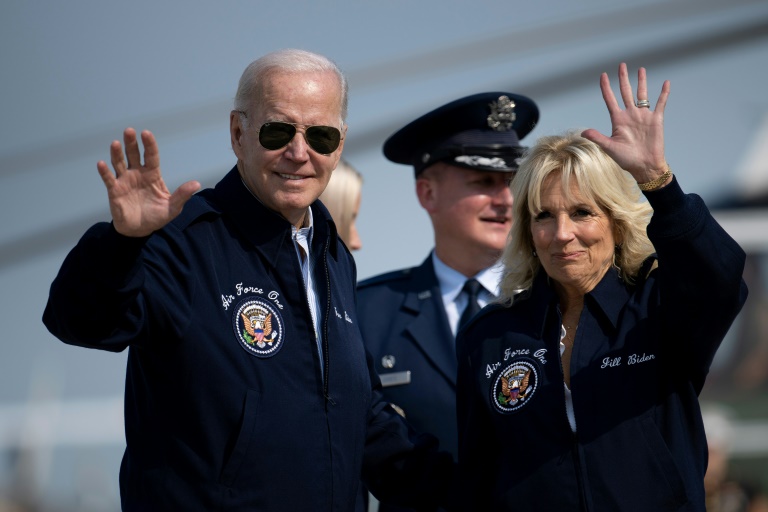
US President Joe Biden and his wife Jill head the diplomatic guest list and flew into Britain late on Saturday, also paying their respects in front of the coffin on Sunday.

Unlike some other leaders who have been asked to come in coaches arranged by the British government, Biden has reportedly been given permission to use his armoured presidential limousine, known as The Beast.

French President Emmanuel Macron will attend, the Elysee Palace said, to show the “unbreakable” bond with Britain and pay respects to the “eternal queen”.

He is also among the leaders allowed to use their own transport, British officials said.

Authoritarian Presidents Recep Tayyip Erdogan of Turkey and Jair Bolsonaro of Brazil are also coming.

China will send its vice-president, Wang Qishan, at the UK government’s invitation.

Despite Britain’s Brexit divorce from the European Union, European Commission President Ursula von der Leyen and European Council head Charles Michel will go as well.

Other heads of state at the funeral will include Presidents Sergio Mattarella of Italy, Frank-Walter Steinmeier of Germany, Isaac Herzog of Israel and Yoon Suk-yeol of South Korea.

In a symbolic move to pay tribute to the queen, whose 2011 state visit to the Republic of Ireland helped heal decades of tensions over Northern Ireland’s position in the UK, Irish Prime Minister Micheal Martin will be present.

– Commonwealth countries –

Numerous leaders will come from countries where Queen Elizabeth was the head of state.

They include Canadian Prime Minister Justin Trudeau, Australian premier Anthony Albanese and New Zealand PM Jacinda Ardern.

Leaders will also come from other states in the 56-nation Commonwealth, of which Queen Elizabeth was the symbolic figurehead.

They include South African President Cyril Ramaphosa, Bangladeshi PM Sheikh Hasina, Sri Lankan President Ranil Wickremesinghe and Fijian PM Frank Bainimarama.

– Not invited –

Due to strained ties, the UK has opted to invite ambassadors, not heads of state, from several countries — Iran, Nicaragua and North Korea.

Russia and Belarus are among a small group of nations excluded altogether following Moscow’s invasion of Ukraine.

Russian President Vladimir Putin — under a travel ban to the UK due to sanctions — had already said he would not attend.

But not inviting any Russian representative to the queen’s funeral was “particularly blasphemous towards Elizabeth II’s memory” and “deeply immoral”, the foreign ministry spokeswoman in Moscow said Thursday.

Russia and Belarus have embassies in London and their presidents sent King Charles III messages of condolences. 

Other countries with no invitations are Myanmar, Syria, Venezuela and Taliban-ruled Afghanistan.

Five things to know about the queen's coffin procession

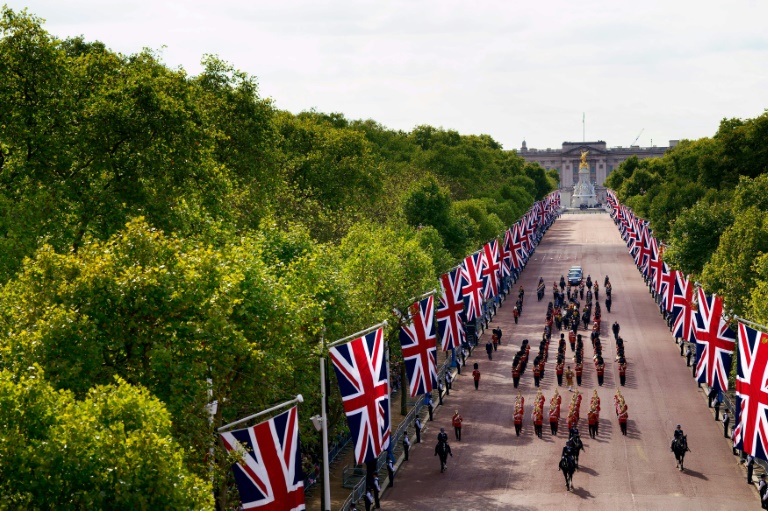
The ceremonial processions taking Queen Elizabeth II’s coffin to London’s Westminster Abbey and then towards her burial place at Windsor reflect the ancient traditions of the British monarchy.

– Hauled by the Royal Navy –

Royal Navy sailors will use ropes to pull the queen’s lead-lined coffin mounted on a gun carriage from Westminster Hall to Westminster Abbey. Their comrades in a team of 142 sailors will walk alongside to act as a brake if necessary.

This tradition dates back to Queen Victoria’s funeral in February 1901.

The horses meant to haul the gun carriage weighing more than two tons panicked and began kicking, threatening to drop the coffin.

One of the queen’s relatives, Prince Louis of Battenberg, a Royal Navy captain, suggested to the new king, Edward VII, that this problem could be avoided by replacing horses with sailors.  

Nine years later when Edward VII himself died, this idea was put into practice again and it has since become an unchanging tradition at state funerals.

– Pallbearers in bearskins –

Eight soldiers from the 1st Battalion Grenadier Guards will have the task of carrying the queen’s coffin from Westminster Hall to the gun carriage outside, and then into Westminster Abbey.

One of the most ancient in the British army, the regiment is one of five infantry regiments that make up the Queen’s (now King’s) Life Guard.

The regiment’s soldiers normally wear tall bearskin hats, a uniform they copied from the grenadiers of Napoleon’s Imperial Guard, defeated at Waterloo in 1815.

The soldiers will be accompanied by Service Equerries to the Queen, attendants who assist the royals in carrying out public duties.

– Guard of Honour –

Three regiments will play a particularly important role in the procession, marching very close to the queen’s coffin.

The Yeomen of the Guard, the oldest military unit in the British Army created in 1485, and the Honourable Corps of Gentlemen at Arms are two former bodyguard units for the royals that now perform only a ceremonial role.

The Yeomen of the Guard always wear a red-and-gold uniform dating back to the Tudor era (16th century). 

One of their best-known activities is searching the Palace of Westminster for gunpowder before the State Opening of Parliament.

This annual ritual commemorates the Gunpowder Plot, a failed attempt led by Guy Fawkes to blow up King James I and parliament in 1605. 

They will be followed by members of the Royal Company of Archers, who acted as bodyguards for Elizabeth II whenever she was in Scotland.

Some detachments from other regiments in Britain and from the armed forces of the Commonwealth, a group of countries headed by the British monarch, will rejoin the funeral procession from Westminster Abbey to Wellington Arch at Hyde Park Corner near Buckingham Palace. 

– Elizabeth II’s royal house –

While members of the royal family led by the new King Charles III will follow the casket, following them will be members of the queen’s royal household, including the most senior officer of the royal household, the lord chamberlain.

In front of them will come the pipers and drummers of the Scottish and Irish regiments, the Brigade of Gurkhas brigade made up of soldiers from Nepal that is part of the armed forces. There will also be 200 Royal Air Force musicians.

– 6,000 troops –

Some 6,000 soldiers, sailors and pilots from the British armed forces will take part in the procession, Chief of the Defence Staff Admiral Tony Radakin told the BBC on Sunday.

At several points along the route they will perform a royal salute, for example when they pass the Victoria Memorial commemorating the queen.

“For all of us, this is our last duty for Her Majesty the Queen and it’s our first prominent duty for His Majesty King Charles,” he said.

Close Bitnami banner
Bitnami