World

King greets world leaders as UK counts down to queen's funeral

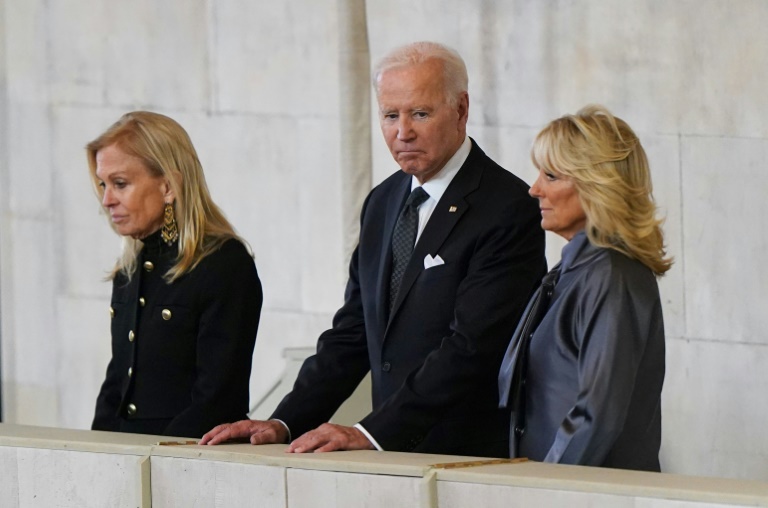
King Charles III welcomed world leaders to Buckingham Palace on Sunday ahead of the funeral of Queen Elizabeth II, as US President Joe Biden paid a final tribute to the late monarch.

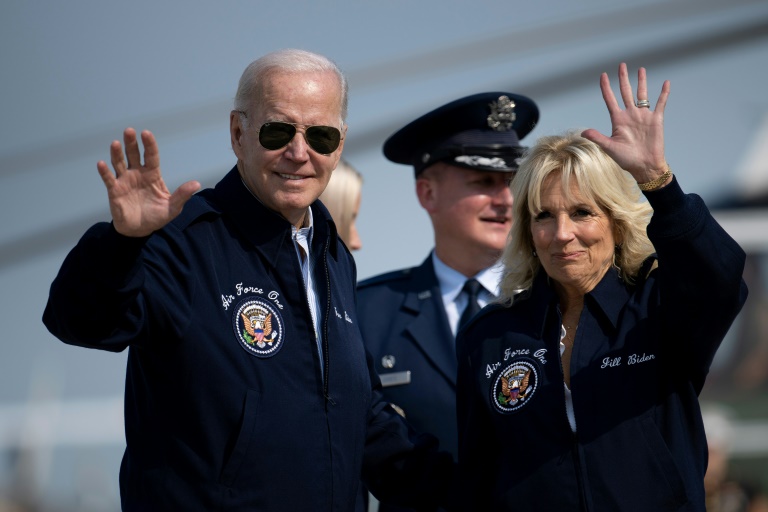
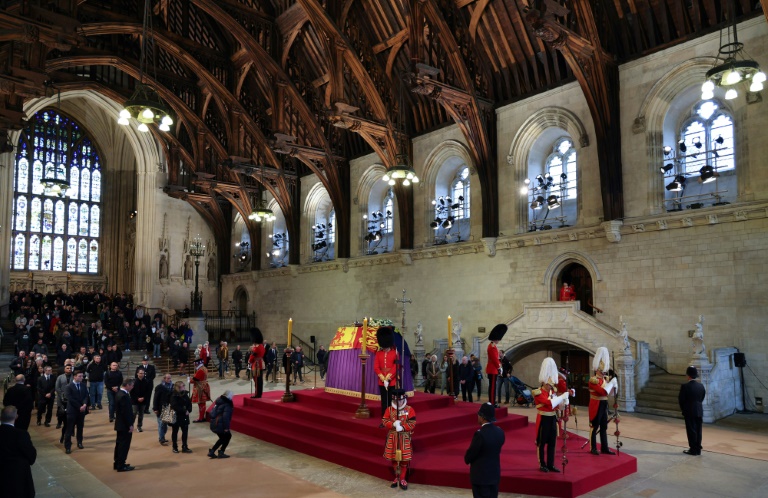
Biden crossed himself and put his hand on his heart while he stood with his wife Jill on a gallery overlooking the flag-draped casket in London’s cavernous Westminster Hall.

Members of the public filed by as time ticked down for them to pay their last respects to the only sovereign most Britons have ever known before she is laid to rest on Monday. 

Biden said the queen, who reigned for a record-breaking 70 years until her death on September 8 aged 96, exemplified the “notion of service”.

“To all the people of England, all the people of the United Kingdom, our hearts go out to you, and you were fortunate to have had her for 70 years, we all were. The world’s better for her,” Biden said after signing a book of condolences.

The US president then headed to Buckingham palace for a reception hosted by Charles for the dozens of leaders from Japan’s reclusive Emperor Naruhito to France’s Emmanuel Macron attending the funeral.   

Australia’s anti-monarchy Prime Minister Anthony Albanese, who viewed the lying-in-state and met Charles on Saturday, told Sky News Australia that the queen was “a constant reassuring presence”.

There was also a private audience at Buckingham Palace for Prime Minister Jacinda Ardern of New Zealand, which like Australia and 12 other Commonwealth realms now counts Charles as its sovereign.

“You could see that it meant a huge amount (to Charles) to have seen the sheer scale and outpouring of people’s love and affection for her late Majesty,” she told BBC television Sunday.

But in a sign of challenges ahead for the new king, Ardern added that she expected New Zealand to ditch the UK monarchy “over the course of my lifetime”.

Members of the public were already camping out in advance to catch a glimpse of Monday’s grand farewell at Westminster Abbey, which is expected to bring London to a standstill and be watched by billions of viewers worldwide.

– Country’s ‘glue’ –

E.J. Kelly, a 46-year-old schoolteacher from Northern Ireland, secured a prime spot with friends on the route the procession will take after the funeral.

“Watching it on television is wonderful but being here is something else,” she told AFP, equipped with camping chairs, warm clothing and extra socks.

“I will probably feel very emotional when it comes to it, but I wanted to be here to pay my respects.”

Crowds also thronged around Windsor Castle, west of London, where the queen’s coffin will be driven after the service for a private burial to lay her to rest alongside her late husband Prince Philip, her parents and her sister.

“I’ve lived here my whole life and I’ve never seen it this busy,” said Donna Lumbard, 32, a manager at a local restaurant. 

Starting with a single toll from Big Ben, British Prime Minister Liz Truss will lead a national minute’s silence at 8:00 pm (1900 GMT) on Sunday to reflect on the “life and legacy” of the queen.

Near the Scottish town of Falkirk, 96 lanterns were to be lowered into a “pool of reflection” at the foot of the Queen Elizabeth II Canal, before wreaths are placed in the water.

Those wanting to view the flag-draped casket have until 6:30 am (0530 GMT) on Monday to make it into Westminster Hall opposite the abbey.

As the queue continued to snake for miles along the River Thames on Sunday, the waiting time stood at more than nine hours, and the line is likely to be closed by the evening.

“To avoid disappointment please do not set off to join the queue,” the government said.

Andy Sanderson, 46, a supermarket area manager, was in the line and finally reaching parliament.

“She was the glue that kept the country together,” he said.

“She doesn’t have an agenda whereas politicians do, so she can speak for the people.”

– Grandchildren’s vigil –

As mourners slowly filed by on Saturday evening, Prince William and his estranged younger brother Prince Harry led the queen’s eight grandchildren in a 12-minute vigil around the coffin.

Harry — who did two tours with the British Army in Afghanistan — wore the uniform of the Blues and Royals cavalry regiment in which he served.

The move appeared to be the latest olive branch offered by Charles towards Harry and his wife Meghan after they quit royal duties and moved to North America, later accusing the royal family of racism.

Queen Elizabeth’s state funeral, the first in Britain since the death of her first prime minister Winston Churchill in 1965, will take place Monday at Westminster Abbey at 11:00 am.

Reflecting on the queen’s wishes for the hour-long ceremony, the former archbishop of York, John Sentamu, said she “did not want what you call long, boring services”.

“The hearts and people’s cockles will be warmed,” he told BBC television.

– Tributes from Camilla, Andrew –

Leaders from Russia, Afghanistan, Myanmar, Syria and North Korea were not invited to join the 2,000 guests.

Moscow’s foreign ministry last week called the decision “deeply immoral”, and “blasphemous” to the queen’s memory. China will attend at the abbey but was barred by parliamentary leaders from the lying-in-state.

As their private grief has played out in the glare of global attention, a fresh opinion poll from YouGov showed the royal family’s popularity has risen in the UK. 

William and his wife Kate topped the ranking of most popular royals while Charles saw his approval ratings rise 16 points since May.

The queen’s second son Prince Andrew, in disgrace over his links to billionaire US paedophile Jeffrey Epstein, paid tribute Sunday to the queen’s “knowledge and wisdom infinite, with no boundary or containment”.

Camilla gave her first public comments as the new queen consort, recalling her mother-in-law’s smile and “wonderful blue eyes”. 

“It must have been so difficult for her being a solitary woman” in a world dominated by men, Charles’s wife said in televised comments.

“There weren’t women prime ministers or presidents. She was the only one, so I think she carved her own role.”
High-flying French leftwinger quits over domestic violence

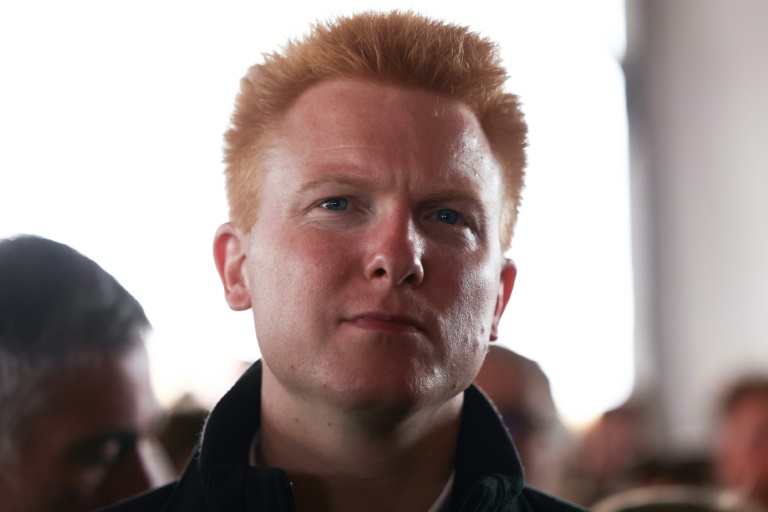
One of the most prominent young figures and potential future leader of France’s far-left on Sunday quit his party post after admitting violent behaviour towards his wife.

Adrien Quatennens, 32, has been a key figure of the France Unbowed (LFI) movement of far-left leader Jean-Luc Melenchon, who narrowly missed out on making the run off in this year’s presidential elections.

He is part of a young guard of the LFI who are seen as potential future leaders of the party once Melenchon, 71, bows out from politics after making the party France’s number one left wing force well ahead of the Socialists (PS). 

Quatennens announced he was resigning as a coordinator for the LFI as he admitted that one year ago he had hit his wife, with whom he is in the process of divorcing, during an argument. 

“I profoundly regret this action which was never repeated,” he said, after the allegation were first published this week by the Canard Enchaine satirical weekly.

Quatennens also admitted to “sending too many messages” to his wife “to try to convince her that our difficulties as a couple could be overcome”.

The MP said he would “take the consequences” by “retiring from” his job as coordinator to “protect the movement and its activists.”

His wife has filed what is called in France a “main courante” about his actions, which is a declaration to the police of an infraction but which does not usually start a criminal investigation. His lawyer said he was not aware of any investigation against Quatennens.

Melenchon said that Quatennens had been the victim of a campaign in the media and praised his “dignity and courage” while emphasising that a “punch is always unacceptable”.

The LFI leader, who has dominated the influential far-left movement in France over the last decade and played a major role in the 2017 and 2022 presidential elections, has said he does not plan to stand again for head of state.

Quatennens was until now seen as one of several members of an often radical long guard of the party who coud replace Melenchon along with figures such as the MP Clementine Autain.

Alaskans assess damage as powerful storm rumbles north

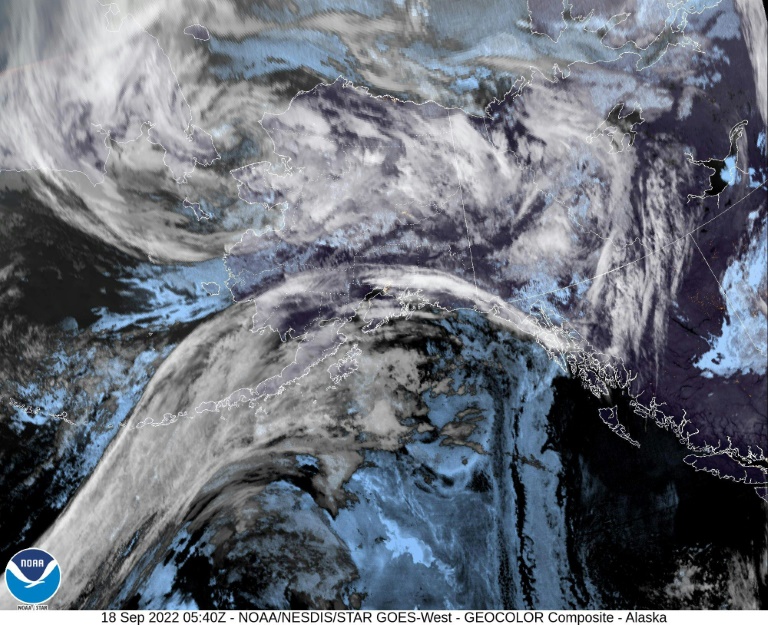
Residents in towns and villages on Alaska’s western coast were beginning Sunday to assess the damage from one of the most powerful storms to hit the region in decades.

The vast remains of Typhoon Merbok battered coastal towns as it rumbled northward, and by Sunday morning it had largely moved into the Chukchi Sea, north of the Bering Strait.

But coastal towns in that northern region remained under flood warnings Sunday, the National Weather Service (NWS) Fairbanks office tweeted.

The storm has hammered a vast stretch of Alaska’s lengthy coastline, bringing powerful winds, tidal surges and what the NWS described as “angry seas,” with waves of 50 feet (15 meters) or more.

Governor Mike Dunleavy has issued a disaster declaration.

Because of the remoteness of many coastal villages, and with communications limited, a full picture of the damage is expected to emerge slowly.

But officials and local residents said the destruction was severe. 

“So many communities I have visited, from Bethel, Unalakleet, Quinahgak, Hooper Bay and up to Nome and Teller, have been inundated by the storm,” Lisa Murkowski, one of Alaska’s US senators, tweeted Sunday.

“I am heartsick at the devastation.”

The state Emergency Operations Center said it had received “reports from multiple communities of power disruptions, damaged homes…flooding and infrastructure damage,” but no reports of injuries. 

Low-lying coastal areas were hardest hit, according to meteorologists and local news reports, with schools and airports flooded and some roads washed away. 

One small town — Golovin, on the Norton Sound — saw houses float away.

“We’ve had flooding in the past a few times, but it was never this severe,” Clarabelle Lewis, a tribal official with the Chinik Eskimo Community, told the Anchorage Daily News. “We’ve never had homes moved from their foundations.”

In Shaktoolik, a village of some 220 people on a gravelly spit between the Tagoomenik River and Norton Sound, Mayor Lars Sookiayak said that a berm built to protect the town from the sea — which had withstood many previous storms — had been wiped out.

“We’re pretty heartbroken,” he told Alaska Public Media News. “We’re almost becoming an island.”

Spielberg's 'The Fabelmans' wins Toronto festival top prize

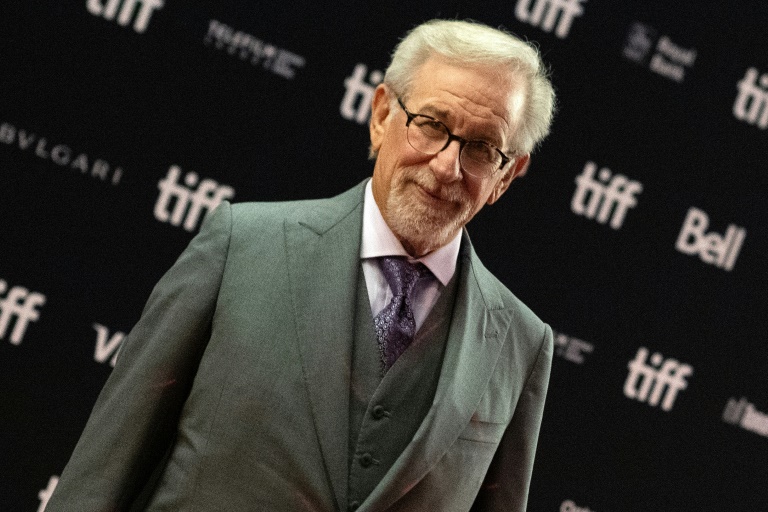
Steven Spielberg’s deeply personal new movie “The Fabelmans” secured its position as an early Oscars frontrunner Sunday by winning the top prize at the Toronto International Film festival.

“The Fabelmans,” out in theaters in November, is a semi-autobiographical drama based on Spielberg’s childhood, covering his parents’ troubled marriage, anti-Semitic bullying and his early efforts directing zero-budget movies with his teenage friends.

It earned a raucous standing ovation from the audience at its world premiere last weekend at the Toronto festival, known as TIFF.

“As I said on stage the other night, above all I’m glad I brought this film to Toronto,” Spielberg said in a statement Sunday.

“This is the most personal film I’ve made and the warm reception from everyone in Toronto made my first visit to TIFF so intimate and personal for me and my entire ‘Fabelman’ family.”

Voted for by audiences, the People’s Choice Award at North America’s biggest film festival has become something of an early Oscars bellwether, predicting eventual Academy Award best-picture winners such as “Nomadland” in 2020.

Spielberg, considered one of Hollywood’s greatest living directors, has won three Academy Awards: best picture and best director for “Schindler’s List,” and best director again for “Saving Private Ryan.”

He has been nominated for 19 Oscars to date, and will be expected to add to that tally at next year’s Academy Awards, on March 12 in Los Angeles.

The last 10 winners of the Toronto People’s Choice Awards were all nominated for best picture at the Academy Awards, with three winning the Oscar, including 2019’s surprise victor “Green Book.”

“12 Years a Slave” (2013), “The King’s Speech” (2010) and “Slumdog Millionaire” (2008) all began their journeys to Oscar glory with the Toronto prize.

At its premiere last weekend, Spielberg told a rapturous audience how he had long wanted to make such a deeply personal movie, but had eventually been motivated by the “fear” of the pandemic.

“I don’t think anybody knew in March or April of 2020 what was going to be the state of the art, the state of life, even a year from then,” said Spielberg.

“I just felt that if I was going to leave anything behind, what was the thing that I really need to resolve and unpack about my mom and my dad and my sisters?” 

“It wasn’t now or never, but it almost felt that way,” said the 75-year-old director.

Toronto runners-up included “Women Talking” by Sarah Polley and “Glass Onion: A Knives Out Mystery” by Rian Johnson.

The top documentary prize went to Hubert Davis’s “Black Ice,” a Canadian movie about historic racism in the world of professional ice hockey.

The Toronto festival, known for its large cinephile crowds and A-list stars, was hit badly by the pandemic, but this year saw the return of packed audiences and red carpets.

King to host world leaders as UK counts down to queen's funeral

US President Joe Biden was to pay his last respects in London to Queen Elizabeth II on Sunday, as ordinary mourners waiting in marathon lines were warned that time was running out to view her coffin lying in state. 

After witnessing the sombre scene in parliament’s Westminster Hall, Biden, Japan’s Emperor Naruhito and other world leaders were due to attend a reception with King Charles III.

Biden, who flew in late Saturday, has said that Charles’s mother “defined an era” after she reigned for a record-breaking 70 years leading up to her death on September 8, aged 96.

Australia’s anti-monarchy Prime Minister Anthony Albanese, who viewed the lying-in-state and met Charles on Saturday, told Sky News Australia that the queen was “a constant reassuring presence”.

There was also a private audience at Buckingham Palace for Prime Minister Jacinda Ardern of New Zealand, which like Australia and 12 other Commonwealth realms now counts Charles as its sovereign.

“You could see that it meant a huge amount (to Charles) to have seen the sheer scale and outpouring of people’s love and affection for her late Majesty,” she told BBC television Sunday.

But in a sign of challenges ahead for the new king, Ardern added that she expected New Zealand to ditch the UK monarchy “over the course of my lifetime”.

Members of the public were already camping out in advance to catch a glimpse of Monday’s grand farewell at Westminster Abbey, which is expected to bring London to a standstill and be watched by billions of viewers worldwide.

– Country’s ‘glue’ –

E.J. Kelly, a 46-year-old school teacher from Northern Ireland, secured a prime spot with friends on the route the procession will take after the funeral.

“Watching it on television is wonderful but being here is something else,” she told AFP, equipped with camping chairs, warm clothing and extra socks.

“I will probably feel very emotional when it comes to it, but I wanted to be here to pay my respects.”

Crowds also thronged around Windsor Castle, west of London, where the queen’s coffin will be driven after the service for a private burial to lay her to rest alongside her late husband Prince Philip, her parents and her sister.

“I’ve lived here my whole life and I’ve never seen it this busy,” said Donna Lumbard, 32, a manager at a local restaurant. 

Starting with a single toll from Big Ben, British Prime Minister Liz Truss will lead a national minute’s silence at 8:00 pm (1900 GMT) on Sunday to reflect on the “life and legacy” of the queen.

Near the Scottish town of Falkirk, 96 lanterns were to be lowered into a “pool of reflection” at the foot of the Queen Elizabeth II Canal, before wreaths are placed in the water.

Those wanting to view the flag-draped casket have until 6:30 am (0530 GMT) on Monday to make it into the cavernous Westminster Hall opposite the abbey.

As the queue continued to snake for miles (kilometres) along the River Thames on Sunday, the waiting time stood at more than nine hours, and the line is likely to be closed by the evening.

“To avoid disappointment please do not set off to join the queue,” the government said.

Andy Sanderson, 46, a supermarket area manager, was in the line and finally reaching parliament.

“She was the glue that kept the country together,” he said.

“She doesn’t have an agenda whereas politicians do, so she can speak for the people.”

– Grandchildren’s vigil –

As mourners slowly filed by on Saturday evening, Prince William and his estranged younger brother Prince Harry led the queen’s eight grandchildren in a 12-minute vigil around the coffin.

Harry — who did two tours with the British Army in Afghanistan — wore the uniform of the Blues and Royals cavalry regiment in which he served.

The move appeared to be the latest olive branch offered by Charles towards Harry and his wife Meghan after they quit royal duties and moved to North America, later accusing the royal family of racism.

Queen Elizabeth’s state funeral, the first in Britain since the death of her first prime minister Winston Churchill in 1965, will take place Monday at Westminster Abbey at 11:00 am.

Reflecting on the queen’s wishes for the hour-long ceremony, the former archbishop of York, John Sentamu, said she “did not want what you call long, boring services”.

“The hearts and people’s cockles will be warmed,” he told BBC television.

– Tributes from Camilla, Andrew –

Leaders from Russia, Afghanistan, Myanmar, Syria and North Korea were not invited to join the 2,000 guests.

Moscow’s foreign ministry last week called the decision “deeply immoral”, and “blasphemous” to the queen’s memory. China will attend at the abbey, but was barred by parliamentary leaders from the lying-in-state.

As their private grief has played out in the glare of global attention, a fresh opinion poll from YouGov showed the royal family’s popularity has risen in the UK. 

William and his wife Kate topped the ranking of most popular royals while Charles saw his approval ratings rise 16 points since May.

The queen’s second son Prince Andrew, in disgrace over his links to billionaire US paedophile Jeffrey Epstein, paid tribute Sunday to the queen’s “knowledge and wisdom infinite, with no boundary or containment”.

Camilla gave her first public comments as the new queen consort, recalling her mother-in-law’s smile and “wonderful blue eyes”. 

“It must have been so difficult for her being a solitary woman” in a world dominated by men, Charles’s wife said in televised comments.

“There weren’t women prime ministers or presidents. She was the only one so I think she carved her own role.”
Iranian woman's death galvanises critics of 'morality police'

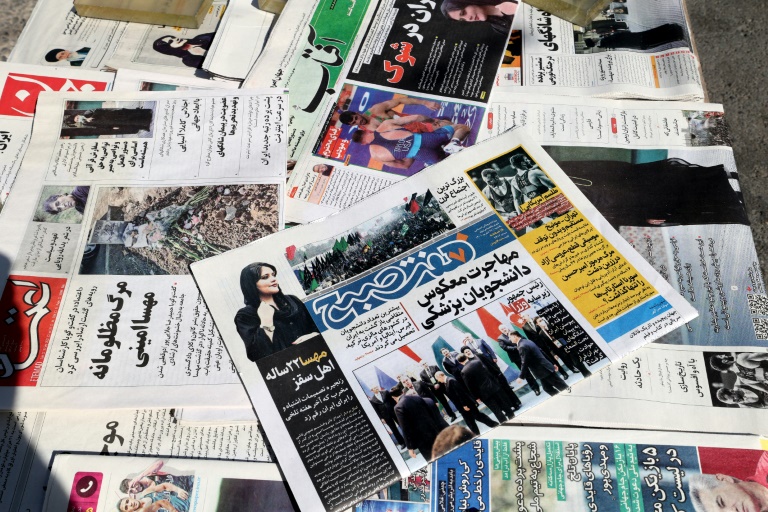
As Iran reels from a woman’s death after her arrest by its “morality police”, the Sunday front page of financial newspaper Asia declared: “Dear Mahsa, your name will become a symbol.”

The police unit — responsible for enforcing Iran’s strict dress code for women, notably the wearing of a headscarf in public — had already faced growing criticism in recent months over its excessive use of force.

The death of Mahsa Amini, 22, has reignited calls to rein in its actions against women suspected of violating the dress code, in effect since the 1979 Islamic revolution.

The day after her funeral, nearly all Iranian press dedicated their front pages to her story on Sunday.

“The nation has expressed its sorrow over Mahsa’s sad death,” stated the front page of ultra-conservative newspaper Javan.

Originally from the northwestern Kurdistan province, Amini was on a visit with her family to the capital Tehran when she was detained on Tuesday.

She was declared dead by state television on Friday after having spent three days in a coma. Shortly after, a crowd gathered outside the Kasra hospital in central Tehran.

In her hometown of Saghez, where her body was laid to rest on Saturday, some residents hurled stones at the governor’s office and chanted slogans against the authorities, according to Fars news agency.

“The people are shocked and outraged by what happened to Mahsa Amini,” reformist publication Etemad noted, stating that the country has suffered “multiple instances of violence by the morality police”.

The moderate Jomhouri-e Eslami daily warned against “social fragmentation” triggered by the “violent behaviour” of the unit’s officers. 

– Conservatives push back –

President Ebrahim Raisi, an ultra-conservative former judiciary chief who came to power last year, has ordered an inquiry into Amini’s death.

Official state news agency IRNA reported Sunday that Raisi promised the family in a phone call that he would follow up the case, telling them “your daughter is like my own daughter and I feel like this incident happened to one of my own relatives.”

However, some of the more conservative media outlets sought to push back against the barrage of criticism. 

The government daily Iran newspaper accused reformists of “exploiting public sentiments by using an unfortunate incident to incite the nation against the government and the president”.

One ultra-conservative newspaper, Kayhan, claimed that “the amount of rumours and lies spread in the wake of Mahsa’s death has risen considerably.”

“Nevertheless, the publication of images of this incident by the police has stopped opportunists from exploiting it,” the publication argued.

It referred to a short video from a surveillance camera broadcast on Friday by state television, purportedly showing her falling to the ground inside a large hall full of women while arguing with one of the female instructors about clothing.

In a statement on Friday, Tehran police insisted “there was no physical encounter” between officers and Amini.

The head of the Tehran medical examiner’s office on Saturday told state television that investigations into the cause of death would take up to three weeks to complete.

– 1.5 million tweets –

Filmmakers, artists, athletes, and political and religious figures have taken to social media to express their anger against the morality police, both inside and outside the country.

Former president and reformist Mohammad Khatami called on the authorities to “put an end to actions against the law, logic and sharia”, or Islamic law, and to “bring the perpetrators to justice”.

Grand Ayatollah Assadollah Bayat Zanjani, a cleric seen as close to the reformists, denounced what he said was “illegitimate” and “illegal” actions behind “this regrettable incident”.

“The Koran clearly forbids the use of force” to enforce religious and moral values, he said.

Two-time Oscar-winning film director Asghar Farhadi said that “Mahsa now is more alive than we are” because “we are silent in the face of such boundless cruelty. We are complicit in this crime.”

“The hair of our girls is covered with a shroud,” several footballers on Iran’s national team wrote in a joint story they shared on Instagram.

“If these are Muslims, may God make me an infidel,” charged Sardar Azmoun, who plays for the German club Bayer Leverkusen.

On Twitter, the hash-tag #Masha_Amini had clocked up close to 1.5 million tweets at midday on Sunday.

EU wants to suspend Hungary financing as it awaits reforms

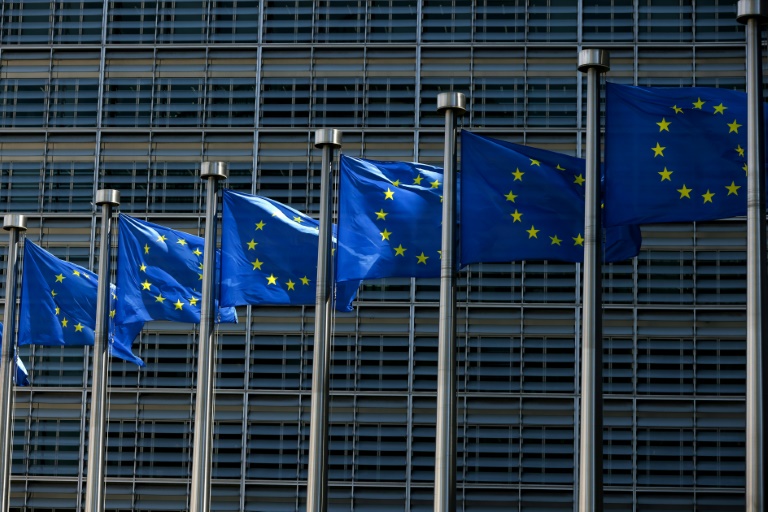
The European Union’s executive arm on Sunday proposed suspending 7.5 billion euros in financing for Hungary, as it awaited potential “game changer” anti-corruption reforms from Budapest.

The European Union and Hungary have been at loggerheads for months, with Brussels suspecting the government led by nationalist Prime Minister Viktor Orban of undercutting the rule of law and using EU money to enrich its cronies.

The European Commission’s budget commissioner, Johannes Hahn, told a press conference Sunday that the EU’s executive proposed suspending “the commitments for cohesion programmes and cohesion policy amounting to (an) estimated amount of 7.5 billion euros.”

On Saturday, Hungary’s government said that MPs would vote next week on a series of laws aimed at easing the conflict.

The measures are expected to include setting up independent anti-corruption watchdogs to monitor the use of EU funds as well as steps to make the legislative process more transparent.

Hahn said he was “very confident that…we will see significant reforms in Hungary, which indeed will be a game changer.”

He said Hungary has committed to “fully inform” the commission about implementing measures to address their concerns by November 19.

– Orban’s ‘last chance’? –

Orban’s administration has struck a more emollient tone than usual on the issue and Justice Minister Judit Varga reacted to the Commission’s proposal by acknowledging that “we still have work to do” to end the row, while insisting that “we are moving in the right direction”.

“We are working to ensure that the Hungarian people receive the resources they are entitled to!” Varga commented on her Facebook page Sunday.

Tibor Navracsics, the Hungarian minister in charge of negotiations with the EU, told reporters on Sunday that he was confident that “we can conclude these negotiations before the end of the year and sign the related agreements” to enable the release of the funds.

But German MEP Daniel Freund told AFP although the freezing of funds to Hungary is welcome, he feared the proposed measures from Hungary were not enough to “stop Orban and his cronies from stealing EU funds.”

“Those are good measures and they should be adopted but they are not sufficient to stop corruption, let alone to make Hungary a functioning democracy,” he said.

French European Parliament member Valerie Hayer tweeted that this was the “last chance” for Viktor Orban

“The time for discussions is over,” she said.

The final decision on the proposal will be taken by the EU Council.

Gergely Gulyas, Orban’s chief of staff, told reporters on Saturday that MPs would vote within days on measures designed to allay concerns about graft and a lack of transparency in public procurement.

The conciliatory move from Budapest comes as the Hungarian economy faces increasing pressure from a weakening local currency and fast-rising inflation. Both have hit new records this year.

On Thursday, the European Parliament declared that Hungary was no longer a “full democracy” in a symbolic vote that infuriated Budapest.

Who's invited — and who's not — to Queen Elizabeth II's funeral

Hundreds of foreign royals and leaders are expected to attend the state funeral of Queen Elizabeth II in London on Monday — one of the biggest diplomatic gatherings in decades.

Westminster Abbey has space for around 2,000 people, and around 500 heads of state and foreign dignitaries and their partners are expected, according to BBC and Sky News reports.

Also attending Britain’s first state funeral for six decades will be the queen’s family members, courtiers, public figures and UK politicians.

– World royalty –

A host of royals from Europe and further afield have confirmed their attendance at the funeral for Britain’s longest-serving monarch.

Japan’s Emperor Naruhito and Empress Masako will attend — their first overseas trip since assuming the throne in 2019. The visit marks a departure from Japanese tradition, which rarely sees the emperor attend funerals.

Europe’s royal families are closely related after centuries of mingling their bloodlines, so it will be no surprise to see several monarchs from the continent in the congregation.

Dutch King Willem-Alexander, Queen Maxima and Crown Princess Beatrix, Philippe King of the Belgians, King Harald V of Norway and Prince Albert II of Monaco will all attend.

Denmark’s Queen Margrethe, who scrapped a series of events marking her 50th jubilee following the death of her third cousin, Queen Elizabeth, is also coming.

Spain’s King Felipe VI will be there too with his wife Letizia. So too will his father, former king Juan Carlos I, who abdicated in disgrace in 2014 and now lives in self-imposed exile in the United Arab Emirates. 

Mohammed bin Salman, the crown prince of Saudi Arabia and its de facto ruler has been invited. He was set to hold talks with British Prime Minister Liz Truss on Sunday evening, despite international outrage at the 2018 murder of journalist Jamal Khashoggi in Turkey by Saudi agents.

– Global leaders –

Downing Street has not confirmed a UK media report that Ukrainian President Volodymyr Zelensky’s wife, Olena, will attend.

US President Joe Biden and his wife Jill Biden head the diplomatic guest list and flew into Britain late on Saturday.

Unlike some other leaders who have been asked to come in coaches arranged by the British government, Biden has reportedly been given permission to use his armoured presidential limousine, known as The Beast.

French President Emmanuel Macron will attend, the Elysee Palace said, to show the “unbreakable” bond with Britain and pay respects to the “eternal queen”.

He is also among the leaders allowed to use their own transport, British officials said.

Authoritarian leaders Recep Tayyip Erdogan of Turkey and Jair Bolsonaro of Brazil are also coming.

China has announced it will send its vice-president, Wang Qishan, at the UK government’s invitation.

Despite Britain’s Brexit divorce from the European Union, European Commission President Ursula von der Leyen and European Council head Charles Michel will go as well.

Other heads of state at the funeral will include presidents Sergio Mattarella of Italy, Frank-Walter Steinmeier of Germany, Isaac Herzog of Israel and Yoon Suk-yeol of Korea.

In a symbolic move to pay tribute to the queen, whose 2011 state visit to Ireland helped heal decades of tensions over British rule in Northern Ireland, Irish Prime Minister Micheal Martin will be present.

– Commonwealth countries –

Numerous leaders will come from countries that still counted Elizabeth II as their monarch and from members of the 56-nation Commonwealth.

They include Canadian Prime Minister Justin Trudeau, Australian Prime Minister Anthony Albanese and New Zealand Prime Minister Jacinda Ardern.

Commonwealth leaders attending include South African President Cyril Ramaphosa, Bangladeshi Prime Minister Sheikh Hasina, Sri Lankan President Ranil Wickremesinghe and Fijian Prime Minister Frank Bainimarama.

– Not invited –

Due to strained ties, the UK has opted to invite ambassadors, not heads of state, from several countries — Iran, Nicaragua and North Korea.

Russia and Belarus are among a small group of nations excluded altogether following Moscow’s invasion of Ukraine.

Russian President Vladimir Putin — under a travel ban to the UK because of sanctions — had already said he would not attend.

But not inviting any Russian representative to the queen’s funeral was “particularly blasphemous towards Elizabeth II’s memory” and “deeply immoral”, the foreign ministry spokeswoman in Moscow said on Thursday.

Russia and Belarus have embassies in London and their presidents sent King Charles III messages of condolences. 

Other countries with no invitations are Taliban-ruled Afghanistan, Myanmar, Syria and Venezuela.

Ties between Myanmar and former colonial ruler Britain have soured since a coup last year.

King to host world leaders as UK counts down to queen's funeral

US President Joe Biden was to pay his last respects in London to Queen Elizabeth II on Sunday, as ordinary mourners waiting in marathon lines were warned that time was running out to view her coffin lying in state.

After witnessing the sombre scene in parliament’s Westminster Hall, Biden, Japan’s Emperor Naruhito and other world leaders were due to attend a reception with King Charles III.

Biden, who flew in late Saturday, has said that Charles’s mother “defined an era” after she reigned for a record-breaking 70 years leading up to her death on September 8, aged 96.

Australia’s anti-monarchy Prime Minister Anthony Albanese, who viewed the lying-in-state and met Charles on Saturday, told Sky News Australia that the queen was “a constant reassuring presence”.

There was also a private audience at Buckingham Palace for Prime Minister Jacinda Ardern of New Zealand, which like Australia and 12 other Commonwealth realms now counts Charles as its sovereign.

“You could see that it meant a huge amount (to Charles) to have seen the sheer scale and outpouring of people’s love and affection for her late Majesty,” she told BBC television Sunday.

But in a sign of challenges ahead for the new king, Ardern added that she expected New Zealand to ditch the UK monarchy “over the course of my lifetime”.

The first members of the public were already camping out in advance to catch a glimpse of Monday’s grand farewell at Westminster Abbey, which is expected to bring London to a standstill and be watched by billions of viewers worldwide.

– Country’s ‘glue’  –

E.J. Kelly, a 46-year-old school teacher from Northern Ireland, secured a prime spot with friends on the route the procession will take after the funeral.

“Watching it on television is wonderful but being here is something else,” she told AFP, equipped with camping chairs, warm clothing and extra socks.

“I will probably feel very emotional when it comes to it, but I wanted to be here to pay my respects.”

Fiona Ogilvie, 54, who served in the Royal Air Force, had taken up position outside Westminster Abbey.

“When you join the RAF you swear an allegiance to the queen, and that kind of stays with you,” she said.

“She was still doing her duty up to two days before she died, and you can’t ask more than that,” Ogilvie added, after the queen appointed Liz Truss as her 15th prime minister in one of her last official acts.

Starting with a single toll from Big Ben, Britain will hold a minute’s silence at 8:00 pm (1900 GMT) on Sunday to reflect on the “life and legacy” of the queen.

Near the Scottish town of Falkirk, 96 lanterns were to be lowered into a “pool of reflection” at the foot of the Queen Elizabeth II Canal, before wreaths are placed in the water.

Those wanting to view the flag-draped casket have until 6:30 am (0530 GMT) on Monday to make it into the cavernous Westminster Hall opposite the abbey.

As the queue continued to snake for miles (kilometres) along the River Thames on Sunday, the waiting time stood at more than 13 hours, and the line is likely to be closed by the evening.

“To avoid disappointment please do not set off to join the queue,” the government said.

Andy Sanderson, 46, a supermarket area manager, was in the line and finally reaching parliament.

“She was the glue that kept the country together,” he said.

“She doesn’t have an agenda whereas politicians do, so she can speak for the people.”

– Grandchildren’s vigil –

As mourners slowly filed by on Saturday evening, Prince William and his estranged younger brother Prince Harry led the queen’s eight grandchildren in a 12-minute vigil around the coffin.

Harry — who did two tours with the British Army in Afghanistan — wore the uniform of the Blues and Royals cavalry regiment in which he served.

The move appeared to be the latest olive branch offered by Charles towards Harry and his wife Meghan after they quit royal duties and moved to North America, later accusing the royal family of racism.

Queen Elizabeth’s state funeral, the first in Britain since the death of her first prime minister Winston Churchill in 1965, will take place Monday at Westminster Abbey in London at 11:00 am.

Reflecting on the queen’s wishes for the hour-long ceremony, the former archbishop of York, John Sentamu, said she “did not want what you call long, boring services”.

“The hearts and people’s cockles will be warmed and at the same time, there will be a moment of saying this is a funeral service that is glorious in its setting,” he told BBC television.

– Tributes from Camilla, Andrew –

Leaders from Russia, Afghanistan, Myanmar, Syria and North Korea were not invited to join the 2,000 guests.

Moscow’s foreign ministry last week called the decision “deeply immoral”, and “blasphemous” to the queen’s memory. China will attend at the abbey, but was barred by parliamentary leaders from the lying-in-state.

After the funeral, the queen’s coffin will be driven to Windsor Castle, west of London, for a private burial when she will be laid to rest alongside her late husband Prince Philip, her parents and her sister.

The Queen’s second son Prince Andrew, in disgrace over his links to billionaire US paedophile Jeffrey Epstein, paid tribute Sunday to the queen’s “knowledge and wisdom infinite, with no boundary or containment”.

Camilla gave her first public comments as the new queen consort, recalling her mother-in-law’s smile and “wonderful blue eyes”. 

“It must have been so difficult for her being a solitary woman” in a world dominated by men, Charles’s wife said in televised comments.

“There weren’t women prime ministers or presidents. She was the only one so I think she carved her own role.”
Strong quake strikes eastern Taiwan, tsunami threat lifted

A strong earthquake struck southeastern Taiwan on Sunday, killing at least one person, bringing down a handful of buildings and tearing up roads — but forecasters said the threat of a regional tsunami had passed.

The quake hit at 2:44 pm (0644 GMT) about 50 kilometres (30 miles) north of the city of Taitung at a depth of 10 kilometres, the United States Geological Survey said.

Its initial strength was given as magnitude 7.2 but the USGS later downgraded it to 6.9. Multiple aftershocks were recorded.

Japan’s Meteorological Agency and the Pacific Tsunami Warning Center issued tsunami advisories shortly after the quake, but both later said there was no longer a threat of high waves.

Taiwan’s National Fire Agency said one person was killed by falling machinery at a cement factory in the town of Yuli, which lay close to the epicentre. 

The health ministry said 79 people either sought medical treatment or were sent to hospital.

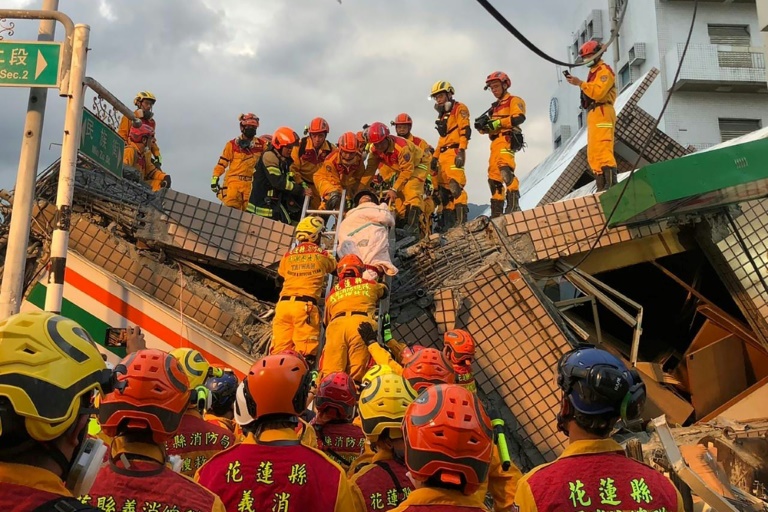
At least three buildings collapsed in Yuli, including one that had a 7-Eleven convenience store on the ground floor.

Video footage posted by Taiwan’s Central News Agency showed panicked residents running towards the building, which sent up a thick cloud of dust as it caved in.

The Hualien fire department said four people who were trapped in the building were rescued.

Two other buildings in the town collapsed but no one was inside them, the department added. Two nearby bridges collapsed and two others were damaged.

The Taiwan Railways Administration (TRA) said a train derailed at Dongli station in Hualien after it was hit by concrete from an overhead canopy that came loose during the quake.

TRA said the 20 passengers on board were evacuated and no injuries were reported.

Shaking was also felt in the capital Taipei and the southwestern city of Kaohsiung, with residents posting videos of chandeliers and paintings swaying on social media.

Taiwan’s President Tsai Ing-wen urged people to be vigilant for further aftershocks. 

“Water and electricity supplies in some areas are also affected by the earthquake,” she wrote on Facebook. “The related disaster relief work is in full swing.”

– Broken bridge, swimming pool waves –

Many expressed the kind of resilience that comes with living on an island that frequently experiences earthquakes.

In one video posted online, a man said he was trapped on a bridge where the road at either end had collapsed into a twisted mess of tarmac and concrete.

“This is troublesome,” he could be heard saying. “The whole bridge is broken”.

Ou Chin Te shared footage from the swimming pool on the 60th floor of The One — a skyscraper in Kaohsiung and Taiwan’s fourth-highest building. 

The tremors had turned the pool into a wobbly mass of waves.

“When the quake struck the lifeguard shouted to get out and we all left the pool,” he told AFP. 

“Everyone was really scared. I was so frightened at the moment that I didn’t really know what to do.”

A 6.6-magnitude quake hit the same region on Saturday and there have been multiple tremors since, with minimal damage in what is a mountainous and sparsely populated rural region.

But Sunday’s quake was stronger.

The China Earthquake Network Centre said tremors were felt in coastal areas including Fujian, Guangdong, Jiangsu and Shanghai.

Taiwan sits on the “Ring of Fire”, an arc of intense seismic activity that stretches through Southeast Asia and across the Pacific basin.

Most of Taiwan’s population lives on the flat western coast and in the capital Taipei.

The scenic eastern coast is more remote and less populated but a major tourist draw.

There are few international tourists in Taiwan these days because the island maintains mandatory Covid quarantine for most arrivals.  

Taiwan is regularly hit by quakes and most cause minimal damage but the island also has a long history of deadly tremors. 

Hualien, a tourist hotspot, was struck by a 6.4-magnitude earthquake in 2018 that killed 17 people and injured nearly 300. 

In September 1999, a 7.6-magnitude quake killed around 2,400 people in the deadliest natural disaster in the island’s history.

Close Bitnami banner
Bitnami