World

US Justice Department appeals halt of Trump classified docs review

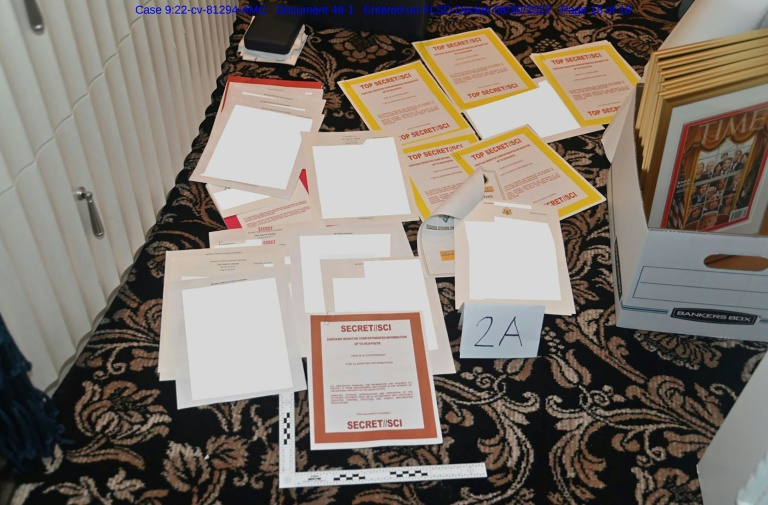
The US Justice Department on Friday appealed in part a judge’s decision to halt the review of seized documents from former president Donald Trump’s Florida estate, asking to continue its investigation of those materials marked as classified.

Federal investigators have been blocked since last week from reviewing thousands of documents taken by the FBI from Trump’s seaside mansion, after a judge sided with the former president and decided to appoint an independent arbiter to sort through the files.

The Justice Department, in its filing Friday evening, argued that Judge Aileen Cannon “fundamentally erred in appointing a special master and granting injunctive relief,” but would limit its appeal to just the “roughly 100 records bearing classification markings,” recovered from Trump’s estate.

Delaying the review of the classified documents, which it argues are government property, “impedes the government’s efforts to protect the Nation’s security,” the Justice Department said.

“It also irreparably harms the government by enjoining critical steps of an ongoing criminal investigation and needlessly compelling disclosure of highly sensitive records, including to Plaintiff’s counsel,” the filing added, referring to Trump’s lawyers.

Trump is facing mounting legal pressure, with the Justice Department saying top-secret documents were “likely concealed” to obstruct an FBI probe into his potential mishandling of classified materials.

He has denied all wrongdoing, and said the raid on his mansion was “one of the most egregious assaults on democracy in the history of our country,” while making it a major talking point at his political rallies.

The appeal will be heard first by a three-judge panel on the 11th Circuit, but could ultimately wind up at the Supreme Court.

On Thursday, Judge Cannon appointed Raymond Dearie to review the files, as the so-called special master.

The 78-year-old senior federal judge in New York was one of two people proposed by Trump’s legal team.

Dearie issued an order on Friday for Trump’s lawyers and the Justice Department counsel to meet with him in New York early next week.

Agenda items for the Tuesday meeting are to be submitted by either side by the close of business on Monday, Dearie ordered.

In addition to the documents probe, Trump faces investigations in New York into his business practices, as well as legal scrutiny over his efforts to overturn results of the 2020 election, and for the January 6, 2021, attack on the US Capitol by his supporters. 

US gets a voice in Epic battle with Apple

The US justice department wants to have its say on Apple’s antitrust tussle with Epic Games, which is due to be heard on appeal next month — a year after a Californian court ruled largely in favor of the iPhone maker. 

On Friday, the appeals court granted the department the right to send a representative to the hearing scheduled for October 21, where both sides are expected to make their case again. 

In 2021 a California judge ruled against Fortnite-maker Epic, which had accused Apple of acting like a monopoly in its shop for digital goods or services.

But the judge also barred Apple from prohibiting developers from including in their apps “external links or other calls to action that direct customers to purchasing mechanisms.”

Apple can still mandate that its payment systems is used for in-app transactions.

Both sides are appealing.

Earlier this year the justice department asked for time at the appeal hearing to air concerns about the trial judge’s interpretation of antitrust law at issue in the case.

“The district court committed several legal errors that could imperil effective antitrust enforcement, especially in the digital economy,” justice department lawyers argued in their brief.

Justice officials have been investigating whether Apple and other tech giants are abusing their market clout with anti-competitive practices.

Attorneys for Apple, Epic and the justice department will all speak to the appeals court, which will also consider their written arguments.

Leaders head to UK for queen's funeral as public pays tribute

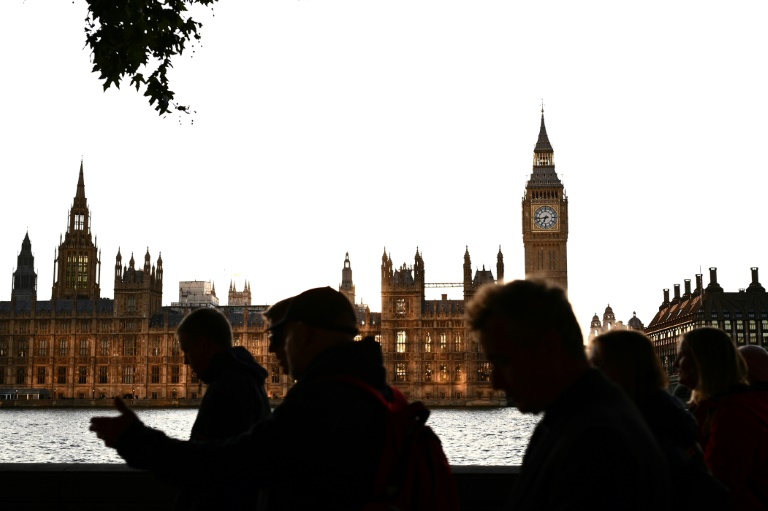
World leaders begin gathering in London from Saturday for the funeral of Queen Elizabeth II, as princes William and Harry are set to lead a vigil of her grandchildren at her coffin.

The queen’s death on September 8 aged 96, after a record-breaking 70 years on the throne, has sparked an outpouring of emotion.

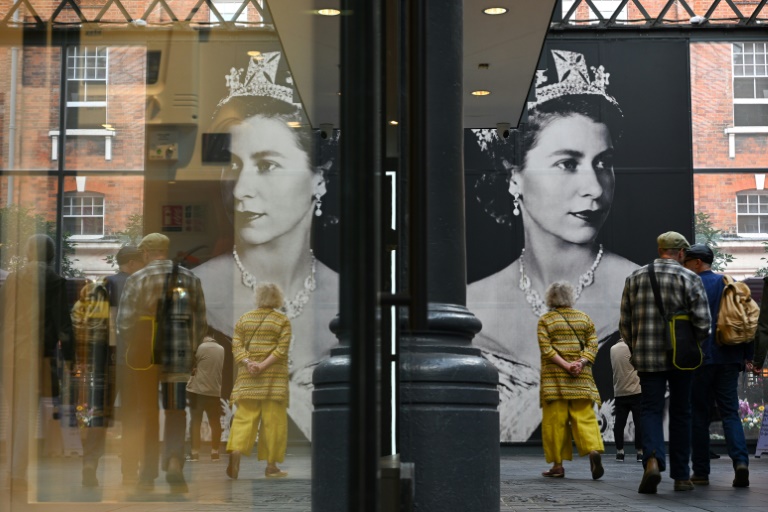
Members of the public braved waits that at one point were estimated to be up to 24 hours and chilly night-time temperatures to view her coffin.

Lines have snaked for miles along the River Thames since Wednesday when her coffin was brought to the UK parliament complex to lie in state.

Police are mounting Britain’s biggest-ever security operation for Monday’s funeral, as hundreds of dignitaries including US President Joe Biden are set to jet in. 

The queen’s successor, King Charles III, will meet on Saturday with the prime ministers of the Commonwealth realms — the 14 former colonies over which he now reigns in addition to Britain. 

From Australia and New Zealand to Canada, they have formally proclaimed him their new sovereign.

But republican movements are gaining ground, and efforts to keep them all in the royal fold will likely be a feature of his reign.

Charles on Friday wrapped up his maiden tour as monarch to the four nations of the United Kingdom with a visit to Wales, part of an operation dubbed “Spring Tide” to launch him in his new role.

Large crowds in Cardiff chanted “God save the king” as he shook hands with well-wishers following a multi-faith service in Llandaff Cathedral, and at Cardiff Castle.

Charles met Welsh First Minister Mark Drakeford, an avowed republican, and there was isolated booing on the streets after the new monarch was quick to declare his son William the new Prince of Wales.

But Drakeford said questions over the future of the monarchy were “a footnote to the dominant feelings of the day”.

– ‘Tide of emotion’ –

Back in London, Charles held a 15-minute vigil with his siblings — Princess Anne, Prince Andrew and Prince Edward — around their mother’s casket on Friday night.

They stood, eyes lowered and silent, while members of the public filed past.

Andrew — stripped this year of his royal titles over a sex assault scandal — was allowed to wear military uniform for the only time during the 11-day mourning period.

The Duke of York, as he is also known, flew Royal Navy helicopters during the 1982 Falklands War with Argentina.

The vigil will be repeated on Saturday evening by eight of the queen’s grandchildren, including the new heir to the throne Prince William and his estranged brother Harry.

Harry — who served two tours with the British army in Afghanistan — has reportedly also been given special permission to wear his military uniform despite no longer being a working royal.

The move appeared to be the latest olive branch offered to Harry by the royals after he and his wife Meghan launched accusations of racism in interviews from their new home in the US.

The personal sorrow of the queen’s family has been playing out in the glare of intense international attention.

But the queen’s youngest son Edward said: “We have been overwhelmed by the tide of emotion that has engulfed us and the sheer number of people who have gone out of their way to express their own love, admiration and respect.”

– Beckham joins queues –

The most striking manifestation of public reverence for the queen has been the vast queues of the hundreds of thousands of people wanting to bid her farewell. 

Officials warned on Friday that expected queuing time had reached over 24 hours and briefly paused admission when the lines reached capacity. 

Those paying their respects included former England football captain turned fashion icon David Beckham, who spent 12 hours to reach Westminster Hall. 

“It’s very emotional, and the silence and the feeling in the room is very hard to explain,” he told reporters after filing past the coffin.

“We’re all there to say thanks to Her Majesty for being kind, for being caring, for being reassuring throughout the years.”

June Nayler, 76, a retired former local authority worker from Milton Keynes in central England was undaunted by the long wait she faced as she joined the back of the line in Southwark Park.

“I’m here now and going to make it all the way — it’s my duty to do it,” she told AFP. 

“I’m just overcome by the crowds and number of people turning out.”

The public have until Monday morning to view the coffin before the queen is honoured with Britain’s first state funeral in nearly six decades. 

The spectacular ceremony at Westminster Abbey — expected to be watched by millions around the globe — will see 142 sailors pulling the gun-carriage bearing her lead-lined coffin. 

It will be attended by more than 2,000 guests, but leaders from countries at loggerheads with the UK such as Russia, Belarus and Afghanistan have not been invited.

A private burial will follow at Windsor Castle after a committal service.

S.Africa leader vows cooperation with Biden but firm on Russia ties

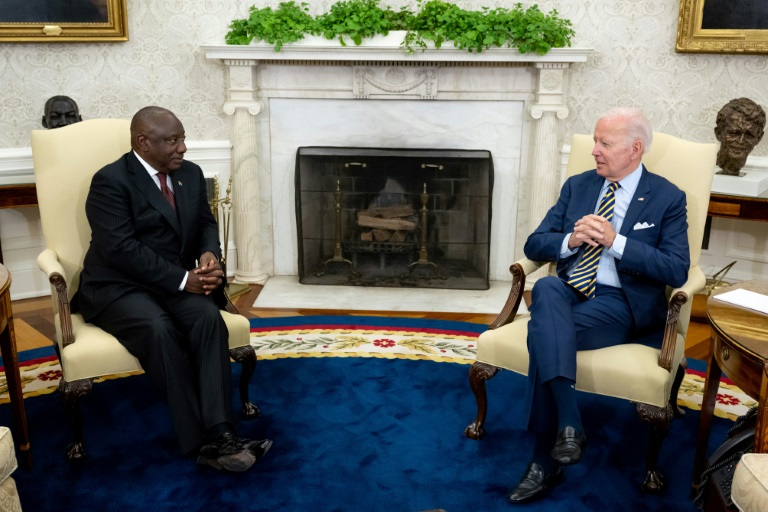
South Africa’s leader on Friday agreed to cooperate closely with US President Joe Biden on health, security and climate but warned against punishing African nations for maintaining ties with Russia.

The Biden administration has put a new focus on Africa after being taken aback by the reluctance of some nations to condemn Russia over its invasion of Ukraine, which has triggered sweeping Western sanctions.

President Cyril Ramaphosa enjoyed unusually warm treatment from Biden, who walked him back to his motorcade at the White House, weeks after Secretary of State Antony Blinken traveled to South Africa and promised that the United States will listen more to Africans.

“We really need to make sure we fully understand one another,” Biden said as he welcomed Ramaphosa in the Oval Office. “Our partnership is essential.”

Ramaphosa said he sought to work together on security, including in South Africa’s troubled neighbor Mozambique, as well as on climate change, a key priority for the Biden administration.

Starting his visit over breakfast with Vice President Kamala Harris, Ramaphosa voiced gratitude to the United States for its “considerable support” on the Covid pandemic as the Biden administration donates 1.1 billion vaccine doses around the world.

“The visit really is about strengthening the relationship between South Africa and the United States,” Ramaphosa said, adding that Washington had a “key role” to play on security across Africa.

But Ramaphosa warned Biden over a piece of legislation that has passed through the US House of Representatives which would require a strategy to counter Moscow’s role in Africa.

Ramaphosa said he explained that Africans should not be “punished” for their historic non-aligned position among major powers.

“I think it will harm Africa and marginalize the continent,” Ramaphosa told reporters after his meetings.

“We should not be told by anyone who we can associate with.”

The legislation, called the Countering Malign Russian Activities in Africa Act, has yet to clear the Senate and US policymakers stress that it does not in itself lay out any repercussions for African countries.

– ‘Histories’ behind Russia stance –

Successive US administrations have focused much of their energy in Africa on countering the growing influence of China, which has become the continent’s dominant trading partner.

But Russia’s invasion of Ukraine has triggered a new front in the battle for influence in Africa, where many nations have been reluctant to embrace the West in its campaign to pressure Moscow.

South Africa’s Foreign Minister Naledi Pandor denied being neutral but said “there are reasons for the perspectives that exist and one should never, I think, try to pretend that there aren’t histories.”

She pointed to the former Soviet Union’s championing of anti-apartheid forces compared with periods of Western cooperation with South Africa’s former white supremacist regime.

“I think we’ve been fairly clear, in our view, that war doesn’t assist anyone and that we believe the inhumane actions we have seen against the people of Ukraine can’t be defended by anybody,” she said this week at the Council on Foreign Relations in Washington.

The United States has sought to highlight the invasion’s role in soaring food prices, as Ukraine was one of Africa’s largest suppliers of grain.

Russia has sought to blame food scarcities on Western sanctions, an argument dismissed by the United States, which says it is not restricting agricultural or humanitarian shipments.

South Africa’s top diplomat broke with the usual polite bipartisanship of foreign dignitaries visiting Washington, not mincing words on Biden’s Republican predecessor Donald Trump, who notoriously referred to nations in the developing world with an epithet.

“We relate very well, I think probably better, with the Democrats than the Republicans,” she said. “You will recall how President Trump described Africa and no one has apologized for that as yet.”

Trump was the first US president in decades not to visit sub-Saharan Africa. Biden has not yet visited but has pledged a renewed interest, including with a summit of African leaders planned in Washington this December.

UN summit returns in person to world of divisions

The UN General Assembly is back in person after the pandemic disruption but in a world as full of crises as ever, with the war in Ukraine set to pit the West against Russia.

Some 150 world leaders will descend on New York for a week of diplomacy, with all required to come in person to speak save one — Ukrainian President Volodymyr Zelensky, granted an exception as he leads the fight against Russian invaders.

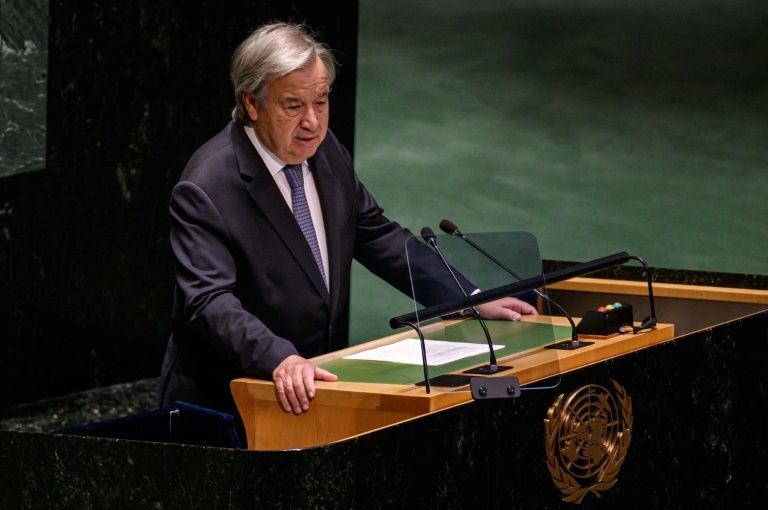
UN Secretary-General Antonio Guterres, speaking ahead of the summit that formally begins Tuesday, said that the world’s divisions “are the widest they have been since at least the Cold War.”

“Our world is blighted by war, battered by climate chaos, scarred by hate and shamed by poverty, hunger and inequality,” Guterres said.

“As fractures deepen and trust evaporates, we need to come together around solutions.”

For the two previous years, the annual meeting that jams traffic through Midtown Manhattan had been a more subdued affair with leaders allowed to send in videos.

The General Assembly voted Friday to let Zelensky speak by video. Seven nations voted against including Russia, saying that the right should be extended to all leaders, with Russian President Vladimir Putin, as well as Chinese President Xi Jinping, not planning to travel to New York.

Several US adversaries are expected, however, including Iranian President Ebrahim Raisi and Venezuelan President Nicolas Maduro, defying loud protests from their opponents in the United States.

Richard Gowan, who follows the United Nations for the International Crisis Group, said that Zelensky’s speech will “get 1,000 times more attention than most in-person speeches by other leaders.”

“But Zelensky has to be careful. A lot of non-Western politicians are resentful of the West’s focus on Ukraine and worry that the war is distracting international attention from issues like the global food crisis,” he said.

The US ambassador to the United Nations, Linda Thomas-Greenfield, acknowledged the concerns, saying that despite discussions on Ukraine, “it will not be the only thing that we’re dealing with.” 

“We cannot ignore the rest of the world and what is happening in the rest of the world, the impact of climate change, the impact of the pandemic, conflicts elsewhere in the world,” she said.

Secretary of State Antony Blinken on Tuesday will co-chair a summit on food security with the African Union, European Union and Spain as high global prices — worsened by the invasion of major grain producer Ukraine — bring new hunger around the world.

French President Emmanuel Macron’s office said that he will seek “dialogue with our partners from the South to avoid planting this idea that it’s the West against the rest.”

– Push on climate –

Despite the shift toward normalcy, the schedule of the General Assembly was scrambled by the death of Queen Elizabeth II. US President Joe Biden, who traditionally would have been one of the first speakers Tuesday and who would have led the food summit, will instead speak Wednesday.

And with Covid concerns lingering, the United Nations is still limiting the size of delegations and requiring the wearing of masks in the towering headquarters on the East River.

Prime Minister Liz Truss, who took office two days before the death of Britain’s longest-reigning monarch, will fly after the funeral to the United Nations on her first foreign trip since taking office.

The UN summit will also mark a fresh occasion to build momentum on global action on climate change, amid mounting signs that the planet is descending into dangerous levels of warming.

“We have run out of time to waste,” said Ambassador Walton Webson of Antigua and Barbuda, heading the Alliance of Small Island States.

“Our islands are being hit with more severe and more frequent climate impacts and recovery comes at the cost of our development,” he said.

Guterres said he will use the week to speak frankly with leaders amid guarded hopes for further progress on climate during the next climate summit, COP27, in Egypt in November.

Ecuador launches floating islands to save stinky Guayaquil estuary

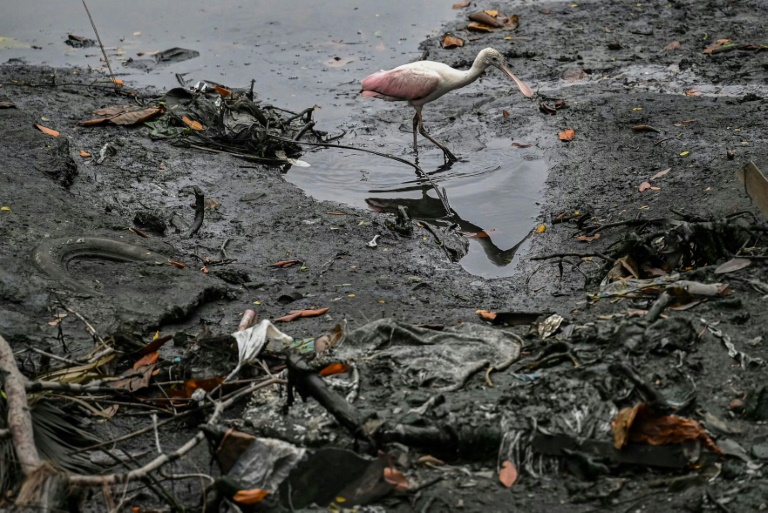
On the banks of the dark and murky waters of the Guayaquil estuary, volunteers trudge through mud as they slide wooden platforms.

Onboard are crucial seedlings that could save the 70-kilometer (44 mile)-long polluted artery outside Ecuador’s main port city.

Environmental engineer Angela Cevallos is leading efforts to save the estuary with these “floating islands,” which are embedded with red mangrove seedlings.

The plant is known for its long roots which can absorb pollutants while helping establish an aquatic ecosystem, allowing other plants and animals to thrive.

“These islands are the transportation mode and the propagules (seedlings) do the work,” said Cevallos, who leads the project run by Holy Spirit University, her alma mater.

For decades, tons of rubbish, excrement and heavy metals have been dumped into the water around Guayaquil — home to 2.8 million people.

But despite several previous conservation efforts and millions of dollars of investment, the estuary continues to be threatened by pollution.

“Guayaquil has grown at the feet of this estuary and we cannot let it die,” said architect Patricio Rosero, who designed the biodegradable wooden platforms.

Volunteers carry the two-meter long platforms on their backs one by one to the water’s edge.

Ten platforms are tied together using rope made from banana skins.

Wearing a long-sleeve shirt and white boots, Cevallos, 23, wades into the green mud to slowly push the platforms into place.

Each “island” is stuffed with 23 red mangrove seedlings, which within four months should form thin trunks.

“The mangrove is a noble habitat, it can be regenerated and absorb pollutants,” said Cevallos.

“I will come back to test the water to see if there is less pollution.”

– 1,000 times the authorized contamination –

Half a century ago, fishermen would catch snook and corvina in the estuary, while children would frolic in its natural pools.

“My father took my three siblings and myself to Puerto Liza and there he taught us to swim. The water was crystal clear and fresh,” reminisced 75-year-old Lucenia Haro, a retired school teacher.

But then large scale building began, sparked by politicians seeking to win new voters.

Entire neighborhoods were built at breakneck speed, but without a connected sewage system.

Even today, the pipes that transport sewage empty directly into the estuary, where 300,000 people live along the coast, many in extreme poverty.

Between May 2019 and July 2022, almost 35,000 tons of rubbish were collected from the estuary, according to figures from the Guayaquil mayoral office.

The largest source of pollution is sewage.

“Secret connections have been closed and redirected to the sewage system,” said Maria Fernanda Rumbea, head of the local environment body.

According to Cevallos’s analysis, in the area where the floating islands have been placed, there is 1,000 times the authorized amount of coliform bacteria, which lives in feces and can contaminate water.

– Conservation efforts –

It is not the first time such platforms have been sent into the estuary.

In 2014, the environment ministry installed some metal platforms but they failed due to a lack of maintenance.

Earlier this year, the Higher Polytechnic School of the Coast launched an initiative to reforest the estuary with marine algae.

“We want to know whether the algae can improve the mangroves’ germination rate,” said Edwin Jimenez, a researcher at the university.

The Guayaquil municipality is implementing its own conservation project as well, starting with the construction of its sewage treatment plant, according to Rumbea.

When the night falls and the tide goes out, the smell is nauseating.

And yet the estuary and its vegetation continue to resist the contamination. It remains the only drainage system for rain water, thus preventing potentially catastrophic flooding during the country’s rainy season.

“If it wasn’t for the estuary and its smelly trees, dozens of homes and buildings would have disappeared some time ago,” said Jimenez.

Outrage as Ukraine finds mass grave near liberated Izyum

Western leaders voiced revulsion and outrage Thursday after Ukraine found a mass grave outside the formerly Russian-occupied city of Izyum and said that almost all of the exhumed bodies showed signs of torture.

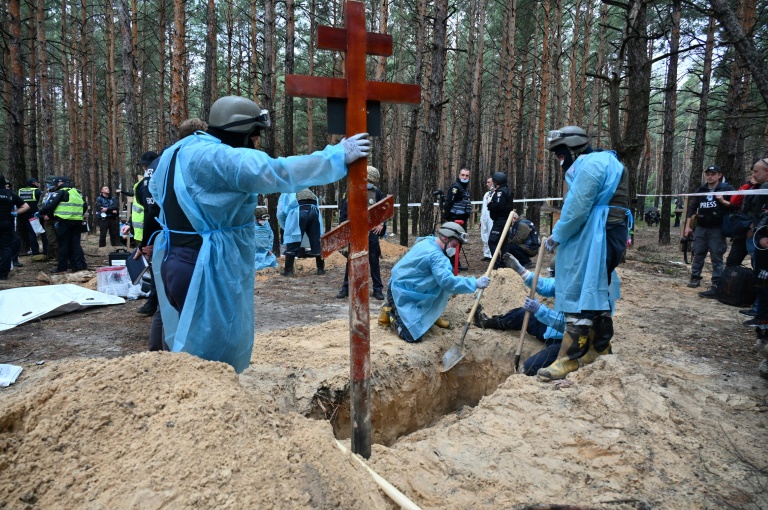
Officials counted 450 hastily dug graves, some marked by rough wooden crosses at the site in a pine forest only recently recaptured by Ukrainian fighters.

“Among the bodies that were exhumed today, 99 percent showed signs of violent death,” Oleg Synegubov, head of Kharkiv regional administration, said on social media.

“There are several bodies with their hands tied behind their backs, and one person is buried with a rope around his neck,” he added.

“Russia leaves only death and suffering. Murderers. Torturers,” said Ukraine’s President Volodymyr Zelensky. Some of the remains exhumed included children and people who were likely tortured before dying, he added.

The European Union is “deeply shocked” at the newest discovery of a mass grave left by the Russians in the nearly seven-month-old war, said the bloc’s foreign policy chief Josep Borrell.

“This inhuman behaviour by the Russian forces, in total disregard of international humanitarian law and the Geneva conventions, must stop immediately,” he said in a statement.

US Secretary of State Antony Blinken said that the graves likely provided more evidence that Russia is committing war crimes in its pro-Western neighbor, and French President Emmanuel Macron said what happened in Izyum were atrocities.

“I condemn in the strongest terms the atrocities committed in Izyum, Ukraine, under Russian occupation,” Macron tweeted.

Those responsible “will have to answer for their acts. There is no peace without justice,” he added.

– Putin sticks to his guns –

The discovery added to the pressure on Russian President Vladimir Putin, after his forces were driven into retreat in Kharkiv and are under heavy pressure from Ukrainian troops ion Donetsk and Kherson.

Putin, at a regional summit in Uzbekistan, was told by Indian Prime Minister Narendra Modi that now was “not a time for war”. 

The discovery also came a day after Putin admitted that China, whose leader Xi Jinping was also attending the summit, had expressed “concerns” about the situation in Ukraine, which Russian forces invaded on February 24.

“I think what you’re hearing from China, from India, is reflective of concerns around the world about the effects of Russia’s aggression on Ukraine,” Blinken said in Washington. 

But Putin remained steadfast, despite strong evidence that his forces incurred heavy losses in the Ukraine counteroffensive this month, and as Washington announced another $600 million in arms and ammunition for Kyiv.

“The plan is not subject to adjustment,” Putin said. “Our offensive operations in Donbas itself do not stop. They are going at a slow pace… the Russian army is occupying newer and newer territories.”

Putin said the main goal of the campaign was “the liberation of the entire territory of Donbas.”

He accused Ukrainian forces of attempts to carry out “terrorist acts” and damage Russian civilian infrastructure.

“We are really quite restrained in our response to this, for the time being,” Putin said. “If the situation continues to develop in this way, the response will be more serious.”

– UN speech –

As the investigation into the Izyum mass grave opened, the United Nations overcame  Russian opposition and voted to allow Zelensky to address next week’s General Assembly by video.

Of the 193 member states, 101 voted in favor of allowing Zelensky to “present a pre-recorded statement” instead of in-person as usually required. 

Seven members voted against the proposal, including Russia, and 19 abstained.

“We deeply regret that Russia’s war does not allow our president to participate in person,” said Ukraine’s ambassador to the UN, Sergiy Kyslytsya.

Zelensky’s address is slated for the afternoon of September 21, but changes are likely due to many leaders heading to London for the funeral of Queen Elizabeth II on Monday.

– Graves without names –

The exhumations at the forest grave near Izyum were just a part of the horrific revelations of the impact of the war and Russia’s occupation of the area between March and early September.

“This is part, horrifically … of an ongoing story whenever we see the Russian tide recede from the parts of Ukraine that it has occupied,” said Blinken.

Ukraine national police chief Igor Klymenko said they had found multiple torture rooms in the town of Balakliya and elsewhere in Karkhiv since the Russians were driven out.

The United Nations in Geneva said it hopes to send a team to determine the circumstances of the deaths.

At the Izyum site two men in white overalls were digging the sandy soil.

Soon they reached the first body, exhumed it and placed it in a white plastic body bag. As more bodies appeared, the strong smell of rotting flesh spread among the trees and rough wooden crosses.

Where identification was possible, names were attached to the crosses.  

At one spot, a family with a young child was buried, said Oleg Kotenko, the government official in charge of the search for missing persons nationwide.

“They were killed. There are witnesses from the same building. They saw what happened and buried these people here,” he said.

“The graves without names are for those found dead in the street,” he said.

Stocks extend losses on recession fears

Stock markets fell further on Friday as weak UK retail sales data and a dire warning from global shipping giant FedEx fueled fears of recession.

Equities were already struggling this week after data showed US inflation slowed but not as much as expected, adding to fears of aggressive monetary tightening by central banks.

Investors worry that central banks will move too aggressively to tame inflation through rate hikes that could put the brakes on economic growth.

Wall Street stocks sank lower after FedEx reported on Thursday that it shipped fewer packages than expected over the summer due to weakness in the global economy.

The company said it was closing stores, freezing hiring and parking aircraft, while warning of a big earnings hit, with its CEO Raj Subramaniam telling CNBC he expects a global recession.

“The market is looking weak this morning because of the FedEx warning, but it really goes beyond that,” said Briefing.com analyst Patrick O’Hare.

“There are pressing concerns that the aggressive rate hikes by central banks thus far, and the ones that are yet to come, will drive the global economy into a recession that is not ‘soft’,” O’Hare said.

The broad-based S&P 500 finished at 3,873.33, down 0.7 percent for the day and nearly five precent for the week.

“These increasing concerns over a global recession, as well as rising US yields are prompting a flight into the US dollar and not much else,” said CMC Markets analyst Michael Hewson.

London’s FTSE 100 stock index ended the day 0.6 percent lower while the British pound tanked to a 37-year low against the dollar at $1.1351 on news that British retail sales tumbled by far more than forecast in August as shoppers faced rampant inflation.

Sales by volume fell 1.6 percent last month, more than triple what was expected.

Sterling has hit a series of 1985 lows in recent weeks, also as the US Federal Reserve implements aggressive hikes interest rate hikes.

– ‘Markets in pain’ –

“Markets are in a lot of pain, and the UK’s retail data has made things only worse for traders as it clearly pointed out one thing: an imminent recession,” said AvaTrade analyst Naeem Aslam.

“When you look at the sterling against the dollar, it seems like there are no buyers out there.”

Elsewhere, Frankfurt equities dropped 1.7 percent and Paris shed 1.3 percent as investors digested confirmation of record-high inflation in the eurozone.

“Data for August confirm that price pressures are very strong and broad-based” with eurozone inflation at 9.1 percent, said Capital Economics analyst Jack Allen-Reynolds.

“The European Central Bank will need to continue hiking interest rates aggressively at forthcoming meetings.”

The ECB had last week hiked its key rate by a historic 75 basis points, and markets expect a similar-sized move at the October policy meeting.

The Fed and Bank of England are widely expected to ramp up borrowing costs next week.

The US central bank has lifted borrowing costs by 75 basis points at each of its last two meetings. 

– Key figures at around 2110 GMT –

New York – Dow: DOWN 0.5 percent at 30,822.42 (close)

New York – S&P 500: DOWN 0.7 percent at 3,873.33 (close)

New York – Nasdaq: DOWN 0.9 percent at 11,448.40 (close)

London – FTSE 100: DOWN 0.6 at 7,236.68 (close)

Frankfurt – DAX: DOWN 1.7 percent at 12,741.26 (close)

Paris – CAC 40: DOWN 1.3 percent at 6,077.30 (close)

EURO STOXX 50: DOWN 1.2 percent at 3,500.41 (close)

Tokyo – Nikkei 225: DOWN 1.1 percent at 27,567.65 (close)

Shanghai – Composite: DOWN 2.3 percent at 3,126.40 (close)

Hong Kong – Hang Seng Index: DOWN 0.9 percent at 18,761.69 (close)

Pound/dollar: DOWN at $1.1423 from $1.1467 on Thursday

Euro/pound: DOWN at 87.00 pence from 87.21 pence 

Euro/dollar: UP at $1.0018 from $1.0001

Dollar/yen: DOWN at 142.91 yen from 143.52 yen

Brent North Sea crude: UP 0.6 percent at $91.35 per barrel

West Texas Intermediate: UP less than 0.1 percent at $85.11 per barrel

burs-jmb/dw

Germany seizes Russian energy firm's subsidiaries

Berlin on Friday took control of the German operations of Russian oil firm Rosneft to secure energy supplies which have been disrupted after Moscow invaded Ukraine.

Rosneft’s German subsidiaries, which account for about 12 percent of oil refining capacity in the country, were placed under trusteeship of the Federal Network Agency, the economy ministry said in a statement.

“The trust management will counter the threat to the security of energy supply,” it said.

Chancellor Olaf Scholz said his government “did not take this action lightly but it was inevitable” for the “protection of our country”.

The seizures come as Germany is scrambling to wean itself off its dependence on Russian fossil fuels, while Moscow has stopped natural gas deliveries to Germany via the Nord Stream 1 pipeline.

The German government’s move covers the companies Rosneft Deutschland GmbH (RDG) and RN Refining & Marketing GmbH (RNRM) and thereby their corresponding stakes in three refineries: PCK Schwedt, MiRo and Bayernoil.

In a statement Friday, Rosneft denounced the move as illegal and “a violation of all the basic principles of a market economy”.

The company was examining all possible measures to protect its shareholders, including taking court action, it added.

– ‘Sufficient supply’ –

Fears had been running high particularly for PCK Schwedt, which is close to the Polish border and supplies around 90 percent of the oil used in Berlin and the surrounding region, including Berlin-Brandenburg international airport.

The region could have “found itself in a position, due to the refinery in Schwedt, where security of supply was no longer a given”, Economy Minister Robert Habeck said at a press conference.

The refineries’ operations had been disrupted as the German government decided to slash Russian oil imports, with an aim to halt them completely by year’s end.

By taking control of the sites, the German authorities can then run the refining operations using crude from countries other than Russia.

New supplies of oil for Schwedt have been shipped in via the northeastern port of Rostock, with plans to also tap supplies imported through the Polish city of Gdansk.

The government plans to “strengthen” the pipeline between the Schwedt refinery and Rostock, while advancing discussions with officials in Warsaw about establishing a link — an option which was not available “so long as it was possible that any profits would go to Rosneft, to Russia”, said Habeck.

“There is a good chance that there will be a sufficient supply of oil for the refinery to keep working,” said Scholz.

Already in early April, Germany took the unprecedented step of temporarily taking control of Gazprom’s German subsidiary, after an opaque transfer of ownership of the company set alarm bells ringing in Berlin.

– Energy earthquake –

Russia’s war in Ukraine has set off an energy earthquake in Europe and especially in Germany, with prices skyrocketing as Moscow dwindled supplies.

Germany has found itself severely exposed given its heavy reliance on Russian gas.

Moscow had also built up a grip over Germany’s oil refineries, pipelines and other gas infrastructure through energy giants Rosneft and Gazprom over the years.

Energy deals with Russia were long seen as part of a German policy of keeping the peace through cooperation with Russian President Vladimir Putin’s regime.

The cheap energy supplied by Russia was also key in keeping German exports competitive. As a result, the share of Russian gas in Germany had grown to 55 percent of total imports before the Ukraine war.

But that approach has come back to haunt officials in Berlin, forcing Scholz’s coalition to take drastic measures to ensure energy supplies are not disrupted in Europe’s biggest economy. 

With winter approaching, Germany has fired up mothballed coal power plants. It is also putting two of its nuclear power plants on standby until April, rather than phasing them out completely as planned by year’s end. 

How queen’s death followed a disinformation playbook

The death of Queen Elizabeth II has laid bare a blueprint for how disinformation flourishes around major news events, with bad actors taking advantage to grab attention and sow confusion.

As Britain mourned its longest reigning monarch, social media users shared digitally altered photos and other misleading content, blaming her death at 96 on causes other than old age — including Covid-19 vaccines and Hillary Clinton.

But the misinformation tactics deployed after Buckingham Palace’s announcement on September 8 were mainly old tricks remodeled to fit the current story and make falsehoods stick in people’s minds. 

Similar bogus claims spread after other big stories, such as Russia’s war on Ukraine and Jeffrey Epstein’s death, with the QAnon conspiracy movement also showing its hand.

“Familiarity leads to increased believability,” said Gordon Pennycook, a behavioral scientist at the University of Regina, in Canada.

– Well-worn tactics –

Warning signs of disinformation sprang up as soon as the queen went under medical supervision, when imposter Twitter accounts disguised as news outlets published and relayed false updates on her status. 

The pace accelerated once the palace announced her death.

“People all around the world were aware of and impacted by the queen’s death, giving purveyors of misinformation a virtually limitless range of false narratives to choose from,” said Dan Evon at the nonprofit News Literacy Project (NLP).

Among the deluge: a months-old video of dancers outside Buckingham Palace was passed off as an Irish celebration of the death. A fake social media post purported to show former US president Donald Trump claiming the queen knighted him. A manipulated photo made it look like Meghan Markle wore a T-shirt saying, “The Queen Is Dead.”

Some blamed the queen’s death on Covid-19 shots — an allegation anti-vaccine advocates have made about well-known people who died, including actress Betty White and comedian Bob Saget.

Others named Clinton as the culprit, claiming the queen announced before dying that she had political dirt on the former US presidential candidate and secretary of state.

That made-up statement has been attributed to other world leaders. It is a long-running meme that plays off a conspiracy theory about the Clintons killing political opponents.

“When big events happen, people in different communities, particularly activists, try to figure out if there is an angle for them there,” said Mike Caulfield, a research scientist at the University of Washington’s Center for an Informed Public (CIP).

“For an anti-vaccine activist, they figure out if the death can be mapped to vaccines. For a (New World Order) conspiracy theorist, maybe they map to Clinton or Epstein.”

Supporters of QAnon folded the queen’s death into their beliefs about a cabal of child sex traffickers, floating a range of baseless claims and hailing the event as proof of the legitimacy of their movement.

“The royal family, given Prince Andrew’s heavily reported connections with Jeffrey Epstein, have always been fodder for the QAnon crowd,” said Rachel Moran, a postdoctoral scholar at the CIP.

One video popular in QAnon circles, which some supporters claimed showed a naked boy escaping Buckingham Palace, was actually an old promo for a fictional TV show.

But it spread on TikTok, one of several QAnon-adjacent narratives that reached the mainstream.

In the week after the queen’s death, media intelligence firm Zignal Labs tracked more than 76,000 mentions of the late monarch that referenced Epstein and his accomplice Ghislaine Maxwell — both convicted sex offenders — on social media, websites, broadcast and traditional media.

Narratives linking the queen to pedophilia, Clinton and the vaccines were mentioned 42,000, 8,000 and 7,000 times, respectively.

– Avoiding misinformation –

The rolling news about the queen — and her global influence — explains some of the appeal of conspiracy theories about her death, said Karen Douglas, a social psychology professor at the University of Kent who studies why people believe such theories.

“Accepting mundane explanations for such a big event might be less convincing or appealing,” she said.

But there are ways to resist falling for false information.

Media literacy organizations, including NLP and CIP, recommend cross-referencing online posts against trusted information sources and pausing before sharing.

“Even a few moments of reflection can often make a big difference,” Pennycook said.

Close Bitnami banner
Bitnami