World

Young hacker tricks way into Uber's system: reports

Uber said Friday it was investigating a “cybersecurity incident,” declining to comment on reports a young hacker had gained access to the ride-hailing company’s computer network.

Uber put out word of the breach late Thursday in a tweet, and a hacker claiming to be 18 years old then posted screenshots taken from inside Uber computers.

“He says that he simply — having already determined a valid username and password — tricked an Uber staff member into granting him access to internal systems,” independent cybersecurity analyst Graham Cluley said at his website.

Online comments purported to be by the hacker indicated he targeted an Uber employee with notifications for more than an hour, then reached out to the worker via WhatsApp claiming to be member of the company’s tech support team.

“Many other companies are probably at risk of falling for a similar trick,” Cluley said.

Uber said Friday that its services were all operational and that it had “no evidence that the incident involved access to sensitive data” such as users’ trip history.

Employee software tools shut down as a precaution were being gradually restarted, the San Francisco based company added.

“There’s a reason cybersecurity experts say that the human is often the weakest link,” said Ray Kelly, a fellow at Synopsys Software Integrity Group in Silicon Valley.

“Whether it be phishing/SMS attacks or a simple phone call to get an employee to give up their credentials, ‘social engineering’ is going to be the easiest route for a malicious actor.”

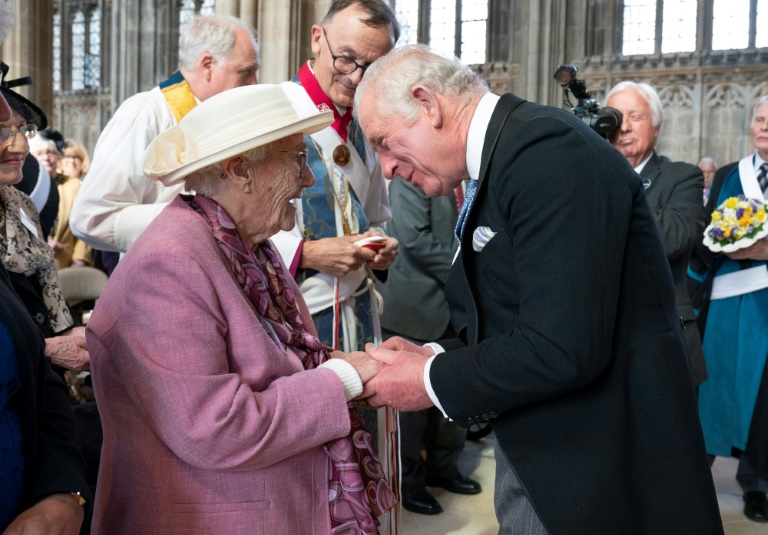
New king at ease as figurehead of multi-faith UK

In a hushed atmosphere of a south London mosque, a dozen Muslims of all ages wait to sign a book of condolences for Queen Elizabeth II at an interfaith ceremony.

The scene typifies a United Kingdom that is home to many cultures and beliefs, which Charles III has solemnly vowed to protect as king, despite his unique constitutional role as the head of the Church of England.

The king stressed on Friday that he was “a committed Anglican Christian” but recognised that Britain is a very different country to the one his mother inherited in 1952.  

“I have always thought of Britain as a ‘community of communities,’ he told faith leaders at a reception at Buckingham Palace.  

“That has led me to understand that the sovereign has an additional duty… to protect the diversity of our country, including by protecting the space for faith itself.”

The role of his late mother, Queen Elizabeth II, in helping integrate different cultures and faiths appears to have left the country’s growing Muslim population with a strong appreciation for the UK’s longest-serving monarch. 

“I’m a first generation Muslim in this country,” Danial Saeed, 19, told AFP at the huge Baitul Futuh mosque in south London.

“We got to practise our faith in this country under the protection of our queen.”

At the mosque, Rafiq Hayat, head of the Ahmadiyya Muslim Community organisation, predicted a seamless transition in relations with Charles III.

“Our loyalty to the king will be just as strong as it was to her majesty the queen,” he told AFP.

Hayat argued that Charles has “a great relationship with the Muslim world”, noting he had praised the teachings of Islam and recited Koranic verses in the past.

“I think he feels that Islam is very much sitting comfortably with Christianity and other world faiths,” he said.

– ‘Amazing gesture’-

Friday’s reception for representatives of the main religions practised in Britain was another sign of his intent to reach out beyond the Christian faith groups. 

He brought forward the audience in order to allow Chief Rabbi Ephraim Mirvis to be able to return home in time for the Jewish Sabbath. 

A source close to the Chief Rabbi told BBC News that decision was an “amazing gesture of respect and thoughtfulness”.

Ian Bradley, theology professor at the University of St Andrews, said the British monarch’s role is “to bind the nation together in all sorts of ways but not the least in terms of faith”.

And that does not need to be restricted to Christianity, he said, noting some of the strongest supporters of monarchy belong to minority faiths in Britain. 

Rami Ranger, president of the British Sikh Association, said the late queen gave his community “an immense sense of security”.

“She was above party politics and could unite the nation regardless of race, religion and colour,” he added. 

– Important message –

Bradley believes there is a wider “spiritual dimension” to the UK monarchy which provides a “spiritual heart” to the country’s so-called unwritten constitution, that has evolved over centuries.

Recognising the monarch’s role as the “Defender of the Faith and Supreme Governor of the Church of England”, the Archbishop of Canterbury Justin Welby will anoint Charles III with holy oil and bless the new king at his future coronation. 

Although the monarchy is deeply anchored in Christianity, Charles has consistently promised to defend all faiths as king. 

“It’s very different from France… being a very clearly secular state and having a secular constitution,” said Bradley. 

“We are now largely a post-Christian secular nation, but a lot of people still like that the monarchy still has that religious aura.”

Echoing Hayat, Bradley points out that while Charles is a church-going Christian, he is “very interested in Islam (and) in spirituality in general”. 

Just as the new king’s well-known stances on environmental issues resonate in particular with young people, his openness regarding religion could chime with his subjects in Britain and beyond. 

Among Christians, he has shown a particular fondness for the Orthodox faith, making several retreats to monasteries on Mount Athos in Greece. 

Meanwhile he also touched Britain’s Jewish community by visiting Israel — something his late mother never did — though it was not on an official visit. 

Charles also commissioned portraits of Holocaust survivors, a gesture of remembrance that was also appreciated.

For Hayat, the new king is well placed when it comes to talking about faith.

“When he speaks people listen,” he said.

“That will be a very important message that he will send out to the whole world that Islam is a religion of peace and that Islam is not associated with terrorism.

“That will make a huge difference to the relationship between the Muslim world and the Christian world and the Jewish world.”

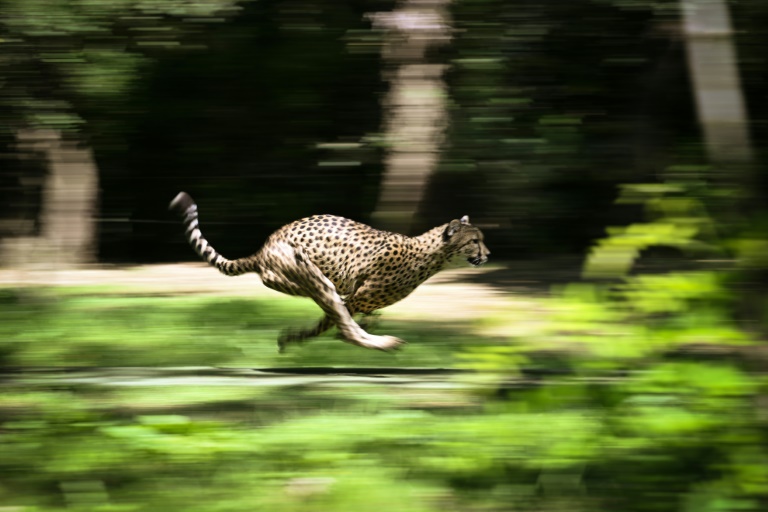
Namibian cheetahs head for India, 70 years after local extinction

Eight Namibian cheetahs were on Friday airlifted to India, part of an ambitious project to reintroduce the big cats after they were driven to extinction there decades ago, officials and vets said.

The wild cheetahs were moved by road from a game park north of the Namibian capital Windhoek to board a chartered Boeing 747 dubbed “Cat plane” for an 11-hour flight.

They will be personally welcomed by Prime Minister Narendra Modi on Saturday, his 72nd birthday.

He will swing open the gates of Kuno National Park, a new sanctuary created for the cats, 320 kilometres (200 miles) south of Delhi.

The 750-square-kilometre (290-square-mile) protected park was selected as a home because of its abundant prey and grasslands.

The project is the world’s first inter-continental translocation of cheetahs, the world’s fastest land animal, according to the Indian high commissioner to Namibia, Prashant Agrawal.

“This is historic, global first. Game-changing,” he told AFP. “We are all the more excited because it is happening in the 75th year of Indian independence”.

Critics have warned that the Namibian cheetahs may struggle to adapt to the Indian habitat and may clash with the significant number of leopards already present.

But organisers are unfazed.

“Cheetahs are very adaptable and (I’m) assuming that they will adapt well into this environment. So I don’t have a lot of worries,” said Dr Laurie Marker, founder of the Namibia-based charity Cheetah Conservation Fund (CCF), which has been central to the project logistics.

The project has been in the making for more than a decade. Initial discussion started in the 1990s, she told AFP.

India was once home to the Asiatic cheetah but it was declared extinct there by 1952. The critically endangered subspecies, which once roamed across the Middle East, Central Asia and India, are now only found, in very small numbers, in Iran.

New Delhi has since 2020 been working to reintroduce the animals after the Supreme Court announced that African cheetahs, a different subspecies, could be settled in a “carefully chosen location” on an experimental basis.

The five females and three males, aged between two and five and a half, will each be fitted with a satellite collar. 

They are a donation from the government of Namibia, one of a tiny handful of countries in Africa where the magnificent creature survives in the wild.

Negotiations are ongoing for similar translocation from South Africa, a government official told AFP on Friday, with vets suggesting 12 cats could be moved. 

Cheetahs became extinct in India primarily because of habitat loss and hunting for their distinctive spotted coats. 

An Indian prince, the Maharaja Ramanuj Pratap Singh Deo, is widely believed to have killed the last three recorded cheetahs in India in the late 1940s.

One of the oldest of the big cat species, with ancestors dating back about 8.5 million years, cheetahs once roamed widely throughout Asia and Africa in great numbers, said CCF.

But today only around 7,000 remain, primarily in the African savannas.

The cheetah is listed globally as “Vulnerable” on the International Union for the Conservation of Nature (IUCN) Red List of Threatened Species.

In North Africa and Asia it is “Critically Endangered”.

Their survival is threatened primarily by dwindling natural habitat and loss of prey due to human hunting, the development of land for other purposes and climate change.

In Italy floods, mud tsunami swallowed victims alive

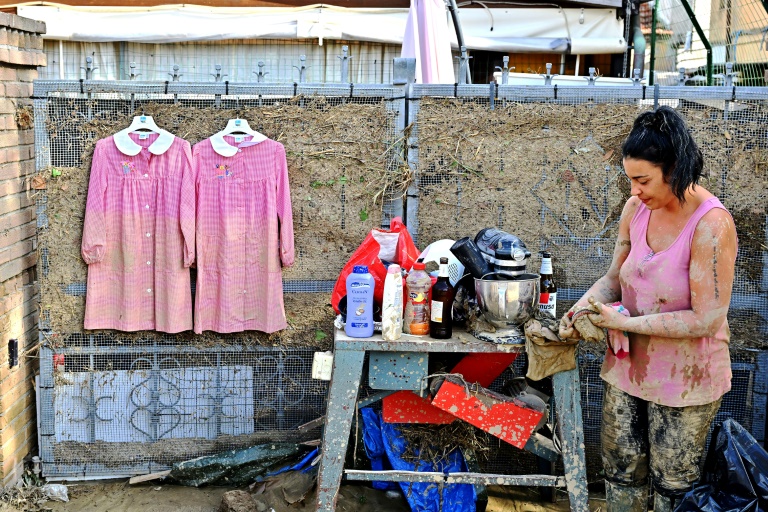
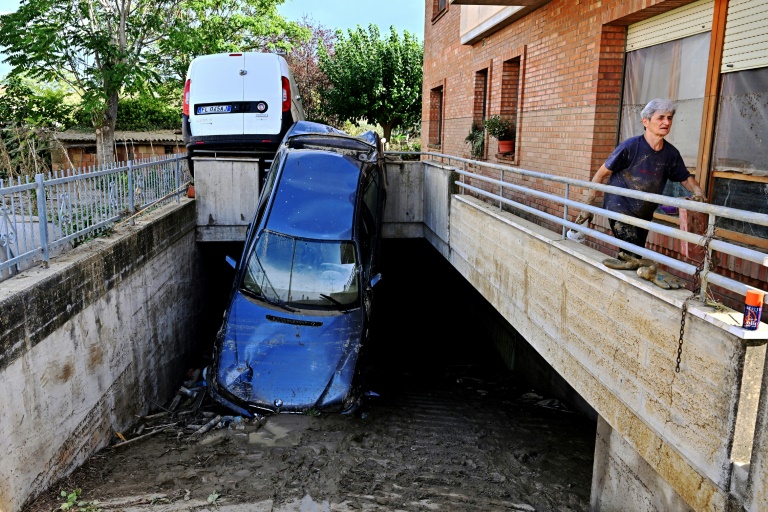
Adriana Pianelli called out to her husband and son as they disappeared under a sea of mud in the underground carpark, during a deadly storm that devastated villages in central Italy.

“I saw them, I called Andrea! Giuseppe! But the water had risen so fast, and was so thick with mud, they had no chance,” she said, the arms of her pink jumper pulled down over clenched fists.

Andrea, 25, had been nearly out of the garage when he turned back to help his father, 65-year old Giuseppe, who had slipped over. All three had gone out in the heavy rain to move their car to safety.

The father and son were just two of an estimated 10 people killed in the Marche region by the flash floods.

“It was like a tsunami. They were there, then they were gone,” said Adriana, who had been waiting for them on higher ground, at the entrance to the garage.

Down the street, Pasquale Avallone said he had almost died when the waters gushing into his house rose in seconds up to his neck.

“The front door burst off its hinges and I was thrown up against the wall. I just managed to climb onto of a cupboard and there I waited, for death,” he said.

– ‘Lost everything’ –

The warehouse worker, 30, choked back tears as he picked his son’s dinosaur toys out of the mud and tossed them onto the nearest pile of ruined sofas, beds and tables lining the street in Pianello di Ostra.

“I didn’t have much. Now I have nothing at all, nothing but a drowned parrot,” he said as he stood bare-chested in shorts and wellington boots, his legs and hands caked in mud.

Villagers used brooms to sweep water out of their homes, or tried in vain to clean dirt off valuables.

Laura Marinelli, 33, grabbed her 18-month-old daughter and ran to neighbours upstairs as her ground-floor home near Ostra began to flood. The only thing she took with her was a pack of nappies.

“If it had happened much later we would have been asleep, and would likely have died,” she said, as she pointed out the roof she’d climbed onto with her baby and husband as the waters kept rising.

“We’ve lost everything, all the photos, all the letters you can’t replace,” she told AFP, plastic pink toys floating in the submerged garden nearby.

The strong smell of sewage and petrol at the height of the flood lingered in Pianello as Prime Minister Mario Draghi arrived for a lightening visit, and was heckled by a small group of locals.

“If the state doesn’t hurry up with help, there’ll be a revolution here,” warned Avellone’s brother-in-law Marco.

“They are quick to promise things when it’s election season, but you can’t trust any of them to actually do what’s needed. To do whatever they can to prevent nightmares like this,” he said.

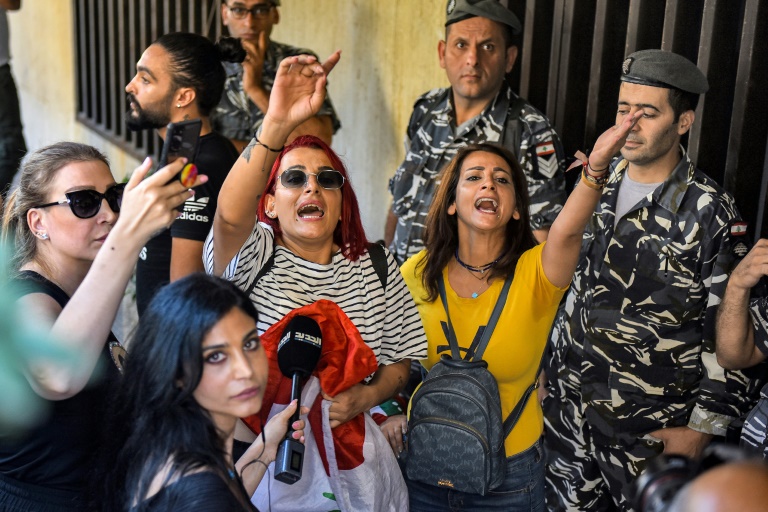
Five bank 'heists' in a day as Lebanese demand their frozen savings

Five Lebanese banks were stormed Friday by depositors seeking to unlock frozen savings, the latest in a string of such “heists” that have garnered wide public support in the crisis-hit country.

Lebanon has been mired in an economic crisis for more than two years, since the value of its currency began plummeting and banks started imposing draconian restrictions on withdrawals.

In the past week, seven bank branches have been targeted by “depositor heists”, prompting lenders to announce a three-day closure starting Monday, according to the Association of Banks in Lebanon.

As the incidents snowballed on Friday, Interior Minister Bassam Mawlawi called an emergency meeting in the afternoon.

“Reclaiming rights in this way… can break the system and make the rest of the depositors lose their rights,” he told reporters after the meeting.

Public Prosecutor Ghassan Oueidat urged police to arrest all those involved in the heists, describing them as “armed robberies on banks with the aim of stopping the banking sector in Lebanon from working, and instigating more financial and economic crises”.

Oueidat also asked police to investigate whether any of the heists were connected to each other, a judicial source told AFP.

The holdup of a Beirut bank on Wednesday by an activist who filmed herself using a toy gun appears to have sparked a series of copycat raids by angry depositors.

On Friday there were another three such incidents in Beirut and two in south Lebanon, AFP correspondents and a security source said.

– ‘Emptied jerrycan’ –

In one case, a man carrying a gun and jerrycan of fuel demanded staff at a branch of the Byblos bank in the southern town of Ghaziyeh hand over his money.

Accompanied by his son, he threatened bank staff with the gun, which a Lebanese television channel said may have been a toy, before making his demand.

“He emptied a jerrycan of fuel on the floor,” a bank security guard told an AFP correspondent.

The man walked away with about $19,000 in cash but turned himself in to police moments later as a crowd formed in front of the bank to support him.

A few hours later in the Beirut neighbourhood of Tariq al-Jdideh, depositor Abed Soubra held up a branch of Blom Bank, demanding access to his frozen savings.

He eventually surrendered his weapon to police in the early evening but insisted he intended to stay in the bank until he got his money, an AFP correspondent inside the branch reported.

Another man armed with a hunting rifle held up a bank in Beirut’s Ramlet el-Baida neighbourhood, witnesses told an AFP photographer at the scene.

The man was eventually escorted out of the branch by security forces but his siblings were handed $15,000 of his savings, the Depositors Union said.

A man who held up a bank in Chehime in the south was also led away by security forces after pocketing $25,000 of his savings, the group said.

– New budget delay –

The spate of heists comes two days after a young activist stormed a central Beirut bank with fuel and a plastic gun to demand the deposits of her sister, who needed to pay for cancer treatment.

The woman identified as Sali Hafiz made off with around $13,000 and became an instant hero on social media.

“She had every right to do this. I would do the same if I was as brave as her,” said Carla Chehab, a 28-year-old Beirut resident.

“The thieves are the banks, the government and all rich people protecting them,” she added.

The severity of Lebanon’s crisis has been widely blamed on a self-serving political elite and decades of corruption. 

The currency has lost more than 90 percent of its value on the black market in recent years, while poverty and unemployment have soared.

Banks have been widely accused of operating like a cartel and of spiriting large amounts out of the country for senior Lebanese officials at a time when foreign transfers were already blocked for ordinary citizens.

A parliament session to approve the 2022 budget, a key reform needed for Lebanon to unlock billions of dollars from international lenders, was adjourned to September 26 on Friday after quorum was lost when some lawmakers walked out.

'Like a waterfall': deadly Italian storms spark climate debate

At least 10 people died and four were missing after an extraordinary thunderstorm sparked major flooding in central Italy, officials said Friday, pushing the issue of climate change up the agenda the week before elections.

Prime Minister Mario Draghi confirmed the toll, while saying it could change, before heading to the town of Ostra near Ancona, one of the places worst hit. More than 400 millimetres (16 inches) of rain fell there over a few hours on Thursday evening.

“It was scary because it happened so fast,” said Laura Marinelli, 33, who grabbed her 18-month-old daughter and ran to neighbours upstairs as her ground-floor home near Ostra began to flood.

“It sounded like a waterfall,” she added.

The waters kept rising and they climbed onto the roof to call for help, where they were rescued by emergency services.

“We’ve lost everything, all the photos, all the letters you can’t replace,” she told AFP, plastic pink toys floating in the submerged garden nearby.

News reports suggested there were two children among the missing, one swept by the waters out of the arms of their mother.

– Emergency funds –

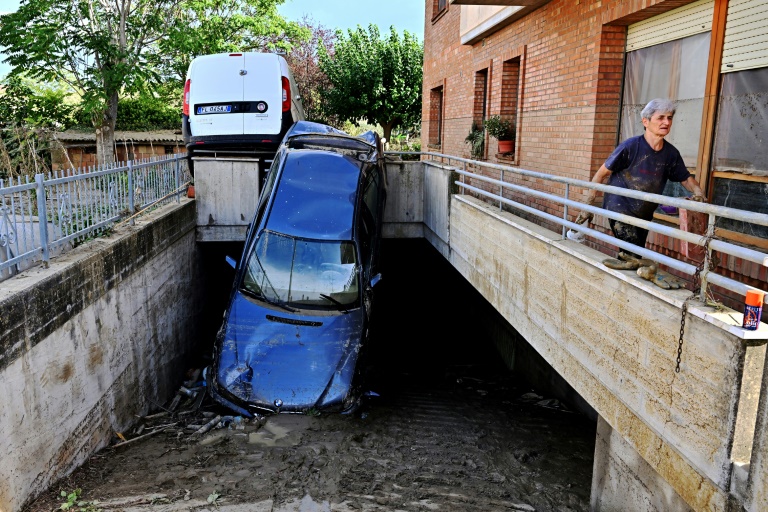
Across the area around Ancona, the port capital of the central eastern Marche region, streets were turned into rivers, cars swept into piles by the floodwaters, furniture washed out of homes and thick mud left everywhere.

The fire service said it had more than 300 people working on the floods, while several areas were without electricity or telephone connections, and schools were closed.

Draghi announced five million euros in emergency funds for the area and visited Ostra to offer his condolences in person.

“We will do everything possible… you can count on us,” said the premier, who is set to leave office following elections on September 25.

Speaking in Rome earlier, he put the toll at 10 dead and four missing, while saying this number was liable to change.

Draghi also made an explicit link between the flooding and global warming, saying: “We see it concretely in what happened today how the fight against climate change is fundamental.”

Condolences for those affected poured in from across the political spectrum.

Giorgia Meloni, whose far-right Brothers of Italy party is leading opinion polls, offered her “full solidarity” with those affected.

– No warning –

Italy has been hit by severe drought, followed by violent end-of-summer storms, and many have drawn the link with climate change — a subject which took a back seat during the election campaign.

“How can you think that the fight against climate change is not the first priority?” said Enrico Letta, head of the centre-left Democratic Party. 

He said he was “stunned and speechless” at news of the floods and announced he was suspending campaigning in the Marche region.

Francesco Rocca, president of the International Federation of the Red Cross and Red Crescent Societies, said its teams were on their way.

“Very concerned by the growth of extreme weather events,” he said on Twitter.

This summer’s drought, the worst in 70 years, drained the Po River, Italy’s largest water reservoir.

The baking heat has in recent weeks been followed by storms, the water flooding land rendered hard as concrete.

In July, 11 people were killed when a section of Italy’s biggest Alpine glacier gave way, a disaster that officials blamed on climate change.

The EU’s economy commissioner, Paolo Gentiloni, a former Italian premier, said he shed tears for the victims of the floods in Marche.

“Italy and Europe must take climate change seriously,” he tweeted.

Local officials said there was no warning of the huge storm, with only a normal weather warning issued.

The Italian Air Force, which deals with weather, said there had been an “exceptional” event, with more than 400 mm of rain falling between mid-afternoon and 11:00 pm.

More than half of this fell within four hours, spokesman Guido Guidi told AFP, adding: “It was not a foreseeable event.”

'Like a waterfall': deadly Italian storms spark climate debate

At least 10 people died and four were missing after an extraordinary thunderstorm sparked major flooding in central Italy, officials said Friday, pushing the issue of climate change up the agenda the week before elections.

Prime Minister Mario Draghi confirmed the toll, while saying it could change, before heading to the town of Ostra near Ancona, one of the places worst hit. More than 400 millimetres (16 inches) of rain fell there over a few hours on Thursday evening.

“It was scary because it happened so fast,” said Laura Marinelli, 33, who grabbed her 18-month-old daughter and ran to neighbours upstairs as her ground-floor home near Ostra began to flood.

“It sounded like a waterfall,” she added.

The waters kept rising and they climbed onto the roof to call for help, where they were rescued by emergency services.

“We’ve lost everything, all the photos, all the letters you can’t replace,” she told AFP, plastic pink toys floating in the submerged garden nearby.

News reports suggested there were two children among the missing, one swept by the waters out of the arms of their mother.

– Emergency funds –

Across the area around Ancona, the port capital of the central eastern Marche region, streets were turned into rivers, cars swept into piles by the floodwaters, furniture washed out of homes and thick mud left everywhere.

The fire service said it had more than 300 people working on the floods, while several areas were without electricity or telephone connections, and schools were closed.

Draghi announced five million euros in emergency funds for the area and visited Ostra to offer his condolences in person.

“We will do everything possible… you can count on us,” said the premier, who is set to leave office following elections on September 25.

Speaking in Rome earlier, he put the toll at 10 dead and four missing, while saying this number was liable to change.

Draghi also made an explicit link between the flooding and global warming, saying: “We see it concretely in what happened today how the fight against climate change is fundamental.”

Condolences for those affected poured in from across the political spectrum.

Giorgia Meloni, whose far-right Brothers of Italy party is leading opinion polls, offered her “full solidarity” with those affected.

– No warning –

Italy has been hit by severe drought, followed by violent end-of-summer storms, and many have drawn the link with climate change — a subject which took a back seat during the election campaign.

“How can you think that the fight against climate change is not the first priority?” said Enrico Letta, head of the centre-left Democratic Party. 

He said he was “stunned and speechless” at news of the floods and announced he was suspending campaigning in the Marche region.

Francesco Rocca, president of the International Federation of the Red Cross and Red Crescent Societies, said its teams were on their way.

“Very concerned by the growth of extreme weather events,” he said on Twitter.

This summer’s drought, the worst in 70 years, drained the Po River, Italy’s largest water reservoir.

The baking heat has in recent weeks been followed by storms, the water flooding land rendered hard as concrete.

In July, 11 people were killed when a section of Italy’s biggest Alpine glacier gave way, a disaster that officials blamed on climate change.

The EU’s economy commissioner, Paolo Gentiloni, a former Italian premier, said he shed tears for the victims of the floods in Marche.

“Italy and Europe must take climate change seriously,” he tweeted.

Local officials said there was no warning of the huge storm, with only a normal weather warning issued.

The Italian Air Force, which deals with weather, said there had been an “exceptional” event, with more than 400 mm of rain falling between mid-afternoon and 11:00 pm.

More than half of this fell within four hours, spokesman Guido Guidi told AFP, adding: “It was not a foreseeable event.”

Xi, Putin look to challenge world order at regional summit

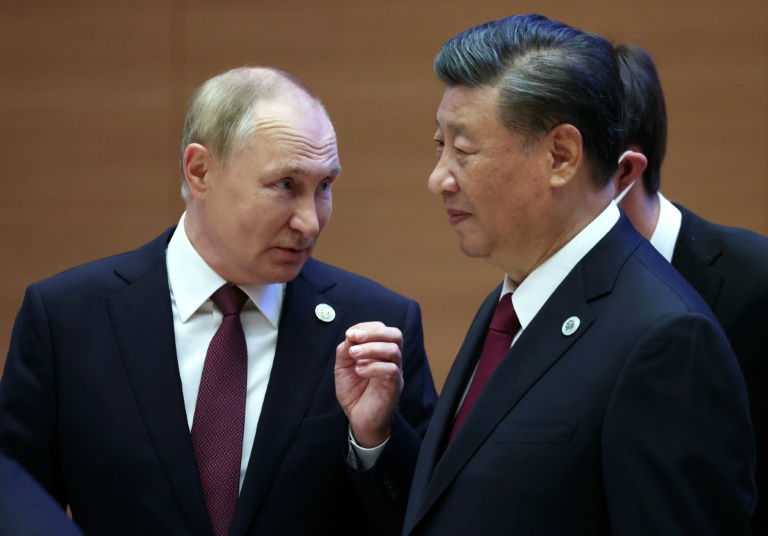
Russian President Vladimir Putin and Chinese leader Xi Jinping looked to rally Asian leaders behind a new “international order” as they met Friday for a summit aimed at challenging Western influence.

But cracks in summit solidarity quickly appeared, with India’s prime minister telling Putin it was “not the time” for the conflict in Ukraine.

Adding to the tension, tthe forces of two countries — Kyrgyzstan and Tajikistan — engaged in fierce border clashes while their leaders were in attendance.

Washington said remarks from Putin at the summit on addressing “concerns” about Ukraine from China and India increased pressure on Russia to end its military offensive.

The meeting of the Shanghai Cooperation Organisation (SCO) in ex-Soviet Uzbekistan brought Putin and Xi together with the leaders of SCO members India, Pakistan, and four Central Asian nations, as well as the presidents of Iran and Turkey.

Putin and Xi met on Thursday for their first face-to-face talks since Russia sent troops into Ukraine in February, and on the Chinese leader’s first trip abroad since the early days of the coronavirus pandemic.

The summit was put forward by the Kremlin as an alternative to “Western-centric organisations”, at a time of increasing pressure on Moscow over Ukraine and growing anger in Beijing over US support for Taiwan.

Xi told the gathered leaders it was time to reshape the international system and “abandon zero-sum games and bloc politics”.

They should “work together to promote the development of the international order in a more just and rational direction,” Xi told a joint session.

– ‘New centres of power’ –

Putin hailed the increasing influence of countries outside the West, slamming what he called “instruments of protectionism, illegal sanctions and economic selfishness”.

“The growing role of new centres of power who cooperate with each other… is becoming more and more clear,” Putin said.

The summit has been Putin’s first major international outing since Moscow sent troops into Ukraine in February, sparking a conflict that has left thousands dead and seen Russia hit with waves of economic sanctions.

All did not go smoothly for the Russian leader. 

In their talks, Indian Prime Minister Narendra Modi told Putin: “Excellency, I know today’s time is not a time for war.”

Putin told Modi he knew of India’s “concerns” about the conflict, echoing language he had used with Xi the day before. 

“We will do our best to end this as soon as possible,” Putin said, while accusing Kyiv of rejecting negotiations.

“I think what you’re hearing from China, from India, is reflective of concerns around the world about the effects of Russia’s aggression on Ukraine,” US Secretary of State Antony Blinken said in Washington. 

“I think it increases the pressure on Russia to end the aggression.”

– Putin in ‘no hurry’ on Ukraine –

But Putin later said Russia was in no rush to finish the military action.

“Our offensive operations in Donbas itself do not stop. They are going at a slow pace… the Russian army is occupying newer and newer territories,” Putin told a press conference at the end of the summit.

“We are not in a hurry… there are no changes.”

The SCO — which also includes Kazakhstan, Kyrgyzstan, Tajikistan and Uzbekistan — was set up in 2001 as a political, economic and security organisation to rival Western institutions.

The group is far from fully united. The leaders of the Kyrgyzstan and Tajikistan were forced to meet at the summit to order their forces to withdraw after deadly clashes along their disputed border raised fears of all-out conflict.

Putin and Xi both also met with Turkish President Recep Tayyip Erdogan, who told the assembled leaders that efforts were being made “to finalise the conflict in Ukraine through diplomacy as soon as possible”.

Putin told Erdogan, who has been a key broker in limited deals between Russia and Ukraine, that Moscow was keen to build closer ties with Turkey and was ready to “significantly increase” all exports to the country.

For Putin, the summit was an attempt to show that he is not fully isolated on the global scene, at a time when his forces in Ukraine are facing major battlefield setbacks.

For Xi, it was an opportunity to shore up his credentials as a global statesman ahead of a pivotal congress of the ruling Communist Party in October, where he is widely expected to secure an unprecedented third term as president.

More than 210 dead in Armenia-Azerbaijan clashes this week

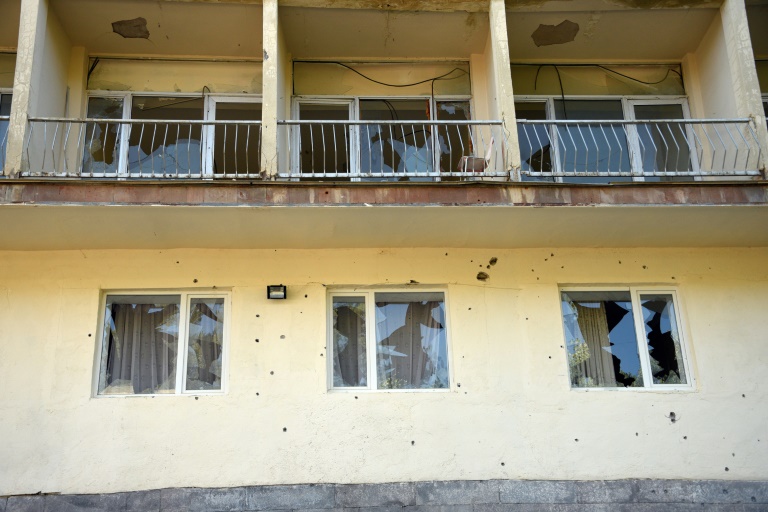
Armenia and Azerbaijan said Friday that more than 210 people died in border clashes this week, with Yerevan accusing Baku troops of atrocities in the arch foes’ worst fighting in two years.

US House Speaker Nancy Pelosi said she will travel to Yerevan Saturday after this week’s escalation has largely undone recent Western efforts to bring Baku and Yerevan closer to a peace agreement.

The Caucasus neighbours have fought two wars — in 2020 and in the 1990s — over the contested Nagorno-Karabakh region, Azerbaijan’s Armenian-populated enclave.

Both sides accuse each other of provoking the clashes, which erupted on Tuesday and ended with international mediation overnight on Thursday.

On Friday, Azerbaijan’s defence ministry revised the death toll among its troops to 77 from an earlier reported 71.

Armenian Prime Minister Nikol Pashinyan said: “For the moment, the number of dead is 135.”  

“Unfortunately, it is not the final figure. There are also many wounded,” he told a cabinet meeting.

Armenia’s rights ombudsperson, Kristina Grigoryan, later said one civilian was also killed and six wounded in shelling by Azerbaijani forces, while hundreds of civilians fled their homes.

The chief of staff of Armenia’s armed forces, Eduard Asryan, accused Azerbaijani troops of committing “horrible atrocities,” saying they mutilated and dismembered the bodies of dead Armenian servicemen.

– Aliyev thanks Putin –

Azerbaijani President Ilham Aliyev said “the fact that the ceasefire is being respected proves that neither Azerbaijan, nor Armenia, intended for large-scale escalation”.

He said he regretted “numerous victims from both sides”, saying what was “most important now is not to wreck the nascent process of normalising ties”.

Speaking at a meeting with Russian President Vladimir Putin in the Uzbek city of Samarkand, Aliyev thanked him for Moscow’s “rapid reaction to the escalation”.

Putin, for his part, expressed satisfaction the ceasefire was holding, but noted the overall “situation remains tense”.

It was the worst fighting since the two countries fought a six-week war in 2020 and comes with Armenia’s closest ally Moscow distracted by its nearly seven-month war in Ukraine.

Armenia’s security council said the violence ended late Thursday “thanks to international mediation” after earlier failed attempts by Moscow to broker a truce.

A delegation of the Collective Security Treaty Organisation (CSTO) — a Moscow-led grouping of ex-Soviet republics — arrived in Yerevan Thursday evening, Armenia’s defence ministry said.

Armenia is a member of CSTO but Azerbaijan is not. 

On Tuesday, Armenia’s security council asked for military help from Moscow, which is obliged under the treaty to defend Armenia in the event of a foreign invasion.

But the Kremlin — which also has close ties with Baku — did not rush to help Yerevan.

“We asked for military help and our demand was not accepted. Obviously, we are not happy,” Armenia’s security council chairman, Artyom Grigoryan, said Friday.

– Transport sticking point –

With Moscow increasingly isolated on the world stage following its February invasion of Ukraine, the European Union had taken a lead role in mediating the Armenia-Azerbaijan normalisation process.

During EU-mediated talks in Brussels in April and May, Aliyev and Pashinyan agreed to “advance discussions” on a future peace treaty.

They last met in Brussels on August 31, for talks mediated by European Council President Charles Michel.

The talks also focus on border delimitation and the reopening of transport links.

The issue of ensuring a land transport link between Turkic-speaking Azerbaijan and its ally Ankara via Armenian territory has emerged as the primary sticking point.

Azerbaijan insists on Yerevan renouncing its jurisdiction over the land corridor that should pass along Armenia’s border with Iran — a demand the Armenian government rejects as an affront to the country’s sovereignty and territorial integrity.

The six weeks of fighting in 2020 claimed the lives of more than 6,500 troops from both sides and ended with a Russian-brokered ceasefire.

Under the deal, Armenia ceded swathes of territory it had controlled for decades, and Moscow deployed about 2,000 Russian peacekeepers to oversee the fragile truce.

Ethnic Armenian separatists in Nagorno-Karabakh broke away from Azerbaijan when the Soviet Union collapsed in 1991. The ensuing conflict claimed around 30,000 lives.

Ukraine finds graves and 'torture centres' in recaptured east

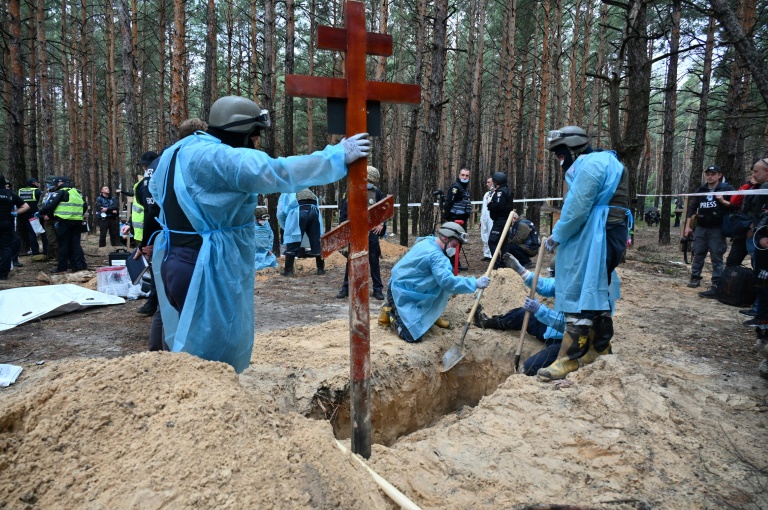
Ukrainian investigators descended on a pine forest outside the recaptured town of Izyum on Friday and began pulling hundreds of hastily buried bodies from the sandy soil.

At least one of the corpses had been buried with bound hands, an AFP journalist saw.

Kyiv officials said they had counted 450 graves at the mass burial site and found 10 alleged “torture centres” after the Kharkiv region was recaptured from Russian invaders. 

In the forest outside Izyum, AFP journalists saw graves topped with makeshift crosses and marked with numbers. One inscription read: “Ukrainian army, 17 people. Izyum morgue.”

“Russia leaves only death and suffering. Murderers. Torturers,” said Ukraine’s President Volodymyr Zelensky. Some of the remains exhumed included children and people who were likely tortured before dying, he added.

Moscow has been roundly condemned internationally for invading its neighbour, but Russian President Vladimir Putin on Friday refused blame for the ongoing fighting. 

“Unfortunately, just the opposing side, the leadership of Ukraine, announced its rejection of the negotiating process, and stated that it wants to achieve its goals by military means, on the battlefield,” he said. 

“We will do our best to end this as soon as possible,” he added.

But later Friday, he said there were no plans to adjust Russia’s military operations in Ukraine despite Kyiv’s counter-offensive.

“We are not in a hurry… there are no changes,” he said.

– ‘Not a time for war’: Modi –

The Russian leader was speaking at a regional summit in Uzbekistan where Indian Prime Minister Narendra Modi — leader of a nation with longstanding ties to Moscow — told Putin that now was “not a time for war”. 

Yet the conflict continues. Kyiv’s forces have recovered a swathe of territory in recent days in a lightning counter-offensive in the east, recapturing several towns from Russian forces but also uncovering what they say is a grim legacy of occupation.

Police chief Igor Klymenko said they had found torture rooms in the town of Balakliya and elsewhere in Karkhiv, while presidential aide Mykhaylo Podolyak said the Izyum mass grave site alone held at least 450 bodies.

“In the occupied territories, rampant terror, violence, torture and mass murders have been reigning for months,” Podolyak said.

On the main road from Izyum to Kharkiv, a small dirt road leads into a pine forest. On the right-hand side of the lane, about 100 metres (330 feet) into the trees, two men in white overalls were digging the sandy soil.

Soon they reached the first body, exhumed it and placed it in a white plastic body bag. As more bodies appeared, the strong smell of decay spread among the trees and rough wooden crosses.

– ‘Witnesses’ –

Where identification was possible, names were attached to the crosses along with dates between early March, when Izyum was still held by Ukraine, and early September, a period of Russian control.

On some of the graves, small offerings of flowers had been placed in homage to the deceased.

According to Oleg Kotenko, the government official in charge of the search for missing persons nationwide, a family with a young child was buried there.

“They were killed. There are witnesses from the same building. They saw what happened and buried these people here,” he said.

According to Kotenko: “The graves without names are for those found dead in the street.”

The United Nations in Geneva said it hopes to send a team to determine the circumstances of the deaths in the forest graves.

Russia has been accused of carrying out attacks on civilians that could amount to war crimes, notably in suburban towns outside the capital of Kyiv after fighting in March.

Dozens of civilians bearing signs of extrajudicial killings were found in places such as Bucha, outside Kyiv, after Ukraine’s forces recaptured the territory earlier this year.

– German military revamp –

The grim discoveries have coincided with fresh developments on the international front, including a White House announcement of a new package of up to $600 million in US military aid for Ukraine.

Since Russia invaded in Ukraine in February, the United States has provided Kyiv with more than $15 billion in military support, including long-range precision rocket systems.

German Chancellor Olaf Scholz warned that Europe must shoulder far more of NATO’s burden. He branded President Vladimir Putin’s Russia the “biggest threat” currently posed to the alliance.

“NATO remains responsible for the collective defence of the entire alliance with a focus on Europe,” Scholz told army officers.

“Credible deterrence remains the core element.” 

Germany was ready to take on a leading role in ensuring Europe’s security, Scholz said, vowing to turn the country’s armed forces into the “best-equipped” on the continent.

Haunted by two world wars, Germany has always trod lightly and quietly on the world stage when it comes to conflicts and armament.

Kyiv gained EU candidacy status in June, angering Moscow which has tried to retain political and military influence since the collapse of the Soviet Union three decades ago.

– Weaning off Russian fuel –

Many European countries have joined the United States in supplying Kyiv with advanced weapons, enabling its forces to push the Russians out of thousands of square kilometres of territory.

EU countries have also hit Russia with economic penalties. 

Berlin, for example, on Friday took control of the German operations of Russian oil firm Rosneft to secure energy supplies disrupted by the invasion.

Rosneft’s German subsidiaries, which account for about 12 percent of oil refining capacity in the country, were placed under the trusteeship of the Federal Network Agency, the economy ministry said.

The seizures come as Germany is scrambling to wean itself off its dependence on Russian fossil fuels. Moscow has stopped natural gas deliveries to Germany via the Nord Stream 1 pipeline.


Close Bitnami banner
Bitnami