World

Stocks extend losses on recession fears

Stock markets fell further on Friday as weak UK retail sales data and a dire warning from global shipping giant FedEx fuelled fears of recession.

Equities were already struggling this week after data showed US inflation slowed but not as much as expected, fuelling fears of aggressive monetary tightening by central banks.

Investors worry that central banks will move too aggressively to tame inflation through rate hikes that could put the brakes on economic growth.

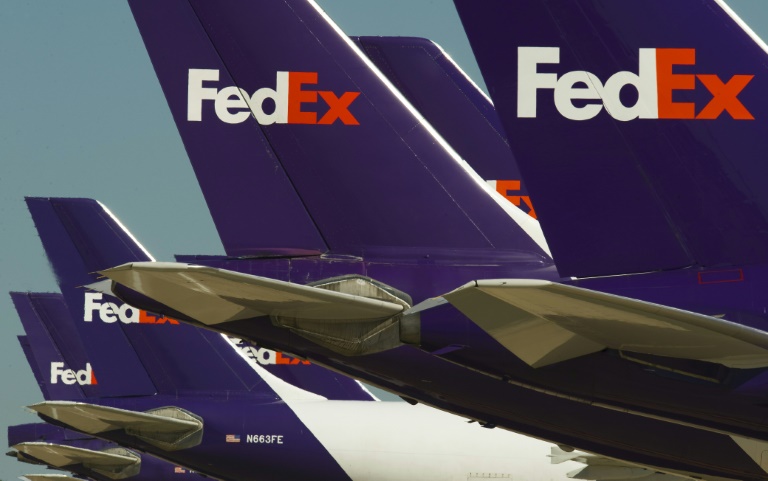
Wall Street stocks slunk lower after FedEx reported on Thursday that its shipped fewer packages than expected over the summer due to weakness in the global economy.

The company said it was closing stores, freezing hiring and parking aircraft, while warning of a big earnings hit, with its CEO Raj Subramaniam telling CNBC he expects a global recession.

“The market is looking weak this morning because of the FedEx warning, but it really goes beyond that,” said Briefing.com analyst Patrick O’Hare.

“There are pressing concerns that the aggressive rate hikes by central banks thus far, and the ones that are yet to come, will drive the global economy into a recession that is not ‘soft’,” O’Hare said.

The Dow was down 1.1 percent in late morning trading, while the broader S&P 500 fell 1.3 percent and the tech-heavy Nasdaq Composite tumbled 1.6 percent.

“These increasing concerns over a global recession, as well as rising US yields are prompting a flight into the US dollar and not much else,” said CMC Markets analyst Michael Hewson.

London’s FTSE 100 stock index ended the day 0.6 percent lower while the British pound tanked to a 37-year low against the dollar at $1.1351 on news that British retail sales tumbled by far more than forecast in August as shoppers faced rampant inflation.

Sales by volume dived 1.6 percent last month, more than triple expectations.

Sterling has hit a series of 1985 lows in recent weeks, also as the US Federal Reserve implements aggressive hikes interest rate hikes.

– ‘Markets in pain’ –

“Markets are in a lot of pain, and the UK’s retail data has made things only worse for traders as it clearly pointed out one thing: an imminent recession,” said AvaTrade analyst Naeem Aslam.

“When you look at the sterling against the dollar, it seems like there are no buyers out there.”

Elsewhere, Frankfurt equities dived 1.7 percent and Paris shed 1.3 percent as investors digested confirmation of record-high inflation in the eurozone.

“Data for August confirm that price pressures are very strong and broad-based” with eurozone inflation at 9.1 percent, said Capital Economics analyst Jack Allen-Reynolds.

“The European Central Bank will need to continue hiking interest rates aggressively at forthcoming meetings.”

The ECB had last week hiked its key rate by a historic 75 basis points, and markets expect a similar-sized move at the October policy meeting.

The Fed and Bank of England are widely expected to ramp up borrowing costs next week.

The US central bank has lifted borrowing costs by 75 basis points at each of its last two meetings. 

– Key figures at around 1530 GMT –

New York – Dow: DOWN 1.1 percent at 30,635.57 points

EURO STOXX 50: DOWN 1.1 percent at 3,500.41

London – FTSE 100: DOWN 0.6 at 7,236.68 (close)

Frankfurt – DAX: DOWN 1.7 percent at 12,741.26 (close)

Paris – CAC 40: DOWN 1.3 percent at 6,077.30 (close)

Tokyo – Nikkei 225: DOWN 1.1 percent at 27,567.75 (close)

Shanghai – Composite: DOWN 2.3 percent at 3,126.40 (close)

Hong Kong – Hang Seng Index: DOWN 0.9 percent at 18,761.69 (close)

Pound/dollar: DOWN at $1.1422 from $1.1467 on Thursday

Euro/pound: UP at 87.72 pence from 87.21 pence 

Euro/dollar: UP at $1.0020 from $1.0001

Dollar/yen: DOWN at 142.98 yen from 143.45 yen

Brent North Sea crude: UP 1.0 percent at $91.76 per barrel

West Texas Intermediate: UP 0.8 at $85.80 per barrel

burs-rl/cdw
Djokovic pays tribute to Federer as Swiss great prepares to quit

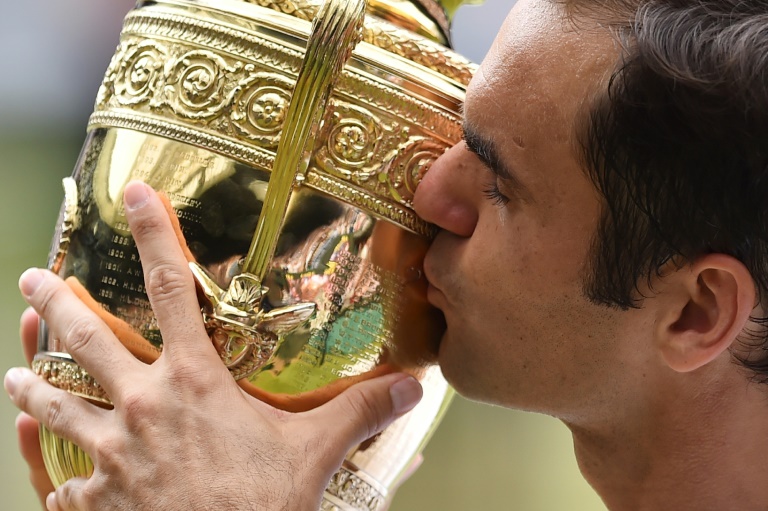
Novak Djokovic paid a warm tribute to his rival Roger Federer on Friday, saying they had enjoyed “a decade of incredible moments and battles” after the Swiss great’s announcement that he will retire after the Laver Cup this month.

Djokovic, reacting 24 hours after Federer said he was quitting, said on social media: “Your career has set the tone for what it means to achieve excellence and lead with integrity and poise.

“It’s an honour to know you on and off court, and for many more years to come.”

Rafael Nadal also congratulated Federer on his extraordinary career while Serena Williams welcomed the 41-year-old Swiss to the “retirement club” after the American herself quit the game this month.

On Thursday, Federer admitted his battles with a knee problem had forced him to call time on a historic career that has yielded 20 Grand Slam titles and earned him a reputation as one of the most elegant players the game has ever seen.

It was not a total surprise as he has been out of action since a quarter-final loss at Wimbledon in 2021. After that match he underwent his third knee surgery in 18 months as time caught up with him.

Federer said in a social media statement that his 24 years on the tour had been “an incredible adventure”.

“While it sometimes feels like it went by in 24 hours, it has also been so deep and magical that it seems as if I have already lived a lifetime,” the Swiss said.

Knee problems restricted him to only three of the 11 Grand Slams played since the start of 2020 and he said his body had sent him “a message”.

“Tennis has treated me more generously than I ever would have dreamt, and now I must recognise when it is time to end my competitive career.”

Djokovic, who is six years younger than Federer and has collected Grand Slam titles as the Swiss player’s powers have dimmed, had been conspicuous by his absence among the tributes on Thursday.

But a day later he said: “Roger, it’s hard to see this day and put into words all that we’ve shared in this sport together.”

The duo played 17 matches at Grand Slam tournaments, including five finals, with Djokovic leading that head-to-head 11-6.

“Your career has set the tone for what it means to achieve excellence and lead with integrity and poise,” the Serb said on a social media.

“It’s an honour to know you on and off court, and for many more years to come.”

– Two greats gone –

Tennis has now lost two of its greatest names in quick succession, after the 40-year-old Williams bowed out following a third-round defeat at the US Open this month.

“I wanted to find the perfect way to say this, as you so eloquently put this game to rest — perfectly done, just like your career,” Williams, who won 23 major titles, said on Instagram.

“I have always looked up to you and admired you. Our paths were always so similar, so much the same. You inspired countless millions and millions of people — including me — and we will never forget.”

Nadal, arguably Federer’s greatest on-court rival, said it had been “an honour” to face him.

The pair played 40 times, including nine Grand Slam finals, with Nadal holding a 24-16 winning record.

“It’s a sad day for me personally and for sports around the world,” Nadal tweeted.

Federer will finish his career behind only Nadal, with 22, and Djokovic, with 21, on the all-time list for most men’s Grand Slam titles.

Djokovic held a 27-23 winning record over Federer from 50 meetings.

Wimbledon, where Federer won a record eight titles, also paid Federer a handsome tribute.

“It’s been a privilege to witness your journey and see you become a champion in every sense of the word,” the organisers tweeted.

Teenager Carlos Alcaraz, the up-and-coming man in tennis having won the US Open last Sunday to become the youngest-ever world number one, tweeted a broken heart emoji.

– ‘Big Four’ farewell –

The Laver Cup promises to be an emotional final meeting of the “Big Four” who have dominated men’s tennis over the past two decades.

Nadal, Djokovic and two-time Wimbledon champion Andy Murray will all play for Team Europe.

“I was lucky enough to play so many epic matches that I will never forget,” Federer said, giving his own nod to his rivals.

“We pushed each other, and together we took tennis to new levels.”

Federer, who won 103 ATP titles, had said in July he hoped to play one more Wimbledon. He departs with regrets but added he had lived a life that many would envy.

“I consider myself one of the most fortunate people on Earth,” he said.

Federer won the last of his Slam titles at the 2018 Australian Open and last played in a major final at Wimbledon three years ago, losing to Djokovic despite holding two championship points.

burs-pst-jc/gj

London Fashion Week opens in mourning for queen

A scaled-back London Fashion Week opened with catwalk shows on Friday but without after-show parties following the death of Queen Elizabeth II and with a pause planned for her funeral next week.

The twice-yearly event had planned to get fully back on track after two years of Covid disruption that predicated virtual shows.

But the death of the queen, aged 96, on September 8 has seen the industry showpiece scaled-back, with high-fashion brands including Burberry and Raf Simons cancelling their shows.

“We are in a period of national mourning,” Caroline Rush, chief executive of the British Fashion Council, which organises the event, told AFP.

Rush noted the importance of being “very mindful… of what’s happening in the country and of course, recognising the passing of our monarch, who has been a fantastic champion of our industry for so many years”.

Britain will hold a minute’s silence on Sunday at 1900 GMT and LFW plans to take part.

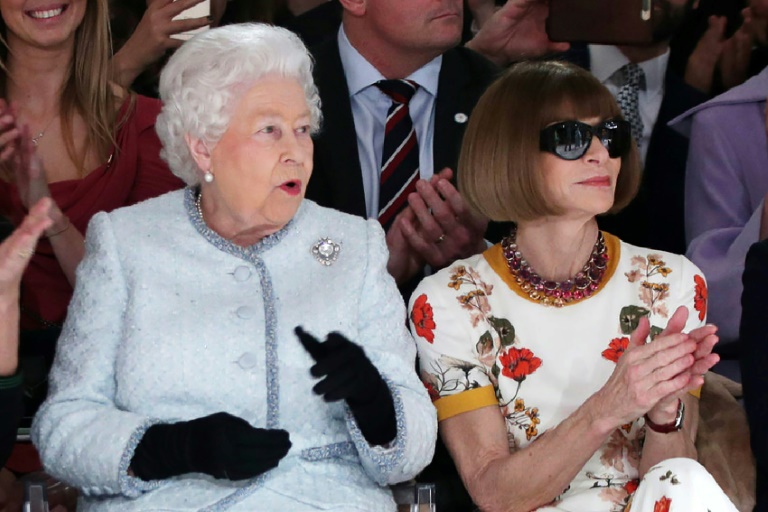
The queen, seen as a fashion icon during her 70 years on the throne, launched the QEII Award for British Design at LFW in 2018, presenting Richard Quinn with the inaugural award.

With parties postponed, this season’s London event will focus on the business side of securing orders for the clothes featured on the runway for next spring.

Shows that had been scheduled for Monday, when Britain will hold a state funeral for the late queen, have, where possible, been postponed until Tuesday.

Quinn will close out the catwalk schedule on Tuesday.

“That image of when the queen came to London Fashion Week was actually at Richard’s first fashion show and it was a fantastic way to celebrate his brilliant creativity and the impact he was already having back then in 2018,” Rush said.

Five bank 'heists' in a day as Lebanese demand their frozen savings

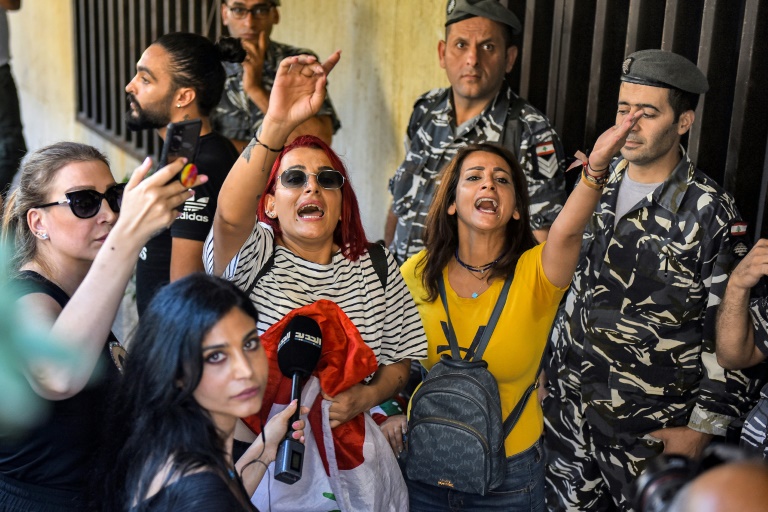
Five Lebanese banks were stormed Friday by depositors seeking to unlock frozen savings, the latest in a string of such “heists” in the crisis-hit country that have garnered wide public support.

Lebanon has been mired in an economic crisis for more than two years, since the value of its currency began plummeting and banks started imposing draconian restrictions on withdrawals.

In the past week, seven bank branches have been targeted by “depositor heists”, prompting lenders to announce a three-day closure starting Monday, according to the Association of Banks in Lebanon.

As the incidents snowballed on Friday, Interior Minister Bassam Mawlawi called for an emergency meeting in the afternoon.

“Reclaiming rights in this way… can break the system and make the rest of the depositors lose their rights,” he told reporters after the meeting.

The holdup of a Beirut bank on Wednesday by an activist who filmed herself using a toy gun appears to have sparked a series of copycat raids by angry depositors.

On Friday there were another three such incidents in Beirut and two in south Lebanon, AFP correspondents and a security source said.

In one case, a man carrying a gun and jerrycan of fuel demanded staff at a branch of the Byblos bank in the southern town of Ghaziyeh hand over his money.

Accompanied by his son, he threatened bank staff with the gun, which a Lebanese television channel said may have been a toy, before making his demand.

“He emptied a jerrycan of fuel on the floor,” a bank security guard told an AFP correspondent.

The man walked away with about $19,000 in cash but turned himself in to police moments later as a crowd formed in front of the bank to support him.

– Not ‘a bank robber’ –

A few hours later in the Beirut neighbourhood of Tariq al-Jdideh, a tense security situation developed around a branch of Blom Bank, although details were unclear.

Witnesses outside the bank said a shop-owner had demanded access to his trapped savings to pay off debts.

He was locked inside the bank together with police officers, the witnesses told AFP at the scene, but was thought to be unarmed.

Another man armed with a hunting rifle stormed a bank in Beirut’s Ramlet el-Baida neighbourhood on Friday, witnesses told an AFP photographer at the scene.

The spate of heists comes two days after a young activist stormed a central Beirut bank with fuel and a plastic gun to demand the deposits of her sister, who needed to pay for cancer treatment.

The woman identified as Sali Hafiz made off with around $13,000 and became an instant hero on social media.

“She had every right to do this. I would do the same if I was as brave as her,” said Carla Chehab, a 28-year-old Beirut resident.

“The thieves are the banks, the government and all rich people protecting them,” she added.

– Emergency meeting –

The severity of Lebanon’s crisis has been widely blamed on a self-serving political elite and decades of corruption. 

The currency has lost more than 90 percent of its value on the black market in recent years, while poverty and unemployment have soared.

Banks have been widely accused of operating like a cartel and of spiriting large amounts out of the country for senior Lebanese officials at a time when foreign transfers were already blocked for ordinary citizens.

A parliament session to approve the 2022 budget, a key reform needed for Lebanon to unlock billions of dollars from international lenders, was adjourned to September 26 on Friday after quorum was lost when some lawmakers walked out.

Last month, a man drew widespread sympathy after he stormed a Beirut bank with a rifle and held employees and customers hostage for hours, to demand some of his $200,000 in frozen savings to pay hospital bills for his sick father.

He was detained but swiftly released and was present Friday outside the bank in Tariq al-Jdideh to express his support.

The raids of recent weeks are seen as mostly acts of desperation by Lebanese depositors who do not have criminal records, garnering sympathy from the country’s main depositors’ association.

“We call on every depositor who refuses injustice, oppression and theft to support any depositor who asks for what is rightfully theirs,” association member Tala Khalil told AFP.

Five bank 'heists' in a day as Lebanese demand their frozen savings

Five Lebanese banks were stormed Friday by depositors seeking to unlock frozen savings, the latest in a string of such “heists” in the crisis-hit country that have garnered wide public support.

Lebanon has been mired in an economic crisis for more than two years, since the value of its currency began plummeting and banks started imposing draconian restrictions on withdrawals.

In the past week, seven bank branches have been targeted by “depositor heists”, prompting lenders to announce a three-day closure starting Monday, according to the Association of Banks in Lebanon.

As the incidents snowballed on Friday, Interior Minister Bassam Mawlawi called for an emergency meeting in the afternoon.

“Reclaiming rights in this way… can break the system and make the rest of the depositors lose their rights,” he told reporters after the meeting.

The holdup of a Beirut bank on Wednesday by an activist who filmed herself using a toy gun appears to have sparked a series of copycat raids by angry depositors.

On Friday there were another three such incidents in Beirut and two in south Lebanon, AFP correspondents and a security source said.

In one case, a man carrying a gun and jerrycan of fuel demanded staff at a branch of the Byblos bank in the southern town of Ghaziyeh hand over his money.

Accompanied by his son, he threatened bank staff with the gun, which a Lebanese television channel said may have been a toy, before making his demand.

“He emptied a jerrycan of fuel on the floor,” a bank security guard told an AFP correspondent.

The man walked away with about $19,000 in cash but turned himself in to police moments later as a crowd formed in front of the bank to support him.

– Not ‘a bank robber’ –

A few hours later in the Beirut neighbourhood of Tariq al-Jdideh, a tense security situation developed around a branch of Blom Bank, although details were unclear.

Witnesses outside the bank said a shop-owner had demanded access to his trapped savings to pay off debts.

He was locked inside the bank together with police officers, the witnesses told AFP at the scene, but was thought to be unarmed.

Another man armed with a hunting rifle stormed a bank in Beirut’s Ramlet el-Baida neighbourhood on Friday, witnesses told an AFP photographer at the scene.

The spate of heists comes two days after a young activist stormed a central Beirut bank with fuel and a plastic gun to demand the deposits of her sister, who needed to pay for cancer treatment.

The woman identified as Sali Hafiz made off with around $13,000 and became an instant hero on social media.

“She had every right to do this. I would do the same if I was as brave as her,” said Carla Chehab, a 28-year-old Beirut resident.

“The thieves are the banks, the government and all rich people protecting them,” she added.

– Emergency meeting –

The severity of Lebanon’s crisis has been widely blamed on a self-serving political elite and decades of corruption. 

The currency has lost more than 90 percent of its value on the black market in recent years, while poverty and unemployment have soared.

Banks have been widely accused of operating like a cartel and of spiriting large amounts out of the country for senior Lebanese officials at a time when foreign transfers were already blocked for ordinary citizens.

A parliament session to approve the 2022 budget, a key reform needed for Lebanon to unlock billions of dollars from international lenders, was adjourned to September 26 on Friday after quorum was lost when some lawmakers walked out.

Last month, a man drew widespread sympathy after he stormed a Beirut bank with a rifle and held employees and customers hostage for hours, to demand some of his $200,000 in frozen savings to pay hospital bills for his sick father.

He was detained but swiftly released and was present Friday outside the bank in Tariq al-Jdideh to express his support.

The raids of recent weeks are seen as mostly acts of desperation by Lebanese depositors who do not have criminal records, garnering sympathy from the country’s main depositors’ association.

“We call on every depositor who refuses injustice, oppression and theft to support any depositor who asks for what is rightfully theirs,” association member Tala Khalil told AFP.

'Like a waterfall': Italy storms kill 10, spark climate debate

At least 10 people died and four were missing after heavy rain sparked major flooding in central Italy, pushing the issue of climate change up the agenda the week before elections.

Prime Minister Mario Draghi confirmed the toll before heading to the town of Ostra near Ancona, one of the places worst hit when more than 400 millimetres (16 inches) of rain fell over a few hours on Thursday evening.

“It was scary because it happened so fast. It sounded like a waterfall,” said Laura Marinelli, 33, who grabbed her 18-month-old daughter and ran to neighbours upstairs as her ground-floor home near Ostra began to flood.

The waters kept rising and they climbed onto the roof to call for help.

“We’ve lost everything, all the photos, all the letters you can’t replace,” she told AFP, plastic pink toys floating in the submerged garden nearby.

The AGI news agency earlier reported that a child was among the missing, after being washed away from their mother.

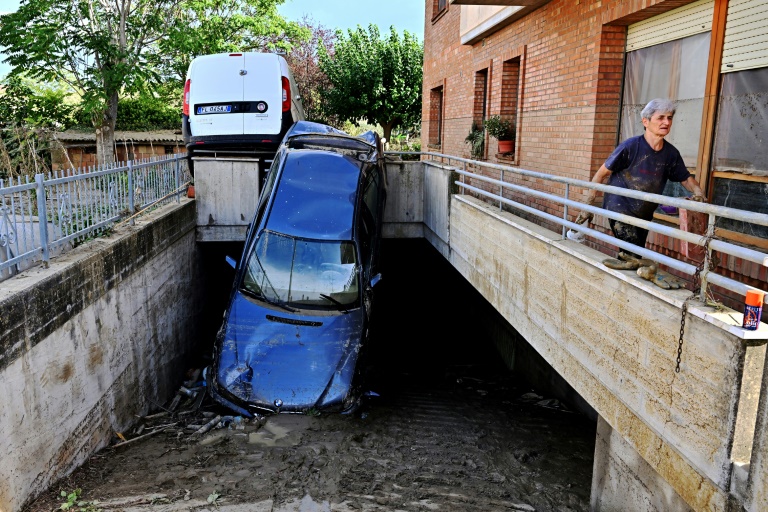
Across the area around Ancona, the port capital of the central eastern Marche region, streets were turned into rivers, cars swept into piles by the floodwaters, furniture washed out of homes and thick mud left everywhere.

The fire service said it had 300 people working on the floods, while several areas were without electricity or telephone connections, and schools were closed.

At a pre-planned press conference in Rome, Draghi announced five million euros in emergency funds for the area, and offered his “deep condolences” for the victims.

“At the moment we are counting 10 dead and four disappeared, but unfortunately the situation is evolving,” he said.

Draghi made an explicit link between the flooding and global warming, saying: “We see it concretely in what happened today how the fight against climate change is fundamental.”

– Extreme climate events –

The tragedy occurs just days before September 25 general elections, and condolences for those affected poured in from across the political spectrum.

Frontrunner Giorgia Meloni, the leader of the far-right Brothers of Italy party who polls show could be the next prime minister, offered “full solidarity” with those affected.

Italy has been hit by severe drought this year, followed by violent end-of-summer storms, and many have drawn the link with climate change — a subject which had taken a back seat during the election campaign.

“How can you think that the fight against climate change is not the first priority?” said Enrico Letta, head of the centre-left Democratic Party. 

He said he was “stunned and speechless” at the news and announced he was suspending campaigning in Marche.

Francesco Rocca, president of the International Federation of the Red Cross and Red Crescent Societies, said its teams were heading to help.

“Very concerned by the growth of extreme weather events,” he said on Twitter.

This summer’s drought, the worst in 70 years, drained the Po River, Italy’s largest water reservoir.

The baking heat has in recent weeks been followed by storms, the water flooding land rendered hard as concrete.

In July, 11 people were killed when a section of Italy’s biggest Alpine glacier gave way, in a disaster officials blamed on climate change.

The EU’s economy commissioner, Paolo Gentiloni, a former Italian premier, said he shed tears for the victims of the floods in Marche.

“Italy and Europe must take climate change seriously,” he tweeted.

– ‘Exceptional’ weather event –

Maurizio Greci, mayor of the town of Sassoferrato near Ancona, said that aside from a general weather warning, there was nothing to suggest “a disaster of this magnitude”.

“This is something that has never happened in living memory in this area,” he told Radio Capital, while adding that most of the damage in his town was to property.

The Italian Air Force, which deals with weather, said there had been an “exceptional” weather event, with more than 400 mm of rain falling between mid-afternoon and 11:00 pm.

More than half of this fell within four hours, spokesman Guido Guidi told AFP, adding: “It was not a forseeable event.”

ljm-ar/raz

King Charles welcomed in Wales as long London queue hits limit

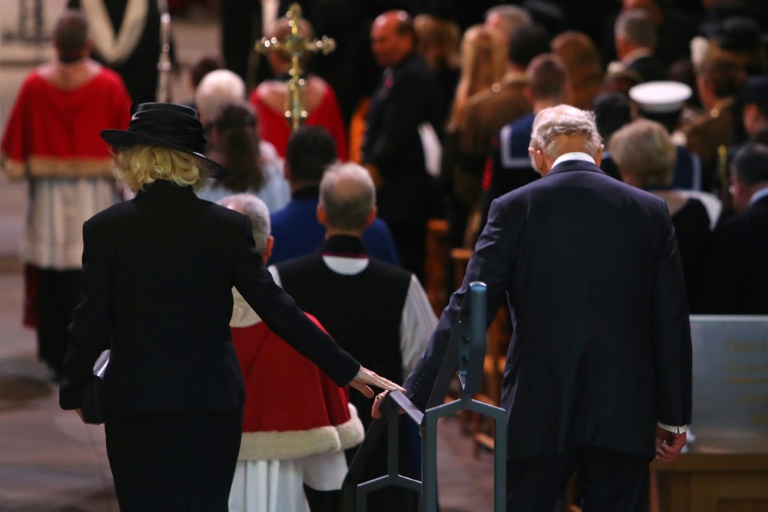
Crowds cheered for King Charles III in Wales on Friday though some voiced protest against his ascent to the throne, as footballing royalty David Beckham joined a miles-long queue to mourn the late queen in London.

In Cardiff, Charles met in private with Welsh First Minister Mark Drakeford, an avowed republican, and there was isolated booing on the streets after the new monarch was quick to declare his son William the new Prince of Wales.

But Drakeford said questions over the future of the monarchy would “be a footnote to the dominant feelings of the day”, following the death on September 8 of Queen Elizabeth II at the age of 96.

Large crowds chanted “God save the king” as Charles shook hands with well-wishers following a multi-faith service in Llandaff Cathedral, and at Cardiff Castle, on the last of his visits to the UK’s four nations. 

In a speech at the parliament of Wales, which alternated between English and Welsh, he vowed to follow the “selfless example” of Britain’s longest-serving monarch.

Charles added that William’s “love for this corner of the Earth is made all the greater by the years he himself has spent here” — after his heir trained as a Royal Air Force helicopter pilot in Anglesey.

Outside Cardiff Castle, a few protesters held up banners declaring “Abolish the Monarchy”, “Citizen not subject” and “Democracy now”.

On his return to London, Charles was due to join his siblings — Princess Anne, Prince Andrew and Prince Edward — for a family vigil in front of the flag-shrouded casket as it lies in state in London.

– Playing for the queen –

The “Vigil of the Princes”, with all four royals in ceremonial military uniform, will last for 15 minutes from 1830 GMT.

Eight of the queen’s grandchildren, including William and his brother Harry, are expected to hold a similar vigil on Saturday evening.

Elizabeth’s death has triggered an outpouring of emotion, with tens of thousands from all backgrounds and many nations queueing for hours, often through the night, to pay their respects in Westminster Hall.

The queue was paused on Friday after a park at the end of the line along the River Thames reached capacity, the government said, warning that those at the end faced a wait of 14 hours.

It resumed nearly an hour later. Beckham, the footballer turned fashion icon, was near the front in the afternoon after joining it in the early hours of Friday.

“I thought by coming at 2:00 am it was going to be a little bit quieter — I was wrong,” Beckham told ITV News, as selfie-seeking fans briefly held the queue up.

The ex-Manchester United and Real Madrid star said every time the national anthem — then entitled “God Save the Queen” — had been played at England matches “meant so much to us”.

Another queueing was Peter Stratford, 70, a former firefighter who was one of the first on the scene of a huge fire in 1992 at Windsor Castle, where the queen will be buried on Monday.

“My ankles are killing me, but it’s a small sacrifice to make,” he told AFP after waiting in line for eight hours.

“I’ve been tearful, emotional… I wouldn’t have missed it.”

At Westminster Abbey on Monday morning, the queen will be honoured with Britain’s first state funeral in nearly six decades, with more than 2,000 guests expected.

– Row with China –

After the televised service, the coffin will be transferred by royal hearse to Windsor Castle, west of London, for a family-only burial in which the queen will be laid to rest alongside her late husband Philip, parents and sister.

US President Joe Biden, Australian leader Anthony Albanese, Canadian Prime Minister Justin Trudeau and French President Emmanuel Macron have all confirmed their attendance at the funeral, as have Japan’s Emperor Naruhito and numerous other royals.

Police are mounting Britain’s biggest-ever security operation for the funeral, as the global dignitaries jet in and crowds file past the queen’s casket round the clock all weekend. 

Early Friday, two police officers were stabbed in central London, one suffering “life-changing” injuries, the Metropolitan force said, but it ruled out any link to terrorism.

An official delegation from China has been banned from attending the lying-in-state following an intervention by House of Commons Speaker Lindsay Hoyle, parliamentary sources said.

It comes after China sanctioned several British lawmakers over their criticism of the country’s human rights record.

“As the hosts, the British side should uphold both diplomatic courtesy and gracious hospitality,” foreign ministry spokeswoman Mao Ning told reporters in Beijing.

Downing Street refused to comment.

– ‘Waste of money’ –

In Westminster Hall, the sombre atmosphere is completed with members of the king’s guard in ceremonial uniform posted around the podium in a constant vigil.

Mourners marked their moment in front of the coffin in various ways, from bows or curtsies to the sign of the cross or by simply removing their hats, an AFP reporter observed Friday.

Some wiped away tears. Others brought infants in pushchairs. Old soldiers stopped and gave one last salute to their former commander-in-chief.

Meanwhile, in Cardiff, many had waited for hours ahead of Charles’s visit.

“Something like this won’t happen again,” said barman Jack Grimshaw, 27, who turned out with his young son.

“The royal family has been around for so many years (but) we didn’t have a new king for so long.”

Not everyone was happy to see the new monarch in Wales. Zahra Ameri, 22, said the funeral was a “waste of money”.

“I’m hoping that Wales becomes independent. Of course, it would be a disturbance in our economy because we do rely on the UK, but I strongly believe in independence,” she said.

Xi, Putin look to challenge world order at regional summit

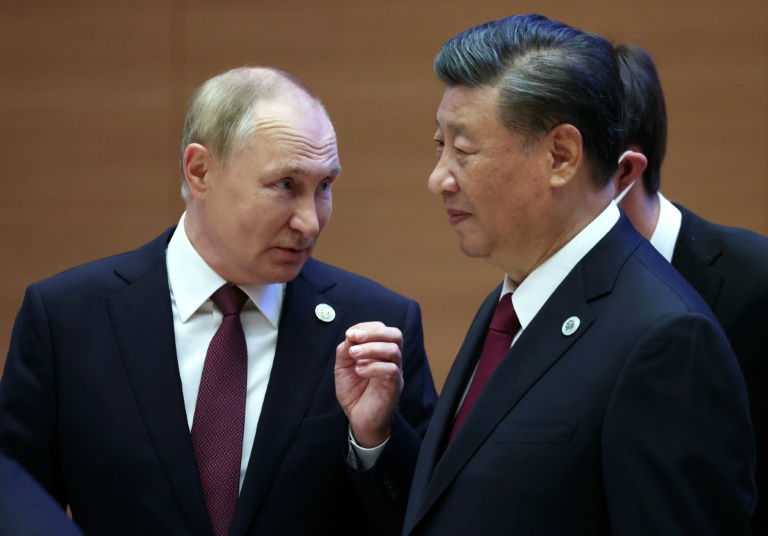
Russian President Vladimir Putin and Chinese leader Xi Jinping looked to rally Asian leaders behind a new “international order” as they met Friday for a summit aimed at challenging Western influence.

But cracks in summit solidarity quickly appeared, with India’s prime minister telling Putin it was “not the time” for the conflict in Ukraine and the forces of two countries — Kyrgyzstan and Tajikistan — engaged in fierce border clashes while their leaders were in attendance.

The meeting of the Shanghai Cooperation Organisation (SCO) in ex-Soviet Uzbekistan brought Putin and Xi together with the leaders of SCO members India, Pakistan, and four Central Asian nations, as well as the presidents of Iran and Turkey.

Putin and Xi met on Thursday for their first face-to-face talks since Russia sent troops into Ukraine in February, and on the Chinese leader’s first trip abroad since the early days of the coronavirus pandemic.

The summit was put forward by the Kremlin as an alternative to “Western-centric organisations”, at a time of increasing pressure on Moscow over Ukraine and growing anger in Beijing over US support for Taiwan.

Xi told the gathered leaders it was time to reshape the international system and “abandon zero-sum games and bloc politics”.

They should “work together to promote the development of the international order in a more just and rational direction,” Xi told a joint session.

Putin hailed the increasing influence of countries outside the West, slamming what he called “instruments of protectionism, illegal sanctions and economic selfishness”.

“The growing role of new centres of power who cooperate with each other… is becoming more and more clear,” Putin said.

– Putin admits ‘concerns’ –

The summit has been Putin’s first major international outing since Moscow sent troops into Ukraine in February, sparking a conflict that has left thousands dead and seen Russia hit with waves of economic sanctions.

All did not go perfectly for the Russian leader. 

In their talks, Indian Prime Minister Narendra Modi told Putin: “Excellency, I know today’s time is not a time for war.”

Putin told Modi he knew of India’s “concerns” about the conflict, echoing language he had used with Xi the day before. 

“We will do our best to end this as soon as possible,” Putin said, while accusing Kyiv of rejecting negotiations and wanting to achieve its goals “on the battlefield”.

The SCO — which also includes Kazakhstan, Kyrgyzstan, Tajikistan and Uzbekistan — was set up in 2001 as a political, economic and security organisation to rival Western institutions.

The group is far from fully united. The leaders of the Kyrgyzstan and Tajikistan were forced to meet at the summit to order their forces to withdraw after deadly clashes along their disputed border raised fears of all-out conflict.

Some 19,000 people had to be evacuated on the Kyrgyz side of the border and sporadic clashes were continuing despite the ceasefire order.

Putin and Xi both also met with Turkish President Recep Tayyip Erdogan, who told the assembled leaders that efforts were being made “to finalise the conflict in Ukraine through diplomacy as soon as possible”.

Putin told Erdogan, who has been a key broker in limited deals between Russia and Ukraine, that Moscow was keen to build closer ties with Turkey and was ready to “significantly increase” all exports to the country.

– US sounds alarm –

For Putin, the summit was a chance to show that he is not fully isolated on the global scene, at a time when his forces in Ukraine are facing major battlefield setbacks.

For Xi, it was an opportunity to shore up his credentials as a global statesman ahead of a pivotal congress of the ruling Communist Party in October, where he is widely expected to secure an unprecedented third term as president.

In Washington, officials sounded alarm about deepening ties between Moscow and Beijing.

US State Department spokesman Ned Price said China and Russia “share a vision for the world that is starkly at odds with the vision that’s at the centre of the international system, the vision that has been at the centre of the international system for the past eight decades.”

He also took note of Putin’s mention of Chinese “concerns” about Ukraine in his talks with Xi, suggesting the “striking” admission showed Moscow did not have Beijing’s full support for its military campaign.

Prices soaring everywhere: from beans in Brazil to pork in China

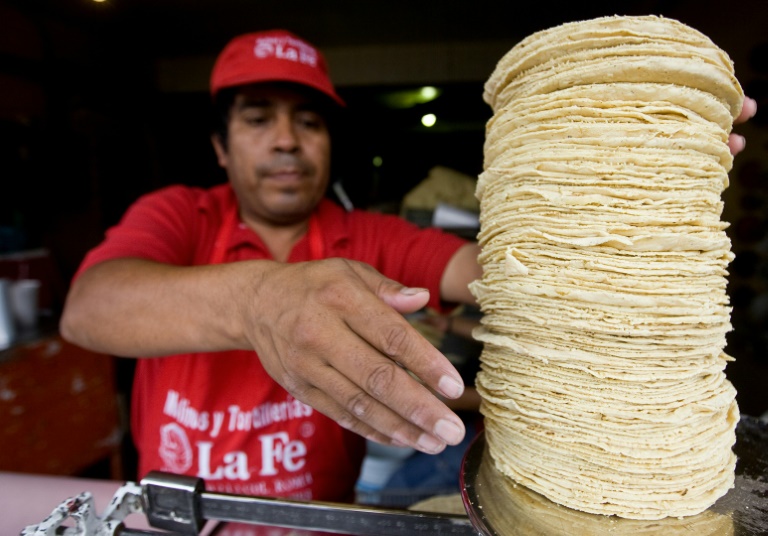
Consumers and businesses around the world are facing steeper prices for everything from Mexico’s beloved tortillas to the aluminium cans used by beer companies.

Inflation jumped after countries emerged from Covid lockdowns and it has soared since Russia invaded Ukraine, with the IMF expecting consumer prices to rise by 8.3 percent globally this year.

Here is a look at how higher prices are affecting the world:

– Fuel –

The invasion of Ukraine by Russia, the world’s third largest oil producer, sent crude oil prices through the roof.

The main international contract, Brent North Sea, almost hit $140 per barrel, but has now dropped back below $100.

Prices at the pump have followed suit, surging to over two euros per litre in eurozone countries and above five dollars per gallon in the United States, before falling back in recent weeks.

Natural gas has also become more expensive, especially in Europe, where electricity prices hit record levels in Germany and France.

Energy prices were up 38.6 percent in the eurozone in August from the same month last year, according to revised official data published Friday.

Higher energy prices ripple throughout the economy as they affect the production and transportation costs of companies.

– Pasta, beans and tortillas –

The war sent food prices soaring as the war disrupted grain exports from Ukraine, a major supplier of wheat and sunflower oil to countries around the world.

In May, Allianz estimated that pasta prices had risen 19 percent in the eurozone over the previous 18 months.

In Canada, another large exporter of wheat, a 500-gram package had risen by 60 cents in July from the same month last year, to CAN$3.16, according to official data.

In Thailand, the price for instant noodles, which is controlled by the state, rose for the first time in 14 years in August — a 17 percent increase to seven bahts (20 US cents).

The price of the corn flour used to make tortillas in Mexico — a staple used for tacos and other dishes — is up by around 13 percent from last year and contributing to two-decade high inflation.

Pinto beans, a Brazilian staple, cost nearly 23 percent more in August than at the same time last year.

– Meat –

With grain more expensive, feeding livestock has become costlier and farmers have in turn raised their prices.

Pork, the most popular meat in China, cost 22 percent more in August than last year. 

Chinese authorities will tap into their strategic reserves of pork for a second time this year in order to stabilise prices, the official Xinhua news agency said Friday.

In Argentina, ground beef patties are popular as their prices have traditionally been low, but these have shot up by three quarters in the past 12 months. 

The country currently has one of the highest inflation rates in the world at 56.4 percent over the first eight months of the year.

In Europe, it is chicken prices that have taken wing as farmers have had to contend with bird flu in addition to cost pressures. Wholesale prices were up by a third in August from the same month last year.

– Beer –

Brewers have been hit with not only rising grain prices, but also for the aluminium cans and glass bottles for their beer.

These are 70 percent more expensive than before the war in Ukraine, according to the trade association of European brewers. 

Heineken, the world’s second-largest brewery group, hiked its prices by an average of 8.9 percent over the first half of this year. 

According to estimates by Bloomberg, AB InBev, the world’s top brewer whose beers include Budweiser and Corona, has increased its prices by eight percent.

In Britain, the cost of a pint has risen above four pounds ($4.6), the highest price since 1987, according to Britain’s Office for National Statistics.

– Newspapers –

Paper prices have climbed as demand has risen following the end of Covid lockdowns. Printing is an energy-intensive process.

Several French dailies raised their prices earlier this year, as have a number British newspapers like the Sun, the Times and Sunday Mail.

Others have reduced their number of pages.

In Europe overall, the prices of newspapers were 6.5 percent higher in July, according to official data.

US, S.Africa leaders vow cooperation after Ukraine discord

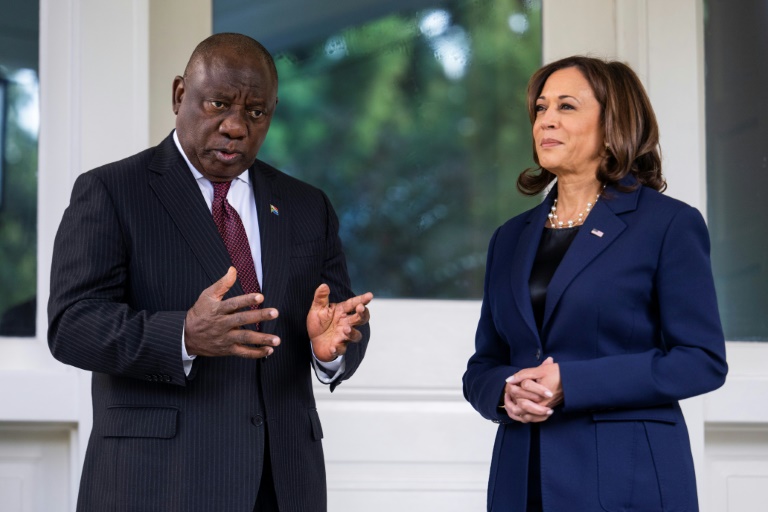
The leaders of South Africa and the United States called Friday for close cooperation on health, security and climate, as President Joe Biden puts a new focus on African powers after their reluctance to take on Russia.

President Cyril Ramaphosa was set to meet President Joe Biden weeks after Secretary of State Antony Blinken paid his own trip to South Africa and promised that the United States will do more to listen to Africa.

Starting his visit over breakfast with Vice President Kamala Harris, Ramaphosa voiced gratitude to the United States for its “considerable support” on the Covid pandemic as the Biden administration donates 1.1 billion vaccine doses around the world.

“The visit really is about strengthening the relationship between South Africa and the United States,” Ramaphosa said, adding that Washington had a “key role” to play on security issues across Africa.

Harris hailed the leadership of Ramaphosa — who is under growing pressure at home over a scandal — and said she would discuss working together on fighting climate change, a key priority for the Biden administration.

“I cannot emphasize enough how important the relationship between our countries is to the people of the United States both in terms of our security and our prosperity,” she said.

Like other developing nations, South Africa — whose eastern Mpumalanga province has one of the world’s largest concentrations of coal — argues that industrialized nations should bear the brunt of efforts to cut emissions due to their historic responsibility for climate change.

Wealthy nations at last year’s Glasgow climate conference promised $8.5 billion of financing to South Africa to transition away from coal.

– ‘Histories’ behind Russia stance –

Successive US administrations have focused much of their energy in Africa on countering the growing influence of China, which has become the continent’s dominant trading partner.

But Russia’s invasion of Ukraine has triggered a new front in the battle for influence in Africa, where many nations have been reluctant to embrace the West in its campaign to punish and pressure Moscow.

South Africa’s Foreign Minister Naledi Pandor denied being neutral but said “there are reasons for the perspectives that exist and one should never, I think, try to pretend that there aren’t histories.”

She pointed to the former Soviet Union’s championing of anti-apartheid forces compared with periods of Western cooperation with South Africa’s former white supremacist regime.

“I think we’ve been fairly clear, in our view, that war doesn’t assist anyone and that we believe the inhumane actions we have seen against the people of Ukraine can’t be defended by anybody,” she said this week at the Council on Foreign Relations in Washington.

“But what we have said is that a lot of the public statements that are made by leading politicians are not assisting in ameliorating the situation, because the first prize must be to achieve peace.”

The United States has sought to highlight the invasion’s role in soaring food prices, as Ukraine was one of Africa’s largest suppliers of grain.

Russia has sought to blame food scarcities on Western sanctions, an argument dismissed by the United States, which says it is not restricting agricultural or humanitarian shipments.

South Africa’s top diplomat broke with the usual polite bipartisanship of foreign dignitaries visiting Washington, not mincing words on Biden’s Republican predecessor Donald Trump, who notoriously referred to nations in the developing world with an epithet.

“We relate very well, I think probably better, with the Democrats than the Republicans,” she said. “You will recall how President Trump described Africa and no one has apologized for that as yet.”

Trump was the first US president in decades not to visit sub-Saharan Africa. Biden has not yet visited but has pledged a renewed interest, including with a summit of African leaders planned in Washington this December.

Close Bitnami banner
Bitnami