World

Ukraine finds graves and 'torture centres' in recaptured east

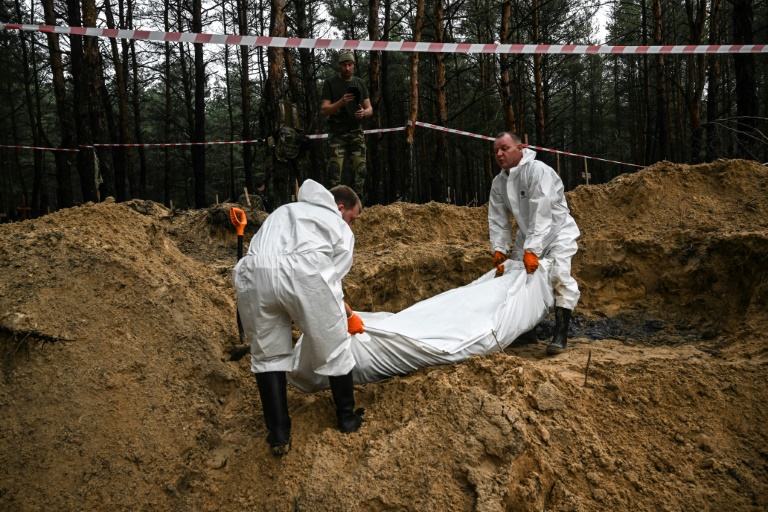
Ukrainian investigators descended on a pine forest outside the recaptured town of Izyum on Friday and began pulling hundreds of hastily buried bodies from the sandy soil.

At least one of the corpses had been buried with bound hands, an AFP journalist saw.

Kyiv officials said they had counted 450 graves at the mass burial site and found 10 alleged “torture centres” after the Kharkiv region was recaptured from Russian invaders.

In the forest outside Izyum, AFP journalists saw graves topped with makeshift crosses and marked with numbers, with one inscription reading: “Ukrainian army, 17 people. Izyum morgue.”

“Russia leaves only death and suffering. Murderers. Torturers,” said Ukraine’s President Volodymyr Zelensky. Some of the remains exhumed, he said, included children and people who were likely tortured before dying.

Kyiv’s forces recovered a swathe of territory in recent days in a lightning counter-offensive in the east, liberating several towns from Russian forces but also uncovering what they say is a grim legacy of occupation.

Police chief Igor Klymenko said torture rooms were found in the town of Balakliya and elsewhere in Karkhiv, while presidential aide Mykhaylo Podolyak said the Izyum mass grave site alone held at least 450 bodies.

“In the occupied territories, rampant terror, violence, torture and mass murders have been reigning for months,” Podolyak said.

On the main road from Izyum to Kharkiv, a small dirt road leads into a pine forest. On the right-hand side of the lane, about 100 metres (330 feet) into the trees, two men in white overalls were digging the sandy soil.

Soon they reached the first body, exhumed it and placed it in a white plastic body bag. As more bodies appeared, the strong smell of decay spread among the trees and rough wooden crosses.

– ‘Witnesses’ –

Where identification had been possible, names were attached to the crosses along with dates between early March, when Izyum was still held by Ukraine, and early September, a period of Russian control.

On some of the graves, small offerings of flowers were placed in homage to the deceased.

According to Oleg Kotenko, the government official in charge of the search for missing persons nationwide, a family with a young child was buried there.

“They were killed. There are witnesses from the same building. They saw what happened and buried these people here,” he said.

According to Kotenko: “The graves without names are for those found dead in the street.”

The United Nations in Geneva said it hopes to send a team to determine the circumstances of the deaths in the forest graves.

Russia has been accused of carrying out attacks on civilians that could amount to war crimes, notably in suburban towns outside the capital of Kyiv after fighting in March.

Dozens of civilians bearing signs of extrajudicial killings were found in places like Bucha, outside Kyiv, after they were recaptured by Ukraine’s forces earlier this year.

– German military revamp –

The grim discoveries have coincided with fresh developments on the international front, including a White House announcement of a new package of up to $600 million in US military aid for Ukraine.

Since Russia’s invaded in Ukraine in February, the United States has provided Kyiv with more than $15 billion in military support, including long-range precision rocket systems.

German Chancellor Olaf Scholz warned that Europe must shoulder far more of NATO’s burden as he branded President Vladimir Putin’s Russia the “biggest threat” currently posed to the alliance.

“NATO remains responsible for the collective defence of the entire alliance with a focus on Europe. Credible deterrence remains the core element,” Scholz told army officers.

Germany was ready to take on a leading role in ensuring Europe’s security, Scholz said, vowing to turn the country’s armed forces into the “best-equipped” on the continent.

Haunted by two world wars, Germany has always trod lightly and quietly on the world stage when it comes to conflicts and armament.

Kyiv gained EU candidacy status in June, angering Moscow which has tried to retain political and military influence since the collapse of the Soviet Union three decades ago.

– ‘New centres of power’ –

Many European countries have joined the United States in supplying Kyiv with advanced weapons, enabling its forces to push the Russians out of thousands of square kilometres (miles) of territory.

EU countries have also hit Russia with economic penalties. 

Berlin, for example, on Friday took control of the German operations of Russian oil firm Rosneft to secure energy supplies disrupted by the invasion.

Rosneft’s German subsidiaries, which account for about 12 percent of oil refining capacity in the country, were placed under trusteeship of the Federal Network Agency, the economy ministry said.

The seizures come as Germany is scrambling to wean itself off its dependence on Russian fossil fuels. Moscow has stopped natural gas deliveries to Germany via the Nord Stream 1 pipeline.

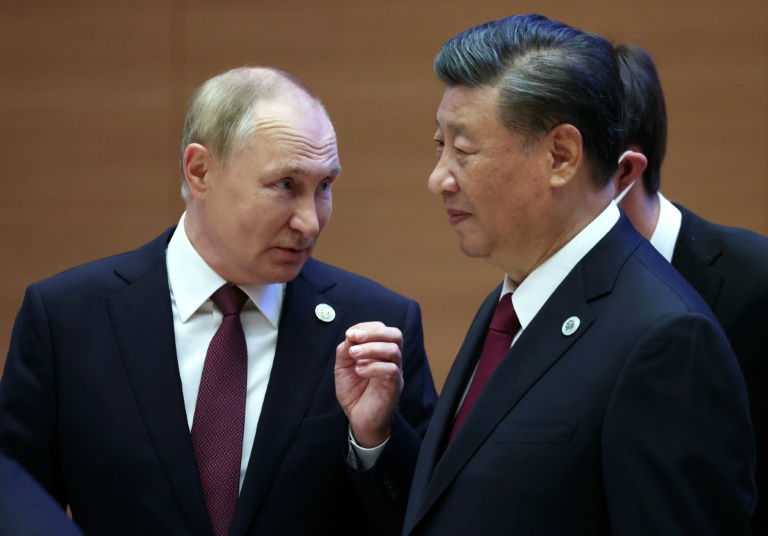
Putin and Chinese leader Xi Jinping meanwhile called for a shake-up of the world order as they met with Asian leaders for a summit challenging Western influence.

Putin hailed what he called the growing influence of “new centres of power” at the meeting of the Shanghai Cooperation Organisation (SCO) in ex-Soviet Uzbekistan.

bur-emp-dc-jbr/raz
Sierra Leone delays full switchover to new currency

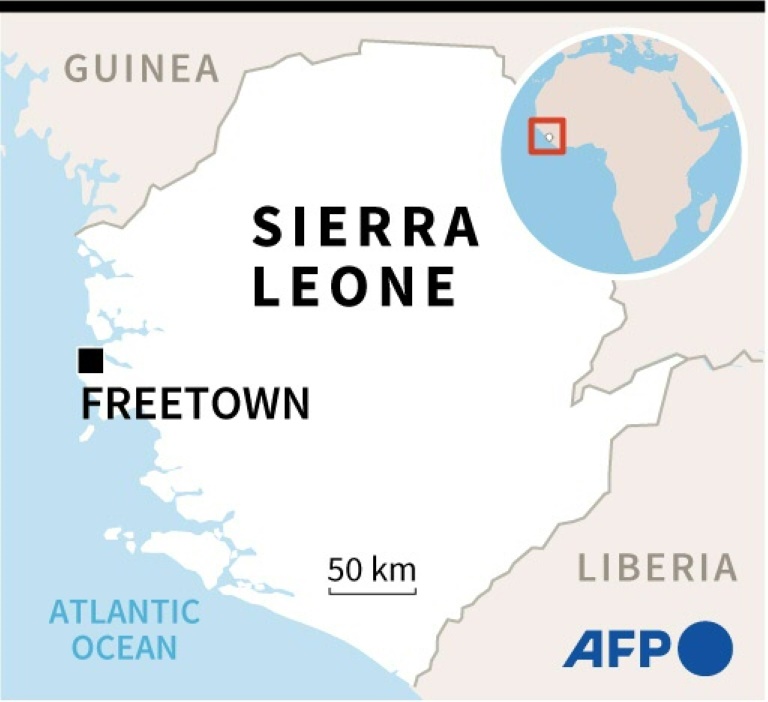
Sierra Leone is to delay the phaseout of its old currency until next spring, the central bank said.

On July 1, the West African country stripped three noughts off its banknotes in a bid to restore confidence in the inflation-hit currency, the leone.

The old and new notes both remain in circulation for the moment.

The transition period was due to end on October 1, when the old leone ceased to be legal tender, but has now been extended for six months, the bank announced late Thursday.

“The transition period of 1st July, 2022 to 30th September, 2022 (wherein both the Old Leone and the New Leone shall be legal tender) is hereby extended to 31st March, 2023,” it said on social media, without elaborating.

The public will be able to swap the old currency for the new one between April 1 and 15, 2023, it said.

President Julius Maada Bio introduced the re-denominated currency this summer in a bid to stop its freefall.

Shoppers needed huge quantities of the old banknotes for the simplest transactions, and unscrupulous bank tellers sometimes pilfered notes from sealed bundles of bills.

The new 10-leone note is the equivalent of 10,000 old leones and is worth around 70 US cents.

Sierra Leone’s eight million people live in one of the poorest nations in the world. The former British colony ranks 182 out of 189 countries on the United Nations’s Human Development Index.

The economy, which is heavily dependent on its diamonds and other mineral wealth, was devastated by a civil war that ran from 1991 to 2002 and left about 120,000 dead.

Efforts at rebuilding were set back by an Ebola epidemic in 2014-2016, a fall in world commodity prices, the coronavirus epidemic and the war in Ukraine.

Disastrous troop management compounds Russia's missteps

Wars are planned in offices but fought on the ground, and the Russian army’s strategic errors in the Ukraine war point in particular to insufficient oversight of its rank-and-file fighters.

After the start of Moscow’s invasion on February 24, signals have emerged that many Russian soldiers have no clear idea of the war’s goals with some initially thinking they were simply being mustered for manoeuvres.

“The Russian army is an army of lies,” General Thierry Burkhard, chief of the French armed forces, told AFP as early as May.

“People lied by saying that the Ukrainian army wouldn’t fight, that Russia’s forces were ready for war, that their leaders knew how to command,” he said.

Six months into the invasion, Western analysts still describe the Russian army as riddled with falsehoods and corruption, and desperate to tell President Vladimir Putin’s inner circle what it wants to hear.

“Senior officers are only thinking of their medals and how to take care of their career. But the soldiers only want to survive,” said Alexander Grinberg of the Jerusalem Institute for Strategy and Security.

“Putin demands results that are unrealistic, and nobody tells him the truth, even in private,” said Grinberg, a former member of Israel’s military intelligence service.

“Is it possible that a brave officer will dare think outside the box? Sure, but he will remain the exception and won’t change much on the ground… except maybe to limit the damage and save some lives.”

– Training failures –

The extent of Russia’s losses remains unclear. Ukraine says that 50,000 Russian troops have been killed, with most Western sources saying that this figure is likely too high even if the actual number is extremely large. 

Ukraine’s recent counter-offensive which caught Russian forces off guard was marked by reports of desertions, refusals to carry out orders, and poor morale suggesting serious breakdowns in chains of command.

Deaths or injuries of Russian generals and officers have also taken a toll, experts say, since army training programmes appear to have deteriorated in recent years, making it harder to tap competent replacements.

“They have a problem with training superiors, notably because there aren’t enough non-commissioned officers” who have risen through the ranks and should be “experts in their field,” a senior French military chief told AFP on condition of anonymity.

Russia tends to give promotions mainly to older soldiers, he said, “and if your only relation with subordinates is one of power, when only the oldest get promoted… launching an attack becomes complicated.”

The effect on morale will only worsen as the conflict drags on, no matter Russia’s advantage in terms of sheer troop numbers.

“An army is the sum of its competences and its capacities. Without a solid infrastructure for recruitment, training and innovation, the Russian sum has considerably diminished,” French military historian Michel Goya said.

“Russia’s ability to manoeuvre has been weakened, poorly replaced by smaller and less capable units,” he said.

Adding to the risks for Moscow is that a culture of dishonesty appears to have worked its way into the heart of its military apparatus.

“Russian army officers frequently lie to their superiors about their unit’s status,” said the military historian and author Chris Owen.

He pointed to Ukrainian intercepts of messages by Russian soldiers describing false reports of combat successes, “and subsequent attacks being launched on the basis of the false information.”

“By the time the reports get to the top of the chain — the Russian Defence Ministry leadership and Putin himself –- it’s quite likely that they are so distorted and inaccurate that the people directing the war have a very unrealistic picture of what’s happening on the ground.”

– Contracts for convicts? –

Ukraine’s surprise counter-attack has rekindled debate on whether Putin will proceed with a general mobilisation, which would make clear that his “special military operation” in Ukraine is indeed a war.

Instead, the government appears to be pushing hard to hire more mercenaries, in particular from the Wagner paramilitary contractor, and also for more regular army volunteers.

One video circulating widely on social media purportedly shows Russian oligarch Yevgeny Prigozhin, a Putin ally suspected of financing the Wagner group, inside a Russian prison courtyard, offering contracts to convicts.

AFP has not confirmed its authenticity, but the man’s comments are telling: “If you serve six months, you are free. If you arrive in Ukraine and decide it’s not for you, we will execute you.”

For Phillips O’Brien, a professor of strategic studies at the University of Saint Andrews in Scotland, “while intensely creepy, this is also a sign of a massive crisis in Russian attempts to generate more soldiers.”

Germany seizes Russian energy firm's subsidiaries

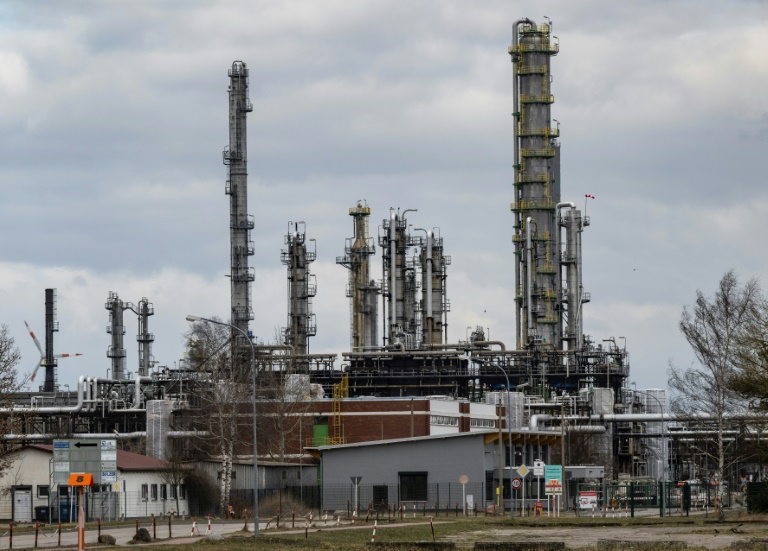
Berlin on Friday took control of the German operations of Russian oil firm Rosneft to secure energy supplies which have been disrupted after Moscow invaded Ukraine.

Rosneft’s German subsidiaries, which account for about 12 percent of oil refining capacity in the country, were placed under trusteeship of the Federal Network Agency, the economy ministry said in a statement.

“The trust management will counter the threat to the security of energy supply,” it said.

Chancellor Olaf Scholz said his government “did not take this action lightly but it was inevitable” for the “protection of our country”.

The seizures come as Germany is scrambling to wean itself off its dependence on Russian fossil fuels, while Moscow has stopped natural gas deliveries to Germany via the Nord Stream 1 pipeline.

The move covers the companies Rosneft Deutschland GmbH (RDG) and RN Refining & Marketing GmbH (RNRM) and thereby their corresponding stakes in three refineries: PCK Schwedt, MiRo and Bayernoil.

Fears had been running high particularly for PCK Schwedt, which is close to the Polish border and supplies around 90 percent of the oil used in Berlin and the surrounding region, including Berlin-Brandenburg international airport.

The region could have “found itself in a position, due to the refinery in Schwedt, where security of supply was no longer a given”, Economy Minister Robert Habeck said at a press conference.

– ‘Sufficient supply’ –

The refineries’ operations had been disrupted as the German government decided to slash Russian oil imports, with an aim to halt them completely by year’s end.

By taking control of the sites, the German authorities can then run the refining operations using crude from countries other than Russia.

New supplies of oil for Schwedt have been shipped in via the northeastern port of Rostock, with plans to also tap supplies imported through the Polish city of Gdansk.

The government plans to “strengthen” the pipeline between the Schwedt refinery and Rostock, while advancing discussions with officials in Warsaw about establishing a link — an option which was not available “so long as it was possible that any profits would go to Rosneft, to Russia”, said Habeck.

“There is a good chance that there will be a sufficient supply of oil for the refinery to keep working,” said Scholz.

In early April, Germany also took the unprecedented step of temporarily taking control of Gazprom’s German subsidiary, after an opaque transfer of ownership of the company set alarm bells ringing in Berlin.

– Energy earthquake –

Russia’s war in Ukraine has set off an energy earthquake in Europe and especially in Germany, with prices skyrocketing as Moscow dwindled supplies.

Germany has found itself severely exposed given its heavy reliance on Russian gas.

Moscow had also built up a grip over Germany’s oil refineries, pipelines and other gas infrastructure through energy giants Rosneft and Gazprom over the years.

Energy deals with Russia were long seen as part of a German policy of keeping the peace through cooperation with Russian President Vladimir Putin’s regime.

The cheap energy supplied by Russia was also key in keeping German exports competitive. As a result, the share of Russian gas in Germany had grown to 55 percent of total imports before the Ukraine war.

But that approach has come back to haunt officials in Berlin, forcing Scholz’s coalition to take drastic measures to ensure energy supplies are not disrupted in Europe’s biggest economy. 

With winter approaching, Germany has fired up mothballed coal power plants. It is also putting two of its nuclear power plants on standby until April, rather than phasing them out completely as planned by year’s end. 

Germany seizes Russian energy firm's subsidiaries

Berlin on Friday took control of the German operations of Russian oil firm Rosneft to secure energy supplies which have been disrupted after Moscow invaded Ukraine.

Rosneft’s German subsidiaries, which account for about 12 percent of oil refining capacity in the country, were placed under trusteeship of the Federal Network Agency, the economy ministry said in a statement.

“The trust management will counter the threat to the security of energy supply,” it said.

Chancellor Olaf Scholz said his government “did not take this action lightly but it was inevitable” for the “protection of our country”.

The seizures come as Germany is scrambling to wean itself off its dependence on Russian fossil fuels, while Moscow has stopped natural gas deliveries to Germany via the Nord Stream 1 pipeline.

The move covers the companies Rosneft Deutschland GmbH (RDG) and RN Refining & Marketing GmbH (RNRM) and thereby their corresponding stakes in three refineries: PCK Schwedt, MiRo and Bayernoil.

Fears had been running high particularly for PCK Schwedt, which is close to the Polish border and supplies around 90 percent of the oil used in Berlin and the surrounding region, including Berlin-Brandenburg international airport.

The region could have “found itself in a position, due to the refinery in Schwedt, where security of supply was no longer a given”, Economy Minister Robert Habeck said at a press conference.

– ‘Sufficient supply’ –

The refineries’ operations had been disrupted as the German government decided to slash Russian oil imports, with an aim to halt them completely by year’s end.

By taking control of the sites, the German authorities can then run the refining operations using crude from countries other than Russia.

New supplies of oil for Schwedt have been shipped in via the northeastern port of Rostock, with plans to also tap supplies imported through the Polish city of Gdansk.

The government plans to “strengthen” the pipeline between the Schwedt refinery and Rostock, while advancing discussions with officials in Warsaw about establishing a link — an option which was not available “so long as it was possible that any profits would go to Rosneft, to Russia”, said Habeck.

“There is a good chance that there will be a sufficient supply of oil for the refinery to keep working,” said Scholz.

In early April, Germany also took the unprecedented step of temporarily taking control of Gazprom’s German subsidiary, after an opaque transfer of ownership of the company set alarm bells ringing in Berlin.

– Energy earthquake –

Russia’s war in Ukraine has set off an energy earthquake in Europe and especially in Germany, with prices skyrocketing as Moscow dwindled supplies.

Germany has found itself severely exposed given its heavy reliance on Russian gas.

Moscow had also built up a grip over Germany’s oil refineries, pipelines and other gas infrastructure through energy giants Rosneft and Gazprom over the years.

Energy deals with Russia were long seen as part of a German policy of keeping the peace through cooperation with Russian President Vladimir Putin’s regime.

The cheap energy supplied by Russia was also key in keeping German exports competitive. As a result, the share of Russian gas in Germany had grown to 55 percent of total imports before the Ukraine war.

But that approach has come back to haunt officials in Berlin, forcing Scholz’s coalition to take drastic measures to ensure energy supplies are not disrupted in Europe’s biggest economy. 

With winter approaching, Germany has fired up mothballed coal power plants. It is also putting two of its nuclear power plants on standby until April, rather than phasing them out completely as planned by year’s end. 

Stiglitz says oil firms did nothing to deserve windfall profits

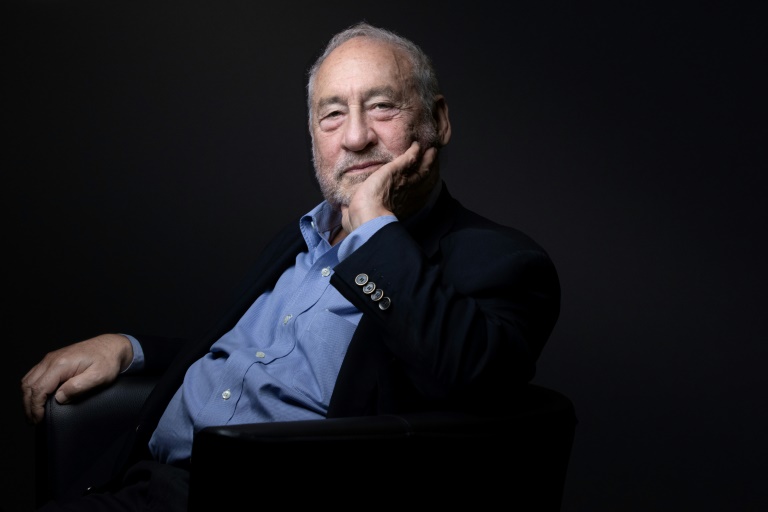
Nobel laureate economist Joseph Stiglitz says the world’s energy giants should pay a special tax on their massive profits. To him, the companies “didn’t do anything to deserve” the windfall.

Oil and gas firms have raked in huge profits this year as energy prices have surged over supply fears after Russia, a major producer of the fossil fuels, invaded Ukraine in late February.

“Sometimes we have this discussion: are profits exploitation or are profits the just deserts of having invested more, putting out more effort,” Stiglitz said in an interview with AFP in Paris.

“This is a particular case where there is no debate,” the 2001 Nobel winner said.

“It is very clear that the oil companies didn’t do anything to deserve the high oil prices. It was (Russian President Vladimir) Putin’s invasion of Ukraine that was at the source of the problem,” Stiglitz said.

The main international oil contract reached almost $140 per barrel in March, though it has since fallen under $100. Gas prices jumped to a record 345 euros per megawatt hours that same month.

US oil giants ExxonMobil and Chevron reported record profits in the second quarter, pulling $17.9 billion and $11.6 billion, respectively.

British oil major Shell enjoyed a fivefold increase in its net profit to $18 billion in the same period.

France’s TotalEnergies and Italy’s Eni have also posted banner earnings. 

“There is an obvious answer. Tax the windfall profits and use some of the revenues to help those suffering,” Stiglitz told AFP at the Paris School of Economics.

– Inflation crisis –

The 79-year-old American economist has championed reforms of international tax rules for years to ensure major corporations pay their fair share.

He is the co-chair of the Independent Commission for the Reform of International Corporate Taxation (ICRICT), an organisation that seeks to put an end to tax havens.

The ICRICT, which held a conference in Paris on Friday, released a report calling for emergency tax measures, “especially on companies profiting from the (inflation) crisis”.

Some countries have taken their own measures.

Spain’s government announced in July temporary taxes on banks and energy firms to cover the cost of state measures to help Spaniards grapple with red-hot inflation.

Britain unveiled in May a temporary windfall tax at a rate of 25 percent on big energy companies that should bring in five billion pounds.

Italy has a similar rate in place.

The European Commission this week announced plans to raise 140 billion euros through a cap on revenues of electricity producers.

While the United States is not dependent on Russian energy like Europe, fuel prices have surged there, too, and oil firms have made huge profits.

“All that is going on is a redistribution from consumers to rich fossil fuel companies,” said Stiglitz, a former chief economist of the World Bank and White House economic adviser during Bill Clinton’s presidency.

– Global tax –

But Stiglitz says energy firms are not the only companies that should face new taxes.

The ICRICT’s report says international firms — “particularly in fuels” but also food, pharmaceuticals and finance — have increased prices “well beyond” their higher costs.

These companies “thereby experienced significantly greater than normal profits”, the report says.

There is “something more going on than just passing on increased costs” to consumers, Stiglitz told AFP.

More than 130 countries have signed an international agreement to impose a 15-percent minimum tax on major corporations.

But implementation of the OECD-brokered deal “still seems far from reality” as it is “stuck in a political impasse both in the US and in the EU”, the ICRICT says.

Last week, Europe’s top five economies, including Germany and France, said they would implement the tax in the face of Hungary’s opposition to an EU-wide agreement.

“I have to say it doesn’t look like it’s going to be adopted, sadly, as weak as it is, as pro-advanced countries as it is, as distorted as it is,” Stiglitz said.

More than 210 dead in Armenia-Azerbaijan clashes this week

Armenia and Azerbaijan said Friday that more than 210 people died in border clashes this week, with Yerevan accusing Baku troops of atrocities in the arch foes’ worst fighting in two years.

US House Speaker Nancy Pelosi said she will travel to Yerevan on Saturday after this week’s escalation has largely undone recent Western efforts to bring Baku and Yerevan closer to a peace agreement.

The Caucasus neighbours have fought two wars — in 2020 and in the 1990s — over the contested Nagorno-Karabakh region, Azerbaijan’s Armenian-populated enclave.

Both sides accuse each other of provoking the clashes, which erupted on Tuesday and ended with international mediation overnight on Thursday.

On Friday, Azerbaijan’s defence ministry revised the death toll among its troops to 77 from an earlier reported 71.

Armenian Prime Minister Nikol Pashinyan said: “For the moment, the number of dead is 135.”  

“Unfortunately, it is not the final figure. There are also many wounded,” he told a cabinet meeting.

Armenia’s rights ombudsperson, Kristina Grigoryan, later said one civilian was also killed and six wounded in shelling by Azerbaijani forces.

The chief of staff of Armenia’s armed forces, Eduard Asryan, accused Azerbaijani troops of committing “atrocities,” saying they mutilated and dismembered the bodies of dead Armenian servicemen.

“This is a horrible atrocity, a violation of international humanitarian law,” he told foreign diplomats in the city of Jermuk.

– ‘International mediation’ –

Grigoryan said the clashes also forced hundreds of Armenian civilians to flee their homes.

“Azerbaijan targeted peaceful residents,” she said — a claim which Baku flatly denies.

It was the worst fighting since the two countries fought a six-week war in 2020 and comes with Armenia’s closest ally Moscow distracted by its nearly seven-month war in Ukraine.

Armenia’s security council said the violence ended late Thursday “thanks to international mediation” after earlier failed attempts by Moscow to broker a truce.

A delegation of the Collective Security Treaty Organisation (CSTO) — a Moscow-led grouping of ex-Soviet republics — arrived in Yerevan on Thursday evening, Armenia’s defence ministry said.

Armenia is a member of CSTO but Azerbaijan is not. 

On Tuesday, Armenia’s security council asked for military help from Moscow, which is obliged under the treaty to defend Armenia in the event of a foreign invasion.

With Moscow increasingly isolated on the world stage following its February invasion of Ukraine, the European Union had taken a lead role in mediating the Armenia-Azerbaijan normalisation process.

– Transport sticking point –

During EU-mediated talks in Brussels in April and May, Azerbaijani President Ilham Aliyev and Pashinyan agreed to “advance discussions” on a future peace treaty.

They last met in Brussels on August 31, for talks mediated by the European Council President Charles Michel.

The talks also focus on border delimitation and the reopening of transport links.

The issue of ensuring a land transport link between Turkic-speaking Azerbaijan and its ally Ankara via Armenian territory has emerged as the primary sticking point.

Azerbaijan insists on Yerevan renouncing its jurisdiction over the land corridor that should pass along Armenia’s border with Iran — a demand the Armenian government rejects as an affront to the country’s sovereignty and territorial integrity.

The six weeks of fighting in 2020 claimed the lives of more than 6,500 troops from both sides and ended with a Russian-brokered ceasefire.

Under the deal, Armenia ceded swathes of territory it had controlled for decades, and Moscow deployed about 2,000 Russian peacekeepers to oversee the fragile truce.

Ethnic Armenian separatists in Nagorno-Karabakh broke away from Azerbaijan when the Soviet Union collapsed in 1991. The ensuing conflict claimed around 30,000 lives.

China's Xi, Russia's Putin challenge world order at regional summit

Russian President Vladimir Putin and Chinese leader Xi Jinping called for a shake-up of the world order as they met with Asian leaders Friday for a summit challenging Western influence.

The meeting of the Shanghai Cooperation Organisation (SCO) in ex-Soviet Uzbekistan brought Putin and Xi together with the leaders of SCO members India, Pakistan, and four Central Asian nations, as well as the presidents of Iran and Turkey.

Putin and Xi met on Thursday for their first face-to-face talks since the start of the conflict in Ukraine, and on the Chinese leader’s first trip abroad since the early days of the coronavirus pandemic.

The summit has been put forward as an alternative to “Western-centric organisations”, at a time of increasing pressure on Moscow over Ukraine and growing anger in Beijing over US support for Taiwan.

Xi told leaders at the summit that it was time to reshape the international system and “abandon zero-sum games and bloc politics”.

Leaders should “work together to promote the development of the international order in a more just and rational direction,” Xi said.

Putin hailed the growing influence of countries outside the West, slamming what he called “instruments of protectionism, illegal sanctions and economic selfishness”.

“The growing role of new centres of power who cooperate with each other… is becoming more and more clear,” Putin said.

– Talks with Turkey –

The summit has been Putin’s first major international outing since Moscow sent troops into Ukraine in February, sparking a conflict that has left thousands dead and seen Russia hit with waves of economic sanctions.

Xi on Thursday said China was willing to work with Russia to support “each other’s core interests”, though Putin admitted that Beijing had “concerns” about the situation in Ukraine that he would address.

The SCO — which also includes Kazakhstan, Kyrgyzstan, Tajikistan and Uzbekistan — was set up in 2001 as a political, economic and security organisation to rival Western institutions.

In a sign that the bloc is far from fully united, clashes escalated along the borders of Kyrgyzstan and Tajikistan on Friday, with both sides accusing the other of responsibility and of using heavy weapons. 

Putin was due later Friday to meet with Indian Prime Minister Narendra Modi and Turkish President Recep Tayyip Erdogan, who has been a key broker in deals between Russia and Ukraine on issues like grain shipments.

Erdogan told leaders at the summit that efforts were being made “to finalise the conflict in Ukraine through diplomacy as soon as possible”.

Xi met with Erdogan on Friday, calling for more “political mutual trust” between the two countries and pushing for more cooperation on his signature Belt and Road global trade initiative.

Xi was also set to have his first face-to-face discussion with Iranian counterpart Ebrahim Raisi on Friday, after Raisi met Putin on Thursday.

– US, Taiwan raise concerns –

For Xi, the summit was an opportunity to shore up his credentials as a global statesman ahead of a pivotal congress of the ruling Communist Party in October, where he is widely expected to secure an unprecedented third term as president.

For Putin, it was a chance to show that he is not fully isolated on the global scene, at a time when his forces in Ukraine are facing major battlefield setbacks.

Other nations sounded alarm about deepening ties between Moscow and Beijing.

US State Department spokesman Ned Price said China and Russia “share a vision for the world that is starkly at odds with the vision that’s at the centre of the international system, the vision that has been at the centre of the international system for the past eight decades.”

He also took note of Putin’s mention of Chinese “concerns” about Ukraine in his talks with Xi, suggesting the “striking” admission showed Moscow did not have Beijing’s full support for its military campaign.

Taiwan’s foreign ministry meanwhile said the two countries were inflicting harm on “international peace, stability, democracy and freedom”.

China-Russia: an unequal and fragile relationship

President Xi Jinping of China and Russian counterpart Vladimir Putin have talked up the Beijing-Moscow relationship as the new centre of a multipolar world, but their alliance is unequal and its future far from clear.

Xi and Putin Thursday held a bilateral meeting in Uzbekistan on the sidelines of a regional security summit, in a hugely symbolic encounter under the shadow of Moscow’s war on Ukraine which has seen Russia turned into a near pariah state by the West.

China too is seeing a surge in tension with the West, as scrutiny increases over its treatment of the Uyghur minority and concern remains it may in future seek to retake the island of Taiwan.

In Samarkand, a city forever associated with one of history’s greatest conquerers, the medieval ruler Timur the Great, Putin was eager to talk up the importance of the relationship.

“The world is changing fast but one thing stays the same: the friendship between China and Russia,” said Putin, describing the relationship as a “full-scale strategic partnership”.

But with a GDP and population that are both around 10 times greater than those of its neighbour, Beijing has every claim to be the senior partner in an unbalanced relationship.

“China is the stronger power than Russia. And its interests are more global — and more multifaceted,” said Evan Feigenbaum, vice president for studies at the Carnegie Endowment for International Peace.

“Beijing’s goal is surely to preserve its entente with Russia at the strategic level, to counterbalance American power and growing economic pressure on China from the West. But it wants to do this without having to back Moscow at the tactical level,” he added.

– ‘Marriage of convenience’? –

China has remained relatively tight-lipped about Russia’s invasion of Ukraine, never condemning the assault but also stopping short of expressing any backing for it.

At their meeting, Putin appeared to nod towards Chinese discomfort over the invasion, saying that while he appreciated “the balanced position” of Beijing he also understood “your questions and concerns”.

Yet both sides share ideological similarities, economic, strategic and military interests and a desire to go beyond a world order dominated by the West.

“It’s not just a marriage of convenience” said Alice Ekman, Asia analyst at the European Union Institute for Security Studies (EUISS). “There are many points of convergence” between them, particularly on tensions with the West and NATO.

“In a context of very strong and prolonged tensions between Beijing and Washington”, China “considers that it has an interest in accelerating its rapprochement with Russia”, she added.

Putin and Xi’s meeting took place on the sidelines of the Shanghai Cooperation Organisation (SCO) summit, a security group whose kingpins are China and Russia but also includes some Central Asian states, India and Pakistan and has been described as an eastern answer to NATO.

Xi Friday told the SCO leaders to “work together to promote the development of the international order in a more just and rational direction”.

Beyond the formal symbolism of the Putin-Xi meeting “there is a strategic reality to this rapprochement” including in an increasing number of joint military exercises, said Emmanuel Dupuy, president of the Paris-based IPSE peace institute.

– ‘Pivot to the East’ –

But analysts warn it would be wrong to describe the two countries as allies, as both sides have clearly-defined interests that do not always overlap.

China’s prime concern in foreign policy is preventing full international recognition of the self-ruled island of Taiwan, which Beijing regards as its own territory and has vowed to one day seize.

Seeking to reassure Beijing, Putin at the meeting with Xi went out of his way to make clear Russia’s adherence to the principle of “one China” and condemned the “provocations by the US and its satellites” around Taiwan.

But relations between the two countries are bound to be complex, sharing a 4,300-kilometre (2,670-mile) border, which at its eastern end separates thinly-populated areas of Russia’s Far East with fast-growing Chinese boom cities.

There were tensions in Soviet times when both Beijing and Moscow were supposed to be Communist allies, with a border dispute over islands in the Amur River bringing the two sides to the brink of war in 1969.

Isolated and sanctioned in the West, “Russia must make a pivot towards the east and it does not have a thousand possibilities,” said Cyrille Bret of the Jacques Delors Institute.

Ukraine says graves and 'torture centres' found in recaptured east

Ukraine said Friday it had counted some 450 graves at a site near Izyum after recapturing the strategic eastern city from the Russians, a discovery that Kyiv likened to atrocities seen in Bucha and Mariupol.

After recovering swathes of territory in a lightning counter-offensive in the east, the Ukrainian authorities also said they had discovered at least 10 “torture centres” around the Kharkiv region. Police chief Igor Klymenko said two of the sites were found in northeastern Balakliya.

Ukrainian officials said some 450 graves had been counted at  a single site near Izyum.

“This is just one of the mass burial sites discovered near Izyum. In the occupied territories, rampant terror, violence, torture and mass murders have been reigning for months,” senior presidential aide Mykhaylo Podolyak said.

The United Nations in Geneva said it wanted to send a team to determine the circumstances of the deaths.

At a location near Izyum, AFP journalists saw graves topped with crosses and marked with numbers, with one inscription reading: “Ukrainian army, 17 people. Izyum morgue.”

A regional police official, Sergei Botvinov, told Sky News that an Izyum burial site held corpses that included people killed by shooting or in shelling.

Russia has been accused of carrying out attacks on civilians that amount to possible war crimes, particularly in towns outside the capital of Kyiv.

Dozens of civilians bearing signs of extrajudicial killings were found in places like Bucha, outside Kyiv, after they were recaptured by Ukraine’s forces earlier this year.

– German military revamp –

The grim discoveries have coincided with fresh developments on the international front, including a White House announcement of a new package of up to $600 million in military aid for Ukraine.

Since Russia’s invaded in Ukraine in February, the United States has provided Kyiv with more than $15 billion in military support, including long-range precision rocket systems.

German Chancellor Olaf Scholz warned that Europe must shoulder far more of NATO’s burden as he branded President Vladimir Putin’s Russia the “biggest threat” currently posed to the alliance.

“NATO remains responsible for the collective defence of the entire alliance with a focus on Europe. Credible deterrence remains the core element,” Scholz said at an army congress.

Germany was ready to take on a leading role in ensuring Europe’s security, Scholz said, vowing to turn the country’s armed forces into the “best equipped” on the continent.

Haunted by two world wars, Germany has always trod lightly and quietly on the world stage when it comes to conflicts and armament.

– ‘New centres of power’ –

European Commission chief Ursula von der Leyen on Thursday visited Kyiv for discussions with Ukraine’s leaders about “getting our economies and people closer”.

“You’ll have your European friends by your side as long as it takes,” von der Leyen told a news conference with Zelensky.

Kyiv gained European Union candidacy status in June, angering Moscow which has tried to retain political and military influence since the collapse of the Soviet Union three decades ago.

Many EU members have joined the US in supplying Kyiv with advanced weapons, enabling its forces this month to push the Russians out of thousands of square kilometres (miles) of territory.

EU countries have also hit Russia with economic penalties. 

Berlin on Friday took control of the German operations of Russian oil firm Rosneft to secure energy supplies disrupted by the invasion.

Rosneft’s German subsidiaries, which account for about 12 percent of oil refining capacity in the country, were placed under trusteeship of the Federal Network Agency, the economy ministry said.

The seizures come as Germany is scrambling to wean itself off its dependence on Russian fossil fuels. Moscow has stopped natural gas deliveries to Germany via the Nord Stream 1 pipeline.

Putin and Chinese leader Xi Jinping meanwhile called for a shake-up of the world order as they met with Asian leaders for a summit challenging Western influence.

Putin hailed what he called the growing influence of “new centres of power” at the meeting of the Shanghai Cooperation Organisation (SCO) in ex-Soviet Uzbekistan.

Close Bitnami banner
Bitnami