World

Path clear for Swiss purchase of US F-35 fighters

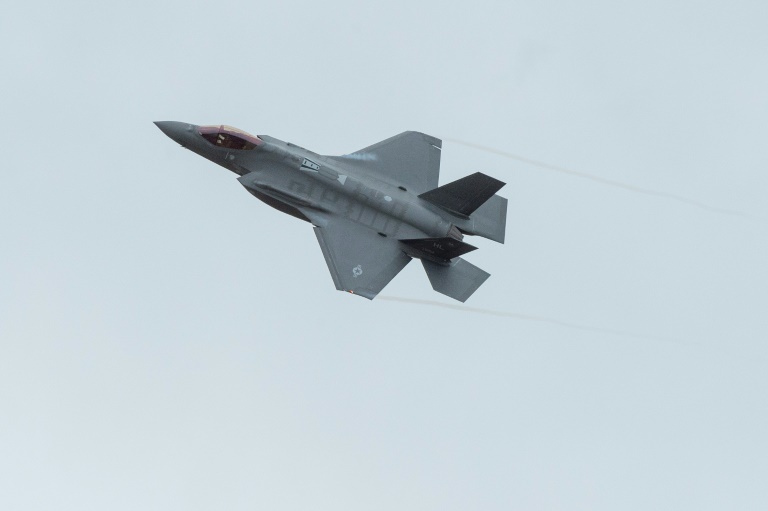
Swiss lawmakers voted Thursday to proceed with the controversial purchase of F-35 fighter jets without holding a referendum sought by opponents of the deal.

The lower house National Council gave the government the go-ahead to buy the 36 aircraft from US manufacturer Lockheed Martin by a large majority.

The upper house, the Council of States where Switzerland’s cantons are represented, has already approved the acquisition.

The Swiss government said last month it planned to go ahead with the acquisition of the combat aircraft despite a petition to hold a popular vote on the issue.

The left-leaning “Stop-F-35” alliance handed over the 100,000 signatures required under Switzerland’s direct democracy system to take any subject to a vote.

But the government said there would not be enough time to hold a vote before Lockheed Martin’s offer for the F-35A aircraft expired, which would have left Switzerland unable to replace its ageing fleet of fighter jets.

Switzerland decided in June 2021 to acquire F-35s and has until March 2023 to sign the contract.

In September 2020, Swiss voters narrowly approved six billion Swiss francs ($6.3 billion) to replace the country’s fleet of F/A-18 Hornets.

The selection of the F-35 sparked some controversy, particularly in light of the cost-overruns of the fighter programme in the United States, but a Swiss parliamentary investigation did not call into question the selection of the fighter.

Switzerland will join a growing number of European countries which have opted for the stealth multi-role combat aircraft, including Belgium, Britain, Denmark, Finland, Italy, Greece, Germany, the Netherlands, Norway, and Poland.

Benin bronzes get final Berlin show before return

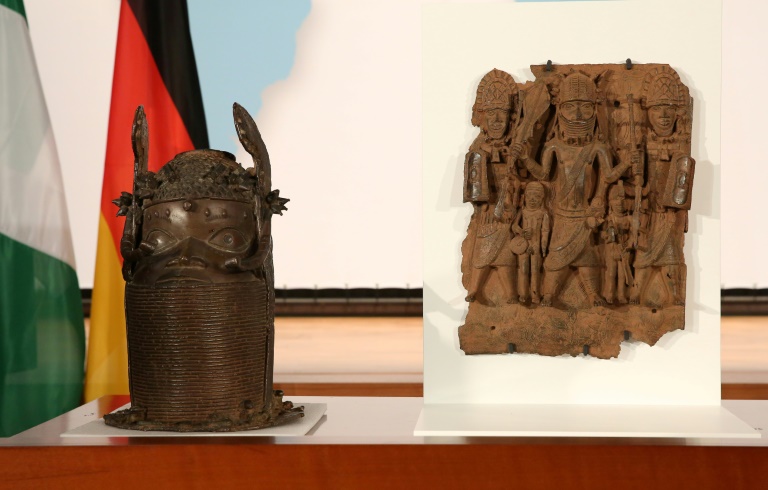
Stolen during the colonial era, dozens of Benin bronzes that once decorated the royal palace of the Kingdom of Benin will go on show for one last time in Berlin from Saturday before being repatriated to Nigeria.

The renowned pieces of African art and their tumultuous journey up to the exhibition at the Humboldt Museum speak to Germany’s gradual reckoning with the colonial era and the injustices of the past.

The move to return some of the bronzes is the latest in a series of steps taken by Berlin to try to take responsibility for the crimes of the colonial era, including the official recognition in May 2021 of a genocide perpetrated by Germany in Namibia.

Among the items being exhibited are a pair of thrones and a commemorative bust of the monarch of the Kingdom of Benin, in modern-day Nigeria. 

Two rooms in the sprawling museum are being dedicated to the art and the history of the kingdom, an exhibition realised “in close cooperation with partners in Nigeria”, according to the German side.

The removal of the precious objects is explained in the gallery, while educational workshops are also planned around the display.

“When it comes to colonial injustice, I think we’re on the right path,” said Hermann Parzinger, president of the Prussian Cultural Heritage Foundation, which oversees the national museums in the German capital.

“We’re nowhere near the end,” Parzinger added, but the museums were open to continuing on their journey to better understand the past “together” with international partners.

– ‘Lucid view’ –

Thousands of Benin bronzes, metal plaques and sculptures are now scattered around European museums after being looted by the British at the end of the 19th century.

But many museums have begun looking at restituting the artworks.

“Just like the Netherlands and Belgium, Germany has established a museums policy that has a lucid view of the colonial past,” French historian Pascal Blanchard, a specialist on the era, told AFP.

The Africa museum in Tervuren, near Brussels in Belgium, which reopened at the end of 2018, claims to take a “critical look” at the past and the history of the objects collected by Belgian King Leopold II, who for a long time kept the Congo as his private property in the 19th century.

Likewise, the Tropenmuseum in Amsterdam takes a long look at the Netherlands’ colonial past.

Unlike some countries, such as France, Germany lost its empire after its defeat in World War One and as such does not have a significant community of people repatriated from Africa.

“It does not play politically, which makes it easier to come to terms with the past,” said Blanchard. 

– Benin City –

Nonetheless, Germany has been the target of criticism in recent years over the origin of many of the objects in its museums, following in the wake of a greater public reckoning with racism.

The outrage grew louder with the opening of the first part of the new Humboldt Museum in December 2020, which is housed in a partially rebuilt Prussian palace.

The highly symbolic location — the former residence of the Hohenzollern dynasty, who oversaw Germany’s colonial adventures — was set to exhibit objects from the period.

Berlin’s Ethnological Museum currently holds 530 items that were taken from the Kingdom of Benin, including some 440 bronzes, considered to be the second-largest collection, behind the British Museum in London.

According to the Berlin museum’s director, Lars-Christian Koch, a portion of the objects will soon be returned, another third will be kept as a loan, and the rest, not on display, will be studied by researchers.

Germany is not the only country to begin returning stolen artefacts. In November 2021, France returned 26 artefacts from the royal treasures of Abomey to the country of Benin, next to Nigeria.

The pressure is also growing on the British Museum, which has around 700 bronzes. It has long argued that its vast trove of foreign artefacts, such as the Elgin Marbles taken from the Parthenon in Athens, are best housed there.

The repatriation of the Benin bronzes from Germany has been a long time coming, according to historian Benedicte Savoy. 

“The requests for return go back to independence in the 1960s. They have been silenced, refused, forgotten for years,” she told AFP.

Nigeria is planning to build a museum in Benin City, in the south of the country, to bring together the works on their return.

Thai Supreme Court dismisses final Toyota appeal over tax bill

Thailand’s Supreme Court on Thursday dismissed a final appeal by the local subsidiary of car giant Toyota over a disputed $270 million import tax bill following a decade of legal wrangling.

The case relates to Toyota Motor Thailand’s importation of parts for its Prius model at a reduced tax rate between 2010 and 2012 under a Japan-Thailand trade agreement.

Thai authorities said Toyota’s imports were not included under that agreement and estimate the company owes roughly 10 billion baht ($270 million).

While the country’s Central Tax Court ruled in favour of Toyota in 2017, the decision was later overturned.

On Thursday the Supreme court issued a final ruling against Toyota, stating the firm was not eligible for the 30 percent import duty reduction. 

In a statement Toyota Motor Thailand said it “respects the Supreme Court’s ruling”.

But it noted that a 2012 customs ruling — later upheld by the Supreme Court — reinterpreted previously agreed import rules, “resulting in a much higher tax on TMT”.

“Once TMT has obtained the Supreme Court’s full, written decision, we will study the ruling and comply with its requirements,” the statement said.

“We are committed to ensuring that our business practices comply with all applicable government regulations,” the firm added.

The dispute centres on whether the imports should be classified as car parts or fully assembled cars.

The 10 billion baht is comprised of import duty, value-added tax, excise tax, and municipal tax, explained customs department senior official Chaiyut Khumkhun.

“We have yet to see the exact amount Toyota has to pay because we are waiting for the full document of the ruling,” he said.

United States officials are also examining allegations that consultants hired by Toyota Motor Thailand may have attempted to bribe officials over the tax dispute.

In April 2020, Toyota reported possible anti-bribery violations related to its Thai subsidiary to the US Securities and Exchange Commission and the US Department of Justice.

Those two bodies oversee America’s Foreign Corrupt Practices Act — a law that aims to stop businesses from bribing public officials in foreign countries.

The company said it is cooperating with the investigations.

“The investigations could result in the imposition of civil or criminal penalties, fines or other sanctions, or litigation by the DOJ or the SEC,” the company said in a filing made public in March last year.

“Toyota cannot predict the scope, duration or outcome of the matter at this time.”

The firm has operated in Thailand since 1962 and runs three plants employing 13,500 people.

It manufactures about 760,000 vehicles in the Southeast Asian country annually.

Europe stocks waver after inflation-driven rout

European stock markets wavered Thursday after recent heavy losses triggered by higher-than-expected US inflation.

London rose, Paris fell and Frankfurt flatlined nearing the half-way stage.

The yen was under pressure as weak Japanese data further fuelled speculation of possible intervention from the Bank of Japan to support the unit.

Traders were awaiting US retail sales data released later in the day.

Equities suffered a rout on Wednesday as higher-than-expected US inflation stoked concern of more hefty Federal Reserve interest rate hikes.

– ‘Rollercoaster week’ –

“Stock markets are a bit mixed on Thursday following a rollercoaster week in the run-up to, and aftermath of, the US inflation report,” said analyst Craig Erlam at trading platform OANDA.

The data showed US annual consumer price inflation slowing by 8.3 percent in August from 8.5 percent in July but markets had expected a bigger fall.

Asian bourses mostly logged cautious gains Thursday, but Shanghai and Seoul dipped.

Analysts said traders have priced in an expected 75 basis-point interest rate hike by the Fed at a meeting next week.

The data “reinforced expectations that the Fed is going to… proceed with further aggressive hikes until inflation comes back under control,” said Forex.com analyst Fawad Razaqzada.

US producer price data also affected market sentiment, showing costs dropping for the second straight month, mainly driven by falling US fuel prices.

Global consumer prices have soared this year on Russia’s invasion of Ukraine — which has hiked energy and food costs — and because of supply chain strains worsened by Covid lockdowns in China.

Central banks are aggressively hiking interest rates to try and cool prices but this is putting the brakes on economic output, increasing expectations of a global recession.

– Key figures at around 1100 GMT –

London – FTSE 100: UP 0.4 percent at 7,315.50 points

Frankfurt – DAX: FLAT at 13,022.23

Paris – CAC 40: DOWN 0.4 percent at 6,197.47

EURO STOXX 50: DOWN 0.2 percent at 3,561.43

Tokyo – Nikkei 225: UP 0.2 percent at 27,875.91 (close) 

Hong Kong – Hang Seng Index: UP 0.4 percent at 18,930.38 (close)

Shanghai – Composite: DOWN 1.2 percent at 3,199.92 (close)

New York – Dow: UP 0.1 percent to 31,135.09 points (close)

Dollar/yen: UP at 143.46 yen from 143.08 yen late Wednesday

Euro/dollar: DOWN at $0.9976 from $0.9981

Pound/dollar: DOWN at $1.1504 from $1.1539

Euro/pound: UP at 86.73 pence from 86.49 pence 

Brent North Sea crude: DOWN 0.6 percent at $93.51 per barrel

West Texas Intermediate: DOWN 0.6 percent at $87.95 per barrel

burs/rfj/bcp/lth

Ethereum blockchain completes 'monumental' overhaul

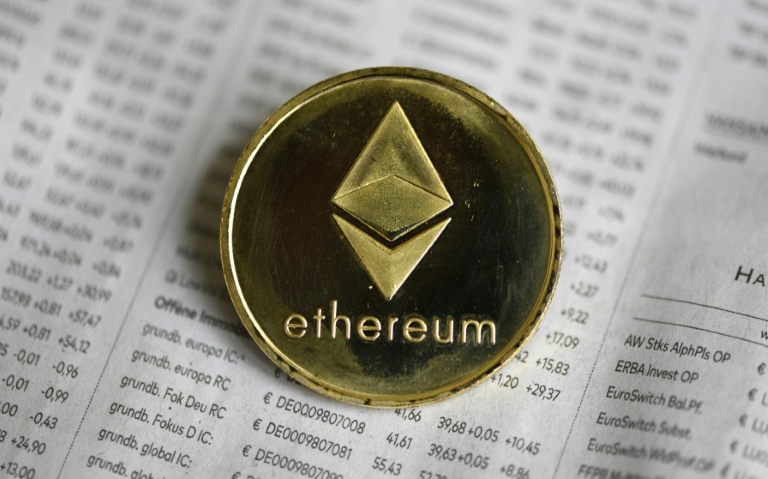
Leading cryptocurrency figures hailed on Thursday the completion of one of the biggest software upgrades the sector has ever attempted, an overhaul of the Ethereum blockchain aimed at reducing its massive energy consumption.

Developers had spent years working on an energy-efficient version of Ethereum, a digital ledger that underpins tens of billions of dollars worth of cryptocurrencies, digital tokens (NFTs), games and apps.

Ethereum is the second most important blockchain after bitcoin, but it has faced criticism for burning through more power each year than New Zealand.

“And we finalized!” tweeted Ethereum’s co-creator Vitalik Buterin, calling it a “big moment for the Ethereum ecosystem”.

Buterin quoted research claiming that the “merge”, as developers have called the software upgrade, would reduce global electricity consumption by 0.2 percent.

Enthusiasts hope a more energy efficient Ethereum will spur wider adoption of blockchain technology, particularly for banks and financial firms to automate backend processes.

But so far the technology has been used largely to create speculative financial products.

And critics remain sceptical of the energy saving claims, pointing out that it is unclear how much energy the new system will need.

– Trading resumes –

Blockchain company Consensys called it a “monumental technological milestone” but the scale of the work and potential for glitches led several companies and major exchanges to halt trading during the merge process.

The biggest exchange, Binance, said on Thursday it had resumed trading in ether, the native currency of Ethereum, tweeting: “The Ethereum Merge is complete.”

Ether was down slightly in early trading and has lost more than half of its value since the start of the year, suffering a rout along with the rest of the crypto world as investors shied away from risky assets.

But ether has recovered better than most crypto assets and Edouard Hindi of Geneva-based crypto hedge fund Tyr Capital told AFP the currency was now likely to rise against the dollar and bitcoin as cautious investors begin to buy.

Ether accounts for almost 20 percent of a cryptocurrency market valued at around $1 trillion, according to the site CoinGecko.

The upgrade changes the way transactions are logged on the Ethereum blockchain.

From the start of Ethereum in 2015, so-called crypto miners competed for the prize of adding entries to the blockchain.

They used vast computer power to solve complex equations with only the winners getting the reward, a mechanism known as “proof of work”.

The new system scraps the competition element and eliminates the miners and their energy-guzzling computer stacks.

Instead, potential “validators” need to put up 32 ether (worth $55,000) with the winner chosen in a lottery-style system to update the chain and receive the reward, a system known as “proof of stake”.

“It makes Ethereum much easier to understand conceptually and far less controversial,” Charlie Erith of ByteTree Asset Management told AFP.

He said it would make it harder for investors and regulators to take a tough line on the technology.

However, the upgraded blockchain could face a rocky start.

Some crypto mining companies have already promised to keep running the old mechanism on a smaller blockchain, “forked” from the main Ethereum chain.

And even if the “merge” is successful, Ethereum will remain expensive and slow compared with non-blockchain alternatives.

Ethereum blockchain completes 'monumental' overhaul

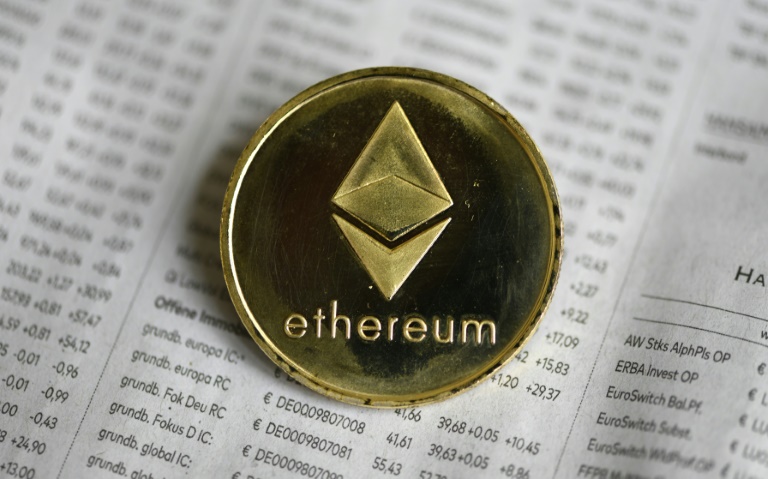
Leading cryptocurrency figures hailed on Thursday the completion of one of the biggest software upgrades the sector has ever attempted, an overhaul of the Ethereum blockchain aimed at reducing its massive energy consumption.

Developers had spent years working on an energy-efficient version of Ethereum, a digital ledger that underpins tens of billions of dollars worth of cryptocurrencies, digital tokens (NFTs), games and apps.

Ethereum is the second most important blockchain after bitcoin, but it has faced criticism for burning through more power each year than New Zealand.

“And we finalized!” tweeted Ethereum’s co-creator Vitalik Buterin, calling it a “big moment for the Ethereum ecosystem”.

Buterin quoted research claiming that the “merge”, as developers have called the software upgrade, would reduce global electricity consumption by 0.2 percent.

Enthusiasts hope a more energy efficient Ethereum will spur wider adoption of blockchain technology, particularly for banks and financial firms to automate backend processes.

But so far the technology has been used largely to create speculative financial products.

And critics remain sceptical of the energy saving claims, pointing out that it is unclear how much energy the new system will need.

– Trading resumes –

Blockchain company Consensys called it a “monumental technological milestone” but the scale of the work and potential for glitches led several companies and major exchanges to halt trading during the merge process.

The biggest exchange, Binance, said on Thursday it had resumed trading in ether, the native currency of Ethereum, tweeting: “The Ethereum Merge is complete.”

Ether was down slightly in early trading and has lost more than half of its value since the start of the year, suffering a rout along with the rest of the crypto world as investors shied away from risky assets.

But ether has recovered better than most crypto assets and Edouard Hindi of Geneva-based crypto hedge fund Tyr Capital told AFP the currency was now likely to rise against the dollar and bitcoin as cautious investors begin to buy.

Ether accounts for almost 20 percent of a cryptocurrency market valued at around $1 trillion, according to the site CoinGecko.

The upgrade changes the way transactions are logged on the Ethereum blockchain.

From the start of Ethereum in 2015, so-called crypto miners competed for the prize of adding entries to the blockchain.

They used vast computer power to solve complex equations with only the winners getting the reward, a mechanism known as “proof of work”.

The new system scraps the competition element and eliminates the miners and their energy-guzzling computer stacks.

Instead, potential “validators” need to put up 32 ether (worth $55,000) with the winner chosen in a lottery-style system to update the chain and receive the reward, a system known as “proof of stake”.

“It makes Ethereum much easier to understand conceptually and far less controversial,” Charlie Erith of ByteTree Asset Management told AFP.

He said it would make it harder for investors and regulators to take a tough line on the technology.

However, the upgraded blockchain could face a rocky start.

Some crypto mining companies have already promised to keep running the old mechanism on a smaller blockchain, “forked” from the main Ethereum chain.

And even if the “merge” is successful, Ethereum will remain expensive and slow compared with non-blockchain alternatives.

Death of Queen Elizabeth II: What happens next?

As preparations build for next week’s state funeral, members of the public are queuing for hours in London to pay their final respects to Queen Elizabeth II at her lying in state.

Here is how the United Kingdom plans to say goodbye to the late monarch.

– Thursday, September 15 –

The queen begins her first full day lying in state at Westminster Hall, with huge crowds lining the streets to pay their respects.

The 1,000-year-old building is open 24 hours a day until closing at 6:30 am (0530 GMT) on Monday, the day of the queen’s funeral.

The government has warned those waiting that “you will need to stand for many hours, possibly overnight, with very little opportunity to sit down”.

The queue stretched more than three miles (4.8 kilometres) early Thursday, following the River Thames into southeast London, passing Tate Modern museum and Shakespeare’s Globe theatre.

Prince William and his wife Catherine — the new Prince and Princess of Wales — will visit Sandringham, where the queen used to spend Christmas, to look at floral tributes.

Prince Edward, the queen’s youngest son, and his wife Sophie will visit Manchester in northwest England to view the city’s Book of Condolence.

King Charles III will spend the day at his country home, Highgrove, in southwest England.

Members of the armed forces hold overnight rehearsals for Monday’s funeral.

– Friday, September 16 –

Charles and Camilla visit Wales where a service is held at Cardiff’s Llandaff Cathedral and he receives a message of condolence at the Senedd, the Welsh national assembly building.

The visit to Wales completes trips to all four nations that make up the United Kingdom.

– Sunday, September 18 –

At 8:00 pm a minute’s silence will be observed nationwide to mourn the queen and honour her life of service to the country.

– Monday, September 19 –

The queen’s coffin is taken in procession to Westminster Abbey for a state funeral at 11:00 am expected to be watched by millions around the world.

Political leaders and heads of state including US President Joe Biden are expected to attend, sparking a major security operation.

After the funeral, the coffin is taken to Windsor, for a televised committal service at St George’s Chapel, with a private interment planned for later in the evening.

The queen will be interred at the King George VI memorial chapel, alongside her husband, Prince Philip, the ashes of her sister Princess Margaret, their mother, also called Elizabeth, and father, George VI.

S.African panel named to probe Ramaphosa over farm heist

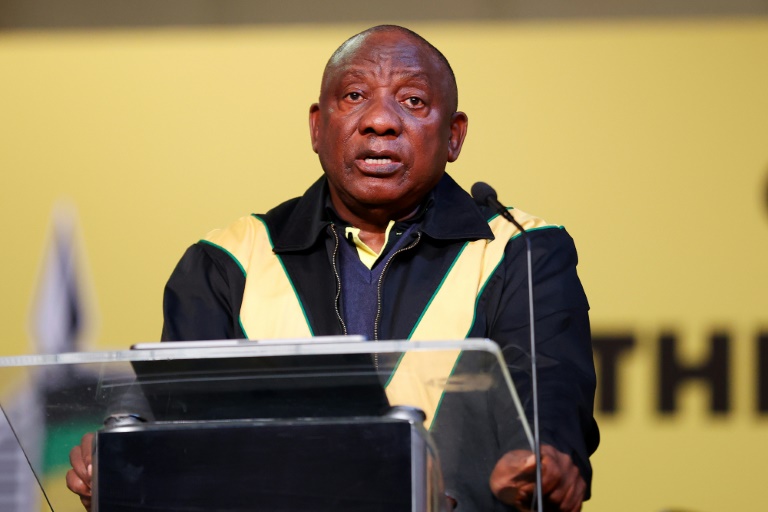
South Africa’s parliament has appointed an independent panel to determine whether President Cyril Ramaphosa should face impeachment over the alleged cover-up of a heist at his luxury farmhouse.

National Assembly speaker Nosiviwe Mapisa-Nqakula named the panel in a statement overnight Wednesday. 

It comprises ex-chief justice Sandile Ngcobo, a former prominent high court judge and a university professor.

To remove a president requires a two-thirds majority vote in the National Assembly. Ramaphosa’s African National Congress (ANC) party commands more than two-thirds of the seats, however.

A small opposition party, the African Transformation Movement (ATM), set down the motion that led to the creation of the panel.

The scandal around Ramaphosa erupted in June after South Africa’s former national spy boss, Arthur Fraser, filed a complaint with the police.

He alleged that robbers broke into the president’s farm in the northeast of the country, where they stole $4 million in cash stashed in furniture. 

Ramaphosa hid the robbery from the authorities and instead organised for the robbers to be kidnapped and questioned, and then bribed into silence, Fraser said. 

The president has acknowledged a burglary but denies the accusations of kidnapping and bribery, saying he reported the break-in to the police. 

He has also disputed the amount of money involved, and said the cash came from legitimate sales of game from his animal-breeding farm.

In June, Ramaphosa suspended the country’s graft ombudswoman, a day after she launched a probe into the burglary.

Last week, the High Court dismissed the suspension, saying the “hurried nature” of the move “may have been retaliatory”.

Pressure has been piling on Ramaphosa ahead of an ANC conference in December where he is expected to seek re-election.

The panel will have 30 days to report its findings.

Tens of thousands queue in London to pay respects to queen's coffin

Tens of thousands of mourners, some waiting through the night, queued for hours Thursday to pay their last respects to Queen Elizabeth II on the first full day of her coffin lying in state.

Britain’s longest-serving monarch, who died a week ago aged 96 after 70 years on the throne, is at rest in Westminster Hall ahead of Monday’s state funeral at neighbouring Westminster Abbey.

After lining up for two days, the first public mourners were allowed into the vast mediaeval hall late Wednesday afternoon, following the coffin’s ceremonial procession through the packed streets of central London from Buckingham Palace.

Since then, a steady stream of people has continued to file past the queen’s casket, with thousands waiting through the night for their chance to say farewell to the country’s figurehead.

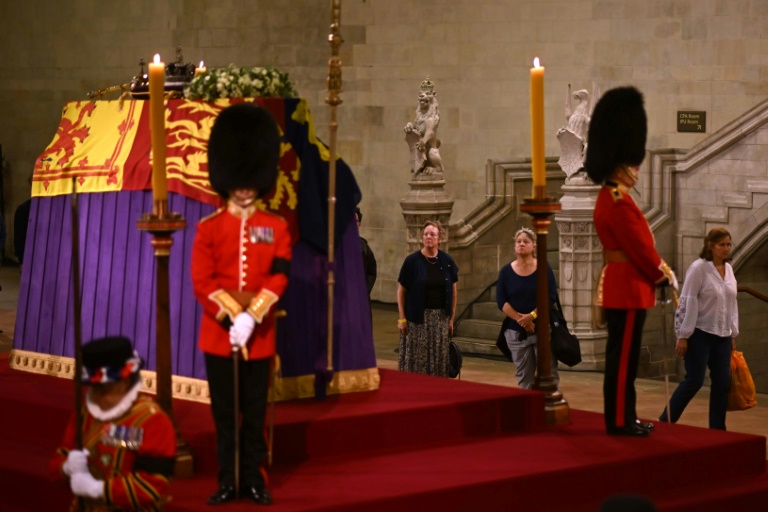
Her casket, mounted on a platform, is draped in the Royal Standard flag and bearing the Imperial State Crown plus her ceremonial Orb and Sceptre, with tall, flickering candles standing at each corner.

“It was very beautiful, moving,” said Sarah Mellor, noting it was also very quiet inside the cavernous hall, the oldest part of Britain’s centuries-old parliament.

“There is the sense of history here,” added the visibly moved Mellor, who had queued for seven hours.

The sombre atmosphere was completed with guards in ceremonial uniform posted around the podium in a constant vigil.

One fainted overnight, in a sign of the toll standing vigil can take.

– ‘Real Charles fan’ –

All Britain’s national newspapers carried poignant pictures of the historic scene on their covers.

“Nation’s turn to say farewell,” the Daily Telegraph headlined on its front page.

Mourners marked their moment in front of the coffin in various ways, from bows or curtsies to the sign of the cross or by simply removing their hats.

Some wiped away tears with tissues. Others brought infants in pushchairs. Old soldiers stopped and gave one last salute to their former commander-in-chief.

The coffin had been taken to parliament from Buckingham Palace Wednesday to the strains of a military band playing funeral marches.

King Charles III led the royal family in procession behind a horse-drawn gun carriage bearing the casket.

Parliament’s Big Ben bell tolled out each minute as the casket passed in front of hushed crowds lining the route, ahead of the lying-in-state beginning at 5:00 pm (1600 GMT).  

By late morning Thursday, the queue had grown to 3.5 miles (5.6 kilometres) along the south bank of the Thames river, with people set to wait through the day to see the late sovereign.

Organisers have prepared up to 10 miles of queuing infrastructure, with expectations hundreds of thousands will participate, in particular over the weekend.

Musician Jacqui Smith, among those in line overnight, was sad but enthusiastic about the reign of the new king.

“I’ve been waiting for it for a long time,” she told AFP from Lambeth Bridge, within sight of Westminster Hall. “I love the queen, but I’m a real Charles fan.”

– Royal visits –

After nearly 110 hours lying-in-state and 10 full days of national mourning, the commemorations for the queen will culminate with her state funeral Monday.

Before that, senior royals are continuing to visit places around the country.

On Thursday, William and wife Kate travel to Sandringham, the family’s private winter retreat in eastern England to view the floral tributes left by members of the public at the Norwich Gates.

Charles, 73, was crowned Prince of Wales by his mother in 1958 and on his first full day as monarch Friday bestowed the title on his eldest son.

The historic title has been given to the heir apparent since the start of the 14th century.

Thursday’s visit will be the first official engagement conducted by the new Prince and Princess of Wales.

Meanwhile Elizabeth’s youngest son Prince Edward, 58, and his wife Sophie, visit Manchester in northwest England to view the civic book of condolence at the city’s central library.

They were also viewing the floral tributes in St Ann’s Square and meet members of the public who are volunteering at the site, and light a candle in memory of the queen at Manchester Cathedral.

The late monarch’s elaborate funeral will see hundreds of world leaders and global royalty pack the historic Westminster Abbey in the heart of the British capital.

US President Joe Biden, Canadian Prime Minister Justin Trudeau, Australia’s leader Anthony Albanese and France’s Emmanuel Macron have all confirmed their attendance, as have Japan’s Emperor Naruhito and numerous other royals.

Poorest nations to push on compensation at climate talks

The world’s poorest countries say they will insist that the UN’s upcoming climate talks push ahead with proposals for a fund to compensate vulnerable nations for climate-inflicted damage.

Ministers and experts from the 46-nation Least Developed Countries (LDC) bloc, meeting in Dakar, said their countries were most exposed to climate impact but least to blame for the carbon emissions that cause it.

In a statement issued late Wednesday ahead of the November climate talks, they said that setting up a funding mechanism for loss and damage was of “crucial importance.”

They also reiterated a call for “all parties, particularly major emitters” to make swift and deep cuts in carbon emissions, and for rich economies to honour past pledges on climate aid.

COP27 — the 27th Conference of the Parties to the UN Framework Convention on Climate Change (UNFCCC) — runs in the Egyptian resort of Sharm el-Sheikh from November 6-18.

The annual parlays are dominated by often fierce debate on national pledges on emissions curbs and on funding.

Wealthy countries have previously promised billions of dollars to help poorer nations avert carbon emissions and build resilience against climate change.

The LDC bloc, gathering countries mainly from Africa and Asia, is campaigning in particular for compensation for vulnerable countries which suffer from climate-related damage such as floods and rising seas.

It wants the upcoming talks to establish a mechanism to provide funding.

“Countries are being left to fend for themselves” in the face of climate damage, Senegalese Environment Minister Abdou Karim Sall told reporters.

“It is imperative for a fund to be set up which takes care of loss and damage, especially for least developed countries.”

The pre-COP meeting among LDC representatives in the Senegalese capital was to be followed by talks on Thursday among African environment ministers, attended by US climate envoy John Kerry.

Close Bitnami banner
Bitnami