World

Poorest nations to push on compensation at climate talks

The world’s poorest countries say they will insist that the UN’s upcoming climate talks push ahead with proposals for a fund to compensate vulnerable nations for climate-inflicted damage.

Ministers and experts from the 46-nation Least Developed Countries (LDC) bloc, meeting in Dakar, said their countries were most exposed to climate impact but least to blame for the carbon emissions that cause it.

In a statement issued late Wednesday ahead of the November climate talks, they said that setting up a funding mechanism for loss and damage was of “crucial importance.”

They also reiterated a call for “all parties, particularly major emitters” to make swift and deep cuts in carbon emissions, and for rich economies to honour past pledges on climate aid.

COP27 — the 27th Conference of the Parties to the UN Framework Convention on Climate Change (UNFCCC) — runs in the Egyptian resort of Sharm el-Sheikh from November 6-18.

The annual parlays are dominated by often fierce debate on national pledges on emissions curbs and on funding.

Wealthy countries have previously promised billions of dollars to help poorer nations avert carbon emissions and build resilience against climate change.

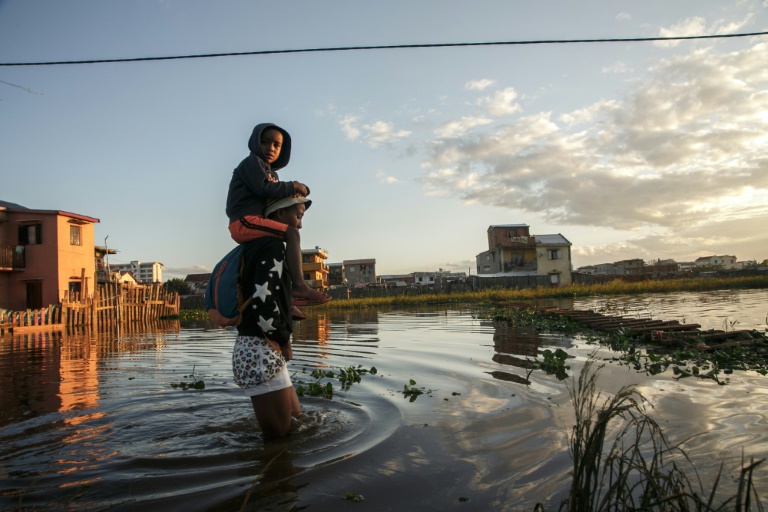
The LDC bloc, gathering countries mainly from Africa and Asia, is campaigning in particular for compensation for vulnerable countries which suffer from climate-related damage such as floods and rising seas.

It wants the upcoming talks to establish a mechanism to provide funding.

“Countries are being left to fend for themselves” in the face of climate damage, Senegalese Environment Minister Abdou Karim Sall told reporters.

“It is imperative for a fund to be set up which takes care of loss and damage, especially for least developed countries.”

The pre-COP meeting among LDC representatives in the Senegalese capital was to be followed by talks on Thursday among African environment ministers, attended by US climate envoy John Kerry.

Welsh turn against Prince William's new title

The faded photo shows two tiny but unmistakeable figures atop Wales’ imposing Caernarfon Castle, a snapshot taken by a schoolgirl in 1969 that captured a moment in history.

“He came to stand on this balcony here with his mum,” says Maria Sarnacki, holding up the picture in front of the balcony where Queen Elizabeth II and the newly anointed Charles, Prince of Wales, greeted the crowds.

“It was an amazing day. I was convinced she was pointing and waving to me — being a little girl of 11 it was like something you see in films,” adds Sarnacki, now 66.

The investiture of the now King Charles III as Prince of Wales by his mother in an archaic ritual in the magnificent 13th century castle was watched by millions of people around the world live on television.

“But I don’t think there’s a purpose for it any more,” says Sarnacki, who is now mayor of the mountain-fringed town on Wales’ north coast.

Charles’s investiture may be the last at the castle, with growing opposition to any similar ceremony for his son William, whom he named Prince of Wales last week.

The queen’s death has also sparked calls for the centuries-old title to be scrapped altogether, as nationalist sentiment swells in Wales and other parts of the United Kingdom.

Almost 25,000 people have signed a petition to scrap the title as an “insult to Wales and a symbol of historical oppression”.

– ‘Divided’ –

“There is mixed opinion. A lot of people don’t want the title Prince of Wales because they think it should be a Welsh person,” said Sarnacki.

The Welsh dragon flag and the British Union Jack fly together at half mast over the castle following the queen’s death, but Caernarfon’s royal history does not make it royalist.

“Opinion would be very much divided” about proclaiming William Prince of Wales, said Geraint Thomas, 49, who runs a photographic gallery in Caernarfon.

The town boasts the highest percentage in Wales of people who can speak Welsh — which Charles spent a term at university trying to learn before his investiture.

While children play with toy spears in the castle courtyard, which is now a UNESCO world heritage site, the bloody history of England and Wales has never been forgotten here.

The title Prince of Wales was originally used by native princes, but the last, Llywelyn ap Gruffudd, was killed in 1282 during the conquest of Wales by England’s King Edward I.

His head was then mounted on the Tower of London.

To tame Wales, Edward embarked on a spree of castle-building that produced Caernarfon, where his heir, the future Edward II, was born in 1284. 

– ‘Provocative title’ –

He would then give the title of Prince of Wales to his son in 1301, and English monarchs would continue the tradition for their heirs.

“Historically it’s been a provocative title,” said Thomas, whose gallery has two red flags for the Welsh independence movement hanging outside.

The queen’s decision to carry out Charles’s investiture at Caernarfon in 1969 was controversial even at the time.

Amid growing Welsh nationalism, protesters took to the streets outside the castle ahead of the ceremony, and there was even a spate of bombings.

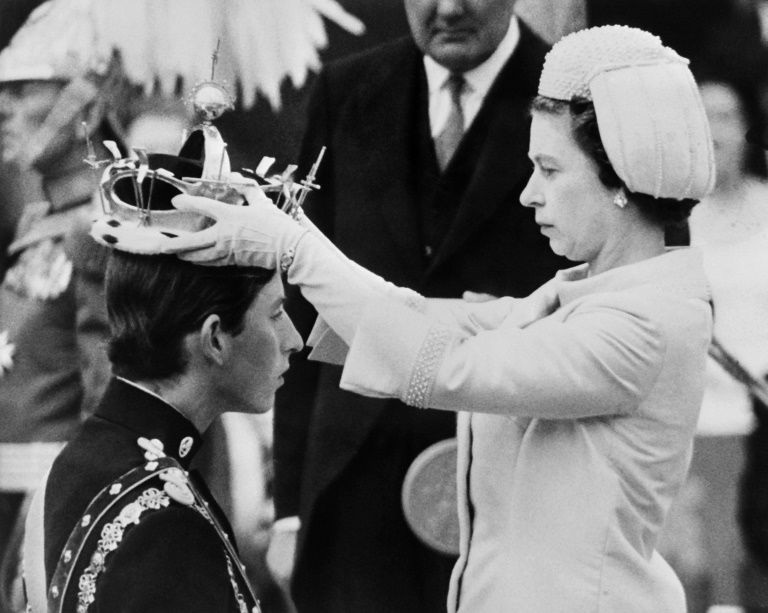
Recently dramatised in the TV series “The Crown”, the investiture featured the queen placing a coronet on the 20-year-old Charles’s head as he knelt on a granite dais.

He then swore to be her “liege man of life and limb.”

Since then, Wales has won greater political freedom from London and become more distanced from a royal family that seems more bonded to Scotland.

– ‘Independent country’ –

“Personally, I feel like we should have a Welsh prince,” said Rhiannon Evans, 23, a barista in Caernarfon. “We should be an independent country as well.”

King Charles is due to visit Cardiff on Friday, having already visited Edinburgh and Belfast in a tour that indicates the future of the union on his mind.

But he has been criticised for naming William as Prince of Wales without consulting the Welsh people, including by Wales’ first minister.

Selwyn Jones, who works at a bookshop, said holding the investiture in Caernarfon would be “much more toxic than in 1969” since the decision about William was “imposed on us by the new king”.

Reports have suggested there may be a scaled-down investiture for William in Cardiff next year.

Locals said they “respect” William and his wife Kate, who lived on Anglesey, just across the water from the castle, while William was an RAF search and rescue helicopter pilot.

But that does not necessarily translate to support and the death of the queen could be the catalyst for change.

For Sarnacki — whose late brother served as butler to the queen for 10 years and “idolised her” — that could mean the historic investiture she photographed will never be repeated.

“I think the time has come now to do away with that,” she said.

South Korea arrests woman over dead children in suitcases in New Zealand

South Korean police said Thursday they have arrested a woman accused of murdering her two children, whose remains were found in suitcases in New Zealand last month.

The 42-year-old — reportedly a South Korean-born New Zealand national — was arrested in the southeastern city of Ulsan, police said, and has been transferred to the capital Seoul to face extradition proceedings.

“Police arrested the suspect at an apartment in Ulsan on Thursday following a stakeout with tips on her whereabouts and CCTV footage,” South Korea’s National Police Agency said in a statement.

“The suspect is accused by the New Zealand police of having murdered her two children — aged seven and 10 at the time — in around 2018 in the Auckland area.”

“She’s been found to have arrived in South Korea after the crime and has been in hiding ever since,” it added.

Images in local media showed the woman, who has not been identified by police in South Korea or New Zealand, being led out of an Ulsan police station by plainclothed investigators, covering her head with a large brown coat.

The woman, who was wearing ripped jeans and sandals, was asked by local media whether she would confess to the killings.

“I didn’t do it,” the woman said repeatedly, as she was led away and put into a police vehicle.

South Korea’s Yonhap News Agency said the woman is a South Korean-born New Zealand citizen.

It added that she started living in an acquaintance’s apartment in Ulsan this year, having earlier stayed in Seoul.

The suspect arrived at the Seoul Central District Prosecutors Office on Thursday afternoon, AFP reporters saw, and was driven into the building’s basement parking lot in a police vehicle with tinted windows and red and blue flashing lights.

– Grisly discovery –

The remains of the two children were discovered in August after an unsuspecting family bought a trailer-load of items — including the suitcases — at an auction for abandoned goods near Auckland, New Zealand’s biggest city.

New Zealand police have said the bodies were likely in storage for several years, which has complicated the investigation.

Authorities have repeatedly stressed that the family who found the bodies were not connected to the homicides and were being given support to help deal with the trauma.

Detective Inspector Tofilau Fa’amanuia Vaaelua in Auckland said Thursday that the case was “a very challenging investigation”. 

“To have someone in custody overseas within such a short period of time has all been down to the assistance of the Korean authorities and the coordination by our New Zealand Police Interpol staff,” the detective said.

Shell CEO to step down, hand reins to renewables chief

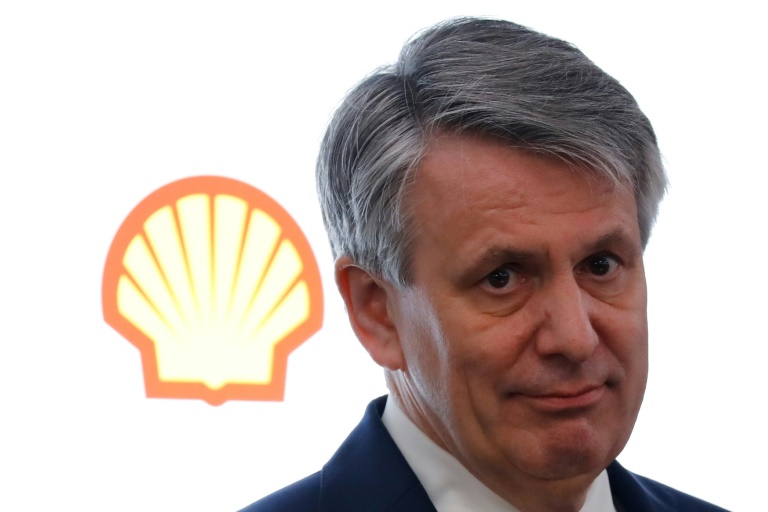
Shell on Thursday announced the exit of chief executive Ben van Beurden as the British oil and gas giant looks to reinvent itself under group renewables boss Wael Sawan.

Dutchman van Beurden, 64, will step down at the end of 2022 after nine years in charge of the energy major and nearly four decades as a Shell employee.

Van Beurden has presided over rollercoaster oil prices fuelled by the Covid pandemic and Russian invasion of Ukraine, as well as overseeing a major corporate overhaul that saw it ditch “Royal Dutch” from its name.

The outgoing CEO “can look back with great pride on an extraordinary 39-year Shell career”, chairman Andrew Mackenzie said in a statement.

He said van Beurden had been “in the vanguard for the transition of Shell to a net zero emissions energy business by 2050”, adding that he “leaves a financially strong and profitable company”.

Oil and gas prices have rocketed this year, leaving Shell “with a robust balance sheet, very strong cash generation capability and a compelling set of options for growth”, Mackenzie added.

Shell has faced strong criticism over its net-zero plans from the environmental lobby, which accuses it of “greenwashing”, or marketing a company as overly climate-friendly.

Energy companies and businesses generally are seeking to slash carbon emissions in line with government targets on tackling climate change.

– Strategy ‘tweaks’ –

Shell hopes Beirut-born Sawan, 48, will boost the transition plans.

“For a group whose renewable strategy has been somewhat vague, though grand sounding, this is a clear marker that Shell intends to change this,” said Hargreaves Lansdown analyst Sophie Lund-Yates.

“Change won’t happen overnight, but it’s reasonable to think that at least tweaks to the existing renewable strategy could be on the cards.”

Mackenzie called Sawan “an exceptional leader, with all the qualities needed to drive Shell safely and profitably through its next phase of transition and growth”.

The incoming boss had a “track record of commercial, operational and transformational success” and a deep understanding of Shell and the broader energy sector, the chairman added.

A dual Lebanese-Canadian national, Sawan has worked at Shell for 25 years in various roles in Europe, Africa, Asia and the Americas.

He is currently director of integrated gas, renewables and energy solutions.

“I’m looking forward to… grasp the opportunities presented by the energy transition,” Sawan said in a statement.

– Oil price boom –

Van Beurden’s tenure included oil prices collapsing into negative territory in 2020, as Covid lockdowns ravaged demand.

Shell dived into a net loss of $21.7 billion in 2020 as factories shut and planes were grounded. 

That resulted in the group shedding thousands of jobs, mirroring the likes of British rival BP.

Oil prices have since rebounded sharply after economies reopened from pandemic lockdowns and following the attack on Ukraine by major crude producer Russia.

Gas prices have also surged owing to the conflict, resulting in Shell’s net profits rocketing more than five-fold to $18 billion in the second quarter of this year.

This even as van Beurden carried out Shell’s costly withdrawal from Russian gas and oil.

Soaring profits for Shell and BP come as Britain’s faces a cost-of-living crisis, igniting calls for the pair to be slapped with a far higher windfall tax than unveiled earlier this year by former finance minister Rishi Sunak.

Last year, Van Beurden ushered in a simplification of Shell’s complex structure, switching headquarters from the Netherlands to the UK and axing Royal Dutch from the front of its name.

Van Beurden, appointed CEO in January 2014, will continue to work as advisor to the board until mid-2023. 

Shell’s share price was largely flat in morning deals on London’s rising stock market.

Shell CEO to step down, hand reins to renewables chief

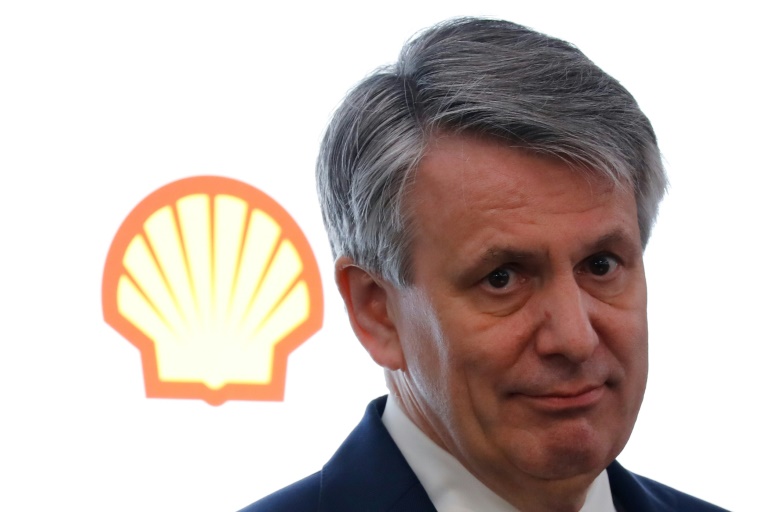
Shell on Thursday announced the exit of chief executive Ben van Beurden as the British oil and gas giant looks to reinvent itself under group renewables boss Wael Sawan.

Dutchman van Beurden, 64, will step down at the end of 2022 after nine years in charge of the energy major and nearly four decades as a Shell employee.

Van Beurden has presided over rollercoaster oil prices fuelled by the Covid pandemic and Russian invasion of Ukraine, as well as overseeing a major corporate overhaul that saw it ditch “Royal Dutch” from its name.

The outgoing CEO “can look back with great pride on an extraordinary 39-year Shell career”, chairman Andrew Mackenzie said in a statement.

He said van Beurden had been “in the vanguard for the transition of Shell to a net zero emissions energy business by 2050”, adding that he “leaves a financially strong and profitable company”.

Oil and gas prices have rocketed this year, leaving Shell “with a robust balance sheet, very strong cash generation capability and a compelling set of options for growth”, Mackenzie added.

Shell has faced strong criticism over its net-zero plans from the environmental lobby, which accuses it of “greenwashing”, or marketing a company as overly climate-friendly.

Energy companies and businesses generally are seeking to slash carbon emissions in line with government targets on tackling climate change.

– Strategy ‘tweaks’ –

Shell hopes Beirut-born Sawan, 48, will boost the transition plans.

“For a group whose renewable strategy has been somewhat vague, though grand sounding, this is a clear marker that Shell intends to change this,” said Hargreaves Lansdown analyst Sophie Lund-Yates.

“Change won’t happen overnight, but it’s reasonable to think that at least tweaks to the existing renewable strategy could be on the cards.”

Mackenzie called Sawan “an exceptional leader, with all the qualities needed to drive Shell safely and profitably through its next phase of transition and growth”.

The incoming boss had a “track record of commercial, operational and transformational success” and a deep understanding of Shell and the broader energy sector, the chairman added.

A dual Lebanese-Canadian national, Sawan has worked at Shell for 25 years in various roles in Europe, Africa, Asia and the Americas.

He is currently director of integrated gas, renewables and energy solutions.

“I’m looking forward to… grasp the opportunities presented by the energy transition,” Sawan said in a statement.

– Oil price boom –

Van Beurden’s tenure included oil prices collapsing into negative territory in 2020, as Covid lockdowns ravaged demand.

Shell dived into a net loss of $21.7 billion in 2020 as factories shut and planes were grounded. 

That resulted in the group shedding thousands of jobs, mirroring the likes of British rival BP.

Oil prices have since rebounded sharply after economies reopened from pandemic lockdowns and following the attack on Ukraine by major crude producer Russia.

Gas prices have also surged owing to the conflict, resulting in Shell’s net profits rocketing more than five-fold to $18 billion in the second quarter of this year.

This even as van Beurden carried out Shell’s costly withdrawal from Russian gas and oil.

Soaring profits for Shell and BP come as Britain’s faces a cost-of-living crisis, igniting calls for the pair to be slapped with a far higher windfall tax than unveiled earlier this year by former finance minister Rishi Sunak.

Last year, Van Beurden ushered in a simplification of Shell’s complex structure, switching headquarters from the Netherlands to the UK and axing Royal Dutch from the front of its name.

Van Beurden, appointed CEO in January 2014, will continue to work as advisor to the board until mid-2023. 

Shell’s share price was largely flat in morning deals on London’s rising stock market.

US Senate takes first step to direct military aid to Taiwan

A Senate committee took the first step Wednesday toward the United States directly providing billions of dollars in military aid to Taiwan and making ties more official, ramping up support following soaring tensions with Beijing.

The United States has for decades sold weapons to Taiwan but the new legislation will go further by providing US security assistance to the tune of $4.5 billion over four years, a move that has infuriated Beijing. 

It also lays out sanctions on China should it use force to try to seize the island.

With support from both parties, the Senate Foreign Relations Committee approved the Taiwan Policy Act, billed as the most sweeping upgrade of the relationship since the United States switched recognition from Taipei to Beijing in 1979.

US lawmakers moved ahead on the act amid heightened worries for Taiwan after Russia invaded Ukraine and following a visit to Taipei by House Speaker Nancy Pelosi, which prompted China to stage major military exercises seen as a trial run for an invasion. 

Senator Bob Menendez, who leads the committee and is a member of President Joe Biden’s Democratic Party, said that the United States “does not seek war or heightened tensions with Beijing” but needs to be “clear-eyed.”

“We are carefully and strategically lowering the existential threats facing Taiwan by raising the cost of taking the island by force so that it becomes too high a risk and unachievable,” Menendez said.

Senator Jim Risch, the top Republican on the committee, said it was “imperative we take action now to bolster Taiwan’s self-defense before it’s too late.”

The bill still must clear the full Senate and House. The White House has not said whether President Joe Biden will sign the bill, although the strong support it has may mean Congress could override any potential veto.

China slammed the bill on Thursday, saying it had lodged “solemn representations” with Washington over legislation it claimed “violates the one-China principle” and “sends serious wrong signals to Taiwan independence and separatist forces.”

If the bill continues to move forward, “it will greatly shake the political foundation of China-US relations, and will have extremely serious consequences for … peace and stability across the Taiwan Strait,” China’s foreign ministry spokesperson Mao Ning said at a briefing.

The office of Taiwan’s President Tsai Ing-wen on Thursday said it expressed “sincere gratitude” to the United States “for once again demonstrating its bipartisan friendship and support for Taiwan.”

– Less ambiguous relationship –

Under the act, the United States will still not diplomatically recognize Taiwan. 

China considers the island — where the mainland’s defeated nationalists fled in 1949 — to be its territory and strongly opposes any international legitimacy for Taipei, which has transformed into a vibrant democracy and major economic power. 

But the new law would shed many of the runarounds and codewords that have been in place so as not to anger China by implying recognition. 

The de facto US embassy — now officially the Taipei Economic and Cultural Representative Office — would be renamed the Taiwan Representative Office and the US government would be instructed to interact with Taiwan as it would with any government. 

The top US envoy in Taipei, now called the director of the American Institute in Taiwan, would be renamed the “representative” of the office and need confirmation by the Senate, as would a US ambassador. 

The act would also designate Taiwan a “major non-NATO ally,” a status for the closest US military partners outside of the trans-Atlantic alliance. 

And in a reflection of changing dynamics since the landmark 1979 Taiwan Relations Act, the bill says the United States will provide weapons “conducive to deterring acts of aggression” by China rather than simply “defensive” weapons. 

In addition to the $4.5 billion in funding to Taiwan, the act would authorize $2 billion in loan guarantees for Taiwan to buy US weapons. 

Earlier this year, Biden appeared to end decades of US ambiguity when he said the United States would directly help Taiwan if it is attacked. 

But his aides later walked back his remarks and the White House quietly discouraged Pelosi from her visit, fearing it would provoke President Xi Jinping ahead of a key Communist Party meeting. 

White House Press Secretary Karine Jean-Pierre said only that the Biden administration was in touch with lawmakers about the legislation. 

“We appreciate the strong bipartisan support for Taiwan and want to work with Congress to strengthen that,” she said.

Benin bronzes get final Berlin show before return

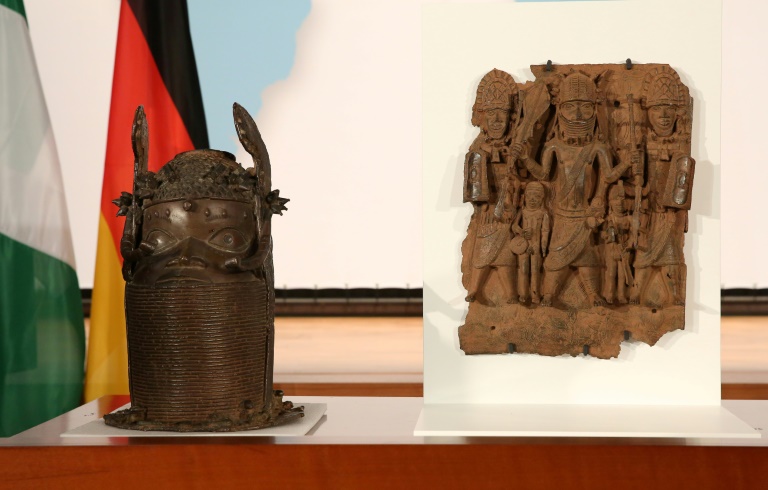
Stolen during the colonial era, dozens of Benin bronzes that once decorated the royal palace of the Kingdom of Benin will go on show for one last time in Berlin from Saturday before being repatriated to Nigeria.

The renowned pieces of African art and their tumultuous journey up to the exhibition at the Humboldt Museum speak to Germany’s gradual reckoning with the colonial era and the injustices of the past.

The move to return some of the bronzes is the latest in a series of steps taken by Germany to try to take responsibility for the crimes of the colonial era, including the official recognition in May 2021 of a genocide perpetrated by Germany in Namibia.

Among the items being exhibited are a pair of thrones and a commemorative bust of the monarch, which used to decorate the walls of the royal palace in Benin city, in modern-day Nigeria. 

Two rooms in the sprawling museum are being dedicated to the art and the history of the Kingdom of Benin, an exhibition realised “in close cooperation with partners in Nigeria”, according to the German side.

The removal of the precious objects is explained in the gallery, while educational workshops are also planned around the display.

Thousands of Benin bronzes, metal plaques and sculptures are now scattered around European museums after being looted by the British at the end of the 19th century.

The recognition of the colonial injustices and the subsequent return of the items “will continue to define our work in the future,” Hermann Parzinger, president of the Prussian Cultural Heritage Foundation, which oversees the national museums in the German capital, said in a statement.

– ‘Lucid view’ –

“Just like the Netherlands and Belgium, Germany has established a museums policy that has a lucid view of the colonial past,” French historian Pascal Blanchard, a specialist on the era, told AFP.

The Africa museum in Tervuren, near Brussels in Belgium, which reopened at the end of 2018, claims to take a “critical look” at the past and the history of the objects collected by Belgian King Leopold II, who for a long time kept the Congo as his private property in the 19th century.

Likewise, the Tropenmuseum in Amsterdam takes a long look at the Netherlands’ colonial past.

Unlike some countries, such as France, Germany lost its empire after its defeat in World War One and as such does not have a significant community of people repatriated from Africa.

“It does not play politically, which makes it easier to come to terms with the past,” said Blanchard. 

– Benin City –

Nonetheless, Germany has been the target of criticism in recent years over the origin of many of the objects in its museums, following in the wake of a greater public reckoning with racism.

The outrage grew louder with the opening of the first part of the new Humboldt Museum in December 2020, which is housed in a partially rebuilt Prussian palace.

The highly symbolic location — the former residence of the Hohenzollern dynasty, who oversaw Germany’s colonial adventures — was set to exhibit objects from the period.

Berlin’s Ethnological Museum currently holds 530 items that were taken from the Kingdom of Benin, including some 440 bronzes, considered to be the largest collection behind the British Museum in London.

According to the Berlin museum’s director, Lars-Christian Koch, a portion of the objects will soon be returned, another third will be kept as a loan, and the rest, not on display, will be studied by researchers.

Germany is not the only country to begin returning stolen artefacts. In November 2021, France returned 26 artefacts from the royal treasures of Abomey to the country of Benin, next to Nigeria.

The pressure is also growing on the British Museum, which has around 700 bronzes. It has long argued that its vast trove of foreign artefacts, such as the Elgin Marbles taken from the Parthenon in Athens, are best housed there.

The repatriation of the objects was a long time coming in the opinion of historian Benedicte Savoy. 

“The requests for return go back to independence in the 1960s. They have been silenced, refused, forgotten for years,” she told AFP.

Nigeria is planning to build a museum in Benin City, in the south of the country, to bring together the works on their return.

Ethereum blockchain completes 'monumental' overhaul

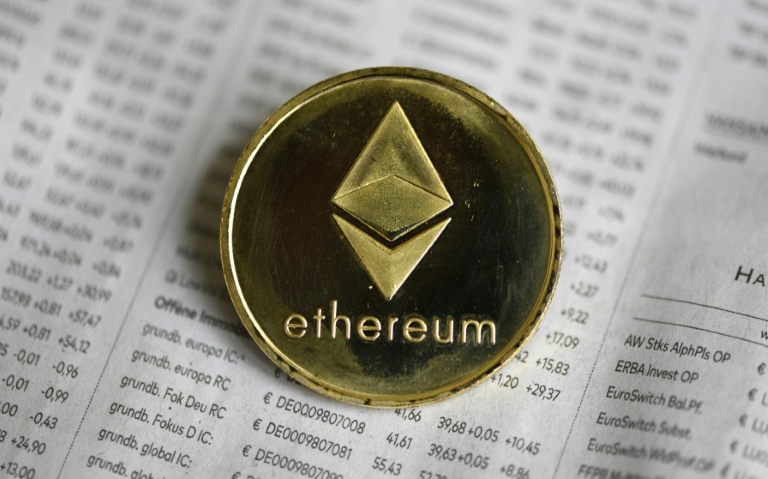
Senior figures in the crypto world said on Thursday that one of the biggest software upgrades the sector has ever seen was completed, an overhaul of the Ethereum blockchain aimed at reducing its massive energy consumption.

Developers had spent years working on a more energy-efficient version of Ethereum, a digital ledger that underpins a multibillion dollar ecosystem of cryptocurrencies, digital tokens (NFTs), games and apps.

“And we finalized!” tweeted Ethereum’s co-creator Vitalik Buterin, calling it a “big moment for the Ethereum ecosystem”.

Ethereum is the second most important blockchain after bitcoin, but it has faced criticism for burning through more power each year than New Zealand.

Buterin quoted research claiming that the “merge”, as developers have called the software upgrade, would reduce global energy consumption by 0.2 percent.

Enthusiasts hope a more energy efficient Ethereum will spur wider adoption, particularly as a way of enabling banks to automate transactions and other processes.

But so far the technology has been used largely to create speculative financial products.

And critics remain sceptical of the claims of massive energy savings, pointing out that it is unclear much energy the new system will need.

– Trading resumes –

The switchover changes the way transactions are logged on the Ethereum blockchain.

From the start of Ethereum in 2015, so-called crypto miners have competed against each other to solve equations — a system known as “proof of work”.

The process required vast computing power and only the winner would be chosen to update the blockchain and get rewards. 

The new system scraps the competition element, the miners and their energy-guzzling computer stacks.

Instead, “validators” will now be chosen in a lottery-style system.

Rather than solving an equation, they put up 32 ether (worth $55,000) — Ethereum’s cryptocurrency — and wait to be chosen in a system known as “proof of stake”.

Blockchain company Consensys called it a “monumental technological milestone” and the biggest update to Ethereum since it was launched.

The world’s biggest crypto exchange, Binance, had stopped trading ether during the merge process.

“The Ethereum Merge is complete,” the firm tweeted on Thursday morning, saying it was resuming trading in ether. 

The upgrade is likely to face a rocky beginning as crypto mining companies have already promised to keep running the old mechanism on a smaller blockchain “forked” from the main Ethereum chain.

And even if the “merge” is successful, Ethereum will still face major hurdles before it can be more widely adopted.

For example, it is expensive to use and the update will not reduce fees.

And the wider crypto sector is still beset by wildly fluctuating prices, security flaws and scams.

Ethereum blockchain completes 'monumental' overhaul

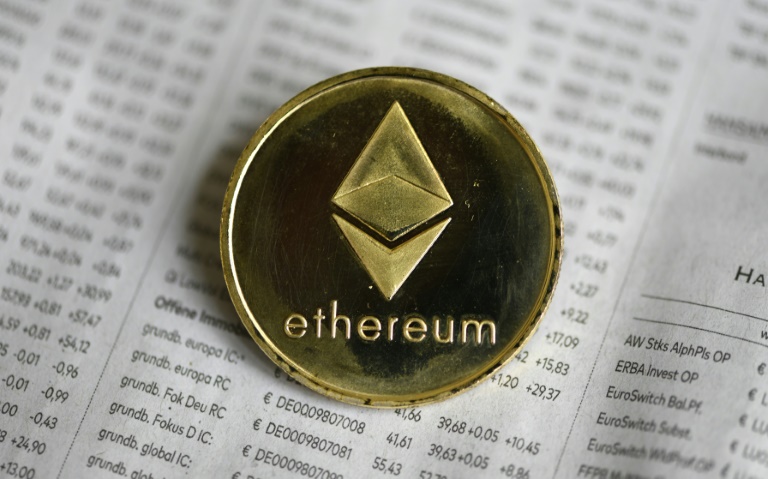
Senior figures in the crypto world said on Thursday that one of the biggest software upgrades the sector has ever seen was completed, an overhaul of the Ethereum blockchain aimed at reducing its massive energy consumption.

Developers had spent years working on a more energy-efficient version of Ethereum, a digital ledger that underpins a multibillion dollar ecosystem of cryptocurrencies, digital tokens (NFTs), games and apps.

“And we finalized!” tweeted Ethereum’s co-creator Vitalik Buterin, calling it a “big moment for the Ethereum ecosystem”.

Ethereum is the second most important blockchain after bitcoin, but it has faced criticism for burning through more power each year than New Zealand.

Buterin quoted research claiming that the “merge”, as developers have called the software upgrade, would reduce global energy consumption by 0.2 percent.

Enthusiasts hope a more energy efficient Ethereum will spur wider adoption, particularly as a way of enabling banks to automate transactions and other processes.

But so far the technology has been used largely to create speculative financial products.

And critics remain sceptical of the claims of massive energy savings, pointing out that it is unclear much energy the new system will need.

– Trading resumes –

The switchover changes the way transactions are logged on the Ethereum blockchain.

From the start of Ethereum in 2015, so-called crypto miners have competed against each other to solve equations — a system known as “proof of work”.

The process required vast computing power and only the winner would be chosen to update the blockchain and get rewards. 

The new system scraps the competition element, the miners and their energy-guzzling computer stacks.

Instead, “validators” will now be chosen in a lottery-style system.

Rather than solving an equation, they put up 32 ether (worth $55,000) — Ethereum’s cryptocurrency — and wait to be chosen in a system known as “proof of stake”.

Blockchain company Consensys called it a “monumental technological milestone” and the biggest update to Ethereum since it was launched.

The world’s biggest crypto exchange, Binance, had stopped trading ether during the merge process.

“The Ethereum Merge is complete,” the firm tweeted on Thursday morning, saying it was resuming trading in ether. 

The upgrade is likely to face a rocky beginning as crypto mining companies have already promised to keep running the old mechanism on a smaller blockchain “forked” from the main Ethereum chain.

And even if the “merge” is successful, Ethereum will still face major hurdles before it can be more widely adopted.

For example, it is expensive to use and the update will not reduce fees.

And the wider crypto sector is still beset by wildly fluctuating prices, security flaws and scams.

Asian stocks edge higher, with all eyes on Fed rate path

Asian stocks mostly edged higher on Thursday, tracking gains on Wall Street as markets adjusted following a rout this week on higher-than-expected US inflation data.

The data showed US yearly inflation slowing less than expected and monthly inflation rising, stoking fears that the US Federal Reserve would continue its aggressive tightening of monetary policy.

On Thursday, bourses in Tokyo, Hong Kong, Taipei, Singapore, Kuala Lumpur and Jakarta made cautious gains.

Markets in Shanghai and Seoul, however, were down at the close.

European stock markets rebounded somewhat at the open on Thursday.

Analysts said markets were bouncing back from the steep losses that followed the inflation data, and traders were pricing in an expected 75 basis-point interest rate hike by the Fed at a meeting next week.

The release of US producer price data also affected market sentiment, showing costs dropping for the second straight month, mainly driven by falling US fuel prices.

“Stock markets have stabilised a little after Tuesday’s rout which saw risk assets pummelled across the board,” said Craig Erlam, senior market analyst at OANDA.

Tokyo — the previous day’s biggest loser in Asia — closed up by 0.2 percent, but investors there remained wary of the speed and degree of future US rate hikes, analysts said.

In Hong Kong, stocks closed 0.4 percent higher on Thursday. 

On Wednesday, Wall Street stocks rose as investors prepared for next week’s Fed decision, with the Dow rising 0.1 percent and the S&P 500 gaining 0.3 percent.

Any US interest rate hike tends to strengthen the dollar, and Asian currencies remain at risk from the strong greenback.

On Thursday, the Australian dollar traded near a two-year low, with the yen at near 143 to the US dollar.

A day earlier, Japan’s central bank conducted a “rate check” operation on the yen, a move seen as a precursor to possible intervention, and which served to bring the currency back from the 145 level that is widely seen as a threshold by the market.

– ‘Front-running’ predictions –

Global consumer prices have soared for months, exacerbated by Russia’s invasion of Ukraine — which has hiked energy and food costs — and because of supply chain strains and Covid lockdowns in China.

Analysts say markets have been trying to “front-run” predictions of when inflation will peak.

“There appears to have been a tendency in recent months to front-run certain releases in the hope that it’s going to prove to be the ‘pivot’ moment when everything starts to look up, central banks can ease off the brake and risk assets will have bottomed,” said OANDA’s Erlam.

All eyes are now firmly on the Fed’s meeting next week, where another 75 basis-point rise is widely expected, after two consecutive increases of the same size.

Following the US inflation data, however, some analysts said it could rise by a full percentage point.

Aggressive interest rate tightening by central banks is slowing down major economies, as authorities attempt to stop them from overheating and tame sharp price rises.

On Wednesday, UK inflation slowed to 9.9 percent in August, but remained close to 40-year highs.

The Bank of England is expected to institute another rate hike next week.

“(The UK inflation figure is) not exactly cause for celebration, nor is it likely the peak, but you have to take your wins where you can these days,” said Erlam.

“The data also won’t in all likelihood change the outcome of the BoE meeting next week, with 75 basis points now heavily backed but 50 also possible.”

– Key figures at around 0800 GMT –

Tokyo – Nikkei 225: UP 0.2 percent at 27,875.91 (close) 

Hong Kong – Hang Seng Index: UP 0.4 percent at 18,930.38 (close)

Shanghai – Composite: DOWN 1.2 percent at 3,199.92 (close)

EURO STOXX 50: UP 0.41 percent at 3,582.12

London – FTSE 100: UP 0.7 percent at 7,324.97

Frankfurt – DAX: UP 0.5 percent at 13,092.77

Paris – CAC 40: UP 0.3 percent at 6,237.99

New York – Dow: UP 0.1 percent to 31,135.09 points (close)

Euro/dollar: UP at $0.9976 from $0.9972 

Pound/dollar: DOWN at $1.1521 from $1.1532  

Euro/pound: UP at 86.59 pence from 86.46 pence

Dollar/yen: UP at 143.58 yen from 142.20 yen 

Brent North Sea crude: UP 0.5 percent at $94.52 per barrel

West Texas Intermediate: UP 0.5 percent at $88.96 per barrel

Close Bitnami banner
Bitnami