World

Tears as British public pays respects to queen's coffin

Thousands queued overnight into Thursday to pay their last solemn respects to Queen Elizabeth II, with some choking back tears after seeing her coffin lying in state in London.

Britain’s longest-serving monarch, who died a week ago aged 96 after 70 years on the throne, is at rest in the capital’s Westminster Hall ahead of Monday’s state funeral at Westminster Abbey.

After waiting for more than 48 hours, the first public mourners were allowed into the vast mediaeval hall on Wednesday after the coffin left Buckingham Palace for the last time, in a ceremonial procession witnessed by tens of thousands.

Thursday marks the first full day of Queen Elizabeth II’s lying-in-state — a last chance to say farewell to a much-loved monarch admired around the world for her steadfast sense of duty.

“Nation’s turn to say farewell,” the Daily Telegraph headlined on its front page, above an image of the coffin shortly after it had arrived inside the centuries-old hall in the UK parliamentary complex.

All Britain’s national newspapers carried similar images on their covers.

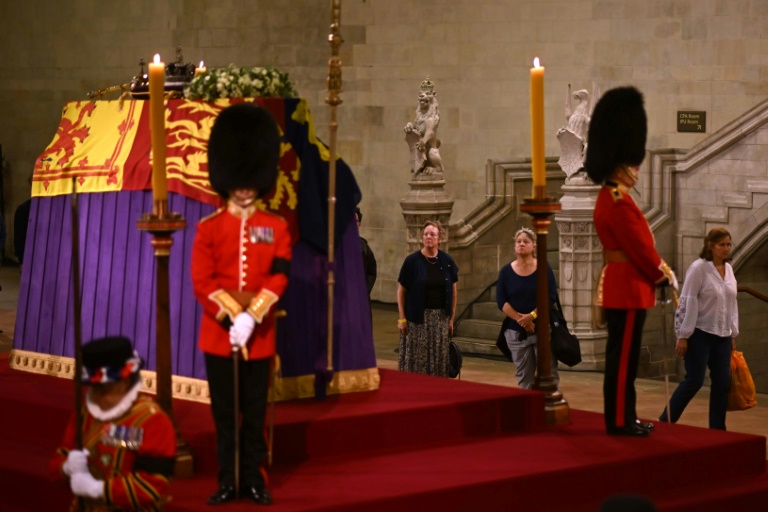
The queen’s casket, draped in the Royal Standard flag and bearing the Imperial State Crown plus the Orb and Sceptre, was raised high on a platform, with tall, flickering candles at each corner.

The coffin was being guarded by soldiers in ceremonial uniform, in a constant vigil.

One guard fainted off the podium overnight, in a sign of the toll standing vigil can take.

– ‘At peace’ –

In sombre scenes, many people stopped and bowed or curtsied towards the coffin. Others crossed themselves, or removed their hats.

Some prayed towards the casket or wiped away tears with tissues. Others brought their infants in pushchairs. Old soldiers stopped and gave one last salute to their former commander-in-chief.

Accountant Sue Harvey, 50, was among those in tears after filing past the coffin.

“Inside it was really quiet, really calm, and incredibly emotional. A lot of people were in tears but there was a total silence. It was just so respectful,” she told AFP.

“I wanted to make sure I did see her no matter how long the queue was going to be, because I never met her when she was alive.”

Vickie Wicks, 36, a clinical paramedic specialist who took the day off work, was also in tears after leaving the hall.

“The guards were watching her one last time at the four corners of the coffin. It was beautiful,” she said. “She was at peace.”

Nina, a 40-year-old performer, wanted to say thank you for Elizabeth’s life of unswerving service to the nation.

“In this place, you can’t escape the magnitude of who she was. I got really emotional — and I was not the only one,” she said.

As dawn broke Thursday, the queue snaked back around two miles (3.2 kilometres) along the south bank of the Thames river, with mourners set to wait for many hours to see the late sovereign.

Organisers have prepared up to 10 miles of queuing infrastructure, with expectations hundreds of thousands will want to file past the coffin.

– ‘What we do’ –

The coffin had been taken to Westminster Hall from Buckingham Palace earlier Wednesday.

To the strains of a military band playing funeral marches, King Charles III led the royal family in procession behind a horse-drawn gun carriage bearing the casket.

Charles — Elizabeth’s eldest son — his siblings, and his own sons, Princes William and Harry, walked at a carefully choreographed 75 steps a minute behind the gun carriage.

The sight of the new king’s two grief-stricken sons inevitably evoked memories of 1997, when the brothers — then aged just 15 and 12 — walked, heads bowed, behind the coffin of their mother, Diana, princess of Wales.

From the Elizabeth Tower at the Houses of Parliament, the Big Ben bell tolled out each minute as the casket passed in front of hushed crowds lining the route. 

– Royal visits –

The grand procession through the flag-lined heart of London represented the latest step in 11 days of national mourning that will culminate with the funeral.

On Thursday, William and wife Kate will travel to Sandringham, the royals’ private winter retreat in eastern England to view the floral tributes left by members of the public at the Norwich Gates.

Charles, 73, was created Prince of Wales by his mother in 1958 and on his first full day as monarch Friday bestowed the title on his eldest son. 

The historic title is given to the heir apparent to the throne.

Thursday’s visit will be the first official engagement conducted by the new Prince and Princess of Wales.

Meanwhile Elizabeth’s youngest son Prince Edward, 58, and his wife Sophie, were to visit Manchester in northwest England to view the civic book of condolence at the city’s central library.

They were also to view the floral tributes in St Ann’s Square and meet members of the public who are volunteering at the site, and light a candle in memory of Queen Elizabeth at Manchester Cathedral.

The late monarch’s funeral will see hundreds of world leaders and global royalty pack the historic Westminster Abbey in the heart of the British capital.

US President Joe Biden has confirmed he will attend, as will French President Emmanuel Macron and Japan’s Emperor Naruhito.
South Korea arrests woman over dead children in suitcases in New Zealand

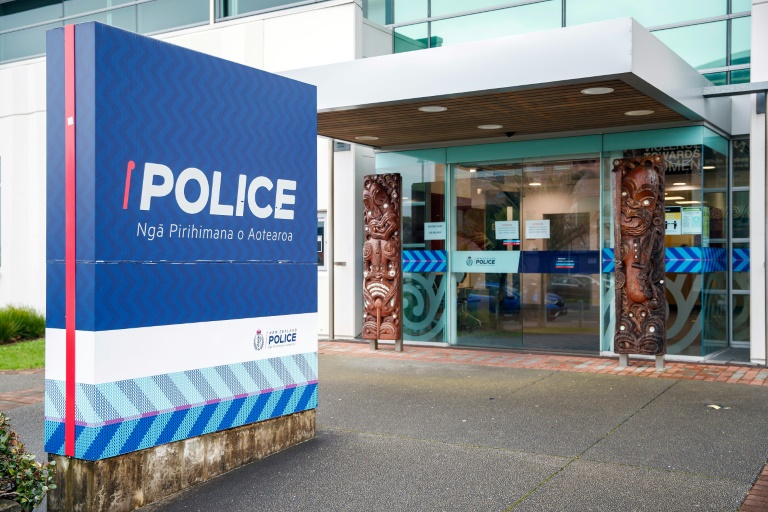
South Korean police said Thursday they have arrested a woman accused of murdering her two children, whose remains were found in suitcases in New Zealand last month.

The 42-year-old — reportedly a South Korean-born New Zealand national — was arrested in the southeastern city of Ulsan and will be transferred to the capital Seoul to face extradition proceedings, police said.

“Police arrested the suspect at an apartment in Ulsan on Thursday following a stakeout with tips on her whereabouts and CCTV footage,” South Korea’s National Police Agency said in a statement.

“The suspect is accused by the New Zealand police of having murdered her two children — aged seven and 10 at the time — in around 2018 in the Auckland area.”

“She’s been found to have arrived in South Korea after the crime and has been in hiding ever since,” it added.

Images in local media showed the woman, who has not been identified by police in South Korea or New Zealand, being led out of the Ulsan police station by plainclothed investigators, covering her head with a large brown coat.

The woman, who was wearing ripped jeans and sandals, was asked by local media whether she would confess to the killings.

“I didn’t do it,” the woman said repeatedly, as she was led away and put into a police vehicle.

South Korea’s Yonhap News Agency said the woman is a South Korean-born New Zealand citizen.

It added that she started living in an acquaintance’s apartment in Ulsan this year, having earlier stayed in Seoul.

“Police plan to transfer the woman to the Seoul Central District Prosecutors Office in preparation for an extradition screening by the Seoul High Court,” Yonhap said.

– Grisly discovery –

The remains of the two children were discovered in August after an unsuspecting family bought a trailer-load of items — including the suitcases — at an auction for abandoned goods near Auckland, New Zealand’s biggest city.

New Zealand police have said the bodies were likely to have been in storage for several years, which has complicated the investigation.

Authorities have repeatedly stressed that the family who found the bodies were not connected to the homicide, and were being given support to help deal with the trauma.

Detective Inspector Tofilau Fa’amanuia Vaaelua in Auckland said Thursday that the case was “a very challenging investigation”. 

“To have someone in custody overseas within such a short period of time has all been down to the assistance of the Korean authorities and the coordination by our New Zealand Police Interpol staff,” the detective said.

Malaysian firm makes surprise bid for Macau gaming licence

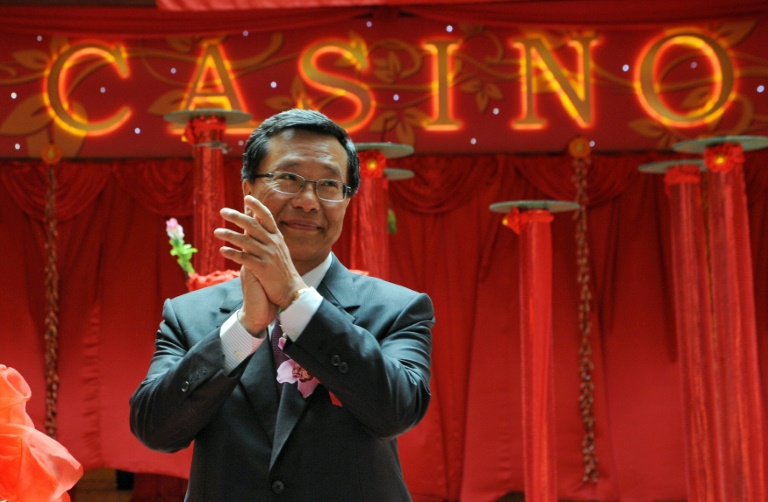
A company controlled by Malaysian tycoon and Genting chairman Lim Kok Thay has put in a bid for a casino licence in Macau, a surprise challenge to the decades-long oligopoly of the six incumbent operators.

The former Portuguese colony is the only territory in China where casinos are allowed, and issues just six operating concessions for a multibillion-dollar industry that, until the pandemic, was bigger than Las Vegas.

Licences for the current operators — including MGM China, Sands China and Galaxy Entertainment Group — will expire at the end of the year, and they face plummeting revenues and heightened regulatory scrutiny from Beijing.

The six operators all submitted bids by Wednesday to renew their licences but the spotlight was stolen by newcomer GMM.

A GMM representative told reporters that the bid was submitted on behalf of leisure and entertainment firm Genting, according to Macao Daily.

Best known for its resort in the Malaysian highlands, Genting also operates in Las Vegas and Singapore and backed a ski resort in China that hosted this year’s Winter Olympics.

Shares in Macau casino operators fell two percent in Thursday morning trading in Hong Kong, according to Bloomberg Intelligence.

Macau’s gaming sector has been battered by pandemic-era restrictions that drove away the mainland Chinese gamblers who make up the vast majority of customers. 

Gross gaming revenue was down 98 percent from pre-pandemic levels and fell to a record low in July, officials earlier announced.

Chinese President Xi Jinping has spearheaded an anti-corruption campaign that has seen increased scrutiny of the high-rollers and officials who travel to gamble in Macau, where cases of money laundering are common.

For decades, Macau’s gaming industry was run as a monopoly by casino magnate Stanley Ho, but in 2002 more operators were brought in and issued 20-year concessions as part of a liberalisation effort. 

In January, authorities slashed the concession period of gaming licences from 20 years to 10 and unveiled regulations seeking to increase local ownership and government supervision. 

GMM’s bid adds an element of uncertainty to the sector, which had been dominated by the same big players for decades.

In a research note, JPMorgan Chase analysts argued it was “unlikely” for Macau to prefer a new foreign operator over incumbents who have a track record in investment and local employment.

In January, Genting’s Hong Kong cruise ship operator filed for liquidation after its shipyard in Germany went bankrupt.

Provenance probe of Nazi era trove goes on display in Bern

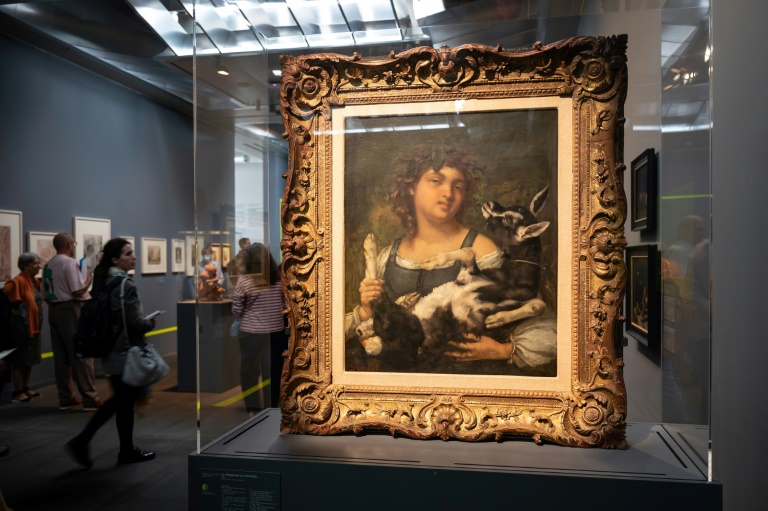
When a Bern museum inherited a spectacular collection of some 1,600 artworks, including by masters like Monet, Gauguin and Picasso, it spent seven months mulling whether to accept the offer.

The collection left to the Kunstmuseum in 2014 by Cornelius Gurlitt, whose father Hildebrand Gurlitt had worked as an art dealer for the Nazis, included works looted from Jewish owners during World War II.

A new exhibit, “Taking stock. Gurlitt in Review”, explores the museum’s journey researching the pieces’ provenance and the challenges of determining its obligations in the face of the tumultuous Gurlitt legacy.

The exhibit, which will run from Friday through mid-January, comes after the museum last year agreed how to handle works whose provenance remained undetermined.

It gave up 38 works known or suspected to be looted by the Nazis, but decided to hold onto 1,091 pieces where provenance information was incomplete but gave no indication of looting.

Some slammed that decision as immoral, but the museum hit back, stressing the “big responsibility” it took on when it accepted the Gurlitt bequest.

“We developed categories to be able to make a reasonable decision” based on the provenance and any possible indications of looting, Marcel Brulhart, the museum board member and legal expert, said during a presentation of the exhibit.

“I think we have found a fair solution.”

– ‘Illusion’ –

Living in a cluttered Munich apartment surrounded by paintings by the likes of Chagall and Matisse, Cornelius Gurlitt suddenly found himself in the spotlight after German tax authorities discovered part of his collection in 2012.

Before he died in 2014 at the age of 81, the man described by media as an eccentric recluse struck an agreement with the German government that any plundered works would be returned to their rightful owners.

The Bern museum, which he named as his sole heir, said it would honour that wish, and set about trying to determine each piece’s provenance.

Some of the works were determined to have been seized from Jews by the Nazis and sold on, confiscated as “degenerate” works, or sold by their fleeing Jewish owners at a low price.

“It is an illusion to think that we will ever have full insight” into the artworks’ provenance, Brulhart told AFP.

“History moves forward, and many documents have been destroyed.”

He stressed that Hildebrand Gurlitt had collected art his entire life, but only worked for the Third Reich “for a very limited period”.

Brulhart said, in his opinion, the Gurlitt affair marked a real “turning point” by showing it is possible to find fair solutions even in cases where insight into a piece’s provenance is incomplete.

– ‘Total transparency’ –

Museum director Nina Zimmer said they had aimed from the start for “total transparency” with the unique international provenance research project.

It had endeavoured to reevaluate prior expertise when new information surfaced and had sought fair solutions with any possible rights-holders, even in cases where the provenance was not fully established, she said.

So far, 11 works have been restituted, including a long-lost Matisse painting “Seated Woman”, which was returned to the family of the late art dealer Paul Rosenberg in 2015.

Nearly 30 works are still disputed, Brulhart said.

The current exhibit is the third at the Bern museum focused on the Gurlitt collection, after ones in 2017 and 2018.

It explores in detail the ethical guidelines, legal framework and results of the research project into the Gurlitt trove, curator Nikola Doll told AFP.

Through 14 individual thematic spaces, it presents around 350 pieces, including historical documents linked to the fraught bequest from national archives in Germany, France and Switzerland.

Artworks on display from the collection include those by masters like Cezanne, Kandinsky, Munch and Rodin.

Transylvanian village shines under new British king's patronage

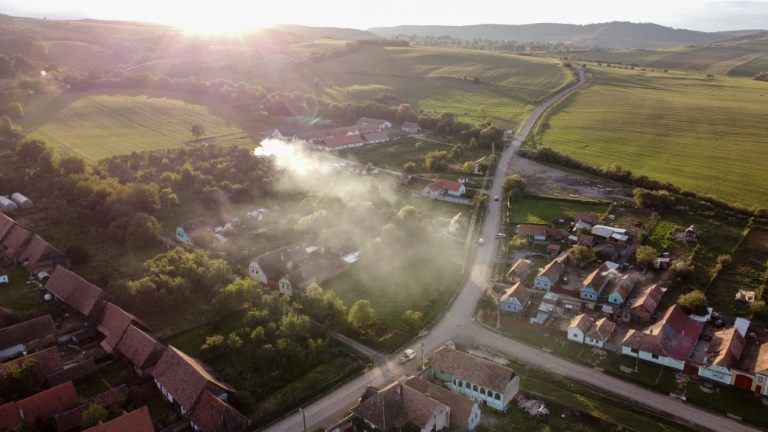
The Romanian village of Viscri, in the picturesque region of Transylvania, won the heart of the then prince Charles when he first visited in 1998.

Enchanted by its dirt streets, horse-drawn carriages and brightly coloured houses nestled in green hills, the environmentalist and nature lover became a regular visitor.

In 2006, he even bought his first house there: a bright blue building known to all the locals. 

What was initially an occasional princely residence has since been transformed into a museum dedicated to botany, another of the new king’s passions.

“His Majesty the King has not stayed here for a few years, but he has left many traces,” Caroline Fernolend, president of the Mihai Eminescu Trust, told AFP.

Under Charles’s sponsorship, the foundation has renovated several properties in Transylvania with traditional methods and materials to preserve the heritage.

“He also financed an ecological wastewater treatment plant based on reeds and a new water drainage system for the village, without advertising it,” she said.

Every year, tens of thousands of tourists discover the timeless atmosphere of Viscri.

Guest houses have sprouted up in response to its popularity — in contrast to the abandonment that characterises much of the Romanian countryside, one of the EU’s poorest members.

“Viscri was a forgotten village and now small houses are selling for over 40,000 euros ($40,000)!”, said retired sports teacher Ion Stoica, who cycles from his neighbouring village to Viscri every evening.

That sum is a small fortune in this region, he added.

– Royal stamp –

Not all residents of the hamlet, home to 400 people and dominated by a UNESCO-listed church, share Stoica’s enthusiasm.

Royal honours “did not bring prosperity” to Viscri’s inhabitants, says another resident, seated on a bench in the village.

Yet no one denies the restoration efforts undertaken under the leadership of Charles.

Charles claims descent from a 15th-century prince known as Vlad the Impaler, the historical inspiration for Bram Stoker’s “Count Dracula”. He has even said that Transylvania is “in my blood”.

“It’s such a beautiful region,” said Ana Maria Plopeanu, 35, whose grandparents are from Transylvania and who visited Viscri with her partner.

“Everything is so simple here, so calm… we understand why the prince fell in love” with the region.

But rather than staying at Viscri, in recent years Charles has stayed in Valea Zalanului, some 100 kilometres (60 miles) west.

There, his residence is hidden away at the end of an unpaved road, where a black veil is now affixed to the gate as a sign of mourning following the death last week of Charles’s mother, Queen Elizabeth II.

A sign prohibits access to the curious — not enough, however, to deter two British royalists, a mother and daughter, who said they had made the trip from London to get to know the places dear to their new king.

They will head back to London soon, just in time to attend the funeral of the late queen. 

Fuel prices jump in Kenya after subsidies cut

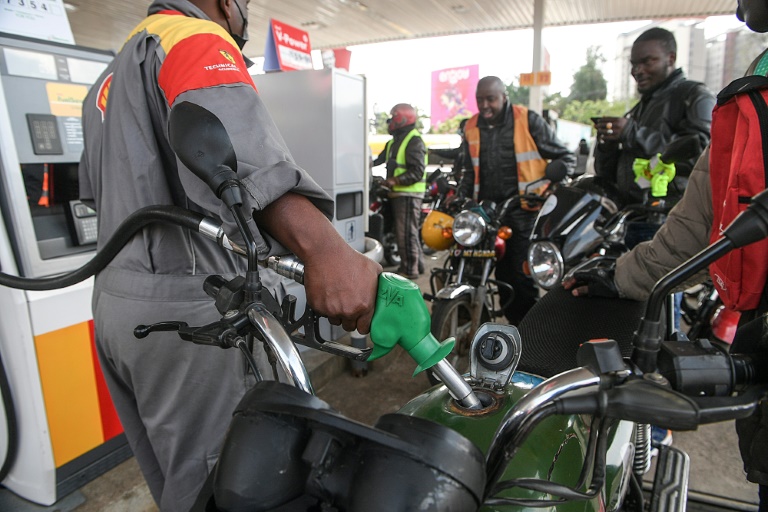
Fuel prices in Kenya surged to record highs on Thursday after the new government slashed subsidies, piling on misery for a population already facing deep economic hardship. 

The price of petrol increased by 20 shillings to 179.30 (about $1.50) per litre while diesel and kerosene prices are up by 20 and 25 shillings respectively, the Energy and Petroleum Regulatory Authority (EPRA) said. 

The new price regime that will remain in force until October 14 was announced shortly after Kenya’s new President William Ruto took office on Tuesday vowing to scrap food and fuel subsidies. 

“The interventions in place have not borne any fruit,” Ruto said in his inauguration speech. 

Kenya is reeling from the global surge in crude oil prices and last year introduced measures to cushion consumers from the high retail prices. 

It has so far spent 144 billion shillings ($1.2 billion) — about 86 percent of tourism earnings this year — to subside fuel, according to government figures. 

Ruto lambasted the policies of his predecessor Uhuru Kenyatta, saying they gobbled up billions of shillings with no impact.

“In addition to being very costly, consumption subsidy interventions are prone to abuse, they distort markets and create uncertainty, including artificial shortages of the very products being subsidised,” he said.

Under the new prices announced by EPRA, the subsidy for petrol has been removed while those for diesel and kerosene have been reduced. 

Kenya is the most dynamic economy in East Africa but many are suffering financial hardship with about a third of the population living in poverty. 

Prices for basic goods skyrocketed in the wake of Covid pandemic and the war in Ukraine, and unemployment remains a major problem, particularly among the young.

Inflation soared to a 65-month high of 8.5 percent in August, while the currency is at record lows at around 120 shillings to against the dollar.

There are fears the new fuel price increases could see public service providers hike fares and further add to cost of living pressures.

US Senate takes first step to direct military aid to Taiwan

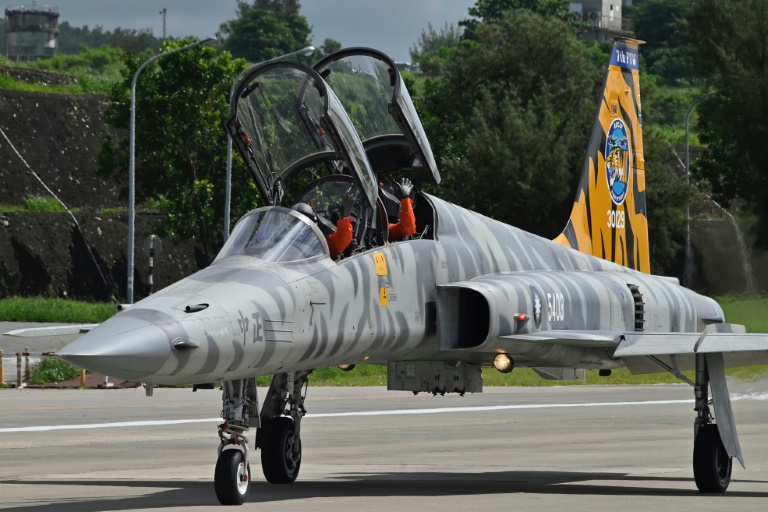
A Senate committee took the first step Wednesday toward the United States directly providing billions of dollars in military aid to Taiwan and making ties more official, ramping up support following soaring tensions with Beijing.

The United States for decades has sold weapons to Taiwan but the new legislation will go further by providing US security assistance of $4.5 billion over four years, a step sure to infuriate Beijing. 

It also lays out sanctions on China if it uses force to try to seize the island.

With support from both parties, the Senate Foreign Relations Committee approved the Taiwan Policy Act, billed as the most sweeping upgrade of the relationship since the United States switched recognition from Taipei to Beijing in 1979.

Lawmakers moved ahead on the act amid heightened worries for Taiwan after Russia invaded Ukraine and following a visit to Taipei by House Speaker Nancy Pelosi, which prompted China to stage major military exercises seen as a trial run for an invasion. 

Senator Bob Menendez, a member of Biden’s Democratic Party who leads the committee, said that the United States “does not seek war or heightened tensions with Beijing” but needed to be “clear-eyed.”

“We are carefully and strategically lowering the existential threats facing Taiwan by raising the cost of taking the island by force so that it becomes too high a risk and unachievable,” Menendez said.

Senator Jim Risch, the top Republican on the committee, said it was “imperative we take action now to bolster Taiwan’s self-defense before it’s too late.”

The bill still must clear the full Senate and House. The White House has not said whether President Joe Biden will sign the bill, although the strong support it has may mean Congress could override any potential veto.

The office of Taiwan’s President Tsai Ing-wen on Thursday said it expressed “sincere gratitude” to the United States “for once again demonstrating its bipartisan friendship and support for Taiwan.”

– Less ambiguous relationship –

Under the act the United States still will not diplomatically recognize Taiwan. 

China considers the island — where the mainland’s defeated nationalists fled in 1949 — to be its territory and strongly opposes any international legitimacy for Taipei, which has transformed into a vibrant democracy and major economic power. 

But the new law would shed many of the runarounds and codewords that have been in place so as not to anger China by implying recognition. 

The de facto embassy — now officially the Taipei Economic and Cultural Representative Office — would be renamed the Taiwan Representative Office and the US government would be instructed to interact with Taiwan as it would with any government. 

The top US envoy in Taipei, now called the director of the American Institute in Taiwan, would be renamed the “representative” of the office and need confirmation by the Senate, as would a US ambassador. 

The act would also designate Taiwan a “major non-NATO ally,” a status for the closest US military partners outside of the trans-Atlantic alliance. 

And in a reflection of changing dynamics since the landmark 1979 Taiwan Relations Act, the bill says the United States will provide weapons “conducive to deterring acts of aggression” by China rather than simply “defensive” weapons. 

In addition to the $4.5 billion in funding to Taiwan, the act would authorize $2 billion in loan guarantees for Taiwan to buy US weapons. 

Biden earlier this year appeared to end decades of US ambiguity and said the United States would directly help Taiwan if it is attacked. 

But his aides later walked back his remarks and the White House quietly discouraged Pelosi from going ahead with her visit, fearing it would provoke President Xi Jinping ahead of a key Communist Party meeting. 

White House Press Secretary Karine Jean-Pierre said only that the Biden administration was in touch with lawmakers about the legislation. 

“We appreciate the strong bipartisan support for Taiwan and want to work with Congress to strengthen that,” she said.

Tutankhamun: Egyptians bid to reclaim their history

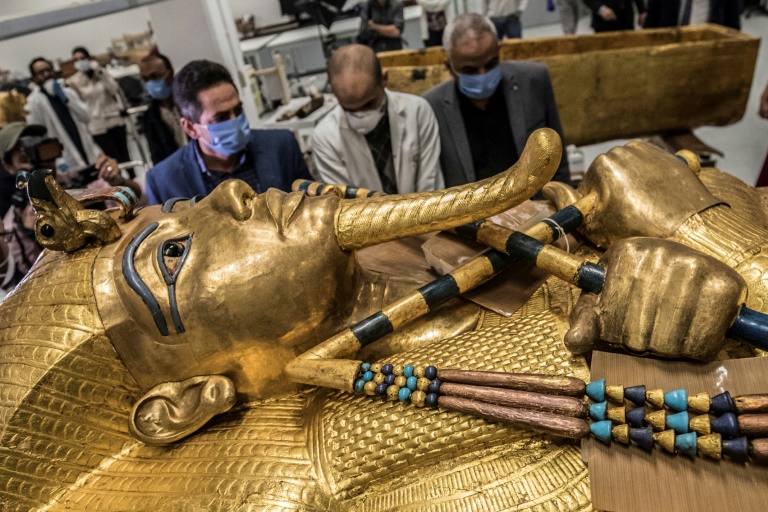
It’s one of the 20th century’s most iconic photos: British archaeologist Howard Carter inspecting the sarcophagus of Tutankhamun in 1922 as an Egyptian member of his team crouches nearby shrouded in shadow.

It is also an apt metaphor for two centuries of Egyptology, flush with tales of brilliant foreign explorers uncovering the secrets of the Pharaohs, with Egyptians relegated to the background.

“Egyptians have been written out of the historical narrative,” leading archaeologist Monica Hanna told AFP.

Now with the 100th anniversary of Carter’s earth-shattering discovery — and the 200th of the deciphering of the Rosetta Stone which unlocked the ancient hieroglyphs — they are demanding that their contributions be recognised.

Egyptians “did all the work” but “were forgotten”, said chief excavator Abdel Hamid Daramalli, who was born “on top” of the tombs at Qurna near Luxor that he is now in charge of digging.

Even Egyptology’s colonial-era birth — set neatly at Frenchman Jean-François Champollion cracking the Rosetta Stone’s code in 1822 — “whitewashes history”, according to specialist researcher Heba Abdel Gawad, “as if there were no attempts to understand Ancient Egypt until the Europeans came.”

The “unnamed Egyptian” in the famous picture of Carter is “perhaps Hussein Abu Awad or Hussein Ahmed Said,” according to art historian Christina Riggs, a Middle East specialist at Britain’s Durham University.

The two men were the pillars, alongside Ahmed Gerigar and Gad Hassan, of Carter’s digging team for nine seasons. But unlike foreign team members, experts cannot put names to the faces in the photos.

– ‘Unnoticed and unnamed’ –

“Egyptians remain unnoticed, unnamed, and virtually unseen in their history,” Riggs insisted, arguing that Egyptology’s “structural inequities” reverberate to this day.

But one Egyptian name did gain fame as the tomb’s supposed accidental discoverer: Hussein Abdel Rasoul.

Despite not appearing in Carter’s diaries and journals, the tale of the water boy is presented as “historical fact”, said Riggs.

On November 4, 1922, a 12-year-old -– commonly believed to be Hussein -– found the top step down to the tomb, supposedly because he either tripped, his donkey stumbled or because his water jug washed away the sand. 

The next day, Carter’s team exposed the whole staircase and on November 26 he peered into a room filled with golden treasures through a small breach in the tomb door.

According to an oft-repeated story, a half century earlier two of Hussein’s ancestors, brothers Ahmed and Mohamed Abdel Rasoul, found the Deir el-Bahari cache of more than 50 mummies, including Ramesses the Great, when their goat fell down a crevasse. 

But Hussein’s great-nephew Sayed Abdel Rasoul laughed at the idea that a goat or boy with a water jug were behind the breakthroughs.

Riggs echoed his scepticism, arguing that on the rare occasions that Egyptology credits Egyptians with great discoveries they are disproportionately either children, tomb robbers or “quadrupeds”.

The problem is that others “kept a record, we didn’t”, Abdel Rasoul told AFP.

– ‘They were wronged’ –

Local farmers who knew the contours of the land could “tell from the layers of sediment whether there was something there,” said Egyptologist Abdel Gawad, adding that “archaeology is mostly about geography”.

Profound knowledge and skill at excavating had been passed down for generations in Qurna — where the Abdel Rasouls remain — and at Qift, a small town north of Luxor where English archaeologist William Flinders Petrie first trained locals in the 1880s.

Mostafa Abdo Sadek, a chief excavator of the Saqqara tombs near Giza, whose discoveries have been celebrated in the Netflix documentary series “Secrets of the Saqqara Tomb”, is a descendant of those diggers at Qift.

His family moved 600 kilometres (370 miles) north at the turn of the 20th century to excavate the vast necropolis south of the Giza pyramids.

But his grandfathers and great-uncles “were wronged”, he declared, holding up their photos.

Their contributions to a century of discoveries at Saqqara have gone largely undocumented.

– ‘Children of Tutankhamun’ –

Barred for decades from even studying Egyptology while the French controlled the country’s antiquities service, Egyptians “were always serving foreigners”, archaeologist and former antiquities minister Zahi Hawass told AFP.

Another Egyptologist, Fatma Keshk, said we have to remember “the historical and social context of the time, with Egypt under British occupation.”

The struggle over the country’s cultural heritage became increasingly political in the early 20th century as Egyptians demanded their freedom.

“We are the children of Tutankhamun,” the diva Mounira al-Mahdiyya sang in 1922, the year the boy pharaoh’s intact tomb was found.

The same year Britain was forced to grant Egypt independence, and the hated partage system that gave foreign missions half the finds in exchange for funding excavations was ended.

But just as Egyptians’ “sense of ownership” of their heritage grew, ancient Egypt was appropriated as “world civilisation” with little to do with the modern country, argued Abdel Gawad.

“Unfortunately that world seems to be the West. It’s their civilisation, not ours.”

While the contents of Tutankhamun’s tomb stayed in Cairo, Egypt lost Carter’s archives, which were considered his private property.

The records, key to academic research, were donated by his niece to the Griffith Institute for Egyptology at Britain’s Oxford University.

“They were still colonising us. They left the objects, but they took our ability to produce research,” Hanna added.

This year, the institute and Oxford’s Bodleian Library are staging an exhibition, “Tutankhamun: Excavating the Archive”, which they say sheds light on the “often overlooked Egyptian members of the archaeological team.”

– Excavators’ village razed –

In Qurna, 73-year-old Ahmed Abdel Rady still remembers finding a mummy’s head in a cavern of his family’s mud-brick house that was built into a tomb. 

His mother stored her onions and garlic in a red granite sarcophagus, but she burst into tears at the sight of the head, berating him that “this was a queen” who deserved respect.

For centuries, the people of Qurna lived among and excavated the ancient necropolis of Thebes, one of the pharaohs’ former capitals that dates back to 3100 BC.

Today, Abdel Rady’s village is no more than rubble between the tombs and temples, the twin Colossi of Memnon — built nearly 3,400 years ago — standing vigil over the living and the dead.

Four Qurnawis were shot dead in 1998 trying to stop the authorities bulldozing their homes in a relocation scheme. 

Some 10,000 people were eventually moved when almost an entire hillside of mud-brick homes was demolished despite protests from UNESCO.

In the now deserted moonscape, Ragab Tolba, 55, one of the last remaining residents, told AFP how his relatives and neighbours were moved to “inadequate” homes “in the desert”.

The Qurnawis’ dogged resistance was fired by their deep connection to the place and their ancestors, said the Qurna-born excavator Daramalli.

But the controversial celebrity archaeologist Hawass, then head of Egypt’s Supreme Council of Antiquities, said “it had to be done” to preserve the tombs.

Egyptologist Hanna, however, said the authorities were bent on turning Luxor into a sanitised “open-air museum… a Disneyfication of heritage”, and used old tropes about the Qurnawis being tomb raiders against them.

Sayed Abdel Rasoul’s nephew, Ahmed, hit back at what he called a double standard.

“The French and the English were all stealing,” he told AFP. 

“Who told the people of Qurna they could make money off of artefacts in the first place?”

– ‘Spoils of war’ –

Over the centuries, countless antiquities made their way out of Egypt.

Some, like the Luxor Obelisk in Paris and the Temple of Debod in Madrid, were gifts from the Egyptian government.

Others were lost to European museums through the colonial-era partage system.

But hundreds of thousands more were smuggled out of the country into “private collections all over the world,” according to Abdel Gawad.

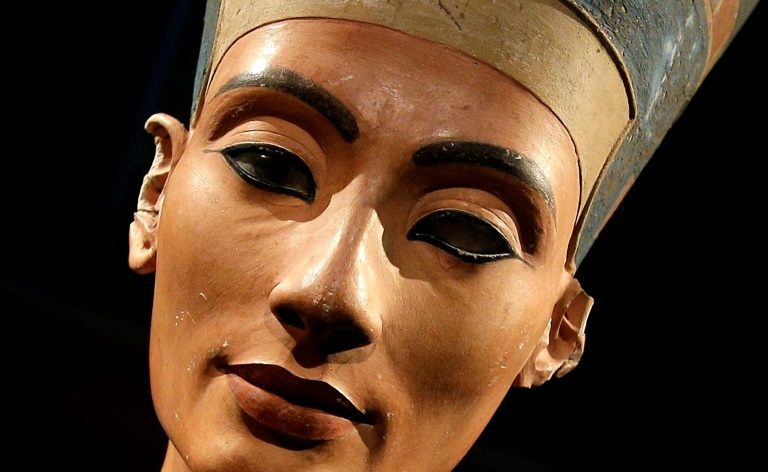
Former antiquities minister Hawass is now spearheading a crusade to repatriate three of the great “stolen” treasures — the Rosetta Stone, the bust of queen Nefertiti and the Dendera Zodiac.

He told AFP he plans to file a petition in October demanding their return.

The Rosetta Stone has been housed in the British Museum since 1802, “handed over to the British as a diplomatic gift”, the museum told AFP.

But for Abdel Gawad, “it’s a spoil of war”.

Nefertiti’s 3,340-year-old bust went to Berlin’s Neues Museum a century later through the partage system, but Hawass insisted it “was illegally taken, as I have proved time and again.”

The Frenchman Sebastien Louis Saulnier meanwhile had the Dendera Zodiac blasted out of the Hathor Temple in Qena in 1820.

The celestial map has hung from a ceiling in the Louvre in Paris since 1922, with a plaster cast left in its place in the southern Egyptian temple.

“That’s a crime the French committed in Egypt,” Hanna said, behaviour no longer “compatible with 21st century ethics.”

Lost treasures Egyptians want back

For decades, Egyptians have dreamed of bringing back some of the glories of their ancient civilisation scattered across museums and private collections across the world.

Now as Cairo gears up to open “the largest archaeological museum in the world” at the foot of the pyramids of Giza in November, Egypt’s former antiquities minister Zahi Hawass told AFP that he will soon demand the return of three of its greatest lost treasures:

– Rosetta Stone –

The basalt slab dating from 196 BC was the key that helped French linguist Jean-Francois Champollion crack the code of Egypt’s ancient hieroglyphs.

The stone was discovered by Napoleon Bonaparte’s invading French army in 1799 while troops were repairing a fort near the Nile Delta port of Rashid (or Rosetta), close to the Mediterranean.

It bore extracts of a decree written in Ancient Greek, an ancient Egyptian vernacular script called Demotic and hieroglyphics.

Comparing the three scripts finally helped resolve a mystery which had bedevilled historians for centuries.

Champollion announced his discovery on September 27, 1822. 

The stele has been housed in the British Museum since 1802, inscribed with the legend “Captured in Egypt by the British Army in 1801” on one side and “presented by King George III” to the museum on the other.

Egypt has been demanding its return for decades, with Egyptologist Heba Abdel Gawad saying the inscriptions alone were “an act of violence that no one talks about, and which the British Museum denies is destruction of an artefact.”

The museum told AFP that the stone was “handed over to the British as a diplomatic gift.”

– Nefertiti bust –

The bust of the wife of the Pharaoh Akhenaten, whose name meant “the beautiful one has come”, was sculpted around 1340 BC but was carted off to Germany in controversial circumstances by a Prussian archaeologist after it was found at Amarna in 1912.

The depiction of one of the most famous women of the ancient world was later given to the Neues Museum in Berlin.

Cairo demanded its restitution as early as the 1930s, but Germany has long held that it was handed over in a colonial-era partage agreement, under which countries that funded archaeological digs could keep half of the finds.

But for Hawass it “was illegally taken”.

Egyptologist Monica Hanna told AFP that Germany once agreed to give the bust back only for Adolf Hitler to block it after the Nazi leader fell under its spell.

No official requests for the treasures’ return have been received “from the Egyptian government”, according to the three European museums.

Egypt’s Supreme Council of Antiquities did not respond to AFP’s request for comment.

– Dendera Zodiac –

The celestial map was blasted out of the Hathor Temple in Qena in southern Egypt on the orders of French official Sebastien Louis Saulnier in 1820.

It has been suspended on a ceiling in the Louvre museum in Paris since 1922, while a plaster cast stands in its place in the temple.

The chart, regarded as “the only complete map that we have of an ancient sky”, is thought to date from around 50 BC.

Typhoon Muifa lashes eastern China, forcing 1.6 million from their homes

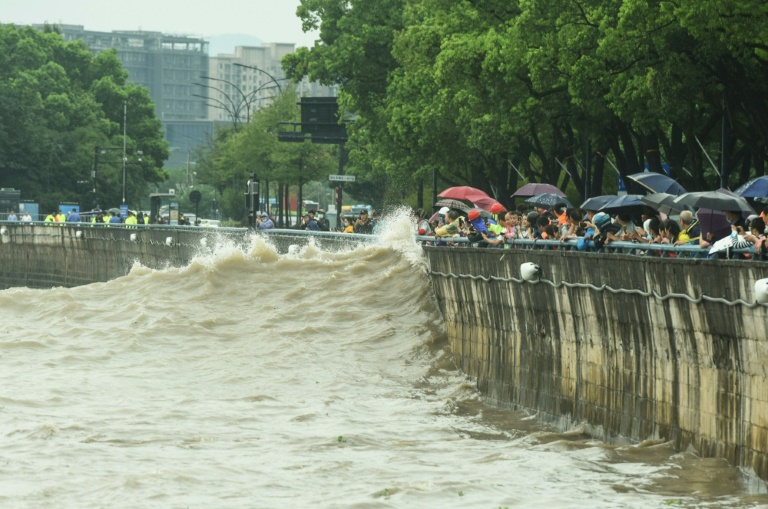
High winds and heavy rain lashed China’s densely populated east coast on Thursday, after Typhoon Muifa forced around 1.6 million people to leave their homes and grounded most flights at Shanghai’s main airports.

Muifa is the strongest tropical cyclone to hit Shanghai — home to more than 25 million people — since record-keeping began in 1949, state broadcaster CCTV said.

However, there were no immediate reports of any deaths or casualties.

At least 426,000 people were evacuated in Shanghai and another 1.2 million people were taken to temporary shelters in neighbouring Zhejiang province, CCTV added. 

Heavy rainfall led to traffic tailbacks and floods in several areas of the Yangtze river delta region, a major global manufacturing hub.

Giant waves were seen crashing onto the coastline in Hangzhou bay, to the south of Shanghai, and national radio reported a landslide in Ninghai County in Zhejiang province.

Packing winds of up to 125 kilometres (78 miles) per hour, the storm made landfall at 12:30 am Thursday (1630 GMT Wednesday) in Shanghai’s Fengxian district.

It had earlier led to the cancellation of all flights to China’s biggest financial hub.

Muifa previously hit the city of Zhoushan in Zhejiang on Wednesday, according to state news agency Xinhua.

Air travel slowly resumed in Shanghai as the storm moved north, but most flights from the city’s two main airports were cancelled Thursday morning, according to aviation data provider Flightradar24.

Operations at some of Asia’s largest container shipping ports in Shanghai and neighbouring Ningbo that were halted because of the typhoon were scheduled to resume later Thursday, according to statements from port officials. 

Officials ordered all fishing vessels in the Yellow Sea and Bohai Sea to anchor in ports as northeast China braced for the typhoon.

The storm entered east China’s Jiangsu province on Thursday morning and the wind speed weakened to about 90 kilometres (56 miles) per hour, the Central Meteorological Observatory said.

The storm came soon after Typhoon Hinnamnoor hit Shanghai and its neighbouring region last week, causing the suspension of Shanghai ferry services and school closures in parts of Zhejiang.

Muifa is the 12th typhoon to hit China this year, according to state media.

Tropical storms, which are expected to increase as the planet warms, were sharply up in 2021, a report by the US National Oceanic and Atmospheric Administration said earlier this month.

Close Bitnami banner
Bitnami