World

How the tide turned on data centres in Europe

Every time we make a call on Zoom, upload a document to the cloud or stream a video, our computers connect to vast warehouses filled with servers to store or access data.

Not so long ago, European countries were falling over each other to welcome the firms that run these warehouses, known as data centres or bit barns.

Wide-eyed politicians trumpeted investments and dreamt of creating global tech hubs.

But then the dream went sour.

The sheer amount of energy and water needed to power and cool these server farms shocked the public.

The industry sucked up 14 percent of Ireland’s power last year, London warned home builders that power shortages caused by bit barns could affect new projects, and Amsterdam said it simply had no more room for the warehouses.

Then things got worse.

The war in Ukraine helped spark an energy crisis across the continent, leaving consumers facing rocketing bills and countries contemplating energy shortages.

“Data centres will be a target,” critical blogger Dwayne Monroe told AFP, saying the focus would only grow if Europe cannot fix its energy crisis.

Grassroots campaigns and local opposition have already helped to halt projects this year by Amazon in France, Google in Luxembourg and Meta in the Netherlands. 

The Irish government, while reaffirming support for the industry, put strict limits on new developments until 2028.

The data industry says it feels unfairly targeted, stressing its efforts to source green energy and arguing that outsourcing storage to bit barns has helped slash consumption.

– ‘Veil of shadow’ –

These arguments are playing out most spectacularly in Ireland.

Activists are campaigning on a broad range of topics and using local forums to push their case.

“They take up a huge amount of space but provide basically no employment,” says Madeleine Johansson, a Dublin councillor for the People Before Profit party, which is campaigning on the issue.

Johansson recently had a motion passed in her council area banning the centres, sparking an almighty row with the national government that is yet to be resolved.

Dylan Murphy of Not Here, Not Anywhere, one of several climate groups pushing the issue in Ireland, has filed a motion in his local council in Fingal calling for companies to reveal the kind of information they are holding.

“There’s a complete lack of transparency… about what data is actually being stored in these data centres,” he said, calling it a “veil of shadow”. 

The data industry says revealing that information would be impossible.

Michael McCarthy of Cloud Infrastructure Ireland, a lobby group, said activists had lost the argument on sustainability and were now throwing everything at the wall. 

“Data centres definitely are large energy users but they’re part of a cohort of larger energy users,” he said.

McCarthy and industry figures in other countries say the real problem is years of underinvestment in national energy infrastructure. 

He also pointed out that the industry in Europe had pledged to become carbon neutral by 2030.

And there are still countries hankering to get data firms to locate there — particularly Iceland and Norway.

– Questions over metaverse –

Against this backdrop, the tech industry continues to innovate new products that invariably require vast amounts of processing power and data storage.

Machine-learning tools, for example, are hugely energy hungry — Google said earlier this year they accounted for between 10 and 15 percent of its total energy usage.

The metaverse, an emerging concept for a 3D internet championed by Facebook owner Meta, would also be hugely energy intensive. 

Critical blogger Monroe reckons the metaverse will buckle under its own weight, partly because of its data requirements.  

“The construction of the metaverse would require Facebook to build out a distribution of data centres that would rival what Amazon, Microsoft and Google have done for their clouds,” he said.

AFP contacted Meta for a response.

As far as the carbon footprint of such innovation goes, energy experts interviewed by AFP said it would be difficult to assess.

The metaverse, for example, could help to reduce emissions in other areas by reducing the need for travel.

An energy official who did not want to be named questioned whether data centres were the best target for criticism when cryptocurrencies were so wasteful.

While data centres used about one percent of global energy output in 2020, cryptocurrency mining used about half that amount, according to the International Energy Agency.

McCarthy said those who opposed data centres needed to reckon with just how embedded they had become in everyday life, particularly since the pandemic.

“They facilitate how we can work and live online, that’s the reality of it,” he said.

How the tide turned on data centres in Europe

Every time we make a call on Zoom, upload a document to the cloud or stream a video, our computers connect to vast warehouses filled with servers to store or access data.

Not so long ago, European countries were falling over each other to welcome the firms that run these warehouses, known as data centres or bit barns.

Wide-eyed politicians trumpeted investments and dreamt of creating global tech hubs.

But then the dream went sour.

The sheer amount of energy and water needed to power and cool these server farms shocked the public.

The industry sucked up 14 percent of Ireland’s power last year, London warned home builders that power shortages caused by bit barns could affect new projects, and Amsterdam said it simply had no more room for the warehouses.

Then things got worse.

The war in Ukraine helped spark an energy crisis across the continent, leaving consumers facing rocketing bills and countries contemplating energy shortages.

“Data centres will be a target,” critical blogger Dwayne Monroe told AFP, saying the focus would only grow if Europe cannot fix its energy crisis.

Grassroots campaigns and local opposition have already helped to halt projects this year by Amazon in France, Google in Luxembourg and Meta in the Netherlands. 

The Irish government, while reaffirming support for the industry, put strict limits on new developments until 2028.

The data industry says it feels unfairly targeted, stressing its efforts to source green energy and arguing that outsourcing storage to bit barns has helped slash consumption.

– ‘Veil of shadow’ –

These arguments are playing out most spectacularly in Ireland.

Activists are campaigning on a broad range of topics and using local forums to push their case.

“They take up a huge amount of space but provide basically no employment,” says Madeleine Johansson, a Dublin councillor for the People Before Profit party, which is campaigning on the issue.

Johansson recently had a motion passed in her council area banning the centres, sparking an almighty row with the national government that is yet to be resolved.

Dylan Murphy of Not Here, Not Anywhere, one of several climate groups pushing the issue in Ireland, has filed a motion in his local council in Fingal calling for companies to reveal the kind of information they are holding.

“There’s a complete lack of transparency… about what data is actually being stored in these data centres,” he said, calling it a “veil of shadow”. 

The data industry says revealing that information would be impossible.

Michael McCarthy of Cloud Infrastructure Ireland, a lobby group, said activists had lost the argument on sustainability and were now throwing everything at the wall. 

“Data centres definitely are large energy users but they’re part of a cohort of larger energy users,” he said.

McCarthy and industry figures in other countries say the real problem is years of underinvestment in national energy infrastructure. 

He also pointed out that the industry in Europe had pledged to become carbon neutral by 2030.

And there are still countries hankering to get data firms to locate there — particularly Iceland and Norway.

– Questions over metaverse –

Against this backdrop, the tech industry continues to innovate new products that invariably require vast amounts of processing power and data storage.

Machine-learning tools, for example, are hugely energy hungry — Google said earlier this year they accounted for between 10 and 15 percent of its total energy usage.

The metaverse, an emerging concept for a 3D internet championed by Facebook owner Meta, would also be hugely energy intensive. 

Critical blogger Monroe reckons the metaverse will buckle under its own weight, partly because of its data requirements.  

“The construction of the metaverse would require Facebook to build out a distribution of data centres that would rival what Amazon, Microsoft and Google have done for their clouds,” he said.

AFP contacted Meta for a response.

As far as the carbon footprint of such innovation goes, energy experts interviewed by AFP said it would be difficult to assess.

The metaverse, for example, could help to reduce emissions in other areas by reducing the need for travel.

An energy official who did not want to be named questioned whether data centres were the best target for criticism when cryptocurrencies were so wasteful.

While data centres used about one percent of global energy output in 2020, cryptocurrency mining used about half that amount, according to the International Energy Agency.

McCarthy said those who opposed data centres needed to reckon with just how embedded they had become in everyday life, particularly since the pandemic.

“They facilitate how we can work and live online, that’s the reality of it,” he said.

Asian stocks slump at open, tracking US losses after inflation report

Asian markets opened lower on Wednesday, tracking losses in the United States and Europe after traders responded negatively to higher-than-expected US inflation data, raising fears of a prolonged period of interest rate hikes.

Tokyo, Hong Kong, Shanghai, Seoul, Taipei and Sydney all opened lower at the start of trading, reversing gains made in recent days due to positive market expectations from the US labour department’s consumer price index (CPI) report.

On Tuesday, US government data showed that the annual increase in CPI had slowed slightly in August to 8.3 percent, but that prices continued to rise month on month, increasing by 0.1 percent.

The news shook equity markets, where there had been widespread expectations of US year-on-year inflation being around eight percent, with a decrease in prices compared with July.

The US and other economies have been battling sky-high price increases for months, with US yearly inflation hitting a 40-year high of 9.1 percent in June.

Wall Street shares plunged following the news, with the Dow losing nearly 1,300 points and the S&P 500 falling 4.3 percent.

The news will have dashed hopes of a slowdown in the US Federal Reserve’s campaign of increasing interest rates to cool the overheating economy.

The Fed has already instituted two consecutive 75-basis-point hikes, and there are widespread expectations it will make a similarly sized increase at its meeting next week.

After Tuesday’s data, however, some investors are now predicting the next Fed hike could be by a full percentage point.

– ‘Scorching hot’ inflation –

Of concern to the Fed will be the fact that “core” US CPI, which excludes volatile food and energy prices, accelerated sharply, rising 6.3 percent on a year ago, higher than the 5.9 percent seen in July and June.

Despite the welcome relief from falling gasoline prices, food, housing and medical care costs continued to rise.

“Core inflation was scorching hot, coming in double expectations,” said senior market analyst Edward Moya at OANDA.

“The Fed will likely have to be even more aggressive with raising rates and that is bad news for risky assets.”

Noted investor Louis Navellier warned that persistently high interest rates to control inflation could lead to a US recession.

“Stocks are taking it very hard as forecasts are rising for Fed Funds to get higher and stay there longer resulting in a discount of future earnings multiples and increasing recession fears,” he said in a note.

The dollar, which had earlier this week fallen against its major rivals in anticipation of slowing inflation, surged in early Asian trade.

The euro dropped below parity with the US currency once again on Wednesday, hitting $0.9970.

The dollar’s rise is partly because the Fed has moved more aggressively with interest rate hikes than central banks in other major economies.

The European Central Bank raised its key rate by 75 basis points in September, with officials indicating a similarly sized increase could come at the next meeting in October.

Inflation has soared around the globe this year owing to extremely high energy and food bills.

This has been caused to a large extent by supply constraints after economies reopened from coronavirus pandemic lockdowns, and in the wake of Russia’s invasion of Ukraine.

– Key figures at around 0230 GMT –

Tokyo – Nikkei 225: DOWN 2.2 percent at 27,991.82 

Hong Kong – Hang Seng Index: DOWN 2.4 percent at 18,866.30

Shanghai – Composite: DOWN 0.7 percent at 3,239.90

New York – Dow: DOWN 3.9 percent at 31,104.97  (close)

London – FTSE 100: DOWN 1.2 percent at 7,385.86 (close)

Euro/dollar: UP at $0.9984 from $0.9974 

Pound/dollar: UP at $1.1506 from $1.1500  

Euro/pound: UP at 86.79 pence from 86.74 pence  

Dollar/yen: DOWN at 144.35 yen from 144.43 yen 

Brent North Sea crude: UP 0.1 percent at $93.30 a barrel

West Texas Intermediate: UP 0.2 percent at $87.48 per barrel

burs-aha/leg

Asian stocks slump at open, tracking US losses after inflation report

Asian markets opened lower on Wednesday, tracking losses in the United States and Europe after traders responded negatively to higher-than-expected US inflation data, raising fears of a prolonged period of interest rate hikes.

Tokyo, Hong Kong, Shanghai, Seoul, Taipei and Sydney all opened lower at the start of trading, reversing gains made in recent days due to positive market expectations from the US labour department’s consumer price index (CPI) report.

On Tuesday, US government data showed that the annual increase in CPI had slowed slightly in August to 8.3 percent, but that prices continued to rise month on month, increasing by 0.1 percent.

The news shook equity markets, where there had been widespread expectations of US year-on-year inflation being around eight percent, with a decrease in prices compared with July.

The US and other economies have been battling sky-high price increases for months, with US yearly inflation hitting a 40-year high of 9.1 percent in June.

Wall Street shares plunged following the news, with the Dow losing nearly 1,300 points and the S&P 500 falling 4.3 percent.

The news will have dashed hopes of a slowdown in the US Federal Reserve’s campaign of increasing interest rates to cool the overheating economy.

The Fed has already instituted two consecutive 75-basis-point hikes, and there are widespread expectations it will make a similarly sized increase at its meeting next week.

After Tuesday’s data, however, some investors are now predicting the next Fed hike could be by a full percentage point.

– ‘Scorching hot’ inflation –

Of concern to the Fed will be the fact that “core” US CPI, which excludes volatile food and energy prices, accelerated sharply, rising 6.3 percent on a year ago, higher than the 5.9 percent seen in July and June.

Despite the welcome relief from falling gasoline prices, food, housing and medical care costs continued to rise.

“Core inflation was scorching hot, coming in double expectations,” said senior market analyst Edward Moya at OANDA.

“The Fed will likely have to be even more aggressive with raising rates and that is bad news for risky assets.”

Noted investor Louis Navellier warned that persistently high interest rates to control inflation could lead to a US recession.

“Stocks are taking it very hard as forecasts are rising for Fed Funds to get higher and stay there longer resulting in a discount of future earnings multiples and increasing recession fears,” he said in a note.

The dollar, which had earlier this week fallen against its major rivals in anticipation of slowing inflation, surged in early Asian trade.

The euro dropped below parity with the US currency once again on Wednesday, hitting $0.9970.

The dollar’s rise is partly because the Fed has moved more aggressively with interest rate hikes than central banks in other major economies.

The European Central Bank raised its key rate by 75 basis points in September, with officials indicating a similarly sized increase could come at the next meeting in October.

Inflation has soared around the globe this year owing to extremely high energy and food bills.

This has been caused to a large extent by supply constraints after economies reopened from coronavirus pandemic lockdowns, and in the wake of Russia’s invasion of Ukraine.

– Key figures at around 0230 GMT –

Tokyo – Nikkei 225: DOWN 2.2 percent at 27,991.82 

Hong Kong – Hang Seng Index: DOWN 2.4 percent at 18,866.30

Shanghai – Composite: DOWN 0.7 percent at 3,239.90

New York – Dow: DOWN 3.9 percent at 31,104.97  (close)

London – FTSE 100: DOWN 1.2 percent at 7,385.86 (close)

Euro/dollar: UP at $0.9984 from $0.9974 

Pound/dollar: UP at $1.1506 from $1.1500  

Euro/pound: UP at 86.79 pence from 86.74 pence  

Dollar/yen: DOWN at 144.35 yen from 144.43 yen 

Brent North Sea crude: UP 0.1 percent at $93.30 a barrel

West Texas Intermediate: UP 0.2 percent at $87.48 per barrel

burs-aha/leg

EU court decides record antitrust fine against Google

The European Union’s second-highest court will rule Wednesday whether Brussels went too far in handing Google a 4.3-billion-euro fine over its Android operating system for mobile phones.

The decision by the Luxembourg-based General Court could undo or demand modifications to the landmark decision, taken by the European Commission in 2018, which remains the EU’s biggest-ever antitrust fine. 

Google urged a panel of EU judges last year to throw out the decision it argued was unfounded and falsely relied on accusations it imposed its search engine and Chrome browser on Android phones.

The company also said that the EU was unfairly blind to the strength of Apple, which imposes or gives clear preference to its own services such as Safari on iPhones.

Google insisted that downloading rival apps was only a click away and that customers were in no way tied to Google products on Android.

The EU and complainants responded that Google used contracts with phone makers in the early days of Android to stifle rivals.

This was done “at a critical time in the development of mobile computing, when the market was still contestable”, said Thomas Vinje, a lawyer representing FairSearch, whose original complaint launched the case in 2013.

The decision by the General Court is unlikely to be the end of the story. Both sides can turn to the EU’s highest court, the European Court of Justice, for a final say on the 4.3-billion-euro fine, which was the equivalent of $5 billion when levied.

– Global action –

The Android case was the third of three major cases brought against Google by the EU’s competition czar Margrethe Vestager, whose legal challenges were the first worldwide to directly take on the Silicon Valley giants.

Since then, global regulators have followed suit, with Google facing a barrage of cases in the US and Asia based on similar accusations.

Vestager has already won against Google in its appeal of a separate case, the company’s 2.4-billion-euro fine for abusing its search engine dominance. As expected, the tech giant appealed that setback to the high court.

The EU, however, has lost recent cases involving the microchip industry. 

Vestager’s team lost an appeal against a $1 billion fine imposed on Qualcomm in the same court in June. 

That followed another setback in January when the EU lost the court’s backing for a 1.06-billion-euro fine on Intel.

Frustrated at the length of time it takes to pursue competition cases, Brussels has since then adopted the Digital Markets Act (DMA), which puts a much tighter leash on the way Big Tech can do business. 

The new law, set to come into force next year, would set up a rulebook of do’s and don’ts for Big Tech companies such as Google and Facebook. 

The DMA includes specific bans or limits on Google, Apple and other gatekeepers from promoting their own services on platforms.

Energy crisis to dominate EU chief's annual speech

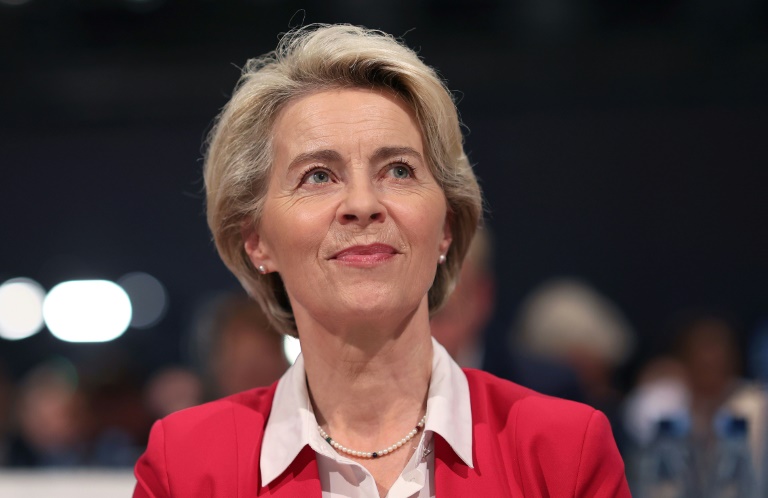
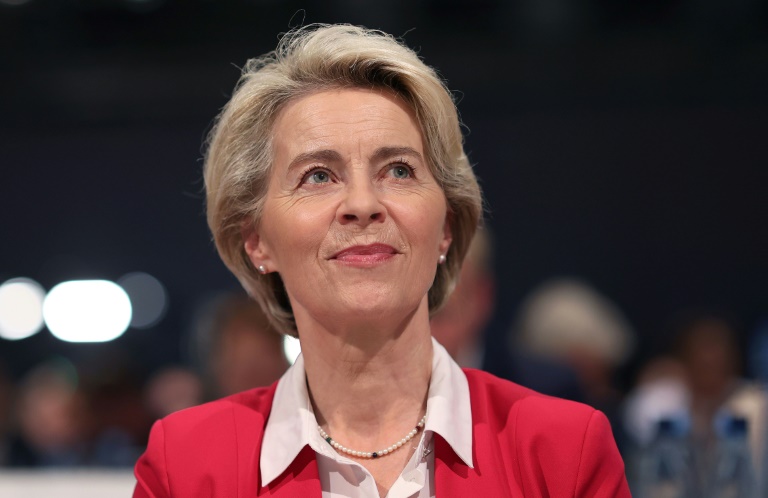
Europe’s fears of a long winter with scarce energy supplies because of Russia’s war in Ukraine are expected to top an annual speech by EU chief Ursula von der Leyen on Wednesday.

The “State of the European Union” address to the European Parliament is to focus on ways her European Commission can mitigate the looming crisis, which is being worsened by soaring inflation.

Among those listening to the speech will be Ukrainian First Lady Olena Zelenska, wife of President Volodymyr Zelensky, invited as von der Leyen’s guest of honour.

“The courage of the Ukrainian people has touched and inspired the world. Europe will stand with you every step of the way,” von der Leyen tweeted alongside photos of her and Zelenska in Strasbourg.

Energy measures mooted ahead of von der Leyen’s speech were a price cap on imported Russian gas, emergency compensation for consumers, a levy on non-gas electricity producers and an appeal for European households and businesses to cut back on power use.

Some of the responses — especially the idea of capping gas prices — have become bogged down by differences between EU member states, which will likely result in a less ambitious package than von der Leyen had sought.

EU countries are also wary of giving the commission too much power over their national energy policies, even though those have already been swept up in a bloc-wide push towards renewables as part of a carbon-neutral future.

European politicians accuse Moscow of trying to extort the EU over energy, as Russia tries to hit back at Western sanctions that pose long-term risks to its economy.

In the nearer term, however, Europe is feeling the pinch as it goes about unhitching itself from a long dependency on Russian fossil fuels.

Russian gas imports now account for around nine percent of total gas imports, down from around 40 percent before the Ukraine invasion and ensuing sanctions.

Russian President Vladimir Putin said a week ago it was “impossible” to isolate Moscow and vowed to cut gas and oil deliveries to countries imposing a price cap.

Russian giant Gazprom has shut the Nord Stream gas pipeline that supplies Germany, Europe’s export powerhouse.

Germany is “heading into a winter of recession”, the Ifo institute, a think tank, said this week.

EU energy commissioner Kadri Simson told MEPs on Tuesday: “There is no magic wand to bring prices back to the pre-war levels. But with a targeted emergency package we can ease the pressure on prices and help citizens looking forward.”

– Russian ‘blackmail’ –

Finnish Prime Minister Sanna Marin — whose country is joining NATO because of Russia’s invasion of Ukraine — said that Putin was trying to “blackmail” Europe.

She urged EU partners to stand up to Moscow and to stick together, including by imposing more sanctions.

She added: “The winter will be difficult. We see high energy prices already creating political division. Inflation will test many European societies, but we really have no choice but to stay united.”

The EU’s top diplomat, Josep Borrell, told MEPs that European consumers were “going to have to adjust heating habits” in the months ahead.

“If that is the price we have to pay in order to attain and achieve our energy independence then we’re doing so, we’re on the path to it,” he said.

To offset reduced gas supplies in winter, the EU has been stockpiling gas and has already filled its tanks to 82 percent capacity, exceeding a target originally set for October.

But in a sign of lingering unease, the Czech Republic, which holds the EU’s rotating presidency, on Tuesday announced it was convening an extraordinary meeting of the bloc’s energy ministers for September 30.

That meeting could also sign off on the proposals made by von der Leyen in her speech on Wednesday, some of which were to be negotiated further over the rest of this month.

Energy crisis to dominate EU chief's annual speech

Europe’s fears of a long winter with scarce energy supplies because of Russia’s war in Ukraine are expected to top an annual speech by EU chief Ursula von der Leyen on Wednesday.

The “State of the European Union” address to the European Parliament is to focus on ways her European Commission can mitigate the looming crisis, which is being worsened by soaring inflation.

Among those listening to the speech will be Ukrainian First Lady Olena Zelenska, wife of President Volodymyr Zelensky, invited as von der Leyen’s guest of honour.

“The courage of the Ukrainian people has touched and inspired the world. Europe will stand with you every step of the way,” von der Leyen tweeted alongside photos of her and Zelenska in Strasbourg.

Energy measures mooted ahead of von der Leyen’s speech were a price cap on imported Russian gas, emergency compensation for consumers, a levy on non-gas electricity producers and an appeal for European households and businesses to cut back on power use.

Some of the responses — especially the idea of capping gas prices — have become bogged down by differences between EU member states, which will likely result in a less ambitious package than von der Leyen had sought.

EU countries are also wary of giving the commission too much power over their national energy policies, even though those have already been swept up in a bloc-wide push towards renewables as part of a carbon-neutral future.

European politicians accuse Moscow of trying to extort the EU over energy, as Russia tries to hit back at Western sanctions that pose long-term risks to its economy.

In the nearer term, however, Europe is feeling the pinch as it goes about unhitching itself from a long dependency on Russian fossil fuels.

Russian gas imports now account for around nine percent of total gas imports, down from around 40 percent before the Ukraine invasion and ensuing sanctions.

Russian President Vladimir Putin said a week ago it was “impossible” to isolate Moscow and vowed to cut gas and oil deliveries to countries imposing a price cap.

Russian giant Gazprom has shut the Nord Stream gas pipeline that supplies Germany, Europe’s export powerhouse.

Germany is “heading into a winter of recession”, the Ifo institute, a think tank, said this week.

EU energy commissioner Kadri Simson told MEPs on Tuesday: “There is no magic wand to bring prices back to the pre-war levels. But with a targeted emergency package we can ease the pressure on prices and help citizens looking forward.”

– Russian ‘blackmail’ –

Finnish Prime Minister Sanna Marin — whose country is joining NATO because of Russia’s invasion of Ukraine — said that Putin was trying to “blackmail” Europe.

She urged EU partners to stand up to Moscow and to stick together, including by imposing more sanctions.

She added: “The winter will be difficult. We see high energy prices already creating political division. Inflation will test many European societies, but we really have no choice but to stay united.”

The EU’s top diplomat, Josep Borrell, told MEPs that European consumers were “going to have to adjust heating habits” in the months ahead.

“If that is the price we have to pay in order to attain and achieve our energy independence then we’re doing so, we’re on the path to it,” he said.

To offset reduced gas supplies in winter, the EU has been stockpiling gas and has already filled its tanks to 82 percent capacity, exceeding a target originally set for October.

But in a sign of lingering unease, the Czech Republic, which holds the EU’s rotating presidency, on Tuesday announced it was convening an extraordinary meeting of the bloc’s energy ministers for September 30.

That meeting could also sign off on the proposals made by von der Leyen in her speech on Wednesday, some of which were to be negotiated further over the rest of this month.

Venezuela agrees to help in Colombia peace talks

Leftist Venezuela has agreed to be a guarantor of future peace talks between Colombia and its last guerrilla group, both countries said Tuesday night.

This is the latest move toward strong new relations that had been severed until Gustavo Petro took power this month as the first leftist leader ever in Colombia.

Colombia has asked the Venezuelan government of President Nicolas Maduro to be guarantor of talks with the National Liberation Army, or ELN, the last active rebel group in a country torn by decades of conflict.

In a speech, Maduro said, “Of course we agree!”

It thus joins Chile and Cuba as guarantors of talks that the Bogota government hopes to hold with the ELN.

Colombia and its largest rebel group, the FARC, signed an historic peace accord in 2016 after decades of war.

Venezuela took part in that peace process, with Maduro involved at first as foreign minister in the government of the late socialist icon Hugo Chavez, then after 2013 as his successor.

“Peace in Colombia is peace in South America,” Maduro said Tuesday.

Petro wants to resume talks with the ELN that his conservative predecessor Ivan Duque had started. They broke off after a rebel attack in 2019 that left 22 people dead.

Representatives of Petro’s government and the ELN have already met in Havana.

Petro has said there would soon be a meeting with the ELN in Venezuela, which Colombian military intelligence has said is hosting senior ELN leaders.

After Petro took power in August, Colombia and Venezuela restored diplomatic relations after three years of rupture triggered by Colombia’s recognizing opposition leader Juan Guaido as interim president of Venezuela.

Refereeing basketball to escape violence in Venezuela

Venezuelan Yorsibeth Teran scans the court as players scream at her to blow her whistle while locals watch, some drinking coffee.

She is one of 20 young people from a Caracas neighborhood engulfed by violence that have been trained as basketball referees by a local NGO.

“I want to make my parents proud and for the kids in the neighborhood to look up to me as an example to follow, knowing that they don’t have to be thieves, they can be referees or players,” the 18-year-old told AFP.

The Caracas Mi Convive NGO has trained dozens of young people in the impoverished El Cementerio neighborhood in refereeing, bakery, confectionary, hairdressing and graphic arts.

In El Cementerio, which is famous for its huge cemetery, the entrance to the recently painted basketball court is emblazoned with the words: “We are playing for a world of more love and less violence.”

It adds: “Let your faith be greater than your fear.”

In July 2021, residents of El Cementerio and neighboring areas were paralyzed with fear as 2,500 police officers launced an operation that resulted in two days of shoot-outs with local criminals.

“I had a terrible experience during the clashes between gangs and police,” said Teran.

Four police officers and 22 locals died during the operation.

Since then, Teran trained as a baker but she also learnt how to referee basketball matches.

– ‘Corridor of death’ –

Venezuela has one of the highest rates of violence in the world, with 11,000 violent deaths in 2021, according to the local violence observatory.

It has the seventh highest murder rate in the world with almost 41 per 100,000 inhabitants.

To get to the basketball court, people have to use a passageway known as “the corridor of death” due to it being used by gangs.

“Many people are afraid to walk this way because you never know when there could be a clash,” said Saray Figueredo, who became an activist after the death of her older brother, a gang member.

“You could lose your life because of a stray bullet,” she added.

Figueredo is trying to change the image of a neighborhood marked by criminality and extreme poverty.

In Venezuela, more than three-quarters of the population live in extreme poverty, according to a report by the Andres Bello Catholic University.

“We want people to see the other side of the coin, the side where young people are productive,” said Figueredo.

– New threat –

It is a Saturday and basketball coach Miguel Ruiz shoots a hoop during a match where his 26 students are working as the referees and table officials.

They are learning about the International Basketball Federation’s rules, officials’ signals, time-keeping and how to manage a game.

Some of the students have been in trouble for taking drugs or carrying weapons.

“We try to get them away from this situation and into the basketball world,” said Ruiz.

However, there is another threat around the corner as new criminal groups look to move into the territory vacated by those “neutralized” in 2021.

“Insecurity has increased, we live in fear, now they steal and many things happen,” said one student, who did not give a name.

“Before they did not steal because it wasn’t allowed (by the gangs). It wasn’t a better life but it was calmer.”

Hunger returns to haunt Brazil amid divisive vote

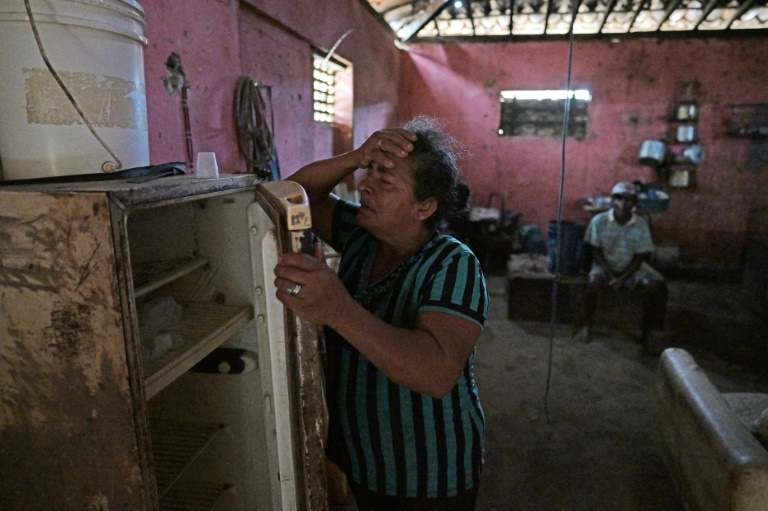
In a small cement house crumbling to ruins in Brazil’s parched Sertao region, Maria da Silva, a graying matriarch struggling to feed her family, opens her empty refrigerator and breaks down in sobs.

The 58-year-old widow, whose creased brown face betrays her burdens, lost her family’s main breadwinner when her brother, who worked in Sao Paulo, died of Covid-19 last year.

Now she and her family of eight, who are squatting in an abandoned shack, are among the 33.1 million Brazilians living in hunger.

The figure — a 73-percent increase in the past two years, according to the Brazilian Network for Research on Food Security — has become the subject of a bitter political battle as Latin America’s biggest economy heads for elections on October 2.

Holding a nearly empty can of powdered milk for the three young grandchildren who live with her, ages three, two and 15 months, Da Silva gives a tour of her dilapidated house, which has no bathroom or running water.

“There are times when (the children) ask for food and I don’t even have a biscuit or bread to give them,” she says through tears on the small plot of land the family farms in Poco da Cruz, in the northeastern state of Pernambuco.

Soaring food prices have forced the family to turn to begging, she says.

“I just pray to God to end my suffering.”

The presidential front-runner, leftist ex-president Luiz Inacio Lula da Silva, regularly attacks far-right incumbent Jair Bolsonaro over the fact Brazil reappeared on the World Food Programme’s “Hunger Map” last year, with 28.9 percent of the population living in “moderate or severe food insecurity.”

It is a major setback for a country that had been removed from the map in 2014, after an economic boom and landmark social programs helped lift 30 million people from poverty during Lula’s administration (2003-2010).

Bolsonaro has aggressively counter-attacked, accusing Lula of bankrupting Brazil with corruption.

Courting low-income voters, the incumbent has upscaled and rebranded Lula’s signature welfare program, and is campaigning extensively in the impoverished northeast, home to a quarter of Brazil’s 213 million people.

– Hard-won gains –

Sprawled across the northeastern interior, the Sertao, or hinterland, is a semi-arid expanse of brown-and-olive-green scrubland.

Known for cyclical droughts, it is a harsh but beautiful land with an outsize role in Brazilian literature, music and film.

Each generation here remembers its worst drought — 1960, 1993, 2010 — and the misery it caused.

Joao Alfredo de Souza, a community leader in the rural township of Conceicao das Crioulas, weathered all those.

“It cost us a lot of sweat and tears to overcome,” says De Souza, a spry 63-year-old who heads a community founded by ex-slaves in the 18th century.

Gesturing from his front porch to a paved street lined with neat, trim houses, De Souza describes Lula’s time in office as a watershed of ambitious programs promoting housing, electricity, water, welfare, education and “Zero Hunger.”

But the retired farmer says times have been “very tough” since Covid-19 hit Brazil, killing 680,000 people and triggering an economic implosion followed by soaring inflation.

He says Bolsonaro has won some northeasterners’ support by super-sizing Lula’s “Family Stipend” welfare program — rebranded “Auxilio Brasil.”

Bolsonaro recently tripled the average payment from Lula’s day, to 600 reais ($115) a month, and is now pledging to increase it to 800 reais.

De Souza is unimpressed by the election-year spending spree.

“Why is he doing this only now? It’s shameful,” he says.

He says Lula, a Pernambuco native, “understands the northeast,” where he leads in the polls in every state.

“He’s one of us.”

– ‘Africa of Brazil’ –

A half-hour drive away down a bone-jarring dirt road, in Regiao de Queimadas, a settlement still dotted with traditional mud-and-stick houses, signs of progress are harder to find.

A team of officials in four-by-four trucks from the federal government’s National Health Foundation is going door-to-door asking whether people have bathrooms.

Many don’t.

“This place is the Africa of Brazil,” says one of the officials, reflecting a widespread perception of the region among government bureaucrats in Brazil.

The program’s ostensible goal is to build adequate facilities for those who need them.

The head of the local farmers’ association, Edineia de Souza, is skeptical.

“These guys only come around at election time,” says the 40-year-old corn and bean farmer.

“We’re still waiting on the bathrooms from last time.”

De Souza, who helps organize food donations for needy families with a grass-roots charity called Amigos no Sertao, hopes things will change if Lula wins.

“When he was in office, projects got done,” she says.

But she doesn’t place much faith in politics.

“Politicians never even come here,” she says.

Close Bitnami banner
Bitnami