World

Twitter ex-security chief in Congress as shareholders back Musk buyout

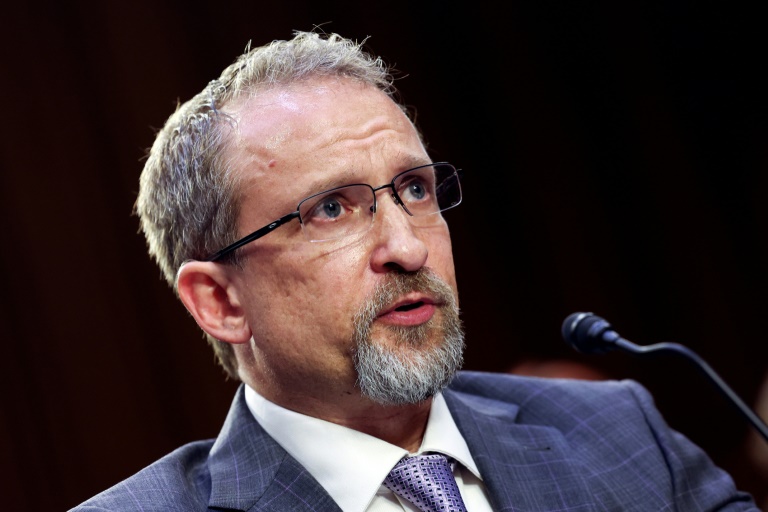
Twitter whistleblower Peiter Zatko told the US Congress Tuesday that the platform ignored his security concerns, in testimony that came as company shareholders greenlit Elon Musk’s $44 billion takeover deal.

Nearly 99 percent of the votes cast by stock owners endorsed the agreement with Musk to sell him the tech firm for $54.20 per share, Twitter said in a release.

Twitter added that it was ready to consummate the merger agreement immediately, and no later than September 15 as per a timeline mandated by the agreement.

The shareholder decision clears the way for the contract to close, even as billionaire Musk tries to exit it. Twitter has sued him to force it through.

“I’m here today because Twitter leadership is misleading the public, lawmakers, regulators and even its own board of directors,” Zatko, a hacker widely known as “Mudge”, told the hearing.

He said that, during his time as head of security for the platform from late 2020 until his dismissal in January this year, he tried alerting management to grave vulnerabilities to hacking or data theft — but to no avail.

“They don’t know what data they have, where it lives, or where it came from. And so, unsurprisingly, they can’t protect it,” Zatko said during his opening remarks to the Judiciary Committee.

He contended that employees across the company had too much access to user data.

Zatko testified that he brought evidence of problems to the executive team and “repeatedly sounded the alarm”.

“To put it bluntly, Twitter leadership ignored its engineers because key parts of leadership lacked competency to understand the scope of the problem,” he said.

“But more importantly, their executive incentives led them to prioritize profits over security.”

Zatko’s attorneys called the hearing a “watershed moment” that he hopes will enlighten the public and contribute to sorely needed legislation aimed at tech platforms.

Twitter has dismissed the 51-year-old’s complaint as being without merit.

But revelations of his whistleblower report in the US press in August were perfectly timed for Tesla chief Musk, who has used it as part of his justification for abandoning his unsolicited $44 buyout bid.

– ‘Elephant in the room’ –

In his report, Zatko directly refers to questions asked by Musk about bot accounts on Twitter, saying the company’s tools and teams for finding such accounts are insufficient.

Musk has listed bot accounts as among the reasons to justify his walking away from the deal. Twitter is suing to force him to complete the buyout, with a trial set to go ahead on October 17.

Zatko’s testimony “puts more pressure on Twitter camp ahead of Musk/Twitter trial,” Wedbush analyst Dan Ives told AFP.

“The Twitter shareholders approving this deal was a no brainer but now the major challenge begins with the Musk trial,” he said.

“The elephant in the room is the Zatko situation which could be an albatross for the Twitter camp and throw this deal off track.”

If Twitter prevails at trial, the judge could order the Tesla chief to pay billions of dollars to the company, or even complete the purchase.

Twitter CEO Parag Agrawal declined to testify at Tuesday’s hearing, citing the Musk litigation, Senator Chuck Grassley said.

Zatko insisted he had not made his revelations “out of spite or to harm Twitter.”

“Far from that, I continue to believe in the mission of the company,” he told Tuesday’s hearing.

Musk, himself an avid Twitter user, did not comment immediately on the hearing — but tweeted a popcorn emoji as Zatko spoke, suggesting he was watching the proceedings closely.

“Zatko’s testimony didn’t provide much new information,” said Insider Intelligence analyst Jasmine Enberg.

“There was also almost no mentions of bots, but that doesn’t mean that Musk won’t use Zatko’s allegation that Twitter was disinterested in removing bots to try to bolster his argument for walking away from the deal.”
Crowds gather as queen's coffin to go on display in London

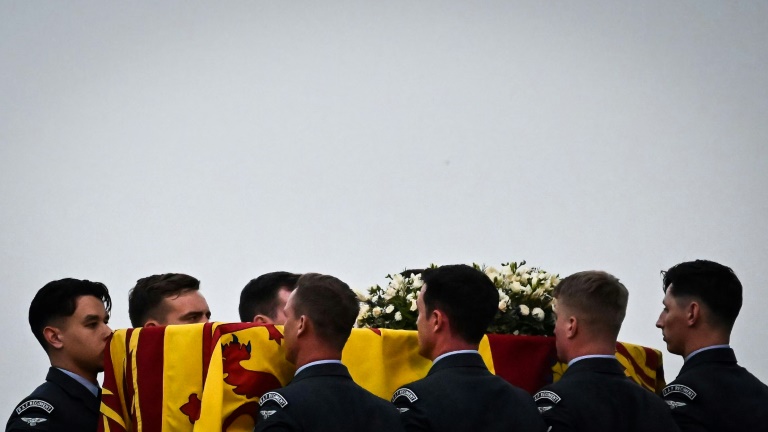
King Charles III leads a procession of the coffin of his mother Queen Elizabeth II through London on Wednesday before hundreds of thousands of people pay their final respects.

Six days after her death in Scotland, Queen Elizabeth’s body will be borne on a horse-drawn gun carriage from her Buckingham Palace home to Westminster Hall where she will remain for four days until her funeral next Monday.

The king and other senior royals are expected to walk in silence behind the hearse as it winds through the capital’s streets and then hold a vigil upon its arrival at the cavernous 12th-century hall in the Westminster parliament complex.

The public will be let in from 5:00 pm (1600 GMT), with mourners already warned they will face an endurance test in round-the-clock queues that could snake back up to five miles (eight kilometres).

“It’s going to be emotional and I don’t know how I’ll feel going in there as the first one,” said Vanessa Nanthakumaran, a 56-year-old administration assistant originally from Sri Lanka, who took her place at the head of the queue on Monday evening.

“It’s our duty to say thank you. It’s going to be prayers from the heart. It’s going to be very sombre, quiet and overwhelming.”

Strict rules and airport-style security measures have been put in place, with “far more” people expected than the 200,000 who filed past the coffin of the queen’s mother when she died in 2002, according to Prime Minister Liz Truss’s spokesman.

The government has advised people to wear “suitable clothing” and to bring portable battery packs to keep their mobile phones charged — an indication that some people will need to wait overnight for a glimpse of the casket.

Hotel rooms in the capital are increasingly hard to find, with even budget rooms going for £300 ($350) per night, while transport bosses and police are under pressure to keep the city moving and safe in exceptional circumstances.  

“It’s a massive challenge for the Metropolitan Police and for me personally, but we have been preparing for many, many years,” the newly appointed head of the London police force, Mark Rowley, told Sky News on Tuesday.

– UK tour – 

The body of the late 96-year-old monarch, who died “peacefully” at her Balmoral estate in Scotland last Thursday, was flown to London aboard an RAF plane on Tuesday evening from the Scottish capital Edinburgh.

The procession on Wednesday will mirror a similar ceremony in Edinburgh on Monday when her casket was driven through the hushed streets of the city to St. Giles’ Cathedral.

There, some 33,000 people filed past the coffin overnight to Tuesday afternoon, the Scottish government said.

“Scotland has now bid our Queen of Scots a sad, but fond farewell. We will not see her like again,” said First Minister Nicola Sturgeon.

“It’s part of history… We’ll never see this again,” Lynn Templeton, visiting Edinburgh from northwest England, told AFP after filing past the coffin on Tuesday.

After Scotland and England, Charles continued his tour of the four nations of the United Kingdom on Tuesday by visiting Northern Ireland for the first time as king. 

A trip to Wales is expected on Friday.

The 73-year-old new head of state has won wide praise in the British media for his dignified and often heartfelt reaction to his mother’s death which has led to a rare moment of public unity in Britain.

He has seen his popularity recover since the death of his former wife Diana in a 1997 car crash — and his ratings have surged in recent days, according to a new survey on Tuesday. 

The mourning has also obscured — albeit briefly — the broader country’s sharp political divisions and a severe cost-of-living crisis that is expected to cause a major increase in poverty over the winter. 

– Big Ben –

The procession of the queen’s coffin will begin at precisely 2:22 pm (1322 GMT) and will be attended by all of the queen’s siblings. 

Big Ben will toll and artillery guns will fire salutes in Hyde Park.

The ceremony will also mean another prominent role for the queen’s scandal-hit son Andrew, who settled a case in the US earlier this year in which he was accused of sexually assaulting a 17-year-old.

Over the last week, he has made what is expected to be a brief return to the public eye during national mourning. 

Not everyone shares the public mood of sadness and remembrance sparked by the queen’s death, with royal fatigue increasingly evident on social media in the face of blanket media coverage.

British police have also faced criticism from civil liberties groups over their treatment of anti-monarchy protesters who have publicly challenged Charles’ accession to the throne.

Video footage and witnesses have drawn attention to police arresting or intimidating people who shouted slogans against the monarchy or held up placards reading “Not My King”.

“Police officers have a duty to protect people’s right to protest as much as they have a duty to facilitate people’s right to express support, sorrow, or pay their respects,” campaign group Big Brother Watch said.

The queen’s funeral will take place in Westminster Abbey in front of 2,000 VIP guests, with the day declared a public holiday in Britain.

Hundreds of heads of state and government, as well as global royalty, are expected, but Russia, Belarus, Myanmar and North Korea have not been invited to send representatives.

US President Joe Biden has confirmed he will attend, as will French President Emmanuel Macron and Canadian Prime Minister Justin Trudeau.

burs-adp/phz/raz/smw

'Help us': Last few residents hold on in Donbas ghost town

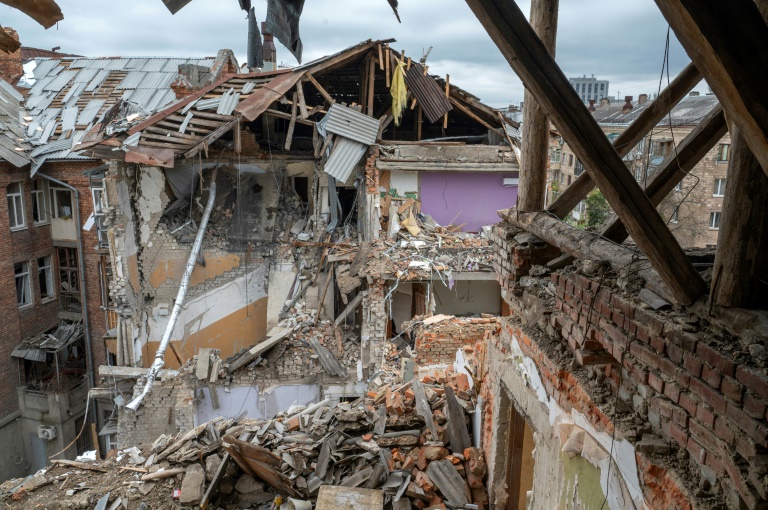
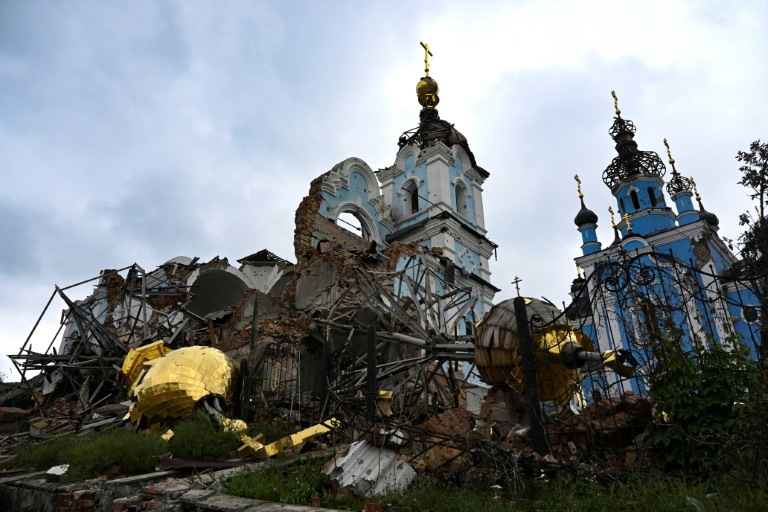
In the eastern Ukrainian village of Bohorodychne — which means ‘where God was born’ — the golden domes of the church have fallen down.

The church was blown up in one of the many shellings the village has seen as it was taken and retaken several times by Russian and Ukrainian troops fighting for the Donbas.

Ukrainian soldiers said Russians fled the village a few days earlier, in the face of their army’s sweeping counter-offensive.

They left a ghost town behind.

Nina Gonchar and her son Mykola, standing in front of their shattered house, appear to be the last two residents still left in the village.

Some of their family members were murdered, they told AFP.

“The Russians came, they killed my brother and my sister-in-law,” says 58-year-old Mykola. 

Russian soldiers wanted to use his brother’s home as a base, but after he refused, they gunned the house down, killing the couple at the same time. 

Mykola says he wrapped the bodies in blankets and buried them himself.

-‘Barely survived’ –

He and his frail 92-year-old mother “barely survived” the occupation thanks to food jars, a few poultry and some vegetables in the garden.

“How can I describe it with words? It was difficult, I was afraid,” Mykola says. 

His mother, traumatised by the fighting, still goes back into hiding in the shelter her son dug in their garden, even though the area is back in the hands of Ukraine again.

“I cry every day. They killed my son,” Nina says, wiping tears from her eyes with a veil.

As she speaks, artillery fire resonates in the background.

But it is one of the only sounds in the empty village.

“They took all my geese and even the bed linen from my mother,” Mykola says. 

“There were many goats in the village… they ate all of them too.”

– ‘What will be, will be’ –

Many inhabitants also left for Russia when Russian troops marched in the village last spring.

In this Donetsk region, in the Donbas, many residents are pro-Moscow. 

“They told us we could leave for Russia, but I said no. Who would be waiting for us over there?” he says. 

He also refused to leave when Ukrainian soldiers asked him if he wanted to go towards a slightly safer western Ukraine, citing health issues and his mother’s late age. 

“I just thought: what will be, will be,” he explains. 

Walking over debris in his devastated garden, Mykola points to two grenades.

He says he took them from “drunk” Russian soldiers and that he has been waiting to give them, along with other ammunition he found, to the Ukrainian army.

Later that day, shells started falling again — this time closer to the village — and AFP saw Ukrainian troops running for cover.

After Ukraine began a lightning counter-offensive to wrest back more territory from Russia in recent days, Moscow said it launched a fresh round of strikes in the Donetsk region.

Near her shattered home, even before the latest round of attacks, Nina Gonchar feels safest hidden away deep inside her shelter.

She huddles next to a wood stove, surrounded by religious icons.

“Help us,” she pleads. 

US annual inflation eased in August – but likely not enough

US annual inflation slowed slightly in August, largely thanks to falling gasoline prices — but likely not enough to satisfy the Federal Reserve and President Joe Biden, as high prices continue inflicting pain on Americans. 

The consumer price index (CPI), a key measure of inflation, actually rose 0.1 percent in August compared to July, when prices were flat, the Labor Department said Tuesday, a disappointing result amid widespread expectations that inflation would fall in the month.

The annual inflation pace improved to 8.3 percent, higher than expected but slightly below the prior months and confirming a slowdown from the blistering 9.1 percent rate in June — the highest in 40 years.

Prices have been soaring for months, exacerbated by the Russian invasion of Ukraine, which has impacted energy and food costs, as well as ongoing supply chain snarls amid Covid lockdowns in China.

Inflation has become a hot political issue just weeks away from key midterm congressional elections, and Biden has made fighting high prices his top domestic priority.

But he acknowledged Tuesday that it will take longer to slow inflation pressures.

“Today’s data show more progress in bringing global inflation down in the US economy. Overall, prices have been essentially flat in our country these last two months,” Biden said in a statement.

However, “it will take more time and resolve to bring inflation down.”

While Americans will welcome relief at the pump — there has been a steady drop in gasoline prices, which fell 10.6 percent last month — costs for food and housing continue to rise, straining family budgets.

The food index increased 11.4 percent over the last year, the largest 12-month increase since the period ending May 1979, the report said.

Medical care also has been a key contributor, and auto prices have accelerated, rising 0.8 percent in the month, according to the report.

More worryingly, the report showed that — excluding volatile food and energy prices — “core” CPI rose 6.3 percent over the past 12 months, faster than the 5.9 percent pace seen in July and June. 

Core CPI jumped 0.6 percent in August, double the pace in July, the data showed.

– ‘Ugly’ data –

Jason Furman, a former White House economist said the data was “not pretty.”

The “ugly” core data show “Broad-based relief not coming,” he said on Twitter.

The Federal Reserve views inflation as the biggest risk to the world’s largest economy, and has moved aggressively to cool demand, increasing the benchmark lending rate four times this year — with a third consecutive three-quarter point hike widely expected next week.

The Fed actions increase the cost of borrowing for homebuyers and businesses, which tends to cool investment and spending.

Fed Chair Jerome Powell has said the central bank will do whatever it takes to ensure high prices do not become entrenched, even at the risk of tipping the economy into a recession.

“The clock is ticking,” Powell warned Friday, pledging to “keep at it until the job is done.”

Treasury Secretary Janet Yellen on Sunday acknowledged that there is “certainly a risk” of an economic downturn amid the rising lending costs, but she noted the US job market is “exceptionally strong” with nearly two vacancies for every worker looking for a job.

She cautioned that “we can’t have a strong labor market without inflation under control.”

The strong job market — the unemployment rate was 3.7 percent in August — provides some comfort to the Fed, giving policymakers room to maneuver, and potentially quell inflation without a steep increase in joblessness.

But the worker shortage remains a concern since it could fuel a dangerous wage-spiral.

Rubeela Farooqi of High Frequency Economics said the latest data confirm “inflation readings remain unacceptably high for policymakers.” 

“Coupled with a labor market that is still strong, the data seal the deal for another aggressive, 75-basis point, rate hike next week,” she said in an analysis.

Stocks slump, dollar jumps as US inflation runs hot

Stock markets hit reverse while the dollar shot higher Tuesday after data showing US inflation remains high and widespread.

Wall Street shares plunged, with the Dow losing nearly 1,300 points and the S&P 500 falling 4.3 percent, after the hotter-than-expected report, closely watched by the Federal Reserve as it prepares for its next interest rate decision next week.

Stocks had rebounded in recent days as investors clung to the hope that slowing price increases would allow the Federal Reserve to eventually pull back on its tough anti-inflation fight, but the data extinguished those hopes for now.

While the annual increase in the consumer price index (CPI) slowed slightly in August to 8.3 percent, monthly inflation actually rose 0.1 percent compared to July, the Labor Department said, a disappointing result amid widespread expectations that CPI would fall in the month.

More concerning, the report showed that excluding volatile food and energy prices, “core” CPI accelerated sharply in August, and rose 6.3 percent over the past 12 months, after the 5.9 percent pace seen in July and June.

Despite the welcome relief from falling gasoline prices, food, housing and medical care costs continue to rise.

The dollar, which had fallen against its major rivals in anticipation of slowing inflation, shot higher.

“Today was a crazy day,” said Greg Bassuk of AXS Investments, who added that the equities decline was “more than just a one-off overreaction.”

“I think part of the strong reaction today is based on the greater concern that investors in the market have about … the extent to which high prices have infiltrated in areas that were less anticipated,” he told AFP.

Gains in Europe swiftly turned to losses following the US inflation data.

Fed Chair Jerome Powell has made it clear the increases in the benchmark lending rate would continue until inflation is tamed.

Economists say the data confirm the Fed will announce a third consecutive three-quarter point increase next week, ending the slight possibility central bankers would opt for a more modest 0.5 point hike.

Market analyst Michael Hewson said the core inflation figures mean more aggressive rate hikes will be needed to tame rising prices.

“While the narrative of peak inflation may well be still valid, getting it down from these levels is likely to be a much tougher battle,” he said.

Inflation has soared around the globe this year owing to sky-high energy and food bills.

This has been caused to a large extent by supply constraints after economies reopened from pandemic lockdowns and in the wake of Russia’s invasion of Ukraine.

The dollar has soared as the Federal Reserve moved earlier and more aggressively than other central banks to raise interest rates and contain inflation.

– Key figures at around 2100 GMT –

New York – Dow: DOWN 3.9  percent to 31,104.97  (close)

New York – S&P 500: DOWN 4.3 percent at 3,932.69 (close)

New York – Nasdaq: DOWN 5.2 percent at 11,633.57 (close)

EURO STOXX 50: DOWN 1.7 percent at 3,586.18

London – FTSE 100: DOWN 1.2 percent at 7,385.86 (close)

Frankfurt – DAX: DOWN 1.6 percent at 13,188.95 (close)

Paris – CAC 40: DOWN 1.4 percent at 6,245.69 (close)

Tokyo – Nikkei 225: UP 0.3 percent at 28,614.63 (close)

Hong Kong – Hang Seng Index: DOWN 0.2 percent at 19,326.86 (close)

Shanghai – Composite: UP 0.1 percent at 3,263.80 (close)

Euro/dollar: DOWN at $0.9974 from $1.0120

Pound/dollar: DOWN at $1.1500 from $1.1680 

Euro/pound: UP at 86.74 pence from 86.64 pence 

Dollar/yen: UP at 144.43 yen from 142.82 yen  

Brent North Sea crude: DOWN 0.9 percent at $93,17 a barrel

West Texas Intermediate: DOWN 0.5 percent at $87.31 per barrel

burs-rl/imm/hs/st

Russia announces 'massive strikes' across Ukraine front

Russia said Tuesday it was carrying out “massive strikes” across the Ukrainian frontline and accused Kyiv’s soldiers of abusing civilians in territories recaptured in a dramatic counter-offensive.

Moscow’s retaliation came after it was forced to pull back troops from swathes of the northeast, particularly in the Kharkiv region, following Kyiv’s lightning assault to wrest back terrain.

The territorial shifts marked one of Russia’s biggest setbacks since its troops were repelled from Kyiv in the earliest days of the nearly seven-month-long war, yet Moscow signalled it was no closer to agreeing to a negotiated peace.

“Air, rocket and artillery forces are carrying out massive strikes on units of the Ukrainian armed forces in all operational directions,” the Russian defence ministry said in its daily briefing on the conflict.

“High-precision” strikes have also been launched on Ukrainian positions around Sloviansk and Konstantinovka in the eastern Donetsk region, it added.

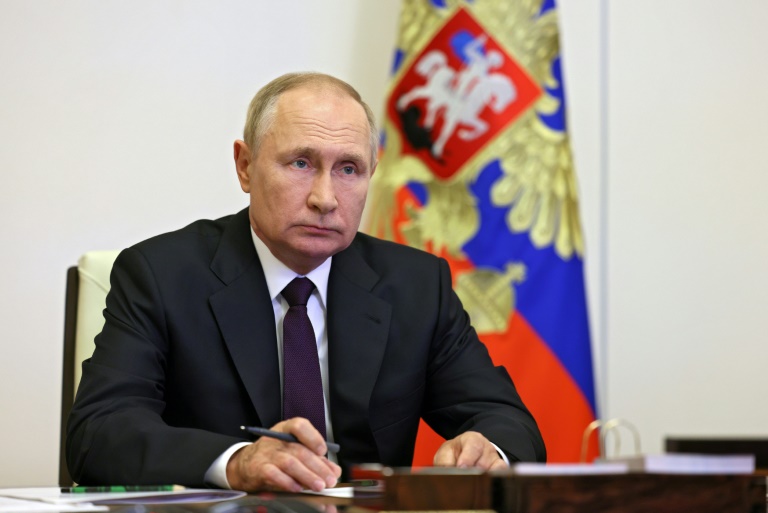
President Vladimir Putin’s spokesman said that in the Kharkiv region, reports were emerging of “outrageous” treatment of civilians.

“There are a lot of punitive measures… people are being tortured, people are being mistreated and so on,” Dmitry Peskov told journalists.

Russia’s allegations came after Ukrainian authorities claimed to have found four bodies of civilians with “signs of torture” in the recaptured eastern village of Zaliznychne.

Moscow also pushed back on Tuesday against what it called growing “bias” at United Nations’ human rights bodies, a day after a top UN official condemned Moscow’s “intimidation” of people in Russia opposed to its war in Ukraine.

– ‘Shift in momentum’ –

Ukrainian forces launched their counter-offensive in early September, seemingly catching Russia’s military off guard. 

Images posted by the Ukrainian military showed crates of munitions and military hardware scattered across territory abandoned by Russian forces.

Around the northeastern town of Balakliya, AFP journalists saw evidence of fierce battles, with buildings destroyed or damaged and streets mostly deserted.

President Volodymyr Zelensky said Tuesday that Ukraine had completed “stabilization measures” in more than 4,000 square kilometres (1,500 square miles) of recaptured territory, and was working to do the same in a similarly sized area.

“The remnants of occupiers and sabotage groups are being discovered, collaborators are being detained, the entire security is being restored,” he said in his evening address.

In the northeast, dozens of areas including the cities of Izyum, Kupiansk and Balakliya have been retaken, Ukraine said.

Ukrainian forces in the Kharkiv region have since September 6 reclaimed more than 300 settlements and areas home to around 150,000 people, said deputy foreign affairs minister Ganna Maliar.  

US National Security Council spokesman John Kirby said Tuesday that Washington would soon provide another tranche in its multi-billion-dollar effort to supply arms to Ukraine.

Kirby said it is too early to say whether gains by Ukraine signal a turning point in the overall war.

“What you’re seeing is certainly a shift in momentum by the Ukrainian armed forces,” he said, but Zelensky should be the one to “determine and decide whether he feels militarily they’ve reached a turning point.”

Despite the “dramatic events… it’s war and war is unpredictable,” Kirby added.

– Germany holds back –

Ukraine Defence Minister Oleksii Reznikov told French daily Le Monde in a Monday interview that the war has entered a new phase with the help of Western weapons.

Kyiv has nonetheless ramped up its calls for Western allies to rush more sophisticated weapons to help in its fight. 

“Weapons, weapons, weapons have been on our agenda since spring. I am grateful to partners who have answered our call: Ukraine’s battlefield successes are our shared ones,” Foreign Minister Dmytro Kuleba said.

But Germany was once again under the spotlight for failing to deliver Leopard battle tanks that Kyiv is seeking.

“Not a single rational argument on why these weapons cannot be supplied, only abstract fears and excuses,” said Kuleba, after Chancellor Olaf Scholz dodged a question on the issue on Monday, saying only that Germany would not “go-it-alone” on weapons deliveries.

In a phone call, the German leader urged Putin to “come to a diplomatic solution as quickly as possible, based on a ceasefire, a complete withdrawal of Russian forces and respect for the territorial integrity and sovereignty of the Ukraine”.

US must be 'at the table' in semiconductor field: Blinken

The United States should take on a greater role in the global semiconductor industry for the sake of its economy and security, US Secretary of State Antony Blinken said Tuesday.

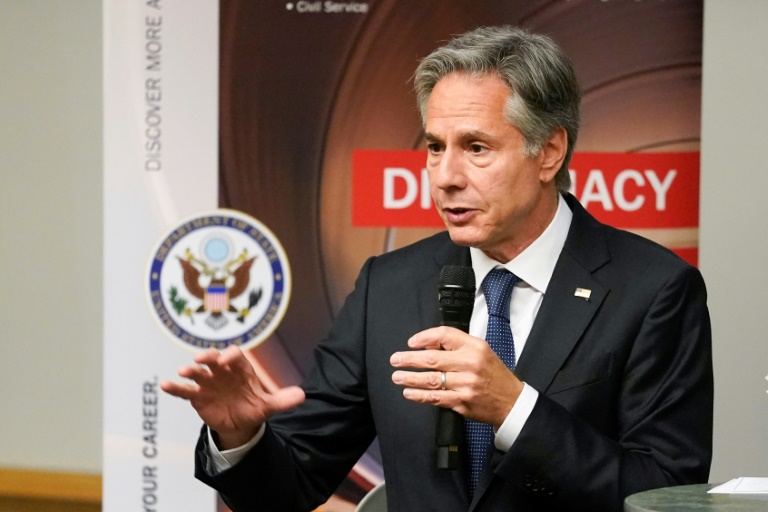
Addressing students and researchers at Purdue University, home to one of America’s top engineering schools, Blinken stressed the importance of “getting into that tech diplomacy, making sure that the United States is at the table when decisions are being made.”

He added: “We need to be there, and not only do we need to be there, we need to be able to carry the debate.”

The United States is leading an unprecedented effort to supercharge domestic semiconductor research and production, both to alleviate Covid-19 supply chain issues and shift away from reliance on Chinese technology.

The electronic components are essential for multiple global sectors, including the auto industry and smartphones.

The Chips and Science Act, which US President Joe Biden signed into law last month, includes around $52 billion to promote domestic production of the microchips.

“What we do here resonates around the world,” Blinken said at Purdue, noting that the technology affects all sectors, including foreign policy and defense.

Despite being far from Silicon Valley, the stereotypical hub of US technological innovation, Purdue boasts a prestigious engineering school and has several laboratories specializing in semiconductor research.

US Secretary of Commerce Gina Raimondo accompanied Blinken on a tour of several research facilities at the Midwestern institution.

“The Chips Act is an investment in America,” she said, adding that the United States needs to go from “lab to fab,” meaning fabrication.

The two senior officials had just returned from a visit on Monday to Mexico, where they invited the country to join the United States in its multibillion-dollar push to boost semiconductor manufacturing to compete with China.

Supply chain snarls due to Covid-19 have disrupted production in all sectors, including advanced technology, and also revealed the dependence of the United States and other countries on China for technological components.

Biden recently called semiconductor production a matter of national security.

'Calm before the storm': London readies for queen's send-off

Workmen set up barriers and thousands of police were mobilised as London geared up Tuesday for its grand farewell to Queen Elizabeth II.

The late monarch’s coffin arrived in the British capital from Scotland, where she died last Thursday, before hundreds of thousands are expected to pay their respects as it lies in state.

“I’ve never seen something like it,” security guard Rumesh told AFP near parliament, where the casket will rest. 

“You can feel it’s coming and that it’s going to be huge.”

Queues are set to stretch for miles along the River Thames as British media has speculated some 750,000 mourners will wait patiently to file past the queen in the four days ahead of her funeral on September 19.  

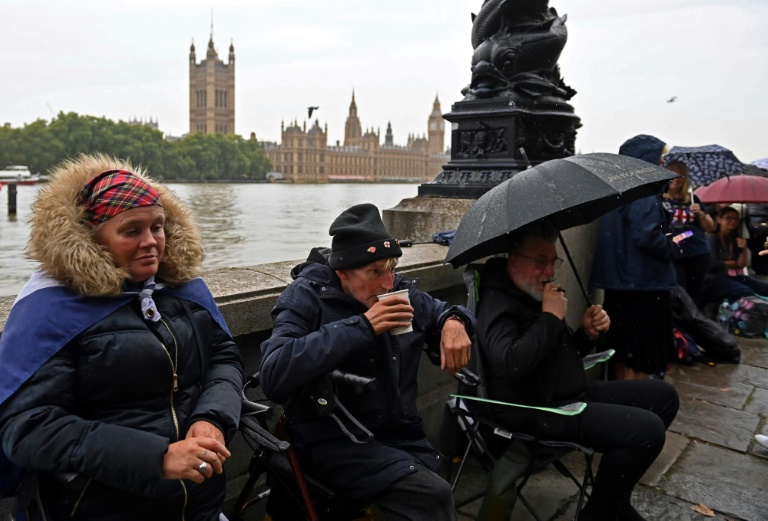
By Tuesday morning only a small group of the hardiest royal fans — surrounded by dozens of journalists — had set up camp at the front of the line across from the Houses of Parliament.

“From tomorrow morning onwards, the queue is going to be insane,” said Rumesh. 

“It’s the calm before the storm.”

– ‘Funeral of century’ –

The authorities have already set in motion a well-prepared plan called London Bridge that had been ready to go for years for a grandiose period of national mourning and state funeral once the queen died.

Newly appointed London police boss Mark Rowley has described the upcoming days as a “massive challenge” but insisted the force had been preparing for “many, many years”. 

Thousands of police officers have been mobilised as some 500 leaders, including US President Joe Biden, are set to descend on the capital ahead of what is being dubbed “the funeral of the century” next Monday. 

Tight airport-style security has been put in place for those hoping to see the queen’s coffin as it lies in state. 

A system of wrist bracelets is in place for those wanting to use the dozens of portable toilets installed along the Thames and keep their place in line. 

The streets will not be the only thing crowded: hotels around the city centre are already booked up despite steep price hikes. 

London’s transport authorities have warned commuters of inevitable disruptions and pubs are bracing for busy times. 

“We know for sure it’s going to be super busy,” said Mantas Butkus, who works in a pub near Westminster. 

He said that extra staff had been drummed up for the days to come. 

“It’s the first time we have to deal with something like that, so we can’t really know what to expect,” he said.

– ‘Curious to see it’ –

Given the mass of people expected, Joseph Afrane had already abandoned the idea of seeing the coffin in Westminster. 

Instead he has been waiting since Sunday near Buckingham Palace to catch a glimpse of the hearse bringing the casket from the airport.

“It’s a safer bet,” he said. 

“It’s going to be chaos at Westminster and, you know, even if it’s sad, the atmosphere is actually quite nice here.”

In front of the royal residence some of the shock and grief felt in the first hours after the queen’s death has subsided. 

While some red-eyed visitors were still laying flowers, others walked around in a more jovial mood taking selfies in front of the tributes. 

“Basically, I’m here precisely to be here. To be part of all of it. It’s living history and I really wanted to come and see,” said Alice Colley, 27. 

“There is sadness, obviously, but also some kind of excitement. People just want to be here, they’re curious to see it because we know we won’t live through this again anytime soon.”

US says Russia has sent $300 mln to meddle in elections

Russia has covertly sent at least $300 million to foreign political parties and candidates in more than two dozen countries since 2014 in bids to gain influence, a declassified US intelligence assessment said Tuesday. 

US intelligence “assesses that these are minimum figures and that Russia likely has transferred additional funds covertly in cases that have gone undetected,” a senior administration official said.

“We think this is just the tip of the iceberg,” the official told reporters on condition of anonymity.

The US intelligence did not declassify information on specific countries. Previously US officials have pointed to Bosnia and Ecuador as countries where Russia has intervened directly through its financial power.

In one of the most egregious cases cited in the new assessment, US intelligence said that the Russian ambassador in an unnamed Asian country provided millions of dollars to a presidential candidate.

In Europe, Russia has used fictitious contracts and shell companies to fund parties, while its state-owned companies have directly funneled covert funding in Central America, Asia, the Middle East and North Africa, the assessment said.

Russia has at times sent cash but has also made use of crypto-currencies and “lavish” gifts, the assessment said.

President Joe Biden’s administration requested the assessment following Russia’s February 24 invasion of Ukraine, which prompted a major US effort to isolate Moscow and arm Kyiv.

The administration official said that US diplomats were sharing their findings with governments in more than 100 nations.

The official described the effort as part of Biden’s “Summit of Democracies” initiative launched after he defeated Donald Trump. 

The new assessment did not cover domestic US politics but previously US intelligence said that Moscow intervened in the 2016 election, notably through manipulation of social media, to support Trump, who has voiced admiration for Russian President Vladimir Putin.

“The United States is working hard to address our vulnerabilities and we are encouraging other countries to do the same,” the official said.

A demarche, or internal statement, from the State Department to US missions around the world said that Russia has carried out the covert campaign in a bid to shift foreign environments to its favor. 

“For Russia, the benefits of ‘covert political financing’ are two-fold: to develop influence over benefiting-individuals and parties, and to increase the likelihood that those parties perform well in elections,” it said.

“The hidden relationships between these parties and their Russian benefactors undermine the integrity of, and public faith in, democratic institutions,” it said.

Russian officials have long scoffed at US allegations of meddling, noting that the CIA has a long history of backing coups in nations such as Iran and Chile. 

Putin was said to be infuriated in 2011 when the United States voiced moral support to protesters around Russia who alleged election rigging. 

The US official rejected any comparison between Russia’s alleged efforts to contemporary US practices such as funding election monitors and non-governmental pro-democracy groups. 

US assistance is transparent and “we do not support a particular party or particular candidate,” the official said.

“It is about democratic governance and trying to help our other democracies strengthen democratic governance.”

Brazil's Bolsonaro says he will retire if he loses October vote

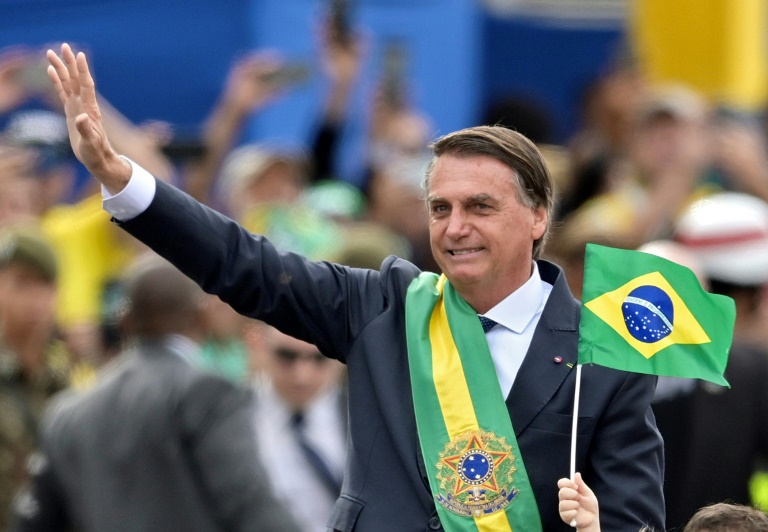
Brazilian President Jair Bolsonaro says he will retire from politics if he fails to be reelected in the upcoming October elections, as polls show him lagging.

“If it’s God’s will, I’ll continue (as president). If not, I’ll pass the (presidential) sash and retire,” Bolsonaro said Monday night during an interview on a podcast for young Evangelical Christians.

The 67-year-old added: “At my age, I have nothing left to do here on Earth if my journey in politics ends on December 31,” the last day of his term.

It was a change in tone for the far-right incumbent, who has previously said there can only be three outcomes for his reelection bid: “prison, death or victory.”

Known for riling up his base with his hardline rhetoric and disregard for political correctness, Bolsonaro has struck a more moderate tone recently as he seeks to cut leftist ex-president Luiz Inacio Lula da Silva’s lead in the polls ahead of the October 2 vote.

Bolsonaro also gave a rare apology in the interview over some of his more controversial statements, including saying in 2020 that he could do nothing about Brazil’s soaring Covid-19 death toll because he was “not a grave-digger.”

Responding to a question from Evangelical rapper Felipe Vilela, who said he was “saddened” by that statement — which came a day after his father-in-law died — Bolsonaro said he had been a “dimwit.”

“I regret it,” he said in the marathon four-hour interview.

“I’m human, I regret what I said, I wouldn’t say it again. You can see my behavior has changed from a year ago.”

He said he also regretted telling critics urging him to purchase Covid-19 vaccines to “go get them at your mom’s house.”

However, he defended his statement that the vaccine could “turn you into an alligator,” calling it a “figure of speech.”

Bolsonaro also stoked new controversy by commenting on Vilela’s skin color.

“Do you have African heritage? You’re a little dark, aren’t you?” he said.

“Oh wait, it’s a crime to say that. Haven’t you heard people say I’m racist?”

Vilela later said in a post on Instagram he had not taken offense at the statement, calling it a “joke” by Bolsonaro, “someone who comes from another era, trying to bridge the gap between us.”

Bolsonaro in the interview also urged young people to vote carefully next month, saying the election would “mark your future” and warning against the recent wave of left-wing victories in Latin America.

Close Bitnami banner
Bitnami