World

Portugal court acquits all in homicide trial, 5 years after worst wildfire

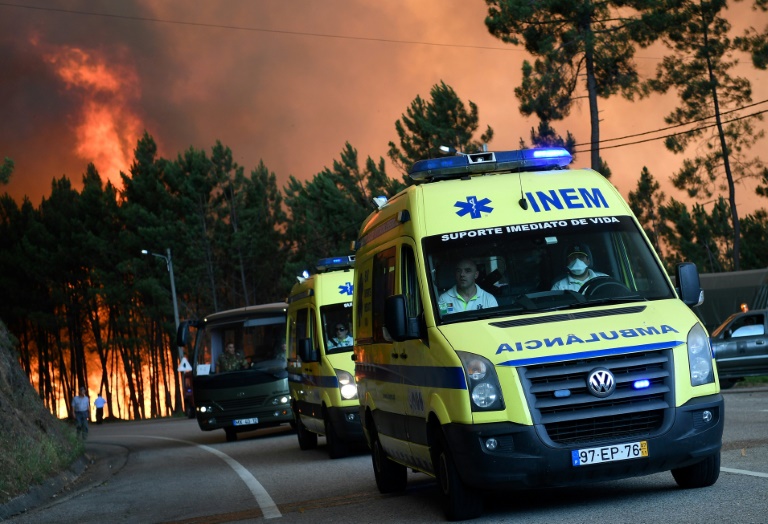
Five years after Portugal’s deadliest wildfire, which claimed 63 lives, a court on Tuesday acquitted 11 people accused of negligent homicide over the tragedy.

The fires broke out in the central Leiria region during a heatwave in June 2017 and burned for five days, destroying 240 square kilometres (90 square miles) of hillsides covered with pine and eucalyptus trees.

A senior firefighter and several local officials were in the dock, alongside employees of a power company and a firm responsible for maintaining a road in the Pedrogao Grande district where around 40 of the victims died.

Another 44 people were injured.

While the court in Leiria found failings in the prevention and control of the forest fire, presiding judge Maria Clara Santos said the scale of the disaster was caused by a natural phenomenon of “unique and totally unpredictable” force.

Many of the victims died trapped in their cars while trying to escape the flames, which were fanned by violent winds.

The defendants had been accused of failing to prevent or combat the fire that swept through the rural area 200 kilometres (125 miles) north of Lisbon.

But the court said in a statement shared after the hearing that “it had not been proven that the deaths and injuries were the result, by action or omission, of the conduct of any of the defendants”.

Several of the victims’ relatives were in the crowded courtroom in Leiria city for Tuesday’s hearing.

– ‘Calm the families’ –

Less than six months after the Pedrogao Grande disaster, a new series of deadly wildfires broke out in the centre and north of the country, killing another 45 people.

Augusto Arnaut, who was commander of the Pedrogao Grande fire brigade at the time of the disaster in June, is accused of not taking action early enough to control the blaze before it raged out of control.

But the Portuguese Firefighters League issued a statement on Monday saying it believed Arnaut was innocent and had done all he could. 

And on Tuesday, around 100 uniformed firefighters formed a silent guard of honour for Arnaut outside the court.

Three executives from road maintenance company Ascendi could face prison too. 

Prosecutors said they had acted irresponsibly by not ensuring the clearing of vegetation from verges through which many victims sought to escape the flames.

An employee of the electricity distribution network could also face a stiff sentence because the fire was sparked by a discharge from a power cable above tinderbox scrub.

– Forests ‘neglected’ –

Several local officials from Pedrogao Grande, Castanheira de Pera and Figueiro dos Vinhos — the three worst-affected districts — are charged with failing to maintain the forests along the roads and under power lines.

Prime Minister Antonio Costa accepted that the state bore some responsibility in the fires of June and October 2017, which killed 117 people. 

The victims’ relatives received compensation worth a total of 31 million euros.

The Socialist leader promised to overhaul Portugal’s firefighting capacity, burying power lines and turning the largely volunteer fire brigades into professional forces.

But forestry engineer Paulo Pimenta de Castro told AFP the situation now was “worse than in 2017”.

“Many forested areas are just left neglected (and) there has been no root and branch reform to firefighting, just superficial changes,” he said. 

He gave the example of a wildfire just last month that destroyed another 240 square kilometres, this time in the protected Serra da Estrela Natural Park, also in central Portugal.

Portugal court acquits all in homicide trial, 5 years after worst wildfire

Five years after Portugal’s deadliest wildfire, which claimed 63 lives, a court on Tuesday acquitted 11 people accused of negligent homicide over the tragedy.

The fires broke out in the central Leiria region during a heatwave in June 2017 and burned for five days, destroying 240 square kilometres (90 square miles) of hillsides covered with pine and eucalyptus trees.

A senior firefighter and several local officials were in the dock, alongside employees of a power company and a firm responsible for maintaining a road in the Pedrogao Grande district where around 40 of the victims died.

Another 44 people were injured.

While the court in Leiria found failings in the prevention and control of the forest fire, presiding judge Maria Clara Santos said the scale of the disaster was caused by a natural phenomenon of “unique and totally unpredictable” force.

Many of the victims died trapped in their cars while trying to escape the flames, which were fanned by violent winds.

The defendants had been accused of failing to prevent or combat the fire that swept through the rural area 200 kilometres (125 miles) north of Lisbon.

But the court said in a statement shared after the hearing that “it had not been proven that the deaths and injuries were the result, by action or omission, of the conduct of any of the defendants”.

Several of the victims’ relatives were in the crowded courtroom in Leiria city for Tuesday’s hearing.

– ‘Calm the families’ –

Less than six months after the Pedrogao Grande disaster, a new series of deadly wildfires broke out in the centre and north of the country, killing another 45 people.

Augusto Arnaut, who was commander of the Pedrogao Grande fire brigade at the time of the disaster in June, is accused of not taking action early enough to control the blaze before it raged out of control.

But the Portuguese Firefighters League issued a statement on Monday saying it believed Arnaut was innocent and had done all he could. 

And on Tuesday, around 100 uniformed firefighters formed a silent guard of honour for Arnaut outside the court.

Three executives from road maintenance company Ascendi could face prison too. 

Prosecutors said they had acted irresponsibly by not ensuring the clearing of vegetation from verges through which many victims sought to escape the flames.

An employee of the electricity distribution network could also face a stiff sentence because the fire was sparked by a discharge from a power cable above tinderbox scrub.

– Forests ‘neglected’ –

Several local officials from Pedrogao Grande, Castanheira de Pera and Figueiro dos Vinhos — the three worst-affected districts — are charged with failing to maintain the forests along the roads and under power lines.

Prime Minister Antonio Costa accepted that the state bore some responsibility in the fires of June and October 2017, which killed 117 people. 

The victims’ relatives received compensation worth a total of 31 million euros.

The Socialist leader promised to overhaul Portugal’s firefighting capacity, burying power lines and turning the largely volunteer fire brigades into professional forces.

But forestry engineer Paulo Pimenta de Castro told AFP the situation now was “worse than in 2017”.

“Many forested areas are just left neglected (and) there has been no root and branch reform to firefighting, just superficial changes,” he said. 

He gave the example of a wildfire just last month that destroyed another 240 square kilometres, this time in the protected Serra da Estrela Natural Park, also in central Portugal.

Kremlin under pressure from hawks after Ukrainian successes

“Troubling”, “a betrayal”, “depressing” — Moscow’s humiliating setbacks in eastern Ukraine over the weekend sent Russian hawks into a frenzy.

To put an end to the avalanche of scathing critiques, the Kremlin issued a warning to those who would go too far in questioning its strategy.

Dissenting voices need to “remain within the law” that punishes people “discrediting” the army, Kremlin spokesman Dmitry Peskov said on Tuesday.

“The line is very, very thin, one must be very careful here,” Peskov continued.

The Russian defence ministry is painting the setback as a strategic “regrouping” of its troops and denying any debacle took place. 

But this weekend’s news threw a wrench into the Russian media’s previously harmonious choir that had been relaying the Kremlin’s message since the beginning of the special operation: everything is going to plan. 

Even Vladimir Solovyov, one of the main Kremlin propagandists, admitted that “the situation is difficult, serious.”

And something once inconceivable happened.

A flurry of media pundits, analysts, bloggers and officials criticised the handling of the operation on TV shows and on social media. 

Hardline Chechen leader Ramzan Kadyrov lambasted the “mistakes” he said Russian generals had made in a voice note to his 2.4 million followers on Telegram. 

If no changes were made in the conduct of the special military operation, “I will be forced to go speak to the ministry of defence and the country’s leadership to explain the situation on the ground,” he said.

– ‘Betrayed’ –

The opposition, though weakened by a huge crackdown since the beginning of the offensive, doubled down on the criticisms.

Local elected officials in Saint Petersburg called for President Vladimir Putin’s resignation — even if their petition has about zero chances of succeeding. 

What’s new is that criticism is now coming from nationalist groups who usually fervently support the military operation. 

While not the first setback for the Russian troops — who retreated from Kyiv and lost their admiral ship in April — this was particularly shocking to them. 

Conservative commentator Yegor Kholmogorov said there were only two possible explanations for the blow.

Either “we were betrayed,” or “our army is not fit for combat,” Kholmogorov said.

On a televised debate, former lawmaker Boris Nadezhdin argued that “it is absolutely impossible to defeat Ukraine using resources that Russia is fighting with, and with its colonial war methods, using contract soldiers, mercenaries and no mobilisation.”

He was swiftly put in his place by another guest. 

Some of the military operation’s staunchest supporters are now calling on the Kremlin to scale things up in Ukraine.

Blogger Maxim Fomin — writing as “Vladlen Tatarsky” on a Telegram channel followed by more than 400,000 people — prescribed a “preventive nuclear strike” on Snake Island, abandoned by Russian troops in July.  

– No risk for Putin? –

Speculations abound as to what this blow could mean for Putin.

The government is not facing major risks yet, according to R.Politik founder Tatyana Stanovaya.

But if the situation keeps deteriorating on the frontline “with more losses, more defeats, a retreat, then the relationships between patriots and the authorities could seriously be put to the test,” she told AFP. 

It could be harder to clamp down on those critics, Stanovaya explained.

Contrary to the opposition that was “squashed (by being painted) as an ideological enemy and mouthpiece for the West”, a so-called patriotic protest could be “seen as legitimate” in Russia.

Nearly 100 killed in Armenia-Azerbaijan border clashes

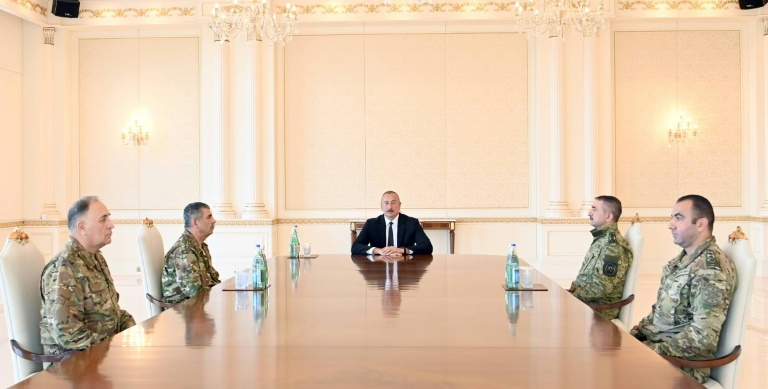
Armenia and Azerbaijan reported nearly 100 troop deaths Tuesday in their worst fighting since a 2020 war over the disputed Nagorno-Karabakh region.

The defence ministry in Baku said “50 Azerbaijani servicemen died as a result of Armenia’s large-scale provocation,” while Armenia earlier reported the deaths of at least 49 of its soldiers.

Azerbaijan on Tuesday accused Armenia of violating a ceasefire brokered by Russia after a night of clashes that left dozens dead and renewed fears of another all-out conflict between the historic foes.

Russia said it had reached a ceasefire between the warring parties that brought several hours of relative calm, but Azerbaijan later accused Armenian forces of “intensely” violating the agreement.

“Despite the declaration of a ceasefire since 09:00 (Moscow time, 0600 GMT), Armenia is intensively violating the ceasefire along the border by using artillery and other heavy weapons,” Baku’s military said.

Armenia appealed to world leaders for help after the fighting broke out, accusing Azerbaijan of trying to advance on its territory.

US Secretary of State Antony Blinken on Tuesday called the leaders of both countries, with his spokesman saying Washington would “push for an immediate halt to fighting and a peace settlement” between the neighbours.

Tuesday’s escalation came as Yerevan’s closest ally Moscow — which deployed thousands of peacekeepers in the region after the 2020 war — is distracted by its six-month-old invasion of Ukraine.

Armenia’s defence ministry said clashes had subsided after the ceasefire but that the situation on the border was still “extremely tense”.

Armenian Prime Minister Nikol Pashinyan called French President Emmanuel Macron, Russian leader Vladimir Putin and Blinken to demand a response to “Azerbaijan’s aggressive acts”.

– ‘Subversive acts’ –

The defence ministry in Yerevan said the clashes started early Tuesday, with Armenian territory coming under fire from artillery, mortars and drones in the direction of the cities of Goris, Sotk, and Jermuk.

“The enemy is trying to advance” into Armenian territory, it said in a statement.

Azerbaijan, however, accused Armenia of “large-scale subversive acts” near the districts of Dashkesan, Kelbajar and Lachin and said its armed forces were taking “limited and targeted steps, neutralising Armenian firing positions”.

Baku’s long-standing political and military sponsor Turkey blamed Armenia and urged it instead to “focus on peace negotiations”.

Iran, which shares a border with both countries, urged “restraint” and a “peaceful resolution” to the fighting.

The European Union and the United Nations expressed concerns over the escalation and called for an end to the fighting.

Before the ceasefire was announced, Armenia’s security council asked for military help from Moscow, which is obligated under a treaty to defend Armenia in the event of foreign invasion.

– ‘Russia in bad shape’ –

Armenian political analyst Tatul Hakobyan said the escalation in fighting was a consequence of the “deadlock” in Armenian-Azerbaijani peace talks.

“Azerbaijan wants to force Armenia to recognise Karabakh as part of Azerbaijan,” he told AFP.

“The war in Ukraine has changed the balance of forces in the region and Russia — which is a guarantor of peace in the region — is in a very bad shape. 

“In this situation, Azerbaijan wants to get concessions from Armenia as soon as possible,” he added.

Last week, Armenia accused Azerbaijan of killing one of its soldiers in a border shootout.

In August, Azerbaijan said it had lost a soldier and the Karabakh army said two of its troops had been killed and more than a dozen wounded.

The neighbours fought two wars — in the 1990s and in 2020 — over the Nagorno-Karabakh region, Azerbaijan’s Armenian-populated enclave.

The six weeks of brutal fighting in the autumn of 2020 ended with a Russian-brokered ceasefire.

Under the deal, Armenia ceded swathes of territory it had controlled for decades and Moscow deployed about 2,000 Russian peacekeepers to oversee the fragile truce.

During EU-mediated talks in Brussels in May and April, Azerbaijani President Ilham Aliyev and Pashinyan agreed to “advance discussions” on a future peace treaty.

Ethnic Armenian separatists in Nagorno-Karabakh broke away from Azerbaijan when the Soviet Union collapsed in 1991. The ensuing conflict claimed around 30,000 lives.

Twitter ex-security chief in Congress as shareholders back Musk buyout

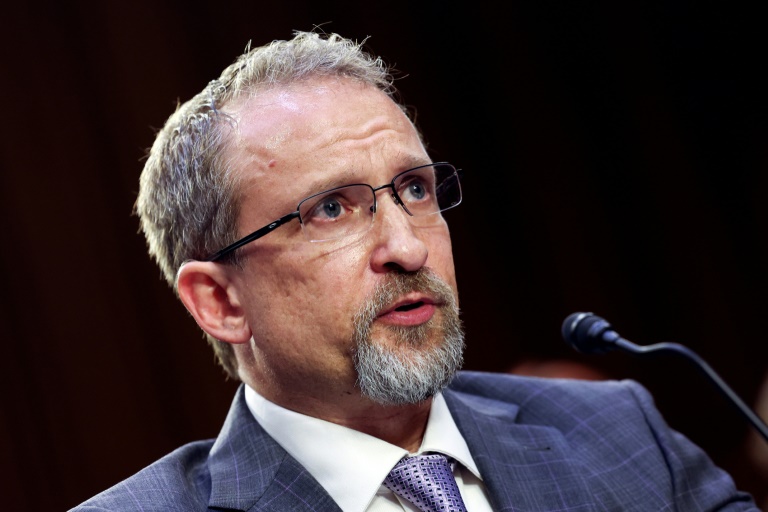
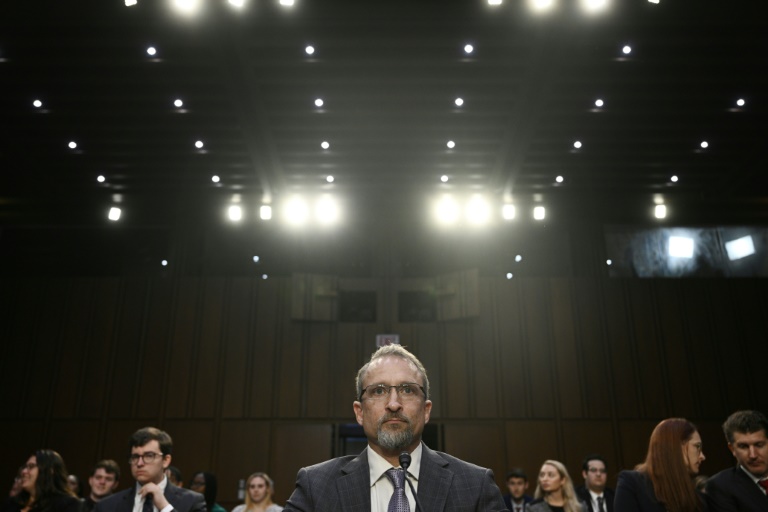
Twitter whistleblower Peiter Zatko told the US Congress Tuesday that the platform ignored his security concerns, with his testimony coming as company shareholders greenlit Elon Musk’s $44 billion takeover deal.

The shareholder decision clears the way for the contract to close, even as billionaire Musk tries to exit it. Twitter has sued him to force it through, but analysts said testimony by Zatko, the social network’s former security chief, will put more pressure on the company as it heads to court next month.

“I’m here today because Twitter leadership is misleading the public, lawmakers, regulators and even its own board of directors,” Zatko, a hacker widely known as “Mudge”, told the hearing.

He said that, during his time as head of security for the platform from late 2020 until his dismissal in January this year, he tried alerting management to grave vulnerabilities to hacking or data theft — but to no avail.

“They don’t know what data they have, where it lives, or where it came from. And so, unsurprisingly, they can’t protect it,” Zatko said during his opening remarks to the Judiciary Committee.

“Employees then have to have too much access (…) it doesn’t matter who has the keys if you don’t have any locks on the doors.”

Zatko testified that he brought concrete evidence of problems to the executive team and “repeatedly sounded the alarm”.

“To put it bluntly, Twitter leadership ignored its engineers because key parts of leadership lacked competency to understand the scope of the problem,” he said.

“But more importantly, their executive incentives led them to prioritize profits over security.”

Twitter has dismissed 51-year-old Zatko’s complaint as being without merit.

But revelations of his whistleblower report in the US press in August were perfectly timed for Tesla chief Musk, who has used it as part of his justification for abandoning his unsolicited $44 buyout bid.

– ‘Elephant in the room’ –

In his report, Zatko directly refers to questions asked by Musk about bot accounts on Twitter, saying the company’s tools and teams for finding such accounts are insufficient.

Musk has listed bot accounts as among the reasons to justify his walking away from the deal. Twitter is suing to force him to complete the buyout, with a trial set to go ahead on October 17.

Zatko’s testimony “puts more pressure on Twitter camp ahead of Musk/Twitter trial,” Wedbush analyst Dan Ives told AFP.

“The Twitter shareholders approving this deal was a no brainer but now the major challenge begins with the Musk trial,” he said.

“The elephant in the room is the Zatko situation which could be an albatross for the Twitter camp and throw this deal off track.”

If Twitter prevails at trial, the judge could order the Tesla chief to pay billions of dollars to the company, or even complete the purchase.

Twitter CEO Parag Agrawal declined to testify at Tuesday’s hearing, citing the Musk litigation, Senator Chuck Grassley said.

Zatko insisted he had not made his revelations “out of spite or to harm Twitter.”

“Far from that, I continue to believe in the mission of the company,” he told Tuesday’s hearing.

Musk, himself an avid Twitter user, did not comment immediately on the hearing — but tweeted a popcorn emoji as Zatko spoke, suggesting he was watching the proceedings closely.

'Not my king': anti-monarchist arrests spark criticism in Britain

British police faced criticism from civil liberties groups on Tuesday over their treatment of anti-monarchy protesters who have publicly challenged King Charles III’s accession to the throne.  

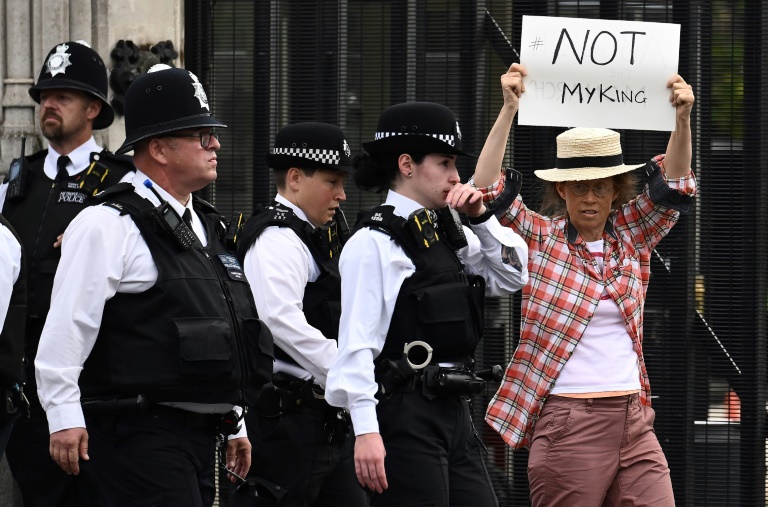
Footage went viral on social media on Monday of a woman demonstrator holding a “Not My King” protest placard being confronted by at least four officers outside the UK parliament in London.

She was seen being escorted away from the spot, and was reportedly made to stand at another location away from the gates of parliament.

Lawyer and climate activist Paul Powlesland also revealed on Twitter that he had been warned by an officer that he risked arrest after he held up a blank piece of paper opposite parliament.

“He confirmed that if I wrote, ‘Not My King’ on it, he would arrest me under the Public Order Act because someone might be offended,” Powlesland wrote alongside video footage showing him talking to an officer. 

Britain is in national mourning for Queen Elizabeth II, with the death of the 96-year-old monarch provoking a rare moment of national unity amid an outpouring of sympathy for the royals.

But it has also raised questions about the space for dissent, with several civil liberties groups warning that police are failing to respect the rights of the small minority of anti-monarchists.

“If people are being arrested simply for holding protest placards then it is an affront to democracy and highly likely to be unlawful,” Big Brother Watch said in a statement.

“Police officers have a duty to protect people’s right to protest as much as they have a duty to facilitate people’s right to express support, sorrow, or pay their respects.”

In another incident, a 45-year-old man was arrested in Oxford in southern England on Sunday after he shouted “Who elected him?” during a public proclamation of Charles III’s accession. 

Jodie Beck, from the Liberty campaign group, said the right to protest was “a vital part of a healthy and functioning democracy”.

“It is very worrying to see the police enforcing their broad powers in such a heavy-handed and punitive way to clamp down on free speech and expression,” she said in a statement.

– ‘Fundamental right’ –

London’s Metropolitan Police force appeared to acknowledge the over-zealous actions of some officers late on Monday.

“The public absolutely have a right to protest,” said deputy assistant commissioner Stuart Cundy. 

“We have been making this clear to all officers involved in the extraordinary policing operation currently in place and we will continue to do so.”

The queen’s coffin was put on public display for the first time on Monday in Edinburgh following a silent procession that saw a young man shout out at Prince Andrew, the queen’s second son, as he marched behind the hearse. 

The heckler, who called Andrew a “sick old man” in reference to his links to American paedophile financier Jeffrey Epstein, was shown being bundled away and escorted by police.

Scottish police confirmed that two people had been arrested and charged on Monday for public order offences. 

Another woman who held an “abolish monarchy” sign at a proclamation ceremony for King Charles III in Edinburgh on Sunday has also been charged, reports said.

“Obviously this is a period of national mourning for the majority, the vast, vast majority of the country,” a spokesman for Prime Minister Liz Truss told reporters in London on Tuesday. 

“But the fundamental right to protest remains a keystone of our democracy.”

– Police powers –

The 1986 UK Public Order Act gives the police powers of arrest for people judged to be guilty of causing “harassment, alarm or distress” through “threatening words or behaviour, or disorderly behaviour”, including by holding up signs. 

The right-wing Conservative government faced severe criticism from civil liberties groups over a new policing law earlier this year which increased the power of security forces to restrict protests.

The staunchly pro-monarchy public mood reportedly also saw British broadcaster Sky cut queen-related jokes made by US-based British comedian John Oliver in his show “Last Week Tonight” on Monday evening.

In the left-wing Guardian newspaper titled “Britain likes to consider itself the cradle of free speech — until someone heckles Prince Andrew”, columnist Marina Hyde said democracy was being tested.

“Unfortunately, we are only a few days into the official mourning period, and various tests are being failed,” she wrote. 

Anti-monarchists are a fringe group in Britain, with 13 percent of respondents viewing the monarchy as “bad for Britain” according to a poll in May this year by the YouGov survey group.

A total of 54 percent viewed it as “good” for the country. 

Russia announces 'massive strikes' across Ukraine front

Russia said Tuesday it was carrying out “massive strikes” across the Ukrainian frontline and accused Ukrainian soldiers of abusing civilians in territories recaptured in a dramatic counter-offensive.

Moscow’s retaliation came after it was forced to pull back its troops from swathes of the northeast, particularly in the Kharkiv region, following Kyiv’s lightning assault to wrest back terrain.

The territorial shifts marked one of Russia’s biggest setbacks since its troops were repelled from Kyiv in the earliest days of the nearly seven-month-long war, yet Moscow signalled it was no closer to agreeing to a negotiated peace.

“Air, rocket and artillery forces are carrying out massive strikes on units of the Ukrainian armed forces in all operational directions,” the Russian defence ministry said in its daily briefing on the conflict.

“High-precision” strikes have also been launched on Ukrainian positions around Sloviansk and Konstantinovka in the eastern Donetsk region, it added.

The Kremlin accused Kyiv’s army of abusing civilians in territory it had recaptured.

President Vladimir Putin’s spokesman said that in the Kharkiv region, reports were emerging of “outrageous” treatment of civilians.

“There are a lot of punitive measures… people are being tortured, people are being mistreated and so on,” Dmitry Peskov told journalists.

Russia’s allegations came after Ukrainian authorities claimed to have found four bodies of civilians with “signs of torture” in the recaptured eastern village of Zaliznychne.

Moscow also pushed back on Tuesday against what it called growing “bias” at United Nations’ human rights bodies, a day after a top UN official condemned Moscow’s “intimidation” of people in Russia opposed to its war in Ukraine.

– ‘Too early to tell’ –

Residents reported that Russian troops had killed villagers, the regional prosecutor’s office said, announcing a war crime probe.

Ukrainian forces launched their counter-offensive in early September, seemingly catching Russia’s military off guard. 

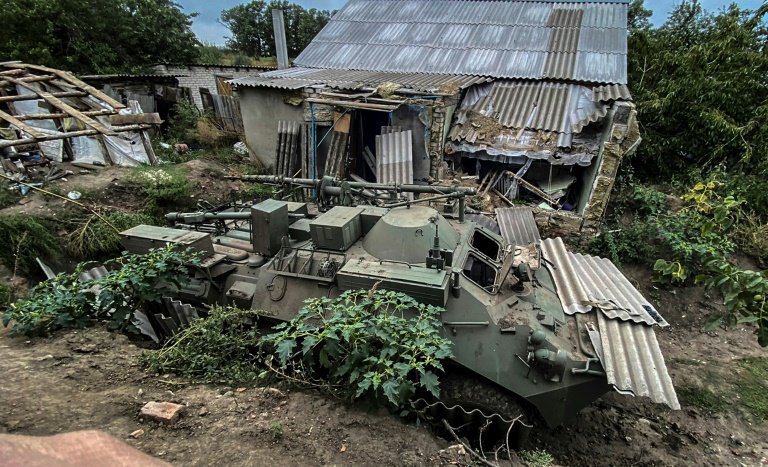
Images posted by the Ukrainian military showed crates of munitions and military hardware scattered across territory abandoned by Russian forces.

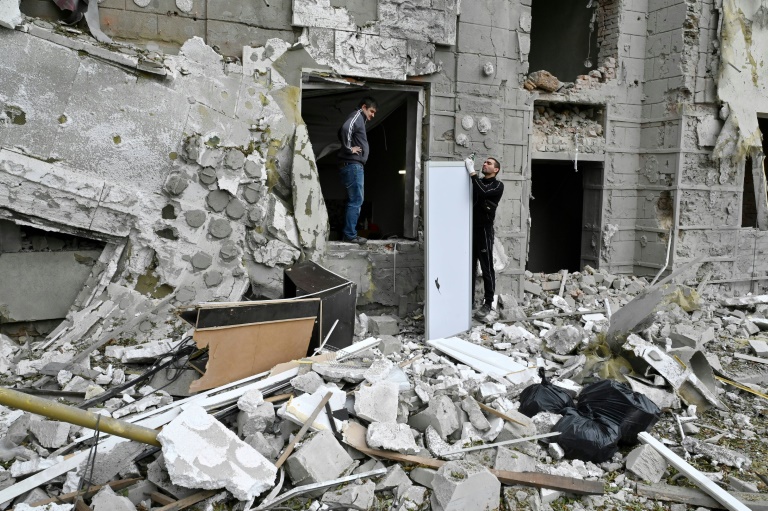
Around the northeastern town of Balakliya, AFP journalists saw evidence of fierce battles, with buildings destroyed or damaged and streets mostly deserted.

By Monday, President Volodymyr Zelensky said that Ukraine’s forces have retaken a total of 6,000 square kilometres (2,320 square miles) from Russian control.

In the northeast, dozens of areas including the cities of Izyum, Kupiansk and Balakliya have been retaken, Ukraine said.

Ukrainian forces in the Kharkiv region have since September 6 reclaimed more than 300 settlements and areas home to around 150,000 people, said deputy foreign affairs minister Ganna Maliar.  

Ukraine has also claimed significant gains in the southern Kherson region, where the Ukrainian army also said it had recaptured 500 square kilometres.

US Secretary of State Antony Blinken assessed that the Ukrainians had made “significant progress”, due to their resilience as well as US support.

“It’s too early to tell exactly where this is going. The Russians maintain very significant forces in Ukraine as well as equipment and arms and munitions. 

“They continue to use it indiscriminately against not just the Ukrainian armed forces but civilians and civilian infrastructure as we’ve seen,” Blinken said on Monday.

– ‘Turned the tide’ –

A US think tank, the Institute for the Study of War, tweeted: “Ukraine has turned the tide in its favour, but the current counter-offensive will not end the war.” 

Defence Minister Oleksii Reznikov told French daily Le Monde in a Monday interview that the war has entered a new phase with the help of Western weapons.

Kyiv nonetheless ramped up its calls for Western allies to rush more sophisticated weapons to help in its fight. 

“Weapons, weapons, weapons have been on our agenda since spring. I am grateful to partners who have answered our call: Ukraine’s battlefield successes are our shared ones,” Ukrainian Foreign Minister Dmytro Kuleba said.

But Germany was once again under the spotlight for failing to deliver Leopard battle tanks that Kyiv is seeking.

“Not a single rational argument on why these weapons cannot be supplied, only abstract fears and excuses,” said Kuleba, after Chancellor Olaf Scholz dodged a question on the issue on Monday, saying only that Germany would not “go-it-alone” on weapons deliveries.

In a phone call, the German leader urged Putin to “come to a diplomatic solution as quickly as possible, based on a ceasefire, a complete withdrawal of Russian forces and respect for the territorial integrity and sovereignty of the Ukraine”.

Away from the battlefield, Ukraine’s allies were grappling with an energy crisis after Russia curtailed deliveries to the bloc. 

Finnish Prime Minister Sanna Marin appealed for EU unity in the face of Russian “blackmail” over energy supplies, and for more sanctions on Moscow.

Seeking emergency measures to bring down soaring energy prices, the Czech Republic, which holds the rotating presidency of the EU, called an extraordinary meeting on September 30. 

Queen leaves Scotland for final time, bound for London

Queen Elizabeth II left Scotland for the final time on Tuesday, as her coffin began its journey to London where crowds of mourners have begun queueing to pay their respects when she lies in state before a state funeral next week.

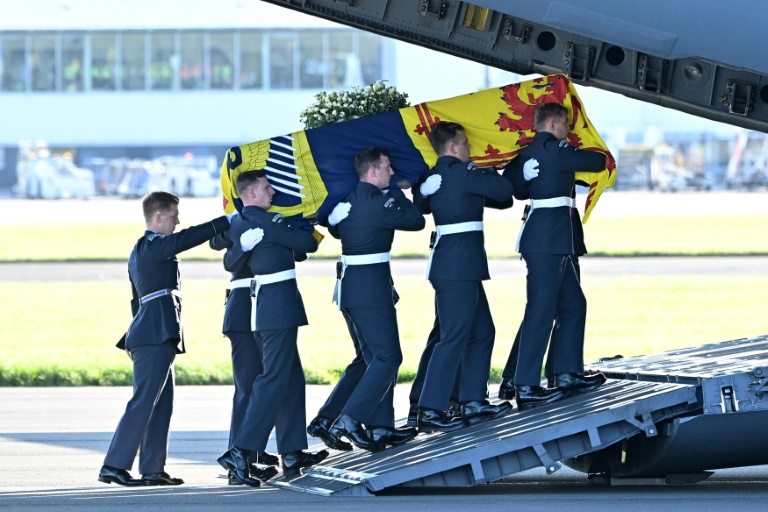
The casket was taken from St Giles’ Cathedral in Edinburgh, where it has lain “at rest” since Monday, after it was carried in a solemn procession through the Scottish capital to hushed crowds.

Outside the cathedral, the monarch’s bodyguard in Scotland, the Royal Company of Archers, formed a guard of honour as the coffin, draped in the royal standard, emerged to the haunting sound of a lone piper. 

At the airport, as the Royal Regiment of Scotland, in ceremonial kilts, looked on, a Royal Air Force bearer party carried the coffin slowly on board.

The national anthem was played as the plane taxied to the runway and the queen, who died at her beloved Balmoral home in the Highlands last week aged 96, left Scotland for the final time. 

The late monarch will first be brought to Buckingham Palace before being transported to Westminster Hall on Wednesday, where some well-wishers have been queueing for 24 hours already to bid farewell to Britain’s longest-serving sovereign.

“I just want to have a glimpse of the coffin and it’s going to be chaos at Westminster,” Joseph Afrane, 59, told AFP as he waited for the hearse to arrive at Buckingham Palace on Tuesday evening.

“You know, even if it’s sad, the atmosphere is actually quite nice here.”

Charles III meanwhile made his maiden visit to Northern Ireland as king on Tuesday as part of a tour to all four nations of the United Kingdom before the queen’s funeral on Monday next week.

As heir-to-the-throne, Charles made 39 visits to Northern Ireland, whose recent history has been scarred by sectarian violence over British rule and where a fragile peace has held since 1998.

His 40th visit comes as unionists loyal to the Crown feel their place in the wider UK is under threat as never before, with nationalists set to lead the devolved government in Belfast for the first time.

Meanwhile the possibility of a united Ireland is seen as growing.

But at Hillsborough Castle — the monarch’s official residence in Northern Ireland — he sent a message to political leaders that he would work for all communities in the divided province.

“I take up my new duties resolved to seek the welfare of all the inhabitants of Northern Ireland,” he told them.

The queen’s visit to Ireland in 2011 was the first by a British monarch since its independence from the Crown and was seen as a huge step towards cementing the hard-won peace in Northern Ireland.

– ‘Behind him’ –

Charles and his wife, Queen Consort Camilla, greeted crowds who had turned out early to catch a glimpse of the couple at Hillsborough.

Ceremonial gun salutes in his honour then rang out as the royal standard was raised above the castle southwest of Belfast.

Flowers, cuddly toys and handwritten remembrance notes of the late queen had been left at the gates.

“This is very important for Charles to come here,” Rhonda Irvine, 47, a wedding and events administrator, told AFP.

Describing Charles’s late mother as an “inspiration for him”, she predicted he would be a “very good” king.

Ann Sudlow, 61, a retired nurse from nearby Dromore, had also made the early morning drive “to show the king that we’re behind him as a country and Northern Ireland is supporting him”.

While large crowds welcomed Charles, visiting the deeply divided region could prove testing. Nationalist parties boycotted the proclamation of the new king but will meet him.

Belfast’s feuding political leaders are split between fiercely loyal unionists, and nationalists who want to reunify with Ireland, and the power-sharing assembly in Belfast is suspended.

Unionists are boycotting the devolved parliament at Stormont because of their opposition to post-Brexit trading rules that they say cuts Northern Ireland adrift from mainland Great Britain — England, Scotland and Wales.

Charles then went to an Anglican religious service in the city, also attended by Ireland’s President Michael D. Higgins, Prime Minister Micheal Martin and Foreign Minister Simon Coveney.

– Crowds –

Britain is in 10 days of national mourning for Elizabeth II, who was a fixture of the nation’s life and consciousness for seven decades.

Charles has seen his popularity recover since the death of his former wife Diana in a 1997 car crash — and has surged in recent days, according to a new survey Tuesday. 

But he has also been embroiled in several scandals in recent years.

With republican movements gaining ground from Australia to the Bahamas, the new king faces a challenge keeping the Commonwealth realms in the royal fold.

Prime Minister Jacinda Ardern said her country New Zealand, where Charles is also head of state, will likely become a republic in her lifetime.

But she added: “I don’t see it as a short-term measure or anything that is on the agenda soon.”

The queen’s coffin will be on display to the public from Wednesday when the king will lead a procession at precisely 2:22 pm (1322 GMT) attended by his three siblings, Anne, Edward and scandal-hit Andrew.

In Edinburgh, thousands of people queued throughout the night.

“It’s part of history… We’ll never see this again,” Lynn Templeton, visiting Edinburgh from northwest England, told AFP after filing past the coffin.

One woman, who gave her name only as Vicki, took an early train from Glasgow with her nine-year-old son “just to pay our respects”.

“It’s “just a moment in history, once in a lifetime,” she said.

– Security –

An unprecedented security operation is being put in place for the state funeral, which is expected to be attended by hundreds of heads of state and government, as well as global royalty.

Neither Russia nor Belarus have been invited, however, following the Kremlin’s invasion of Ukraine in February. 

“It’s a massive challenge for the Metropolitan Police and for me personally, but we have been preparing for many, many years,” the newly appointed head of the London police force, Mark Rowley, told Sky News.

Soldiers from the Household Division of regiments, which form the monarch’s bodyguard, began practising for the funeral procession in London overnight Monday to Tuesday.

The vast crowds expected in London have resulted in few available hotel rooms, while transport bosses have warned of strong demand.

Hotel prices have rocketed, with a basic windowless basement room in Piccadilly Circus, central London, available for £300 ($350) per night.

“Our hotels in central London and Windsor are literally sold out,” budget hotel chain Travelodge said in a statement.

But not everyone shares the public mood of sadness and remembrance sparked by the queen’s death at her Balmoral estate in Scotland last Thursday.

British police faced criticism from civil liberties groups on Tuesday over their treatment of anti-monarchy protesters who have publicly challenged Charles’ accession to the throne.

Video footage and witnesses have drawn attention to police arresting or intimidating people who shouted slogans against the monarchy or held up placards reading “Not My King”.

“Police officers have a duty to protect people’s right to protest as much as they have a duty to facilitate people’s right to express support, sorrow, or pay their respects,” campaign group Big Brother Watch said.

bur-am-jit-phz-adp/gw

Peiter 'Mudge' Zatko: The wild card in Musk's clash with Twitter

Respected in cybersecurity circles, former Twitter security chief Peiter “Mudge” Zatko is a wild card in Elon Musk’s legal gambit to break a $44 billion deal to buy the social network.

Zatko’s whistleblower complaint of “extreme, egregious deficiencies” in Twitter defenses against hackers plays into Musk’s quest to convince a judge that he was duped when he foisted his unsolicited offer on the company.

While testifying before members of US Congress on Tuesday, Zatko said his worries about possible harm to Twitter users and national security prompted him to come forward.

“I did not make my whistleblower disclosures out of spite or to harm Twitter,” Zatko said.

“Far from that. I continue to believe in the mission of the company.”

Twitter has dismissed 51-year-old Zatko’s complaint as being without merit, and vowed to show it did nothing wrong at an October trial in a Delaware court.

If the court focuses on the fact that the world’s richest man declined to do fact gathering typically associated with big-money mergers, Zatko’s allegations could wind up being moot.

Zatko first testified before Congress 24 years ago, when he was a long-haired hacker determined to warn about the perils of poorly protected government computer systems.

This time, he was called on to provide details about his accusations that Twitter hid flaws in its security as well as its fight against accounts run by spammers or software instead of genuine users.

He told the hearing that Twitter’s security failures threaten both national security and the privacy of users — but that the company’s leadership has refused to make tough but necessary changes, prioritizing profits over safety. 

Musk has listed the number of inauthentic accounts on Twitter as among reasons to justify walking away from the buyout deal he made in April.

“Once both parties step into court it’s a high risk/high reward scenario for both parties with the major X variable now being the Zatko whistleblower claims,” Wedbush analyst Dan Ives said in a note to investors.

“We continue to view the Zatko situation as a Pandora’s Box scenario for Twitter.”

If Twitter prevails at trial, the judge could order the Tesla chief to pay billions of dollars to the company, or even complete the purchase.

– ‘Big problems’ –

“If  Mudge says Twitter has cybersecurity problems, Twitter has big problems,” said Vectra cybersecurity firm chief technology officer Aaron Turner, who says he has known Zatko since the 1980s.

A son of scientists, Zatko grew up in the US states of Alabama and Pennsylvania, his passions including music and software.

In 1996, he joined a hacker collective called L0pht. He and other members of the group testified before Congress two years later.

“It was the first time the U.S. government publicly referenced ‘hackers’ in a positive context,” Zatko said in a 2019 tweet marking an anniversary of the testimony.

Zatko has done stints at Google and online payment services company Stripe, and also at Pentagon research arm DARPA.

Twitter founder and former chief Jack Dorsey recruited Zatko in July 2020 after a spectacular hack of the accounts of celebrities and political figures including Barack Obama, Musk and Kim Kardashian.

US President Joe Biden’s team offered Zatko a position as White House security director early last year but he declined the job, believing he had work left to do at Twitter, his attorneys said.

-House of cards? –

Twitter fired Zatko in January, citing “ineffective leadership and poor performance.”

Zatko’s lawyers have rejected Twitter’s claim, contending instead that he was terminated after a clash with top executives who refused to acknowledge his concerns about platform security.

“Mr Zatko put his career on the line because of his concerns about Twitter users, the public and the company’s shareholders,” his attorneys said.

Andrew Hay, director of operations at the Lares cybersecurity consulting firm, said “those in the industry who know Mudge know that his intentions have historically been honorable, non-partisan, and designed to benefit the world.”

Zatko’s whistleblower complaint, filed just days after Twitter agreed to give him a multi-million dollar severance package, is not necessarily evidence that the company misrepresented user numbers, according to analysts.

Musk’s lawyers will “try to prove that Twitter tried to sell him a house of cards,” but security flaws would have to be “really serious,” said University  of California, Berkeley law school professor Adam Badawi.

Air quality warning as Oregon wildfire grows

A wildfire raging out of control in Oregon grew in size Tuesday as residents faced evacuation orders and worsening air quality as multiple blazes scorch the US West.

Dozens of active fires in California, Idaho, Oregon, Washington and other western states have ravaged more than 1,200 square miles (3,100 square kilometers), highlighting the devastating effects of a two-decade-plus drought that has left the region parched.

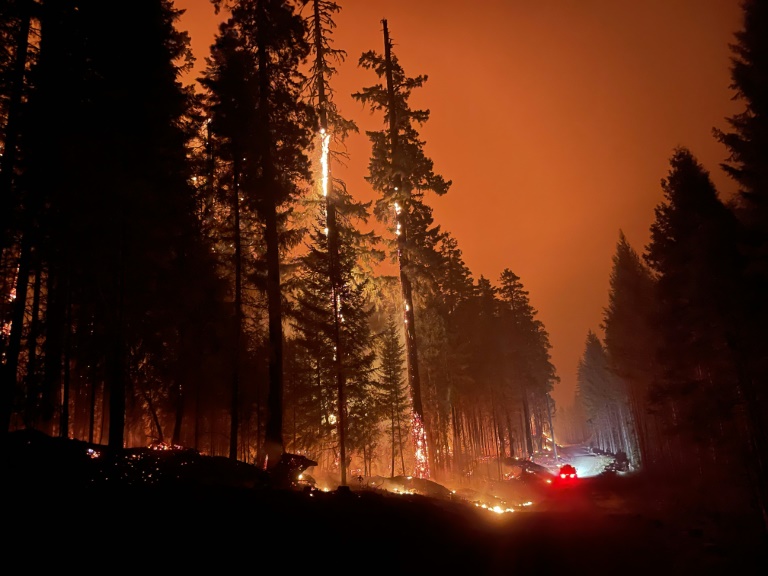
Dense smoke blanketed towns in southwestern Oregon including the popular outdoor tourism gateway of Bend, as the Cedar Creek fire has now consumed 92,548 acres (37,450 hectares) — more than twice the size of the US capital Washington — with zero percent containment as of Tuesday, according to the Oregon State Fire Marshal.

Evacuations were ordered for Lane and Deschutes counties, although some of the orders have been eased amid cooler temperatures and gentler winds. More than 2,000 homes remained under threat, authorities said.

The inferno — which began back in early August — has turned skies an eerie orange, as more than 1,200 firefighters and other personnel converge on the steep mountainous terrain, much of it in US national forest land and hard to reach.

“Smoke continues to create unhealthy air quality, which will likely continue for several more days,” the state fire marshal’s office said in a statement.

Similar air quality alerts have been issued in Idaho and Washington due to fires in those states.

Scientists say the long-term drought has been worsened by human-made climate change.

Much of the countryside is parched, creating conditions for hot, fast and destructive wildfires.

An even larger blaze, the Double Creek Fire, was burning in northeastern Oregon where it has consumed 155,300 acres.

According to the National Interagency Fire Center (NIFC), more than 90 fires were currently burning across seven western states.

The Mosquito Fire, California’s current largest blaze, has now swept through nearly 50,000 acres in the Sierra Nevada Mountains, with several small nearby towns evacuated.

Firefighters south of Los Angeles were also working to contain the major Fairview fire, which has claimed two lives.

Close Bitnami banner
Bitnami