World

New president Ruto pledges to work for all Kenyans

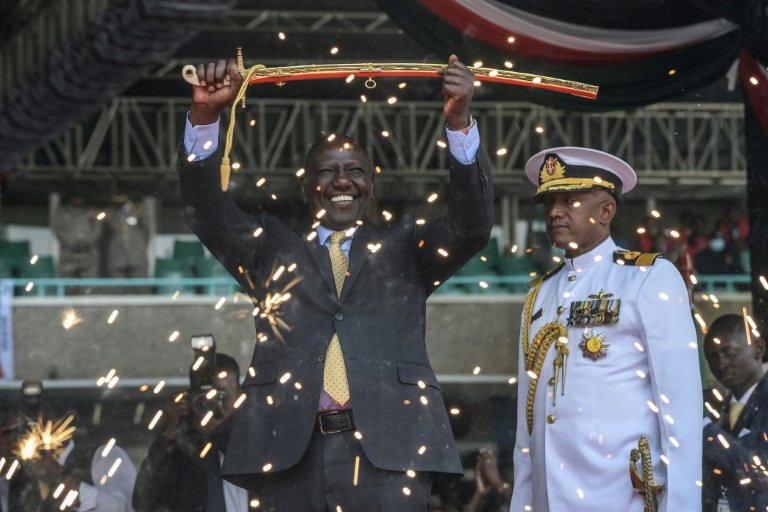
William Ruto pledged to work for all Kenyans after he was sworn in as president at a pomp-filled ceremony on Tuesday, five weeks after his narrow victory in a bitterly-fought but largely peaceful election.

Tens of thousands of people joined regional heads of state at a packed 60,000-seat stadium in Nairobi to watch him take the oath of office, with many spectators clad in the bright yellow of Ruto’s party, cheering loudly and waving Kenyan flags.

“I will work with all Kenyans irrespective of who they voted for,” the 55-year-old said in his inauguration speech, vowing to unite the polarised nation and announcing a series of measures to tackle its economic woes.

“In this process we have demonstrated the maturity of our democracy, the robustness of our institutions and the resilience of the Kenyan people.”

The rags-to-riches businessman described his swearing-in as Kenya’s fifth post-independence president as a “moment like no other,” adding: “Today, I want to thank God, because a village boy has become the president of Kenya.” 

A notoriously ambitious politician who has been deputy president since 2013, Ruto beat his rival Raila Odinga — who had the backing of now former president Uhuru Kenyatta — by less than two percentage points in the August 9 poll.

But the Supreme Court on September 5 unanimously upheld his victory, dismissing his opponents’ claims of fraud and mismanagement.

– ‘Political maturity’ –

African Union Commission chair Moussa Faki Mahamat, who was at the ceremony, hailed the peaceful transfer of power in a post on Twitter, saying it was “an enduring feature of the country’s political maturity”.

Ruto’s rise has been closely watched by the international community, which looks to Kenya as a reliable and stable democracy in a turbulent region.

Foreign allies and independent observers praised the conduct of the vote, which was mostly free of the violence that has marred past elections in the country of 50 million people.

Before Tuesday’s ceremony began, several people were injured as crowds tried to force their way into the stadium. Television footage showed dozens of people falling on top of one other in a crush at one entrance gate.

Ruto, who once sold chickens on the roadside in what is now his Rift Valley stronghold, had painted the election as a battle between ordinary “hustlers” and the elite Kenyatta and Odinga “dynasties” that had dominated Kenyan politics for decades.

But he faces a daunting task ahead to unite the country after a bruising and divisive election campaign, and ease the hardship of ordinary Kenyans who are struggling to make ends meet as prices for basic goods soar.

In his speech, Ruto pledged to stem the rising tide of youth unemployment, provide resources to help ease those confronted by a punishing drought, and stabilise Kenya’s public finances — which are creaking under the weight of a $70-billion debt mountain.

Ruto said he would establish a 50-billion-shilling ($415-million) “hustler fund” to provide loans to small enterprises to help drive growth, while making Kenya more business-friendly.

– ‘Fiscal cliff’ –

Kenyatta, who in a stunning turn of events reached a pact with his longtime rival Odinga in 2018 and banished his deputy Ruto to the sidelines, had promised a smooth transfer of power.

But the 60-year-old had pointedly failed to publicly congratulate his successor for several weeks, finally shaking Ruto’s hand at a meeting at the presidential residence on Monday.

And Ruto’s new deputy Rigathi Gachagua took potshots at Kenyatta during the inauguration ceremony, saying the new administration had inherited a “dilapidated economy”.

Odinga, meanwhile, turned down an invitation to attend the event, charging that the election commission did not conduct a “free and fair” poll.

Oxford Economics said Ruto’s ascendancy was “momentous” in that he was not part of a political dynasty and had campaigned on socio-economic rather than ethnic divides in the multi-tribe nation.

His inauguration marks the end of Kenyatta’s near decade in power, and one of the rare occasions his powerful family has not been at the apex of Kenyan politics.

“Once the election euphoria subsides, Mr Ruto will find himself tasked with uniting a divided Kenya and navigating the government away from a fiscal cliff,” Oxford Economics said in a note.

Ruto, whose new presidential coat of arms bears his party symbol, the humble wheelbarrow, will get a salary of about $144,000 a year as well as all the trappings of presidential office.

Stocks slump, dollar jumps as US inflation runs hot

Stock markets hit reverse while the dollar shot higher Tuesday after data showed that US inflation slowed less than expected.

Annual consumer price inflation (CPI) slowed slightly in August to 8.3 percent from 8.5 percent in July, the Labor Department said in a highly anticipated report that the Federal Reserve is watching closely.

However, CPI rose 0.1 percent on a monthly comparison in August, after holding flat in July, according to government data Tuesday, a disappointing result amid widespread expectations that inflation would fall in the month.

The dollar, which had fallen against its major rivals in anticipation of a significant slowdown in US inflation lessening pressure on the Fed to continue aggressively raising interest rates, shot higher.

“Both headline and core US CPI were substantially hotter than expected in August,” said market analyst Jay Zhao-Murray at Monex.

He said this was “leading currency and fixed income markets to embark on a swift and dramatic reversal from recent price action, where traders and investors had largely positioned themselves for a softer inflation print”.

He pointed to core inflation that excludes volatile energy and food prices, which is what Fed policymakers pay particular attention to. This rose by 0.6 percentage points month-on-month, compared to a 0.3-point gain in July.

While markets were already largely pricing in another 75-basis-point interest rate hike by the Fed at its next gathering, there had been hopes that passing the inflation peak would allow the Fed to relent.

However, the inflation figures were “hotter than expected in August and put a chill on some of the peak inflation/peak hawkishness/soft landing chatter”, said analyst Patrick O’Hare at Briefing.com.

Stocks, which had rebounded in recent days on hopes that a peak in inflation would allow a rapid end to hawkish rate hikes and thus avoid a recession and attain a “soft” landing of the economy, abruptly turned lower.

Gains in Europe swiftly turned to losses and Wall Street plunged.

In late-morning trading, the Dow was down 2.7 percent while the S&P 500 slumped 3.1 percent and the tech-heavy Nasdaq Composite tumbled 4.1 percent.

Fed boss Jerome Powell has indicated the rate increases would continue until inflation is tamed.

Zhao-Murray said market expectations regarding the Fed’s next rate hike had hardened following the inflation data.

While some were forecasting the possibility the Fed would drop to a half-percentage-point hike, now a 0.75-point increase is seen as the floor and some are forecasting a one-point hike. 

Market analyst Michael Hewson said Tuesday’s core inflation figures mean more aggressive rate hikes will be needed to tame rising prices.

“While the narrative of peak inflation may well be still valid, getting it down from these levels is likely to be a much tougher battle,” he said.

Inflation has soared around the globe this year owing to sky-high energy and food bills.

This has been caused to a large extent by supply constraints after economies reopened from pandemic lockdowns and in the wake of Russia’s invasion of Ukraine.

The dollar has soared as the Federal Reserve moved earlier and more aggressively than other central banks to raise interest rates and contain inflation.

– Key figures at around 1530 GMT –

New York – Dow: DOWN 2.7 percent at 31,506.03 points

EURO STOXX 50: DOWN 1.7 percent at 3,586.18

London – FTSE 100: DOWN 1.2 percent at 7,385.86 (close)

Frankfurt – DAX: DOWN 1.6 percent at 13,188.95 (close)

Paris – CAC 40: DOWN 1.4 percent at 6,245.69 (close)

Tokyo – Nikkei 225: UP 0.3 percent at 28,614.63 (close)

Hong Kong – Hang Seng Index: DOWN 0.2 percent at 19,326.86 (close)

Shanghai – Composite: UP 0.1 percent at 3,263.80 (close)

Euro/dollar: DOWN at $1.0006 from $1.0120

Pound/dollar: DOWN at $1.1524 from $1.1680 

Euro/pound: UP at 86.81 pence from 86.64 pence 

Dollar/yen: UP at 144.23 yen from 142.82 yen  

Brent North Sea crude: DOWN 1.1 percent at $92.97 per barrel

West Texas Intermediate: DOWN 0.7 percent at $87.13 per barrel

burs-rl/imm

Five minute walks best way to comfort crying babies, says study

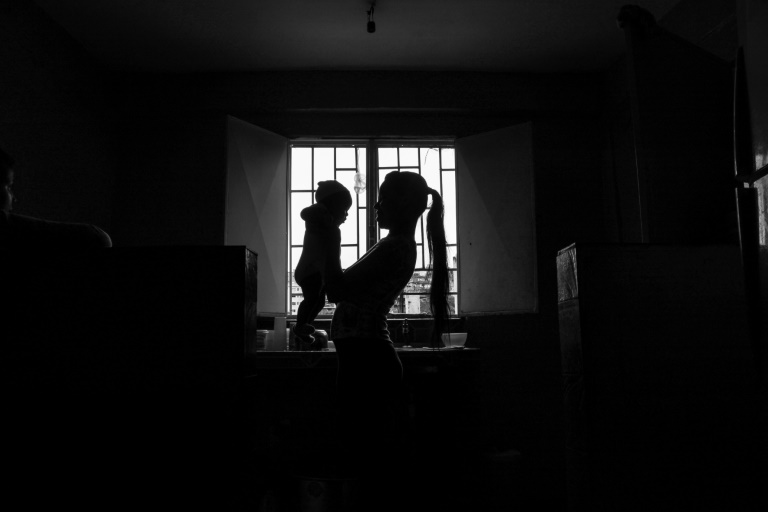
Science has perfected the answer to calming a crying baby: Hold and walk with them for five minutes.

The evidence-based soothing strategy was derived from experiments carried out in Japan and Italy, which were analyzed and published in the journal Current Biology on Tuesday.

The paper’s authors said they hoped the finding could benefit stressed parents, particularly the inexperienced.

“I have raised four children,” senior author Kumi Kuroda of the RIKEN Center for Brain Science in Japan said in a video statement.

“But even I couldn’t foresee the key results of this study until the statistical data came up,” she added. 

The team had previously studied the “transport response” in mammals that give birth to young that are unable to care for themselves, such as mice, dogs, monkeys and humans.

When these animals pick up their babies and start walking, the young become quiet and docile, and their heart rates slow.

Kuroda and colleagues wanted to explore this further in humans, and to compare the effect against other comforting behaviors such as rocking in one spot.

They recruited 21 mother-baby pairs aged 0-7 months, and tested them under four conditions: carrying while moving, held still by their sitting mothers, lying in a still crib, or lying in a rocking cot. 

Crying decreased and heart rates slowed within 30 seconds when infants were transported. There was a similar effect when they were rocked, but not when held motionless.

This suggested that, contrary to assumptions, maternal holding was insufficient to calm a child, and the transport response was an important factor. 

Next, they looked at the impact of carrying infants for five minutes, finding that the activity put 46 percent of them to sleep, and an additional 18 percent fell asleep in the minute after.

This showed that not only did carrying stop crying, it also promoted sleep.

But there was a wrinkle: when infants were put to bed, more than one-third became alert within 20 seconds.

Electrocardiogram readings showed the babies’ heart rates rose the second they were detached from their mother’s bodies.

However, when the babies were asleep for a longer period of time before being put down, they were less likely to awaken.

Kuroda said she found this surprising, as she had assumed other factors like the way they were placed in bed or their posture would play a role, but this was not the case.

“Our intuition is very limited, that is why we need science,” she said.

Based on the totality of their findings, they recommended a protocol for soothing and promoting sleep: hold and walk the baby five minutes, then sit and hold them for another five to eight minutes, before putting them to sleep.

This provides immediate comfort as opposed to other methods like letting a baby cry themselves to sleep, but more work will be needed to understand if it can train infant sleep in the long term.

Pressure builds on Berlin to send battle tanks to Ukraine

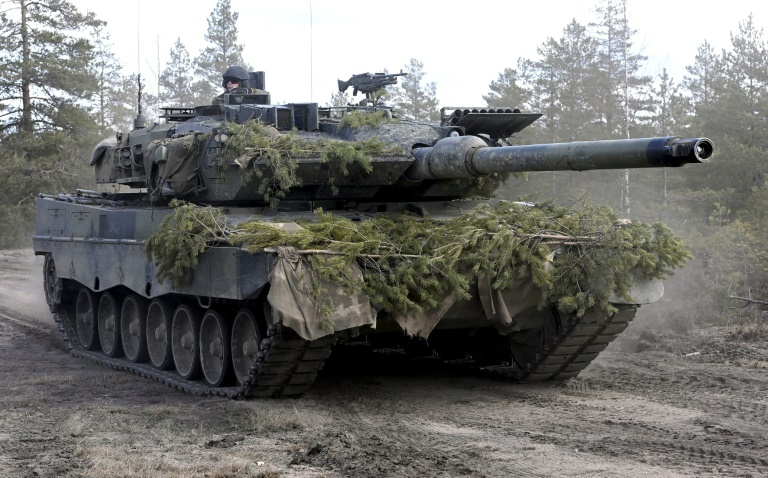
German Chancellor Olaf Scholz faces pressure at home and abroad over weapons deliveries to Ukraine, with Kyiv blasting his refusal to send battle tanks that would boost Kyiv’s counter-offensive against Russia.

Ukraine’s Foreign Minister Dmytro Kuleba on Tuesday slammed “disappointing signals from Germany” on the supply of more armaments.  

“Not a single rational argument on why these weapons cannot be supplied, only abstract fears and excuses,” Kuleba said in a post on Twitter.

“What is Berlin afraid of that Kyiv is not.”

After initially refusing to provide Kyiv’s forces with lethal weapons at the outbreak of war, Germany has since upped its arms deliveries to Ukraine.

Piles of ammunition and rocket launchers have been sent to the Ukraine from arms-makers and the German army’s own stores, as well as dozens of tanks and howitzers.

Kuleba’s furious missive stoked a new debate over Germany’s perceived reluctance to do more to support Kyiv in its efforts to beat back the Russian invasion.

But Berlin has so far declined to send the sought-after Leopard battle tanks, with Chancellor Olaf Scholz on Monday saying Germany would not “go it alone” on weapons deliveries without coordinating with allies.

– ‘Short-sighted’ –

Ukrainian forces have deployed weapons supplied by Western allies to great effect in their counter-offensive launched at the beginning of September, as they retook control of vast swathes of territory in the northeast and south of the country.

Germany had “delivered very efficient weapons that are making the difference on the battlefield at the moment”, Scholz argued on Monday. 

German Defence Minister Christine Lambrecht separately stressed that “no country” had sent Western-made battle tanks to Ukraine, as she reiterated that Berlin has agreed to coordinate with allies on weapon deliveries.

But the US embassy in Berlin said “the decision over the nature of assistance ultimately lies with each country individually.”

“We call on all allies and partners to lend as much support as possible to Ukraine in its struggle for democratic sovereignty”, the embassy wrote in a post on Twitter.

The decision not to send the weapons during Ukraine’s counter-offensive was “surprising and short-sighted”, senior Ukrainian presidential aide Mykhaylo Podolyak told German daily Bild.

– More tanks –

German arms maker Rheinmetall told public broadcaster ARD that 16 Marder infantry fighting vehicles it had restored at its own cost were “ready to be delivered” to Ukraine, if officials in Berlin gave the go ahead.

Besides the Leopard battle tanks, the Marders are high up on the list of items Ukraine has urged Berlin to supply.

Rheinmetall was preparing another 14 Marders, with the potential to supply a further 70 vehicles out of storage, ARD reported. 

The raging debate over the Leopards and Marders was reminiscent of the earlier uproar over Germany’s initial stuttering response on providing military support to Kyiv. 

Scholz’s government only made a U-turn after much public haranguing by Ukrainian leaders, and the chancellor has since said Germany would take on “special responsibility” to help Ukraine build up its artillery and air defence systems.

But Ukraine’s urgent pleas for Leopard tanks and Marder vehicles have so far gone unanswered, and even figures from within the ruling coalition of Scholz’s Social Democrats, the liberal FDP and the Greens, are urging the chancellor to relent. 

Berlin’s reluctance to send the armour came “at the expense of Ukraine” the head of the parliamentary defence committee, FDP MP Marie-Agnes Strack-Zimmermann, told AFP.

Germany should “stop hiding behind other countries”, senior Green MP Anton Hofreiter told the RND media network.

“Sooner or later we will not be able to avoid supplying modern, western main battle tanks to Ukraine,” he said.

Agreements with allies over weapons deliveries were not “set in stone”, Michael Roth, the social democrat chair of the Bundestag’s foreign policy committee, told public radio Deutschlandfunk.

Pope urges end to 'senseless' Ukraine war during Kazakhstan visit

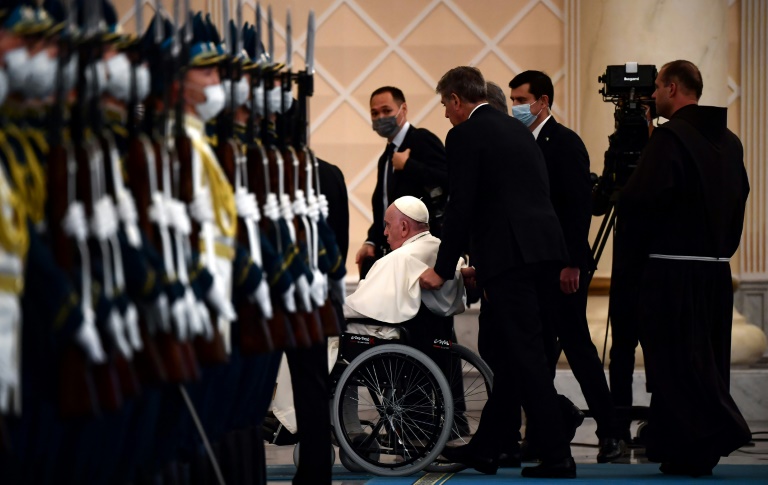
Pope Francis on Tuesday appealed for peace and an end to the “senseless and tragic war” in Ukraine during the start of a three-day visit to Kazakhstan.

The Argentine pope, who is forced by knee pain to use a wheelchair and has admitted he must slow down or consider retirement, made the journey to participate in an inter-religious summit.

A simultaneous visit by Chinese leader Xi Jinping has led to speculation of a possible historic meeting.

“I have come to echo the plea of all those who cry out for peace,” Francis said during an address to diplomats and members of civil society.

“Now is the time to stop intensifying rivalries and reinforcing opposing blocs,” he said, calling for a new “spirit of Helsinki”, referring to 1975 accords that helped bring an end to the Cold War.

President Kassym-Jomart Tokayev said it was a “great honour” to welcome the 85-year-old pontiff on his arrival in the capital Nur-Sultan, his 38th trip abroad since his election in 2013.

Russian Orthodox Patriarch Kirill, a close ally of President Vladimir Putin, was initially expected but has pulled out of the September 14-15 event, dashing hopes of a meeting with Francis over the Ukraine conflict.

While the pope has called for peace and denounced a “cruel and senseless war”, Kirill has defended Putin’s “military operation” and the fight against Russia’s “external and internal enemies”.

About 100 delegations from 50 countries are expected to take part in the event in Kazakhstan, a former Soviet republic that gained independence in 1991.

“Dialogue, a coming together, the search for peace between different religious and cultural worlds are at the heart of this trip,” Vatican spokesman Matteo Bruni said Monday.

– Tensions –

Tokayev, 69, is an ally of Russia, though there have been tensions between the two countries since Moscow launched the invasion in February.

He has refused to support the war and the presence of a large Russian community in the north of Kazakhstan has sparked fears of a revival of Moscow’s imperial ambitions in the area.

Kazakhstan borders other former Soviet republics, as well as China and the Caspian Sea.

Lyudmila, a 74-year-old pensioner who declined to give her last name, said she hoped the papal visit would encourage people around the world to learn more about Kazakhstan.

“Maybe it will raise the profile of our country, that such a great spiritual figure is visiting us,” she told AFP.

On Wednesday, Francis will address the opening of the plenary session of the Congress of Leaders of World and Traditional Religions, before celebrating a mass in the afternoon and winding up his trip Thursday by meeting Catholic leaders.

Chinese President Xi Jinping will be in the country at the same time as Francis at a time when the Vatican is hoping to renew a historic accord appointing bishops in China.

Asked by journalists during the flight about a possible meeting with Xi, Francis said he had “no information” about any possible talks.

He added, however, that he was “always ready to go to China”.

Energy-rich Kazakhstan has 19 million inhabitants, 70 percent of whom are Sunni Muslims, while 26 percent are Christians — mainly Russian Orthodox. Less than one percent are Catholic.

Tokayev began a series of reforms after his election in 2019, but the country was rocked by protests over fuel prices earlier this year that left more than 200 people dead and shattered its image of stability.

Francis is the second pope to visit Kazakhstan after John Paul II’s trip in September 2001.

He said last week that doctors had forbidden him from travelling to Ukraine or Moscow for now, as he recovers from a knee problem that has forced him to cancel numerous events at the Vatican.

Nearly 50 Armenian soldiers killed in fierce clashes with Azerbaijan

Azerbaijan said Tuesday its military succeeded in preventing attacks by Armenian troops in the wake of the worst fighting between the arch-foes since their brief but brutal war in 2020.

Armenia announced that nearly 50 of its soldiers had been killed in the fighting overnight, which Russia said it had halted by brokering a ceasefire between the historic rivals.

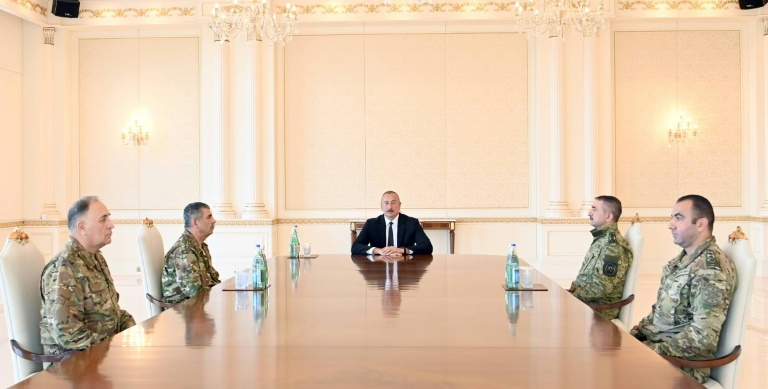
“Provocations committed by Armenian forces on the border have been prevented and all necessary objectives were fulfilled,” President Ilham Aliyev’s office said in a statement after his meeting with the military leadership.

Armenia appealed to world leaders for help after the fighting broke out, accusing Azerbaijan of trying to advance on its territory.

United States Secretary of State Antony Blinken on Tuesday called the leaders of both protagonists, with his spokesman saying Washington would “push for an immediate halt to fighting and a peace settlement” between the neighbours.

The fighting was the worst since the end of a 2020 war between the ex-Soviet republics over the contested Nagorno-Karabakh region that left more than 6,500 killed on both sides.

It came with Yerevan’s closest ally Moscow — which deployed thousands of peacekeepers in the region after the war — distracted by its six-month invasion of Ukraine.

Russia said it had brought the clashes to a halt, with the foreign ministry saying a ceasefire was agreed from 9:00 am Moscow time (0600 GMT).

Armenia’s defence ministry said later that clashes had subsided but that the situation on the border “remains extremely tense”.

After fighting broke out, Prime Minister Nikol Pashinyan called French President Emmanuel Macron, Russian President Vladimir Putin and Blinken to demand “an adequate reaction” to “Azerbaijan’s aggressive acts”.

Later, addressing lawmakers, he said at least 49 Armenian soldiers had been killed in the flare-up.

– ‘Subversive acts’ –

Azerbaijan said it had also suffered casualties but did not specify the number killed.

The defence ministry in Yerevan said the clashes started early Tuesday, with Armenian territory coming under fire from artillery, mortars and drones in the direction of the cities of Goris, Sotk, and Jermuk.

“The enemy is trying to advance” into Armenian territory, it said in a statement.

Azerbaijan, however, accused Armenia of “large-scale subversive acts” near the districts of Dashkesan, Kelbajar and Lachin and said its armed forces were taking “limited and targeted steps, neutralising Armenian firing positions”.

Baku’s long-standing political and military sponsor Turkey blamed Armenia and urged it instead to “focus on peace negotiations”.

Iran, which shares a border with both countries, urged “restraint” and a “peaceful resolution” to the fighting.

The European Union, France and the United States have expressed concerns over the escalation and called for an end to the fighting.

Before the ceasefire was announced, Armenia’s security council asked for military help from Moscow, which is obligated under a treaty to defend Armenia in the event of foreign invasion.

– ‘Russia in bad shape’ –

Armenian political analyst Tatul Hakobyan said the escalation in fighting was a consequence of the “deadlock” in Armenian-Azerbaijani peace talks.

“Azerbaijan wants to force Armenia to recognise Karabakh as part of Azerbaijan,” he told AFP.

“The war in Ukraine has changed the balance of forces in the region and Russia –- which is a guarantor of peace in the region –- is in a very bad shape. In this situation, Azerbaijan wants to get concessions from Armenia as soon as possible,” he added.

Last week, Armenia accused Azerbaijan of killing one of its soldiers in a border shootout. 

In August, Azerbaijan said it had lost a soldier and the Karabakh army said two of its troops had been killed and more than a dozen wounded.

The neighbours fought two wars — in the 1990s and in 2020 — over the Nagorno-Karabakh region, Azerbaijan’s Armenian-populated enclave.

The six weeks of brutal fighting in the autumn of 2020 ended with a Russian-brokered ceasefire.

Under the deal, Armenia ceded swathes of territory it had controlled for decades and Moscow deployed about 2,000 Russian peacekeepers to oversee the fragile truce.

During EU-mediated talks in Brussels in May and April, Azerbaijani President Ilham Aliyev and Pashinyan agreed to “advance discussions” on a future peace treaty.

Ethnic Armenian separatists in Nagorno-Karabakh broke away from Azerbaijan when the Soviet Union collapsed in 1991. The ensuing conflict claimed around 30,000 lives.

US annual inflation eased in August – but likely not enough

US annual inflation slowed in slightly in August, largely thanks to falling gasoline prices — but likely not enough to satisfy the Federal Reserve and President Joe Biden, as high prices continue inflicting pain on Americans. 

The consumer price index (CPI), a key measure of inflation, actually rose 0.1 percent in August compared to July, when prices were flat, the Labor Department said Tuesday, a disappointing result amid widespread expectations that inflation would fall in the month.

The annual inflation pace improved to 8.3 percent, higher than expected but slightly below the prior months and confirming a slowdown from the blistering 9.1 percent rate in June — the highest in 40 years.

Prices have been soaring for months, exacerbated by the Russian invasion of Ukraine, which has impacted energy and food costs, as well as ongoing supply chain snarls amid Covid lockdowns in China.

Inflation has become a hot political issue just weeks away from key midterm congressional elections, and Biden has made fighting high prices his top domestic priority.

But he acknowledged Tuesday that it will take longer to slow inflation pressures.

“Today’s data show more progress in bringing global inflation down in the US economy. Overall, prices have been essentially flat in our country these last two months,” Biden said in a statement.

However, “it will take more time and resolve to bring inflation down.”

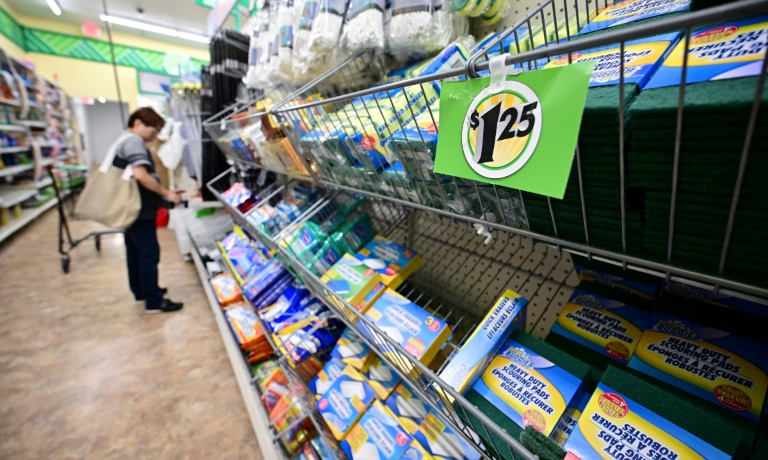
While Americans will welcome relief at the pump — there has been a steady drop in gasoline prices, which fell 10.6 percent last month — costs for food and housing continue to rise, straining family budgets.

The food index increased 11.4 percent over the last year, the largest 12-month increase since the period ending May 1979, the report said.

Medical care also has been a key contributor, and auto prices have accelerated, rising 0.8 percent in the month, according to the report.

More worryingly, the report showed that — excluding volatile food and energy prices — “core” CPI rose 6.3 percent over the past 12 months, faster than the 5.9 percent pace seen in July and June. 

Core CPI jumped 0.6 percent in August, double the pace in July, the data showed.

– ‘Ugly’ data –

Jason Furman, a former White House economist said the data was “not pretty.”

The “ugly” core data show “Broad-based relief not coming,” he said on Twitter.

The Federal Reserve views inflation as the biggest risk to the world’s largest economy, and has moved aggressively to cool demand, increasing the benchmark lending rate four times this year — with a third consecutive three-quarter point hike widely expected next week.

The Fed actions increase the cost of borrowing for homebuyers and businesses, which tends to cool investment and spending.

Fed Chair Jerome Powell has said the central bank will do whatever it takes to ensure high prices do not become entrenched, even at the risk of tipping the economy into a recession.

“The clock is ticking,” Powell warned Friday, pledging to “keep at it until the job is done.”

Treasury Secretary Janet Yellen on Sunday acknowledged that there is “certainly a risk” of an economic downturn amid the rising lending costs, but she noted the US job market is “exceptionally strong” with nearly two vacancies for every worker looking for a job.

She cautioned that “we can’t have a strong labor market without inflation under control.”

The strong job market — the unemployment rate was 3.7 percent in August — provides some comfort to the Fed, giving policymakers room to maneuver, and potentially quell inflation without a steep increase in joblessness.

But the worker shortage remains a concern since it could fuel a dangerous wage-spiral.

Rubeela Farooqi of High Frequency Economics said the latest data confirm “inflation readings remain unacceptably high for policymakers.” 

“Coupled with a labor market that is still strong, the data seal the deal for another aggressive, 75-basis point, rate hike next week,” she said in an analysis.

Stocks slump, dollar jumps as US inflation runs hot

Stock markets hit reverse while the dollar shot higher Tuesday after data showed that US inflation slowed less than expected.

Annual consumer price inflation slowed slightly in August to 8.3 percent from 8.5 percent in July, the Labor Department said in an anxiously-anticipated report that the Federal Reserve is watching closely

However, CPI rose 0.1 percent on a monthly comparison in August, after holding flat in July, according to government data Tuesday, a disappointing result amid widespread expectations that inflation would fall in the month.

The dollar, which had fallen against its major rivals in anticipation of a significant slowdown in US inflation would lessen pressure on the Fed to continue aggressively raising interest rates, shot higher.

“Both headline and core US CPI were substantially hotter than expected in August, leading currency and fixed income markets to embark on a swift and dramatic reversal from recent price action, where traders and investors had largely positioned themselves for a softer inflation print,” said market analyst Jay Zhao-Murray at Monex.

He pointed to core inflation that excludes volatile energy and food prices, which is what Fed policymakers pay particular attention to. This rose by 0.6 percentage points month-on-month, compared to a 0.3-point gain in July.

While markets were already largely pricing in another 75-basis-point interest rate hike by the Fed at its next gathering, there had been hopes that having past the peak of inflation would allow the Fed to let up thereafter.

However, the inflation figures were “hotter than expected in August and put a chill on some of the peak inflation/peak hawkishness/soft landing chatter,” said analyst Patrick O’Hare at Briefing.com.

Stocks, which had rebounded in recent days on hopes that a peak in inflation would allow a rapid end to hawkish rate hikes and thus avoid a recession and attain a “soft” landing of the economy, abruptly turned lower.

Midday gains in Europe swiftly turned to losses and US futures shifted from green to red.

Wall Street opened sharply lower, with the Dow slumping 1.6 percent at the open. The S&P 500 fell more than two percent while the tech-heavy Nasdaq Composite shed more than three percent.

Fed boss Jerome Powell has indicated the rate increases would continue until inflation is tamed.

Zhao-Murray said that following the inflation data that market expectations regarding the Fed’s next rate hike had hardened. While previously there were some who where forecasting the possibility the Fed would drop to a half-percentage-point hike, now a 0.75-point hike is seen as the floor and some are forecasting a one-point increase. 

Inflation has soared around the globe this year owing to sky-high energy and food bills.

This has been caused to a large extent by supply constraints after economies reopened from pandemic lockdowns and in the wake of Russia’s invasion of Ukraine.

The dollar has soared as the Federal Reserve moved earlier and more aggressively to raise interest rates than central banks to contain inflation.

– Key figures at around 1330 GMT –

London – FTSE 100: DOWN 0.8 percent at 7,412.49 points

Frankfurt – DAX: DOWN 1.1 percent at 13,255.53

Paris – CAC 40: DOWN 0.9 percent at 6,277.24   

EURO STOXX 50: DOWN 1.2 percent at 3,602.39

New York – Dow: DOWN 1.6 percent at 31,850.30

Tokyo – Nikkei 225: UP 0.3 percent at 28,614.63 (close)

Hong Kong – Hang Seng Index: DOWN 0.2 percent at 19,326.86 (close)

Shanghai – Composite: UP 0.1 percent at 3,263.80 (close)

Euro/dollar: DOWN at $1.0029 from $1.0120

Pound/dollar: DOWN at $1.1550 from $1.1680 

Euro/pound: UP at 86.76 pence from 86.64 pence 

Dollar/yen: UP at 144.24 yen from 142.82 yen  

Brent North Sea crude: DOWN 0.5 percent at $93.49 per barrel

West Texas Intermediate: DOWN 0.4 percent at $87.44 per barrel

burs-rl/lth

World in 'wrong direction' as climate impacts worsen: UN

Humanity is “going in the wrong direction” on climate change due to its addiction to fossil fuels, the UN said Tuesday in an assessment showing that planet-warming emissions are higher than before the pandemic.

The UN’s World Meteorological Organization and its Environment Programme warned catastrophes will become commonplace should the world economy fail to decarbonise in line with what science says is needed to prevent the worst impacts of global heating.

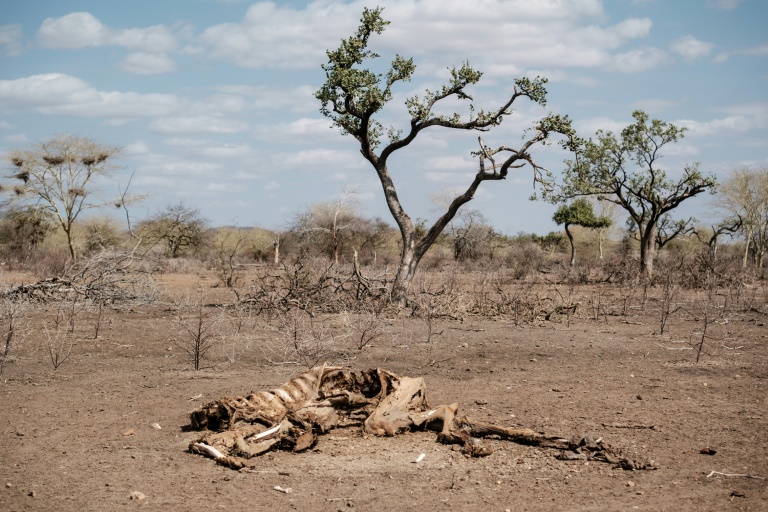
They pointed to Pakistan’s monumental floods and China’s crop-withering heatwave this year as examples of what to expect.

“Floods, droughts, heatwaves, extreme storms and wildfires are going from bad to worse, breaking records with alarming frequency,” said UN Secretary-General Antonio Guterres. 

The UN warned last month that the drought gripping the Horn of Africa and threatening millions with acute food shortages was now likely to extend into a fifth year.

“There is nothing natural about the new scale of these disasters. They are the price of humanity’s fossil fuel addiction,” said Guterres.

The UN’s United in Science report underscores how, nearly three years since Covid-19 handed governments a unique opportunity to reassess how to power their economies, countries are ploughing ahead with pollution as normal. 

It found that after an unprecedented 5.4 percent fall in emissions in 2020 due to lockdowns and travel restrictions, preliminary data from January-May this year shows global CO2 emissions are 1.2 percent higher than before Covid-19.

This is largely down to large year-on-year increases in the United States, India, and most European countries, the assessment found. 

“The science is unequivocal: we are going in the wrong direction,” said WMO Secretary-General Petteri Taalas.

“Greenhouse gas concentrations are continuing to rise, reaching new record highs. Fossil fuel emission rates are now above pre-pandemic levels. The past seven years were the warmest on record.”

– ‘Uncharted territory’ –

Last week the European Union’s Copernicus climate monitor said that summer 2022 was the hottest in Europe and one of the hottest globally since records began in the 1970s. 

Tuesday’s report said there was a 93 percent chance that the record for the hottest year globally — currently, 2016 — will be broken within five years.

It warned the continued use of fossil fuels meant the chance of the annual mean global temperature temporarily exceeding 1.5 degrees Celsius above pre-industrial levels in one of the next five years was roughly even (48 percent). 

Keeping longer term temperatures below 1.5C is the most ambitious goal of the 2015 Paris Agreement. 

Despite more than three decades of UN-lead negotiations, rich polluters show little sign of being willing to make the kind of swingeing emissions cuts that would keep the 1.5C goal in play. 

The UN’s Environment Programme, in an update to its annual “emissions gap” assessment following new pledges made at last November’s COP26 summit in Glasgow, said Tuesday that even these promises were far from adequate.

In fact, it said the ambition even in countries’ most recent pledges would need to be four times greater to limit warming to 2C, and seven times higher to make 1.5C.

All told, current worldwide climate policies put Earth on course to warm 2.8C by 2100, UNEP said. 

Guterres said that Tuesday’s assessment showed “climate impacts heading into uncharted territory of destruction”. 

“Yet each year we double-down on this fossil fuel addiction, even as the symptoms get rapidly worse,” he said in a video message.

Tasneem Essop, executive director of Climate Action Network, said that the forthcoming COP27 climate conference in Egypt needed leaders to agree to new funding to help communities in at-risk nations rebuild after extreme events.

“The terrifying picture painted by the United in Science report is already a lived reality for millions of people facing recurring climate disasters,” she said.

In Nigeria, finding value in waste recycling

Mounds of waste scattered along roads and vast landfills are a Nigerian eyesore.

In Africa’s biggest economy and most populous country, collecting, sorting and recycling trash is despairingly rare.

But there is also good news. Some entrepreneurs are working hard to tackle the rubbish mountain, despite the many challenges.

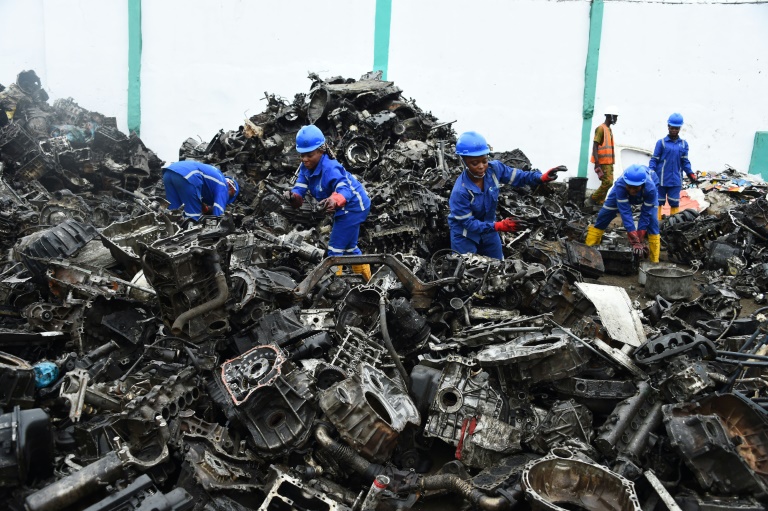
Romco Metals started recycling aluminium at its factory outside Lagos in 2015, drawn by global demand for the light, strong, flexible metal.

Buoyed by good results, it built a second facility outside Ghana’s capital Accra and now plans to open at least three new plants across Africa and triple production by 2025.

Aluminium is the world’s second most-used metal after steel and used widely in construction, medicine and car-making.

“Electric vehicles require more durable lighter material such as aluminium, and that’s where our materials end up,” said the company’s youthful founder, 32-year-old Raymond Onovwigun.

– Job creation –

A British-registered company, Romco melts down and recycles around 1,500 tonnes of discarded aluminium per month, out of a capacity of 3,000 tonnes.

It says it has created 450 direct jobs — 5,000 in total, in this labour-intensive sector — and plans to double that number within a year.

“Before… there was no work,” community leader Bankole Gbenga known as Chief Abore told AFP during a recent visit to the Lagos facility. 

Chief Abore says more than a hundred young people from his community alone now work for Romco in some capacity.

“Some are doing carpentry, some are welders… some of the youth are doing security,” said the 40-year-old.

Among those who have most benefited from Romco’s business are material suppliers like Mohammed Ashiru Madugu, who delivers several truckloads of metal scrap each week.

Madugu has a warehouse in northwestern Katsina, where suppliers from across the state and even neighbouring states bring him discarded metal.

He loads the goods onto trucks and sends them all the way to Lagos, more than a thousand kilometres (600 miles) away.

For one truck, he can get paid up to 26 million naira (about $60,000 dollars) although the price fluctuates.

The scrap supplier said those trips required escorts because of the risk of ambushes by criminal gangs on the road. 

Romco later told AFP that none of its suppliers need escorts and none had been involved in any attacks by criminals.

“We have had zero instances of anything of the sort,” it said in a statement.

– Vast problem –

Only a tiny fraction of waste is recycled in Nigeria, a country of some 210 million consumers.

Plastic, metal and glass that in advanced economies are routinely picked up and processed are mostly tossed out.

Each year, Nigeria disgorges 200,000 tonnes of plastic into the Atlantic, the UN Industrial Development Organisation reported last year.

In Lagos alone, a city of more than 20 million people, less than 10 percent total recyclables are currently collected, Ibrahim Adejuwon Odumboni, managing director of the Lagos State Management Agency told AFP.

By comparison, in the UK, more than 41 percent of waste picked up by local authorities was recycled last year, according to British statistics.

For Odumboni, recycling initiatives are to be commended but more should be done by the companies making aluminium beverage cans and other products.

“We need the manufacturers to invest in the collection system. In many parts of the world, a portion of what producers sell is going into the recovery of products. We currently don’t have that in Nigeria,” he said.

If companies selling aluminium products “are not held responsible (for collecting waste) then it doesn’t make any sense — we’re just going round and round in circle.”

He blames poor legislation but says an improved law on Extended Producer Responsibility (EPR) is currently being discussed in the state house of assembly.

EPR is an environmental policy in place in many countries that gives producers incentives to take responsibility for their products after they are used.

Another challenge for recyclers is carbon emissions from the energy they use to crush, shred or melt old materials.

Romco, for instance, uses compressed natural gas to turn the aluminium into ingots.

“(It) is still a fossil fuel but the best, most efficient fossil fuel. It doesn’t contain lead or sulphur,” said Onovwigun.

The company says, however, that it wants to be independent of fossil fuels and is “exploring the potential of using solar, green hydrogen, and biofuels.”

Close Bitnami banner
Bitnami